

The DOI matches its Crossref record; 29 of the 32 references it cites were found in a registry or an index.
Nilotinib Effects on Safety, Tolerability, and Potential Biomarkers in Parkinson Disease: A Phase 2 Randomized Clinical Trial
Open accessAbstract
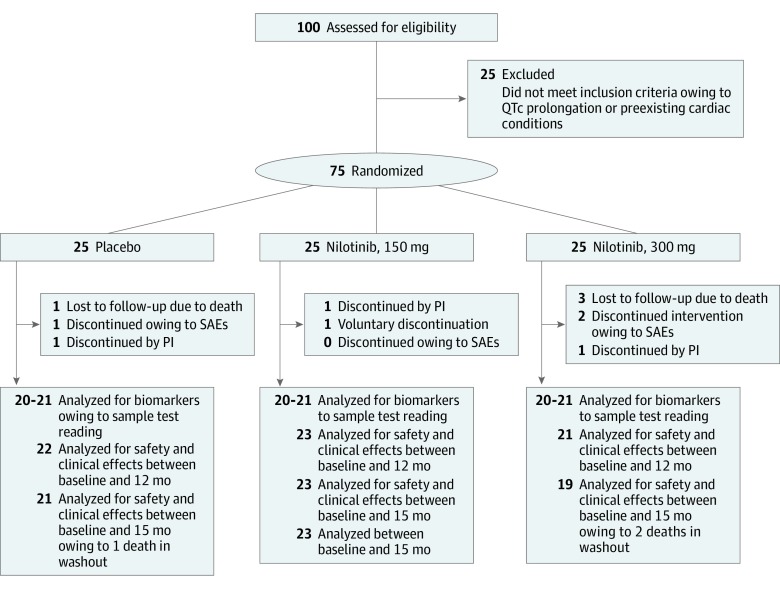
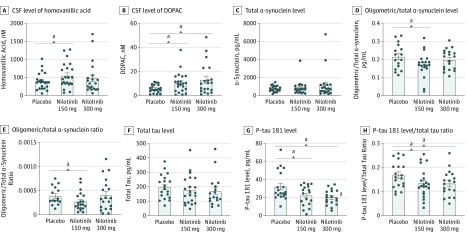
Importance: This study evaluated nilotinib safety and its effects on biomarkers as a potential disease-modifying drug in Parkinson disease. Objectives: To assess nilotinib effects on safety and pharmacokinetics and measure the change in exploratory biomarkers in patients with moderately severe Parkinson disease. Design, Setting, and Participants: This was a single-center, phase 2, randomized, double-blind, placebo-controlled trial with 300 patients approached in clinic; of these, 200 declined to participate, 100 were screened, 25 were excluded, and 75 were randomized 1:1:1 into placebo; nilotinib, 150-mg; or nilotinib, 300-mg groups. Recruitment started on May 17, 2017, and ended April 28, 2018, and follow-up ended August 10, 2019. Parkinson disease was confirmed according to the UK Brain Bank diagnostic criteria and symptoms were stabilized with use of optimal levodopa and/or dopamine agonists and other medications used in Parkinson disease. Interventions: Nilotinib vs placebo, administered orally once daily for 12 months followed by a 3-month washout period. Main Outcomes and Measures: It was hypothesized that nilotinib is safe and can be detected in the cerebrospinal fluid, where it alters exploratory biomarkers via inhibition of Abelson tyrosine kinase and potentially improves clinical outcomes. Results: Of the 75 patients included in the study, 55 were men (73.3%); mean (SD) age was 68.4 (8.2) years. Doses of 150 or 300 mg of nilotinib were reasonably safe, although more serious adverse events were detected in the nilotinib (150 mg: 6 [24%]; 300 mg: 12 [48%]) vs placebo (4 [16%]) groups. The 150-mg nilotinib group showed an increase in cerebrospinal fluid levels of the dopamine metabolites homovanillic acid (159.80nM; 90% CI, 7.04-312.60nM; P = .04) and 3,4-dihydroxyphenylacetic acid (4.87nM; 90% CI, 1.51-8.23nM; P = .01), and the 300-mg nilotinib group showed an increase in 3,4-dihydroxyphenylacetic acid (7.52nM; 90% CI, 2.35-12.69nM; P = .01). The nilotinib 150-mg but not the nilotinib 300-mg group demonstrated a reduction of α-synuclein oligomers (-0.04 pg/mL; 90% CI, -0.08 to 0.01 pg/mL; P = .03). A significant reduction of hyperphosphorylated tau levels was seen in the nilotinib 150-mg (-10.04 pg/mL; 90% CI, -17.41 to -2.67 pg/mL; P = .01) and nilotinib 300-mg (-12.05 pg/mL; 90% CI, -19.21 to -4.90 pg/mL; P = .01) groups. Conclusions and Relevance: In this study, nilotinib appeared to be reasonably safe and detectable in the cerebrospinal fluid. Exploratory biomarkers were altered in response to nilotinib. Taken together, these data will guide the development of a phase 3 study to investigate the effects of nilotinib therapy in patients with Parkinson disease. Trial Registration: ClinicalTrials.gov identifier: NCT02954978.
Overview
The claims and statistics of this paper haven’t been checked yet.
Run the check — free, no account needed. It reads the open-access text and checks the sources it cites.
Integrity signals
Registry
Cites
Statistics
Figures
Verification
Claims the paper makes
The claims and statistics of this paper haven’t been checked yet.
Run the check — free, no account needed. It reads the open-access text and checks the sources it cites.
Claims other papers make about this one
Each is checked against this paper’s own text: does it say what the citing paper says it does?
In the citing paper
“clinical trials showed that Nilotinib can reduce disease-related biomarkers in both AD and PD patients”
From Nilotinib restores memory function by preventing dopaminergic neuron degeneration in a mouse model of Alzheimer’s Disease (2021) · cites this paper as Pagan et al., 2019
Self-check
Percentages, sums and reported differences re-computed from the paper’s own numbers.
The self-check needs the paper’s full text.
Citations
Cites
Cook, R. J., Dickens, B. M., & Fathalla, M. F. (2003) · Oxford University Press eBooks · doi:10.1093/acprof:oso/9780199241323.003.0025 · Cited by 10,825
Spillantini, M. G., Schmidt, M. L., Lee, V. M.-Y., Trojanowski, J. Q., Jakes, R., & Goedert, M. (1997) · Nature · doi:10.1038/42166 · Cited by 8,382
Spillantini, M. G., Crowther, R. A., Jakes, R., Hasegawa, M., & Goedert, M. (1998) · Proceedings of the National Academy of Sciences · doi:10.1073/pnas.95.11.6469 · Cited by 2,868
Alpha-synuclein and neurodegenerative diseases
Goedert, M. (2001) · Nature reviews. Neuroscience · doi:10.1038/35081564 · Cited by 1,428
Catecholamine Metabolism: A Contemporary View with Implications for Physiology and Medicine
Eisenhofer, G., Kopin, I. J., & Goldstein, D. S. (2004) · Pharmacological Reviews · doi:10.1124/pr.56.3.1 · Cited by 1,072
El‐Agnaf, O. M. A., Salem, S. A., Paleologou, K. E., Curran, M. D., Gibson, M. J., Court, J. A., Schlossmacher, M. G., & Allsop, D. (2006) · The FASEB Journal · doi:10.1096/fj.03-1449com · Cited by 715
Catecholamine metabolism: basic aspects and clinical significance.
Kopin, I. J. (1985) · Pharmacological Reviews · doi:10.1016/s0031-6997(25)06859-0 · Cited by 582
Does levodopa slow or hasten the rate of progression of Parkinson’s disease?
Fahn, S., & and the Parkinson Study Group (2005) · Journal of Neurology · doi:10.1007/s00415-005-4008-5 · Cited by 348
Hebron, M. L., Lonskaya, I., & Moussa, C. (2013) · Human Molecular Genetics · doi:10.1093/hmg/ddt192 · Cited by 337
Cited by
Sorted by citations
Bloem, B. R., Okun, M. S., & Klein, C. (2021) · The Lancet · doi:10.1016/s0140-6736(21)00218-x · Cited by 3,920
Inflammation and immune dysfunction in Parkinson disease
Tansey, M. G., Wallings, R. L., Houser, M. C., Herrick, M. K., Keating, C. E., & Joers, V. (2022) · Nature Reviews Immunology · doi:10.1038/s41577-022-00684-6 · Cited by 1,382
Basheer, N., Smolek, T., Hassan, I., Liu, F., Iqbal, K., Zilka, N., & Novak, P. (2023) · Molecular Psychiatry · doi:10.1038/s41380-023-02113-z · Cited by 159
Simuni, T., Fiske, B., Merchant, K., Coffey, C. S., Klingner, E., Caspell-Garcia, C., Lafontant, D.-E., Matthews, H., Wyse, R. K., Brundin, P., et al. (2021) · JAMA Neurology · doi:10.1001/jamaneurol.2020.4725 · Cited by 149
Nilotinib Effects on Safety, Tolerability, and Biomarkers in Alzheimer’s Disease
Turner, R. S., Hebron, M. L., Lawler, A., Mundel, E. E., Yusuf, N., Starr, J. N., Anjum, M., Pagan, F., Torres‐Yaghi, Y., Shi, W., et al. (2020) · Annals of Neurology · doi:10.1002/ana.25775 · Cited by 126
“The supernatant containing unbound nilotinib was freezedried using speed vacuum and reconstituted in 200 μl of methanol: water (50:50) and processed by mass spectrometry (MS), as we previously described.(17,19)”
BackgroundMethodResultInfluentialSelf-citationNovel targeted therapies for Parkinson’s disease
Ntetsika, T., Papathoma, P.-E., & Markaki, I. (2021) · Molecular Medicine · doi:10.1186/s10020-021-00279-2 · Cited by 120
Recent Advances in Drug Therapy for Parkinson's Disease
Murakami, H., Shiraishi, T., Umehara, T., Omoto, S., & Iguchi, Y. (2022) · Internal Medicine · doi:10.2169/internalmedicine.8940-21 · Cited by 114
“Clinical studies have shown that nilotinib increased the cerebrospinal fluid (CSF) level of homovanillic acid, a dopamine metabolite (43, 44), reduced that of α-synuclein oligomers (43), and improved the motor and cognitive function, suggesting a disease-modifying effect (45).”
BackgroundThe Journey of DDR1 and DDR2 Kinase Inhibitors as Rising Stars in the Fight Against Cancer
Elkamhawy, A., Lu, Q., Nada, H., Woo, J., Quan, G., & Lee, K. (2021) · International Journal of Molecular Sciences · doi:10.3390/ijms22126535 · Cited by 104
α-Synuclein pathology as a target in neurodegenerative diseases
Park, H.-J., Kam, T., Dawson, V. L., & Dawson, T. M. (2024) · Nature Reviews Neurology · doi:10.1038/s41582-024-01043-w · Cited by 121
La Barbera, L., Vedele, F., Nobili, A., Krashia, P., Spoleti, E., Latagliata, E. C., Cutuli, D., Cauzzi, E., Marino, R., Viscomi, M. T., et al. (2021) · Progress in Neurobiology · doi:10.1016/j.pneurobio.2021.102031 · Cited by 98
Wise, R. M., Wagener, A., Fietzek, U. M., Klopstock, T., Mosharov, E. V., Zucca, F. A., Sulzer, D., Zecca, L., & Burbulla, L. F. (2022) · Neurobiology of Disease · doi:10.1016/j.nbd.2022.105920 · Cited by 96
“…(Pagano et al., 2021), and anti-aggregatives), enhancement of cellular clearance mechanisms to eliminate toxic forms of aSyn (autophagy (Pagan et al., 2020; Pagan et al., 2021), lysosomal function (Mullin et al., 2020)), and modulation of neuroinflammatory processes (Athauda et al.,…”
BackgroundTreatment of Parkinson’s Disease with Cognitive Impairment: Current Approaches and Future Directions
Sun, C. E., & Armstrong, M. J. (2021) · Behavioral Sciences · doi:10.3390/bs11040054 · Cited by 95
“After a small proofof-concept trial (n = 12) [59], a phase 2 RCT in persons with PD-MCI (MoCA score ≥22) found that nilotinib did not improve MoCA scores in the 150 mg group and significantly worsened in the 300 mg treatment group [60].”
BackgroundExpanding the role of proteasome homeostasis in Parkinson’s disease: beyond protein breakdown
Bi, M., Du, X., Jiao, Q., Chen, X., & Jiang, H. F. (2021) · Cell Death and Disease · doi:10.1038/s41419-021-03441-0 · Cited by 91
Role of Ubiquitin–Proteasome and Autophagy-Lysosome Pathways in α-Synuclein Aggregate Clearance
Sahoo, S., Padhy, A. A., Kumari, V., & Mishra, P. (2022) · Molecular Neurobiology · doi:10.1007/s12035-022-02897-1 · Cited by 82
Payne, T., Appleby, M., Buckley, E., van Gelder, L. M. A., Mullish, B. H., Sassani, M., Dunning, M. J., Hernandez, D., Scholz, S. W., McNeill, A., et al. (2023) · Movement Disorders · doi:10.1002/mds.29450 · Cited by 76
“This safety profile contrasts with the side effect profile of other recently explored putative neuroprotective compounds.(32,33) We acknowledge that the excellent safety profile of UDCA in this study needs to be confirmed in larger trials.”
Kim, J.-E., Lee, H., Park, J., Cha, B., & Hoe, H. (2022) · Journal of Neuroinflammation · doi:10.1186/s12974-022-02549-0 · Cited by 74
“, for 12 months) significantly increases the dopamine metabolites homovanillic acid and 3,4-dihydroxyphenylacetic acid in the CSF of AD and PD patients [12, 14].”
BackgroundAngelopoulou, E., Paudel, Y. N., Shaikh, M. F., & Piperi, C. (2020) · Pharmacological Research · doi:10.1016/j.phrs.2020.104930 · Cited by 65
Yang, J., Zhi, W., & Wang, L. (2024) · Molecules · doi:10.3390/molecules29122812 · Cited by 63
“Nilotinib, a small-molecule inhibitor of Bcr-Abl, had some effect on CSF and frontal cortex amyloid levels in a phase 2 clinical trial but failed to exert an effect on tau [181–183].”
BackgroundLong‐Term Safety and Clinical Effects of Nilotinib in Parkinson's Disease
Pagán, F., Wilmarth, B., Torres-Yaghi, Y. A., Hebron, M. L., Mulki, S., Ferrante, D., Matar, S., Ahn, J., & Moussa, C. (2020) · Movement Disorders · doi:10.1002/mds.28389 · Cited by 61
Parkinson's Disease Modification Through Abl Kinase Inhibition: An Opportunity
Werner, M. H., & Olanow, C. W. (2021) · Movement Disorders · doi:10.1002/mds.28858 · Cited by 60
“The first was a 12-month single center study in 75 patients who were randomly assigned 1:1:1 to Nilotinib (150 or 300 mg) or placebo.(87) Nilotinib had no effect on motor function during the treatment phase or during a 3-month posttreatment follow-up period, but patients were also receiving concurrent anti-parkinsonia…”
BackgroundFrom Recognition to Remedy: The Significance of Biomarkers in Neurodegenerative Disease Pathology
Toader, C., Dobrin, N., Brehar, F.-M., Popa, C., Covache-Busuioc, R.-A., Glavan, L.-A., Costin, H. P., Bratu, B.-G., Corlatescu, A.-D., Popa, A. A., et al. (2023) · International Journal of Molecular Sciences · doi:10.3390/ijms242216119 · Cited by 63
“The effects of nilotinib on CSF biomarkers suggest that reducing oligomeric α -synuclein and p-tau could enhance dopamine metabolism in PD patients [118].”
BackgroundInfluentialThe Involvement of Neuroinflammation in the Onset and Progression of Parkinson’s Disease
Jurcău, A., Andronie-Cioară, F. L., Nistor-Cseppento, C. D., Pașcalău, N., Rus, M., Vasca, E., & Jurcău, M. C. (2023) · International Journal of Molecular Sciences · doi:10.3390/ijms241914582 · Cited by 58
“Tyrosine kinase inhibitor Nilotinib Phase 2 NCT02954978 -safe, +/− reduction in α-synuclein oligomers in the CSF [321]”
New hopes for disease modification in Parkinson's Disease
Poewe, W. H., Seppi, K., Marini, K., & Mahlknecht, P. (2020) · Neuropharmacology · doi:10.1016/j.neuropharm.2020.108085 · Cited by 53
Approaches to Disease Modification for Parkinson's Disease: Clinical Trials and Lessons Learned
Hung, A. Y., & Schwarzschild, M. A. (2020) · Neurotherapeutics · doi:10.1007/s13311-020-00964-w · Cited by 53
“Although the total number of adverse events was similar, there was a higher number of serious adverse events in patients treated with nilotinib, including four cardiovascular events [22].”
BackgroundZou, K., Li, Q., Li, D., Jiao, Y., Wang, L., Li, L., Wang, J., Li, Y., Gao, R., Li, F., et al. (2024) · ACS Nano · doi:10.1021/acsnano.3c11641 · Cited by 49
Current Drug Repurposing Strategies for Rare Neurodegenerative Disorders
Shah, S., Dooms, M. M., Amaral‐Garcia, S., & Igoillo‐Esteve, M. (2021) · Frontiers in Pharmacology · doi:10.3389/fphar.2021.768023 · Cited by 50
“Based on previous findings from clinical trials with nilotinib in Parkinson’s disease (Pagan et al., 2016; Pagan et al., 2020; Pagan et al., 2021) they hypothesize that this drug may contribute to reduce the accumulation of toxic mHTT and have protective brain effects in HD.”
ResultTherapeutic Strategies to Reduce the Toxicity of Misfolded Protein Oligomers
Kreiser, R. P., Wright, A. K., Block, N. R., Hollows, J. E., Nguyen, L. T., LeForte, K., Mannini, B., Vendruscolo, M., & Limbocker, R. (2020) · International Journal of Molecular Sciences · doi:10.3390/ijms21228651 · Cited by 48
“Nilotinib Small molecule Antineoplastic tyrosine kinase inhibitor Reduces αS accumulation and tau hyperphosphorylation; in a Phase 2 clinical trial [230,231]”
BackgroundDiscoidin Domain Receptor 1 is a therapeutic target for neurodegenerative diseases
Fowler, A. J., Hebron, M. L., Balaraman, K., Shi, W., Missner, A. A., Greenzaid, J. D., Chiu, T. L., Ullman, C. J., Weatherdon, E., Duka, V., et al. (2020) · Human Molecular Genetics · doi:10.1093/hmg/ddaa177 · Cited by 47
“are also consistent with its effects on reduction of toxic proteins, including oligomeric α-synuclein, p-tau and Aβ in human (11,13,15,21).”
BackgroundResultInfluentialTargeting dementias through cancer kinases inhibition
Fagiani, F., Lanni, C., Racchi, M., & Govoni, S. (2020) · Alzheimer's & Dementia: Translational Research & Clinical Interventions · doi:10.1002/trc2.12044 · Cited by 43
In search of an anti-inflammatory drug for Alzheimer disease
Gyengési, E., & Münch, G. W. (2020) · Nature Reviews Neurology · doi:10.1038/s41582-019-0307-9 · Cited by 43
Alpha synuclein post translational modifications: potential targets for Parkinson’s disease therapy?
Brembati, V., Faustini, G., Longhena, F., & Bellucci, A. (2023) · Frontiers in Molecular Neuroscience · doi:10.3389/fnmol.2023.1197853 · Cited by 43
Baggett, D., Olson, A., & Parmar, M. S. (2024) · Brain Disorders · doi:10.1016/j.dscb.2024.100163 · Cited by 38
Zhang, X., & Che, C. (2021) · Future Internet · doi:10.3390/fi13010014 · Cited by 37
“C4754962 Terazosin Medical literature in the Journal of clinical investigation [30] C1367795 Ambroxol Medical literature in JAMA neurology [31] C1721377 Nilotinib Medical literature in JAMA neurology [32]”
BackgroundAdvances in dementia with Lewy bodies
Armstrong, M. J. (2021) · Therapeutic Advances in Neurological Disorders · doi:10.1177/17562864211057666 · Cited by 37
Wu, J., Xu, X., Li, Z., Mo, J., Jin, X., & Bao, Y. (2021) · International Immunopharmacology · doi:10.1016/j.intimp.2021.108025 · Cited by 37
Walsh, R. R., Damle, N. K., Mandhane, S. N., Piccoli, S. P., Talluri, R. S., Love, D. K., Yao, S., Ramanathan, V. K., & Hurko, O. (2023) · Parkinsonism & Related Disorders · doi:10.1016/j.parkreldis.2023.105281 · Cited by 35
Gibson, L. L., Ruiz, C. A., Chong, J. R., Ballard, C. G., & Aarsland, D. (2023) · Current Opinion in Neurology · doi:10.1097/wco.0000000000001173 · Cited by 36
Parkinson Disease: Translating Insights from Molecular Mechanisms to Neuroprotection
Pirooznia, S. K., Rosenthal, L. S., Dawson, V. L., & Dawson, T. M. (2021) · Pharmacological Reviews · doi:10.1124/pharmrev.120.000189 · Cited by 36
Karuppagounder, S. S., Wang, H., Kelly, T., Rush, R., Nguyen, R. Q., Bisen, S. S., Yamashita, Y., Sloan, N., Dang, B., Sigmon, A., et al. (2023) · Science Translational Medicine · doi:10.1126/scitranslmed.abp9352 · Cited by 35
α‐Synuclein in Parkinson's Disease: From Bench to Bedside
Bellini, G., D’Antongiovanni, V., Palermo, G., Antonioli, L., Fornai, M., Ceravolo, R., Bernardini, N., Derkinderen, P., & Pellegrini, C. (2024) · Medicinal Research Reviews · doi:10.1002/med.22091 · Cited by 42
“…patients along with favorable effects on CSF biomarkers, including brain dopamine turnover, oligomeric α ‐ syn, and hyper-phosphorylated tau [268, 269], Nilotinib demonstrated poor penetration in the brain and no relevant symptomatic benefit on measures of disability in a successive multi ‐ dose…”
Therapeutic targeting of Lyn kinase to treat chorea-acanthocytosis
Peikert, K., Federti, E., Mattè, A., Constantin, G., Pietronigro, E. C., Fabene, P. F., Defilippi, P., Turco, E., Gallo, F. D., Pucci, P., et al. (2021) · Acta Neuropathologica Communications · doi:10.1186/s40478-021-01181-y · Cited by 33
“We therefore tested the second generation TKI nilotinib, with higher selectivity for Lyn and able to cross the blood–brain barrier (BBB) [21].”
BackgroundMethodInfluentialMitophagy in Parkinson's disease: From pathogenesis to treatment target
Dernie, F. (2020) · Neurochemistry International · doi:10.1016/j.neuint.2020.104756 · Cited by 33
Pharmacological Modulators of Tau Aggregation and Spreading
Dominguez‐Meijide, A., Vasili, E., & Outeiro, T. F. (2020) · Brain Sciences · doi:10.3390/brainsci10110858 · Cited by 36
Angelopoulou, E., Paudel, Y. N., Julian, T. H., Shaikh, M. F., & Piperi, C. (2020) · Molecular Neurobiology · doi:10.1007/s12035-020-02201-z · Cited by 34
“Nilotinib, a tyrosine kinase cAbl inhibitor that is used in chronic myeloid leukemia, has been investigated in lower doses in clinical trials for PD, and it has been indicated to be generally safe and tolerated [95].”
BackgroundEvolving Landscape of Parkinson’s Disease Research: Challenges and Perspectives
Tenchov, R., Sasso, J. M., & Zhou, Q. A. (2025) · ACS Omega · doi:10.1021/acsomega.4c09114 · Cited by 38
Cancer and Parkinson's Disease: Common Targets, Emerging Hopes
Filippou, P. S., & Outeiro, T. F. (2020) · Movement Disorders · doi:10.1002/mds.28425 · Cited by 30
“For example, the anticancer drug nilotinib, used in chronic myelogenous leukemia (CML), was tested in PD and in Lewy body dementia patients in a Phase I clinical trial.(29) Although some studies reported that low doses of nilotinib enter the brain and promote the degradation of aSyn and tau in animal models,(30) a pha…”
BackgroundDrug repurposing strategies of relevance for Parkinson’s disease
Fletcher, E. J. R., Kaminski, T. W., Williams, G. H., & Duty, S. (2021) · Pharmacology Research & Perspectives · doi:10.1002/prp2.841 · Cited by 31
The AKT modulator A-443654 reduces α-synuclein expression and normalizes ER stress and autophagy
Gandelman, M., Dansithong, W., Kales, S. C., Paul, S., Maag, G., Aoyama, E., Zakharov, A. V., Rai, G., Dexheimer, T. S., Whitehill, B. M., et al. (2021) · Journal of Biological Chemistry · doi:10.1016/j.jbc.2021.101191 · Cited by 33
Gutiérrez, D. A., Chandía-Cristi, A., Yañez, M. J., Zanlungo, S., & Alvarez, A. R. (2022) · Neural Regeneration Research · doi:10.4103/1673-5374.346540 · Cited by 31
“However, recent studies using nilotinib have been unsuccessful for PD patients, apparently due to poor drug availability in the brain (Pagan et al., 2020).”
BackgroundSiwecka, N., Saramowicz, K., Galita, G., Rozpędek‐Kamińska, W., & Majsterek, I. (2023) · Pharmaceutics · doi:10.3390/pharmaceutics15082051 · Cited by 33
Yañez, M. J., Marín, T., Balboa, E., Klein, A. D., Alvarez, A. R., & Zanlungo, S. (2020) · Biochimica et Biophysica Acta (BBA) - Molecular Basis of Disease · doi:10.1016/j.bbadis.2020.165875 · Cited by 30
CSF MicroRNAs Reveal Impairment of Angiogenesis and Autophagy in Parkinson Disease
Fowler, A. J., Ahn, J., Hebron, M., Chiu, T., Ayoub, R., Mulki, S., Ressom, H., Torres-Yaghi, Y., Wilmarth, B., Pagan, F. L., et al. (2021) · Neurology Genetics · doi:10.1212/nxg.0000000000000633 · Cited by 29
“Methods Study Design The primary research objective of this study was to assess alterations in CSF microRNAs in individuals with moderately severe PD stabilized on the standard of care for dopamine replacement therapies as previously indicated.(15,16,21) Participants with PD (n = 75) were randomized to receive a singl…”
BackgroundMethodInfluentialStevenson, M. E., Varghese, R. S., Hebron, M. L., Liu, X., Ratliff, N., Smith, A., Turner, R. S., & Moussa, C. (2023) · Journal of Neuroinflammation · doi:10.1186/s12974-023-02802-0 · Cited by 30
Jiao, F., Meng, L., Du, K., & Li, X. (2024) · Neural Regeneration Research · doi:10.4103/nrr.nrr-d-23-01195 · Cited by 30
“However, two randomized clinical trials in patients with mild-to-moderate PD showed that nilotinib had no significant clinical benefit, possibly related to its drug properties of difficulty in crossing the blood-brain barrier (BBB; Pagan et al., 2020; Simuni et al., 2021).”
BackgroundDrug Repurposing for Parkinson’s Disease: The International Linked Clinical Trials experience
Stott, S., Wyse, R. K. H., & Brundin, P. (2021) · Frontiers in Neuroscience · doi:10.3389/fnins.2021.653377 · Cited by 30
Clinical outcome measures in dementia with Lewy bodies trials: critique and recommendations
Rodriguez‐Porcel, F. E., Wyman‐Chick, K. A., Abdelnour, C., Toledo, J. B., Ferreira, D., Urwyler, P., Weil, R. S., Kane, J. P. M., Pilotto, A., Rongve, A., et al. (2022) · Translational Neurodegeneration · doi:10.1186/s40035-022-00299-w · Cited by 28
Hernández‐Parra, H., Cortés, H., Ávalos‐Fuentes, J. A., Prado-Audelo, M. L. D., Florán, B., Leyva‐Gómez, G., Sharifi‐Rad, J., & Cho, W. C. S. (2022) · Journal of Nanobiotechnology · doi:10.1186/s12951-022-01612-5 · Cited by 30
Autophagy and Redox Homeostasis in Parkinson’s: A Crucial Balancing Act
Jiménez-Moreno, N., & Lane, J. D. (2020) · Oxidative Medicine and Cellular Longevity · doi:10.1155/2020/8865611 · Cited by 26
“In the light of these findings, an autophagy inducer, Nilotinib, is currently in clinical trial for Parkinson’s [464, 465].”
BackgroundTargeting Macroautophagy as a Therapeutic Opportunity to Treat Parkinson’s Disease
Sanchez-Mirasierra, I., Ghimire, S., Hernández-Díaz, S., & Soukup, S. (2022) · Frontiers in Cell and Developmental Biology · doi:10.3389/fcell.2022.921314 · Cited by 26
Anti-amyloid: An antibody to cure Alzheimer’s or an attitude
Osborne, O., Naranjo, O., Heckmann, B. L., Dykxhoorn, D. M., & Toborek, M. J. (2023) · iScience · doi:10.1016/j.isci.2023.107461 · Cited by 25
“We would argue that amyloid is a critical determinant in AD, and we should consider a multimodal approach to treating AD.”
BackgroundInfluentialNeurodegenerative diseases and cancer: sharing common mechanisms in complex interactions
Rojas, N. G., Cesarini, M., Etcheverry, J. L., Prat, G. A. D., Arciuch, V. G. A., & Gatto, E. M. (2020) · Journal of Integrative Neuroscience · doi:10.31083/j.jin.2020.01.3 · Cited by 24
Disease-Modifying Therapies for Multiple System Atrophy: Where Are We in 2022?
Sidoroff, V., Bower, P., Stefanova, N., Fanciulli, A., Stankovic, I., Poewe, W. H., Seppi, K., Wenning, G. K., & Krismer, F. (2022) · Journal of Parkinson s Disease · doi:10.3233/jpd-223183 · Cited by 24
“oligomers, and tau in patients with PD [89].”
BackgroundCan We Treat Neurodegenerative Proteinopathies by Enhancing Protein Degradation?
Engelender, S., Stefanis, L., Oddo, S., & Bellucci, A. (2022) · Movement Disorders · doi:10.1002/mds.29058 · Cited by 23
Nilotinib in Parkinson's disease: A systematic review and meta-analysis
Xie, X., Yuan, P., Kou, L., Chen, X., Li, J., & Li, Y. (2022) · Frontiers in Aging Neuroscience · doi:10.3389/fnagi.2022.996217 · Cited by 23
“E cacy MDS-UPDRS III Two studies reported MDS-UPDRS III scores (Pagan et al., 2020; Simuni et al., 2021).”
BackgroundInfluentialc-Abl activates RIPK3 signaling in Gaucher disease
Yañez, M. J., Campos, F., Marín, T., Klein, A. D., Futerman, A. H., Alvarez, A. R., & Zanlungo, S. (2021) · Biochimica et Biophysica Acta (BBA) - Molecular Basis of Disease · doi:10.1016/j.bbadis.2021.166089 · Cited by 24
Safety, target engagement, and biomarker effects of bosutinib in dementia with Lewy bodies
Pagán, F., Torres-Yaghi, Y. A., Hebron, M. L., Wilmarth, B., Turner, R. S., Matar, S., Ferrante, D., Ahn, J., & Moussa, C. (2022) · Alzheimer s & Dementia Translational Research & Clinical Interventions · doi:10.1002/trc2.12296 · Cited by 21
Prospects for Disease Slowing in Parkinson Disease
Menozzi, E., & Schapira, A. H. V. (2024) · The Annual Review of Pharmacology and Toxicology · doi:10.1146/annurev-pharmtox-022124-033653 · Cited by 23
“The treated arm showed increased levels of dopamine metabolites and reduction of a -synuclein oligomers in CSF, with a good safety and tolerability profile (42).”
Precision Medicine in Parkinson’s Disease: From Genetic Risk Signals to Personalized Therapy
Straccia, G., Colucci, F., Eleopra, R., & Cilia, R. (2022) · Brain Sciences · doi:10.3390/brainsci12101308 · Cited by 22
Satapathy, T., & Kumar, D. (2024) · Pharmacological Research - Modern Chinese Medicine · doi:10.1016/j.prmcm.2024.100499 · Cited by 20
Recent advances in understanding and treatment of Parkinson’s disease
Tarakad, A., & Jankovic, J. J. (2020) · Faculty Reviews · doi:10.12703/b/9-6 · Cited by 18
Recent Advances in the Treatment of Genetic Forms of Parkinson’s Disease: Hype or Hope?
Cavallieri, F., Cury, R. G., Guimarães, T. G., Fioravanti, V., Grisanti, S., Rossi, J., Monfrini, E., Zedde, M., Fonzo, A. D., Valzania, F., et al. (2023) · Cells · doi:10.3390/cells12050764 · Cited by 21
“placebo and oral nilotinib 150-mg or nilotinib 300-mg for 12 months followed by a 3-month washout period [62].”
BackgroundMethodWyse, R. K. H., Isaacs, T., Barker, R. A., Cookson, M., Dawson, T. M., Devos, D., Dexter, D. T., Duffen, J., Federoff, H. J., Fiske, B. K., et al. (2024) · Journal of Parkinson s Disease · doi:10.3233/jpd-230363 · Cited by 19
Therapeutic innovation in Parkinson’s disease: a 2020 update on disease-modifying approaches
Colombo, D., Pnevmatikou, P., Melloni, E., & Keywood, C. (2020) · Expert Review of Neurotherapeutics · doi:10.1080/14737175.2020.1800454 · Cited by 18
Majumdar, M., & Badwaik, H. R. (2024) · Current Drug Targets · doi:10.2174/0113894501312703240826070530 · Cited by 16
Prioritizing Parkinson’s disease risk genes in genome-wide association loci
Lange, L. M., Cerquera‐Cleves, C., Schipper, M., Panagiotaropoulou, G., Braun, A., Kraft, J., Awasthi, S., Bell, N., Posthuma, D., Ripke, S., et al. (2025) · npj Parkinson s Disease · doi:10.1038/s41531-025-00933-0 · Cited by 18
O'Brien, J. T., Chouliaras, L., Sultana, J., Taylor, J., Ballard, C. G., on behalf of the RENEWAL Study Group, Aarsland, D., Blanc, F., Boeve, B. F., Brooks, D. J., et al. (2022) · Alzheimer s Research & Therapy · doi:10.1186/s13195-022-01103-7 · Cited by 17
Alteration of Autophagy and Glial Activity in Nilotinib-Treated Huntington’s Disease Patients
Anderson, K. E., Stevenson, M. E., Varghese, R. S., Hebron, M. L., Koppel, E., McCartin, M., Kuprewicz, R., Matar, S., Ferrante, D., & Moussa, C. (2022) · Metabolites · doi:10.3390/metabo12121225 · Cited by 16
“Biomarker objectives included measurement of HVA levels, HTT, neurofilaments and markers of neuro-inflammation.”
BackgroundMethodInfluentialLenka, A., & Jankovic, J. J. (2023) · Expert Review of Neurotherapeutics · doi:10.1080/14737175.2023.2177535 · Cited by 16
Min, Y., Wang, X., İş, Ö., Patel, T., Gao, J., Reddy, J. S., Quicksall, Z., Nguyen, T., Lin, S., Tutor‐New, F. Q., et al. (2023) · Nature Communications · doi:10.1038/s41467-023-42626-3 · Cited by 20
The Role of Kinases in Neurodegenerative Diseases: From Pathogenesis to Treatment
Naim, A., Farooqui, A. M., Badruddeen, B., Khan, M. I., Akhtar, J., Ahmad, A., & Islam, A. (2025) · European Journal of Neuroscience · doi:10.1111/ejn.70156 · Cited by 15
“In PD, the ABL/Src inhibitor nilotinib caused QT interval prolongation, pancreatic enzyme elevations and orthostatic hypotension, leading to the early termination of several participants and failure to meet primary efficacy endpoints (Pagan et al. 2020, 2021).”
Das, V., Miller, J. H., Goud, A. C., Annadurai, N., Sanctis, J. B. D., Hrubá, L., & Hajdúch, M. (2024) · Medicinal Research Reviews · doi:10.1002/med.22033 · Cited by 16
Seeking progress in disease modification in Parkinson disease
Lungu, C., Cedarbaum, J. M., Dawson, T. M., Dorsey, E. R., Faraco, C., Federoff, H. J., Fiske, B. K., Fox, R. J., Goldfine, A. M., Kieburtz, K. D., et al. (2021) · Parkinsonism & Related Disorders · doi:10.1016/j.parkreldis.2021.09.006 · Cited by 15
Min, H. K., Kim, S. H., Won, J., Kim, K., Lee, J., Lee, S., & Kim, H. (2023) · International Journal of Rheumatic Diseases · doi:10.1111/1756-185x.14627 · Cited by 15
Wilkes, B. J., Tobin, E. R., Arpin, D. J., Wang, W., Okun, M. S., Jaffee, M. S., McFarland, N. R., Corcos, D. M., & Vaillancourt, D. E. (2023) · npj Parkinson s Disease · doi:10.1038/s41531-023-00521-0 · Cited by 14
“Phase 2 and Phase 3 clinical trials for interventions that slow disease progression in Parkinson-ism can have several sites within one country 8,9 or multiple international sites 10 – 12 .”
Insights into the management of Lewy body dementia: a scoping review
Khan, S. A., Khan, S., Kausar, H., Shah, R. K., Luitel, A., Gautam, S., Parajuli, S. B., Rauniyar, V. K., & Khan, M. A. (2024) · Annals of Medicine and Surgery · doi:10.1097/ms9.0000000000001664 · Cited by 14
“…there was a dose-related increase in the incidence of serious adverse events, and there was a trend toward increased incidence of falls in the treatment groups and both the treatment groups had an increase in CSF levels of dopamine metabolites and a decrease in CSF hyperphosphorylated tau [69] .”
BackgroundDementia with Lewy bodies: emerging drug targets and therapeutics
Pope, E. D., Cordes, L., Shi, J., Mari, Z. K., Decourt, B., & Sabbagh, M. N. (2021) · Expert Opinion on Investigational Drugs · doi:10.1080/13543784.2021.1916913 · Cited by 14
“found that nilotinib can dramatically alter the course of PD in humans, with little to no harmful adverse events [22].”
BackgroundTargeting Lyn Kinase in Chorea-Acanthocytosis: A Translational Treatment Approach in a Rare Disease
Peikert, K., Glaß, H., Federti, E., Mattè, A., Pelzl, L., Akgün, K., Ziemssen, T., Ordemann, R., Lang, F. J. W., Franceschi, L. D., et al. (2021) · Journal of Personalized Medicine · doi:10.3390/jpm11050392 · Cited by 14
Espay, A. J., Hauser, R. A., & Armstrong, M. J. (2019) · JAMA Neurology · doi:10.1001/jamaneurol.2019.3983 · Cited by 14
Parkinson's disease: pathogenesis and therapeutic strategies
Zhang, S., Wang, T., Peng, Y., Wang, Q., Zhang, Z., Shifeng, C. H. U., Huang, H., & Chen, N. (2026) · Molecular Biomedicine · doi:10.1186/s43556-026-00445-0 · Cited by 13
Drug Repositioning and Repurposing for Disease-Modifying Effects in Parkinson’s Disease
Jeong, S. H., & Lee, P. H. (2025) · Journal of Movement Disorders · doi:10.14802/jmd.25008 · Cited by 13
“87 A single-center study with 75 participants reported increased dopamine metabolite levels in the CSF in some nilotinib-treated groups but reported no significant differences in motor or nonmotor outcomes.”
Pharmacological management of Parkinson’s disease in older people
Mouchaileh, N., & Hughes, A. J. (2020) · Journal of Pharmacy Practice and Research · doi:10.1002/jppr.1683 · Cited by 13
Yan, H., Huang, X., Xu, J., Zhang, Y., Chen, J., Xu, Z., Li, H., Wang, Z., Yang, X., Yang, B., et al. (2023) · Advanced Science · doi:10.1002/advs.202302002 · Cited by 12
A Novel, Selective c-Abl Inhibitor, Compound 5, Prevents Neurodegeneration in Parkinson’s Disease
Kwon, S., Kim, S., Park, A. Y., Lee, S., Gadhe, C. G., Seo, B. A., Park, J. S., Jo, S., Oh, Y., Kweon, S. H., et al. (2021) · Journal of Medicinal Chemistry · doi:10.1021/acs.jmedchem.1c01022 · Cited by 13
Lillian, A., Zuo, W., Laham, L., Hilfiker, S., & Ye, J.-H. (2023) · International Journal of Molecular Sciences · doi:10.3390/ijms24087186 · Cited by 12
“IPX203 Extended-release Carbidopa-levodopa [72] Dopamine receptor Phase III”
BackgroundStevenson, M. E., Algarzae, N. K., & Moussa, C. (2024) · Frontiers in Dementia · doi:10.3389/frdem.2024.1458038 · Cited by 13
Skin Cancer May Delay Onset but Not Progression of Parkinson's Disease: A Nested Case-Control Study
Mahajan, A., Chirra, M., Dwivedi, A. K., Sturchio, A., Keeling, E. G., Marsili, L., & Espay, A. J. (2020) · Frontiers in Neurology · doi:10.3389/fneur.2020.00406 · Cited by 12
Khan, M. A., Haider, N., Singh, T., Bandopadhyay, R., Ghoneim, M. M., Alshehri, S., Taha, M., Ahmad, J., & Mishra, A. (2023) · Metabolic Brain Disease · doi:10.1007/s11011-023-01180-z · Cited by 12
Bashir, B., Vishwas, S., Gupta, G., Paudel, K. R., Dureja, H., Kumar, P., Cho, H., Sugandhi, V. V., Kumbhar, P., Disouza, J., et al. (2025) · Ageing Research Reviews · doi:10.1016/j.arr.2025.102693 · Cited by 11
Mutant-Huntingtin Molecular Pathways Elucidate New Targets for Drug Repurposing
Makeeva, V. S., Dyrkheeva, N. S., Lavrik, O. I., Zakian, S. M., & Malakhova, A. A. (2023) · International Journal of Molecular Sciences · doi:10.3390/ijms242316798 · Cited by 12
“…[123–125], cysteamine bitartrate [126–131], lithium citrate [132–135], laquinimod [136,137], rapamycin [138–141], minoxidil [142], felodipine [143], nilotinib [144,145], dextromethorphan [146], and INO-1001 [147] have been conducted. clozapine was tested in a double-blind randomized trial Ref.”
BackgroundChandía-Cristi, A., Gutiérrez, D. A., Dulcey, A. E., Lara, M., Vargas, L., Lin, Y.-H., Jimenez-Muñoz, P., Larenas, G., Xu, X., Wang, A. Y., et al. (2024) · Cell Reports · doi:10.1016/j.celrep.2024.114144 · Cited by 9
Metadata
- Authors
- Pagan, F. L., Hebron, M. L., Wilmarth, B., Torres-Yaghi, Y., Lawler, A., Mundel, E. E., Yusuf, N., Starr, N. J., Anjum, M., Arellano, J., Howard, H. H., Shi, W., Mulki, S., Kurd-Misto, T., Matar, S., Liu, X., Ahn, J., & Moussa, C.
- Affiliations
- Translational Neurotherapeutics Program, Laboratory for Dementia and Parkinsonism, Department of Neurology, Georgetown University Medical Center, Washington, DC
- Georgetown University Medical Center (US)
- MedStar Georgetown University Hospital (US)
- Corresponding author
- Moussa, Charbel
- Venue
- JAMA Neurology
- Publisher
- American Medical Association (AMA)
- Published
- 2020-03-01
- Volume
- 77
- Issue
- 3
- Pages
- 309
- ISSN
- 2168-6149 (ISSN-L)
- PMC
- PMC6990742
- OpenAlex
- W2995537689
- Cited by
- 185
- References
- 32
- Citations by year
- 2026: 18 · 2025: 18 · 2024: 35 · 2023: 29 · 2022: 28 · 2021: 30 · 2020: 26
- FWCI
- 14.55
- Type
- journal article
- Language
- en
- Open access
- hybrid
- doi.org
- Licence
- cc-by
- Locations
- JAMA Neurology (publishedVersion, cc-by)
- PubMed Central (publishedVersion, cc-by)
- PubMed (publishedVersion)
- Topics
- Health Sciences › Medicine › Clinical Neurology › Parkinson's Disease Mechanisms and Treatments
- Health Sciences › Medicine › Clinical Neurology › Deep Brain Stimulation and Movement Disorders
- Life Sciences › Biochemistry, Genetics and Molecular Biology › Molecular Biology › Nuclear Receptors and Signaling
- Keywords
- nilotinib, Parkinson's disease, disease-modifying therapy, safety and tolerability, pharmacokinetics, cerebrospinal fluid biomarkers, homovanillic acid, DOPAC, dopamine metabolism, adverse events, dose comparison, washout
- MeSH terms
- Aged, Dopamine, Double-Blind Method, Female, Humans, Male, Middle Aged, Parkinson Disease, Pyrimidines, Biomarkers, tau Proteins
About these checks
Registry, retraction, Cites and statistics results are computed, not judged, with one exception: a printed reference that no index lists is read once by a model before it counts as a citation error. Claims are extracted by a model and kept only when their quote appears verbatim in the text; each cited source is then checked, with a model’s help, for whether it says what the claim relies on. Those verdicts can be wrong — read the claim’s quote and the cited source before relying on one.
Statistics and arithmetic are recomputed, not judged.
Confidence bands are shown only for fields calibrated on our annotated test set. None is calibrated yet, so no band is shown.
What counts as a claim ›How we measure confidence ›How we check this ›
Are you an author, or do you see a problem with this page? Request a review
