

3D Printed Dual‐Porosity Scaffolds: The Combined Effect of Stiffness and Porosity in the Modulation of Macrophage Polarization
Open accessThe DOI matches its Crossref record; 44 of the 45 references it cites were found in a registry or an index.
Abstract
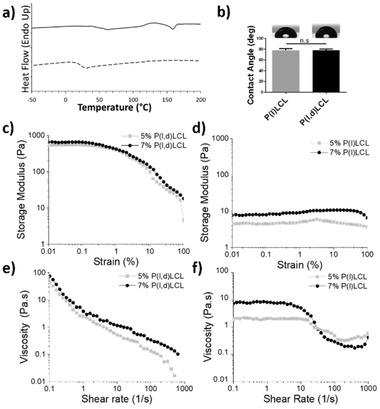
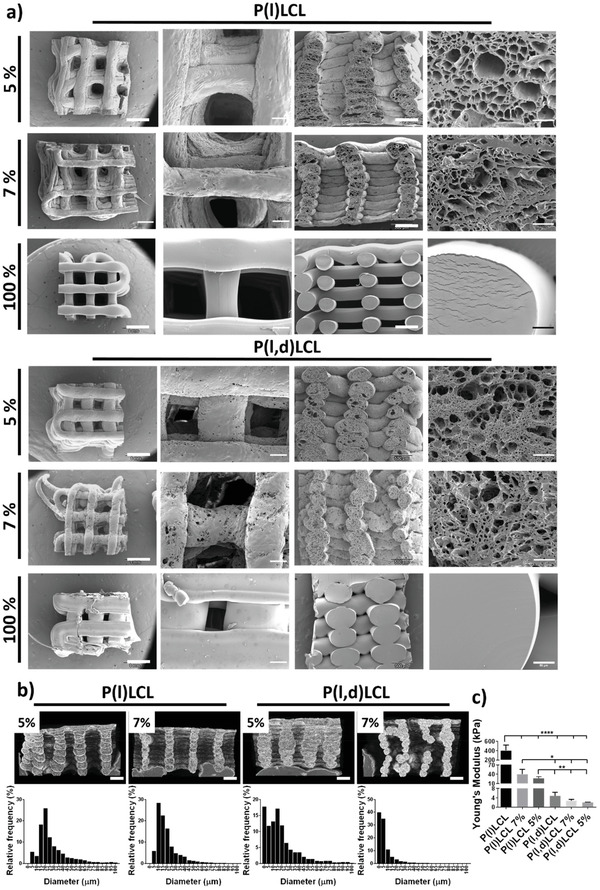
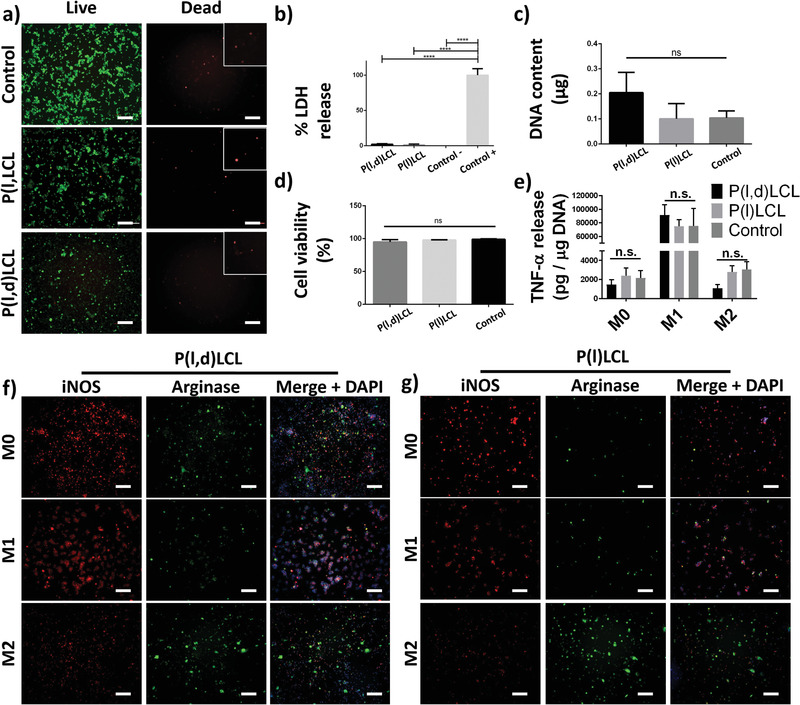
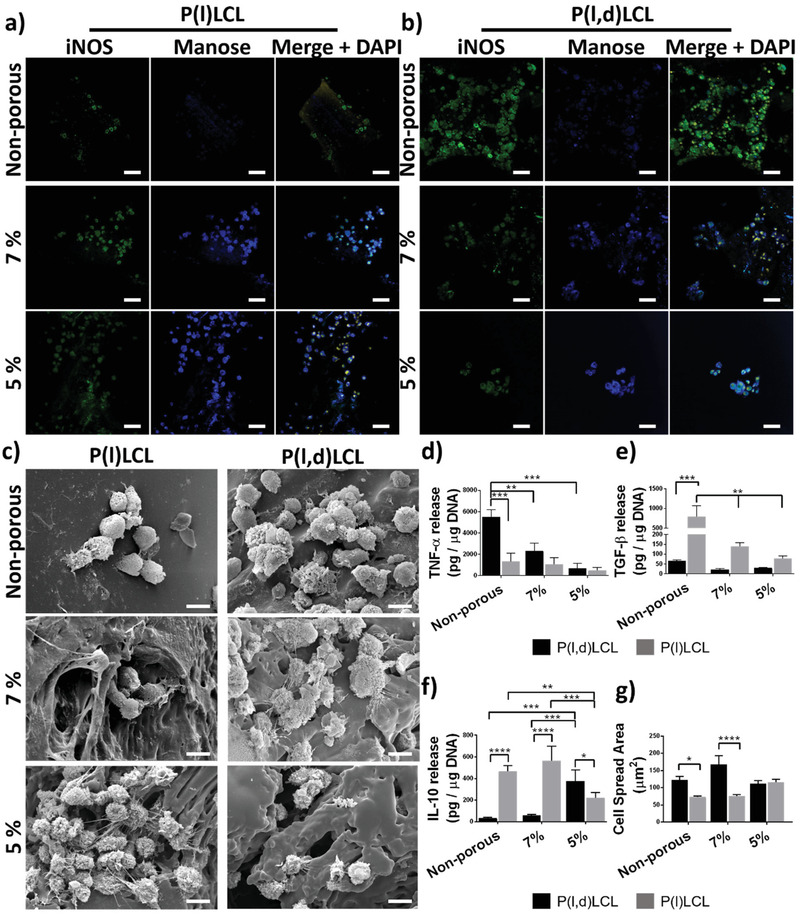
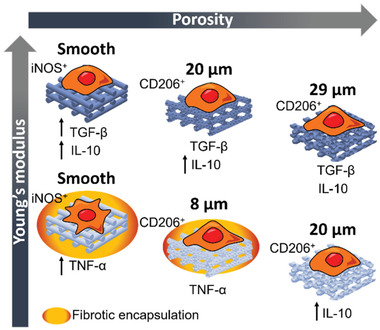
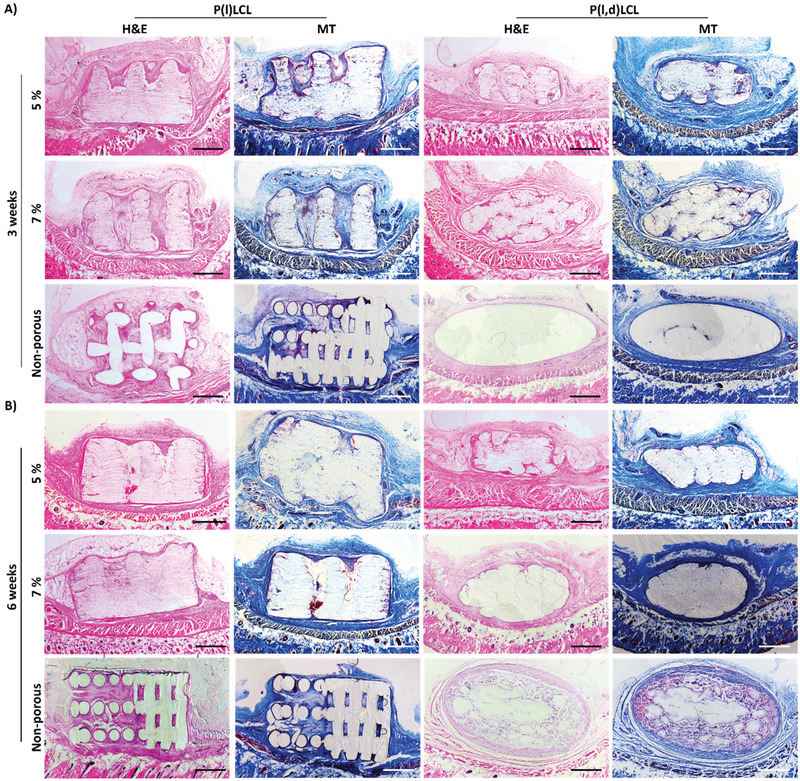
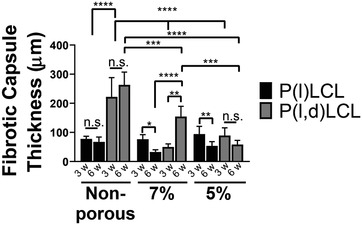
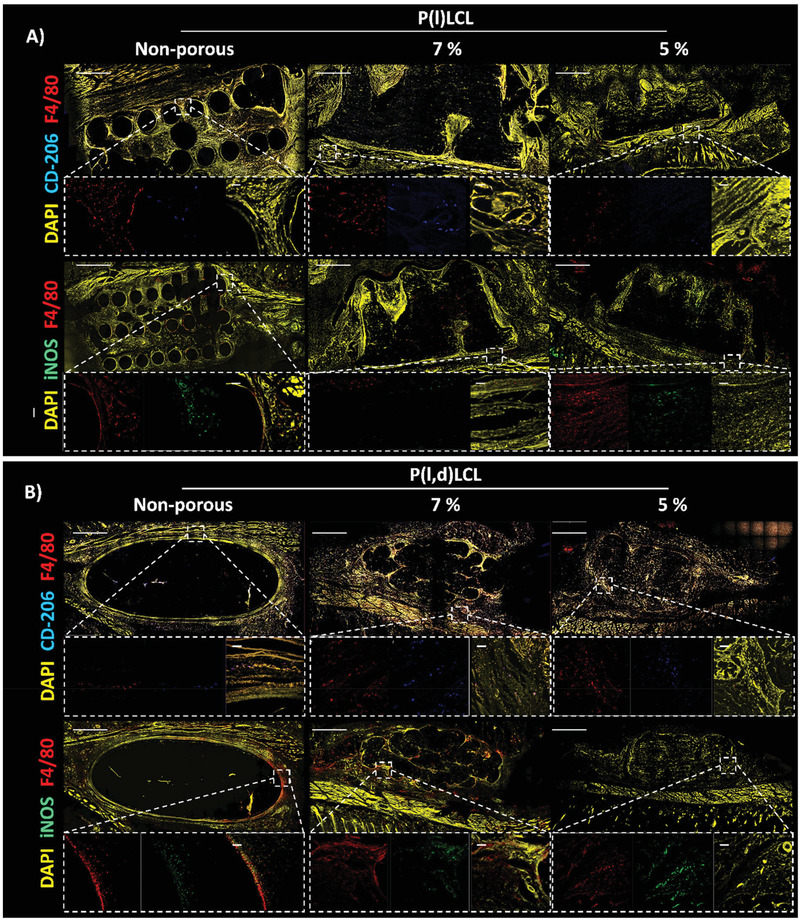
Tissue regeneration evolves toward the biofabrication of sophisticated 3D scaffolds. However, the success of these will be contingent to their capability to integrate within the host. The control of the mechanical or topographical properties of the implant appears as an ideal method to modulate the immune response. However, the interplay between these properties is yet not clear. Dual‐porosity scaffolds with varying mechanical and topographical features are created, and their immunomodulatory properties in rat alveolar macrophages in vitro and in vivo in a rat subcutaneous model are evaluated. Scaffolds are fabricated via additive manufacturing and thermally induced phase separation methods from two copolymers with virtually identical chemistries, but different stiffness. The introduction of porosity enables the modulation of macrophages toward anti‐inflammatory phenotypes, with secretion of IL‐10 and TGF‐β. Soft scaffolds (<5 kPa) result in a pro‐inflammatory phenotype in contrast to stiffer (>40 kPa) scaffolds of comparable porosities supporting a pro‐healing phenotype, which appears to be related to the surface spread area of cells. In vivo, stiff scaffolds integrate, while softer scaffolds appear encapsulated after three weeks of implantation, resulting in chronic inflammation after six weeks. The results demonstrate the importance of evaluating the interplay between topography and stiffness of candidate scaffolds.
Overview
The claims and statistics of this paper haven’t been checked yet.
Free: it reads the open-access text and checks the first 5 claims that cite a source we can check. Create a free account to check every claim.
Integrity signals
Registry
Cites
Statistics
Figures
Verification
Claims the paper makes
The claims and statistics of this paper haven’t been checked yet.
Free: it reads the open-access text and checks the first 5 claims that cite a source we can check. Create a free account to check every claim.
Claims other papers make about this one
Each is checked against this paper’s own text: does it say what the citing paper says it does?
The source backs part of the claim, not all of it — or backs it for a different population, condition or comparison.
In the citing paper
“Interestingly, due to the complexity of the regulatory signaling pathways no uniform consensus on the optimal stiffness ranges exist that promotes an immediate shift to the resolution state.”
From Unraveling and Harnessing the Immune Response at the Cell–Biomaterial Interface for Tissue Engineering Purposes (2024) · cites this paper as [154]
Experimental — accuracy not yet measuredThe cited source says what the claim attributes to it.
In the citing paper
“Conversely, other studies have reported opposite trends, highlighting the complexity of macrophage responses to substrate stiffness.”
From Soft tissue-mimicking hydrogel stiffness modulates polarisation of human monocyte-derived macrophages (2025) · cites this paper as [19]
Self-check
Percentages, sums and reported differences re-computed from the paper’s own numbers.
The self-check needs the paper’s full text.
Citations
Cites
The chemokine system in diverse forms of macrophage activation and polarization
MANTOVANI, A., SICA, A., SOZZANI, S., ALLAVENA, P., VECCHI, A., & LOCATI, M. (2004) · Trends in Immunology · doi:10.1016/j.it.2004.09.015 · Cited by 6,534
Role of YAP/TAZ in mechanotransduction
Dupont, S., Morsut, L., Aragona, M., Enzo, E., Giulitti, S., Cordenonsi, M., Zanconato, F., Le Digabel, J., Forcato, M., Bicciato, S., et al. (2011) · Nature · doi:10.1038/nature10137 · Cited by 5,979
Scaffolds in tissue engineering bone and cartilage
Hutmacher, D. W. (2000) · Biomaterials · doi:10.1016/s0142-9612(00)00121-6 · Cited by 4,994
Macrophage plasticity, polarization, and function in health and disease
Shapouri‐Moghaddam, A., Mohammadian, S., Vazini, H., Taghadosi, M., Esmaeili, S., Mardani, F., Seifi, B., Mohammadi, A., Afshari, J. T., & Sahebkar, A. (2018) · Journal of Cellular Physiology · doi:10.1002/jcp.26429 · Cited by 4,930
Macrophage plasticity and polarization in tissue repair and remodelling
Mantovani, A., Biswas, S. K., Galdiero, M. R., Sica, A., & Locati, M. (2013) · The Journal of Pathology · doi:10.1002/path.4133 · Cited by 2,384
Modulation of macrophage phenotype by cell shape
McWhorter, F. Y., Wang, T., Nguyen, P., Chung, T., & Liu, W. F. (2013) · Proceedings of the National Academy of Sciences · doi:10.1073/pnas.1308887110 · Cited by 1,482
Hutmacher, D. W. (2001) · Journal of Biomaterials Science, Polymer Edition · doi:10.1163/156856201744489 · Cited by 1,409
Zwitterionic hydrogels implanted in mice resist the foreign-body reaction
Zhang, L., Cao, Z., Bai, T., Carr, L., Ella-Menye, J.-R., Irvin, C., Ratner, B. D., & Jiang, S. (2013) · Nature Biotechnology · doi:10.1038/nbt.2580 · Cited by 1,035
Biomaterial based modulation of macrophage polarization: a review and suggested design principles
Sridharan, R., Cameron, A. R., Kelly, D. J., Kearney, C. J., & O’Brien, F. J. (2015) · Materials Today · doi:10.1016/j.mattod.2015.01.019 · Cited by 826
Titanium surface characteristics, including topography and wettability, alter macrophage activation
Hotchkiss, K. M., Reddy, G. B., Hyzy, S. L., Schwartz, Z., Boyan, B. D., & Olivares-Navarrete, R. (2016) · Acta Biomaterialia · doi:10.1016/j.actbio.2015.12.003 · Cited by 680
Cited by
Biocompatible Synthetic Polymers for Tissue Engineering Purposes
Terzopoulou, Z., Zamboulis, A., Koumentakou, I., Michailidou, G., Noordam, M. J., & Bikiaris, D. N. (2022) · Biomacromolecules · doi:10.1021/acs.biomac.2c00047 · Cited by 230
Tolabi, H., Davari, N., Khajehmohammadi, M., Malektaj, H., Nazemi, K., Vahedi, S., Ghalandari, B., Reis, R. L., Ghorbani, F., & Oliveira, J. M. (2023) · Advanced Materials · doi:10.1002/adma.202208852 · Cited by 161
Heras, K. L., García-Orue, I., Rancan, F., Igartúa, M., Santos‐Vizcaíno, E., & Hernández, R. M. (2024) · Advanced Drug Delivery Reviews · doi:10.1016/j.addr.2024.115342 · Cited by 158
Sang, X., Zhao, X., Yan, L., Jin, X. Y., Wang, X., Wang, J., Yin, Z., Zhang, Y., & Meng, Z. (2022) · Tissue Engineering and Regenerative Medicine · doi:10.1007/s13770-022-00437-5 · Cited by 124
“In addition, the polarization of macrophages from the M1 to M2 phenotype has been shown to promote effective angiogenesis and tissue repair [47, 48].”
BackgroundRational design of hydrogels for immunomodulation
Bu, W., Wu, Y., Ghaemmaghami, A. M., Sun, H., & Mata, Á. (2022) · Regenerative Biomaterials · doi:10.1093/rb/rbac009 · Cited by 121
Li, W., Dai, F., Zhang, S., Xu, F., Xu, Z., Liao, S., Zeng, L., Li, S., & Ai, F. (2022) · ACS Applied Materials & Interfaces · doi:10.1021/acsami.2c02001 · Cited by 97
Recent advances in nanomedicines for regulation of macrophages in wound healing
Joorabloo, A., & Liu, T. (2022) · Journal of Nanobiotechnology · doi:10.1186/s12951-022-01616-1 · Cited by 89
“The macrophages with a higher surface spread area polarized towards M1 phenotype, while the cells with a reduced surface spread area polarized towards M2 phenotype [89].”
BackgroundMethodten Brink, T., Damanik, F., Rotmans, J. I., & Moroni, L. (2024) · Advanced Healthcare Materials · doi:10.1002/adhm.202301939 · Cited by 71
Self-citationResearch Progress on Biomaterials with Immunomodulatory Effects in Bone Regeneration
Li, J., Qu, Y., Chu, B., Wu, T., Pan, M., Mo, D., Li, L., Ming, Y., Yang, Y. S., Wang, M., et al. (2025) · Advanced Science · doi:10.1002/advs.202501209 · Cited by 78
Macrophages and fibroblasts in foreign body reactions: How mechanical cues drive cell functions?
Li, R., Feng, D., Han, S., Zhai, X., Yu, X., Fu, Y., & Jin, F. (2023) · Materials Today Bio · doi:10.1016/j.mtbio.2023.100783 · Cited by 66
“stiffer P(l)LCL and softer P(l,d)LCL [136].”
BackgroundInfluentialTargeting Macrophage Polarization for Reinstating Homeostasis following Tissue Damage
Du, Q., Dickinson, A., Nakuleswaran, P., Maghami, S., Alagoda, S., Hook, A. L., & Ghaemmaghami, A. M. (2024) · International Journal of Molecular Sciences · doi:10.3390/ijms25137278 · Cited by 60
“This was successfully transferred to an in vivo application on a rat subcutaneous model, whereby stiffer scaffolds promoted healing while softer scaffolds caused chronic inflammation after six weeks of surgery [384].”
BackgroundImmune cell response to orthopedic and craniofacial biomaterials depends on biomaterial composition
Avery, D., Morandini, L., Celt, N., Bergey, L., Simmons, J., Martin, R., Donahue, H. J., & Olivares‐Navarrete, R. (2023) · Acta Biomaterialia · doi:10.1016/j.actbio.2023.03.007 · Cited by 59
Zhuang, P., Wu, Y., Chen, Y., Zhang, Y., Leboucher, C., Rosenholm, J. M., & Zhang, H. (2024) · Biomedical Technology · doi:10.1016/j.bmt.2024.09.005 · Cited by 49
Advances and applications of biomimetic biomaterials for endogenous skin regeneration
Wang, M., Hong, Y., Fu, X., & Sun, X. (2024) · Bioactive Materials · doi:10.1016/j.bioactmat.2024.04.011 · Cited by 50
“The results revealed that soft scaffolds ( < 5 kPa) result in a pro-inflammatory M1 phenotype in contrast to stiffer scaffolds ( > 40 kPa) supporting a pro-healing M2 phenotype [45].”
ResultLuo, P., Huang, R., Wu, Y., Liu, X., Shan, Z., Gong, L., Deng, S., Liu, H., Fang, J., Wu, S., et al. (2023) · Bioactive Materials · doi:10.1016/j.bioactmat.2023.05.011 · Cited by 36
“immune regulatory effects in vivo, a mechanically tunable dECM was implanted into a rat subcutaneous model [62,70].”
MethodSelf-citationAydin, M. S., Marek, N., Luciani, T., Mohamed‐Ahmed, S., Lund, B. K., Gjerde, C., Mustafa, K., Suliman, S., & Rashad, A. (2024) · ACS Biomaterials Science & Engineering · doi:10.1021/acsbiomaterials.4c01108 · Cited by 36
Gonzalez‐Pujana, A., Carranza, T., Santos‐Vizcaíno, E., Igartúa, M., Guerrero, P., Hernández, R. M., & de la Caba, K. (2022) · Pharmaceutics · doi:10.3390/pharmaceutics14122843 · Cited by 37
“As reported by Camarero-Espinosa, the greater crystallinity of the scaffolds means a better biocompatibility due to their capacity to maintain their integrity for longer until the degradation process occurs, limiting immunologic response [26].”
Zhang, F., Scull, G., Gluck, J. M., Brown, A. C., & King, M. W. (2022) · Biomedical Materials · doi:10.1088/1748-605x/aca4b2 · Cited by 36
A review of non-biodegradable alloys implantation induced inflammatory and immune cell responses
Xu, L., Wei, C., Deng, L., Wang, P., Zhong, W., & Huang, W. (2023) · Journal of Alloys and Compounds · doi:10.1016/j.jallcom.2023.173086 · Cited by 30
Introducing Controlled Microporosity in Melt Electrowriting
Mueller, K. M. A., Unterrainer, A., Rojas‐González, D. M., De‐Juan‐Pardo, E. M., Willner, M. S., Herzen, J., & Mela, P. (2023) · Advanced Materials Technologies · doi:10.1002/admt.202201158 · Cited by 27
Membrane-based microfluidic systems for medical and biological applications
Calzuola, S. T., Newman, G., Feaugas, T., Perrault, C. M., Blondé, J.-B., Roy, E., Porrini, C., Stojanović, G. M., & Vidić, J. (2024) · Lab on a Chip · doi:10.1039/d4lc00251b · Cited by 24
“…to environmental cues, thus all the physical properties of the membrane such as roughness 35 – 40 , surface microstructure 41 – 47 , mechanical strength 48 – 58 , hydrophilicity 35,36,52,59 – 62 , and porosity 55,63 – 65 have a significant effect on cellular adhesion and membrane biocompatibility.”
Cheng, X., Xu, B., Lei, B., & Wang, S. (2024) · Advanced Healthcare Materials · doi:10.1002/adhm.202301158 · Cited by 23
Implantable Devices for the Treatment of Breast Cancer
Pial, M. M. H., Tomitaka, A., Pala, N., & Roy, U. (2022) · Journal of Nanotheranostics · doi:10.3390/jnt3010003 · Cited by 22
Zhang, Y., Nie, R., Feng, Z.-Y., Fan, M., Shen, Z., Zhang, X., Zhang, Q., Zou, C., Zhang, J., Huang, K., et al. (2025) · Bioactive Materials · doi:10.1016/j.bioactmat.2025.05.026 · Cited by 27
“Other studies have shown that scaffolds with different mechanical strengths also have a significant impact on macrophage polarization [161,162].”
Godshall, G. F., Rau, D. A., Williams, C. B., & Moore, R. B. (2023) · Advanced Materials · doi:10.1002/adma.202307881 · Cited by 23
Mechanobiology of myeloid cells
Janssen, E., van den Dries, K., Ventre, M., & Cambi, A. (2024) · Current Opinion in Cell Biology · doi:10.1016/j.ceb.2023.102311 · Cited by 22
Lee, S.-H., Lee, J., Kang, N.-U., Cho, Y. S., Heo, S. C., Park, Y., & Cho, Y. (2025) · Scientific Reports · doi:10.1038/s41598-025-96027-1 · Cited by 24
“…to fabricate the hierarchical structure with the biopolymers, including 3D printing combined with gas foaming 27,28 , 3D printing with particle leaching 20,29,30 , 3D printing with phase separation 31 , molding with phase separation 32 , and molding with particle leaching 33 , among others.”
Chen, B., Wang, J., Jin, X. Y., Wang, X., Fan, Z., Zhang, Y., Sang, X., & Meng, Z. (2022) · Materials & Design · doi:10.1016/j.matdes.2022.111542 · Cited by 21
Kivijärvi, T., Goksøyr, Ø., Yassin, M. A., Jain, S., Yamada, S., López, Á. M., Mustafa, K., & Finne‐Wistrand, A. (2022) · Materials Today Bio · doi:10.1016/j.mtbio.2022.100483 · Cited by 20
Viveros-Moreno, N. G., Lorenzana, M. G., Peña-Mercado, E., García-Sanmartín, J., Narro-Íñiguez, J., Salazar–García, M., Huerta‐Yépez, S., Sánchez‐Gómez, C., Martínez, A., & Beltran-Vargas, N. E. (2023) · Frontiers in Bioengineering and Biotechnology · doi:10.3389/fbioe.2023.1295626 · Cited by 18
Coser, C., Ghaemmaghami, A. M., & Yang, J. (2025) · Biomaterials Science · doi:10.1039/d5bm01187f · Cited by 17
Saeedinejad, F., Alipanah, F., Toro, S., Pereira, N. S., Ghanbariamin, D., Jozic, I., Schmidt, T. A., Arab‐Tehrany, E., Zhang, Y. S., Tamayol, A., et al. (2025) · Acta Biomaterialia · doi:10.1016/j.actbio.2025.04.049 · Cited by 16
Posada, V. M., Ramírez, J., Civantos, A., Fernández‐Morales, P., & Allain, J. P. (2023) · Colloids and Surfaces B Biointerfaces · doi:10.1016/j.colsurfb.2023.113717 · Cited by 16
Ghosh, S., Mohol, S. S., Datta, A., Pandey, P. M., Kulshreshtha, R., Nandan, B., Hakkarainen, M., & Srivastava, R. K. (2025) · Advanced Healthcare Materials · doi:10.1002/adhm.202404866 · Cited by 14
Recent Advances in Silk Fibroin Derived from Bombyx mori for Regenerative Medicine
Zhang, Y., & Roohani, I. (2025) · Journal of Functional Biomaterials · doi:10.3390/jfb17010012 · Cited by 15
He, S., Zhang, Q., Jia, J., Xia, W., Chen, S., Min, F., Song, Y., Yu, Y., Li, J., Li, Z., et al. (2024) · Materials Today Bio · doi:10.1016/j.mtbio.2024.101304 · Cited by 16
Arrhenius-model-based degradable oligourethane hydrogels for controlled growth factor release
Tawagi, E., Ung, T. W.-M., Cheng, H. M., & Santerre, J. P. (2023) · Acta Biomaterialia · doi:10.1016/j.actbio.2023.05.024 · Cited by 13
Wiesli, M. G., Huber, M. W., Weisse, B., Zboray, R., Kiderlen, S., González‐Vázquez, A., Maniura‐Weber, K., Rottmar, M., & Lackington, W. A. (2024) · Advanced Healthcare Materials · doi:10.1002/adhm.202400077 · Cited by 11
Feng, W.-G., Zhang, Z., Zhao, Z., Liu, H., Hou, J., Wu, J., & Li, S. (2025) · Advanced Healthcare Materials · doi:10.1002/adhm.202501570 · Cited by 9
Self-citationBiomaterial scaffolds for therapeutic immune cell engineering and delivery
Wolter, T., & Hu, Q. (2025) · Journal of Controlled Release · doi:10.1016/j.jconrel.2025.114072 · Cited by 8
van der Putten, C., D’Urso, M., Bril, M., Woud, T. E., Bouten, C. V. C., & Kurniawan, N. A. (2022) · Journal of Visualized Experiments · doi:10.3791/63988 · Cited by 7
“…gained increasing traction lately 24,25 , with studies combining matrix stiffness and ligand density 26,27,28,29 , substrate stiffness and porosity 30 , substrate stiffness and 3D microniche volume 31 , surface topography and contact-guidance cues 32,33,34 , and nanoscale contact-guidance cues…”
BackgroundRamos-Díez, S., Díaz-Gómez, L. A., Paulis, M., & Camarero‐Espinosa, S. (2025) · Materials Today Bio · doi:10.1016/j.mtbio.2025.102280 · Cited by 9
“The PLCL used here accounts for a 70/38 ( L )-lactide: ε -caprolactone ratio, resulting in a semicrystalline polymer [26].”
InfluentialSelf-citationMarradi, M., van Griensven, M., Beijer, N. R. M., de Boer, J., & Carlier, A. (2025) · Computational and Structural Biotechnology Journal · doi:10.1016/j.csbj.2025.07.022 · Cited by 6
“…describe the material as a debris variable that enhances early inflammation and is removed by macrophages, or as an increased macrophage recruitment parameter, without considering other effects of the material, such as mechanical, chemical [12], dimensional [13,14], or surface properties [15,16].”
Effective Dressing: Development of N-Carboxyethyl Chitosan/Oxidized Locust Bean Gum Scaffolds
Araújo, L. F. S., Ferreira, C. R. D. N., de Araújo, G. S., Araújo, A. J., Filho, J. D. B. M., Lima, A. B. N., Dias, A. T. D. F. F., Campelo, M. D. S., Leitão, R. F. D. C., Ribeiro, M. E. N. P., et al. (2025) · ACS Omega · doi:10.1021/acsomega.5c00521 · Cited by 6
“32 Figure 4b shows the values obtained for porosity by ethanol infiltration.”
Ryltseva, G. A., Dudaev, A. E., Lipaikin, S. Y., Ghorabe, F. D. E., Menzyanova, N. G., Ulasevich, S. A., Скорб, Е. В., Volova, T. G., & Shishatskaya, E. I. (2025) · Journal of Polymers and the Environment · doi:10.1007/s10924-025-03513-8 · Cited by 6
“The elongated shape of cells is associated with M2 macrophages [ 50, 51 ].”
Rational Structure Design‐Based 3D‐Printed Cardiovascular Implants
Peng, S., Hao, Y., Zhou, H., Chen, Y., & Chen, M. (2025) · Advanced Healthcare Materials · doi:10.1002/adhm.202504628 · Cited by 5
“This plasticity, termed macrophage polarization, has been demonstrated to be associated with scaffold microstructure and activated RhoA/ROCK signaling pathway [157], as well as its modulation of YAP protein subcellular localization [80].”
Modeling 3D Tumor Invasiveness to Modulate Macrophage Phenotype in a Human‐Based Hydrogel Platform
Monteiro, C. F., Almeida, C. R., Custódio, C. A., & Mano, J. F. (2024) · Macromolecular Bioscience · doi:10.1002/mabi.202400227 · Cited by 4
Self-citationEngineered Strategies to Interfere with Macrophage Fate in Myocardial Infarction
Zhai, Z., Yang, C., Yin, W., Liu, Y., Li, S., Ye, Z., Xie, M., & Song, X. (2025) · ACS Biomaterials Science & Engineering · doi:10.1021/acsbiomaterials.4c02061 · Cited by 6
Zhang, H., Stehle, Y. Y., Chen, L., Yang, M., Zhang, R., Lin, M., Wang, C., Yang, J., Hu, D., Huang, M., et al. (2025) · Journal of Materials Chemistry B · doi:10.1039/d5tb01499a · Cited by 3
Zhao, H., Wang, L., Xi, K., Wang, W., Jiang, X., Wang, J., Zhou, L., Wang, W., Cai, F., Han, M., et al. (2025) · Chemical Engineering Journal · doi:10.1016/j.cej.2025.161315 · Cited by 3
Zhang, T., Shan, W., Dot, M. L., & Xiao, P. (2024) · Macromolecular Rapid Communications · doi:10.1002/marc.202400293 · Cited by 3
Topography as a cue for driving osteochondral unit regeneration
Ramos-Díez, S., & Camarero‐Espinosa, S. (2025) · Biofabrication · doi:10.1088/1758-5090/ae24b0 · Cited by 2
“…techniques have been developed to that end, including the use of sacrificial templates [227– 229], supercritical carbon dioxide (CO 2 ) [230–232], including reagents that release gas bubbles to foam the materials [233, 234] or through thermally induced phase separation (TIPS) techniques [235–237].”
Self-citationImpacts of material surface properties on immunomodulation of bone regeneration
Kong, C. L. T., Zhang, L., Liang, C., Yang, Q., Xu, Y., Zhou, H., & Yang, L. (2025) · Elsevier eBooks · doi:10.1016/b978-0-443-21521-6.00013-2 · Cited by 2
The application of inflammation-modulating dermal scaffolds in chronic wound repair
Xie, C., Huang, H., Jiang, L., Zheng, Y., & Xia, Z. (2026) · Materials Today Communications · doi:10.1016/j.mtcomm.2026.114757 · Cited by 2
Coser, C., di Bari, V., Ghaemmaghami, A. M., & Yang, J. (2026) · Acta Biomaterialia · doi:10.1016/j.actbio.2026.04.032 · Cited by 2
Teles, L. N., LI, C., Wilkes, Z. M., Stock, A. A., & Tomei, A. A. (2023) · Springer eBooks · doi:10.1007/978-3-031-41943-0_15 · Cited by 1
Yeleswarapu, S., Myers, C. E., Richards, A. M., Neubauer, J., Grandjean, D. N., Hoelzinger, D. B., & Lott, D. G. (2025) · Current Transplantation Reports · doi:10.1007/s40472-025-00490-8 · Cited by 1
“Current research in 3D-printed frameworks encompasses inflammatory response modulation, fibrotic encapsulation prevention, porous architecture optimization for cellular infiltration, vascularization, and patient-specific implant design development [14, 15].”
Kakhki, M. E., Sohrabian, M., & Sameezadeh, M. (2026) · Progress in Additive Manufacturing · doi:10.1007/s40964-025-01505-7 · Cited by 1
Surface-induced mechano-regulation of macrophages: emerging strategies for immunotherapy
Yang, J., Liu, R., Liu, X., & Song, Y. (2026) · Med-X · doi:10.1007/s44258-026-00083-9 · Cited by 2
Li, Y., Zheng, J., Chen, C., Li, Z., & Cheng, Y. (2026) · ACS Applied Bio Materials · doi:10.1021/acsabm.6c00281 · Cited by 1
Fan, Q., Cao, F., Mao, J., Yin, P., Zhang, L., Wang, J., & Tang, P. (2026) · Advanced Science · doi:10.1002/advs.77087 · Cited by 1
“In their study, they chose two chemically relevant and biocompatible materials with virtually identical chemistries based on poly(lactide-co-caprolactone), one amorphous and another semicrystalline [ 112 ].”
Lee, J. Y., Lee, S., & Park, J. (2023) · Research Square · doi:10.21203/rs.3.rs-2863261/v1
Characterization techniques of hydrogels in healthcare
Insua, I., Calderón, M., Calafel, I., Fernández, M., & Aguirresarobe, R. (2025) · Elsevier eBooks · doi:10.1016/b978-0-443-22017-3.00012-3
Advances in Biomaterial Mechanical Properties to Regulate Macrophage Polarization
贾, 恒. (2025) · Journal of Clinical Personalized Medicine · doi:10.12677/jcpm.2025.42244
Zhang, C., Gao, X., Ju, R., Wu, S., Wang, Z., Jing, W., Tian, W., & He, M. (2025) · Journal of Materials Chemistry B · doi:10.1039/d5tb02012c
Tawagi, E. (2022) · TSpace (University of Toronto)
Scalable microfluidic blood oxygenator with compliant membrane for improved performance
Calzuola, S. T. (2024) · theses.fr (ABES) · doi:10.70675/ba5166b4ze915z4b43zb98fz2b278bb6ee65
Polymers Based Artificial Tissues
Chanda, A., & Sharma, D. (2026) · Biomedical materials for multi-functional applications · doi:10.1007/978-981-92-1307-8_5
Li, C.-R., Wang, K. Z., Xia, S., Hu, P., Liu, H., Liu, C., Wang, S. K., 蒋, 先., & Song, H. (2026) · ACS Biomaterials Science & Engineering · doi:10.1021/acsbiomaterials.6c00731
Self-citationInterpreting porosity in orthopedic bone scaffold design
Ger, D. (2026) · Journal of Musculoskeletal Surgery and Research · doi:10.25259/jmsr_231_2026
Chen, K., Ti, Y., Sha, J., Ye, T., Ding, Z., 陈一升, Wan, R., Luo, W., Luo, Z., Hua, Z., et al. (2026) · Engineering · doi:10.1016/j.eng.2026.07.033
Immune-instructive biofabrication for musculoskeletal tissue regeneration
Li, W., Chae, S., Ahn, Y., & Kim, G. (2026) · Applied Physics Reviews · doi:10.1063/5.0358280
Metadata
- Authors
- Camarero‐Espinosa, S., Carlos‐Oliveira, M., Liu, H., Mano, J. F., Bouvy, N., & Moroni, L.
- Affiliations
- Ikerbasque (ES)
- Maastricht University (NL)
- Maastricht University Medical Centre (NL)
- University of Aveiro (PT)
- Corresponding author
- Moroni, Lorenzo
- Venue
- Advanced Healthcare Materials
- Publisher
- Wiley
- Published
- 2021-11-12
- Volume
- 11
- Issue
- 1
- Pages
- e2101415-e2101415
- ISSN
- 2192-2640 (ISSN-L)
- 2192-2659
- PMC
- PMC11468864
- OpenAlex
- W3209588035
- Semantic Scholar
- 6b57873ff1af6e72f231f5ac946cac76758ce8e6
- Cited by
- 71
- References
- 45
- Citations by year
- 2026: 10 · 2025: 22 · 2024: 14 · 2023: 12 · 2022: 12 · 2021: 1
- FWCI
- 2.96
- Type
- journal article
- Language
- en
- Open access
- hybrid
- doi.org
- Licence
- Locations
- Advanced Healthcare Materials (publishedVersion, cc-by-nc)
- PubMed Central (publishedVersion, cc-by-nc)
- PubMed (publishedVersion)
- Research Publications (Maastricht University) (publishedVersion, cc-by-nc)
- Communities in ADDI (University of the Basque Country) (submittedVersion, cc-by-nc)
- Hispana (submittedVersion, cc-by-nc)
- Research Publications (Maastricht University) (submittedVersion, other-oa)
- Funders
- H2020 European Research Council (637308)
- Foundation for Science and Technology
- Ministério da Ciência, Tecnologia e Ensino Superior
- Topics
- Physical Sciences › Engineering › Biomedical Engineering › Bone Tissue Engineering Materials
- Physical Sciences › Engineering › Biomedical Engineering › 3D Printing in Biomedical Research
- Health Sciences › Medicine › Surgery › Tissue Engineering and Regenerative Medicine
- Keywords
- 3D-printed scaffolds, macrophage polarization, stiffness, porosity, surface topography, immunomodulation, alveolar macrophages, IL-10, TGF-beta, chronic inflammation, tissue integration, thermally induced phase separation, copolymers, additive manufacturing
- MeSH terms
- Animals, Macrophage Activation, Macrophages, Porosity, Rats, Tissue Scaffolds, Printing, Three-Dimensional
About these checks
Registry, retraction, Cites and statistics results are computed, not judged, with one exception: a printed reference that no index lists is read once by a model before it counts as a citation error. Claims are extracted by a model and kept only when their quote appears verbatim in the text; each cited source is then checked, with a model’s help, for whether it says what the claim relies on. Those verdicts can be wrong — read the claim’s quote and the cited source before relying on one.
Statistics and arithmetic are recomputed, not judged.
Confidence bands are shown only for fields calibrated on our annotated test set. None is calibrated yet, so no band is shown.
What counts as a claim ›How we measure confidence ›How we check this ›
Are you an author, or do you see a problem with this page? Request a review
Data sources
Bibliographic data: Semantic Scholar, OpenAlex, Crossref.
Contains information from the Semantic Scholar Academic Graph Datasets, made available under the ODC Attribution License (ODC-BY 1.0).
Semantic Scholar’s data is described in: Kinney, R., et al. (2023). The Semantic Scholar Open Data Platform. arXiv:2301.10140.
