

Loading-dependent structural model of polymeric micelles encapsulating curcumin by solid-state NMR spectroscopy
Open accessPublished version of a preprint
The DOI matches its Crossref record; 35 of the 36 references it cites were found in a registry or an index.
Abstract
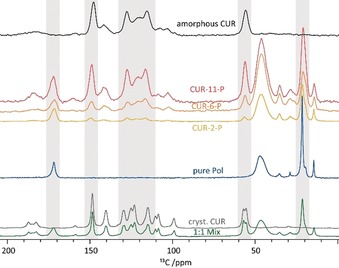
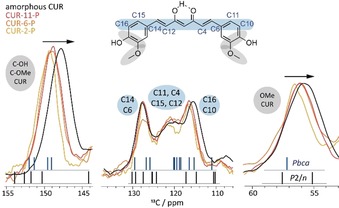
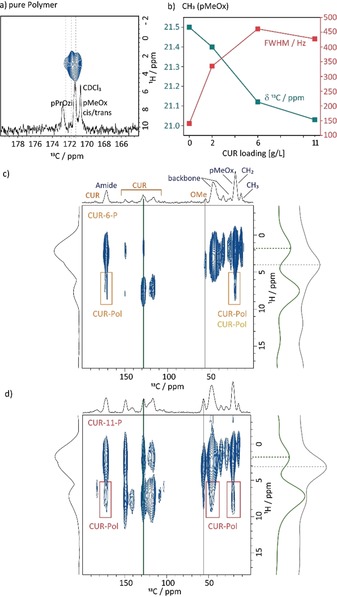
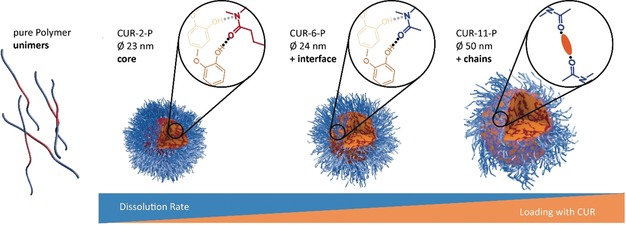
Detailed insight into the internal structure of drug‐loaded polymeric micelles is scarce, but important for developing optimized delivery systems. We observed that an increase in the curcumin loading of triblock copolymers based on poly(2‐oxazolines) and poly(2‐oxazines) results in poorer dissolution properties. Using solid‐state NMR spectroscopy and complementary tools we propose a loading‐dependent structural model on the molecular level that provides an explanation for these pronounced differences. Changes in the chemical shifts and cross‐peaks in 2D NMR experiments give evidence for the involvement of the hydrophobic polymer block in the curcumin coordination at low loadings, while at higher loadings an increase in the interaction with the hydrophilic polymer blocks is observed. The involvement of the hydrophilic compartment may be critical for ultrahigh‐loaded polymer micelles and can help to rationalize specific polymer modifications to improve the performance of similar drug delivery systems.
Overview
The claims and statistics of this paper haven’t been checked yet.
Free: it reads the open-access text and checks the first 5 claims that cite a source we can check. Create a free account to check every claim.
Integrity signals
Registry
Cites
Statistics
Figures


Verification
Claims the paper makes
The claims and statistics of this paper haven’t been checked yet.
Free: it reads the open-access text and checks the first 5 claims that cite a source we can check. Create a free account to check every claim.
Claims other papers make about this one
Each is checked against this paper’s own text: does it say what the citing paper says it does?
The source backs part of the claim, not all of it — or backs it for a different population, condition or comparison.
In the citing paper
“More recently, a variety of POx and poly(2-oxazine) (POzi) based polymers such as poly(2-n-butyl-2-oxazoline) (PBuOx) and poly(2-n-butyl-2-oxazine) (PBuOzi) have gained much attention due to their high loading for physically encapsulating drugs [45, 63, 65].”
From Polymeric micelles for the delivery of poorly soluble drugs: From nanoformulation to clinical approval. (2020) · cites this paper as [65]
Experimental — accuracy not yet measuredThe source backs part of the claim, not all of it — or backs it for a different population, condition or comparison.
In the citing paper
“Interestingly, ssNMR analysis of the changes in the chemical shifts and cross-peaks in 2D correlation revealed that the degree of curcumin loading in polymeric micelle affected the localization of the drug in the micelle.”
From Polymeric micelles for the delivery of poorly soluble drugs: From nanoformulation to clinical approval. (2020) · cites this paper as [65]
Experimental — accuracy not yet measuredThe cited source says what the claim attributes to it.
In the citing paper
“Recent studies on the experimental analysis of polymeric micelles have shown that the drug-polymer compatibility was achieved via more complex molecular mechanisms of interaction than simple hydrophobic interactions [63, 65, 115].”
From Polymeric micelles for the delivery of poorly soluble drugs: From nanoformulation to clinical approval. (2020) · cites this paper as [65]
The cited source says what the claim attributes to it.
In the citing paper
“In some cases, these interactions can involve not only the core-forming hydrophobic blocks but also the shell-forming hydrophilic blocks and selected drugs can be at least partially incorporated in the shell of the micelle [46, 65].”
From Polymeric micelles for the delivery of poorly soluble drugs: From nanoformulation to clinical approval. (2020) · cites this paper as [65]
The cited source says what the claim attributes to it.
In the citing paper
“At a low loading, the drug primarily accumulated in the core of the micelle where it interacted with the hydrophobic PPrOzi block via hydrogen bonding between phenolic OH group of curcumin and the amide group in the polymer backbone.”
From Polymeric micelles for the delivery of poorly soluble drugs: From nanoformulation to clinical approval. (2020) · cites this paper as [65]
1 more claim about this paper
Create a free account to see every claim other papers make about this one.
Self-check
Percentages, sums and reported differences re-computed from the paper’s own numbers.
The self-check needs the paper’s full text.
Citations
Cites
The dawning era of polymer therapeutics
Duncan, R. (2003) · Nature Reviews Drug Discovery · doi:10.1038/nrd1088 · Cited by 3,269
Biodegradable Long-Circulating Polymeric Nanospheres
Gref, R., Minamitake, Y., Peracchia, M. T., Trubetskoy, V., Torchilin, V., & Langer, R. (1994) · Science · doi:10.1126/science.8128245 · Cited by 2,920
Targeted polymeric therapeutic nanoparticles: design, development and clinical translation
Kamaly, N., Xiao, Z., Valencia, P. M., Radovic-Moreno, A. F., & Farokhzad, O. C. (2012) · Chemical Society Reviews · doi:10.1039/c2cs15344k · Cited by 1,730
The emerging nanomedicine landscape
Wagner, V., Dullaart, A., Bock, A.-K., & Zweck, A. (2006) · Nature Biotechnology · doi:10.1038/nbt1006-1211 · Cited by 1,630
Block copolymer micelles in nanomedicine applications
Cabral, H., Miyata, K., Osada, K., & Kataoka, K. (2018) · Chemical Reviews · doi:10.1021/acs.chemrev.8b00199 · Cited by 1,309
Progress of drug-loaded polymeric micelles into clinical studies
Cabral, H., & Kataoka, K. (2014) · Journal of Controlled Release · doi:10.1016/j.jconrel.2014.06.042 · Cited by 837
Fundamental aspects of solid dispersion technology for poorly soluble drugs
Huang, Y., & Dai, W.-G. (2014) · Acta Pharmaceutica Sinica B · doi:10.1016/j.apsb.2013.11.001 · Cited by 596
Chen, H., Kim, S., Li, L., Wang, S., Park, K., & Cheng, J.-X. (2008) · Proceedings of the National Academy of Sciences · doi:10.1073/pnas.0707046105 · Cited by 394
Sanphui, P., Goud, N. R., Khandavilli, U. B. R., Bhanoth, S., & Nangia, A. (2011) · Chemical Communications · doi:10.1039/c1cc10204d · Cited by 291
Doubly amphiphilic poly(2-oxazoline)s as high-capacity delivery systems for hydrophobic drugs
Luxenhofer, R., Schulz, A., Roques, C., Li, S., Bronich, T. K., Batrakova, E. V., Jordan, R., & Kabanov, A. V. (2010) · Biomaterials · doi:10.1016/j.biomaterials.2010.02.057 · Cited by 286
Self-citation
Cited by
Hwang, D., Ramsey, J. D., & Kabanov, A. V. (2020) · Advanced drug delivery reviews · doi:10.1016/j.addr.2020.09.009 · Cited by 699
“More recently, a variety of POx and poly(2-oxazine) (POzi) based polymers such as poly(2-n-butyl-2-oxazoline) (PBuOx) and poly(2-n-butyl-2-oxazine) (PBuOzi) have gained much attention due to their high loading for physically encapsulating drugs [45,63,65].”
BackgroundCurcumin: Biological Activities and Modern Pharmaceutical Forms
Urošević, M., Nikolić, L., Gajić, I., Nikolić, V., Dinić, A., & Miljković, V. (2022) · Antibiotics · doi:10.3390/antibiotics11020135 · Cited by 347
Lin, D., Xiao, L., Qin, W., Loy, D. A., Wu, Z., Chen, H., & Zhang, Q. (2022) · Carbohydrate Polymers · doi:10.1016/j.carbpol.2021.119080 · Cited by 172
Zahoranová, A., & Luxenhofer, R. (2021) · Advanced Healthcare Materials · doi:10.1002/adhm.202001382 · Cited by 119
Self-citationHaider, M. S., Lübtow, M. M., Endres, S., Forster, S., Flegler, V. J., Böttcher, B., Aseyev, V., Pöppler, A.-C., & Luxenhofer, R. (2020) · ACS Applied Materials & Interfaces · doi:10.1021/acsami.9b22495 · Cited by 100
Self-citationHaider, M. S., Lübtow, M. M., Endres, S., Aseyev, V., Pöppler, A.-C., & Luxenhofer, R. (2019) · doi:10.26434/chemrxiv.9710579.v1 · Cited by 100
Self-citationThe Trojan Horse Goes Wild: The Effect of Drug Loading on the Behavior of Nanoparticles
Stenzel, M. H. (2020) · Angewandte Chemie International Edition · doi:10.1002/anie.202010934 · Cited by 69
Self‐Assembled Nanocarrier Delivery Systems for Bioactive Compounds
Zhang, Y., Zhang, Y., Ding, R., Zhang, K., Guo, H., & Lin, Y. (2024) · Small · doi:10.1002/smll.202310838 · Cited by 61
Lübtow, M. M., Oerter, S., Quader, S., Jeanclos, E. M., Cubukova, A., Krafft, M., Haider, M. S., Schulte, C., Meier, L., Rist, M., et al. (2020) · Molecular Pharmaceutics · doi:10.1021/acs.molpharmaceut.9b01117 · Cited by 53
Self-citationHahn, L., Maier, M., Stahlhut, P., Beudert, M., Flegler, V. J., Forster, S., Altmann, A., Töppke, F., Fischer, K., Seiffert, S., et al. (2020) · ACS Applied Materials & Interfaces · doi:10.1021/acsami.9b21282 · Cited by 43
Self-citationMultiple mechanisms of curcumin targeting spinal cord injury
Gu, G., Ren, J., Zhu, B., Shi, Z., Feng, S., & Wei, Z. (2023) · Biomedicine & Pharmacotherapy · doi:10.1016/j.biopha.2023.114224 · Cited by 41
Grüne, M., Luxenhofer, R., Iuga, D., Brown, S. P., & Pöppler, A.-C. (2020) · Journal of Materials Chemistry B · doi:10.1039/d0tb00614a · Cited by 37
Self-citationLübtow, M. M., Marciniak, H., Schmiedel, A., Roos, M., Lambert, C., & Luxenhofer, R. (2019) · Chemistry – A European Journal · doi:10.1002/chem.201902619 · Cited by 35
Self-citationSochor, B., Düdückcü, Ö., Lübtow, M. M., Schummer, B., Jaksch, S., & Luxenhofer, R. (2020) · Langmuir · doi:10.1021/acs.langmuir.9b03460 · Cited by 36
Self-citationThe Protein Corona Leads to Deformation of Spherical Micelles
Cao, C., Zhang, L., Kent, B., Wong, S., Garvey, C. J., & Stenzel, M. H. (2021) · Angewandte Chemie International Edition · doi:10.1002/anie.202101129 · Cited by 33
Hahn, L., Zorn, T., Kehrein, J., Kielholz, T., Ziegler, A., Forster, S., Sochor, B., Lisitsyna, E. S., Durandin, N. A., Laaksonen, T., et al. (2023) · ACS Nano · doi:10.1021/acsnano.3c00722 · Cited by 30
Self-citationPOxload: Machine Learning Estimates Drug Loadings of Polymeric Micelles
Kehrein, J., Bunker, A., & Luxenhofer, R. (2024) · Molecular Pharmaceutics · doi:10.1021/acs.molpharmaceut.4c00086 · Cited by 28
Self-citationLeveraging bile solubilization of poorly water-soluble drugs by rational polymer selection
Schlauersbach, J., Hanio, S., Lenz, B., Vemulapalli, S. P. B., Griesinger, C., Pöppler, A., Harlacher, C., Galli, B., & Meinel, L. (2020) · Journal of Controlled Release · doi:10.1016/j.jconrel.2020.12.016 · Cited by 25
Self-citationKumar, M., Jha, A., Bharti, K., Manjit, M., & Mishra, B. (2024) · Chemical Physics Impact · doi:10.1016/j.chphi.2024.100644 · Cited by 23
Enhancing Transdermal Delivery of Curcumin-Based Ionic Liquid Liposomes for Application in Psoriasis
Lü, B., Zhang, J., & Zhang, J. (2023) · ACS Applied Bio Materials · doi:10.1021/acsabm.3c01026 · Cited by 22
Haider, M. S., Schreiner, J., Kendl, S., Kroiß, M., & Luxenhofer, R. (2019) · Macromolecular Bioscience · doi:10.1002/mabi.201900178 · Cited by 23
Self-citationMazrad, Z. A. I., Schelle, B., Nicolazzo, J. A., Leiske, M. N., & Kempe, K. (2021) · Biomacromolecules · doi:10.1021/acs.biomac.1c00923 · Cited by 23
Lim, C., Lee, S., Shin, Y., Cho, S., Park, C., Shin, Y., Song, E. C., Kim, W. K., Ham, C., Kim, S. B., et al. (2023) · Journal of Materials Chemistry B · doi:10.1039/d3tb01202f · Cited by 21
Solid-State 1H, 13C, and 17O NMR Characterization of the Two Uncommon Polymorphs of Curcumin
Dai, Y., Terskikh, V. V., Brinkmann, A., & Wu, G. (2020) · Crystal Growth & Design · doi:10.1021/acs.cgd.0c01164 · Cited by 19
Keßler, L., Mirzaei, Z., Kade, J. C., & Luxenhofer, R. (2023) · ACS Applied Polymer Materials · doi:10.1021/acsapm.2c01845 · Cited by 19
Self-citationZhang, J., Zhang, Y., Wang, H., Chen, W., Lu, A., Li, H.-L., Kang, L., & Wu, C. (2023) · International Journal of Nanomedicine · doi:10.2147/ijn.s395266 · Cited by 17
“The peaks of CUR were assigned based on prior reports.(25)”
MethodNogami, S., Minoura, K., Kiminami, N., Kitaura, Y., Uchiyama, H., Kadota, K., & Tozuka, Y. (2021) · Advanced Powder Technology · doi:10.1016/j.apt.2021.03.032 · Cited by 17
Chen, X., Li, B., Ji, S., Wu, D., Cui, B., Ren, X., Zhou, B., Li, B., & Liang, H. (2023) · Food Chemistry · doi:10.1016/j.foodchem.2023.136519 · Cited by 15
Soumoy, L., Fusaro, L., Debecker, D. P., & Aprile, C. (2023) · Chemistry of Materials · doi:10.1021/acs.chemmater.2c02808 · Cited by 15
Drug-Loading Content Influences Cellular Uptake of Polymer-Coated Nanocellulose
Al-Nakashli, R., Raveendran, R., Khine, Y. Y., Cao, C., McKay, S., Lu, H., & Stenzel, M. H. (2023) · Molecular Pharmaceutics · doi:10.1021/acs.molpharmaceut.2c00997 · Cited by 14
Braatz, D., Peter, J. H., Dimde, M., Quaas, E., Ludwig, K., Achazi, K., Schirner, M., Ballauff, M., & Haag, R. (2023) · Journal of Materials Chemistry B · doi:10.1039/d3tb00055a · Cited by 14
Unravel the Tangle: Atomistic Insight into Ultrahigh Curcumin‐Loaded Polymer Micelles
Kehrein, J., Gürsöz, E., Davies, M., Luxenhofer, R., & Bunker, A. (2023) · Small · doi:10.1002/smll.202303066 · Cited by 15
Self-citationInsight into Drug Loading Regulated Micellar Rigidity by Nuclear Magnetic Resonance
Hu, X., Sun, Y., Zhou, X., Zhang, B., Guan, H., Xia, F., Gui, S., Kong, X., Li, F., & Ling, D. (2022) · ACS Nano · doi:10.1021/acsnano.2c09785 · Cited by 14
Haider, M. S., Mahato, A. K., Котлярова, А. А., Forster, S., Böttcher, B., Stahlhut, P., Sidorova, Y. A., & Luxenhofer, R. (2022) · Biomacromolecules · doi:10.1021/acs.biomac.2c00761 · Cited by 14
Self-citationChroni, A., Mavromoustakos, T., & Pispas, S. (2023) · International Journal of Molecular Sciences · doi:10.3390/ijms24054621 · Cited by 12
“The concentrations of CUR used in the copolymer/drug mixture are based on theoretical drug concentrations routinely used for polymeric amphiphiles [50,51].”
BackgroundShin, Y., Kim, M., Lee, E. S., Lim, C., & Oh, K. T. (2023) · Nano Today · doi:10.1016/j.nantod.2023.101862 · Cited by 12
Liang, F., Wang, M., Hu, Y., Guo, Z., & Yang, W. (2021) · Colloids and Surfaces A Physicochemical and Engineering Aspects · doi:10.1016/j.colsurfa.2021.126789 · Cited by 12
Polymeric Micelles: A Novel Approach towards Nano-Drug Delivery System
Vinchurkar, R. H., & Kuchekar, A. B. (2021) · doi:10.13005/bbra/2947 · Cited by 18
Aliev, A. E. (2020) · Royal Society of Chemistry eBooks · doi:10.1039/9781788010665-00139 · Cited by 11
Gou, S., Monod, M., Salomon, D., & Kalia, Y. N. (2022) · Pharmaceutics · doi:10.3390/pharmaceutics14020271 · Cited by 9
“Recent studies have shown that the incorporation efficiency and stability of the micelle formulation were determined by drug– copolymer affinity, which was achieved via more complex molecular mechanisms of interaction than simple hydrophobic interactions [37].”
BackgroundApplication of nanomaterials in diabetic complication management
Luo, X., Li, N., Zhu, X., Xie, W., Zhang, Q., Liang, N., Zhang, P., & Zhou, C. (2025) · Colloids and Surfaces B Biointerfaces · doi:10.1016/j.colsurfb.2025.115229 · Cited by 9
A Non‐Antigenic Randomized Polyethylene Glycol/Poly(2‐Phenyl‐2‐Oxazine)‐Based Drug Delivery Platform
Schmidt, J., Ziegler, A., Kaps, F. T., Rosenberger, L. J., Bros, M., Frey, H., & Luxenhofer, R. (2025) · Macromolecular Rapid Communications · doi:10.1002/marc.202500781 · Cited by 9
Self-citationRecent developments of nanomedicine delivery systems for the treatment of pancreatic cancer
Rezaei, N., Shahriari, M., & Mehrnejad, F. (2022) · Journal of Drug Delivery Science and Technology · doi:10.1016/j.jddst.2022.104042 · Cited by 9
Haider, M. S., & Luxenhofer, R. (2022) · ChemRxiv · doi:10.26434/chemrxiv-2022-s8xc3 · Cited by 8
Self-citationMiddleton, D. A., Griffin, J. M., Esmann, M., & Fedosova, N. U. (2023) · RSC Advances · doi:10.1039/d3ra06236h · Cited by 7
Takahashi, R., Miwa, S., Rössel, C., Fujii, S., Lee, J. H., Schacher, F. H., & Sakurai, K. (2020) · Polymer Chemistry · doi:10.1039/d0py00426j · Cited by 7
Novel Zn(II) Coordination Polymers Based on the Natural Molecule Bisdemethoxycurcumin
Rodríguez-Cid, L., Sañudo, E. C., López‐Periago, A. M., González‐Campo, A., Aliaga‐Alcalde, N., & Domingo, C. (2020) · Crystal Growth & Design · doi:10.1021/acs.cgd.0c00742 · Cited by 7
Endres, S., Ehrmanntraut, S., Endres, L., Can, K., Kraft, C., Rasmussen, T., Luxenhofer, R., Böttcher, B., Engels, B., & Pöppler, A. (2023) · ACS Biomaterials Science & Engineering · doi:10.1021/acsbiomaterials.3c00645 · Cited by 6
Self-citationThe Trojan Horse Goes Wild: The Effect of Drug Loading on the Behavior of Nanoparticles
Stenzel, M. H. (2020) · Angewandte Chemie · doi:10.1002/ange.202010934 · Cited by 5
D’Amico, C., Ziegler, A., Kemell, M., Molinaro, G., Luxenhofer, R., & Santos, H. A. (2024) · Advanced Materials Technologies · doi:10.1002/admt.202400766 · Cited by 7
Self-citationFrom PEG to randomized PEG: a macromolecular strategy tackling PEG immunogenicity
Schmidt, J., Bockhard, C., Simon, L., Linden, G. M., Scheiger, J. M., & Frey, H. (2026) · Advanced Drug Delivery Reviews · doi:10.1016/j.addr.2026.115943 · Cited by 5
Exploring the Effect of Drug Loading on the Biological Fate of Polymer-Coated Solid Nanoparticles
Zhang, L., Cao, C., Tay, S. S., Chen, C., Macmillan, A., Wen, S., Jin, D., McCarroll, J. A., & Stenzel, M. H. (2023) · Chemistry of Materials · doi:10.1021/acs.chemmater.3c00644 · Cited by 4
Wu, G., Dai, Y., Hung, I., Gan, Z., Matlinska, M. A., & Wasylishen, R. E. (2025) · The Journal of Physical Chemistry A · doi:10.1021/acs.jpca.5c02392 · Cited by 4
Halupczok, S., Pfister, M., Ringhand, A., Fetsch, C., Cubukova, A., Appelt‐Menzel, A., & Luxenhofer, R. (2020) · Polymer Chemistry · doi:10.1039/d0py01258k · Cited by 4
Self-citationThe Protein Corona Leads to Deformation of Spherical Micelles
Cao, C., Zhang, L., Kent, B., Wong, S., Garvey, C. J., & Stenzel, M. H. (2021) · Angewandte Chemie · doi:10.1002/ange.202101129 · Cited by 4
Effect of Dexamethasone on Thermoresponsive Behavior of Poly(2-Oxazoline) Diblock Copolymers
Majerčíková, M., Nádaždy, P., Chorvat, D., Jr., Satrapinskyy, L., Valentová, H., Kroneková, Z., Šiffalovič, P., Kronek, J., & Zahoranová, A. (2021) · Polymers · doi:10.3390/polym13091357 · Cited by 3
Li, G., Barzycki, D. C., & Ricarte, R. G. (2023) · AIChE Journal · doi:10.1002/aic.18014 · Cited by 3
Freezing the Moment: Monitoring Freezing Processes Under MAS Conditions
Scheidel, S., Behr, E., & Pöppler, A. (2025) · Magnetic Resonance in Chemistry · doi:10.1002/mrc.70062 · Cited by 2
“The reasons for studies in the solid state can be diverse, e.g., that certain parts of the systems are not observable by NMR spectroscopy in solution due to short T 2 relaxation times [15, 16].”
Self-citationKarachevtsev, M. V., Kehrein, J., Hukka, T. I., Bunker, A., Karttunen, M., & Luxenhofer, R. (2026) · Small · doi:10.1002/smll.74919 · Cited by 4
Self-citationHarnessing Bile for Drug Absorption through Rational Excipient Selection
Schlauersbach, J., Werthmueller, D., Harlacher, C., Galli, B., Hanio, S., Lenz, B., Endres, S., Pöppler, A., Scherf‐Clavel, O., & Meinel, L. (2023) · Molecular Pharmaceutics · doi:10.1021/acs.molpharmaceut.2c01009 · Cited by 2
Self-citationPorras, J. D. M., Diaz, I. L., & Pérez, L. D. (2024) · Biopolymers · doi:10.1002/bip.23582 · Cited by 2
Lübtow, M. M., Oertner, S., Quader, S., Jeanclos, E. M., Cubukova, A., Krafft, M., Schulte, C., Meier, L., Rist, M., Sampetrean, O., et al. (2019) · ChemRxiv · doi:10.26434/chemrxiv.10067993 · Cited by 2
Self-citationMolecular Compatibility and Optical Performance of PMMA/PTFS Hybrid Films
Liu, J., Zhong, F., Chen, W., & Dong, X. (2025) · Macromolecules · doi:10.1021/acs.macromol.5c00802 · Cited by 1
Panakkal, V. M., & Sedláček, O. (2025) · Reactive and Functional Polymers · doi:10.1016/j.reactfunctpolym.2025.106515 · Cited by 1
Bhandarkar, S. V., Agrawal, S., Salunkhe, R. B., Putta, A., & Tiwari, S. (2024) · Langmuir · doi:10.1021/acs.langmuir.4c03290 · Cited by 1
Einblick: Polymere und Medizin
Träger, A., & Barz, M. (2020) · Nachrichten aus der Chemie · doi:10.1002/nadc.20204100145
Trendbericht: Kernmagnetische Resonanz
Seidel, K., Matysik, J., & Luy, B. (2021) · Nachrichten aus der Chemie · doi:10.1002/nadc.20214106854
Wallace, M., & Khimyak, Y. Z. (2020) · Royal Society of Chemistry eBooks · doi:10.1039/9781788010665-00220
Auf dem Seziertisch: Wirkstoff‐ Polymer‐Formulierungen
Pöppler, A. (2023) · Nachrichten aus der Chemie · doi:10.1002/nadc.20234133001
Self-citationOrganic Molecules and Polymorphism
Pöppler, A. (2025) · Royal Society of Chemistry eBooks · doi:10.1039/9781837673179-00309
Self-citationKarachevtsev, M., Kehrein, J., Hukka, T., Bunker, A., Karttunen, M., & Luxenhofer, R. (2025) · UEF eRepo (University of Eastern Finland) · doi:10.5281/zenodo.17962649
Self-citationXavier, L. N., de Oliveira, A. S., Paiva, M. L., Fechine, L. M. U. D., Gonçalves, D. P., Lima, A. C. V. D. O., Juvêncio, B. A., Fernandes, T. S. M., Petrilli, R., Eloy, J. O., et al. (2026) · Journal of Drug Delivery Science and Technology · doi:10.1016/j.jddst.2026.108244 · Cited by 1
Haider, M. S., & Luxenhofer, R. (2026) · Biomacromolecules · doi:10.1021/acs.biomac.6c01970
Self-citationLü, B., Zhang, J., Liu, X., & Zhang, J. (2026) · ACS Biomaterials Science & Engineering · doi:10.1021/acsbiomaterials.6c01574
Metadata
- Authors
- Pöppler, A., Lübtow, M. M., Schlauersbach, J., Wiest, J., Meinel, L., & Luxenhofer, R.
- Affiliations
- University of Würzburg (DE)
- Corresponding author
- Pöppler, Ann‐Christin
- Venue
- Angewandte Chemie International Edition
- Publisher
- Wiley
- Published
- 2019-11-04
- Volume
- 58
- Issue
- 51
- Pages
- 18540-18546
- ISSN
- 1433-7851 (ISSN-L)
- 1521-3773
- PMC
- PMC6916580
- OpenAlex
- W2973422107
- Cited by
- 72
- References
- 36
- Citations by year
- 2026: 4 · 2025: 7 · 2024: 6 · 2023: 19 · 2022: 7 · 2021: 9 · 2020: 17 · 2019: 3
- FWCI
- 2.62
- Type
- journal article
- Language
- en
- Open access
- hybrid
- doi.org
- Licence
- Locations
- Angewandte Chemie International Edition (publishedVersion, cc-by-nc-nd)
- ChemRxiv (acceptedVersion, cc-by-nc-nd)
- Europe PMC (PubMed Central) (publishedVersion, cc-by-nc-nd)
- PubMed Central (publishedVersion, cc-by-nc-nd)
- PubMed (publishedVersion)
- Figshare (submittedVersion, cc-by-nc-nd)
- Online Publication Service of Würzburg University (Würzburg University) (submittedVersion, cc-by-nc-nd)
- Funders
- Verband der Chemischen Industrie
- Evonik Stiftung
- Topics
- Physical Sciences › Materials Science › Biomaterials › Nanoparticle-Based Drug Delivery
- Physical Sciences › Chemistry › Physical and Theoretical Chemistry › Surfactants and Colloidal Systems
- Physical Sciences › Chemistry › Organic Chemistry › Advanced Polymer Synthesis and Characterization
- Keywords
- polymeric micelles, curcumin, drug loading, triblock copolymers, poly(2-oxazoline), drug encapsulation, drug dissolution, drug delivery systems, structural model
About these checks
Registry, retraction, Cites and statistics results are computed, not judged, with one exception: a printed reference that no index lists is read once by a model before it counts as a citation error. Claims are extracted by a model and kept only when their quote appears verbatim in the text; each cited source is then checked, with a model’s help, for whether it says what the claim relies on. Those verdicts can be wrong — read the claim’s quote and the cited source before relying on one.
Statistics and arithmetic are recomputed, not judged.
Confidence bands are shown only for fields calibrated on our annotated test set. None is calibrated yet, so no band is shown.
What counts as a claim ›How we measure confidence ›How we check this ›
Are you an author, or do you see a problem with this page? Request a review
Data sources
Bibliographic data: Semantic Scholar, OpenAlex, Crossref.
Contains information from the Semantic Scholar Academic Graph Datasets, made available under the ODC Attribution License (ODC-BY 1.0).
Semantic Scholar’s data is described in: Kinney, R., et al. (2023). The Semantic Scholar Open Data Platform. arXiv:2301.10140.
