

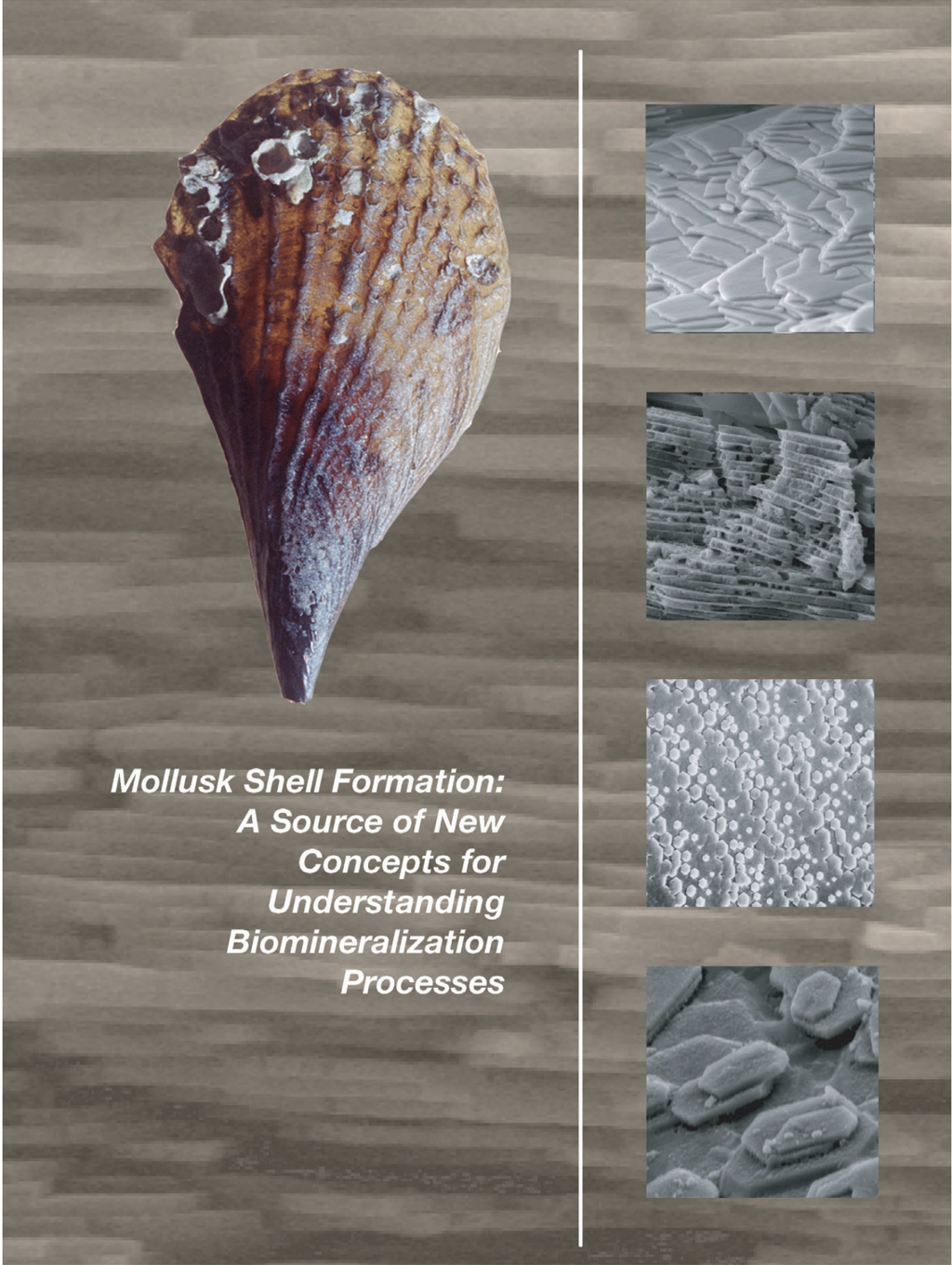
Mollusk Shell Formation: A Source of New Concepts for Understanding Biomineralization Processes
Open accessThe DOI matches its Crossref record; 44 of the 44 references it cites were found in a registry or an index.
Abstract
The biological approach to forming crystals is proving to be most surprising. Mollusks build their shells by using a hydrophobic silk gel, very acidic aspartic acid rich proteins, and apparently also an amorphous precursor phase from which the crystals form. All this takes place in a highly structured chitinous framework. Here we present ideas on how these disparate components work together to produce the highly structured pearly nacreous layer of the mollusk shell.
Overview
The claims and statistics of this paper haven’t been checked yet.
Free: it reads the open-access text and checks the first 5 claims that cite a source we can check. Create a free account to check every claim.
Integrity signals
Registry
Cites
Statistics
Figures


Verification
Claims the paper makes
The claims and statistics of this paper haven’t been checked yet.
Free: it reads the open-access text and checks the first 5 claims that cite a source we can check. Create a free account to check every claim.
Claims other papers make about this one
Each is checked against this paper’s own text: does it say what the citing paper says it does?
The source backs part of the claim, not all of it — or backs it for a different population, condition or comparison.
In the citing paper
“Previous works have demonstrated how various amino acids and chitin have direct effects on CaCO3 precipitation in mollusks,5 chitons,7,23 foraminifera,24 and corals.25”
From Organic Controls over Biomineral Ca-Mg Carbonate Compositions and Morphologies (2023) · cites this paper as [5]
Experimental — accuracy not yet measuredThe source backs part of the claim, not all of it — or backs it for a different population, condition or comparison.
In the citing paper
“In nature, acidic proteins are commonly associated with the biomineralization of carbonates that make up shells, skeletons, and spicules.5,25,41”
From Organic Controls over Biomineral Ca-Mg Carbonate Compositions and Morphologies (2023) · cites this paper as [5]
Experimental — accuracy not yet measured
Self-check
Percentages, sums and reported differences re-computed from the paper’s own numbers.
The self-check needs the paper’s full text.
Citations
Cites
Lowenstam, H. A., & Weiner, S. (1989) · doi:10.1093/oso/9780195049770.001.0001 · Cited by 2,090
Self-citationLiquid crystalline spinning of spider silk
Vollrath, F., & Knight, D. P. (2001) · Nature · doi:10.1038/35069000 · Cited by 1,610
Control of Aragonite or Calcite Polymorphism by Mollusk Shell Macromolecules
Falini, G., Albeck, S., Weiner, S., & Addadi, L. (1996) · Science · doi:10.1126/science.271.5245.67 · Cited by 1,437
Self-citationControl of crystal phase switching and orientation by soluble mollusc-shell proteins
Belcher, A. M., Wu, X. H., Christensen, R. J., Hansma, P. K., Stucky, G. D., & Morse, D. E. (1996) · Nature · doi:10.1038/381056a0 · Cited by 1,153
Sea Urchin Spine Calcite Forms via a Transient Amorphous Calcium Carbonate Phase
Politi, Y., Arad, T., Klein, E., Weiner, S., & Addadi, L. (2004) · Science · doi:10.1126/science.1102289 · Cited by 963
Self-citationStructure and Properties of Silk Hydrogels
Kim, U.-J., Park, J., Li, C., Jin, H.-J., Valluzzi, R., & Kaplan, D. L. (2004) · Biomacromolecules · doi:10.1021/bm0345460 · Cited by 856
Amorphous calcium carbonate transforms into calcite during sea urchin larval spicule growth
Beniash, E., Aizenberg, J., Addadi, L., & Weiner, S. (1997) · Proceedings of the Royal Society of London. Series B: Biological Sciences · doi:10.1098/rspb.1997.0066 · Cited by 729
Self-citationMollusc larval shell formation: amorphous calcium carbonate is a precursor phase for aragonite
Weiss, I. M., Tuross, N., Addadi, L., & Weiner, S. (2002) · Journal of Experimental Zoology · doi:10.1002/jez.90004 · Cited by 664
Self-citationA carbonic anhydrase from the nacreous layer in oyster pearls.
Miyamoto, H., Miyashita, T., Okushima, M., Nakano, S., Morita, T., & Matsushiro, A. (1996) · Proceedings of the National Academy of Sciences · doi:10.1073/pnas.93.18.9657 · Cited by 574
Addadi, L., Moradian, J., Shay, E., Maroudas, N. G., & Weiner, S. (1987) · Proceedings of the National Academy of Sciences · doi:10.1073/pnas.84.9.2732 · Cited by 563
Self-citation
Research works printed but not linked: 12
- 2. A. Veis, in Biomineralization. Reviews in Mineralogy and Geochem- istry, Vol. 53 (Eds.: P. M. Dove, J. J. De Yoreo, S. Weiner), Minera- logical Society of America, Washington DC, 2003, pp. 249 -290.
- 14. C. GrØgoire, in Chemical Zoology (Ed.: B. T. S. M. Florkin), Aca- demic Press, New York, 1972, pp. 45 -102.
- 15. C. Gregoire, G. Duchateau, M. Florkin, Ann. Inst. Oceanogr. 1955, 31, 1 -36.
- 22. O. Cohen, M.Sc. Thesis, Weizmann Institute of Science, Rehovot (Israel), 2003.
- 30. F. Nudelman, B. Gotliv, L. Addadi, S. Weiner, J. Struct. Biol. 2005, in press.
- 31. M. A. Crenshaw, H. Ristedt, in The Mechanisms of Mineralization in the Invertebrates and Plants (Eds.: N. Watabe, K. M. Wilbur), Uni- versity of South Carolina Press, Colombia, 1976, pp. 355 -367.
- 34. N. Watabe, V. R. Meenakshi, P. L. Blackwelder, E. M. Kurtz, D. G. Dunkelberger, in Mechanisms of Biomineralization in the Inverte- brates and Plants (Eds.: N. Watabe, K. M. Wilbur), University South Carolina Press, Columbia, 1976, pp. 283 -308.
- 44. S. Weiner, B. Gotliv, Y. Levi-Kalisman, S. Raz, I. M. Weiss, L. Addadi, in Biomineralization (BIOM2001): Formation, Diversity, Evolution and Application. Proceedings of the 8th International Sym- posium on Biomineralization (Eds.: I.
- 45. Kobayashi, H. Ozawa), Tokai University Press, Kanagawa, 2003, pp. 8-13.
- 48. L. Addadi, S. Weiner, in Biomineralization, Chemical and Biochemi- cal Perspectives (Eds.: S. Mann, J. Webb, J. P. Williams), VCH, Wein- heim, 1989, pp. 133 -156.
- 51. A. G. Checa, A. B. Rodriguez-Navarro, Biomaterials 2005, 26, 1071 - 1079. Published online: November 28, 2005
- 52. Chem. Eur. J. 2006, 12, 980 -987 2006 Wiley-VCH & Co. , Weinheim www.chemeurj.
Cited by
Controlling Mineral Morphologies and Structures in Biological and Synthetic Systems
Meldrum, F. C., & Cölfen, H. (2008) · Chemical Reviews · doi:10.1021/cr8002856 · Cited by 1,397
Gower, L. B. (2008) · Chemical Reviews · doi:10.1021/cr800443h · Cited by 1,086
Synthetic nacre by predesigned matrix-directed mineralization
Mao, L.-B., Gao, H.-L., Yao, H.-B., Liu, L., Cölfen, H., Liu, G., Chen, S.-M., Li, S.-K., Yan, Y.-X., Liu, Y.-Y., et al. (2016) · Science · doi:10.1126/science.aaf8991 · Cited by 983
Protein- and Peptide-Directed Syntheses of Inorganic Materials
Dickerson, M. B., Sandhage, K. H., & Naik, R. R. (2008) · Chemical Reviews · doi:10.1021/cr8002328 · Cited by 960
The Initial Stages of Template-Controlled CaCO 3 Formation Revealed by Cryo-TEM
Pouget, E. M., Bomans, P. H. H., Goos, J. A. C. M., Frederik, P. M., de With, G., & Sommerdijk, N. A. J. M. (2009) · Science · doi:10.1126/science.1169434 · Cited by 913
Biological materials: Functional adaptations and bioinspired designs
Chen, P.-Y., McKittrick, J., & Meyers, M. A. (2012) · Progress in Materials Science · doi:10.1016/j.pmatsci.2012.03.001 · Cited by 766
“Finally a group of hydrophilic proteins, rich in aspartic acid are in direct contact with the aragonite tablets [314,320,333].”
BackgroundAn Acidic Matrix Protein, Pif, Is a Key Macromolecule for Nacre Formation
Suzuki, M., Saruwatari, K., Kogure, T., Yamamoto, Y., Nishimura, T., Kato, T., & Nagasawa, H. (2009) · Science · doi:10.1126/science.1173793 · Cited by 727
Informed and automated k-mer size selection for genome assembly
Chikhi, R., & Medvedev, P. (2014) · Bioinformatics · doi:10.1093/bioinformatics/btt310 · Cited by 721
Impacts of ocean acidification on marine shelled molluscs
Gazeau, F., Parker, L. M., Comeau, S., Gattuso, J.-P., O’Connor, W. A., Martin, S., Pörtner, H.-O., & Ross, P. M. (2013) · Marine Biology · doi:10.1007/s00227-013-2219-3 · Cited by 717
“carbonate solution needed for shell calcification is too large to be provided solely by ion concentrating mechanisms in the EPF (Addadi et al. 2006).”
BackgroundInfluentialXu, A.-W., Ma, Y., & Cölfen, H. (2007) · J. Mater. Chem. · doi:10.1039/b611918m · Cited by 679
Assessing ocean alkalinity for carbon sequestration
Renforth, P., & Henderson, G. (2017) · Reviews of Geophysics · doi:10.1002/2016rg000533 · Cited by 655
“Carbonate precipitation is a key feature in the physiology of a large number of ocean dwelling organisms [Addadi et al., 2006;Müller, 2011].”
BackgroundMesocrystals—Ordered Nanoparticle Superstructures
Song, R., & Cölfen, H. (2010) · Advanced Materials · doi:10.1002/adma.200901365 · Cited by 590
Molluscan Shell Proteins: Primary Structure, Origin, and Evolution
Marin, F., Luquet, G., Marie, B., & Medakovic, D. (2007) · Current Topics in Developmental Biology · doi:10.1016/s0070-2153(07)80006-8 · Cited by 570
Structure and mechanical properties of selected biological materials
Chen, P.-Y., Lin, A. Y. M., Lin, Y.-S., Seki, Y., Stokes, A. G., Peyras, J., Olevsky, E. A., Meyers, M. A., & McKittrick, J. (2008) · Journal of the Mechanical Behavior of Biomedical Materials · doi:10.1016/j.jmbbm.2008.02.003 · Cited by 558
“…Meyers et al., 2008b) and others (Watanabe and Wilber, 1960; Wada, 1964; Towe and Hamilton, 1968; Bevelander and Nakahara, 1970; Erben, 1972; Sarikaya and Aksay, 1992; Fritz et al., 1994; Manne et al., 1994; Falini et al., 1996; Zaremba et al., 1996; Schäffer et al., 1997; Addadi et al., 2006).”
BackgroundBiomineralization as an Inspiration for Materials Chemistry
Nudelman, F., & Sommerdijk, N. A. J. M. (2012) · Angewandte Chemie International Edition · doi:10.1002/anie.201106715 · Cited by 525
Self-citationThe formation and mineralization of mollusk shell
Marin, F. (2012) · Frontiers in Bioscience · doi:10.2741/s321 · Cited by 470
Biomimetic CaCO3 Mineralization using Designer Molecules and Interfaces
Sommerdijk, N. A. J. M., & With, G. D. (2008) · Chemical Reviews · doi:10.1021/cr078259o · Cited by 446
Lannig, G., Eilers, S., Pörtner, H. O., Sokolova, I. M., & Bock, C. (2010) · Marine Drugs · doi:10.3390/md8082318 · Cited by 416
“In molluskan shells consisting of inorganic crystals (calcite and/or aragonite) and an organic (mostly proteinaceous) matrix [72], production of the organic matrix was proposed to be the main cost-intensive process in shell growth [73].”
BackgroundMelzner, F., Stange, P., Trübenbach, K., Thomsen, J., Casties, I., Panknin, U., Gorb, S. N., & Gutowska, M. A. (2011) · PLoS ONE · doi:10.1371/journal.pone.0024223 · Cited by 393
Coral Calcification, Cells to Reefs
Allemand, D., Tambutté, É., Zoccola, D., & Tambutté, S. (2011) · Coral Reefs: An Ecosystem in Transition · doi:10.1007/978-94-007-0114-4_9 · Cited by 382
Biomimetic layer-by-layer assembly of artificial nacre
Finnemore, A., Cunha, P., Shean, T., Vignolini, S., Guldin, S., Oyen, M., & Steiner, U. (2012) · Nature Communications · doi:10.1038/ncomms1970 · Cited by 361
Chitin and collagen as universal and alternative templates in biomineralization
Ehrlich, H. (2010) · International Geology Review · doi:10.1080/00206811003679521 · Cited by 342
“A mixture of chitin–protein pre-fills the space to be mineralized, and the chitin is the ordered structure that ultimately dictates the orientation of the mature crystals (Addadi et al. 2006).”
BackgroundCarbonate factories: A conundrum in sedimentary geology
Pomar, L., & Hallock, P. (2008) · Earth-Science Reviews · doi:10.1016/j.earscirev.2007.12.002 · Cited by 337
Biomineralization: Integrating mechanism and evolutionary history
Gilbert, P. U. P. A., Bergmann, K. D., Boekelheide, N., Tambutté, S., Mass, T., Marin, F., Adkins, J. F., Erez, J., Gilbert, B., Knutson, V., et al. (2022) · Science Advances · doi:10.1126/sciadv.abl9653 · Cited by 327
Composite materials based on silk proteins
Hardy, J. G., & Scheibel, T. R. (2010) · Progress in Polymer Science · doi:10.1016/j.progpolymsci.2010.04.005 · Cited by 322
“It is possible to deposit a layer of B. mori fibroin on porous β-chitin fibers by dip coating the β-chitin fibers in an aqueous solution of B. mori fibroin followed by drying and treatment with aqueous methanol (inducing β-sheet assembly in the fibroin) [142] and [143].”
BackgroundBioapplications of hyperbranched polymers
Wang, D., Zhao, T., Zhu, X., Yan, D., & Wang, W. (2015) · Chemical Society Reviews · doi:10.1039/c4cs00229f · Cited by 301
Tong, T., Wallace, A. F., Zhao, S., & Wang, Z. (2019) · Journal of Membrane Science · doi:10.1016/j.memsci.2019.02.049 · Cited by 296
Yao, H., Ge, J., Mao, L., Yan, Y., & Yu, S. (2014) · Advanced Materials · doi:10.1002/adma.201303470 · Cited by 292
Thomsen, J., & Melzner, F. (2010) · Marine Biology · doi:10.1007/s00227-010-1527-0 · Cited by 290
“Therefore, decreased shell growth rates may in part also be related to increased protein breakdown and nitrogen loss since calcified structures of bivalve shells are enclosed by an organic matrix consisting of proteins and chitin (Matsushiro and Miyashita 2004; Addadi et al. 2006).”
BackgroundNanoscale chemical tomography of buried organic–inorganic interfaces in the chiton tooth
Gordon, L. M., & Joester, D. (2011) · Nature · doi:10.1038/nature09686 · Cited by 282
Self-citationDing, F., Liu, J., Zeng, S., Xia, Y., Wells, K. M., Nieh, M.-P., & Sun, L. (2017) · Science Advances · doi:10.1126/sciadv.1701212 · Cited by 274
Parallel Evolution of Nacre Building Gene Sets in Molluscs
Jackson, D. J., McDougall, C., Woodcroft, B., Moase, P., Rose, R. A., Kube, M., Reinhardt, R., Rokhsar, D. S., Montagnani, C., Joubert, C., et al. (2010) · Molecular Biology and Evolution · doi:10.1093/molbev/msp278 · Cited by 270
“…https://academic.oup.com/mbe/article-abstract/27/3/591/1000371 by guest on 25 July 2018 Primarily based on investigations of bivalve shells, a model of the organic matrix within which nacre deposition occurs has been developed (Levi-Kalisman et al. 2001; Falini et al. 2003; Addadi et al. 2006).”
BackgroundMethodLeung, J. Y. S., Zhang, S., & Connell, S. D. (2022) · Small · doi:10.1002/smll.202107407 · Cited by 266
A hydrated crystalline calcium carbonate phase: Calcium carbonate hemihydrate
Zou, Z., Habraken, W. J. E. M., Matveeva, G., Jensen, A. C. S., Bertinetti, L., Hood, M. A., Sun, C.-Y., Gilbert, P. U. P. A., Polishchuk, I., Pokroy, B., et al. (2019) · Science · doi:10.1126/science.aav0210 · Cited by 255
Self-citationWaldbusser, G. G., Voigt, E. P., Bergschneider, H., Green, M. A., & Newell, R. I. E. (2011) · Estuaries and Coasts · doi:10.1007/s12237-010-9307-0 · Cited by 251
“However, some recent work highlights the possibility of direct mineral deposition by the mantle tissue, rather than supersaturating the calcifying fluid (Addadi et al. 2006).”
BackgroundThe dynamics of nacre self-assembly
Cartwright, J. H. E., & Checa, A. G. (2007) · Journal of The Royal Society Interface · doi:10.1098/rsif.2006.0188 · Cited by 250
“It is speculated that calcium carbonate may be transported in this amorphous state to its crystallization site within the partially completed assembly, having been previously formed elsewhere in the mantle [30].”
BackgroundJoubert, C., Piquemal, D., Marie, B., Manchon, L., Pierrat, F., Zanella-Cléon, I., Cochennec-Laureau, N., Gueguen, Y., & Montagnani, C. (2010) · BMC Genomics · doi:10.1186/1471-2164-11-613 · Cited by 243
“relatively hydrophobic silk proteins plus a complex assemblage of hydrophilic proteins (many of which are unusually rich in aspartic acid), highly structured in a polysaccharide b-chitinous framework [6].”
BackgroundBiomineralization: Elemental and Organic Influence in Carbonate Systems
Cusack, M., & Freer, A. (2008) · Chemical Reviews · doi:10.1021/cr078270o · Cited by 233
Proteomic analysis of skeletal organic matrix from the stony coral Stylophora pistillata
Drake, J. L., Mass, T., Haramaty, L., Zelzion, E., Bhattacharya, D., & Falkowski, P. G. (2013) · Proceedings of the National Academy of Sciences · doi:10.1073/pnas.1301419110 · Cited by 233
Nudelman, F., Chen, H. H., Goldberg, H. A., Weiner, S., & Addadi, L. (2007) · Faraday Discussions · doi:10.1039/b704418f · Cited by 232
Self-citationGiuffre, A. J., Hamm, L. M., Han, N., De Yoreo, J. J., & Dove, P. M. (2013) · Proceedings of the National Academy of Sciences · doi:10.1073/pnas.1222162110 · Cited by 230
The thermodynamics of calcite nucleation at organic interfaces: Classical vs. non-classical pathways
Hu, Q., Nielsen, M. H., Freeman, C. L., Hamm, L. M., Tao, J., Lee, J. R. I., Han, T. Y. J., Becker, U., Harding, J. H., Dove, P. M., et al. (2012) · Faraday Discussions · doi:10.1039/c2fd20124k · Cited by 230
Crystal Growth of Calcium Carbonate in Hydrogels as a Model of Biomineralization
Asenath‐Smith, E., Li, H., Keene, E. C., Seh, Z. W., & Estroff, L. A. (2012) · Advanced Functional Materials · doi:10.1002/adfm.201200300 · Cited by 230
Du, X., Fan, G., Jiao, Y., Zhang, H., Guo, X., Huang, R., Zheng, Z., Bian, C., Deng, Y., Wang, Q., et al. (2017) · GigaScience · doi:10.1093/gigascience/gix059 · Cited by 225
Biomineralization: A structural perspective
Weiner, S. (2008) · Journal of Structural Biology · doi:10.1016/j.jsb.2008.02.001 · Cited by 221
“Some are thought to be involved in the formation of the disordered precursor phase, others in the crystal nucleation and growth processes, and others are located within the crystal itself where at least in the case of calcite, they change the materials properties of the crystal (Addadi et al., 2006; Berman et al., 198…”
BackgroundSelf-citationMolluscan shell evolution with review of shell calcification hypothesis
Furuhashi, T., Schwarzinger, C., Miksik, I., Smrz, M., & Beran, A. (2009) · Comparative Biochemistry and Physiology Part B: Biochemistry and Molecular Biology · doi:10.1016/j.cbpb.2009.07.011 · Cited by 220
A rapidly evolving secretome builds and patterns a sea shell
Jackson, D. J., McDougall, C., Green, K., Simpson, F., Wörheide, G., & Degnan, B. M. (2006) · BMC Biology · doi:10.1186/1741-7007-4-40 · Cited by 219
“While the structure and function of a number of shell matrix proteins have recently been characterized [7,10-17], the regulatory mechanisms that govern these shell-building processes remain largely unknown.”
BackgroundKocot, K. M., Aguilera, F., McDougall, C., Jackson, D. J., & Degnan, B. M. (2016) · Frontiers in Zoology · doi:10.1186/s12983-016-0155-z · Cited by 212
Biomimetic and bioinspired membranes: Preparation and application
Zhao, J., Zhao, X., Jiang, Z., Li, Z., Fan, X., Zhu, J., Wu, H., Su, Y., Yang, D., Pan, F., et al. (2014) · Progress in Polymer Science · doi:10.1016/j.progpolymsci.2014.06.001 · Cited by 200
Rieger, J., Frechen, T., Cox, G., Heckmann, W., Schmidt, C., & Thieme, J. (2007) · Faraday Discussions · doi:10.1039/b701450c · Cited by 185
The toughening mechanism of nacre and structural materials inspired by nacre
Kakisawa, H., & Sumitomo, T. (2011) · Science and Technology of Advanced Materials · doi:10.1088/1468-6996/12/6/064710 · Cited by 179
Biomimetic Structural Materials: Inspiration from Design and Assembly
Yaraghi, N. A., & Kisailus, D. (2018) · Annual Review of Physical Chemistry · doi:10.1146/annurev-physchem-040215-112621 · Cited by 176
Nanoscale Transforming Mineral Phases in Fresh Nacre
DeVol, R. T., Sun, C.-Y., Marcus, M. A., Coppersmith, S. N., Myneni, S. C. B., & Gilbert, P. U. P. A. (2015) · Journal of the American Chemical Society · doi:10.1021/jacs.5b07931 · Cited by 175
Schöne, B. R. (2013) · Global and Planetary Change · doi:10.1016/j.gloplacha.2013.09.013 · Cited by 174
Nanostructure, composition and mechanisms of bivalve shell growth
Jacob, D. E., Soldati, A. L., Wirth, R., Huth, J., Wehrmeister, U., & Hofmeister, W. (2008) · Geochimica et Cosmochimica Acta · doi:10.1016/j.gca.2008.08.019 · Cited by 171
“These findings do not support the more traditional models of nacre formation which postulate the presence of an organic interlamellar sheet as the nucleation template for the crystallization of aragonite or calcite (Bevelander and Nakahara, 1969; Falini et al., 1996; Addadi et al., 2006).”
BackgroundResultInfluentialMolecular Mechanisms of Magnetosome Formation
Komeili, A. (2007) · Annual Review of Biochemistry · doi:10.1146/annurev.biochem.74.082803.133444 · Cited by 170
Biosorption of divalent Pb, Cd and Zn on aragonite and calcite mollusk shells
Du, Y., Lian, F., & Zhu, L. (2011) · Environmental Pollution · doi:10.1016/j.envpol.2011.04.017 · Cited by 167
“As the main source of biogenic CaCO3, mollusk shells consist of >95% of CaCO3 with small amount of SiO2, protein and polysaccharide (Addadi et al., 2006).”
BackgroundMerschel, G., & Bau, M. (2015) · The Science of The Total Environment · doi:10.1016/j.scitotenv.2015.06.042 · Cited by 166
Insights from the Shell Proteome: Biomineralization to Adaptation
Arivalagan, J., Yarra, T., Marie, B., Sleight, V. A., Duvernois‐Berthet, E., Clark, M. S., Marie, A., & Berland, S. (2016) · Molecular Biology and Evolution · doi:10.1093/molbev/msw219 · Cited by 171
“SMPs are secreted in the mantle, an epithelial tissue lining the shell and are exported to the shell matrix space (Addadi et al. 2006).”
BackgroundPolymorph Switching of Calcium Carbonate Crystals by Polymer‐Controlled Crystallization
Xu, A., Dong, W., Antonietti, M., & Cölfen, H. (2008) · Advanced Functional Materials · doi:10.1002/adfm.200700895 · Cited by 161
Bioinspired Additive Manufacturing of Hierarchical Materials: From Biostructures to Functions
Wei, J., Pan, F., Ping, H., Yang, K., Wang, Y., Wang, Q., & Fu, Z. (2023) · Research · doi:10.34133/research.0164 · Cited by 170
Hüning, A. K., Melzner, F., Thomsen, J., Gutowska, M. A., Krämer, L., Frickenhaus, S., Rosenstiel, P. C., Pörtner, H., Philipp, E. E. R., & Lucassen, M. (2012) · Marine Biology · doi:10.1007/s00227-012-1930-9 · Cited by 171
Li, C., & Qi, L. (2008) · Angewandte Chemie International Edition · doi:10.1002/anie.200705403 · Cited by 156
Amorphous, nanocrystalline and crystalline calcium carbonates in biological materials
Wehrmeister, U., Jacob, D. E., Soldati, A. L., Loges, N., Häger, T., & Hofmeister, W. (2011) · Journal of Raman Spectroscopy · doi:10.1002/jrs.2835 · Cited by 151
Li, Y., Tan, B., & Wu, Y. (2007) · Chemistry of Materials · doi:10.1021/cm070784g · Cited by 159
Clark, M. S., Peck, L. S., Arivalagan, J., Backeljau, T., Berland, S., Cardoso, J. C. R., Caurcel, C., Chapelle, G., Noia, M. D., Dupont, S. T., et al. (2020) · Biological reviews/Biological reviews of the Cambridge Philosophical Society · doi:10.1111/brv.12640 · Cited by 160
“The latter mechanisms include calcium bound to specialized transport proteins, potentially involving haemocytes and intracellular vesicles, which may or may not contain amorphous calcium carbonate (Nair & Robinson, 1998; Addadi et al., 2006; Li et al., 2016; Ramesh et al., 2017).”
BackgroundSynthesis and Characterization of Gelatin‐Based Magnetic Hydrogels
Helminger, M., Wu, B., Kollmann, T., Benke, D., Schwahn, D., Pipich, V., Faivre, D., Zahn, D., & Cölfen, H. (2014) · Advanced Functional Materials · doi:10.1002/adfm.201303547 · Cited by 150
Silk Fibroin‐Regulated Crystallization of Calcium Carbonate
Cheng, C., Shao, Z., & Vollrath, F. W. (2008) · Advanced Functional Materials · doi:10.1002/adfm.200701130 · Cited by 147
A Unified Description of Attachment-Based Crystal Growth
Zhang, H., Yoreo, J. J. D., & Banfield, J. F. (2014) · ACS Nano · doi:10.1021/nn503145w · Cited by 147
Oleksiak, M. D., & Rimer, J. D. (2014) · Reviews in Chemical Engineering · doi:10.1515/revce-2013-0020 · Cited by 135
Eagle, R. A., Eiler, J. M., Tripati, A. K., Ries, J. B., Freitas, P. S., Hiebenthal, C., Wanamaker, A. D., Taviani, M., Elliot, M., Marenssi, S., et al. (2013) · Biogeosciences · doi:10.5194/bg-10-4591-2013 · Cited by 128
Novel magnetic nanomaterials inspired by magnetotactic bacteria: Topical review
Prozorov, T., Bazylinski, D. A., Mallapragada, S. K., & Prozorov, R. (2013) · Materials Science and Engineering: R: Reports · doi:10.1016/j.mser.2013.04.002 · Cited by 137
Biological mechanisms supporting adaptation to ocean acidification in coastal ecosystems
Hendriks, I. E., Duarte, C. M., Olsen, Y. S., Steckbauer, A., Ramajo, L., Moore, T. S., Trotter, J., & McCulloch, M. T. (2014) · Estuarine Coastal and Shelf Science · doi:10.1016/j.ecss.2014.07.019 · Cited by 150
“Shell growth initiates with the formation of a periostracum (outer organic coating, Kennedy et al., 1969) in the mantle folds, followed by the deposition of an organic matrix, and then calcium carbonate (Wilbur and Saleuddin 1983; Addidi et al., 2006).”
Bioprocess-inspired fabrication of materials with new structures and functions
Xie, J., Ping, H., Tan, T., Lei, L., Xie, H., Yang, X., & Fu, Z. (2019) · Progress in Materials Science · doi:10.1016/j.pmatsci.2019.05.004 · Cited by 137
The Development of Morphology and Structure in Hexagonal Vaterite
Pouget, E. M., Bomans, P. H. H., Dey, A., Frederik, P. M., de With, G., & Sommerdijk, N. A. J. M. (2010) · Journal of the American Chemical Society · doi:10.1021/ja102439r · Cited by 132
Dynamic expression of ancient and novel molluscan shell genes during ecological transitions
Jackson, D. J., Wörheide, G., & Degnan, B. M. (2007) · BMC Evolutionary Biology · doi:10.1186/1471-2148-7-160 · Cited by 141
“The highly repetitive nature of Has-tsfgr1 also suggests that this protein may be involved in forming the organic template upon which initial CaCO3 nucleation occurs [48].”
BackgroundMolecular Mechanisms Underlying Calcification in Coccolithophores
Mackinder, L. C. M., Wheeler, G. L., Schroeder, D. C., Riebesell, U., & Brownlee, C. (2010) · Geomicrobiology Journal · doi:10.1080/01490451003703014 · Cited by 146
“This silk fibrion-glycoprotein network forms a hydrated gel matrix that creates an appropriate micro-environment for controlled crystal growth ( Lia Addadi 2006 ).”
BackgroundInfluentialProteomic analysis of the organic matrix of the abalone Haliotis asinina calcified shell
Marie, B., Marie, A., Jackson, D. J., Dubost, L., Degnan, B. M., Milet, C., & Marin, F. (2010) · Proteome Science · doi:10.1186/1477-5956-8-54 · Cited by 138
“The biochemical characteristics of the matrix, usually purified and studied following decalcification of the shell, indicate that it is comprised of a heterogenous set of macromolecules including chitin, hydrophobic ‘framework’ proteins and soluble proteins and glycoproteins [1].”
BackgroundTowards a better understanding of magnesium-isotope ratios from marine skeletal carbonates
Hippler, D., Buhl, D., Witbaard, R., Richter, D., & Immenhauser, A. (2009) · Geochimica et Cosmochimica Acta · doi:10.1016/j.gca.2009.07.031 · Cited by 142
The chitin synthase involved in marine bivalve mollusk shell formation contains a myosin domain
Weiss, I. M., Schönitzer, V., Eichner, N., & Sumper, M. (2006) · FEBS Letters · doi:10.1016/j.febslet.2006.02.044 · Cited by 141
“ate biomineral formation of adult and larval mollusks [4,38].”
BackgroundMetal oxides and polysaccharides: an efficient hybrid association for materials chemistry
Boury, B., & Plumejeau, S. (2014) · Green Chemistry · doi:10.1039/c4gc00957f · Cited by 132
Nudelman, F., Shimoni, E., Klein, E., Rousseau, M., Bourrat, X., Lopez, É., Addadi, L., & Weiner, S. (2008) · Journal of Structural Biology · doi:10.1016/j.jsb.2008.01.008 · Cited by 140
Self-citationMollusc and brachiopod skeletal hard parts: Intricate archives of their marine environment
Immenhauser, A., Schöne, B. R., Hoffmann, R., & Niedermayr, A. (2016) · Sedimentology · doi:10.1111/sed.12231 · Cited by 126
“, 1984) in the biomineralization space ultimately dictates the orientation of the mature crystals (Addadi et al., 2006).”
BackgroundInfluentialGastropod nacre: Structure, properties and growth — Biological, chemical and physical basics
Heinemann, F., Launspach, M., Gries, K. I., & Fritz, M. (2010) · Biophysical Chemistry · doi:10.1016/j.bpc.2010.11.003 · Cited by 139
Structure, composition and mechanical relations to function in sea urchin spine
Moureaux, C., Pérez‐Huerta, A., Compère, P., Zhu, W., Leloup, T., Cusack, M., & Dubois, P. (2010) · Journal of Structural Biology · doi:10.1016/j.jsb.2010.01.003 · Cited by 130
“Structural, chemical, and crystallographical features of these biominerals are now better characterized at the nanoscale level (e.g. Weiner et al., 2000; Cölfen and Mann, 2003; Addadi et al., 2006).”
BackgroundSynthesis of All Crystalline Phases of Anhydrous Calcium Carbonate
Sarkar, A., & Mahapatra, S. (2010) · Crystal Growth & Design · doi:10.1021/cg9012813 · Cited by 126
In-depth proteomic analysis of shell matrix proteins of Pinctada fucata
Liu, C., Li, S., Kong, J., Liu, Y., Wang, T., Xie, L., & Zhang, R. (2015) · Scientific Reports · doi:10.1038/srep17269 · Cited by 137
“One function of silk-like proteins is to act as a mild inhibitor of mineralization 20 .”
InfluentialSong, X., Liu, Z., Wang, L., & Song, L. (2019) · Frontiers in Marine Science · doi:10.3389/fmars.2019.00041 · Cited by 133
“Molluscs utilize a highly crosslinked protein layer (periostracum) and the outer mantle epithelial cells (OME), between where they elaborate a matrix comprising various macromolecules serving as the framework (Wilbur and Saleuddin, 1983; Lowenstam and Weiner, 1989; Addadi et al., 2006).”
BackgroundResultInfluentialPoliti, Y., Mahamid, J., Goldberg, H., Weiner, S., & Addadi, L. (2007) · CrystEngComm · doi:10.1039/b709749b · Cited by 124
Self-citationFang, D., Xu, G., Hu, Y., Pan, C., Xie, L., & Zhang, R. (2011) · PLoS ONE · doi:10.1371/journal.pone.0021860 · Cited by 131
“, and they provide one of the best known model systems for research on biomineralization”
BackgroundMicron-sized liquid crystalline elastomer actuators
Yang, H., Ye, G., Wang, X., & Keller, P. (2011) · Soft Matter · doi:10.1039/c0sm00734j · Cited by 124
Controlling protein assembly on inorganic crystals through designed protein interfaces
Pyles, H., Zhang, S., De Yoreo, J. J., & Baker, D. (2019) · Nature · doi:10.1038/s41586-019-1361-6 · Cited by 116
Multiple Pathways for Pathological Calcification in the Human Body
Vidavsky, N., Kunitake, J. A. M. R., & Estroff, L. A. (2020) · Advanced Healthcare Materials · doi:10.1002/adhm.202001271 · Cited by 129
Studies on molluscan shells: Contributions from microscopic and analytical methods
de Paula, S. M., & Silveira, M. (2009) · Micron · doi:10.1016/j.micron.2009.05.006 · Cited by 133
Marie, B., Jackson, D. J., Ramos‐Silva, P., Zanella‐Cléon, I., Guichard, N., & Marin, F. (2012) · FEBS Journal · doi:10.1111/febs.12062 · Cited by 130
“In classical models of mollusc shell biomineralization, these molecules form a framework of parallel layers between which silk-like and acidic proteins are sandwiched [11,59].”
Kahil, K., Weiner, S., Addadi, L., & Gal, A. (2021) · Journal of the American Chemical Society · doi:10.1021/jacs.1c09174 · Cited by 128
Self-citationStructure and mechanical properties of selected protective systems in marine organisms
Naleway, S. E., Taylor, J. R. A., Porter, M. M., Meyers, M. A., & McKittrick, J. M. (2015) · Materials Science and Engineering C · doi:10.1016/j.msec.2015.10.033 · Cited by 131
“This results in growth of a lamellar, brick-and-mortar structure with CaCO3 tablets held together by an organic mortar and mineral bridges [95,97].”
BackgroundMechanism of cadmium biosorption from aqueous solutions using calcined oyster shells
Alidoust, D., Kawahigashi, M., Yoshizawa, S., Sumida, H., & Watanabe, M. (2014) · Journal of Environmental Management · doi:10.1016/j.jenvman.2014.10.032 · Cited by 118
“Therefore, organic matter derived from NOS, including chitin and silk protein (Addadi et al., 2006), can be removed at 450 C.”
BackgroundUse of Amorphous Calcium Carbonate for the Design of New Materials
Cantaert, B., Kuo, D., Matsumura, S., Nishimura, T., Sakamoto, T., & Kato, T. (2016) · ChemPlusChem · doi:10.1002/cplu.201600457 · Cited by 122
Nacre biomineralisation: A review on the mechanisms of crystal nucleation
Nudelman, F. (2015) · Seminars in Cell and Developmental Biology · doi:10.1016/j.semcdb.2015.07.004 · Cited by 129
Self-citation
Metadata
- Authors
- Addadi, L., Joester, D., Nudelman, F., & Weiner, S.
- Affiliations
- Weizmann Institute of Science (IL)
- Venue
- Chemistry – A European Journal
- Publisher
- Wiley
- Published
- 2006-01-13
- Volume
- 12
- Issue
- 4
- Pages
- 980-987
- ISSN
- 0947-6539 (ISSN-L)
- 1521-3765
- OpenAlex
- W2155818894
- Cited by
- 1,079
- References
- 44
- Citations by year
- 2026: 28 · 2025: 44 · 2024: 44 · 2023: 56 · 2022: 67 · 2021: 65 · 2020: 50 · 2019: 71 · 2018: 55 · 2017: 54 · 2016: 56 · 2015: 51 · 2014: 59 · 2013: 66 · 2012: 50
- FWCI
- 17.78
- Type
- journal article
- Language
- en
- Open access
- hybrid
- doi.org
- Locations
- Chemistry - A European Journal (publishedVersion, cc-by)
- PubMed (publishedVersion)
- Funders
- Minerva Foundation
- Topics
- Physical Sciences › Materials Science › Biomaterials › Calcium Carbonate Crystallization and Inhibition
- Life Sciences › Agricultural and Biological Sciences › Ecology, Evolution, Behavior and Systematics › Diatoms and Algae Research
- Physical Sciences › Physics and Astronomy › Astronomy and Astrophysics › Origins and Evolution of Life
- Keywords
- biomineralization, nacre, crystal growth
- MeSH terms
- Animals, Calcium Carbonate, Chitin, Crystallization, Gels, Mollusca, Silk
About these checks
Registry, retraction, Cites and statistics results are computed, not judged, with one exception: a printed reference that no index lists is read once by a model before it counts as a citation error. Claims are extracted by a model and kept only when their quote appears verbatim in the text; each cited source is then checked, with a model’s help, for whether it says what the claim relies on. Those verdicts can be wrong — read the claim’s quote and the cited source before relying on one.
Statistics and arithmetic are recomputed, not judged.
Confidence bands are shown only for fields calibrated on our annotated test set. None is calibrated yet, so no band is shown.
What counts as a claim ›How we measure confidence ›How we check this ›
Are you an author, or do you see a problem with this page? Request a review
Data sources
Bibliographic data: Semantic Scholar, OpenAlex, Crossref.
Contains information from the Semantic Scholar Academic Graph Datasets, made available under the ODC Attribution License (ODC-BY 1.0).
Semantic Scholar’s data is described in: Kinney, R., et al. (2023). The Semantic Scholar Open Data Platform. arXiv:2301.10140.
