

The DOI matches its Crossref record; 75 of the 76 references it cites were found in a registry or an index.
The impact of ageing, physical activity, and pre‐frailty on skeletal muscle phenotype, mitochondrial content, and intramyocellular lipids in men
Open accessAbstract
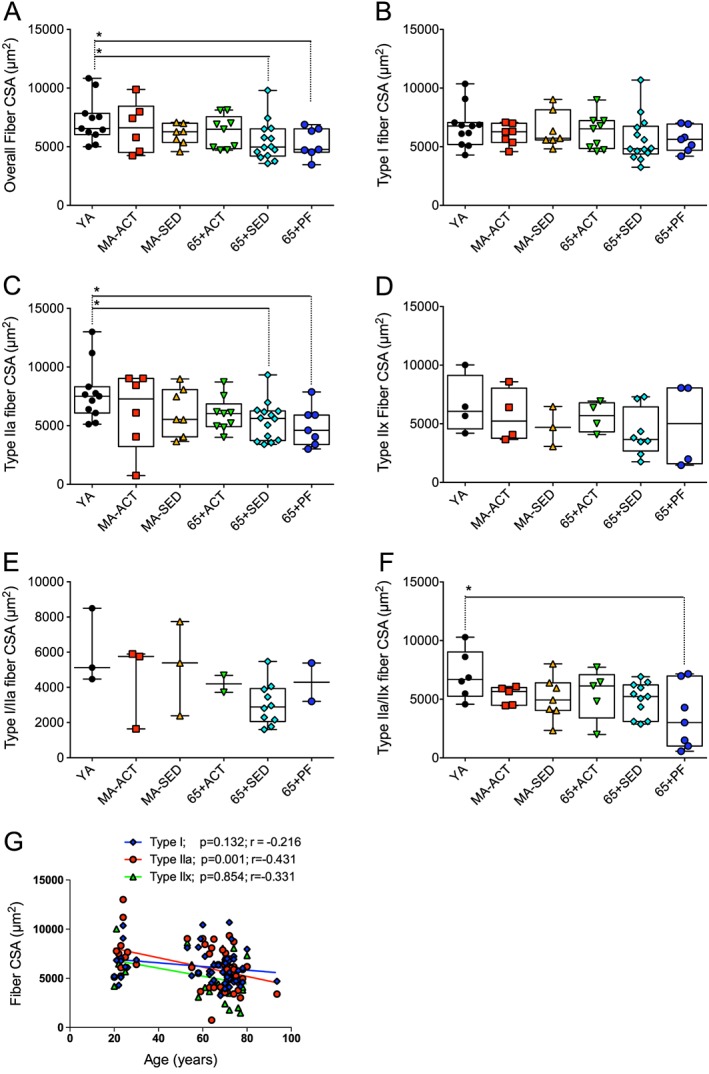
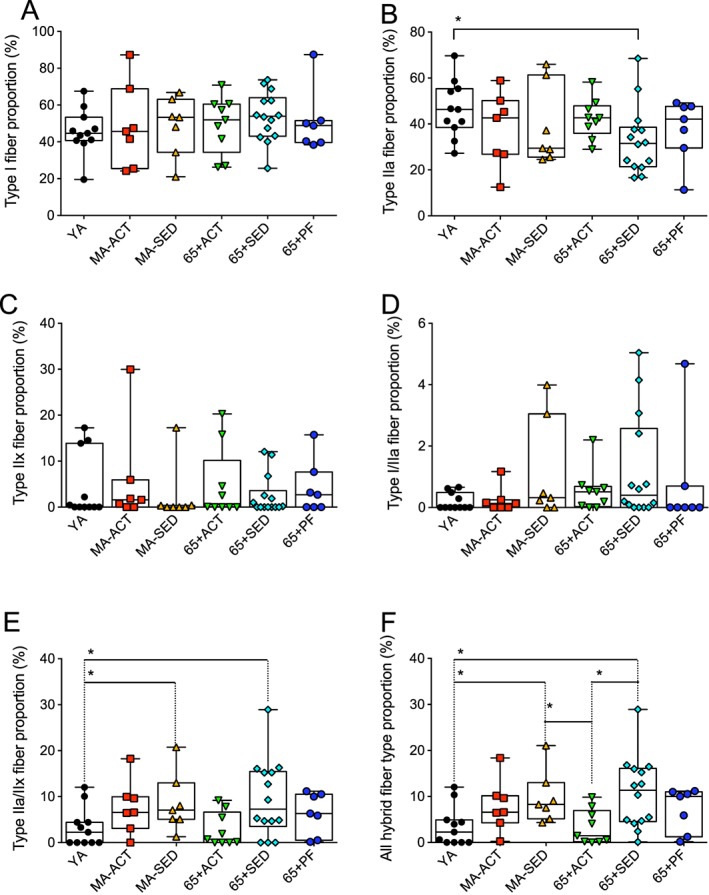
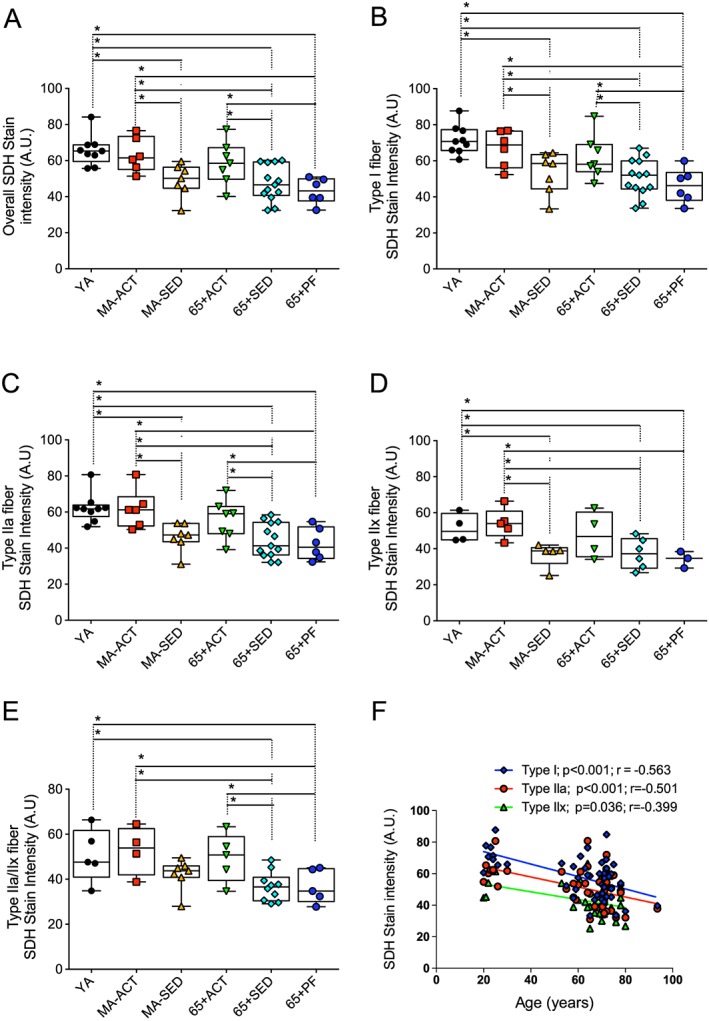
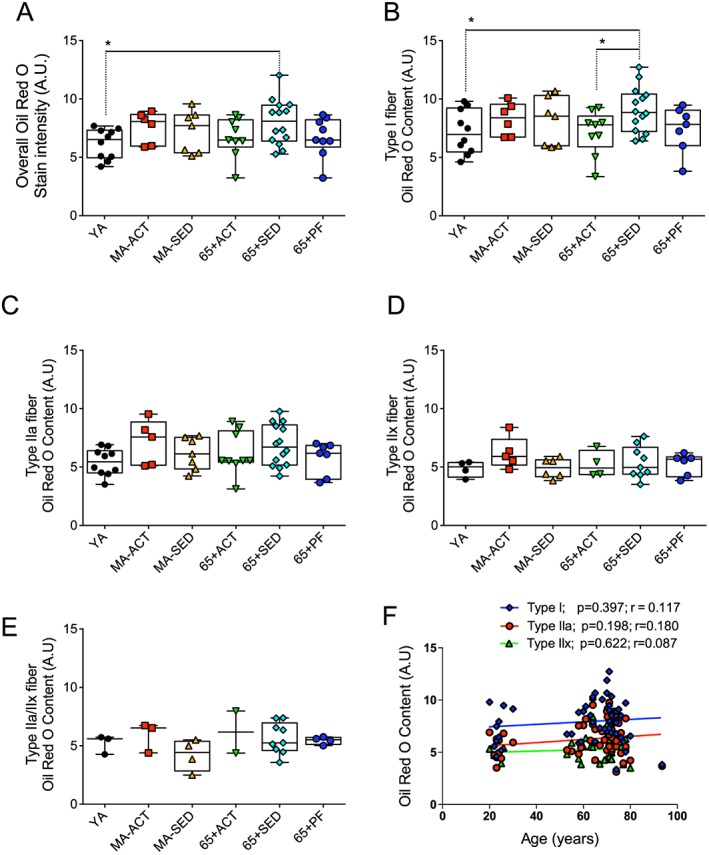
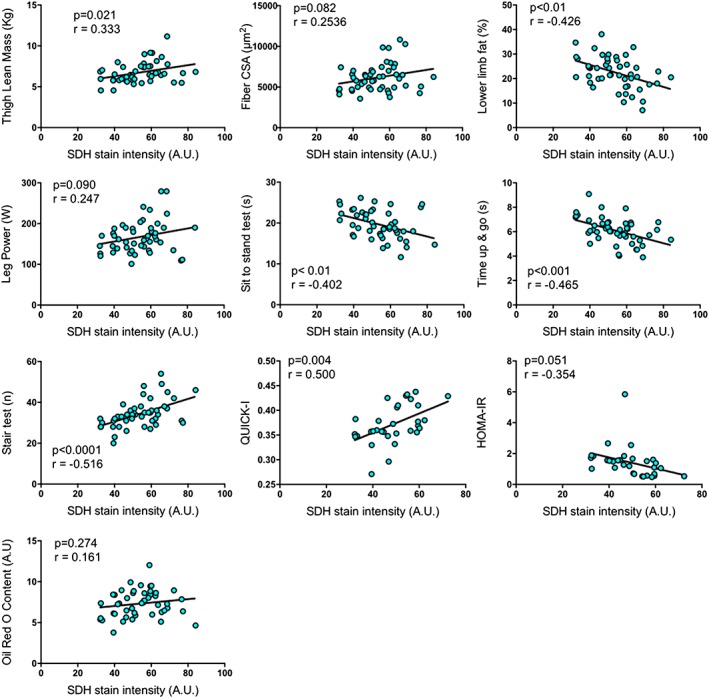
Background: The exact impact of ageing on skeletal muscle phenotype and mitochondrial and lipid content remains controversial, probably because physical activity, which greatly influences muscle physiology, is rarely accounted for. The present study was therefore designed to investigate the effects of ageing, physical activity, and pre‐frailty on skeletal muscle phenotype, and mitochondrial and intramyocellular lipid content in men. Methods: Recreationally active young adult (20–30 yo; YA); active (ACT) and sedentary (SED) middle‐age (50–65 yo; MA‐ACT and MA‐SED); and older (65 + yo; 65 + ACT and 65 + SED) and pre‐frail older (65 + PF) men were recruited. Muscle biopsies from the vastus lateralis were collected to assess, on muscle cross sections, muscle phenotype (using myosin heavy chain isoforms immunolabelling), the fibre type‐specific content of mitochondria (by quantifying the succinate dehydrogenase stain intensity), and the fibre type‐specific lipid content (by quantifying the Oil Red O stain intensity). Results: Only 65 + SED and 65 + PF displayed significantly lower overall and type IIa fibre sizes vs. YA. 65 + SED displayed a lower type IIa fibre proportion vs. YA. MA‐SED and 65 + SED displayed a higher hybrid type IIa/IIx fibre proportion vs. YA. Sedentary and pre‐frail, but not active, men displayed lower mitochondrial content irrespective of fibre type vs. YA. 65 + SED, but not 65 + ACT, displayed a higher lipid content in type I fibres vs. YA. Finally, mitochondrial content, but not lipid content, was positively correlated with indices of muscle function, functional capacity, and insulin sensitivity across all subjects. Conclusions: Taken altogether, our results indicate that ageing in sedentary men is associated with (i) complex changes in muscle phenotype preferentially affecting type IIa fibres; (ii) a decline in mitochondrial content affecting all fibre types; and (iii) an increase in lipid content in type I fibres. They also indicate that physical activity partially protects from the effects of ageing on muscle phenotype, mitochondrial content, and lipid accumulation. No skeletal specific muscle phenotype of pre‐frailty was observed.
Overview
The claims and statistics of this paper haven’t been checked yet.
Run the check — free, no account needed. It reads the open-access text and checks the sources it cites.
Integrity signals
Registry
Cites
Statistics
Figures
Verification
Claims the paper makes
The claims and statistics of this paper haven’t been checked yet.
Run the check — free, no account needed. It reads the open-access text and checks the sources it cites.
Claims other papers make about this one
Each is checked against this paper’s own text: does it say what the citing paper says it does?
In the citing paper
“Compared to healthy older adults, studies report greater IMCLs in frail, mobility-impaired and high fall-risk older adults with reduced muscle performance, who are at increased risk of death and disability ([63, 70, 71].”
From Targeting Intramyocellular Lipids to Improve Aging Muscle Function (2025) · cites this paper as [70]
In the citing paper
“the most efficient interventions to attenuate sarcopenia are exercise training [21,22,23,24] and calorie restriction [25,26,27]”
From Mitochondrial Dynamics and Mitophagy in Skeletal Muscle Health and Aging (2021) · cites this paper as [23]
Self-check
Percentages, sums and reported differences re-computed from the paper’s own numbers.
The self-check needs the paper’s full text.
Citations
Cites
Matthews, D. R., Hosker, J. P., Rudenski, A. S., Naylor, B. A., Treacher, D. F., & Turner, R. C. (1985) · Diabetologia · doi:10.1007/bf00280883 · Cited by 31,502
Frailty in Older Adults: Evidence for a Phenotype
Fried, L. P., Tangen, C. M., Walston, J., Newman, A. B., Hirsch, C., Gottdiener, J., Seeman, T., Tracy, R., Kop, W. J., Burke, G., et al. (2001) · The Journals of Gerontology Series A: Biological Sciences and Medical Sciences · doi:10.1093/gerona/56.3.m146 · Cited by 24,907
Guralnik, J. M., Simonsick, E. M., Ferrucci, L., Glynn, R. J., Berkman, L. F., Blazer, D. G., Scherr, P. A., & Wallace, R. B. (1994) · Journal of Gerontology · doi:10.1093/geronj/49.2.m85 · Cited by 9,792
Garber, C. E., Blissmer, B., Deschenes, M. R., Franklin, B. A., Lamonte, M. J., Lee, I.-M., Nieman, D. C., & Swain, D. P. (2011) · Medicine & Science in Sports & Exercise · doi:10.1249/mss.0b013e318213fefb · Cited by 9,319
Janssen, I., Heymsfield, S. B., & Ross, R. (2002) · Journal of the American Geriatrics Society · doi:10.1046/j.1532-5415.2002.50216.x · Cited by 3,139 · cited 2×
“and quality, a physiological process often termed sarcopenia, is one of the most characteristic changes occurring with ageing.(1,2) Because sarcopenia is the major factor leading to mobility impairment, falls, and physical frailty in older individuals, it can dramatically alter the quality of life of afflicted individ…”
BackgroundSarcopenia: origins and clinical relevance
Rosenberg, I. H. (1997) · The Journal of Nutrition · doi:10.1093/jn/127.5.990s · Cited by 2,399
What is the cause of the ageing atrophy?
Lexell, J. E., Taylor, C. C., & Sjöstróm, M. (1988) · Journal of the Neurological Sciences · doi:10.1016/0022-510x(88)90132-3 · Cited by 2,142
A questionnaire for the assessment of leisure time physical activities
Taylor, H. L., Jacobs, D. R., Schucker, B., Knudsen, J., Leon, A. S., & Debacker, G. (1978) · Journal of Chronic Diseases · doi:10.1016/0021-9681(78)90058-9 · Cited by 1,848
Biochemical Adaptations in Muscle
Holloszy, J. O. (1967) · Journal of Biological Chemistry · doi:10.1016/s0021-9258(18)96046-1 · Cited by 1,517
Aging of skeletal muscle: a 12-yr longitudinal study
Frontera, W. R., Hughes, V. A., Fielding, R. A., Fiatarone, M. A., Evans, W. J., & Roubenoff, R. (2000) · Journal of Applied Physiology · doi:10.1152/jappl.2000.88.4.1321 · Cited by 1,443
Research works printed but not linked: 2
- 10.1111/j.1469-7793.2003.00499.x · DOI
- 10.1210/jcem.86.12.8075 · DOI · Paper page
Cited by
Sorted by citations
Ticinesi, A., Lauretani, F., Milani, C., Nouvenne, A., Tana, C., Del Rio, D., Maggio, M., Ventura, M., & Meschi, T. (2017) · Nutrients · doi:10.3390/nu9121303 · Cited by 401
Grevendonk, L., Connell, N. J., McCrum, C., Fealy, C. E., Bilet, L., Bruls, Y. M. H., Mevenkamp, J., Schrauwen-Hinderling, V. B., Jörgensen, J. A., Moonen-Kornips, E., et al. (2021) · Nature Communications · doi:10.1038/s41467-021-24956-2 · Cited by 298
Mechanism of increased risk of insulin resistance in aging skeletal muscle
Shou, J., Chen, P.-J., & Xiao, W.-H. (2020) · Diabetology & Metabolic Syndrome · doi:10.1186/s13098-020-0523-x · Cited by 283
Mitochondrial Dynamics and Mitophagy in Skeletal Muscle Health and Aging
Leduc-Gaudet, J.-P., Hussain, S. N. A., Barreiro, E., & Gouspillou, G. (2021) · International Journal of Molecular Sciences · doi:10.3390/ijms22158179 · Cited by 268
Self-citationMuscle Wasting and Sarcopenia in Heart Failure and Beyond: Update 2017
Springer, J., Springer, J., & Anker, S. D. (2017) · ESC Heart Failure · doi:10.1002/ehf2.12237 · Cited by 259
Multisystem physiological perspective of human frailty and its modulation by physical activity
Taylor, J. A., Greenhaff, P. L., Bartlett, D. B., Jackson, T., Duggal, N. A., & Lord, J. M. (2022) · Physiological Reviews · doi:10.1152/physrev.00037.2021 · Cited by 218
Strasser, B., Wolters, M., Weyh, C., Krüger, K., & Ticinesi, A. (2021) · Nutrients · doi:10.3390/nu13062045 · Cited by 192
Distéfano, G., Standley, R. A., Zhang, X., Carnero, E. Á., Yi, F., Cornnell, H. H., & Coen, P. M. (2018) · Journal of Cachexia Sarcopenia and Muscle · doi:10.1002/jcsm.12272 · Cited by 186
Mitochondria as a Target for Mitigating Sarcopenia
Coen, P. M., Musci, R. V., Hinkley, J. M., & Miller, B. F. (2019) · Frontiers in Physiology · doi:10.3389/fphys.2018.01883 · Cited by 163
Carter, H. N., Kim, Y., Erlich, A. T., Zarrin‐khat, D., & Hood, D. A. (2018) · The Journal of Physiology · doi:10.1113/jp275998 · Cited by 136
Gamboa, J. L., Roshanravan, B., Towse, T., Keller, C. A., Falck, A. M., Yu, C., Frontera, W. R., Brown, N. J., & Ikizler, T. A. (2020) · Clinical Journal of the American Society of Nephrology · doi:10.2215/cjn.10320819 · Cited by 136
Skeletal muscle wasting in chronic heart failure
Suzuki, T., Palus, S., & Springer, J. (2018) · ESC Heart Failure · doi:10.1002/ehf2.12387 · Cited by 134
Sarcopenia in Menopausal Women: Current Perspectives
Buckinx, F., & Aubertin‐Leheudre, M. (2022) · International Journal of Women s Health · doi:10.2147/ijwh.s340537 · Cited by 153
Self-citationParkin overexpression protects from ageing‐related loss of muscle mass and strength
Leduc‐Gaudet, J., Reynaud, O., Hussain, S. N., & Gouspillou, G. (2019) · The Journal of Physiology · doi:10.1113/jp277157 · Cited by 119
Self-citationShort‐term disuse promotes fatty acid infiltration into skeletal muscle
Pagano, A. F., Brioche, T., Arc-Chagnaud, C., Demangel, R., Chopard, A., & Py, G. (2017) · Journal of Cachexia, Sarcopenia and Muscle · doi:10.1002/jcsm.12259 · Cited by 99
Granic, A., Suetterlin, K., Shavlakadze, T., Grounds, M. D., & Sayer, A. A. (2023) · Clinical Science · doi:10.1042/cs20230319 · Cited by 124
Aging‐related anorexia and its association with disability and frailty
Tsutsumimoto, K., Doi, T., Makizako, H., Hotta, R., Nakakubo, S., Makino, K., Suzuki, T., & Shimada, H. (2018) · Journal of Cachexia Sarcopenia and Muscle · doi:10.1002/jcsm.12330 · Cited by 93
Wyckelsma, V. L., Levinger, I., McKenna, M. J., Formosa, L. E., Ryan, M. T., Petersen, A. C., Anderson, M. J., & Murphy, R. M. (2017) · The Journal of Physiology · doi:10.1113/jp273950 · Cited by 91
de Carvalho, F. G., Justice, J. N., de Freitas, E. C., Kershaw, E. E., & Sparks, L. M. (2019) · Nutrients · doi:10.3390/nu11112553 · Cited by 93
Fidelity of muscle fibre reinnervation modulates ageing muscle impact in elderly women
Sonjak, V., Jacob, K. J., Morais, J. A., Rivera-Zengotita, M. L., Spendiff, S., Spake, C. S. L., Taivassalo, T., Chevalier, S., & Hepple, R. T. (2019) · The Journal of Physiology · doi:10.1113/jp278261 · Cited by 88
Self-citationA neuromuscular perspective of sarcopenia pathogenesis: deciphering the signaling pathways involved
Moreira-Pais, A., Ferreira, R., Oliveira, P. A., & Duarte, J. A. (2022) · GeroScience · doi:10.1007/s11357-021-00510-2 · Cited by 74
The Difference in Referencing in Web of Science, Scopus, and Google Scholar
Anker, M. S., Hadzibegovic, S., Lena, A., & Haverkamp, W. (2019) · ESC Heart Failure · doi:10.1002/ehf2.12583 · Cited by 82
Faitg, J., Leduc-Gaudet, J.-P., Reynaud, O., Ferland, G., Gaudreau, P., & Gouspillou, G. (2019) · Frontiers in Physiology · doi:10.3389/fphys.2019.00420 · Cited by 72
Self-citationO’Leary, M. F., Wallace, G. R., Davis, E. T., Murphy, D. P., Nicholson, T. A., Bennett, A. J., Tsintzas, K., & Jones, S. W. (2018) · Scientific Reports · doi:10.1038/s41598-018-33840-x · Cited by 70
Subtypes of physical frailty and their long‐term outcomes: a longitudinal cohort study
Huang, S., Tange, C., Otsuka, R., Nishita, Y., Peng, L., Hsiao, F., Tomida, M., Shimokata, H., Arai, H., & Chen, L. (2020) · Journal of Cachexia Sarcopenia and Muscle · doi:10.1002/jcsm.12577 · Cited by 68
Skeletal muscle mitochondrial network dynamics in metabolic disorders and aging
Fealy, C. E., Grevendonk, L., Hoeks, J., & Hesselink, M. K. C. (2021) · Trends in Molecular Medicine · doi:10.1016/j.molmed.2021.07.013 · Cited by 58
Tsuda, M., Fukushima, A., Matsumoto, J., Takada, S., Kakutani, N., Nambu, H., Yamanashi, K., Furihata, T., Yokota, T., Okita, K., et al. (2018) · Journal of Cachexia Sarcopenia and Muscle · doi:10.1002/jcsm.12322 · Cited by 54
Yoshiko, A., Kaji, T., Sugiyama, H., Koike, T., Oshida, Y., & Akima, H. (2017) · Experimental Gerontology · doi:10.1016/j.exger.2017.08.036 · Cited by 49
Loncar, G., Cvetinovic, N., Lainščak, M., Isakovic, A. M., & von Haehling, S. (2020) · Journal of Cachexia Sarcopenia and Muscle · doi:10.1002/jcsm.12516 · Cited by 46
Sarcopenia and cachexia: molecular mechanisms and therapeutic interventions
Wang, T., Zhou, D., & Hong, Z. (2025) · MedComm · doi:10.1002/mco2.70030 · Cited by 46
Aging reduces succinate dehydrogenase activity in rat type IIx/IIb diaphragm muscle fibers
Fogarty, M. J., Mathieu, N. M., Mantilla, C. B., & Sieck, G. C. (2019) · Journal of Applied Physiology · doi:10.1152/japplphysiol.00644.2019 · Cited by 47
McKendry, J., Joanisse, S., Baig, S., Liu, B., Parise, G., Greig, C. A., & Breen, L. (2019) · The Journals of Gerontology Series A · doi:10.1093/gerona/glz142 · Cited by 46
Nakao, Y., Yamashita, T., Honda, K., Katsuura, T., Hama, Y., Nakamura, Y., Ando, K., Ishikura, R., Kodama, N., Uchiyama, Y., et al. (2020) · Dysphagia · doi:10.1007/s00455-020-10165-4 · Cited by 44
Horwath, O., Moberg, M., Edman, S., Philp, A., & Apró, W. (2024) · Experimental Physiology · doi:10.1113/ep092222 · Cited by 41
Targeting mitochondrial quality control for treating sarcopenia: lessons from physical exercise
Picca, A., Calvani, R., Leeuwenburgh, C., Coelho‐Júnior, H. J., Bernabei, R., Landi, F., & Marzetti, E. (2018) · Expert Opinion on Therapeutic Targets · doi:10.1080/14728222.2019.1559827 · Cited by 43
Paquin, J., Lagacé, J., Brochu, M., & Dionne, I. J. (2021) · Frontiers in Physiology · doi:10.3389/fphys.2021.656909 · Cited by 49
Sinclair, A. J., Pennells, D., & Abdelhafiz, A. H. (2022) · Aging Clinical and Experimental Research · doi:10.1007/s40520-022-02142-8 · Cited by 45
Exploring the Preventive Effect and Mechanism of Senile Sarcopenia Based on “Gut–Muscle Axis”
Liao, X., Wu, M., Hao, Y., & Hong, D. (2020) · Frontiers in Bioengineering and Biotechnology · doi:10.3389/fbioe.2020.590869 · Cited by 45
Gut microbiota in common elderly diseases affecting activities of daily living
Shimizu, Y. (2018) · World Journal of Gastroenterology · doi:10.3748/wjg.v24.i42.4750 · Cited by 40
Lee, C., Woods, P. C., Paluch, A. E., & Miller, M. S. (2024) · American Journal of Physiology-Cell Physiology · doi:10.1152/ajpcell.00347.2024 · Cited by 45
Metabolic Impact of Frailty Changes Diabetes Trajectory
Sinclair, A. J., & Abdelhafiz, A. H. (2023) · Metabolites · doi:10.3390/metabo13020295 · Cited by 46
Soendenbroe, C., Dahl, C. L., Meulengracht, C., Tamáš, M., Svensson, R. B., Schjerling, P., Kjaer, M., Andersen, J. L., & Mackey, A. L. (2022) · The Journal of Physiology · doi:10.1113/jp282677 · Cited by 36
Farsijani, S., Santanasto, A. J., Miljkovic, I., Boudreau, R. M., Goodpaster, B. H., Kritchevsky, S. B., & Newman, A. B. (2020) · The Journals of Gerontology Series A · doi:10.1093/gerona/glaa161 · Cited by 33
Lyu, Q., Wen, Y., He, B., Zhang, X., Chen, J., Sun, Y., Zhao, Y., Xu, L., Xiao, Q., & Deng, H. (2022) · Biochimica et Biophysica Acta (BBA) - Molecular Basis of Disease · doi:10.1016/j.bbadis.2022.166508 · Cited by 36
Fukushima, N., Kikuchi, H., Sato, H., Sasai, H., Kiyohara, K., Sawada, S. S., Machida, M., Amagasa, S., & Inoue, S. (2023) · Journal of the American Medical Directors Association · doi:10.1016/j.jamda.2023.09.028 · Cited by 33
Moreillon, M., Alonso, S. C., Broskey, N. T., Greggio, C., Besson, C., Rousson, V., & Amati, F. (2019) · Journal of Cachexia Sarcopenia and Muscle · doi:10.1002/jcsm.12410 · Cited by 37
Long-term aerobic exercise preserves muscle mass and function with age
Laurin, J. L., Reid, J. J., Lawrence, M. M., & Miller, B. F. (2019) · Current Opinion in Physiology · doi:10.1016/j.cophys.2019.04.019 · Cited by 36
Sarcopenia versus cancer cachexia: the muscle wasting continuum in healthy and diseased aging
Moreira‐Pais, A., Ferreira, R. M., Oliveira, P. A., & Duarte, J. A. (2021) · Biogerontology · doi:10.1007/s10522-021-09932-z · Cited by 31
Romero‐Ortuño, R., Scarlett, S., O’Halloran, A. M., & Kenny, R. A. (2019) · Age and Ageing · doi:10.1093/ageing/afz129 · Cited by 29
Untargeted metabolomics for uncovering biological markers of human skeletal muscle ageing
Wilkinson, D. J., Blanco, G. R., Dunn, W. B., Phillips, B. E., Williams, J. P., Greenhaff, P. L., Smith, K., Gallagher, I. J., & Atherton, P. J. (2020) · Aging · doi:10.18632/aging.103513 · Cited by 29
Frailty and heart response to physical activity
Toosizadeh, N., Ehsani, H., Parthasarathy, S., Carpenter, B., Ruberto, K., Mohler, J. M., & Parvaneh, S. (2020) · Archives of Gerontology and Geriatrics · doi:10.1016/j.archger.2020.104323 · Cited by 29
Cefis, M., Dargegen, M., Marcangeli, V., Taherkhani, S., Dulac, M., Leduc‐Gaudet, J., Mayaki, D., Hussain, S. N. A., & Gouspillou, G. (2024) · Acta Physiologica · doi:10.1111/apha.14119 · Cited by 30
Self-citationCefis, M., Marcangeli, V., Hammad, R., Granet, J., Leduc‐Gaudet, J., Gaudreau, P., Trumpff, C., Huang, Q., Picard, M. A., Aubertin‐Leheudre, M., et al. (2025) · Cell Reports Medicine · doi:10.1016/j.xcrm.2025.101968 · Cited by 26
Self-citationO’Brien, L. C., Chen, Q., Savas, J. F., Lesnefsky, E. J., & Gorgey, A. S. (2017) · European Journal of Applied Physiology · doi:10.1007/s00421-017-3687-9 · Cited by 28
The physiological benefits of sitting less and moving more: Opportunities for future research
Hwang, C., Chen, S.-H., Chou, C., Grigoriadis, G., Liao, T., Fancher, I. S., Arena, R. A., & Phillips, S. A. (2021) · Progress in Cardiovascular Diseases · doi:10.1016/j.pcad.2020.12.010 · Cited by 32
Tomiga-Takae, R., Hatamoto, Y., Yasukata, J., Kose, Y., Komiyama, T., Ikenaga, M., Yoshimura, E., Yamada, Y., Ebine, N., Higaki, Y., et al. (2019) · Nutrients · doi:10.3390/nu11112595 · Cited by 22
Age-related degeneration of lumbar muscle morphology in healthy younger versus older men
Dallaway, A., Hattersley, J. G., Diokno, M., Tallis, J. A., Renshaw, D. W., Wilson, A. J., Wayte, S. C., Weedall, A., & Duncan, M. J. (2020) · The Aging Male · doi:10.1080/13685538.2021.1878130 · Cited by 24
Abdelhafiz, A. H., Emmerton, D., & Sinclair, A. J. (2021) · Geriatrics and gerontology international/Geriatrics & gerontology international · doi:10.1111/ggi.14214 · Cited by 25
Dodds, R. M., Davies, K., Granic, A., Hollingsworth, K. G., Warren, C., Gorman, G. S., Turnbull, D. M., & Sayer, A. A. (2018) · Experimental Gerontology · doi:10.1016/j.exger.2018.09.020 · Cited by 24
Rodríguez‐Gómez, I., Mañas, A., Losa‐Reyna, J., Rodríguez‐Mañas, L., CHASTIN, S. F. M., Alegre, L. M., García‐García, F. J., & Ara, I. (2019) · Nutrients · doi:10.3390/nu11030582 · Cited by 24
Abdelhafiz, A. H., & SINCLAIR, A. J. (2022) · Journal of Diabetes and its Complications · doi:10.1016/j.jdiacomp.2022.108144 · Cited by 22
Muscle Steatosis and Fibrosis in Older Adults, From the AJR Special Series on Imaging of Fibrosis
Lenchik, L., Mazzoli, V., Cawthon, P. M., Hepple, R. T., & Boutin, R. D. (2023) · American Journal of Roentgenology · doi:10.2214/ajr.23.29742 · Cited by 25
Self-citationThe redox environment and mitochondrial dysfunction in age-related skeletal muscle atrophy
Shally, A., & McDonagh, B. (2020) · Biogerontology · doi:10.1007/s10522-020-09879-7 · Cited by 24
Ispoglou, T., Wilson, O. J., McCullough, D., Aldrich, L., Ferentinos, P. P., Lyall, G. K., Stavropoulos‐Kalinoglou, A., Duckworth, L. C., Brown, M. A., Sutton, L., et al. (2023) · Biology · doi:10.3390/biology12070892 · Cited by 24
Age-related composition changes in swallowing-related muscles: a Dixon MRI study
Nakao, Y., Uchiyama, Y., Honda, K., Yamashita, T., Saito, S., & Domen, K. (2021) · Aging Clinical and Experimental Research · doi:10.1007/s40520-021-01859-2 · Cited by 21
Mañas, A., Cruz, B. D. P., Rodríguez‐Gómez, I., Losa‐Reyna, J., Rodríguez‐Mañas, L., García‐García, F. J., & Ara, I. (2020) · Journal of Cachexia Sarcopenia and Muscle · doi:10.1002/jcsm.12511 · Cited by 26
Yoshiko, A., Shiozawa, K., Niwa, S., Takahashi, H., Koike, T., Watanabe, K., Katayama, K., & Akima, H. (2023) · GeroScience · doi:10.1007/s11357-023-01043-6 · Cited by 20
Tobias, I. S., & Galpin, A. J. (2020) · American Journal of Physiology-Cell Physiology · doi:10.1152/ajpcell.00107.2020 · Cited by 21
Birkbeck, M. G., Blamire, A. M., Whittaker, R. G., Sayer, A. A., & Dodds, R. M. (2020) · Journal of Cachexia Sarcopenia and Muscle · doi:10.1002/jcsm.12655 · Cited by 20
Lee, M. J.-C., Saner, N. J., Ferri, A., García-Domínguez, E., Broatch, J. R., & Bishop, D. J. (2024) · Molecular Aspects of Medicine · doi:10.1016/j.mam.2024.101272 · Cited by 18
Carvalho, L. P., Pion, C. H., Boutros, G. E. H., Gaudreau, P., Chevalier, S., Bélanger, M., Morais, J. A., & Aubertin‐Leheudre, M. (2018) · Aging Clinical and Experimental Research · doi:10.1007/s40520-018-1048-0 · Cited by 17
Self-citationSpatial omics: An innovative frontier in aging research
Chen, Y., Yang, S., Yu, K., Zhang, J., Wu, M., Zheng, Y., Zhu, Y., Dai, J., Wang, C., Zhu, X., et al. (2023) · Ageing Research Reviews · doi:10.1016/j.arr.2023.102158 · Cited by 17
Targeting Intramyocellular Lipids to Improve Aging Muscle Function
Russ, D. W., Manickam, R., & Tipparaju, S. M. (2025) · Lipids in Health and Disease · doi:10.1186/s12944-025-02622-6 · Cited by 15
Coen, P. M., Huo, Z., Tranah, G. J., Barnes, H. N., Zhang, X., Wolff, C. A., Wu, K., Cawthon, P. M., Hepple, R. T., Toledo, F. G. S., et al. (2024) · Aging Cell · doi:10.1111/acel.14118 · Cited by 17
Self-citationMotor performance and aging in males and females
Hunter, S. K. (2025) · Journal of Electromyography and Kinesiology · doi:10.1016/j.jelekin.2025.103066 · Cited by 15
Abdelhafiz, A. H., Keegan, G. L., & Sinclair, A. J. (2023) · Metabolites · doi:10.3390/metabo13060705 · Cited by 16
Aging Science Talks: The role of miR-181a in age-related loss of muscle mass and function
Borja-Gonzalez, M., Casas-Martinez, J. C., McDonagh, B., & Goljanek‐Whysall, K. (2020) · Translational Medicine of Aging · doi:10.1016/j.tma.2020.07.001 · Cited by 14
Wesson, D. E., Mathur, V. S., & Tangri, N. (2022) · American Journal of Nephrology · doi:10.1159/000526679 · Cited by 14
Jacob, K. J., Sonjak, V., Spendiff, S., Hepple, R. T., Chevalier, S., Pérez, A., & Morais, J. A. (2021) · Frontiers in Nutrition · doi:10.3389/fnut.2020.619216 · Cited by 13
Self-citationCentral fatigue is greater than peripheral fatigue in people with joint hypermobility syndrome
To, M., Strutton, P. H., & Alexander, C. M. (2019) · Journal of Electromyography and Kinesiology · doi:10.1016/j.jelekin.2019.07.011 · Cited by 13
The Journal of Cachexia, Sarcopenia and Muscle stays the front‐runner in geriatrics and gerontology
Anker, M. S., Anker, S. D., Coats, A. J. S., & von Haehling, S. (2019) · Journal of Cachexia Sarcopenia and Muscle · doi:10.1002/jcsm.12518 · Cited by 11
Critchlow, A. J., Hiam, D., O’Bryan, S. J., Williams, R. M., Soria, M., Engman, V., Belleghem, K. V., Wohlgemuth, R. P., GARNHAM, A. P., Fry, C. S., et al. (2025) · The Journal of Physiology · doi:10.1113/jp289765 · Cited by 12
Hepatocellular carcinoma and sarcopenia: a narrative review
Revoredo, S., & Fabbro, E. D. (2023) · Annals of Palliative Medicine · doi:10.21037/apm-23-332 · Cited by 10
Zhang, Q., Guo, Y., Zhang, H., Xu, W., & Yin, L. (2025) · Frontiers in Physiology · doi:10.3389/fphys.2025.1702669 · Cited by 13
Reynaud, O., Wang, J. P., Ayoub, M., Leduc‐Gaudet, J., Mayaki, D., Dulac, M., Hussain, S. N. A., Bergeron, R., & Gouspillou, G. (2022) · American Journal of Physiology-Cell Physiology · doi:10.1152/ajpcell.00388.2022 · Cited by 9
Self-citationResistance training in women with myotonic dystrophy type 1: a multisystemic therapeutic avenue
Girard‐Côté, L., Gallais, B., Gagnon, C., Roussel, M., Morin, M., Hébert, L. J., Monckton, D. G., Leduc‐Gaudet, J., Gouspillou, G., Marcangeli, V., et al. (2024) · Neuromuscular Disorders · doi:10.1016/j.nmd.2024.05.009 · Cited by 13
Self-citationVaresco, G., Coudy‐Gandilhon, C., Lapole, T., Decourt, A., Gueugneau, M., Barthélemy, J., Roche, F., Béchet, D., Féasson, L., & Rozand, V. (2021) · The Journals of Gerontology Series A · doi:10.1093/gerona/glab239 · Cited by 10
Differences in the morphological structure of the human tongue
Kulig, K., Wiśniowski, M., Thum-Tyzo, K., & Chałas, R. (2023) · Folia Morphologica · doi:10.5603/fm.a2023.0048 · Cited by 9
Exceeding the Limits with Nutraceuticals: Looking Towards Parkinson’s Disease and Frailty
Montanari, M., Mercuri, N. B., & Martella, G. (2024) · International Journal of Molecular Sciences · doi:10.3390/ijms26010122 · Cited by 12
Ageing of human myofibres in the Vastus Lateralis muscle: A narrative review
Granic, A., Simoes, D. C. M., Bowen, T. S., Almaghtuf, N., Richardson, G. D., & Sayer, A. A. (2026) · Ageing Research Reviews · doi:10.1016/j.arr.2026.103022 · Cited by 9
Dodds, R. M., Hurst, C., Hillman, S. J., Davies, K., Roberts, L., Aspray, T., Granic, A., & Sayer, A. A. (2022) · Experimental Gerontology · doi:10.1016/j.exger.2022.111884 · Cited by 9
Yang, X., Xue, C., Chen, K.-Y., Gao, D., Wang, H., & Tang, C. (2024) · Frontiers in Pharmacology · doi:10.3389/fphar.2023.1339744 · Cited by 6
Longer-term impact of hemiparetic stroke on skeletal muscle metabolism-A pilot study.
Klaer, J., Mähler, A., Scherbakov, N., Klug, L., von Haehling, S., Boschmann, M., & Doehner, W. (2017) · International Journal of Cardiology · doi:10.1016/j.ijcard.2016.12.143 · Cited by 9
Physical activity and aging research: opportunities abound
Varesco, G., Hunter, S. K., & Rozand, V. (2021) · Applied Physiology, Nutrition, and Metabolism · doi:10.1139/apnm-2020-1062 · Cited by 9
A perspective on muscle phenotyping in musculoskeletal research
Foessl, I., Ackert‐Bicknell, C. L., Kague, É., Laskou, F., Jakob, F. J., Karasik, D., Obermayer-Pietsch, B. M., Alonso, N., Bjørnerem, Å., Brandi, M. L., et al. (2024) · Trends in Endocrinology and Metabolism · doi:10.1016/j.tem.2024.01.004 · Cited by 8
Salmón, P., Millet, C., Selman, C., Monaghan, P., & Dawson, N. J. (2022) · GeroScience · doi:10.1007/s11357-022-00624-1 · Cited by 10
Nye, G., Sakellariou, G. K., Degens, H., & Lightfoot, A. P. (2017) · Clinical Science · doi:10.1042/cs20160940 · Cited by 8
Zampieri, S., Bersch, I., Smeriglio, P., Barbieri, E., Boncompagni, S., Maccarone, M. C., & Carraro, U. (2024) · European Journal of Translational Myology · doi:10.4081/ejtm.2024.12346 · Cited by 8
Experimental Evidence Against Taurine Deficiency as a Driver of Aging in Humans
Marcangeli, V., Cefis, M., Hammad, R., Granet, J., Leduc‐Gaudet, J., Gaudreau, P., Aubertin‐Leheudre, M., Bélanger, M., Robitaille, R., Morais, J. A., et al. (2025) · Aging Cell · doi:10.1111/acel.70191 · Cited by 9
Self-citationDie alternde Lunge – zwischen Physiologie und Pathologie
Stieglitz, S. (2018) · Der Pneumologe · doi:10.1007/s10405-017-0160-8 · Cited by 7
Metadata
- Authors
- St‐Jean‐Pelletier, F., Pion, C. H., Leduc‐Gaudet, J., Sgarioto, N., Zovilé, I., Barbat‐Artigas, S., Reynaud, O., Alkaterji, F., Lemieux, F. C., Grenon, A., Gaudreau, P., Hepple, R. T., Chevalier, S., Belanger, M., Morais, J. A., Aubertin‐Leheudre, M., & Gouspillou, G.
- Affiliations
- Département de Sciences de l'activité Physique, Faculté des Sciences UQAM Quebec Canada
- Université du Québec à Montréal (CA)
- Université de Montréal (CA)
- McGill University Health Centre (CA)
- Corresponding author
- Gouspillou, Gilles
- ORCID
- Venue
- Journal of Cachexia, Sarcopenia and Muscle
- Publisher
- Wiley
- Published
- 2016-09-02
- Volume
- 8
- Issue
- 2
- Pages
- 213-228
- ISSN
- 2190-5991 (ISSN-L)
- 2190-6009
- PMC
- PMC5377417
- OpenAlex
- W2511955506
- Cited by
- 156
- References
- 76
- Citations by year
- 2026: 15 · 2025: 17 · 2024: 13 · 2023: 15 · 2022: 12 · 2021: 23 · 2020: 19 · 2019: 16 · 2018: 15 · 2017: 10 · 2016: 1
- FWCI
- 7.28
- Type
- journal article
- Language
- en
- Open access
- gold
- doi.org
- Licence
- Locations
- Journal of Cachexia Sarcopenia and Muscle (publishedVersion, cc-by-nc)
- PubMed Central (publishedVersion, cc-by-nc)
- PubMed (publishedVersion)
- Le dépôt institutionnel (Université du Québec à Trois-Rivières) (submittedVersion)
- Funders
- Canadian Institutes of Health Research (MOP125986 and MOP119583)
- Natural Sciences and Engineering Research Council of Canada (RGPIN2014‐04668 to GG)
- Topics
- Life Sciences › Biochemistry, Genetics and Molecular Biology › Molecular Biology › Muscle Physiology and Disorders
- Health Sciences › Medicine › Physiology (medical) › Nutrition and Health in Aging
- Health Sciences › Nursing › Nutrition and Dietetics › Muscle metabolism and nutrition
- Keywords
- aging, physical activity, pre-frailty, skeletal muscle phenotype, mitochondrial content, intramyocellular lipid, myosin heavy chain isoforms, muscle fiber composition, type IIA fibers, type I muscle fibers, sedentary behavior, muscle function, insulin sensitivity, men
- MeSH terms
- Frailty, Adult, Aged, Aged, 80 and over, Aging, Blood Glucose, Body Composition, Humans, Insulin, Lipids, Male, Middle Aged, Mitochondria, Muscle, Phenotype, Exercise, Muscle, Skeletal, Hand Strength, Lipid Metabolism, Young Adult
About these checks
Registry, retraction, Cites and statistics results are computed, not judged, with one exception: a printed reference that no index lists is read once by a model before it counts as a citation error. Claims are extracted by a model and kept only when their quote appears verbatim in the text; each cited source is then checked, with a model’s help, for whether it says what the claim relies on. Those verdicts can be wrong — read the claim’s quote and the cited source before relying on one.
Statistics and arithmetic are recomputed, not judged.
Confidence bands are shown only for fields calibrated on our annotated test set. None is calibrated yet, so no band is shown.
What counts as a claim ›How we measure confidence ›How we check this ›
Are you an author, or do you see a problem with this page? Request a review
