

The DOI matches its Crossref record; 48 of the 48 references it cites were found in a registry or an index; none of the 59 sources its claims cite is checked for support yet.
Adaptive Management in Practice and the Problem of Application at Multiple Scales—Insights from Oyster Reef Restoration on Florida’s Gulf Coast
Open accessAbstract
Adaptive management has been adopted as the standard approach to inform the multi-billion-dollar post-Deepwater Horizon coastal restoration programs in the Gulf of Mexico. An adaptive management process can help restoration projects at multiple spatial scales—from local shorelines to entire ecosystems—by identifying critical uncertainties and guiding restoration actions away from trial and error and toward an evidence-based approach. Based on our experiences, we identify challenges that must be overcome in developing large-scale adaptive management in the Gulf of Mexico. We demonstrate how the likelihood of restoration success for eastern oyster Crassostrea virginica and other resources could increase through (1) better matching monitoring efforts and funding with on-the-ground restoration efforts and (2) coordinating similar research projects at multiple scales to share challenges, solutions, and knowledge by creating spatially and temporally replicated restoration projects to identify best restoration practices. We agree with recent U.S. National Academy of Science assessments that adaptive management offers the best framework to guide restoration in the Gulf of Mexico, but we challenge practitioners, policymakers, and managers to recognize the need for strong leadership to implement this framework as originally proposed (but rarely practiced), so that opportunities for learning are not lost.
Overview
AI snapshot
Written from the paper’s full text.
TL;DR
This perspective argues that adaptive management is the best framework for Gulf of Mexico restoration but is rarely implemented at multiple scales, using the Lone Cabbage Reef oyster restoration as a case study. It identifies monitoring, leadership, and cross-scale coordination as key to moving restoration from trial and error toward evidence-based practice.
Key findings
- Adaptive management is mandated for Deepwater Horizon–funded Gulf restoration efforts (~$8.8 × 10⁹), and more than US$199 million has been committed to oyster research and restoration over 15+ years—about 2.5 times the 2019 annual value of Gulf oyster landings (~$88 million)—yet effective learning examples remain rare and implementation at multiple scales is unclear.
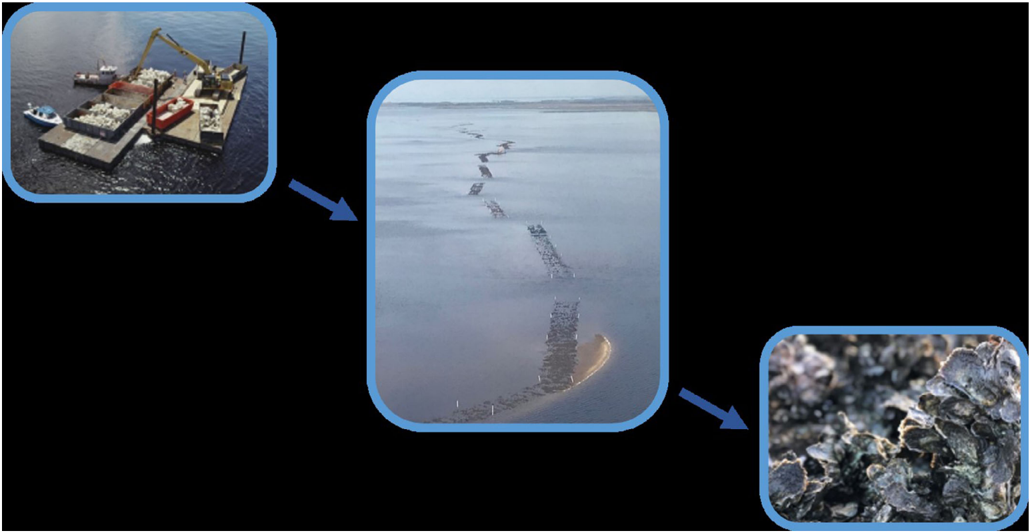
- The Lone Cabbage Reef project placed about 11,500 m³ of local limestone rock and approximately 840 m³ of oyster shell by hand in summer 2018, building a reef chain about 5 km long and raising elevation by an average of 0.36 m; about two-thirds of its northern extent is closed to fishing, while the remainder is open.
- Oyster spat colonized sections of the restored reef within weeks of construction, and colonization was evident on all constructed reef elements within 18 months postconstruction.
- The paper recommends better matching monitoring efforts and funding with on-the-ground restoration and coordinating similar projects across scales to create spatially and temporally replicated restoration; more than 70% of Lone Cabbage Reef funding went to construction, with the remainder for monitoring oyster populations and water salinity.
Methods
- Perspective/synthesis based on the authors’ experiences and an ongoing restoration case study; no new formal quantitative analysis is reported.
- Case study: Lone Cabbage Reef restoration in Suwannee Sound, northwestern Florida, funded through NFWF/DWH settlements, with partners including commercial oyster harvesters, NGOs, local communities, and state and federal agencies.
- Monitoring design: pre-restoration monitoring in 2017–2018, construction in summer 2018, and oyster and salinity response monitoring from 2018–2023; strata include rock/no rock and open/closed to fishing, with unrestored reefs monitored as controls.
Limitations
- Stated: restoration occurred all at once throughout the 5-km reef, so there is no control for environmental stochasticity; a staircase or staggered-entry design would have been preferable, but heavy equipment and barge logistics made it necessary.
- Stated: 5-year postconstruction monitoring is long compared with most oyster restoration projects but still short for learning about decadal responses including climate and sea level rise; the absence of a formal assessment of stakeholder attitudes and willingness to participate was a missed opportunity, and academic expertise/infrastructure may end when funding concludes.
- Evident: as a perspective and single-case study, conclusions rely on one project and the authors’ experience rather than replicated experimental evidence; the paper also states that uptake of knowledge by other entities has been limited so far for reasons that are not clear.
Model-written summary. Check it against the paper before relying on it.
Integrity signals
Registry
Cites
Statistics
Figures
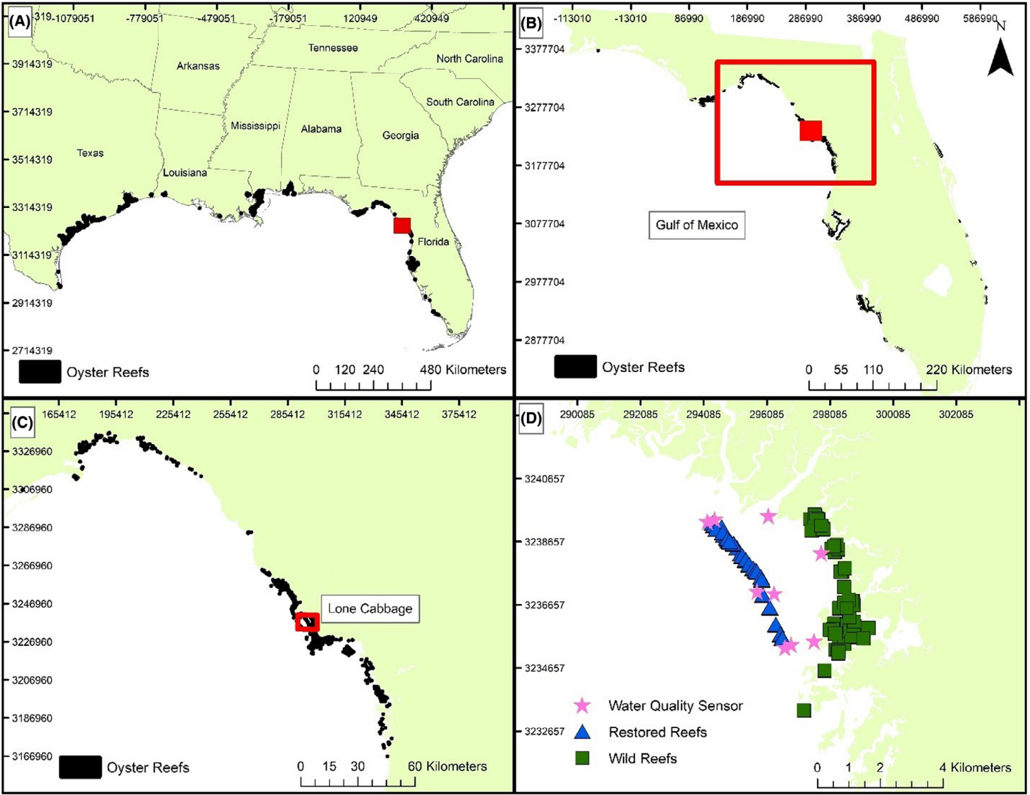
Verification
Claims the paper makes
60 Own interpretation · 19 Not checked yet · 18 No full text of the sources · 12 No basis given · 5 Sources not found · 4 Own method · 4 Own result
The paper states this without a source or data behind it here, so there is nothing to check it against. The quote shows it is in the paper.
In the paper
“Use of adaptive management to guide the restoration of Lone Cabbage Reef is an in-process, project-scale effort that can serve as a model for other projects and can potentially inform oyster reef restoration at a larger scale.”
§ Adaptive Management in Practice and the Problem of Application at Multiple Scales-Insights from Oyster Reef Restoration on Florida's Gulf Coast > CONCLUSIONS
plainSingle case- Asserted: passes — The authors put it forward as true.
- Checkable: passes — It can be checked against evidence.
- Load-bearing: passes — The paper’s conclusions depend on it.
- Based: passes — The paper gives a reason why it holds.
The paper states this without a source or data behind it here, so there is nothing to check it against. The quote shows it is in the paper.
In the paper
“and the community is very interested in leading additional restoration efforts.”
§ Adaptive Management in Practice and the Problem of Application at Multiple Scales-Insights from Oyster Reef Restoration on Florida's Gulf Coast > Need for Community Engagement
plainSingle case- Asserted: passes — The authors put it forward as true.
- Checkable: passes — It can be checked against evidence.
- Load-bearing: unclear — It is unclear whether the paper’s conclusions depend on it.
- Based: passes — The paper gives a reason why it holds.
The paper states this without a source or data behind it here, so there is nothing to check it against. The quote shows it is in the paper.
In the paper
“Stakeholder involvement in the Lone Cabbage Reef project from the local oyster fishing community, town leaders, and resource managers has generally been positive so far.”
§ Adaptive Management in Practice and the Problem of Application at Multiple Scales-Insights from Oyster Reef Restoration on Florida's Gulf Coast > Need for Community Engagement
plain- Asserted: passes — The authors put it forward as true.
- Checkable: passes — It can be checked against evidence.
- Load-bearing: unclear — It is unclear whether the paper’s conclusions depend on it.
- Based: passes — The paper gives a reason why it holds.
None of the sources cited for this claim have been checked yet.
In the paper
“The Lone Cabbage Reef project has used a combination of field and simulated data to provide insight into the utility of our monitoring programs for distinguishing between restoration responses and background”
§ Adaptive Management in Practice and the Problem of Application at Multiple Scales-Insights from Oyster Reef Restoration on Florida's Gulf Coast > CONCLUSIONS
What the sources say
- Not checked yetcites Moore and Pine 2021 source
Checked before — its earlier verdict is held back until a new check runs.
plaincorrelationalSingle case- Asserted: passes — The authors put it forward as true.
- Checkable: passes — It can be checked against evidence.
- Load-bearing: passes — The paper’s conclusions depend on it.
- Based: passes — The paper gives a reason why it holds.
- Not checked yet
The paper states this without a source or data behind it here, so there is nothing to check it against. The quote shows it is in the paper.
In the paper
“An unexpected outcome is that this data management system created opportunities to share ongoing research products more efficiently with cooperators and the public in an open-data framework.”
§ Adaptive Management in Practice and the Problem of Application at Multiple Scales-Insights from Oyster Reef Restoration on Florida's Gulf Coast > Benefits of Adaptive Management
plaindirectSingle case- Asserted: passes — The authors put it forward as true.
- Checkable: passes — It can be checked against evidence.
- Load-bearing: unclear — It is unclear whether the paper’s conclusions depend on it.
- Based: passes — The paper gives a reason why it holds.
The paper states this without a source or data behind it here, so there is nothing to check it against. The quote shows it is in the paper.
In the paper
“Adaptive management at the scale of Lone Cabbage Reef has differed substantially from our collective adaptive management experience elsewhere (Grand Canyon, Everglades, and waterfowl management).”
§ Adaptive Management in Practice and the Problem of Application at Multiple Scales-Insights from Oyster Reef Restoration on Florida's Gulf Coast > Benefits of Adaptive Management
plainSingle case- Asserted: passes — The authors put it forward as true.
- Checkable: passes — It can be checked against evidence.
- Load-bearing: passes — The paper’s conclusions depend on it.
- Based: passes — The paper gives a reason why it holds.
The paper states this without a source or data behind it here, so there is nothing to check it against. The quote shows it is in the paper.
In the paper
“For the Lone Cabbage Reef restoration project, the high mobilization costs of heavy equipment and barges for working offshore made such an approach unacceptably costly.”
§ Adaptive Management in Practice and the Problem of Application at Multiple Scales-Insights from Oyster Reef Restoration on Florida's Gulf Coast > Benefits of Adaptive Management
plaindirectSingle case- Asserted: passes — The authors put it forward as true.
- Checkable: passes — It can be checked against evidence.
- Load-bearing: passes — The paper’s conclusions depend on it.
- Based: passes — The paper gives a reason why it holds.
A result the paper reports from its own data — it cites no other source for it, so there is none to check. The quote shows it is in the paper.
In the paper
“Within weeks of completing construction, oyster spat had colonized sections of the restored reef; within 18 months postconstruction, colonization was evident on all constructed reef elements.”
§ Adaptive Management in Practice and the Problem of Application at Multiple Scales-Insights from Oyster Reef Restoration on Florida's Gulf Coast > CONCLUSIONS
plainSingle case- Asserted: passes — The authors put it forward as true.
- Checkable: passes — It can be checked against evidence.
- Load-bearing: passes — The paper’s conclusions depend on it.
- Based: passes — The paper gives a reason why it holds.
The paper states this without a source or data behind it here, so there is nothing to check it against. The quote shows it is in the paper.
In the paper
“Where possible, the local oyster fishing community has been involved in both the design and enactment of this restoration process, and the community is very interested in leading additional restoration efforts.”
§ Adaptive Management in Practice and the Problem of Application at Multiple Scales-Insights from Oyster Reef Restoration on Florida's Gulf Coast > Need for Community Engagement
hedgedSingle case- Asserted: passes — The authors put it forward as true.
- Checkable: passes — It can be checked against evidence.
- Load-bearing: unclear — It is unclear whether the paper’s conclusions depend on it.
- Based: passes — The paper gives a reason why it holds.
A result the paper reports from its own data — it cites no other source for it, so there is none to check. The quote shows it is in the paper.
In the paper
“Within weeks of completing construction, oyster spat had colonized sections of the restored reef; within 18 months postconstruction, colonization was evident on all constructed reef elements.”
§ Adaptive Management in Practice and the Problem of Application at Multiple Scales-Insights from Oyster Reef Restoration on Florida's Gulf Coast > CONCLUSIONS
plainSingle case- Asserted: passes — The authors put it forward as true.
- Checkable: passes — It can be checked against evidence.
- Load-bearing: passes — The paper’s conclusions depend on it.
- Based: passes — The paper gives a reason why it holds.
- It may state two separate claims as one. 21
- Probably not a substantial claim. 46
The paper states this without a source or data behind it here, so there is nothing to check it against. The quote shows it is in the paper.
In the paper
“Approximately one-third of the Lone Cabbage Reef and considerable acreage of nearby unrestored reefs are in waters designated for harvest, allowing for a direct comparison between areas that are open and closed to harvest.”
§ Adaptive Management in Practice and the Problem of Application at Multiple Scales-Insights from Oyster Reef Restoration on Florida's Gulf Coast > Key Uncertainties
plain- Asserted: passes — The authors put it forward as true.
- Checkable: passes — It can be checked against evidence.
- Load-bearing: passes — The paper’s conclusions depend on it.
- Based: unclear — It is unclear why the paper says it holds.
It may state two separate claims as one.
The paper states this without a source or data behind it here, so there is nothing to check it against. The quote shows it is in the paper.
In the paper
“The constructed reef bisects shellfish harvest zones such that about two-thirds of its northern extent are in a region that is closed to fishing, while the remainder is open to fishing during oyster harvest season.”
§ Adaptive Management in Practice and the Problem of Application at Multiple Scales-Insights from Oyster Reef Restoration on Florida's Gulf Coast > Restoration Action and Monitoring
plainSingle case- Asserted: passes — The authors put it forward as true.
- Checkable: passes — It can be checked against evidence.
- Load-bearing: passes — The paper’s conclusions depend on it.
- Based: passes — The paper gives a reason why it holds.
It may state two separate claims as one.
A result the paper reports from its own data — it cites no other source for it, so there is none to check. The quote shows it is in the paper.
In the paper
“Placement of rock increased the reef's elevation by an average of 0.36 m, a profile similar to that of intact oyster bars in the region.”
§ Adaptive Management in Practice and the Problem of Application at Multiple Scales-Insights from Oyster Reef Restoration on Florida's Gulf Coast > Restoration Action and Monitoring
plaindirectSingle case- Asserted: passes — The authors put it forward as true.
- Checkable: passes — It can be checked against evidence.
- Load-bearing: unclear — It is unclear whether the paper’s conclusions depend on it.
- Based: passes — The paper gives a reason why it holds.
It may state two separate claims as one.
The paper states this without a source or data behind it here, so there is nothing to check it against. The quote shows it is in the paper.
In the paper
“More than 70% of the funding for the Lone Cabbage Reef project was dedicated to construction, with the remainder used for monitoring oyster populations and water salinity.”
§ Adaptive Management in Practice and the Problem of Application at Multiple Scales-Insights from Oyster Reef Restoration on Florida's Gulf Coast > CONCLUSIONS
plainSingle case- Asserted: passes — The authors put it forward as true.
- Checkable: passes — It can be checked against evidence.
- Load-bearing: passes — The paper’s conclusions depend on it.
- Based: fails — The paper may give no reason why it holds.
Probably not a substantial claim. The paper may give no reason why it holds.
The paper states this without a source or data behind it here, so there is nothing to check it against. The quote shows it is in the paper.
In the paper
“This data system required substantial planning from the design and implementation perspectives, but the benefits in reducing data management mistakes and identifying problems with sampling efforts have been immense.”
§ Adaptive Management in Practice and the Problem of Application at Multiple Scales-Insights from Oyster Reef Restoration on Florida's Gulf Coast > Benefits of Adaptive Management
plaindirectSingle case- Asserted: passes — The authors put it forward as true.
- Checkable: passes — It can be checked against evidence.
- Load-bearing: unclear — It is unclear whether the paper’s conclusions depend on it.
- Based: passes — The paper gives a reason why it holds.
It may state two separate claims as one.
In the paper
“However, many oyster restoration efforts fail, and the reasons for this failure are often difficult to discern (Bersoza Hernández et al. 2018)”
§ Adaptive Management in Practice and the Problem of Application at Multiple Scales-Insights from Oyster Reef Restoration on Florida's Gulf Coast > Abstract
What the sources say
- Not checked — no full text of the sourcecites Bersoza Hernández et al. 2018 source
plain- Asserted: passes — The authors put it forward as true.
- Checkable: passes — It can be checked against evidence.
- Load-bearing: passes — The paper’s conclusions depend on it.
- Based: passes — The paper gives a reason why it holds.
It may state two separate claims as one.
A conclusion the paper draws from its own results — it cites no other source for it, so there is none to check. The quote shows it is in the paper.
In the paper
“Second, the effect of oyster harvest on restored and unrestored reefs was a key uncertainty and is a general 6 of 13 PINE ET AL. issue in oyster management.”
§ Adaptive Management in Practice and the Problem of Application at Multiple Scales-Insights from Oyster Reef Restoration on Florida's Gulf Coast > Key Uncertainties
plain- Asserted: passes — The authors put it forward as true.
- Checkable: passes — It can be checked against evidence.
- Load-bearing: passes — The paper’s conclusions depend on it.
- Based: passes — The paper gives a reason why it holds.
It may state two separate claims as one.
A conclusion the paper draws from its own results — it cites no other source for it, so there is none to check. The quote shows it is in the paper.
In the paper
“These features likely make it more difficult to experiment with novel restoration actions at large scales, and this could jeopardize the success of the entire project.”
§ Adaptive Management in Practice and the Problem of Application at Multiple Scales-Insights from Oyster Reef Restoration on Florida's Gulf Coast > The Role of Adaptive Management in Large-Scale Restoration Programs
hedgedconditional- Asserted: passes — The authors put it forward as true.
- Checkable: fails — It may be too vague to check against evidence.
- Load-bearing: passes — The paper’s conclusions depend on it.
- Based: fails — The paper may give no reason why it holds.
Probably not a substantial claim. It may be too vague to check against evidence. The paper may give no reason why it holds. It may state two separate claims as one.
A conclusion the paper draws from its own results — it cites no other source for it, so there is none to check. The quote shows it is in the paper.
In the paper
“We see the Lone Cabbage Reef project scale as somewhere between local and regional.”
§ Adaptive Management in Practice and the Problem of Application at Multiple Scales-Insights from Oyster Reef Restoration on Florida's Gulf Coast > Scaling Up
plainSingle case- Asserted: passes — The authors put it forward as true.
- Checkable: passes — It can be checked against evidence.
- Load-bearing: fails — The paper’s conclusions may not depend on it.
- Based: fails — The paper may give no reason why it holds.
Probably not a substantial claim. The paper’s conclusions may not depend on it. The paper may give no reason why it holds.
None of the sources cited for this claim have been checked yet.
In the paper
“This highlights the central role of scale in problem framing, especially as it concerns the need to ensure that the scale of the restoration is matched with the scale at which restoration practitioners can act (Cumming and Norberg 2008;Carpenter 2009;Jordan and Benson 2013).”
§ Adaptive Management in Practice and the Problem of Application at Multiple Scales-Insights from Oyster Reef Restoration on Florida's Gulf Coast > 2 of 13 PINE ET AL.
What the sources say
- Not matchedcites Cumming and Norberg 2008
Couldn’t be matched to a paper in Crossref, so it can’t be checked.
- Not checked yetcites Carpenter 2009 source
Checked before — its earlier verdict is held back until a new check runs.
- Not checked yetcites Jordan and Benson 2013 source
Checked before — its earlier verdict is held back until a new check runs.
plaincorrelational- Asserted: passes — The authors put it forward as true.
- Checkable: fails — It may be too vague to check against evidence.
- Load-bearing: passes — The paper’s conclusions depend on it.
- Based: passes — The paper gives a reason why it holds.
Probably not a substantial claim. It may be too vague to check against evidence.
- Not matched
A conclusion the paper draws from its own results — it cites no other source for it, so there is none to check. The quote shows it is in the paper.
In the paper
“Nonetheless, experimentation at larger scales can still provide significant opportunities for learning, especially if adaptive management is used at many smaller sites in a coherent program to reduce critical uncertainties in restoration efforts.”
§ Adaptive Management in Practice and the Problem of Application at Multiple Scales-Insights from Oyster Reef Restoration on Florida's Gulf Coast > The Role of Adaptive Management in Large-Scale Restoration Programs
plainconditional- Asserted: passes — The authors put it forward as true.
- Checkable: fails — It may be too vague to check against evidence.
- Load-bearing: passes — The paper’s conclusions depend on it.
- Based: fails — The paper may give no reason why it holds.
Probably not a substantial claim. It may be too vague to check against evidence. The paper may give no reason why it holds.
A conclusion the paper draws from its own results — it cites no other source for it, so there is none to check. The quote shows it is in the paper.
In the paper
“Although some decision makers may view monitoring as consuming funding that would be better spent directly on restoration actions, effective monitoring can serve as a powerful resource multiplier-from enhancing decision making to improving techniques and focusing resources on the efforts that produce the greatest return on investment.”
§ Adaptive Management in Practice and the Problem of Application at Multiple Scales-Insights from Oyster Reef Restoration on Florida's Gulf Coast > The Critical Role of Monitoring
plaindirect- Asserted: passes — The authors put it forward as true.
- Checkable: fails — It may be too vague to check against evidence.
- Load-bearing: passes — The paper’s conclusions depend on it.
- Based: fails — The paper may give no reason why it holds.
Probably not a substantial claim. It may be too vague to check against evidence. The paper may give no reason why it holds.
In the paper
“Recurring at an unknown frequency, these mortality events could destabilize extant oyster reefs, increasing the risk of structural damage to the reef from storm events as dead shell erodes and is buried.”
§ Adaptive Management in Practice and the Problem of Application at Multiple Scales-Insights from Oyster Reef Restoration on Florida's Gulf Coast > Building Hypotheses, Testing Assumptions
What the sources say
- Not checked — no full text of the sourcecites Seavey et al. 2011 source
hedgedconditional- Asserted: passes — The authors put it forward as true.
- Checkable: passes — It can be checked against evidence.
- Load-bearing: passes — The paper’s conclusions depend on it.
- Based: passes — The paper gives a reason why it holds.
Probably not a substantial claim. It may state two separate claims as one.
What the paper did — it cites no source for this, so there is none to check. The quote shows it is in the paper.
In the paper
“First, since the restoration occurred at the same time throughout the 5-km-long reef, there is no control for environmental stochasticity, which might come in the form of changing precipitation and river discharge.”
§ Adaptive Management in Practice and the Problem of Application at Multiple Scales-Insights from Oyster Reef Restoration on Florida's Gulf Coast > Key Uncertainties
hedged- Asserted: passes — The authors put it forward as true.
- Checkable: passes — It can be checked against evidence.
- Load-bearing: passes — The paper’s conclusions depend on it.
- Based: passes — The paper gives a reason why it holds.
It may state two separate claims as one.
A conclusion the paper draws from its own results — it cites no other source for it, so there is none to check. The quote shows it is in the paper.
In the paper
“Although an academic institution has many of the characteristics that enhance learning by design, it is also true that expertise in these institutions may be transient: while the experimental design, data management and analysis systems, monitoring program structure, and expertise are all currently in place and operational, they will end at the conclusion of funding.”
§ Adaptive Management in Practice and the Problem of Application at Multiple Scales-Insights from Oyster Reef Restoration on Florida's Gulf Coast > Restoration Action and Monitoring
plainconditionalSingle case- Asserted: passes — The authors put it forward as true.
- Checkable: passes — It can be checked against evidence.
- Load-bearing: passes — The paper’s conclusions depend on it.
- Based: passes — The paper gives a reason why it holds.
It may state two separate claims as one.
- Rests on an assumption: Expertise in academic institutions may be transient, and the experimental design, data management and analysis systems, monitoring program structure, and expertise will end at the conclusion of funding.
In the paper
“This region of coastline differs from most of the Gulf of Mexico coast in having low human population density, a high percentage of coastal land designated as protected, and an ecosystem perceived by resource agencies as relatively pristine (Mattson 2002).”
§ Adaptive Management in Practice and the Problem of Application at Multiple Scales-Insights from Oyster Reef Restoration on Florida's Gulf Coast > ADAPTIVE MANAGEMENT IN PRACTICE: A RESTORATION PROJECT ON FLORIDA'S GULF OF MEXICO COAST
What the sources say
- Not checked — no full text of the sourcecites Mattson 2002 source
plain- Asserted: passes — The authors put it forward as true.
- Checkable: passes — It can be checked against evidence.
- Load-bearing: passes — The paper’s conclusions depend on it.
- Based: passes — The paper gives a reason why it holds.
It may state two separate claims as one.
What the paper did — it cites no source for this, so there is none to check. The quote shows it is in the paper.
In the paper
“Oyster population dynamics on nearby unrestored reefs were therefore important to monitor as unrestored controls.”
§ Adaptive Management in Practice and the Problem of Application at Multiple Scales-Insights from Oyster Reef Restoration on Florida's Gulf Coast > Key Uncertainties
plain- Asserted: passes — The authors put it forward as true.
- Checkable: passes — It can be checked against evidence.
- Load-bearing: passes — The paper’s conclusions depend on it.
- Based: passes — The paper gives a reason why it holds.
Probably not a substantial claim.
The paper states this without a source or data behind it here, so there is nothing to check it against. The quote shows it is in the paper.
In the paper
“For wide-ranging species like migratory birds or fish, population responses are affected by environmental conditions and management decisions at a wide range of scales.”
§ Adaptive Management in Practice and the Problem of Application at Multiple Scales-Insights from Oyster Reef Restoration on Florida's Gulf Coast > Scaling Up
plaindirect- Asserted: passes — The authors put it forward as true.
- Checkable: passes — It can be checked against evidence.
- Load-bearing: passes — The paper’s conclusions depend on it.
- Based: fails — The paper may give no reason why it holds.
Probably not a substantial claim. The paper may give no reason why it holds.
A conclusion the paper draws from its own results — it cites no other source for it, so there is none to check. The quote shows it is in the paper.
In the paper
“and (2) coordinating similar research projects at multiple scales to share challenges, solutions, and knowledge by creating spatially and temporally replicated restoration projects to identify best restoration practices.”
§ Adaptive Management in Practice and the Problem of Application at Multiple Scales-Insights from Oyster Reef Restoration on Florida's Gulf Coast > Abstract
hedgedconditional- Asserted: passes — The authors put it forward as true.
- Checkable: fails — It may be too vague to check against evidence.
- Load-bearing: passes — The paper’s conclusions depend on it.
- Based: fails — The paper may give no reason why it holds.
Probably not a substantial claim. It may be too vague to check against evidence. The paper may give no reason why it holds.
In the paper
“Ultimately, this would result in the collapse of the oyster reef as the low-relief bar becomes unsuitable for oyster settlement, individual growth, shell accretion, and overall reef persistence.”
§ Adaptive Management in Practice and the Problem of Application at Multiple Scales-Insights from Oyster Reef Restoration on Florida's Gulf Coast > Building Hypotheses, Testing Assumptions
What the sources say
- Not checked — no full text of the sourcecites Seavey et al. 2011 source
hedgeddirect- Asserted: fails — The authors may not put it forward as true.
- Checkable: passes — It can be checked against evidence.
- Load-bearing: passes — The paper’s conclusions depend on it.
- Based: passes — The paper gives a reason why it holds.
Probably not a substantial claim. The authors may not put it forward as true.
A conclusion the paper draws from its own results — it cites no other source for it, so there is none to check. The quote shows it is in the paper.
In the paper
“We demonstrate how the likelihood of restoration success for eastern oyster Crassostrea virginica and other resources could increase through (1) better matching monitoring efforts and funding with on-the-ground restoration efforts”
§ Adaptive Management in Practice and the Problem of Application at Multiple Scales-Insights from Oyster Reef Restoration on Florida's Gulf Coast > Abstract
hedgedconditional- Asserted: passes — The authors put it forward as true.
- Checkable: fails — It may be too vague to check against evidence.
- Load-bearing: passes — The paper’s conclusions depend on it.
- Based: fails — The paper may give no reason why it holds.
Probably not a substantial claim. It may be too vague to check against evidence. The paper may give no reason why it holds.
A conclusion the paper draws from its own results — it cites no other source for it, so there is none to check. The quote shows it is in the paper.
In the paper
“Given the relatively restricted geographic scale of some restoration efforts and their common objectives, regional-scale adaptive management could amplify learning from each project and help to bridge the gap between projects and program-level activities.”
§ Adaptive Management in Practice and the Problem of Application at Multiple Scales-Insights from Oyster Reef Restoration on Florida's Gulf Coast > Incorporation of existing knowledge into predictive models
hedgedconditional- Asserted: passes — The authors put it forward as true.
- Checkable: fails — It may be too vague to check against evidence.
- Load-bearing: fails — The paper’s conclusions may not depend on it.
- Based: passes — The paper gives a reason why it holds.
Probably not a substantial claim. It may be too vague to check against evidence. The paper’s conclusions may not depend on it. It may state two separate claims as one.
A conclusion the paper draws from its own results — it cites no other source for it, so there is none to check. The quote shows it is in the paper.
In the paper
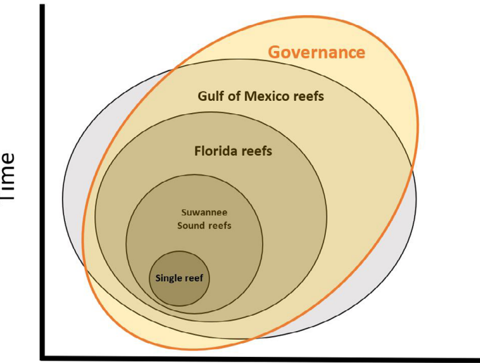
“Essential to programmatic adaptive management is to view the various decision-making levels as nested within the larger Gulf of Mexico restoration enterprise (Figure 3).”
§ Adaptive Management in Practice and the Problem of Application at Multiple Scales-Insights from Oyster Reef Restoration on Florida's Gulf Coast > Scaling Up
plain- Asserted: passes — The authors put it forward as true.
- Checkable: fails — It may be too vague to check against evidence.
- Load-bearing: passes — The paper’s conclusions depend on it.
- Based: fails — The paper may give no reason why it holds.
Probably not a substantial claim. It may be too vague to check against evidence. The paper may give no reason why it holds.
A conclusion the paper draws from its own results — it cites no other source for it, so there is none to check. The quote shows it is in the paper.
In the paper
“For a multi-state project at the scale of the U.S. Gulf of Mexico coastline, this type of nested approach is likely essential to increase the likelihood of project success at individual locations, within each U.S. state, and across the Gulf of Mexico.”
§ Adaptive Management in Practice and the Problem of Application at Multiple Scales-Insights from Oyster Reef Restoration on Florida's Gulf Coast > The Role of Adaptive Management in Large-Scale Restoration Programs
hedgedconditional- Asserted: passes — The authors put it forward as true.
- Checkable: fails — It may be too vague to check against evidence.
- Load-bearing: passes — The paper’s conclusions depend on it.
- Based: passes — The paper gives a reason why it holds.
Probably not a substantial claim. It may be too vague to check against evidence.
A conclusion the paper draws from its own results — it cites no other source for it, so there is none to check. The quote shows it is in the paper.
In the paper
“Monitoring also generates the data required to provide accountability of the chosen restoration action.”
§ Adaptive Management in Practice and the Problem of Application at Multiple Scales-Insights from Oyster Reef Restoration on Florida's Gulf Coast > The Critical Role of Monitoring
plaindirect- Asserted: passes — The authors put it forward as true.
- Checkable: passes — It can be checked against evidence.
- Load-bearing: fails — The paper’s conclusions may not depend on it.
- Based: fails — The paper may give no reason why it holds.
Probably not a substantial claim. The paper’s conclusions may not depend on it. The paper may give no reason why it holds.
A conclusion the paper draws from its own results — it cites no other source for it, so there is none to check. The quote shows it is in the paper.
In the paper
“Transferring the lessons learned from a project or regional scale to a programmatic, Gulf-wide scale will require very directed thinking about how those lessons apply to a portfolio of projects and, therefore, how broadly applicable they may be.”
§ Adaptive Management in Practice and the Problem of Application at Multiple Scales-Insights from Oyster Reef Restoration on Florida's Gulf Coast > Scaling Up
plainconditional- Asserted: passes — The authors put it forward as true.
- Checkable: fails — It may be too vague to check against evidence.
- Load-bearing: passes — The paper’s conclusions depend on it.
- Based: passes — The paper gives a reason why it holds.
Probably not a substantial claim. It may be too vague to check against evidence.
A conclusion the paper draws from its own results — it cites no other source for it, so there is none to check. The quote shows it is in the paper.
In the paper
“As at the project scale, adaptive management at the program scale can focus on the uncertainty about how any given portfolio of projects contributes broadly to objectives for restoration and conservation of natural resources.”
§ Adaptive Management in Practice and the Problem of Application at Multiple Scales-Insights from Oyster Reef Restoration on Florida's Gulf Coast > Scaling Up
plain- Asserted: passes — The authors put it forward as true.
- Checkable: fails — It may be too vague to check against evidence.
- Load-bearing: passes — The paper’s conclusions depend on it.
- Based: passes — The paper gives a reason why it holds.
Probably not a substantial claim. It may be too vague to check against evidence.
A conclusion the paper draws from its own results — it cites no other source for it, so there is none to check. The quote shows it is in the paper.
In the paper
“There may also be more opportunities (and less risk) for experimenting with novel restoration approaches that reveal more effective designs or materials or lower costs.”
§ Adaptive Management in Practice and the Problem of Application at Multiple Scales-Insights from Oyster Reef Restoration on Florida's Gulf Coast > The Role of Adaptive Management in Small-Scale Restoration Projects
hedgedconditional- Asserted: passes — The authors put it forward as true.
- Checkable: unclear — It is unclear whether it could be checked against evidence.
- Load-bearing: passes — The paper’s conclusions depend on it.
- Based: passes — The paper gives a reason why it holds.
It may state two separate claims as one.
A conclusion the paper draws from its own results — it cites no other source for it, so there is none to check. The quote shows it is in the paper.
In the paper
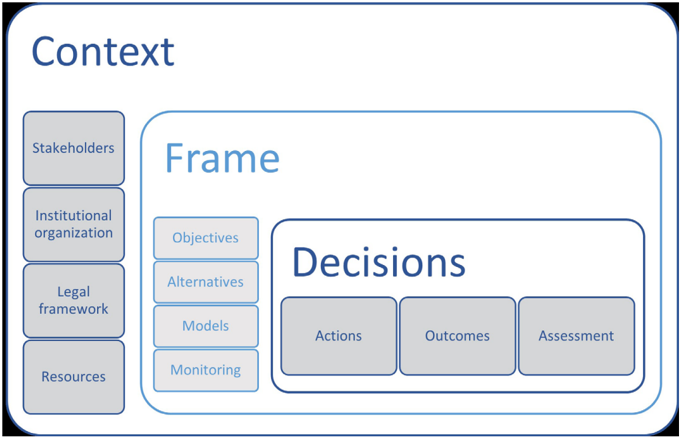
“To be successful, this iterative process of decision making and learning must be embedded in an effective problem frame that explicitly defines the socio-ecological objectives, the spatial and temporal scales of restoration, alternative restoration actions, predictive models, and monitoring protocols (Figure 2).”
§ Adaptive Management in Practice and the Problem of Application at Multiple Scales-Insights from Oyster Reef Restoration on Florida's Gulf Coast > 2 of 13 PINE ET AL.
plaindirect- Asserted: passes — The authors put it forward as true.
- Checkable: fails — It may be too vague to check against evidence.
- Load-bearing: passes — The paper’s conclusions depend on it.
- Based: passes — The paper gives a reason why it holds.
Probably not a substantial claim. It may be too vague to check against evidence.
None of the sources cited for this claim have been checked yet.
In the paper
“This led to an in-depth exploration of the monitoring design for Lone Cabbage Reef (Moore and Pine 2021), including defining explicit feedback loops related to our expected restoration response and possible outcomes (Table 1).”
§ Adaptive Management in Practice and the Problem of Application at Multiple Scales-Insights from Oyster Reef Restoration on Florida's Gulf Coast > Restoration Action and Monitoring
What the sources say
- Not checked yetcites Moore and Pine 2021 source
Checked before — its earlier verdict is held back until a new check runs.
plainSingle case- Asserted: passes — The authors put it forward as true.
- Checkable: passes — It can be checked against evidence.
- Load-bearing: passes — The paper’s conclusions depend on it.
- Based: passes — The paper gives a reason why it holds.
Probably not a substantial claim.
- Not checked yet
A conclusion the paper draws from its own results — it cites no other source for it, so there is none to check. The quote shows it is in the paper.
In the paper
“Small-scale projects can also likely be more effectively monitored for their effect on individual species or groups of species.”
§ Adaptive Management in Practice and the Problem of Application at Multiple Scales-Insights from Oyster Reef Restoration on Florida's Gulf Coast > The Role of Adaptive Management in Small-Scale Restoration Projects
hedgedconditional- Asserted: passes — The authors put it forward as true.
- Checkable: passes — It can be checked against evidence.
- Load-bearing: fails — The paper’s conclusions may not depend on it.
- Based: fails — The paper may give no reason why it holds.
Probably not a substantial claim. The paper’s conclusions may not depend on it. The paper may give no reason why it holds.
A conclusion the paper draws from its own results — it cites no other source for it, so there is none to check. The quote shows it is in the paper.
In the paper
“partly due to a lack of effective monitoring and partly because there are many underlying uncertainties about oyster reef ecological structure and function.”
§ Adaptive Management in Practice and the Problem of Application at Multiple Scales-Insights from Oyster Reef Restoration on Florida's Gulf Coast > Abstract
plainconditional- Asserted: passes — The authors put it forward as true.
- Checkable: passes — It can be checked against evidence.
- Load-bearing: passes — The paper’s conclusions depend on it.
- Based: passes — The paper gives a reason why it holds.
It may state two separate claims as one.
In the paper
“Shell erosion would lead to a reduction in oyster reef elevation through the loss of reef cultch (a matrix of live and dead shell material) and low recruitment of new oysters due to loss of settlement substrate.”
§ Adaptive Management in Practice and the Problem of Application at Multiple Scales-Insights from Oyster Reef Restoration on Florida's Gulf Coast > Building Hypotheses, Testing Assumptions
What the sources say
- Not checked — no full text of the sourcecites Seavey et al. 2011 source
hedgeddirect- Asserted: fails — The authors may not put it forward as true.
- Checkable: passes — It can be checked against evidence.
- Load-bearing: passes — The paper’s conclusions depend on it.
- Based: passes — The paper gives a reason why it holds.
Probably not a substantial claim. The authors may not put it forward as true.
In the paper
“Starting as a small project in 2010, Lone Cabbage Reef restoration efforts grew rapidly in scale after the 2012 collapse of the largest commercial oyster fishery in Florida (Apalachicola Bay; Pine et al. 2015) and the availability (also in 2012) of restoration funds following the DWH oil spill.”
§ Adaptive Management in Practice and the Problem of Application at Multiple Scales-Insights from Oyster Reef Restoration on Florida's Gulf Coast > ADAPTIVE MANAGEMENT IN PRACTICE: A RESTORATION PROJECT ON FLORIDA'S GULF OF MEXICO COAST
What the sources say
- Not checked yetcites Pine et al. 2015 source
plaindirectSingle case- Asserted: passes — The authors put it forward as true.
- Checkable: passes — It can be checked against evidence.
- Load-bearing: unclear — It is unclear whether the paper’s conclusions depend on it.
- Based: passes — The paper gives a reason why it holds.
It may state two separate claims as one.
A conclusion the paper draws from its own results — it cites no other source for it, so there is none to check. The quote shows it is in the paper.
In the paper
“An adaptive management process can help restoration projects at multiple spatial scales-from local shorelines to entire ecosystems-by identifying critical uncertainties and guiding restoration actions away from trial and error and toward an evidence-based approach.”
§ Adaptive Management in Practice and the Problem of Application at Multiple Scales-Insights from Oyster Reef Restoration on Florida's Gulf Coast > Abstract
plainconditional- Asserted: passes — The authors put it forward as true.
- Checkable: fails — It may be too vague to check against evidence.
- Load-bearing: passes — The paper’s conclusions depend on it.
- Based: passes — The paper gives a reason why it holds.
Probably not a substantial claim. It may be too vague to check against evidence.
In the paper
“Allowing the monitoring design and focus to be determined by an appropriate problem framing of the restoration effort will ensure the maximum utility of the resulting information (Nichols and Williams 2006).”
§ Adaptive Management in Practice and the Problem of Application at Multiple Scales-Insights from Oyster Reef Restoration on Florida's Gulf Coast > The Critical Role of Monitoring
What the sources say
- Not checked — no full text of the sourcecites Nichols and Williams 2006 source
plaindirect- Asserted: passes — The authors put it forward as true.
- Checkable: fails — It may be too vague to check against evidence.
- Load-bearing: passes — The paper’s conclusions depend on it.
- Based: passes — The paper gives a reason why it holds.
Probably not a substantial claim. It may be too vague to check against evidence.
A conclusion the paper draws from its own results — it cites no other source for it, so there is none to check. The quote shows it is in the paper.
In the paper
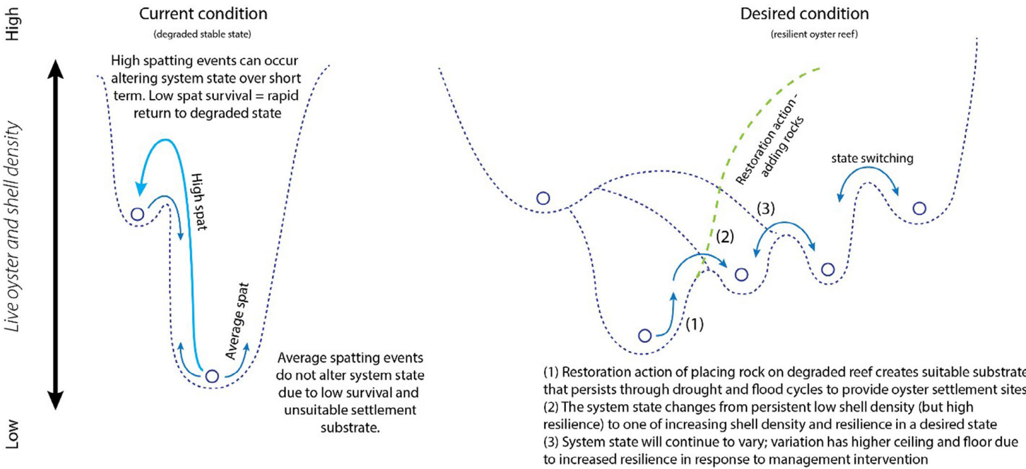
“Thus, through collapse initiated by periods of high salinity and mortality, the oyster reef moved from a resilient living state to a resilient degraded state.”
§ Adaptive Management in Practice and the Problem of Application at Multiple Scales-Insights from Oyster Reef Restoration on Florida's Gulf Coast > Building Hypotheses, Testing Assumptions
plaindirect- Asserted: passes — The authors put it forward as true.
- Checkable: passes — It can be checked against evidence.
- Load-bearing: passes — The paper’s conclusions depend on it.
- Based: passes — The paper gives a reason why it holds.
Probably not a substantial claim.
A conclusion the paper draws from its own results — it cites no other source for it, so there is none to check. The quote shows it is in the paper.
In the paper
“However, knowing the decision maker can be critical to understanding when linkages between decisions need to be, or can be, treated explicitly”
§ Adaptive Management in Practice and the Problem of Application at Multiple Scales-Insights from Oyster Reef Restoration on Florida's Gulf Coast > The Role of Adaptive Management in Large-Scale Restoration Programs
plainconditional- Asserted: passes — The authors put it forward as true.
- Checkable: fails — It may be too vague to check against evidence.
- Load-bearing: passes — The paper’s conclusions depend on it.
- Based: passes — The paper gives a reason why it holds.
Probably not a substantial claim. It may be too vague to check against evidence.
A conclusion the paper draws from its own results — it cites no other source for it, so there is none to check. The quote shows it is in the paper.
In the paper
“The difficulty lies in understanding cross-scale effects well enough to direct decision making at all levels in a coherent resource management program.”
§ Adaptive Management in Practice and the Problem of Application at Multiple Scales-Insights from Oyster Reef Restoration on Florida's Gulf Coast > Scaling Up
plain- Asserted: passes — The authors put it forward as true.
- Checkable: fails — It may be too vague to check against evidence.
- Load-bearing: passes — The paper’s conclusions depend on it.
- Based: passes — The paper gives a reason why it holds.
Probably not a substantial claim. It may be too vague to check against evidence.
What the paper did — it cites no source for this, so there is none to check. The quote shows it is in the paper.
In the paper
“Although this “all-at-once” approach is less desirable than a design (e.g., staircase or staggered entry) that controls for temporal effects, the logistics of moving rock with heavy equipment and barges made it necessary.”
§ Adaptive Management in Practice and the Problem of Application at Multiple Scales-Insights from Oyster Reef Restoration on Florida's Gulf Coast > Key Uncertainties
plaindirect- Asserted: passes — The authors put it forward as true.
- Checkable: passes — It can be checked against evidence.
- Load-bearing: passes — The paper’s conclusions depend on it.
- Based: passes — The paper gives a reason why it holds.
It may state two separate claims as one.
None of the sources cited for this claim have been checked yet.
In the paper
“Many coastal restoration projects, both terrestrial and aquatic, are already in progress as part of restoration efforts funded by DWH settlements (DWH NRDA Trustees 2017), but uncertainty persists as to the best ways to design and implement such efforts (Coen and Luckenbach 2000;Lorenz and Field 2013;Wortley et al. 2013;La Peyre et al. 2014a, 2014b;Bouwes et al. 2016).”
§ Adaptive Management in Practice and the Problem of Application at Multiple Scales-Insights from Oyster Reef Restoration on Florida's Gulf Coast > Abstract
What the sources say
- Not matchedcites DWH NRDA Trustees 2017
Couldn’t be matched to a paper in Crossref, so it can’t be checked.
- Not checked — no full text of the sourcecites Coen and Luckenbach 2000 source
- Not matchedcites Lorenz and Field 2013
Couldn’t be matched to a paper in Crossref, so it can’t be checked.
plain- Asserted: passes — The authors put it forward as true.
- Checkable: passes — It can be checked against evidence.
- Load-bearing: unclear — It is unclear whether the paper’s conclusions depend on it.
- Based: passes — The paper gives a reason why it holds.
It may state two separate claims as one.
- Not matched
A conclusion the paper draws from its own results — it cites no other source for it, so there is none to check. The quote shows it is in the paper.
In the paper
“At small restoration scales (such as an oyster reef that is part of a living-shoreline project), the societal consequences of restoration success may be negligible and the ecosystem benefits may be highly localized.”
§ Adaptive Management in Practice and the Problem of Application at Multiple Scales-Insights from Oyster Reef Restoration on Florida's Gulf Coast > The Role of Adaptive Management in Small-Scale Restoration Projects
hedgedconditional- Asserted: passes — The authors put it forward as true.
- Checkable: passes — It can be checked against evidence.
- Load-bearing: passes — The paper’s conclusions depend on it.
- Based: fails — The paper may give no reason why it holds.
Probably not a substantial claim. The paper may give no reason why it holds. It may state two separate claims as one.
A conclusion the paper draws from its own results — it cites no other source for it, so there is none to check. The quote shows it is in the paper.
In the paper
“The design and monitoring efforts developed in the project are widely applicable to smaller-and larger-scale efforts-even regionally.”
§ Adaptive Management in Practice and the Problem of Application at Multiple Scales-Insights from Oyster Reef Restoration on Florida's Gulf Coast > Scaling Up
plainSingle case- Asserted: passes — The authors put it forward as true.
- Checkable: passes — It can be checked against evidence.
- Load-bearing: passes — The paper’s conclusions depend on it.
- Based: fails — The paper may give no reason why it holds.
Probably not a substantial claim. The paper may give no reason why it holds.
None of the sources cited for this claim have been checked yet.
In the paper
“These uncertainties will be typical of other oyster restoration projects; therefore, the design of restoration and monitoring implemented for Lone Cabbage Reef may be of larger relevance (Moore and Pine 2021).”
§ Adaptive Management in Practice and the Problem of Application at Multiple Scales-Insights from Oyster Reef Restoration on Florida's Gulf Coast > Key Uncertainties
What the sources say
- Not checked yetcites Moore and Pine 2021 source
Checked before — its earlier verdict is held back until a new check runs.
hedgedconditionalSingle case- Asserted: passes — The authors put it forward as true.
- Checkable: passes — It can be checked against evidence.
- Load-bearing: passes — The paper’s conclusions depend on it.
- Based: passes — The paper gives a reason why it holds.
It may state two separate claims as one.
- Not checked yet
In the paper
“Episodic low river discharge is suggested to have led to periods of high coastal salinity and subsequent increased oyster mortality rates from disease and predation.”
§ Adaptive Management in Practice and the Problem of Application at Multiple Scales-Insights from Oyster Reef Restoration on Florida's Gulf Coast > Building Hypotheses, Testing Assumptions
What the sources say
- Not checked — no full text of the sourcecites Seavey et al. 2011 source
hedgedconditional- Asserted: passes — The authors put it forward as true.
- Checkable: passes — It can be checked against evidence.
- Load-bearing: passes — The paper’s conclusions depend on it.
- Based: passes — The paper gives a reason why it holds.
Probably not a substantial claim.
None of the sources cited for this claim have been checked yet.
In the paper
“Eastern oyster Crassostrea virginica reefs in the northern Gulf of Mexico have experienced significant changes due to habitat modification, hurricanes, harvesting, changing climate, and oil spills (Seavey et al. 2011;Pollack et al. 2012;Pine et al. 2015;Grabowski et al. 2017).”
§ Adaptive Management in Practice and the Problem of Application at Multiple Scales-Insights from Oyster Reef Restoration on Florida's Gulf Coast > Abstract
What the sources say
- Not checked — no full text of the sourcecites Seavey et al. 2011 source
- Not checked yetcites Pollack et al. 2012 source
Checked before — its earlier verdict is held back until a new check runs.
- Not checked yetcites Pine et al. 2015 source
Checked before — its earlier verdict is held back until a new check runs.
plaindirect- Asserted: passes — The authors put it forward as true.
- Checkable: passes — It can be checked against evidence.
- Load-bearing: fails — The paper’s conclusions may not depend on it.
- Based: passes — The paper gives a reason why it holds.
Probably not a substantial claim. The paper’s conclusions may not depend on it.
A conclusion the paper draws from its own results — it cites no other source for it, so there is none to check. The quote shows it is in the paper.
In the paper
“We feel that an efficient data management system, data sharing, and transparency are crucial for success in restoration projects.”
§ Adaptive Management in Practice and the Problem of Application at Multiple Scales-Insights from Oyster Reef Restoration on Florida's Gulf Coast > Benefits of Adaptive Management
plaindirectSingle case- Asserted: passes — The authors put it forward as true.
- Checkable: fails — It may be too vague to check against evidence.
- Load-bearing: fails — The paper’s conclusions may not depend on it.
- Based: passes — The paper gives a reason why it holds.
Probably not a substantial claim. It may be too vague to check against evidence. The paper’s conclusions may not depend on it. It may state two separate claims as one.
A conclusion the paper draws from its own results — it cites no other source for it, so there is none to check. The quote shows it is in the paper.
In the paper
“We feel strongly that the project offers a framework to advance what we have learned from the Lone Cabbage Reef restoration beyond the project scale.”
§ Adaptive Management in Practice and the Problem of Application at Multiple Scales-Insights from Oyster Reef Restoration on Florida's Gulf Coast > Incorporation of existing knowledge into predictive models
boosteddirectSingle case- Asserted: passes — The authors put it forward as true.
- Checkable: fails — It may be too vague to check against evidence.
- Load-bearing: passes — The paper’s conclusions depend on it.
- Based: fails — The paper may give no reason why it holds.
Probably not a substantial claim. It may be too vague to check against evidence. The paper may give no reason why it holds.
A conclusion the paper draws from its own results — it cites no other source for it, so there is none to check. The quote shows it is in the paper.
In the paper
“This is not an unexpected outcome from an adaptive management effort, and it is not unique to the Lone Cabbage Reef restoration.”
§ Adaptive Management in Practice and the Problem of Application at Multiple Scales-Insights from Oyster Reef Restoration on Florida's Gulf Coast > CONCLUSIONS
plain- Asserted: passes — The authors put it forward as true.
- Checkable: fails — It may be too vague to check against evidence.
- Load-bearing: passes — The paper’s conclusions depend on it.
- Based: fails — The paper may give no reason why it holds.
Probably not a substantial claim. It may be too vague to check against evidence. The paper may give no reason why it holds.
None of the sources cited for this claim have been checked yet.
In the paper
“This approach has been identified as one way to enhance learning in ecological studies and science overall (Molloy 2011), including learning about the DWH oil spill (Reichman et al. 2011).”
§ Adaptive Management in Practice and the Problem of Application at Multiple Scales-Insights from Oyster Reef Restoration on Florida's Gulf Coast > Incorporation of existing knowledge into predictive models
What the sources say
plainconditional- Asserted: passes — The authors put it forward as true.
- Checkable: passes — It can be checked against evidence.
- Load-bearing: fails — The paper’s conclusions may not depend on it.
- Based: passes — The paper gives a reason why it holds.
Probably not a substantial claim. The paper’s conclusions may not depend on it.
In the paper
“Carl Walters, one of the founders of adaptive management, suggested that critical challenges to many adaptive management programs include (1) a failure of decision makers to understand why adaptive management is needed, (2) a lack of leadership for the complex process of implementing an adaptive approach, and (3) inadequate funding for the increased monitoring needed to compare alternate practices”
§ Adaptive Management in Practice and the Problem of Application at Multiple Scales-Insights from Oyster Reef Restoration on Florida's Gulf Coast > CONCLUSIONS
What the sources say
- Not checked — no full text of the sourcecites Walters 2007 source
hedged- Asserted: passes — The authors put it forward as true.
- Checkable: passes — It can be checked against evidence.
- Load-bearing: passes — The paper’s conclusions depend on it.
- Based: passes — The paper gives a reason why it holds.
Probably not a substantial claim. It may state two separate claims as one.
A conclusion the paper draws from its own results — it cites no other source for it, so there is none to check. The quote shows it is in the paper.
In the paper
“Third, operating under this framework has required us to think through our data analysis and restoration goals while collecting field data.”
§ Adaptive Management in Practice and the Problem of Application at Multiple Scales-Insights from Oyster Reef Restoration on Florida's Gulf Coast > Benefits of Adaptive Management
plaindirect- Asserted: passes — The authors put it forward as true.
- Checkable: passes — It can be checked against evidence.
- Load-bearing: fails — The paper’s conclusions may not depend on it.
- Based: passes — The paper gives a reason why it holds.
Probably not a substantial claim. The paper’s conclusions may not depend on it.
A conclusion the paper draws from its own results — it cites no other source for it, so there is none to check. The quote shows it is in the paper.
In the paper
“This is not an unexpected outcome from an adaptive management effort, and it is not unique to the Lone Cabbage Reef restoration.”
§ Adaptive Management in Practice and the Problem of Application at Multiple Scales-Insights from Oyster Reef Restoration on Florida's Gulf Coast > CONCLUSIONS
plaindirectSingle case- Asserted: passes — The authors put it forward as true.
- Checkable: fails — It may be too vague to check against evidence.
- Load-bearing: fails — The paper’s conclusions may not depend on it.
- Based: passes — The paper gives a reason why it holds.
Probably not a substantial claim. It may be too vague to check against evidence. The paper’s conclusions may not depend on it.
A conclusion the paper draws from its own results — it cites no other source for it, so there is none to check. The quote shows it is in the paper.
In the paper
“Deliberate facilitation of design, methodological, analytical, and interpretive aspects of ongoing restoration efforts among research groups is an essential element of the adaptive management process.”
§ Adaptive Management in Practice and the Problem of Application at Multiple Scales-Insights from Oyster Reef Restoration on Florida's Gulf Coast > Incorporation of existing knowledge into predictive models
plaindirect- Asserted: passes — The authors put it forward as true.
- Checkable: fails — It may be too vague to check against evidence.
- Load-bearing: passes — The paper’s conclusions depend on it.
- Based: fails — The paper may give no reason why it holds.
Probably not a substantial claim. It may be too vague to check against evidence. The paper may give no reason why it holds.
A conclusion the paper draws from its own results — it cites no other source for it, so there is none to check. The quote shows it is in the paper.
In the paper
“This approach would be one way to explicitly link project-level inference to program-level efforts to restore oyster reefs in the Gulf of Mexico.”
§ Adaptive Management in Practice and the Problem of Application at Multiple Scales-Insights from Oyster Reef Restoration on Florida's Gulf Coast > CONCLUSIONS
hedgedcorrelational- Asserted: passes — The authors put it forward as true.
- Checkable: fails — It may be too vague to check against evidence.
- Load-bearing: passes — The paper’s conclusions depend on it.
- Based: passes — The paper gives a reason why it holds.
Probably not a substantial claim. It may be too vague to check against evidence.
A conclusion the paper draws from its own results — it cites no other source for it, so there is none to check. The quote shows it is in the paper.
In the paper
“This would create spatially and temporally replicated restoration projects to help separate the effects of restoration from the background variability that is inherent in ecological data.”
§ Adaptive Management in Practice and the Problem of Application at Multiple Scales-Insights from Oyster Reef Restoration on Florida's Gulf Coast > CONCLUSIONS
hedgeddirect- Asserted: passes — The authors put it forward as true.
- Checkable: fails — It may be too vague to check against evidence.
- Load-bearing: passes — The paper’s conclusions depend on it.
- Based: passes — The paper gives a reason why it holds.
Probably not a substantial claim. It may be too vague to check against evidence.
A conclusion the paper draws from its own results — it cites no other source for it, so there is none to check. The quote shows it is in the paper.
In the paper
“The absence of a formal assessment of stakeholder attitudes and willingness to participate was a missed opportunity for learning.”
§ Adaptive Management in Practice and the Problem of Application at Multiple Scales-Insights from Oyster Reef Restoration on Florida's Gulf Coast > Need for Community Engagement
plain- Asserted: passes — The authors put it forward as true.
- Checkable: fails — It may be too vague to check against evidence.
- Load-bearing: fails — The paper’s conclusions may not depend on it.
- Based: passes — The paper gives a reason why it holds.
Probably not a substantial claim. It may be too vague to check against evidence. The paper’s conclusions may not depend on it.
A conclusion the paper draws from its own results — it cites no other source for it, so there is none to check. The quote shows it is in the paper.
In the paper
“In hindsight, this involvement has been essential, and expanded engagement to other commercial fishing, recreational, conservation, and governance groups (such as crab fishermen, birders, recreational fishing guides, and local government leaders) should have been sought.”
§ Adaptive Management in Practice and the Problem of Application at Multiple Scales-Insights from Oyster Reef Restoration on Florida's Gulf Coast > Need for Community Engagement
plaindirectSingle case- Asserted: passes — The authors put it forward as true.
- Checkable: fails — It may be too vague to check against evidence.
- Load-bearing: fails — The paper’s conclusions may not depend on it.
- Based: passes — The paper gives a reason why it holds.
Probably not a substantial claim. It may be too vague to check against evidence. The paper’s conclusions may not depend on it.
A conclusion the paper draws from its own results — it cites no other source for it, so there is none to check. The quote shows it is in the paper.
In the paper
“Enhanced learning, which will improve the likelihood of restoration success, could take place through (1) better matching of monitoring efforts and funding with funded, shovel-ready, on-the-ground restoration efforts; and (2) coordinating similar research projects, perhaps in a regional adaptive management framework (Allen and Curtis 2005).”
§ Adaptive Management in Practice and the Problem of Application at Multiple Scales-Insights from Oyster Reef Restoration on Florida's Gulf Coast > CONCLUSIONS
hedgedconditional- Asserted: passes — The authors put it forward as true.
- Checkable: fails — It may be too vague to check against evidence.
- Load-bearing: passes — The paper’s conclusions depend on it.
- Based: passes — The paper gives a reason why it holds.
Probably not a substantial claim. It may be too vague to check against evidence.
In the paper
“Walters (2007:306-307) also noted that”
§ Adaptive Management in Practice and the Problem of Application at Multiple Scales-Insights from Oyster Reef Restoration on Florida's Gulf Coast > CONCLUSIONS
What the sources say
- Not checked — no full text of the sourcecites Walters 2007 source
plaindirect- Asserted: passes — The authors put it forward as true.
- Checkable: passes — It can be checked against evidence.
- Load-bearing: passes — The paper’s conclusions depend on it.
- Based: passes — The paper gives a reason why it holds.
Probably not a substantial claim.
In the paper
“Implementation at this scale will likely require a shift in the management culture of the agencies and entities involved (Allen and Curtis 2005).”
§ Adaptive Management in Practice and the Problem of Application at Multiple Scales-Insights from Oyster Reef Restoration on Florida's Gulf Coast > Incorporation of existing knowledge into predictive models
What the sources say
- Not checked — no full text of the sourcecites Allen and Curtis 2005 source
hedgedconditional- Asserted: passes — The authors put it forward as true.
- Checkable: fails — It may be too vague to check against evidence.
- Load-bearing: fails — The paper’s conclusions may not depend on it.
- Based: passes — The paper gives a reason why it holds.
Probably not a substantial claim. It may be too vague to check against evidence. The paper’s conclusions may not depend on it.
The paper relies on this without support.
Adaptive management is rarely practiced despite being called for in many resource planning documents and referred to by numerous resource managers.
“Even though many resource planning documents call for it and numerous resource managers refer to it, adaptive management is rarely practiced.”
The paper relies on this without support.
Examples of adaptive processes and effective learning are relatively rare.
“However, we believe that examples of adaptive processes and effective learning are relatively rare”
The paper relies on this without support.
There is a general lack of knowledge about how to implement and integrate adaptive management at multiple project scales in terms of space, time, and organization/governance.
“and that there is a general lack of knowledge about how to implement and integrate adaptive management at multiple project scales (in terms of space, time, and organization/governance).”
The paper relies on this without support.
As a result of the 2010 Deepwater Horizon oil spill, more than US$199 million have been committed to oyster research and restoration in the Gulf of Mexico region over the next 15+ years.
“As a result of the 2010 Deepwater Horizon (DWH) oil spill, more than US$199 million have been committed to oyster research and restoration in the Gulf of Mexico region over the next 15+ years.”
The paper relies on this without support.
Expertise in academic institutions may be transient, and the experimental design, data management and analysis systems, monitoring program structure, and expertise will end at the conclusion of funding.
“it is also true that expertise in these institutions may be transient: while the experimental design, data management and analysis systems, monitoring program structure, and expertise are all currently in place and operational, they will end at the conclusion of funding.”
The paper relies on this without support.
Freshwater detention could trigger changes in salinity, resulting in negative impacts to nearby (8-10 km distant), economically valuable shellfish aquaculture leases involving species that are intolerant of low salinity.
“(2) Freshwater detention could trigger changes in salinity, resulting in negative impacts to nearby (8-10 km distant), economically valuable shellfish aquaculture leases involving species that are intolerant of low salinity (northern quahog Mercenaria mercenaria and southern quahog M. campechiensis).”
The paper relies on this without support.
Absence of oyster spat on restored versus control (wild) sites would suggest that limestone is not a suitable settlement substrate.
“(1) Absence of oyster spat on restored versus control (wild) sites would suggest that limestone is not a suitable settlement substrate.”
The paper relies on this without support.
Many DWH-related funding programs focus on 'shovel-ready' projects with measurable outcomes, such as 'hectares/acres of habitat restored,' rather than changes in the vital rates or abundance of target species or understanding of the ecological cause and effect.
“Many of the DWH-related funding programs focus on”
The paper relies on this without support.
The period of monitoring for Lone Cabbage Reef is long compared to most oyster restoration projects (5 years postconstruction).
“Although the period of monitoring for Lone Cabbage Reef is long compared to most oyster restoration projects (5 years postconstruction), it is still short for learning about long-term responses at decadal scales, including changing climate and sea level rise.”
The paper relies on this without support.
An integrated oyster restoration and management process has yet to emerge for the Gulf of Mexico despite the widespread collapse of oyster fisheries in this region and the large funding programs available for oyster restoration.
“An integrated oyster restoration and management process has yet to emerge for the Gulf of Mexico despite the widespread collapse of oyster fisheries in this region and the large funding programs available for oyster restoration.”
The paper relies on this without support.
Decision making at each scale can be informed by learning that takes place at both smaller and larger scales.
“Decision making at each scale can be informed by learning that takes place at both smaller and larger scales.”
Citations
Cites
Adaptive Management of Renewable Resources.
Rutherford, A. A., & Walters, C. (1987) · Biometrics · doi:10.2307/2531565 · Cited by 3,334
Science for managing ecosystem services: Beyond the Millennium Ecosystem Assessment
Carpenter, S. R., Mooney, H. A., Agard, J., Capistrano, D., DeFries, R. S., Díaz, S., Dietz, T., Duraiappah, A. K., Oteng-Yeboah, A., Pereira, H. M., et al. (2009) · Proceedings of the National Academy of Sciences · doi:10.1073/pnas.0808772106 · Cited by 2,257
Scale and Cross-Scale Dynamics: Governance and Information in a Multilevel World
Cash, D. W., Adger, W. N., Berkes, F., Garden, P., Lebel, L., Olsson, P., Pritchard, L., & Young, O. (2006) · Ecology and Society · doi:10.5751/es-01759-110208 · Cited by 2,254
Pahl-Wostl, C. (2009) · Global Environmental Change · doi:10.1016/j.gloenvcha.2009.06.001 · Cited by 2,254
Value-Focused Thinking: A Path to Creative Decisionmaking
Keeney, R. L. (1992) · Cited by 2,133
Adaptive environmental assessment and management
Jørgensen, S. E. (1980) · Ecological Modelling · doi:10.1016/0304-3800(80)90047-2 · Cited by 1,615
Large‐Scale Management Experiments and Learning by Doing
Walters, C. J., & Holling, C. S. (1990) · Ecology · doi:10.2307/1938620 · Cited by 1,427
NICHOLS, J., & WILLIAMS, B. (2006) · Trends in Ecology & Evolution · doi:10.1016/j.tree.2006.08.007 · Cited by 1,104
Evaluating Ecological Restoration Success: A Review of the Literature
Wortley, L., Hero, J., & Howes, M. J. (2013) · Restoration Ecology · doi:10.1111/rec.12028 · Cited by 1,090
Integrating economic costs into conservation planning
NAIDOO, R., BALMFORD, A., FERRARO, P., POLASKY, S., RICKETTS, T., & ROUGET, M. (2006) · Trends in Ecology & Evolution · doi:10.1016/j.tree.2006.10.003 · Cited by 892
Research works printed but not linked: 5
- Colson, 2000, One shining moment known as Clamelot: the Cedar Key story, Journal of Shellfish Research, 19, 477
- Cumming, 2008, Scale and complex systems: complexity theory for a sustainable future
- Dall, 1892, The Neocene of North America. U.S, Geological Survey Bulletin, 84
- DWH (Deepwater Horizon) NRDA (Natural Resource Damage Assessment) Trustees, 2017, Monitoring and adaptive management procedures and guidelines manual version 1.0: appendix to the Trustee Council standard operating procedures for implementation of the natural resource restoration for the DWH oil spill. DWH NRDA Trustees, Washington, D.C.
- NOAA (National Oceanic and Atmospheric Administration) Fisheries, 2021, Commercial fisheries landings data
Cited by
Sorted by citations
Distortions to agricultural incentives
Anderson, K. (2009) · Adelaide Research & Scholarship (AR&S) (University of Adelaide) · doi:10.9999/1234 · Cited by 43
Drone lidar-derived surface complexity metrics as indicators of intertidal oyster reef condition
Espriella, M. C., Lecours, V., Camp, E. V., Lassiter, H. A., Wilkinson, B., Frederick, P. C., & Pittman, S. J. (2023) · Ecological Indicators · doi:10.1016/j.ecolind.2023.110190 · Cited by 20
Self-citationPine, W. E., Brucker, J., Davis, M., Geiger, S., Gandy, R. L., Shantz, A. A., Merrill, T. E. S., & Camp, E. V. (2023) · Marine and Coastal Fisheries · doi:10.1002/mcf2.10249 · Cited by 15
Self-citationDemography of Oysters Pre- and Postcollapse in Apalachicola Bay, Florida, Using Stage-Based Counts
Johnson, F. A., Camp, E. V., Gandy, R. L., & Pine, W. E. (2023) · Marine and Coastal Fisheries · doi:10.1002/mcf2.10244 · Cited by 14
Self-citationHintenlang, L. L., Brooks, R. M., & Kane, A. S. (2023) · Journal of Shellfish Research · doi:10.2983/035.042.0311 · Cited by 8
ODYSSEE: Oyster Detection Yielded by Sensor Systems on Edge Electronics
Lin, X., Mange, V., Suresh, A., Neuberger, B., Palnitkar, A., Campbell, B., Williams, A., Baxevani, K., Mallette, J., Vera, A., et al. (2025) · Proceedings - IEEE International Conference on Robotics and Automation/Proceedings · doi:10.1109/icra55743.2025.11128133 · Cited by 6
Casteel, J. L., Pine, W. E., Fisch, N. C., Moore, J. F., Richardson, M. S., Ahrens, R., Camp, E. V., Cahill, C., & Walters, C. J. (2025) · Marine and Coastal Fisheries · doi:10.1093/mcfafs/vtaf018 · Cited by 5
Self-citationAdaptive Management for Recreational Fisheries Decisions in the Face of Uncertainty
Robinson, K. F., Arlinghaus, R., Camp, E. V., Post, J. R., Stedman, R. C., & Sutton, S. G. (2025) · Fish & fisheries series/Fish and fisheries series (Print) · doi:10.1007/978-3-031-99739-6_23 · Cited by 5
Camp, E. V., Pine, W. E., Casola, W. R., Benjamin, E. D., Palmer, C., Klizentyte, K., & Lorenzen, K. (2025) · Fisheries Research · doi:10.1016/j.fishres.2025.107627 · Cited by 4
Self-citationCheng, J., Lu, D., Sun, L., Mo, W., Shen, M., Li, M., Li, C., Zhang, M., Cheng, J., Wang, D., et al. (2023) · Water · doi:10.3390/w15203619 · Cited by 3
Aufmuth, J., Moore, J. F., Pine, W. E., Frederick, P. C., & Ennis, B. (2025) · Restoration Ecology · doi:10.1111/rec.70164 · Cited by 3
Self-citationFitzsimmons‐Doolan, S., & Pollack, J. B. (2025) · Environmental Management · doi:10.1007/s00267-025-02163-9 · Cited by 2
Pine, W. E., Sinnickson, D., Coleman, T. S., & Frederick, P. (2026) · Journal of Shellfish Research · doi:10.2983/035.044.0313 · Cited by 2
Self-citationPine, W. E., Moore, J. F., Dodrill, M. J., Aufmuth, J., Moreno, M., Coleman, T. S., Casteel, J. L., Beck, S., Ennis, B., Rogers, N., et al. (2026) · Marine and Coastal Fisheries · doi:10.1093/mcfafs/vtag006 · Cited by 1
Self-citationSmith, P. L., II, Aufmuth, J., & Maxwell, D. (2022) · Zenodo (CERN European Organization for Nuclear Research) · doi:10.5281/zenodo.6632035
Rogers, N., Pine, W. E., Moore, J. F., Carlson, A., Aufmuth, J., & Camp, E. V. (2026) · Journal of Shellfish Research · doi:10.2983/035.045.0205
Self-citation
Metadata
- Authors
- Pine, W. E., Johnson, F. A., Frederick, P. C., & Coggins, L. G.
- Affiliations
- University of Florida (US)
- United States Fish and Wildlife Service (US)
- Corresponding author
- Pine, W. E.
- Venue
- Marine and Coastal Fisheries
- Publisher
- Oxford University Press (OUP)
- Published
- 2022-02-01
- Volume
- 14
- Issue
- 1
- ISSN
- 1942-5120 (ISSN-L)
- OpenAlex
- W4213277722
- Semantic Scholar
- 9a972d455f898e4a5da56dfd26c3c0bd70b602c1
- Cited by
- 16
- References
- 48
- Citations by year
- 2026: 3 · 2025: 6 · 2023: 5 · 2022: 1
- FWCI
- 1.96
- Type
- journal article
- Language
- en
- Open access
- gold
- doi.org
- Licence
- Locations
- Marine and Coastal Fisheries (publishedVersion, cc-by)
- Funders
- National Fish and Wildlife Foundation
- Topics
- Physical Sciences › Environmental Science › Management, Monitoring, Policy and Law › Coastal and Marine Management
- Life Sciences › Agricultural and Biological Sciences › Aquatic Science › Marine Bivalve and Aquaculture Studies
- Life Sciences › Agricultural and Biological Sciences › Aquatic Science › Marine and fisheries research
- Keywords
- adaptive management, oyster reef restoration, Crassostrea virginica, multiple spatial scales, restoration monitoring, restoration success, Gulf of Mexico, coastal restoration, managerial leadership
About these checks
Registry, retraction, Cites and statistics results are computed, not judged, with one exception: a printed reference that no index lists is read once by a model before it counts as a citation error. Claims are extracted by a model and kept only when their quote appears verbatim in the text; each cited source is then checked, with a model’s help, for whether it says what the claim relies on. Those verdicts can be wrong — read the claim’s quote and the cited source before relying on one.
A language model drew the claims from the paper on 2026-11-11, under version 3 of the claim definition (model deepseek-v4.1-flash, prompt extract-v3).
A second model labelled each claim on 2026-11-11 (model jev-1.13-20260917, definition revision gold-guideline-v0.2).
Statistics and arithmetic are recomputed, not judged.
Confidence bands are shown only for fields calibrated on our annotated test set. None is calibrated yet, so no band is shown.
What counts as a claim ›How we measure confidence ›How we check this ›
Are you an author, or do you see a problem with this page? Request a review
