

The DOI matches its Crossref record; 1 of the 1 references it cites were found in a registry or an index.
The BTZ black hole violates strong cosmic censorship
Abstract
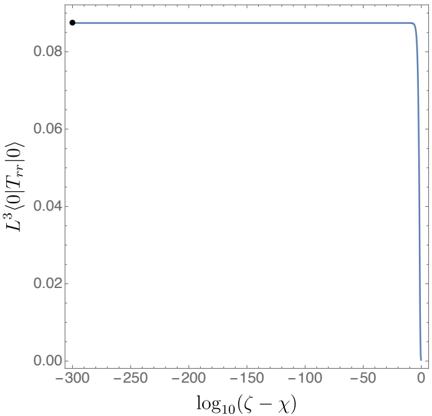
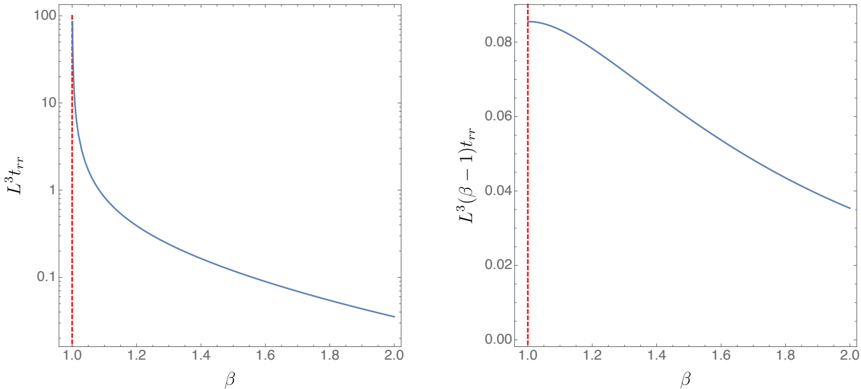
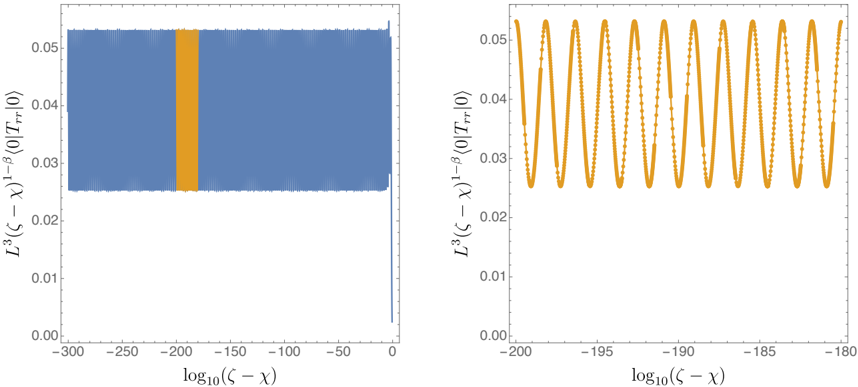
We investigate the stability of the inner horizon of a rotating BTZ black hole. We show that linear perturbations arising from smooth initial data are arbitrarily differentiable at the inner horizon if the black hole is sufficiently close to extremality. This is demonstrated for scalar fields, for massive Chern-Simons fields, for Proca fields, and for massive spin-2 fields. Thus the strong cosmic censorship conjecture is violated by a near-extremal BTZ black hole in a large class of theories. However, we show that a weaker \rough" version of the conjecture is respected. We calculate the renormalized energymomentum tensor of a scalar field in the Hartle-Hawking state in the BTZ geometry. We show that the result is finite at the inner horizon of a near-extremal black hole. Hence the backreaction of vacuum polarization does not enforce strong cosmic censorship.
Overview
The claims and statistics of this paper haven’t been checked yet.
Run the check — free, no account needed. It reads the open-access text and checks the sources it cites.
Integrity signals
Registry
Cites
Statistics
Figures
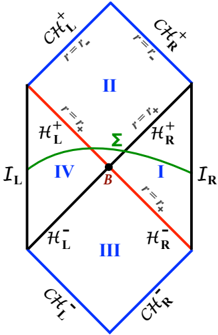
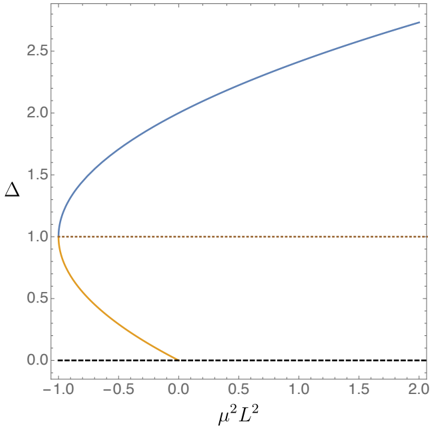
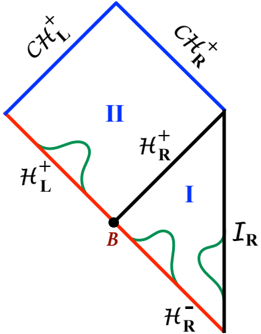
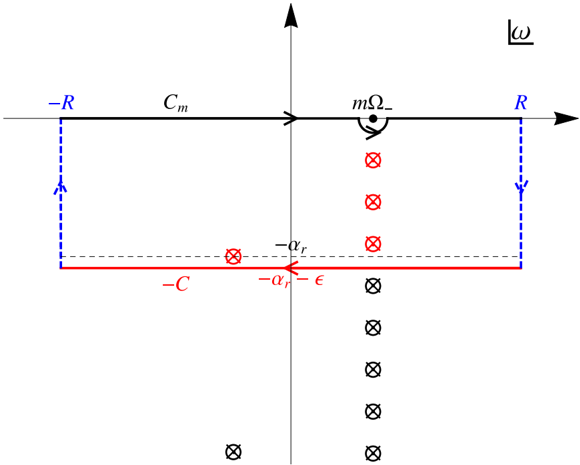
Verification
Claims the paper makes
The claims and statistics of this paper haven’t been checked yet.
Run the check — free, no account needed. It reads the open-access text and checks the sources it cites.
Claims other papers make about this one
Each is checked against this paper’s own text: does it say what the citing paper says it does?
The source backs part of the claim, not all of it — or backs it for a different population, condition or comparison.
In the citing paper
“A notable exception, however, is the classical rotating BTZ black hole, where the backreaction is mild enough such that the inner horizon does not become singular, indicating a violation in strong cosmic censorship [298,299].”
From Three-Dimensional Quantum Black Holes: A Primer (2024) · cites this paper as [298]
Experimental — accuracy not yet measuredThe source backs part of the claim, not all of it — or backs it for a different population, condition or comparison.
In the citing paper
“Thus far, there is agreement that the expectation value of the quantum stress tensor of a free scalar field diverges at the inner horizon of a RN or Kerr black hole (in D = d + 1 = 4) on approach from the exterior [296][297][298][299], suggesting a type of strong cosmic censorship.”
From Three-Dimensional Quantum Black Holes: A Primer (2024) · cites this paper as [298]
Experimental — accuracy not yet measured
Self-check
Percentages, sums and reported differences re-computed from the paper’s own numbers.
The self-check needs the paper’s full text.
Citations
Cites
Quantum Fields in Curved Space
Birrell, N. D., & Davies, P. C. W. (1982) · doi:10.1017/cbo9780511622632 · Cited by 8,354
Research works printed but not linked: 49
- M. Simpson and R. Penrose, Internal instability in a Reissner-Nordstrom black hole, Int. J. Theor. Phys.7 (1973) 183 [INSPIRE]. · DOI · Paper page
- J. McNamara, Instability of black hole inner horizons, Proc. Roy. Soc. LondonA 358 (1978) 499. · DOI
- S. Chandrasekhar and J.B. Hartle, On crossing the cauchy horizon of a Reissner-Nordstr¨om black-hole, Proc. Roy. Soc. LondonA 384 (1982) 301. · DOI
- E. Poisson and W. Israel, Internal structure of black holes, Phys. Rev.D 41 (1990) 1796 [INSPIRE].
- M. Dafermos, The interior of charged black holes and the problem of uniqueness in general relativity, Commun. Pure Appl. Math.58 (2005) 0445 [gr-qc/0307013] [INSPIRE]. · DOI
- A. Ori, Inner structure of a charged black hole: an exact mass-inflation solution, Phys. Rev. Lett.67 (1991) 789 [INSPIRE]. · DOI
- M. Dafermos and J. Luk, The interior of dynamical vacuum black holes I: the C 0-stability of the Kerr Cauchy horizon, arXiv:1710.01722 [INSPIRE]. · arXiv
- J. Luk and S.-J. Oh, Strong cosmic censorship in spherical symmetry for two-ended asymptotically flat initial data I. The interior of the black hole region, arXiv:1702.05715 [INSPIRE]. · arXiv
- M. Dafermos, Black holes without spacelike singularities, Commun. Math. Phys.332 (2014) 729 [arXiv:1201.1797] [INSPIRE]. · DOI
- R. Penrose, Singularities of spacetime, in Theoretical principles in astrophysics and relativity, N.R. Liebowitz and P.O. Vandervoort eds., Chicago University Press, Chicago U.S.A. (1978).
- V. Cardoso et al., Quasinormal modes and strong cosmic censorship, Phys. Rev. Lett.120 (2018) 031103 [arXiv:1711.10502] [INSPIRE]. · DOI
- O.J.C. Dias, H.S. Reall and J.E. Santos, Strong cosmic censorship: taking the rough with the smooth, JHEP10 (2018) 001 [arXiv:1808.02895] [INSPIRE]. · DOI
- R. Luna et al., Strong cosmic censorship: the nonlinear story, Phys. Rev.D 99 (2019) 064014 [arXiv:1810.00886] [INSPIRE]. · arXiv
- F. Mellor and I. Moss, Stability of black holes in de Sitter space, Phys. Rev.D 41 (1990) 403 [INSPIRE].
- O.J.C. Dias, F.C. Eperon, H.S. Reall and J.E. Santos, Strong cosmic censorship in de Sitter space, Phys. Rev.D 97 (2018) 104060 [arXiv:1801.09694] [INSPIRE]. · arXiv
- G. Festuccia and H. Liu, A Bohr-Sommerfeld quantization formula for quasinormal frequencies of AdS black holes, Adv. Sci. Lett.2 (2009) 221 [arXiv:0811.1033] [INSPIRE]. · DOI
- G. Holzegel and J. Smulevici, Decay properties of Klein-Gordon fields on Kerr-AdS spacetimes, Commun. Pure Appl. Math.66 (2013) 1751 [arXiv:1110.6794] [INSPIRE]. · DOI
- C. Kehle, Uniform boundedness and continuity at the Cauchy horizon for linear waves on Reissner-Nordstr¨om-AdS black holes, arXiv:1812.06142 [INSPIRE]. · arXiv
- S. Bhattacharjee, S. Sarkar and A. Virmani, Internal structure of charged AdS black holes, Phys. Rev.D 93 (2016) 124029 [arXiv:1604.03730] [INSPIRE]. · arXiv
- M. Bañados, C. Teitelboim and J. Zanelli, The black hole in three-dimensional space-time, Phys. Rev. Lett.69 (1992) 1849 [hep-th/9204099] [INSPIRE]. · DOI · Paper page
- M. Bañdos, M. Henneaux, C. Teitelboim and J. Zanelli, Geometry of the (2+ 1) black hole, Phys. Rev.D 48 (1993) 1506 [Erratum ibid.D 88 (2013) 069902] [gr-qc/9302012] [INSPIRE]. · DOI · Paper page
- O. Aharony et al., Large N field theories, string theory and gravity, Phys. Rept.323 (2000) 183 [hep-th/9905111] [INSPIRE]. · DOI
- D. Birmingham, Choptuik scaling and quasinormal modes in the AdS/CFT correspondence, Phys. Rev.D 64 (2001) 064024 [hep-th/0101194] [INSPIRE]. · arXiv
- M. Dafermos and Y. Shlapentokh-Rothman, Rough initial data and the strength of the blue-shift instability on cosmological black holes with Λ < 0, Class. Quant. Grav.35 (2018) 195010 [arXiv:1805.08764] [INSPIRE]. · DOI
- N.D. Birrell and P.C.W. Davies, On falling through a black hole into another universe, Nature272 (1978) 35 [INSPIRE]. · DOI
- V. Balasubramanian and T.S. Levi, Beyond the veil: inner horizon instability and holography, Phys. Rev.D 70 (2004) 106005 [hep-th/0405048] [INSPIRE]. · arXiv
- A.R. Steif, The quantum stress tensor in the three-dimensional black hole, Phys. Rev.D 49 (1994) 585 [gr-qc/9308032] [INSPIRE]. · DOI · Paper page
- P. Breitenlohner and D.Z. Freedman, Stability in gauged extended supergravity, Annals Phys.144 (1982) 249 [INSPIRE]. · DOI · Paper page
- L. Mezincescu and P.K. Townsend, Stability at a local maximum in higher dimensional Anti-de Sitter space and applications to supergravity, Annals Phys.160 (1985) 406 [INSPIRE]. · DOI
- I.R. Klebanov and E. Witten, AdS/CFT correspondence and symmetry breaking, Nucl. Phys.B 556 (1999) 89 [hep-th/9905104] [INSPIRE]. · DOI
- P. Hintz and A. Vasy, Analysis of linear waves near the Cauchy horizon of cosmological black holes, J. Math. Phys.58 (2017) 081509 [arXiv:1512.08004] [INSPIRE]. · DOI
- M. Abramowitz and I. Stegun, Handbook of mathematical functions, Dover, New York U.S.A. (1964).
- C. Kehle and Y. Shlapentokh-Rothman, A scattering theory for linear waves on the interior of Reissner–Nordstr¨om black holes, Ann. Henri Poincaŕe20 (2019) 1583 [arXiv:1804.05438] [INSPIRE]. · DOI
- D. Christodoulou, The formation of black holes in general relativity, European Mathematical Society, Poland (2009). · DOI
- E. Witten, Multitrace operators, boundary conditions and AdS/CFT correspondence, hep-th/0112258 [INSPIRE]. · arXiv
- A. Strominger and C. Vafa, Microscopic origin of the Bekenstein-Hawking entropy, Phys. Lett.B 379 (1996) 99 [hep-th/9601029] [INSPIRE]. · DOI · Paper page
- J.P. Gauntlett, O.A.P. Mac Conamhna, T. Mateos and D. Waldram, Supersymmetric AdS 3solutions of type IIB supergravity, Phys. Rev. Lett.97 (2006) 171601 [hep-th/0606221] [INSPIRE]. · DOI
- T. Andrade, J.I. Jottar and R.G. Leigh, Boundary conditions and unitarity: the Maxwell-Chern-Simons system in AdS 3/C F T 2 , JHEP05 (2012) 071 [arXiv:1111.5054] [INSPIRE]. · DOI
- W. Li, W. Song and A. Strominger, Chiral gravity in three dimensions, JHEP04 (2008) 082 [arXiv:0801.4566] [INSPIRE]. · DOI
- Y. Liu and Y.-w. Sun, Note on new massive gravity in AdS 3 , JHEP04 (2009) 106 [arXiv:0903.0536] [INSPIRE]. · DOI
- M. Casals, A. Fabbri, C. Martínez and J. Zanelli, Quantum backreaction on three-dimensional black holes and naked singularities, Phys. Rev. Lett.118 (2017) 131102 [arXiv:1608.05366] [INSPIRE]. · DOI
- M. Casals, A. Fabbri, C. Martínez and J. Zanelli, Quantum-corrected rotating black holes and naked singularities in (2+ 1) dimensions, Phys. Rev.D 99 (2019) 104023 [arXiv:1902.01583] [INSPIRE]. · DOI · Paper page
- R.M. Wald, Quantum field theory in curved space-time and black hole thermodynamics, Chicago Lectures in Physics. University of Chicago Press, Chicago U.S.A. (1995).
- Y. Decanini and A. Folacci, Hadamard renormalization of the stress-energy tensor for a quantized scalar field in a general spacetime of arbitrary dimension, Phys. Rev.D 78 (2008) 044025 [gr-qc/0512118] [INSPIRE]. · DOI
- R.M. Wald, The back reaction effect in particle creation in curved space-time, Commun. Math. Phys.54 (1977) 1 [INSPIRE]. · DOI · Paper page
- S. Hollands and R.M. Wald, Local Wick polynomials and time ordered products of quantum fields in curved space-time, Commun. Math. Phys.223 (2001) 289 [gr-qc/0103074] [INSPIRE]. · DOI
- I. Ichinose and Y. Satoh, Entropies of scalar fields on three-dimensional black holes, Nucl. Phys.B 447 (1995) 340 [hep-th/9412144] [INSPIRE]. · DOI
- A. Lanir, A. Ori, N. Zilberman, O. Sela, A. Maline and A. Levi, Analysis of quantum effects inside spherical charged black holes, Phys. Rev.D 99 (2019) 061502 [arXiv:1811.03672] [INSPIRE]. · arXiv
- V.E. Hubeny, D. Marolf and M. Rangamani, Hawking radiation from AdS black holes, Class. Quant. Grav.27 (2010) 095018 [arXiv:0911.4144] [INSPIRE]. · DOI · Paper page
Cited by
Sorted by citations
Three-Dimensional Quantum Black Holes: A Primer
Panella, E., Pedraza, J. F., & Svesko, A. (2024) · Universe · doi:10.3390/universe10090358 · Cited by 24
Metadata
- Authors
- Dias, O. J. C., Reall, H. S., & Santos, J. E.
- Venue
- Journal of High Energy Physics
- Published
- 2019-12
- Volume
- 2019
- Issue
- 12
- ISSN
- 1029-8479
- Cited by
- 60
- References
- 1
- Language
- en
About these checks
Registry, retraction, Cites and statistics results are computed, not judged, with one exception: a printed reference that no index lists is read once by a model before it counts as a citation error. Claims are extracted by a model and kept only when their quote appears verbatim in the text; each cited source is then checked, with a model’s help, for whether it says what the claim relies on. Those verdicts can be wrong — read the claim’s quote and the cited source before relying on one.
Statistics and arithmetic are recomputed, not judged.
Confidence bands are shown only for fields calibrated on our annotated test set. None is calibrated yet, so no band is shown.
What counts as a claim ›How we measure confidence ›How we check this ›
Are you an author, or do you see a problem with this page? Request a review
