

Pharmacological properties of JTE-052: a novel potent JAK inhibitor that suppresses various inflammatory responses in vitro and in vivo
Open accessThe DOI matches its Crossref record; 23 of the 23 references it cites were found in a registry or an index.
Abstract
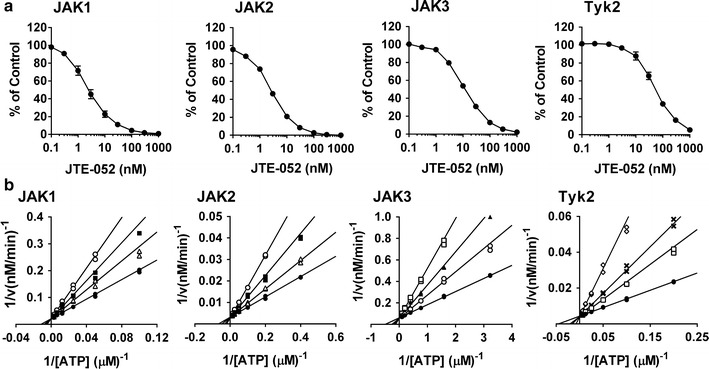
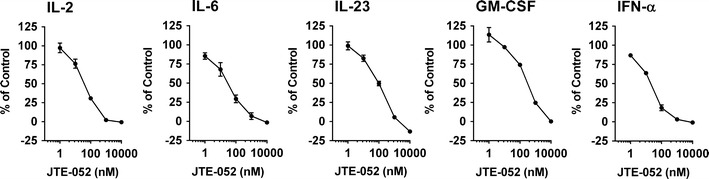
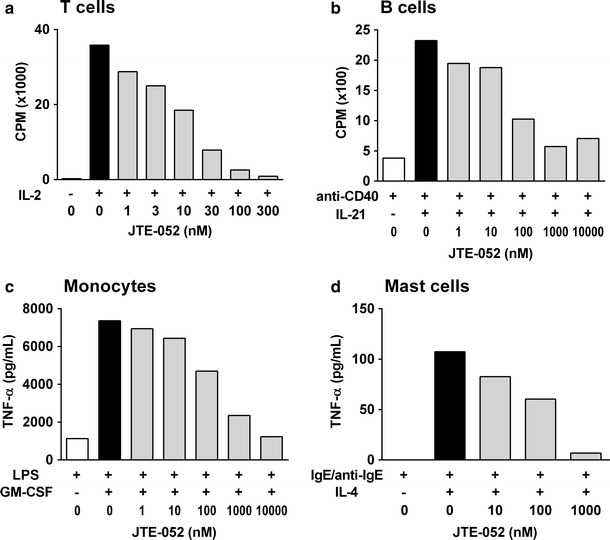
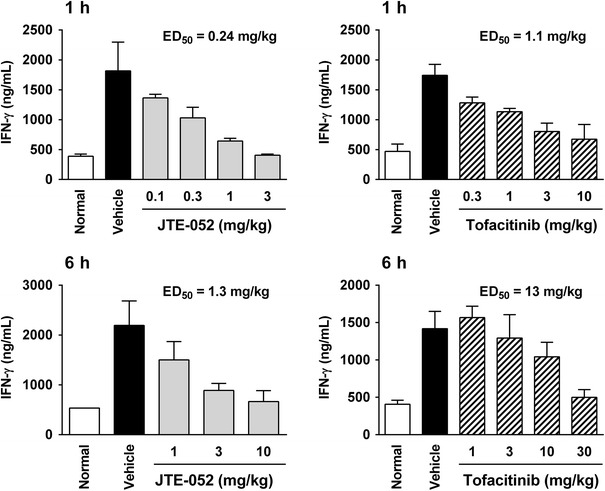
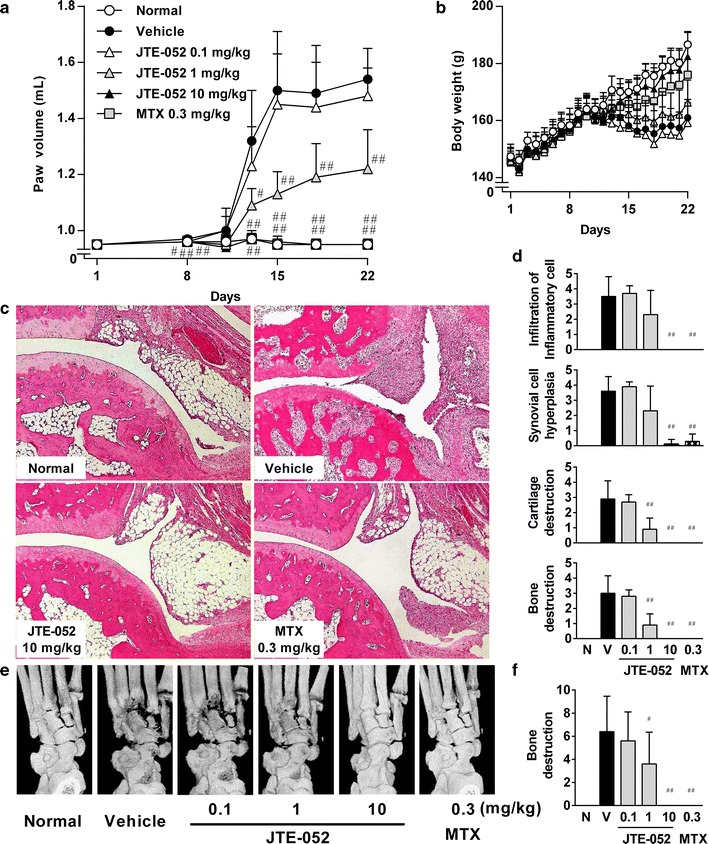
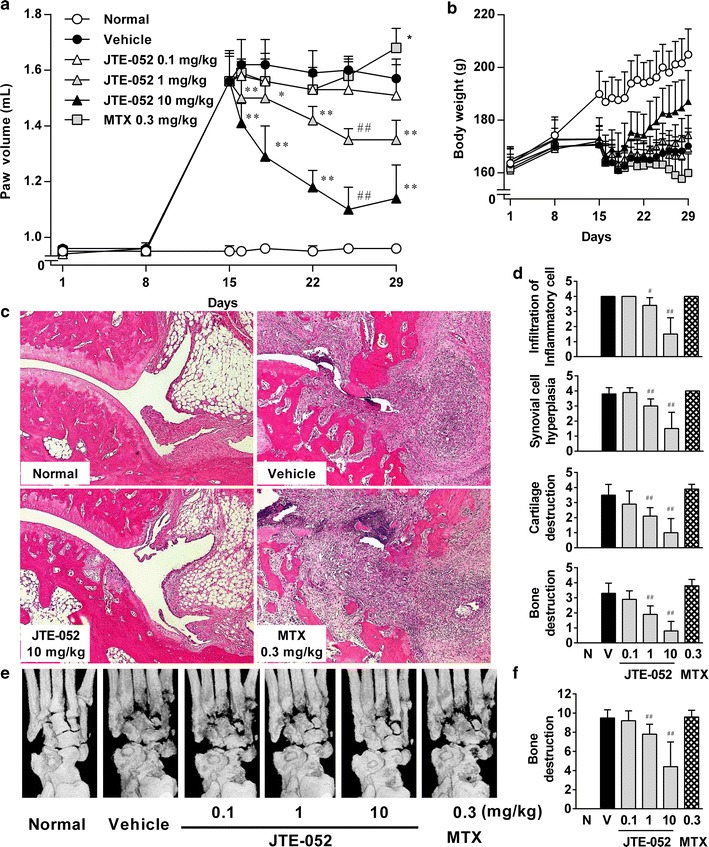
OBJECTIVE: To evaluate the pharmacological properties of JTE-052, a novel Janus kinase (JAK) inhibitor. METHODS: The JAK inhibitory activity of JTE-052 was evaluated using recombinant human enzymes. The inhibitory effects on cytokine signaling pathways were evaluated using primary human inflammatory cells. The in vivo efficacy and potency of JTE-052 were examined in a mouse interleukin (IL)-2-induced interferon (IFN)-γ production model and a rat collagen-induced arthritis model. RESULTS: JTE-052 inhibited the JAK1, JAK2, JAK3, and tyrosine kinase (Tyk)2 enzymes in an adenosine triphosphate (ATP)-competitive manner and inhibited cytokine signaling evoked by IL-2, IL-6, IL-23, granulocyte/macrophage colony-stimulating factor, and IFN-α. JTE-052 inhibited the activation of inflammatory cells, such as T cells, B cells, monocytes, and mast cells, in vitro. Oral dosing of JTE-052 resulted in potent suppression of the IL-2-induced IFN-γ production in mice with an ED50 value of 0.24 mg/kg, which was more potent than that of tofacitinib (ED50 = 1.1 mg/kg). In the collagen-induced arthritis model, JTE-052 ameliorated articular inflammation and joint destruction even in therapeutic treatments where methotrexate was ineffective. CONCLUSIONS: The present results indicate that JTE-052 is a highly potent JAK inhibitor, and represents a candidate anti-inflammatory agent for suppressing various types of inflammation.
Overview
The claims and statistics of this paper haven’t been checked yet.
Free: it reads the open-access text and checks the first 5 claims that cite a source we can check. Create a free account to check every claim.
Integrity signals
Registry
Cites
Statistics
Figures
Verification
Claims the paper makes
The claims and statistics of this paper haven’t been checked yet.
Free: it reads the open-access text and checks the first 5 claims that cite a source we can check. Create a free account to check every claim.
Claims other papers make about this one
Each is checked against this paper’s own text: does it say what the citing paper says it does?
The source backs part of the claim, not all of it — or backs it for a different population, condition or comparison.
In the citing paper
“Delgocitinib (JTE-052/LEO 242549) is a first-generation, non-selective JAK inhibitor that, upon topical and oral application, was shown to improve allergic contact sensitization and AD-like inflammation in animal models221–223.”
From Atopic dermatitis: an expanding therapeutic pipeline for a complex disease (2022) · cites this paper as [222]
Experimental — accuracy not yet measured
Self-check
Percentages, sums and reported differences re-computed from the paper’s own numbers.
The self-check needs the paper’s full text.
Citations
Cites
A quantitative analysis of kinase inhibitor selectivity
Karaman, M. W., Herrgard, S., Treiber, D. K., Gallant, P., Atteridge, C. E., Campbell, B. T., Chan, K. W., Ciceri, P., Davis, M. I., Edeen, P. T., et al. (2008) · Nature Biotechnology · doi:10.1038/nbt1358 · Cited by 2,466 · cited 1×
“Tofacitinib represents the first small molecule developed as a selective inhibitor of the JAKs, and exhibits nanomolar potency and a high degree of kinome selectivity [4].”
BackgroundBorst, O., Walker, B., Münzer, P., Russo, A., Schmid, E., Faggio, C., Bigalke, B., Laufer, S., Gawaz, M., & Lang, F. (2013) · Cellular Physiology and Biochemistry · doi:10.1159/000350110 · Cited by 1,860
JAK and STAT Signaling Molecules in Immunoregulation and Immune-Mediated Disease
O'Shea, J. J., & Plenge, R. (2012) · Immunity · doi:10.1016/j.immuni.2012.03.014 · Cited by 1,138 · cited 1×
“Several small-molecule JAK inhibitors are currently under clinical development [3].”
BackgroundQuintás-Cardama, A., Vaddi, K., Liu, P., Manshouri, T., Li, J., Scherle, P. A., Caulder, E., Wen, X., Li, Y., Waeltz, P., et al. (2010) · Blood · doi:10.1182/blood-2009-04-214957 · Cited by 843 · cited 1×
“reported to inhibit JAK1 and JAK2 with nanomolar potency and JAK3 with 100-fold weaker potency [20].”
BackgroundTofacitinib, an Oral Janus Kinase Inhibitor, in Active Ulcerative Colitis
Sandborn, W. J., Ghosh, S., Panes, J., Vranic, I., Su, C., Rousell, S., & Niezychowski, W. (2012) · New England Journal of Medicine · doi:10.1056/nejmoa1112168 · Cited by 800 · cited 2×
“These may be a reason why JAK inhibitors such as tofacitinib showed apparent effects in RA patients who had inadequate responses to MTX and in patients with various inflammatory diseases such as psoriasis, IBD, and transplantation rejection.”
BackgroundYamaoka, K., Saharinen, P., Pesu, M., Holt, V. E., Silvennoinen, O., & O'Shea, J. J. (2004) · Genome Biology · doi:10.1186/gb-2004-5-12-253 · Cited by 635 · cited 14×
“3b and S1b, human B cells underwent proliferation upon stimulation with IL-21 Table 1 IC50 and Ki values of JAK inhibitors in enzyme assays Compounds JAK1 JAK2 JAK3 Tyk2 JTE-052 IC50 (nM) 2.8 ± 0.6 2.6 ± 0.2 13 ± 0 58 ± 9 Ki (nM) 2.1 ± 0.3 1.7 ± 0.0 5.5 ± 0.3 14 ± 1 Tofacitinib Ki (nM) 2.0 ± 0.4 1.3 ± 0.0 0.74 ± 0.01…”
BackgroundInfluentialPrevention of organ allograft rejection by a specific Janus kinase 3 inhibitor
Changelian, P. S., Flanagan, M. E., Ball, D. J., Kent, C. R., Magnuson, K. S., Martin, W. H., Rizzuti, B. J., Sawyer, P. S., Perry, B. D., Brissette, W. H., et al. (2003) · Science · doi:10.1126/science.1087061 · Cited by 607 · cited 1×
“Tofacitinib is a selective inhibitor for the JAK family of kinases and has been reported to block the cytokine signaling related to JAK1/3 [10, 11] and inhibit the function of T cells [12], but the precise mechanism by which tofacitinib shows such broad efficacy is not well understood.”
BackgroundMeyer, D. M., Jesson, M. I., Li, X., Elrick, M. M., Funckes-Shippy, C. L., Warner, J. D., Gross, C. J., Dowty, M. E., Ramaiah, S. K., Hirsch, J. L., et al. (2010) · Journal of Inflammation · doi:10.1186/1476-9255-7-41 · Cited by 461 · cited 2×
“Tofacitinib inhibited JAK1, JAK2, and JAK3 with nanomolar potency and Tyk2 with 10-fold weaker potency, consistent with a previous report [10].”
BackgroundResultFleischmann, R., Cutolo, M., Genovese, M. C., Lee, E. B., Kanik, K. S., Sadis, S., Connell, C. A., Gruben, D., Krishnaswami, S., Wallenstein, G., et al. (2012) · Arthritis & Rheumatism · doi:10.1002/art.33383 · Cited by 376 · cited 14×
“There are several reports regarding adverse events, including elevation of transaminases or rates of infection, in tofacitinib-treated patients [5, 6].”
BackgroundInfluentialTanaka, Y., Suzuki, M., Nakamura, H., Toyoizumi, S., Zwillich, S. H., & Tofacitinib Study Investigators (2011) · Arthritis Care & Research · doi:10.1002/acr.20494 · Cited by 297
Cited by
Atopic dermatitis: an expanding therapeutic pipeline for a complex disease
Bieber, T. (2022) · Nature Reviews Drug Discovery · doi:10.1038/s41573-021-00266-6 · Cited by 623
A Comprehensive Overview of Globally Approved JAK Inhibitors
Shawky, A. M., Almalki, F. A., Abdalla, A. N., Abdelazeem, A. H., & Gouda, A. M. (2022) · Pharmaceutics · doi:10.3390/pharmaceutics14051001 · Cited by 349
“Delgocitinib also inhibited the activati n of inflammatory cells such as mast cells nd T cel s [99].”
BackgroundEmerging Topical and Systemic JAK Inhibitors in Dermatology
Solimani, F., Meier, K., & Ghoreschi, K. (2019) · Frontiers in Immunology · doi:10.3389/fimmu.2019.02847 · Cited by 308
Small Molecule Kinase Inhibitor Drugs (1995–2021): Medical Indication, Pharmacology, and Synthesis
Ayala-Aguilera, C. C., Valero, T., Lorente-Macías, Á., Baillache, D. J., Croke, S., & Unciti-Broceta, A. (2022) · Journal of Medicinal Chemistry · doi:10.1021/acs.jmedchem.1c00963 · Cited by 265
Amano, W., Nakajima, S., Kunugi, H., Numata, Y., Kitoh, A., Egawa, G., Dainichi, T., Honda, T., Otsuka, A., Kimoto, Y., et al. (2015) · Journal of Allergy and Clinical Immunology · doi:10.1016/j.jaci.2015.03.051 · Cited by 259
Self-citationNakagawa, H., Nemoto, O., Igarashi, A., Saeki, H., Kaino, H., & Nagata, T. (2020) · Journal of the American Academy of Dermatology · doi:10.1016/j.jaad.2019.12.015 · Cited by 242
Innovation in the treatment of atopic dermatitis: Emerging topical and oral Janus kinase inhibitors
Nakashima, C., Yanagihara, S., & Otsuka, A. (2022) · Allergology International · doi:10.1016/j.alit.2021.10.004 · Cited by 192
An overview of JAK/STAT pathways and JAK inhibition in alopecia areata
Lensing, M., & Jabbari, A. (2022) · Frontiers in Immunology · doi:10.3389/fimmu.2022.955035 · Cited by 178
Selectivity, efficacy and safety of JAKinibs: new evidence for a still evolving story
Bonelli, M., Kerschbaumer, A., Kastrati, K., Ghoreschi, K., Gadina, M., Heinz, L. X., Smolen, J. S., Aletaha, D., O’Shea, J., & Laurence, A. (2024) · Annals of the Rheumatic Diseases · doi:10.1136/ard-2023-223850 · Cited by 162
Nakagawa, H., Nemoto, O., Igarashi, A., & Nagata, T. (2018) · British Journal of Dermatology · doi:10.1111/bjd.16014 · Cited by 145
Bissonnette, R., Warren, R. B., Pinter, A., Agner, T., Gooderham, M., Schuttelaar, M. L. A., Crépy, M. N., Stingeni, L., Serra‐Baldrich, E., Baranowski, K., et al. (2024) · The Lancet · doi:10.1016/s0140-6736(24)01027-4 · Cited by 129
Dhillon, S. (2020) · Drugs · doi:10.1007/s40265-020-01291-2 · Cited by 126
Nakagawa, H., Nemoto, O., Igarashi, A., Saeki, H., Kabashima, K., Oda, M., & Nagata, T. (2021) · Journal of the American Academy of Dermatology · doi:10.1016/j.jaad.2021.06.014 · Cited by 127
Nezamololama, N., Fieldhouse, K. A., Metzger, K. C., & Gooderham, M. (2020) · Drugs in Context · doi:10.7573/dic.2020-8-5 · Cited by 125
Worm, M., Bauer, A., Elsner, P., Mahler, V., Molin, S., & Nielsen, T. S. S. (2020) · British Journal of Dermatology · doi:10.1111/bjd.18469 · Cited by 107
Phase 2 clinical study of delgocitinib ointment in pediatric patients with atopic dermatitis
Nakagawa, H., Nemoto, O., Igarashi, A., Saeki, H., Oda, M., Kabashima, K., & Nagata, T. (2019) · Journal of Allergy and Clinical Immunology · doi:10.1016/j.jaci.2019.08.004 · Cited by 108
Fukuyama, T., Ehling, S., Cook, E. H., & Bäumer, W. (2015) · Journal of Pharmacology and Experimental Therapeutics · doi:10.1124/jpet.115.223784 · Cited by 107
“Tofacitinib represents one of the first small molecules developed as a selective inhibitor of JAK3 (Tanimoto et al., 2015), and exhibits anti-inflammatory activities by oral administrations in different models of inflammatory diseases, such as rheumatoid arthritis (Meyer et al., 2010; Kubo et al., 2014), inflammatory…”
BackgroundInfluentialNakagawa, H., Nemoto, O., Igarashi, A., Saeki, H., Murata, R., Kaino, H., & Nagata, T. (2020) · The Journal of Dermatology · doi:10.1111/1346-8138.15173 · Cited by 105
Current and Emerging Strategies to Inhibit Type 2 Inflammation in Atopic Dermatitis
Haddad, E., Cyr, S. L., Arima, K., McDonald, R. A., Levit, N. A., & Nestle, F. O. (2022) · Dermatology and Therapy · doi:10.1007/s13555-022-00737-7 · Cited by 102
“Delgocitinib has wide-reaching actions against Th1, Th2, and Th17 responses and inhibitory effects against JAK1, JAK2, JAK3, and TYK2; it is approved in Japan as a topical agent to treat AD [241, 242].”
BackgroundWorm, M., Thyssen, J. P., Schliemann, S., Bauer, A., Shi, V. Y., Ehst, B., Tillmann, S., Korn, S., Resen, K., & Agner, T. (2022) · British Journal of Dermatology · doi:10.1111/bjd.21037 · Cited by 98
Pharmacological treatment options for mast cell activation disease
Molderings, G. J., Haenisch, B., Brettner, S., Homann, J., Menzen, M., Dumoulin, F. L., Panse, J., Butterfield, J., & Afrin, L. B. (2016) · Naunyn-Schmiedeberg's Archives of Pharmacology · doi:10.1007/s00210-016-1247-1 · Cited by 79
Xu, P., Shen, P., Yu, B., Xu, X. J., Ge, R., Cheng, X., Chen, Q., Bian, J., Li, Z., & Wang, J. (2020) · European Journal of Medicinal Chemistry · doi:10.1016/j.ejmech.2020.112155 · Cited by 88
Landis, M. N., Arya, M., SMITH, S. R., Draelos, Z. D., Usdan, L. S., Tarabar, S. G., Pradhan, V., Aggarwal, S., Banfield, C. R., Peeva, E., et al. (2022) · British Journal of Dermatology · doi:10.1111/bjd.21826 · Cited by 73
Clarysse, K., Pfaff, C. M., Marquardt, Y., Huth, L., Kortekaas Krohn, I., Kluwig, D., Lüscher, B., Gutermuth, J., & Baron, J. (2019) · Journal of the European Academy of Dermatology and Venereology · doi:10.1111/jdv.15301 · Cited by 64
Elsner, P. U., & Agner, T. (2019) · Journal of the European Academy of Dermatology and Venereology · doi:10.1111/jdv.16062 · Cited by 69
JAK inhibitors for the treatment of vitiligo
Inoue, S., Suzuki, T., Sano, S., & Katayama, I. (2024) · Journal of Dermatological Science · doi:10.1016/j.jdermsci.2023.12.008 · Cited by 66
Tanimoto, A., Shinozaki, Y., Yamamoto, Y., Katsuda, Y., Taniai‐Riya, E., Toyoda, K., Kakimoto, K., Kimoto, Y., Amano, W., Konishi, N., et al. (2018) · Experimental Dermatology · doi:10.1111/exd.13370 · Cited by 60
Self-citationNovel pathogenesis of atopic dermatitis from the view of cytokines in mice and humans
Nakajima, S., Tie, D., Nomura, T., & Kabashima, K. (2021) · Cytokine · doi:10.1016/j.cyto.2021.155664 · Cited by 62
Biological Therapies for Atopic Dermatitis: A Systematic Review
Zhou, S., Qi, F., Gong, Y., Zhang, J., & Zhu, B. (2021) · Dermatology · doi:10.1159/000514535 · Cited by 52
Dębińska, A. (2021) · Journal of Clinical Medicine · doi:10.3390/jcm10112506 · Cited by 60
“Delgocitinib (JTE-052) is the topical pan-JAK inhibitor, which has inhibitory effects on all types of JAK family kinase [160].”
BackgroundEnglish version of clinical practice guidelines for the management of atopic dermatitis 2024
Saeki, H., Ohya, Y., Arakawa, H., Ichiyama, S., Katsunuma, T., Katoh, N., Tanaka, A., Tanizaki, H., Tsunemi, Y., Nakahara, T., et al. (2024) · The Journal of Dermatology · doi:10.1111/1346-8138.17544 · Cited by 59
Nakagawa, H., Nemoto, O., Yamada, H., Nagata, T., & Ninomiya, N. (2018) · The Journal of Dermatology · doi:10.1111/1346-8138.14322 · Cited by 49
Synthetic Approaches to the New Drugs Approved During 2020
Flick, A. C., Leverett, C. A., Ding, H. X., McInturff, E. L., Fink, S. J., Mahapatra, S., Carney, D. W., Lindsey, E. A., DeForest, J. C., France, S. P., et al. (2022) · Journal of Medicinal Chemistry · doi:10.1021/acs.jmedchem.2c00710 · Cited by 46
Shen, P., Wang, Y., Jia, X., Xu, P., Qin, L., Feng, X., Li, Z., & Qiu, Z. (2022) · European Journal of Medicinal Chemistry · doi:10.1016/j.ejmech.2022.114551 · Cited by 45
Demonstration of rebound phenomenon following abrupt withdrawal of the JAK1 inhibitor oclacitinib
Fukuyama, T., Ganchingco, J. R. C., & Bäumer, W. (2016) · European Journal of Pharmacology · doi:10.1016/j.ejphar.2016.11.020 · Cited by 43
Pharmacology of inhibitors of Janus kinases – Part 1: Pharmacokinetics
Eichner, A., & Wohlrab, J. (2022) · JDDG Journal der Deutschen Dermatologischen Gesellschaft · doi:10.1111/ddg.14921 · Cited by 44
Gooderham, M., Molin, S., Bissonnette, R., Worm, M., Crépy, M. N., Stingeni, L., Warren, R. B., Schliemann, S., Schuttelaar, M. L. A., Ferrucci, S. M., et al. (2025) · Journal of the American Academy of Dermatology · doi:10.1016/j.jaad.2025.03.008 · Cited by 41
Emerging Therapeutic Options for Chronic Pruritus
Reszke, R., Krajewski, P. K., & Szepietowski, J. C. (2020) · American Journal of Clinical Dermatology · doi:10.1007/s40257-020-00534-y · Cited by 41
Klaeschen, A. S., Nümm, T. J., Herrmann, N., Leib, N., Maintz, L., Sakai, T., Wenzel, J., & Bieber, T. (2021) · Journal of Allergy and Clinical Immunology · doi:10.1016/j.jaci.2020.11.041 · Cited by 36
Amano, W., Nakajima, S., Yamamoto, Y., Tanimoto, A., Matsushita, M., Miyachi, Y., & Kabashima, K. (2016) · Journal of Dermatological Science · doi:10.1016/j.jdermsci.2016.09.007 · Cited by 35
Self-citationPharmacodynamics of Janus kinase inhibitors for the treatment of atopic dermatitis
Calabrese, L., Chiricozzi, A., SIMONE, C. D., Fossati, B., D'Amore, A., & Peris, K. (2022) · Expert Opinion on Drug Metabolism & Toxicology · doi:10.1080/17425255.2022.2099835 · Cited by 35
“6, 13, and 58 nM for JAK1, JAK2, JAK3, and Tyk2, respectively [58].”
Nakagawa, H., Igarashi, A., Saeki, H., Kabashima, K., Tamaki, T., Kaino, H., & Miwa, Y. (2023) · Allergology International · doi:10.1016/j.alit.2023.04.003 · Cited by 32
Li, X., Yu, M., Chen, L., Sun, T., Wang, H., Zhao, L., & Zhao, Q. (2018) · Life Sciences · doi:10.1016/j.lfs.2018.12.020 · Cited by 31
RetractedThe pathology of type 2 inflammation-associated itch in atopic dermatitis
Moniaga, C. S., Tominaga, M., & Takamori, K. (2021) · Diagnostics · doi:10.3390/diagnostics11112090 · Cited by 28
How multispecific molecules are transforming pharmacotherapy
Deshaies, R. J. (2025) · Nature Reviews Drug Discovery · doi:10.1038/s41573-025-01262-w · Cited by 29
“32).”
Experimental Pharmacological Management of Psoriasis
Campione, E., Cosio, T., Di Prete, M., Lanna, C., Dattola, A., & Bianchi, L. (2021) · Journal of Experimental Pharmacology · doi:10.2147/jep.s265632 · Cited by 27
Current emerging and investigational drugs for the treatment of chronic hand eczema
Cheng, J., Facheris, P., Ungar, B., & Guttman‐Yassky, E. (2022) · Expert Opinion on Investigational Drugs · doi:10.1080/13543784.2022.2087059 · Cited by 27
“Delgocitinib is a topical small molecule pan-JAK inhibitor with activity against JAK1, JAK2, JAK3, and tyrosine kinase 2 [82].”
BackgroundGarcía‐Melendo, C., Cubiró, X., & Puig, L. (2021) · Actas Dermo-Sifiliográficas · doi:10.1016/j.adengl.2021.05.008 · Cited by 27
“The JAK1, JAK2, and JAK3 inhibitor delgocitinib (Corectim, Japan Tobacco/LEO Pharma) was developed for topical treatment of atopic dermatitis.(80) Phase 1 and 2 studies(81,82) proved the concept of therapeutic efficacy with respect to severity and pruritus.”
BackgroundRoskoski, R. J. (2023) · Pharmacological Research · doi:10.1016/j.phrs.2023.106847 · Cited by 26
Platelets and IgE: Shaping the Innate Immune Response in Systemic Lupus Erythematosus
Brilland, B., Scherlinger, M., Khoryati, L., Goret, J., Duffau, P., Lazaro, E., Charrier, M., Guillotin, V., Richez, C., & Blanco, P. (2019) · Clinical Reviews in Allergy & Immunology · doi:10.1007/s12016-019-08744-x · Cited by 26
Synthesis and clinical application of small-molecule inhibitors of Janus kinase
Zhang, J., Sun, J., Nie, P., Herdewijn, P. A., & Wang, Y. (2023) · European Journal of Medicinal Chemistry · doi:10.1016/j.ejmech.2023.115848 · Cited by 24
Reduced CD4+T Cell CXCR3 Expression in Patients With Allergic Rhinitis
Yu, X., Wang, M., & Cao, Z. (2020) · Frontiers in Immunology · doi:10.3389/fimmu.2020.581180 · Cited by 23
Meier, K., Arús‐Pous, J., & Reymond, J. (2020) · Angewandte Chemie International Edition · doi:10.1002/anie.202012049 · Cited by 22
Current treatments for atopic dermatitis in Japan
Miyano, K., & Tsunemi, Y. (2020) · The Journal of Dermatology · doi:10.1111/1346-8138.15730 · Cited by 22
Chronic pruritus: From pathophysiology to drug design
Martins, M., Almeida, I. F., Cruz, M. T., & Sousa, E. (2023) · Biochemical Pharmacology · doi:10.1016/j.bcp.2023.115568 · Cited by 20
New Topical and Systemic Treatments for Atopic Dermatitis
Mirali, S., & Drucker, A. M. (2025) · Clinical & Experimental Allergy · doi:10.1111/cea.70136 · Cited by 20
García‐Melendo, C., Cubiró, X., & Puig, L. (2021) · Actas Dermo-Sifiliográficas · doi:10.1016/j.ad.2020.12.006 · Cited by 19
Nitrogen-containing FDA-approved drugs in 2025: synthesis, significance and therapeutic applications
Chetna, J., Mishra, S., Potuganti, G. R., Cardoza, S., & Velma, G. R. (2026) · RSC Advances · doi:10.1039/d6ra00737f · Cited by 18
Zhang, L., Wang, L., & Jiang, X. L. (2021) · Dermatologic Therapy · doi:10.1111/dth.15098 · Cited by 19
“Delgocitinib (JTE-052) is a novel topical JAK inhibitor, which has been shown to inhibit the JAK1, JAK2, JAK3, and tyrosine kinase 2 enzymes in enzymatic assays.(39) Besides, delgocitinib could also repair the skin barrier by promoting the production of keratinocyte proteins including filaggrin, and suppresses pruritu…”
BackgroundTanimoto, A., Shinozaki, Y., Nozawa, K., Kimoto, Y., Amano, W., Matsuo, A., Yamaguchi, T., & Matsushita, M. (2015) · BMC Musculoskeletal Disorders · doi:10.1186/s12891-015-0802-0 · Cited by 17
“It has been reported that tacrolimus improved spontaneous locomotor activity without amelioration of paw swelling when administered after the onset of arthritis in a rat CIA model [10].”
BackgroundSelf-citationShimora, H., Matsuda, M., Nakayama, Y., Maeyama, H., Tanioka, R., Tanaka, Y., Kitatani, K., & Nabe, T. (2024) · Immunology · doi:10.1111/imm.13805 · Cited by 19
“The aims of this study were to elucidate (1) whether JAK inhibition by the pan-JAK inhibitor delgocitinib [24, 25] cancels the acquisition of steroid resistance in ILC2s in vitro, (2) if the inhibition of JAK down-regulates the overexpression of Bcl-xL in ILC2s, (3) whether the inhibition of Bcl-xL…”
BackgroundThaçi, D., Gooderham, M., Lovato, P., Madsen, D. E., Soehoel, A., & Bissonnette, R. (2025) · Journal of the European Academy of Dermatology and Venereology · doi:10.1111/jdv.20777 · Cited by 16
Stereocontrolled Synthesis of Delgocitinib, a JAK Inhibitor for the Treatment of Atopic Dermatitis
Takiguchi, H., Higashi, A., Watanabe, T., Takeichi, T., Shimazaki, T., & Inaba, T. (2021) · Organic Process Research & Development · doi:10.1021/acs.oprd.1c00031 · Cited by 15
Liao, Q., Pan, H., Guo, Y., Lan, Y., Huang, Z., & Wu, P. (2025) · PLoS ONE · doi:10.1371/journal.pone.0319400 · Cited by 14
“Additionally, upadacitinib, baricitinib, abrocitinib, and delgocitinib are Janus kinase inhibitors (JAKi) that effectively block the JAK/ STAT pathway, leading to the inhibition of interleukin signaling [19–21].”
Topical and systemic JAK inhibitors in hand eczema – a narrative review
Zalewski, A., & Szepietowski, J. C. (2023) · Expert Review of Clinical Immunology · doi:10.1080/1744666x.2023.2174526 · Cited by 14
Topical delgocitinib for the treatment of chronic hand eczema
Abdelhalim, A., Yilmaz, O., Berair, M. E., & Torres, T. R. (2025) · Journal of Dermatological Treatment · doi:10.1080/09546634.2025.2479126 · Cited by 14
“The JAK family includes JAK1, JAK2, JAK3, and TYK2, which facilitate downstream signal transduction through cytokines receptors in various T-helper cells, including Th1, Th2, Th17 and Th22 (55–58).”
InfluentialTargeting Janus Kinase (JAK) for Fighting Diseases: The Research of JAK Inhibitor Drugs
Zhao, M., Zhang, W., & Rao, G. (2022) · Current Medicinal Chemistry · doi:10.2174/1568026622666220307124142 · Cited by 13
Emerging drugs for the treatment of chronic pruritic diseases
Fourzali, K. M., Golpanian, R. S., & Yosipovitch, G. (2020) · Expert Opinion on Emerging Drugs · doi:10.1080/14728214.2020.1801632 · Cited by 10
Suehiro, M., Numata, T., Murakami, E., Takahashi, M., Saito, R., Morioke, S., Kamegashira, A., Takahagi, S., Hide, M., & Tanaka, A. (2022) · Dermatologic Therapy · doi:10.1111/dth.15526 · Cited by 10
“DEL inhibits the signaling of various cytokines, including Th2-cell-related cytokines, by blocking the activity of all kinases in the JAK family.(24)”
BackgroundAbe, M., Iizuka, H., Nemoto‐Hasebe, I., Nemoto, O., Toyama, H., Ohashi‐Doi, K., & Kabashima, K. (2021) · Journal of Cutaneous Immunology and Allergy · doi:10.1002/cia2.12213 · Cited by 10
Delgocitinib 20 mg/g Cream: A Review in Chronic Hand Eczema
McGuigan, A., & Shirley, M. (2025) · Drugs · doi:10.1007/s40265-025-02206-9 · Cited by 9
“…of pro-inflammatory cytokines interleukin (IL)-2, IL-4, IL-6, IL-23, granulocyte-macrophage colony-stimulating factor and interferon (IFN)-α, and inhibited the activation of inflammatory cells, such as T cells, B cells, monocytes/ macrophages and mast cells, in a concentration-dependent manner [9].”
InfluentialTermini, D., Avallone, G., Tavoletti, G., Beaziz, J., Moltrasio, C., Boero, V., Marzano, A. V., & Ferrucci, S. M. (2025) · Drugs · doi:10.1007/s40265-025-02262-1 · Cited by 8
“Unlike selective JAK inhibitors, delgocitinib exerts inhibitory activity across all four JAK isoforms (JAK1, JAK2, JAK3, and tyrosine kinase 2) in a concentration-dependent manner, with a stronger inhibitory effect on JAK1 and JAK2 [23–25].”
Nomura, S., Ito, Y., Takegami, S., & Kitade, T. (2018) · Chemical Papers · doi:10.1007/s11696-018-0608-2 · Cited by 8
Health-Related Quality of Life in Chronic Hand Eczema in a Phase 2b Trial of Delgocitinib Cream
Buhl, T., Bauer, A., Ehst, B. D., Thyssen, J. P., Hahn-Pedersen, J. H., Hagen, B. F., Apol, E. D., & Agner, T. (2025) · Dermatology and Therapy · doi:10.1007/s13555-025-01384-4 · Cited by 6
Treatment of Atopic Dermatitis Using JAK Inhibitors: A Systematic Review
Siedlikowski, S. T., Sandhu, V. K., & Lynde, C. W. (2019) · EMJ Dermatology · doi:10.33590/emjdermatol/10312649 · Cited by 6
Morita, K., Umekubo, N., Matsuzaki, H., Tsutsumi, K., & Yokoshima, S. (2025) · Organic Letters · doi:10.1021/acs.orglett.5c01960 · Cited by 5
Abe, M., Igarashi, A., Kitajima, H., Toyama, H., Kabashima, K., & Saeki, H. (2025) · The Journal of Dermatology · doi:10.1111/1346-8138.17817 · Cited by 5
Ruxolitinib Alleviates Inflammation and Fortifies Skin Barrier Function Through Dampening IL ‐13
Koh, L. F., Firdaus, M. J., Natsuaki, Y., Hanakawa, S., Tham, K., Lunny, D. P., Yap, B. L. H., Nakamizo, S., Nam, E., Lee, J. E., et al. (2025) · Experimental Dermatology · doi:10.1111/exd.70132 · Cited by 4
デルゴシチニブ軟膏(コレクチム軟膏0.5%)安全使用マニュアル
デルゴシチニブ軟膏安全使用マニュアル作成委員会, 晃一郎, 中., 昌樹, 二., 祐一郎, 常., 種瀬啓士, & 則人, 加. (2020) · 日本皮膚科学会雑誌 · doi:10.14924/dermatol.130.1581 · Cited by 4
Meier, K., Arús‐Pous, J., & Reymond, J. (2020) · Angewandte Chemie · doi:10.1002/ange.202012049 · Cited by 4
Pharmakologie der Januskinase‐Inhibitoren – Teil 1: Pharmakokinetik
Eichner, A., & Wohlrab, J. (2022) · JDDG Journal der Deutschen Dermatologischen Gesellschaft · doi:10.1111/ddg.14921_g · Cited by 4
Sato, S., Ogawa, Y., Asai, K., Shimizu, E., Shimizu, S., Taniguchi, H., Okazaki, T., Shimmura, S., Negishi, K., & Hirayama, M. (2025) · Scientific Reports · doi:10.1038/s41598-024-84380-6 · Cited by 4
Self-citationBauer, A., Schuttelaar, M. L. A., Baranowski, K., Plohberger, U., Sørensen, L., & Worm, M. (2025) · Dermatology and Therapy · doi:10.1007/s13555-025-01611-y · Cited by 3
Lee, G. R., Lee, D. E., & Shi, V. Y. (2022) · Elsevier eBooks · doi:10.1016/b978-0-323-84744-5.00023-1 · Cited by 3
Abe, M., Igarashi, A., Kitajima, H., Toyama, H., Kabashima, K., & Saeki, H. (2025) · The Journal of Dermatology · doi:10.1111/1346-8138.17915 · Cited by 2
de Moraes‐Souza, R., Bornia, M. J. P., Chater, R. C., Piscazzi, F., de Albuquerque, M. B., de Mesquita, Y. L. L., Lapenda, I., Servera-Negre, G., Hernández‐Cano, N., Sarto, R., et al. (2026) · Experimental Dermatology · doi:10.1111/exd.70242 · Cited by 2
“Delgocitinib is a pan-Janus kinase (JAK) inhibitor that blocks all four members of the JAK family (JAK1, JAK2, JAK3, and tyrosine kinase 2), which play a key role in the pathogenesis of CHE [11], and improves skin barrier function by suppressing STAT3 activation [12].”
Nomura, S., Ito, Y., Takegami, S., & Kitade, T. (2020) · Open Chemistry · doi:10.1515/chem-2020-0093 · Cited by 2
Janus Kinases and Autoimmunity: Bridging Pathways to Therapy
Wei, Y., & Zhang, T. (2024) · International Journal of Drug Discovery and Pharmacology · doi:10.53941/ijddp.2024.100007 · Cited by 2
“Delgocitinib has potent inhibitory activity against JAK1, JAK2, JAK3, and Tyk2 with IC 50 values of 2.8 nM, 2.6 nM, 13 nM, and 58 nM, respectively [64].”
BackgroundInfluentialTopical JAK Inhibitors for the Treatment of Alopecia Areata and Vitiligo
Wang, E. C. E., Harris, J. E., & Christiano, A. M. (2017) · Current Dermatology Reports · doi:10.1007/s13671-017-0163-z · Cited by 2
Igarashi, A., & Nakagawa, H. (2021) · 日本臨床皮膚科医会雑誌 · doi:10.3812/jocd.38.898 · Cited by 1
Igarashi, A., & Nakagawa, H. (2022) · 日本臨床皮膚科医会雑誌 · doi:10.3812/jocd.39.593 · Cited by 1
Structural Basis for Differential Jak2 and Jak3 Kinase Selectivity of Ruxolitinib and Delgocitinib
Wang, J., & Bunick, C. G. (2025) · Journal of Investigative Dermatology · doi:10.1016/j.jid.2025.08.004 · Cited by 1
Bauer, A., Guenther, L., Woolf, R., Apol, E. D., Maslin, D., Nyholm, N., Thoning, H., & Schuttelaar, M. L. A. (2026) · Contact Dermatitis · doi:10.1111/cod.70114 · Cited by 1
“Delgocitinib cream is a first- in-class topical pan-Janus kinase (JAK) inhibitor that prevents the activation of JAK–STAT-mediated cytokine signalling pathways [20].”
Gooderham, M., Bunick, C. G., Yu, J., Maslin, D., Schneider, S. K. R., Østerdal, M. L., Soehoel, A., Madsen, D. E., & Eichenfield, L. F. (2026) · Dermatology and Therapy · doi:10.1007/s13555-026-01767-1 · Cited by 1
Yoshihara, S., Yoshihara, S., Miyamoto, M., Fujita, Y., Kato, M., Shimamiya, M., Toyama, H., & Kitajima, H. (2026) · Allergology International · doi:10.1016/j.alit.2026.04.008 · Cited by 1
Evaluation of delgocitinib for the treatment of moderate to severe chronic hand eczema in adults
Piaskowski, N. N., Globig, P., & Worm, M. (2026) · Expert Opinion on Pharmacotherapy · doi:10.1080/14656566.2026.2702386 · Cited by 1
“Structurally, delgociti-nib (C 16 H 18 N 6 O) is a pyrrolo[2,3-d]pyrimidine derivative with a rigid three-dimensional spirocyclic amine core [42].”
Influential[ATOPIC DERMATITIS: ADVANCES IN UNDERSTANDING OF ITCH AND EFFICACY OF MOLECULAR TARGETED AGENTS].
Murota, H. (2019) · PubMed · doi:10.15036/arerugi.68.815 · Cited by 1
Advancements in topical therapy
Ilyas, M., Logas, C. M., Glick, B. P., & Rosso, J. Q. D. (2022) · Dermatological Reviews · doi:10.1002/der2.112 · Cited by 1
Elsner, P. U., & Schliemann, S. (2023) · Deutsche Dermatologie · doi:10.1007/s15011-022-5700-9 · Cited by 1
“Delgocitinib ist ein neuartiger PanJAK-Inhibitor, der die Kinasen JAK1, JAK2, JAK3 und TYK2 adressiert [62].”
BackgroundJanuskinaseinhibitoren für dermatologische Erkrankungen
Solimani, F., & Ghoreschi, K. (2024) · Die Dermatologie · doi:10.1007/s00105-024-05406-8 · Cited by 1
Metadata
- Authors
- Tanimoto, A., Ogawa, Y., Oki, C., Kimoto, Y., Nozawa, K., Amano, W., Noji, S., Shiozaki, M., Matsuo, A., Shinozaki, Y., & Matsushita, M.
- Affiliations
- Japan Tobacco (Japan) (JP)
- Corresponding author
- Tanimoto, Atsuo
- Venue
- Inflammation Research
- Published
- 2014-11-12
- Volume
- 64
- Issue
- 1
- Pages
- 41-51
- ISSN
- 1023-3830 (ISSN-L)
- 1420-908X
- PMC
- PMC4286029
- OpenAlex
- W1966518661
- Cited by
- 111
- References
- 23
- Citations by year
- 2026: 9 · 2025: 21 · 2024: 7 · 2023: 8 · 2022: 17 · 2021: 15 · 2020: 13 · 2019: 8 · 2018: 4 · 2017: 3 · 2016: 3 · 2015: 3
- FWCI
- 1.45
- Type
- journal article
- Language
- en
- Open access
- hybrid
- doi.org
- Locations
- Inflammation Research (publishedVersion, cc-by)
- PubMed Central (publishedVersion, cc-by)
- PubMed (publishedVersion)
- Topics
- Life Sciences › Immunology and Microbiology › Immunology › Cytokine Signaling Pathways and Interactions
- Health Sciences › Medicine › Rheumatology › Rheumatoid Arthritis Research and Therapies
- Health Sciences › Medicine › Hematology › Autoimmune and Inflammatory Disorders Research
- Keywords
- JAK inhibitors, Janus kinase, JAK1, JAK2, JAK3, TYK2, cytokine signaling, interleukin-2, interleukin-6, IL-23, interferon-gamma, collagen-induced arthritis, articular inflammation, joint destruction, anti-inflammatory agents, tofacitinib, oral bioavailability, pharmacokinetics
- MeSH terms
- Animals, Anti-Inflammatory Agents, Arthritis, Experimental, B-Lymphocytes, Cells, Cultured, Collagen, Disease Models, Animal, Humans, Inflammation, Interferon-gamma, Interleukin-2, Mast Cells, Methotrexate, Mice, Inbred DBA, Rats, Inbred Lew, T-Lymphocytes, Signal Transduction, Cytokines, Antirheumatic Agents, Protein Kinase Inhibitors, Mice, Rats, Janus Kinases, In Vitro Techniques
About these checks
Registry, retraction, Cites and statistics results are computed, not judged, with one exception: a printed reference that no index lists is read once by a model before it counts as a citation error. Claims are extracted by a model and kept only when their quote appears verbatim in the text; each cited source is then checked, with a model’s help, for whether it says what the claim relies on. Those verdicts can be wrong — read the claim’s quote and the cited source before relying on one.
Statistics and arithmetic are recomputed, not judged.
Confidence bands are shown only for fields calibrated on our annotated test set. None is calibrated yet, so no band is shown.
What counts as a claim ›How we measure confidence ›How we check this ›
Are you an author, or do you see a problem with this page? Request a review
Data sources
Bibliographic data: Semantic Scholar, OpenAlex, Crossref.
Contains information from the Semantic Scholar Academic Graph Datasets, made available under the ODC Attribution License (ODC-BY 1.0).
Semantic Scholar’s data is described in: Kinney, R., et al. (2023). The Semantic Scholar Open Data Platform. arXiv:2301.10140.
