

The DOI matches its Crossref record; 72 of the 72 references it cites were found in a registry or an index.
Ins and outs of AlphaFold2 transmembrane protein structure predictions
Open accessAbstract
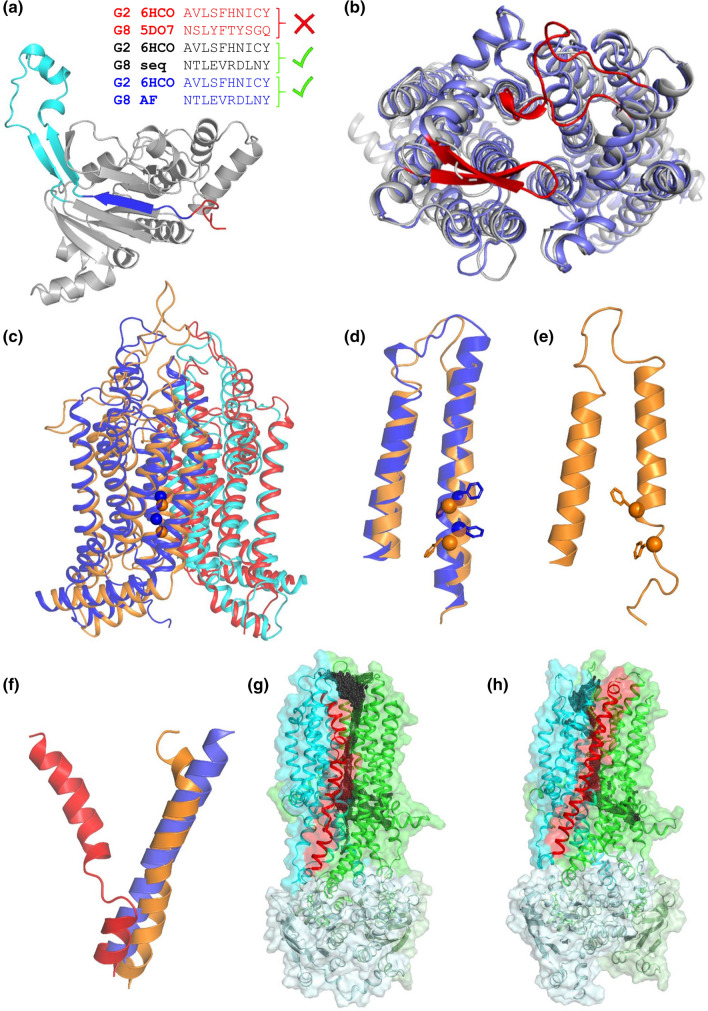
Transmembrane (TM) proteins are major drug targets, but their structure determination, a prerequisite for rational drug design, remains challenging. Recently, the DeepMind's AlphaFold2 machine learning method greatly expanded the structural coverage of sequences with high accuracy. Since the employed algorithm did not take specific properties of TM proteins into account, the reliability of the generated TM structures should be assessed. Therefore, we quantitatively investigated the quality of structures at genome scales, at the level of ABC protein superfamily folds and for specific membrane proteins (e.g. dimer modeling and stability in molecular dynamics simulations). We tested template-free structure prediction with a challenging TM CASP14 target and several TM protein structures published after AlphaFold2 training. Our results suggest that AlphaFold2 performs well in the case of TM proteins and its neural network is not overfitted. We conclude that cautious applications of AlphaFold2 structural models will advance TM protein-associated studies at an unexpected level.
Overview
The claims and statistics of this paper haven’t been checked yet.
Run the check — free, no account needed. It reads the open-access text and checks the sources it cites.
Integrity signals
Registry
Cites
Statistics
Figures
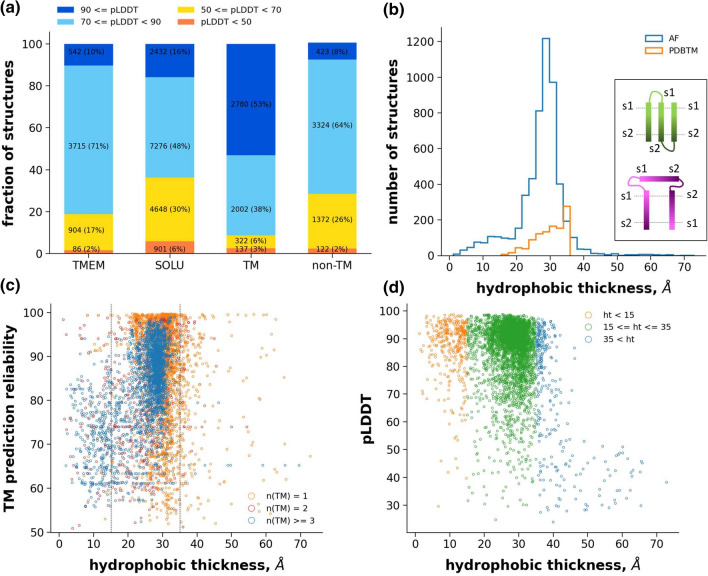
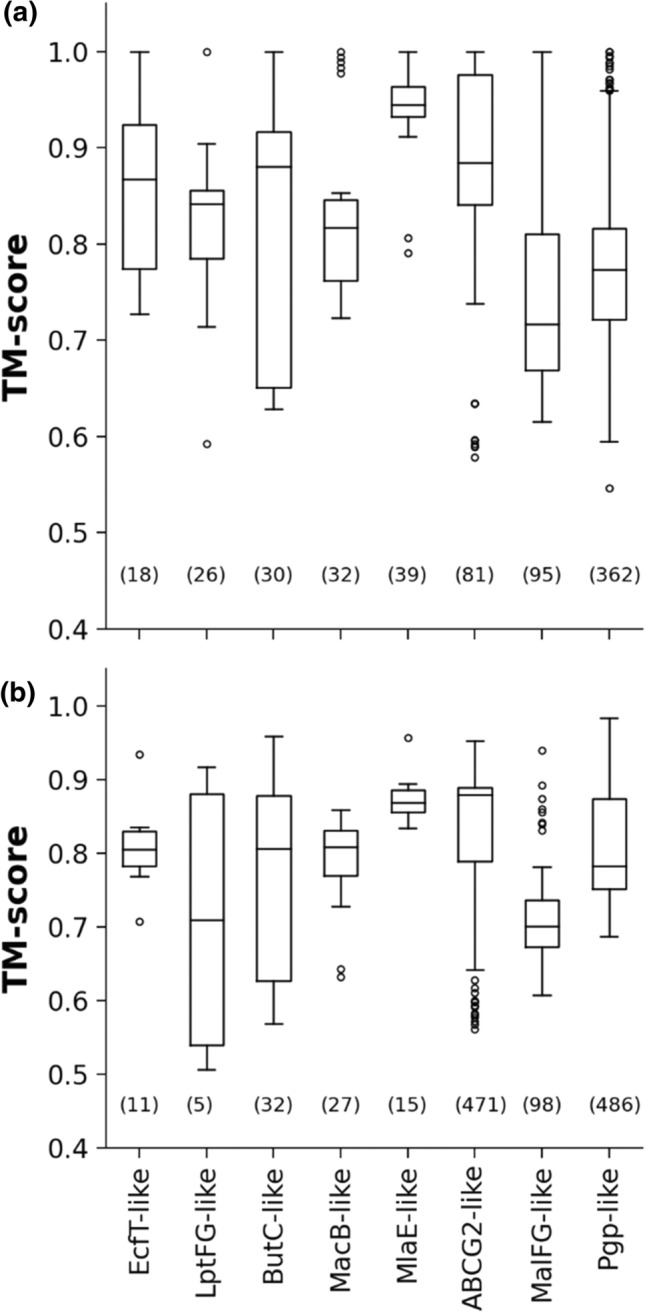
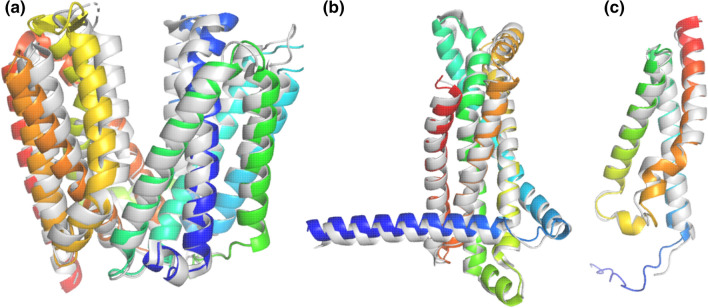
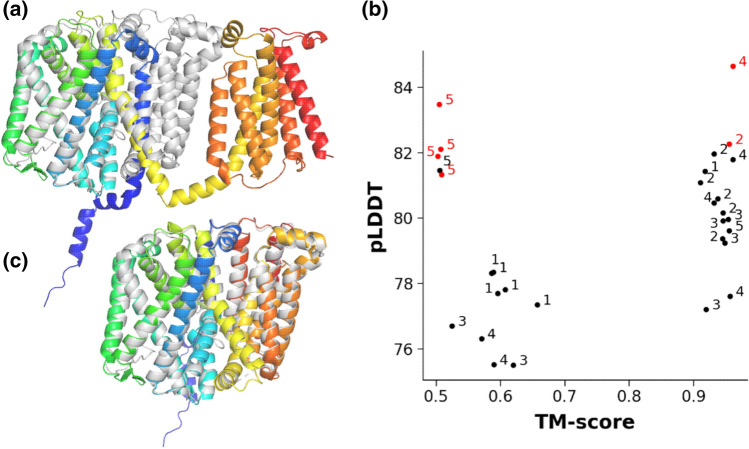
Verification
Claims the paper makes
The claims and statistics of this paper haven’t been checked yet.
Run the check — free, no account needed. It reads the open-access text and checks the sources it cites.
Claims other papers make about this one
Each is checked against this paper’s own text: does it say what the citing paper says it does?
The cited source says what the claim attributes to it.
In the citing paper
“Hegedűs et al benchmarked several membrane proteins not included in the original AF2 training set and concluded that on average AF2 predicts transmembrane proteins as well as soluble proteins38”
From The power and pitfalls of AlphaFold2 for structure prediction beyond rigid globular proteins (2024) · cites this paper as [38]
In the citing paper
“AF2 performs poorly for targets embedded in membrane thickness outside the 15–35 Å range as well as targets with novel features not commonly present in the PDB”
From The power and pitfalls of AlphaFold2 for structure prediction beyond rigid globular proteins (2024) · cites this paper as [38]
In the citing paper
“AF2 models with trans-membrane region lengths corresponding to non-physiological membrane thickness values can exhibit very high pLDDT scores (high model confidence), suggesting pLDDT scores alone are not sufficient to select native membrane protein conformations”
From The power and pitfalls of AlphaFold2 for structure prediction beyond rigid globular proteins (2024) · cites this paper as [38]
In the citing paper
“Benchmarking AF2 against membrane proteins represents a challenge since the membrane environment, which includes lipids and other proteins, is not directly considered by current versions of AlphaFold38”
From The power and pitfalls of AlphaFold2 for structure prediction beyond rigid globular proteins (2024) · cites this paper as [38]
Self-check
Percentages, sums and reported differences re-computed from the paper’s own numbers.
The self-check needs the paper’s full text.
Citations
Cites
Highly accurate protein structure prediction with AlphaFold
Jumper, J., Evans, R., Pritzel, A., Green, T., Figurnov, M., Ronneberger, O., Tunyasuvunakool, K., Bates, R., Žídek, A., Potapenko, A., et al. (2021) · Nature · doi:10.1038/s41586-021-03819-2 · Cited by 43,764
Matplotlib: a 2D graphics environment
Hunter, J. D. (2007) · Computing in Science & Engineering · doi:10.1109/mcse.2007.55 · Cited by 39,249
Particle mesh Ewald: An N⋅log(N) method for Ewald sums in large systems
Darden, T., York, D., & Pedersen, L. (1993) · The Journal of Chemical Physics · doi:10.1063/1.464397 · Cited by 29,638
Clustal W and Clustal X version 2.0
Larkin, M., Blackshields, G., Brown, N. P., Chenna, R., McGettigan, P., McWilliam, H., Valentin, F., Wallace, I. M., Wilm, A., López, R., et al. (2007) · Bioinformatics · doi:10.1093/bioinformatics/btm404 · Cited by 28,598
Abraham, M. J., Murtola, T., Schulz, R., Páll, S., Smith, J. C., Hess, B., & Lindahl, E. (2015) · SoftwareX · doi:10.1016/j.softx.2015.06.001 · Cited by 27,190
Harris, C. R., Millman, K. J., van der Walt, S. J., Gommers, R., Virtanen, P., Cournapeau, D., Wieser, E., Taylor, J., Berg, S., Smith, N. J., et al. (2020) · Nature · doi:10.1038/s41586-020-2649-2 · Cited by 23,826
LINCS: A linear constraint solver for molecular simulations
Hess, B., Bekker, H., Berendsen, H. J. C., & Fraaije, J. G. E. M. (1997) · Journal of Computational Chemistry · doi:10.1002/(sici)1096-987x(199709)18:12 · Cited by 18,479
Harris, C., Millman, K., van der Walt, S., Gommers, R., Virtanen, P., Cournapeau, D., Wieser, E., Taylor, J., Berg, S., Smith, N., et al. (2020) · RePEc: Research Papers in Economics · Cited by 17,844
ColabFold - Making protein folding accessible to all
Mirdita, M., Schütze, K., Moriwaki, Y., Heo, L., Ovchinnikov, S., & Steinegger, M. (2021) · doi:10.1101/2021.08.15.456425 · Cited by 9,391
CHARMM‐GUI: A web‐based graphical user interface for CHARMM
Jo, S., Kim, T., Iyer, V. G., & Im, W. (2008) · Journal of Computational Chemistry · doi:10.1002/jcc.20945 · Cited by 9,284
Research works printed but not linked: 1
- McCoy AJ, Sammito MD, Read RJ (2021) Possible implications of AlphaFold2 for crystallographic phasing by molecular replacement. BioRxiv. https://doi.org/10.1101/2021.05.18.444614 · DOI
Cited by
Sorted by citations
AlphaFold2 and its applications in the fields of biology and medicine
Yang, Z., Zeng, X., Zhao, Y. C., & Chen, R. (2023) · Signal Transduction and Targeted Therapy · doi:10.1038/s41392-023-01381-z · Cited by 655
The application of large language models in medicine: A scoping review
Meng, X., Yan, X., Zhang, K., Liu, D., Cui, X., Yang, Y., Zhang, M., Cao, C., Wang, J., Wang, X., et al. (2024) · iScience · doi:10.1016/j.isci.2024.109713 · Cited by 414
Using AlphaFold to predict the impact of single mutations on protein stability and function
Pak, M. A., Markhieva, K. A., Novikova, M. S., Petrov, D. S., Vorobyev, I. S., Maksimova, E. S., Kondrashov, F. A., & Ivankov, D. N. (2023) · PLOS One · doi:10.1371/journal.pone.0282689 · Cited by 322
The power and pitfalls of AlphaFold2 for structure prediction beyond rigid globular proteins
Agarwal, V., & McShan, A. C. (2024) · Nature Chemical Biology · doi:10.1038/s41589-024-01638-w · Cited by 155
“Benchmarking AF2 against membrane proteins represents a challenge, as the membrane environment, which includes lipids and other proteins, is not directly considered by current versions of AlphaFold 38 .”
BackgroundAnalysis of AlphaMissense data in different protein groups and structural context
Tordai, H., Torres, O., Csepi, M., Padányi, R., Lukács, G. L., & Hegedűs, T. (2024) · Scientific Data · doi:10.1038/s41597-024-03327-8 · Cited by 158
Self-citationTMbed: transmembrane proteins predicted through language model embeddings
Bernhofer, M., & Rost, B. (2022) · BMC Bioinformatics · doi:10.1186/s12859-022-04873-x · Cited by 109
AlphaFold 2 and NMR Spectroscopy: Partners to Understand Protein Structure, Dynamics and Function
Laurents, D. V. (2022) · Frontiers in Molecular Biosciences · doi:10.3389/fmolb.2022.906437 · Cited by 95
Computational drug development for membrane protein targets
Li, H., Sun, X., Cui, W., Xu, M., Dong, J., Ekundayo, B., Ni, D., Rao, Z., Guo, L., Stahlberg, H., et al. (2024) · Nature Biotechnology · doi:10.1038/s41587-023-01987-2 · Cited by 65
A Perspective on Protein Structure Prediction Using Quantum Computers
Doğa, H., Raubenolt, B. A., Cumbo, F., Joshi, J., DiFilippo, F. P., Qin, J., Blankenberg, D. J., & Shehab, O. (2024) · Journal of Chemical Theory and Computation · doi:10.1021/acs.jctc.4c00067 · Cited by 67
De novo design of transmembrane fluorescence-activating proteins
Zhu, J., Liang, M., Sun, K., Yu, W., Guo, R., Zhang, L., Shi, J., Ma, D., Hu, Q., Huang, G., et al. (2025) · Nature · doi:10.1038/s41586-025-08598-8 · Cited by 51
Varadi, M., Bordin, N., Orengo, C., & Velankar, S. (2023) · Current Opinion in Structural Biology · doi:10.1016/j.sbi.2023.102543 · Cited by 29
Sekar, G., Ojoawo, A. M., & Moldoveanu, T. (2022) · Biochemical Society Transactions · doi:10.1042/bst20220323 · Cited by 33
Molini, B. J., Fernandez, M. C., Godornes, C., Vorobieva, A. A., Lukehart, S. A., & Giacani, L. (2022) · Frontiers in Immunology · doi:10.3389/fimmu.2022.862491 · Cited by 24
Mammalian lipid droplets: structural, pathological, immunological and anti-toxicological roles
Hammoudeh, N., Soukkarieh, C., Murphy, D. J., & Hanano, A. (2023) · Progress in Lipid Research · doi:10.1016/j.plipres.2023.101233 · Cited by 26
Tordai, H., Suhajda, E., Sillitoe, I., Nair, S., Varadi, M., & Hegedus, T. (2022) · International Journal of Molecular Sciences · doi:10.3390/ijms23168877 · Cited by 22
Self-citationDeorphanizing Peptides Using Structure Prediction
Teufel, F., Refsgaard, J. C., Kasimova, M. A., Deibler, K., Madsen, C. T., Stahlhut, C., Grønborg, M., Winther, O., & Madsen, D. (2023) · Journal of Chemical Information and Modeling · doi:10.1021/acs.jcim.3c00378 · Cited by 27
How AlphaFold2 shaped the structural coverage of the human transmembrane proteome
Jambrich, M. A., Tusnády, G., & Dobson, L. (2023) · Scientific Reports · doi:10.1038/s41598-023-47204-7 · Cited by 27
AlphaFold2 in biomedical research: facilitating the development of diagnostic strategies for disease
Zhang, H., Lan, J., Wang, H., Lu, R., Zhang, N., He, X., Yang, J., & Chen, L. (2024) · Frontiers in Molecular Biosciences · doi:10.3389/fmolb.2024.1414916 · Cited by 24
AlphaFold and what is next: bridging functional, systems and structural biology
Szczepski, K., & Jaremko, Ł. (2025) · Expert Review of Proteomics · doi:10.1080/14789450.2025.2456046 · Cited by 25
Investigating the conformational landscape of AlphaFold2-predicted protein kinase structures
Masri, C. A., Trozzi, F., Lin, S.-H., Tran, O., Sahni, N., Pátek, M., Cichońska, A., Ravikumar, B., & Rahman, R. (2023) · Bioinformatics Advances · doi:10.1093/bioadv/vbad129 · Cited by 24
SPOT: A machine learning model that predicts specific substrates for transport proteins
Kroll, A., Niebuhr, N., Butler, G., & Lercher, M. J. (2024) · PLoS Biology · doi:10.1371/journal.pbio.3002807 · Cited by 29
Casadevall, G., Duran, C., Estévez‐Gay, M., & Osuna, S. (2022) · Protein Science · doi:10.1002/pro.4426 · Cited by 22
The LIV-1 Subfamily of Zinc Transporters: From Origins to Present Day Discoveries
Taylor, K. M. (2023) · International Journal of Molecular Sciences · doi:10.3390/ijms24021255 · Cited by 23
Laczkó‐Dobos, H., Bhattacharjee, A., Maddali, A. K., Kincses, A., Abuammar, H., Sebök‐Nagy, K., Páli, T., Dér, A., Hegedűs, T., Csordás, G., et al. (2024) · Autophagy · doi:10.1080/15548627.2024.2322493 · Cited by 21
Self-citationFantini, J., Azzaz, F., Scala, C. D., Aulas, A., Chahinian, H., & Yahi, N. (2025) · Pharmacology & Therapeutics · doi:10.1016/j.pharmthera.2025.108797 · Cited by 20
Tld1 is a regulator of triglyceride lipolysis that demarcates a lipid droplet subpopulation
Speer, N. O., Braun, R. J., Reynolds, E. G., Brudnicka, A., Swanson, J. M. J., & Henne, W. M. (2024) · Journal of Cell Biology · doi:10.1083/jcb.202303026 · Cited by 19
Sun, J., Kulandaisamy, A., Liu, J., Hu, K., Gromiha, M. M., & Zhang, Y. (2023) · Computational and Structural Biotechnology Journal · doi:10.1016/j.csbj.2023.01.036 · Cited by 21
Itch receptor MRGPRX4 interacts with the receptor activity–modifying proteins
Kotliar, I. B., Ceraudo, E., Kemelmakher-Liben, K., Oren, D. A., Lorenzen, E., Dodig-Crnković, T., Horioka-Duplix, M., Huber, T., Schwenk, J. M., & Sakmar, T. P. (2023) · Journal of Biological Chemistry · doi:10.1016/j.jbc.2023.104664 · Cited by 21
Willems, A. V., Kalaw, A., Ecer, A., Kotwal, A., Roepe, L. D., & Roepe, P. D. (2023) · Biochemistry · doi:10.1021/acs.biochem.2c00669 · Cited by 16
Template-free prediction of a new monotopic membrane protein fold and assembly by AlphaFold2
Gulsevin, A., Han, B., Porta, J. C., Mchaourab, H. S., Meiler, J., & Kenworthy, A. K. (2023) · Biophysical Journal · doi:10.1016/j.bpj.2022.11.011 · Cited by 16
Ma, Y., Zhang, M., Yang, J., Zhu, L., Dai, J., & Wu, X. (2022) · European Journal of Pharmaceutical Sciences · doi:10.1016/j.ejps.2022.106342 · Cited by 15
Chen, Z., Li, M., Guo, Y., Li, J., Wei, C., Han, J., Liu, C., Bai, J., & Yang, Y. (2024) · LWT · doi:10.1016/j.lwt.2024.115914 · Cited by 15
Structural Modeling of Cytokine-Receptor-JAK2 Signaling Complexes Using AlphaFold Multimer
Pogozheva, I. D., Cherepanov, S., Park, S., Raghavan, M., Im, W., & Lomize, A. L. (2023) · Journal of Chemical Information and Modeling · doi:10.1021/acs.jcim.3c00926 · Cited by 15
Pakuła, K., Sequeiros-Borja, C., Biała-Leonhard, W., Pawela, A., Banasiak, J., Bailly, A., Radom, M., Geisler, M., Brezovsky, J., & Jasiński, M. (2023) · Cellular and Molecular Life Sciences · doi:10.1007/s00018-023-04751-6 · Cited by 11
Self-citationMetastable alpha‐rich and beta‐rich conformations of small Aβ42 peptide oligomers
Nguyen, P. H., Sterpone, F., & Derreumaux, P. (2023) · Proteins Structure Function and Bioinformatics · doi:10.1002/prot.26495 · Cited by 13
Structural insights into pink-eyed dilution protein (Oca2)
Mesdaghi, S., Murphy, D. L., Simpkin, A. J., & Rigden, D. J. (2023) · Bioscience Reports · doi:10.1042/bsr20230060 · Cited by 13
Zhai, J., Han, X., Zhai, G., & Jiang, X. (2022) · Fuel · doi:10.1016/j.fuel.2022.124968 · Cited by 12
SARS-CoV-2 envelope protein alters calcium signaling via SERCA interactions
Berta, B., Tordai, H., Lukács, G. L., Papp, B., Enyedi, Á., Padányi, R., & Hegedűs, T. (2024) · Scientific Reports · doi:10.1038/s41598-024-71144-5 · Cited by 12
Self-citationStructural mass spectrometry of membrane proteins
Dafun, A. S., & Marcoux, J. (2022) · Biochimica et Biophysica Acta (BBA) - Proteins and Proteomics · doi:10.1016/j.bbapap.2022.140813 · Cited by 15
Lv, P., Shang, Y., Zhang, Y., Wang, W., Liu, Y., Su, D., Wang, W., Li, C.-F., Ma, C., & Yang, C. (2022) · The FASEB Journal · doi:10.1096/fj.202201280r · Cited by 11
An agnostic analysis of the human AlphaFold2 proteome using local protein conformations
de Brevern, A. G. (2022) · Biochimie · doi:10.1016/j.biochi.2022.11.009 · Cited by 12
Experimental and computational approaches for membrane protein insertion and topology determination
Duart, G., Graña‐Montes, R., Pastor‐Cantizano, N., & Mingarro, I. (2024) · Methods · doi:10.1016/j.ymeth.2024.03.012 · Cited by 11
Molecular Modelling and Atomistic Insights into the Binding Mechanism of MmpL3 Mtb
Kwofie, S. K., Hanson, G., Sasu, H., Enninful, K. S., Mensah, F. A., Nortey, R. T., Yeboah, O. P., Agoni, C., & Wilson, M. D. (2022) · Chemistry & Biodiversity · doi:10.1002/cbdv.202200160 · Cited by 10
Virtual screening and activity evaluation of human uric acid transporter 1 (hURAT1) inhibitors
Yang, Y., Hu, Y., Yao, F., Yang, J. B., Ge, L., Wang, P., & Xu, X. (2023) · RSC Advances · doi:10.1039/d2ra07193b · Cited by 10
Unique Properties of Nutrient Channels on Plasmodium-Infected Erythrocytes
Desai, S. A. (2023) · Pathogens · doi:10.3390/pathogens12101211 · Cited by 10
Hunter, G. A., & Ferreira, G. C. (2022) · Frontiers in Molecular Biosciences · doi:10.3389/fmolb.2022.920668 · Cited by 11
Scalable Inhibitors of the Nsp3–Nsp4 Coupling in SARS-CoV-2
Azizogli, A., Pai, V., Coppola, F., Jafari, R., Dodd‐o, J., Harish, R., Balasubramanian, B., Kashyap, J., Acevedo‐Jake, A. M., Král, P., et al. (2023) · ACS Omega · doi:10.1021/acsomega.2c06384 · Cited by 9
AlphaCutter: Efficient removal of non‐globular regions from predicted protein structures
Tam, C., & Iwasaki, W. (2023) · PROTEOMICS · doi:10.1002/pmic.202300176 · Cited by 8
Outer membrane β‐barrel structure prediction through the lens of AlphaFold2
Topitsch, A., Schwede, T., & Pereira, J. (2024) · Proteins: Structure, Function, and Bioinformatics · doi:10.1002/prot.26552 · Cited by 9
Basu, K., Krugliak, M., & Arkin, I. T. (2023) · International Journal of Molecular Sciences · doi:10.3390/ijms241813828 · Cited by 9
Long, X.-B., Yao, C.-R., Li, S., Zhang, J., Lu, Z., Ma, D.-D., Chen, C.-E., Ying, G., & Shi, W. (2024) · Journal of Hazardous Materials · doi:10.1016/j.jhazmat.2024.133844 · Cited by 10
Sundermeyer, L., Bosco, G., Gujar, S., Brocker, M., Baumgart, M., Willbold, D., Weiergräber, O. H., Bellinzoni, M., & Bott, M. H. (2022) · Microbiology Spectrum · doi:10.1128/spectrum.02677-22 · Cited by 8
Kadokawa, H., Yoshino, R., Saito, R., & Hirokawa, T. (2022) · Animal Reproduction Science · doi:10.1016/j.anireprosci.2022.106992 · Cited by 8
Torres, J., Pervushin, K. V., & Surya, W. (2024) · Computational and Structural Biotechnology Journal · doi:10.1016/j.csbj.2024.10.021 · Cited by 8
Fungal carboxylate transporters: recent manipulations and applications
Wu, T., Li, J., & Tian, C. (2023) · Applied Microbiology and Biotechnology · doi:10.1007/s00253-023-12720-z · Cited by 6
Kilian, M., & Bischofs, I. B. (2023) · Molecular Microbiology · doi:10.1111/mmi.15169 · Cited by 8
Caught between a ROCK and a hard place: current challenges in structure-based drug design
Pala, D., & Clark, D. E. (2024) · Drug Discovery Today · doi:10.1016/j.drudis.2024.104106 · Cited by 8
Structural Rearrangement of the AT1 Receptor Modulated by Membrane Thickness and Tension
Poudel, B., & Vanegas, J. M. (2024) · The Journal of Physical Chemistry B · doi:10.1021/acs.jpcb.4c03325 · Cited by 7
Biała‐Leonhard, W., Bigos, A., Brezovský, J., & Jasiński, M. (2025) · PLANT PHYSIOLOGY · doi:10.1093/plphys/kiaf146 · Cited by 8
Xia, J. L., Siffert, A., Torres, O., Iacobini, F. R., Banasiak, J., Pakuła, K., Ziegler, J., Rosahl, S., Ferro, N., Jasiński, M., et al. (2025) · Nature Communications · doi:10.1038/s41467-025-59518-3 · Cited by 7
Self-citationTBM preferred to AlphaFold 3 for functional models of insect odorant receptors
Thanu, V. C., Jabeen, A., Zographos, S. E., Taylor, P. W., & Ranganathan, S. (2025) · Computational and Structural Biotechnology Journal · doi:10.1016/j.csbj.2025.08.028 · Cited by 7
Rhoades, R. E., Henry, B., Pritchett, D. L., Fang, Y., & Teng, S. (2022) · Genes · doi:10.3390/genes13050789 · Cited by 7
Physical and oxidative stability of lipid droplets (oleosomes) in seeds and emulsions
Hennebelle, M., Plankensteiner, L., & Nikiforidis, C. V. (2025) · Progress in Lipid Research · doi:10.1016/j.plipres.2025.101360 · Cited by 7
Cheng, H., Xie, X., Ren, M., Yang, S., Zhao, X., Mahna, N., Liu, Y., Xu, Y., Xiang, Y., Chai, H., et al. (2022) · Frontiers in Plant Science · doi:10.3389/fpls.2022.916081 · Cited by 6
Jiao, Y., Xing, Y., & Sun, Y. (2023) · International Journal of Molecular Sciences · doi:10.3390/ijms241411564 · Cited by 6
Spf1 and Ste24: quality controllers of transmembrane protein topology in the eukaryotic cell
Tipper, D. J., & Harley, C. A. (2023) · Frontiers in Cell and Developmental Biology · doi:10.3389/fcell.2023.1220441 · Cited by 6
The pH sensor and ion binding of NhaD Na+/H+ antiporter from IT superfamily
Lv, P., Li, Y., Wang, R., Zhang, Y., Wang, W., Liu, Y., Shang, Y., Su, D., Wang, W., & Yang, C. (2022) · Molecular Microbiology · doi:10.1111/mmi.14965 · Cited by 6
How AlphaFold shaped the structural coverage of the human transmembrane proteomePreprint
Jambrich, M. A., Tusnády, G., & Dobson, L. (2023) · bioRxiv (Cold Spring Harbor Laboratory) · doi:10.1101/2023.04.18.537193 · Cited by 6
Tordai, H., Torres, O., Csepi, M., Padányi, R., Lukács, G. L., & Hegedűs, T. (2023) · bioRxiv (Cold Spring Harbor Laboratory) · doi:10.1101/2023.10.30.564807 · Cited by 6
Self-citationHurdles and advancements in experimental membrane protein structural biology
Bajaj, R. (2025) · Journal of Structural Biology · doi:10.1016/j.jsb.2025.108251 · Cited by 5
Krokengen, O. C., Raasakka, A., & Kursula, P. (2023) · Biochemistry and Biophysics Reports · doi:10.1016/j.bbrep.2023.101474 · Cited by 7
Evaluation of Transmembrane Protein Structural Models Using HPMScore
Télétchéa, S., Esque, J., Urbain, A., Etchebest, C., & de Brevern, A. G. (2023) · BioMedInformatics · doi:10.3390/biomedinformatics3020021 · Cited by 5
Bacterial Chemoreceptors Transmit Stimulus Signals Through Coupled Entropic Switches
Flack, C. E., & Parkinson, J. S. (2025) · Journal of Molecular Biology · doi:10.1016/j.jmb.2025.169614 · Cited by 4
Channel Formation in Cry Toxins: An Alphafold-2 Perspective
Torres, J., Surya, W., & Boonserm, P. (2023) · International Journal of Molecular Sciences · doi:10.3390/ijms242316809 · Cited by 4
Peslalz, P., Kraus, F., Izzo, F., Bleisch, A., Hamdaoui, Y. E., Schulz, I., Kany, A. M., Hirsch, A. K. H., Friedland, K., & Plietker, B. J. (2023) · Journal of Medicinal Chemistry · doi:10.1021/acs.jmedchem.3c01170 · Cited by 4
TMVisDB: Annotation and 3D-visualization of Transmembrane Proteins
Olenyi, T., Marquet, C., Grekova, A., Houri, L., Heinzinger, M., Dallago, C., & Rost, B. (2025) · Journal of Molecular Biology · doi:10.1016/j.jmb.2025.168997 · Cited by 4
Gao, T., Zhao, Y., Zhang, L., & Wang, H. (2023) · International Journal of Molecular Sciences · doi:10.3390/ijms24065720 · Cited by 4
The S-component fold: a link between bacterial transporters and receptors
Partipilo, M., & Slotboom, D. J. (2024) · Communications Biology · doi:10.1038/s42003-024-06295-2 · Cited by 4
A general prediction model for substrates of transport proteinsPreprint
Kroll, A., Niebuhr, N., Butler, G., & Lercher, M. J. (2023) · bioRxiv (Cold Spring Harbor Laboratory) · doi:10.1101/2023.10.31.564943 · Cited by 4
A tripartite protein complex promotes DNA transport during natural transformation in Firmicutes
Dewailly, M., Fauconnet, Y., Ducrot, C., Soulet, A., Campo, N., Guérois, R., Radicella, J. P., Polard, P., Andréani, J., & Johnston, C. (2025) · Proceedings of the National Academy of Sciences · doi:10.1073/pnas.2511180122 · Cited by 3
The S190R mutation in RSV-A F protein impairs nirsevimab binding and neutralization capacity
Cordela, S., Harari, J., Moirangthem, R., Khaleafi, R., Kladnitsky, O., Duran, D., Grunewald, M., & Bar‐On, Y. (2026) · Virus Evolution · doi:10.1093/ve/veag002 · Cited by 4
In Silico Prediction of CNS Bioavailability
Talevi, A. (2024) · AAPS introductions in the pharmaceutical sciences · doi:10.1007/978-3-031-62604-3_4 · Cited by 4
van Aalst, E. J., & Wylie, B. J. (2024) · Protein Science · doi:10.1002/pro.70013 · Cited by 4
Okwei, E., Ganguly, S., Darling, H. L., Harp, J. M., Gulsevin, A., Coin, I., Mchaourab, H. S., Ledwitch, K. V., Kuenze, G., & Meiler, J. (2022) · bioRxiv (Cold Spring Harbor Laboratory) · doi:10.1101/2022.04.10.487812 · Cited by 2
Teufel, F., Refsgaard, J. C., Kasimova, M. A., Madsen, C. T., Stahlhut, C., Grønborg, M., Winther, O., & Madsen, D. (2022) · bioRxiv (Cold Spring Harbor Laboratory) · doi:10.1101/2022.10.28.514036 · Cited by 3
Chatterjee, H., Dutta, P., Zacharias, M., & Sengupta, N. (2025) · The Journal of Chemical Physics · doi:10.1063/5.0250082 · Cited by 2
A Survey of Current Status in AI-Based Topology Prediction of Transmembrane Proteins
Bathla, D., Mishra, R., & Ahmad, S. (2025) · Methods in molecular biology · doi:10.1007/978-1-0716-4662-5_6 · Cited by 2
Impact of Structural Relaxation on Protein–Protein Docking in Large Macromolecular Complexes
Rosa, R. S. D. L., Bulla, A. C. S., Bernardi, R. C., & da Silva, M. L. (2025) · Applied Biosciences · doi:10.3390/applbiosci4040048 · Cited by 3
Decoding Outer Membrane β-Barrels: From Structural Curiosity to Engineered Nanotherapeutics
Mahalakshmi, R. (2026) · Chemical Reviews · doi:10.1021/acs.chemrev.5c00902 · Cited by 2
Computational approach based on freely accessible tools for antimicrobial drug design
Philippsen, G. S., & Seixas, F. A. V. (2024) · Bioorganic & Medicinal Chemistry Letters · doi:10.1016/j.bmcl.2024.130010 · Cited by 2
Phylogenetic and Structural Analyses of Vesicular Glutamate Transporters
dos Santos, T. G., Melgarejo, A. S., Ligabue‐Braun, R., & de Oliveira, D. L. (2025) · Molecular Neurobiology · doi:10.1007/s12035-025-05012-2 · Cited by 3
Krokengen, O. C., Raasakka, A., & Kursula, P. (2022) · bioRxiv (Cold Spring Harbor Laboratory) · doi:10.1101/2022.09.13.507838 · Cited by 2
TMvisDB: resource for transmembrane protein annotation and 3D visualizationPreprint
Marquet, C., Grekova, A., Houri, L., Bernhofer, M., Soto, L. F. J., Karl, T., Heinzinger, M., Dallago, C., & Rost, B. (2022) · bioRxiv (Cold Spring Harbor Laboratory) · doi:10.1101/2022.11.30.518551 · Cited by 2
Metastable Alpha-rich and Beta-rich Conformations of Small Aβ42 Peptide OligomersPreprint
Derreumaux, P., Nguyen, P. H., & Sterpone, F. (2022) · doi:10.22541/au.167108799.96485165/v1 · Cited by 2
Designed allosteric biosensors for engineered T cell therapy of cancerPreprint
Rath, J. A., Rudden, L. S. P., Nouraee, N., Que, T., Gunten, C. V., Pérez, C., Birch, F., Bhugowon, Y., Füglistaler, A., Souleiman, A. C., et al. (2025) · bioRxiv (Cold Spring Harbor Laboratory) · doi:10.1101/2025.03.14.643388 · Cited by 2
Deep learning-assisted tools to understand the structural biology of the synapse
Gáspári, Z., Kálmán, Z. E., & Sánta, A. (2025) · Biomedical Engineering Letters · doi:10.1007/s13534-025-00512-5 · Cited by 1
Rath, J. A., Rudden, L. S. P., Nouraee, N., Que, T. X. Y., Gunten, C. V., Pérez, C., Birch, F., Bhugowon, Y., Füglistaler, A., Souleiman, A. C., et al. (2025) · Nature Biomedical Engineering · doi:10.1038/s41551-025-01532-3 · Cited by 3
The Shape of Things to Come: α-Helical Membrane Protein Folding on the Ribosome
Lambden, E., Lewis, B. R., Baker, Z. L. R., Dilworth, M. V., Johnston, E. C., Palacios‐Ortega, J., Patel, K., Pilkington, C. P., Findlay, H. E., Booth, P. J., et al. (2026) · Chemical Reviews · doi:10.1021/acs.chemrev.6c00236 · Cited by 1
Sones-Dykes, T., & Wallace, E. W. J. (2026) · G3 Genes Genomes Genetics · doi:10.1093/g3journal/jkag134 · Cited by 1
Metadata
- Authors
- Hegedűs, T., Geisler, M., Lukács, G. L., & Farkas, B.
- Affiliations
- Semmelweis University (HU)
- University of Fribourg (CH)
- McGill University (CA)
- Corresponding author
- Hegedűs, Tamás
- Venue
- Cellular and Molecular Life Sciences
- Published
- 2022-01
- Volume
- 79
- Issue
- 1
- Pages
- 73-73
- ISSN
- 1420-682X (ISSN-L)
- 1420-9071
- PMC
- PMC8761152
- OpenAlex
- W4205172550
- Cited by
- 127
- References
- 69
- Citations by year
- 2026: 15 · 2025: 19 · 2024: 23 · 2023: 41 · 2022: 28
- FWCI
- 9.06
- Type
- journal article
- Language
- en
- Open access
- hybrid
- doi.org
- Licence
- Locations
- Cellular and Molecular Life Sciences (publishedVersion, cc-by)
- PubMed Central (publishedVersion, cc-by)
- PubMed (publishedVersion)
- Funders
- Nemzeti Kutatási Fejlesztési és Innovációs Hivatal (K127961)
- Cystic Fibrosis Foundation (HEGEDU20I0)
- Cystic Fibrosis Canada (LUKACS20G0)
- Schweizerischer Nationalfonds zur Förderung der Wissenschaftlichen Forschung (310030_197563)
- Canadian Institutes of Health Research
- Canada Foundation for Innovation
- Canada Research Chairs
- Semmelweis University
- Topics
- Life Sciences › Biochemistry, Genetics and Molecular Biology › Molecular Biology › Protein Structure and Dynamics
- Life Sciences › Biochemistry, Genetics and Molecular Biology › Molecular Biology › Machine Learning in Bioinformatics
- Life Sciences › Biochemistry, Genetics and Molecular Biology › Structural Biology › Enzyme Structure and Function
- Keywords
- AlphaFold2, transmembrane proteins, protein structure prediction, prediction accuracy assessment, ABC transporters, membrane protein dimerization, CASP14, overfitting, structural genomics
- MeSH terms
- Machine Learning, Protein Domains, Algorithms, Computer Simulation, Humans, Lipids, Membrane Proteins, Protein Conformation, Software, Reproducibility of Results, Genome, Protein Structure, Secondary, Protein Folding, Computational Biology, Proteome, Proteomics, Molecular Dynamics Simulation
About these checks
Registry, retraction, Cites and statistics results are computed, not judged, with one exception: a printed reference that no index lists is read once by a model before it counts as a citation error. Claims are extracted by a model and kept only when their quote appears verbatim in the text; each cited source is then checked, with a model’s help, for whether it says what the claim relies on. Those verdicts can be wrong — read the claim’s quote and the cited source before relying on one.
Statistics and arithmetic are recomputed, not judged.
Confidence bands are shown only for fields calibrated on our annotated test set. None is calibrated yet, so no band is shown.
What counts as a claim ›How we measure confidence ›How we check this ›
Are you an author, or do you see a problem with this page? Request a review
