

The DOI matches its Crossref record; 72 of the 72 references it cites were found in a registry or an index.
Ins and outs of AlphaFold2 transmembrane protein structure predictions
Open accessAbstract
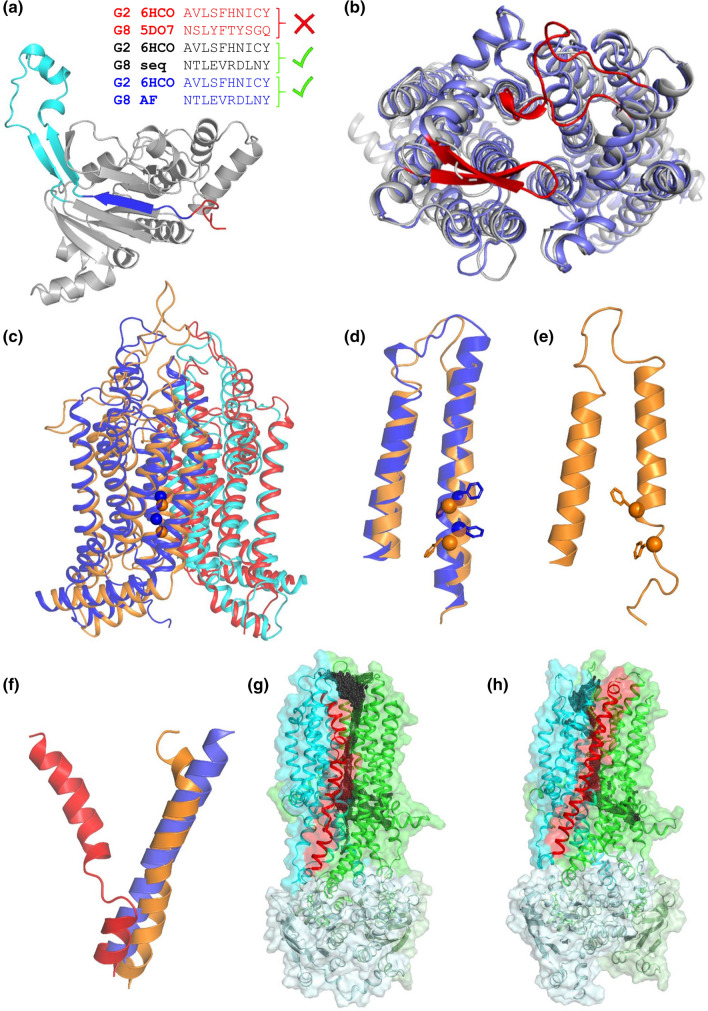
Transmembrane (TM) proteins are major drug targets, but their structure determination, a prerequisite for rational drug design, remains challenging. Recently, the DeepMind's AlphaFold2 machine learning method greatly expanded the structural coverage of sequences with high accuracy. Since the employed algorithm did not take specific properties of TM proteins into account, the reliability of the generated TM structures should be assessed. Therefore, we quantitatively investigated the quality of structures at genome scales, at the level of ABC protein superfamily folds and for specific membrane proteins (e.g. dimer modeling and stability in molecular dynamics simulations). We tested template-free structure prediction with a challenging TM CASP14 target and several TM protein structures published after AlphaFold2 training. Our results suggest that AlphaFold2 performs well in the case of TM proteins and its neural network is not overfitted. We conclude that cautious applications of AlphaFold2 structural models will advance TM protein-associated studies at an unexpected level.
Overview
The claims and statistics of this paper haven’t been checked yet.
Run the check — free, no account needed. It reads the open-access text and checks the sources it cites.
Integrity signals
Registry
Cites
Statistics
Figures
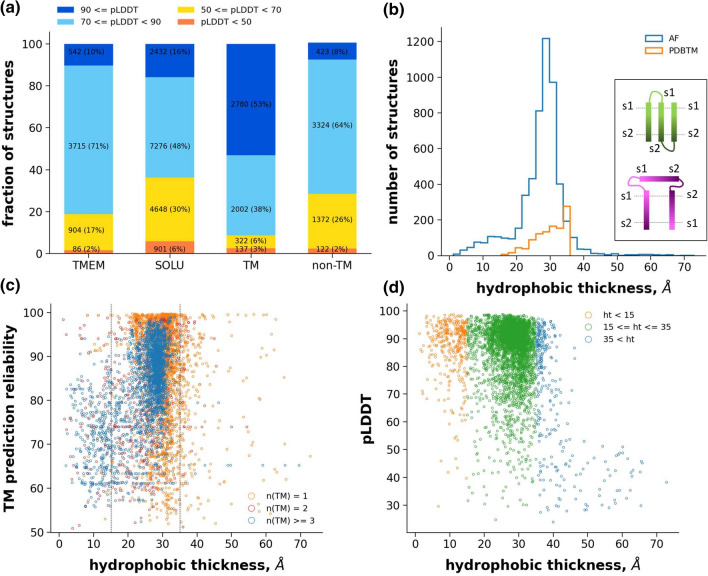
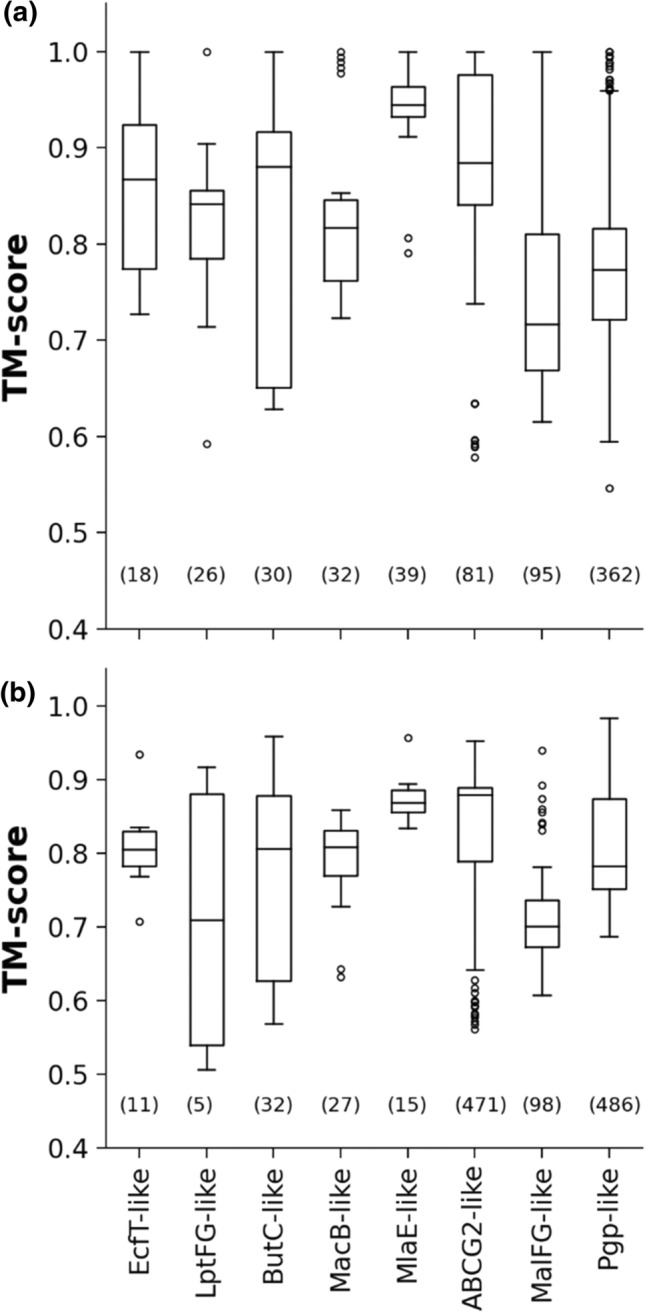
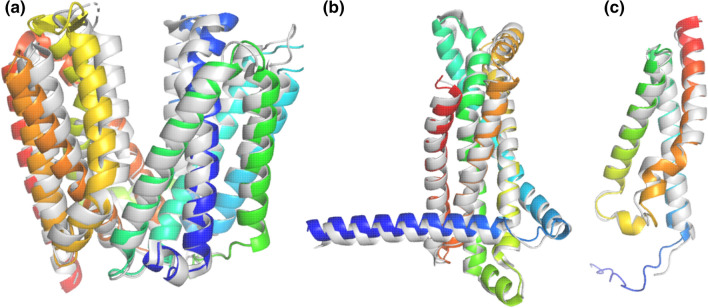
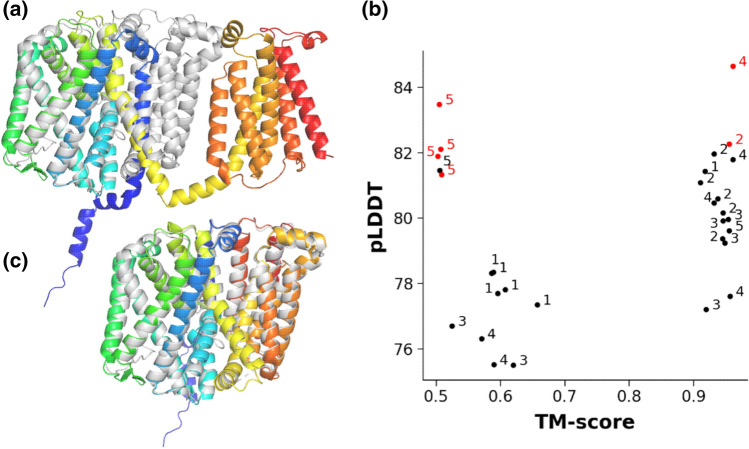
Verification
Claims the paper makes
The claims and statistics of this paper haven’t been checked yet.
Run the check — free, no account needed. It reads the open-access text and checks the sources it cites.
Claims other papers make about this one
Each is checked against this paper’s own text: does it say what the citing paper says it does?
The cited source says what the claim attributes to it.
In the citing paper
“Hegedűs et al benchmarked several membrane proteins not included in the original AF2 training set and concluded that on average AF2 predicts transmembrane proteins as well as soluble proteins38”
From The power and pitfalls of AlphaFold2 for structure prediction beyond rigid globular proteins (2024) · cites this paper as [38]
The cited source says what the claim attributes to it.
In the citing paper
“AF2 models with trans-membrane region lengths corresponding to non-physiological membrane thickness values can exhibit very high pLDDT scores (high model confidence), suggesting pLDDT scores alone are not sufficient to select native membrane protein conformations”
From The power and pitfalls of AlphaFold2 for structure prediction beyond rigid globular proteins (2024) · cites this paper as [38]
In the citing paper
“AF2 performs poorly for targets embedded in membrane thickness outside the 15–35 Å range as well as targets with novel features not commonly present in the PDB”
From The power and pitfalls of AlphaFold2 for structure prediction beyond rigid globular proteins (2024) · cites this paper as [38]
In the citing paper
“Benchmarking AF2 against membrane proteins represents a challenge since the membrane environment, which includes lipids and other proteins, is not directly considered by current versions of AlphaFold38”
From The power and pitfalls of AlphaFold2 for structure prediction beyond rigid globular proteins (2024) · cites this paper as [38]
Self-check
Percentages, sums and reported differences re-computed from the paper’s own numbers.
The self-check needs the paper’s full text.
Citations
Cites
Highly accurate protein structure prediction with AlphaFold
Jumper, J., Evans, R., Pritzel, A., Green, T., Figurnov, M., Ronneberger, O., Tunyasuvunakool, K., Bates, R., Žídek, A., Potapenko, A., et al. (2021) · Nature · doi:10.1038/s41586-021-03819-2 · Cited by 43,764
Matplotlib: a 2D graphics environment
Hunter, J. D. (2007) · Computing in Science & Engineering · doi:10.1109/mcse.2007.55 · Cited by 39,249
Particle mesh Ewald: An N⋅log(N) method for Ewald sums in large systems
Darden, T., York, D., & Pedersen, L. (1993) · The Journal of Chemical Physics · doi:10.1063/1.464397 · Cited by 29,638
Clustal W and Clustal X version 2.0
Larkin, M., Blackshields, G., Brown, N. P., Chenna, R., McGettigan, P., McWilliam, H., Valentin, F., Wallace, I. M., Wilm, A., López, R., et al. (2007) · Bioinformatics · doi:10.1093/bioinformatics/btm404 · Cited by 28,598
Abraham, M. J., Murtola, T., Schulz, R., Páll, S., Smith, J. C., Hess, B., & Lindahl, E. (2015) · SoftwareX · doi:10.1016/j.softx.2015.06.001 · Cited by 27,190
Harris, C. R., Millman, K. J., van der Walt, S. J., Gommers, R., Virtanen, P., Cournapeau, D., Wieser, E., Taylor, J., Berg, S., Smith, N. J., et al. (2020) · Nature · doi:10.1038/s41586-020-2649-2 · Cited by 23,826
LINCS: A linear constraint solver for molecular simulations
Hess, B., Bekker, H., Berendsen, H. J. C., & Fraaije, J. G. E. M. (1997) · Journal of Computational Chemistry · doi:10.1002/(sici)1096-987x(199709)18:12 · Cited by 18,479
Harris, C., Millman, K., van der Walt, S., Gommers, R., Virtanen, P., Cournapeau, D., Wieser, E., Taylor, J., Berg, S., Smith, N., et al. (2020) · RePEc: Research Papers in Economics · Cited by 17,844
ColabFold - Making protein folding accessible to all
Mirdita, M., Schütze, K., Moriwaki, Y., Heo, L., Ovchinnikov, S., & Steinegger, M. (2021) · doi:10.1101/2021.08.15.456425 · Cited by 9,391
CHARMM‐GUI: A web‐based graphical user interface for CHARMM
Jo, S., Kim, T., Iyer, V. G., & Im, W. (2008) · Journal of Computational Chemistry · doi:10.1002/jcc.20945 · Cited by 9,284
Pfam: The protein families database in 2021
Mistry, J., Chuguransky, S., Williams, L., Qureshi, M., Salazar, G. A., Sonnhammer, E. L. L., Tosatto, S. C. E., Paladin, L., Raj, S., Richardson, L. J., et al. (2021) · Nucleic Acids Research · doi:10.1093/nar/gkaa913 · Cited by 7,452
CHARMM36m: an improved force field for folded and intrinsically disordered proteins
Huang, J., Rauscher, S., Nawrocki, G., Ran, T., Feig, M., de Groot, B. L., Grubmüller, H., & MacKerell, A. D. (2016) · Nature Methods · doi:10.1038/nmeth.4067 · Cited by 7,334
Accelerated Profile HMM Searches
Eddy, S. R. (2011) · PLoS Computational Biology · doi:10.1371/journal.pcbi.1002195 · Cited by 6,975
Biopython: freely available python tools for computational molecular biology and bioinformatics
Cock, P. J. A., Antao, T., Chang, J. T., Chapman, B. A., Cox, C. J., Dalke, A., Friedberg, I., Hamelryck, T., Kauff, F., Wilczynski, B., et al. (2009) · Bioinformatics · doi:10.1093/bioinformatics/btp163 · Cited by 6,080
Accurate prediction of protein structures and interactions using a 3-track network
Baek, M., DiMaio, F., Anishchenko, I., Dauparas, J., Ovchinnikov, S., Lee, G. R., Wang, J., Cong, Q., Kinch, L. N., Schaeffer, R. D., et al. (2021) · doi:10.1101/2021.06.14.448402 · Cited by 5,549
MDAnalysis: A Toolkit for the Analysis of Molecular Dynamics Simulations
Michaud-Agrawal, N., Denning, E. J., Woolf, T., & Beckstein, O. (2011) · Journal of Computational Chemistry · doi:10.1002/jcc.21787 · Cited by 4,180
Protein complex prediction with AlphaFold-Multimer
Evans, R., O’Neill, M., Pritzel, A., Antropova, N., Senior, A., Green, T., Žídek, A., Bates, R., Blackwell, S., Yim, J., et al. (2021) · doi:10.1101/2021.10.04.463034 · Cited by 3,808
TM-align: a protein structure alignment algorithm based on the TM-score
Zhang, Y. (2005) · Nucleic Acids Research · doi:10.1093/nar/gki524 · Cited by 3,774
Highly accurate protein structure prediction for the human proteome
Tunyasuvunakool, K., Adler, J., Wu, Z., Green, T., Zielinski, M., Žídek, A., Bridgland, A., Cowie, A., Meyer, C., Laydon, A., et al. (2021) · Nature · doi:10.1038/s41586-021-03828-1 · Cited by 3,025 · cited 5×
“Although this means that the high accuracy and reliability of AF2 observed in CASP14 can be transferred to predicting the structure of any protein sequences (or whole proteomes) [3, 5], this has not been validated yet and scientists do not have a clear indication how well AF2-predicted structures can be trusted.”
BackgroundMethodInfluentialCHARMM-GUI Membrane Builder toward realistic biological membrane simulations
Wu, E. L., Cheng, X., Jo, S., Rui, H., Song, K., Dávila-Contreras, E. M., Qi, Y., Lee, J., Monje‐Galvan, V., Venable, R. M., et al. (2014) · Journal of Computational Chemistry · doi:10.1002/jcc.23702 · Cited by 2,723
Scoring function for automated assessment of protein structure template quality
Zhang, Y., & Skolnick, J. (2004) · Proteins: Structure, Function, and Bioinformatics · doi:10.1002/prot.20264 · Cited by 2,392
Modeller: Generation and Refinement of Homology-Based Protein Structure Models
Fiser, A., & Šali, A. (2003) · Methods in enzymology on CD-ROM/Methods in enzymology · doi:10.1016/s0076-6879(03)74020-8 · Cited by 1,708
Harnessing protein folding neural networks for peptide–protein docking
Tsaban, T., Varga, J. K., Avraham, O., Ben-Aharon, Z., Khramushin, A., & Schueler-Furman, O. (2022) · Nature Communications · doi:10.1038/s41467-021-27838-9 · Cited by 1,205
Harnessing protein folding neural networks for peptide-protein docking
(2021) · doi:10.1101/2021.08.01.454656 · Cited by 1,203
OPM: Orientations of Proteins in Membranes database
Lomize, M. A., Lomize, A. L., Pogozheva, I. D., & Mosberg, H. I. (2006) · Bioinformatics · doi:10.1093/bioinformatics/btk023 · Cited by 1,180
How significant is a protein structure similarity with TM-score = 0.5?
Xu, J., & Zhang, Y. (2010) · Bioinformatics · doi:10.1093/bioinformatics/btq066 · Cited by 1,142
Advances in protein structure prediction and design
Kuhlman, B., & Bradley, P. (2019) · Nature Reviews Molecular Cell Biology · doi:10.1038/s41580-019-0163-x · Cited by 806
Veit, G., Avramescu, R. G., Chiang, A., Houck, S. A., Cai, Z., Peters, K. W., Hong, J. S., Pollard, H. B., Guggino, W. B., Balch, W. E., et al. (2016) · Molecular Biology of the Cell · doi:10.1091/mbc.e14-04-0935 · Cited by 613
Self-citationMolecular Structure of the Human CFTR Ion Channel
Liu, F., Zhang, Z., Csanády, L., Gadsby, D. C., & Chen, J. (2017) · Cell · doi:10.1016/j.cell.2017.02.024 · Cited by 544
CAVER: a new tool to explore routes from protein clefts, pockets and cavities
Petřek, M., Otyepka, M., Banáš, P., Košinová, P., Koča, J., & Damborský, J. (2006) · BMC Bioinformatics · doi:10.1186/1471-2105-7-316 · Cited by 523
The Transporter Classification Database (TCDB): 2021 update
Saier, M. H., Reddy, V. S., Moreno-Hagelsieb, G., Hendargo, K. J., Zhang, Y., Iddamsetty, V., Lam, K. J. K., Tian, N., Russum, S., Wang, J., et al. (2021) · Nucleic Acids Research · doi:10.1093/nar/gkaa1004 · Cited by 467
CCTOP: a Consensus Constrained TOPology prediction web server
Dobson, L., Reményi, I., & Tusnády, G. (2015) · Nucleic Acids Research · doi:10.1093/nar/gkv451 · Cited by 437
Structure of the human multidrug transporter ABCG2
Taylor, N. M. I., Manolaridis, I., Jackson, S. M., Kowal, J., Stahlberg, H., & Locher, K. P. (2017) · Nature · doi:10.1038/nature22345 · Cited by 437
Applying and improving AlphaFold at CASP14
Jumper, J., Evans, R., Pritzel, A., Green, T., Figurnov, M., Ronneberger, O., Tunyasuvunakool, K., Bates, R., Žídek, A., Potapenko, A., et al. (2021) · Proteins Structure Function and Bioinformatics · doi:10.1002/prot.26257 · Cited by 413
Structural Basis of Substrate Recognition by the Multidrug Resistance Protein MRP1
Johnson, Z. L., & Chen, J. (2017) · Cell · doi:10.1016/j.cell.2017.01.041 · Cited by 375
Atomic Structure of the Cystic Fibrosis Transmembrane Conductance Regulator
Zhang, Z., & Chen, J. (2016) · Cell · doi:10.1016/j.cell.2016.11.014 · Cited by 334
Andreeva, A., Kulesha, E., Gough, J., & Murzin, A. (2019) · Nucleic Acids Res. · doi:10.1093/nar/gkz1064 · Cited by 326
High‐accuracy protein structure prediction in CASP14
Pereira, J., Simpkin, A. J., Hartmann, M. D., Rigden, D. J., Keegan, R. M., & Lupas, A. N. (2021) · Proteins: Structure, Function, and Bioinformatics · doi:10.1002/prot.26171 · Cited by 314
Structural and functional diversity calls for a new classification of ABC transporters
Thomas, C., Aller, S. G., Beis, K., Carpenter, E. P., Chang, G. A., Chen, L., Dassa, E., Dean, M. C., Duong, F., Ekiert, D. C., et al. (2020) · FEBS Letters · doi:10.1002/1873-3468.13935 · Cited by 284
PDBTM: Protein Data Bank of transmembrane proteins after 8 years
Kozma, D., Simon, I., & Tusnády, G. (2012) · Nucleic Acids Research · doi:10.1093/nar/gks1169 · Cited by 282
Crystal structure of the human sterol transporter ABCG5/ABCG8
Lee, J., Kinch, L. N., Borek, D., Wang, J., Wang, J., Urbatsch, I. L., Xie, X., Grishin, N. V., Cohen, J. C., Otwinowski, Z., et al. (2016) · Nature · doi:10.1038/nature17666 · Cited by 281
Structure, Gating, and Regulation of the CFTR Anion Channel
Csanády, L., Vergani, P., & Gadsby, D. C. (2019) · Physiological Reviews · doi:10.1152/physrev.00007.2018 · Cited by 262
Structural identification of a hotspot on CFTR for potentiation
Liu, F., Zhang, Z., Levit, A., Levring, J., Touhara, K. K., Shoichet, B. K., & Chen, J. (2019) · Science · doi:10.1126/science.aaw7611 · Cited by 260
Conformational Changes of CFTR upon Phosphorylation and ATP Binding
Zhang, Z., Liu, F., & Chen, J. (2017) · Cell · doi:10.1016/j.cell.2017.06.041 · Cited by 257
Molecular structure of the ATP-bound, phosphorylated human CFTR
Zhang, Z., Liu, F., & Chen, J. (2018) · Proceedings of the National Academy of Sciences · doi:10.1073/pnas.1815287115 · Cited by 247
Structural basis for channel conduction in the pump-like channelrhodopsin ChRmine
Kishi, K. E., Kim, Y. S., Fukuda, M., Inoue, M., Kusakizako, T., Wang, P. Y., Ramakrishnan, C., Byrne, E. F. X., Thadhani, E., Paggi, J. M., et al. (2022) · Cell · doi:10.1016/j.cell.2022.01.007 · Cited by 149
The human transmembrane proteome
Dobson, L., Reményi, I., & Tusnády, G. (2015) · Biology Direct · doi:10.1186/s13062-015-0061-x · Cited by 124
Henriksen, U., Fog, J. U., Litman, T., & Gether, U. (2005) · Journal of Biological Chemistry · doi:10.1074/jbc.m502937200 · Cited by 119
Characterization of the amino-terminal regions in the human multidrug resistance protein (MRP1)
Bakos, É., Evers, R., Calenda, G., Tusnády, G., Szakács, G., Váradi, A., & Sarkadi, B. (2000) · Journal of Cell Science · doi:10.1242/jcs.113.24.4451 · Cited by 114
Implications of AlphaFold 2 for crystallographic phasing by molecular replacement
McCoy, A. J., Sammito, M. D., & Read, R. J. (2022) · Acta Crystallographica Section D Structural Biology · doi:10.1107/s2059798321012122 · Cited by 104
MprF-mediated daptomycin resistance
Ernst, C. M., & Peschel, A. (2019) · International Journal of Medical Microbiology · doi:10.1016/j.ijmm.2019.05.010 · Cited by 90
Structural and mechanistic basis of the EMC-dependent biogenesis of distinct transmembrane clients
Miller-Vedam, L. E., Bräuning, B., Popova, K. D., Schirle Oakdale, N. T., Bonnar, J. L., Prabu, J. R., Boydston, E. A., Sevillano, N., Shurtleff, M. J., Stroud, R. M., et al. (2020) · eLife · doi:10.7554/elife.62611 · Cited by 87
The structure of the human ABC transporter ABCG2 reveals a novel mechanism for drug extrusion
Khunweeraphong, N., Stockner, T., & Kuchler, K. (2017) · Scientific Reports · doi:10.1038/s41598-017-11794-w · Cited by 81
The ABCG2/BCRP transporter and its variants – from structure to pathology
Sarkadi, B., Homolya, L., & Hegedűs, T. (2020) · FEBS Letters · doi:10.1002/1873-3468.13947 · Cited by 67
Self-citationStructural mechanism of phospholipids translocation by MlaFEDB complex
Chi, X., Fan, Q., Zhang, Y., Liang, K., Wan, L., Zhou, Q., & Li, Y. (2020) · Cell Research · doi:10.1038/s41422-020-00404-6 · Cited by 64
Won, J., Baek, M., Monastyrskyy, B., Kryshtafovych, A., & Seok, C. (2019) · Proteins Structure Function and Bioinformatics · doi:10.1002/prot.25804 · Cited by 62
Jump into a New Fold—A Homology Based Model for the ABCG2/BCRP Multidrug Transporter
László, L., Sarkadi, B., & Hegedűs, T. (2016) · PLoS ONE · doi:10.1371/journal.pone.0164426 · Cited by 61
Self-citationFerreira, R. J., Bonito, C. A., Cordeiro, M. N. D. S., Ferreira, M. U., & dos Santos, D. J. V. A. (2017) · Scientific Reports · doi:10.1038/s41598-017-15452-z · Cited by 59
Diminished Self-Chaperoning Activity of the ΔF508 Mutant of CFTR Results in Protein Misfolding
Serohijos, A. W. R., Hegedűs, T., Riordan, J. R., & Dokholyan, N. V. (2008) · PLoS Computational Biology · doi:10.1371/journal.pcbi.1000008 · Cited by 53
Self-citationEvolutionary history of ATP‐binding cassette proteins
Srikant, S. (2020) · FEBS Letters · doi:10.1002/1873-3468.13985 · Cited by 52
Cryo-EM Visualization of an Active High Open Probability CFTR Anion Channel
Fay, J. F., Aleksandrov, L. A., Jensen, T. J., Cui, L., Kousouros, J. N., He, L., Aleksandrov, A. A., Gingerich, D. S., Riordan, J. R., & Chen, J. Z. (2018) · Biochemistry · doi:10.1021/acs.biochem.8b00763 · Cited by 51
Phospholipid translocation captured in a bifunctional membrane protein MprF
Song, D., Jiao, H., & Liu, Z. (2021) · Nature Communications · doi:10.1038/s41467-021-23248-z · Cited by 45
Carveth, K., Buck, T. M., Anthony, V., & Skach, W. R. (2002) · Journal of Biological Chemistry · doi:10.1074/jbc.m205759200 · Cited by 40
Aryal, B., Huynh, J., Schneuwly, J., Siffert, A., Liu, J., Alejandro, S., Ludwig‐Müller, J., Martinoia, E., & Geisler, M. M. (2019) · Frontiers in Plant Science · doi:10.3389/fpls.2019.00899 · Cited by 37
Self-citationMolecular dynamics simulations and membrane protein structure quality
Ivetac, A., & Sansom, M. S. P. (2007) · European Biophysics Journal · doi:10.1007/s00249-007-0225-4 · Cited by 34
Physics‐based protein structure refinement in the era of artificial intelligence
Heo, L., Janson, G., & Feig, M. (2021) · Proteins Structure Function and Bioinformatics · doi:10.1002/prot.26161 · Cited by 33
Nagy, T., Tóth, Á., Telbisz, Á., Sarkadi, B., Tordai, H., Tordai, A., & Hegedűs, T. (2020) · Cellular and Molecular Life Sciences · doi:10.1007/s00018-020-03651-3 · Cited by 30
Self-citationAlphaFold2 predicts the inward‐facing conformation of the multidrug transporter LmrP
del Alamo, D., Govaerts, C., & Mchaourab, H. S. (2021) · Proteins: Structure, Function, and Bioinformatics · doi:10.1002/prot.26138 · Cited by 29
Cryo-EM structure of ABCG5/G8 in complex with modulating antibodies
Zhang, H., Huang, C.-S., Yu, X., Lee, J., Vaish, A., Chen, Q., Zhou, M., Wang, Z., & Min, X. (2021) · Communications Biology · doi:10.1038/s42003-021-02039-8 · Cited by 26
Discovering the chloride pathway in the CFTR channel
Farkas, B., Tordai, H., Padányi, R., Tordai, A., Gera, J., Paragi, G., & Hegedűs, T. (2019) · Cellular and Molecular Life Sciences · doi:10.1007/s00018-019-03211-4 · Cited by 26
Self-citationThe incredible diversity of structures and functions of ABC transporters
Hamdoun, A. M., Hellmich, U. A., Szakács, G., & Kuchler, K. (2021) · FEBS Letters · doi:10.1002/1873-3468.14061 · Cited by 7
Research works printed but not linked: 1
- McCoy AJ, Sammito MD, Read RJ (2021) Possible implications of AlphaFold2 for crystallographic phasing by molecular replacement. BioRxiv. https://doi.org/10.1101/2021.05.18.444614 · DOI
Cited by
Sorted by citations
AlphaFold2 and its applications in the fields of biology and medicine
Yang, Z., Zeng, X., Zhao, Y. C., & Chen, R. (2023) · Signal Transduction and Targeted Therapy · doi:10.1038/s41392-023-01381-z · Cited by 655
The application of large language models in medicine: A scoping review
Meng, X., Yan, X., Zhang, K., Liu, D., Cui, X., Yang, Y., Zhang, M., Cao, C., Wang, J., Wang, X., et al. (2024) · iScience · doi:10.1016/j.isci.2024.109713 · Cited by 414
Using AlphaFold to predict the impact of single mutations on protein stability and function
Pak, M. A., Markhieva, K. A., Novikova, M. S., Petrov, D. S., Vorobyev, I. S., Maksimova, E. S., Kondrashov, F. A., & Ivankov, D. N. (2023) · PLOS One · doi:10.1371/journal.pone.0282689 · Cited by 322
The power and pitfalls of AlphaFold2 for structure prediction beyond rigid globular proteins
Agarwal, V., & McShan, A. C. (2024) · Nature Chemical Biology · doi:10.1038/s41589-024-01638-w · Cited by 155
“Benchmarking AF2 against membrane proteins represents a challenge, as the membrane environment, which includes lipids and other proteins, is not directly considered by current versions of AlphaFold 38 .”
BackgroundAnalysis of AlphaMissense data in different protein groups and structural context
Tordai, H., Torres, O., Csepi, M., Padányi, R., Lukács, G. L., & Hegedűs, T. (2024) · Scientific Data · doi:10.1038/s41597-024-03327-8 · Cited by 158
Self-citation
Metadata
- Authors
- Hegedűs, T., Geisler, M., Lukács, G. L., & Farkas, B.
- Affiliations
- Semmelweis University (HU)
- University of Fribourg (CH)
- McGill University (CA)
- Corresponding author
- Hegedűs, Tamás
- Venue
- Cellular and Molecular Life Sciences
- Published
- 2022-01
- Volume
- 79
- Issue
- 1
- Pages
- 73-73
- ISSN
- 1420-682X (ISSN-L)
- 1420-9071
- PMC
- PMC8761152
- OpenAlex
- W4205172550
- Cited by
- 127
- References
- 69
- Citations by year
- 2026: 15 · 2025: 19 · 2024: 23 · 2023: 41 · 2022: 28
- FWCI
- 9.06
- Type
- journal article
- Language
- en
- Open access
- hybrid
- doi.org
- Licence
- Locations
- Cellular and Molecular Life Sciences (publishedVersion, cc-by)
- PubMed Central (publishedVersion, cc-by)
- PubMed (publishedVersion)
- Funders
- Nemzeti Kutatási Fejlesztési és Innovációs Hivatal (K127961)
- Cystic Fibrosis Foundation (HEGEDU20I0)
- Cystic Fibrosis Canada (LUKACS20G0)
- Schweizerischer Nationalfonds zur Förderung der Wissenschaftlichen Forschung (310030_197563)
- Canadian Institutes of Health Research
- Canada Foundation for Innovation
- Canada Research Chairs
- Semmelweis University
- Topics
- Life Sciences › Biochemistry, Genetics and Molecular Biology › Molecular Biology › Protein Structure and Dynamics
- Life Sciences › Biochemistry, Genetics and Molecular Biology › Molecular Biology › Machine Learning in Bioinformatics
- Life Sciences › Biochemistry, Genetics and Molecular Biology › Structural Biology › Enzyme Structure and Function
- Keywords
- AlphaFold2, transmembrane proteins, protein structure prediction, prediction accuracy assessment, ABC transporters, membrane protein dimerization, CASP14, overfitting, structural genomics
- MeSH terms
- Machine Learning, Protein Domains, Algorithms, Computer Simulation, Humans, Lipids, Membrane Proteins, Protein Conformation, Software, Reproducibility of Results, Genome, Protein Structure, Secondary, Protein Folding, Computational Biology, Proteome, Proteomics, Molecular Dynamics Simulation
About these checks
Registry, retraction, Cites and statistics results are computed, not judged, with one exception: a printed reference that no index lists is read once by a model before it counts as a citation error. Claims are extracted by a model and kept only when their quote appears verbatim in the text; each cited source is then checked, with a model’s help, for whether it says what the claim relies on. Those verdicts can be wrong — read the claim’s quote and the cited source before relying on one.
Statistics and arithmetic are recomputed, not judged.
Confidence bands are shown only for fields calibrated on our annotated test set. None is calibrated yet, so no band is shown.
What counts as a claim ›How we measure confidence ›How we check this ›
Are you an author, or do you see a problem with this page? Request a review
