

The DOI matches its Crossref record; 22 of the 22 references it cites were found in a registry or an index.
Exercise training increases mitochondrial content and ex vivo mitochondrial function similarly in patients with type 2 diabetes and in control individuals
Open accessAbstract
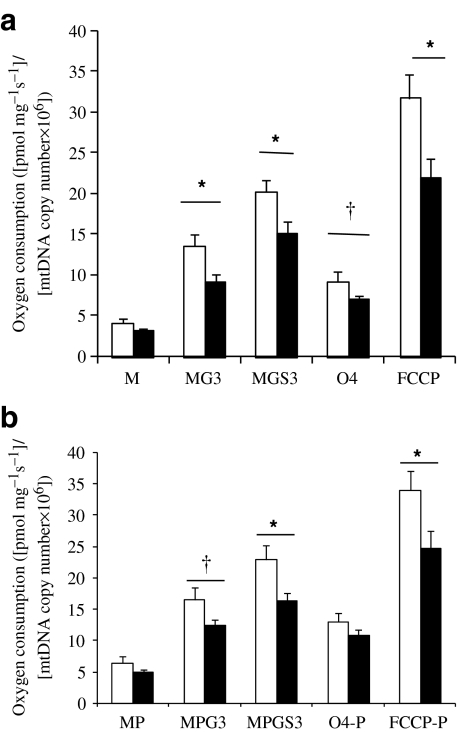
AIMS/HYPOTHESIS: We previously showed that type 2 diabetic patients are characterised by compromised intrinsic mitochondrial function. Here, we examined if exercise training could increase intrinsic mitochondrial function in diabetic patients compared with control individuals. METHODS: Fifteen male type 2 diabetic patients and 14 male control individuals matched for age, BMI and VO(2max) enrolled in a 12 week exercise intervention programme. Ex vivo mitochondrial function was assessed by high-resolution respirometry in permeabilised muscle fibres from vastus lateralis muscle. Before and after training, insulin-stimulated glucose disposal was examined during a hyperinsulinaemic-euglycaemic clamp. RESULTS: Diabetic patients had intrinsically lower ADP-stimulated state 3 respiration and lower carbonyl cyanide 4-(trifluoro-methoxy)phenylhydrazone (FCCP)-induced maximal oxidative respiration, both on glutamate and on glutamate and succinate, and in the presence of palmitoyl-carnitine (p < 0.05). After training, diabetic patients and control individuals showed increased state 3 respiration on the previously mentioned substrates (p < 0.05); however, an increase in FCCP-induced maximal oxidative respiration was observed only in diabetic patients (p < 0.05). The increase in mitochondrial respiration was accompanied by a 30% increase in mitochondrial content upon training (p < 0.01). After adjustment for mitochondrial density, state 3 and FCCP-induced maximal oxidative respiration were similar between groups after training. Improvements in mitochondrial respiration were paralleled by improvements in insulin-stimulated glucose disposal in diabetic patients, with a tendency for this in control individuals. CONCLUSIONS/INTERPRETATION: We confirmed lower intrinsic mitochondrial function in diabetic patients compared with control individuals. Diabetic patients increased their mitochondrial content to the same extent as control individuals and had similar intrinsic mitochondrial function, which occurred parallel with improved insulin sensitivity.
Overview
AI snapshot
Written from the paper’s full text.
TL;DR
In a 12-week supervised combined endurance and resistance training programme, men with type 2 diabetes and matched control individuals both increased skeletal muscle mitochondrial content and ex vivo mitochondrial respiration, with diabetic patients improving insulin-stimulated glucose disposal but not restoring it to control levels. The training-induced improvement in mitochondrial respiration was largely explained by increased mitochondrial density, and intrinsic mitochondrial function became similar between groups after training.
Key findings
- Before training, diabetic patients had lower intrinsic mitochondrial function than controls: lower ADP-stimulated state 3 respiration on glutamate (MG3 17.2 ± 1.4 vs 22.5 ± 2.0 pmol mg−1 s−1, p < 0.05) and glutamate + succinate (MGS3 28.1 ± 2.0 vs 33.8 ± 2.0 pmol mg−1 s−1, p = 0.05), and lower FCCP-induced maximal respiration on glutamate + succinate (41.2 ± 2.8 vs 53.3 ± 3.1 pmol mg−1 s−1, p < 0.05) and with palmitoyl-carnitine (44.8 ± 3.1 vs 55.8 ± 3.1 pmol mg−1 s−1, p < 0.05); differences largely remained after normalisation to mtDNA copy number.
- Training increased mitochondrial content by about 30%: mtDNA copy number rose from 2.0 ± 0.14 × 10⁶ to 2.7 ± 0.14 × 10⁶ AU in diabetic patients and from 1.8 ± 0.12 × 10⁶ to 2.7 ± 0.13 × 10⁶ AU in controls (both p < 0.01).
- Training increased state 3 respiration in both groups (diabetic patients: MG3 +34%, MGS3 +33%, p < 0.01; controls: MG3 +26%, p < 0.05, MGS3 +28%, p < 0.01), but FCCP-induced maximal respiration increased only in diabetic patients (e.g. +33% on glutamate + succinate and +27% with palmitoyl-carnitine, p < 0.05). After adjustment for mitochondrial density, state 3 and FCCP-induced maximal respiration were similar between groups after training.
- Insulin-stimulated glucose disposal (ΔRd) was lower in diabetic patients before training (8.1 ± 1.4 vs 16.0 ± 2.3 μmol kg−1 min−1, p < 0.01), increased in diabetic patients to 12.0 ± 1.9 μmol kg−1 min−1 (p < 0.05), showed a tendency to increase in controls (18.2 ± 2.5 μmol kg−1 min−1, p = 0.09), and remained lower in diabetic patients after training (p < 0.05). No correlations were found between ex vivo mitochondrial function and insulin-stimulated glucose disposal.
Methods
- Fifteen male type 2 diabetic patients and 14 male normoglycaemic control individuals, matched for age, BMI and maximal aerobic capacity, completed a 12-week supervised combined endurance and resistance exercise training programme. Diabetic patients had well-controlled type 2 diabetes (HbA1c 7.1 ± 0.2%) and were on metformin only or metformin plus sulfonylurea.
- Ex vivo mitochondrial function was measured by high-resolution respirometry in permeabilised vastus lateralis muscle fibres using multiple substrate combinations (glutamate, succinate, palmitoyl-carnitine, FCCP, oligomycin); mtDNA copy number was used as a marker of mitochondrial density. Insulin sensitivity was assessed with a 3 h hyperinsulinaemic–euglycaemic clamp combined with [6,6-²H₂]glucose infusion.
- Data are means ± SE; between-group differences were tested with independent Student’s t tests, and within-group training effects with repeated-measures ANOVA; significance was set at p < 0.05.
Limitations
- Stated: the study cannot determine whether the training-induced increase in mitochondrial content and oxidative function is responsible for improved insulin sensitivity; no correlation was found between changes in insulin sensitivity and mitochondrial function, suggesting they may be parallel rather than causally related.
- Stated: substrate competition may differ between the ex vivo condition, where substrates were provided in excess, and the in vivo situation; it could not be deduced whether CPT1 or other substrate transporters are altered by training. The exact meaning of the finding that controls did not enhance FCCP-driven maximal respiratory capacity after training cannot be deduced from this study.
- Evident from the text: the sample was small and included only men, limiting generalisability; one control individual was a non-responder for insulin sensitivity, and the figure legend reports 17 control individuals while the Methods report 14, indicating a possible inconsistency in reporting.
Model-written summary. Check it against the paper before relying on it.
Integrity signals
Registry
Cites
Statistics
Figures
Verification
Claims the paper makes
23 Own result · 6 Own interpretation · 4 Own method
A result the paper reports from its own data — it cites no other source for it, so there is none to check. The quote shows it is in the paper.
In the paper
“Diabetic patients increased their mitochondrial content to the same extent as control individuals and had similar intrinsic mitochondrial function, which occurred parallel with improved insulin sensitivity.”
- Also stated in: § Discussion · plain
“Importantly, type 2 diabetic patients had similar intrinsic mitochondrial function compared with control individuals, paralleled by an improvement, but not restoration, of insulin sensitivity.”
§ Exercise training increases mitochondrial content and ex vivo mitochondrial function similarly in patients with type 2 diabetes and in control individuals > Abstract > Conclusions/interpretation
plain- Asserted: passes — The authors put it forward as true.
- Checkable: passes — It can be checked against evidence.
- Load-bearing: passes — The paper’s conclusions depend on it.
- Based: passes — The paper gives a reason why it holds.
- Rests on an assumption: The final exercise bout at least 2 days before the clamp is sufficient to avoid acute exercise effects on mitochondrial function and insulin sensitivity.
- Also stated in: § Discussion · plain
A result the paper reports from its own data — it cites no other source for it, so there is none to check. The quote shows it is in the paper.
In the paper
“Mitochondrial density measured as mtDNA copy number was not different between diabetic patients and control individuals before training (2.0 ± 0.14 × 10⁶ vs 1.8 ± 0.12 × 10⁶ AU).”
§ Exercise training increases mitochondrial content and ex vivo mitochondrial function similarly in patients with type 2 diabetes and in control individuals > Results > Mitochondrial density
plain- Asserted: passes — The authors put it forward as true.
- Checkable: passes — It can be checked against evidence.
- Load-bearing: unclear — It is unclear whether the paper’s conclusions depend on it.
- Based: passes — The paper gives a reason why it holds.
A result the paper reports from its own data — it cites no other source for it, so there is none to check. The quote shows it is in the paper.
In the paper
“After training, mtDNA copy number was not significantly different between control individuals and diabetic patients.”
§ Exercise training increases mitochondrial content and ex vivo mitochondrial function similarly in patients with type 2 diabetes and in control individuals > Results > Mitochondrial density
plain- Asserted: passes — The authors put it forward as true.
- Checkable: passes — It can be checked against evidence.
- Load-bearing: passes — The paper’s conclusions depend on it.
- Based: passes — The paper gives a reason why it holds.
- Rests on an assumption: The final exercise bout at least 2 days before the clamp is sufficient to avoid acute exercise effects on mitochondrial function and insulin sensitivity.
A result the paper reports from its own data — it cites no other source for it, so there is none to check. The quote shows it is in the paper.
In the paper
“Also, state 4 respiration and maximal respiratory capacity (FCCP-driven state u) levels increased by 28% (p < 0.01) and 33% (p < 0.01), respectively.”
§ Exercise training increases mitochondrial content and ex vivo mitochondrial function similarly in patients with type 2 diabetes and in control individuals > Results > Ex vivo mitochondrial respirometry: effect of training
plaindirect- Asserted: passes — The authors put it forward as true.
- Checkable: passes — It can be checked against evidence.
- Load-bearing: unclear — It is unclear whether the paper’s conclusions depend on it.
- Based: passes — The paper gives a reason why it holds.
- Rests on an assumption: The final exercise bout at least 2 days before the clamp is sufficient to avoid acute exercise effects on mitochondrial function and insulin sensitivity.
A result the paper reports from its own data — it cites no other source for it, so there is none to check. The quote shows it is in the paper.
In the paper
“The insulin-stimulated change in R a (ΔR a) was significant lower in type 2 diabetic patients compared with control individuals (ΔR a 9.1 ± 1.3 vs 18.6 ± 2.8 μmol kg−1 min−1; p < 0.05).”
§ Exercise training increases mitochondrial content and ex vivo mitochondrial function similarly in patients with type 2 diabetes and in control individuals > Results > Insulin-mediated glucose disposal
plain- Asserted: passes — The authors put it forward as true.
- Checkable: passes — It can be checked against evidence.
- Load-bearing: unclear — It is unclear whether the paper’s conclusions depend on it.
- Based: passes — The paper gives a reason why it holds.
- Rests on an assumption: The 1-week discontinuation of glucose-lowering medication before testing is sufficient to eliminate medication effects on mitochondrial function and insulin sensitivity.
A result the paper reports from its own data — it cites no other source for it, so there is none to check. The quote shows it is in the paper.
In the paper
“Before and after training, no correlations were found between ex vivo mitochondrial function and insulin-stimulated glucose disposal. Also, when ex vivo mitochondrial function was normalised for mitochondrial content, no correlations with markers of insulin sensitivity were found.”
§ Exercise training increases mitochondrial content and ex vivo mitochondrial function similarly in patients with type 2 diabetes and in control individuals > Results > Ex vivo mitochondrial respirometry: effect of training
plain- Asserted: passes — The authors put it forward as true.
- Checkable: passes — It can be checked against evidence.
- Load-bearing: unclear — It is unclear whether the paper’s conclusions depend on it.
- Based: passes — The paper gives a reason why it holds.
- Rests on an assumption: The 1-week discontinuation of glucose-lowering medication before testing is sufficient to eliminate medication effects on mitochondrial function and insulin sensitivity.
- Rests on an assumption: The final exercise bout at least 2 days before the clamp is sufficient to avoid acute exercise effects on mitochondrial function and insulin sensitivity.
A result the paper reports from its own data — it cites no other source for it, so there is none to check. The quote shows it is in the paper.
In the paper
“After training, insulin-mediated glucose disposal in type 2 diabetic patients remained significantly lower compared with control individuals (p < 0.05).”
§ Exercise training increases mitochondrial content and ex vivo mitochondrial function similarly in patients with type 2 diabetes and in control individuals > Results > Insulin-mediated glucose disposal
plain- Asserted: passes — The authors put it forward as true.
- Checkable: passes — It can be checked against evidence.
- Load-bearing: unclear — It is unclear whether the paper’s conclusions depend on it.
- Based: passes — The paper gives a reason why it holds.
- Rests on an assumption: The 1-week discontinuation of glucose-lowering medication before testing is sufficient to eliminate medication effects on mitochondrial function and insulin sensitivity.
- Rests on an assumption: The final exercise bout at least 2 days before the clamp is sufficient to avoid acute exercise effects on mitochondrial function and insulin sensitivity.
A result the paper reports from its own data — it cites no other source for it, so there is none to check. The quote shows it is in the paper.
In the paper
“O4 respiration on MGS3 increased by 32% (p < 0.01) after training; however, FCCP-driven maximal respiratory capacity in the presence of glutamate and succinate was similar before and after training.”
§ Exercise training increases mitochondrial content and ex vivo mitochondrial function similarly in patients with type 2 diabetes and in control individuals > Results > Ex vivo mitochondrial respirometry: effect of training
plaindirect- Asserted: passes — The authors put it forward as true.
- Checkable: passes — It can be checked against evidence.
- Load-bearing: unclear — It is unclear whether the paper’s conclusions depend on it.
- Based: passes — The paper gives a reason why it holds.
- Rests on an assumption: The final exercise bout at least 2 days before the clamp is sufficient to avoid acute exercise effects on mitochondrial function and insulin sensitivity.
A result the paper reports from its own data — it cites no other source for it, so there is none to check. The quote shows it is in the paper.
In the paper
“When palmitoyl-carnitine was added as a substrate, state 3 respiration on a combination of palmitoyl-carnitine, glutamate and succinate (MPGS3) tended to be lower in diabetic patients compared with control individuals (31.2 ± 2.1 vs 39.1 ± 3.9 pmol mg−1 s−1; p = 0.08).”
§ Exercise training increases mitochondrial content and ex vivo mitochondrial function similarly in patients with type 2 diabetes and in control individuals > Results > Ex vivo mitochondrial respirometry before training
hedged- Asserted: passes — The authors put it forward as true.
- Checkable: passes — It can be checked against evidence.
- Load-bearing: unclear — It is unclear whether the paper’s conclusions depend on it.
- Based: passes — The paper gives a reason why it holds.
A result the paper reports from its own data — it cites no other source for it, so there is none to check. The quote shows it is in the paper.
In the paper
“Diabetic patients had intrinsically lower ADP-stimulated state 3 respiration and lower carbonyl cyanide 4-(trifluoro-methoxy)phenylhydrazone (FCCP)-induced maximal oxidative respiration, both on glutamate and on glutamate and succinate, and in the presence of palmitoyl-carnitine (p < 0.05).”
- Also stated in: § Ex vivo mitochondrial respirometry before training · plain
“Maximal respiratory capacity (FCCP-driven state u) in the presence of glutamate and succinate was significantly lower in diabetic patients compared with control individuals (41.2 ± 2.8 vs 53.3 ± 3.1 pmol mg−1 s−1; p < 0.05).”
- Also stated in: § Ex vivo mitochondrial respirometry before training · plain
“The maximal respiratory capacity (FCCP-driven state u) in the presence of palmitoyl-carnitine, glutamate and succinate was significantly lower in diabetic patients compared with control individuals (44.8 ± 3.1 vs 55.8 ± 3.1 pmol mg−1 s−1; p < 0.05).”
§ Exercise training increases mitochondrial content and ex vivo mitochondrial function similarly in patients with type 2 diabetes and in control individuals > Abstract > Results
plain- Asserted: passes — The authors put it forward as true.
- Checkable: passes — It can be checked against evidence.
- Load-bearing: passes — The paper’s conclusions depend on it.
- Based: passes — The paper gives a reason why it holds.
- Also stated in: § Ex vivo mitochondrial respirometry before training · plain
- It may state two separate claims as one. 9
- The quote only partly states this claim. 1
- Probably not a substantial claim. 2
A result the paper reports from its own data — it cites no other source for it, so there is none to check. The quote shows it is in the paper.
In the paper
“The ΔR a upon exercise training increased to 12.3 ± 1.5 (p < 0.05) in diabetic patients and to 21.2 ± 3.0 μmol kg−1 min−1 (p < 0.05) in control individuals, with ΔR a remaining significantly lower in diabetic patients compared with control individuals.”
§ Exercise training increases mitochondrial content and ex vivo mitochondrial function similarly in patients with type 2 diabetes and in control individuals > Results > Insulin-mediated glucose disposal
plaindirect- Asserted: passes — The authors put it forward as true.
- Checkable: passes — It can be checked against evidence.
- Load-bearing: unclear — It is unclear whether the paper’s conclusions depend on it.
- Based: passes — The paper gives a reason why it holds.
It may state two separate claims as one.
- Rests on an assumption: The 1-week discontinuation of glucose-lowering medication before testing is sufficient to eliminate medication effects on mitochondrial function and insulin sensitivity.
- Rests on an assumption: The final exercise bout at least 2 days before the clamp is sufficient to avoid acute exercise effects on mitochondrial function and insulin sensitivity.
A result the paper reports from its own data — it cites no other source for it, so there is none to check. The quote shows it is in the paper.
In the paper
“and increased significantly after exercise training in diabetic patients to 12.0 ± 1.9 μmol kg−1 min−1 (p < 0.05) with a tendency for increase in control individuals (ΔR d 18.2 ± 2.5 μmol kg−1 min−1; p = 0.09).”
§ Exercise training increases mitochondrial content and ex vivo mitochondrial function similarly in patients with type 2 diabetes and in control individuals > Results > Insulin-mediated glucose disposal
plaindirect- Asserted: passes — The authors put it forward as true.
- Checkable: passes — It can be checked against evidence.
- Load-bearing: unclear — It is unclear whether the paper’s conclusions depend on it.
- Based: passes — The paper gives a reason why it holds.
It may state two separate claims as one.
- Rests on an assumption: The 1-week discontinuation of glucose-lowering medication before testing is sufficient to eliminate medication effects on mitochondrial function and insulin sensitivity.
- Rests on an assumption: The final exercise bout at least 2 days before the clamp is sufficient to avoid acute exercise effects on mitochondrial function and insulin sensitivity.
A result the paper reports from its own data — it cites no other source for it, so there is none to check. The quote shows it is in the paper.
In the paper
“Diabetic patients had intrinsically lower ADP-stimulated state 3 respiration and lower carbonyl cyanide 4-(trifluoro-methoxy)phenylhydrazone (FCCP)-induced maximal oxidative respiration, both on glutamate and on glutamate and succinate, and in the presence of palmitoyl-carnitine (p < 0.05).”
- Also stated in: § Ex vivo mitochondrial respirometry before training · plain
“State 3 respiration on MG3 and on MGS3 was significantly lower in diabetic patients compared with control individuals (MG3: 17.2 ± 1.4 vs 22.5 ± 2.0 pmol mg−1 s−1, p < 0.05 and MGS3: 28.1 ± 2.0 vs 33.8 ± 2.0 pmol mg−1 s−1, p = 0.05).”
- Also stated in: § Discussion · plain
“In agreement with earlier results [5], we showed a ∼25% lower state 3 respiration and a ∼31% lower FCCP-induced maximal oxidative capacity in type 2 diabetic patients compared with control individuals, even when normalised to mitochondrial content.”
§ Exercise training increases mitochondrial content and ex vivo mitochondrial function similarly in patients with type 2 diabetes and in control individuals > Abstract > Results
plain- Asserted: passes — The authors put it forward as true.
- Checkable: passes — It can be checked against evidence.
- Load-bearing: passes — The paper’s conclusions depend on it.
- Based: passes — The paper gives a reason why it holds.
It may state two separate claims as one.
- Also stated in: § Ex vivo mitochondrial respirometry before training · plain
A result the paper reports from its own data — it cites no other source for it, so there is none to check. The quote shows it is in the paper.
In the paper
“Similarly, upon the addition of palmitoyl-carnitine, MPG3 increased upon exercise training by 38% (p < 0.01), MPGS3 by 34% (p < 0.01) and O4 upon MPGS3 increased by 17% (p < 0.05).”
§ Exercise training increases mitochondrial content and ex vivo mitochondrial function similarly in patients with type 2 diabetes and in control individuals > Results > Ex vivo mitochondrial respirometry: effect of training
plaindirect- Asserted: passes — The authors put it forward as true.
- Checkable: passes — It can be checked against evidence.
- Load-bearing: unclear — It is unclear whether the paper’s conclusions depend on it.
- Based: passes — The paper gives a reason why it holds.
It may state two separate claims as one.
- Rests on an assumption: The final exercise bout at least 2 days before the clamp is sufficient to avoid acute exercise effects on mitochondrial function and insulin sensitivity.
A result the paper reports from its own data — it cites no other source for it, so there is none to check. The quote shows it is in the paper.
In the paper
“The increase in mitochondrial respiration was accompanied by a 30% increase in mitochondrial content upon training (p < 0.01).”
- Also stated in: § Mitochondrial density · plain
“After training, mtDNA copy number increased significantly to 2.7 ± 0.14 × 10⁶ AU in diabetic patients (p < 0.01) and to 2.7 ± 0.13 × 10⁶ AU (p < 0.01) in control individuals.”
§ Exercise training increases mitochondrial content and ex vivo mitochondrial function similarly in patients with type 2 diabetes and in control individuals > Abstract > Results
plaindirect- Asserted: passes — The authors put it forward as true.
- Checkable: passes — It can be checked against evidence.
- Load-bearing: passes — The paper’s conclusions depend on it.
- Based: passes — The paper gives a reason why it holds.
The quote only partly states this claim.
- Rests on an assumption: The final exercise bout at least 2 days before the clamp is sufficient to avoid acute exercise effects on mitochondrial function and insulin sensitivity.
- Also stated in: § Mitochondrial density · plain
A result the paper reports from its own data — it cites no other source for it, so there is none to check. The quote shows it is in the paper.
In the paper
“After training, diabetic patients and control individuals showed increased state 3 respiration on the previously mentioned substrates (p < 0.05); however, an increase in FCCP-induced maximal oxidative respiration was observed only in diabetic patients (p < 0.05).”
- Also stated in: § Ex vivo mitochondrial respirometry: effect of training · plain
“Also, state 4 respiration and maximal respiratory capacity (FCCP-driven state u) levels increased by 28% (p < 0.01) and 33% (p < 0.01), respectively.”
- Also stated in: § Ex vivo mitochondrial respirometry: effect of training · plain
“O4 respiration on MGS3 increased by 32% (p < 0.01) after training; however, FCCP-driven maximal respiratory capacity in the presence of glutamate and succinate was similar before and after training.”
§ Exercise training increases mitochondrial content and ex vivo mitochondrial function similarly in patients with type 2 diabetes and in control individuals > Abstract > Results
plaindirect- Asserted: passes — The authors put it forward as true.
- Checkable: passes — It can be checked against evidence.
- Load-bearing: unclear — It is unclear whether the paper’s conclusions depend on it.
- Based: passes — The paper gives a reason why it holds.
It may state two separate claims as one.
- Rests on an assumption: The final exercise bout at least 2 days before the clamp is sufficient to avoid acute exercise effects on mitochondrial function and insulin sensitivity.
- Also stated in: § Ex vivo mitochondrial respirometry: effect of training · plain
A result the paper reports from its own data — it cites no other source for it, so there is none to check. The quote shows it is in the paper.
In the paper
“Improvements in mitochondrial respiration were paralleled by improvements in insulin-stimulated glucose disposal in diabetic patients, with a tendency for this in control individuals.”
- Also stated in: § Discussion · plain
“These improvements were paralleled by improved insulin-stimulated glucose disposal in type 2 diabetic patients and control individuals.”
§ Exercise training increases mitochondrial content and ex vivo mitochondrial function similarly in patients with type 2 diabetes and in control individuals > Abstract > Results
plaincorrelational- Asserted: passes — The authors put it forward as true.
- Checkable: passes — It can be checked against evidence.
- Load-bearing: passes — The paper’s conclusions depend on it.
- Based: passes — The paper gives a reason why it holds.
It may state two separate claims as one.
- Rests on an assumption: The 1-week discontinuation of glucose-lowering medication before testing is sufficient to eliminate medication effects on mitochondrial function and insulin sensitivity.
- Rests on an assumption: The final exercise bout at least 2 days before the clamp is sufficient to avoid acute exercise effects on mitochondrial function and insulin sensitivity.
- Also stated in: § Discussion · plain
What the paper did — it cites no source for this, so there is none to check. The quote shows it is in the paper.
In the paper
“All substrates were added in excess to ensure that respiratory measurements were not limited by substrate availability influencing oxygen flux.”
§ Exercise training increases mitochondrial content and ex vivo mitochondrial function similarly in patients with type 2 diabetes and in control individuals > Discussion
plain- Asserted: passes — The authors put it forward as true.
- Checkable: passes — It can be checked against evidence.
- Load-bearing: passes — The paper’s conclusions depend on it.
- Based: passes — The paper gives a reason why it holds.
Probably not a substantial claim.
A conclusion the paper draws from its own results — it cites no other source for it, so there is none to check. The quote shows it is in the paper.
In the paper
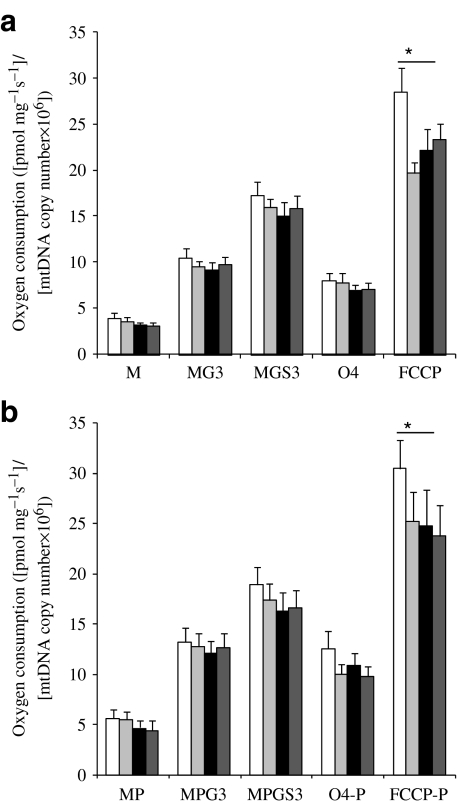
“However, when respiration values were normalised to mtDNA copy number, significant differences reported for all states before and after training in diabetic patients no longer persisted (Fig. 2a,b), illustrating that the major part of the improvement in mitochondrial function was because of an increase in mitochondrial content.”
§ Exercise training increases mitochondrial content and ex vivo mitochondrial function similarly in patients with type 2 diabetes and in control individuals > Results > Ex vivo mitochondrial respirometry: effect of training
boosteddirect- Asserted: passes — The authors put it forward as true.
- Checkable: passes — It can be checked against evidence.
- Load-bearing: passes — The paper’s conclusions depend on it.
- Based: passes — The paper gives a reason why it holds.
It may state two separate claims as one.
- Rests on an assumption: The final exercise bout at least 2 days before the clamp is sufficient to avoid acute exercise effects on mitochondrial function and insulin sensitivity.
A conclusion the paper draws from its own results — it cites no other source for it, so there is none to check. The quote shows it is in the paper.
In the paper
“Again, as in diabetic patients, the increase in mitochondrial respiration (with or without the addition of palmitoyl-carnitine) upon training was mainly accounted for by an increase in mitochondrial density, as no significant increase in intrinsic mitochondrial respiration was observed after adjustment for mtDNA copy number upon exercise training (Fig. 2a,b).”
§ Exercise training increases mitochondrial content and ex vivo mitochondrial function similarly in patients with type 2 diabetes and in control individuals > Results > Ex vivo mitochondrial respirometry: effect of training
plaindirect- Asserted: passes — The authors put it forward as true.
- Checkable: passes — It can be checked against evidence.
- Load-bearing: passes — The paper’s conclusions depend on it.
- Based: passes — The paper gives a reason why it holds.
It may state two separate claims as one.
- Rests on an assumption: The final exercise bout at least 2 days before the clamp is sufficient to avoid acute exercise effects on mitochondrial function and insulin sensitivity.
What the paper did — it cites no source for this, so there is none to check. The quote shows it is in the paper.
In the paper
“The final exercise bout of the training programme was performed at least 2 days before the clamp.”
§ Exercise training increases mitochondrial content and ex vivo mitochondrial function similarly in patients with type 2 diabetes and in control individuals > Methods > Hyperinsulinaemic–euglycaemic clamp
plain- Asserted: passes — The authors put it forward as true.
- Checkable: passes — It can be checked against evidence.
- Load-bearing: fails — The paper’s conclusions may not depend on it.
- Based: passes — The paper gives a reason why it holds.
Probably not a substantial claim. The paper’s conclusions may not depend on it.
A conclusion the paper draws from its own results — it cites no other source for it, so there is none to check. The quote shows it is in the paper.
In the paper
“Remarkably, in control individuals only, exercise training did not enhance FCCP-driven maximal respiratory capacity, as occurred in type 2 diabetic patients. As a result of the increase in mitochondrial content, FCCP-driven maximal respiratory capacity per mitochondrion was actually lower after training.”
§ Exercise training increases mitochondrial content and ex vivo mitochondrial function similarly in patients with type 2 diabetes and in control individuals > Discussion
plaindirect- Asserted: passes — The authors put it forward as true.
- Checkable: passes — It can be checked against evidence.
- Load-bearing: unclear — It is unclear whether the paper’s conclusions depend on it.
- Based: passes — The paper gives a reason why it holds.
It may state two separate claims as one.
- Rests on an assumption: The final exercise bout at least 2 days before the clamp is sufficient to avoid acute exercise effects on mitochondrial function and insulin sensitivity.
The paper relies on this without support.
The 1-week discontinuation of glucose-lowering medication before testing is sufficient to eliminate medication effects on mitochondrial function and insulin sensitivity.
“Glucose-lowering medication was continued throughout the study except for the week preceding the actual tests and sampling of the biopsy.”
“Diabetic patients discontinued their glucose-lowering medication 1 week prior to the clamp, but restarted the use of medication after the test days.”
The paper relies on this without support.
The final exercise bout at least 2 days before the clamp is sufficient to avoid acute exercise effects on mitochondrial function and insulin sensitivity.
“The final exercise bout of the training programme was performed at least 2 days before the clamp.”
Claims other papers make about this one
Each is checked against this paper’s own text: does it say what the citing paper says it does?
In the citing paper
“In humans, physical exercise increases total mitochondrial mass and uncoupling in skeletal muscular cells [192].”
From Mitochondrial Uncoupling: A Key Controller of Biological Processes in Physiology and Diseases (2019) · cites this paper as [192]
In the citing paper
“In patients with T2DM, walking and ergometer cycling exercise increased mitochondrial muscle respiration and mitochondrial content and density, as well as the activity of oxidative enzymes214,215.”
From Mitochondrial and metabolic dysfunction in ageing and age-related diseases (2022) · cites this paper as [215]
Self-check
Percentages, sums and reported differences re-computed from the paper’s own numbers.
Each contradiction between two passages listed here was confirmed by an independent check.
Rated minor: it would not touch a result — a value no result rests on, a p-value that stays on the same side of the significance level, or a conflict that is clerical, resolved elsewhere in the paper, or outside its own findings.
In the paper
§ Exercise training increases mitochondrial content and ex vivo mitochondrial function similarly in patients with type 2 diabetes and in control individuals > Methods
“In this study, 15 male type 2 diabetic patients and 14 normoglycaemic control individuals were included”
§ Exercise training increases mitochondrial content and ex vivo mitochondrial function similarly in patients with type 2 diabetes and in control individuals > Results > Ex vivo mitochondrial respirometry before training
“Figure: Fig. 1 Intrinsic mitochondrial respiration ([pmol mg−1 s−1]/[mtDNA copy number × 106]) in 17 control individuals (white bars) vs 15 diabetic patients (black bars) before training.”
Citations
Cites
Glucose clamp technique: a method for quantifying insulin secretion and resistance.
DeFronzo, R. A., Tobin, J. D., & Andres, R. (1979) · American Journal of Physiology-Endocrinology and Metabolism · doi:10.1152/ajpendo.1979.237.3.e214 · Cited by 7,425
Dysfunction of Mitochondria in Human Skeletal Muscle in Type 2 Diabetes
Kelley, D. E., He, J., Menshikova, E. V., & Ritov, V. B. (2002) · Diabetes · doi:10.2337/diabetes.51.10.2944 · Cited by 2,321
Impaired Mitochondrial Activity in the Insulin-Resistant Offspring of Patients with Type 2 Diabetes
Petersen, K. F., Dufour, S., Befroy, D., Garcia, R., & Shulman, G. I. (2004) · New England Journal of Medicine · doi:10.1056/nejmoa031314 · Cited by 2,193
Mitochondrial dysfunction and type 2 diabetes
Lowell, B. B., & Shulman, G. I. (2005) · Science · doi:10.1126/science.1104343 · Cited by 2,070
Diet, muscle glycogen and physical performance.
Bergström, J., Hermansen, L., Hultman, E., & Saltin, B. (1967) · Acta Physiologica Scandinavica · doi:10.1111/j.1748-1716.1967.tb03720.x · Cited by 1,740 · cited 1×
“lidocaine) according the technique of Bergstrom et al. [ 18 ].”
MethodMitochondrial respiration is decreased in skeletal muscle of patients with type 2 diabetes
Mogensen, M., Sahlin, K., Fernström, M., Glintborg, D., Vind, B. F., Beck-Nielsen, H., & Højlund, K. (2007) · Diabetes · doi:10.2337/db06-0981 · Cited by 573
Effective exercise modality to reduce insulin resistance in women with type 2 diabetes
Cuff, D. J., Meneilly, G. S., Martin, A., Ignaszewski, A., Tildesley, H. D., & Frohlich, J. J. (2003) · Diabetes Care · doi:10.2337/diacare.26.11.2977 · Cited by 545
Patients with type 2 diabetes have normal mitochondrial function in skeletal muscle
Boushel, R., Gnaiger, E., Schjerling, P., Skovbro, M., Kraunsøe, R., & Dela, F. (2007) · Diabetologia · doi:10.1007/s00125-007-0594-3 · Cited by 519
Veksler, V., Kuznetsov, A. V., Sharov, V. G., Kapelko, V. I., & Saks, V. A. (1987) · Biochimica et Biophysica Acta (BBA) - Bioenergetics · doi:10.1016/0005-2728(87)90174-5 · Cited by 371
Phielix, E., Schrauwen-Hinderling, V. B., Mensink, M., Lenaers, E., Meex, R., Hoeks, J., Kooi, M. E., Moonen-Kornips, E., Sels, J.-P., Hesselink, M. K. C., et al. (2008) · Diabetes · doi:10.2337/db08-0391 · Cited by 359
Self-citation
Cited by
Sorted by citations
Items 101–200 of 204
Lee, H., Gattu, A. K., Camporez, J. P., Kanda, S., Guigni, B. A., Kahn, M., Zhang, D., Galbo, T., Birkenfeld, A. L., Jornayvaz, F. R., et al. (2014) · Diabetologia · doi:10.1007/s00125-014-3212-1 · Cited by 21
“Both muscle insulin action and mitochondrial function can be improved with aerobic exercise training [8–12].”
RETRACTED: Mitochondrial pathophysiology and type 2 diabetes mellitus
García-Rovés, P. M. (2011) · Archives of Physiology and Biochemistry · doi:10.3109/13813455.2011.584538 · Cited by 22
RetractedMiotto, P. M., Horbatuk, M., Proudfoot, R., Matravadia, S., Bakovic, M., Chabowski, A., & Holloway, G. P. (2017) · American Journal of Physiology-Endocrinology and Metabolism · doi:10.1152/ajpendo.00438.2016 · Cited by 21
“While it has been demonstrated in humans that reductions in mitochondrial content are not required for the induction of insulin resistance (26), there is evidence that increasing mitochondrial content can improve insulin sensitivity (39), possibly by mitigating abnormal lipid storage through increased fat oxidation (3…”
BackgroundPham, T. C. P., Raun, S. H., Havula, E., Henriquez-Olguín, C., Rubalcava-Gracia, D., Frank, E., Fritzen, A. M., Jannig, P. R., Andersen, N. R., Kruse, R., et al. (2024) · Nature Communications · doi:10.1038/s41467-024-54183-4 · Cited by 19
Huang, C., Luo, Y., Zeng, B., Chen, Y., Liu, Y., Chen, W., Liao, X., Liu, Y., Wang, Y., & Wang, X. (2023) · The Journal of Nutritional Biochemistry · doi:10.1016/j.jnutbio.2023.109437 · Cited by 21
Ekman, C., Elgzyri, T., Ström, K., Almgren, P.-E., Parikh, H. M., Nitert, M. D., Rönn, T., Koivula, F. N. M., Ling, C., Tornberg, Å. B., et al. (2015) · Journal of Applied Physiology · doi:10.1152/japplphysiol.01067.2014 · Cited by 19
Parra-Sánchez, J., Moreno-Jiménez, M., Nicola, C. M., Nocua-Rodríguez, I. I., Amegló-Parejo, M. R., del Carmen-Peña, M., Cordero-Prieto, C., & Gajardo-Barrena, M. J. (2015) · Atención Primaria · doi:10.1016/j.aprim.2015.01.006 · Cited by 22
Scalzo, R. L., Schauer, I. E., Rafferty, D., Knaub, L. A., Kvaratskhelia, N., Johnson, T. K., Pott, G. B., Abushamat, L. A., Whipple, M. O., Huebschmann, A. G., et al. (2021) · The Journal of Physiology · doi:10.1113/jp280603 · Cited by 24
“Previous studies have reported improved skeletal muscle mitochondrial function with whole-body aerobic exercise training in adults with T2D (Meex et al. 2010; Phielix et al. 2010; Pino et al. 2019).”
BackgroundDavies, N. A., Watkeys, L. J., Butcher, L., Potter, S., Hughes, M. G., Moir, H. J., Morris, K., Thomas, A. W., & Webb, R. (2014) · Free Radical Research · doi:10.3109/10715762.2014.978311 · Cited by 18
Gemmink, A., Daemen, S., Wefers, J., Hansen, J., van Moorsel, D., Astuti, P., Jörgensen, J. A., Moonen‐Kornips, E., Schaart, G., Joris Hoeks, J., et al. (2023) · Molecular Metabolism · doi:10.1016/j.molmet.2023.101727 · Cited by 17
“This is consistent with lower mitochondrial respiratory capacity in these volunteers [16].”
BackgroundSelf-citationBrouwers, B., Stephens, N. A., Costford, S. R., Hopf, M. E., Ayala, J. E., Yi, F., Xie, H., Li, J., Gardell, S. J., Sparks, L. M., et al. (2018) · Frontiers in Physiology · doi:10.3389/fphys.2018.00704 · Cited by 15
ANT1 overexpression models: Some similarities with facioscapulohumeral muscular dystrophy
Arbogast, S., Kotzur, H., Frank, C., Compagnone, N. A., Sutra, T., Pillard, F., Pietri, S., Hmada, N., Moussa, D. A., Bride, J., et al. (2022) · Redox Biology · doi:10.1016/j.redox.2022.102450 · Cited by 15
“Inactivation of Crym increased UCP3 levels in muscle cells [73] and high levels of Crym are associated with a shift toward genes associated with oxidative type I muscle fibres where UCP3 expression is lower [74,75] than in the more glycolytic type II fibres.”
BackgroundBrinkmann, C. K., Przyklenk, A., Metten, A., Schiffer, T., Bloch, W., Brixius, K., & Gehlert, S. (2017) · Endocrine Research · doi:10.1080/07435800.2017.1323914 · Cited by 16
“Physical training has been shown to increasemitochondrial density and function in T2DM patients in the long term (6-8).”
Backgroundde Jesus, I., Michel‐Flutot, P., Deramaudt, T. B., Paucard, A., Vanhee, V., Vinit, S., & Bonay, M. (2021) · Scientific Reports · doi:10.1038/s41598-020-80478-9 · Cited by 16
Nirwane, A. M., & Majumdar, A. S. (2017) · Archives of Physiology and Biochemistry · doi:10.1080/13813455.2017.1391847 · Cited by 15
Nascimento, E. B. M., Hangelbroek, R., Hooiveld, G. J. E. J., Joris Hoeks, J., Lichtenbelt, W. D. V. M., Hesselink, M. K. C., Schrauwen, P., & Kersten, S. (2020) · BMC Medical Genomics · doi:10.1186/s12920-020-00784-z · Cited by 16
Self-citationExercise in the Prevention and Treatment of Type 2 Diabetes
Kirwan, J. P., Heintz, E. C., Rebello, C. J., & Axelrod, C. L. (2023) · Comprehensive physiology · doi:10.1002/cphy.c220009 · Cited by 26
Shafqat, A., Masters, M. C., Tripathi, U., Tchkonia, T., Kirkland, J. L., & Hashmi, S. K. (2024) · Ageing Research Reviews · doi:10.1016/j.arr.2024.102400 · Cited by 15
Szczerbiński, Ł., Taylor, M. A., Puchta, U., Konopka, P., Paszko, A., Citko, A., Szczerbinski, K., Gościk, J., Górska, M., Larsen, S., et al. (2021) · Cells · doi:10.3390/cells10113013 · Cited by 14
“The mechanism underlying these changes was driven by changes in mitochondrial adaptations in both skeletal muscle and adipose tissue [18,25,26] in both insulin-resistant and healthy subjects.”
BackgroundZhao, T., Le, S., Freitag, N., Schumann, M., Wang, X., & Cheng, S. (2021) · Frontiers in Physiology · doi:10.3389/fphys.2021.652023 · Cited by 16
“Chronic exercise training has been shown to improve oxidative capacity (Phielix et al., 2010; Zanuso et al., 2017), lactate transport (Opitz et al.”
BackgroundNeuroimaging perspective in targeted treatment for type 2 diabetes melitus and sleep disorders
von Deneen, K. M., & Garstka, M. A. (2022) · Intelligent Medicine · doi:10.1016/j.imed.2022.05.003 · Cited by 14
Vega, R. B., Brouwers, B., Parsons, S. A., Stephens, N. A., Pino, M. F., Hodges, A. P., Yi, F., Yu, G., Pratley, R. E., Smith, S. R., et al. (2020) · Physiological Reports · doi:10.14814/phy2.14416 · Cited by 13
“A number of studies have reported parallel improvements in mitochondrial capacity and cardiorespiratory fitness (Meex et al., 2010; Phielix et al., 2010); however, some have not found this direct relationship (Pesta et al., 2011; Stephens et al., 2018), and discrepancies may be due to deviations in…”
BackgroundAnaney, O. M., O'Shea, D. B., Warmington, S. A., Green, S., & Egaña, M. (2012) · Applied Physiology Nutrition and Metabolism · doi:10.1139/h2012-012 · Cited by 13
Sen, A., Mohanraj, P. S., Laxmi, V., Ashique, S., Vasudevan, R., Aldahish, A. A., Velu, A., Das, A., Ehsan, I., Islam, A., et al. (2025) · Journal of Pharmaceutical Analysis · doi:10.1016/j.jpha.2025.101305 · Cited by 13
“The positive impact on mental health includes a reduction in depression, emphasising the holistic bene fi ts of incorporating exercise into the routine of individuals with T2DM [72,79,80].”
When should I run—the role of exercise timing in metabolic health
Kirchner, H., Weisner, L., & Wilms, B. (2023) · Acta Physiologica · doi:10.1111/apha.13953 · Cited by 12
Reactive oxygen species, health and longevity
Bianchi, V. E., & Falcioni, G. (2016) · AIMS molecular science · doi:10.3934/molsci.2016.4.479 · Cited by 11
“Hence mitochondrial efficiency can be restored [183].”
Mitochondrial transplantation: adaptive bio-enhancement
Lu, X. (2025) · Cell Death and Disease · doi:10.1038/s41419-025-07643-8 · Cited by 12
Alternative therapeutic strategies in diabetes management
Annicchiarico, A., Barile, B., Buccoliero, C., Nicchia, G. P., & Brunetti, G. (2024) · World Journal of Diabetes · doi:10.4239/wjd.v15.i6.1142 · Cited by 12
Mastrototaro, L., Apostolopoulou, M., Hartwig, S., Straßburger, K., Lipaeva, P., Trinks, N., Karusheva, Y., Gancheva, S., Trenkamp, S., Lehr, S., et al. (2024) · EBioMedicine · doi:10.1016/j.ebiom.2024.105471 · Cited by 11
Wilms, B., Ernst, B., Thurnheer, M., Spengler, C. M., & Schultes, B. (2017) · Experimental and Clinical Endocrinology & Diabetes · doi:10.1055/s-0043-100102 · Cited by 10
meeûs, C. D., Boshuizen, B., de Vega, C. V. M., Leybaert, L., Maré, L. D., Goethals, K., Spiegelaere, W. D., Oosterlinck, M., & Delesalle, C. J. G. (2021) · Frontiers in Veterinary Science · doi:10.3389/fvets.2021.718866 · Cited by 13
Thomas, D. T., Schnell, D., Redzic, M., Zhao, M., Abraha, H., Jones, D., Brim, H. H., & Yu, G. (2019) · Nutrients · doi:10.3390/nu11040930 · Cited by 10
“Together, these changes in hemodynamics and oxygen consumption may be attributed to multiple mechanisms including improved muscle blood flow and oxygen delivery creating a reduction in oxygen debt, [54] improved lipid substrate availability to the mitochondria [32,55], and direct improvements of mitochondrial function…”
BackgroundExercise in the Prevention and Treatment of Type 2 Diabetes
Kirwan, J. P., Heintz, E. C., Rebello, C. J., & Axelrod, C. L. (2023) · Comprehensive physiology · doi:10.1002/j.2040-4603.2023.tb00259.x · Cited by 9
“However, the functional intactness of mitochondria remains highly debated, with contrasting reports of both defective and intact respiratory activity (32, 206, 233).”
Broderick, T. L., Midaoui, A. E., Chiasson, J., Wang, D., Jankowski, M., & Gutkowska, J. (2011) · Applied Physiology Nutrition and Metabolism · doi:10.1139/h11-094 · Cited by 9
Qigong for the Management of Type 2 Diabetes Mellitus
Sun, G., Osgood, C., & Lilly, H. R. (2017) · InTech eBooks · doi:10.5772/67065 · Cited by 9
Baasch‐Skytte, T., Gunnarsson, T. P., Fiorenza, M., & Bangsbo, J. (2021) · Physiological Reports · doi:10.14814/phy2.14681 · Cited by 8
“**Different (p 0.05) from T2D pre enzyme activity (He et al., 2001) and mitochondrial respiration (Phielix et al., 2010) have been reported in type 2 diabetic subjects compared to nondiabetes controls, supporting a lower ATP production capacity in type 2 diabetic subjects.”
BackgroundInfluentialMøller, P. M., Kjøbsted, R., Petersen, M. H., de Almeida, M. E., Pedersen, A. J. T., Wojtaszewski, J. F. P., & Højlund, K. (2025) · Diabetologia · doi:10.1007/s00125-025-06454-y · Cited by 10
“Exercise training induces beneficial adaptations in skeletal muscle, including improved mitochondrial function and content, with intact responses in insulin-resistant individuals with obesity and in individuals with type 2 diabetes [16, 17, 50, 51].”
Chouk, K., Triki, R., Dergaa, I., Ceylan, H. İ., Bougrine, H., Muntean, R. I., & Abderrahman, A. B. (2025) · Frontiers in Endocrinology · doi:10.3389/fendo.2025.1525559 · Cited by 11
Layne, A. S., Krehbiel, L. M., Mankowski, R. T., Anton, S. D., Leeuwenburgh, C., Pahor, M., Sandesara, B. D., Wu, S. S., & Buford, T. W. (2017) · Contemporary Clinical Trials Communications · doi:10.1016/j.conctc.2017.03.002 · Cited by 8
Mechanism underlying the effects of exercise against type 2 diabetes: A review on research progress
Peng, C.-J., Chen, S., Yan, S.-Y., Zhao, J.-N., Luo, Z., Qian, Y., & Zhao, G.-L. (2024) · World Journal of Diabetes · doi:10.4239/wjd.v15.i8.1704 · Cited by 11
A step in the right direction: exploring the effects of aerobic exercise on HbA1c reduction
Singh, B. P., Koneru, Y. C., Zimmerman, H., Kanagala, S. G., Milne, I. G., Sethi, A., & Jain, R. (2023) · The Egyptian Journal of Internal Medicine · doi:10.1186/s43162-023-00247-8 · Cited by 14
“In individuals with T2DM, short-term aerobic exercise training increases insulin sensitivity in tandem with increased mitochondrial activity [17].”
BackgroundExercise timing and circadian regulation of metabolism in type 2 diabetes
Hansen, S. S. K., Zierath, J. R., & Wallberg‐Henriksson, H. (2026) · Trends in Endocrinology and Metabolism · doi:10.1016/j.tem.2026.01.015 · Cited by 8
Huang, M. N., Coral, D., Ardalani, H., Spégel, P., Saadat, A., Claussnitzer, M., Mulder, H., Franks, P. W., & Kalamajski, S. (2023) · eLife · doi:10.7554/elife.84168 · Cited by 8
Gonzalez-Armenta, J. L., Bergstrom, J., Lee, J., Furdui, C. M., Nicklas, B. J., & Molina, A. J. A. (2023) · GeroScience · doi:10.1007/s11357-023-00855-w · Cited by 6
“These results are consistent with observations of increased skeletal muscle mitochondrial function after exercise interventions in older adults [47, 49, 50, 59, 60, 74].”
ResultKoma, R., Shibaguchi, T., Yamada, T., Nonaka, Y., Jue, T., Yamazaki, A., & Masuda, K. (2024) · Acta Physiologica · doi:10.1111/apha.14139 · Cited by 7
Meyer, J. N., Pan, W., Ryde, I. T., Alexander, T., Klein‐Adams, J. C., Ndirangu, D. S., & Falvo, M. J. (2023) · PLoS ONE · doi:10.1371/journal.pone.0287412 · Cited by 6
QATAMISH, M. A., Al‐Nassan, S., Kondo, H., & Fujino, H. (2020) · Biomedical Research · doi:10.2220/biomedres.41.227 · Cited by 6
“…have argued that patients with type 2 diabetes are associated with inappropriate metabolic potentials, compromised mitochondrial function, and diverse patterns of fiber type distribution in the skeletal muscle (Kelley et al. 2002; Boushel et al. 2007; Phielix et al. 2010; Jheng et al. 2012).”
BackgroundMetabolic mitochondrial alterations prevail in the female rat heart 8 weeks after exercise cessation
Tocantins, C., Martins, J. D., Rodrigues, Ó. M., et al. (2023) · European Journal of Clinical Investigation · doi:10.1111/eci.14069 · Cited by 5
“75 However, cardiac mitochondria from the detrained female rats of the present study did not show alterations in mitochondrial state 3 respiration but revealed higher state 4 respiration, which contributed to the observed lower RCR values.”
BackgroundHoeks, J., Hesselink, M. K. C., & Schrauwen, P. (2012) · Springer eBooks · doi:10.1007/978-3-032-05988-8_136 · Cited by 5
Self-citationExercise does not improve insulin resistance and mitochondrial characteristics together
Genders, A. J., Kuang, J., Marin, E. C., Saner, N. J., Botella, J., Jacques, M., McConell, G. K., Andrade-Souza, V. A., Chagolla, J., & Bishop, D. J. (2021) · Journal of Endocrinology · doi:10.1530/joe-21-0242 · Cited by 4
Verma, M., Kalra, S., Deepa, M., Venkatesan, U., Sharma, N., Pradeepa, R., Chauhan, K., Singh, O., Nirmal, E., Aggarwal, S., et al. (2025) · Advances in Therapy · doi:10.1007/s12325-025-03200-z · Cited by 3
“Better blood glucose levels in active participants can be attributed to better mitochondrial enzyme activity, insulin sensitivity, and muscle capillary recruitment [28].”
Chinese Medical Therapies for Diabetes, Infertility, Silicosis and the Theoretical Basis
Li, X.-T. (2017) · InTech eBooks · doi:10.5772/63167 · Cited by 3
Alyafei, A. A. (2020) · Clinical Medicine Research · doi:10.11648/j.cmr.20200904.12 · Cited by 3
“[98, 99] The resulted effect of increasing the mitochondrial function is not limited to increasing the muscle anerobic capacity, but it goes to increase in protection of tissue damage by reducing oxidative effect.”
BackgroundA Review on the anti-hyperglycaemic potential of Catharanthus roseus and Portulacaria afra
Vos, B. D., Hayeshi, R. K., Pheiffer, W., et al. (2023) · South African Journal of Botany · doi:10.1016/j.sajb.2023.10.018 · Cited by 3
Rathor, S., Singh, S., Sharma, N., Zahoor, I., & Bhyan, B. (2024) · Elsevier eBooks · doi:10.1016/b978-0-443-13587-3.00012-6 · Cited by 3
10‐20‐30 exercise training improves fitness and health
Bangsbo, J. (2024) · European Journal of Sport Science · doi:10.1002/ejsc.12163 · Cited by 2
“…are critically important, as men with T2D have been reported to have lower oxidative enzyme activity (He et al., 2001), mitochondrial respiration (Phielix et al., 2010), and antioxiative defense (Pan et al., 2010; Ramakrishna & Jailkhani, 2008) than non ‐ diabetes counterparts, suggesting a…”
BackgroundGaesser, G. A., Angadi, S. S., Sawyer, B. J., Tucker, W. J., & Jarrett, C. L. (2014) · Elsevier eBooks · doi:10.1016/b978-0-12-800093-9.00029-6 · Cited by 3
Osborne, B., Brandon, A. E., Smith, G. C., & Turner, N. A. (2019) · Elsevier eBooks · doi:10.1016/b978-0-12-811752-1.00016-x · Cited by 3
Skeletal Muscle Bioenergetics in Critical Limb Ischemia and Diabetes
Rontoyanni, V. G., Blears, E. E., Lopez, O. N., Ogunbileje, J. O., Moro, T., Bhattarai, N., Randolph, A. C., Fry, C. S., Fankhauser, G. T., Cheema, Z. F., et al. (2023) · Journal of Surgical Research · doi:10.1016/j.jss.2023.02.015 · Cited by 3
Muscle Biopsy To Investigate Mitochondrial Turnover
Barazzoni, R. (2012) · Springer eBooks · doi:10.1007/978-88-470-2418-2_8 · Cited by 1
Deedi, M. K. (2017) · JOURNAL OF CLINICAL AND DIAGNOSTIC RESEARCH · doi:10.7860/jcdr/2017/25536.10165 · Cited by 2
Wang, C., Chi, K.-T., & Wei, Y. (2012) · InTech eBooks · doi:10.5772/52320 · Cited by 2
“In light of these laboratory findings and the documentation that exercise can alleviate the symptoms of patients with type 2 diabetes [83], we suggest that the increase of the biogenesis and function of mitochondria is one of the key underlying mechanisms by which exercise improves the insulin sensitivity of patients…”
BackgroundSkeletal Muscle Mitochondrial Function/Dysfunction and Type 2 Diabetes
González-Franquesa, A., De, V., Lerín, C., & Pablo, M. (2012) · InTech eBooks · doi:10.5772/50130 · Cited by 3
Burtscher, M., & Gnaiger, E. (2013) · Springer eBooks · doi:10.1007/978-3-7091-1334-9_6 · Cited by 2
Seppet, E. K., Orlova, E., Seene, T., & Gellerich, F. N. (2012) · Springer eBooks · doi:10.1007/978-1-4614-5203-4_20 · Cited by 2
“Another study, applying the endurance training program in humans for 12 weeks, showed that training exerted no effect on ADP-dependent respiration normalized for mtDNA copy number in permeabilized fibers [151].”
BackgroundExercise and Type 2 diabetes: the metabolic benefits and challenges
Cooper, D., & O’Gorman, D. J. (2011) · Diabetes Management · doi:10.2217/dmt.11.49 · Cited by 2
Mitochondrial Transplantation: Adaptive Bio-enhancement
Lu, X., & Wang, Y. (2024) · ASEAN Journal of Psychiatry · doi:10.1101/2024.09.20.614058 · Cited by 2
Motzfeldt, L., Ried-larsen, M., Hovden, F. J., Eika-Jørgensen, M., Pedersen, M. L., & Nielsen, M. H. (2024) · International Journal of Circumpolar Health · doi:10.1080/22423982.2024.2403794 · Cited by 1
“However, combined aerobic and resistance exercise training has been noted for a greater reduction in HbA1C compared with either type alone [22–24].”
MethodIn silico analysis of Rutin and Morin against diabetes-associated molecular targets
Kerry, R. G., Mahapatra, S. R., Nayak, S., et al. (2025) · In Silico Pharmacology · doi:10.1007/s40203-025-00353-1 · Cited by 1
“Other fundamental methods comprise exercise, improved health, psychological and mental well-being, and amelioration of disparity and depression (Phielix et al. 2010; Zan-geneh et al. 2018 ).”
Şen, G. C., Aydın, M. A., Öner, O., Yıldız, S., Akbaş, E., & Öztürk, L. (2025) · Canadian Journal of Physiology and Pharmacology · doi:10.1139/cjpp-2025-0019 · Cited by 1
Gastaldelli, A., Choi, E., Conde‐Knape, K., Göransson, O., Krook, A., Lehtonen, S. H., Roden, M., Schrauwen, P., Sparks, L. M., & Heni, M. (2026) · Diabetologia · doi:10.1007/s00125-026-06853-9 · Cited by 1
Self-citationMitochondria in Muscle and Exercise
Chow, L. S. (2017) · Contemporary diabetes · doi:10.1007/978-3-319-61013-9_8 · Cited by 1
Golka, M., Spiller, M., Schmidt, N., Turnowsky, A., Grauduszus, M., Matthes, J., & Joisten, C. (2021) · Translational Sports Medicine · doi:10.1002/tsm2.286 · Cited by 1
Remedial therapies for the management and treatment of diabetes mellitus
(2019) · Journal of Chemical Biological and Physical Sciences · doi:10.24214/jcbps.b.9.3.34155
Muscle Biopsy to Investigate Mitochondrial Turnover
Barazzoni, R. (2023) · Springer eBooks · doi:10.1007/978-3-031-27192-2_7 · Cited by 1
Mitochondrial dysfunction and metabolic syndrome
Bir, A., Ghosh, A., Müller, W. E., & Ganguly, A. (2024) · Elsevier eBooks · doi:10.1016/b978-0-323-85732-1.00043-8 · Cited by 1
Exploring Circadian Changes in Muscle Physiology: Methodological Considerations
Viggars, M. R., & Esser, K. A. (2024) · Function · doi:10.1093/function/zqae038 · Cited by 1
“12 , 13 These studies highlight that these small magnitude but robust variations in circadian physiologies are biologically r elev ant as well as clinically important.”
Assessing Multiple Features of Mitochondrial Function
Esther Phielix, E., & Roden, M. (2013) · Diabetes · doi:10.2337/db13-0303 · Cited by 1
Self-citationParsa, H., Ghasemi, F., Ranjbar, K., et al. (2021) · Research Square · doi:10.21203/rs.3.rs-539677/v1 · Cited by 1
Shepherd, S. O. (2013) · University of Birmingham Institutional Research Archive (University of Birmingham)
EFFECT OF AEROBIC AND RESISTANCE TRAINING;
Hayat, I., Lys, I., Krebes, J., & Page, R. (2014) · The Professional Medical Journal · doi:10.29309/tpmj/2014.21.06.2738 · Cited by 3
Thrombospondin: An emerging keystone in skeletal muscle structure and function
Audet, G. N. (2013) · The Research Repository @ WVU (West Virginia University) · doi:10.33915/etd.3647
“Matrix metalloproteinases (MMPs), another group of important angiogenic proteins, play a critical role in breaking down the basement membrane and allowing the endothelial cells to migrate forward [58, 65-68].”
Dietary polyphenols: modulators of energy and substrate metabolism in obese humans
Most, J. (2016) · Research Publications (Maastricht University) · doi:10.26481/dis.20160115jm
Usage of metformin in patients with type 2 diabetes mellitus
Huang, W. (2016) · UTAS Research Repository · doi:10.25959/23240615
Associations of cardiovascular function and structure with feed efficiency in beef cattle
Munro, J. C. (2017) · DalSpace (Dalhousie University)
Duvivier (2017) · Research Publications (Maastricht University) · doi:10.26481/dis.20171027bmd
Spengler, C. M., Schultes, B., Wilms, B., Ernst, B., & Thurnheer, M. (2018) · Diabetologie und Stoffwechsel · doi:10.1055/s-0043-123506
“[22] Phielix E, Meex R, Moonen-Kornips E et al.”
BackgroundThe Need to Shift Focus Away from the Scale and Towards Lifestyle in Obesity Management
Zeigler, Z. (2018) · Biomedical Journal of Scientific & Technical Research · doi:10.26717/bjstr.2018.08.001612
“Additionally, lifestyle intervention, independent of weight loss, has shown to favorably impact diabetes risk [24], improved blood lipid profile [25], enhanced endothelial function [26], decreased inflammation [27], improved mitochondrial function [28], and improved postprandial metabolism [29].”
BackgroundSmooth Muscle Cell Mitochondrial Respiration – Effects of Aerobic Training and Type I Diabetes
Yadao, D.-R. R. (2018) · Spectrum Research Repository (Concordia University)
Genders, A. J., Kuang, J., Marin, E. C. S., Saner, N. J., Botella, J., Jacques, M., McConell, G. K., Andrade‐Souza, V. A., Chagolla, J., & Bishop, D. J. (2020) · bioRxiv (Cold Spring Harbor Laboratory) · doi:10.1101/2020.07.06.190702
“The increase in mitochondrial respiration with HFD is also in contrast to the lower mitochondrial respiration observed in type 2 diabetes patients [5, 6].”
BackgroundResultHoppel, Maček, Messner, Faulhaber, Kobel, Parson, Burtscher, Schocke, & Gnaiger (2011)
Vanweert, F., Neinast, M. D., Erazo‐Tapia, E., van de Weijer, T., Joris Hoeks, J., Schrauwen‐Hinderling, V. B., Blair, M. C., Bornstein, M. R., Hesselink, M. K. C., Schrauwen, P., et al. (2021) · SSRN Electronic Journal · doi:10.2139/ssrn.3944597
Self-citationNovel aspects of exercise training to promote human metabolic health
Mancilla, R. (2022) · Research Publications (Maastricht University) · doi:10.26481/dis.20220210rm
Exercise and training in NAFLD and insulin resistance
Brouwers, B. (2016) · Research Publications (Maastricht University) · doi:10.26481/dis.20160624bb
Current literature in diabetes
(2010) · Diabetes/Metabolism Research and Reviews · doi:10.1002/dmrr.1029
Omer, H. A., & Omer, S. A. (2019) · University of Aden Journal of Natural and Applied Sciences · doi:10.47372/uajnas.2019.n1.a19
Mitokondriyal Disfonksiyonun Koroner Arter Hastalığı Üzerine Etkisi - Bölüm II
Doğan, N. (2023) · Turk Kardiyoloji Dernegi Arsivi-Archives of the Turkish Society of Cardiology · doi:10.5543/tkda.2022.07282
Vanweert, F. (2023) · Research Publications (Maastricht University) · doi:10.26481/dis.20231117fv · Cited by 1
A 24-hour perspective on insulin resistance
Harmsen, J. (2023) · Research Publications (Maastricht University) · doi:10.26481/dis.20231213jh
Vargas‐Ortiz, K., Pérez‐Vázquez, V., Montaño-Ascencio, P. G., & Macías-Cervantes, M. H. (2021) · Investigación y Ciencia de la Universidad Autónoma de Aguascalientes · doi:10.33064/iycuaa2021844161
Metadata
- Authors
- Phielix, E., Meex, R., Moonen-Kornips, E., Hesselink, M. K. C., & Schrauwen, P.
- Affiliations
- Maastricht University Medical Centre (NL)
- Corresponding author
- Schrauwen, P.
- Venue
- Diabetologia
- Published
- 2010-04-27
- Volume
- 53
- Issue
- 8
- Pages
- 1714-1721
- ISSN
- 0012-186X (ISSN-L)
- 1432-0428
- PMC
- PMC2892060
- OpenAlex
- W1966012125
- Cited by
- 206
- References
- 22
- Citations by year
- 2026: 5 · 2025: 9 · 2024: 16 · 2023: 23 · 2022: 12 · 2021: 15 · 2020: 13 · 2019: 6 · 2018: 8 · 2017: 23 · 2016: 12 · 2015: 10 · 2014: 11 · 2013: 12 · 2012: 14
- FWCI
- 5.60
- Type
- journal article
- Language
- en
- Open access
- hybrid
- doi.org
- Licence
- cc-by-nc
- Locations
- Diabetologia (publishedVersion, cc-by-nc)
- PubMed Central (publishedVersion, cc-by-nc)
- PubMed (publishedVersion)
- Research Publications (Maastricht University) (publishedVersion, cc-by-nc)
- Research Publications (Maastricht University) (submittedVersion, other-oa)
- Funders
- Diabetes Fonds (2004.00.059)
- Topics
- Life Sciences › Biochemistry, Genetics and Molecular Biology › Molecular Biology › Mitochondrial Function and Pathology
- Health Sciences › Medicine › Physiology (medical) › Adipose Tissue and Metabolism
- Health Sciences › Medicine › Physiology (medical) › Cardiovascular and exercise physiology
- Keywords
- type 2 diabetes, exercise training, mitochondrial function, mitochondrial content, skeletal muscle, vastus lateralis, insulin-stimulated glucose disposal, insulin sensitivity, oxidative respiration, state 3 respiration, palmitoylcarnitine, mitochondrial density
- MeSH terms
- Analysis of Variance, Blood Glucose, Diabetes Mellitus, Type 2, Humans, Insulin, Insulin Resistance, Male, Middle Aged, Mitochondria, Oxygen Consumption, Glucose Clamp Technique, Exercise, Muscle, Skeletal
About these checks
Registry, retraction, Cites and statistics results are computed, not judged, with one exception: a printed reference that no index lists is read once by a model before it counts as a citation error. Claims are extracted by a model and kept only when their quote appears verbatim in the text; each cited source is then checked, with a model’s help, for whether it says what the claim relies on. Those verdicts can be wrong — read the claim’s quote and the cited source before relying on one.
A language model drew the claims from the paper on 2026-10-09, under version 3 of the claim definition (model deepseek-v4.1-flash, prompt extract-v3).
A second model labelled each claim on 2026-10-09 (model jev-1.13-20260917, definition revision gold-guideline-v0.2).
Statistics and arithmetic are recomputed, not judged.
Confidence bands are shown only for fields calibrated on our annotated test set. None is calibrated yet, so no band is shown.
What counts as a claim ›How we measure confidence ›How we check this ›
Are you an author, or do you see a problem with this page? Request a review
