

Identification of CpG-SNPs associated with type 2 diabetes and differential DNA methylation in human pancreatic islets
Open accessThe DOI matches its Crossref record; 50 of the 50 references it cites were found in a registry or an index.
Abstract
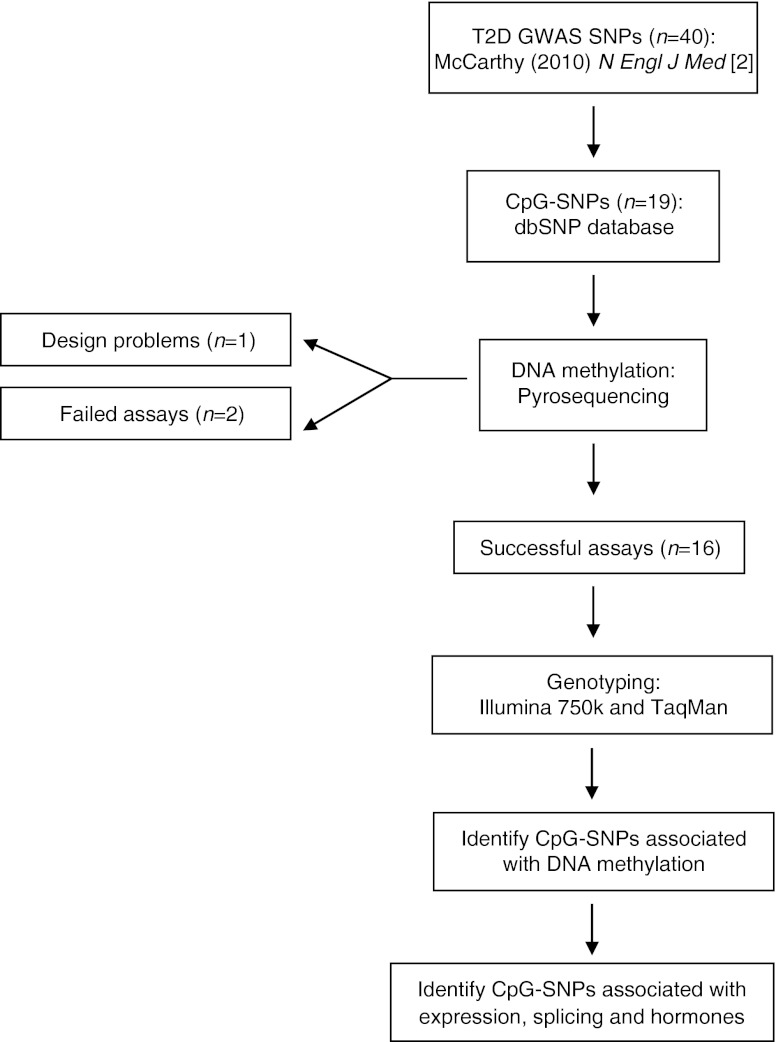
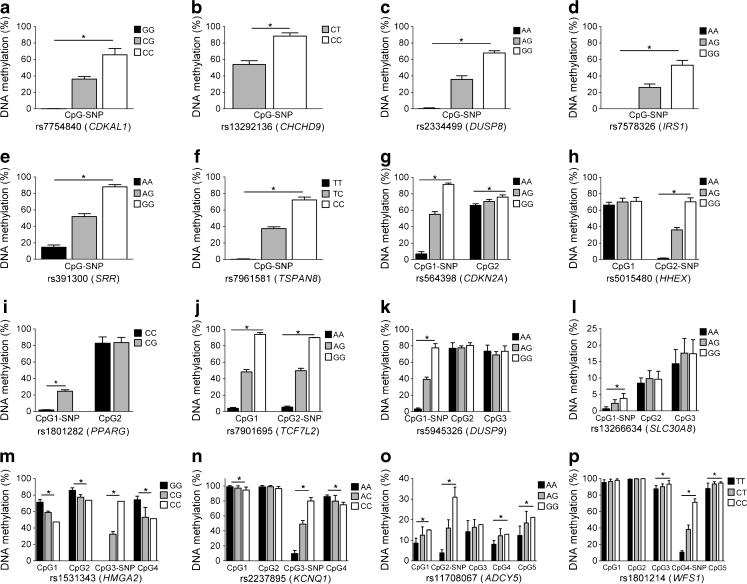
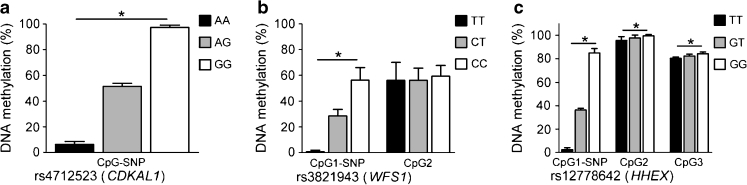
AIMS/HYPOTHESIS: To date, the molecular function of most of the reported type 2 diabetes-associated loci remains unknown. The introduction or removal of cytosine-phosphate-guanine (CpG) dinucleotides, which are possible sites of DNA methylation, has been suggested as a potential mechanism through which single-nucleotide polymorphisms (SNPs) can affect gene function via epigenetics. The aim of this study was to examine if any of 40 SNPs previously associated with type 2 diabetes introduce or remove a CpG site and if these CpG-SNPs are associated with differential DNA methylation in pancreatic islets of 84 human donors. METHODS: DNA methylation was analysed using pyrosequencing. RESULTS: We found that 19 of 40 (48%) type 2 diabetes-associated SNPs introduce or remove a CpG site. Successful DNA methylation data were generated for 16 of these 19 CpG-SNP loci, representing the candidate genes TCF7L2, KCNQ1, PPARG, HHEX, CDKN2A, SLC30A8, DUSP9, CDKAL1, ADCY5, SRR, WFS1, IRS1, DUSP8, HMGA2, TSPAN8 and CHCHD9. All analysed CpG-SNPs were associated with differential DNA methylation of the CpG-SNP site in human islets. Moreover, six CpG-SNPs, representing TCF7L2, KCNQ1, CDKN2A, ADCY5, WFS1 and HMGA2, were also associated with DNA methylation of surrounding CpG sites. Some of the type 2 diabetes CpG-SNP sites that exhibit differential DNA methylation were further associated with gene expression, alternative splicing events determined by splice index, and hormone secretion in the human islets. The 19 type 2 diabetes-associated CpG-SNPs are in strong linkage disequilibrium (r² > 0.8) with a total of 295 SNPs, including 91 CpG-SNPs. CONCLUSIONS/INTERPRETATION: Our results suggest that the introduction or removal of a CpG site may be a molecular mechanism through which some of the type 2 diabetes SNPs affect gene function via differential DNA methylation and consequently contributes to the phenotype of the disease.
Overview
The claims and statistics of this paper haven’t been checked yet.
Free: it reads the open-access text and checks the first 5 claims that cite a source we can check. Create a free account to check every claim.
Integrity signals
Registry
Cites
Statistics
Figures
Verification
Claims the paper makes
The claims and statistics of this paper haven’t been checked yet.
Free: it reads the open-access text and checks the first 5 claims that cite a source we can check. Create a free account to check every claim.
Claims other papers make about this one
Each is checked against this paper’s own text: does it say what the citing paper says it does?
The cited source says what the claim attributes to it.
In the citing paper
“These CpG-SNPs are associated with differential DNA methylation, gene expression, alternative splicing events, and hormone secretion in human pancreatic islets, suggesting strong genetic-epigenetic interactions ( 26 ).”
From β-Cell Failure in Type 2 Diabetes: Postulated Mechanisms and Prospects for Prevention and Treatment (2014) · cites this paper as [26]
Self-check
Percentages, sums and reported differences re-computed from the paper’s own numbers.
The self-check needs the paper’s full text.
Citations
Cites
Adjusting batch effects in microarray expression data using empirical Bayes methods
Johnson, W. E., Li, C., & Rabinovic, A. (2007) · Biostatistics · doi:10.1093/biostatistics/kxj037 · Cited by 8,658 · cited 2×
“The array data were summarised and normalised using the robust multi-array analysis method and the software ‘ Expression Console ’ (Affymetrix), and were corrected for batch effects within the array data using COMBAT [15].”
Human DNA methylomes at base resolution show widespread epigenomic differences
Lister, R., Pelizzola, M., Dowen, R. H., Hawkins, R. D., Hon, G., Tonti-Filippini, J., Nery, J. R., Lee, L., Ye, Z., Ngo, Q.-M., et al. (2009) · Nature · doi:10.1038/nature08514 · Cited by 4,673 · cited 1×
“In differentiated mammalian cells, DNA methylation mainly takes place at a cytosine in a cytosine– phosphate–guanine (CpG) dinucleotide [10] and increased DNA methylation has been associated with transcriptional silencing [11].”
Frayling, T. M., Timpson, N. J., Weedon, M. N., Zeggini, E., Freathy, R. M., Lindgren, C. M., Perry, J. R. B., Elliott, K. S., Lango, H., Rayner, N. W., et al. (2007) · Science · doi:10.1126/science.1141634 · Cited by 4,531
CpG islands and the regulation of transcription
Deaton, A. M., & Bird, A. (2011) · Genes & Development · doi:10.1101/gad.2037511 · Cited by 3,187
Bird, A. (2007) · Nature · doi:10.1038/nature05913 · Cited by 3,011 · cited 2×
“In differentiated mammalian cells, DNA methylation mainly takes place at a cytosine in a cytosine – phosphate – guanine (CpG) dinucleotide [10] and increased DNA methylation has been associated with transcriptional silencing [11].”
A genome-wide association study identifies novel risk loci for type 2 diabetes
Sladek, R., Rocheleau, G., Rung, J., Dina, C., Shen, L., Serre, D., Boutin, P., Vincent, D., Belisle, A., Hadjadj, S., et al. (2007) · Nature · doi:10.1038/nature05616 · Cited by 2,993 · cited 1×
“CpG-SNPs where risk alleles introduce a CpG site (n=11) rs13292136 CHCHD9 C 9 81952128 Intergenic Voight et al (2010) [20] rs7901695 TCF7L2 G 10 114754088 Intron Zeggini et al (2007) [21] rs7754840 CDKAL1 C 6 20661250 Intron Scott et al (2007) [24] rs391300 SRR G 17 2216258 Intron Tsai et al (2010) [25] rs5015480 HHEX…”
Genome-wide association analysis identifies loci for type 2 diabetes and triglyceride levels
Saxena, R., Voight, B. F., Lyssenko, V., Burtt, N. P., de Bakker, P. I. W., Chen, H., Roix, J. J., Kathiresan, S., Hirschhorn, J. N., Daly, M. J., et al. (2007) · Science · doi:10.1126/science.1142358 · Cited by 2,843 · cited 1×
“developing type 2 diabetes [21, 24, 43–45].”
Self-citationA genome-wide association study of type 2 diabetes in Finns detects multiple susceptibility variants
Scott, L. J., Mohlke, K. L., Bonnycastle, L. L., Willer, C. J., Li, Y., Duren, W. L., Erdos, M. R., Stringham, H. M., Chines, P. S., Jackson, A. U., et al. (2007) · Science · doi:10.1126/science.1142382 · Cited by 2,753
Variant of transcription factor 7-like 2 (TCF7L2) gene confers risk of type 2 diabetes
Grant, S. F. A., Thorleifsson, G., Reynisdottir, I., Benediktsson, R., Manolescu, A., Sainz, J., Helgason, A., Stefansson, H., Emilsson, V., Helgadottir, A., et al. (2006) · Nature Genetics · doi:10.1038/ng1732 · Cited by 2,287 · cited 1×
“SNPs within TCF7L2 confer the highest genetic risk of developing type 2 diabetes [21, 24, 43 – 45].”
Replication of Genome-Wide Association Signals in UK Samples Reveals Risk Loci for Type 2 Diabetes
Zeggini, E., Weedon, M. N., Lindgren, C. M., Frayling, T. M., Elliott, K. S., Lango, H., Timpson, N. J., Perry, J. R. B., Rayner, N. W., Freathy, R. M., et al. (2007) · Science · doi:10.1126/science.1142364 · Cited by 2,194
Cited by
Epigenetics in Human Obesity and Type 2 Diabetes
Ling, C., & Rönn, T. (2019) · Cell Metabolism · doi:10.1016/j.cmet.2019.03.009 · Cited by 941
Self-citationRönn, T., Volkov, P., Davegårdh, C., Dayeh, T., Hall, E., Olsson, A. H., Nilsson, E., Tornberg, Å., Dekker Nitert, M., Eriksson, K.-F., et al. (2013) · PLoS Genetics · doi:10.1371/journal.pgen.1003572 · Cited by 618
“supported by multiple studies showing a positive correlation between gene body methylation and active transcription [40], and that DNA methylation may regulate exon splicing [41,42].”
Self-citationLawlor, N., George, J., Bolisetty, M., Kursawe, R., Sun, L., Sivakamasundari, V., Kycia, I., Robson, P., & Stitzel, M. L. (2017) · Genome Research · doi:10.1101/gr.212720.116 · Cited by 562
“We also investigated cell type expression patterns of 536 islet expression quantitative trait loci (eQTL) target genes (Lyssenko et al. 2009; Dupuis et al. 2010; Dayeh et al. 2013; Fadista et al. 2014; Kulzer et al. 2014; van de Bunt et al. 2015).”
Dayeh, T., Volkov, P., Salö, S., Hall, E., Nilsson, E., Olsson, A. H., Kirkpatrick, C. L., Wollheim, C. B., Eliasson, L., Rönn, T., et al. (2014) · PLoS Genetics · doi:10.1371/journal.pgen.1004160 · Cited by 523
“delete possible DNA methylations sites [27].”
InfluentialSelf-citationEpigenetic regulation in metabolic diseases: mechanisms and advances in clinical study
Wu, Y.-L., Lin, Z.-J., Li, C.-C., Lin, X., Shan, S.-K., Guo, B., Zheng, M.-H., Li, F., Yuan, L.-Q., & Li, Z.-H. (2023) · Signal Transduction and Targeted Therapy · doi:10.1038/s41392-023-01333-7 · Cited by 476
β-Cell Failure in Type 2 Diabetes: Postulated Mechanisms and Prospects for Prevention and Treatment
Halban, P. A., Polonsky, K. S., Bowden, D. W., Hawkins, M. A., Ling, C., Mather, K. J., Powers, A. C., Rhodes, C. J., Sussel, L., & Weir, G. C. (2014) · Diabetes Care · doi:10.2337/dc14-0396 · Cited by 460
“hormone secretion in human pancreatic islets, suggesting strong genetic-epigenetic interactions (26).”
BackgroundSelf-citationExercise Attenuates the Major Hallmarks of Aging
Garatachea, N., Pareja-Galeano, H., Sanchis-Gomar, F., Santos-Lozano, A., Fiuza-Luces, C., Morán, M., Emanuele, E., Joyner, M. J., & Lucia, A. (2015) · Rejuvenation Research · doi:10.1089/rej.2014.1623 · Cited by 413
Nilsson, E., Jansson, P. A., Perfilyev, A., Volkov, P., Pedersen, M., Svensson, M. K., Poulsen, P., Ribel-Madsen, R., Pedersen, N. L., Almgren, P., et al. (2014) · Diabetes · doi:10.2337/db13-1459 · Cited by 391
Self-citationLehne, B., Drong, A. W., Loh, M., Zhang, W., Scott, W. R., Tan, S.-T., Afzal, U., Scott, J., Jarvelin, M.-R., Elliott, P., et al. (2015) · Genome biology · doi:10.1186/s13059-015-0600-x · Cited by 380
van Dijk, S. J., Molloy, P. L., Varinli, H., Morrison, J. L., Muhlhausler, B. S., EpiSCOPE, M. O., Buckley, M., Clark, S. J., McMillen, I. C., Noakes, M., et al. (2015) · International Journal of Obesity · doi:10.1038/ijo.2014.34 · Cited by 359
Tak, Y. G., & Farnham, P. J. (2015) · Epigenetics & Chromatin · doi:10.1186/s13072-015-0050-4 · Cited by 356
Lehne, B., Drong, A. W., Loh, M., Zhang, W., Scott, W. R., Tan, S.-T., Afzal, U., Schulz, R., Scott, J., Jarvelin, M.-R., et al. (2016) · Genome Biology · doi:10.1186/s13059-016-0934-z · Cited by 290
Recent developments on the role of epigenetics in obesity and metabolic disease
van Dijk, S. J., Tellam, R. L., Morrison, J. L., Muhlhausler, B. S., & Molloy, P. L. (2015) · Clinical Epigenetics · doi:10.1186/s13148-015-0101-5 · Cited by 233
β-Cell Failure in Type 2 Diabetes: Postulated Mechanisms and Prospects for Prevention and Treatment
Halban, P. A., Polonsky, K. S., Bowden, D. W., Hawkins, M. A., Ling, C., Mather, K. J., Powers, A. C., Rhodes, C. J., Sussel, L., & Weir, G. C. (2014) · The Journal of Clinical Endocrinology & Metabolism · doi:10.1210/jc.2014-1425 · Cited by 222
Self-citationANRIL: A lncRNA at the CDKN2A/B Locus With Roles in Cancer and Metabolic Disease
Kong, Y., Hsieh, C.-H., & Alonso, L. C. (2018) · Frontiers in Endocrinology · doi:10.3389/fendo.2018.00405 · Cited by 207
DNA methylation in the pathogenesis of type 2 diabetes in humans
Davegårdh, C., García-Calzón, S., Bacos, K., & Ling, C. (2018) · Molecular Metabolism · doi:10.1016/j.molmet.2018.01.022 · Cited by 197
Self-citationDayeh, T., Tuomi, T., Almgren, P., Perfilyev, A., Jansson, P.-A., de Mello, V. D., Pihlajamäki, J., Vaag, A., Groop, L., Nilsson, E., et al. (2016) · Epigenetics · doi:10.1080/15592294.2016.1178418 · Cited by 194
Self-citationvel Szic, K. S., Declerck, K., Vidaković, M., & Vanden Berghe, W. (2015) · Clinical Epigenetics · doi:10.1186/s13148-015-0068-2 · Cited by 192
Olsson, A. H., Volkov, P., Bacos, K., Dayeh, T., Hall, E., Nilsson, E. A., Ladenvall, C., Rönn, T., & Ling, C. (2014) · PLoS Genetics · doi:10.1371/journal.pgen.1004735 · Cited by 174
“These type 2 diabetes associated CpG-SNPs were significantly associated with altered DNA methylation, gene expression and islet hormone secretion in pancreatic islets from non-diabetic human donors [65].”
InfluentialSelf-citationVolkov, P., Bacos, K., Ofori, J. K., Esguerra, J. L. S., Eliasson, L., Rönn, T., & Ling, C. (2017) · Diabetes · doi:10.2337/db16-0996 · Cited by 163
Self-citationBell, C. G., Gao, F., Yuan, W., Roos, L., Acton, R. J., Xia, Y., Bell, J., Ward, K., Mangino, M., Hysi, P. G., et al. (2018) · Nature Communications · doi:10.1038/s41467-017-01586-1 · Cited by 158
DNA methylation and its role in the pathogenesis of diabetes
Bansal, A., & Pinney, S. E. (2017) · Pediatric Diabetes · doi:10.1111/pedi.12521 · Cited by 176
DNA Modifications: Function and Applications in Normal and Disease States
Liyanage, V., Jarmasz, J., Murugeshan, N., Del Bigio, M., Rastegar, M., & Davie, J. (2014) · Biology · doi:10.3390/biology3040670 · Cited by 150
Agardh, E., Lundstig, A., Perfilyev, A., Volkov, P., Freiburghaus, T., Lindholm, E., Rönn, T., Agardh, C.-D., & Ling, C. (2015) · BMC Medicine · doi:10.1186/s12916-015-0421-5 · Cited by 143
“It is possible that genetic variants interact with epigenetic variation to increase the risk for disease [39, 40].”
Self-citationHall, E., Volkov, P., Dayeh, T., Bacos, K., Rönn, T., Nitert, M. D., & Ling, C. (2014) · BMC Medicine · doi:10.1186/1741-7015-12-103 · Cited by 141
“Moreover, we recently showed that approximately 50% of SNPs associated with T2D are CpG-SNPs, which affect the degree of DNA methylation in the SNP site as well as gene expression and alternative splicing events in human pancreatic islets [7].”
Self-citationKis, A., Bence, M., Lakatos, G., Pergel, E., Turcsán, B., Pluijmakers, J., Vas, J., Elek, Z., Brúder, I., Földi, L., et al. (2014) · PLoS ONE · doi:10.1371/journal.pone.0083993 · Cited by 138
Epigenetic and Transcriptional Alterations in Human Adipose Tissue of Polycystic Ovary Syndrome
Kokosar, M., Benrick, A., Perfilyev, A., Fornes, R., Nilsson, E., Maliqueo, M., Behre, C. J., Sazonova, A., Ohlsson, C., Ling, C., et al. (2016) · Scientific Reports · doi:10.1038/srep22883 · Cited by 137
Self-citationSwedish Schizophrenia Consortium, McClay, J. L., Shabalin, A. A., Dozmorov, M. G., Adkins, D. E., Kumar, G., Nerella, S., Clark, S. L., Bergen, S. E., Hultman, C. M., et al. (2015) · Genome Biology · doi:10.1186/s13059-015-0842-7 · Cited by 134
Dnmt3a is an epigenetic mediator of adipose insulin resistance
You, D., Nilsson, E., Tenen, D. E., Lyubetskaya, A., Lo, J. C., Jiang, R., Deng, J., Dawes, B. A., Vaag, A. A., Ling, C., et al. (2017) · eLife · doi:10.7554/elife.30766 · Cited by 134
“Importantly, even genetic variants may cause disease in a DNA methylation-dependent manner, as has recently been shown for T2D and obesity (Dayeh et al., 2013; Elliott et al., 2017; Nilsson et al., 2014; Olsson et al., 2014; Volkov et al., 2016).”
BackgroundSelf-citationThe role of DNA methylation in the pathogenesis of type 2 diabetes mellitus
Ahmed, S. A. H., Ansari, S. A., Mensah‐Brown, E. P. K., & Emerald, B. S. (2020) · Clinical Epigenetics · doi:10.1186/s13148-020-00896-4 · Cited by 146
Epigenetics of type 2 diabetes mellitus and weight change — a tool for precision medicine?
Ling, C., Bacos, K., & Rönn, T. (2022) · Nature Reviews Endocrinology · doi:10.1038/s41574-022-00671-w · Cited by 161
Self-citationVolkov, P., Olsson, A. H., Gillberg, L., Jørgensen, S. W., Brøns, C., Eriksson, K.-F., Groop, L., Jansson, P.-A., Nilsson, E., Rönn, T., et al. (2016) · PLOS ONE · doi:10.1371/journal.pone.0157776 · Cited by 123
Self-citationEpigenetic adaptation to regular exercise in humans
Ling, C., & Rönn, T. (2014) · Drug Discovery Today · doi:10.1016/j.drudis.2014.03.006 · Cited by 143
Self-citationDNA methylation of the glucagon-like peptide 1 receptor (GLP1R) in human pancreatic islets
Hall, E., Dayeh, T., Kirkpatrick, C. L., Wollheim, C. B., Nitert, M. D., & Ling, C. (2013) · BMC Medical Genetics · doi:10.1186/1471-2350-14-76 · Cited by 127
“Indeed, our group has previously demonstrated that DNA methylation correlates negatively with type 2 diabetes candidate gene expression in human pancreatic islets and skeletal muscle [7-12].”
Self-citationLiu, R., & Molkentin, J. D. (2016) · Journal of Molecular and Cellular Cardiology · doi:10.1016/j.yjmcc.2016.08.018 · Cited by 115
Nakatochi, M., Ichihara, S., Yamamoto, K., Naruse, K., Yokota, S., Asano, H., Matsubara, T., & Yokota, M. (2017) · Clinical Epigenetics · doi:10.1186/s13148-017-0353-3 · Cited by 120
“Probes containing SNPs have been found to influence the assessment of DNAm status with the Infinium HumanMethylation450 array [31], and an effect of CpG SNPs on DNAm has also been reported [32].”
BackgroundEpigenetic regulation of insulin action and secretion – role in the pathogenesis of type 2 diabetes
Ling, C. (2020) · Journal of Internal Medicine · doi:10.1111/joim.13049 · Cited by 122
Self-citationDNA Methylation as a Diagnostic and Therapeutic Target in the Battle Against Type 2 Diabetes
Rönn, T., & Ling, C. (2015) · Epigenomics · doi:10.2217/epi.15.7 · Cited by 116
Self-citationEpigenetics and depressive disorders: a review of current progress and future directions
Januar, V., Saffery, R., & Ryan, J. (2015) · International Journal of Epidemiology · doi:10.1093/ije/dyu273 · Cited by 99
“The most obvious mechanism by which the genome can exert an effect on the epigenome is the introduction or elimination of CpG sites due to a single nucleotide polymorphism (SNP), which has been documented in type 2 diabetes.(119) However, SNPs may also influence DNA methylation indirectly, at nearby (cis effects) or e…”
BackgroundGenetic Study of Complex Diseases in the Post-GWAS Era
Huang, Q. (2015) · Journal of genetics and genomics/Journal of Genetics and Genomics · doi:10.1016/j.jgg.2015.02.001 · Cited by 110
Blood-Based DNA Methylation Biomarkers for Type 2 Diabetes: Potential for Clinical Applications
Willmer, T., Johnson, R., Louw, J., & Pheiffer, C. (2018) · Frontiers in Endocrinology · doi:10.3389/fendo.2018.00744 · Cited by 109
Islet biology, the CDKN2A/B locus and type 2 diabetes risk
Kong, Y., Sharma, R. B., Nwosu, B. U., & Alonso, L. C. (2016) · Diabetologia · doi:10.1007/s00125-016-3967-7 · Cited by 105
“decreasing insulin content in human islets, although without impacting local gene expression [199].”
Dominant Form of Congenital Hyperinsulinism Maps to HK1 Region on 10q
Pinney, S. E., Ganapathy, K., Bradfield, J., Stokes, D., Sasson, A., Mackiewicz, K., Boodhansingh, K., Hughes, N., Becker, S., Givler, S., et al. (2013) · Hormone Research in Paediatrics · doi:10.1159/000351943 · Cited by 82
Bysani, M., Agren, R., Davegårdh, C., Volkov, P., Rönn, T., Unneberg, P., Bacos, K., & Ling, C. (2019) · Scientific Reports · doi:10.1038/s41598-019-44076-8 · Cited by 80
Self-citationDNA methylation in obesity and type 2 diabetes
de Mello, V. D., Pulkkinen, L., Lalli, M., Kolehmainen, M., Pihlajamäki, J., & Uusitupa, M. I. J. (2014) · Annals of Medicine · doi:10.3109/07853890.2013.857259 · Cited by 89
Davegårdh, C., Broholm, C., Perfilyev, A., Henriksen, T. I., García-Calzón, S., Peijs, L., Hansen, N. S., Volkov, P., Kjøbsted, R., Wojtaszewski, J. F. P., et al. (2017) · BMC Medicine · doi:10.1186/s12916-017-0792-x · Cited by 73
Self-citationBysani, M., Perfilyev, A., de Mello, V. D., Rönn, T., Nilsson, E., Pihlajamäki, J., & Ling, C. (2016) · Epigenomics · doi:10.2217/epi-2016-0087 · Cited by 75
Self-citationNilsson, E., & Ling, C. (2017) · Clinical Epigenetics · doi:10.1186/s13148-017-0399-2 · Cited by 73
Self-citationUnderstanding Dietary Intervention-Mediated Epigenetic Modifications in Metabolic Diseases
Asif, S., Morrow, N. M., Mulvihill, E. E., & Kim, K.-H. (2020) · Frontiers in Genetics · doi:10.3389/fgene.2020.590369 · Cited by 78
BDNF rs6265 methylation and genotype interact on risk for schizophrenia
Ursini, G., Cavalleri, T., Fazio, L., Angrisano, T., Iacovelli, L., Porcelli, A., Maddalena, G., Punzi, G., Mancini, M., Gelao, B., et al. (2016) · Epigenetics · doi:10.1080/15592294.2015.1117736 · Cited by 62
Allele-specific DNA methylation reinforces PEAR1 enhancer activity
Izzi, B., Pistoni, M., Cludts, K., Akkor, P., Lambrechts, D., Verfaillie, C. M., Verhamme, P. B., Freson, K., & Hoylaerts, M. (2016) · Blood · doi:10.1182/blood-2015-11-682153 · Cited by 56
Seman, N. A., Mohamud, W. N. W., Östenson, C., Brismar, K., & Gu, H. F. (2015) · Clinical Epigenetics · doi:10.1186/s13148-015-0049-5 · Cited by 55
HMGA2 expression in white adipose tissue linking cellular senescence with diabetes
Markowski, D. N., Thies, H. W., Gottlieb, A., Wenk, H., Wischnewsky, M. B., & Bullerdiek, J. (2013) · Genes & Nutrition · doi:10.1007/s12263-013-0354-6 · Cited by 60
DNA methylation landscapes in the pathogenesis of type 2 diabetes mellitus
Zhou, Z. G., Sun, B., Li, X., & Zhu, C. (2018) · Nutrition & Metabolism · doi:10.1186/s12986-018-0283-x · Cited by 71
Epigenetic modifications in pancreas development, diabetes, and therapeutics
Kaimala, S., Kumar, C. A., Allouh, M. Z., Ansari, S. A., & Emerald, B. S. (2022) · Medicinal Research Reviews · doi:10.1002/med.21878 · Cited by 57
Sinnott-Armstrong, N., Sousa, I. S., Laber, S., Rendina-Ruedy, E., Dankel, S. N., Ferreira, T. C., Mellgren, G., Karasik, D., Rivas, M. A., Pritchard, J. K., et al. (2021) · Cell Metabolism · doi:10.1016/j.cmet.2021.01.001 · Cited by 58
A Whole Methylome CpG-SNP Association Study of Psychosis in Blood and Brain Tissue
van den Oord, E. J. C. G., Clark, S. L., Xie, L. Y., Shabalin, A. A., Dozmorov, M. G., Kumar, G., Swedish Schizophrenia Consortium, Vladimirov, V. I., Magnusson, P. K. E., & Aberg, K. A. (2016) · Schizophrenia Bulletin · doi:10.1093/schbul/sbv182 · Cited by 47
DUSP8 phosphatase: structure, functions, expression regulation and the role in human diseases
Ding, T., Zhou, Y., Long, R., Chen, C., Zhao, J., Cui, P., Guo, M., Liang, G., & Xu, L. (2019) · Cell & Bioscience · doi:10.1186/s13578-019-0329-4 · Cited by 52
“Then, DNA methylation data were successfully generated 16 genes including DUSP8 (SNP ID: rs2334499) from 19 CpG-SNP loci, which had 4 linkagedisequilibrium (LD) SNPs. Combining these 19 type II diabetes-related CpG-SNPs presented strong LD with a total of 295 SNPs including 91 CpG-SNPs [76].”
BackgroundInfluentialEpigenetics of obesity: beyond the genome sequence
Cordero, P., Li, J., & Oben, J. A. (2015) · Current Opinion in Clinical Nutrition and Metabolic Care · doi:10.1097/mco.0000000000000179 · Cited by 46
Zhou, B., Wei, F., Kanai, N., Fujimura, A., Kaitsuka, T., & Tomizawa, K. (2014) · Human Molecular Genetics · doi:10.1093/hmg/ddu184 · Cited by 51
Zhang, X., Myers, J. M. B., Yadagiri, V. K., Ulm, A., Chen, X., Weirauch, M. T., Hershey, G. K. K., & Ji, H. (2017) · PLoS ONE · doi:10.1371/journal.pone.0186150 · Cited by 47
Pheiffer, C., Erasmus, R. T., Kengne, A. P., & Matsha, T. E. (2015) · Clinical Biochemistry · doi:10.1016/j.clinbiochem.2015.11.021 · Cited by 48
Corella, D., & Ordovás, J. M. (2014) · BioEssays · doi:10.1002/bies.201300180 · Cited by 52
The Potential Use of DNA Methylation Biomarkers to Identify Risk and Progression of Type 2 Diabetes
Gillberg, L., & Ling, C. (2015) · Frontiers in Endocrinology · doi:10.3389/fendo.2015.00043 · Cited by 51
“Recent reports of DNA methylation changes induced by lifestyle-related factors such as exercise and overfeeding (14, 20, 80) together with the appearing impact of genetic variation on DNA methylation levels (18, 78, 79) in metabolically active tissues, suggest that specific DNA methylations might be phenotypic mediato…”
Self-citationEpigenetic regulation in diabetic vascular complications
Jin, J., Wang, X., Zhi, X., & Meng, D. (2019) · Journal of Molecular Endocrinology · doi:10.1530/jme-19-0170 · Cited by 46
Dayeh, T., & Ling, C. (2015) · Biochemistry and Cell Biology · doi:10.1139/bcb-2015-0057 · Cited by 45
“…HNF1 homeobox A (HNF1a) are often characterized by active chromatin marks (such as H3K4me3) around their promoters, lack of repressive marks (such as H3K27me3) and a low degree of DNA methylation (Yang, Dayeh et al. 2011, Yang, Dayeh et al. 2012, Hall, Dayeh et al. 2013, Pullen and Rutter 2013).”
BackgroundInfluentialSelf-citationGCKGene-Body Hypomethylation Is Associated with the Risk of Coronary Heart Disease
Xu, L., Zheng, D., Wang, L., Jiang, D., Liu, H., Xu, L., Liao, Q., Zhang, L., Liu, P., Shi, X., et al. (2014) · BioMed Research International · doi:10.1155/2014/151723 · Cited by 44
“By introducing or removing CpG sites, some single nucleotide polymorphisms (SNPs) may impact gene expression through the alteration of DNA methylation level and contribute to the risk of disease [8].”
Guo, K., Elzinga, S. E., Eid, S., Figueroa‐Romero, C., Hinder, L. M., Pacut, C. M., Feldman, E. L., & Hur, J. (2019) · Epigenetics · doi:10.1080/15592294.2019.1615352 · Cited by 42
Rönn, T., Perfilyev, A., Oskolkov, N., & Ling, C. (2024) · Scientific Reports · doi:10.1038/s41598-024-64846-3 · Cited by 44
Self-citationMaternal diabetes, programming of beta-cell disorders and intergenerational risk of type 2 diabetes
Chavey, A., Kioon, M. D. A., Bailbé, D., Movassat, J., & Portha, B. (2014) · Diabetes & Metabolism · doi:10.1016/j.diabet.2014.02.003 · Cited by 47
Regulatory Variants and Disease: The E-Cadherin −160C/A SNP as an Example
Li, G., Pan, T., Guo, D., & Li, L. (2014) · Molecular Biology International · doi:10.1155/2014/967565 · Cited by 41
Role of DNA Methylation in Type 2 Diabetes Etiology: Using Genotype as a Causal Anchor
Elliott, H. R., Shihab, H. A., Lockett, G. A., Holloway, J. W., McRae, A. F., Smith, G. D., Ring, S. M., Gaunt, T. R., & Relton, C. L. (2017) · Diabetes · doi:10.2337/db16-0874 · Cited by 40
Effect of Exercise on DNA Methylation and Metabolism in Human Adipose Tissue and Skeletal Muscle
Rönn, T., & Ling, C. (2013) · Epigenomics · doi:10.2217/epi.13.61 · Cited by 40
Self-citationEpigenetic control of β-cell function and failure
Bernstein, D., Golson, M. L., & Kaestner, K. H. (2016) · Diabetes Research and Clinical Practice · doi:10.1016/j.diabres.2016.11.009 · Cited by 40
Role of genetic and environmental factors in DNA methylation of lipid metabolism
He, Z., Zhang, R., Jiang, F., Hou, W., & Hu, C. (2017) · Genes & Diseases · doi:10.1016/j.gendis.2017.11.005 · Cited by 40
Implication of epigenetics in pancreas development and disease
Quilichini, E., & Haumaître, C. (2015) · Best Practice & Research Clinical Endocrinology & Metabolism · doi:10.1016/j.beem.2015.10.010 · Cited by 39
Role of DNA Methylation in Mediating Genetic Risk of Psychiatric Disorders
Starnawska, A., & Demontis, D. (2021) · Frontiers in Psychiatry · doi:10.3389/fpsyt.2021.596821 · Cited by 40
Cruz, J. D. O., Mamede, I., Tosatti, J. A. G., Gomes, K. B., & Luizon, M. R. (2020) · Placenta · doi:10.1016/j.placenta.2020.09.004 · Cited by 35
A pooling-based approach to mapping genetic variants associated with DNA methylation
Kaplow, I. M., MacIsaac, J. L., Mah, S. M., McEwen, L. M., Kobor, M. S., & Fraser, H. B. (2015) · Genome Research · doi:10.1101/gr.183749.114 · Cited by 33
“In addition, DNA methylation has been linked to a wide range of diseases, including cancer, Alzheimer's disease, bipolar disorder, and type 2 diabetes (Ambrosone et al. 2014; Baylin et al. 1998; Pease et al. 2013; The Cancer Genome Atlas Network, 2012; Baylin and Herman 2000; Irier and Jin 2012; De Jager et al. 2014;…”
BackgroundInfluentialDallio, M., Romeo, M., Gravina, A. G., Masarone, M., Larussa, T., Abenavoli, L., Persico, M., Loguercio, C., & Federico, A. (2021) · Nutrients · doi:10.3390/nu13051679 · Cited by 33
Pathophysiological Role of Genetic Factors Associated With Gestational Diabetes Mellitus
Ortega-Contreras, B., Armella, A., Appel-Rubio, J., Mennickent, D., Araya, J., González, M., de Castro, E. M. S., Obregón, A. M., Lamperti, L., Gutiérrez, J., et al. (2022) · Frontiers in Physiology · doi:10.3389/fphys.2022.769924 · Cited by 36
Votsi, C., Toufexis, C., Michailidou, K., Antoniades, A., Skordis, N., Karaolis, M., Pattichis, C. S., & Christodoulou, K. (2017) · Genes · doi:10.3390/genes8010016 · Cited by 32
Rohde, K., Klös, M., Hopp, L., Liu, X., Keller, M., Stümvoll, M., Dietrich, A., Schön, M. R., Gärtner, D., Lohmann, T., et al. (2017) · Scientific Reports · doi:10.1038/s41598-017-12393-5 · Cited by 34
The tRNA-associated dysregulation in diabetes mellitus
Zhou, Z. G., Sun, B., Huang, S., Jia, W., & Yu, D. (2019) · Metabolism · doi:10.1016/j.metabol.2019.01.017 · Cited by 33
New insights from monogenic diabetes for “common” type 2 diabetes
Tallapragada, D. S. P., Bhaskar, S., & Chandak, G. R. (2015) · Frontiers in Genetics · doi:10.3389/fgene.2015.00251 · Cited by 35
Association of six CpG-SNPs in the inflammation-related genes with coronary heart disease
Chen, X., Chen, X., Xu, Y., Yang, W. E., Wu, N., Ye, H., Yang, J. Y., Hong, Q., Xin, Y., Yang, M. Q., et al. (2016) · Human Genomics · doi:10.1186/s40246-016-0067-1 · Cited by 29
Living long and ageing well: is epigenomics the missing link between nature and nurture?
The ACUME2 Project, Rea, I. M., Dellett, M., & Mills, K. (2015) · Biogerontology · doi:10.1007/s10522-015-9589-5 · Cited by 32
“Dayeh et al. 2013 has further suggested that differential methylation may occur at different alleles of polymorphisms at TCF7L2 gene sites associated with consuming a Mediterranean diet.”
BackgroundHwang, J., Lee, H., Go, M. J., Jang, H. B., Choi, N.-H., Bae, J. B., Fernandez, J. C., Bell, J. T., Spector, T. D., Lee, H., et al. (2018) · Scientific Reports · doi:10.1038/s41598-018-33238-9 · Cited by 30
Mansego, M. L., Milagro, F. I., Zulet, M. Á., & Martínez, J. A. (2014) · Annals of Nutrition and Metabolism · doi:10.1159/000368425 · Cited by 29
Associations of THBS2 and THBS4 polymorphisms to gastric cancer in a Southeast Chinese population
Lin, X., Hu, D., Chen, G., Shi, Y., Zhang, H., Wang, X., Guo, X., Lu, L., Black, D. D., Zheng, X., et al. (2016) · Cancer Genetics · doi:10.1016/j.cancergen.2016.04.003 · Cited by 27
Non-coding genome functions in diabetes
Cebola, I., & Pasquali, L. (2015) · Journal of Molecular Endocrinology · doi:10.1530/jme-15-0197 · Cited by 27
“…this issue, mounting evidence now links DNA sequence variation and DNA methylation, and it is possible that methylation changes act together with particular genetic traits to confer higher disease susceptibility (Bell et al. 2010, Dayeh et al. 2013, Petersen et al. 2014, Orozco et al. 2015).”
BackgroundGenetic resistance to DEHP-induced transgenerational endocrine disruption
Stenz, L., Rahban, R., Prados, J., Nef, S., & Paoloni‐Giacobino, A. (2019) · PLoS ONE · doi:10.1371/journal.pone.0208371 · Cited by 25
Single-nucleotide polymorphisms as important risk factors of diabetes among Middle East population
Akhlaghipour, I., Bina, A. R., Mogharrabi, M. R., Fanoodi, A., Ebrahimian, A. R., Khojasteh‐Kaffash, S., Baghan, A. B., Khorashadizadeh, M. E., Taghehchian, N., & Moghbeli, M. (2022) · Human Genomics · doi:10.1186/s40246-022-00383-2 · Cited by 31
Xu, Z., He, J., Han, P., Dai, P., Lv, W., Liu, N., Liu, L., Liu, L., Pan, X., Xiang, X., et al. (2023) · Clinical and Translational Medicine · doi:10.1002/ctm2.1437 · Cited by 24
“32 Recently, eccD-NAs have been recognized in other diseases for their potential diagnostic value, suggesting a future avenue of exploration in T2DM.”
BackgroundEvaluation of CpG-SNPs in miRNA promoters and risk of breast cancer
Chen, J., Jiang, Y., Zhou, J., Liu, S., Qin, N., Du, J., Jin, G., Hu, Z., Ma, H., Shen, H., et al. (2018) · Gene · doi:10.1016/j.gene.2018.01.070 · Cited by 23
tRNA modifications and islet function
Wei, F., & Tomizawa, K. (2018) · Diabetes Obesity and Metabolism · doi:10.1111/dom.13405 · Cited by 26
Nassan, M. M., Veldić, M., Winham, S. J., Frye, M. A., Larrabee, B. R., Colby, C. L., Biernacka, J. M., Bellia, F., Pucci, M., Terenius, L. Y., et al. (2020) · Journal of Affective Disorders · doi:10.1016/j.jad.2020.02.002 · Cited by 27
Sala, P., Torrinhas, R. S., Fonseca, D. C., Ravacci, G. R., Waitzberg, D. L., & Giannella‐Neto, D. (2017) · Diabetology & Metabolic Syndrome · doi:10.1186/s13098-017-0214-4 · Cited by 23
High-Throughput Approaches onto Uncover (Epi)Genomic Architecture of Type 2 Diabetes
Dziewulska, A., Dobosz, A. M., & Dobrzyń, A. (2018) · Genes · doi:10.3390/genes9080374 · Cited by 26
Exosomes as biomarkers and therapy in type 2 diabetes mellitus and associated complications
Satyadev, N., Rivera, M. I., Nikolov, N. K., & Fakoya, A. O. J. (2023) · Frontiers in Physiology · doi:10.3389/fphys.2023.1241096 · Cited by 22
“For example, several in-vitro and invivo studies have shown DNA methylation to be key in downregulating genes that are needed for insulin production (Volkmar et al., 2012; Yang et al., 2012; Dayeh et al., 2013).”
Metadata
- Authors
- Dayeh, T. A., Olsson, A. H., Volkov, P., Almgren, P., Rönn, T., & Ling, C.
- Affiliations
- Lund University (SE)
- Corresponding author
- Ling, C.
- Venue
- Diabetologia
- Published
- 2013-03-06
- Volume
- 56
- Issue
- 5
- Pages
- 1036-1046
- ISSN
- 0012-186X (ISSN-L)
- 1432-0428
- PMC
- PMC3622750
- OpenAlex
- W2144460023
- Cited by
- 199
- References
- 50
- Citations by year
- 2026: 3 · 2025: 9 · 2024: 12 · 2023: 8 · 2022: 13 · 2021: 6 · 2020: 15 · 2019: 18 · 2018: 14 · 2017: 16 · 2016: 21 · 2015: 31 · 2014: 23 · 2013: 9
- FWCI
- 12.53
- Type
- journal article
- Language
- en
- Open access
- hybrid
- doi.org
- Licence
- Locations
- Diabetologia (publishedVersion, cc-by-nc)
- Europe PMC (PubMed Central) (publishedVersion)
- PubMed Central (publishedVersion, cc-by-nc)
- PubMed (publishedVersion)
- Lund University Publications (Lund University) (submittedVersion, other-oa)
- Funders
- Lunds Universitet
- Knut och Alice Wallenbergs Stiftelse
- Novo Nordisk
- Vetenskapsrådet
- Topics
- Life Sciences › Biochemistry, Genetics and Molecular Biology › Molecular Biology › Epigenetics and DNA Methylation
- Life Sciences › Biochemistry, Genetics and Molecular Biology › Genetics › Genetic Associations and Epidemiology
- Life Sciences › Biochemistry, Genetics and Molecular Biology › Genetics › Diabetes and associated disorders
- Keywords
- type 2 diabetes, DNA methylation, pancreatic islets, epigenetics, TCF7L2, KCNQ1, CDKN2A, HMGA2, WFS1, ADCY5, linkage disequilibrium, gene expression, alternative splicing, insulin secretion, islet hormone secretion
- MeSH terms
- Insulin Secretion, Aged, Diabetes Mellitus, Type 2, Female, Gene Expression Regulation, Humans, Insulin, Islets of Langerhans, Male, Middle Aged, RNA, Messenger, Scandinavian and Nordic Countries, Tissue Donors, Cohort Studies, Linkage Disequilibrium, Alternative Splicing, CpG Islands, DNA Methylation, Polymorphism, Single Nucleotide, Epigenesis, Genetic, Tissue Culture Techniques, Genetic Association Studies
About these checks
Registry, retraction, Cites and statistics results are computed, not judged, with one exception: a printed reference that no index lists is read once by a model before it counts as a citation error. Claims are extracted by a model and kept only when their quote appears verbatim in the text; each cited source is then checked, with a model’s help, for whether it says what the claim relies on. Those verdicts can be wrong — read the claim’s quote and the cited source before relying on one.
Statistics and arithmetic are recomputed, not judged.
Confidence bands are shown only for fields calibrated on our annotated test set. None is calibrated yet, so no band is shown.
What counts as a claim ›How we measure confidence ›How we check this ›
Are you an author, or do you see a problem with this page? Request a review
Data sources
Bibliographic data: Semantic Scholar, OpenAlex, Crossref.
Contains information from the Semantic Scholar Academic Graph Datasets, made available under the ODC Attribution License (ODC-BY 1.0).
Semantic Scholar’s data is described in: Kinney, R., et al. (2023). The Semantic Scholar Open Data Platform. arXiv:2301.10140.
