

The DOI matches its Crossref record; 12 of the 12 references it cites were found in a registry or an index.
Type 1 diabetes defined by severe insulin deficiency occurs after 30 years of age and is commonly treated as type 2 diabetes
Open accessAbstract
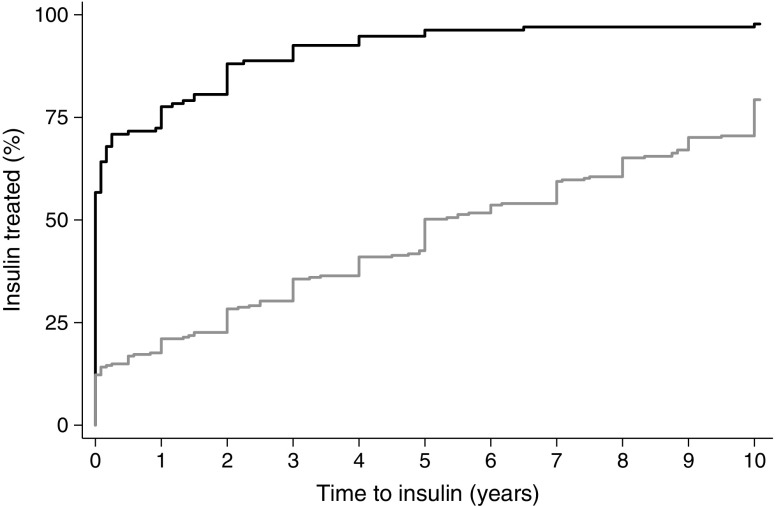
AIMS/HYPOTHESIS: Late-onset type 1 diabetes can be difficult to identify. Measurement of endogenous insulin secretion using C-peptide provides a gold standard classification of diabetes type in longstanding diabetes that closely relates to treatment requirements. We aimed to determine the prevalence and characteristics of type 1 diabetes defined by severe endogenous insulin deficiency after age 30 and assess whether these individuals are identified and managed as having type 1 diabetes in clinical practice. METHODS: We assessed the characteristics of type 1 diabetes defined by rapid insulin requirement (within 3 years of diagnosis) and severe endogenous insulin deficiency (non-fasting C-peptide <200 pmol/l) in 583 participants with insulin-treated diabetes, diagnosed after age 30, from the Diabetes Alliance for Research in England (DARE) population cohort. We compared characteristics with participants with retained endogenous insulin secretion (>600 pmol/l) and 220 participants with severe insulin deficiency who were diagnosed under age 30. RESULTS: Twenty-one per cent of participants with insulin-treated diabetes who were diagnosed after age 30 met the study criteria for type 1 diabetes. Of these participants, 38% did not receive insulin at diagnosis, of whom 47% self-reported type 2 diabetes. Rapid insulin requirement was highly predictive of severe endogenous insulin deficiency: 85% required insulin within 1 year of diagnosis, and 47% of all those initially treated without insulin who progressed to insulin treatment within 3 years of diagnosis had severe endogenous insulin deficiency. Participants with late-onset type 1 diabetes defined by development of severe insulin deficiency had similar clinical characteristics to those with young-onset type 1 diabetes. However, those with later onset type 1 diabetes had a modestly lower type 1 diabetes genetic risk score (0.268 vs 0.279; p < 0.001 [expected type 2 diabetes population median, 0.231]), a higher islet autoantibody prevalence (GAD-, islet antigen 2 [IA2]- or zinc transporter protein 8 [ZnT8]-positive) of 78% at 13 years vs 62% at 26 years of diabetes duration; (p = 0.02), and were less likely to identify as having type 1 diabetes (79% vs 100%; p < 0.001) vs those with young-onset disease. CONCLUSIONS/INTERPRETATION: Type 1 diabetes diagnosed over 30 years of age, defined by severe insulin deficiency, has similar clinical and biological characteristics to that occurring at younger ages, but is frequently not identified. Clinicians should be aware that patients progressing to insulin within 3 years of diagnosis have a high likelihood of type 1 diabetes, regardless of initial diagnosis.
Overview
The claims and statistics of this paper haven’t been checked yet.
Run the check — free, no account needed. It reads the open-access text and checks the sources it cites.
Integrity signals
Registry
Cites
Statistics
Figures
Verification
Claims the paper makes
The claims and statistics of this paper haven’t been checked yet.
Run the check — free, no account needed. It reads the open-access text and checks the sources it cites.
Claims other papers make about this one
Each is checked against this paper’s own text: does it say what the citing paper says it does?
The source backs part of the claim, not all of it — or backs it for a different population, condition or comparison.
In the citing paper
“Adults may retain suf fi cient b -cell function to prevent DKA for many years; such individuals may have remission or decreased insulin needs for months or years, eventually become dependent on insulin for survival, and are at risk for DKA (33 -35,60,61).”
From 2. Diagnosis and Classification of Diabetes: Standards of Care in Diabetes—2024 (2024) · cites this paper as [34]
Experimental — accuracy not yet measuredThe source backs part of the claim, not all of it — or backs it for a different population, condition or comparison.
In the citing paper
“The onset of type 1 diabetes may be more variable in adults; they may not present with the classic symptoms seen in children and may experience temporary remission from the need for anticipated full-dose insulin replacement (33 -35).”
From 2. Diagnosis and Classification of Diabetes: Standards of Care in Diabetes—2024 (2024) · cites this paper as [34]
Experimental — accuracy not yet measuredThe source backs part of the claim, not all of it — or backs it for a different population, condition or comparison.
In the citing paper
“Adults may retain sufficient b-cell function to prevent DKA for many years; such individuals may have remission characterized by decreased insulin needs for months or years, eventually become dependent on insulin for survival, and are at risk for DKA (33-35, 59,60).”
From 2. Diagnosis and classification of diabetes: standards of care in diabetes-2025 (2025) · cites this paper as [34]
Experimental — accuracy not yet measuredThe cited source says what the claim attributes to it.
In the citing paper
“Rapid progression to insulin treatment (<3 years) is strongly suggestive of type 1 diabetes at any age (6,8,15).”
The check wasn’t confident either way, so it gives no verdict — never disputed.
In the citing paper
“Diabetes is a leading cause of kidney failure, nontraumatic lower extremity amputation, and death (30.4 deaths per 100 000 population).3,18”
From Diagnosis and Treatment of Type 2 Diabetes in Adults (2025) · cites this paper as [18]
Experimental — accuracy not yet measured
The check wasn’t confident either way, so it gives no verdict — never disputed.
In the citing paper
“Type 2 diabetes affects up to 14% of the global population and is associated with preventable long-term complications such as cardiovascular disease, kidney failure, vision loss and increased mortality.”
From Diagnosis and Treatment of Type 2 Diabetes in Adults (2025) · cites this paper as [18]
Experimental — accuracy not yet measured
Self-check
Percentages, sums and reported differences re-computed from the paper’s own numbers.
The self-check needs the paper’s full text.
Citations
Cites
Classification and Diagnosis of Diabetes
Fajans, S. S. (1990) · Medical Entomology and Zoology · Cited by 2,356
2. Classification and Diagnosis of Diabetes
American Diabetes Association (2017) · Diabetes Care · doi:10.2337/dc17-s005 · Cited by 1,603
The clinical utility of C‐peptide measurement in the care of patients with diabetes
Jones, A. G., & Hattersley, A. T. (2013) · Diabetic Medicine · doi:10.1111/dme.12159 · Cited by 666
Thomas, N. J., Jones, S. E., Weedon, M. N., Shields, B. M., Oram, R. A., & Hattersley, A. T. (2018) · The Lancet Diabetes & Endocrinology · doi:10.1016/s2213-8587(17)30362-5 · Cited by 417
Oram, R. A., Patel, K., Hill, A., Shields, B. M., McDonald, T. J., Jones, A. G., Hattersley, A. T., & Weedon, M. N. (2015) · Diabetes Care · doi:10.2337/dc15-1111 · Cited by 360
Autoimmune Diabetes Not Requiring Insulin at Diagnosis (Latent Autoimmune Diabetes of the Adult)
Pozzilli, P., & Mario, U. D. (2001) · Diabetes Care · doi:10.2337/diacare.24.8.1460 · Cited by 289
Clinical Applications of Diabetes Antibody Testing
Bingley, P. J. (2010) · The Journal of Clinical Endocrinology & Metabolism · doi:10.1210/jc.2009-1365 · Cited by 278
Shields, B. M., Peters, J. L., Cooper, C., Lowe, J., Knight, B. A., Powell, R. J., Jones, A., Hyde, C. J., & Hattersley, A. T. (2015) · BMJ Open · doi:10.1136/bmjopen-2015-009088 · Cited by 126
Hope, S. V., Knight, B. A., Shields, B. M., Hattersley, A. T., McDonald, T. J., & Jones, A. G. (2016) · Diabetic Medicine · doi:10.1111/dme.13142 · Cited by 68
Grubb, A. L., McDonald, T. J., Rutters, F., Donnelly, L. A., Hattersley, A. T., Oram, R. A., Palmer, C. N. A., van der Heijden, A. A. W. A., Carr, F., Elders, P. J. M., et al. (2018) · Diabetes Care · doi:10.2337/dc18-0431 · Cited by 51
Research works printed but not linked: 1
- Oram RA, Patel K, Hill A et al (2015) A type 1 diabetes genetic risk score can aid discrimination between type 1 and type 2 diabetes in young adults. Diabetes Care 39:337–344 · DOI
Cited by
Sorted by citations
Items 101–183 of 183
Brusini, I., Lee, S., Hollingsworth, J., Sees, A. C., Hackenberg, M., Scherpbier, H., López‐Díez, R., & Leavitt, N. (2025) · JAMIA Open · doi:10.1093/jamiaopen/ooaf133 · Cited by 4
Alagu Sankareswaran, S., Kunte, P. S., Fraser, D. P., Shaik, M., Lavanuru, D., Weedon, M. N., Oram, R. A., Yajnik, C. S., & Chandak, G. R. (2025) · Diabetic Medicine · doi:10.1111/dme.70041 · Cited by 5
Manov, A. E., Chauhan, S., Dhillon, G. S., & Donepudi, A. (2023) · Cureus · doi:10.7759/cureus.42459 · Cited by 6
The wrong diabetes: how C peptide testing might help
Wise, J. (2019) · BMJ · doi:10.1136/bmj.l4352 · Cited by 4
Bengtsen, M. B., Knudsen, J. S., Bengtsen, M. B., Møller, N., & Thomsen, R. W. (2021) · Endocrinology Diabetes & Metabolism · doi:10.1002/edm2.227 · Cited by 4
Diabetes mellitus Typ 1 – Update
Kordonouri, O., & Kerner, W. (2021) · Der Internist · doi:10.1007/s00108-021-01009-w · Cited by 6
Liu, T., Alagu Sankareswaran, S., Paterson, G. G., Akhtar, S., Angel, A., Asgar, O., Ashraf, S., Bidi, S., Breen, G. D., Broster, J., et al. (2025) · Scientific Reports · doi:10.1038/s41598-024-80348-8 · Cited by 4
Alshamsi, F. E., Pathan, A., Yasin, J., Sharma, C., Alshemsi, H. A., Alblooshi, A., AlAwadhi, M. A., Alali, A. A., Alkuwaiti, M., Afandi, B. O., et al. (2025) · Frontiers in Endocrinology · doi:10.3389/fendo.2025.1687920 · Cited by 3
Patel, S., Ma, C. S., Fourlanos, S., & Greenfield, J. R. (2025) · Diabetologia · doi:10.1007/s00125-025-06580-7 · Cited by 3
Polygenic background contributes to GCK-MODY clinical presentation and glycaemic variability
Leech, J. M., Arni, A. M., Chundru, V. K., Sharp, L. N., Colclough, K., Hattersley, A. T., Weedon, M. N., & Patel, K. (2026) · Diabetologia · doi:10.1007/s00125-026-06712-7 · Cited by 3
de Wit, M., Klinker, L. Y., Moore, B., Boggiss, A. L., Allonca, L. F., Asaad, M., Bebbington, K. R., Cleal, B. R., Huisman, S. D., Winterdijk, P., et al. (2026) · Diabetic Medicine · doi:10.1111/dme.70308 · Cited by 3
Grace, S. L., Gillespie, K. M., Williams, C. L., Lampasona, V., Achenbach, P., Pearson, E. R., Williams, A. J. K., Long, A. E., McDonald, T. J., & Jones, A. G. (2024) · Diabetes · doi:10.2337/db23-0980 · Cited by 3
Zhao, H., Wang, Y., Liu, Y., Du, Z., & Tian, L. (2025) · Journal of Diabetes Investigation · doi:10.1111/jdi.70107 · Cited by 4
Heald, A. H., Martin, S., Fachim, H., Green, H., Young, K., Malipatil, N. S., Siddals, K. W., Cortés, G., Tyrrell, J., Wood, A. R., et al. (2021) · Diabetic Medicine · doi:10.1111/dme.14531 · Cited by 3
Predisposing Factors of Cerebral Edema in Pediatric Diabetic Ketoacidosis: A Systematic Review
Jafari, H., Dadashian, P., Ghaffari, J., & Far, D. Z. (2022) · Journal of Pediatrics Review · doi:10.32598/jpr.10.1.994.1 · Cited by 4
Cabrera‐Rode, E., Cubas‐Dueñas, I., Acosta, J. R., García-García, Y., Torres-López, Y., Noa, C. P., Izada, B. V., Ruíz-Reinoso, M., Valdés, R. E., Álvarez-Álvarez, A., et al. (2022) · Journal of Clinical Medicine · doi:10.3390/jcm11071789 · Cited by 3
Islet autoantibody positivity in an adult population with recently diagnosed diabetes in Uganda
Kibirige, D., Sekitoleko, I., Balungi, P., Kyosiimire–Lugemwa, J., Lumu, W., Jones, A. G., Hattersley, A. T., Smeeth, L. L., & Nyirenda, M. (2022) · PLoS ONE · doi:10.1371/journal.pone.0268783 · Cited by 3
Wang, W., Chen, Z., Wang, S., Chen, F., Deng, M., Pan, Q., & Guo, L. (2022) · Diabetes & Metabolic Syndrome Clinical Research & Reviews · doi:10.1016/j.dsx.2022.102556 · Cited by 4
Zhang, L., Tian, Q., Guo, K., Wu, J., Ye, J., Ding, Z., Zhou, Q., Huang, G., Li, X., Zhou, Z., et al. (2022) · Frontiers in Endocrinology · doi:10.3389/fendo.2022.948157 · Cited by 4
Toomata, Z. L. L., Leask, M., Krishnan, M., Cadzow, M. J., Dalbeth, N., Stamp, L. K., de Zoysa, J., Merriman, T. R., Wilcox, P. G., Dewes, O., et al. (2023) · Frontiers in Endocrinology · doi:10.3389/fendo.2023.1174699 · Cited by 3
Wang, X.-M., Zhong, S., Li, G., & Zhuge, F. (2023) · Diabetology & Metabolic Syndrome · doi:10.1186/s13098-023-01113-x · Cited by 3
Boisvenue, J., Elezzabi, Y. A., Young, K., Gibson, K., Hinz, H., McClure, R. D., Homulos, R., Spiers, J. A., Senior, P. A., & Yeung, R. O. (2025) · Health Expectations · doi:10.1111/hex.70172 · Cited by 2
Mojun, D., Yuan, D., Jing, H., Wenjing, Z., Li, X., Chuting, L., & Xiongzhao, Z. (2025) · Scientific Reports · doi:10.1038/s41598-025-99678-2 · Cited by 2
Xu, X., Wang, F., Liao, S., Liu, J., & Xiao, L. (2025) · Journal of Medical Internet Research · doi:10.2196/80476 · Cited by 2
Vandewalle, J., Desouter, A. K., der Auwera, B. J. R. V., Chapaza, K. B., Nobels, F. R. E., Abrams, P. J., Lebrethon, M.-C., Lapauw, B., Keymeulen, B., Gorus, F., et al. (2025) · Heliyon · doi:10.1016/j.heliyon.2025.e42156 · Cited by 3
Kwan, D. P., & Susanto, R. (2022) · Science Midwifery · doi:10.35335/midwifery.v10i4.677 · Cited by 2
Type 2 Diabetes Mellitus and Family History: A Case Control Study
Abbas, A. M., Cader, R., Desai, F. I., Hussaini, S. J., & Sreejith, A. (2024) · Universal Journal of Public Health · doi:10.13189/ujph.2024.120402 · Cited by 1
Double Diabetes: A Clinical Challenge
Healy, A. M., & Shubrook, J. H. (2024) · Clinical Diabetes · doi:10.2337/cd24-0025 · Cited by 1
Moazzam‐Jazi, M., Asgarian, S., Hadaegh, F., Momenan, A., Mahmoudieh, L., Bonab, L. N. H., Masjoudi, S., Zahedi, A. S., Lanjanian, H., Akbarzadeh, M., et al. (2025) · Diabetology & Metabolic Syndrome · doi:10.1186/s13098-025-01776-8 · Cited by 1
Simultaneous Pancreas and Kidney Transplantation in Patients With Type 2 Diabetes Mellitus
Owen, R. V., Reynard, J., Thompson, E., Kourounis, G., Snowden, C. P., Maillo-Nieto, A., Shaw, J., Wilson, C. H., & White, S. A. (2025) · Transplant International · doi:10.3389/ti.2025.14772 · Cited by 2
Bruns, F., Fender, A. C., Poppenborg, T., Dudley, S. C., & Dobrev, D. (2025) · Cardiovascular Research · doi:10.1093/cvr/cvaf252 · Cited by 2
Wyatt, R. C., Brigatti, C., Grace, S. L., Williams, C. L., Marzinotto, I., Gillard, B. T., Bazzigaluppi, E., Shoemark, D. K., Chandler, M. A. ‐., Achenbach, P., et al. (2026) · Diabetic Medicine · doi:10.1111/dme.70277 · Cited by 1
Templeman, E. L., Thomas, N., Martin, S., Wherrett, D. K., REDONDO, M. J., Sherr, J., Petrelli, A., Jacobsen, L. M., Salami, F., Lonier, J., et al. (2026) · Diabetes Care · doi:10.2337/dc26-0446 · Cited by 1
Brusini, I., Lee, S., Lai, A., Sees, A. C., Hackenberg, M., Liptak, G., Rao, A. D., Anastasopoulou, C., & Leavitt, N. (2026) · BMJ Open · doi:10.1136/bmjopen-2025-112819 · Cited by 1
Ngcobo, N. N., & Sibiya, N. H. (2026) · Pathophysiology · doi:10.3390/pathophysiology33030048 · Cited by 1
Metabolic disorders: Sex and gender evidence in dyslipidemia, diabetes, and obesity
Newman, C. B., Saunders, K. H., & Subramanian, S. (2021) · Elsevier eBooks · doi:10.1016/b978-0-12-816569-0.00009-7 · Cited by 1
Nursing interventions for people with type 1 diabetes and frequent hypoglycaemia
Kelly, B. (2021) · British Journal of Community Nursing · doi:10.12968/bjcn.2021.26.11.544 · Cited by 1
Using Glycated Albumin and Stimulated C-Peptide to Define Partial Remission in Type 1 Diabetes
Shi, M., Ji, X., Xie, Y., Zhong, T., Tang, R., Fan, L., & Li, X. (2022) · Frontiers in Endocrinology · doi:10.3389/fendo.2022.938059 · Cited by 1
A Practical Approach to the Diagnosis of Type 1 Diabetes
Kumaran, S., Lalvani, N., Jevalikar, G., Sarda, A., & Unnikrishnan, A. G. (2023) · Chronicle of Diabetes Research and Practice · doi:10.4103/cdrp.cdrp_19_22 · Cited by 1
Unsupervised Anomaly Detection to Characterize Heterogeneity in Type 2 Diabetes.
Argaw, P., Kushner, J. A., & Kohane, I. S. (2023) · PubMed Central · Cited by 1
Phenotyping Diabetes Mellitus on Aggregated Electronic Health Records from Disparate Health Systems
Tan, H. Z., Lim, R. W. S., Ang, P. S., Foo, B., Koon, Y. L., Neo, J. W., Ng, A., Tan, S. H., Teo, D. C. H., Tham, M. Y., et al. (2023) · Pharmacoepidemiology · doi:10.3390/pharma2030019 · Cited by 1
Update on technologies, medicines and treatments
O’Neill, S. (2020) · Diabetic Medicine · doi:10.1111/dme.14229 · Cited by 1
Update on technologies, medicines and treatments
O’Neill, S. (2019) · Diabetic Medicine · doi:10.1111/dme.14162 · Cited by 1
Alagu Sankareswaran, S., Kunte, P. S., Fraser, D. P., Shaik, M., Weedon, M. N., Oram, R. A., Yajnik, C. S., & Chandak, G. R. (2024) · medRxiv · doi:10.1101/2024.08.31.24312873 · Cited by 1
Den Kenntnisstand zum im Erwachsenenalter manifestierten Typ-1-Diabetes aktuell halten
Stirban, O. A. (2022) · Info Diabetologie · doi:10.1007/s15034-021-3800-3 · Cited by 1
Thomas, N. J. M., McGovern, A. P., Young, K., Sharp, S. A., Weedon, M. N., Hattersley, A. T., Dennis, J., & Jones, A. G. (2022) · SSRN Electronic Journal · doi:10.2139/ssrn.4125231
Adult-onset autoimmune diabetes
(2022) · Nature Reviews Disease Primers · doi:10.1038/s41572-022-00397-z
Accelerating data-driven discover in type 1 diabetes: an informatics-based approach
Tallon, E. M. (2022) · MOspace Institutional Repository (University of Missouri) · doi:10.32469/10355/94294
Fang, M., McCoy, R. G., O’Connor, P. J., & Selvin, E. (2023) · American Public Health Association eBooks · doi:10.2105/9780875533377ch12
Rusyaeva, N. V., Иванович, Г. И., Кононенко, И. В., Nikonova, T. V., & Shestakova, M. V. (2023) · Diabetes Mellitus · doi:10.14341/dm13070 · Cited by 1
Erstdiagnose eines Typ-1-Diabetes im hohen Alter
Müssig, K., & Harms, M. (2024) · Info Diabetologie · doi:10.1007/s15034-024-4939-5
Do Type 1 and Type 2 Diabetes Have the Same Vascular Complications?
Cho, Y. K. (2024) · Journal of Korean Diabetes · doi:10.4093/jkd.2024.25.2.62
Etiopatogenia y situación epidemiológica de la diabetes mellitus tipo 1
Cebada, A. B., Silva, J. B. Q., Escobar-Morreale, H. F., & Chávez, L. N. (2024) · Medicine - Programa de Formación Médica Continuada Acreditado · doi:10.1016/j.med.2024.10.001
Type 1 Diabetes Mellitus and Herbal Medicines
Aksoyalp, Z. Ş., & Erdoğan, B. R. (2024) · doi:10.2174/9789815305005124010007
Type 1 Diabetes Risk Variants Reduce Beta Cell Function
Ratajczak, W., Jones, A. G., Atkinson, S. D., & Kelly, C. (2025) · Genes · doi:10.3390/genes16020172
Lee, Y., Han, K., Kim, B., Park, S. H., Hur, K. Y., Kim, G., Kim, J. H., & Jin, S. (2025) · Endocrinology and Metabolism · doi:10.3803/enm.2024.2082
Diagnosis and Classification/Pathogenesis
(2022) · American Diabetes Association eBooks · doi:10.2337/9781580407700.ch01
Case 3: Does This Patient Have Type 1 or Type 2 Diabetes?
Unjom, Z., & Gilden, J. L. (2021) · American Diabetes Association eBooks · doi:10.2337/9781580407663.case3
Envisioning Tools to Help Classify Type 1 Diabetes and Type 2 Diabetes in New-Onset Adult Diabetes
Ayers, A. T., Ho, C., Billings, L. K., Misra, S., & Klonoff, D. C. (2025) · Journal of Diabetes Science and Technology · doi:10.1177/19322968251329055
Mendes, G. C., Nakato, A. M., Lançoni, S. S., Barros, F. S., & Nohama, P. (2025) · Research on Biomedical Engineering · doi:10.1007/s42600-025-00419-1
Factors Influence Diabetic Type I Complications, Retrospective Study In Zlitan Diabetic Center
Ermis, R., Farhat, M., Bakar, L. M., & Ahmed, A. F. (2023) · Academic Journal of Science and Technology · doi:10.64095/ajst.v2i1.55
Arai, K., Oishi, M., Yagi, N., Shirabe, S., & Maegawa, H. (2025) · Diabetology International · doi:10.1007/s13340-025-00844-8
Liu, H., Wang, Y., Wang, M., Zhang, B., Ma, C., Cui, L., Wang, Q., Cao, Z., Yang, Z., & Shi, C. (2025) · BMC Endocrine Disorders · doi:10.1186/s12902-025-02077-x
Wang, X., Zhong, S.-P., Li, G., & Zhuge, F.-Y. (2024) · Figshare · doi:10.6084/m9.figshare.26601274
Wang, X., Zhong, S.-P., Li, G., & 诸葛福媛 (2024) · Figshare · doi:10.6084/m9.figshare.26601271
Wang, X., Zhong, S.-P., Li, G., & Zhuge, F.-Y. (2024) · Figshare · doi:10.6084/m9.figshare.26601277
Kushnir, О. Y., Yaremii, І. М., Гарвасюк, О., Kushnir, O. O., & Yaremii, K. M. (2025) · Актуальні проблеми сучасної медицини Вісник Української медичної стоматологічної академії · doi:10.31718/2077-1096.25.200
Wang, C., Lan, Y., ZHAO, M., ZHU, J., Tan, H., Li, X., Ding, Y., Zheng, X., Liu, S., & GU, Z. (2026) · Diabetes Metabolic Syndrome and Obesity · doi:10.2147/dmso.s569281
Metabolic disorders: Sex and gender evidence in dyslipidemia, diabetes, and obesity
Newman, C. B., Saunders, K. H., Schmitz, S. H., & Subramanian, S. (2026) · Elsevier eBooks · doi:10.1016/b978-0-443-26712-3.00020-3
Alagu Sankareswaran, S., Lavanuru, D., Nalluri, B. T., Tiwari, S., Nagaraj, R., Khadri, N., Prashant, A., Kandula, S. G. N. S. V., Purandare, V. B., Muniswamy, V., et al. (2026) · SSRN Electronic Journal · doi:10.2139/ssrn.6301873
Real-world performance of open-source large language models in diabetes diagnosis
Yang, S., Liu, S., Ma, Y., Gai, B., Liu, J., Wang, L., Gao, F., & Zhou, Z. (2026) · Frontiers in Endocrinology · doi:10.3389/fendo.2026.1747468
Knupp, J., Hill, A., Thomas, N. J., McDonald, T. J., Young, K. G., Fraser, D. P., Hattersley, A. T., McKinley, T. J., Shields, B. M., & Jones, A. G. (2026) · medRxiv · doi:10.64898/2026.05.01.26352217
Euglycemic Diabetic Ketoacidosis Triggered by SGLT2 Inhibitor Use in Undiagnosed Type 1 Diabetes
Eyalsalman, M. M., & El-Kaissi, S. (2026) · Journal of Diabetes and Endocrine Practice · doi:10.1055/s-0046-1820086
Fridell, J. A., Dunn, T. B., Oram, R. A., Sadhu, A., Spaggiari, M., Dib, Y. E., & Odorico, J. S. (2026) · Transplantation · doi:10.1097/tp.0000000000005757
Lin, Y., Dai, J., Heianza, Y., Chien, K., & Qi, L. (2026) · Diabetes Obesity and Cardiometabolic CARE · doi:10.2337/doc26-0039
Jørgensen, I. L., Damm, P., Andersen, M. K., Reim, P. K., Madsen, L. R. F., Crusell, M. K. W., Kelstrup, L., Ringholm, L., Mathiesen, E. R., Lauenborg, J., et al. (2026) · Diabetologia · doi:10.1007/s00125-026-06824-0
Variability in Autoantibody Ordering Patterns Suggests Potential for Diabetes Misclassification
Abram, M. C., Matson, B. C., Pfaff, E. R., DeWalt, D. A., VITALE, R. J., & Klein, K. R. (2026) · Diabetes Obesity and Cardiometabolic CARE · doi:10.2337/doc26-0071
Holt, R. I. G., DeVries, J. H., Fischl, A. H., Hirsch, I. B., Kirkman, M. S., Klupa, T., Ludwig, B., Nørgaard, K., Pettus, J., Renard, É., et al. (2026) · Diabetologia · doi:10.1007/s00125-026-06833-z
Luksameejaroenchai, C., Tangjarusritaratorn, T., & Preechasuk, L. (2026) · Journal of Diabetes Investigation · doi:10.1111/jdi.70449
Shields, B. M., Young, K., Geen, M., Hill, A., Lee, C., Humphreys, R., Timblin, C., Colclough, K., Campbell, J., Hamilton, W., et al. (2026) · medRxiv · doi:10.64898/2026.10.20.26366000
Early-Onset Diabetes in Lahore and Kasur Districts of Punjab: A Hospital-Based Study
Khurram, M., Afzal, M. S., Tayyab, M., Raza, Q., Saqib, M. A. N., & Raza, S. Q. (2026) · Journal of Clinical Medicine · doi:10.3390/jcm15218390
Metadata
- Authors
- Thomas, N. J., Lynam, A. L., Hill, A. V., Weedon, M. N., Shields, B. M., Oram, R. A., McDonald, T. J., Hattersley, A. T., & Jones, A. G.
- Affiliations
- University of Exeter (GB)
- Corresponding author
- Jones, Angus G.
- ORCID
- Venue
- Diabetologia
- Published
- 2019-04-10
- Volume
- 62
- Issue
- 7
- Pages
- 1167-1172
- ISSN
- 0012-186X (ISSN-L)
- 1432-0428
- PMC
- PMC6559997
- OpenAlex
- W2931041490
- Cited by
- 183
- References
- 12
- Citations by year
- 2026: 22 · 2025: 39 · 2024: 21 · 2023: 24 · 2022: 31 · 2021: 23 · 2020: 15 · 2019: 7
- FWCI
- 11.35
- Type
- journal article
- Language
- en
- Open access
- hybrid
- doi.org
- Licence
- Locations
- Diabetologia (publishedVersion, cc-by)
- Europe PMC (PubMed Central) (publishedVersion, cc-by)
- PubMed Central (publishedVersion, cc-by)
- PubMed (publishedVersion)
- Open Research Exeter (University of Exeter) (acceptedVersion, cc-by)
- Figshare (submittedVersion)
- Royal Devon and Exeter Research Repository (Royal Devon and Exeter) (submittedVersion)
- Funders
- University of Exeter
- Topics
- Life Sciences › Biochemistry, Genetics and Molecular Biology › Genetics › Diabetes and associated disorders
- Health Sciences › Medicine › Endocrinology, Diabetes and Metabolism › Diabetes Management and Research
- Health Sciences › Medicine › Endocrinology, Diabetes and Metabolism › Pancreatic function and diabetes
- Keywords
- type 2 diabetes, C-peptide, islet autoantibodies, GAD65, IA-2, zinc transporter 8, insulin-treated diabetes
- MeSH terms
- Adult, Aged, Autoantibodies, C-Peptide, Diabetes Mellitus, Type 1, Diabetes Mellitus, Type 2, Humans, Insulin, Middle Aged
About these checks
Registry, retraction, Cites and statistics results are computed, not judged, with one exception: a printed reference that no index lists is read once by a model before it counts as a citation error. Claims are extracted by a model and kept only when their quote appears verbatim in the text; each cited source is then checked, with a model’s help, for whether it says what the claim relies on. Those verdicts can be wrong — read the claim’s quote and the cited source before relying on one.
Statistics and arithmetic are recomputed, not judged.
Confidence bands are shown only for fields calibrated on our annotated test set. None is calibrated yet, so no band is shown.
What counts as a claim ›How we measure confidence ›How we check this ›
Are you an author, or do you see a problem with this page? Request a review
