

Effect of flash glucose monitoring in adults with type 1 diabetes: a nationwide, longitudinal observational study of 14,372 flash users compared with 7691 glucose sensor naive controls
Open accessThe DOI matches its Crossref record; 30 of the 30 references it cites were found in a registry or an index.
Abstract
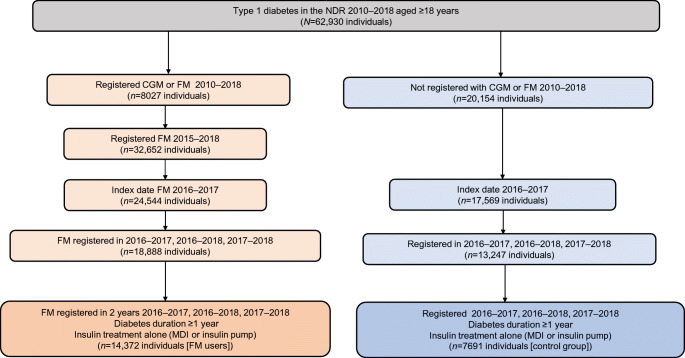
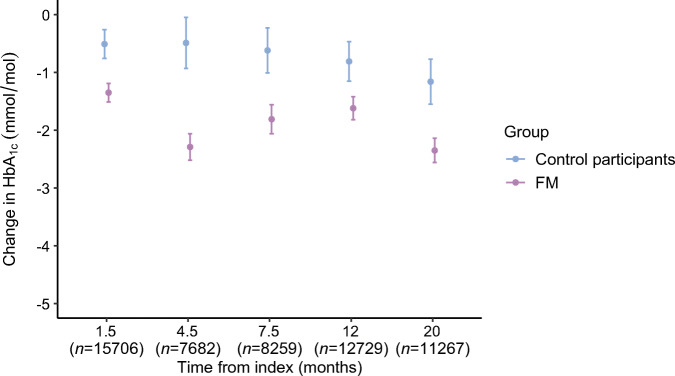
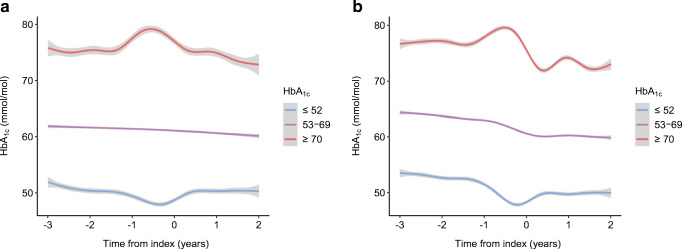
Aims/hypothesis: The aim of this work was to evaluate changes in glycaemic control (HbA 1c ) and rates of severe hypoglycaemia over a 2 year period after initiation of flash glucose monitoring (FM) in type 1 diabetes. Methods: Using data from the Swedish National Diabetes Registry, 14,372 adults with type 1 diabetes with a new registration of FM during 2016–2017 and with continued FM for two consecutive years thereafter, and 7691 control individuals using conventional self-monitoring of blood glucose (SMBG) during the same observation period, were included in a cohort study. Propensity sores and inverse probability of treatment weighting (IPTW) were used to balance FM users with SMBG users. Changes in HbA 1c and events of severe hypoglycaemia were compared. Results: After the start of FM, the difference in IPTW change in HbA 1c was slightly greater in FM users compared with the control group during the follow-up period, with an estimated mean absolute difference of −1.2 mmol/mol (−0.11%) (95% CI −1.64 [−0.15], −0.75 [−0.07]; p < 0.0001) after 15–24 months. The change in HbA 1c was greatest in those with baseline HbA 1c ≥70 mmol/mol (8.5%), with the estimated mean absolute difference being −2.5 mmol/mol (−0.23%) (95% CI −3.84 [−0.35], −1.18 [−0.11]; p = 0.0002) 15–24 months post index. The change was also significant in the subgroups with initial HbA 1c ≤52 mmol/mol (6.9%) and 53–69 mmol/mol (7.0–8.5%). Risk of severe hypoglycaemic episodes was reduced by 21% for FM users compared with control individuals using SMBG (OR 0.79 [95% CI 0.69, 0.91]; p = 0.0014)]. Conclusions/interpretation: In this large cohort, the use of FM was associated with a small and sustained improvement in HbA 1c , most evident in those with higher baseline HbA 1c levels. In addition, FM users experienced lower rates of severe hypoglycaemic events compared with control individuals using SMBG for self-management of glucose control. Graphical abstract:
Overview
The claims and statistics of this paper haven’t been checked yet.
Free: it reads the open-access text and checks the first 5 claims that cite a source we can check. Create a free account to check every claim.
Integrity signals
Registry
Cites
Statistics
Figures
Verification
Claims the paper makes
The claims and statistics of this paper haven’t been checked yet.
Free: it reads the open-access text and checks the first 5 claims that cite a source we can check. Create a free account to check every claim.
Claims other papers make about this one
Each is checked against this paper’s own text: does it say what the citing paper says it does?
The source backs part of the claim, not all of it — or backs it for a different population, condition or comparison.
In the citing paper
“Reductions in acute diabetes complications, such as diabetic ketoacidosis (DKA), episodes of severe hypoglycemia or diabetes-related coma, and hospitalizations for hypoglycemia and hyperglycemia, have been observed in adults with type 1 or type 2 diabetes (43,78,80)”
From 7. Diabetes Technology: Standards of Care in Diabetes—2025 (2025) · cites this paper as [78]
Experimental — accuracy not yet measuredThe cited source says what the claim attributes to it.
In the citing paper
“and hypoglycemia (41,43,75,78,79).”
From 7. Diabetes Technology: Standards of Care in Diabetes—2025 (2025) · cites this paper as [78]
Self-check
Percentages, sums and reported differences re-computed from the paper’s own numbers.
The self-check needs the paper’s full text.
Citations
Cites
The central role of the propensity score in observational studies for causal effects
ROSENBAUM, P. R., & RUBIN, D. B. (1983) · Biometrika · doi:10.1093/biomet/70.1.41 · Cited by 31,241
Austin, P. C., & Stuart, E. A. (2015) · Statistics in Medicine · doi:10.1002/sim.6607 · Cited by 4,495
Battelino, T., Danne, T., Bergenstal, R. M., Amiel, S. A., Beck, R., Biester, T., Bosi, E., Buckingham, B. A., Cefalu, W. T., Close, K. L., et al. (2019) · Diabetes Care · doi:10.2337/dci19-0028 · Cited by 4,237
Reducing Bias in Observational Studies Using Subclassification on the Propensity Score
Rosenbaum, P. R., & Rubin, D. B. (1984) · Journal of the American Statistical Association · doi:10.1080/01621459.1984.10478078 · Cited by 3,082 · cited 1×
“Themain analysis was adjusted for confounding using inverse probability of treatment weighting (IPTW) based on propensity scores [13, 14], defined as the probability of being exposed to FM given the observed confounders.”
MethodMcCaffrey, D. F., Ridgeway, G., & Morral, A. R. (2004) · Psychological Methods · doi:10.1037/1082-989x.9.4.403 · Cited by 1,317
Generalized additive models for medical research
Hastie, T., & Tibshirani, R. (1995) · Statistical Methods in Medical Research · doi:10.1177/096228029500400302 · Cited by 1,266
Glycemic Control and Excess Mortality in Type 1 Diabetes
Lind, M., Svensson, A.-M., Kosiborod, M., Gudbjörnsdottir, S., Pivodic, A., Wedel, H., Dahlqvist, S., Clements, M., & Rosengren, A. (2014) · New England Journal of Medicine · doi:10.1056/nejmoa1408214 · Cited by 964
Self-citationBolinder, J., Antuna, R., Geelhoed-Duijvestijn, P., Kröger, J., & Weitgasser, R. (2016) · The Lancet · doi:10.1016/s0140-6736(16)31535-5 · Cited by 893
Self-citationLind, M., Polonsky, W., Hirsch, I. B., Heise, T., Bolinder, J., Dahlqvist, S., Schwarz, E., Ólafsdóttir, A. F., Frid, A., Wedel, H., et al. (2017) · JAMA · doi:10.1001/jama.2016.19976 · Cited by 705
Self-citationthe SWITCH Study Group, Battelino, T., Conget, I., Olsen, B., Schütz-Fuhrmann, I., Hommel, E., Hoogma, R., Schierloh, U., Sulli, N., & Bolinder, J. (2012) · Diabetologia · doi:10.1007/s00125-012-2708-9 · Cited by 494
Self-citation
Cited by
7. Diabetes Technology: Standards of Medical Care in Diabetes—2022
American Diabetes Association Professional Practice Committee (2022) · Diabetes Care · doi:10.2337/dc22-s007 · Cited by 358
“Reductions in acute diabetes complications, such as diabetic ketoacidosis (DKA) and episodes of severe hypoglycemia, have been seen (35,70).”
Background7. Diabetes Technology: Standards of Care in Diabetes—2025
American Diabetes Association Professional Practice Committee, ElSayed, N. A., McCoy, R. G., Aleppo, G., Balapattabi, K., Beverly, E. A., Briggs Early, K., Bruemmer, D., Echouffo-Tcheugui, J. B., Ekhlaspour, L., et al. (2025) · Diabetes Care · doi:10.2337/dc25-s007 · Cited by 348
7. Diabetes Technology: Standards of Care in Diabetes — 2023
ElSayed, N. A., Aleppo, G., Aroda, V. R., Bannuru, R. R., Brown, F. M., Bruemmer, D., Collins, B. S., Hilliard, M. E., Isaacs, D., Johnson, E. L., et al. (2023) · Diabetes Care · doi:10.2337/dc23-s007 · Cited by 301
7. Diabetes Technology: Standards of Care in Diabetes—2024
American Diabetes Association Professional Practice Committee, ElSayed, N. A., Aleppo, G., Bannuru, R. R., Bruemmer, D., Collins, B. S., Ekhlaspour, L., Hilliard, M. E., Johnson, E. L., Khunti, K., et al. (2024) · Diabetes Care · doi:10.2337/dc24-s007 · Cited by 281
7. Diabetes Technology: Standards of Care in Diabetes—2026
Bajaj, M. S., McCoy, R. G., Balapattabi, K., Bannuru, R. R., Bellini, N. J., Bennett, A. K., Beverly, E. A., Early, K. B., ChallaSivaKanaka, S., Echouffo-Tcheugui, J. B., et al. (2025) · Diabetes Care · doi:10.2337/dc26-s007 · Cited by 293
Zou, Y., Chu, Z., Guo, J., Liu, S., Ma, X., & Guo, J. (2023) · Biosensors and Bioelectronics · doi:10.1016/j.bios.2023.115103 · Cited by 131
Alhaddad, A. Y., Aly, H., Gad, H., Al-Ali, A. K., Sadasivuni, K. K., Cabibihan, J., & Malik, R. A. (2022) · Frontiers in Bioengineering and Biotechnology · doi:10.3389/fbioe.2022.876672 · Cited by 78
“Continuous glucose monitoring (CGM) devices measure interstitial glucose and have been shown to marginally improve overall glycemic control and reduce the incidence of hypoglycemia (Nathanson et al., 2021; Lee I. et al., 2021), but suffer from several inherent limitations.”
BackgroundAggarwal, A., Pathak, S., & Goyal, R. (2022) · Diabetes Research and Clinical Practice · doi:10.1016/j.diabres.2022.109825 · Cited by 55
Flash glucose monitoring in gestational diabetes mellitus (FLAMINGO): a randomised controlled trial
Majewska, A., Stanirowski, P. J., Tatur, J., Wojda, B. K., Radosz, I., Wielgoś, M., & Bomba-Opon, D. A. (2023) · Acta Diabetologica · doi:10.1007/s00592-023-02091-2 · Cited by 51
“Superiority of both is flexibility and accessibility to circadian glycaemia due to constant glycaemia measurements, that might lead to better patient’s compliance [9, 10].”
BackgroundJENDLE, J. H., Eeg‐Olofsson, K., Svensson, J., Franzén, S., Lamotte, M., & Levrat‐Guillen, F. (2021) · Diabetes Therapy · doi:10.1007/s13300-021-01172-1 · Cited by 32
Self-citationSecher, A. L., Pedersen‐Bjergaard, U., Svendsen, O. L., Gade-Rasmussen, B., Almdal, T., RAIMOND, L. H., Vistisen, D., & Nørgaard, K. (2021) · Diabetologia · doi:10.1007/s00125-021-05555-8 · Cited by 29
“Ex i s t i ng da t a on seve r e hypog lycaemia and hospitalisations after initiation of isCGM are somewhat inconsistent, since there are reports on reductions [34, 35] but also a fourfold increase in hypoglycaemia admissions [16].”
BackgroundInfluentialKalyani, R. R., Allende-Vigo, M. Z., Antinori-Lent, K. J., Close, K. L., Das, S. R., Deroze, P., Edelman, S. V., El Sayed, N. A., Kerr, D., Neumiller, J. J., et al. (2024) · The Journal of Clinical Endocrinology & Metabolism · doi:10.1210/clinem/dgad745 · Cited by 25
Conway, R. B., Snell-Bergeon, J., Honda-Kohmo, K., Peddi, A. K., Isa, S. B., Sulong, S., Sibomana, L., Gerard Gonzalez, A., Song, J., Lomax, K. E., et al. (2024) · Journal of the Endocrine Society · doi:10.1210/jendso/bvae210 · Cited by 31
“Sweden has provided coverage for CGM since 2014, although it was initially limited to only those with inadequate glycemic control [82].”
Jeyam, A., Gibb, F. W., McKnight, J. A., O’Reilly, J. E., Caparrotta, T. M., Höhn, A., McGurnaghan, S. J., Blackbourn, L. A. K., Hatam, S., Kennon, B., et al. (2021) · Diabetologia · doi:10.1007/s00125-021-05578-1 · Cited by 27
“Observational studies reported a significant decrease in severe hypoglycaemia [5, 9, 13, 14], while Campbell et al.”
BackgroundResultInfluentialPerea, V., César, M. J. P., Megía, A., Goya, M., Wägner, A. M., Guedes, B. V., Seguí, N., Montañez, M. D., & Vinagre, I. (2022) · Diabetologia · doi:10.1007/s00125-022-05717-2 · Cited by 24
Beyond A1C: exploring continuous glucose monitoring metrics in managing diabetes
Friedman, J. G., Coyne, K., Aleppo, G., & Szmuilowicz, E. D. (2023) · Endocrine Connections · doi:10.1530/ec-23-0085 · Cited by 22
Eeg‐Olofsson, K., Nathanson, D., Spelman, T. D., Kyhlstedt, M., Bülow, E., Levrat‐Guillen, F., & Bolinder, J. (2024) · Diabetes Care · doi:10.2337/dc24-0690 · Cited by 25
Self-citationGlycemic Targets and Prevention of Complications
Tsushima, Y., & Galloway, N. (2025) · The Journal of Clinical Endocrinology & Metabolism · doi:10.1210/clinem/dgae776 · Cited by 23
Moreno-Fernández, J., Sastre, J., Pinés, P. J., Calderón-Vicente, D., Gargallo, J., & Muñoz‐Rodríguez, J. R. (2023) · Endocrinología Diabetes y Nutrición (English ed ) · doi:10.1016/j.endien.2023.03.013 · Cited by 14
Charleer, S., Block, C. E. M. D., Bolsens, N., Huffel, L. V., Nobels, F. R. E., Mathieu, C., & Gillard, P. (2023) · Diabetes Technology & Therapeutics · doi:10.1089/dia.2022.0452 · Cited by 15
Classification of Hypoglycemic Events in Type 1 Diabetes Using Machine Learning Algorithms
Cederblad, L., Eklund, G., Vedal, A., Hill, H., Caballero-Corbalán, J., Hellman, J., Abrahamsson, N., Johnsson, I. W., Carlsson, P., & Espes, D. (2023) · Diabetes Therapy · doi:10.1007/s13300-023-01403-7 · Cited by 11
“In addition, CGM/FGM has improved the everyday life of many patients with T1D due to the ease of use and convenience of these technologies [6].”
BackgroundMustonen, J., Rautiainen, P., Lamidi, M., Lavikainen, P., Martikainen, J. A., & Laatikainen, T. K. (2023) · Acta Diabetologica · doi:10.1007/s00592-023-02079-y · Cited by 15
“However, results are contradictory whether isCGM reduces severe hypoglycemic events [9, 13] which can be due to the nature of the studies and classification of severe hypoglycemia.”
BackgroundBerthon, W., McGurnaghan, S. J., Blackbourn, L. A. K., Mellor, J., Gibb, F. W., Heller, S. R., Kennon, B., McCrimmon, R. J., Philip, S., Sattar, N. A., et al. (2024) · Diabetes Research and Clinical Practice · doi:10.1016/j.diabres.2024.111642 · Cited by 9
Eeg‐Olofsson, K., Nathanson, D., Spelman, T. D., Kyhlstedt, M., Seibold, A., Levrat‐Guillen, F., & Bolinder, J. (2025) · Diabetologia · doi:10.1007/s00125-025-06438-y · Cited by 12
“We have previously shown that the use of intermittently scanned CGM (isCGM) is associated with lowered HbA 1c within 6 months of initiation, and that these levels persist for at least 2 years of follow-up, in addition to lower rates of SHEs compared with BGM control participants [14].”
InfluentialSelf-citationMoreno-Fernández, J., Chico, A. I., Martínez‐Brocca, M. A., Beato-Víbora, P. I., Vidal, M., de la Piedra, M. A. C., Quirós, C., Muñoz‐Rodríguez, J. R., SPAIP Registry Study, López, A. A., et al. (2022) · Diabetes Technology & Therapeutics · doi:10.1089/dia.2022.0207 · Cited by 11
Gómez, P. R. D. V., Mateo‐Rodríguez, C., Vivas-López, C., Olmedo, I. S., Méndez-Muros, M., Morales, C., Jiménez, M. S., Hernández-Herrero, C., & Martínez‐Brocca, M. A. (2022) · Endocrinología Diabetes y Nutrición (English ed ) · doi:10.1016/j.endien.2022.11.002 · Cited by 18
Gómez, P. R. D. V., Mateo‐Rodríguez, C., Vivas-López, C., Olmedo, I. S., Méndez-Muros, M., Morales, C., Jiménez, M. S., Hernández-Herrero, C., & Martínez‐Brocca, M. A. (2021) · Endocrinología Diabetes y Nutrición · doi:10.1016/j.endinu.2021.09.008 · Cited by 9
Moreno-Fernández, J., Sastre, J., Pinés, P. J., Calderón-Vicente, D., Gargallo, J., & Muñoz‐Rodríguez, J. R. (2023) · Endocrinología Diabetes y Nutrición · doi:10.1016/j.endinu.2022.12.003 · Cited by 11
Lin, Y. K., Aikens, J. E., de Zoysa, N., Hall, D., Funnell, M. M., Nwankwo, R. B., Kloss, K., DeJonckheere, M. J., Pop‐Busui, R., Piatt, G., et al. (2023) · JMIR Formative Research · doi:10.2196/50374 · Cited by 6
“CGMs and AID systems have been shown to reduce hypoglycemia in clinical trials [18-21] and observational studies [22-24].”
BackgroundOliver, N. S., Chow, E., Luk, A. O. Y., & Murphy, H. R. (2023) · Diabetic Medicine · doi:10.1111/dme.15038 · Cited by 6
Shah, N. Z., Deshmukh, H., Wilmot, E. G., Patmore, J., Christian, P., Barnes, D., Walton, C., Ryder, R. E. J., & Sathyapalan, T. (2023) · Diabetic Medicine · doi:10.1111/dme.15070 · Cited by 6
Ampudia‐Blasco, F. J., de la Cuadra-Grande, A., Bellido, V., Cuenca, A. M. C., Mezquita‐Raya, P., Carretero‐Gómez, J., Martínez, A.-M. H., Oyagüez, I., & Peralta, F. G. (2025) · Diabetes Technology & Therapeutics · doi:10.1177/15209156251363576 · Cited by 6
“Among the FM systems, FreeStyle Libre (Abbott Diabetes Care, Alameda, CA, USA) is an interstitial fl uid fl ash monitoring system with a wide and robust clinical development program that has proven its ef fi cacy and effectiveness in T1D 17,18 and T2D 19 – 21 populations.”
InfluentialJensen, M. H., Cichosz, S. L., Gustenhoff, P., Nikontovic, A., Hejlesen, O. K., & Vestergaard, P. (2022) · PLoS ONE · doi:10.1371/journal.pone.0274626 · Cited by 7
Robles-Plaza, M., Peralta, F. G., Bellido, V., Ampudia‐Blasco, F. J., Carretero‐Gómez, J., Cuenca, A. M. C., de la Cuadra-Grande, A., & Mezquita‐Raya, P. (2025) · Diabetes Therapy · doi:10.1007/s13300-025-01816-6 · Cited by 6
Diabetes Therapy Podcast: Real-World Data for Glucose Sensing Technologies in Type 1 Diabetes
Oliver, N. S. (2022) · Diabetes Therapy · doi:10.1007/s13300-022-01331-y · Cited by 5
Ługowski, F., Babińska, J., Awiżeń-Panufnik, Z., Litwińska-Korcz, E., Litwińska, M., Ludwin, A., & Stanirowski, P. J. (2024) · Journal of Clinical Medicine · doi:10.3390/jcm13237129 · Cited by 6
“For instance, CGM offers constant glucose measurements, and both CGM and FGM do not require finger pricking, which is more patient-friendly and might increase compliance [17,18].”
Kong, S., Fu, Y., Duan, J., & Yan, J. (2025) · Biosensors · doi:10.3390/bios15110707 · Cited by 2
Huang, S., Fu, Y., Kong, S., Liu, Y., & Yan, J. X. (2026) · Biosensors · doi:10.3390/bios16010047 · Cited by 3
Ampudia‐Blasco, F. J., Ugarte, E., Chico, A. I., García-Alemán, J., & Galan-Barroso, M. (2022) · Journal of Diabetes Science and Technology · doi:10.1177/19322968221087270 · Cited by 3
Pueyo, I., Viñals, C., Mesa, A., Giménez, M., & Conget, I. (2022) · Endocrinología Diabetes y Nutrición · doi:10.1016/j.endinu.2022.03.002 · Cited by 4
Pueyo, I., Viñals, C., Mesa, A., Giménez, M., & Conget, I. (2022) · Endocrinología Diabetes y Nutrición (English ed ) · doi:10.1016/j.endien.2022.03.011 · Cited by 2
Gómez, P. R. D. V., Sánchez, E. M., Vilches‐Arenas, Á., García, R. R., Ramírez, M. D. L. C., Umpierrez, G. E., & Martínez‐Brocca, M. A. (2024) · Diabetes Technology & Therapeutics · doi:10.1089/dia.2024.0201 · Cited by 4
“10,11 However, a meta-analysis of clinical trials found no association between the use of CGM and the incidence of severe hypoglycemia, although only studies prior to 2021 were included.”
Understanding Continuous Glucose Monitoring
Murray-Bachmann, R., Pendyaia, R., Cichosz, T., Yeung, E., & Fishman, S. L. (2024) · Contemporary Endocrinology · doi:10.1007/978-3-031-75352-7_3 · Cited by 1
Gómez, P. R. D. V., Mayoral, E., Jiménez, B. R., Peralta, F. G., Umpierrez, G. E., & Martínez‐Brocca, M. A. (2026) · Diabetes Care · doi:10.2337/dc26-0547 · Cited by 1
He, J. H., Daya, N. R., Zeger, S. L., Echouffo-Tcheugui, J. B., Fang, M., & Selvin, E. (2026) · Diabetes Care · doi:10.2337/dc26-1042 · Cited by 1
Nontraditional Uses of Continuous Glucose Monitoring
Kapsar, P., Chao, C., & Walker, T. C. (2022) · The Journal for Nurse Practitioners · doi:10.1016/j.nurpra.2022.06.013 · Cited by 1
Lyons, R. E., Wahab, R. A., Goh, S. Y., Breen, C., Rhynehart, A., O'Scannail, M., Kelly, H. J., Neff, K., O'Shea, D. B., Canavan, R. J., et al. (2024) · Endocrinology Diabetes & Metabolism · doi:10.1002/edm2.469 · Cited by 1
An Analysis of the Distribution of Direct Cost of Diabetes Care in Selected Districts in Italy
Mennini, F. S., Sciattella, P., Marcellusi, A., Bartolini, F., Bernardi, F. F., Levrat‐Guillen, F., Cozzolino, M., Gennaro, M. D., Giordana, R., Giustozzi, M., et al. (2024) · Diabetes Therapy · doi:10.1007/s13300-024-01580-z · Cited by 1
“This could include the use of scanning continuous glucose monitoring (CGM), which is proven to reduce HbA1c com‑ pared to SMBG testing for people with T1D or with T2D on insulin therapy [13–15], as well as reducing time in hypoglycemia [16, 17].”
MethodNielsen, I. R., Priergaard, M. K., & Kofoed‐Enevoldsen, A. (2022) · Endocrinology Diabetes & Metabolism · doi:10.1002/edm2.366
Typ-1-Diabetes: Weniger Hypoglykämien mit Flash Glukose Monitoring?
Simon, A. (2021) · Diabetologie und Stoffwechsel · doi:10.1055/a-1503-8616
Japanese candlestick charts for diabetes
Boj-Carceller, D. (2024) · World Journal of Methodology · doi:10.5662/wjm.v14.i2.90708
Survival of type 1 diabetes mellitus patients on disease control programme
Wesonga, R., Bahendeka, S., & Sarr, A. (2024) · Scientific African · doi:10.1016/j.sciaf.2024.e02290
Tecnología aplicada a la diabetes
Cebada, A. B., Silva, J. B. Q., Escobar-Morreale, H. F., & Chávez, L. N. (2024) · Medicine - Programa de Formación Médica Continuada Acreditado · doi:10.1016/j.med.2024.10.004
Impacto del inicio de la monitorización flash de glucosa en pacientes adultos con diabetes tipo 1
Sahagún, R. J. (2024) · UVaDOC UVaDOC University of Valladolid Documentary Repository (University of Valladolid) · doi:10.35376/10324/72390
Changes in Blood Glucose Management due to Advances in Technology for Blood Glucose Measurement
Oikawa, Y., & Shimada, A. (2024) · Nihon Naika Gakkai Zasshi · doi:10.2169/naika.113.283
Dervişoğlu, M., Günbaş, M., & Besen, D. B. (2025) · The Science of Diabetes Self-Management and Care · doi:10.1177/26350106251371082
“13,14 Real-time CGM use has been shown to significantly reduce A1C levels and decrease emergency department visits or hospitalizations due to hypoglycemia.”
Batir, D. M., Boev, M., Gurău, G., Matei, M. N., Nechita, A., & Maftei, N.-M. (2026) · IntechOpen eBooks · doi:10.5772/intechopen.1014475
Lew, K. N., Perez-Brescia, M., Channamsetty, V., Salas-Vega, M., Krol, M. D., Jacque, F., Lippman, C., & Allen, N. A. (2026) · JMIR Research Protocols · doi:10.2196/60583
Leung, C. W., Leung, W. Y., Wong, C. K., Yung, W. K., Mak, M. W., Lee, K. F., Lau, W. L., & Leung, W. C. (2026) · Hong Kong Journal of Gynaecology Obstetrics and Midwifery · doi:10.12809/hkjgom.v26i1.442
Improving Inpatient Continuous Glucose Monitoring Documentation Through Targeted Nursing Education
MATTEI, L. D., Kashat, M., CELIK, B., Shelden, D., & Brennan, M. (2026) · Endocrine Practice · doi:10.1016/j.eprac.2026.09.114
Corcoy, R., Beato-Víbora, P. I., Giménez, M., Cuesta, M., Cardona‐Hernandez, R., Fernández‐García, D., & de la Cuadra-Grande, A. (2026) · Endocrinología Diabetes y Nutrición · doi:10.1016/j.endinu.2026.501914
Metadata
- Authors
- Nathanson, D., Svensson, A.-M., Miftaraj, M., Franzén, S., Bolinder, J., & Eeg-Olofsson, K.
- Affiliations
- Karolinska University Hospital (SE)
- Centre of Registers Vastra Gotaland (SE)
- Corresponding author
- Bolinder, Jan
- ORCID
- Venue
- Diabetologia
- Published
- 2021-03-27
- Volume
- 64
- Issue
- 7
- Pages
- 1595-1603
- ISSN
- 0012-186X (ISSN-L)
- 1432-0428
- PMC
- PMC8187189
- OpenAlex
- W3146911802
- Cited by
- 61
- References
- 30
- Citations by year
- 2026: 8 · 2025: 7 · 2024: 14 · 2023: 13 · 2022: 13 · 2021: 6
- FWCI
- 8.59
- Type
- journal article
- Language
- en
- Open access
- hybrid
- doi.org
- Licence
- cc-by
- creativecommons.org/licenses/by/4.0 (tdm)
- creativecommons.org/licenses/by/4.0 (vor)
- Locations
- Diabetologia (publishedVersion, cc-by)
- PubMed Central (publishedVersion, cc-by)
- PubMed (publishedVersion)
- Funders
- the Swedish state under the agreement between the Swedish government and the county councils, the ALF agreement (ALFGBG-698991)
- Swedish Diabetes Association and the Strategic Research Program on Diabetes at Karolinska Institutet
- Topics
- Health Sciences › Medicine › Endocrinology, Diabetes and Metabolism › Diabetes Management and Research
- Health Sciences › Medicine › Endocrinology, Diabetes and Metabolism › Diabetes Management and Education
- Health Sciences › Medicine › Endocrinology, Diabetes and Metabolism › Diabetes Treatment and Management
- Keywords
- flash glucose monitoring, type 1 diabetes, glycemic control, HbA1c, severe hypoglycemia, self-monitoring of blood glucose, continuous glucose monitoring, diabetes management, adults with type 1 diabetes, propensity score matching, inverse probability of treatment weighting
- MeSH terms
- Glycemic Control, Adult, Aged, Blood Glucose, Diabetes Mellitus, Type 1, Female, Glycated Hemoglobin, Humans, Hypoglycemia, Injections, Insulin, Insulin Infusion Systems, Longitudinal Studies, Male, Middle Aged, Retrospective Studies, Sweden, Blood Glucose Self-Monitoring, Case-Control Studies
About these checks
Registry, retraction, Cites and statistics results are computed, not judged, with one exception: a printed reference that no index lists is read once by a model before it counts as a citation error. Claims are extracted by a model and kept only when their quote appears verbatim in the text; each cited source is then checked, with a model’s help, for whether it says what the claim relies on. Those verdicts can be wrong — read the claim’s quote and the cited source before relying on one.
Statistics and arithmetic are recomputed, not judged.
Confidence bands are shown only for fields calibrated on our annotated test set. None is calibrated yet, so no band is shown.
What counts as a claim ›How we measure confidence ›How we check this ›
Are you an author, or do you see a problem with this page? Request a review
Data sources
Bibliographic data: Semantic Scholar, OpenAlex, Crossref.
Contains information from the Semantic Scholar Academic Graph Datasets, made available under the ODC Attribution License (ODC-BY 1.0).
Semantic Scholar’s data is described in: Kinney, R., et al. (2023). The Semantic Scholar Open Data Platform. arXiv:2301.10140.
