

Dose-response effects on HbA1c and bodyweight reduction of survodutide, a dual glucagon/GLP-1 receptor agonist, compared with placebo and open-label semaglutide in people with type 2 diabetes: a randomised clinical trial
Open accessThe DOI matches its Crossref record; 42 of the 42 references it cites were found in a registry or an index.
Abstract
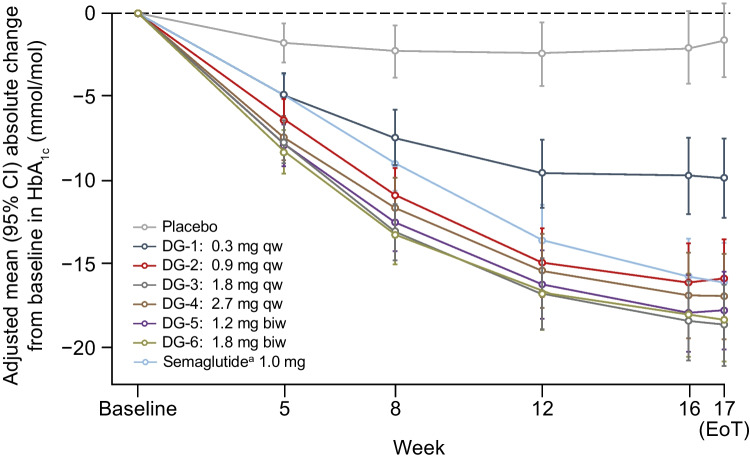
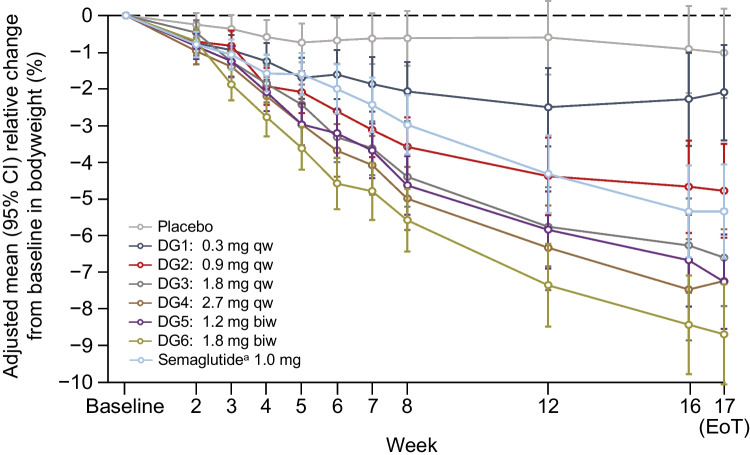
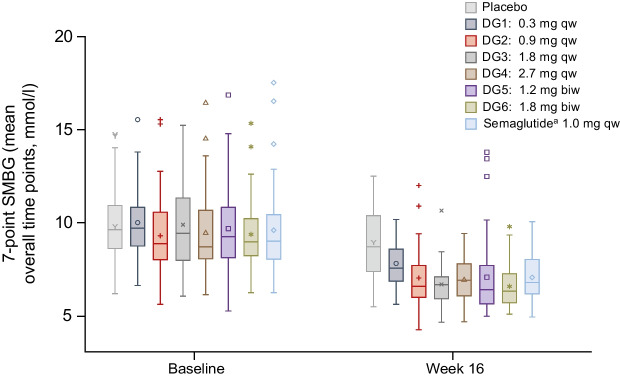
Aims/hypothesis: The aim of this study was to assess the dose–response effects of the subcutaneous glucagon receptor/glucagon-like peptide-1 receptor dual agonist survodutide (BI 456906) on HbA 1c levels and bodyweight reduction. Methods: This Phase II, multicentre, randomised, double-blind, parallel-group, placebo-controlled study, conducted in clinical research centres, assessed survodutide in participants aged 18–75 years with type 2 diabetes, an HbA 1c level of 53–86 mmol/mol (7.0–10.0%) and a BMI of 25–50 kg/m 2 on a background of metformin therapy. Participants were randomised via interactive response technology to receive survodutide (up to 0.3, 0.9, 1.8 or 2.7 mg once weekly [qw; dose group (DG) 1–4, respectively] or 1.2 or 1.8 mg twice weekly [DG 5 and 6, respectively]), placebo or semaglutide (up to 1.0 mg qw). Participants and all those involved in the trial conduct/analysis were blinded; the semaglutide arm was open-label. The primary endpoint was absolute change from baseline in HbA 1c after 16 weeks’ treatment. The key secondary endpoint was relative change from baseline in bodyweight after 16 weeks’ treatment. Results: A total of 413 participants were randomised (DG1, n =50; DG2, n =50; DG3, n =52; DG4, n =50; DG5, n =51; DG6, n =50; semaglutide, n =50; placebo, n =60). The full analysis set comprised 411 treated participants (DG6, n =49; placebo, n =59). Adjusted mean (95% CI) HbA 1c decreased from baseline (mean ± SD 64.7±9.2 mmol/mol [8.07±0.84%] after 16 weeks’ treatment: DG1 ( n =41), −9.92 mmol/mol (−12.27, −7.56; −0.91% [−1.12, −0.69]); DG2 ( n =46), −15.95 mmol/mol (−18.27, −13.63; −1.46% [−1.67, −1.25]); DG3 ( n =36), −18.72 mmol/mol (−21.15, −16.29; −1.71% [−1.94, −1.49]); DG4 ( n =33), −17.01 mmol/mol (−19.59, −14.43; −1.56% [−1.79, −1.32]); DG5 ( n =44), −17.84 mmol/mol (−20.18, −15.51; −1.63% [−1.85, −1.42]); DG6 ( n =36), −18.38 mmol/mol (−20.90, −15.87; −1.68% [−1.91, −1.45]). The mean reduction in HbA 1c was similar with low-dose survodutide (DG2: −15.95 mmol/mol [−1.46%]; n =46) and semaglutide (−16.07 mmol/mol [−1.47%]; n =45). Mean (95% CI) bodyweight decreased dose-dependently up to −8.7% (−10.1, −7.3; DG6, n =37); survodutide ≥1.8 mg qw produced greater bodyweight reductions than semaglutide (−5.3% [−6.6, −4.1]; n =45). Adverse events (AEs) were reported for 77.8% of survodutide-treated participants (mainly gastrointestinal), 52.5% receiving placebo and 52.0% receiving semaglutide. Conclusions/interpretation: Survodutide reduced HbA 1c levels and bodyweight after 16 weeks’ treatment in participants with type 2 diabetes. Dose-related gastrointestinal AEs could be mitigated with slower dose escalations. Trial registration: ClinicalTrials.gov NCT04153929 and EudraCT 2019-002390-60. Funding: Boehringer Ingelheim Pharma GmbH & Co. KG, Ingelheim, Germany. Graphical Abstract:
Overview
The claims and statistics of this paper haven’t been checked yet.
Free: it reads the open-access text and checks the first 5 claims that cite a source we can check. Create a free account to check every claim.
Integrity signals
Registry
Cites
Statistics
Figures
Verification
Claims the paper makes
The claims and statistics of this paper haven’t been checked yet.
Free: it reads the open-access text and checks the first 5 claims that cite a source we can check. Create a free account to check every claim.
Claims other papers make about this one
Each is checked against this paper’s own text: does it say what the citing paper says it does?
The source backs part of the claim, not all of it — or backs it for a different population, condition or comparison.
In the citing paper
“A new weight loss plateau was not reached during the study period.125”
From GLP-1 receptor agonists and next-generation incretin-based medications: metabolic, cardiovascular, and renal benefits (2026) · cites this paper as [125]
Experimental — accuracy not yet measuredThe source backs part of the claim, not all of it — or backs it for a different population, condition or comparison.
In the citing paper
“The risk of experiencing nausea (up to 46%), vomiting (up to 26%), or drug discontinuation (up to 30%) was greater than with semaglutide (nausea 9%, vomiting 2%, and drug discontinuation due to adverse events 5%) or placebo (nausea 12%, vomiting 4%, and drug discontinuation due to adverse events 4%).125”
From GLP-1 receptor agonists and next-generation incretin-based medications: metabolic, cardiovascular, and renal benefits (2026) · cites this paper as [125]
Experimental — accuracy not yet measuredThe source backs part of the claim, not all of it — or backs it for a different population, condition or comparison.
In the citing paper
“Weight loss with survodutide (up to 7•7%) was greater than with semaglutide (5•3%) or placebo (0•9%).”
From GLP-1 receptor agonists and next-generation incretin-based medications: metabolic, cardiovascular, and renal benefits (2026) · cites this paper as [125]
Experimental — accuracy not yet measuredThe source backs part of the claim, not all of it — or backs it for a different population, condition or comparison.
In the citing paper
“In a phase 2 trial in people with T2D, after 16 weeks of treatment, doses of survodutide up to 2•7 mg once weekly reduced HbA 1c by up to 1•6% (95% CI 1•3-1•8) or 17 mmol/mol (14-20) compared with semaglutide (1 mg once weekly; reduction of 1•5% [16 mmol/mol]; table).125”
From GLP-1 receptor agonists and next-generation incretin-based medications: metabolic, cardiovascular, and renal benefits (2026) · cites this paper as [125]
Experimental — accuracy not yet measuredThe source backs part of the claim, not all of it — or backs it for a different population, condition or comparison.
In the citing paper
“Thus, hepatic glucagon receptor stimulation increased hepatic lipid oxidation and reversed diet-induced steatosis in mice [137].”
From Obesity and MASLD: Is weight loss the (only) key to treat metabolic liver disease? (2024) · cites this paper as [137]
Experimental — accuracy not yet measured
5 more claims about this paper
Create a free account to see every claim other papers make about this one.
Self-check
Percentages, sums and reported differences re-computed from the paper’s own numbers.
The self-check needs the paper’s full text.
Citations
Cites
Once-Weekly Semaglutide in Adults with Overweight or Obesity
Wilding, J. P. H., Batterham, R. L., Calanna, S., Davies, M., Van Gaal, L. F., Lingvay, I., McGowan, B. M., Rosenstock, J., Tran, M. T. D., Wadden, T. A., et al. (2021) · New England Journal of Medicine · doi:10.1056/nejmoa2032183 · Cited by 5,205 · cited 1×
“The occurrence of GI disorders is common in people treated with GLP-1R agonists [23, 24] and can be linked to the central effects of GLP-1R agonism and delayed gastric emptying [25, 26].”
BackgroundSelf-citationA Randomized, Controlled Trial of 3.0 mg of Liraglutide in Weight Management
Pi-Sunyer, X., Astrup, A., Fujioka, K., Greenway, F., Halpern, A., Krempf, M., Lau, D. C. W., le Roux, C. W., Violante Ortiz, R., Jensen, C. B., et al. (2015) · New England Journal of Medicine · doi:10.1056/nejmoa1411892 · Cited by 2,724
Tirzepatide versus Semaglutide Once Weekly in Patients with Type 2 Diabetes
Frías, J. P., Davies, M. J., Rosenstock, J., Pérez Manghi, F. C., Fernández Landó, L., Bergman, B. K., Liu, B., Cui, X., & Brown, K. (2021) · New England Journal of Medicine · doi:10.1056/nejmoa2107519 · Cited by 2,096 · cited 2×
“…such as glucose-dependent insuli-notropic polypeptide receptor (GIPR)/GLP-1R and glucagon receptor (GCGR)/GLP-1R dual agonists, have the potential for enhanced therapeutic efficacy and improved tolerability compared with GLP-1R mono-agonists, owing to their multiple mechanisms of action [5, 6].”
BackgroundSelf-citationNauck, M., Frid, A., Hermansen, K., Shah, N. S., Tankova, T., Mitha, I. H., Zdravkovic, M., Düring, M., Matthews, D. R., & for the LEAD-2 Study Group (2009) · Diabetes Care · doi:10.2337/dc08-1355 · Cited by 1,129
Anti-obesity drug discovery: advances and challenges
Müller, T. D., Blüher, M., Tschöp, M. H., & DiMarchi, R. D. (2022) · Nature Reviews Drug Discovery · doi:10.1038/s41573-021-00337-8 · Cited by 1,021
Self-citationon behalf of the NN8022-1807 Investigators, Astrup, A., Carraro, R., Finer, N., Harper, A., Kunesova, M., Lean, M. E. J., Niskanen, L., Rasmussen, M. F., Rissanen, A., et al. (2012) · International Journal of Obesity · doi:10.1038/ijo.2011.158 · Cited by 757 · cited 1×
“The occurrence of GI disorders is common in people treated with GLP-1R agonists [23, 24] and can be linked to the central effects of GLP-1R agonism and delayed gastric emptying [25, 26].”
BackgroundGIP and GLP-1, the two incretin hormones: Similarities and differences
Seino, Y., Fukushima, M., & Yabe, D. (2010) · Journal of Diabetes Investigation · doi:10.1111/j.2040-1124.2010.00022.x · Cited by 746
Ahmann, A. J., Capehorn, M., Charpentier, G., Dotta, F., Henkel, E., Lingvay, I., Holst, A. G., Annett, M. P., & Aroda, V. R. (2018) · Diabetes Care · doi:10.2337/dc17-0417 · Cited by 596
Usdin, T. B., Mezey, E., Button, D. C., Brownstein, M. J., & Bonner, T. I. (1993) · Endocrinology · doi:10.1210/endo.133.6.8243312 · Cited by 534
Subcutaneous Oxyntomodulin Reduces Body Weight in Overweight and Obese Subjects
Wynne, K., Park, A. J., Small, C. J., Patterson, M., Ellis, S. M., Murphy, K. G., Wren, A. M., Frost, G. S., Meeran, K., Ghatei, M. A., et al. (2005) · Diabetes · doi:10.2337/diabetes.54.8.2390 · Cited by 435
Cited by
Tacke, F., Horn, P., Wai-Sun Wong, V., Ratziu, V., Bugianesi, E., Francque, S., Zelber-Sagi, S., Valenti, L., Roden, M., Schick, F., et al. (2024) · Journal of Hepatology · doi:10.1016/j.jhep.2024.04.031 · Cited by 2,210
European Association for the Study of the Liver (EASL), European Association for the Study of Diabetes (EASD), & European Association for the Study of Obesity (EASO) (2024) · Obesity Facts · doi:10.1159/000539371 · Cited by 471
le Roux, C. W., Steen, O., Lucas, K. J., Startseva, E., Unseld, A., & Hennige, A. M. (2024) · The Lancet Diabetes & Endocrinology · doi:10.1016/s2213-8587(23)00356-x · Cited by 237
Self-citationAlfaris, N., Waldrop, S., Johnson, V., Boaventura, B., Kendrick, K., & Stanford, F. C. (2024) · EClinicalMedicine · doi:10.1016/j.eclinm.2024.102782 · Cited by 224
Obesity and MASLD: Is weight loss the (only) key to treat metabolic liver disease?
Huttasch, M., Roden, M., & Kahl, S. (2024) · Metabolism · doi:10.1016/j.metabol.2024.155937 · Cited by 169
GLP-1 physiology in obesity and development of incretin-based drugs for chronic weight management
Holst, J. J. (2024) · Nature Metabolism · doi:10.1038/s42255-024-01113-9 · Cited by 125
Nauck, M. A., Tuttle, K. R., Tschöp, M. H., & Blüher, M. (2026) · The Lancet · doi:10.1016/s0140-6736(25)02105-1 · Cited by 123
Self-citationLawitz, E., Fraessdorf, M., Neff, G. W., Schattenberg, J. M., Noureddin, M., Alkhouri, N., Schmid, B., Andrews, C. P., Takács, I., Hussain, S. A., et al. (2024) · Journal of Hepatology · doi:10.1016/j.jhep.2024.06.003 · Cited by 66
Semaglutide as a GLP-1 Agonist: A Breakthrough in Obesity Treatment
Salvador, R., Moutinho, C. M. S. G., Sousa, C., Vinha, A. F., Carvalho, M. C., & Matos, C. M. (2025) · Pharmaceuticals · doi:10.3390/ph18030399 · Cited by 56
Psaltis, J. P., Marathe, J., Nguyen, M. T., Le, R., Bursill, C. A., Marathe, C. S., Nelson, A. J., & Psaltis, P. J. (2024) · Medicinal Research Reviews · doi:10.1002/med.22070 · Cited by 52
Abdelmalek, M. F., Harrison, S. A., & Sanyal, A. J. (2024) · Diabetes Obesity and Metabolism · doi:10.1111/dom.15524 · Cited by 48
Winther, J. B., & Holst, J. J. (2024) · Diabetes, Obesity and Metabolism · doi:10.1111/dom.15693 · Cited by 47
Petersen, K. F., Dufour, S., Mehal, W. Z., & Shulman, G. I. (2024) · Cell Metabolism · doi:10.1016/j.cmet.2024.07.023 · Cited by 47
Wharton, S., le Roux, C. W., Kosiborod, M., Platz, E., Brueckmann, M., Jastreboff, A. M., Hussain, S. A., Pedersen, S. D., Borowska, L., Unseld, A., et al. (2024) · Obesity · doi:10.1002/oby.24184 · Cited by 46
Movahednasab, M., Dianat‐Moghadam, H., Khodadad, S., Nedaeinia, R., Safabakhsh, S., Ferns, G. A., & Salehi, R. (2025) · Diabetology & Metabolic Syndrome · doi:10.1186/s13098-025-01623-w · Cited by 47
Jakubowska, A., Roux, C. W. L., & Viljoen, A. (2024) · Endocrinology and Metabolism · doi:10.3803/enm.2024.1942 · Cited by 45
“There was a survodutide dose-dependent decrease in bodyweight up to –8.7% with the high-dose survodutide producing greater bodyweight reduction compared to semaglutide [48].”
BackgroundInfluentialMadsbad, S., & Holst, J. J. (2025) · Expert Opinion on Investigational Drugs · doi:10.1080/13543784.2025.2472408 · Cited by 43
“In a 16 weeks phase 2 study in people with type 2 diabetes ( n = 413, HbA1c 8.1% (64.7 mmol/mol)) treated with metformin, participants were randomized to survodutide 0.3, 0.9, 1,8, 2.7 mg once weekly or 1.2 or 1.8 mg twice weekly or placebo or semaglutide up to 1 mg once weekly [109].”
InfluentialSurvodutide for the Treatment of Obesity
Kosiborod, M., Platz, E., Wharton, S., le Roux, C. W., Brueckmann, M., Hussain, S. A., Unseld, A., Startseva, E., & Kaplan, L. M. (2024) · JACC Heart Failure · doi:10.1016/j.jchf.2024.09.004 · Cited by 42
Novel GLP-1-based Medications for Type 2 Diabetes and Obesity
Son, J. W., le Roux, C. W., Blüher, M., Nauck, M. A., & Lim, S. (2026) · Endocrine Reviews · doi:10.1210/endrev/bnaf036 · Cited by 40
Self-citationMASLD: Prevalence, Mechanisms, and Sex-Based Therapies in Postmenopausal Women
Milani, I., Chinucci, M., Leonetti, F., & Capoccia, D. (2025) · Biomedicines · doi:10.3390/biomedicines13040855 · Cited by 38
Puengel, T., & Tacke, F. (2024) · Expert Opinion on Pharmacotherapy · doi:10.1080/14656566.2024.2374463 · Cited by 34
Glucagon-Like Peptide-1 Based Therapies: A New Horizon in Obesity Management
Son, J. W., & Lim, S. (2024) · Endocrinology and Metabolism · doi:10.3803/enm.2024.1940 · Cited by 33
“A phase II study result showed that administering a high dose of survodutide, up to 1.8 mg twice weekly, resulted in over 50% of T2D participants achieving more than 5% body weight reduction, and over 25% experiencing a weight loss exceeding 10% [111].”
BackgroundInfluentialSurvodutide Once Weekly for the Treatment of Adults with Obesity
le Roux, C. W., Wharton, S., Startseva, E., Kloer, I. M., Hussain, S. A., Unseld, A., Bozkurt, B., Ard, J. D., Bays, H. E., Bogdański, P., et al. (2026) · New England Journal of Medicine · doi:10.1056/nejmoa2600751 · Cited by 35
Gogineni, P., Melson, E., Papamargaritis, D., & Davies, M. (2024) · Expert Opinion on Pharmacotherapy · doi:10.1080/14656566.2024.2356254 · Cited by 32
“Survodutide is another dual glucagon/GLP-1 RA which has completed a phase 2 trial in people with T2D, assessing the safety and efficacy of multiple doses of survodutide (ranging from 0.3 mg to 2.7 mg once weekly and 1.2 mg and 1.8 mg twice weekly) [73].”
BackgroundMethodInfluentialRecent achievements and future directions of anti-obesity medications
Grandl, G., Novikoff, A., Liu, X., & Müller, T. D. (2024) · The Lancet Regional Health - Europe · doi:10.1016/j.lanepe.2024.101100 · Cited by 33
Ros-Madrid, I., Cano-Mármol, R. P., Ferrer-Gomez, M., & Ramos-Molina, B. (2025) · Canadian Journal of Physiology and Pharmacology · doi:10.1139/cjpp-2025-0148 · Cited by 31
Anastasiou, I. A., Argyrakopoulou, G., Dalamaga, Μ., & Kokkinos, A. D. (2025) · Current Obesity Reports · doi:10.1007/s13679-025-00623-1 · Cited by 29
Kaplan, L. M., Startseva, E., le Roux, C. W., Wharton, S., Bozkurt, B., Mazo, D. F. D. C., von Schlippenbach, J., Maldonado, S. G., Hussain, S. A., Neff, G. W., et al. (2026) · Nature Medicine · doi:10.1038/s41591-026-04479-3 · Cited by 32
Chrysavgis, L., Kazanas, S., Bafa, K., Rozani, S., Koloutsou, M. E., & Cholongitas, Ε. (2024) · International Journal of Molecular Sciences · doi:10.3390/ijms25073832 · Cited by 27
“The levels of Pro-C3, a fibrogenic biomarker, substantially decreased from baseline in all active survodutide and semaglutide treatment groups compared with placebo [112].”
BackgroundResultInfluentialSarzani, R., Landolfo, M., Pentima, C. D., Ortensi, B., Falcioni, P., Sabbatini, L., Massacesi, A., Rampino, I., Spannella, F., & Giulietti, F. (2024) · Frontiers in Medicine · doi:10.3389/fmed.2024.1365183 · Cited by 26
Perspectives in weight control in diabetes - survodutide
Klein, T., Augustin, R., & Hennige, A. M. (2024) · Diabetes Research and Clinical Practice · doi:10.1016/j.diabres.2023.110779 · Cited by 25
Self-citationMuzurović, E. M., Katsiki, N., Volčanšek, Š., Plescia, F., Rizzo, M., & Mantzoros, C. S. (2026) · Metabolism · doi:10.1016/j.metabol.2026.156494 · Cited by 25
Xie, C., Alkhouri, N., & Elfeki, M. A. (2024) · World Journal of Hepatology · doi:10.4254/wjh.v16.i5.731 · Cited by 24
Oxyntomodulin physiology and its therapeutic development in obesity and associated complications
Kueh, M. T. W., Chong, M. C., Miras, A. D., & le Roux, C. W. (2024) · The Journal of Physiology · doi:10.1113/jp287407 · Cited by 24
“…analysis was promising, with survodutide significantly reduced HbA1c and body weight in a dose-dependent manner, with higher doses leading to greater body weight loss compared to semaglutide (up to − 8.7% in survodutide ≥ 1.8 mg qw vs. − 5.3% in semaglutide 1.0 mg qw) (Blüher et al., 2024).”
InfluentialProglucagon-derived peptides: human physiology and therapeutic potential
Gasbjerg, L. S., Nielsen, C. K., Suppli, M. P., Grøndahl, M. F. G., Holst, J. J., Knop, F. K., Jeppesen, P. B., & Lund, A. (2025) · Physiological Reviews · doi:10.1152/physrev.00057.2024 · Cited by 22
Mazdutide versus dulaglutide in Chinese adults with type 2 diabetes
Guo, L., Zhang, B., Xue, X., Zhang, B., Cai, H., Jiang, H., Zhang, L., Jin, P., Wang, X., Cheng, Z., et al. (2025) · Nature · doi:10.1038/s41586-025-10031-z · Cited by 22
Wen, J., Nadora, D., Truong, A., Bernstein, E., How-Volkman, C., Razick, A. A., Razick, D., Karabala, M., & Frezza, E. (2025) · Nutrition Metabolism and Cardiovascular Diseases · doi:10.1016/j.numecd.2025.104213 · Cited by 21
Podder, D., Stala, O., Miah, A., Agyapong, A., Moore, M. E., Hirani, R., Diegisser, D., Garcia, V. G., & Etienne, M. (2026) · Diabetology · doi:10.3390/diabetology7030046 · Cited by 20
The evolving landscape of obesity pharmacotherapy
Petersen, J., Finan, B., Johansen, V. B. I., Müller, T. D., & Clemmensen, C. (2026) · Nature Reviews Drug Discovery · doi:10.1038/s41573-026-01427-1 · Cited by 22
“In another clinical trial investigating survodutide for the management of T2D, the molecule improved HbA 1c levels 163 , perhaps mitigating some concerns about glucagon’s potential hyperglycaemic liabilities.”
Madhu, S. V., Kapoor, N., Das, S., Raizada, N., & Kalra, S. (2025) · Indian Journal of Endocrinology and Metabolism · doi:10.4103/ijem.ijem_680_25 · Cited by 18
Obesity phenotypes and atherogenic dyslipidemias
Choe, H. J., Almas, T., Neeland, I. J., Lim, S. K., & Després, J. (2025) · European Journal of Clinical Investigation · doi:10.1111/eci.70151 · Cited by 18
Holst, J. J., Madsbad, S., Bojsen-Møller, K. N., Dirksen, C., & Svane, M. S. (2024) · Peptides · doi:10.1016/j.peptides.2024.171199 · Cited by 18
Recent progress in the pharmacotherapy for obesity
Lu, J., Liu, P., Cai, M., Lv, T., Zhang, M., Yin, K., Cheng, J., & Zhang, G. (2025) · European Journal of Pharmacology · doi:10.1016/j.ejphar.2025.177850 · Cited by 17
Tian, X., Wang, L., Zhang, L., Chen, X., Wang, W., Zhang, K., Ge, X., Luo, Z., Zhai, X., & Shao, H. (2025) · European journal of medical research · doi:10.1186/s40001-025-02682-5 · Cited by 17
Wen, Z., Sun, W., Wang, H., Chang, R., Wang, J., Song, C., Zhang, S., Ni, Q., & An, X. (2025) · Diabetes Research and Clinical Practice · doi:10.1016/j.diabres.2025.111999 · Cited by 16
Weight Loss Blockbuster Development: A Role for Unimolecular Polypharmacology
Zhou, Q., Li, G., Hang, K., Li, J., Yang, D., & Wang, M. (2024) · The Annual Review of Pharmacology and Toxicology · doi:10.1146/annurev-pharmtox-061324-011832 · Cited by 16
Adipocentric Strategy for the Treatment of Type 2 Diabetes Mellitus
Martínez, J. J. G. (2025) · Journal of Clinical Medicine · doi:10.3390/jcm14030678 · Cited by 16
Tran, D. T., Yeung, E. S. H., Hong, L. Y. Q., Kaur, H., Advani, S. L., Liu, Y., Syeda, M. Z., Batchu, S. N., & Advani, A. (2024) · Diabetology & Metabolic Syndrome · doi:10.1186/s13098-024-01525-3 · Cited by 13
Koullias, E., Papavdi, M., Koskinas, J. S., Deutsch, M. J., & Thanopoulou, A. C. (2025) · Cureus · doi:10.7759/cureus.76716 · Cited by 13
Neff, G. W. (2025) · Diabetes Obesity and Metabolism · doi:10.1111/dom.70148 · Cited by 13
Oxyntomodulin - past, present and future
Holst, J. J., & ROSENKILDE, M. M. (2025) · Peptides · doi:10.1016/j.peptides.2025.171393 · Cited by 12
Hydrogen Sulfide Deficiency and Therapeutic Targeting in Cardiometabolic HFpEF
Doiron, J. E., Elbatreek, M. H., Xia, H., Yu, X., Gehred, N., Gromova, T., Chen, J., Driver, I. H., Muraoka, N., Jensen, M. B., et al. (2025) · JACC Basic to Translational Science · doi:10.1016/j.jacbts.2025.04.011 · Cited by 12
Malandris, K., Charalampidis, K., Loomba, R. S., & Sinakos, E. (2026) · Current Diabetes Reports · doi:10.1007/s11892-026-01621-w · Cited by 12
Beetz, N., Kalsch, B., Forst, T. M., Schmid, B., Schultz, A., & Hennige, A. M. (2024) · Diabetes Obesity and Metabolism · doi:10.1111/dom.15984 · Cited by 12
Self-citationStachteas, P., Nasoufidou, A., Karakasis, P., Koiliari, M., Karagiannidis, E., Koufakis, T., Fragakis, N., & Patoulias, D. (2025) · Reviews in Cardiovascular Medicine · doi:10.31083/rcm39691 · Cited by 11
Advances in Drug Treatments for Companion Animal Obesity
Zomer, H. D., & Cooke, P. S. (2024) · Biology · doi:10.3390/biology13050335 · Cited by 10
“Servodutide was effective in decreasing body weight and HbA1c in diabetic patients [62].”
BackgroundAlcaino, C., Reimann, F., & Gribble, F. M. (2024) · The Journal of Physiology · doi:10.1113/jp286293 · Cited by 10
Seno, Y., Ikeguchi, E., & Yabe, D. (2025) · Diabetology International · doi:10.1007/s13340-025-00818-w · Cited by 10
“Notable examples include Survodutide, a GLP-1/glucagon receptor agonist, and Retatrutide, a GLP-1/GIP/glucagon receptor agonist [89, 90].”
From pathophysiology to novel approaches for obesity-associated hypertension
Kanbay, M., Yayci, E., Genc, C., Çöpür, S., Aktaş, Ö. Y., Sarafidis, P. A., Covic, A. C., Ortíz, A., & Laffin, L. J. (2025) · Clinical Kidney Journal · doi:10.1093/ckj/sfaf218 · Cited by 12
Sillassen, C. D. B., Petersen, J. J., Faltermeier, P., Yucel, D., Siddiqui, F., Andersen, R. K., Graever, L., Bjerg, J. L., Kamp, C. B., Grand, J., et al. (2025) · BMC Medicine · doi:10.1186/s12916-025-04486-0 · Cited by 10
Vekić, J., Zeljković, A., Maggio, V., Rizzo, M., & Medenica, S. (2026) · Diabetes Therapy · doi:10.1007/s13300-025-01828-2 · Cited by 11
Practical strategies to manage obesity in type 2 diabetes
Rodbard, H. W., Barnard-Kelly, K. D., Pfeiffer, A. F. H., Mauersberger, C., Schnell, O., & Giorgino, F. (2024) · Diabetes Obesity and Metabolism · doi:10.1111/dom.15556 · Cited by 10
Cazac, G.-D., Lăcătușu, C.-M., Grigorescu, E.-D., Foșălău, A.-B., Onofriescu, A., & Mihai, B. M. (2025) · Journal of Clinical Medicine · doi:10.3390/jcm14041042 · Cited by 10
Chee, Y. J., & Dalan, R. (2024) · Biomedicines · doi:10.3390/biomedicines12071386 · Cited by 10
le Roux, C. W., Wharton, S., Bozkurt, B., Platz, E., Bleckert, G., Hussain, S. A., Brueckmann, M., Startseva, E., Kloer, I. M., & Kaplan, L. M. (2025) · Diabetes Obesity and Metabolism · doi:10.1111/dom.70196 · Cited by 9
Wan, H., Xu, N., Wang, L., Liu, Y., Fatahi, S., Sohouli, M. H., & Guimarães, N. S. (2024) · Diabetology & Metabolic Syndrome · doi:10.1186/s13098-024-01501-x · Cited by 8
Survodutide in MASH: bridging the gap between hepatic and systemic metabolic dysfunction
Kaya, E., Yilmaz, Y., & Alkhouri, N. (2024) · Expert Opinion on Investigational Drugs · doi:10.1080/13543784.2024.2441865 · Cited by 8
“Survodutide, a dual agonist targeting both the GCGR and GLP-1 R, has demonstrated superior glycemic control and body weight reduction compared to GLP-1RAs alone in patients with T2DM and obesity [24–26].”
InfluentialMorales, E., Martin, W. P., Bevc, S., Jenssen, T. G., Miglinas, M., & Trillini, M. (2025) · Nephrology Dialysis Transplantation · doi:10.1093/ndt/gfaf069 · Cited by 8
Park, C., Kim, Y., Raygani, S., & Grunvald, E. L. (2025) · Frontiers in Endocrinology · doi:10.3389/fendo.2025.1630199 · Cited by 7
Wharton, S., le Roux, C. W., Bozkurt, B., Platz, E., Bleckert, G., Hussain, S. A., Brueckmann, M., Startseva, E., Kloer, I. M., & Kaplan, L. M. (2025) · Diabetes Obesity and Metabolism · doi:10.1111/dom.70263 · Cited by 7
Innovative Glucagon-based Therapies for Obesity
Belay, K. E., Jemal, R. H., & Tuyizere, A. (2024) · Journal of the Endocrine Society · doi:10.1210/jendso/bvae197 · Cited by 8
Alavi, S. E., Boshrouyeh, R., Raza, A., & Shahmabadi, H. E. (2026) · European Journal of Medicinal Chemistry · doi:10.1016/j.ejmech.2026.118587 · Cited by 6
Nauck, M. A., Punov, V., Kang, Y. M., & Lim, S. (2026) · Diabetes Obesity and Metabolism · doi:10.1111/dom.70613 · Cited by 6
Goodman, J., Schain, M., Stefano, G. D., Lupson, V. C., Horn, T., Hill, M., Manavaki, R., Fryer, T. D., Bumanlag-Amis, E., Jalaludeen, N., et al. (2025) · Scientific Reports · doi:10.1038/s41598-025-04559-3 · Cited by 5
“Data from haemodynamic early phase clinical trials of GLP-1/glucagon dual agonists demonstrates Cotadutide (MEDI0382) 16,17,98 , Survodutide (BI 456906) 19,99 and Mazdutide (IBI362) 100 increase heart rate and reduce blood pressure in patients with T2D or obesity.”
Emptage, I., Kozmér, S., Cobham-Wilson, A., Sousa, B., Sugden, K., Wheeler, L., Llewellyn, C. H., Makaronidis, J., Bulik, C. M., Solmi, F., et al. (2026) · EClinicalMedicine · doi:10.1016/j.eclinm.2026.104007 · Cited by 5
Jiang, P., Zeng, Y., Yang, W. Y., Li, L., Zhou, L., Xiao, L., Li, Y., Gu, B., Li, X., Li, J., et al. (2024) · Biomedicine & Pharmacotherapy · doi:10.1016/j.biopha.2024.116485 · Cited by 5
Alshahrani, O. A. S., & Almalki, M. S. (2024) · Cureus · doi:10.7759/cureus.65242 · Cited by 5
“Blüher et al. (2024) [19] proved that survodutide dose-dependently reduced HbA1C after 16 weeks of treatment by up to -18.72 mmol/mol (-1.71”
BackgroundInfluentialDutta, D., Kamrul-Hasan, A. B. M., Joshi, A. S., Dhall, A., Nagendra, L., & Sharma, M. (2025) · Indian Journal of Endocrinology and Metabolism · doi:10.4103/ijem.ijem_366_24 · Cited by 4
“[6] had T2DM.”
InfluentialSlaton, R. M., Iranikhah, M. G., & White, C. W. (2026) · JAPhA Pharmacotherapy · doi:10.1016/j.japhar.2026.100032 · Cited by 4
Kanbay, M., Çöpür, S., Güldan, M., Özbek, L., Mallamaci, F., & Zoccali, C. (2024) · European Journal of Clinical Investigation · doi:10.1111/eci.14330 · Cited by 4
Efeitos adversos dos análogos do GLP-1: Uma revisão sistemática
dos Santos, B. N. C., & Castro, R. S. (2025) · Research Society and Development · doi:10.33448/rsd-v14i1.47981 · Cited by 4
Awad, A. A., Abouelmagd, A. A., Mohammed, F., Elettreby, A. M., Marey, M. M., Aldemerdash, M. A., Soliman, S. M., Belal, M. M., & Abosheaishaa, H. M. (2025) · Baylor University Medical Center Proceedings · doi:10.1080/08998280.2025.2480512 · Cited by 4
Mikhail, N. E. (2024) · Endocrinology and Disorders · doi:10.31579/2640-1045/184 · Cited by 4
Li, W. (2024) · Preprints.org · doi:10.20944/preprints202405.0258.v1 · Cited by 4
Abulehia, A., Ayesh, H., Ayesh, O., Jaber, D., Asad, T., Itbaisha, A., Abugharbieh, H., Gharbia, R., Abu‐Hilal, L. H., & Leon, B. G. C. (2026) · Endocrinology, Diabetes & Metabolism · doi:10.1002/edm2.70187 · Cited by 3
Xiao, Y., Yu, S. P., Zhang, Y., Chen, J., Yan-qun, L., Liu, X., Sun, C., & Deng, C. (2025) · Diabetes Obesity and Metabolism · doi:10.1111/dom.70105 · Cited by 3
“…study populations were as follows: one study enrolled exclusively healthy male volunteers, 32 two studies included over-weight or obese individuals, 31,32 one study specifically targeted patients with obesity, 24 one study enrolled patients with T2D, 30 and one study focused on patients with MASH.”
InfluentialLong, F., Challa, T. D., Efthymiou, V., Klug, M., Klein, T., Neubauer, H., Wolfrum, C., & Horváth, C. (2025) · Diabetes Obesity and Metabolism · doi:10.1111/dom.70359 · Cited by 3
“3 However, balancing the relative potencies of the GLP-1R and GCGR components appears crucial to achieve beneficial outcomes on glucose control, as other GCGR/GLP-1R dual agonists with more potent GCGR activity showed limited efficacy in improving glucose metabolism.”
Lv, J., Zhang, S., Qu, Y., Cao, Y., Zhang, J., Dai, X., & Shi, L. S. (2026) · Health and Metabolism · doi:10.53941/hm.2026.100005 · Cited by 3
“%) and a BMI of 25 – 50 kg/m 2 alongside standardized metformin therapy [40].”
A New Era in the Medical Management of Obesity
Porterfield, F., Fatima, A., Boaventura, B. C. B., Madhar, A., Srivastava, G., & Stanford, F. C. (2026) · Annual Review of Medicine · doi:10.1146/annurev-med-043024-125437 · Cited by 3
Ko, D., Kim, D. H., Tan, F. X. N., Ho, G. J. K., Chandra, R., Xuan, Z. Z., Tham, E. K. J., Tang, N. S. Y., Yang, H. S., Koh, J. W. H., et al. (2026) · Cell Reports Medicine · doi:10.1016/j.xcrm.2026.102614 · Cited by 3
Hamilton, A., Thisted, L., Ougaard, M., Hahn, M., Andersen, K., Perens, J., Augustin, R., Bajrami, B., Rist, W., Christensen, M., et al. (2026) · Diabetes Obesity and Metabolism · doi:10.1111/dom.71387 · Cited by 3
Liver Steatosis: From Lipotoxicity to Cellular Damage
Puengel, T., & Tacke, F. (2024) · Springer eBooks · doi:10.1007/978-981-97-9519-2_4 · Cited by 3
Survodutide: A Dual GLP-1/Glucagon Agonist Reshaping Cardiometabolic Care
Arun, A. J., Darji, B., Baig, M., Frishman, W. H., & Aronow, W. S. (2025) · Cardiology in Review · doi:10.1097/crd.0000000000001062 · Cited by 3
Goodman, J., Parker, V., McEniery, C. M., Stefano, G. D., Hubsch, A., Vamvaka, E., Helmy, J., Kaloyirou, F., Jalaludeen, N., Barker, P. J., et al. (2025) · British Journal of Clinical Pharmacology · doi:10.1002/bcp.70282 · Cited by 2
“Reassuringly, any possible short-term increase in the rate pressure product is shown to be ameliorated over time due to the beneficial effects on BP. 35 38,39 Pemvidutide (ALT-801) reduces systolic and diastolic BP without leading to any clinically significant increase in heart rate.”
Peptide drugs for obesity and type 2 diabetes mellitus: an overview of clinical trials
Barzgar, H., Darmadi, D., Nafisa, J., Narkulov, S., & Sviridova, M. B. (2025) · Clinica Chimica Acta · doi:10.1016/j.cca.2025.120772 · Cited by 2
Winther‐Sørensen, M., Rasmussen, C. B., Trammell, S. A. J., Hansen, C., Vyberg, M., Serizawa, R., Richter, E. A., Grevengoed, T. J., Gluud, L. L., Kuhre, R. E., et al. (2025) · Peptides · doi:10.1016/j.peptides.2025.171462 · Cited by 2
A review of survodutide: a new dual acting agonist
Yathindra, M. R., BHATTACHARJEE, A., PUNDIR, N., PATEL, P., Jacob, N. E., Jossy, P. E., & Seetharaman, R. (2026) · Minerva Endocrinology · doi:10.23736/s2724-6507.26.04406-4 · Cited by 2
Builes-Montaño, C. E., Suarez-Rodriguez, A. F., & Alzate-Vinasco, M. A. (2026) · Diabetes Therapy · doi:10.1007/s13300-026-01886-0 · Cited by 3
GLP-1-based combination strategies for weight loss: Multi-target agents and combination therapies
Wang, X., Lin, R., Sun, Q., Xin, X., & Feng, Q. (2026) · Pharmacological Research · doi:10.1016/j.phrs.2026.108331 · Cited by 2
Kushner, P. R., & Michos, E. D. (2026) · Journal of the American Heart Association · doi:10.1161/jaha.126.049727 · Cited by 3
Metadata
- Authors
- Blüher, M., Rosenstock, J., Hoefler, J., Manuel, R., & Hennige, A. M.
- Affiliations
- Helmholtz Munich (DE)
- Boehringer Ingelheim (United States) (US)
- Boehringer Ingelheim (Germany) (DE)
- Corresponding author
- Blüher, Matthias
- Hennige, Anita M.
- Venue
- Diabetologia
- Published
- 2023-12-14
- Volume
- 67
- Issue
- 3
- Pages
- 470-482
- ISSN
- 0012-186X (ISSN-L)
- 1432-0428
- PMC
- PMC10844353
- OpenAlex
- W4389739323
- Cited by
- 138
- References
- 28
- Citations by year
- 2026: 50 · 2025: 42 · 2024: 46
- FWCI
- 28.14
- Type
- journal article
- Language
- en
- Update notices
- correction (2024-02-13)
- Open access
- hybrid
- doi.org
- Licence
- cc-by
- creativecommons.org/licenses/by/4.0 (tdm)
- creativecommons.org/licenses/by/4.0 (vor)
- Locations
- Diabetologia (publishedVersion, cc-by)
- PubMed Central (publishedVersion, cc-by)
- PubMed (publishedVersion)
- Qucosa (Saxon State and University Library Dresden) (publishedVersion, other-oa)
- PUBLISSO (German National Library of Medicine) (submittedVersion, cc-by)
- PuSH - Publication Server of Helmholtz Zentrum München (submittedVersion, cc-by)
- Funders
- Boehringer Ingelheim
- Universität Leipzig
- Topics
- Health Sciences › Medicine › Endocrinology, Diabetes and Metabolism › Diabetes Treatment and Management
- Health Sciences › Medicine › Pharmacology (medical) › Pharmacology and Obesity Treatment
- Health Sciences › Medicine › Endocrinology, Diabetes and Metabolism › Diabetes Management and Research
- Keywords
- survodutide, type 2 diabetes, HbA1c, dose-response relationship, semaglutide, metformin, weight loss, glycemic control, GLP-1 receptor agonists, glucagon receptor agonist
- MeSH terms
- Glucagon-Like Peptide-1 Receptor Agonists, Semaglutide, Diabetes Mellitus, Type 2, Double-Blind Method, Glucagon-Like Peptides, Glucagon, Humans, Hypoglycemic Agents, Peptides, Treatment Outcome, Glucagon-Like Peptide 1
About these checks
Registry, retraction, Cites and statistics results are computed, not judged, with one exception: a printed reference that no index lists is read once by a model before it counts as a citation error. Claims are extracted by a model and kept only when their quote appears verbatim in the text; each cited source is then checked, with a model’s help, for whether it says what the claim relies on. Those verdicts can be wrong — read the claim’s quote and the cited source before relying on one.
Statistics and arithmetic are recomputed, not judged.
Confidence bands are shown only for fields calibrated on our annotated test set. None is calibrated yet, so no band is shown.
What counts as a claim ›How we measure confidence ›How we check this ›
Are you an author, or do you see a problem with this page? Request a review
Data sources
Bibliographic data: Semantic Scholar, OpenAlex, Crossref.
Contains information from the Semantic Scholar Academic Graph Datasets, made available under the ODC Attribution License (ODC-BY 1.0).
Semantic Scholar’s data is described in: Kinney, R., et al. (2023). The Semantic Scholar Open Data Platform. arXiv:2301.10140.
