

The DOI matches its Crossref record; 61 of the 65 references it cites were found in a registry or an index; none of the 39 sources its claims cite is checked for support yet.
Artificial intelligence, transparency, and public decision-making: Why explanations are key when trying to produce perceived legitimacy
Open accessAbstract
The increasing use of Artificial Intelligence (AI) for making decisions in public affairs has sparked a lively debate on the benefits and potential harms of self-learning technologies, ranging from the hopes of fully informed and objectively taken decisions to fear for the destruction of mankind. To prevent the negative outcomes and to achieve accountable systems, many have argued that we need to open up the “black box” of AI decision-making and make it more transparent. Whereas this debate has primarily focused on how transparency can secure high-quality, fair, and reliable decisions, far less attention has been devoted to the role of transparency when it comes to how the general public come to perceive AI decision-making as legitimate and worthy of acceptance. Since relying on coercion is not only normatively problematic but also costly and highly inefficient, perceived legitimacy is fundamental to the democratic system. This paper discusses how transparency in and about AI decision-making can affect the public’s perception of the legitimacy of decisions and decision-makers and produce a framework for analyzing these questions. We argue that a limited form of transparency that focuses on providing justifications for decisions has the potential to provide sufficient ground for perceived legitimacy without producing the harms full transparency would bring.
Overview
AI snapshot
Written from the paper’s full text.
TL;DR
The paper argues that for AI in public decision-making, full transparency about decision-making processes is not necessarily legitimacy-enhancing and may even backfire. It proposes that a limited transparency focused on justifications—transparency in rationale—can better support public perceptions of legitimacy.
Key findings
- The paper distinguishes transparency about final decisions, transparency in process, and transparency in rationale; it argues decision-makers should generally opt for transparency in rationale, meaning justifications for decisions plus information on who is accountable.
- It identifies four arguments for full transparency—public scrutiny, public understanding, feelings of control, and fairness perceptions—and argues each can fail or harm perceived legitimacy due to problems such as information overload, the “transparency paradox,” the “myth of hidden politics,” and disappointment with real-world “muddling through.”
- A justifications approach is argued to support accountability, higher-quality decisions through the giving-reasons requirement, public understanding, and perceptions of fair treatment; AI assistants should explain decisions in accessible language and make clear who is accountable or where to appeal.
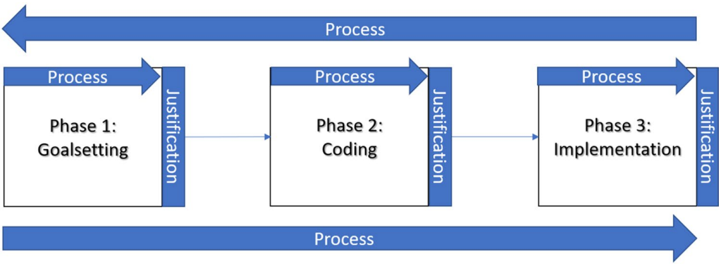
- The paper offers a framework dividing AI public decision-making into three phases: goal-setting, coding, and implementation; transparency in rationale can be applied in each phase.
Methods
- Conceptual/theoretical paper; no empirical data, sample, or statistical analysis are reported.
- It synthesizes social science literature on transparency, legitimacy, principal-agent theory, deliberative democracy, and explainable AI to build an argument and framework.
- The main analysis is normative and argumentative, proposing a framework for transparency and perceived legitimacy in AI decision-making in the socio-technical system.
Limitations
- The authors state that their analysis “builds on a considerable number of assumptions and guesses” and call for theoretical and empirical work on justifications, normatively acceptable reasons, how justifications should be designed and presented, empirically grounded policy design, and how decisions are perceived when made by humans versus AIs.
- The text makes evident that the argument is not empirically tested and relies on literature-based reasoning and examples rather than new data.
- The paper’s main focus is public policymaking and authoritative public decisions, though the authors say the general argument should also apply to AI use in more private operations.
Model-written summary. Check it against the paper before relying on it.
Integrity signals
Registry
Cites
Statistics
Figures
Verification
Claims the paper makes
58 Own interpretation · 25 Not checked yet · 3 No basis given
A conclusion the paper draws from its own results — it cites no other source for it, so there is none to check. The quote shows it is in the paper.
In the paper
“Furthermore, since AI assistants work quickly, thereby producing potentially positive and negative outcomes in a short timeframe, quick and efficient decision-making may be vital when implementing AI assistants (Phases 1 and 2) and adjusting them (Phase 3).”
§ Artificial intelligence, transparency, and public decision-making Why explanations are key when trying to produce perceived legitimacy > 3 Transparency: why more is not necessarily better
hedgedconditional- Asserted: passes — The authors put it forward as true.
- Checkable: unclear — It is unclear whether it could be checked against evidence.
- Load-bearing: passes — The paper’s conclusions depend on it.
- Based: passes — The paper gives a reason why it holds.
A conclusion the paper draws from its own results — it cites no other source for it, so there is none to check. The quote shows it is in the paper.
In the paper
“This suggests that making Phases 1 and 2 available is not necessarily beneficial.”
§ Artificial intelligence, transparency, and public decision-making Why explanations are key when trying to produce perceived legitimacy > 3 Transparency: why more is not necessarily better
hedged- Asserted: passes — The authors put it forward as true.
- Checkable: passes — It can be checked against evidence.
- Load-bearing: passes — The paper’s conclusions depend on it.
- Based: passes — The paper gives a reason why it holds.
A conclusion the paper draws from its own results — it cites no other source for it, so there is none to check. The quote shows it is in the paper.
In the paper
“assuming that the public needs a chance to actually understand the code, the code would likely have to be much simpler than it is in today's systems.”
§ Artificial intelligence, transparency, and public decision-making Why explanations are key when trying to produce perceived legitimacy > 3 Transparency: why more is not necessarily better
hedgedconditional- Asserted: passes — The authors put it forward as true.
- Checkable: passes — It can be checked against evidence.
- Load-bearing: passes — The paper’s conclusions depend on it.
- Based: unclear — It is unclear why the paper says it holds.
- The authors state this as an assumption: The public needs a chance to actually understand the code for transparency to have positive effects.
A conclusion the paper draws from its own results — it cites no other source for it, so there is none to check. The quote shows it is in the paper.
In the paper
“We argue that a limited form of transparency that focuses on providing justifications for decisions has the potential to provide sufficient ground for perceived legitimacy without producing the harms full transparency would bring.”
- Also stated in: § 1 Introduction · hedged
“Based on our reading of the literature, we argue that a limited form of transparency that focuses on providing justifications for decisions has the potential to provide sufficient grounds for perceived legitimacy in AI decision-making.”
§ Artificial intelligence, transparency, and public decision-making Why explanations are key when trying to produce perceived legitimacy > Abstract
plainconditional- Asserted: passes — The authors put it forward as true.
- Checkable: passes — It can be checked against evidence.
- Load-bearing: passes — The paper’s conclusions depend on it.
- Based: passes — The paper gives a reason why it holds.
- Rests on an assumption: Relying on coercion is normatively problematic, costly, and highly inefficient, and perceived legitimacy is fundamental to the democratic system.
- Also stated in: § 1 Introduction · hedged
A conclusion the paper draws from its own results — it cites no other source for it, so there is none to check. The quote shows it is in the paper.
In the paper
“Intuitively, however, not all forms of transparency lead to greater perceived legitimacy.”
§ Artificial intelligence, transparency, and public decision-making Why explanations are key when trying to produce perceived legitimacy > 2 Full transparency in AI and public decision-making
plain- Asserted: passes — The authors put it forward as true.
- Checkable: passes — It can be checked against evidence.
- Load-bearing: passes — The paper’s conclusions depend on it.
- Based: passes — The paper gives a reason why it holds.
A conclusion the paper draws from its own results — it cites no other source for it, so there is none to check. The quote shows it is in the paper.
In the paper
“When the process is made transparent, however, decision-makers may be more concerned with signaling loyalty to their constituents or adhering to the special interests they represent than with finding a solution to an emerging problem.”
§ Artificial intelligence, transparency, and public decision-making Why explanations are key when trying to produce perceived legitimacy > 3 Transparency: why more is not necessarily better
hedgedconditional- Asserted: passes — The authors put it forward as true.
- Checkable: passes — It can be checked against evidence.
- Load-bearing: passes — The paper’s conclusions depend on it.
- Based: unclear — It is unclear why the paper says it holds.
A conclusion the paper draws from its own results — it cites no other source for it, so there is none to check. The quote shows it is in the paper.
In the paper
“we discuss why transparency in AI decision-making can harm legitimacy in the eyes of the public.”
§ Artificial intelligence, transparency, and public decision-making Why explanations are key when trying to produce perceived legitimacy > 1 Introduction
plainconditional- Asserted: passes — The authors put it forward as true.
- Checkable: passes — It can be checked against evidence.
- Load-bearing: passes — The paper’s conclusions depend on it.
- Based: passes — The paper gives a reason why it holds.
- Rests on an assumption: Relying on coercion is normatively problematic, costly, and highly inefficient, and perceived legitimacy is fundamental to the democratic system.
A conclusion the paper draws from its own results — it cites no other source for it, so there is none to check. The quote shows it is in the paper.
In the paper
“there may also be good reason in favor of also demanding transparency in decision-making processes in the workings of AI when it comes to other agents, such as the decision-makers themselves.”
§ Artificial intelligence, transparency, and public decision-making Why explanations are key when trying to produce perceived legitimacy > 3 Transparency: why more is not necessarily better
hedgedconditional- Asserted: passes — The authors put it forward as true.
- Checkable: unclear — It is unclear whether it could be checked against evidence.
- Load-bearing: passes — The paper’s conclusions depend on it.
- Based: passes — The paper gives a reason why it holds.
A conclusion the paper draws from its own results — it cites no other source for it, so there is none to check. The quote shows it is in the paper.
In the paper
“However, this does not imply that there are good reason in favor of sharing this information with the general public if perceived legitimacy is the goal.”
§ Artificial intelligence, transparency, and public decision-making Why explanations are key when trying to produce perceived legitimacy > 3 Transparency: why more is not necessarily better
plain- Asserted: passes — The authors put it forward as true.
- Checkable: passes — It can be checked against evidence.
- Load-bearing: passes — The paper’s conclusions depend on it.
- Based: passes — The paper gives a reason why it holds.
A conclusion the paper draws from its own results — it cites no other source for it, so there is none to check. The quote shows it is in the paper.
In the paper
“In many cases, a policy of justifications may even fulfill this role better than more demanding forms of transparency, e.g., when the whole process is made visible.”
§ Artificial intelligence, transparency, and public decision-making Why explanations are key when trying to produce perceived legitimacy > 4 The benefits of a justifications approach to AI transparency
hedgedconditional- Asserted: passes — The authors put it forward as true.
- Checkable: passes — It can be checked against evidence.
- Load-bearing: passes — The paper’s conclusions depend on it.
- Based: passes — The paper gives a reason why it holds.
- Probably not a substantial claim. 29
- It may state two separate claims as one. 32
A conclusion the paper draws from its own results — it cites no other source for it, so there is none to check. The quote shows it is in the paper.
In the paper
“However, if explicability means that we actually make the decisionmaking processes fully transparent, then we do not believe it suitable in relation to the production of perceived legitimacy; but, if decision-makers should provide an explanation in the form of a narrative where it is explained how the decision has been made, then this might be applicable for perceived legitimacy.”
§ Artificial intelligence, transparency, and public decision-making Why explanations are key when trying to produce perceived legitimacy > 2 Full transparency in AI and public decision-making
hedgedconditional- Asserted: passes — The authors put it forward as true.
- Checkable: passes — It can be checked against evidence.
- Load-bearing: passes — The paper’s conclusions depend on it.
- Based: fails — The paper may give no reason why it holds.
Probably not a substantial claim. The paper may give no reason why it holds. It may state two separate claims as one.
A conclusion the paper draws from its own results — it cites no other source for it, so there is none to check. The quote shows it is in the paper.
In the paper
“Thus, in this sense, though, demands on transparency would probably produce a lower degree of quality in the decisions and thereby less perceived legitimacy.”
§ Artificial intelligence, transparency, and public decision-making Why explanations are key when trying to produce perceived legitimacy > 3 Transparency: why more is not necessarily better
hedgedconditional- Asserted: passes — The authors put it forward as true.
- Checkable: passes — It can be checked against evidence.
- Load-bearing: passes — The paper’s conclusions depend on it.
- Based: passes — The paper gives a reason why it holds.
It may state two separate claims as one.
None of the sources cited for this claim have been checked yet.
In the paper
“This would arguably make it easier to game the system, and it would provide the industry with fewer incentives to innovate (e.g., Zarsky 2016; Lepri et al. 2017;De Laat 2018; Carabantes 2019).”
§ Artificial intelligence, transparency, and public decision-making Why explanations are key when trying to produce perceived legitimacy > 3 Transparency: why more is not necessarily better
What the sources say
hedgedconditional- Asserted: passes — The authors put it forward as true.
- Checkable: passes — It can be checked against evidence.
- Load-bearing: passes — The paper’s conclusions depend on it.
- Based: passes — The paper gives a reason why it holds.
It may state two separate claims as one.
In the paper
“Thus, the”
§ Artificial intelligence, transparency, and public decision-making Why explanations are key when trying to produce perceived legitimacy > 2 Full transparency in AI and public decision-making
What the sources say
- Not checked yetcites Warren and Mansbridge 2013
plaincorrelational- Asserted: fails — The authors may not put it forward as true.
- Checkable: fails — It may be too vague to check against evidence.
- Load-bearing: fails — The paper’s conclusions may not depend on it.
- Based: fails — The paper may give no reason why it holds.
Probably not a substantial claim. The authors may not put it forward as true. It may be too vague to check against evidence. The paper’s conclusions may not depend on it. The paper may give no reason why it holds.
None of the sources cited for this claim have been checked yet.
In the paper
“Decision-makers and professionals might also become more interested in avoiding blame than in finding optimal solutions (Hood 2007), meaning that the open discussion may become shallow (Chambers 2004(Chambers , 2005) ) and fail to produce the best possible outcomes.”
§ Artificial intelligence, transparency, and public decision-making Why explanations are key when trying to produce perceived legitimacy > 3 Transparency: why more is not necessarily better
What the sources say
- Not checked yetcites Hood 2007
- Not checked yetcites Chambers 2004
- Not checked yetcites Chambers 2005
hedgedconditional- Asserted: passes — The authors put it forward as true.
- Checkable: passes — It can be checked against evidence.
- Load-bearing: passes — The paper’s conclusions depend on it.
- Based: passes — The paper gives a reason why it holds.
It may state two separate claims as one.
A conclusion the paper draws from its own results — it cites no other source for it, so there is none to check. The quote shows it is in the paper.
In the paper
“One reason for this is that transparency about a process imposes incentives on the decision-makers to look credible in the eyes of the observers during their deliberations, but this is not necessarily positive in relation to the prospect of reaching a good decision.”
§ Artificial intelligence, transparency, and public decision-making Why explanations are key when trying to produce perceived legitimacy > 3 Transparency: why more is not necessarily better
plaindirect- Asserted: passes — The authors put it forward as true.
- Checkable: passes — It can be checked against evidence.
- Load-bearing: passes — The paper’s conclusions depend on it.
- Based: passes — The paper gives a reason why it holds.
It may state two separate claims as one.
In the paper
“Bok (1989, p. 175) argues that all organizations need ⋯some shelter in order to be able to arrive at choices and to carry them out.The processes of reasoning, planning, accommodation, and choice are hampered if fully exposed from the outset, no matter how great the corresponding dangers of secrecy.”
§ Artificial intelligence, transparency, and public decision-making Why explanations are key when trying to produce perceived legitimacy > 3 Transparency: why more is not necessarily better
What the sources say
- Not checked yetcites Bok (1989, p. 175)
plaindirect- Asserted: passes — The authors put it forward as true.
- Checkable: passes — It can be checked against evidence.
- Load-bearing: passes — The paper’s conclusions depend on it.
- Based: passes — The paper gives a reason why it holds.
It may state two separate claims as one.
A conclusion the paper draws from its own results — it cites no other source for it, so there is none to check. The quote shows it is in the paper.
In the paper
“Asking”
§ Artificial intelligence, transparency, and public decision-making Why explanations are key when trying to produce perceived legitimacy > 3 Transparency: why more is not necessarily better
plain- Asserted: passes — The authors put it forward as true.
- Checkable: fails — It may be too vague to check against evidence.
- Load-bearing: fails — The paper’s conclusions may not depend on it.
- Based: passes — The paper gives a reason why it holds.
Probably not a substantial claim. It may be too vague to check against evidence. The paper’s conclusions may not depend on it.
None of the sources cited for this claim have been checked yet.
In the paper
“In front of an audience, it may be difficult to change an opinion (even with a good argument), present dissenting opinions, or ask necessary but seemingly”
§ Artificial intelligence, transparency, and public decision-making Why explanations are key when trying to produce perceived legitimacy > 3 Transparency: why more is not necessarily better
What the sources say
- Not checked yetcites Elster 1998
- Not checked yetcites Meade and Stasavage 2006
- Not checked yetcites Mansbridge 2009 source
hedgedconditional- Asserted: passes — The authors put it forward as true.
- Checkable: passes — It can be checked against evidence.
- Load-bearing: passes — The paper’s conclusions depend on it.
- Based: passes — The paper gives a reason why it holds.
It may state two separate claims as one.
A conclusion the paper draws from its own results — it cites no other source for it, so there is none to check. The quote shows it is in the paper.
In the paper
“Finding the relevant information would be as difficult as finding the proverbial needle in a haystack-something that decision-makers and the public will understand and adapt to.Hence, we will not witness the positive outcomes of making the information available.”
§ Artificial intelligence, transparency, and public decision-making Why explanations are key when trying to produce perceived legitimacy > 3 Transparency: why more is not necessarily better
hedgeddirect- Asserted: passes — The authors put it forward as true.
- Checkable: passes — It can be checked against evidence.
- Load-bearing: passes — The paper’s conclusions depend on it.
- Based: passes — The paper gives a reason why it holds.
It may state two separate claims as one.
A conclusion the paper draws from its own results — it cites no other source for it, so there is none to check. The quote shows it is in the paper.
In the paper
“That decision-makers are given some shelter for discussion is especially important in Phases 1 and 2, since these phases are likely to contain both technically complex and morally controversial tradeoffs.”
§ Artificial intelligence, transparency, and public decision-making Why explanations are key when trying to produce perceived legitimacy > 4 The benefits of a justifications approach to AI transparency
hedgedconditional- Asserted: passes — The authors put it forward as true.
- Checkable: fails — It may be too vague to check against evidence.
- Load-bearing: passes — The paper’s conclusions depend on it.
- Based: passes — The paper gives a reason why it holds.
Probably not a substantial claim. It may be too vague to check against evidence.
None of the sources cited for this claim have been checked yet.
In the paper
“Transparency is generally associated with the”
§ Artificial intelligence, transparency, and public decision-making Why explanations are key when trying to produce perceived legitimacy > 4 The benefits of a justifications approach to AI transparency
What the sources say
- Not checked yetcites Fenster 2006, p. 931
- Not checked yetcites West and Sanders 2003
plaincorrelational- Asserted: passes — The authors put it forward as true.
- Checkable: passes — It can be checked against evidence.
- Load-bearing: fails — The paper’s conclusions may not depend on it.
- Based: passes — The paper gives a reason why it holds.
Probably not a substantial claim. The paper’s conclusions may not depend on it.
A conclusion the paper draws from its own results — it cites no other source for it, so there is none to check. The quote shows it is in the paper.
In the paper
“in Phases 1 and 2, the public eye monitors the reasons on which the decisions are based.”
§ Artificial intelligence, transparency, and public decision-making Why explanations are key when trying to produce perceived legitimacy > 4 The benefits of a justifications approach to AI transparency
plain- Asserted: passes — The authors put it forward as true.
- Checkable: passes — It can be checked against evidence.
- Load-bearing: passes — The paper’s conclusions depend on it.
- Based: fails — The paper may give no reason why it holds.
Probably not a substantial claim. The paper may give no reason why it holds.
A conclusion the paper draws from its own results — it cites no other source for it, so there is none to check. The quote shows it is in the paper.
In the paper
“A cooperative working climate that can spark efficiency and problem-solving when it comes to AI in decision-making is crucial, as algorithms can potentially cause considerable damage if they are not properly adjusted when necessary.”
§ Artificial intelligence, transparency, and public decision-making Why explanations are key when trying to produce perceived legitimacy > 4 The benefits of a justifications approach to AI transparency
plainconditional- Asserted: passes — The authors put it forward as true.
- Checkable: fails — It may be too vague to check against evidence.
- Load-bearing: fails — The paper’s conclusions may not depend on it.
- Based: passes — The paper gives a reason why it holds.
Probably not a substantial claim. It may be too vague to check against evidence. The paper’s conclusions may not depend on it. It may state two separate claims as one.
In the paper
“Thus, decision-makers are likely to properly weigh the pros and cons when making decisions (Shapiro 1992), thus leading to higher-quality decisions.”
§ Artificial intelligence, transparency, and public decision-making Why explanations are key when trying to produce perceived legitimacy > 4 The benefits of a justifications approach to AI transparency
What the sources say
- Not checked yetcites Shapiro 1992
hedgeddirect- Asserted: passes — The authors put it forward as true.
- Checkable: passes — It can be checked against evidence.
- Load-bearing: passes — The paper’s conclusions depend on it.
- Based: passes — The paper gives a reason why it holds.
It may state two separate claims as one.
The paper states this without a source or data behind it here, so there is nothing to check it against. The quote shows it is in the paper.
In the paper
“As well as this, no general framework exists to analyze the perceived legitimacy of AI in the broader context of the socio-technological system to elucidate the issues of today and tomorrow regarding transparency and perceived legitimacy.”
§ Artificial intelligence, transparency, and public decision-making Why explanations are key when trying to produce perceived legitimacy > 1 Introduction
plain- Asserted: passes — The authors put it forward as true.
- Checkable: passes — It can be checked against evidence.
- Load-bearing: passes — The paper’s conclusions depend on it.
- Based: fails — The paper may give no reason why it holds.
Probably not a substantial claim. The paper may give no reason why it holds.
The paper states this without a source or data behind it here, so there is nothing to check it against. The quote shows it is in the paper.
In the paper
“However, though a lot of interesting work has been done in the area of transparency, far less attention has been devoted to the role of transparency in terms of how those who are ultimately affected (i.e., the general public) come to perceive AI decision-making as being legitimate and worthy of acceptance.”
§ Artificial intelligence, transparency, and public decision-making Why explanations are key when trying to produce perceived legitimacy > 1 Introduction
plain- Asserted: passes — The authors put it forward as true.
- Checkable: passes — It can be checked against evidence.
- Load-bearing: passes — The paper’s conclusions depend on it.
- Based: fails — The paper may give no reason why it holds.
Probably not a substantial claim. The paper may give no reason why it holds.
A conclusion the paper draws from its own results — it cites no other source for it, so there is none to check. The quote shows it is in the paper.
In the paper
“Furthermore, it may be difficult to establish goals and guarantee that their respective importance is sufficiently precise for programmers' needs.”
§ Artificial intelligence, transparency, and public decision-making Why explanations are key when trying to produce perceived legitimacy > 2 Full transparency in AI and public decision-making
hedged- Asserted: passes — The authors put it forward as true.
- Checkable: fails — It may be too vague to check against evidence.
- Load-bearing: fails — The paper’s conclusions may not depend on it.
- Based: fails — The paper may give no reason why it holds.
Probably not a substantial claim. It may be too vague to check against evidence. The paper’s conclusions may not depend on it. The paper may give no reason why it holds. It may state two separate claims as one.
A conclusion the paper draws from its own results — it cites no other source for it, so there is none to check. The quote shows it is in the paper.
In the paper
“Even though this is persuasive, it may be just a story.”
§ Artificial intelligence, transparency, and public decision-making Why explanations are key when trying to produce perceived legitimacy > 4 The benefits of a justifications approach to AI transparency
hedged- Asserted: passes — The authors put it forward as true.
- Checkable: fails — It may be too vague to check against evidence.
- Load-bearing: fails — The paper’s conclusions may not depend on it.
- Based: fails — The paper may give no reason why it holds.
Probably not a substantial claim. It may be too vague to check against evidence. The paper’s conclusions may not depend on it. The paper may give no reason why it holds.
In the paper
“These qualities can increase both quality and efficiency in decision-making (Mansbridge 2009).”
§ Artificial intelligence, transparency, and public decision-making Why explanations are key when trying to produce perceived legitimacy > 4 The benefits of a justifications approach to AI transparency
What the sources say
- Not checked yetcites Mansbridge 2009 source
plaindirect- Asserted: passes — The authors put it forward as true.
- Checkable: passes — It can be checked against evidence.
- Load-bearing: passes — The paper’s conclusions depend on it.
- Based: passes — The paper gives a reason why it holds.
It may state two separate claims as one.
A conclusion the paper draws from its own results — it cites no other source for it, so there is none to check. The quote shows it is in the paper.
In the paper
“a policy of justifications of decisions will inform the public of what the decision is, on which grounds it has been made, and in doing so, identify who the responsible actor is.”
- Also stated in: § 4 The benefits of a justifications approach to AI transparency · plain
“A policy of justification will tell the public what the decision is, on which grounds it has been made, and who the responsible actor is.”
§ Artificial intelligence, transparency, and public decision-making Why explanations are key when trying to produce perceived legitimacy > 4 The benefits of a justifications approach to AI transparency
plaindirect- Asserted: passes — The authors put it forward as true.
- Checkable: passes — It can be checked against evidence.
- Load-bearing: passes — The paper’s conclusions depend on it.
- Based: passes — The paper gives a reason why it holds.
It may state two separate claims as one.
- Also stated in: § 4 The benefits of a justifications approach to AI transparency · plain
In the paper
“The widespread myth of secret power is sparked by the fact that modern popular culture generally tells us that we should be suspicious of anyone in a powerful position (Brin 1998).”
§ Artificial intelligence, transparency, and public decision-making Why explanations are key when trying to produce perceived legitimacy > 4 The benefits of a justifications approach to AI transparency
What the sources say
- Not checked yetcites Brin 1998
plaindirect- Asserted: passes — The authors put it forward as true.
- Checkable: passes — It can be checked against evidence.
- Load-bearing: fails — The paper’s conclusions may not depend on it.
- Based: passes — The paper gives a reason why it holds.
Probably not a substantial claim. The paper’s conclusions may not depend on it.
A conclusion the paper draws from its own results — it cites no other source for it, so there is none to check. The quote shows it is in the paper.
In the paper
“As such, due to the staggering amount of information available, it may be difficult to understand who to hold accountable for what.”
§ Artificial intelligence, transparency, and public decision-making Why explanations are key when trying to produce perceived legitimacy > 3 Transparency: why more is not necessarily better
hedgedconditional- Asserted: passes — The authors put it forward as true.
- Checkable: fails — It may be too vague to check against evidence.
- Load-bearing: passes — The paper’s conclusions depend on it.
- Based: passes — The paper gives a reason why it holds.
Probably not a substantial claim. It may be too vague to check against evidence.
A conclusion the paper draws from its own results — it cites no other source for it, so there is none to check. The quote shows it is in the paper.
In the paper
“Hence, the decision-makers will have incentives to behave better when it comes to producing such reasons, thus producing higher-quality decisions.”
§ Artificial intelligence, transparency, and public decision-making Why explanations are key when trying to produce perceived legitimacy > 4 The benefits of a justifications approach to AI transparency
plaindirect- Asserted: passes — The authors put it forward as true.
- Checkable: passes — It can be checked against evidence.
- Load-bearing: passes — The paper’s conclusions depend on it.
- Based: passes — The paper gives a reason why it holds.
It may state two separate claims as one.
None of the sources cited for this claim have been checked yet.
In the paper
“Of course, the notion that AI assistants should be able to provide justifications or explanations for their decisions is not novel.In fact, it fits nicely with the core components of the rapidly evolving research field of explainable AI (XAI) (e.g., Gunning 2017Gunning , 2019;;Thelisson et al. 2017).”
§ Artificial intelligence, transparency, and public decision-making Why explanations are key when trying to produce perceived legitimacy > 2 Full transparency in AI and public decision-making
What the sources say
- Not checked yetcites Gunning 2017
- Not checked yetcites Gunning 2019
- Not checked yetcites Thelisson et al. 2017
plaincorrelational- Asserted: passes — The authors put it forward as true.
- Checkable: passes — It can be checked against evidence.
- Load-bearing: fails — The paper’s conclusions may not depend on it.
- Based: passes — The paper gives a reason why it holds.
Probably not a substantial claim. The paper’s conclusions may not depend on it.
A conclusion the paper draws from its own results — it cites no other source for it, so there is none to check. The quote shows it is in the paper.
In the paper
“Similarly, the source code and data that the AI has been trained and tested on are often too complex for most individuals to fully understand, meaning that full transparency might actually make the public less prone to believing that they have more control over the AI than they did before they had access to the data.”
§ Artificial intelligence, transparency, and public decision-making Why explanations are key when trying to produce perceived legitimacy > 3 Transparency: why more is not necessarily better
hedgedconditional- Asserted: passes — The authors put it forward as true.
- Checkable: passes — It can be checked against evidence.
- Load-bearing: passes — The paper’s conclusions depend on it.
- Based: passes — The paper gives a reason why it holds.
It may state two separate claims as one.
- Rests on an assumption: The general public will not understand the source code.
A conclusion the paper draws from its own results — it cites no other source for it, so there is none to check. The quote shows it is in the paper.
In the paper
“For a general public that is not particularly interested in political matters, this means that justifications may actually be a more attractive policy than full transparency.”
§ Artificial intelligence, transparency, and public decision-making Why explanations are key when trying to produce perceived legitimacy > 4 The benefits of a justifications approach to AI transparency
hedgedconditional- Asserted: passes — The authors put it forward as true.
- Checkable: fails — It may be too vague to check against evidence.
- Load-bearing: passes — The paper’s conclusions depend on it.
- Based: fails — The paper may give no reason why it holds.
Probably not a substantial claim. It may be too vague to check against evidence. The paper may give no reason why it holds.
- Rests on an assumption: The general public is not particularly interested in political matters.
A conclusion the paper draws from its own results — it cites no other source for it, so there is none to check. The quote shows it is in the paper.
In the paper
“Similarly, they are likely to get sufficient information to understand the different considerations and perspectives underlying the decision, thus making them feel included.”
§ Artificial intelligence, transparency, and public decision-making Why explanations are key when trying to produce perceived legitimacy > 4 The benefits of a justifications approach to AI transparency
hedgedconditional- Asserted: passes — The authors put it forward as true.
- Checkable: passes — It can be checked against evidence.
- Load-bearing: passes — The paper’s conclusions depend on it.
- Based: fails — The paper may give no reason why it holds.
Probably not a substantial claim. The paper may give no reason why it holds. It may state two separate claims as one.
A conclusion the paper draws from its own results — it cites no other source for it, so there is none to check. The quote shows it is in the paper.
In the paper
“At the same time, when the actual decision-making process remains comparatively secret, decision-makers can ask important but seemingly”
§ Artificial intelligence, transparency, and public decision-making Why explanations are key when trying to produce perceived legitimacy > 4 The benefits of a justifications approach to AI transparency
plaindirect- Asserted: passes — The authors put it forward as true.
- Checkable: passes — It can be checked against evidence.
- Load-bearing: passes — The paper’s conclusions depend on it.
- Based: passes — The paper gives a reason why it holds.
It may state two separate claims as one.
A conclusion the paper draws from its own results — it cites no other source for it, so there is none to check. The quote shows it is in the paper.
In the paper
“Thus, when code and data are made transparent, the public might think this release is hiding the”
§ Artificial intelligence, transparency, and public decision-making Why explanations are key when trying to produce perceived legitimacy > 3 Transparency: why more is not necessarily better
hedgedconditional- Asserted: passes — The authors put it forward as true.
- Checkable: passes — It can be checked against evidence.
- Load-bearing: passes — The paper’s conclusions depend on it.
- Based: passes — The paper gives a reason why it holds.
It may state two separate claims as one.
- Rests on an assumption: The general public will not understand the source code.
A conclusion the paper draws from its own results — it cites no other source for it, so there is none to check. The quote shows it is in the paper.
In the paper
“Thus, there is a constant intermingling between Phases 1-3, with all phases deeply connected to each other.”
§ Artificial intelligence, transparency, and public decision-making Why explanations are key when trying to produce perceived legitimacy > 2 Full transparency in AI and public decision-making
plaincorrelational- Asserted: passes — The authors put it forward as true.
- Checkable: passes — It can be checked against evidence.
- Load-bearing: fails — The paper’s conclusions may not depend on it.
- Based: passes — The paper gives a reason why it holds.
Probably not a substantial claim. The paper’s conclusions may not depend on it. It may state two separate claims as one.
A conclusion the paper draws from its own results — it cites no other source for it, so there is none to check. The quote shows it is in the paper.
In the paper
“according to principal-agent terminology, the agent (the people) will know who to hold accountable and for what, and this appears true for all phases.”
§ Artificial intelligence, transparency, and public decision-making Why explanations are key when trying to produce perceived legitimacy > 4 The benefits of a justifications approach to AI transparency
hedgeddirect- Asserted: passes — The authors put it forward as true.
- Checkable: passes — It can be checked against evidence.
- Load-bearing: passes — The paper’s conclusions depend on it.
- Based: fails — The paper may give no reason why it holds.
Probably not a substantial claim. The paper may give no reason why it holds. It may state two separate claims as one.
A conclusion the paper draws from its own results — it cites no other source for it, so there is none to check. The quote shows it is in the paper.
In the paper
“This is because they might use this information to make more well-informed decisions, thereby leading to higher-quality decisions that result in higher perceived legitimacy among the public.”
§ Artificial intelligence, transparency, and public decision-making Why explanations are key when trying to produce perceived legitimacy > 3 Transparency: why more is not necessarily better
hedgedconditional- Asserted: passes — The authors put it forward as true.
- Checkable: passes — It can be checked against evidence.
- Load-bearing: passes — The paper’s conclusions depend on it.
- Based: passes — The paper gives a reason why it holds.
It may state two separate claims as one.
In the paper
“In particular, Binns et al. (2018) have examined how different kinds of explanations affect the fairness judgments of the general public.”
§ Artificial intelligence, transparency, and public decision-making Why explanations are key when trying to produce perceived legitimacy > 2 Full transparency in AI and public decision-making
What the sources say
- Not checked yetcites Binns et al. (2018) source
plain- Asserted: passes — The authors put it forward as true.
- Checkable: passes — It can be checked against evidence.
- Load-bearing: fails — The paper’s conclusions may not depend on it.
- Based: passes — The paper gives a reason why it holds.
Probably not a substantial claim. The paper’s conclusions may not depend on it.
A conclusion the paper draws from its own results — it cites no other source for it, so there is none to check. The quote shows it is in the paper.
In the paper
“Furthermore, the public will receive enough information to evaluate the desirability of the decision and, if they so like, demand accountability.”
§ Artificial intelligence, transparency, and public decision-making Why explanations are key when trying to produce perceived legitimacy > 4 The benefits of a justifications approach to AI transparency
plaindirect- Asserted: passes — The authors put it forward as true.
- Checkable: fails — It may be too vague to check against evidence.
- Load-bearing: passes — The paper’s conclusions depend on it.
- Based: fails — The paper may give no reason why it holds.
Probably not a substantial claim. It may be too vague to check against evidence. The paper may give no reason why it holds. It may state two separate claims as one.
- The authors state this as an assumption: Sufficient mechanisms for accountability are in place.
In the paper
“He considers the example of European Union lobbyists, who can be expected to have incentives to behave in a civilized manner when it comes to political matters.”
§ Artificial intelligence, transparency, and public decision-making Why explanations are key when trying to produce perceived legitimacy > 4 The benefits of a justifications approach to AI transparency
What the sources say
- Not checked yetcites Naurin (2007)
plain- Asserted: passes — The authors put it forward as true.
- Checkable: passes — It can be checked against evidence.
- Load-bearing: fails — The paper’s conclusions may not depend on it.
- Based: passes — The paper gives a reason why it holds.
Probably not a substantial claim. The paper’s conclusions may not depend on it.
None of the sources cited for this claim have been checked yet.
In the paper
“This holds that if we received all of the information from Phases 1 and 2, we would have a lot of information to assimilate, and this problem becomes even worse in Phase 3.”
§ Artificial intelligence, transparency, and public decision-making Why explanations are key when trying to produce perceived legitimacy > 3 Transparency: why more is not necessarily better
What the sources say
- Not checked yetcites Eppler and Mengis 2004
- Not checked yetcites Richards and King 2013
hedgeddirect- Asserted: passes — The authors put it forward as true.
- Checkable: passes — It can be checked against evidence.
- Load-bearing: passes — The paper’s conclusions depend on it.
- Based: passes — The paper gives a reason why it holds.
It may state two separate claims as one.
A conclusion the paper draws from its own results — it cites no other source for it, so there is none to check. The quote shows it is in the paper.
In the paper
“Giving these groups access may yield higherquality decisions and a higher degree of perceived legitimacy.”
§ Artificial intelligence, transparency, and public decision-making Why explanations are key when trying to produce perceived legitimacy > 3 Transparency: why more is not necessarily better
hedgedconditional- Asserted: passes — The authors put it forward as true.
- Checkable: passes — It can be checked against evidence.
- Load-bearing: passes — The paper’s conclusions depend on it.
- Based: unclear — It is unclear why the paper says it holds.
It may state two separate claims as one.
In the paper
“The problem is that full transparency reveals the actual reality of decision-making and that real-world decision-making rarely or never lives up to the democratic or professional ideal (e.g., Tsoukas 1997).”
§ Artificial intelligence, transparency, and public decision-making Why explanations are key when trying to produce perceived legitimacy > 3 Transparency: why more is not necessarily better
What the sources say
- Not checked yetcites Tsoukas 1997
plaindirect- Asserted: passes — The authors put it forward as true.
- Checkable: unclear — It is unclear whether it could be checked against evidence.
- Load-bearing: passes — The paper’s conclusions depend on it.
- Based: passes — The paper gives a reason why it holds.
It may state two separate claims as one.
None of the sources cited for this claim have been checked yet.
In the paper
“However, even though it is intuitive that transparent institutions are preferred over non-transparent ones and that they yield higher perceived legitimacy, recent empirical research (e.g., Grimmelikhuijsen 2012; de Fine Licht 2014) has shown that it is far from evident that increased transparency generates trust or acceptance of public policies.In some cases, the effect can even be negative.”
§ Artificial intelligence, transparency, and public decision-making Why explanations are key when trying to produce perceived legitimacy > 3 Transparency: why more is not necessarily better
What the sources say
- Not checked yetcites Grimmelikhuijsen 2012
- Not checked yetcites de Fine Licht 2014
plain- Asserted: passes — The authors put it forward as true.
- Checkable: passes — It can be checked against evidence.
- Load-bearing: passes — The paper’s conclusions depend on it.
- Based: passes — The paper gives a reason why it holds.
It may state two separate claims as one.
A conclusion the paper draws from its own results — it cites no other source for it, so there is none to check. The quote shows it is in the paper.
In the paper
“In most cases, this information is sufficient for members of the public to form an opinion about the desirability of the decision and, if they so like, demand that the responsible actor be accountable”
- Also stated in: § 4 The benefits of a justifications approach to AI transparency · plain
“In most cases, this information is enough for members of the public to form an opinion about the desirability of the decision and, if they so like, demand accountability of the responsible actor”
§ Artificial intelligence, transparency, and public decision-making Why explanations are key when trying to produce perceived legitimacy > 4 The benefits of a justifications approach to AI transparency
plaindirect- Asserted: passes — The authors put it forward as true.
- Checkable: passes — It can be checked against evidence.
- Load-bearing: passes — The paper’s conclusions depend on it.
- Based: unclear — It is unclear why the paper says it holds.
It may state two separate claims as one.
- The authors state this as an assumption: Sufficient mechanisms for accountability are in place.
- Also stated in: § 4 The benefits of a justifications approach to AI transparency · plain
A conclusion the paper draws from its own results — it cites no other source for it, so there is none to check. The quote shows it is in the paper.
In the paper
“This is again because the public will get the information they need in a manageable way, meaning that they will not suffer from the information overload discussed in Sect.3.”
§ Artificial intelligence, transparency, and public decision-making Why explanations are key when trying to produce perceived legitimacy > 4 The benefits of a justifications approach to AI transparency
plaindirect- Asserted: passes — The authors put it forward as true.
- Checkable: fails — It may be too vague to check against evidence.
- Load-bearing: passes — The paper’s conclusions depend on it.
- Based: passes — The paper gives a reason why it holds.
Probably not a substantial claim. It may be too vague to check against evidence. It may state two separate claims as one.
A conclusion the paper draws from its own results — it cites no other source for it, so there is none to check. The quote shows it is in the paper.
In the paper
“Although our main focus is the use of AI technology in public policymaking, authoritative public decision-making in relation to individuals as citizens, and the intermingling of these actors (i.e., the sociotechnical system), the general argument should also apply to cases of AI use in more private operations.”
§ Artificial intelligence, transparency, and public decision-making Why explanations are key when trying to produce perceived legitimacy > 5 Conclusions
plain- Asserted: passes — The authors put it forward as true.
- Checkable: fails — It may be too vague to check against evidence.
- Load-bearing: fails — The paper’s conclusions may not depend on it.
- Based: fails — The paper may give no reason why it holds.
Probably not a substantial claim. It may be too vague to check against evidence. The paper’s conclusions may not depend on it. The paper may give no reason why it holds.
A conclusion the paper draws from its own results — it cites no other source for it, so there is none to check. The quote shows it is in the paper.
In the paper
“In Phases 1 and 2, when decision-makers are transparent about the decision and the reasons for taking it, the public should have greater understanding of why these decisions were made, since the information about the decision will be more condensed, thus making it more accessible.”
§ Artificial intelligence, transparency, and public decision-making Why explanations are key when trying to produce perceived legitimacy > 4 The benefits of a justifications approach to AI transparency
hedgeddirect- Asserted: passes — The authors put it forward as true.
- Checkable: passes — It can be checked against evidence.
- Load-bearing: passes — The paper’s conclusions depend on it.
- Based: passes — The paper gives a reason why it holds.
It may state two separate claims as one.
In the paper
“As argued by McGraw et al. (1995), several conditions must be met for an explanation/justification to have the intended effect: It must be exposed to the intended audience, the audience must pay attention to it, the audience must comprehend it, and the audience must accept the explanation/justification as legitimate.”
§ Artificial intelligence, transparency, and public decision-making Why explanations are key when trying to produce perceived legitimacy > 5 Conclusions
What the sources say
- Not checked yetcites McGraw et al. (1995) source
plaindirect- Asserted: passes — The authors put it forward as true.
- Checkable: passes — It can be checked against evidence.
- Load-bearing: passes — The paper’s conclusions depend on it.
- Based: passes — The paper gives a reason why it holds.
It may state two separate claims as one.
A conclusion the paper draws from its own results — it cites no other source for it, so there is none to check. The quote shows it is in the paper.
In the paper
“These appear to be necessary conditions that make the receiver feel included and respected.”
§ Artificial intelligence, transparency, and public decision-making Why explanations are key when trying to produce perceived legitimacy > 4 The benefits of a justifications approach to AI transparency
hedgeddirect- Asserted: passes — The authors put it forward as true.
- Checkable: passes — It can be checked against evidence.
- Load-bearing: passes — The paper’s conclusions depend on it.
- Based: passes — The paper gives a reason why it holds.
Probably not a substantial claim.
None of the sources cited for this claim have been checked yet.
In the paper
“To provide reasons for decisions signals that the decision-makers respect and care about the affected (e.g., Tyler and Lind 1992) and may lead to more favorable interpretations regarding the motives and intentions of the decision-makers (e.g., Bies and Shapiro 1988;Shapiro et al. 1994;Colquitt 2001;Shaw et al. 2003).”
§ Artificial intelligence, transparency, and public decision-making Why explanations are key when trying to produce perceived legitimacy > 4 The benefits of a justifications approach to AI transparency
What the sources say
- Not checked yetcites Tyler and Lind 1992 source
- Not checked yetcites Bies and Shapiro 1988
- Not checked yetcites Shapiro et al. 1994
hedgedconditional- Asserted: passes — The authors put it forward as true.
- Checkable: passes — It can be checked against evidence.
- Load-bearing: passes — The paper’s conclusions depend on it.
- Based: passes — The paper gives a reason why it holds.
It may state two separate claims as one.
A conclusion the paper draws from its own results — it cites no other source for it, so there is none to check. The quote shows it is in the paper.
In the paper
“In addition, we argue that there may be a reasonable level of public transparency in relation to the design of AI and the decisions made by AI.”
§ Artificial intelligence, transparency, and public decision-making Why explanations are key when trying to produce perceived legitimacy > 5 Conclusions
hedged- Asserted: passes — The authors put it forward as true.
- Checkable: fails — It may be too vague to check against evidence.
- Load-bearing: passes — The paper’s conclusions depend on it.
- Based: passes — The paper gives a reason why it holds.
Probably not a substantial claim. It may be too vague to check against evidence.
In the paper
“They must”
§ Artificial intelligence, transparency, and public decision-making Why explanations are key when trying to produce perceived legitimacy > 4 The benefits of a justifications approach to AI transparency
What the sources say
- Not checked yetcites Naurin (2007)
plain- Asserted: passes — The authors put it forward as true.
- Checkable: passes — It can be checked against evidence.
- Load-bearing: fails — The paper’s conclusions may not depend on it.
- Based: passes — The paper gives a reason why it holds.
Probably not a substantial claim. The paper’s conclusions may not depend on it.
A conclusion the paper draws from its own results — it cites no other source for it, so there is none to check. The quote shows it is in the paper.
In the paper
“At the same time, when keeping the process more secret, we can avoid many of the potentially negative effects of full transparency previously discussed such as disappointment regarding the decision-makers' behavior in decisionmaking situations.”
§ Artificial intelligence, transparency, and public decision-making Why explanations are key when trying to produce perceived legitimacy > 4 The benefits of a justifications approach to AI transparency
plaindirect- Asserted: passes — The authors put it forward as true.
- Checkable: passes — It can be checked against evidence.
- Load-bearing: fails — The paper’s conclusions may not depend on it.
- Based: fails — The paper may give no reason why it holds.
Probably not a substantial claim. The paper’s conclusions may not depend on it. The paper may give no reason why it holds.
A conclusion the paper draws from its own results — it cites no other source for it, so there is none to check. The quote shows it is in the paper.
In the paper
“This will then lead to fairer decisions of higher quality, eventually leading to a higher degree of perceived legitimacy.”
§ Artificial intelligence, transparency, and public decision-making Why explanations are key when trying to produce perceived legitimacy > 4 The benefits of a justifications approach to AI transparency
plaindirect- Asserted: passes — The authors put it forward as true.
- Checkable: passes — It can be checked against evidence.
- Load-bearing: passes — The paper’s conclusions depend on it.
- Based: fails — The paper may give no reason why it holds.
Probably not a substantial claim. The paper may give no reason why it holds. It may state two separate claims as one.
A conclusion the paper draws from its own results — it cites no other source for it, so there is none to check. The quote shows it is in the paper.
In the paper
“However, justifications need to be understandable and relevant to the decision at hand.”
§ Artificial intelligence, transparency, and public decision-making Why explanations are key when trying to produce perceived legitimacy > 4 The benefits of a justifications approach to AI transparency
plain- Asserted: passes — The authors put it forward as true.
- Checkable: fails — It may be too vague to check against evidence.
- Load-bearing: passes — The paper’s conclusions depend on it.
- Based: passes — The paper gives a reason why it holds.
Probably not a substantial claim. It may be too vague to check against evidence.
The paper relies on this without support.
Relying on coercion is normatively problematic, costly, and highly inefficient, and perceived legitimacy is fundamental to the democratic system.
“Since relying on coercion is not only normatively problematic but also costly and highly inefficient, perceived legitimacy is fundamental to the democratic system.”
The authors state this as an assumption.
The public needs a chance to actually understand the code for transparency to have positive effects.
“assuming that the public needs a chance to actually understand the code”
The paper relies on this without support.
The general public will not understand the source code.
“even though the general public will not understand it”
The paper relies on this without support.
Perceived legitimacy is the goal of transparency in AI decision-making.
“if perceived legitimacy is the goal”
“When realizing perceived legitimacy, we should, as a default, opt for having our AI assistants explain themselves rather than open up their code, etc. for public scrutiny.”
The authors state this as an assumption.
Sufficient mechanisms for accountability are in place.
“given, of course, that sufficient mechanisms for accountability are in place”
“given of course that sufficient mechanisms for accountability are in place”
The paper relies on this without support.
The general public is not particularly interested in political matters.
“For a general public that is not particularly interested in political matters”
The paper relies on this without support.
Decision-makers are servants of the public.
“their position as servants of the public”
Claims other papers make about this one
Each is checked against this paper’s own text: does it say what the citing paper says it does?
The source backs part of the claim, not all of it — or backs it for a different population, condition or comparison.
In the citing paper
“In a conceptual piece on the legitimacy of algorithmic public decisions, they argue that providing a decision justification is needed to sustain government legitimacy.”
From Explaining Why the Computer Says No: Algorithmic Transparency Affects the Perceived Trustworthiness of Automated Decision‐Making (2023) · cites this paper as De Fine Licht and De Fine Licht (2020)
Experimental — accuracy not yet measuredThe cited source says what the claim attributes to it.
In the citing paper
“Citizens want to receive clear reasons for a (negative) decision to assess the fairness of a decision (De Fine Licht and De Fine Licht 2020; Tyler 2006) or to be able to contest an algorithmic decision (Mittelstadt et al. 2019).”
From Explaining Why the Computer Says No: Algorithmic Transparency Affects the Perceived Trustworthiness of Automated Decision‐Making (2023) · cites this paper as De Fine Licht and De Fine Licht 2020
The cited source says what the claim attributes to it.
In the citing paper
“This distinction accords with research showing that reasons-focused transparency can be more intelligible and legitimacy-enhancing than indiscriminate disclosure of code or process detail (de Fine Licht & de Fine Licht, 2020).”
From Responsible AI in Polish Higher-Education Administration under the EU AI Act: High-Risk Use Cases, Fundamental-Rights Impact Assessment, and Institutional Accountability (2026) · cites this paper as de Fine Licht & de Fine Licht, 2020
In the citing paper
“Public dissatisfaction with responses to the black box problem may undermine the adoption of AI/ML technologies, especially when these technologies cause harm, invade privacy, or produce biased claims and results [60, 85, 134, 175].”
From The ethics of using artificial intelligence in scientific research: new guidance needed for a new tool (2025) · cites this paper as [134]
In the citing paper
“It may also be the case that a limited form of transparency offering justification of decisions is more likely to increase perceived legitimacy of a system, rather than the more extensive transparency of the automated decision-making process itself attempted in this project (Fine Licht and Fine Licht 2020).”
From Tensions in transparent urban AI: designing a smart electric vehicle charge point (2023) · cites this paper as Fine Licht and Fine Licht 2020
In the citing paper
“The need to provide appropriate justifications of judicial decisions has also been analyzed by several authors [26, 29, 73] 24 .”
From Beyond explainability: justifiability and contestability of algorithmic decision systems (2022) · cites this paper as [29]
Self-check
Percentages, sums and reported differences re-computed from the paper’s own numbers.
Each contradiction between two passages listed here was confirmed by an independent check.
Rated minor: it would not touch a result — a value no result rests on, a p-value that stays on the same side of the significance level, or a conflict that is clerical, resolved elsewhere in the paper, or outside its own findings.
In the paper
§ Artificial intelligence, transparency, and public decision-making Why explanations are key when trying to produce perceived legitimacy > 4 The benefits of a justifications approach to AI transparency
“according to principal-agent terminology, the agent (the people) will know who to hold accountable and for what”
§ Artificial intelligence, transparency, and public decision-making Why explanations are key when trying to produce perceived legitimacy > 3 Transparency: why more is not necessarily better
“transparency allows the principal (i.e., the public) to overcome the information asymmetry regarding the agent's (i.e., the representative's) workings”
Citations
Cites
Artificial intelligence: a modern approach
Kumar, D. A., Balasubramanian, S., Byeon, D. H., & Manerkar, P. G. V. (1995) · Choice Reviews Online · doi:10.5860/choice.33-1577 · Cited by 22,191
Artificial intelligence: A modern approach
Nilsson, N. J. (1996) · Artificial Intelligence · doi:10.1016/0004-3702(96)00007-0 · Cited by 10,730
The Science of “Muddling Through”
Lindblom, C. E. (1959) · Public Administration Review · doi:10.2307/973677 · Cited by 8,513
Moral Hazard and Observability
Holmstrom, B. R. (1979) · The Bell Journal of Economics · doi:10.2307/3003320 · Cited by 8,159 · cited 1×
“In principal–agent terminology (Holmström 1979; Fearon 1998; Manin et al.”
BackgroundOn the dimensionality of organizational justice: a construct validation of a measure.
Colquitt, J. (2001) · Journal of Applied Psychology · doi:10.1037/0021-9010.86.3.386 · Cited by 6,043 · cited 1×
“1994; Colquitt 2001; Shaw et al.”
Fenichel Pitkin, H. (1967) · doi:10.1525/9780520340503 · Cited by 5,162 · cited 1×
“Thereby, actors receiving justifications might be motivated to act as good losers, to accept that they have lost, and move on (e.g., Pitkin 1967; Gutmann and Thompson 1996).”
Floridi, L., Cowls, J., Beltrametti, M., Chatila, R., Chazerand, P., Dignum, V., Luetge, C., Madelin, R., Pagallo, U., Rossi, F., et al. (2018) · Minds and Machines · doi:10.1007/s11023-018-9482-5 · Cited by 4,774
The Black Box Society: The Secret Algorithms That Control Money and Information
Pasquale, F. (2015) · doi:10.4159/harvard.9780674736061 · Cited by 3,796
Governing in Europe: Effective and Democratic?
Scharpf, F. W. (1999) · Oxford University Press eBooks · doi:10.1093/acprof:oso/9780198295457.001.0001 · Cited by 3,294
The Concept of Representation, by Hanna F. Pitkin
Mansfield, H. C. (1969) · Political Science Quarterly · doi:10.2307/2147153 · Cited by 3,092
Research works printed but not linked: 5
- Fearon J (1998) Deliberation and discussion. In: Elster J (ed) Deliberative democracy. Cambridge University Press, Cambridge
- Fenster M (2006) The opacity of transparency. Iowa Law Rev 91(3):885–949
- Lepri B, Oliver N, Letouzé E, Pentland A, Vinck P (2017) Fair, transparent, and accountable algorithmic decision-making processes. Philos Technol 2017:1–17
- Thelisson E, Padh K, Celis LE (2017) Regulatory mechanisms and algorithms towards trust in AI/ML. In: Proceedings of the IJCAI 2017 workshop on explainable artificial intelligence (XAI), Melbourne, Australia
- Warren ME, Mansbridge J (2013) Deliberative Negotiation. In: Mansbridge J, Martin CJ (eds) Negotiating agreement in politics: report of the task force on negotiating in politics. American Political Science Association, Washington
Cited by
Sorted by citations
Items 101–200 of 327
Menke, W., Gomes, R. C., & Xavier, F. (2024) · Global Public Policy and Governance · doi:10.1007/s43508-024-00098-1 · Cited by 19
Chan, C., & Nurrosyidah, A. (2025) · Social Sciences · doi:10.3390/socsci14010030 · Cited by 21
Rulandari, N., & Silalahi, A. D. K. (2025) · Transforming Government People Process and Policy · doi:10.1108/tg-01-2025-0004 · Cited by 12
A pragmatic perspective on AI transparency at workplace
Al-Sulaiti, G., Sadeghi, M. A., Chauhan, L. P. S., Lucas, J., Chawla, S., & Elmagarmid, A. K. (2023) · AI and Ethics · doi:10.1007/s43681-023-00257-w · Cited by 16
On the Impact of Explanations on Understanding of Algorithmic Decision-Making
Schmude, T., Koesten, L. M., Möller, T. B., & Tschiatschek, S. (2023) · ACM Conference on Fairness, Accountability, and Transparency (FAccT) · doi:10.1145/3593013.3594054 · Cited by 22
“eu/en/library/proposalregulation-laying-down-harmonised-rules-artificial-intelligence [17] Karl de Fine Licht and Jenny de Fine Licht.”
BackgroundGenerative artificial intelligence use in the workplace: implications for management practice
Hernández-Tamurejo, Á., Bužinskienė, R., Barbosa, B., Miceikienė, A., & Saura, J. R. (2025) · Review of Managerial Science · doi:10.1007/s11846-025-00949-z · Cited by 17
Aljuneidi, S., Heuten, W., Abdenebaoui, L., Wolters, M. K., & Boll, S. (2024) · CHI Conference on Human Factors in Computing Systems · doi:10.1145/3613904.3642535 · Cited by 15
Alfrink, K., Keller, I., Yurrita, M., Bulygin, D., Kortuem, G., & Doorn, N. (2024) · She ji · doi:10.1016/j.sheji.2024.03.003 · Cited by 14
Ioku, T., Song, J., & Watamura, E. (2024) · Big Data & Society · doi:10.1177/20539517241290217 · Cited by 18
“Previous studies have explored how varying transparency levels in AI decision-making in fl uence public perception and legitimacy (e.g., de Fine Licht and de Fine Licht, 2020).”
Nieuwenhuizen, E., Meijer, A. J., Bex, F., & Grimmelikhuijsen, S. (2024) · Public Performance & Management Review · doi:10.1080/15309576.2024.2443140 · Cited by 18
“Demands for transparency would therefore likely result in decisions of inferior quality and, as a result, less trust (de Fine Licht & de Fine Licht, 2020, p. 921).”
InfluentialAI Usage Cards: Responsibly Reporting AI-generated ContentPreprint
Wahle, J. P., Ruas, T., Mohammad, S. M., Meuschke, N., & Gipp, B. (2023) · doi:10.22541/au.168323192.20543041/v1 · Cited by 10
Yawson, R. M., & Goryunova, E. (2025) · Advances in Developing Human Resources · doi:10.1177/15234223251335908 · Cited by 22
“Transparency and explainability remain persistent challenges, as many advanced AI systems operate as “ black boxes ” that make decisions without clear explanation of their reasoning process (de Fine Licht & de Fine Licht, 2020).”
Cozmescu, A. F., Cernega, A., Mincă, D. G., Didilescu, A. C., Imre, M. M., Totan, A., Pârvu, S., & Pițuru, S. (2025) · Dentistry Journal · doi:10.3390/dj13090390 · Cited by 14
“Given that AI is a field with a pronounced dynamic, the legislative spectrum plays an extremely important role in its regulation [18].”
Ethical challenges in argumentation and dialogue in a healthcare context
Snaith, M., Nielsen, R. Ø., Kotnis, S. R., & Pease, A. (2020) · Argument & Computation · doi:10.3233/aac-200908 · Cited by 11
Transparency and its roles in realizing greener AI
Osifo, O. C. (2023) · Journal of Information Communication and Ethics in Society · doi:10.1108/jices-11-2022-0097 · Cited by 12
Ruled by robots: preference for algorithmic decision makers and perceptions of their choices
Chugunova, M., & Luhan, W. J. (2024) · Public Choice · doi:10.1007/s11127-024-01178-w · Cited by 12
“Acceptance and perceived legitimacy in general are fundamental to the democratic system and public acceptance of AI implementation will critically affect how and where it is deployed (Zerilli et al., 2019; de Fine Licht & de Fine Licht, 2020).”
Howe, S., Groot, C. A. U., & Wehrens, R. (2024) · JMIR Human Factors · doi:10.2196/48955 · Cited by 9
“Social infrastructure produces a more comprehensive understanding of the issues underpinning technology adoption than frameworks that hinge on trust [136,137], transparency [4,137], and acceptability [19], especially when those frameworks are based on behavioral intention [20,21,138].”
InfluentialPopović, S., Viduka, D., Bašić, A., Dimić, V., Djukic, D., Nikolić, V. R., & Stokić, A. (2025) · Electronics · doi:10.3390/electronics14030562 · Cited by 18
Enacting the Pandemic: Analyzing Agency, Opacity, and Power in Algorithmic AssemblagesPreprint
Lee, F. (2022) · SocArXiv (OSF Preprints) · doi:10.31235/osf.io/hgqpb · Cited by 9
Adoption of AI in Oncological Imaging: Ethical, Regulatory, and Medical-Legal Challenges
Alì, M., Fantesini, A., Morcella, M. T., Ibba, S., D’Anna, G., Fazzini, D., & Papa, S. (2023) · Critical Reviews™ in Oncogenesis · doi:10.1615/critrevoncog.2023050584 · Cited by 8
AI in Governance and Policy Making
Saxena, A. K. (2024) · International Journal of Science and Research (IJSR) · doi:10.21275/sr24519015426 · Cited by 10
Harnessing AI for Optimized Decision-Making A COPRAS Analysis
Gorantla, B., & Devineni, S. (2023) · REST Journal on Data Analytics and Artificial Intelligence · doi:10.46632/jdaai/2/3/13 · Cited by 8
Licht, K. D. F., & Folland, A. (2025) · Public Administration · doi:10.1111/padm.70029 · Cited by 12
Self-citationAljuneidi, S., Heuten, W., Tepe, M., & Boll, S. (2023) · International Conference on Information Technology for Social Good (GoodIT) · doi:10.1145/3582515.3609518 · Cited by 11
Stakeholders analysis of tourism governance in Dalegan beach ecotourism, East Java, Indonesia
Tamrin, M. H., Muhafidin, D., Nurasa, H., & Muhtar, E. A. (2024) · Journal of Infrastructure Policy and Development · doi:10.24294/jipd.v8i3.3107 · Cited by 18
Value co-creation ‘gradients’: enabling human-machine interactions through AI-based DSS
Carrubbo, L., Polese, F., Drăgoicea, M., Walletzký, L., & Megaro, A. (2022) · ITM Web of Conferences · doi:10.1051/itmconf/20224101002 · Cited by 8
Wilms, L. K., Gerl, K., Stoll, A., & Ziegele, M. (2024) · Human-Computer Interaction · doi:10.1080/07370024.2024.2307610 · Cited by 7
“Such information could include information on the decision outcome, the decision-making process, and the reasons for the decision (de Fine Licht & de Fine Licht, 2020).”
Stone, J. O. H., & Mittelstadt, B. (2025) · ACM Journal on Responsible Computing · doi:10.1145/3725858 · Cited by 13
Adams, J. (2025) · AI & Society · doi:10.1007/s00146-025-02398-4 · Cited by 11
Peintner, J. B., Manger, C., Berger, M., & Riener, A. (2025) · Transportation Research Interdisciplinary Perspectives · doi:10.1016/j.trip.2025.101742 · Cited by 7
A Multimodal Installation Exploring Gender Bias in Artificial Intelligence
Dobreva, M., Rukavina, T., Stamou, V., Vidaki, A. N., & Zacharopoulou, L. (2023) · Lecture notes in computer science · doi:10.1007/978-3-031-35681-0_2 · Cited by 8
Content Analysis of Judges' Sentiments Toward Artificial Intelligence Risk Assessment Tools
Fine, A., Le, S., & Miller, M. K. (2023) · Criminology Criminal Justice Law & Society · doi:10.54555/ccjls.8169.84869 · Cited by 8
Why it Remains Challenging to Assess Artificial Intelligence
Brecker, K., Lins, S., & Sunyaev, A. (2023) · Hawaii International Conference on System Sciences (HICSS) · doi:10.24251/hicss.2023.641 · Cited by 7
“Third, security risks are a concern when introducing transparency as it provides information that can be used to game the system (Fine Licht & Fine Licht, 2020).”
BackgroundFamiData Hub: A Speculative Design Exploration with Families on Smart Home Datafication
Wang, G., Zhao, J., Kleek, M. G. V., Pea, R. D., & Shadbolt, N. (2025) · CHI Conference on Human Factors in Computing Systems · doi:10.1145/3706598.3713494 · Cited by 9
“Nested Complexity” Framework for Human‐Centered AI ‐Augmented Leadership
Goryunova, E., & Yawson, R. M. (2025) · Journal of Leadership Studies · doi:10.1002/jls.70016 · Cited by 6
Souza, G. H. C., Wanderley, C. D. A., & de Aguiar, A. B. (2025) · Journal of Management Control · doi:10.1007/s00187-025-00396-7 · Cited by 10
“In essence, disparities in transparency levels can give rise to distinct perceptions and, consequently, divergent decision-making outcomes (de Fine Licht & de Fine Licht, 2020).”
Yapay Zekâ Destekli Denetimin Kamu Harcamalarındaki Rolü: Sayıştay Örneği
Özdemir, H., & Yelboğa, A. (2025) · Sayıştay Dergisi · doi:10.52836/sayistay.1793520 · Cited by 6
AL-Shboul, M. A. (2024) · Journal of Information Communication and Ethics in Society · doi:10.1108/jices-05-2023-0063 · Cited by 6
Alevizos, V., Georgousis, I., Simasiku, A., Messinis, A., Karypidou, S., & Malliarou, D. (2024) · International Conference on Artificial Intelligence, Computer, Data Sciences and Applications (ACDSA) · doi:10.1109/acdsa59508.2024.10467463 · Cited by 12
“The burgeoning field of AI has ushered in a new era of decision-making tools, with a specific emphasis on AI Decision Transparency [19][20].”
BackgroundHabeas Data, Habemus Algorithms
Chenou, J.-M., & Valenzuela, L. E. R. (2021) · Law State and Telecommunications Review · doi:10.26512/lstr.v13i2.34113 · Cited by 10
Design Thinking Framework for Integration of Transparency Measures in Time-Critical Decision Support
Stone, P. B., Jessup, S. A., Ganapathy, S., & Harel, A. (2022) · International Journal of Human-Computer Interaction · doi:10.1080/10447318.2022.2068745 · Cited by 7
“Expected relationships between constructs: Improving transparency improves trust in the system (Mercado et al., 2016; de Fine Licht & de Fine Licht, 2020).”
BackgroundVarieties of transparency: exploring agency within AI systems
Andrada, G., & Smart, P. R. (2022) · KANT Social Sciences & Humanities · doi:10.24923/2305-8757.2022-9.4 · Cited by 6
A Path Dependent Approach for Characterizing the Legal Governance of Autonomous Systems
Borson, J. E., & Xu, H. (2022) · IEEE Access · doi:10.1109/access.2022.3221409 · Cited by 7
“A fourth problem involves questions of democratic accountability when autonomous systems are making decisions, particularly when those decisions involve public rights or adjudication of public benefits [25], [26].”
BackgroundThe Rule of Law, Science Fiction, and Fears of Artificial Intelligence
Burgess, P. (2022) · Law Technology and Humans · doi:10.5204/lthj.2461 · Cited by 12
A Multinode Collaborative Decision-Making Scheme for Privacy Protection in IIoT
Chen, M., Zheng, W., Vijayakumar, P., et al. (2023) · IEEE Transactions on Industrial Informatics · doi:10.1109/tii.2023.3247020 · Cited by 6
Why do citizens support algorithmic government?
Sidhu, D., Magistro, B., Stevens, B. A., & Loewen, P. J. (2024) · Journal of Public Policy · doi:10.1017/s0143814x24000114 · Cited by 12
“Along similar lines, the existing literature highlights transparency as a key ingredient for algorithmic accountability (De Fine Licht and De Fine Licht 2020; Schmidt et al. 2020).”
An Interpretable Deep Learning-Based Feature Reduction in Video-Based Human Activity Recognition
Dutt, M., Goodwin, M., & Omlin, C. W. P. (2024) · IEEE Access · doi:10.1109/access.2024.3432776 · Cited by 7
Howe, S., Gregoor, A. M. S., Groot, C. A. U., Wakkee, M., Nijsten, T. E. C., & Wehrens, R. (2024) · Digital Health · doi:10.1177/20552076241292390 · Cited by 7
Xu, Z., Liu, Z., & Luo, H. (2025) · SAGE Open · doi:10.1177/21582440251317833 · Cited by 5
“The integration of big data, artificial intelligence (AI), and other digital technologies into public policy evaluation has transformed the way policies are assessed, making the process more efficient and effective (de Fine Licht & de Fine Licht, 2020).”
Organisational tensions in introducing socially sustainable AI
Lanne, M., Nieminen, M., & Leikas, J. (2025) · Ai & Society · doi:10.1007/s00146-025-02293-y · Cited by 7
Ma, Y., Geng, H., Leng, A., & Zhuang, Y. (2025) · International Journal of Human-Computer Interaction · doi:10.1080/10447318.2025.2480845 · Cited by 5
“This diverges from the public’s traditional perception of transparency in public decision-making: conventional public decision-making typically prioritizes procedural transparency over rationale trans-parency (de Fine Licht & de Fine Licht, 2020).”
Song, X., Liu, M. T., Lee, V., & Mo, Z. (2025) · Journal of Research in Interactive Marketing · doi:10.1108/jrim-02-2025-0106 · Cited by 6
The Impact of System Transparency on Analytical Reasoning
Hepenstal, S., Zhang, L., & Wong, B. L. W. (2023) · CHI Conference Extended Abstracts on Human Factors in Computing Systems (CHI EA) · doi:10.1145/3544549.3585786 · Cited by 6
“Unsurprisingly, given the critical nature of decision making in risky domains such as intelligence analysis, guidance on the needs for system transparency across ethical [4, 6, 16], legal [7], and commercial [5, 18] domains, as well as for the intelligence community [12], focus upon providing auditability, accountabil…”
BackgroundEthical Concerns With Regards to Artificial Intelligence: A National Public Poll in Taiwan
Chang, W. L.-Y., Liao, Y.-K., Chao, E., Liu, S.-Y., & Lee, T. S. (2024) · IEEE Access · doi:10.1109/access.2024.3458893 · Cited by 10
Liyanage, T., Gunasekara, I., Sipnara, S., Givindi, R., & Ranathunga, S. (2025) · International Journal of Retail & Distribution Management · doi:10.1108/ijrdm-05-2024-0216 · Cited by 5
A Bayesian Approach to Constructing Probabilistic Models from Knowledge Graphs
Freedman, H., Metzger, J., Abolhassani, N., Tudor, A., Tomlinson, B., & Paul, S. (2023) · International Journal of Semantic Computing · doi:10.1142/s1793351x24410022 · Cited by 5
Chen, J., & Wang, Z. (2024) · Journal of Global Information Management · doi:10.4018/jgim.361905 · Cited by 7
Artificial intelligence, public control, and supply of a vital commodity like COVID-19 vaccine
Tsyganov, V. V. (2021) · AI & Society · doi:10.1007/s00146-021-01293-y · Cited by 5
The Role of Initial Acceptance Attitudes Toward AI Decisions in Algorithmic Recourse
Tominaga, T., Yamashita, N., & Kurashima, T. (2025) · CHI Conference on Human Factors in Computing Systems · doi:10.1145/3706598.3713573 · Cited by 4
Keswani, V., Conitzer, V., Sinnott-Armstrong, W. P., Nguyen, B. K., Heidari, H., & Borg, J. S. (2025) · CHI Conference on Human Factors in Computing Systems · doi:10.1145/3706598.3714167 · Cited by 8
“Our work discusses similar concerns in the context of models for human moral decision-making in Section 5.”
Structure of scientific knowledge flows to intergovernmental organizations
Asatani, K., Iwata, Y., Tomokiyo, Y., Mahfouz, B., Yarime, M., & Sakata, I. (2026) · Proceedings of the National Academy of Sciences · doi:10.1073/pnas.2514861123 · Cited by 8
Rulandari, N., & Silalahi, A. D. K. (2025) · Journal of Public Affairs · doi:10.1002/pa.70067 · Cited by 5
van Leersum, C. M., & Peine, A. (2025) · AI & Society · doi:10.1007/s00146-025-02614-1 · Cited by 4
“It aims to turn an opaque black box into an interpretable twin ‘white box’ (de Fine Licht and de Fine Licht 2020).”
Miranda-Hospinal, O., Villodre, J., Valle-Cruz, D., & Sánchez, K. A. (2024) · Transforming Government People Process and Policy · doi:10.1108/tg-07-2024-0167 · Cited by 5
Ratana, R., Sharifzadeh, H., & Krishnan, J. (2023) · AI & Society · doi:10.1007/s00146-023-01700-6 · Cited by 4
“At a macro-level, there is robust discussion in current literature regarding the need to make artificial intelligence-led decision-making a transparent one so that it is worthy of acceptance and legitimate (Fine Licht and Fine Licht 2020).”
Cleaning Up UK Politics: What Would Better Lobbying Regulation Look Like?
Crepaz, M., & Worthy, B. (2023) · Parliamentary Affairs · doi:10.1093/pa/gsad024 · Cited by 4
Content Analysis of Judges’ Sentiments Toward Artificial Intelligence Risk Assessment Tools
Fine, A., Le, S., & Miller, M. K. (2024) · Актуальные проблемы экономики и права · doi:10.21202/2782-2923.2024.1.246-263 · Cited by 4
From Politics to Ethics: Transformations in EU Policies on Digital TechnologyPreprint
Carlsson, V., & Rönnblom, M. (2022) · Social Science Research Network · doi:10.2139/ssrn.4128970 · Cited by 41
Ethical Considerations and Bias in AI Applications in Healthcare
Ali, A. (2025) · Information systems engineering and management · doi:10.1007/978-3-031-84404-1_7 · Cited by 4
XAI4RE – Using Explainable AI for Responsible and Ethical AI
Tal, A. S., & Sheidin, J. (2025) · ACM Conference on User Modeling, Adaptation and Personalization (UMAP) · doi:10.1145/3708319.3733707 · Cited by 3
Liu, J., Shen, L., & Huang, W. (2025) · Journal of International Development · doi:10.1002/jid.4007 · Cited by 3
Rulandari, N., Silalahi, A. D. K., Phuong, D. T. T., & Eunike, I. J. (2025) · Frontiers in Political Science · doi:10.3389/fpos.2025.1560180 · Cited by 4
Start Using Justifications When Explaining AI Systems to Decision Subjects
Kolářová, K., & Schmude, T. (2025) · Lecture notes in computer science · doi:10.1007/978-3-032-11108-1_14 · Cited by 5
Gupta, A. S., & Mukherjee, J. (2025) · Behaviour and Information Technology · doi:10.1080/0144929x.2025.2587728 · Cited by 3
“There is a debate around the role of perceived transparency of AI-based systems and its impact on perceptions of trust and legitimacy (de Fine Licht and de Fine Licht 2020).”
What should AI explain to you? Visions of older adults regarding explainable AI
van Leersum, C. M. (2026) · The Gerontologist · doi:10.1093/geront/gnaf308 · Cited by 5
Xu, H., & Dong, C. (2026) · Communication and Change · doi:10.1007/s44382-026-00024-5 · Cited by 4
Zhang, J., Cao, J., & Meng, T. (2026) · Journal of Chinese Political Science · doi:10.1007/s11366-026-09944-x · Cited by 6
Current Trends, Machine Learning, and Food Safety Data Governance
Sapienza, S. (2022) · Law, governance and technology series · doi:10.1007/978-3-031-09367-8_4 · Cited by 4
IHML: Incremental Heuristic Meta-Learner
Karadeli, O., Kaya, K., & Öğüdücü, Ş. G. (2024) · Applied Artificial Intelligence · doi:10.1080/08839514.2024.2434309 · Cited by 3
“As the use of AI methods is becoming more widespread, the need for transparency in the decision-making process of these methods is also rising (de Fine Licht and de Fine Licht 2020).”
Trust‐Affording Action: Citizens’ Everyday Relations With Algorithmized Public Services
Rannisto, A., & Vainionpää, F. (2025) · Social Inclusion · doi:10.17645/si.10001 · Cited by 4
“…public views its trustworthiness; according to these studies, decision makers should provide reasons for the goals and priorities chosen for AI, make them available to the public, and be clear about who is accountable for a decision and how to intervene (e.g., de Fine Licht & de Fine Licht, 2020).”
Sonar, A., & Weber, K. (2022) · Franz Steiner Verlag eBooks · doi:10.25162/9783515129770 · Cited by 5
Jerez-Jerez, M. J. (2022) · Emerald Group Publishing Limited eBooks · doi:10.1108/978-1-80071-897-520221014 · Cited by 2
Corporate Social Responsibility (CSR) and Sustainable Development (SD) in the Digital Age
Herath, S. K., & Herath, L. M. (2024) · Advances in business strategy and competitive advantage book series · doi:10.4018/979-8-3693-0798-4.ch008 · Cited by 3
AI and Decision-Making Process: A Meta-synthesis of the Literature
Javidan, A., & Za, S. (2024) · Lecture notes in information systems and organisation · doi:10.1007/978-3-031-76970-2_16 · Cited by 3
Criminal Justice System in the Age of Artificial Intelligence
Wani, S. A., & Mansoor, S. I. U. (2025) · Advances in computational intelligence and robotics book series · doi:10.4018/979-8-3693-9395-6.ch004 · Cited by 3
How Is Socially Responsible Academic Performance Prediction Possible?
Keller, B., Lünich, M., & Marcinkowski, F. (2022) · Advances in higher education and professional development book series · doi:10.4018/978-1-7998-9247-2.ch006 · Cited by 4
Challenges Encountered by Artificial Intelligence Applications in Today’s Interconnected World
Ka'bi, A. H. A. (2022) · International Conference on Electrical, Computer and Energy Technologies (ICECET) · doi:10.1109/icecet55527.2022.9873465 · Cited by 3
Ethical concerns about artificial intelligence: Evidence from a national survey in TaiwanPreprint
Chang, W. L.-Y., Liao, Y., Chao, E., Liu, S.-Y., & Lee, T. S. (2024) · Research Square · doi:10.21203/rs.3.rs-3765278/v1 · Cited by 3
Allil, K. (2023) · Advances in human resources management and organizational development book series · doi:10.4018/979-8-3693-0039-8.ch010 · Cited by 3
Tayeb, A., Alzubi, A. B., & Iyiola, K. (2024) · International Journal of Urban Sciences · doi:10.1080/12265934.2024.2407796 · Cited by 3
“For example, it has been suggested that transparency must be prioritized in the design of AI auxiliaries (i.e. assistants) and the SDM processes, which would ensure greater legitimacy in the public eye rather than in the process (de Fine Licht & de Fine Licht, 2020).”
Schmude, T., Koesten, L. M., Möller, T. B., & Tschiatschek, S. (2026) · International Journal of Human-Computer Interaction · doi:10.1080/10447318.2026.2650562 · Cited by 4
Enhancing Customer Relationships With AI
Kirti (2025) · Advances in computational intelligence and robotics book series · doi:10.4018/979-8-3373-1867-7.ch010 · Cited by 3
Complete-to-Sparse: A Novel Graph Construction Strategy for Efficient ShapG
Zhao, C., Liu, J., & Парилина, Е. М. (2025) · Lecture notes in computer science · doi:10.1007/978-3-031-97077-1_13 · Cited by 2
Mirchandani, Y. (2025) · doi:10.38124/ijisrt/25aug952 · Cited by 2
Ethical Leadership Challenges in the Age of Artificial Intelligence: An In-depth Analysis
Bannor, F. O., & Baysah, J. O. (2025) · Pan-African Journal of Education and Social Sciences · doi:10.56893/pajes2025v06i02.06 · Cited by 8
Carayannis, E. G., Vincenzi, M., & Erokhin, V. L. (2025) · Synthesis lectures on engineering, science, and technology · doi:10.1007/978-3-032-03127-3_7 · Cited by 3
Using artificial intelligence to enhance evidence informed-decision-making
Munatsi, R. (2025) · South African journal of information management · doi:10.4102/sajim.v27i1.2004 · Cited by 5
Bai, Y. (2025) · Humanistic Management Journal · doi:10.1007/s41463-025-00215-0 · Cited by 4
“From a human perception standpoint, automated AI decisions are more likely to be judged as opaque, inflexible, or lacking empathy; people may view them as lacking moral understanding, thereby diminishing their perceived legitimacy (De Fine Licht and de Fine Licht 2020 ; Martin and Waldman 2023 ).”
Legitimizing AI: ethical AI in corporate ethics statements
Zhang, J., Ki, E.-J., & Cai, Q. (2025) · Corporate Communications An International Journal · doi:10.1108/ccij-07-2025-0173 · Cited by 2
Metadata
- Authors
- de Fine Licht, K., & de Fine Licht, J.
- Venue
- AI & SOCIETY
- Published
- 2020-03-19
- Volume
- 35
- Issue
- 4
- Pages
- 917-926
- ISSN
- 0951-5666 (ISSN-L)
- 1435-5655
- OpenAlex
- W3011363941
- Semantic Scholar
- 02471925d8cd9cc14bfb575bd8ef2ded74d2e86f
- Cited by
- 334
- References
- 65
- Citations by year
- 2026: 83 · 2025: 78 · 2024: 56 · 2023: 49 · 2022: 41 · 2021: 21 · 2020: 6
- FWCI
- 39.87
- Type
- journal article
- Language
- en
- Open access
- hybrid
- doi.org
- Locations
- AI & Society (publishedVersion, cc-by)
- Chalmers Research (Chalmers University of Technology) (submittedVersion)
- Funders
- Chalmers Tekniska Högskola
- Topics
- Physical Sciences › Computer Science › Artificial Intelligence › Ethics and Social Impacts of AI
- Physical Sciences › Computer Science › Artificial Intelligence › Explainable Artificial Intelligence (XAI)
- Social Sciences › Political Science and International Relations › E-Government and Public Services
- Keywords
- transparency, perceived legitimacy, black box problem, accountability, justification of decisions, democratic legitimacy, public acceptance of AI
About these checks
Registry, retraction, Cites and statistics results are computed, not judged, with one exception: a printed reference that no index lists is read once by a model before it counts as a citation error. Claims are extracted by a model and kept only when their quote appears verbatim in the text; each cited source is then checked, with a model’s help, for whether it says what the claim relies on. Those verdicts can be wrong — read the claim’s quote and the cited source before relying on one.
A language model drew the claims from the paper on 2026-10-08, under version 3 of the claim definition (model deepseek-v4.1-flash, prompt extract-v3).
A second model labelled each claim on 2026-10-08 (model jev-1.13-20260917, definition revision gold-guideline-v0.2).
Statistics and arithmetic are recomputed, not judged.
Confidence bands are shown only for fields calibrated on our annotated test set. None is calibrated yet, so no band is shown.
What counts as a claim ›How we measure confidence ›How we check this ›
Are you an author, or do you see a problem with this page? Request a review
