

Prospective examination of synthetic 5-methoxy-N,N-dimethyltryptamine inhalation: effects on salivary IL-6, cortisol levels, affect, and non-judgment
Open accessThe DOI matches its Crossref record; 56 of the 56 references it cites were found in a registry or an index; 21 of the 24 sources its claims cite were checked for support.
Abstract
Rationale: 5-methoxy-N,N-dimethyltryptamine is a psychotropic substance found in various plant and animal species and is synthetically produced. 5-methoxy-N,N-dimethyltryptamine is used in naturalistic settings for spiritual exploration, recreation, or to address negative affect and mood problems. However, scientific knowledge on the effects of 5-methoxy-N,N-dimethyltryptamine in humans is scarce. Objectives: The first objective was to assess the effects of inhalation of vaporized synthetic 5-methoxy-N,N-dimethyltryptamine on neuroendocrine markers. The second objective was to assess effects of the substance on affect and mindfulness. In addition, we assessed whether ratings of subjective measures were associated with changes in stress biomarkers (i.e., cortisol) and immune response (i.e., IL-6, CRP, IL-1β), as well as the acute psychedelic experience. Methods: Assessments (baseline, immediately post-session, and 7-day follow-up) were made in 11 participants. Salivary samples were collected at baseline and post-session and analyzed by high-sensitivity enzyme-linked immunosorbent assay (ELISA). Results: 5-methoxy-N,N-dimethyltryptamine significantly increased cortisol levels and decreased IL-6 concentrations in saliva immediately post-session. These changes were not correlated to ratings of mental health or the psychedelic experience. Relative to baseline, ratings of non-judgment significantly increased, and ratings of depression decreased immediately post-session and at follow-up. Ratings of anxiety and stress decreased from baseline to 7-day follow-up. Participant ratings of the psychedelic experience correlated negatively with ratings of affect and positively with ratings of non-judgment. Conclusion: Inhalation of vaporized synthetic 5-methoxy-N,N-dimethyltryptamine produced significant changes in inflammatory markers, improved affect, and non-judgment in volunteers. Future research should examine the effect of 5-methoxy-N,N-dimethyltryptamineamine with healthy volunteers in a controlled laboratory setting. © 2019, The Author(s).
Overview
CoChat Summary
TL;DR
In this prospective naturalistic study of 11 people inhaling vaporized synthetic 5-MeO-DMT, the session increased salivary cortisol and decreased salivary IL-6 immediately post-session, while also improving non-judgment and reducing depression, anxiety, and stress over time. The authors conclude the findings are promising but preliminary because the sample was very small and there was no placebo control.
Key findings
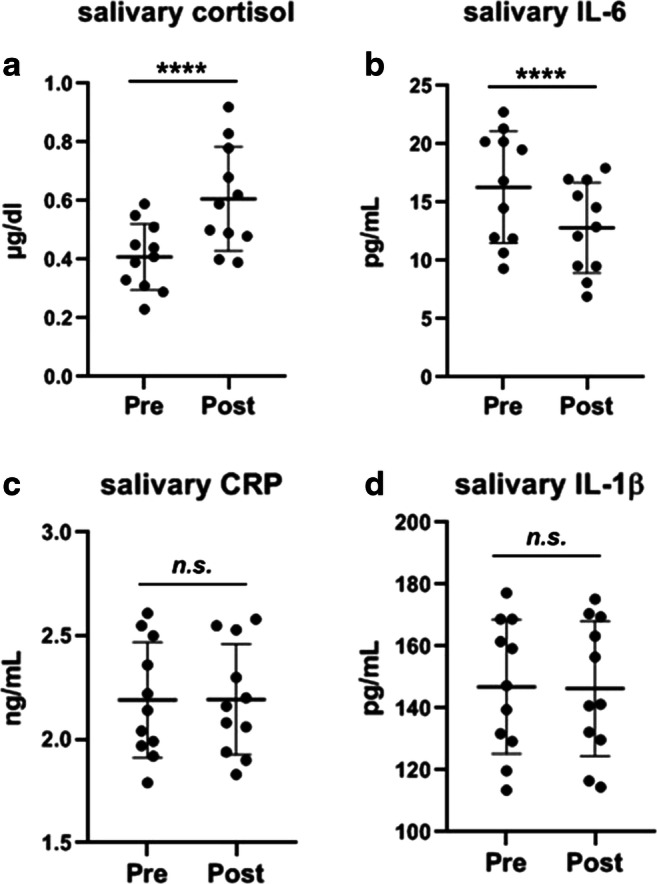
- In 11 participants, 5-MeO-DMT significantly increased salivary cortisol immediately post-session (mean difference, MD = 0.21 μg/dL; p < 0.001) and significantly decreased salivary IL-6 (MD = 3.51 pg/mL; p < 0.001).
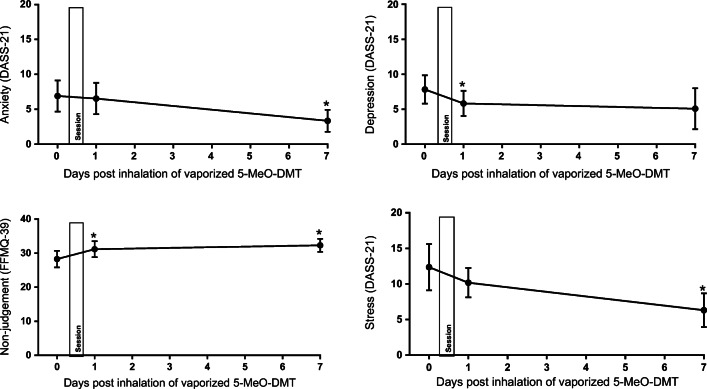
- Relative to baseline, non-judgment increased immediately post-session (p = .017, Cohen’s d = 0.36) and remained increased in the abstract’s summary; depression decreased immediately post-session and at 7-day follow-up, while anxiety and stress decreased from baseline to 7-day follow-up.
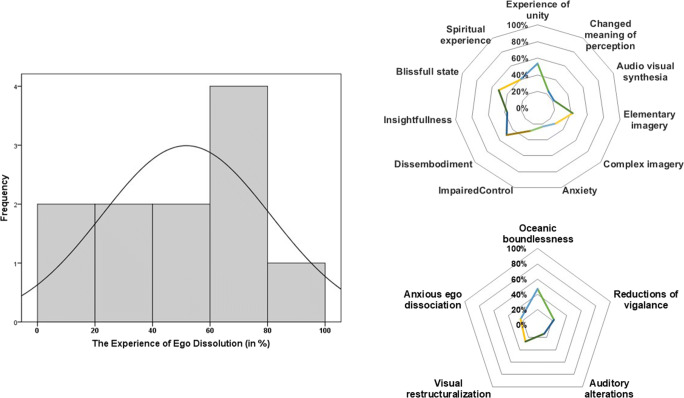
- The psychedelic experience was moderate: mean ego dissolution (EDI) was 51.84% (SD 29.49), and the top 5D-ASC subscales were experience of unity 53.82% (36.25), blissful state 51.35% (38.94), and disembodiment 49.58% (30.84).
- Adverse effects were reported by 45.5% (N = 5) post-session and by 27.3% (N = 3) during the 7 days after the session.
Methods
- Observational, prospective naturalistic study in Prague, where participants inhaled vapor from synthetic 5-MeO-DMT administered by a facilitator in one-on-one sessions.
- Sample: 11 participants; 10 completed the 7-day follow-up. Baseline and immediate post-session assessments were collected on location, with salivary samples at baseline (30 min before) and post-session (within 1–1.5 h after).
- Main analyses used repeated-measures ANOVA / linear mixed models across baseline, post-session, and follow-up; paired t tests for saliva ELISA data; and Pearson correlations between psychometric measures and biomarker changes.
Limitations
- The authors explicitly note the small sample size, possible volunteer bias/social desirability, and lack of a placebo control group as limits to generalizability.
- The setting was naturalistic rather than a controlled laboratory environment, which the paper itself says future research should address.
- Evident from the text: only 10 participants completed follow-up, and biomarker measurements were limited to saliva collected at two time points, so longer-term and more controlled effects are not established.
Model-written summary. Check it against the paper before relying on it.
Integrity signals
Registry
Cites
Statistics
Figures
Verification
Claims the paper makes
16 Valid · 1 Not valid · 2 Not checked · 62 Own results and interpretations
The cited sources support only part of this claim — read each source’s verdict below.
In the paper
“dried toad secretion containing 5-MeO-DMT produces sub-acute and long-term improvements in affect and cognition in 42 undiagnosed participants in naturalistic ceremonies.”
§ Prospective examination of synthetic 5-methoxy-N,N-dimethyltryptamine inhalation: effects on salivary IL-6, cortisol levels, affect, and non-judgment > Introduction
What the sources say
- Partly supportedcites Uthaug et al. 2019 matched to “A single inhalation of vapor from dried toad secretion containing 5-methoxy-N,N-dimethyltryptamine (5-MeO-DMT) in a naturalistic setting is related to sustained enhancement of satisfaction with life, mindfulness-related capacities, and a decrement of psychopathological symptoms.” (2019) sourceExperimental — accuracy not yet measured
The Results (Picture Concept Test) report improved convergent thinking within 24 hours and at four weeks, and the Discussion reports improvements in life satisfaction, mindfulness, and symptoms. But the Methods (Participants) say only 32 of the 42 participants reported no mental health disorder, not that all 42 were undiagnosed. The Discussion also cautions that, without a control group, the observed changes cannot confidently be attributed to the inhalation. (LLM, conf=0.90)
plainstates a causen = 42- Asserted: passes — The authors put it forward as true.
- Checkable: passes — It can be checked against evidence.
- Load-bearing: passes — The paper’s conclusions depend on it.
- Based: passes — The paper gives a reason why it holds.
- Partly supported
The cited sources support only part of this claim — read each source’s verdict below.
In the paper
“it appears that 5-MeO-DMT has an acceptable physiological safety profile in naturalistic settings (Davis et al. 2018; Davis et al. 2019)”
§ Prospective examination of synthetic 5-methoxy-N,N-dimethyltryptamine inhalation: effects on salivary IL-6, cortisol levels, affect, and non-judgment > Introduction
What the sources say
- Partly supportedcites Davis et al. 2018 matched to “The epidemiology of 5-methoxy- N, N -dimethyltryptamine (5-MeO-DMT) use: Benefits, consequences, patterns of use, subjective effects, and reasons for consumption” (2018) sourceExperimental — accuracy not yet measured
The Discussion describes a relatively good safety profile in spiritual and recreational settings and reports low rates of medical complications. The Results on medical functioning also report that worsening was uncommon. These self-reported findings support an apparent safety profile in naturalistic use, but the paper does not establish a specifically physiological safety profile through physiological measurements. (LLM, conf=0.81)
- Supportedcites Davis et al. 2019 matched to “5-methoxy-N,N-dimethyltryptamine (5-MeO-DMT) used in a naturalistic group setting is associated with unintended improvements in depression and anxiety” (2019) source
The Introduction (page unavailable) reports that an epidemiological survey found 5-MeO-DMT had a safe profile of use and low potential for biomedical consequences. The Discussion repeats the safety finding while cautioning that further investigation is warranted. This supports the citing sentence’s hedged assessment of safety in naturalistic use. (LLM, conf=0.86)
hedged- Asserted: passes — The authors put it forward as true.
- Checkable: passes — It can be checked against evidence.
- Load-bearing: unclear — It is unclear whether the paper’s conclusions depend on it.
- Based: passes — The paper gives a reason why it holds.
- Partly supported
The cited sources support only part of this claim — read each source’s verdict below.
In the paper
“in vitro studies have recently provided evidence of anti-inflammatory, neuroregenerative, and anti-addictive effects induced by 5-MeO-DMT (Dakic et al. 2017).”
§ Prospective examination of synthetic 5-methoxy-N,N-dimethyltryptamine inhalation: effects on salivary IL-6, cortisol levels, affect, and non-judgment > Introduction
What the sources say
- Partly supportedcites Dakic et al. 2017 matched to “Short term changes in the proteome of human cerebral organoids induced by 5-MeO-DMT” (2017) sourceExperimental — accuracy not yet measured
The Discussion reports anti-inflammatory effects in human cerebral organoids and changes associated with dendritic-spine formation and neurorestoration. It also reports reduced mGluR5 expression, but only proposes a possible connection to substance dependence; it does not demonstrate an anti-addictive effect of 5-MeO-DMT in vitro. (LLM, conf=0.87)
plainstates a cause- Asserted: passes — The authors put it forward as true.
- Checkable: passes — It can be checked against evidence.
- Load-bearing: unclear — It is unclear whether the paper’s conclusions depend on it.
- Based: passes — The paper gives a reason why it holds.
- Partly supported
Every source the paper cites for this claim was checked and supports it.
In the paper
“These ratings are qualitatively similar but lower in magnitude than reported after inhalation of vaporized toad secretion containing 5-MeO-DMT from the Incilius alvarius toad (Uthaug et al. 2019).”
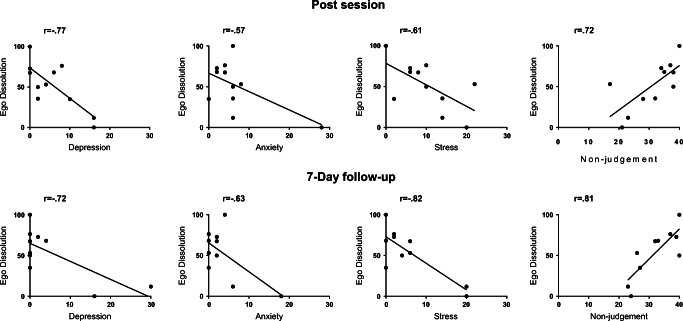
§ Prospective examination of synthetic 5-methoxy-N,N-dimethyltryptamine inhalation: effects on salivary IL-6, cortisol levels, affect, and non-judgment > Discussion Participants reported moderate levels of ego dissolution and altered states of consciousness during the psychedelic experience as measured by the EDI and 5D-ASC. These ratings are qualitatively similar but lower in magnitude than reported after inhalation of vaporized toad secretion containing 5-MeO-DMT from the Incilius alvarius toad (Uthaug et al. 2019). Inhalation of vaporized synthetic 5-MeO-DMT primarily induced experience of unity, a blissfull state, and elementary imagery whereas inhalation of vaporized toad secretion induced experience of unity, spiritual experience, and a blissfull state (Uthaug et al. 2019). However, in the latter study, the magnitude of ratings was 20–30% higher than in the current study. Likewise, the percentage of individuals that achieved maximum ego dissolution was higher as compared to the present study. These differences in the magnitude of the psychedelic experiences observed may be related to that fact that the sample size in this study was 4 times smaller or to differences in dose. There is little information about 5-MeO-DMT doses that are administered at naturalistic ceremonies, but in the current study, we were actually able to weigh doses before administration. The total dose administered to participants varied widely between 15 and 61 mg and depended largely on personal desires of the participant. However, the magnitude of their psychedelic experience was not significantly correlated the total dose of 5-MeO-DMT that participants received. The current data thus seems to suggest that any dose of 5-MeO-DMT can elicit a psychedelic experience but at an unpredictable magnitude. Other factors causing individual differences may have co-influenced the strength of the experience such as actual drug concentrations in blood, drug metabolism, openness to the psychedelic experience, inhalation technique, or levels of dissociation in the nervous system. In the present study, one participant placed great efforts in resisting the psychedelic experience mentally during four subsequent dose sessions and eventually reported minimal levels of altered states of consciousness. Five participants (45.5%) reported adverse effects during the session, and three participants (27.3%) reported adverse effects during the days following intake. Adverse events included physical distress and feelings of anger, fear, panic, and sadness. Similar percentages and types of adverse events have been reported in a recent survey among 515 users of 5-MeO-DMT (Davis et al. 2018) where 37% of the responders reported challenging psychological and physical experiences, and 40–60% of respondents reported physical distress or feelings of fear, grief, insanity, isolation, and death. The intensity of these experiences by survey responders, however, was rated as very small. This suggests that adverse events from the psychedelic experience are tolerable but challenging and occur in a sizeable fraction of 5-MeO-DMT users. Because classic serotonergic psychedelics have been shown to modulate immune responses by downregulating inflammatory processes through 5-HT2 and sigma-1 receptors (Nau Jr et al. 2014; Nau Jr et al. 2013; Szabo et al. 2014), we hypothesized that the administration of vaporized synthetic 5-MeO-DMT would alter the levels of inflammatory cytokines and the neuroendocrine-immune regulator cortisol. Interestingly, out of the four salivary biomarkers monitored in this study, only cortisol and IL-6 levels were affected by 5-MeO-DMT administration, see Fig. 2. Cortisol has been widely known to be strongly induced by physical and psychological stress and has an important role in acute stress adaptation, as well as in restoring homeostasis following stressful events (Malarkey and Mills 2007). Modulation of 5-HT2 receptors by peak dose(s) of 5-MeO-DMT may represent or mimic an intense neuroendocrine stress-like state; thus, our results showing elevated levels of salivary cortisol are not surprising given the fast-action of inhaled tryptamines and are in good agreement with the literature regarding their fast-acting, stress-mimicking neuromodulatory effects on human physiology (Do Yup Lee and Choi 2015). We also found that IL-6 was affected by 5-MeO-DMT administration. IL-6 is an important inflammatory cytokine that is released in the early phase of infections and essential in immune defense, but is also involved in pathological autoinflammatory processes (Jones and Jenkins 2018). Pharmacological manipulation of IL-6 secretion or the IL-6 trans-signaling pathway may offer us novel possibilities for the therapy of autoimmune diseases, infections, as well as new generation vaccine design (Garbers et al. 2018). Cortisol and other glucocorticoids are known to rapidly suppress inflammation and have been widely used in the therapy of acute and chronic inflammatory states (Gleeson et al. 2011). Thus, the observed decrease in salivary IL-6 levels may be the direct consequence of increased cortisol secretion independent of any psycho-neuroimmune feedback effects, or 5-HT2A and sigma-1 receptor modulatory actions of 5-MeO-DMT. Furthermore, the in vivo biological half-life of IL-6 is approximately 2 h (Baran et al. 2018), which may explain the observed, relatively low, effect size of IL-6 modulation by 5-MeO-DMT (Fig. 2b). Since salivary and plasma concentrations of the evaluated biomarkers are closely correlated, at least within the context of inflammatory and stress markers, saliva has been suggested as a potential qualitative surrogate for plasma in biomarker studies (La Fratta et al. 2018). Although the sample and effect sizes are low, our results suggest a possible anti-inflammatory effect of 5-MeO-DMT in humans. These findings warrant further investigation into the potential systemic anti-inflammatory effects of 5-MeO-DMT and other DMT analogs. Although there was no correlation between salivary cortisol and IL-6 and subjective measures and the psychedelic experience post-session or at follow-up, we observed an inverse correlation between CRP levels and both awareness, non-judgment, and several 5D-ASC dimensions post-session, with a positive correlation between anxiety ratings as rated per the 5D-ASC. At follow-up, there was a correlation between CRP levels and both awareness and nonjudgment. Moreover, we also observed an inverse correlation between IL-1β and satisfaction with life and ratings of ego dissolution, and a positive correlation with depression and 5D-ASC ratings, post-session. A negative correlation was found between IL-1β and description and satisfaction with life, and a positive correlation with stress at follow-up. CRP is considered a reliable biomarker of systemic inflammation and inflammatory states. In psychoneuroimmunology and biological psychiatry, inflammation has been tightly linked to neurocognitive processes and behavioral traits (Bauer and Teixeira 2018; Raison and Miller 2011). Systemic inflammation can greatly influence mood, cognitive processing, and psychosocial functioning. For example, it has been shown that inflammatory challenge can increase self-reported feelings of social disconnection and self-awareness (Eisenberger et al. 2010; Moieni et al. 2015). Our CRP-awareness and CRP-non-judgment correlation results are in line with previous findings showing an inverse correlation between CRP levels and psychological parameters (Asakura et al. 2015). Although inhalation of 5-MeO-DMT did not alter CRP levels significantly, CRP is an acute phase protein which production is under the direct control of IL-6, and both have been linked to neuropsychological regulatory processes within the context of inflammation (Del Giudice and Gangestad 2018). We hypothesize that the observed subacute effect of 5-MeO-DMT on salivary IL-6 may also be expanded to significant changes in circulating CRP levels in the long run. Thus, the involvement of the IL-6-CRP-brain axis in the biopsychological effects of 5-MeO-DMT administration in human warrants future research. Inhalation of vaporized synthetic 5-MeO-DMT produced significant improvements in mindfulness rating of non-judgment and reduced symptoms of depression directly after the session as well as at the 7-day follow-up. Moreover, inhalation of 5-MeO-DMT reduced symptoms of anxiety and stress from baseline which reached significance at the 7-day follow-up. It should be highlighted that the ratings in affect (depression, anxiety, and stress) were subtle which introduces the possibility that the reduction in affect can be interpreted as betterment in well-being. However, the present findings are in line with previous research on use of synthetic 5-MeO-DMT in ceremonial settings (Davis et al. 2019), as well as a naturalistic observational study investigating the effects following use of toad secretion containing 5-MeO-DMT (Uthaug et al. 2019). Additionally, prior research showed that consumers of ayahuasca displayed significant reductions in ratings of depression and stress that persisted for 4 weeks after intake (Uthaug et al. 2018). Likewise, high-dose psilocybin produced large decreases in clinician- and self-rated measures of depressed mood and anxiety, along with increases in quality of life in cancer patients (Griffiths et al. 2016). The authors reported that at the 6-month follow-up, these changes were maintained, with about 80% of participants continuing to show clinically significant decreases in depressed mood and anxiety (Griffiths et al. 2016). Finally, another study that compared aspects of mindfulness before, and 24 h after an ayahuasca session, found that ayahuasca increased mindfulness-related capacities such as non-judgment and non-reaction following intake (Soler et al. 2016). With this in mind, the present result suggests that inhalation of vapor from synthetic 5-MeO-DMT can bring about improvements in affect and aspects of mindfulness that might alleviate symptoms of mood disorders (Baer 2003). These data suggest that clinical research examining the potential therapeutic effect of 5-MeO-DMT is warranted. Changes in the ratings of subjective measures that were observed in the present study are not necessarily related to a pharmacological effect of 5-MeO-DMT, but could have resulted from uncontrolled variables such as response expectancy of the participants prior to and after the session or the set and setting of drug administration (Carhart-Harris et al. 2018; Hartogsohn 2016). Yet, the finding that the strength of actual psychedelic experience was positively correlated to changes in non-judgment and negatively correlated with symptoms of depression, stress and anxiety strongly suggest that the inhalation of 5-MeO-DMT contributed to changes in these subjective measures. This finding is in line with previous studies on psilocybin; ayahuasca and toad secretion have shown that stronger psychedelic experiences are associated with larger changes in subjective health outcomes (Bogenschutz et al. 2015; Griffiths et al. 2006; Roseman et al. 2018; Ross and Thomas 2010; Uthaug et al. 2019; Uthaug et al. 2018). Still, the present findings are not without limitations. In fact, the small sample size, the possibility that volunteers were biased and thus responded in a social desirable manner as well as the lack of a placebo control group limit the generalizability of the data. The present study should be replicated in a larger sample under experimental, placebo-controlled conditions for a final confirmation. In conclusion, this prospective study in volunteers showed that inhalation of vaporized synthetic 5-MeO-DMT induced rapid changes in inflammatory markers and produced improvements in affect and non-judgment that lasted for 7 days. The present findings warrant further investigation into anti-inflammatory and mental health effects of synthetic 5-MeO-DMT in clinical trials.
What the sources say
- Supportedcites Uthaug et al. 2019 matched to “A single inhalation of vapor from dried toad secretion containing 5-methoxy-N,N-dimethyltryptamine (5-MeO-DMT) in a naturalistic setting is related to sustained enhancement of satisfaction with life, mindfulness-related capacities, and a decrement of psychopathological symptoms.” (2019) source
The Results (Psychedelic experience and 5D-ASC; page unavailable) report ratings after inhalation of vaporized toad secretion containing 5-MeO-DMT, including mean ego dissolution of 74.24 and oceanic boundlessness of 65.8%. The paper also identifies blissful state, spiritual experience, and unity as its highest-rated 5D-ASC subscales. The comparison with the citing study’s ratings is the citing authors’ own assessment, not a finding attributed to this source. (LLM, conf=0.87)
plainstates an association- Asserted: passes — The authors put it forward as true.
- Checkable: passes — It can be checked against evidence.
- Load-bearing: unclear — It is unclear whether the paper’s conclusions depend on it.
- Based: passes — The paper gives a reason why it holds.
- Supported
The cited sources support only part of this claim — read each source’s verdict below.
In the paper
“Likewise, the percentage of individuals that achieved maximum ego dissolution was higher as compared to the present study.”
§ Prospective examination of synthetic 5-methoxy-N,N-dimethyltryptamine inhalation: effects on salivary IL-6, cortisol levels, affect, and non-judgment > Discussion Participants reported moderate levels of ego dissolution and altered states of consciousness during the psychedelic experience as measured by the EDI and 5D-ASC. These ratings are qualitatively similar but lower in magnitude than reported after inhalation of vaporized toad secretion containing 5-MeO-DMT from the Incilius alvarius toad (Uthaug et al. 2019). Inhalation of vaporized synthetic 5-MeO-DMT primarily induced experience of unity, a blissfull state, and elementary imagery whereas inhalation of vaporized toad secretion induced experience of unity, spiritual experience, and a blissfull state (Uthaug et al. 2019). However, in the latter study, the magnitude of ratings was 20–30% higher than in the current study. Likewise, the percentage of individuals that achieved maximum ego dissolution was higher as compared to the present study. These differences in the magnitude of the psychedelic experiences observed may be related to that fact that the sample size in this study was 4 times smaller or to differences in dose. There is little information about 5-MeO-DMT doses that are administered at naturalistic ceremonies, but in the current study, we were actually able to weigh doses before administration. The total dose administered to participants varied widely between 15 and 61 mg and depended largely on personal desires of the participant. However, the magnitude of their psychedelic experience was not significantly correlated the total dose of 5-MeO-DMT that participants received. The current data thus seems to suggest that any dose of 5-MeO-DMT can elicit a psychedelic experience but at an unpredictable magnitude. Other factors causing individual differences may have co-influenced the strength of the experience such as actual drug concentrations in blood, drug metabolism, openness to the psychedelic experience, inhalation technique, or levels of dissociation in the nervous system. In the present study, one participant placed great efforts in resisting the psychedelic experience mentally during four subsequent dose sessions and eventually reported minimal levels of altered states of consciousness. Five participants (45.5%) reported adverse effects during the session, and three participants (27.3%) reported adverse effects during the days following intake. Adverse events included physical distress and feelings of anger, fear, panic, and sadness. Similar percentages and types of adverse events have been reported in a recent survey among 515 users of 5-MeO-DMT (Davis et al. 2018) where 37% of the responders reported challenging psychological and physical experiences, and 40–60% of respondents reported physical distress or feelings of fear, grief, insanity, isolation, and death. The intensity of these experiences by survey responders, however, was rated as very small. This suggests that adverse events from the psychedelic experience are tolerable but challenging and occur in a sizeable fraction of 5-MeO-DMT users. Because classic serotonergic psychedelics have been shown to modulate immune responses by downregulating inflammatory processes through 5-HT2 and sigma-1 receptors (Nau Jr et al. 2014; Nau Jr et al. 2013; Szabo et al. 2014), we hypothesized that the administration of vaporized synthetic 5-MeO-DMT would alter the levels of inflammatory cytokines and the neuroendocrine-immune regulator cortisol. Interestingly, out of the four salivary biomarkers monitored in this study, only cortisol and IL-6 levels were affected by 5-MeO-DMT administration, see Fig. 2. Cortisol has been widely known to be strongly induced by physical and psychological stress and has an important role in acute stress adaptation, as well as in restoring homeostasis following stressful events (Malarkey and Mills 2007). Modulation of 5-HT2 receptors by peak dose(s) of 5-MeO-DMT may represent or mimic an intense neuroendocrine stress-like state; thus, our results showing elevated levels of salivary cortisol are not surprising given the fast-action of inhaled tryptamines and are in good agreement with the literature regarding their fast-acting, stress-mimicking neuromodulatory effects on human physiology (Do Yup Lee and Choi 2015). We also found that IL-6 was affected by 5-MeO-DMT administration. IL-6 is an important inflammatory cytokine that is released in the early phase of infections and essential in immune defense, but is also involved in pathological autoinflammatory processes (Jones and Jenkins 2018). Pharmacological manipulation of IL-6 secretion or the IL-6 trans-signaling pathway may offer us novel possibilities for the therapy of autoimmune diseases, infections, as well as new generation vaccine design (Garbers et al. 2018). Cortisol and other glucocorticoids are known to rapidly suppress inflammation and have been widely used in the therapy of acute and chronic inflammatory states (Gleeson et al. 2011). Thus, the observed decrease in salivary IL-6 levels may be the direct consequence of increased cortisol secretion independent of any psycho-neuroimmune feedback effects, or 5-HT2A and sigma-1 receptor modulatory actions of 5-MeO-DMT. Furthermore, the in vivo biological half-life of IL-6 is approximately 2 h (Baran et al. 2018), which may explain the observed, relatively low, effect size of IL-6 modulation by 5-MeO-DMT (Fig. 2b). Since salivary and plasma concentrations of the evaluated biomarkers are closely correlated, at least within the context of inflammatory and stress markers, saliva has been suggested as a potential qualitative surrogate for plasma in biomarker studies (La Fratta et al. 2018). Although the sample and effect sizes are low, our results suggest a possible anti-inflammatory effect of 5-MeO-DMT in humans. These findings warrant further investigation into the potential systemic anti-inflammatory effects of 5-MeO-DMT and other DMT analogs. Although there was no correlation between salivary cortisol and IL-6 and subjective measures and the psychedelic experience post-session or at follow-up, we observed an inverse correlation between CRP levels and both awareness, non-judgment, and several 5D-ASC dimensions post-session, with a positive correlation between anxiety ratings as rated per the 5D-ASC. At follow-up, there was a correlation between CRP levels and both awareness and nonjudgment. Moreover, we also observed an inverse correlation between IL-1β and satisfaction with life and ratings of ego dissolution, and a positive correlation with depression and 5D-ASC ratings, post-session. A negative correlation was found between IL-1β and description and satisfaction with life, and a positive correlation with stress at follow-up. CRP is considered a reliable biomarker of systemic inflammation and inflammatory states. In psychoneuroimmunology and biological psychiatry, inflammation has been tightly linked to neurocognitive processes and behavioral traits (Bauer and Teixeira 2018; Raison and Miller 2011). Systemic inflammation can greatly influence mood, cognitive processing, and psychosocial functioning. For example, it has been shown that inflammatory challenge can increase self-reported feelings of social disconnection and self-awareness (Eisenberger et al. 2010; Moieni et al. 2015). Our CRP-awareness and CRP-non-judgment correlation results are in line with previous findings showing an inverse correlation between CRP levels and psychological parameters (Asakura et al. 2015). Although inhalation of 5-MeO-DMT did not alter CRP levels significantly, CRP is an acute phase protein which production is under the direct control of IL-6, and both have been linked to neuropsychological regulatory processes within the context of inflammation (Del Giudice and Gangestad 2018). We hypothesize that the observed subacute effect of 5-MeO-DMT on salivary IL-6 may also be expanded to significant changes in circulating CRP levels in the long run. Thus, the involvement of the IL-6-CRP-brain axis in the biopsychological effects of 5-MeO-DMT administration in human warrants future research. Inhalation of vaporized synthetic 5-MeO-DMT produced significant improvements in mindfulness rating of non-judgment and reduced symptoms of depression directly after the session as well as at the 7-day follow-up. Moreover, inhalation of 5-MeO-DMT reduced symptoms of anxiety and stress from baseline which reached significance at the 7-day follow-up. It should be highlighted that the ratings in affect (depression, anxiety, and stress) were subtle which introduces the possibility that the reduction in affect can be interpreted as betterment in well-being. However, the present findings are in line with previous research on use of synthetic 5-MeO-DMT in ceremonial settings (Davis et al. 2019), as well as a naturalistic observational study investigating the effects following use of toad secretion containing 5-MeO-DMT (Uthaug et al. 2019). Additionally, prior research showed that consumers of ayahuasca displayed significant reductions in ratings of depression and stress that persisted for 4 weeks after intake (Uthaug et al. 2018). Likewise, high-dose psilocybin produced large decreases in clinician- and self-rated measures of depressed mood and anxiety, along with increases in quality of life in cancer patients (Griffiths et al. 2016). The authors reported that at the 6-month follow-up, these changes were maintained, with about 80% of participants continuing to show clinically significant decreases in depressed mood and anxiety (Griffiths et al. 2016). Finally, another study that compared aspects of mindfulness before, and 24 h after an ayahuasca session, found that ayahuasca increased mindfulness-related capacities such as non-judgment and non-reaction following intake (Soler et al. 2016). With this in mind, the present result suggests that inhalation of vapor from synthetic 5-MeO-DMT can bring about improvements in affect and aspects of mindfulness that might alleviate symptoms of mood disorders (Baer 2003). These data suggest that clinical research examining the potential therapeutic effect of 5-MeO-DMT is warranted. Changes in the ratings of subjective measures that were observed in the present study are not necessarily related to a pharmacological effect of 5-MeO-DMT, but could have resulted from uncontrolled variables such as response expectancy of the participants prior to and after the session or the set and setting of drug administration (Carhart-Harris et al. 2018; Hartogsohn 2016). Yet, the finding that the strength of actual psychedelic experience was positively correlated to changes in non-judgment and negatively correlated with symptoms of depression, stress and anxiety strongly suggest that the inhalation of 5-MeO-DMT contributed to changes in these subjective measures. This finding is in line with previous studies on psilocybin; ayahuasca and toad secretion have shown that stronger psychedelic experiences are associated with larger changes in subjective health outcomes (Bogenschutz et al. 2015; Griffiths et al. 2006; Roseman et al. 2018; Ross and Thomas 2010; Uthaug et al. 2019; Uthaug et al. 2018). Still, the present findings are not without limitations. In fact, the small sample size, the possibility that volunteers were biased and thus responded in a social desirable manner as well as the lack of a placebo control group limit the generalizability of the data. The present study should be replicated in a larger sample under experimental, placebo-controlled conditions for a final confirmation. In conclusion, this prospective study in volunteers showed that inhalation of vaporized synthetic 5-MeO-DMT induced rapid changes in inflammatory markers and produced improvements in affect and non-judgment that lasted for 7 days. The present findings warrant further investigation into anti-inflammatory and mental health effects of synthetic 5-MeO-DMT in clinical trials.
What the sources say
- Partly supportedcites Uthaug et al. 2019 matched to “A single inhalation of vapor from dried toad secretion containing 5-methoxy-N,N-dimethyltryptamine (5-MeO-DMT) in a naturalistic setting is related to sustained enhancement of satisfaction with life, mindfulness-related capacities, and a decrement of psychopathological symptoms.” (2019) sourceExperimental — accuracy not yet measured
The Results (Psychedelic experience > EDI; page unavailable) report that ego-dissolution scores reached 100, the scale’s maximum. They do not give the percentage of participants who scored 100: the approximately 80% reported in the 60–100 range includes scores below the maximum. The claimed percentage comparison therefore cannot be established from this paper. (LLM, conf=0.78)
plainstates an association- Asserted: passes — The authors put it forward as true.
- Checkable: passes — It can be checked against evidence.
- Load-bearing: unclear — It is unclear whether the paper’s conclusions depend on it.
- Based: passes — The paper gives a reason why it holds.
- Partly supported
42 more claims · 2 with their cited sources checked
Create a free account to see all 81 claims and every source verdict.
- Probably not a substantial claim. 20
- It may state two separate claims as one. 21
Claims other papers make about this one
Each is checked against this paper’s own text: does it say what the citing paper says it does?
The source backs part of the claim, not all of it — or backs it for a different population, condition or comparison.
In the citing paper
“Recent studies have also demonstrated the capacity of various psychedelics to enhance trait mindfulness post-acutely, even in the absence of a theoretical or practical context of mindfulness training, evidencing a complementary relationship between mindfulness-training and psychedelics (40, 52, 56–59).”
From Examining the Potential Synergistic Effects Between Mindfulness Training and Psychedelic-Assisted Therapy (2021) · cites this paper as [59]
Experimental — accuracy not yet measuredThe source backs part of the claim, not all of it — or backs it for a different population, condition or comparison.
In the citing paper
“Furthermore, enhanced acceptance towards present-moment thoughts and emotions has been observed post-acutely following the administration of ayahuasca and 5-MeO-DMT, which was maintained for up to 1 month (40, 52, 56–59).”
From Examining the Potential Synergistic Effects Between Mindfulness Training and Psychedelic-Assisted Therapy (2021) · cites this paper as [59]
Experimental — accuracy not yet measuredThe cited source says what the claim attributes to it.
In the citing paper
“A further psychological process which may be of particular salience when discussing therapeutic efficacy for anxiety, and which psychedelics have been repeatedly found to enhance, are mindfulness capacities (10, 22, 23, 42–46).”
From Decreases in State and Trait Anxiety Post-psilocybin: A Naturalistic, Observational Study Among Retreat Attendees (2022) · cites this paper as [46]
The cited source says what the claim attributes to it.
In the citing paper
“Spontaneous enhancements in trait mindfulness have also been reported following the administration of various psychedelics, even outside of a mindfulness-enhancing context (40, 52, 56–59).”
From Examining the Potential Synergistic Effects Between Mindfulness Training and Psychedelic-Assisted Therapy (2021) · cites this paper as [59]
The check wasn’t confident either way, so it gives no verdict — never disputed.
In the citing paper
“This has ethical implications, as often the facilitators administering the drug have no medical or clinical background (40, 59), and so are unable to respond in a case of emergency and cannot exclude individuals with counterindications from the sessions.”
From Examining the Potential Synergistic Effects Between Mindfulness Training and Psychedelic-Assisted Therapy (2021) · cites this paper as [59]
Experimental — accuracy not yet measured
Citations
Cites
The satisfaction with life scale
Diener, E., Emmons, R. A., Larsen, R. J., & Griffin, S. (1985) · Journal of Personality Assessment · doi:10.1207/s15327752jpa4901_13 · Cited by 31,768
Using Self-Report Assessment Methods to Explore Facets of Mindfulness
Baer, R. A., Smith, G. T., Hopkins, J., Krietemeyer, J., & Toney, L. (2006) · Assessment · doi:10.1177/1073191105283504 · Cited by 7,511
Henry, J. D., & Crawford, J. R. (2005) · British Journal of Clinical Psychology · doi:10.1348/014466505x29657 · Cited by 5,801
Mindfulness training as a clinical intervention: a conceptual and empirical review
Baer, R. A. (2003) · Clinical Psychology: Science and Practice · doi:10.1093/clipsy.bpg015 · Cited by 4,577 · cited 1×
“With this in mind, the present result suggests that inhalation of vapor from synthetic 5-MeO-DMT can bring about improvements in affect and aspects of mindfulness that might alleviate symptoms ofmood disorders (Baer 2003).”
BackgroundMindfulness training as a clinical intervention: A conceptual and empirical review.
Baer, R. A. (2003) · Clinical Psychology: Science and Practice · doi:10.1093/clipsy/bpg015 · Cited by 4,576
The role of inflammation in depression: from evolutionary imperative to modern treatment target
Miller, A. H., & Raison, C. L. (2016) · Nature Reviews Immunology · doi:10.1038/nri.2015.5 · Cited by 3,942
Review of the Satisfaction With Life Scale
Pavot, W., & Diener, E. (2009) · Social Indicators Research Series · doi:10.1007/978-90-481-2354-4_5 · Cited by 3,460 · cited 1×
“SWL is a 5-item self-report scale, assessing someone’s subjective satisfaction with life (Diener et al. 1985; Pavot and Diener 2009).”
BackgroundGleeson, M., Bishop, N. C., Stensel, D. J., Lindley, M. R., Mastana, S. S., & Nimmo, M. A. (2011) · Nature Reviews Immunology · doi:10.1038/nri3041 · Cited by 2,470
Griffiths, R. R., Johnson, M. W., Carducci, M. A., Umbricht, A., Richards, W. A., Richards, B. D., Cosimano, M. P., & Klinedinst, M. A. (2016) · Journal of Psychopharmacology · doi:10.1177/0269881116675513 · Cited by 2,201 · cited 1×
“…study are not necessarily related to a pharmacological effect of 5-MeO-DMT, but could have resulted from uncontrolled variables such as response expectancy of the participants prior to and after the session or the set and setting of drug administration (Carhart-Harris et al. 2018; Hartogsohn 2016).”
BackgroundGriffiths, R. R., Richards, W. A., McCann, U., & Jesse, R. (2006) · Psychopharmacology · doi:10.1007/s00213-006-0457-5 · Cited by 1,684
Research works printed but not linked: 3
- Dittrich A, Lamparter D, Maurer M (2010) 5D-ASC: questionnaire for the assessment of altered states of consciousness. A short introduction. PSIN PLUS, Zurich
- IBM SPSS (2016) Statistics for windows. IBM Corp, Armonk, NY
- Shulgin A, Shulgin A (1997) TIHKAL: the continuation (Vol. 546). Transform Press, Berkeley
Cited by
Psychedelics in Psychiatry: Neuroplastic, Immunomodulatory, and Neurotransmitter Mechanisms
Inserra, A., De Gregorio, D., & Gobbi, G. (2021) · Pharmacological Reviews · doi:10.1124/pharmrev.120.000056 · Cited by 232
Uthaug, M. V., Lancelotta, R., van Oorsouw, K., Kuypers, K. P. C., Mason, N., Rak, J., Šuláková, A., Jurok, R., Maryška, M., Kuchař, M., et al. (2019) · Psychopharmacology · doi:10.1007/s00213-019-05236-w · Cited by 197
Self-citationYao, Y., Guo, D., Lu, T., Liu, F.-L., Huang, S., Diao, M.-Q., Li, S., Zhang, X.-J., Kosten, T. R., Shi, J., et al. (2024) · Psychiatry Research · doi:10.1016/j.psychres.2024.115886 · Cited by 175
“5-MeO-DMT has shown potent and ultra-rapid antidepressant effects and produced significant changes in inflammatory markers, improved affect, and non-judgment (Reckweg et al., 2023; Uthaug et al., 2020).”
Reckweg, J. T., Uthaug, M. V., Szabo, A., Davis, A. K., Lancelotta, R., Mason, N. L., & Ramaekers, J. G. (2022) · Journal of Neurochemistry · doi:10.1111/jnc.15587 · Cited by 110
Self-citationDose–response relationships of psilocybin-induced subjective experiences in humans
Hirschfeld, T., & Schmidt, T. T. (2021) · Journal of Psychopharmacology · doi:10.1177/0269881121992676 · Cited by 93
“Similarly, studies with DMT and 5-methoxy-N,N-dimethyltryptamine (5-MeO-DMT) report a largely comparable pattern of responses on both versions of the ASC rating scale (Uthaug et al., 2020), MEQ30 (Barsuglia et al.”
ResultReckweg, J. T., van Leeuwen, C. J., Henquet, C., van Amelsvoort, T., Theunissen, E. L., Mason, N. L., Paci, R., Terwey, T. H., & Ramaekers, J. G. (2023) · Frontiers in Psychiatry · doi:10.3389/fpsyt.2023.1133414 · Cited by 96
Self-citationA narrative synthesis of research with 5-MeO-DMT
Ermakova, A. O., Dunbar, F., Rucker, J., & Johnson, M. W. (2022) · Journal of Psychopharmacology · doi:10.1177/02698811211050543 · Cited by 86
“Treatment of immunechallenged, human monocyte-derived dendritic cells with 5-MeO-DMT resulted in a marked decrease in gene expression and secretion of various inflammatory cytokines and chemokines (IL-1β, IL-6, IL-8 and TNF-α), while strongly increasing the levels of the cytokine interleukin-10 (IL-10), an anti-inflam…”
BackgroundInfluentialMason, N. L., Szabó, A., Kuypers, K. P. C., Mallaroni, P., de la Torre, R., Reckweg, J. T., Tse, D. H. Y., Hutten, N. R. P. W., Feilding, A., & Ramaekers, J. G. (2023) · Brain Behavior and Immunity · doi:10.1016/j.bbi.2023.09.004 · Cited by 104
Self-citationKozłowska, U., Nichols, C. D., Wiatr, K., & Figiel, M. (2021) · Journal of Neurochemistry · doi:10.1111/jnc.15509 · Cited by 89
“…models, including in vitro, animal, and human studies (Flanagan & Nichols, 2018; Flanagan et al., 2019; Nardai et al., 2020; Szabo et al., 2014; Uthaug et al., 2020), but it remains to be investigated if this anti- inflammatory mechanism is also involved in the antidepressant effects of…”
BackgroundThe Psychedelic Future of Post-Traumatic Stress Disorder Treatment
Zaretsky, T. G., Jagodnik, K. M., Barsic, R., Antonio, J. H., Bonanno, P. A., MacLeod, C., Pierce, C., Carney, H., Morrison, M. T., Saylor, C., et al. (2024) · Current Neuropharmacology · doi:10.2174/1570159x22666231027111147 · Cited by 85
Psychedelics as a novel approach to treating autoimmune conditions
Thompson, C., & Szabo, A. (2020) · Immunology Letters · doi:10.1016/j.imlet.2020.10.001 · Cited by 71
Self-citationPsychedelic therapy's transdiagnostic effects: A research domain criteria (RDoC) perspective
Kelly, J. R., Gillan, C. M., Prenderville, J., Kelly, C., Harkin, A., Clarke, G., & O'Keane, V. (2021) · Frontiers in Psychiatry · doi:10.3389/fpsyt.2021.800072 · Cited by 69
“Although this was an exploratory study, neither the cortisol nor the immune markers correlated with subjective experiences (122).”
BackgroundDuan, W., Cao, D., Wang, S., & Cheng, J. (2023) · Chemical Reviews · doi:10.1021/acs.chemrev.3c00375 · Cited by 85
Uthaug, M. V., Davis, A. K., Haas, T. F., Davis, D., Dolan, S. B., Lancelotta, R., Timmermann, C., & Ramaekers, J. G. (2022) · Journal of Psychopharmacology · doi:10.1177/02698811211013583 · Cited by 65
Self-citationTulver, K., Kaup, K., Laukkonen, R., & Aru, J. (2023) · Consciousness and Cognition · doi:10.1016/j.concog.2023.103494 · Cited by 99
Sloshower, J., Zeifman, R. J., Guss, J., Krause, R., Safi-Aghdam, H., Pathania, S., Pittman, B., & D’Souza, D. C. (2024) · Scientific Reports · doi:10.1038/s41598-024-58318-x · Cited by 65
Psychedelic‐inspired approaches for treating neurodegenerative disorders
Saeger, H. N., & Olson, D. E. (2021) · Journal of Neurochemistry · doi:10.1111/jnc.15544 · Cited by 74
“Both effects were blocked by the 5- HT2 antagonist ketanserin (Vaidya et al., 1997).”
BackgroundInfluentialReckweg, J., Mason, N. L., van Leeuwen, C., Toennes, S. W., Terwey, T. H., & Ramaekers, J. G. (2021) · Frontiers in Pharmacology · doi:10.3389/fphar.2021.760671 · Cited by 58
Self-citationEvens, R., Schmidt, M. E., Majić, T., & Schmidt, T. T. (2023) · Therapeutic Advances in Psychopharmacology · doi:10.1177/20451253231172254 · Cited by 56
Neuroinflammation and neuroprogression in depression: Effects of alternative drug treatments
Richardson, B., MacPherson, A., & Bambico, F. R. (2022) · Brain Behavior & Immunity - Health · doi:10.1016/j.bbih.2022.100554 · Cited by 66
Magaraggia, I., Kuiperes, Z., & Schreiber, R. (2021) · Neurobiology of Learning and Memory · doi:10.1016/j.nlm.2021.107467 · Cited by 49
Kałużna, A., Schlosser, M., Craste, E. G., Stroud, J., & Cooke, J. E. (2022) · Journal of Psychedelic Studies · doi:10.1556/2054.2022.00199 · Cited by 61
“Only Uthaug et al. (2020) found a clear lack of correlation between connectedness and wellbeing at 4-week follow-up, with two other studies (Agin-Liebes et al., 2021a; Noorani et al., 2018) having mixed results.”
InfluentialFincham, G. W., Kartar, A. A., Uthaug, M. V., Anderson, B., Hall, L., Nagai, Y., Critchley, H., & Colasanti, A. (2023) · Neuroscience & Biobehavioral Reviews · doi:10.1016/j.neubiorev.2023.105453 · Cited by 64
“…to underlie therapeutic utility: the phenomenology of psychedelic experience is shown to mediate outcome variables related to wellbeing in studies of individuals taking psychedelic drugs (Griffiths et al., 2011; Griffiths et al., 2006; Puente, 2014a; Uthaug et al., 2019; Uthaug et al., 2020).”
BackgroundSelf-citationEffects of DMT on mental health outcomes in healthy volunteers
Timmermann, C., Zeifman, R. J., Erritzøe, D., Nutt, D. J., & Carhart-Harris, R. L. (2024) · Scientific Reports · doi:10.1038/s41598-024-53363-y · Cited by 55
“Given concerns regarding the cost and large-scale accessibility of lengthy and amply staffed psychedelic therapy sessions (e.g., traditionally involving two therapists for 7–10 h), compounds with briefer durations, like IV DMT, may be worth exploring 25,27,39 .”
BackgroundEleftheriou, M. E., & Thomas, E. (2021) · Frontiers in Psychiatry · doi:10.3389/fpsyt.2021.707057 · Cited by 39
“This has ethical implications, as often the facilitators administering the drug have no medical or clinical background (40, 59), and so are unable to respond in a case of emergency and cannot exclude individuals with counterindications from the sessions.”
BackgroundStrumila, R., Nobile, B., Korsakova, L., Lengvenytė, A., Olié, É., López‐Castromán, J., Guillaume, S., & Courtet, P. (2021) · Pharmaceuticals · doi:10.3390/ph14121213 · Cited by 49
“Moreover, a study demonstrated that the closely related 5-methoxy-N, N-DMT (5MeO-DMT) rapidly decreases IL-6 levels and increases cortisol levels [138].”
BackgroundSeeking the Psilocybiome: Psychedelics meet the microbiota-gut-brain axis
Kelly, J. R., Clarke, G. A., Harkin, A., Corr, S. C., Galvin, S. D., Pradeep, V., Cryan, J. F., O’Keane, V., & Dinan, T. G. (2022) · International Journal of Clinical and Health Psychology · doi:10.1016/j.ijchp.2022.100349 · Cited by 45
Catalysts for change: the cellular neurobiology of psychedelics
Banks, M. I., Zahid, Z., Jones, N. T., Sultan, Z. W., & Wenthur, C. J. (2021) · Molecular Biology of the Cell · doi:10.1091/mbc.e20-05-0340 · Cited by 37
“5-MeO-DMT acutely reduces levels of proinflammatory cytokines in humans (Uthaug et al., 2020), and DOI has been shown to inhibit peripheral cytokine cascades through 5-HT2AR activation (Yu et al., 2008; Nau et al., 2013).”
BackgroundPsychedelics for treatment resistant depression: are they game changers?
Kalfas, M., Taylor, R. H., Tsapekos, D., & Young, A. H. (2023) · Expert Opinion on Pharmacotherapy · doi:10.1080/14656566.2023.2281582 · Cited by 40
“Similar increases in cortisol levels have also been observed in healthy adults following the administration of other psychedelics, such as psilocybin [70], LSD [71], MDMA [72], 5-MeO-DMT [73], as well as fluoxetine and citalopram [74,75].”
BackgroundLancelotta, R. L., & Davis, A. K. (2020) · Journal of Psychoactive Drugs · doi:10.1080/02791072.2020.1737763 · Cited by 33
“The recent discovery of 5-MeODMT in Incilius alvarius toad venom secretions has led to a popularization of its recreational and spiritual use (Weil and Davis 1994; Uthaug et al., 2019; Davis et al. 2018), but seems to be of more recent origin.”
BackgroundThe Altered States Database: Psychometric data from a systematic literature review
Prugger, J., Derdiyok, E., Dinkelacker, J., Costines, C., & Schmidt, T. T. (2022) · Scientific Data · doi:10.1038/s41597-022-01822-4 · Cited by 36
Benefits and Challenges of Ultra-Fast, Short-Acting Psychedelics in the Treatment of Depression
Ramaekers, J. G., Reckweg, J. T., & Mason, N. L. (2025) · American Journal of Psychiatry · doi:10.1176/appi.ajp.20230890 · Cited by 39
Self-citationA Comprehensive Review of the Current Status of the Cellular Neurobiology of Psychedelics
Banushi, B., & Polito, V. (2023) · Biology · doi:10.3390/biology12111380 · Cited by 37
5-MeO-DMT: An atypical psychedelic with unique pharmacology, phenomenology & risk?
Dourron, H. M., Nichols, C. D., Simonsson, O., Bradley, M. K., Carhart-Harris, R. L., & Hendricks, P. S. (2023) · Psychopharmacology · doi:10.1007/s00213-023-06517-1 · Cited by 40
“Despite the putative therapeutic potential of 5-MeO-DMT (Davis et al. 2019; Reckweg et al. 2022; Uthaug et al. 2019), it displays several properties that call for increased awareness of its unique mechanism of action and phenomenological profile.”
Kiraga, M. K., Kuypers, K. P. C., Uthaug, M. V., Ramaekers, J. G., & Mason, N. L. (2022) · Frontiers in Psychiatry · doi:10.3389/fpsyt.2022.883869 · Cited by 26
“Additionally, we aimed to replicate the previously reported findings on the substance's ability to increase mindfulness capacities and decrease neuroticism (Carhart-Harris et al. 2016; Erritzoe et al. 2018; Johnstad 2021; Kiraga et al. 2021; Madsen et al. 2020; Murphy-Beiner and Soar 2020; Uthaug et al. 2020; Uthaug e…”
BackgroundInfluentialSelf-citationUthaug, M. V., Lancelotta, R., Bernal, A. M. O., Davis, A. K., & Ramaekers, J. G. (2020) · Journal of Psychedelic Studies · doi:10.1556/2054.2020.00123 · Cited by 29
Self-citationExploring 5-MeO-DMT as a pharmacological model for deconstructed consciousness
Timmermann, C., Sanders, J. W., Reydellet, D., Barba, T., Luan, L. X., Soto-Angona, Ó., Oña, G., Allocca, G., Smith, C. H., Daily, Z. G., et al. (2025) · Neuroscience of Consciousness · doi:10.1093/nc/niaf007 · Cited by 37
“For this study, we focused on individuals planning to participate in a ceremony where either synthetic 5-MeO-DMT or parotoid gland secretions from the Incilius alvarius toad would be ingested (the main psychoactive component of these secretions is 5-MeO-DMT; Uthaug et al. 2019).”
Self-citationPsychedelics and mindfulness: a systematic review and meta-analysis
Radakovic, C., Radakovic, R., Peryer, G., & Geere, J.-A. (2022) · Journal of Psychedelic Studies · doi:10.1556/2054.2022.00218 · Cited by 25
Burmester, D., Madsen, M. K., Szabó, A., Aripaka, S. S., Stenbæk, D. S., Frøkjær, V. G., Elfving, B., Mikkelsen, J. D., Knudsen, G. M., & Fisher, P. M. (2022) · Comprehensive Psychoneuroendocrinology · doi:10.1016/j.cpnec.2022.100163 · Cited by 28
Self-citationInsights on psychedelics: A systematic review of therapeutic effects
Kugel, J., Laukkonen, R., Yaden, D. B., Yücel, M., & Liknaitzky, P. (2025) · Neuroscience & Biobehavioral Reviews · doi:10.1016/j.neubiorev.2025.106117 · Cited by 32
Michael, P., Luke, D. P., & Robinson, O. C. (2023) · Frontiers in Psychology · doi:10.3389/fpsyg.2023.1083361 · Cited by 26
“Moreover, salivary levels of cortisol and pro-inflammatory IL-6 were reduced after the experience (Uthaug et al., 2020).”
BackgroundInter-individual variability in neural response to low doses of LSD
Hutten, N. R. P. W., Quaedflieg, C. W. E. M., Mason, N. L., Theunissen, E. L., Liechti, M. E., Duthaler, U., Kuypers, K. P. C., Bonnelle, V., Feilding, A., & Ramaekers, J. G. (2024) · Translational Psychiatry · doi:10.1038/s41398-024-03013-8 · Cited by 25
Self-citationThe immunomodulatory effects of classical psychedelics: A systematic review of preclinical studies
Low, Z. X. B., Ng, W. S., Lim, E. S. Y., Goh, B. H., & Kumari, Y. (2024) · Progress in Neuro-Psychopharmacology and Biological Psychiatry · doi:10.1016/j.pnpbp.2024.111139 · Cited by 27
“However, despite their potential, there remains a dearth of clinical evidence on the immunomodulatory effects of classical psychedelics (Burmester et al., 2023; dos Santos et al., 2011; Galv ˜ ao-Coelho et al., 2020; Uthaug et al., 2020; Kovacevich et al., 2023; Mason et al., 2023).”
Background5-MeO-DMT for post-traumatic stress disorder: a real-world longitudinal case study
Ragnhildstveit, A., Khan, R., Seli, P., Bass, L. C., August, R. J., Kaiyo, M., Barr, N., Jackson, L. K., Gaffrey, M. S., Barsuglia, J. P., et al. (2023) · Frontiers in Psychiatry · doi:10.3389/fpsyt.2023.1271152 · Cited by 32
Mangini, P., Averill, L. A., & Davis, A. K. (2022) · Journal of Psychedelic Studies · doi:10.1556/2054.2021.00176 · Cited by 19
“…mental health, affect, cognition, and substance use in non-clinical samples (Barbosa et al., 2018; Davis, Barsuglia, Lancelotta, Grant, & Renn, 2018; Davis, So, Lancelotta, Barsuglia, & Griffiths, 2019; Garcia-Romeu et al., 2020; Garcia-Romeu et al., 2019; Uthaug et al., 2019; Uthaug et al., 2020).”
Self-citationUthaug, M. V., Mason, N. L., Havenith, M. N., Vancura, M., & Ramaekers, J. G. (2021) · Journal of Psychedelic Studies · doi:10.1556/2054.2021.00193 · Cited by 21
“These ratings can be considered relatively low, e.g., compared to EDI ratings of 50–75% for experiences evoked by ayahuasca or 5- MeO-DMT (M. Uthaug et al., 2019; M. V. Uthaug et al., 2020).”
BackgroundResultInfluentialSelf-citationTap, S. C. (2024) · Addiction Biology · doi:10.1111/adb.13386 · Cited by 17
“54 Another observational study ( n = 42) found significant increases in nonjudgement and awareness but reported no significant relationship with the observed significant decreases in depression, anxiety, and stress at 4 weeks follow-up.”
BackgroundPsychedelics and environmental virtues
Kirkham, N., & Letheby, C. (2022) · Philosophical Psychology · doi:10.1080/09515089.2022.2057290 · Cited by 22
“…shown that psychedelic experiences can lead to lasting increases in “mindfulness-related capa-cities” for taking a flexible, open, non-reactive attentional stance toward one’s own thoughts and feelings (Mian et al., 2020; Sampedro et al., 2017; Soler et al., 2018, 2016; Uthaug et al., 2020, 2019).”
BackgroundPsychedelic Experience: Revealing the Mind
Lyon, A. (2023) · doi:10.1093/oso/9780198843757.001.0001 · Cited by 29
Moderators of ayahuasca’s biological antidepressant action
de Sousa, G. M., Tavares, V. D. D. O., Galvão, A. C. D. M., de Almeida, R. N., Palhano-Fontes, F., Soares, B. L., Freire, F. A. D. M., Nunes, E. A., Maia‐de‐Oliveira, J. P., Perkins, D., et al. (2022) · Frontiers in Psychiatry · doi:10.3389/fpsyt.2022.1033816 · Cited by 26
“However, a study that has investigated inflammation biomarkers response to a classic psychedelic observed a decrease of salivary IL-6 levels in healthy subjects after a single inhalation of 5MeO-DMT (24).”
Backgroundvan den Berg, M., Magaraggia, I., Schreiber, R., Hillhouse, T. M., & Porter, J. H. (2022) · Psychopharmacology · doi:10.1007/s00213-022-06106-8 · Cited by 13
Bibliometric Analysis of Academic Journal Articles Reporting Results of Psychedelic Clinical Studies
Weleff, J., Akiki, T. J., & Barnett, B. S. (2022) · Journal of Psychoactive Drugs · doi:10.1080/02791072.2022.2133757 · Cited by 14
Psychedelic Therapy: A Primer for Primary Care Clinicians—N,N-Dimethyltryptamine and Ayahuasca
Shinozuka, K., Tabaac, B. J., Arenas, A., Beutler, B. D., Cherian, K. N., Evans, V. D., Fasano, C., & Muir, O. S. (2024) · American Journal of Therapeutics · doi:10.1097/mjt.0000000000001725 · Cited by 21
Tulver, K., Kaup, K. K., Laukkonen, R., et al. (2021) · Consciousness and Cognition · doi:10.31234/osf.io/8fbt9 · Cited by 53
Utilizing Psychedelics to Enhance Well-Being: A Systematic Review
Thomson, S., & Thomacos, N. (2025) · Journal of Psychoactive Drugs · doi:10.1080/02791072.2025.2484380 · Cited by 16
Present and future of metabolic and metabolomics studies focused on classical psychedelics in humans
Madrid-Gambín, F., Fabregat‐Safont, D., Gomez‐Gómez, À., Olesti, E., Mason, N. L., Ramaekers, J. G., & Pozo, Ó. J. (2023) · Biomedicine & Pharmacotherapy · doi:10.1016/j.biopha.2023.115775 · Cited by 16
“Regarding the effects of the administration of 5-MeO-DMT in the endogenous metabolome, 5-MeO-DMT has been reported to alter the levels of salivary cortisol [132].”
Self-citationThe Potential Role of Serotonergic Hallucinogens in Depression Treatment
Psiuk, D., Nowak, E., Cholewa, K., Łopuszańska, U., & Samardakiewicz, M. (2021) · Life · doi:10.3390/life11080765 · Cited by 16
“, 2020 [46] DMT, 17–61 mg 10 -(Healthy volunteers) Significant reduction of depressive symptoms, sustained at 7-day follow-up, measured in DASS-21.”
BackgroundInfluentialThe effect of low-dose psilocybin on brain neurotransmission and rat behavior
Bysiek, A., Wojtas, A., Szpręgiel, I., Wawrzczak‐Bargieła, A., Maćkowiak, M., & Gołembiowska, K. (2025) · Progress in Neuro-Psychopharmacology and Biological Psychiatry · doi:10.1016/j.pnpbp.2025.111347 · Cited by 15
Krupp, K. T., Yaeger, J. D. W., Ledesma, L. J., Withanage, M. H. H., Gale, J., Howe, C. B., Allen, T. J., Sathyanesan, M., Newton, S. S., & Summers, C. H. (2024) · Neuropharmacology · doi:10.1016/j.neuropharm.2024.109949 · Cited by 13
“…to produce rapid and long-lasting anti-depressive effects in clinical trials (Carhart-Harris et al., 2016, 2018; Griffiths et al., 2016; Palhano-Fontes et al., 2019; Uthaug et al., 2020), and in rodent models (Cameron et al., 2018, 2019; De Gregorio et al., 2021; Hibicke et al., 2020; Olson, 2018).”
A landscape analysis of psychedelic retreat organizations advertising online
Neitzke‐Spruill, L., Beit, C. S., Robinson, J. O., Singh, N., Kambala, S., Ramesh, R., & McGuire, A. L. (2025) · PLoS ONE · doi:10.1371/journal.pone.0321648 · Cited by 15
“Studies of psychedelic retreats suggest that retreat participants perceive several benefits to mental health and well-being from their retreat attendance, which are often attributed to “transformative” changes stemming from psychedelic experiences had during the retreat [26,38,54,55].”
Within-subject comparison of near-death and psychedelic experiences: acute and enduring effects
Martial, C., Carhart-Harris, R. L., & Timmermann, C. (2024) · Neuroscience of Consciousness · doi:10.1093/nc/niae033 · Cited by 14
“5-MeO-DMT is of particular interest as it tends to produce less visual imagery (Uthaug et al. 2020) compared to other psychedelics and thus may match better the subjective effect profile of NDEs we found.”
BackgroundShaw, L., Rea, K., Lachowsky, N. J., & Roth, E. A. (2022) · Journal of Psychoactive Drugs · doi:10.1080/02791072.2022.2054746 · Cited by 12
“Psychedelic research in the 1950s-1970s, often referred to as the “second wave,” was characterized by a more relaxed delineation between formal research and non-clinical use, with researchers sometimes taking psychedelics alongside study participants (Wark and Galliher 2009).”
BackgroundEffects of a single dose of psilocybin on cytokines, chemokines and leptin in rat serum
Bove, G. M., & Mokler, D. J. (2022) · Journal of Psychedelic Studies · doi:10.1556/2054.2022.00230 · Cited by 9
Cross-validation of the ego dissolution scale: implications for studying psychedelics
Lynn, S. J., McDonald, C. W., Sleight, F. G., & Mattson, R. E. (2023) · Frontiers in Neuroscience · doi:10.3389/fnins.2023.1267611 · Cited by 11
Alkaloids from the entheogenic plant Peganum harmala
Anstis, D. G., Liyu, J., Davison, E. K., & Sperry, J. (2023) · Australian Journal of Chemistry · doi:10.1071/ch23038 · Cited by 12
A Scoping Review of Research in Naturalistic Studies with Psychedelics
de Carvalho, L. L., Encantado, J., Kettner, H., Timmermann, C., Veiga, D., & Teixeira, P. J. (2025) · Journal of Psychoactive Drugs · doi:10.1080/02791072.2025.2520221 · Cited by 10
Are we hallucinating or can psychedelic drugs modulate the immune system to control inflammation?
Qureshi, O., Cowley, J., Pegg, A., Cooper, A. J., Gordon, J., Brady, C., Belli, A., Butterworth, S., Upthegrove, R., Andrews, N., et al. (2025) · British Journal of Pharmacology · doi:10.1111/bph.70138 · Cited by 13
5-MeO-DALT: the freebase of N,N-diallyl-5-methoxytryptamine
Chadeayne, A. R., Pham, D. N. K., Golen, J. A., & Manke, D. R. (2020) · IUCrData · doi:10.1107/s2414314620004988 · Cited by 7
Thuery, G., Sheridan, C., Iusan, P., Brar, G., Ledden, K., Freyne, A., Kelly, J. R., & Harkin, A. (2025) · Acta Neuropsychiatrica · doi:10.1017/neu.2025.10030 · Cited by 8
“In experienced psychedelic users, a significant decrease in salivary IL-6 and a rise in cortisol was measured after 5-MeO-DMT inhalation (Uthaug et al ., 2020).”
Human pluripotent stem cells as a translational toolkit in psychedelic research in vitro
Salerno, J. A., & Rehen, S. K. (2024) · iScience · doi:10.1016/j.isci.2024.109631 · Cited by 7
López‐Arnau, R., Camarasa, J., Carbó, M., Nadal‐Gratacós, N., Puigseslloses, P., Espinosa‐Velasco, M., Urquizu, E., Escubedo, E., & Pubill, D. (2022) · Frontiers in Psychiatry · doi:10.3389/fpsyt.2022.990405 · Cited by 7
“Human assays using either the inhaled dried toad secretion (194) or synthetic 5-MeO-DMT (inhaled or IM injection) (162, 195) have reported improvements in mood, mindfulness-related capacities, and life satisfaction 24 h after (or even sooner) a single administration, lasting up to 4 weeks after the intake, although a…”
BackgroundMethodIncilius alvarius Cell-Based Synthesis of 5-Methoxy-N,N-Dimethyltryptamine
Lerer, L. B., Reynolds, E., Varia, J. C., Blakolmer, K., & Lerer, B. (2023) · Psychedelic Medicine · doi:10.1089/psymed.2022.0001 · Cited by 9
Gold, N. D., Mallard, A. J., Hermann, J. C., Zeifman, R. J., Pagni, B. A., Bogenschutz, M. P., & Ross, S. (2023) · Journal of Palliative Medicine · doi:10.1089/jpm.2022.0604 · Cited by 6
Al-Imam, A., Motyka, M. A., Hoffmann, B., Magowska, A. M., & Michalak, M. (2023) · Pharmaceuticals · doi:10.3390/ph16060831 · Cited by 7
Myers, M. G., & Toal, C. B. (1995) · PubMed · Cited by 7
Fincham, G. W., Kartar, A. A., Uthaug, M. V., et al. (2023) · doi:10.31234/osf.io/z62fv · Cited by 6
Self-citationJiwani, Z., Goldberg, S. B., Stroud, J., Young, J., Curtin, J., Dunne, J. D., Simonsson, O., Webb, C. A., Carhart-Harris, R., & Schlosser, M. (2025) · PLOS ONE · doi:10.1371/journal.pone.0310160 · Cited by 6
“Indeed, intention setting – as part of the set and setting hypothesis (i.e., internal and external conditions influence psychedelic experience; [50,51]) – is believed to be an important aspect”
Jiwani, Z., Goldberg, S. B., Stroud, J., Young, J., Curtin, J., Dunne, J. D., Simonsson, O., Webb, C. A., Carhart-Harris, R., & Schlosser, M. (2024) · doi:10.1101/2024.08.27.24312677 · Cited by 6
Defining 5-MeO-DMT in Historical and Cultural Contexts
Delgrasso, A. (2024) · World Futures · doi:10.1080/02604027.2024.2330255 · Cited by 6
“The psychological and healing potential of 5-MeO-DMT ranges from improvements in symptoms of depression, anxiety, and post-traumatic stress disorder (PTSD) to interconnection and a feeling of oneness with the world (Oroc, 2006; Pollan, 2018; R � ev � esz et al., 2021; Uthaug et al., 2019).”
BackgroundResultInfluentialExamining the potential of psilocybin and 5-MeO-DMT as therapeutics for traumatic brain injury
Plummer, Z., Allen, J., Brand, J., Mayo, L. M., Shultz, S. R., & Christie, B. R. (2025) · Progress in Neuro-Psychopharmacology and Biological Psychiatry · doi:10.1016/j.pnpbp.2025.111448 · Cited by 6
Stocker, K., Hartmann, M., Reissmann, S., Kist, A., & Liechti, M. E. (2022) · Frontiers in Pharmacology · doi:10.3389/fphar.2022.916641 · Cited by 8
“…administration of the serotonergic psychedelics ayahuasca and 5- methoxy-N,N-dimethyltryptamine (Soler et al., 2016, 2018; Sampedro et al., 2017; Uthaug et al., 2018, 2019, 2020; van Oorsouw et al., 2021) (5-MeO-DMT)—see also Watts et al. (2017) for a comparable result in relation to…”
BackgroundVilca-Melendez, S., Uthaug, M. V., & Griffin, J. L. (2021) · Frontiers in Psychiatry · doi:10.3389/fpsyt.2021.742856 · Cited by 5
Self-citationPsychedelics and Mindfulness: A Systematic Review and Meta-AnalysisPreprint
Radakovic, C., Radaković, R., Peryer, G., & Geere, J. (2021) · doi:10.31234/osf.io/yu7jf · Cited by 5
Mason, N. L., Szabó, A., Kuypers, K. P. C., Mallaroni, P., de la Torre, R., Reckweg, J. T., Tse, D. H. Y., Hutten, N. R. P. W., Feilding, A., & Ramaekers, J. G. (2022) · medRxiv · doi:10.1101/2022.10.31.22281688 · Cited by 5
“Acute, peak doses of psilocybin[54], and its serotonergic psychedelic analogs are known to induce cortisol release in humans[15], and thus may have a stress-mimicking effect via HPA-axis modulation[55].”
BackgroundResultInfluentialSelf-citationde Souza, E. J., Marques, M. H. V. P., da Nóbrega, D. A. B., Arrais, L. T. T., & de Sousa, M. N. A. (2020) · ID on line REVISTA DE PSICOLOGIA · doi:10.14295/idonline.v14i53.2860 · Cited by 11
From molecules to meaning: unpacking the antidepressant mechanisms of psychedelic drugs
Acero, V. P., Flatt, T. A., Gooch, P. M., Gaughan, S. J., Levin, A. W., & Davis, A. K. (2025) · Expert Review of Clinical Pharmacology · doi:10.1080/17512433.2025.2515866 · Cited by 4
Self-citationHow to set up a psychedelic study: Unique considerations for research involving human participants
Glennon, M. J., Bird, C., Yadav, P., Kleine, P., Suseelan, S., Boman-Markaki, C., Kotoula, V., Butler, M., Leech, R., Roseman, L., et al. (2026) · Neuroscience & Biobehavioral Reviews · doi:10.1016/j.neubiorev.2026.106657 · Cited by 5
Serum IL-6 as a marker of disease progression in interstitial nephritis.
Shen, W., Bian, L., Ma, Y., & Yin, X. (2022) · PubMed · Cited by 6
Ichikawa, K., Neville, J. C., Yu, Y., & Sperry, J. (2023) · Tetrahedron Letters · doi:10.1016/j.tetlet.2023.154756 · Cited by 3
Low, Z. X. B., Yong, S. J., AlRasheed, H. A., Al‐Subaie, M. F., Kaabi, N. A., Alfaresi, M. S., Albayat, H., Alotaibi, J., bshabshe, A. A. A. A., Alwashmi, A. S. S., et al. (2025) · Progress in Neuro-Psychopharmacology and Biological Psychiatry · doi:10.1016/j.pnpbp.2025.111279 · Cited by 4
Update of the Altered States Database (ASDB): 2022-12-31Preprint
Peters, M., Prugger, J., Dimkov, P. R., & Schmidt, T. T. (2023) · PsyArXiv (OSF Preprints) · doi:10.31234/osf.io/wdfhg · Cited by 3
Not all psychedelics are created equal
Ramaekers, J. G., Mallaroni, P., Mason, N. L., & Avram, M. (2025) · Nature Mental Health · doi:10.1038/s44220-025-00551-y · Cited by 4
Self-citationLyon, A. (2023) · Oxford University Press eBooks · doi:10.1093/oso/9780198843757.003.0009 · Cited by 1
Exploring the importance of bodyset for the psychedelic experience and beyond
Uthaug, M. V., Allocca, G., Havenith, M. N., Szabó, A., Rosas, F. E., & Ramaekers, J. G. (2025) · Journal of Psychedelic Studies · doi:10.1556/2054.2025.00418 · Cited by 2
Self-citationMedical Use of Cannabinoids and Psychedelic Compounds
Inserra, A., Gregorio, D. D., & Gobbi, G. (2023) · Springer eBooks · doi:10.1007/978-3-030-42825-9_141-1 · Cited by 1
Lyon, A. (2023) · Oxford University Press eBooks · doi:10.1093/oso/9780198843757.003.0001 · Cited by 1
Lyon, A. (2023) · Oxford University Press eBooks · doi:10.1093/oso/9780198843757.003.0005 · Cited by 1
РЕНЕСАНС ПСИХОДЕЛІЧНОЇ ТЕРАПІЇ ТА ЇЇ ЗНАЧЕННЯ ДЛЯ УКРАЇНИ
Matrenitsky, V. L. (2022) · Likarska sprava · doi:10.31640/2706-8803-2022-(3-4)-04 · Cited by 3
Lyon, A. (2023) · Oxford University Press eBooks · doi:10.1093/oso/9780198843757.003.0010
Lyon, A. (2023) · Oxford University Press eBooks · doi:10.1093/oso/9780198843757.003.0011
Metadata
- Authors
- Uthaug, M. V., Lancelotta, R., Szabo, A., Davis, A. K., Riba, J., & Ramaekers, J. G.
- Affiliations
- Maastricht University (NL)
- Johns Hopkins University (US)
- Corresponding author
- Uthaug, Malin V
- Ramaekers, Johannes G
- Venue
- Psychopharmacology
- Published
- 2019-12-10
- Volume
- 237
- Issue
- 3
- Pages
- 773-785
- ISSN
- 0033-3158 (ISSN-L)
- 1432-2072
- PMC
- PMC7036074
- OpenAlex
- W2996702784
- Semantic Scholar
- ffa022fe8d9ec928b39a7819198356223fa9aeca
- Cited by
- 117
- References
- 56
- Citations by year
- 2026: 7 · 2025: 16 · 2024: 14 · 2023: 37 · 2022: 19 · 2021: 16 · 2020: 6 · 2019: 1
- FWCI
- 12.25
- Type
- journal article
- Language
- en
- Update notices
- correction (2026-05-19)
- Open access
- hybrid
- doi.org
- Licence
- cc-by
- creativecommons.org/licenses/by/4.0 (tdm)
- creativecommons.org/licenses/by/4.0 (vor)
- Locations
- Psychopharmacology (publishedVersion, cc-by)
- PubMed Central (publishedVersion, cc-by)
- PubMed (publishedVersion)
- Research Publications (Maastricht University) (submittedVersion, cc-by)
- Research Publications (Maastricht University) (submittedVersion, other-oa)
- Funders
- National Institutes of Health (#T32DA07209)
- Topics
- Social Sciences › Psychology › Clinical Psychology › Psychedelics and Drug Studies
- Life Sciences › Pharmacology, Toxicology and Pharmaceutics › Toxicology › Forensic Toxicology and Drug Analysis
- Life Sciences › Neuroscience › Biological Psychiatry › Tryptophan and brain disorders
- Keywords
- 5-MeO-DMT, vapor inhalation, salivary cortisol, interleukin-6, inflammatory markers, non-judgment, affect, depression, anxiety, stress, mindfulness, neuroendocrine response
- MeSH terms
- Administration, Inhalation, Adult, Affect, N,N-Dimethyltryptamine, Female, Hallucinogens, Humans, Hydrocortisone, Judgment, Male, Prospective Studies, Psychotropic Drugs, Saliva, Interleukin-6, Mindfulness
About these checks
Registry, retraction, Cites and statistics results are computed, not judged, with one exception: a printed reference that no index lists is read once by a model before it counts as a citation error. Claims are extracted by a model and kept only when their quote appears verbatim in the text; each cited source is then checked, with a model’s help, for whether it says what the claim relies on. Those verdicts can be wrong — read the claim’s quote and the cited source before relying on one.
The claim verdicts this report counts are experimental: their accuracy is not yet measured.
A language model drew the claims from the paper on 2026-10-11, under version 3 of the claim definition (model deepseek-v4.1-flash, prompt extract-v3).
A second model labelled each claim on 2026-10-11 (model jev-1.13-20260917, definition revision gold-guideline-v0.2).
Cited sources are checked with a language model’s help (gpt-6-sol).
Statistics and arithmetic are recomputed, not judged.
Confidence bands are shown only for fields calibrated on our annotated test set. None is calibrated yet, so no band is shown.
What counts as a claim ›How we measure confidence ›How we check this ›
Are you an author, or do you see a problem with this page? Request a review
Data sources
Bibliographic data: Semantic Scholar, OpenAlex, Crossref.
Contains information from the Semantic Scholar Academic Graph Datasets, made available under the ODC Attribution License (ODC-BY 1.0).
Semantic Scholar’s data is described in: Kinney, R., et al. (2023). The Semantic Scholar Open Data Platform. arXiv:2301.10140.
