

Therapeutic potential of ayahuasca in grief: a prospective, observational study
Open accessThe DOI matches its Crossref record; 56 of the 57 references it cites were found in a registry or an index.
Abstract
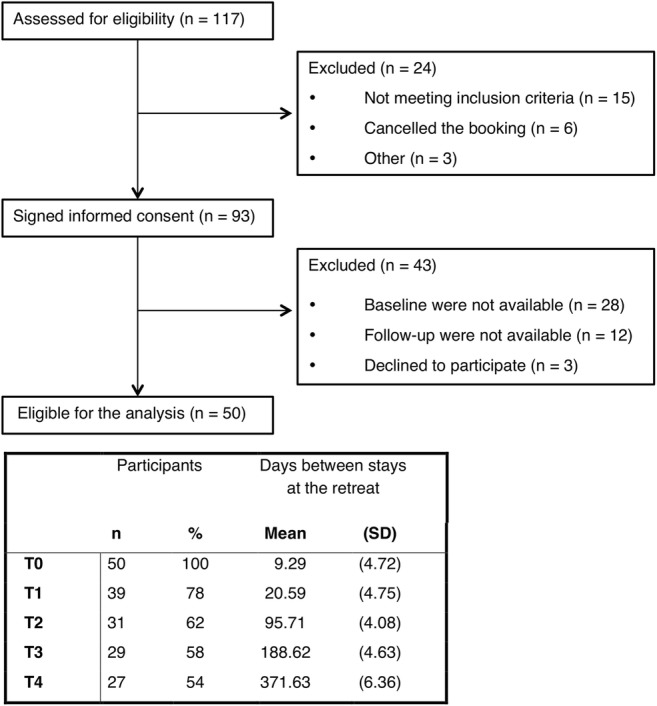
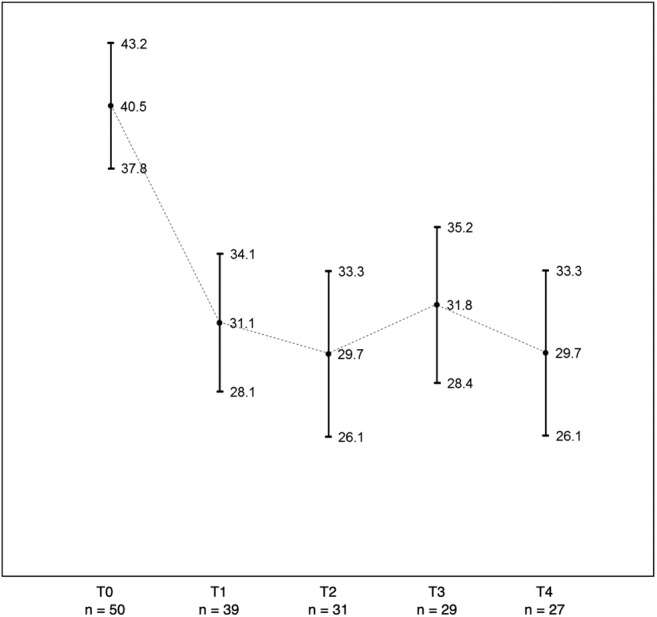
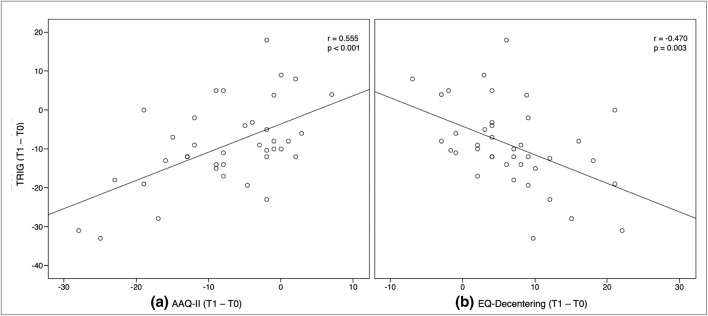
Rationale: Recent studies have assessed the therapeutic potential of ayahuasca for the treatment of depression with promising preliminary results . Objectives: Here, we examine the course of grief over 1 year of follow-up in a bereaved sample that attended a center in Peru to participate in indigenous Shipibo ayahuasca ceremonies. We also explore the roles of experiential avoidance and decentering as mechanisms of change. Methods: Bereaved participants who attended the ayahuasca center responded to an online survey that included the Texas Revised Inventory of Grief, Symptom Assessment-45, WHO Quality of Life-Bref, Acceptance and Action Questionnaire, and Decentering. Baseline assessment was completed by 50 individuals (T0). Of these, 39 completed the post-assessment at 15 days (T1), 31 at 3 months (T2), 29 at 6 months (T3), and 27 at 12 months (T4) after leaving the retreat. Pearson’s analysis was performed to examine the relationship between the severity of grief and mechanisms of change during the period of T0 and T1. Results: A significant decrease in Texas Revised Inventory was observed at all time points (T1: Cohen’s d = 0.84; T2: Cohen’s d = 1.38; T3: Cohen’s d = 1.16; T4: Cohen’s d = 1.39). We found a relationship between experiential avoidance ( r = 0.55; p < .01), decentering ( r = − 0.47; p < .01), and a reduction in the severity of grief. Conclusions: Our results suggest that the ceremonial use of ayahuasca has therapeutic value by reducing the severity of grief. Acceptance and decentering are both psychological processes that mediate the improvement of grief symptoms.
Overview
The claims and statistics of this paper haven’t been checked yet.
Free: it reads the open-access text and checks the first 5 claims that cite a source we can check. Create a free account to check every claim.
Integrity signals
Registry
Cites
Statistics
Figures
Verification
Claims the paper makes
The claims and statistics of this paper haven’t been checked yet.
Free: it reads the open-access text and checks the first 5 claims that cite a source we can check. Create a free account to check every claim.
Claims other papers make about this one
Each is checked against this paper’s own text: does it say what the citing paper says it does?
The source backs part of the claim, not all of it — or backs it for a different population, condition or comparison.
In the citing paper
“Ayahuasca has been demonstrated to be safe in naturalistic (35, 108) and clinical settings, across varying dosages and multiple administrations (26, 109–112).”
From Ayahuasca-assisted meaning reconstruction therapy for grief: a non-randomized clinical trial protocol (2025) · cites this paper as [35]
Experimental — accuracy not yet measuredThe cited source says what the claim attributes to it.
In the citing paper
“Previous observational research, however, has suggested that the ceremonial use of ayahuasca has therapeutic value in reducing the severity of grief (34–36).”
From Ayahuasca-assisted meaning reconstruction therapy for grief: a non-randomized clinical trial protocol (2025) · cites this paper as [35]
Self-check
Percentages, sums and reported differences re-computed from the paper’s own numbers.
The self-check needs the paper’s full text.
Citations
Cites
Development of the World Health Organization WHOQOL-BREF Quality of Life Assessment
THE WHOQOL GROUP (1998) · Psychological Medicine · doi:10.1017/s0033291798006667 · Cited by 7,933
Skevington, S. M., Lotfy, M., & O'Connell, K. A. (2004) · Quality of Life Research · doi:10.1023/b:qure.0000018486.91360.00 · Cited by 4,686
Bond, F. W., Hayes, S. C., Baer, R. A., Carpenter, K. M., Guenole, N., Orcutt, H. K., Waltz, T., & Zettle, R. D. (2011) · Behavior Therapy · doi:10.1016/j.beth.2011.03.007 · Cited by 3,950
Prolonged grief disorder: psychometric validation of criteria proposed for DSM-V and ICD-11
Prigerson, H. G., Horowitz, M. J., Jacobs, S. C., Parkes, C. M., Aslan, M., Goodkin, K., Raphael, B., Marwit, S. J., Wortman, C., Neimeyer, R. A., et al. (2009) · PLoS Medicine · doi:10.1371/journal.pmed.1000121 · Cited by 1,863 · cited 2×
“…or shocked, emotional numbness, mistrust of others, bitterness over the loss, confusion about one’s role in life, a diminished sense of self, difficulty accepting the loss, and moving on with life are normal reactions when bereaved in the aftermath of a death of a love one (Prigerson et al. 2009).”
BackgroundPrevalence of prolonged grief disorder in adult bereavement: A systematic review and meta-analysis
Lundorff, M., Holmgren, H., Zachariae, R., Farver-Vestergaard, I., & O’Connor, M. (2017) · Journal of Affective Disorders · doi:10.1016/j.jad.2017.01.030 · Cited by 876 · cited 1×
“Prolonged Grief Disorder (PGD) has recently been included in the latest version of the International Classification of Disease (ICD-11) (World Health Organization, 2018), with an estimated prevalence of 9.8% among bereaved individuals (Lundorff et al. 2017).”
BackgroundInfluentialPalhano-Fontes, F., Barreto, D., Onias, H., Andrade, K. C., Novaes, M. M., Pessoa, J. A., Mota-Rolim, S. A., Osório, F. L., Sanches, R., dos Santos, R. G., et al. (2019) · Psychological Medicine · doi:10.1017/s0033291718001356 · Cited by 852
Fresco, D. M., Moore, M. T., van Dulmen, M. H. M., Segal, Z. V., Ma, S. H., Teasdale, J. D., & Williams, J. M. G. (2007) · Behavior Therapy · doi:10.1016/j.beth.2006.08.003 · Cited by 810
Diagnosis and classification of disorders specifically associated with stress: proposals for ICD-11
Maercker, A., Brewin, C. R., Bryant, R. A., Cloitre, M., van Ommeren, M., Jones, L. M., Humayan, A., Kagee, A., Llosa, A. E., Rousseau, C., et al. (2013) · World Psychiatry · doi:10.1002/wps.20057 · Cited by 762
The Hallucinogen N,N -Dimethyltryptamine (DMT) Is an Endogenous Sigma-1 Receptor Regulator
Fontanilla, D., Johannessen, M., Hajipour, A. R., Cozzi, N. V., Jackson, M. B., & Ruoho, A. E. (2009) · Science · doi:10.1126/science.1166127 · Cited by 535
Osório, F. D. L., Sanches, R. F., Macedo, L. R., dos Santos, R. G., Maia-de-Oliveira, J. P., Wichert-Ana, L., de Araujo, D. B., Riba, J., Crippa, J. A., & Hallak, J. E. (2015) · Revista Brasileira de Psiquiatria · doi:10.1590/1516-4446-2014-1496 · Cited by 488
Research works printed but not linked: 3
- Cohen J Statistical power analyses for the social sciences 1988 New York Hills- dale, NJ: Lawrence Erlbaum
- Faschingbauer TR The Texas revised inventory of grief manual 1981 Houston Honeycomb
- Hayes SC Jacobson N A contextual approach to therapeutic change Psychotherapists in clinical practice: cognitive and behavioural perspectives 1987 New York Guilford Press 327 387
Cited by
Adverse effects of ayahuasca: Results from the Global Ayahuasca Survey
Bouso, J. C., Andión, Ó., Sarris, J. J., Scheidegger, M., Tófoli, L. F., Opaleye, E. S., Schubert, V., & Perkins, D. (2022) · PLOS Global Public Health · doi:10.1371/journal.pgph.0000438 · Cited by 118
“Biomedical scientists are now interested in finding clinical applications for ayahuasca, having found improvements in clinical and non-clinical conditions like affective disorders [12–16], drug dependence [17, 18], emotional regulation in personality disorders [19], grief [20, 21], mindfulness and psychological flexib…”
BackgroundSelf-citationKiraga, M. K., Mason, N. L., Uthaug, M. V., van Oorsouw, K. I. M., Toennes, S. W., Ramaekers, J. G., & Kuypers, K. P. C. (2021) · Frontiers in Pharmacology · doi:10.3389/fphar.2021.721537 · Cited by 85
The Psychedelic Future of Post-Traumatic Stress Disorder Treatment
Zaretsky, T. G., Jagodnik, K. M., Barsic, R., Antonio, J. H., Bonanno, P. A., MacLeod, C., Pierce, C., Carney, H., Morrison, M. T., Saylor, C. F., et al. (2024) · Current Neuropharmacology · doi:10.2174/1570159x22666231027111147 · Cited by 104
van Oorsouw, K., Toennes, S. W., & Ramaekers, J. G. (2022) · Psychopharmacology · doi:10.1007/s00213-021-06046-9 · Cited by 74
“Insights, a more positive life stance and changed worldview are commonly reported outcomes after ingestion of ayahuasca (Bouso et al. 2012; González et al. 2020; Halpern et al. 2008) and may contribute to improvements in mental health symptoms.”
BackgroundRuffell, S. G. D., Netzband, N., Tsang, W., Davies, M., Inserra, A., Butler, M., Rucker, J. J. H., Tófoli, L. F., Dempster, E. L., Young, A. H., et al. (2021) · Frontiers in Psychiatry · doi:10.3389/fpsyt.2021.687615 · Cited by 74
Sloshower, J., Zeifman, R. J., Guss, J., Krause, R., Safi-Aghdam, H., Pathania, S., Pittman, B., & D’Souza, D. C. (2024) · Scientific Reports · doi:10.1038/s41598-024-58318-x · Cited by 65
“Several cross-sectional and observational studies have found that use of a classic psychedelic is associated with subsequent increases in psychological flexibility 21,36–38 .”
BackgroundResultdos Santos, R. G., Bouso, J. C., Rocha, J. M., Rossi, G. N., & Hallak, J. E. (2021) · Risk Management and Healthcare Policy · doi:10.2147/rmhp.s300656 · Cited by 60
“ing Westerns to improve their mental and physical conditions.(51,84) Moreover, the paradigm of the Right to science is also starting to recognize traditional knowledge”
BackgroundSelf-citationOna, G., & Bouso, J. C. (2020) · Neuroscience & Biobehavioral Reviews · doi:10.1016/j.neubiorev.2020.09.035 · Cited by 58
Self-citationPsilocybin for Trauma-Related Disorders
Khan, A. J., Bradley, E., O’Donovan, A., & Woolley, J. (2022) · Current Topics in Behavioral Neurosciences · doi:10.1007/7854_2022_366 · Cited by 67
Psychedelic therapies reconsidered: compounds, clinical indications, and cautious optimism
Mitchell, J., & Anderson, B. T. (2023) · Neuropsychopharmacology · doi:10.1038/s41386-023-01656-7 · Cited by 57
“Potential indications for ayahuasca include alcohol and other substance use disorders, anxiety and depression disorders [60] and possibly prolonged grief disorder [61] and eating disorders [62].”
BackgroundAyahuasca: A review of historical, pharmacological, and therapeutic aspects
Ruffell, S., Crosland‐Wood, M., Palmer, R., Netzband, N., Tsang, W., Weiss, B., Gandy, S., Cowley‐Court, T., Halman, A., McHerron, D., et al. (2023) · Psychiatry and Clinical Neurosciences Reports · doi:10.1002/pcn5.146 · Cited by 76
Ayahuasca's therapeutic potential: What we know – and what not
Maia, L. O., Daldegan‐Bueno, D., Wießner, I., de Araújo, D. B., & Tófoli, L. F. (2022) · European Neuropsychopharmacology · doi:10.1016/j.euroneuro.2022.10.008 · Cited by 61
N,N‐dimethyltryptamine and Amazonian ayahuasca plant medicine
James, E., Keppler, J., Robertshaw, T. L., & Sessa, B. (2022) · Human Psychopharmacology Clinical and Experimental · doi:10.1002/hup.2835 · Cited by 58
The Shipibo ceremonial use of ayahuasca to promote well-being: An observational study
Gonzalez, D., Cantillo, J., Perez, I., Carvalho, M., Aronovich, A., Farre, M., Feilding, A., Obiols, J. E., & Bouso, J. C. (2021) · Frontiers in Pharmacology · doi:10.3389/fphar.2021.623923 · Cited by 40
Self-citationBouso, J. C., & Avilés, C. S. (2020) · PubMed Central · Cited by 56
Self-citationEgger, K., Aicher, H., Cumming, P. D., & Scheidegger, M. (2024) · Cellular and Molecular Life Sciences · doi:10.1007/s00018-024-05353-6 · Cited by 47
“Recent pre-clinical and observational studies have shown encouraging results with ayahuasca in treating a variety of conditions and their animal models, including depression, anxiety, PTSD [22–33], substance use disorders [34–38], eating disorders [39, 40], and grief [41, 42].”
ResultRossi, G. N., Guerra, L. T. L., Baker, G. B., Dursun, S. M., Bouso, J. C., Hallak, J. E. C., & SANTOS, R. G. D. (2022) · Biomolecules · doi:10.3390/biom12111618 · Cited by 40
Self-citationThe Safety and Efficacy of Psychedelic-Assisted Therapies for Older Adults: Knowns and Unknowns
Johnston, C. B., Mangini, M., Grob, C. S., & Anderson, B. T. (2022) · American Journal of Geriatric Psychiatry · doi:10.1016/j.jagp.2022.08.007 · Cited by 40
“To date, only one psychedelic trial has reported pre-post improvements in grief symptoms, but this was an uncontrolled, open-label pilot study.(64) Because prolonged grief disorder shares many clinical features with depression (i.”
BackgroundMarcus, O. (2022) · Interdisciplinary Science Reviews · doi:10.1080/03080188.2022.2075201 · Cited by 38
“…fi ts, including mental health conditions such as addiction (Mabit 2007; Thomas et al. 2013; Loizaga-Velder and Verres 2014), depression (Sanches et al. 2016) protracted grief (González et al. 2017; González et al. 2020), eating disorders (Lafrance et al. 2017), and trauma (Nielson and Megler 2012).”
BackgroundWithin-treatment changes in a novel addiction treatment program using traditional Amazonian medicine
O’Shaughnessy, D. M., Berlowitz, I., Rodd, R., Sarnyai, Z., & Quirk, F. H. (2021) · Therapeutic Advances in Psychopharmacology · doi:10.1177/2045125320986634 · Cited by 33
“Significantly lower scores for Takiwasi patients were found for (a) medical, t(33) = −3.”
BackgroundResultInfluentialOña, G., Berrada, A., & Bouso, J. C. (2021) · Transcultural Psychiatry · doi:10.1177/13634615211038416 · Cited by 36
Self-citationPerkins, D., Ruffell, S., Day, K., Rubiano, D. P., & Sarris, J. J. (2023) · Frontiers in Neuroscience · doi:10.3389/fnins.2022.879221 · Cited by 54
Ayahuasca for the Treatment of Depression
Palhano-Fontes, F., Soares, B. L., Coelho, N. L. G., Arcoverde, E., & de Araújo, D. B. (2021) · Current topics in behavioral neurosciences · doi:10.1007/7854_2021_277 · Cited by 35
Gómez-Sousa, M. D. L., Jiménez-Garrido, D. F., Oña, G., SANTOS, R. G. D., Hallak, J. E. C., Alcázar‐Córcoles, M. Á., & Bouso, J. C. (2021) · Journal of Clinical Psychopharmacology · doi:10.1097/jcp.0000000000001343 · Cited by 31
Self-citationAmazonian Medicine and the Psychedelic Revival: Considering the “Dieta”
O’Shaughnessy, D. M., & Berlowitz, I. (2021) · Frontiers in Pharmacology · doi:10.3389/fphar.2021.639124 · Cited by 37
“Much like the classical psychedelics, ayahuasca use has been associated with a range of positive therapeutic outcomes in the clinical research literature, including the alleviation of depression, persistent grief, and addictions (Grob et al., 1996; Palladino, 2009; Thomas et al., 2013; Dos Santos et al., 2016; Argento…”
BackgroundTraumatic grief research and care in the aftermath of the COVID-19 pandemic
Djelantik, A. A. A. M. J., Bui, É., O’Connor, M., Rosner, R., Robinaugh, D. J., Simon, N. M., & Boelen, P. A. (2021) · European Journal of Psychotraumatology · doi:10.1080/20008198.2021.1957272 · Cited by 30
“…recent observational studies reported large reductions in grief symptoms in chronically grieving bereaved individuals receiving ayahuasca, a brewed beverage derived from two Amazonian plant species, containing dimethyltryptamine (DMT) and its precursor, during a ceremonial (González et al., 2020).”
BackgroundGomez-Escolar, A., Folch‐Sanchez, D., Stefaniuk, J., Swithenbank, Z., Nisa, A., Braddick, F., Chaudhary, N. I., van der Meer, P. B., & Batalla, A. (2024) · CNS Drugs · doi:10.1007/s40263-024-01101-3 · Cited by 22
Low, F., & Earleywine, M. (2023) · Journal of Psychoactive Drugs · doi:10.1080/02791072.2023.2228303 · Cited by 22
“The lower proportion of participants who did not benefit in a more structured setting underscores the importance of contextual factors (Ayahuasca ceremonies frequently have formal songs, prayers, and social support that appear less often during the use of other psychedelics; González et al. 2020).”
BackgroundInfluentialPsychedelic public health: State of the field and implications for equity
Kuiper, H., Alley, C., Harris, Z., Rauch, C. K., Robbins, M., Rodríguez, P. G., Tomczak, P., Urrutia, J., & Magar, V. (2024) · Social Science & Medicine · doi:10.1016/j.socscimed.2024.117134 · Cited by 23
van Oorsouw, K. I. M., Uthaug, M. V., Mason, N. L., Broers, N. J., & Ramaekers, J. G. (2021) · Journal of Psychedelic Studies · doi:10.1556/2054.2021.00174 · Cited by 20
González, D., Aixalà, M., Neimeyer, R. A., Cantillo, J., Nicolson, D., & Farré, M. (2022) · Frontiers in Psychology · doi:10.3389/fpsyg.2022.832879 · Cited by 20
Self-citationRuffell, S., Gandy, S., Tsang, W., Lopez, R., O’Rourke, N., Akhtar, A., Netzband, N., Hollingdale, J., Perkins, D., & Sarris, J. J. (2024) · Drug Science Policy and Law · doi:10.1177/20503245241235100 · Cited by 14
“Previous studies have found ayahuasca usage to be associated with higher levels of an aspect of mindfulness referred to as decentring (Domínguez-Clavé et al., 2016; Franquesa et al., 2018; González et al., 2020, 2021; Kiraga et al., 2021; Murphy-Beiner & Soar, 2020; Soler et al., 2016).”
The Potential Role of Serotonergic Hallucinogens in Depression Treatment
Psiuk, D., Nowak, E., Cholewa, K., Łopuszańska, U., & Samardakiewicz, M. (2021) · Life · doi:10.3390/life11080765 · Cited by 16
Nižňanský, Ľ., Nižnanská, Ž., Kuruc, R., Szórádová, A., Šikuta, J., & Zummerová, A. (2022) · Journal of Clinical Medicine · doi:10.3390/jcm11041147 · Cited by 16
“The etymology of the word ayahuasca in the Quechua language of the original inhabitants of Peru and Ecuador comes from the terms “aya”-spirit (soul, world of death) and “huasca”-liana or vine, which in English can be translated as “vine of the soul” [2].”
BackgroundLoizaga-Velder, A. K., Giovannetti, C., Gomez, R. C., Valenzuela, T. C., Jaime, G. R. O., Agin-Liebes, G., Marcus, O., & Rush, B. R. (2023) · Journal of Psychoactive Drugs · doi:10.1080/02791072.2023.2255182 · Cited by 13
“…and increased self-efficacy in SUD (Loizaga-Velder and Verres 2014); self-transcendence and redefinition of the self through spiritually-affirming cultural values (Apud Pelaez 2020; Dupuis 2022); processing of complicated grief (González et al. 2020); and reduced suicid-ality (Zeifman et al. 2021).”
BackgroundLowe, M. X., Kettner, H., Jolly, D. R. P., Carhart-Harris, R. L., & Jackson, H. (2024) · Frontiers in Psychiatry · doi:10.3389/fpsyt.2024.1279887 · Cited by 19
Healy, C. J., Frazier, A., Kirsch, S., Sanford, A., Garcia‐Romeu, A., Todman, M., Varon, J. P., & D'Andrea, W. M. (2025) · Progress in Neuro-Psychopharmacology and Biological Psychiatry · doi:10.1016/j.pnpbp.2025.111361 · Cited by 11
A Scoping Review of Research in Naturalistic Studies with Psychedelics
de Carvalho, L. L., Encantado, J., Kettner, H., Timmermann, C., Veiga, D., & Teixeira, P. J. (2025) · Journal of Psychoactive Drugs · doi:10.1080/02791072.2025.2520221 · Cited by 10
Bouso, J. C., Révész, D., Oña, G., Rossi, G. N., Rocha, J. M., SANTOS, R. G. D., Hallak, J. E. C., & Alcázar‐Córcoles, M. Á. (2023) · Scientific Reports · doi:10.1038/s41598-023-41199-x · Cited by 10
Self-citationA Critical View on New and Future Antidepressants
Serretti, A. (2024) · Clinical Psychopharmacology and Neuroscience · doi:10.9758/cpn.23.1145 · Cited by 13
“Following studies replicated the antidepressant effects [65] also suggesting a complementary anti-inflammatory mechanism [66].”
BackgroundPotential therapeutic use of ayahuasca: A literature review
Costa, S. P. M., CARVALHO, K. C., GOMES, I. N., Calazans, C. L., Silva, M. T. A., de Miranda, J. A., Barreto, I. C., Matheus Vinícius Guimarães de, M. E. L. O., de Holanda, K. E. R., & Filho, J. M. T. D. A. (2024) · Acta Amazonica · doi:10.1590/1809-4392202301821 · Cited by 13
Perkins, D., Sarris, J. J., Cowley‐Court, T., Aicher, H., Tófoli, L. F., Bouso, J. C., Opaleye, E. S., Halman, A., Coelho, N. L. G., & Schubert, V. (2024) · Journal of Psychoactive Drugs · doi:10.1080/02791072.2024.2424288 · Cited by 10
“…consistent with a range of other studies that have reported mental health and well-being benefits associated with ayahuasca consumption in naturalistic settings (Barbosa et al. 2009; Bouso et al. 2012, 2015; González et al. 2020; Grob et al. 1996; Halpern et al. 2008; Jiménez-Garrido et al. 2020).”
Self-citationGiovannetti, C., Loizaga-Velder, A. K., Gomez, R. C., Jaime, G. R. O., Valenzuela, T. C., Sanchez, G., Marcus, O., Agin-Liebes, G., & Rush, B. R. (2025) · Journal of Psychedelic Studies · doi:10.1556/2054.2024.00401 · Cited by 8
Sabucedo, P., Andión, O., Neimeyer, R. A., Soto-Angona, O., Javkin, J., Haro, J. M., Farré, M., & González, D. (2025) · Frontiers in Psychiatry · doi:10.3389/fpsyt.2024.1484736 · Cited by 6
Self-citationNarrative review of the potential for psychedelics to treat Prolonged Grief Disorder
Ehrenkranz, R. C., Agrawal, M., Penberthy, J. K., & Yaden, D. B. (2024) · International Review of Psychiatry · doi:10.1080/09540261.2024.2357668 · Cited by 6
“In prospective observational study of 50 people who were grieving the death of a loved one and participated in an ayahuasca retreat found large decreases in grief scores on the TRIG one year after the retreat (Cohen’s d = 1.39) (Table 1; González et al., 2020).”
InfluentialThe therapeutic use of ayahuasca in grief
González, D., Aronovich, A. A., & Carvalho, M. (2021) · Ayahuasca Healing and Science · doi:10.1007/978-3-030-55688-4_12 · Cited by 5
Self-citationIncreases in Aesthetic Experience Following Ayahuasca Use: A Prospective, Naturalistic Study
Aday, J. S., Bloesch, E. K., Davis, A. K., Domoff, S. E., Scherr, K. C., Woolley, J. D., & Davoli, C. C. (2024) · Journal of Humanistic Psychology · doi:10.1177/00221678241230609 · Cited by 9
Kupferberg, A., & Hasler, G. (2024) · Frontiers in Psychiatry · doi:10.3389/fpsyt.2024.1372650 · Cited by 7
Griffin, C., & Knight, A. (2024) · Journal of Psychedelic Studies · doi:10.1556/2054.2024.00333 · Cited by 6
“The dose-response relationship is unclear from many of the studies, as the composition of psychedelics was not always precise and the number of doses in some treat-ment centers varied (González et al., 2020).”
ResultSoto-Angona, Ó., Andión, Ó., Sabucedo, P., Neimeyer, R. A., Haro, J. M., Javkin, J., Farré, M., & González, D. (2025) · Scientific Reports · doi:10.1038/s41598-025-13251-5 · Cited by 5
“Within this therapeutic framework, ayahuasca may act as a potent catalyst by eliciting emotionally salient autobiographical memories involving both the bereaved and the deceased, while fostering insights into the loss and its existential dimension, and facilitating identity reorganization 15–17 .”
InfluentialSelf-citationDavid, J., Berkovich‐Ohana, A., & Dor‐Ziderman, Y. (2025) · Psychopharmacology · doi:10.1007/s00213-025-06792-0 · Cited by 6
“…use of ayahuasca may be associated with beneficial effects in certain populations (Domínguez-Clavé et al. 2019, 2022; Frecska et al. 2012; González et al. 2020; Jiménez-garrido et al. 2020; Kiraga et al. 2021; Kohek et al. 2022; Murphy-Beiner and Soar 2020; Ona et al. 2019; Perkins et…”
Increases in aesthetic experience following ayahuasca use: An open-label, naturalistic studyPreprint
Aday, J. S., Bloesch, E., Davis, A. K., Domoff, S. E., Scherr, K. C., Woolley, J. D., & Davoli, C. C. (2023) · doi:10.31234/osf.io/gd8h2 · Cited by 2
Andión, Ó., Bouso, J. C., Sarris, J. J., Tófoli, L. F., Opaleye, E. S., & Perkins, D. (2025) · PLOS mental health. · doi:10.1371/journal.pmen.0000097 · Cited by 3
Self-citationSchimmelpfennig, J., & Jankowiak-Siuda, K. (2023) · Neuropsychiatria i Neuropsychologia · doi:10.5114/nan.2023.129068 · Cited by 2
The Use of Psychedelics for Grief Following Death due to Advanced Illness: A Scoping Review
Rosenbaum, D., Carter, C., Cirella, B. A., Cho, M., Anderson, M. A., & Hales, S. (2025) · OMEGA - Journal of Death and Dying · doi:10.1177/00302228251359366 · Cited by 1
Texas Revised Inventory of Grief: The first grief instrument validated in Greek
Christodoulou, L., Parpottas, P., Vogazianos, P., & Petkari, E. (2025) · Death Studies · doi:10.1080/07481187.2025.2591335 · Cited by 2
Alexander, R. G. (2025) · Springer eBooks · doi:10.1007/978-3-032-01008-7_6 · Cited by 1
Haupt, M. J., Carra, S., Boehnke, K. F., & Aday, J. S. (2026) · Progress in Neuro-Psychopharmacology and Biological Psychiatry · doi:10.1016/j.pnpbp.2026.111634 · Cited by 3
Psychedelic-assisted grief therapy: a mixed-method case study
Sabucedo, P., Evans, C., Nicolson, D., Farré, M., & González, D. (2024) · Mortality · doi:10.1080/13576275.2024.2434456 · Cited by 2
“A second study ( N = 50), a longitudinal observation study, followed a group of bereaved people who underwent several ayahuasca ceremonies in a traditional medicine centre in Peru (González et al., 2020).”
Self-citationBonomo, Y. A., Norman, A. F., Collins, L., Ross, M., Dwyer, J. L., Perkins, D., & Sarris, J. J. (2025) · Frontiers in Psychiatry · doi:10.3389/fpsyt.2025.1545915 · Cited by 4
Perkins, D., Ruffell, S., Day, K., Pinzon, D., & Sarris, J. J. (2022) · doi:10.31219/osf.io/e5tjc · Cited by 1
Naturalistic Entheogenics: Précis of Philosophy of PsychedelicsPreprint
Letheby, C. (2021) · PsyArXiv (OSF Preprints) · doi:10.31234/osf.io/ztewb · Cited by 1
“In some cases, these increases have been found to correlate with therapeutic effects, such as reductions in psychiatric symptoms (González et al., 2020; Mian et al., 2020).”
BackgroundSilveira, G. D. O. (2020) · Digital Library of Theses and Dissertations (Universidade de São Paulo) · doi:10.11606/t.9.2020.tde-25082022-101857
РЕНЕСАНС ПСИХОДЕЛІЧНОЇ ТЕРАПІЇ ТА ЇЇ ЗНАЧЕННЯ ДЛЯ УКРАЇНИ
Matrenitsky, V. L. (2022) · Likarska sprava · doi:10.31640/2706-8803-2022-(3-4)-04 · Cited by 3
Perkins, D., Ruffell, S., & Sarris, J. J. (2023) · Oxford University Press eBooks · doi:10.1093/med/9780192863607.003.0006
OS EFEITOS DA AYAHUASCA NO TRATAMENTO TERAPÊUTICO DA ANSIEDADE E DEPRESSÃO
de Carvalho, R. C. G., & Carvalho, F. L. (2023) · Revista Ibero-Americana de Humanidades, Ciências e Educação · doi:10.51891/rease.v9i9.11658 · Cited by 1
Chauhan, A., Ukaigwe, A., & Kumar, S. (2025) · Oxford University Press eBooks · doi:10.1093/med/9780197760864.003.0006
Lowe, M. X., Darby, Q. A., Kalcheff-Korn, S., & Jackson, H. (2026) · Journal of Psychoactive Drugs · doi:10.1080/02791072.2026.2644858 · Cited by 2
Bouso, J. C., Andión, Ó., Cantillo, J., Pérez, I. H., Farré, M., Obiols, J. E., & González, D. (2026) · Psychedelics · doi:10.1016/j.psyche.2026.100018
Self-citationXin, Y., Davis, A. K., Yoon, S., & Lee, M. Y. (2026) · Psychedelic Medicine · doi:10.1177/28314425261448756
Carter, D., Reardon, I., Swain, J., & Vando, L. (2026) · Research Square · doi:10.21203/rs.3.rs-9839240/v1
Maar, M. A., Boesch, L., Martell, R., Manitowabi, D., McGregor, L., Evans, C., Williamson, P., & Eshkakogan, C. (2026) · Drugs Education Prevention and Policy · doi:10.1080/09687637.2026.2681541
Hallucinogen-Assisted Psychotherapy for Trauma Disorders: A Bionian Lens
Miller, C. W. T., & Kozak, Z. (2026) · Psychodynamic Psychiatry · doi:10.1521/pdps.2026.54.2.308 · Cited by 1
The Australian Ayahuasca Dietero Networks: Culture, Community, and Practices
Roy, A., Williams, M. L., Day, K., & Barratt, M. J. (2026) · Contemporary Drug Problems · doi:10.1177/00914509261473569
Behavioral Shifts in Natural Speech, Language, and Facial Expression Following Ayahuasca Ceremonies
Masucci, M. D., Cohen, A. S., Cox, C. R., Rodriguez, Z. B., Granrud, O. E., Campbell, W. K., & Weiss, B. (2026) · Psychedelic Medicine · doi:10.1177/28314425261484374
Metadata
- Authors
- González, D., Cantillo, J., Pérez, I., Farré, M., Feilding, A., Obiols, J. E., & Bouso, J. C.
- Affiliations
- International Center for Ethnobotanical Education, Research, and Service (ES)
- Beckley Foundation (GB)
- Universitat Autònoma de Barcelona (ES)
- Corresponding author
- González, Débora
- Venue
- Psychopharmacology
- Published
- 2020-01-14
- Volume
- 237
- Issue
- 4
- Pages
- 1171-1182
- ISSN
- 0033-3158 (ISSN-L)
- 1432-2072
- PMC
- PMC7113212
- OpenAlex
- W2999489633
- Cited by
- 75
- References
- 57
- Citations by year
- 2026: 9 · 2025: 12 · 2024: 15 · 2023: 11 · 2022: 11 · 2021: 14 · 2020: 3
- FWCI
- 3.90
- Type
- journal article
- Language
- en
- Open access
- hybrid
- doi.org
- Licence
- cc-by
- creativecommons.org/licenses/by/4.0 (tdm)
- creativecommons.org/licenses/by/4.0 (vor)
- Locations
- Psychopharmacology (publishedVersion, cc-by)
- PubMed Central (publishedVersion, cc-by)
- PubMed (publishedVersion)
- Dipòsit Digital de Documents de la UAB (Universitat Autònoma de Barcelona) (submittedVersion, cc-by)
- Funders
- Beckley Foundation
- Topics
- Social Sciences › Psychology › Clinical Psychology › Grief, Bereavement, and Mental Health
- Social Sciences › Psychology › Clinical Psychology › Psychedelics and Drug Studies
- Social Sciences › Health › Religion, Spirituality, and Psychology
- Keywords
- ayahuasca, grief, bereavement, experiential avoidance, decentering, acceptance, mechanisms of change, psychedelic therapy, grief severity
- MeSH terms
- Adult, Aged, Beverages, Depression, Female, Follow-Up Studies, Grief, Humans, Male, Medicine, Traditional, Middle Aged, Prospective Studies, Quality of Life, Surveys and Questionnaires, Plant Leaves, Plant Stems, Banisteriopsis
About these checks
Registry, retraction, Cites and statistics results are computed, not judged, with one exception: a printed reference that no index lists is read once by a model before it counts as a citation error. Claims are extracted by a model and kept only when their quote appears verbatim in the text; each cited source is then checked, with a model’s help, for whether it says what the claim relies on. Those verdicts can be wrong — read the claim’s quote and the cited source before relying on one.
Statistics and arithmetic are recomputed, not judged.
Confidence bands are shown only for fields calibrated on our annotated test set. None is calibrated yet, so no band is shown.
What counts as a claim ›How we measure confidence ›How we check this ›
Are you an author, or do you see a problem with this page? Request a review
Data sources
Bibliographic data: Semantic Scholar, OpenAlex, Crossref.
Contains information from the Semantic Scholar Academic Graph Datasets, made available under the ODC Attribution License (ODC-BY 1.0).
Semantic Scholar’s data is described in: Kinney, R., et al. (2023). The Semantic Scholar Open Data Platform. arXiv:2301.10140.
