

The DOI matches its Crossref record; 45 of the 46 references it cites were found in a registry or an index.
A European multicentre PET study of fibrillar amyloid in Alzheimer’s disease
Open accessAbstract
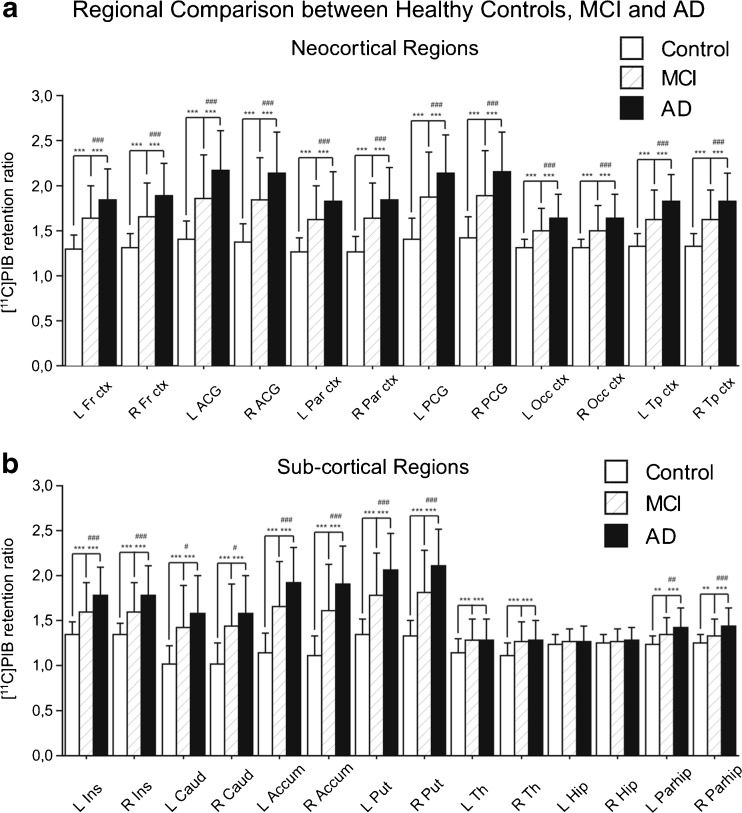
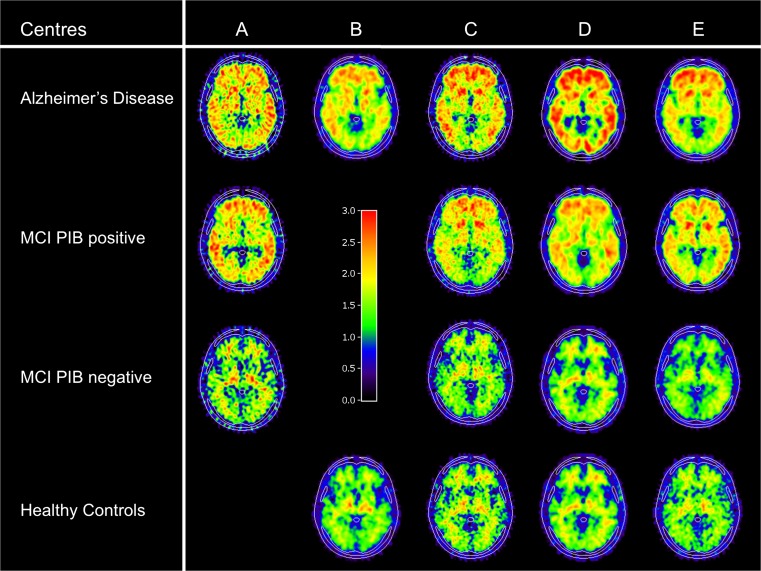
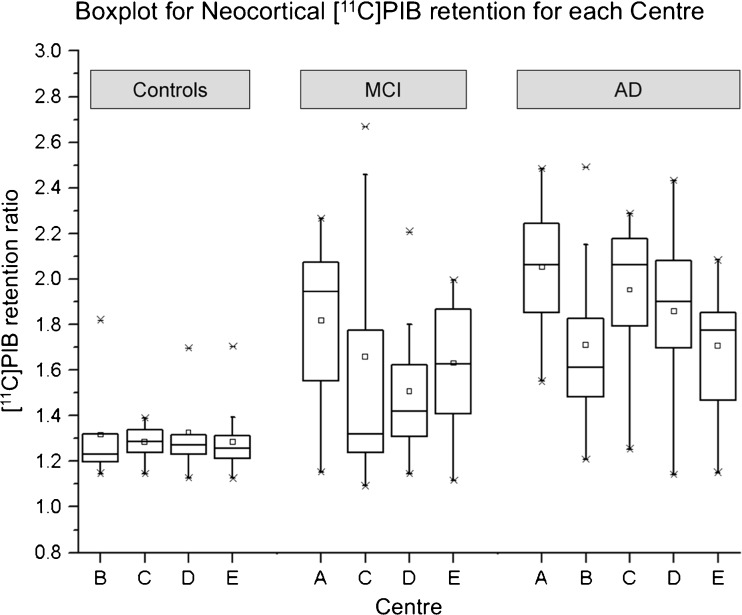
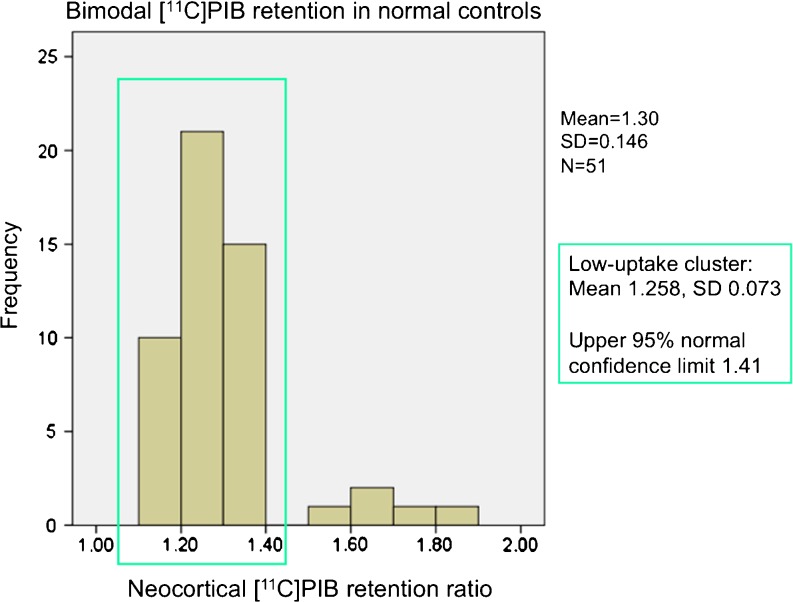
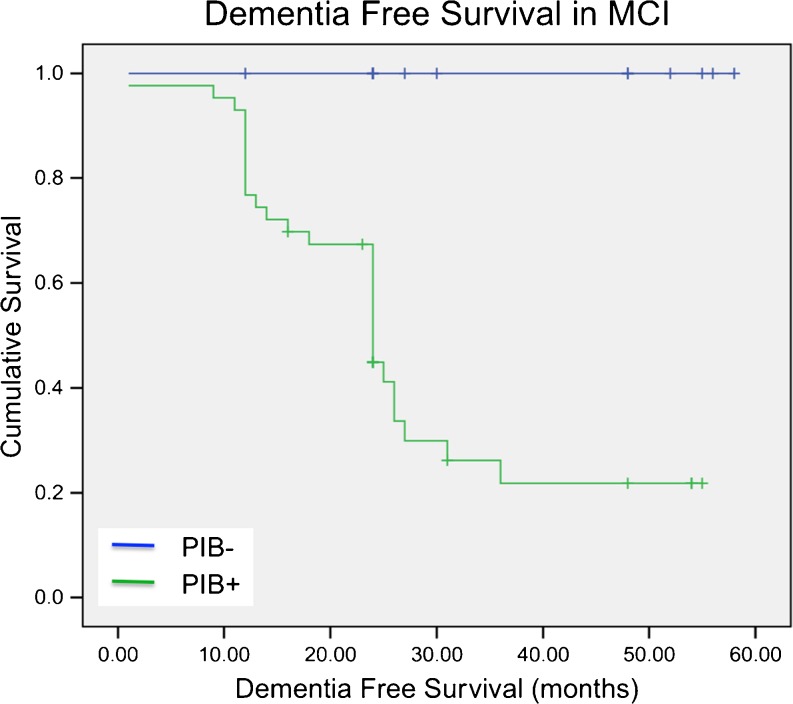
PURPOSE: Amyloid PET tracers have been developed for in vivo detection of brain fibrillar amyloid deposition in Alzheimer's disease (AD). To serve as an early biomarker in AD the amyloid PET tracers need to be analysed in multicentre clinical studies. METHODS: In this study 238 [(11)C]Pittsburgh compound-B (PIB) datasets from five different European centres were pooled. Of these 238 datasets, 18 were excluded, leaving [(11)C]PIB datasets from 97 patients with clinically diagnosed AD (mean age 69 ± 8 years), 72 patients with mild cognitive impairment (MCI; mean age 67.5 ± 8 years) and 51 healthy controls (mean age 67.4 ± 6 years) available for analysis. Of the MCI patients, 64 were longitudinally followed for 28 ± 15 months. Most participants (175 out of 220) were also tested for apolipoprotein E (ApoE) genotype. RESULTS: [(11)C]PIB retention in the neocortical and subcortical brain regions was significantly higher in AD patients than in age-matched controls. Intermediate [(11)C]PIB retention was observed in MCI patients, with a bimodal distribution (64 % MCI PIB-positive and 36 % MCI PIB-negative), which was significantly different the pattern in both the AD patients and controls. Higher [(11)C]PIB retention was observed in MCI ApoE ε4 carriers compared to non-ApoE ε4 carriers (p < 0.005). Of the MCI PIB-positive patients, 67 % had converted to AD at follow-up while none of the MCI PIB-negative patients converted. CONCLUSION: This study demonstrated the robustness of [(11)C]PIB PET as a marker of neocortical fibrillar amyloid deposition in brain when assessed in a multicentre setting. MCI PIB-positive patients showed more severe memory impairment than MCI PIB-negative patients and progressed to AD at an estimated rate of 25 % per year. None of the MCI PIB-negative patients converted to AD, and thus PIB negativity had a 100 % negative predictive value for progression to AD. This supports the notion that PIB-positive scans in MCI patients are an indicator of prodromal AD.
Overview
The claims and statistics of this paper haven’t been checked yet.
Run the check — free, no account needed. It reads the open-access text and checks the sources it cites.
Integrity signals
Registry
Cites
Statistics
Figures
Verification
Claims the paper makes
The claims and statistics of this paper haven’t been checked yet.
Run the check — free, no account needed. It reads the open-access text and checks the sources it cites.
Claims other papers make about this one
Each is checked against this paper’s own text: does it say what the citing paper says it does?
The source backs part of the claim, not all of it — or backs it for a different population, condition or comparison.
In the citing paper
“Numerous studies have shown that CU individuals with abnormal amyloid biomarkers have more rapid progression of atrophy, hypometabolism, and clinical/cognitive decline than individuals without biomarker evidence of Aβ deposition [13,33,80,93–99]”
From NIA‐AA Research Framework: Toward a biological definition of Alzheimer's disease (2018) · cites this paper as [94]
Experimental — accuracy not yet measured
Self-check
Percentages, sums and reported differences re-computed from the paper’s own numbers.
The self-check needs the paper’s full text.
Citations
Cites
McKhann, G., Drachman, D., Folstein, M., Katzman, R., Price, D., & Stadlan, E. M. (1984) · Neurology · doi:10.1212/wnl.34.7.939 · Cited by 27,915
McKhann, G. M., Knopman, D. S., Chertkow, H., Hyman, B. T., Jack, C. R., Kawas, C. H., Klunk, W. E., Koroshetz, W. J., Manly, J. J., Mayeux, R., et al. (2011) · Alzheimer's & Dementia · doi:10.1016/j.jalz.2011.03.005 · Cited by 18,657
Mild cognitive impairment as a diagnostic entity
Petersen, R. C. (2004) · Journal of Internal Medicine · doi:10.1111/j.1365-2796.2004.01388.x · Cited by 7,864
Ashburner, J., & Friston, K. J. (2005) · NeuroImage · doi:10.1016/j.neuroimage.2005.02.018 · Cited by 7,507
Diagnostic and Statistical Manual of Mental Disorders ( DSM ‐ IV ‐ TR )
Segal, D. L. (2010) · Wiley eBooks · doi:10.1002/9780470479216.corpsy0271 · Cited by 4,687
Imaging brain amyloid in Alzheimer's disease with Pittsburgh Compound‐B
Klunk, W. E., Engler, H., Nordberg, A., Wang, Y., Blomqvist, G., Holt, D. P., Bergström, M., Savitcheva, I., Huang, G., Estrada, S., et al. (2004) · Annals of Neurology · doi:10.1002/ana.20009 · Cited by 4,496
Self-citationResearch criteria for the diagnosis of Alzheimer's disease: revising the NINCDS–ADRDA criteria
Dubois, B., Feldman, H. H., Jacova, C., DeKosky, S. T., Barberger-Gateau, P., Cummings, J., Delacourte, A., Galasko, D., Gauthier, S., Jicha, G., et al. (2007) · The Lancet Neurology · doi:10.1016/s1474-4422(07)70178-3 · Cited by 4,411
The Alzheimer’s disease neuroimaging initiative (ADNI): MRI methods
Jack, C. R., Bernstein, M. A., Fox, N. C., Thompson, P., Alexander, G., Harvey, D., Borowski, B., Britson, P. J., L. Whitwell, J., Ward, C., et al. (2008) · Journal of Magnetic Resonance Imaging · doi:10.1002/jmri.21049 · Cited by 4,347
Revising the definition of Alzheimer's disease: a new lexicon
Dubois, B., Feldman, H. H., Jacova, C., Cummings, J. L., DeKosky, S. T., Barberger-Gateau, P., Delacourte, A., Frisoni, G., Fox, N. C., Galasko, D., et al. (2010) · The Lancet Neurology · doi:10.1016/s1474-4422(10)70223-4 · Cited by 1,869
Frequency of Stages of Alzheimer-Related Lesions in Different Age Categories
Braak, H., & Braak, E. (1997) · Neurobiology of Aging · doi:10.1016/s0197-4580(97)00056-0 · Cited by 1,656
Research works printed but not linked: 1
- Collignon A, Maes F, Delaere D, Vandermeulen D, Suetens P, Marchal G. Automated multi-modality image registration based on information theory. Proceedings of the International Conference on Information Processing in Medical Imaging. Dordrecht: Kluwer Academic; 1995.
Cited by
Sorted by citations
NIA‐AA Research Framework: Toward a biological definition of Alzheimer's disease
Jack, C. R., Bennett, D. A., Blennow, K., Carrillo, M. C., Dunn, B., Haeberlein, S. B., Holtzman, D. M., Jagust, W., Jessen, F., Karlawish, J., et al. (2018) · Alzheimer's & Dementia · doi:10.1016/j.jalz.2018.02.018 · Cited by 10,537
Masters, C. L., Bateman, R., Blennow, K., Rowe, C. C., Sperling, R. A., & Cummings, J. L. (2015) · Nature Reviews Disease Primers · doi:10.1038/nrdp.2015.56 · Cited by 1,853
Biomarker Modeling of Alzheimer’s Disease
Jack, C. R., & Holtzman, D. M. (2013) · Neuron · doi:10.1016/j.neuron.2013.12.003 · Cited by 1,002
Johnson, K. A., Minoshima, S., Bohnen, N. I., Donohoe, K. J., Foster, N. L., Herscovitch, P., Karlawish, J. H., Rowe, C. C., Carrillo, M. C., Hartley, D. M., et al. (2013) · Alzheimer's & Dementia · doi:10.1016/j.jalz.2013.01.002 · Cited by 603
Villeneuve, S., Rabinovici, G. D., Cohn-Sheehy, B. I., Madison, C., Ayakta, N., Ghosh, P. M., La Joie, R., Arthur-Bentil, S. K., Vogel, J. W., Marks, S. M., et al. (2015) · Brain · doi:10.1093/brain/awv112 · Cited by 408
Metadata
- Authors
- Nordberg, A., Carter, S. F., Rinne, J., Drzezga, A., Brooks, D. J., Vandenberghe, R., Perani, D., Forsberg, A., Långström, B., Scheinin, N., Karrasch, M., Någren, K., Grimmer, T., Miederer, I., Edison, P., Okello, A., Van Laere, K., Nelissen, N., Vandenbulcke, M., Garibotto, V., Almkvist, O., Kalbe, E., Hinz, R., & Herholz, K.
- Affiliations
- Karolinska University Hospital (SE)
- Karolinska Institutet (SE)
- University of Turku (FI)
- Technical University of Munich (DE)
- Imperial College London (GB)
- KU Leuven (BE)
- Vita-Salute San Raffaele University (IT)
- Uppsala University (SE)
- University of Vechta (DE)
- University of Manchester (GB)
- Corresponding author
- Nordberg, Agneta
- ORCID
- Nordberg, Agneta
- Carter, Stephen F.
- Rinne, Juha
- Drzezga, Alexander
- Brooks, David J.
- Vandenberghe, Rik
- Perani, Daniela
- Forsberg, Anton
- Scheinin, Noora
- Karrasch, Mira
- Någren, Kjell
- Grimmer, Timo
- Miederer, Isabelle
- Edison, Paul
- Nelissen, Natalie
- Vandenbulcke, Mathieu
- Garibotto, Valentina
- Almkvist, Ove
- Kalbe, Elke
- Hinz, Rainer
- Herholz, Karl
- Venue
- European Journal of Nuclear Medicine and Molecular Imaging
- Published
- 2012-09-08
- Volume
- 40
- Issue
- 1
- Pages
- 104-114
- ISSN
- 1619-7070 (ISSN-L)
- 1619-7089
- PMC
- PMC3510420
- OpenAlex
- W2116591217
- Cited by
- 186
- References
- 46
- Citations by year
- 2026: 2 · 2025: 2 · 2024: 4 · 2023: 5 · 2022: 11 · 2021: 13 · 2020: 9 · 2019: 10 · 2018: 9 · 2017: 14 · 2016: 25 · 2015: 27 · 2014: 27 · 2013: 24 · 2012: 2
- FWCI
- 18.28
- Type
- journal article
- Language
- en
- Open access
- hybrid
- doi.org
- Licence
- cc-by
- Locations
- European Journal of Nuclear Medicine and Molecular Imaging (publishedVersion, cc-by)
- PubMed Central (publishedVersion, cc-by)
- PubMed (publishedVersion)
- Research Explorer (The University of Manchester) (publishedVersion)
- Archive ouverte UNIGE (University of Geneva) (publishedVersion, other-oa)
- Archivio Istituzionale della Ricerca - Università Vita-Salute San Raffaele (submittedVersion)
- Lirias (KU Leuven) (submittedVersion)
- mediaTUM – the media and publications repository of the Technical University Munich (Technical University Munich) (submittedVersion)
- Åbo Akademi University Research Portal (submittedVersion)
- Archive ouverte UNIGE (University of Geneva) (submittedVersion, cc-by)
- Funders
- Alzheimer's Research Trust
- Deutsche Forschungsgemeinschaft (DR 445/3-1, DR 445/4-1)
- Academy of Finland
- Belgian Federal Science Policy Office (IUAP P6/29)
- Fonds Wetenschappelijk Onderzoek (05/014, G0668.07, P6/29, G0076.02)
- Karolinska Institutet (05817)
- Stockholms Läns Landsting
- Vetenskapsrådet (05817)
- Technische Universität München
- Swedish Brain Power (05817)
- Universität zu Köln
- Turun Yliopistollinen Keskussairaala
- Medical Research Council
- Topics
- Health Sciences › Medicine › Psychiatry and Mental health › Dementia and Cognitive Impairment Research
- Life Sciences › Neuroscience › Cellular and Molecular Neuroscience › Alzheimer's disease research and treatments
- Health Sciences › Medicine › Radiology, Nuclear Medicine and Imaging › Medical Imaging Techniques and Applications
- Keywords
- Alzheimer's disease, amyloid PET, Pittsburgh compound B, mild cognitive impairment, prodromal Alzheimer's disease, APOE ε4, conversion to Alzheimer's disease, memory impairment, negative predictive value, amyloid biomarkers, longitudinal follow-up
- MeSH terms
- Aged, Alzheimer Disease, Amyloid, Aniline Compounds, Apolipoproteins E, Brain, Brain Chemistry, Europe, Female, Humans, Male, Middle Aged, Thiazoles, Case-Control Studies, Radiopharmaceuticals, Positron-Emission Tomography
About these checks
Registry, retraction, Cites and statistics results are computed, not judged, with one exception: a printed reference that no index lists is read once by a model before it counts as a citation error. Claims are extracted by a model and kept only when their quote appears verbatim in the text; each cited source is then checked, with a model’s help, for whether it says what the claim relies on. Those verdicts can be wrong — read the claim’s quote and the cited source before relying on one.
Statistics and arithmetic are recomputed, not judged.
Confidence bands are shown only for fields calibrated on our annotated test set. None is calibrated yet, so no band is shown.
What counts as a claim ›How we measure confidence ›How we check this ›
Are you an author, or do you see a problem with this page? Request a review
