

The DOI matches its Crossref record; 314 of the 314 references it cites were found in a registry or an index.
Neutrophils in innate host defense against Staphylococcus aureus infections
Open accessAbstract
Staphylococcus aureus has been an important human pathogen throughout history and is currently a leading cause of bacterial infections worldwide. S. aureus has the unique ability to cause a continuum of diseases, ranging from minor skin infections to fatal necrotizing pneumonia. Moreover, the emergence of highly virulent, drug-resistant strains such as methicillin-resistant S. aureus in both healthcare and community settings is a major therapeutic concern. Neutrophils are the most prominent cellular component of the innate immune system and provide an essential primary defense against bacterial pathogens such as S. aureus. Neutrophils are rapidly recruited to sites of infection where they bind and ingest invading S. aureus, and this process triggers potent oxidative and non-oxidative antimicrobial killing mechanisms that serve to limit pathogen survival and dissemination. S. aureus has evolved numerous mechanisms to evade host defense strategies employed by neutrophils, including the ability to modulate normal neutrophil turnover, a process critical to the resolution of acute inflammation. Here we provide an overview of the role of neutrophils in host defense against bacterial pathogens and discuss strategies employed by S. aureus to circumvent neutrophil function.
Overview
The claims and statistics of this paper haven’t been checked yet.
Run the check — free, no account needed. It reads the open-access text and checks the sources it cites.
Integrity signals
Registry
Cites
Statistics
Figures
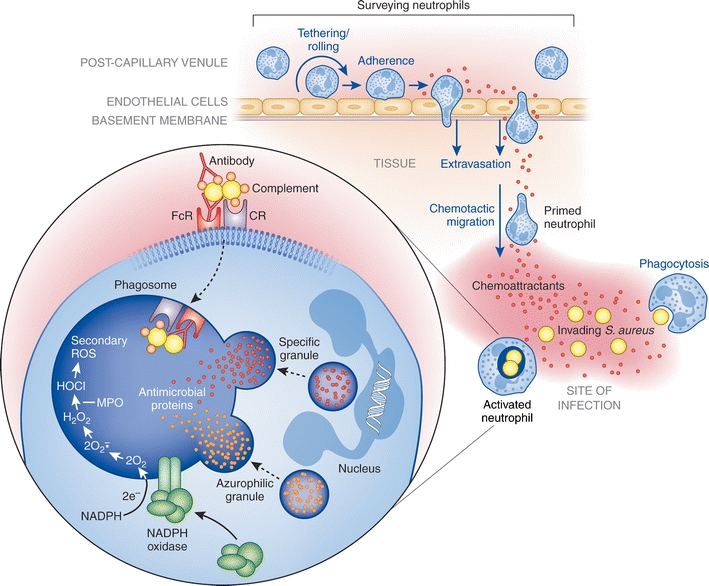
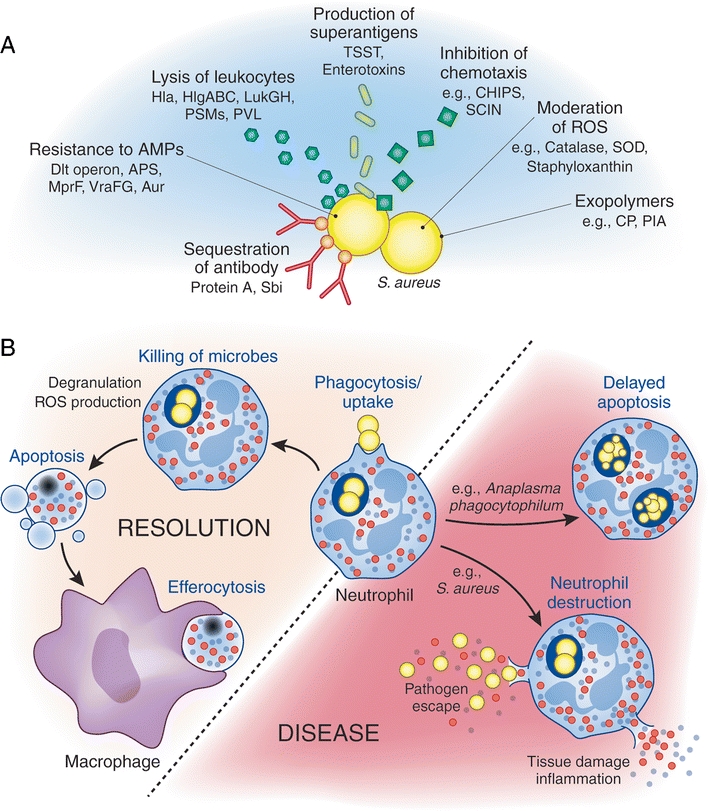
Verification
Claims the paper makes
The claims and statistics of this paper haven’t been checked yet.
Run the check — free, no account needed. It reads the open-access text and checks the sources it cites.
Claims other papers make about this one
Each is checked against this paper’s own text: does it say what the citing paper says it does?
In the citing paper
“At the site of infection, neutrophils bind and ingest the invading micro-organisms by phagocytosis.”
From Superoxide Anion Chemistry—Its Role at the Core of the Innate Immunity (2023) · cites this paper as [209]
Self-check
Percentages, sums and reported differences re-computed from the paper’s own numbers.
The self-check needs the paper’s full text.
Citations
Cites
Principles and Practice of Infectious Diseases.
(1991) · Annals of Internal Medicine · doi:10.7326/0003-4819-114-9-818_5 · Cited by 12,045
Neutrophil Extracellular Traps Kill Bacteria
Brinkmann, V., Reichard, U., Goosmann, C., Fauler, B., Uhlemann, Y., Weiss, D. S., Weinrauch, Y., & Zychlinsky, A. (2004) · Science · doi:10.1126/science.1092385 · Cited by 10,268
The L-Arginine-Nitric Oxide Pathway
Epstein, F. H., Moncada, S., & Higgs, A. (1993) · New England Journal of Medicine · doi:10.1056/nejm199312303292706 · Cited by 6,678
Staphylococcus aureus Infections
Lowy, F. D. (1998) · New England Journal of Medicine · doi:10.1056/nejm199808203390806 · Cited by 6,018
Getting to the site of inflammation: the leukocyte adhesion cascade updated
Ley, K., Laudanna, C., Cybulsky, M. I., & Nourshargh, S. (2007) · Nature Reviews Immunology · doi:10.1038/nri2156 · Cited by 4,354
Klevens, R. M. (2007) · JAMA · doi:10.1001/jama.298.15.1763 · Cited by 3,726
Novel cell death program leads to neutrophil extracellular traps
Fuchs, T. A., Abed, U., Goosmann, C., Hurwitz, R., Schulze, I., Wahn, V., Weinrauch, Y., Brinkmann, V., & Zychlinsky, A. (2007) · The Journal of Cell Biology · doi:10.1083/jcb.200606027 · Cited by 3,197
Fadok, V. A., Bratton, D. L., Konowal, A., Freed, P. W., Westcott, J. Y., & Henson, P. M. (1998) · Journal of Clinical Investigation · doi:10.1172/jci1112 · Cited by 3,166
Neutrophils in the activation and regulation of innate and adaptive immunity
Mantovani, A., Cassatella, M. A., Costantini, C., & Jaillon, S. (2011) · Nature reviews. Immunology · doi:10.1038/nri3024 · Cited by 3,159
Babior, B. M., Kipnes, R. S., & Curnutte, J. T. (1973) · Journal of Clinical Investigation · doi:10.1172/jci107236 · Cited by 2,931
Cited by
Sorted by citations
Items 301–400 of 402
Koseki, J., Kaneko, A., Matsubara, Y., Sekiguchi, K., Ebihara, S., Aiba, S., & Yamasaki, K. (2017) · Trends in Immunotherapy · doi:10.24294/ti.v1.i1.31 · Cited by 3
Kumaresan, V., Sivaperumal, P., & Girija, A. S. S. (2022) · Oral Oncology · doi:10.1016/j.oraloncology.2022.106013 · Cited by 3
Nadaf, M. I. V., Lima, L., Stranieri, I., AkikoTakano, O., Carneiro-Sampaio, M. M. S., & Palmeira, P. (2016) · Clinics · doi:10.6061/clinics/2016(12)02 · Cited by 3
Gruber, I. M., Egorova, N. B., & Astashkina, E. A. (2016) · Epidemiology and Vaccinal Prevention · doi:10.31631/2073-3046-2016-15-3-72-82 · Cited by 3
Pathogenesis of Biomaterial-Associated Infection
Tsang, S. J., & Simpson, H. (2020) · Springer eBooks · doi:10.1007/978-3-030-34475-7_6 · Cited by 3
Investigation of oxidative metabolism of uric acid and its role in redox processes in inflammation
da Silva, R. P. (2020) · Digital Library of Theses and Dissertations (Universidade de São Paulo) · doi:10.11606/t.46.2020.tde-29092021-142945 · Cited by 3
Teghanemt, A., Schilcher, K., Kavanaugh, J., Horswill, A. R., & Nauseef, W. M. (2025) · Journal of Leukocyte Biology · doi:10.1093/jleuko/qiaf057 · Cited by 2
Francisella tularensis-infected human neutrophils are trojan horses for infection of macrophages
Escobar, S. M., McCracken, J., Schwartz, J. T., Miller, A. M., & Allen, L. H. (2025) · Frontiers in Immunology · doi:10.3389/fimmu.2025.1632942 · Cited by 2
Defining the human lung pathodegradome of the V8 protease from Staphylococcus aureus
Mustor, E. M., Chaput, D., Sipprell, S. E., & Shaw, L. N. (2026) · Infection and Immunity · doi:10.1128/iai.00725-25 · Cited by 3
Role of Cytokines in Bone Diseases and Their Therapeutic Application
Guha, A., Wahi, P., & Lal, G. (2026) · ImmunoTargets and Therapy · doi:10.2147/itt.s604392 · Cited by 2
Yu, Q., Qu, Y., Zhang, J., (223533), Z. Z., Guo, S., Luo, F., & Dou, C. (2026) · Bone Research · doi:10.1038/s41413-026-00571-z · Cited by 2
Ureaplasma diversum clearance in lung mice infection is mediated by neutrophils
da Silva, J. R., Oliveira, P., Nolasco, P., Santana, H., Rezende, I. S., dos Santos, D. P., Timenetsky, J., Marques, L. M., Figueiredo, T. B., & da Silva, R. A. A. (2021) · Anais da Academia Brasileira de Ciências · doi:10.1590/0001-3765202120200424 · Cited by 2
Chudilova, G. A., Teterin, Y. V., Chapurina, V. N., Chicherev, E. A., Тараканов, В. А., & Нестерова, И. В. (2022) · Russian Journal of Immunology · doi:10.46235/1028-7221-1206-meo · Cited by 2
Jang, E.-A., Han, H.-J., Tin, T. D., Cho, E., Lee, S., & Kwak, S. H. (2023) · Journal of Experimental & Biomedical Sciences/Biomedical Science Letters · doi:10.15616/bsl.2023.29.4.211 · Cited by 2
Dietrich, M., Besser, M., & Stuermer, E. K. (2024) · Microorganisms · doi:10.3390/microorganisms12020269 · Cited by 2
CXCR2 perturbation promotes Staphylococcus aureus implant-associated infection
Akaraphanth, M., Nordgren, T. M., & Gries, C. M. (2024) · Journal of Medical Microbiology · doi:10.1099/jmm.0.001821 · Cited by 2
Zhao, J., Pu, X., Wang, X., & Zhang, L. (2024) · Frontiers in Allergy · doi:10.3389/falgy.2024.1466480 · Cited by 2
Khan, S., Hou, B., Khan, M. N., Shafiq, M., Cai, L., Fang, W., Wang, Q., Bilal, H., & Zeng, Y. (2025) · Frontiers in Cellular and Infection Microbiology · doi:10.3389/fcimb.2025.1549470 · Cited by 3
Siqueira‐Batista, R. (2014) · Abakós · doi:10.5752/p.2316-9451.2014v2n2p79 · Cited by 2
Developing a Universal Staphylococcus aureus Vaccine: Why Aren?t We There Yet?
McNeely, A. J. T. B. (2013) · Internal Medicine Open Access · doi:10.4172/2165-8048.1000126 · Cited by 2
Dalbavancin Boosts the Ability of Neutrophils to Fight Methicillin-Resistant Staphylococcus aureus
Scutera, S., Sparti, R., Comini, S., Menotti, F., Musso, T., Cuffini, A., Allizond, V., & Banche, G. (2023) · International Journal of Molecular Sciences · doi:10.3390/ijms24032541 · Cited by 2
Lipińska-Gediga, M. (2013) · Journal of Clinical & Cellular Immunology · doi:10.4172/2155-9899.s13-008 · Cited by 2
Modirrahma, Y., Mastuki, M. F., & Hussain, R. M. (2015) · Journal of Applied Sciences · doi:10.3923/jas.2015.874.883 · Cited by 2
Dhanagovind, P., Kujur, P. K., Swain, R. K., & Banerjee, S. (2020) · bioRxiv (Cold Spring Harbor Laboratory) · doi:10.1101/2020.02.26.960443 · Cited by 2
Hinman, K. D., Laforce‐Nesbitt, S. S., Cohen, J. T., Mundy, M. A., Bliss, J. M., Horswill, A. R., & Lefort, C. T. (2023) · Frontiers in Immunology · doi:10.3389/fimmu.2023.1089111 · Cited by 1
Ilmain, J. K., Perelman, S. S., Panepinto, M. C., Irnov, I., Coudray, N., Samhadaneh, N. M., Pironti, A., Ueberheide, B. M., Ekiert, D. C., Bhabha, G., et al. (2023) · Journal of Biological Chemistry · doi:10.1016/j.jbc.2023.105321 · Cited by 1
Dong, S., Bai, X., Chen, B., Fan, M., Liu, Q., Zhao, Y., Li, L., & Zhu, D. Y. (2025) · Frontiers in Pharmacology · doi:10.3389/fphar.2024.1501744 · Cited by 1
Rago, F., Ahmed, M. Y., Marinelli, M. A., Miller, L. M., Duray, A. M., Dresden, B. P., Constantinesco, N. J., Sims, P. K. F., Richwalls, L. J., Kupul, S., et al. (2025) · The Journal of Immunology · doi:10.1093/jimmun/vkae061 · Cited by 1
Yousief, S. W., Abdelmalek, N., Bojer, M. S., Ma, Y., Guerra, P. R., Nisar, S., Olsen, J. E., & Paglietti, B. (2025) · iScience · doi:10.1016/j.isci.2025.114261 · Cited by 2
Gao, P., Hou, S., Wang, P., Wei, Y., Prakash, P. H., Lai, I. P. M., Yan, B., Tai, S. S. C., Tang, V. Y. M., Ye, S., et al. (2025) · Microbiological Research · doi:10.1016/j.micres.2025.128434 · Cited by 2
Ledger, E. V. K. (2026) · Microbiology · doi:10.1099/mic.0.001718 · Cited by 1
Wang, L., Wang, T., & Zhao, Y. (2026) · Animals and zoonoses. · doi:10.1016/j.azn.2026.07.003 · Cited by 1
Turgimbayeva, A., Yakupov, B., & Abeldenov, S. (2026) · Frontiers in Microbiology · doi:10.3389/fmicb.2026.1887239 · Cited by 1
Siqueira‐Batista, R. (2014) · Abakós · doi:10.5752/2014v2n2p79 · Cited by 1
Galantini, M. P. L., Leal, L. S., Rodrigues, K. B., Ribeiro, I. S., Pereira, Í. S., Gonçalves, C. V., Calado, S. P. D. M., dos Santos, D. P., Muniz, I. P. R., & da Silva, R. A. A. (2022) · Anais da Academia Brasileira de Ciências · doi:10.1590/0001-3765202220200561 · Cited by 1
Singh, D., & Mittal, N. (2023) · Elsevier eBooks · doi:10.1016/b978-0-323-99977-9.00031-4 · Cited by 1
Community-Associated Methicillin-Resistant Staphylococcus Aureus in the Oral Cavity
Almkhadhree, E. A. K., Alqaseer, K., Radhi, O. A., Kadhim, B. A., Falah, M. A., Al-Yasseree, H., Al-Abbas, W. D. S., Albandar, I. J., & Shaker, E. (2023) · kufa journal for nursing sciences · doi:10.36321/kjns.vi20231.10656 · Cited by 1
Staphylococcus aureus Vaccines
Thomsen, I. P., & Proctor, R. A. (2023) · Elsevier eBooks · doi:10.1016/b978-0-323-79058-1.00056-6 · Cited by 1
Nanushaj, D., Kono, M., Sakatani, H., Murakami, D., & Hotomi, M. (2023) · EXPERIMENTAL ANIMALS · doi:10.1538/expanim.23-0001 · Cited by 1
Matrix-Assisted Laser Desorption/Ionization Imaging Mass Spectrometry: Technology and Applications
McMillen, J. C., Perry, W., Sharman, K., Djambazova, K. V., & Caprioli, R. M. (2020) · NATO science for peace and security series. A, Chemistry and biology · doi:10.1007/978-94-024-2041-8_7 · Cited by 1
Miller, L. S. (2017) · Springer eBooks · doi:10.1007/978-3-319-29785-9_16 · Cited by 2
NLRP6 in Gram-positive Pneumonia and Sepsis
Ghimire, L. (2019) · Louisiana State University · doi:10.31390/gradschool_dissertations.5061 · Cited by 1
Role of AIM2 Inflammasome in Pulmonary Host Defense Against Staphylococcus aureus-induced Pneumonia
Dhakal, B. (2021) · Louisiana State University · doi:10.31390/gradschool_theses.5456 · Cited by 1
Glycan-specific IgM is critical for human immunity to Staphylococcus aureusPreprint
Hendriks, A., Kerkman, P. F., Varkila, M. R. J., Mulier, J. L. G. H., Ali, S., ten Doesschate, T., van der Vaart, T. W., de Haas, C. J. C., Aerts, P. C., Cremer, O. L., et al. (2023) · bioRxiv (Cold Spring Harbor Laboratory) · doi:10.1101/2023.07.14.548956 · Cited by 1
Anderson, A. L. (2014) · TigerPrints (Clemson University) · Cited by 1
da Silva, R. A. A., Guerra, P. A., Queiroz, A. F., Figueiredo, T. B., Marques, L. M., Lima, L. L., Pereira, Í. S., & dos Santos, D. P. (2015) · Scientia Plena · doi:10.14808/sci.plena.2015.096201
Rodrigues, D. R. (2013) · Americanae (AECID Library)
Inhibition of Virulence as Treatment Strategies for Staphylococcus aureus Infection
Daly, S. M. (2015) · UNM’s Digital Repository (University of New Mexico)
In Vivo Imaging of Neutrophil Responses to Localized S. aureus Infection
Harding, M. G. (2013) · Libraries and Cultural Resources (University of Calgary) · doi:10.5072/prism/26670
Neutrophil Responses to Mixed-Species Anaerobic Biofilms
Lockhart, J. (2015) · Libraries and Cultural Resources (University of Calgary) · doi:10.11575/prism/27088
Leissinger, M. K. (2013) · Louisiana State University · doi:10.31390/gradschool_theses.208
de Souza, P. R. K. (2015) · Digital Library of Theses and Dissertations (Universidade de São Paulo) · doi:10.11606/t.9.2015.tde-23102015-145645
The role of extracellular DNA in neutrophil extracellular traps
Halverson, T. W. R. (2013) · Libraries and Cultural Resources (University of Calgary) · doi:10.11575/prism/28324
Diminished ROS Production in Neonatal Polymorphonuclear Leukocytes Stimulated with Escherichia coli
Oo, J. B. A. K. (2015) · Pediatrics & Therapeutics · doi:10.4172/2161-0665.1000237
Armstrong, C. L. (2017) · ThinkIR: The University of Louisville's Institutional Repository (University of Louisville) · doi:10.18297/etd/2769
Pathogenesis, Diagnosis, and Treatment of Central Nervous System Catheter Infections
Skar, G. L., & Snowden, J. N. (2018) · Elsevier eBooks · doi:10.1016/b978-0-12-813806-9.00002-0
Mitochondria-derived vesicles deliver antimicrobial payload to control phagosomal bacteriaPreprint
Abuaita, B. H., Schultz, T. L., & O’Riordan, M. X. (2018) · bioRxiv (Cold Spring Harbor Laboratory) · doi:10.1101/277004
The Comparative Studies of the Immune Response to Biofilm and Planktonic Forms of Staphylococci
LAVRYK, H., Kornіychuk, O., & Fedechko, J. M. (2018) · Experimental and Clinical Physiology and Biochemistry · doi:10.25040/ecpb2018.04.054
Yamada, K. J. (2019) · DigitalCommons@UNMC
MECHANISM OF NEUTROPHIL HOMEOSTASIS AND IMMUNITY IN PNEUMONIA AND SEPSIS
Paudel, S. (2019) · Louisiana State University · doi:10.31390/gradschool_dissertations.5064
Depression of neutrophil function during pneumonia in premature newborns
Журавлева, Л. В., & Novikova, V. (2019) · Immunopathology Allergology Infectology · doi:10.14427/jipai.2019.2.75
Elucidating the Role of Histone Acetylation in Regulating Neutrophil Extracellular Trap Formation
Hamam, H. J. (2019) · TSpace (University of Toronto)
Commensal Candida Albicans Positively Calibrate Systemic Th17 Immunological ResponsesPreprint
Shao, T., Ang, W. X. G., Jiang, T. T., Huang, F. S., Kinder, J. M., Pham, G. H., Burg, A. R., Ruff, B. P., Hershey, G. K. K., Haslam, D. B., et al. (2018) · SSRN Electronic Journal · doi:10.2139/ssrn.3305548
Nygaard, T. K., Małachowa, N., Kobayashi, S. D., & DeLeo, F. R. (2018) · Springer eBooks · doi:10.1007/978-3-319-77674-3_1
Self-citationMiller, L. S., & Mazhar, M. (2019) · Faculty Opinions – Post-Publication Peer Review of the Biomedical Literature · doi:10.3410/f.735327649.793558480
Koseki, J., Kaneko, A., Matsubara, Y., Sekiguchi, K., Ebihara, S., Aiba, S., & Yamasaki, K. (2019) · Trends in Immunotherapy · doi:10.24294/ti.v3.i1.31
Mucida, D. (2018) · Faculty Opinions – Post-Publication Peer Review of the Biomedical Literature · doi:10.3410/f.732801082.793545021
McConville, M. J. (2019) · Faculty Opinions – Post-Publication Peer Review of the Biomedical Literature · doi:10.3410/f.734306166.793558586
Molecular detection of biofilm coding genes in Staphylococcus aureus
Hashim, M. H., & Alkhafaji, M. (2022) · International Journal of Health Sciences · doi:10.53730/ijhs.v6ns4.9162
Koukoui, O., Tchogou, A. P., Dossa, C. P. A., Adjahoungbo, E., & Sènou, M. (2022) · Acta Scientific Pharmaceutical Sciences · doi:10.31080/asps.2023.07.0925
How opsonins drive bacterial uptake
Boero, E. (2023) · doi:10.33540/1135
Neutrophilia associated with pyocatarrhal enteritis in bubaline Moniezia expansa infection
Kumar, N., Chauhan, R. S., Vatsya, S., Batra, M., & Verma, M. (2022) · Journal of Immunology and Immunopathology · doi:10.5958/0973-9149.2022.00016.8
Traditional Medicine Combination Therapy Is A Promising Strategy for MRSA InfectionPreprint
Wen, B., Feng, X., Zhang, L., Li, L., Xia, Y., Yang, W., Cheng, Y., Mahmood, T., Ma, Y., Jiang, C., et al. (2023) · doi:10.22541/au.168785303.30288079/v1
Chemical constituents and antibacterial activity of rhizomes from globba schomburgkii hook.f.
Suekaew, N., Khotavivattana, T., & Kulsing, C. (2019) · doi:10.58837/chula.the.2019.113
Oh, I. C. (2024) · Kosin Medical Journal · doi:10.7180/kmj.24.104
Immune Response to Staphylococcus aureus
Nakane, A., & Subsomwong, P. (2024) · Springer eBooks · doi:10.1007/978-981-99-9428-1_5
With a little help from T cells
Burtchett, T. A., & Hammer, N. D. (2025) · eLife · doi:10.7554/elife.106854
Next stop, precision: targeted therapies for Staphylococcus aureus infections
Hernández, F. J. (2025) · Future Microbiology · doi:10.1080/17460913.2025.2528416
Yang, G., Tie, C., Wang, J., Zhang, H., & Yang, Y. (2025) · Archives of Medical Science · doi:10.5114/aoms/203761
Baptistão, L. G. (2014) · Americanae (AECID Library)
Quercetin: A Light in the Fight Against MRSA
Galantini, M. P. L., Gonçalves, C. V., Novaes, A. E., de Magalhães, C. O. L., Muniz, I. P. R., Ribeiro, I. S., Lima, P. H. B., Flores, M. E. S., Carvalho, A. P. N., Santos, L. C., et al. (2026) · MicrobiologyOpen · doi:10.1002/mbo3.70090
Singh, S. K., Bhattacharjee, M., Unni, B., & Kashyap, R. S. (2024) · Reviews in Medical Microbiology · doi:10.1097/mrm.0000000000000412
Andersen, I. V., Sloth, A. B., Bøgestad, E. C. S., Poulie, C. B. M., Clausen, A. S., Battisti, U. M., Herth, M. M., & Kjær, A. S. L. (2026) · MicrobiologyOpen · doi:10.1002/mbo3.70270
Riebelmann, J., & Schittek, B. (2026) · Journal of Investigative Dermatology · doi:10.1016/j.jid.2026.04.006
Hoo, W. P. Y., Gullick, J., Leung, R. F., Fulcher, A. J., Cass, R. W., Tailhades, J., Peleg, A. Y., Payne, J. A. E., O’Keeffe, M. A., & Cryle, M. J. (2026) · ChemBioChem · doi:10.1002/cbic.70495
Wójcik-Bojek, U., Rywaniak, J., & Sadowska, B. (2026) · Journal of Immunology Research · doi:10.1155/jimr/3556897
Li, K., Chang, J., Liu, H., Zhang, C., Dang, E., Liu, Q., Wang, G., Yin, W., Shao, S., & Zhu, Z. (2026) · Journal of Investigative Dermatology · doi:10.1016/j.jid.2026.09.858
Yu, X., Yuan, J., Tao, Y., Chen, S., Zhang, Q., Yue, L., & Yan, M. (2026) · Molecular Immunology · doi:10.1016/j.molimm.2026.10.004
Lekkala, S., Ren, Y., Soundar, N., Wang, H., Tay, A. J. H., Bentley, K. L. D. M., Aman, M. J., Proctor, R. A., Muthukrishnan, G., Schwarz, E. M., et al. (2026) · Journal of Orthopaedic Research® · doi:10.1002/jor.70306
Autophagy in macrophages curtails IL-1α-mediated immune priming against lung infections
Cui, X., Zhang, X., Feng, S., Chen, J., Zhang, S., Sampedro, G. R., Gao, H., Irnov, I., Lu, Q., Baldridge, M. T., et al. (2026) · Nature Immunology · doi:10.1038/s41590-026-02699-w
Faniran, T. S. (2026) · Bulletin of Mathematical Biology · doi:10.1007/s11538-026-01770-9
Metadata
- Authors
- Rigby, K. M., & DeLeo, F. R.
- Affiliations
- National Institutes of Health (US)
- Corresponding author
- DeLeo, Frank R.
- ORCID
- DeLeo, Frank R.
- Venue
- Seminars in Immunopathology
- Published
- 2011-11-12
- Volume
- 34
- Issue
- 2
- Pages
- 237-259
- ISSN
- 1863-2297 (ISSN-L)
- 1863-2300
- PMC
- PMC3271231
- OpenAlex
- W1990621187
- Cited by
- 400
- References
- 311
- Citations by year
- 2026: 17 · 2025: 20 · 2024: 25 · 2023: 31 · 2022: 29 · 2021: 20 · 2020: 22 · 2019: 33 · 2018: 30 · 2017: 28 · 2016: 30 · 2015: 31 · 2014: 40 · 2013: 36 · 2012: 8
- FWCI
- 2.41
- Type
- journal article
- Language
- en
- Open access
- hybrid
- doi.org
- Licence
- cc-by-nc
- Locations
- Seminars in Immunopathology (publishedVersion, cc-by-nc)
- Europe PMC (PubMed Central) (publishedVersion, cc-by-nc)
- PubMed Central (publishedVersion, cc-by-nc)
- PubMed (publishedVersion)
- Funders
- National Institutes of Health
- National Institute of Allergy and Infectious Diseases
- Topics
- Life Sciences › Immunology and Microbiology › Immunology › Neutrophil, Myeloperoxidase and Oxidative Mechanisms
- Health Sciences › Medicine › Infectious Diseases › Antimicrobial Resistance in Staphylococcus
- Life Sciences › Immunology and Microbiology › Immunology › Inflammation biomarkers and pathways
- Keywords
- neutrophils, Staphylococcus aureus, innate immunity, host defense, methicillin-resistant Staphylococcus aureus, bacterial virulence, neutrophil turnover, oxidative killing, necrotizing pneumonia, skin infections
- MeSH terms
- Animals, Anti-Infective Agents, Humans, Immunity, Innate, Neutrophils, Staphylococcal Infections, Staphylococcus aureus, Virulence, Host-Pathogen Interactions, Methicillin-Resistant Staphylococcus aureus, Immune Evasion
About these checks
Registry, retraction, Cites and statistics results are computed, not judged, with one exception: a printed reference that no index lists is read once by a model before it counts as a citation error. Claims are extracted by a model and kept only when their quote appears verbatim in the text; each cited source is then checked, with a model’s help, for whether it says what the claim relies on. Those verdicts can be wrong — read the claim’s quote and the cited source before relying on one.
Statistics and arithmetic are recomputed, not judged.
Confidence bands are shown only for fields calibrated on our annotated test set. None is calibrated yet, so no band is shown.
What counts as a claim ›How we measure confidence ›How we check this ›
Are you an author, or do you see a problem with this page? Request a review
