

Association between ultra-processed food consumption and cognitive performance in US older adults: a cross-sectional analysis of the NHANES 2011–2014
Open accessThe DOI matches its Crossref record; 48 of the 48 references it cites were found in a registry or an index.
Abstract
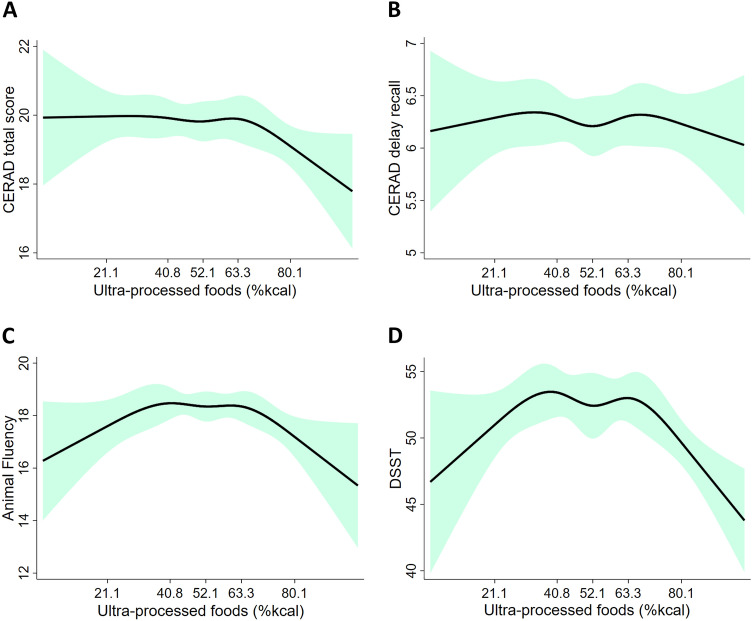
Purpose: This study evaluated the association between ultra-processed food (UPF) consumption and cognitive performance among older US adults. Methods: This cross-sectional study assessed 3632 participants aged 60+ years from the National Health and Nutrition Examination Survey (NHANES) 2011–14. Cognitive performance was assessed using the Consortium to Establish a Registry for Alzheimer’s Disease (CERAD), Word Learning test, Animal Fluency test, and the Digit Symbol Substitution test (DSST). Dietary intake was assessed using two 24-h diet recalls. Food items were classified according to the NOVA system, a classification based on the nature, extent, and purpose of industrial food processing. Linear regression models were used to evaluate the association of dietary share of UPF (% of daily energy intake) (categorized as tertiles) and cognitive test scores, adjusting for socio-demographic variables, physical activity, smoking status, and chronic diseases (cardiovascular diseases, diabetes, and depression). Models excluding participants with pre-existing diseases were carried out to address potential reverse causality. Results: On average, UPF accounted for 53% of total energy intake, ranging from 33 to 70% across extreme tertiles. Inverted U-shape association between UPF consumption and Animal fluency and DSST was observed. No significant associations were observed between the UPF intake tertiles and the cognitive test results. Nonetheless, UPF consumption was significantly associated with worse performance in Animal Fluency in older adults without pre-existing diseases ( P < 0.05). Conclusion: UPF consumption was associated with worse performance in Animal Fluency among older people without pre-existing diseases. Decreasing UPF consumption may be a way to improve impaired cognition among older adults.
Overview
The claims and statistics of this paper haven’t been checked yet.
Free: it reads the open-access text and checks the first 5 claims that cite a source we can check. Create a free account to check every claim.
Integrity signals
Registry
Cites
Statistics
Figures
Verification
Claims the paper makes
The claims and statistics of this paper haven’t been checked yet.
Free: it reads the open-access text and checks the first 5 claims that cite a source we can check. Create a free account to check every claim.
Claims other papers make about this one
Each is checked against this paper’s own text: does it say what the citing paper says it does?
The source backs part of the claim, not all of it — or backs it for a different population, condition or comparison.
In the citing paper
“A crosssectional US study of 3, 632 participants aged ≥60 years found overall cognitive performance and memory were not associated with the percentage of daily energy intake dietary from UPF after correction for confounders. (329)”
From Dementia prevention, intervention, and care: 2024 report of the Lancet standing Commission (2024) · cites this paper as [329]
Experimental — accuracy not yet measured
Self-check
Percentages, sums and reported differences re-computed from the paper’s own numbers.
The self-check needs the paper’s full text.
Citations
Cites
1 retracted
Dementia prevention, intervention, and care: 2020 report of the Lancet Commission
Livingston, G., Huntley, J., Sommerlad, A., Ames, D., Ballard, C., Banerjee, S., Brayne, C., Burns, A., Cohen-Mansfield, J., Cooper, C., et al. (2020) · The Lancet · doi:10.1016/s0140-6736(20)30367-6 · Cited by 10,430 · cited 2×
“It has been estimated that 40% of dementia cases could be prevented by controlling 12 modifiable risk factors, which include diet along with physical activity, education, smoking, exposure to air pollution, low social contact, traumatic brain injury, and management of chronic conditions such as diabetes, obesity, depr…”
BackgroundRetractedThe PHQ-9: Validity of a brief depression severity measure
Kroenke, K., Spitzer, R. L., & Williams, J. B. W. (2001) · Journal of General Internal Medicine · doi:10.1046/j.1525-1497.2001.016009606.x · Cited by 44,910
Harrell, F. E. (2001) · Springer Series in Statistics · doi:10.1007/978-1-4757-3462-1 · Cited by 9,195
Sontrop, J. M., Dixon, S. N., Garg, A. X., Buendia-Jimenez, I., Dohein, O., Huang, S.-H. S., & Clark, W. F. (2013) · American Journal of Nephrology · doi:10.1159/000350377 · Cited by 5,871
Ultra-processed foods: What they are and how to identify them
Monteiro, C. A., Cannon, G., Levy, R. B., Moubarac, J.-C., Louzada, M. L., Rauber, F., Khandpur, N., Cediel, G., Neri, D., Martinez-Steele, E., et al. (2019) · Public Health Nutrition · doi:10.1017/s1368980018003762 · Cited by 2,964 · cited 1×
“UPFs, according to NOVA classification system, are industrial formulations of processed food substances (oils, fats, sugars, starch, and protein isolates) that contain little or no whole food and typically include flavourings, colourings, emulsifiers, and other cosmetic additives [9].”
BackgroundMoshfegh, A. J., Rhodes, D. G., Baer, D. J., Murayi, T., Clemens, J. C., Rumpler, W. V., Paul, D. R., Sebastian, R. S., Kuczynski, K. J., Ingwersen, L. A., et al. (2008) · The American Journal of Clinical Nutrition · doi:10.1093/ajcn/88.2.324 · Cited by 1,982
Ultra‐processed products are becoming dominant in the global food system
Monteiro, C. A., Moubarac, J. ‐., Cannon, G., Ng, S. W., & Popkin, B. (2013) · Obesity Reviews · doi:10.1111/obr.12107 · Cited by 1,827 · cited 1×
“UPFs are becoming dominant in diets globally and are replacing traditional diets based on unprocessed and minimally processed foods [10, 11].”
BackgroundThe Impact of Age on Cognition
Murman, D. (2015) · Seminars in Hearing · doi:10.1055/s-0035-1555115 · Cited by 1,619
Baker, P., Machado, P., Santos, T., Sievert, K., Backholer, K., Hadjikakou, M., Russell, C., Huse, O., Bell, C., Scrinis, G., et al. (2020) · Obesity Reviews · doi:10.1111/obr.13126 · Cited by 1,194 · cited 1×
“UPFs are becoming dominant in diets globally and are replacing traditional diets based on unprocessed and minimally processed foods [10, 11].”
BackgroundSelf-citationMIND diet slows cognitive decline with aging
Morris, M. C., Tangney, C. C., Wang, Y., Sacks, F. M., Barnes, L. L., Bennett, D. A., & Aggarwal, N. T. (2015) · Alzheimer's & Dementia · doi:10.1016/j.jalz.2015.04.011 · Cited by 1,115 · cited 1×
“In this regard, evidence from observational studies indicates that high adherence to the Mediterranean diet (MedDiet) [3, 4], Dietary Approaches to Stop Hypertension (DASH) [5] diet, and the Mediterranean-DASH Intervention for Neurodegenerative Delay (MIND) diet [6] is associated with better cognitive performance and…”
Background
Research works printed but not linked: 3
- Monteiro CA Cannon G Lawrence M Louzada MLC Machado PP Ultra-processed foods, diet quality, and health using the NOVA classification system 2019 Rome Food and Agriculture Organization of the United Nations Report
- Pagliai G Dinu M Madarena MP Bonaccio M Iacoviello L Sofi F Consumption of ultra-processed foods and health status: a systematic review and meta-analysis Br J Nutr 2021 125 3 308 318 32792031 PMC7844609 · DOI · Paper page
- Rothman KJ Modern epidemiology. 4th 2021 ed Philadelphia Wolters Kluwer PMC8416883 34216355
Cited by
Dementia prevention, intervention, and care: 2024 report of the Lancet standing Commission
Livingston, G., Huntley, J., Liu, K. Y., Costafreda, S. G., Selbæk, G., Alladi, S., Ames, D., Banerjee, S., Burns, A., Brayne, C., et al. (2024) · The Lancet · doi:10.1016/s0140-6736(24)01296-0 · Cited by 3,860
Association between consumption of ultraprocessed foods and cognitive decline
Gomes Gonçalves, N., Vidal Ferreira, N., Khandpur, N., Martinez Steele, E., Bertazzi Levy, R., Andrade Lotufo, P., Bensenor, I. M., Caramelli, P., Alvim de Matos, S. M., Marchioni, D. M., et al. (2023) · JAMA Neurology · doi:10.1001/jamaneurol.2022.4397 · Cited by 132
Effects of ultra-processed foods on the microbiota-gut-brain axis: The bread-and-butter issue
Song, Z., Song, R., Liu, Y., Wu, Z., & Zhang, X. (2023) · Food Research International · doi:10.1016/j.foodres.2023.112730 · Cited by 146
Fang, Z., Rossato, S. L., Hang, D., Khandpur, N., Wang, K., Lo, C.-H., Willett, W. C., Giovannucci, E. L., & Song, M. (2024) · BMJ · doi:10.1136/bmj-2023-078476 · Cited by 84
Henney, A. E., Gillespie, C. S., Alam, U., Hydes, T., Mackay, C. E., & Cuthbertson, D. J. (2023) · Journal of Neurology · doi:10.1007/s00415-023-12033-1 · Cited by 88
Ultraprocessed Foods and Neuropsychiatric Outcomes: Putative Mechanisms
Mariane Lutz, R., Arancibia, M., Morán, J., & Manterola, M. (2025) · Nutrients · doi:10.3390/nu17071215 · Cited by 37
Weinstein, G., Kojis, D. J., Banerjee, A., Seshadri, S. S., Walker, M. E., & Beiser, A. (2025) · The Journal of Prevention of Alzheimer s Disease · doi:10.1016/j.tjpad.2024.100042 · Cited by 30
“Emerging evidence further suggested that UPF consumption may be associated with poorer cognitive function [ 19 , 20 ] and with a faster rate of cognitive decline [ 21 ].”
Esposito, S., Gialluisi, A., Castelnuovo, A. F. D., Costanzo, S., Pepe, A., Ruggiero, E., Curtis, A. D., Persichillo, M., Cerletti, C., Donati, M. B., et al. (2024) · American Journal of Clinical Nutrition · doi:10.1016/j.ajcnut.2024.10.006 · Cited by 27
Associations of Microbiota and Nutrition with Cognitive Impairment in Diseases
Młynarska, E., Jakubowska, P., Frąk, W., Gajewska, A., Sornowska, J., Skwira, S., Wasiak, J., Rysz, J., & Franczyk, B. (2024) · Nutrients · doi:10.3390/nu16203570 · Cited by 21
“In a cross-sectional study of a sample of 3632 participants over 60 years of age, it was found that in the animal fluency cognitive test to assess language and executive function in older people, the consumption of highly processed foods correlates with worse outcomes [110].”
BackgroundAljahdali, A., Rossato, S. L., & Baylín, A. (2024) · British Journal Of Nutrition · doi:10.1017/s0007114523003033 · Cited by 17
Clayton‐Chubb, D., Vaughan, N. V., George, E. S., Chan, A. T., Roberts, S. K., Ryan, J. L., Phyo, A. Z. Z., McNeil, J. J., Beilin, L. J., Tran, C., et al. (2024) · Nutrients · doi:10.3390/nu16172978 · Cited by 20
“The current literature links UPF consumption with poorer diet quality [29,74], yet UPFs may account for up to 53% of total dietary energy intake in older American adults [32].”
BackgroundCardoso, B. R., Liu, J., Machado, P. P., Kwon, D., Belsky, D. W., & Steele, E. M. (2024) · Age and Ageing · doi:10.1093/ageing/afae268 · Cited by 21
Self-citationEffects of Dietary Interventions on Cognitive Outcomes
Charbit, J., Vidal, J., & Hanon, O. (2025) · Nutrients · doi:10.3390/nu17121964 · Cited by 19
Ultra-Processed Food Intakes and Health Outcomes in Adults Older Than 60 Years: A Systematic Review
Shahatah, F. A., Hill, T. R., Fairley, A., & Watson, A. W. (2025) · Nutrition Reviews · doi:10.1093/nutrit/nuae223 · Cited by 21
“38 Assessment of exposure in 2 cohort studies was through measuring the percent energy of UPF of total energy (TE).”
InfluentialBogdan, S., Puścion‐Jakubik, A., Klimiuk, K., Socha, K., Kochanowicz, J., & Gorodkiewicz, E. (2022) · Journal of Clinical Medicine · doi:10.3390/jcm11216360 · Cited by 10
“05) associated with lower results in the Animal Fluency test (the person is asked to name as many animals as possible within 60 s, for one animal they receive one point) in the elderly, without previous diseases [33].”
Backgroundde Vargas, B. O., Vaezi, S., Freeling, J., Zhang, Y., Weidauer, L. A., Lee, C.-L., Zhao, J., & Dey, M. (2025) · Current Developments in Nutrition · doi:10.1016/j.cdnut.2025.104588 · Cited by 10
Chávez–Hernández, M. E. (2023) · Frontiers in Education · doi:10.3389/feduc.2023.1268302 · Cited by 13
Our Hidden Enemy: Ultra-Processed Foods, Inflammation, and the Battle for Heart Health
Sawalha, K., Tripathi, V., Alkhatib, D. A., Alalawi, L. H., Mahmood, A., & Alexander, T. J. (2023) · Cureus · doi:10.7759/cureus.47484 · Cited by 15
“…local inflammation and oxidative stress in the intestine, thus initiating the a-synuclein (aSyn) deposition that disseminates to the CNS. Pathologic aSyn can lead to neuronal death, microglial activation, and subsequent activation of TLRs, triggering a vicious cycle of neuroinflammation [33].”
Backgrounddos Santos, J. V. L., de Melo, I. S. V., Costa, C. A. C. B., de Almeida, L. C., Silva, D. R., Ferro, D. C., Paula, D. T. D. C., Macêna, M. D. L., & Bueno, N. B. (2024) · International Journal of Public Health · doi:10.3389/ijph.2024.1607658 · Cited by 18
“In many of these studies, only the mean scores obtained in the various cognitive domains are reported [13, 24, 26].”
BackgroundCognitive Functioning Influences Mortality Risk Among Older Adults with COPD
Banerjee, S. K., Khubchandani, J., England-Kennedy, E. S., McIntyre, R., Kopera-Frye, K., & Batra, K. (2024) · Healthcare · doi:10.3390/healthcare12222220 · Cited by 7
Chen, Y., Gui, H., Zhao, T., Liu, C., Zhang, Y., Wang, M., & Yang, R. (2026) · Nutrients · doi:10.3390/nu18132041 · Cited by 9
Shen, J., Wang, Y., Zhou, S., Tang, M., Li, M., Han, R., Fei, G., & Wang, R. (2023) · Environmental Science and Pollution Research · doi:10.1007/s11356-023-30334-w · Cited by 7
Yang, J., Xuan, L., Marković, V., Zakaly, H. M. H., Ivanov, D. S., Bai, C., & Huang, R. (2023) · Emerging contaminants · doi:10.1016/j.emcon.2023.100259 · Cited by 5
Ultra-processed food exposure and cognitive outcomes: a systematic review of observational studies
Smith, M., Watson, P., Gallacher, J., & Bauermeister, S. (2026) · BMJ Nutrition Prevention & Health · doi:10.1136/bmjnph-2025-001325 · Cited by 15
Hu, A., Xiong, L., Wei, H., Yuan, L., Li, Y., Qin, H., Chen, F., & Liu, T. (2025) · BMC Public Health · doi:10.1186/s12889-025-22966-z · Cited by 5
“NHANES uses the Consortium to Establish a Registry for Alzheimer’s Disease (CERAD) Word Learning test, Animal Flu-ency test (AFT), and Digit Symbol Substitution test (DSST) to assess different cognitive functions [14].”
Wang, K., Tang, W., Hao, X., & Zhao, J. (2023) · Alzheimer s & Dementia · doi:10.1002/alz.13351 · Cited by 7
RetractedElkhatir, M., Ghaffouli, C., Louasté, B., Loukili, A., & Aboussaleh, Y. (2025) · Frontiers in Nutrition · doi:10.3389/fnut.2025.1643854 · Cited by 12
“Conversely, diets characterized by elevated levels of saturated fats, refined sugars, and ultraprocessed foods have been consistently associated with cognitive decline, attention deficits, and an increased risk of neurodegenerative conditions (25, 26).”
Chen, S., Su, Q., Shen, R., Zhang, H., Lin, X., Yu, S., Chen, M., Shi, Y., Peng, F., Lin, J., et al. (2026) · Experimental Gerontology · doi:10.1016/j.exger.2026.113043 · Cited by 5
Yeh, C.-W., Lee, M.-S., Lo, Y. C., Chen, Y., Chen, W.-C., & Huang, Y.-C. (2024) · Nutrition · doi:10.1016/j.nut.2024.112658 · Cited by 6
Lee, H., Ludwig-Borycz, E. F., McEvoy, C. T., Martinez, E., Khandpur, N., Heeringa, S. G., Ryan, L. H., Langa, K. M., Wolfson, J. A., & Leung, C. W. (2026) · Frontiers in Public Health · doi:10.3389/fpubh.2025.1695540 · Cited by 6
“Notably, a cross-sectional analysis of NHANES 2011–2014 found an inverted U-shaped association with UPF consumption and verbal fluency as a component of executive function and working memory, with UPF intake peaking at approximately 40–63% of total energy intake (30).”
InfluentialJiang, B., Lin, R., Wang, T., Wang, W., Lin, Y., Xie, M., Hu, Z., & Zhang, Q. (2025) · BMC Geriatrics · doi:10.1186/s12877-025-05841-9 · Cited by 3
“Depression was defined as a score of ≥ 10 [26].”
Li, X., Jin, Y., Bandinelli, S., Ferrucci, L., Tanaka, T., & Talegawkar, S. A. (2025) · Geriatrics · doi:10.3390/geriatrics10050123 · Cited by 4
Karim, S., Alam, A. S., & Syed, A. M. (2025) · EMJ Gastroenterology · doi:10.33590/emjgastroenterol/ivvg9805 · Cited by 2
Musich, M. L., Shenker, J. I., & Beversdorf, D. Q. (2026) · Journal of dementia and Alzheimer's disease · doi:10.3390/jdad3010004 · Cited by 2
Zhou, J., Chen, X., Chen, Y., & Shen, J. (2024) · Frontiers in Public Health · doi:10.3389/fpubh.2024.1463190 · Cited by 2
Mwakalebela, F. S., Minja, E. G., Mwalugelo, Y. A., Killel, E., Rajab, R. K., Mollel, G. J., Mponzi, W. P., Masanja, H., Okumu, F. O., Lang, C., et al. (2025) · Frontiers in Public Health · doi:10.3389/fpubh.2025.1552215 · Cited by 5
Sun, J., Tu, X., Wang, S., Wang, J., Liang, J., Liu, Z., & Song, L. (2025) · BMC Geriatrics · doi:10.1186/s12877-025-05917-6 · Cited by 3
Niu, F., Ma, Y., Yuan, X., Wang, Y., Li, S., & Han, T. (2025) · Journal of Alzheimer s Disease Reports · doi:10.1177/25424823251342486 · Cited by 3
Cabral, D. A. R., Rego, M., Lemos, R. F., & Buckman, J. F. (2026) · Current Addiction Reports · doi:10.1007/s40429-026-00732-4 · Cited by 1
Food and nutrition in the prevention of dementia–A mini-review
Lange, K. W., NAKAMURA, Y., & Lange, K. M. (2026) · Journal of Food Bioactives · doi:10.26599/jfb.2026.95033435 · Cited by 1
Kartal, E. Y., & Yılmaz, H. Ö. (2026) · Archives of Environmental & Occupational Health · doi:10.1080/19338244.2026.2654391 · Cited by 1
“21–23 A meta-analysis of 260,385 participants found that a 10% increase in daily UPF intake was associated with an 11% higher risk of developing depression.”
Cardoso, B. R., Steele, E. M., Brayner, B., Yuan, X., Bransby, L., Cummins, H., Lim, Y. Y., & Machado, P. P. (2026) · Alzheimer s & Dementia Diagnosis Assessment & Disease Monitoring · doi:10.1002/dad2.70335 · Cited by 5
Self-citationUltraprocessed Foods and the Aging Brain: State of the Science
Carmichael, O. T., Agarwal, P., Albensi, B. C., Balendra, V., D'Cunha, N. M., Denier‐Fields, D. N., Ferreira, N. V., Gonçalves, N. G., Kumar, R., Labyak, C. A., et al. (2026) · Annual Review of Nutrition · doi:10.1146/annurev-nutr-061824-053453 · Cited by 1
Consuming less ultra-processed food is associated with inadequate protein intake among vegan dietersPreprint
Leitão, A. E., Esteves, G. P., Mazzolani, B. C., Smaira, F. I., Santini, M. H., André, H. C. S., Gualano, B., & Roschel, H. (2023) · medRxiv · doi:10.1101/2023.12.11.23299823
Kerna, N. A., Eze, C., Ugochukwu, O. A., Nicely, T. M., Abreu, M., Boulos, A., Pruitt, K. D., Carsrud, N. D. V., Nwokorie, U., Chawla, S., et al. (2025) · Scientia. Technology, science and society. · doi:10.59324/stss.2025.2(3).02
Burke, S. N. (2023) · The Conversation · doi:10.64628/aai.hgq5gtk5c
Anti-inflammatory Potential of Dietary Components and Benefits in Alzheimer’s Disease
Lin, G. D., Rodger, A., Malik, J., Smith, P. N., & Li, R. (2025) · Nutritional neurosciences · doi:10.1007/978-981-95-2736-6_3
Martins‐Pais, I. M. N., Suemoto, C. K., Marchioni, D. M. L., Cacau, L. T., Gonçalves, N. G., & Ferreira, N. V. (2025) · Clinical Nutrition ESPEN · doi:10.1016/j.clnesp.2025.11.152 · Cited by 1
Ultra-processed food intake and cognitive decline in older adults
Buis, C., Nicolaou, M., Visser, M., Olthof, M. R., & Wijnhoven, H. A. H. (2026) · European Journal of Nutrition · doi:10.1007/s00394-026-03896-x · Cited by 2
Camacho‐Barcia, L., Torao‐Angosto, M., Baenas, I., Diego-Esteve, G., Throm, J. K., Lucas, I., Giel, K. E., Zipfel, S., Tovar, S. A., Diéguez, C., et al. (2026) · Reviews in Endocrine and Metabolic Disorders · doi:10.1007/s11154-026-10025-w · Cited by 1
Ultra-processed food consumption and multiple sclerosis incidence: A prospective cohort study
Vagner, P., Brayner, B., Rauber, F., Levy, R. B., Vamos, E. P., Chang, K., Abbott, G., Taylor, B. V., Black, L. J., & Machado, P. P. (2026) · Clinical Nutrition · doi:10.1016/j.clnu.2026.106673
Self-citationSuárez, R., Celi, M., Ontaneda, K., Gavilanes, D. J., & Matos, A. (2026) · Frontiers in Nutrition · doi:10.3389/fnut.2026.1807557
“Although inflammation, oxidative stress, endocrine disruption, mitochondrial dysfunction, and gut dysbiosis have been proposed, a limited number of studies have assessed relevant biomarkers such as IL-6, TNF-α , C-reactive protein, telomere length, or DNA methylation (65, 66).”
Ultraprocessed Food Intake, Cognition, and Executive Function in Adults: A Systematic Review
Sánchez, M. W., Chávez–Hernández, M. E., Torre, L. D. L., Wöbbeking-Sánchez, S., Rueda, A. V., Salvador-Ginez, O., & Rodríguez–Serrano, L. M. (2026) · Nutrients · doi:10.3390/nu18091361
Processing versus nutrients: What drives the health risks of ultra-processed foods?Preprint
Sun, Q., Wang, Y., Fan, Z., Zhu, N., Mu, K., Nie, Q., Zheng, J., Gao, C., Xiao, Y., Yang, X., et al. (2026) · Research Square · doi:10.21203/rs.3.rs-10513803/v1
Ultraprocessed Food Intake and Adiposity, Vascular Brain Injury, and Cognition in Middle-Aged Adults
de Souza, R. J., Schulze, K. M., Desai, D., Després, J., Dummer, T., Friedrich, M. G., Jason, H., Ho, V., Lear, S. A., Lee, D. S., et al. (2026) · JAMA Network Open · doi:10.1001/jamanetworkopen.2026.39118
Metadata
- Authors
- R Cardoso, B., Machado, P., & Steele, E. M.
- Affiliations
- Deakin University (AU)
- Venue
- European Journal of Nutrition
- Published
- 2022-07-01
- Volume
- 61
- Issue
- 8
- Pages
- 3975-3985
- ISSN
- 1436-6207 (ISSN-L)
- 1436-6215
- PMC
- PMC9596521
- OpenAlex
- W4283765084
- Cited by
- 56
- References
- 48
- Citations by year
- 2026: 17 · 2025: 15 · 2024: 12 · 2023: 9 · 2022: 3
- FWCI
- 8.60
- Type
- journal article
- Language
- en
- Open access
- hybrid
- doi.org
- Licence
- cc-by
- creativecommons.org/licenses/by/4.0 (tdm)
- creativecommons.org/licenses/by/4.0 (vor)
- Locations
- European Journal of Nutrition (publishedVersion, cc-by)
- PubMed Central (publishedVersion, cc-by)
- PubMed (publishedVersion)
- Figshare (submittedVersion, cc-by)
- Funders
- Fundação de Amparo à Pesquisa do Estado de São Paulo (2018/17972-9)
- Alfred Deakin Postdoctoral Research Fellowship
- Monash University
- Topics
- Health Sciences › Medicine › Public Health, Environmental and Occupational Health › Consumer Attitudes and Food Labeling
- Health Sciences › Medicine › Public Health, Environmental and Occupational Health › Nutritional Studies and Diet
- Health Sciences › Medicine › Psychiatry and Mental health › Dementia and Cognitive Impairment Research
- Keywords
- ultra-processed foods, cognitive performance, older adults, NOVA classification, animal fluency, Digit Symbol Substitution Test, word learning, dietary intake, reverse causality, pre-existing disease, diet and cognition
- MeSH terms
- Energy Intake, Cognition, Cross-Sectional Studies, Diet, Food Handling, Nutrition Surveys, Fast Foods
About these checks
Registry, retraction, Cites and statistics results are computed, not judged, with one exception: a printed reference that no index lists is read once by a model before it counts as a citation error. Claims are extracted by a model and kept only when their quote appears verbatim in the text; each cited source is then checked, with a model’s help, for whether it says what the claim relies on. Those verdicts can be wrong — read the claim’s quote and the cited source before relying on one.
Statistics and arithmetic are recomputed, not judged.
Confidence bands are shown only for fields calibrated on our annotated test set. None is calibrated yet, so no band is shown.
What counts as a claim ›How we measure confidence ›How we check this ›
Are you an author, or do you see a problem with this page? Request a review
Data sources
Bibliographic data: Semantic Scholar, OpenAlex, Crossref.
Contains information from the Semantic Scholar Academic Graph Datasets, made available under the ODC Attribution License (ODC-BY 1.0).
Semantic Scholar’s data is described in: Kinney, R., et al. (2023). The Semantic Scholar Open Data Platform. arXiv:2301.10140.
