

Association between ultra-processed food consumption and cognitive performance in US older adults: a cross-sectional analysis of the NHANES 2011–2014
Open accessThe DOI matches its Crossref record; 48 of the 48 references it cites were found in a registry or an index.
Abstract
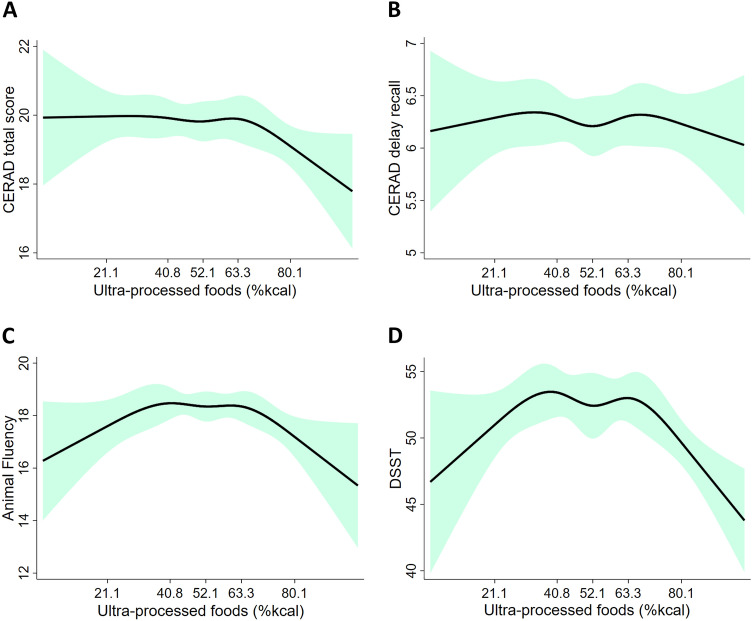
Purpose: This study evaluated the association between ultra-processed food (UPF) consumption and cognitive performance among older US adults. Methods: This cross-sectional study assessed 3632 participants aged 60+ years from the National Health and Nutrition Examination Survey (NHANES) 2011–14. Cognitive performance was assessed using the Consortium to Establish a Registry for Alzheimer’s Disease (CERAD), Word Learning test, Animal Fluency test, and the Digit Symbol Substitution test (DSST). Dietary intake was assessed using two 24-h diet recalls. Food items were classified according to the NOVA system, a classification based on the nature, extent, and purpose of industrial food processing. Linear regression models were used to evaluate the association of dietary share of UPF (% of daily energy intake) (categorized as tertiles) and cognitive test scores, adjusting for socio-demographic variables, physical activity, smoking status, and chronic diseases (cardiovascular diseases, diabetes, and depression). Models excluding participants with pre-existing diseases were carried out to address potential reverse causality. Results: On average, UPF accounted for 53% of total energy intake, ranging from 33 to 70% across extreme tertiles. Inverted U-shape association between UPF consumption and Animal fluency and DSST was observed. No significant associations were observed between the UPF intake tertiles and the cognitive test results. Nonetheless, UPF consumption was significantly associated with worse performance in Animal Fluency in older adults without pre-existing diseases ( P < 0.05). Conclusion: UPF consumption was associated with worse performance in Animal Fluency among older people without pre-existing diseases. Decreasing UPF consumption may be a way to improve impaired cognition among older adults.
Overview
The claims and statistics of this paper haven’t been checked yet.
Free: it reads the open-access text and checks the first 5 claims that cite a source we can check. Create a free account to check every claim.
Integrity signals
Registry
Cites
Statistics
Figures
Verification
Claims the paper makes
The claims and statistics of this paper haven’t been checked yet.
Free: it reads the open-access text and checks the first 5 claims that cite a source we can check. Create a free account to check every claim.
Claims other papers make about this one
Each is checked against this paper’s own text: does it say what the citing paper says it does?
The source backs part of the claim, not all of it — or backs it for a different population, condition or comparison.
In the citing paper
“A crosssectional US study of 3, 632 participants aged ≥60 years found overall cognitive performance and memory were not associated with the percentage of daily energy intake dietary from UPF after correction for confounders. (329)”
From Dementia prevention, intervention, and care: 2024 report of the Lancet standing Commission (2024) · cites this paper as [329]
Experimental — accuracy not yet measured
Self-check
Percentages, sums and reported differences re-computed from the paper’s own numbers.
The self-check needs the paper’s full text.
Citations
Cites
1 retracted
Dementia prevention, intervention, and care: 2020 report of the Lancet Commission
Livingston, G., Huntley, J., Sommerlad, A., Ames, D., Ballard, C., Banerjee, S., Brayne, C., Burns, A., Cohen-Mansfield, J., Cooper, C., et al. (2020) · The Lancet · doi:10.1016/s0140-6736(20)30367-6 · Cited by 10,430 · cited 2×
“It has been estimated that 40% of dementia cases could be prevented by controlling 12 modifiable risk factors, which include diet along with physical activity, education, smoking, exposure to air pollution, low social contact, traumatic brain injury, and management of chronic conditions such as diabetes, obesity, depr…”
BackgroundRetractedThe PHQ-9: Validity of a brief depression severity measure
Kroenke, K., Spitzer, R. L., & Williams, J. B. W. (2001) · Journal of General Internal Medicine · doi:10.1046/j.1525-1497.2001.016009606.x · Cited by 44,910
Harrell, F. E. (2001) · Springer Series in Statistics · doi:10.1007/978-1-4757-3462-1 · Cited by 9,195
Sontrop, J. M., Dixon, S. N., Garg, A. X., Buendia-Jimenez, I., Dohein, O., Huang, S.-H. S., & Clark, W. F. (2013) · American Journal of Nephrology · doi:10.1159/000350377 · Cited by 5,871
Ultra-processed foods: What they are and how to identify them
Monteiro, C. A., Cannon, G., Levy, R. B., Moubarac, J.-C., Louzada, M. L., Rauber, F., Khandpur, N., Cediel, G., Neri, D., Martinez-Steele, E., et al. (2019) · Public Health Nutrition · doi:10.1017/s1368980018003762 · Cited by 2,964 · cited 1×
“UPFs, according to NOVA classification system, are industrial formulations of processed food substances (oils, fats, sugars, starch, and protein isolates) that contain little or no whole food and typically include flavourings, colourings, emulsifiers, and other cosmetic additives [9].”
BackgroundMoshfegh, A. J., Rhodes, D. G., Baer, D. J., Murayi, T., Clemens, J. C., Rumpler, W. V., Paul, D. R., Sebastian, R. S., Kuczynski, K. J., Ingwersen, L. A., et al. (2008) · The American Journal of Clinical Nutrition · doi:10.1093/ajcn/88.2.324 · Cited by 1,982
Ultra‐processed products are becoming dominant in the global food system
Monteiro, C. A., Moubarac, J. ‐., Cannon, G., Ng, S. W., & Popkin, B. (2013) · Obesity Reviews · doi:10.1111/obr.12107 · Cited by 1,827 · cited 1×
“UPFs are becoming dominant in diets globally and are replacing traditional diets based on unprocessed and minimally processed foods [10, 11].”
BackgroundThe Impact of Age on Cognition
Murman, D. (2015) · Seminars in Hearing · doi:10.1055/s-0035-1555115 · Cited by 1,619
Baker, P., Machado, P., Santos, T., Sievert, K., Backholer, K., Hadjikakou, M., Russell, C., Huse, O., Bell, C., Scrinis, G., et al. (2020) · Obesity Reviews · doi:10.1111/obr.13126 · Cited by 1,194 · cited 1×
“UPFs are becoming dominant in diets globally and are replacing traditional diets based on unprocessed and minimally processed foods [10, 11].”
BackgroundSelf-citationMIND diet slows cognitive decline with aging
Morris, M. C., Tangney, C. C., Wang, Y., Sacks, F. M., Barnes, L. L., Bennett, D. A., & Aggarwal, N. T. (2015) · Alzheimer's & Dementia · doi:10.1016/j.jalz.2015.04.011 · Cited by 1,115 · cited 1×
“In this regard, evidence from observational studies indicates that high adherence to the Mediterranean diet (MedDiet) [3, 4], Dietary Approaches to Stop Hypertension (DASH) [5] diet, and the Mediterranean-DASH Intervention for Neurodegenerative Delay (MIND) diet [6] is associated with better cognitive performance and…”
BackgroundAddressing Current Criticism Regarding the Value of Self-Report Dietary Data
Subar, A. F., Freedman, L. S., Tooze, J. A., Kirkpatrick, S. I., Boushey, C., Neuhouser, M. L., Thompson, F. E., Potischman, N., Guenther, P. M., Tarasuk, V., et al. (2015) · The Journal of Nutrition · doi:10.3945/jn.115.219634 · Cited by 1,047 · cited 1×
“Even though 24-h recalls are the least-biased self-report instrument available [46] and the standardised methods of NHANES have been shown to produce accurate intake estimates [47–49], dietary data obtained by 24-h recalls have some limitations [50].”
Consumption of ultra-processed foods and health status: a systematic review and meta-analysis
Pagliai, G., Dinu, M., Madarena, M. P., Bonaccio, M., Iacoviello, L., & Sofi, F. (2021) · British Journal of Nutrition · doi:10.1017/s0007114520002688 · Cited by 918 · cited 1×
“Furthermore, a link between UPF and cognitive decline relies on the increased risk for chronic diseases such as diabetes, CVD, and obesity, all known risk factors for cognitive impairment [2], among those with high UPF consumption [15, 17, 42].”
BackgroundMartínez Steele, E., Baraldi, L. G., Louzada, M. L. D. C., Moubarac, J.-C., Mozaffarian, D., & Monteiro, C. A. (2016) · BMJ Open · doi:10.1136/bmjopen-2015-009892 · Cited by 838
The Western Diet–Microbiome-Host Interaction and Its Role in Metabolic Disease
Zinöcker, M. K., & Lindseth, I. A. (2018) · doi:10.20944/preprints201803.0064.v1 · Cited by 776 · cited 1×
“, food additives and advanced glycation end products) in UPF diets [23, 43, 44].”
BackgroundThe USDA Automated Multiple-Pass Method Accurately Estimates Group Total Energy and Nutrient Intake
Blanton, C. A., Moshfegh, A. J., Baer, D. J., & Kretsch, M. J. (2006) · The Journal of Nutrition · doi:10.1093/jn/136.10.2594 · Cited by 769
Ultra-Processed Foods and Health Outcomes: A Narrative Review
Elizabeth, L., Machado, P., Zinöcker, M., Baker, P., & Lawrence, M. (2020) · Nutrients · doi:10.3390/nu12071955 · Cited by 736 · cited 1×
“Furthermore, a link between UPF and cognitive decline relies on the increased risk for chronic diseases such as diabetes, CVD, and obesity, all known risk factors for cognitive impairment [2], among those with high UPF consumption [15, 17, 42].”
BackgroundSelf-citationPanagiotakos, D. B., Pitsavos, C., Arvaniti, F., & Stefanadis, C. (2007) · Preventive Medicine · doi:10.1016/j.ypmed.2006.12.009 · Cited by 637 · cited 1×
“In this regard, evidence from observational studies indicates that high adherence to the Mediterranean diet (MedDiet) [3, 4], Dietary Approaches to Stop Hypertension (DASH) [5] diet, and the Mediterranean-DASH Intervention for Neurodegenerative Delay (MIND) diet [6] is associated with better cognitive performance and…”
BackgroundMartínez Steele, E., Popkin, B. M., Swinburn, B., & Monteiro, C. A. (2017) · Population Health Metrics · doi:10.1186/s12963-017-0119-3 · Cited by 585
Self-citationvan den Brink, A. C., Brouwer-Brolsma, E. M., Berendsen, A. A. M., & van de Rest, O. (2019) · Advances in Nutrition · doi:10.1093/advances/nmz054 · Cited by 571 · cited 1×
“Given the influence of diet in modulating these risk factors, growing evidence shows that a healthy diet can have a positive impact in mitigating ageassociated cognitive decline and prevent, or at least delay, dementia [38].”
BackgroundLane, M. M., Davis, J. A., Beattie, S., Gómez‐Donoso, C., Loughman, A., O'Neil, A., Jacka, F., Berk, M., Page, R., Marx, W., et al. (2021) · Obesity Reviews · doi:10.1111/obr.13146 · Cited by 564 · cited 1×
“Furthermore, a link between UPF and cognitive decline relies on the increased risk for chronic diseases such as diabetes, CVD, and obesity, all known risk factors for cognitive impairment [2], among those with high UPF consumption [15, 17, 42].”
BackgroundClustering of Lifestyle Risk Factors in a General Adult Population
Schuit, A. J., van Loon, A. J. M., Tijhuis, M., & Ocké, M. C. (2002) · Preventive Medicine · doi:10.1006/pmed.2002.1064 · Cited by 537 · cited 1×
“On the other hand, residual confounding could overestimate the strength of the studied association particularly because common lifestyle risk factors tend to cluster [56] and higher levels of UPF consumption could be a proxy of an overall unhealthy diet or lifestyle.”
BackgroundUltra-processed food consumption and excess weight among US adults
Juul, F., Martinez-Steele, E., Parekh, N., Monteiro, C. A., & Chang, V. W. (2018) · British Journal Of Nutrition · doi:10.1017/s0007114518001046 · Cited by 475
Mediterranean Diet, Cognitive Function, and Dementia: A Systematic Review of the Evidence
Petersson, S. D., & Philippou, E. (2016) · Advances in Nutrition · doi:10.3945/an.116.012138 · Cited by 466 · cited 1×
“In this regard, evidence from observational studies indicates that high adherence to the Mediterranean diet (MedDiet) [3, 4], Dietary Approaches to Stop Hypertension (DASH) [5] diet, and the Mediterranean-DASH Intervention for Neurodegenerative Delay (MIND) diet [6] is associated with better cognitive performance and…”
BackgroundDiet and the Microbiota–Gut–Brain Axis: Sowing the Seeds of Good Mental Health
Berding, K., Vlckova, K., Marx, W., Schellekens, H., Stanton, C., Clarke, G., Jacka, F., Dinan, T. G., & Cryan, J. F. (2021) · Advances in Nutrition · doi:10.1093/advances/nmaa181 · Cited by 451 · cited 2×
“Additionally, the gut–brain axis has been hypothesised to play a critical role on the association between UPF and cognitive impairment [23, 39, 41, 43].”
BackgroundImpact of dementia: Health disparities, population trends, care interventions, and economic costs
Aranda, M. P., Kremer, I. N., Hinton, L., Zissimopoulos, J., Whitmer, R. A., Hummel, C. H., Trejo, L., & Fabius, C. (2021) · Journal of the American Geriatrics Society · doi:10.1111/jgs.17345 · Cited by 390 · cited 1×
“Given the enormous burden that dementia causes to individuals, families, communities, systems of care, and society at large [1], identification of modifiable risk factors for dementia enables public health measures to prevent or delay the cases of dementia.”
BackgroundTrends in Consumption of Ultraprocessed Foods Among US Youths Aged 2-19 Years, 1999-2018
Wang, L., Martínez Steele, E., Du, M., Pomeranz, J. L., O’Connor, L. E., Herrick, K. A., Luo, H., Zhang, X., Mozaffarian, D., & Zhang, F. F. (2021) · JAMA · doi:10.1001/jama.2021.10238 · Cited by 388
Self-citationUltra-processed food consumption among US adults from 2001 to 2018
Juul, F., Parekh, N., Martinez-Steele, E., Monteiro, C. A., & Chang, V. W. (2022) · The American Journal of Clinical Nutrition · doi:10.1093/ajcn/nqab305 · Cited by 388
Self-citationPrentice, R. L., Mossavar-Rahmani, Y., Huang, Y., Van Horn, L., Beresford, S. A. A., Caan, B., Tinker, L., Schoeller, D., Bingham, S., Eaton, C. B., et al. (2011) · American Journal of Epidemiology · doi:10.1093/aje/kwr140 · Cited by 375
Modifiable factors that alter the size of the hippocampus with ageing
Fotuhi, M., Do, D., & Jack, C. (2012) · Nature Reviews Neurology · doi:10.1038/nrneurol.2012.27 · Cited by 356 · cited 1×
“Modifiable factors, such as poor diet quality, diabetes, hypertension, and obesity, have been associated with decreased hippocampal size, which is then linked with a reduced capacity of neuroplasticity and increased risk of cognitive impairment [36, 37].”
BackgroundWięckowska-Gacek, A., Mietelska-Porowska, A., Wydrych, M., & Wojda, U. (2021) · Ageing Research Reviews · doi:10.1016/j.arr.2021.101397 · Cited by 343 · cited 4×
“Additionally, the gut–brain axis has been hypothesised to play a critical role on the association between UPF and cognitive impairment [23, 39, 41, 43].”
BackgroundInfluentialNoble, E. E., Hsu, T. M., & Kanoski, S. E. (2017) · Frontiers in Behavioral Neuroscience · doi:10.3389/fnbeh.2017.00009 · Cited by 333 · cited 3×
“Additionally, the gut–brain axis has been hypothesised to play a critical role on the association between UPF and cognitive impairment [23, 39, 41, 43].”
BackgroundRelation of DASH- and Mediterranean-like dietary patterns to cognitive decline in older persons
Tangney, C. C., Li, H., Wang, Y., Barnes, L., Schneider, J. A., Bennett, D. A., & Morris, M. C. (2014) · Neurology · doi:10.1212/wnl.0000000000000884 · Cited by 304 · cited 1×
“In this regard, evidence from observational studies indicates that high adherence to the Mediterranean diet (MedDiet) [3, 4], Dietary Approaches to Stop Hypertension (DASH) [5] diet, and the Mediterranean-DASH Intervention for Neurodegenerative Delay (MIND) diet [6] is associated with better cognitive performance and…”
BackgroundWestern diet is associated with a smaller hippocampus: a longitudinal investigation
Jacka, F. N., Cherbuin, N., Anstey, K. J., Sachdev, P., & Butterworth, P. (2015) · BMC Medicine · doi:10.1186/s12916-015-0461-x · Cited by 293 · cited 2×
“Over the last decades, substantial evidence has linked Western diets, commonly rich in UPFs, high in fats and added sugars and low in fibers, with cognitive disfunction involving the hippocampus [37, 41].”
BackgroundWho are the 'low energy reporters' in the dietary and nutritional survey of British adults?
Pryer, J. A., Vrijheid, M., Nichols, R., Kiggins, M., & Elliott, P. (1997) · International Journal of Epidemiology · doi:10.1093/ije/26.1.146 · Cited by 267 · cited 1×
“Should social desirability bias take people with obesity or chronic diseases to underreport consumption of foods with caloric sweeteners [53] such as desserts and sweet baked goods [54, 55], the dilution of the association between UPF consumption and cognition might be expected.”
Backgroundthe FLVS study group, Lafay, L., Mennen, L., Basdevant, A., Charles, M., Borys, J., Eschwège, E., & Romon, M. (2000) · International Journal of Obesity · doi:10.1038/sj.ijo.0801392 · Cited by 261 · cited 1×
“Should social desirability bias take people with obesity or chronic diseases to underreport consumption of foods with caloric sweeteners [53] such as desserts and sweet baked goods [54, 55], the dilution of the association between UPF consumption and cognition might be expected.”
BackgroundDietary share of ultra-processed foods and metabolic syndrome in the US adult population
Martínez Steele, E., Juul, F., Neri, D., Rauber, F., & Monteiro, C. A. (2019) · Preventive Medicine · doi:10.1016/j.ypmed.2019.05.004 · Cited by 231
Self-citationHosking, D. E., Eramudugolla, R., Cherbuin, N., & Anstey, K. J. (2019) · Alzheimer's & Dementia · doi:10.1016/j.jalz.2018.12.011 · Cited by 229 · cited 1×
“In this regard, evidence from observational studies indicates that high adherence to the Mediterranean diet (MedDiet) [3, 4], Dietary Approaches to Stop Hypertension (DASH) [5] diet, and the Mediterranean-DASH Intervention for Neurodegenerative Delay (MIND) diet [6] is associated with better cognitive performance and…”
BackgroundSacks, F. M., Moore, T. J., Appel, L. J., Obarzanek, E., Cutler, J. A., Vollmer, W. M., Vogt, T. M., Karanja, N., Svetkey, L. P., Lin, P.-H., et al. (1999) · Clinical Cardiology · doi:10.1002/clc.4960221503 · Cited by 212 · cited 2×
“In this regard, evidence from observational studies indicates that high adherence to the Mediterranean diet (MedDiet) [3, 4], Dietary Approaches to Stop Hypertension (DASH) [5] diet, and the Mediterranean-DASH Intervention for Neurodegenerative Delay (MIND) diet [6] is associated with better cognitive performance and…”
BackgroundEffect of ultra-processed diet on gut microbiota and thus its role in neurodegenerative diseases
Martínez Leo, E. E., & Segura Campos, M. R. (2020) · Nutrition · doi:10.1016/j.nut.2019.110609 · Cited by 184 · cited 3×
“Additionally, the gut–brain axis has been hypothesised to play a critical role on the association between UPF and cognitive impairment [23, 39, 41, 43].”
BackgroundIdentifying sources of reporting error using measured food intake
Rumpler, W. V., Kramer, M., Rhodes, D., Moshfegh, A. J., & Paul, D. (2007) · European Journal of Clinical Nutrition · doi:10.1038/sj.ejcn.1602742 · Cited by 127
Bingham, S., Luben, R., Welch, A., Tasevska, N., Wareham, N., & Khaw, K. T. (2007) · Cancer Epidemiology, Biomarkers & Prevention · doi:10.1158/1055-9965.epi-06-1050 · Cited by 88 · cited 1×
“Should social desirability bias take people with obesity or chronic diseases to underreport consumption of foods with caloric sweeteners [53] such as desserts and sweet baked goods [54, 55], the dilution of the association between UPF consumption and cognition might be expected.”
BackgroundZhang, Z., Jackson, S. L., Martinez, E., Gillespie, C., & Yang, Q. (2021) · The American Journal of Clinical Nutrition · doi:10.1093/ajcn/nqaa276 · Cited by 78
Age-Dependent Changes in the Activation and Regulation of Microglia
Cornejo, F., & Rommy von Bernhardi, M. (2016) · Advances in experimental medicine and biology · doi:10.1007/978-3-319-40764-7_10 · Cited by 68 · cited 1×
“Ageing is associated with structural and functional changes in the brain such as loss of synapses, decrease in neuronal plasticity and increase in oxidative stress and inflammation [34, 35].”
BackgroundBarbaresko, J., Lellmann, A. W., Schmidt, A., Lehmann, A., Amini, A. M., Egert, S., Schlesinger, S., & Nöthlings, U. (2020) · Advances in Nutrition · doi:10.1093/advances/nmaa053 · Cited by 67 · cited 1×
“Studies conducted in several countries, including the US revealed that UPF consumption is associated with poor diet quality characterised by high concentration of added sugars and saturated fatty acid [14], which are directly linked with cognitive decline and increased risk of dementia [39, 40].”
BackgroundLuck, T., Pabst, A., Rodriguez, F. S., Schroeter, M. L., Witte, A. V., Hinz, A., Mehnert, A., Engel, C., Loeffler, M., Thiery, J., et al. (2018) · Neuropsychology · doi:10.1037/neu0000440 · Cited by 39 · cited 1×
“CERAD Word Learning Test and DSST are known to have a ceiling effect, which should be considered when interpreting the results [45].”
BackgroundSex-dependent association between selenium status and cognitive performance in older adults
R. Cardoso, B., Hare, D. J., & Macpherson, H. (2021) · European Journal of Nutrition · doi:10.1007/s00394-020-02384-0 · Cited by 38 · cited 1×
“History of CVD was identified if the participant self-reported being informed by a physician about having congestive heart failure, coronary heart disease, angina pectoris, heart attack, stroke, high blood pressure, or high cholesterol levels as previously described [31].”
BackgroundUltra-Processed Foods and Excess Heart Age Among U.S. Adults
Yang, Q., Zhang, Z., Steele, E. M., Moore, L. V., & Jackson, S. L. (2020) · American Journal of Preventive Medicine · doi:10.1016/j.amepre.2020.06.013 · Cited by 30
Self-citationAn Approach to Monitor Food and Nutrition from “Factory to Fork”
Slining, M. M., Yoon, E. F., Davis, J., Hollingsworth, B., Miles, D., & Ng, S. W. (2015) · Journal of the Academy of Nutrition and Dietetics · doi:10.1016/j.jand.2014.09.002 · Cited by 27 · cited 1×
“, place of meals, product brands) is not consistently determined for all food items and may not provide updated, market representative nutrient information [51].”
Background
Research works printed but not linked: 3
- Monteiro CA Cannon G Lawrence M Louzada MLC Machado PP Ultra-processed foods, diet quality, and health using the NOVA classification system 2019 Rome Food and Agriculture Organization of the United Nations Report
- Pagliai G Dinu M Madarena MP Bonaccio M Iacoviello L Sofi F Consumption of ultra-processed foods and health status: a systematic review and meta-analysis Br J Nutr 2021 125 3 308 318 32792031 PMC7844609 · DOI · Paper page
- Rothman KJ Modern epidemiology. 4th 2021 ed Philadelphia Wolters Kluwer PMC8416883 34216355
Cited by
Dementia prevention, intervention, and care: 2024 report of the Lancet standing Commission
Livingston, G., Huntley, J., Liu, K. Y., Costafreda, S. G., Selbæk, G., Alladi, S., Ames, D., Banerjee, S., Burns, A., Brayne, C., et al. (2024) · The Lancet · doi:10.1016/s0140-6736(24)01296-0 · Cited by 3,860
Association between consumption of ultraprocessed foods and cognitive decline
Gomes Gonçalves, N., Vidal Ferreira, N., Khandpur, N., Martinez Steele, E., Bertazzi Levy, R., Andrade Lotufo, P., Bensenor, I. M., Caramelli, P., Alvim de Matos, S. M., Marchioni, D. M., et al. (2023) · JAMA Neurology · doi:10.1001/jamaneurol.2022.4397 · Cited by 132
Effects of ultra-processed foods on the microbiota-gut-brain axis: The bread-and-butter issue
Song, Z., Song, R., Liu, Y., Wu, Z., & Zhang, X. (2023) · Food Research International · doi:10.1016/j.foodres.2023.112730 · Cited by 146
Fang, Z., Rossato, S. L., Hang, D., Khandpur, N., Wang, K., Lo, C.-H., Willett, W. C., Giovannucci, E. L., & Song, M. (2024) · BMJ · doi:10.1136/bmj-2023-078476 · Cited by 84
Henney, A. E., Gillespie, C. S., Alam, U., Hydes, T., Mackay, C. E., & Cuthbertson, D. J. (2023) · Journal of Neurology · doi:10.1007/s00415-023-12033-1 · Cited by 88
Metadata
- Authors
- R Cardoso, B., Machado, P., & Steele, E. M.
- Affiliations
- Deakin University (AU)
- Venue
- European Journal of Nutrition
- Published
- 2022-07-01
- Volume
- 61
- Issue
- 8
- Pages
- 3975-3985
- ISSN
- 1436-6207 (ISSN-L)
- 1436-6215
- PMC
- PMC9596521
- OpenAlex
- W4283765084
- Cited by
- 56
- References
- 48
- Citations by year
- 2026: 17 · 2025: 15 · 2024: 12 · 2023: 9 · 2022: 3
- FWCI
- 8.60
- Type
- journal article
- Language
- en
- Open access
- hybrid
- doi.org
- Licence
- cc-by
- creativecommons.org/licenses/by/4.0 (tdm)
- creativecommons.org/licenses/by/4.0 (vor)
- Locations
- European Journal of Nutrition (publishedVersion, cc-by)
- PubMed Central (publishedVersion, cc-by)
- PubMed (publishedVersion)
- Figshare (submittedVersion, cc-by)
- Funders
- Fundação de Amparo à Pesquisa do Estado de São Paulo (2018/17972-9)
- Alfred Deakin Postdoctoral Research Fellowship
- Monash University
- Topics
- Health Sciences › Medicine › Public Health, Environmental and Occupational Health › Consumer Attitudes and Food Labeling
- Health Sciences › Medicine › Public Health, Environmental and Occupational Health › Nutritional Studies and Diet
- Health Sciences › Medicine › Psychiatry and Mental health › Dementia and Cognitive Impairment Research
- Keywords
- ultra-processed foods, cognitive performance, older adults, NOVA classification, animal fluency, Digit Symbol Substitution Test, word learning, dietary intake, reverse causality, pre-existing disease, diet and cognition
- MeSH terms
- Energy Intake, Cognition, Cross-Sectional Studies, Diet, Food Handling, Nutrition Surveys, Fast Foods
About these checks
Registry, retraction, Cites and statistics results are computed, not judged, with one exception: a printed reference that no index lists is read once by a model before it counts as a citation error. Claims are extracted by a model and kept only when their quote appears verbatim in the text; each cited source is then checked, with a model’s help, for whether it says what the claim relies on. Those verdicts can be wrong — read the claim’s quote and the cited source before relying on one.
Statistics and arithmetic are recomputed, not judged.
Confidence bands are shown only for fields calibrated on our annotated test set. None is calibrated yet, so no band is shown.
What counts as a claim ›How we measure confidence ›How we check this ›
Are you an author, or do you see a problem with this page? Request a review
Data sources
Bibliographic data: Semantic Scholar, OpenAlex, Crossref.
Contains information from the Semantic Scholar Academic Graph Datasets, made available under the ODC Attribution License (ODC-BY 1.0).
Semantic Scholar’s data is described in: Kinney, R., et al. (2023). The Semantic Scholar Open Data Platform. arXiv:2301.10140.
