

Aggregated Tau activates NLRP3–ASC inflammasome exacerbating exogenously seeded and non-exogenously seeded Tau pathology in vivo
Open accessThe DOI matches its Crossref record; 103 of the 103 references it cites were found in a registry or an index.
Abstract
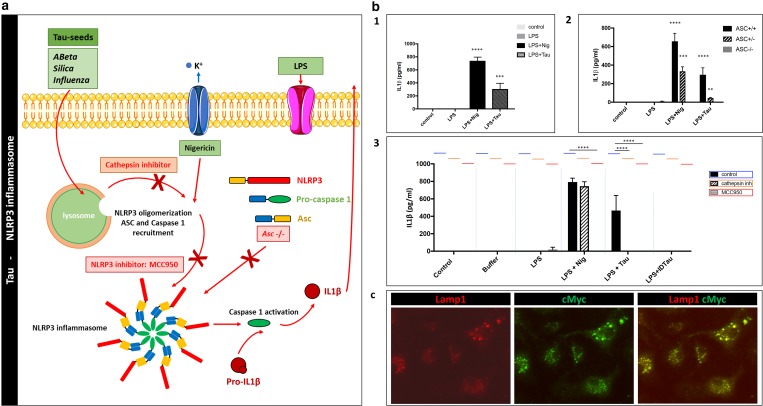
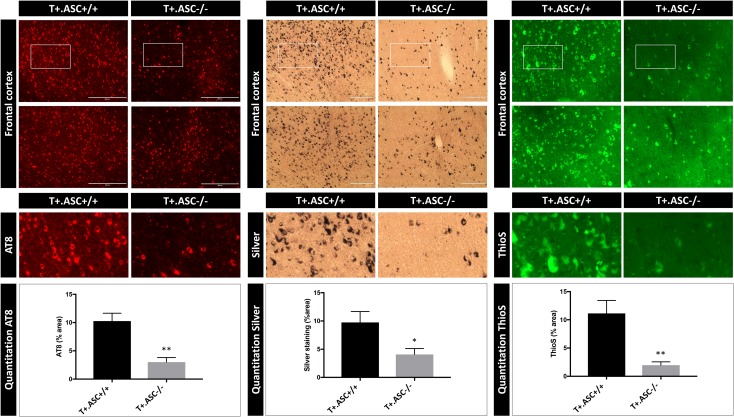
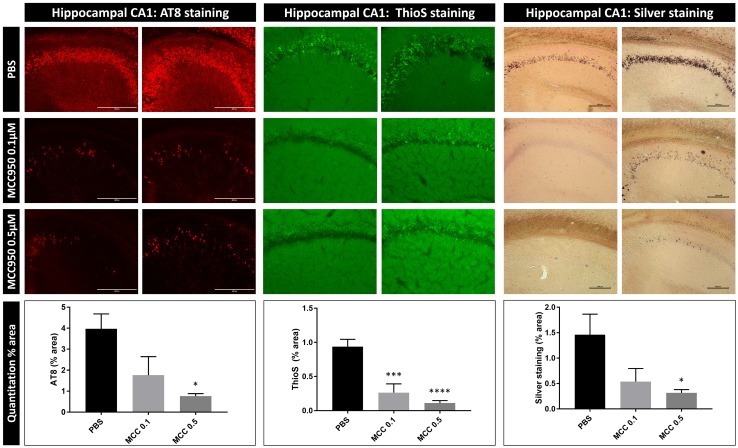
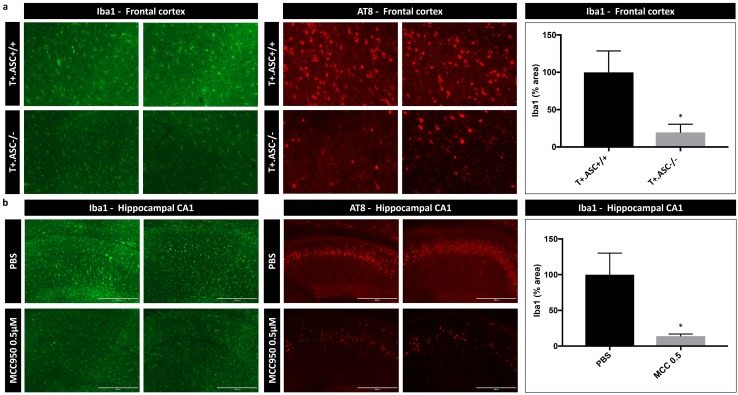
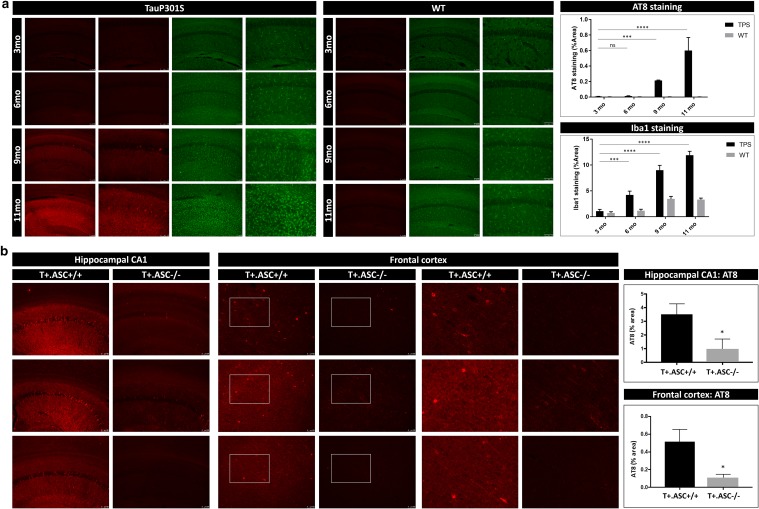
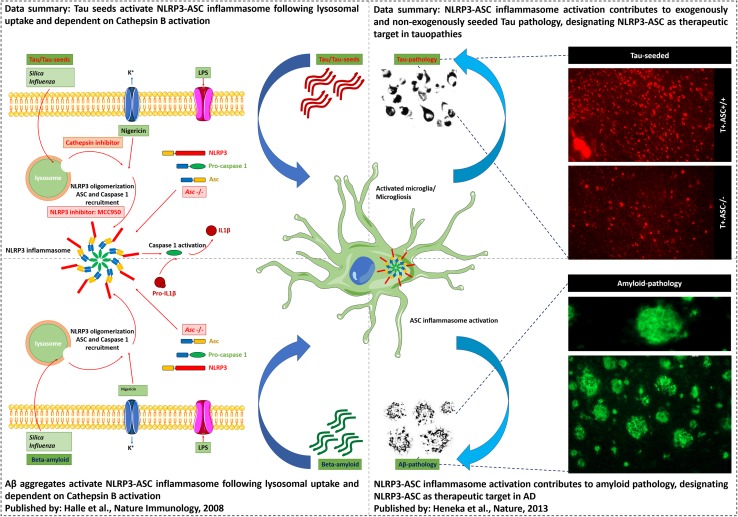
Brains of Alzheimer's disease patients are characterized by the presence of amyloid plaques and neurofibrillary tangles, both invariably associated with neuroinflammation. A crucial role for NLRP3-ASC inflammasome [NACHT, LRR and PYD domains-containing protein 3 (NLRP3)-Apoptosis-associated speck-like protein containing a CARD (ASC)] in amyloid-beta (Aβ)-induced microgliosis and Aβ pathology has been unequivocally identified. Aβ aggregates activate NLRP3-ASC inflammasome (Halle et al. in Nat Immunol 9:857-865, 2008) and conversely NLRP3-ASC inflammasome activation exacerbates amyloid pathology in vivo (Heneka et al. in Nature 493:674-678, 2013), including by prion-like ASC-speck cross-seeding (Venegas et al. in Nature 552:355-361, 2017). However, the link between inflammasome activation, as crucial sensor of innate immunity, and Tau remains unexplored. Here, we analyzed whether Tau aggregates acting as prion-like Tau seeds can activate NLRP3-ASC inflammasome. We demonstrate that Tau seeds activate NLRP3-ASC-dependent inflammasome in primary microglia, following microglial uptake and lysosomal sorting of Tau seeds. Next, we analyzed the role of inflammasome activation in prion-like or templated seeding of Tau pathology and found significant inhibition of exogenously seeded Tau pathology by ASC deficiency in Tau transgenic mice. We furthermore demonstrate that chronic intracerebral administration of the NLRP3 inhibitor, MCC950, inhibits exogenously seeded Tau pathology. Finally, ASC deficiency also decreased non-exogenously seeded Tau pathology in Tau transgenic mice. Overall our findings demonstrate that Tau-seeding competent, aggregated Tau activates the ASC inflammasome through the NLRP3-ASC axis, and we demonstrate an exacerbating role of the NLRP3-ASC axis on exogenously and non-exogenously seeded Tau pathology in Tau mice in vivo. The NLRP3-ASC inflammasome, which is an important sensor of innate immunity and intensively explored for its role in health and disease, hence presents as an interesting therapeutic approach to target three crucial pathogenetic processes in AD, including prion-like seeding of Tau pathology, Aβ pathology and neuroinflammation.
Overview
The claims and statistics of this paper haven’t been checked yet.
Free: it reads the open-access text and checks the first 5 claims that cite a source we can check. Create a free account to check every claim.
Integrity signals
Registry
Cites
Statistics
Figures
Verification
Claims the paper makes
The claims and statistics of this paper haven’t been checked yet.
Free: it reads the open-access text and checks the first 5 claims that cite a source we can check. Create a free account to check every claim.
Claims other papers make about this one
Each is checked against this paper’s own text: does it say what the citing paper says it does?
The source backs part of the claim, not all of it — or backs it for a different population, condition or comparison.
In the citing paper
“Rat research has identified the NLRP3-ASC inflammasome as a major mechanism through which microglia may drive pathological features of AD [92,93,94].”
From The Role of Cortisol in Chronic Stress, Neurodegenerative Diseases, and Psychological Disorders (2023) · cites this paper as [93]
Experimental — accuracy not yet measuredThe source backs part of the claim, not all of it — or backs it for a different population, condition or comparison.
In the citing paper
“Although how tau activates microglia to induce inflammation is poorly understood, recent transcriptomic studies demonstrate a role for NF-κB activation and NLRP3-ASC in this process [424, 425].”
From Molecular and cellular mechanisms underlying the pathogenesis of Alzheimer’s disease (2020) · cites this paper as [425]
Experimental — accuracy not yet measuredThe source backs part of the claim, not all of it — or backs it for a different population, condition or comparison.
In the citing paper
“In the same study, exogenously seeded tau induced tau pathology in Tau P301S transgenic mice, but not in Asc-deficient or NLRP3 inhibitor (MCC950)-treated Tau transgenic mice, demonstrating the ability of the NLRP3 inflammasome to aggravate tau pathology [82].”
From Microglial function, INPP5D/SHIP1 signaling, and NLRP3 inflammasome activation: implications for Alzheimer’s disease (2023) · cites this paper as [82]
Experimental — accuracy not yet measuredThe cited source says what the claim attributes to it.
In the citing paper
“The disruption of the NLRP3-ASC inflammasome in mice resulted in significantly decreased forming of tau aggregates [93].”
From The Role of Cortisol in Chronic Stress, Neurodegenerative Diseases, and Psychological Disorders (2023) · cites this paper as [93]
Experimental — accuracy not yet measured
13 more claims about this paper
Create a free account to see every claim other papers make about this one.
Self-check
Percentages, sums and reported differences re-computed from the paper’s own numbers.
The self-check needs the paper’s full text.
Citations
Cites
Neuropathological stageing of Alzheimer-related changes.
Braak, H., & Braak, E. (1991) · Acta Neuropathologica · doi:10.1007/bf00308809 · Cited by 16,123
The Amyloid Hypothesis of Alzheimer’s Disease: Progress and Problems on the Road to Therapeutics
Hardy, J., & Selkoe, D. J. (2002) · Science · doi:10.1126/science.1072994 · Cited by 13,864
Amyloid oligomers exacerbate tau pathology in a mouse model of tauopathy
Selenica, M.-L. B., Brownlow, M., Jimenez, J. P., Lee, D. C., Pena, G., Dickey, C. A., Gordon, M. N., & Morgan, D. (2013) · Neurodegenerative Diseases · doi:10.1159/000337230 · Cited by 10,359
Antiinflammatory Therapy with Canakinumab for Atherosclerotic Disease
Ridker, P. M., Everett, B. M., Thuren, T., MacFadyen, J. G., Chang, W. H., Ballantyne, C., Fonseca, F., Nicolau, J., Koenig, W., Anker, S. D., et al. (2017) · New England Journal of Medicine · doi:10.1056/nejmoa1707914 · Cited by 9,482
Neuroinflammation in Alzheimer's disease
Heneka, M. T., Carson, M. J., Khoury, J. E., Landreth, G. E., Brosseron, F., Feinstein, D. L., Jacobs, A. H., Wyss-Coray, T., Vitorica, J., Ransohoff, R. M., et al. (2015) · The Lancet Neurology · doi:10.1016/s1474-4422(15)70016-5 · Cited by 6,226
Martinon, F., Burns, K., & Tschopp, J. (2002) · Molecular Cell · doi:10.1016/s1097-2765(02)00599-3 · Cited by 6,066
Gout-associated uric acid crystals activate the NALP3 inflammasome
Martinon, F., Pétrilli, V., Mayor, A., Tardivel, A., & Tschopp, J. (2006) · Nature · doi:10.1038/nature04516 · Cited by 5,326
Hypothetical model of dynamic biomarkers of the Alzheimer's pathological cascade
Jack, C. R., Knopman, D. S., Jagust, W. J., Shaw, L. M., Aisen, P. S., Weiner, M. W., Petersen, R. C., & Trojanowski, J. Q. (2010) · The Lancet Neurology · doi:10.1016/s1474-4422(09)70299-6 · Cited by 4,806
Jack, C. R., Knopman, D. S., Jagust, W. J., Petersen, R. C., Weiner, M. W., Aisen, P. S., Shaw, L. M., Vemuri, P., Wiste, H. J., Weigand, S. D., et al. (2013) · The Lancet Neurology · doi:10.1016/s1474-4422(12)70291-0 · Cited by 4,396
Common structure of soluble amyloid oligomers implies common mechanism of pathogenesis
Kayed, R., Head, E., Thompson, J. L., McIntire, T. M., Milton, S. C., Cotman, C. W., & Glabe, C. G. (2003) · Science · doi:10.1126/science.1079469 · Cited by 4,064
Cited by
Items 301–400 of 481
Zeng, X., Yuan, Y., Li, Y., Hu, Z., & Hu, S. (2025) · Experimental Neurology · doi:10.1016/j.expneurol.2025.115304 · Cited by 10
Autophagy and apoptosis in Alzheimer’s disease-associated neurons
Cui, J., & Cui, Z. (2025) · Discover Neuroscience · doi:10.1186/s13064-025-00210-z · Cited by 10
Research progress on microglial pyroptosis and inflammasomes: a comprehensive analysis
Wang, X., Li, Z., Ma, B., & Jia, Q. (2025) · Frontiers in Aging Neuroscience · doi:10.3389/fnagi.2025.1582579 · Cited by 10
Zhang, Y., Liu, D., Yao, X., Wen, J., Wang, Y., & Zhang, Y. (2022) · Neuroscience Letters · doi:10.1016/j.neulet.2022.136770 · Cited by 10
Li, X., Yang, L., Kang, X., Wang, G., Yuan, Y., Yang, H., Yang, T., & Wang, Z. (2025) · International Immunopharmacology · doi:10.1016/j.intimp.2025.114429 · Cited by 10
Firdous, S. M., Chakrabortty, S., Undale, V., Mallik, S., & Gouda, M. (2026) · Inflammopharmacology · doi:10.1007/s10787-026-02169-7 · Cited by 9
Substance Abuse and Cognitive Decline: The Critical Role of Tau Protein as a Potential Biomarker
Rebolledo-Pérez, L., Hernández‐Bello, J., Martínez-Ramos, A., Castañeda‐Arellano, R., Fernández-Quezada, D., Sandoval-García, F., & Aguilar-García, I. G. (2025) · International Journal of Molecular Sciences · doi:10.3390/ijms26157638 · Cited by 9
The Influence of SARS-CoV-2 Infection on the Development of Selected Neurological Diseases
Kryńska, K., Kuliś, K., Mazurek, W., Gudowska-Sawczuk, M., Zajkowska, M., & Mroczko, B. (2024) · International Journal of Molecular Sciences · doi:10.3390/ijms25168715 · Cited by 9
Hayashi, T., Shimonaka, S., Elahi, M., Matsumoto, S., Ishiguro, K., Takanashi, M., Hattori, N., & Motoi, Y. (2021) · Journal of Alzheimer s Disease · doi:10.3233/jad-201002 · Cited by 9
Alzheimer’s disease: a jigsaw puzzle comprised of different types of programmed cell death pieces
Wang, Y., Mu, D., Li, Y., Liu, C., Feng, J., Lai, Y., & Lou, G. (2025) · Brain Research · doi:10.1016/j.brainres.2025.149861 · Cited by 9
Magagnoli, J., Yerramothu, P., Ambati, K., Cummings, T. H., Nguyen, J. D. K., Thomas, C. C., Wang, S.-B., Cheng, K., Juraev, M., Dholkawala, R., et al. (2023) · medRxiv · doi:10.1101/2023.03.17.23287375 · Cited by 9
Silva-Llanes, I., Smith, L. A., Abdelkader-Guillén, A., Jiménez-Villegas, J., Sarrió, D., Gema, M.-B., & Lastres‐Becker, I. (2026) · Journal of Biomedical Science · doi:10.1186/s12929-025-01210-1 · Cited by 9
Španić, E., Vogrinc, D., Fuller, H. R., Horvat, L. L., Mayer, D., Kopić, J., Pintarić, K., Leko, M. B., Pravica, M., Krsnik, Ž., et al. (2024) · Biomolecules · doi:10.3390/biom14030302 · Cited by 8
Sterile innate immune mechanisms in neurodegenerative diseases
Ealy, A., Serapiglia, A. M., & Panicker, N. (2025) · Journal of Biological Chemistry · doi:10.1016/j.jbc.2025.111039 · Cited by 8
Toscano, E. C. D. B., Justo, A. F. O., de Paula, M. C. A., Grossi, L. B., Neves, V. H., Leite, R. E. P., Paes, V. R., Melo, R. C. N., Nitríni, R., Pasqualucci, C. A., et al. (2025) · Molecular Neurobiology · doi:10.1007/s12035-025-04975-6 · Cited by 8
Xiu, C., He, J.-L., Liu, X.-T., Zhao, N., Geng, F., Zhu, M., Liu, G., & Ren, Q. (2022) · Neurobiology of Stress · doi:10.1016/j.ynstr.2022.100486 · Cited by 8
The role of autophagy in spinal cord injury: Mechanisms, crosstalk, and therapeutic strategies
Wang, R., Niu, Z., Tian, R.-Z., Chen, A., Liao, H., Kuang, R., Feng, Y., Chin, G., Xie, J., Zhu, P., et al. (2025) · Neural Regeneration Research · doi:10.4103/nrr.nrr-d-24-01467 · Cited by 8
Silva-Llanes, I., Madruga, E. L., Martínez, A., & Lastres‐Becker, I. (2025) · Frontiers in Neuroscience · doi:10.3389/fnins.2024.1530809 · Cited by 8
Jia, X., Ju, J., Li, Z., Peng, X., Wang, J., & Gao, F. (2024) · European Journal of Pharmacology · doi:10.1016/j.ejphar.2024.176428 · Cited by 8
Liu, S., Song, X., Sun, Y., Sun, A., Li, Y., Li, Y., & Chen, J. (2025) · Frontiers in Pharmacology · doi:10.3389/fphar.2025.1528011 · Cited by 8
Xu, Y., Blevins, H., Biby, S., Namme, J. N., Zhang, K., Li, R., & Zhang, S. (2025) · Journal of Medicinal Chemistry · doi:10.1021/acs.jmedchem.5c02163 · Cited by 8
Chang, Y., Chen, C., Chen, Y., Wu, M.-T., Lin, T.-Y., Hua, K., & Ju, T. (2024) · Journal of Neuroimmune Pharmacology · doi:10.1007/s11481-024-10161-7 · Cited by 8
Novel Mechanisms of Perioperative Neurocognitive Disorders: Ferroptosis and Pyroptosis
Wu, H., Li, D., Zhang, T., & Zhao, G. (2023) · Neurochemical Research · doi:10.1007/s11064-023-03963-3 · Cited by 8
Tau in Multiple Sclerosis: A Review of Therapeutic Potential
Hoehne, C. L., Stüve, O., & Stopschinski, B. E. (2025) · Current Treatment Options in Neurology · doi:10.1007/s11940-024-00820-8 · Cited by 7
Pang, R.-K., Shi, J., Peng, X.-Y., Su, S., Zheng, J., Le, K., Keng, V. W., Zhang, S., & Li, X.-X. (2025) · Chinese Medicine · doi:10.1186/s13020-025-01098-x · Cited by 7
Harrison, D., Billinton, A., Bock, M. G., Clarke, N. P., Digby, Z., Gabel, C. A., Lindsay, N. A., Reader, V., Scanlon, J., Smolak, P. J., et al. (2025) · RSC Medicinal Chemistry · doi:10.1039/d5md00639b · Cited by 7
Tooth loss impairs cognitive function in SAMP8 mice via the NLRP3 /Caspase‐1 pathway
Sun, X., Lu, Y., Pang, Q., Luo, B., & Jiang, Q. (2023) · Oral Diseases · doi:10.1111/odi.14646 · Cited by 7
Age-associated diseases: the role of the inflammasome complex
Gankovskaya, L. V., Artemyeva, O. V., Владимирович, Г. В., Дмитриевна, Н. Е., & Хасанова, Е. М. (2023) · Immunologiya · doi:10.33029/1816-2134-2023-44-5-640-652 · Cited by 7
Du, Y., Chen, L., Qiao, H., Zhang, L., Yang, L., Zhang, P., Wang, J., Zhang, C., Jiang, W., Xu, R., et al. (2023) · Brain Sciences · doi:10.3390/brainsci13060939 · Cited by 7
Zhang, W., Tao, X., Chen, C., Yang, T., Yun, T., Zhibiao, C., & Ge, Z. (2024) · Chemical Biology & Drug Design · doi:10.1111/cbdd.14436 · Cited by 7
Gaál, B., Takács, R., Matta, C., Juhász, K. Z., Fülesdi, B., Szekanecz, Z., Benkő, S., & Ducza, L. (2025) · Aging and Disease · doi:10.14336/ad.2025.0353 · Cited by 7
Chen, Y., Li, H., Yang, Y., Feng, L., Yang, L., Zhao, J., Xin, X.-C., Lv, S., Fang, X., Wen, W., et al. (2024) · Journal of Neuroimmunology · doi:10.1016/j.jneuroim.2023.578281 · Cited by 7
Zhang, J., Huang, Y., Chen, Y., Zhang, Y., Chen, J., Huang, Y., Zhong, H., He, H., Dai, X., Yan, X., et al. (2026) · Immunity · doi:10.1016/j.immuni.2026.03.007 · Cited by 6
Liu, R., Deng, Q., Gong, L., & Yang, L. (2026) · Neuroscience Bulletin · doi:10.1007/s12264-026-01598-2 · Cited by 6
Fu, G., Pan, M., Sun, Q., Yue, G., & Lei, T. (2025) · Journal of Pharmaceutical Analysis · doi:10.1016/j.jpha.2025.101535 · Cited by 6
Navarro, E., & Montesinos, J. (2025) · Contact · doi:10.1177/25152564241312807 · Cited by 6
Zhang, Y., Che, N., Wang, B., Liu, S., Dong, Y., Kong, X., Yun, Y., Li, S., Tang, X., & Liao, Y. (2025) · International Immunopharmacology · doi:10.1016/j.intimp.2025.114361 · Cited by 6
Martins, G. L., Ferreira, C. N., Palotás, A., Rocha, N. P., & Reis, H. J. (2022) · Current Neuropharmacology · doi:10.2174/1570159x20666220327215245 · Cited by 6
Vavougios, G. D., Mavridis, T., Doskas, T. K., Papaggeli, O., Foka, P., & Hadjigeorgiou, G. M. (2024) · Current Issues in Molecular Biology · doi:10.3390/cimb46050277 · Cited by 6
Crocetin curbs radiation induced intestinal injury by blocking KAT2A/NLRP3 succinylation
Chen, H., Wang, Y., Xu, Y., Liu, F., Xu, Q., Dong, L., Yang, C., Xie, X., Yang, J., & Zhang, X. (2025) · Scientific Reports · doi:10.1038/s41598-025-20740-0 · Cited by 6
Vanherle, S., Janssen, A., de Ravé, M. G., Janssen, B., Lodder, C., Lucena, P. B., Kessels, S., Hardy, J., Vandeput, E., Wang, Y., et al. (2025) · Molecular Psychiatry · doi:10.1038/s41380-025-03036-7 · Cited by 5
Self-citationVerlinden, S. F. F. (2024) · Frontiers in Aging · doi:10.3389/fragi.2024.1452453 · Cited by 5
ZHAO, J.-F., JIANG, Y.-R., GUO, T.-L., JIAO, Y.-Q., & WANG, X. (2024) · Biocell · doi:10.32604/biocell.2024.050120 · Cited by 5
Saad, H. M., Atef, E., Aboushouk, A. A., Waheeb, T. S., Elsayed, A., & Mohammed, S. A. A. (2026) · Journal of Neuropathology & Experimental Neurology · doi:10.1093/jnen/nlag014 · Cited by 5
De novo discovery of bicyclic cysteine-rich peptides targeting gasdermin D
Li, C. Y., Sun, Y., Vinogradov, A. A., & Suga, H. (2026) · Proceedings of the National Academy of Sciences · doi:10.1073/pnas.2516051123 · Cited by 5
Zeng, T., Li, J., Shi, C., & Xiang, S. (2025) · Biophysics Reports · doi:10.52601/bpr.2025.240065 · Cited by 5
Targeting pyroptosis in tauopathies: A redox-driven axis of neuroinflammation and neurodegeneration
López, E. A., Silva-Llanes, I., Diez-Tejedor, E., & Lastres‐Becker, I. (2026) · Free Radical Biology and Medicine · doi:10.1016/j.freeradbiomed.2026.04.029 · Cited by 4
Wang, L., Feng, L., Ning, B., Wang, Z., Dai, C., & Li, M. (2025) · Drug Design Development and Therapy · doi:10.2147/dddt.s534706 · Cited by 4
Neuroinflammation in Dementia—Therapeutic Directions in a COVID-19 Pandemic Setting
Łuc, M., Woźniak, M., & Rymaszewska, J. (2022) · Cells · doi:10.3390/cells11192959 · Cited by 4
Crosstalk between NLRP3 inflammasome and calpain in Alzheimer's disease
Mamsa, R., Prabhavalkar, K. S., & Bhatt, L. K. (2023) · European Journal of Neuroscience · doi:10.1111/ejn.16139 · Cited by 4
Sharma, S., Wahl, D., Risen, S. J., Gilberto, V. S., Chatterjee, A., Moreno, J. A., LaRocca, T. J., & Nagpal, P. (2024) · bioRxiv (Cold Spring Harbor Laboratory) · doi:10.1101/2024.03.07.583991 · Cited by 4
Zhang, M., Cheng Ann, C. H. E. N., Peng, Q., Wu, X., Zhou, R., Ma, Y., & Zou, Z. (2023) · Molecular Therapy — Nucleic Acids · doi:10.1016/j.omtn.2023.02.017 · Cited by 4
Liu, H., Gong, Z., Zhao, L., Ye, T., Cao, A., He, S., Lin, S., Duan, J., & Lin, X. Z. (2023) · Neuroscience Letters · doi:10.1016/j.neulet.2023.137555 · Cited by 4
Zhou, C., Wang, Y., Zuo, L., Miao, Y., Li, W., Li, X., Xue, Y., & Li, M. (2025) · Neuroscience Letters · doi:10.1016/j.neulet.2025.138385 · Cited by 4
Liao, Y., Pan, R., Kong, X.-X., Cheng, Y., Lu, D., Wang, Z., Yuan, C., Cheng, J., Yuan, Z., & Zhang, H.-Y. (2021) · Acta Pharmacologica Sinica · doi:10.1038/s41401-021-00670-z · Cited by 4
Peripheral biomarkers of neuroinflammation in Alzheimer’s disease and vascular dementia
Ouyang, X., Chia, R. S. L., Chai, Y. L., Chong, Sim, M. A., Jo, D., Arumugam, T. V., Sethi, G., Dawe, G. S., Chen, C. P., et al. (2026) · Biochemical Pharmacology · doi:10.1016/j.bcp.2026.118077 · Cited by 3
Bi, L., Li, L., Li, X., Wu, S.-C., Zhang, X., Zhao, Y., Li, D., Liu, C., Hou, Z., & Sun, B. (2025) · Aggregate · doi:10.1002/agt2.70023 · Cited by 3
Some, A., Naskar, N., Thomas, D. M., Jeengar, M. K., & Nassar, A. (2026) · Neurochemical Research · doi:10.1007/s11064-026-04737-3 · Cited by 3
Pan, P., Zhao, T., Zhang, J., Zhou, Y., Zhang, X., Li, Q., & Zhou, Y. (2025) · Frontiers in Pharmacology · doi:10.3389/fphar.2025.1605214 · Cited by 3
Singh, G., & Aran, K. R. (2026) · Biogerontology · doi:10.1007/s10522-025-10384-y · Cited by 3
Zheng, R., Liu, X., Liao, Z., Wan, R., Qiu, G., Min, L. I., Tang, C., Zhou, R., & Song, J. (2025) · Experimental Neurology · doi:10.1016/j.expneurol.2025.115637 · Cited by 3
Bai, H., Zeng, H.-M., Zhang, Q., Hu, Y.-Z., & Deng, F. (2024) · World Journal of Clinical Cases · doi:10.12998/wjcc.v12.i6.1063 · Cited by 3
Chai, J.-Y., Zhang, Y. P., Zhang, Z., Ma, D., Cao, Y.-H., Shi-rui, Z. H. U., Yun-zhi, M., Luo, L.-L., Zhan, Y.-L., Fan, Z.-Y., et al. (2026) · Reviews in the Neurosciences · doi:10.1515/revneuro-2026-0041 · Cited by 3
Zheng, L., Mei, W., Zhou, J., Wei, X., Huang, Z., Lin, X., Zhang, L., Liu, W., Wu, Q., Li, J., et al. (2024) · Experimental and Therapeutic Medicine · doi:10.3892/etm.2024.12430 · Cited by 3
A patent review of NLRP3 inhibitors for inflammatory diseases (2023-present)
Namme, J. N., Xu, Y., McClendon, E., Zhang, C. M., & Zhang, S. (2026) · Expert Opinion on Therapeutic Patents · doi:10.1080/13543776.2026.2656161 · Cited by 3
Role of phytochemicals isolated from Cirsium japonicum in neurological disorders
Yao, L., Javed, A., Nisar, M. F., & Wan, C. C. (2024) · Phytonutrients · doi:10.62368/pn.v1i01.16 · Cited by 3
IL-18 binding protein attenuates neuroinflammation and cognitive decline in Alzheimer’s disease
Hong, D. K., Jeon, S. H., Kang, M., Lee, S., Liu, X., Ahn, E. H., & Kang, S. (2026) · Journal of Neuroinflammation · doi:10.1186/s12974-026-03720-7 · Cited by 2
Xi, R., Zheng, X., Zhao, J., & Fu, Y. (2026) · Journal of Neuroinflammation · doi:10.1186/s12974-026-03819-x · Cited by 2
Cao, K., Xie, J., Liang, X., Li, Y., Gong, H., & Luo, H. (2026) · Neural Regeneration Research · doi:10.4103/nrr.nrr-d-25-00917 · Cited by 2
Cheng, L., Meng, X., Tian, D., Zheng, B., Xiao, Y., Zhao, X., Xu, Y., Yang, H., Jian-zhong, B., Li, F., et al. (2025) · Neurochemical Research · doi:10.1007/s11064-025-04379-x · Cited by 2
TLR4-mediated chronic neuroinflammation has no effect on tangle pathology in a tauopathy mouse model
Basheer, N., Muhammadi, M. K., Freites, C. L., Avila, M., Momand, M. U. D., Hryntsova, N. B., Smolek, T., Katina, S., & Žilka, N. (2024) · Frontiers in Aging Neuroscience · doi:10.3389/fnagi.2024.1468602 · Cited by 2
Phytocannabinoids: a new frontier in Alzheimer’s disease management
Rao, J. S. (2024) · Academia Biology · doi:10.20935/acadbiol7344 · Cited by 2
Role of caspases, apoptosis and additional factors in pathology of Alzheimer's disease
Gupta, A. (2021) · Elsevier eBooks · doi:10.1016/b978-0-12-820122-0.00001-7 · Cited by 2
Sandhu, J. K., Tanha, J., & Arbabi‐Ghahroudi, M. (2026) · Expert Opinion on Therapeutic Targets · doi:10.1080/14728222.2026.2671675 · Cited by 2
Ma, L., Zhao, Y. Q., Cai, C., Qs, L., Hu, X., & Wang, L. (2026) · Cells · doi:10.3390/cells15141291 · Cited by 2
廉文文, Zhou, F., Tong, Z., 夏聪媛, Yu, Y., He, J., Jiekun, X., & Zhang, W. (2026) · Ageing Research Reviews · doi:10.1016/j.arr.2026.103273 · Cited by 2
Immune Sensors, Regulators, and Effectors of Brain Health
Acıoğlu, Ç., & Elkabes, S. (2024) · Springer eBooks · doi:10.1007/978-3-031-68237-7_3 · Cited by 2
Li, H., Wu, X., Wu, G., Guo, J., Nie, Z., & Sheng, Q. (2026) · Journal of Visualized Experiments · doi:10.3791/70432 · Cited by 2
Bakkar, N. Z., Arida, R. E., Soliman, A. Y., & EL‐Yazbi, A. F. (2025) · Elsevier eBooks · doi:10.1016/b978-0-443-32852-7.00016-4 · Cited by 2
Innate Immune Status of Glia Modulates Prion Propagation in Early Stage of Infection
Kang, S., Kim, C., Aiken, J. M., & McKenzie, D. I. (2023) · Cells · doi:10.3390/cells12141878 · Cited by 2
Neural Stem Cell-conditioned Medium Protected Against Cognitive Dysfunction in APP/PS1 Mice
Zheng, X., Xiang, Q., Dong, X., Shen, Y., Qu, T., Fang, W., & Yang, H. (2025) · Molecular Neurobiology · doi:10.1007/s12035-025-05282-w · Cited by 2
El-Dory, S. T., El-Fattah, A. A. A., Sadik, N. A. H., & Elbaz, E. M. (2026) · Archives of Biochemistry and Biophysics · doi:10.1016/j.abb.2026.110885 · Cited by 2
Sun, Z., Zang, Q., Xu, C., Zhang, X., Kang, Z., Yang, Y., Li, L., & Chen, J. (2025) · Bioorganic Chemistry · doi:10.1016/j.bioorg.2025.108402 · Cited by 2
Wang, Z., Lin, J., Chang, P., Sun, M., & Li, S. (2025) · Biomolecules · doi:10.3390/biom15060872 · Cited by 2
Zhang, J., Yang, N., Zou, P., & Zong, X. (2026) · Journal of Neuroinflammation · doi:10.1186/s12974-026-03924-x · Cited by 2
Ji, Y., Li, X., Tian, J., Chen, X., Ji, G., Maofeng, S., Zhang, J., Xia, M., An, Q., Li, X., et al. (2026) · Frontiers in Immunology · doi:10.3389/fimmu.2026.1797076 · Cited by 2
Neuroinflammation and Tauopathies
Zeenny, M.-N., Salame, I., Maatouk, L., & Akoury, E. (2026) · Molecular Biology Reports · doi:10.1007/s11033-026-12253-4 · Cited by 1
Lam, S. (2021) · theses.fr (ABES) · doi:10.70675/60b353ffz56fcz41a2z9e53zf0d9ac078167 · Cited by 1
The interaction between microglial dysfunction and mitochondrial impairment in Alzheimer’s disease
Luo, Q., Noh, J. H., & Sima, J. (2023) · Aging Research · doi:10.26599/agr.2023.9340020 · Cited by 1
Zhu, X., Lai, X., Deng, J., & Long, Y. (2026) · Experimental Neurology · doi:10.1016/j.expneurol.2026.115728 · Cited by 1
Lin, T., Tseng, P.-H., Chen, I., Lin, C., Lee, M.-C., Chang, K., Lee‐Chen, G., & Chen, C. (2025) · Neurochemistry International · doi:10.1016/j.neuint.2025.106042 · Cited by 1
Church, K. A., Cardona, A. E., & Hopp, S. C. (2024) · Advances in neurobiology · doi:10.1007/978-3-031-55529-9_15 · Cited by 1
NLRP3 maintains healthy pericytes in the brainPreprint
Quan, W., Luo, Q., Tang, Q., Furihata, T., Li, D., Fassbender, K. C., & Liu, Y. (2019) · Research Square · doi:10.21203/rs.2.18793/v1 · Cited by 1
Waseem, A., Ghosh, S., Kumari, M., Raza, S. S., & Verma, S. K. (2026) · Ageing Research Reviews · doi:10.1016/j.arr.2026.103257 · Cited by 1
An Alternate View of Neuroprotection with Peptides in Alzheimer’s Disease
King, S. P., & Suphioglu, C. (2020) · IntechOpen eBooks · doi:10.5772/intechopen.91065 · Cited by 1
Evaluation of ASC as a therapeutic target for Alzheimer's disease
Clayton, B., Kulas, J. A., Liu, J., Walia, N., Rangel‐Barajas, C., Johnson, T. S., Zhang, J., Huang, K., Mesecar, A. D., Dage, J. L., et al. (2026) · Alzheimer s & Dementia · doi:10.1002/alz.71104 · Cited by 1
Energy Dynamics in Dementia & the Neurodegenerative Diseases: A New Causal Paradigm
Thorp, K. E., Thorp, J. A., Northrup, C., Thorp, E. M., BS FNTP. Williamston, M., Peters, S. E., Walker, P. R., & BSME, M. (2023) · The Gazette of Medical Sciences · doi:10.46766/thegms.neuro.22062901 · Cited by 1
Yang, L. P., Tan, Q., Wan, W., Bu, Z., Xuan, C., Yu, C., Wu, J., & Yan, J. (2023) · Bioanalysis · doi:10.4155/bio-2023-0043 · Cited by 1
Wendland, K., Irsfeld, M., Schreiber, K., Ternka, K., Stadelmann, C., Nessler, S., Gärtner, J., & Kettwig, M. (2025) · Cell Death and Disease · doi:10.1038/s41419-025-08350-0 · Cited by 1
Tracing inflammasomes in Alzheimer’s: insights from bibliometric analysis
Chen, Y., Pei, H., Li, H., Zeng, W., & Li, Z. (2025) · Frontiers in Neurology · doi:10.3389/fneur.2025.1540083 · Cited by 1
Metadata
- Authors
- Stancu, I.-C., Cremers, N., Vanrusselt, H., Couturier, J., Vanoosthuyse, A., Kessels, S., Lodder, C., Brône, B., Huaux, F., Octave, J.-N., Terwel, D., & Dewachter, I.
- Affiliations
- Hasselt University (BE)
- UCLouvain (BE)
- Corresponding author
- Dewachter, Ilse
- ORCID
- Venue
- Acta Neuropathologica
- Published
- 2019-02-05
- Volume
- 137
- Issue
- 4
- Pages
- 599-617
- ISSN
- 0001-6322 (ISSN-L)
- 1432-0533
- PMC
- PMC6426830
- OpenAlex
- W2912579052
- Semantic Scholar
- c556a7631e93a55c1b4fa0042a38e4c9961fef9e
- Cited by
- 447
- References
- 103
- Citations by year
- 2026: 42 · 2025: 65 · 2024: 76 · 2023: 77 · 2022: 69 · 2021: 55 · 2020: 45 · 2019: 17
- FWCI
- 31.58
- Type
- journal article
- Language
- en
- Open access
- hybrid
- doi.org
- Licence
- cc-by
- creativecommons.org/licenses/by/4.0 (tdm)
- Locations
- Acta Neuropathologica (publishedVersion, cc-by)
- Europe PMC (PubMed Central) (publishedVersion, cc-by)
- PubMed Central (publishedVersion, cc-by)
- PubMed (publishedVersion)
- Digital Access to Libraries (submittedVersion, other-oa)
- Document Server@UHasselt (UHasselt) (submittedVersion, cc-by)
- Funders
- Fondation pour la Recherche Alzheimer (FRA-SAO Belgium)
- Fonds De La Recherche Scientifique - FNRS
- Agentschap Innoveren en Ondernemen (VLAIO)
- Fonds Wetenschappelijk Onderzoek (G0C6819N)
- Topics
- Life Sciences › Neuroscience › Cellular and Molecular Neuroscience › Alzheimer's disease research and treatments
- Life Sciences › Biochemistry, Genetics and Molecular Biology › Molecular Biology › Inflammasome and immune disorders
- Life Sciences › Neuroscience › Neurology › Neuroinflammation and Neurodegeneration Mechanisms
- Keywords
- tau aggregation, prion-like seeding, neuroinflammation, microglia, lysosomal sorting, MCC950, Alzheimer's disease, innate immunity, tau transgenic mice, neurofibrillary tangles
- MeSH terms
- NLR Family, Pyrin Domain-Containing 3 Protein, Alzheimer Disease, Animals, Brain, Gliosis, Mice, Transgenic, tau Proteins, Microglia, Mice, CARD Signaling Adaptor Proteins, Interleukin-1beta, Inflammasomes, Protein Aggregates
About these checks
Registry, retraction, Cites and statistics results are computed, not judged, with one exception: a printed reference that no index lists is read once by a model before it counts as a citation error. Claims are extracted by a model and kept only when their quote appears verbatim in the text; each cited source is then checked, with a model’s help, for whether it says what the claim relies on. Those verdicts can be wrong — read the claim’s quote and the cited source before relying on one.
Statistics and arithmetic are recomputed, not judged.
Confidence bands are shown only for fields calibrated on our annotated test set. None is calibrated yet, so no band is shown.
What counts as a claim ›How we measure confidence ›How we check this ›
Are you an author, or do you see a problem with this page? Request a review
Data sources
Bibliographic data: Semantic Scholar, OpenAlex, Crossref.
Contains information from the Semantic Scholar Academic Graph Datasets, made available under the ODC Attribution License (ODC-BY 1.0).
Semantic Scholar’s data is described in: Kinney, R., et al. (2023). The Semantic Scholar Open Data Platform. arXiv:2301.10140.
