

Aggregated Tau activates NLRP3–ASC inflammasome exacerbating exogenously seeded and non-exogenously seeded Tau pathology in vivo
Open accessThe DOI matches its Crossref record; 103 of the 103 references it cites were found in a registry or an index.
Abstract
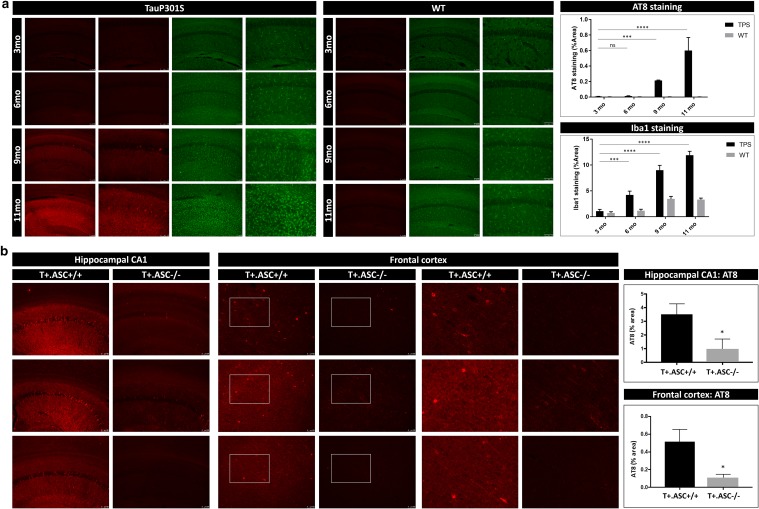
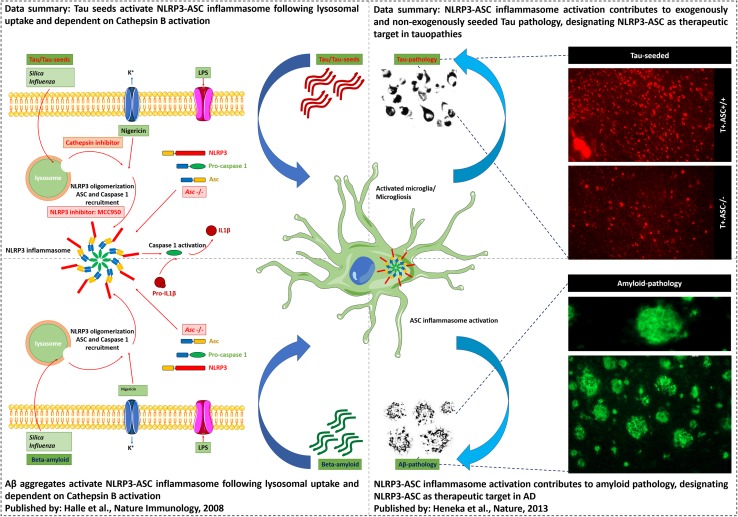
Brains of Alzheimer's disease patients are characterized by the presence of amyloid plaques and neurofibrillary tangles, both invariably associated with neuroinflammation. A crucial role for NLRP3-ASC inflammasome [NACHT, LRR and PYD domains-containing protein 3 (NLRP3)-Apoptosis-associated speck-like protein containing a CARD (ASC)] in amyloid-beta (Aβ)-induced microgliosis and Aβ pathology has been unequivocally identified. Aβ aggregates activate NLRP3-ASC inflammasome (Halle et al. in Nat Immunol 9:857-865, 2008) and conversely NLRP3-ASC inflammasome activation exacerbates amyloid pathology in vivo (Heneka et al. in Nature 493:674-678, 2013), including by prion-like ASC-speck cross-seeding (Venegas et al. in Nature 552:355-361, 2017). However, the link between inflammasome activation, as crucial sensor of innate immunity, and Tau remains unexplored. Here, we analyzed whether Tau aggregates acting as prion-like Tau seeds can activate NLRP3-ASC inflammasome. We demonstrate that Tau seeds activate NLRP3-ASC-dependent inflammasome in primary microglia, following microglial uptake and lysosomal sorting of Tau seeds. Next, we analyzed the role of inflammasome activation in prion-like or templated seeding of Tau pathology and found significant inhibition of exogenously seeded Tau pathology by ASC deficiency in Tau transgenic mice. We furthermore demonstrate that chronic intracerebral administration of the NLRP3 inhibitor, MCC950, inhibits exogenously seeded Tau pathology. Finally, ASC deficiency also decreased non-exogenously seeded Tau pathology in Tau transgenic mice. Overall our findings demonstrate that Tau-seeding competent, aggregated Tau activates the ASC inflammasome through the NLRP3-ASC axis, and we demonstrate an exacerbating role of the NLRP3-ASC axis on exogenously and non-exogenously seeded Tau pathology in Tau mice in vivo. The NLRP3-ASC inflammasome, which is an important sensor of innate immunity and intensively explored for its role in health and disease, hence presents as an interesting therapeutic approach to target three crucial pathogenetic processes in AD, including prion-like seeding of Tau pathology, Aβ pathology and neuroinflammation.
Overview
The claims and statistics of this paper haven’t been checked yet.
Free: it reads the open-access text and checks the first 5 claims that cite a source we can check. Create a free account to check every claim.
Integrity signals
Registry
Cites
Statistics
Figures
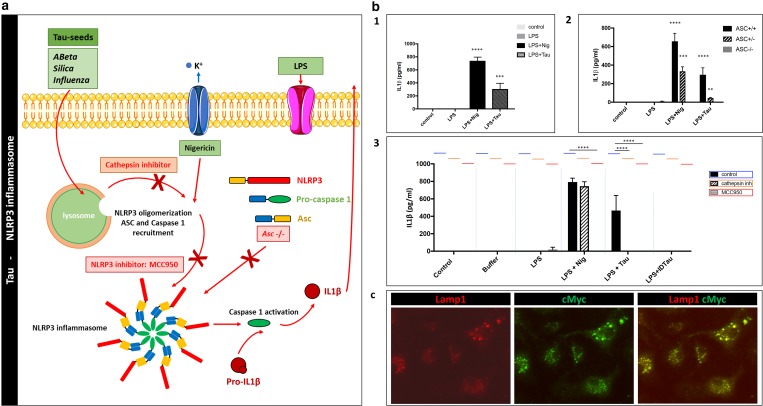
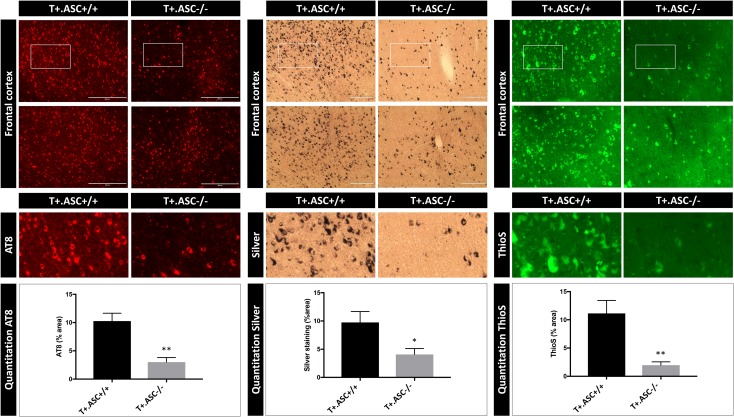
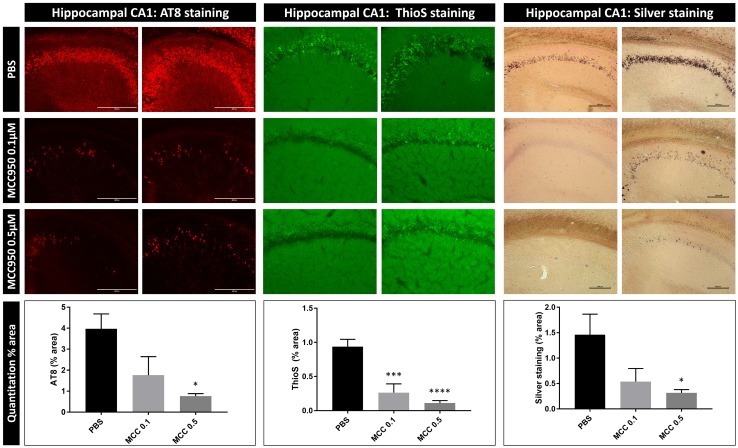
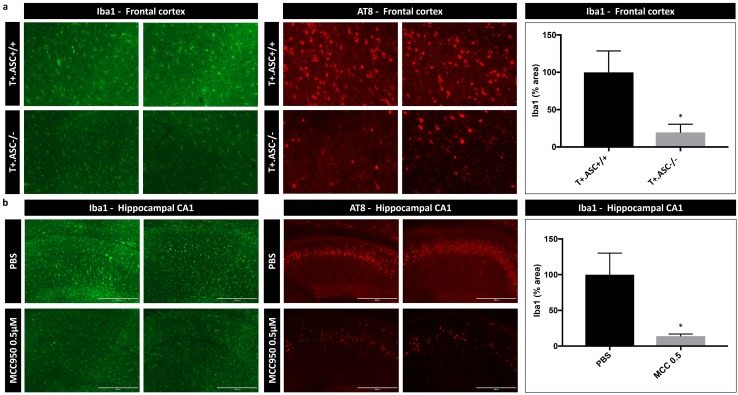
Verification
Claims the paper makes
The claims and statistics of this paper haven’t been checked yet.
Free: it reads the open-access text and checks the first 5 claims that cite a source we can check. Create a free account to check every claim.
Claims other papers make about this one
Each is checked against this paper’s own text: does it say what the citing paper says it does?
The source backs part of the claim, not all of it — or backs it for a different population, condition or comparison.
In the citing paper
“Rat research has identified the NLRP3-ASC inflammasome as a major mechanism through which microglia may drive pathological features of AD [92,93,94].”
From The Role of Cortisol in Chronic Stress, Neurodegenerative Diseases, and Psychological Disorders (2023) · cites this paper as [93]
Experimental — accuracy not yet measuredThe source backs part of the claim, not all of it — or backs it for a different population, condition or comparison.
In the citing paper
“Although how tau activates microglia to induce inflammation is poorly understood, recent transcriptomic studies demonstrate a role for NF-κB activation and NLRP3-ASC in this process [424, 425].”
From Molecular and cellular mechanisms underlying the pathogenesis of Alzheimer’s disease (2020) · cites this paper as [425]
Experimental — accuracy not yet measuredThe source backs part of the claim, not all of it — or backs it for a different population, condition or comparison.
In the citing paper
“In the same study, exogenously seeded tau induced tau pathology in Tau P301S transgenic mice, but not in Asc-deficient or NLRP3 inhibitor (MCC950)-treated Tau transgenic mice, demonstrating the ability of the NLRP3 inflammasome to aggravate tau pathology [82].”
From Microglial function, INPP5D/SHIP1 signaling, and NLRP3 inflammasome activation: implications for Alzheimer’s disease (2023) · cites this paper as [82]
Experimental — accuracy not yet measuredThe cited source says what the claim attributes to it.
In the citing paper
“The disruption of the NLRP3-ASC inflammasome in mice resulted in significantly decreased forming of tau aggregates [93].”
From The Role of Cortisol in Chronic Stress, Neurodegenerative Diseases, and Psychological Disorders (2023) · cites this paper as [93]
Experimental — accuracy not yet measured
13 more claims about this paper
Create a free account to see every claim other papers make about this one.
Self-check
Percentages, sums and reported differences re-computed from the paper’s own numbers.
The self-check needs the paper’s full text.
Citations
Cites
Neuropathological stageing of Alzheimer-related changes.
Braak, H., & Braak, E. (1991) · Acta Neuropathologica · doi:10.1007/bf00308809 · Cited by 16,123
The Amyloid Hypothesis of Alzheimer’s Disease: Progress and Problems on the Road to Therapeutics
Hardy, J., & Selkoe, D. J. (2002) · Science · doi:10.1126/science.1072994 · Cited by 13,864
Amyloid oligomers exacerbate tau pathology in a mouse model of tauopathy
Selenica, M.-L. B., Brownlow, M., Jimenez, J. P., Lee, D. C., Pena, G., Dickey, C. A., Gordon, M. N., & Morgan, D. (2013) · Neurodegenerative Diseases · doi:10.1159/000337230 · Cited by 10,359
Antiinflammatory Therapy with Canakinumab for Atherosclerotic Disease
Ridker, P. M., Everett, B. M., Thuren, T., MacFadyen, J. G., Chang, W. H., Ballantyne, C., Fonseca, F., Nicolau, J., Koenig, W., Anker, S. D., et al. (2017) · New England Journal of Medicine · doi:10.1056/nejmoa1707914 · Cited by 9,482
Neuroinflammation in Alzheimer's disease
Heneka, M. T., Carson, M. J., Khoury, J. E., Landreth, G. E., Brosseron, F., Feinstein, D. L., Jacobs, A. H., Wyss-Coray, T., Vitorica, J., Ransohoff, R. M., et al. (2015) · The Lancet Neurology · doi:10.1016/s1474-4422(15)70016-5 · Cited by 6,226
Martinon, F., Burns, K., & Tschopp, J. (2002) · Molecular Cell · doi:10.1016/s1097-2765(02)00599-3 · Cited by 6,066
Gout-associated uric acid crystals activate the NALP3 inflammasome
Martinon, F., Pétrilli, V., Mayor, A., Tardivel, A., & Tschopp, J. (2006) · Nature · doi:10.1038/nature04516 · Cited by 5,326
Hypothetical model of dynamic biomarkers of the Alzheimer's pathological cascade
Jack, C. R., Knopman, D. S., Jagust, W. J., Shaw, L. M., Aisen, P. S., Weiner, M. W., Petersen, R. C., & Trojanowski, J. Q. (2010) · The Lancet Neurology · doi:10.1016/s1474-4422(09)70299-6 · Cited by 4,806
Jack, C. R., Knopman, D. S., Jagust, W. J., Petersen, R. C., Weiner, M. W., Aisen, P. S., Shaw, L. M., Vemuri, P., Wiste, H. J., Weigand, S. D., et al. (2013) · The Lancet Neurology · doi:10.1016/s1474-4422(12)70291-0 · Cited by 4,396
Common structure of soluble amyloid oligomers implies common mechanism of pathogenesis
Kayed, R., Head, E., Thompson, J. L., McIntire, T. M., Milton, S. C., Cotman, C. W., & Glabe, C. G. (2003) · Science · doi:10.1126/science.1079469 · Cited by 4,064
Cited by
Microglia in neurodegenerative diseases: mechanism and potential therapeutic targets
Gao, C., Jiang, J., Tan, Y., & Chen, S. (2023) · Signal Transduction and Targeted Therapy · doi:10.1038/s41392-023-01588-0 · Cited by 1,616
“These findings indicate that aggregated tau activates the ASC inflammasome via the NLRP3-ASC axis, which exacerbates exogenously seeded and non-exogenously seeded tau pathology in vivo.(399) The mechanism of action of inflammasomes may be partly because inflammasome activation produces pro-inflammatory cytokines IL-1β…”
BackgroundNLRP3 inflammasome activation drives tau pathology
Ising, C., Venegas, C., Zhang, S., Scheiblich, H., Schmidt, S. V., Vieira-Saecker, A., Schwartz, S., Albasset, S., McManus, R. M., Tejera, D., et al. (2019) · Nature · doi:10.1038/s41586-019-1769-z · Cited by 1,487
Molecular and cellular mechanisms underlying the pathogenesis of Alzheimer’s disease
Guo, T., Zhang, D., Zeng, Y., Huang, T. Y., Xu, H., & Zhao, Y. (2020) · Molecular Neurodegeneration · doi:10.1186/s13024-020-00391-7 · Cited by 994
“Although how tau activates microglia to induce inflammation is poorly understood, recent transcriptomic studies demonstrate a role for NF-κB activation and NLRP3-ASC in this process [424, 425].”
BackgroundNLRP3 and pyroptosis blockers for treating inflammatory diseases
Coll, R. C., Schroder, K., & Pelegrín, P. (2022) · Trends in Pharmacological Sciences · doi:10.1016/j.tips.2022.04.003 · Cited by 755
Neuroinflammation in Alzheimer disease
Heneka, M. T., van der Flier, W. M., Jessen, F., Hoozemanns, J., Thal, D. R., Boche, D., Brosseron, F., Teunissen, C., Zetterberg, H., Jacobs, A. H., et al. (2025) · Nature Reviews Immunology · doi:10.1038/s41577-024-01104-7 · Cited by 638
“Interestingly, microglial cell-mediated inflammation, especially that driven by the SASP factor IL-1β, was shown to contribute to tau spreading and tau-mediated neurodegeneration 74,161,305,306 .”
The Role of Cortisol in Chronic Stress, Neurodegenerative Diseases, and Psychological Disorders
Knezevic, E., Nenic, K., Milanovic, V., & Knezevic, N. N. (2023) · Cells · doi:10.3390/cells12232726 · Cited by 564
“Both beta-amyloids and tau can activate the NLRP3-ASC inflammasome within microglia [92,93].”
BackgroundTau and neuroinflammation in Alzheimer’s disease: interplay mechanisms and clinical translation
Chen, Y., & Yu, Y. (2023) · Journal of Neuroinflammation · doi:10.1186/s12974-023-02853-3 · Cited by 516
“The aggregated tau seeds activate NLRP3/apoptosisassociated speck-like protein containing a CARD (ASC) inflammasome in microglia, following microglial uptake and lysosomal sorting of tau seeds [186].”
BackgroundInfluentialThe complexity of tau in Alzheimer’s disease
Naseri, N. N., Wang, H., Guo, J., Sharma, M., & Luo, W. (2019) · Neuroscience Letters · doi:10.1016/j.neulet.2019.04.022 · Cited by 373
Cai, Y., Liu, J., Wang, B., Sun, M., & Yang, H. (2022) · Frontiers in Immunology · doi:10.3389/fimmu.2022.856376 · Cited by 351
“Intriguingly, soluble Ab and aggregated tau activate ASC speck and NLRP3 inflammasome, leading to IL-1b secretion (56, 57).”
BackgroundPyroptosis in health and disease: mechanisms, regulation and clinical perspective
Liu, Y., Pan, R., Ouyang, Y., Gu, W., Xiao, T., Yang, H., Tang, L., Wang, H., Xiang, B., & Chen, P. (2024) · Signal Transduction and Targeted Therapy · doi:10.1038/s41392-024-01958-2 · Cited by 337
Microglial NF-κB drives tau spreading and toxicity in a mouse model of tauopathy
Wang, C., Fan, L., Khawaja, R. R., Liu, B., Zhan, L., Kodama, L., Chin, M., Li, Y., Le, D., Zhou, Y., et al. (2022) · Nature Communications · doi:10.1038/s41467-022-29552-6 · Cited by 333
Tauopathies: new perspectives and challenges
Zhang, Y., Wu, K.-M., Yang, L., Dong, Q., & Yu, J.-T. (2022) · Molecular Neurodegeneration · doi:10.1186/s13024-022-00533-z · Cited by 323
The effects of microglia-associated neuroinflammation on Alzheimer’s disease
Wang, C., Zong, S., Cui, X., Wang, X., Wu, S., Wang, L., Liu, Y., & Lu, Z. (2023) · Frontiers in Immunology · doi:10.3389/fimmu.2023.1117172 · Cited by 298
NLRP3 inflammasome in neuroinflammation and central nervous system diseases
Xu, W., Huang, Y., & Zhou, R. (2025) · Cellular & Molecular Immunology · doi:10.1038/s41423-025-01275-w · Cited by 295
Innate Immune Cell Death in Neuroinflammation and Alzheimer’s Disease
Rajesh, Y., & Kanneganti, T.-D. (2022) · Cells · doi:10.3390/cells11121885 · Cited by 262
Moonen, S., Koper, M. J., Van Schoor, E., Schaeverbeke, J. M., Vandenberghe, R., von Arnim, C. A. F., Tousseyn, T., De Strooper, B., & Thal, D. R. (2023) · Acta Neuropathologica · doi:10.1007/s00401-022-02528-y · Cited by 248
Mitochondrial dysfunction in the development and progression of neurodegenerative diseases
Johnson, J., Mercado-Ayon, E., Mercado-Ayon, Y., Dong, Y. N., Halawani, S., Ngaba, L., & Lynch, D. R. (2021) · Archives of Biochemistry and Biophysics · doi:10.1016/j.abb.2020.108698 · Cited by 244
Ye, Y., Jin, T., Zhang, X., Zeng, Z., Ye, B., Wang, J., Zhong, Y., Xiong, X., & Gu, L. (2019) · Frontiers in Cellular Neuroscience · doi:10.3389/fncel.2019.00553 · Cited by 238
The Role of Microglia and the Nlrp3 Inflammasome in Alzheimer's Disease
Hanslik, K. L., & Ulland, T. K. (2020) · Frontiers in Neurology · doi:10.3389/fneur.2020.570711 · Cited by 236
Xiong, B., Wang, Y., Chen, Y., Xing, S., Liao, Q., Chen, Y., Li, Q., Li, W., & Sun, H. (2021) · Journal of Medicinal Chemistry · doi:10.1021/acs.jmedchem.1c00910 · Cited by 232
Microglial NLRP3 inflammasome activates neurotoxic astrocytes in depression-like mice
Li, S., Fang, Y., Zhang, Y., Song, M., Zhang, X., Ding, X., Yao, H., Chen, M., Sun, Y., Ding, J., et al. (2022) · Cell Reports · doi:10.1016/j.celrep.2022.111532 · Cited by 225
Tanaka, M., Toldi, J., & Vécsei, L. (2020) · International Journal of Molecular Sciences · doi:10.3390/ijms21072431 · Cited by 222
The Role of NLRP3 Inflammasome in Alzheimer’s Disease and Potential Therapeutic Targets
Liang, T., Zhang, Y., Wu, S., Chen, Q., & Wang, L. (2022) · Frontiers in Pharmacology · doi:10.3389/fphar.2022.845185 · Cited by 213
Gasdermin D-mediated pyroptosis: mechanisms, diseases, and inhibitors
Dai, Z., Liu, W.-C., Chen, X.-Y., Wang, X., Li, J.-L., & Zhang, X. (2023) · Frontiers in Immunology · doi:10.3389/fimmu.2023.1178662 · Cited by 212
Intersection of pathological tau and microglia at the synapse
Vogels, T., Murgoci, A.-N., & Hromádka, T. (2019) · Acta Neuropathologica Communications · doi:10.1186/s40478-019-0754-y · Cited by 197
“…Reduction leukotrieneinduced inflammation PS19 3M, drug 3x per week in drinking water until 10M ↓P-tau, ↓neuroinflammation, ↓synapse loss, rescue of cognitive deficits Stancu (2019) [284] NLRP3 inhibitor (MCC950) Inflammasome inhibition PS19 (injected with PFF) 3M, i.c.v. with osmotic…”
BackgroundNeurodegenerative Disease and the NLRP3 Inflammasome
Holbrook, J. A., Jarosz-Griffiths, H. H., Caseley, E., Lara-Reyna, S., Poulter, J. A., Williams-Gray, C. H., Peckham, D., & McDermott, M. F. (2021) · Frontiers in Pharmacology · doi:10.3389/fphar.2021.643254 · Cited by 194
Wu, A.-G., Zhou, X.-G., Qiao, G., Yu, L., Tang, Y., Yan, L., Qiu, W.-Q., Pan, R., Yu, C.-L., Law, B. Y.-K., et al. (2021) · Ageing Research Reviews · doi:10.1016/j.arr.2020.101202 · Cited by 192
How neurons die in Alzheimer's disease: Implications for neuroinflammation
Mangalmurti, A., & Lukens, J. R. (2022) · Current Opinion in Neurobiology · doi:10.1016/j.conb.2022.102575 · Cited by 186
The involvement of NLRP3 inflammasome in the treatment of Alzheimer’s disease
Feng, Y.-S., Tan, Z.-X., Wu, L.-Y., Dong, F., & Zhang, F. (2020) · Ageing Research Reviews · doi:10.1016/j.arr.2020.101192 · Cited by 184
Targeting neuroinflammation in Alzheimer’s disease: from mechanisms to clinical applications
Liu, Y., Si, Z.-Z., Zou, C.-J., Mei, X., Li, X.-F., Luo, H., Shen, Y., Hu, J., Li, X.-X., & Wu, L. (2023) · Neural Regeneration Research · doi:10.4103/1673-5374.353484 · Cited by 182
Hu, X., Yan, J., Huang, L., Araujo, C., Peng, J., Gao, L., Liu, S., Tang, J., Zuo, G., & Zhang, J. H. (2021) · Brain, Behavior, and Immunity · doi:10.1016/j.bbi.2020.09.016 · Cited by 179
Corcoran, S. E., Halai, R., & Cooper, M. A. (2021) · Pharmacological Reviews · doi:10.1124/pharmrev.120.000171 · Cited by 173
Van Zeller, M., Dias, D., Sebastião, A. M., & Valente, C. A. (2021) · Journal of Alzheimer's Disease · doi:10.3233/jad-210268 · Cited by 169
Lau, V., Ramer, L., & Tremblay, M.-È. (2023) · Nature Communications · doi:10.1038/s41467-023-37304-3 · Cited by 167
Molecular Mechanisms of Neuroinflammation in Aging and Alzheimer’s Disease Progression
Andronie-Cioara, F. L., Ardelean, A. I., Nistor-Cseppento, C. D., Jurcau, A., Jurcau, M. C., Pascalau, N., & Marcu, F. (2023) · International Journal of Molecular Sciences · doi:10.3390/ijms24031869 · Cited by 164
Human Microglia Show Unique Transcriptional Changes in Alzheimer's Disease
Prater, K. E., Green, K. J., Mamde, S., Sun, W., Cochoit, A., Smith, C. L., Chiou, K. L., Heath, L., Rose, S. E., Wiley, J., et al. (2023) · Nature Aging · doi:10.1038/s43587-023-00424-y · Cited by 164
Innate immune activation in neurodegenerative diseases
Castro-Gomez, S., & Heneka, M. T. (2024) · Immunity · doi:10.1016/j.immuni.2024.03.010 · Cited by 162
Exercise suppresses neuroinflammation for alleviating Alzheimer’s disease
Wang, M., Zhang, H., Liang, J., Huang, J., & Chen, N. (2023) · Journal of Neuroinflammation · doi:10.1186/s12974-023-02753-6 · Cited by 162
NLRP3 inflammasome in neurodegenerative disease
Anderson, F. L., Biggs, K. E., Rankin, B. E., & Havrda, M. C. (2022) · Translational research · doi:10.1016/j.trsl.2022.08.006 · Cited by 162
The NLRP3 inflammasome triggers sterile neuroinflammation and Alzheimer’s disease
Milner, M. T., Maddugoda, M., Götz, J., Burgener, S. S., & Schroder, K. (2021) · Current Opinion in Immunology · doi:10.1016/j.coi.2020.10.011 · Cited by 161
NLRP3 inflammasome signalling in Alzheimer's disease
McManus, R. M., & Latz, E. (2024) · Neuropharmacology · doi:10.1016/j.neuropharm.2024.109941 · Cited by 144
Autophagy Dysfunction in Alzheimer’s Disease: Mechanistic Insights and New Therapeutic Opportunities
Di Meco, A., Curtis, M. E., Lauretti, E., & Praticò, D. (2020) · Biological Psychiatry · doi:10.1016/j.biopsych.2019.05.008 · Cited by 133
Mitochondria at the interface between neurodegeneration and neuroinflammation
Bader, V., & Winklhofer, K. F. (2020) · Seminars in Cell & Developmental Biology · doi:10.1016/j.semcdb.2019.05.028 · Cited by 132
Mechanisms of NLRP3 Inflammasome Activation: Its Role in the Treatment of Alzheimer’s Disease
Zhang, Y., Zhao, Y., Zhang, J., & Yang, G. (2020) · Neurochemical Research · doi:10.1007/s11064-020-03121-z · Cited by 131
The role of the immune system in Alzheimer’s disease
Wu, K., Zhang, Y.-R., Huang, Y., Dong, Q., Tan, L., & Yu, J. (2021) · Ageing Research Reviews · doi:10.1016/j.arr.2021.101409 · Cited by 127
Conformational strains of pathogenic amyloid proteins in neurodegenerative diseases
Li, D., & Liu, C. (2022) · Nature reviews. Neuroscience · doi:10.1038/s41583-022-00603-7 · Cited by 125
Mitochondria Dysfunction and Neuroinflammation in Neurodegeneration: Who Comes First?
Peggion, C., Calí, T., & Brini, M. (2024) · Antioxidants · doi:10.3390/antiox13020240 · Cited by 124
Contribution of astrocytes to neuropathology of neurodegenerative diseases
Acıoğlu, Ç., Li, L., & Elkabes, S. (2021) · Brain Research · doi:10.1016/j.brainres.2021.147291 · Cited by 122
TRPV1 channel mediates NLRP3 inflammasome-dependent neuroinflammation in microglia
Zhang, Y., Hou, B., Liang, P., Lu, X., Wu, Y., Zhang, X., Fan, Y., Liu, Y., Chen, T.-X., Liu, W., et al. (2021) · Cell Death and Disease · doi:10.1038/s41419-021-04450-9 · Cited by 120
The role of innate immunity in Alzheimer's disease
Ennerfelt, H. E., & Lukens, J. R. (2020) · Immunological Reviews · doi:10.1111/imr.12896 · Cited by 119
Milligan Armstrong, A., Porter, T., Quek, H., White, A., Haynes, J., Jackaman, C., Villemagne, V., Munyard, K., Laws, S. M., Verdile, G., et al. (2021) · Biological Reviews · doi:10.1111/brv.12750 · Cited by 116
Karvandi, M. S., Hesari, F. S., Aref, A. R., & Mahdavi, M. (2023) · Frontiers in Cellular Neuroscience · doi:10.3389/fncel.2023.1105247 · Cited by 114
A Potential Link Between Visceral Obesity and Risk of Alzheimer’s Disease
Al-Kuraishy, H. M., Al-Gareeb, A. I., Alsayegh, A. A., Hakami, Z. H., Khamjan, N. A., Saad, H. M., Batiha, G. E., & WAARD, M. M. D. (2022) · Neurochemical Research · doi:10.1007/s11064-022-03817-4 · Cited by 113
Microglia-Astrocyte Communication in Alzheimer’s Disease
Wu, Y., & Eisel, U. L. M. (2023) · Journal of Alzheimer’s Disease · doi:10.3233/jad-230199 · Cited by 111
Pyroptosis, and its Role in Central Nervous System Disease
Hu, Y., Wang, B., Li, S., & Yang, S. (2021) · Journal of Molecular Biology · doi:10.1016/j.jmb.2021.167379 · Cited by 108
Long, H., Zhou, Z.-W., Cheng, Y., Luo, H., Li, F., Xu, S., & Gao, L. (2022) · Frontiers in Aging Neuroscience · doi:10.3389/fnagi.2022.888989 · Cited by 106
Zhang, H., Ni, W., Yu, G., Geng, Y., Lou, J., Qi, J., Chen, Y., Li, F., Ye, H., Ma, H., et al. (2023) · Theranostics · doi:10.7150/thno.78370 · Cited by 106
Role of Microglial Cells in Alzheimer’s Disease Tau Propagation
Španić, E., Langer Horvat, L., Hof, P. R., & Šimić, G. (2019) · Frontiers in Aging Neuroscience · doi:10.3389/fnagi.2019.00271 · Cited by 105
Li, T., Lu, L., Pember, E., Li, X., Zhang, B., & Zhu, Z. (2022) · Cells · doi:10.3390/cells11121925 · Cited by 104
Nanoparticles: A Hope for the Treatment of Inflammation in CNS
Zhu, F.-D., Hu, Y.-J., Yu, L., Zhou, X.-G., Wu, J.-M., Tang, Y., Qin, D.-L., Fan, Q.-Z., & Wu, A.-G. (2021) · Frontiers in Pharmacology · doi:10.3389/fphar.2021.683935 · Cited by 104
Role of pyroptosis in the pathogenesis of various neurological diseases
Oladapo, A., Jackson, T., Menolascino, J., & Periyasamy, P. (2024) · Brain Behavior and Immunity · doi:10.1016/j.bbi.2024.02.001 · Cited by 103
Ferroptosis, necroptosis, and pyroptosis in the occurrence and development of ovarian cancer
Zhang, C., & Liu, N. (2022) · Frontiers in Immunology · doi:10.3389/fimmu.2022.920059 · Cited by 102
Naeem, A., Prakash, R., Kumari, N., Ali Khan, M., Quaiyoom Khan, A., Uddin, S., Verma, S., AB Robertson, A., Boltze, J., & Shadab Raza, S. (2024) · Brain, Behavior, and Immunity · doi:10.1016/j.bbi.2023.11.031 · Cited by 96
Rexach, J. E., Polioudakis, D., Yin, A., Swarup, V., Chang, T. S., Nguyen, T., Sarkar, A., Chen, L., Huang, J., Lin, L.-C., et al. (2020) · Cell Reports · doi:10.1016/j.celrep.2020.108398 · Cited by 94
Calderón‐Garcidueñas, L., Reynoso-Robles, R., & González-Maciel, A. (2019) · Environmental Research · doi:10.1016/j.envres.2019.108574 · Cited by 94
Is Alzheimer’s disease an inflammasomopathy?
Pereira, C. F., Santos, A. E., Moreira, P. I., Pereira, A. C., Sousa, F. J., Cardoso, S. M., & Cruz, M. T. (2019) · Ageing Research Reviews · doi:10.1016/j.arr.2019.100966 · Cited by 94
Targeting NLRP3 Inflammasome With Nrf2 Inducers in Central Nervous System Disorders
Tastan, B., Arioz, B. I., & Genç, Ş. (2022) · Frontiers in Immunology · doi:10.3389/fimmu.2022.865772 · Cited by 94
Jiang, S., Maphis, N. M., Binder, J., Chisholm, D., Weston, L., Duran, W., Peterson, C., Zimmerman, A., Mandell, M. A., Jett, S. D., et al. (2021) · Cell Reports · doi:10.1016/j.celrep.2021.109720 · Cited by 92
“…(2019) microtubule-binding K18 fragment (Mocanu et al., 2008; Shammas et al., 2015) with P301L mutation of human 4R tau activated inflammasome and IL-1 β via ASC and NLRP3 in vitro and in P301S mouse model of tauopathy using specific inhibitors and global ASC knockout mice (Stancu et al., 2019).”
Terzioglu, G., & Young-Pearse, T. L. (2023) · Molecular Neurodegeneration · doi:10.1186/s13024-023-00674-9 · Cited by 91
Jung, E. S., Suh, K., Han, J., Kim, H., Kang, H., Choi, W., & Mook‐Jung, I. (2022) · Aging Cell · doi:10.1111/acel.13623 · Cited by 91
Su, J., Pan, Y.-W., Wang, S., Li, X., Huang, F., & Ma, S. (2020) · International Immunopharmacology · doi:10.1016/j.intimp.2019.106181 · Cited by 91
Pereira, A. C., Pascale, J. D., Resende, R., Cardoso, S., Ferreira, I., Neves, B. M., Carrascal, M. A., Zuzarte, M., Madeira, N. G. G. F., Morais, S., et al. (2022) · Cellular and Molecular Life Sciences · doi:10.1007/s00018-022-04211-7 · Cited by 89
Targeting NLRP3 inflammasome for neurodegenerative disorders
Yao, J., Wang, Z., Song, W., & Zhang, Y. (2023) · Molecular Psychiatry · doi:10.1038/s41380-023-02239-0 · Cited by 86
Immune Activation in Alzheimer Disease
Mary, A., Mancuso, R., & Heneka, M. T. (2024) · Annual Review of Immunology · doi:10.1146/annurev-immunol-101921-035222 · Cited by 85
The impact of neuroinflammation on neuronal integrity
Tastan, B., & Heneka, M. T. (2024) · Immunological Reviews · doi:10.1111/imr.13419 · Cited by 84
NOX2-mediated reactive oxygen species are double-edged swords in focal cerebral ischemia in mice
Ye, Y., Zhihong, J., Tong, J., Li, Y., Zhi, Z., Xu, Z., Xiong, X., & Gu, L. (2022) · Journal of Neuroinflammation · doi:10.1186/s12974-022-02551-6 · Cited by 84
Microglial NLRP3 inflammasome activation in multiple sclerosis
(2020) · Advances in Protein Chemistry and Structural Biology · doi:10.1016/bs.apcsb.2019.08.007 · Cited by 83
Inflammasome assembly in neurodegenerative diseases
Singh, J., Habean, M. L., & Panicker, N. (2023) · Trends in Neurosciences · doi:10.1016/j.tins.2023.07.009 · Cited by 83
Hamdan, A. M. E., Alharthi, F. H. J., Alanazi, A. H., El-Emam, S. Z., Zaghlool, S. S., Metwally, K., Albalawi, S. A., Abdu, Y. S., Mansour, R. E.-S., Salem, H. A., et al. (2022) · Pharmaceuticals · doi:10.3390/ph15081008 · Cited by 82
Ratan, Y., Rajput, A., Maleysm, S., Pareek, A., Jain, V., Pareek, A., Kaur, R., & Singh, G. (2023) · Biomedicines · doi:10.3390/biomedicines11051398 · Cited by 82
A comprehensive guide to studying inflammasome activation and cell death
Tweedell, R. E., Malireddi, R. K. S., & Kanneganti, T. (2020) · Nature Protocols · doi:10.1038/s41596-020-0374-9 · Cited by 82
Danger-Sensing/Patten Recognition Receptors and Neuroinflammation in Alzheimer’s Disease
Chiarini, A., Armato, U., Hu, P., & Prà, I. D. (2020) · International Journal of Molecular Sciences · doi:10.3390/ijms21239036 · Cited by 81
Chen, K.-P., Hua, K., Tsai, F.-T., Lin, T.-Y., Cheng, C., Yang, D., Hsu, H.-T., & Ju, T. (2022) · Journal of Neuroinflammation · doi:10.1186/s12974-022-02419-9 · Cited by 81
Ribarič, S. (2022) · International Journal of Molecular Sciences · doi:10.3390/ijms23063245 · Cited by 81
Targeting NLRP3-Mediated Neuroinflammation in Alzheimer’s Disease Treatment
Barczuk, J., Siwecka, N., Lusa, W., Rozpędek‐Kamińska, W., Kucharska, E., & Majsterek, I. (2022) · International Journal of Molecular Sciences · doi:10.3390/ijms23168979 · Cited by 80
Al Rihani, S. B., Darakjian, L. I., & Kaddoumi, A. (2019) · ACS Chemical Neuroscience · doi:10.1021/acschemneuro.9b00175 · Cited by 80
Zhang, F., Deng, Y., Wang, H., Fu, J., Wu, G., Duan, Z., Zhang, X., Cai, Y., Zhou, H., Yin, J., et al. (2023) · Brain Behavior and Immunity · doi:10.1016/j.bbi.2023.11.021 · Cited by 80
Silva, D. F., Candeias, E., Esteves, A. R., Magalhães, J. D., Ferreira, I. L., Nunes‐Costa, D., Rego, A. C., Empadinhas, N., & Cardoso, S. M. (2020) · Journal of Neuroinflammation · doi:10.1186/s12974-020-02004-y · Cited by 79
Polygala saponins inhibit NLRP3 inflammasome-mediated neuroinflammation via SHP-2-Mediated mitophagy
Qiu, W.-Q., Ai, W., Zhu, F.-D., Zhang, Y., Guo, M.-S., Law, B. Y.-K., Wu, J.-M., Wong, V. K.-W., Tang, Y., Yu, L., et al. (2022) · Free Radical Biology and Medicine · doi:10.1016/j.freeradbiomed.2021.12.263 · Cited by 77
Microglia and Wnt Pathways: Prospects for Inflammation in Alzheimer’s Disease
Yang, Y., & Zhang, Z. (2020) · Frontiers in Aging Neuroscience · doi:10.3389/fnagi.2020.00110 · Cited by 77
Inflammasome activation in traumatic brain injury and Alzheimer's disease
Johnson, N. H., Vaccari, J. P. D. R., Bramlett, H. M., Keane, R. W., & Dietrich, W. D. (2022) · Translational research · doi:10.1016/j.trsl.2022.08.014 · Cited by 77
NLRP3 inflammasome in Alzheimer’s disease: molecular mechanisms and emerging therapies
Li, Z., & Gong, C. (2025) · Frontiers in Immunology · doi:10.3389/fimmu.2025.1583886 · Cited by 74
Dysfunction of the Blood-Brain Barrier—A Key Step in Neurodegeneration and Dementia
Noe, C. R., Noe-Letschnig, M., Handschuh, P., Noe, C. A., & Lanzenberger, R. (2020) · Frontiers in Aging Neuroscience · doi:10.3389/fnagi.2020.00185 · Cited by 73
Mechanistic and therapeutic role of NLRP3 inflammasome in the pathogenesis of Alzheimer's disease
Jha, D., Bakker, E. N. T. P., & Kumar, R. K. (2023) · Journal of Neurochemistry · doi:10.1111/jnc.15788 · Cited by 73
The NLRP3 inflammasome modulates tau pathology and neurodegeneration in a tauopathy model
Stancu, I. C., Lodder, C., Botella Lucena, P., Vanherle, S., Gutiérrez de Ravé, M., Terwel, D., Bottelbergs, A., & Dewachter, I. (2022) · Glia · doi:10.1002/glia.24160 · Cited by 72
Self-citationChiarini, A., Gui, L., Viviani, C., Armato, U., & Prà, I. D. (2023) · Biomedicines · doi:10.3390/biomedicines11040999 · Cited by 72
Lodder, C., Scheyltjens, I., Stancu, I. C., Botella Lucena, P., Gutiérrez de Ravé, M., Vanherle, S., Vanmierlo, T., Cremers, N., Vanrusselt, H., Brône, B., et al. (2021) · Acta Neuropathologica Communications · doi:10.1186/s40478-021-01204-8 · Cited by 71
Self-citationAstrocyte senescence and SASP in neurodegeneration: tau joins the loop
Ungerleider, K., Beck, J., Lissa, D., Turnquist, C., Horikawa, I., Harris, B. T., & Harris, C. C. (2021) · Cell Cycle · doi:10.1080/15384101.2021.1909260 · Cited by 71
Protein amyloid aggregate: Structure and function
Xu, Q., Ma, Y., Sun, Y., Li, D., Zhang, X., & Liu, C. (2023) · Aggregate · doi:10.1002/agt2.333 · Cited by 71
Insights into the pathogenesis of multiple system atrophy: focus on glial cytoplasmic inclusions
Kaji, S., Maki, T., Ishimoto, T., Yamakado, H., & Takahashi, R. (2020) · Translational Neurodegeneration · doi:10.1186/s40035-020-0185-5 · Cited by 70
Metadata
- Authors
- Stancu, I.-C., Cremers, N., Vanrusselt, H., Couturier, J., Vanoosthuyse, A., Kessels, S., Lodder, C., Brône, B., Huaux, F., Octave, J.-N., Terwel, D., & Dewachter, I.
- Affiliations
- Hasselt University (BE)
- UCLouvain (BE)
- Corresponding author
- Dewachter, Ilse
- ORCID
- Venue
- Acta Neuropathologica
- Published
- 2019-02-05
- Volume
- 137
- Issue
- 4
- Pages
- 599-617
- ISSN
- 0001-6322 (ISSN-L)
- 1432-0533
- PMC
- PMC6426830
- OpenAlex
- W2912579052
- Semantic Scholar
- c556a7631e93a55c1b4fa0042a38e4c9961fef9e
- Cited by
- 447
- References
- 103
- Citations by year
- 2026: 42 · 2025: 65 · 2024: 76 · 2023: 77 · 2022: 69 · 2021: 55 · 2020: 45 · 2019: 17
- FWCI
- 31.58
- Type
- journal article
- Language
- en
- Open access
- hybrid
- doi.org
- Licence
- cc-by
- creativecommons.org/licenses/by/4.0 (tdm)
- Locations
- Acta Neuropathologica (publishedVersion, cc-by)
- Europe PMC (PubMed Central) (publishedVersion, cc-by)
- PubMed Central (publishedVersion, cc-by)
- PubMed (publishedVersion)
- Digital Access to Libraries (submittedVersion, other-oa)
- Document Server@UHasselt (UHasselt) (submittedVersion, cc-by)
- Funders
- Fondation pour la Recherche Alzheimer (FRA-SAO Belgium)
- Fonds De La Recherche Scientifique - FNRS
- Agentschap Innoveren en Ondernemen (VLAIO)
- Fonds Wetenschappelijk Onderzoek (G0C6819N)
- Topics
- Life Sciences › Neuroscience › Cellular and Molecular Neuroscience › Alzheimer's disease research and treatments
- Life Sciences › Biochemistry, Genetics and Molecular Biology › Molecular Biology › Inflammasome and immune disorders
- Life Sciences › Neuroscience › Neurology › Neuroinflammation and Neurodegeneration Mechanisms
- Keywords
- tau aggregation, prion-like seeding, neuroinflammation, microglia, lysosomal sorting, MCC950, Alzheimer's disease, innate immunity, tau transgenic mice, neurofibrillary tangles
- MeSH terms
- NLR Family, Pyrin Domain-Containing 3 Protein, Alzheimer Disease, Animals, Brain, Gliosis, Mice, Transgenic, tau Proteins, Microglia, Mice, CARD Signaling Adaptor Proteins, Interleukin-1beta, Inflammasomes, Protein Aggregates
About these checks
Registry, retraction, Cites and statistics results are computed, not judged, with one exception: a printed reference that no index lists is read once by a model before it counts as a citation error. Claims are extracted by a model and kept only when their quote appears verbatim in the text; each cited source is then checked, with a model’s help, for whether it says what the claim relies on. Those verdicts can be wrong — read the claim’s quote and the cited source before relying on one.
Statistics and arithmetic are recomputed, not judged.
Confidence bands are shown only for fields calibrated on our annotated test set. None is calibrated yet, so no band is shown.
What counts as a claim ›How we measure confidence ›How we check this ›
Are you an author, or do you see a problem with this page? Request a review
Data sources
Bibliographic data: Semantic Scholar, OpenAlex, Crossref.
Contains information from the Semantic Scholar Academic Graph Datasets, made available under the ODC Attribution License (ODC-BY 1.0).
Semantic Scholar’s data is described in: Kinney, R., et al. (2023). The Semantic Scholar Open Data Platform. arXiv:2301.10140.
