

Aggregated Tau activates NLRP3–ASC inflammasome exacerbating exogenously seeded and non-exogenously seeded Tau pathology in vivo
Open accessThe DOI matches its Crossref record; 103 of the 103 references it cites were found in a registry or an index.
Abstract
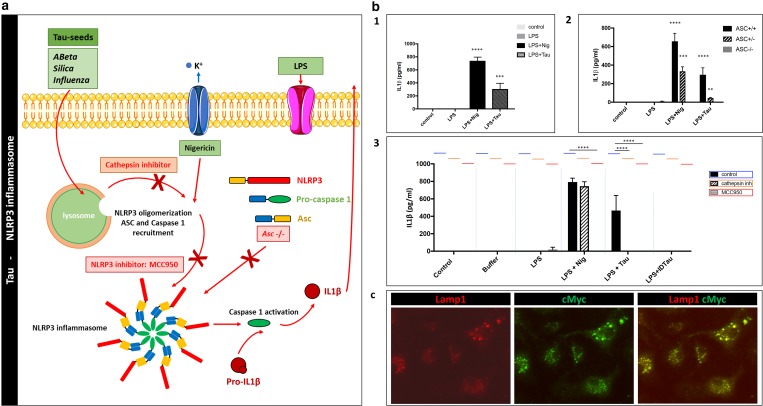
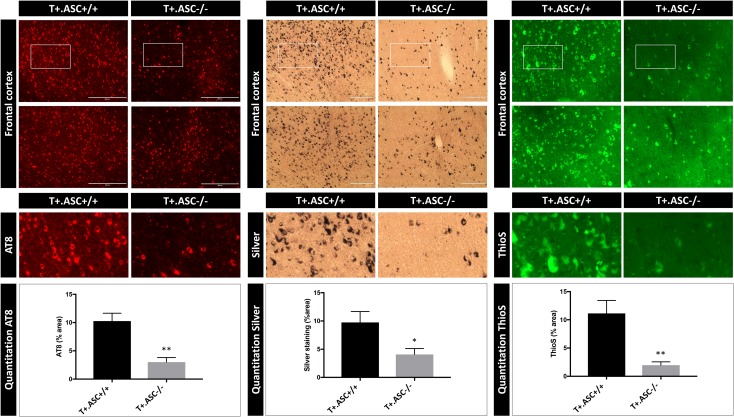
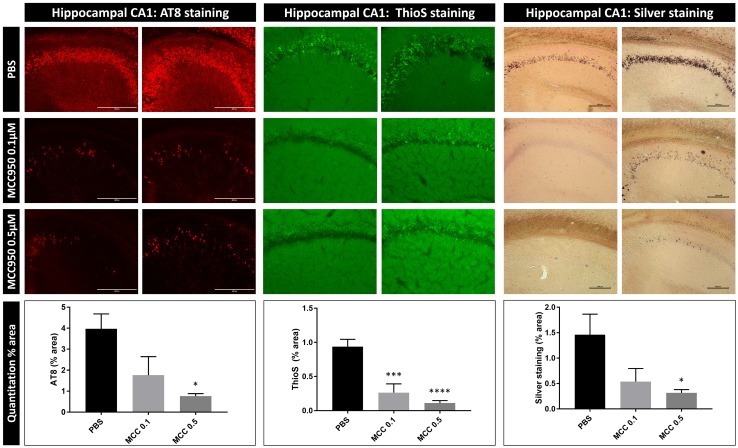
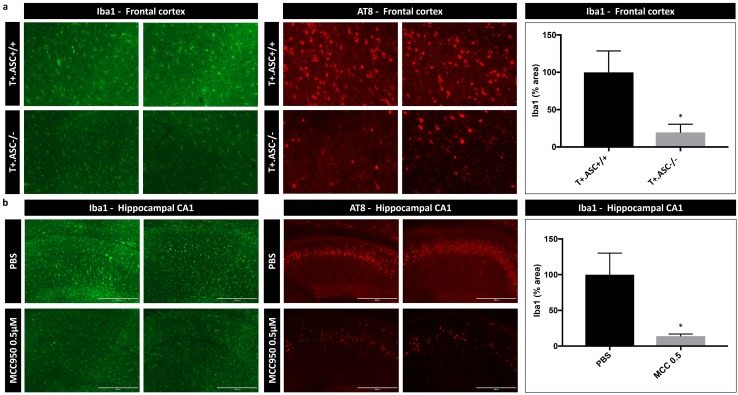
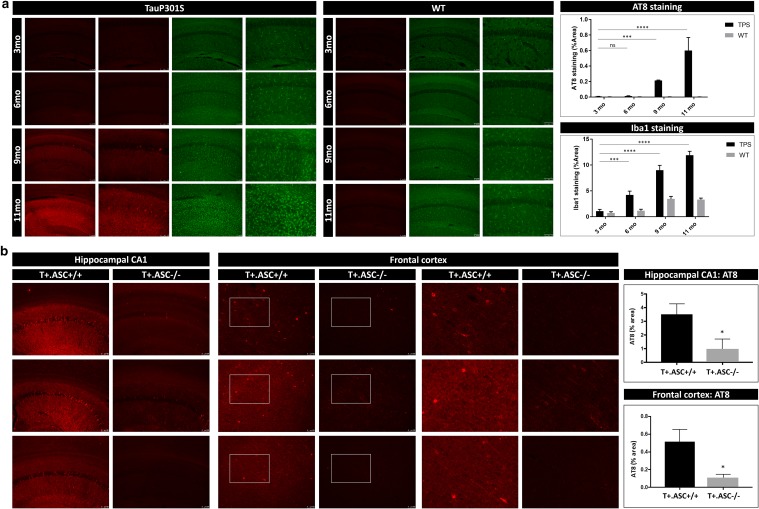
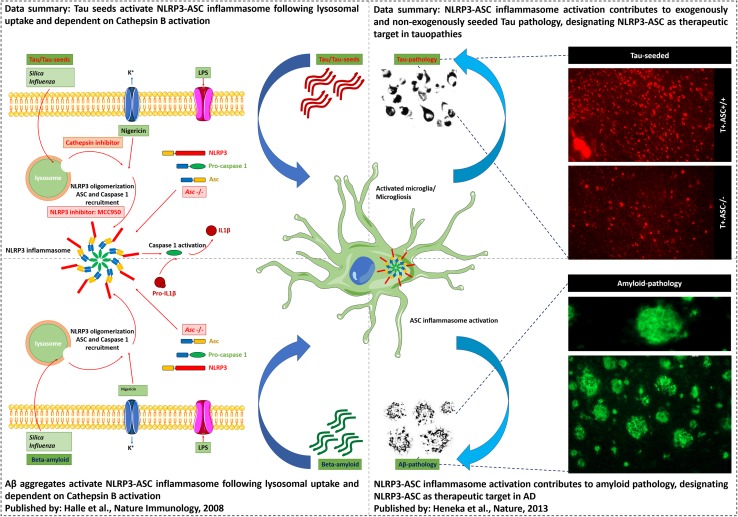
Brains of Alzheimer's disease patients are characterized by the presence of amyloid plaques and neurofibrillary tangles, both invariably associated with neuroinflammation. A crucial role for NLRP3-ASC inflammasome [NACHT, LRR and PYD domains-containing protein 3 (NLRP3)-Apoptosis-associated speck-like protein containing a CARD (ASC)] in amyloid-beta (Aβ)-induced microgliosis and Aβ pathology has been unequivocally identified. Aβ aggregates activate NLRP3-ASC inflammasome (Halle et al. in Nat Immunol 9:857-865, 2008) and conversely NLRP3-ASC inflammasome activation exacerbates amyloid pathology in vivo (Heneka et al. in Nature 493:674-678, 2013), including by prion-like ASC-speck cross-seeding (Venegas et al. in Nature 552:355-361, 2017). However, the link between inflammasome activation, as crucial sensor of innate immunity, and Tau remains unexplored. Here, we analyzed whether Tau aggregates acting as prion-like Tau seeds can activate NLRP3-ASC inflammasome. We demonstrate that Tau seeds activate NLRP3-ASC-dependent inflammasome in primary microglia, following microglial uptake and lysosomal sorting of Tau seeds. Next, we analyzed the role of inflammasome activation in prion-like or templated seeding of Tau pathology and found significant inhibition of exogenously seeded Tau pathology by ASC deficiency in Tau transgenic mice. We furthermore demonstrate that chronic intracerebral administration of the NLRP3 inhibitor, MCC950, inhibits exogenously seeded Tau pathology. Finally, ASC deficiency also decreased non-exogenously seeded Tau pathology in Tau transgenic mice. Overall our findings demonstrate that Tau-seeding competent, aggregated Tau activates the ASC inflammasome through the NLRP3-ASC axis, and we demonstrate an exacerbating role of the NLRP3-ASC axis on exogenously and non-exogenously seeded Tau pathology in Tau mice in vivo. The NLRP3-ASC inflammasome, which is an important sensor of innate immunity and intensively explored for its role in health and disease, hence presents as an interesting therapeutic approach to target three crucial pathogenetic processes in AD, including prion-like seeding of Tau pathology, Aβ pathology and neuroinflammation.
Overview
The claims and statistics of this paper haven’t been checked yet.
Free: it reads the open-access text and checks the first 5 claims that cite a source we can check. Create a free account to check every claim.
Integrity signals
Registry
Cites
Statistics
Figures
Verification
Claims the paper makes
The claims and statistics of this paper haven’t been checked yet.
Free: it reads the open-access text and checks the first 5 claims that cite a source we can check. Create a free account to check every claim.
Claims other papers make about this one
Each is checked against this paper’s own text: does it say what the citing paper says it does?
The source backs part of the claim, not all of it — or backs it for a different population, condition or comparison.
In the citing paper
“Rat research has identified the NLRP3-ASC inflammasome as a major mechanism through which microglia may drive pathological features of AD [92,93,94].”
From The Role of Cortisol in Chronic Stress, Neurodegenerative Diseases, and Psychological Disorders (2023) · cites this paper as [93]
Experimental — accuracy not yet measuredThe source backs part of the claim, not all of it — or backs it for a different population, condition or comparison.
In the citing paper
“Although how tau activates microglia to induce inflammation is poorly understood, recent transcriptomic studies demonstrate a role for NF-κB activation and NLRP3-ASC in this process [424, 425].”
From Molecular and cellular mechanisms underlying the pathogenesis of Alzheimer’s disease (2020) · cites this paper as [425]
Experimental — accuracy not yet measuredThe source backs part of the claim, not all of it — or backs it for a different population, condition or comparison.
In the citing paper
“In the same study, exogenously seeded tau induced tau pathology in Tau P301S transgenic mice, but not in Asc-deficient or NLRP3 inhibitor (MCC950)-treated Tau transgenic mice, demonstrating the ability of the NLRP3 inflammasome to aggravate tau pathology [82].”
From Microglial function, INPP5D/SHIP1 signaling, and NLRP3 inflammasome activation: implications for Alzheimer’s disease (2023) · cites this paper as [82]
Experimental — accuracy not yet measuredThe cited source says what the claim attributes to it.
In the citing paper
“The disruption of the NLRP3-ASC inflammasome in mice resulted in significantly decreased forming of tau aggregates [93].”
From The Role of Cortisol in Chronic Stress, Neurodegenerative Diseases, and Psychological Disorders (2023) · cites this paper as [93]
Experimental — accuracy not yet measured
13 more claims about this paper
Create a free account to see every claim other papers make about this one.
Self-check
Percentages, sums and reported differences re-computed from the paper’s own numbers.
The self-check needs the paper’s full text.
Citations
Cites
Neuropathological stageing of Alzheimer-related changes.
Braak, H., & Braak, E. (1991) · Acta Neuropathologica · doi:10.1007/bf00308809 · Cited by 16,123
The Amyloid Hypothesis of Alzheimer’s Disease: Progress and Problems on the Road to Therapeutics
Hardy, J., & Selkoe, D. J. (2002) · Science · doi:10.1126/science.1072994 · Cited by 13,864
Amyloid oligomers exacerbate tau pathology in a mouse model of tauopathy
Selenica, M.-L. B., Brownlow, M., Jimenez, J. P., Lee, D. C., Pena, G., Dickey, C. A., Gordon, M. N., & Morgan, D. (2013) · Neurodegenerative Diseases · doi:10.1159/000337230 · Cited by 10,359
Antiinflammatory Therapy with Canakinumab for Atherosclerotic Disease
Ridker, P. M., Everett, B. M., Thuren, T., MacFadyen, J. G., Chang, W. H., Ballantyne, C., Fonseca, F., Nicolau, J., Koenig, W., Anker, S. D., et al. (2017) · New England Journal of Medicine · doi:10.1056/nejmoa1707914 · Cited by 9,482
Neuroinflammation in Alzheimer's disease
Heneka, M. T., Carson, M. J., Khoury, J. E., Landreth, G. E., Brosseron, F., Feinstein, D. L., Jacobs, A. H., Wyss-Coray, T., Vitorica, J., Ransohoff, R. M., et al. (2015) · The Lancet Neurology · doi:10.1016/s1474-4422(15)70016-5 · Cited by 6,226
Martinon, F., Burns, K., & Tschopp, J. (2002) · Molecular Cell · doi:10.1016/s1097-2765(02)00599-3 · Cited by 6,066
Gout-associated uric acid crystals activate the NALP3 inflammasome
Martinon, F., Pétrilli, V., Mayor, A., Tardivel, A., & Tschopp, J. (2006) · Nature · doi:10.1038/nature04516 · Cited by 5,326
Hypothetical model of dynamic biomarkers of the Alzheimer's pathological cascade
Jack, C. R., Knopman, D. S., Jagust, W. J., Shaw, L. M., Aisen, P. S., Weiner, M. W., Petersen, R. C., & Trojanowski, J. Q. (2010) · The Lancet Neurology · doi:10.1016/s1474-4422(09)70299-6 · Cited by 4,806
Jack, C. R., Knopman, D. S., Jagust, W. J., Petersen, R. C., Weiner, M. W., Aisen, P. S., Shaw, L. M., Vemuri, P., Wiste, H. J., Weigand, S. D., et al. (2013) · The Lancet Neurology · doi:10.1016/s1474-4422(12)70291-0 · Cited by 4,396
Common structure of soluble amyloid oligomers implies common mechanism of pathogenesis
Kayed, R., Head, E., Thompson, J. L., McIntire, T. M., Milton, S. C., Cotman, C. W., & Glabe, C. G. (2003) · Science · doi:10.1126/science.1079469 · Cited by 4,064
Cited by
Items 401–481 of 481
The Gut-Brain Axis in Neurodegeneration: Mechanistic Links Between Dysbiosis and Neuropathology.
Azimzadeh, M., Ababzadeh, S., Kahaki, A. G., Babaei, S. M. H., Seyedebrahimi, R., & Farsani, M. E. (2026) · PubMed Central · doi:10.22034/ijp.2026.2081887.3613 · Cited by 1
Raja, H. A. A., & Nashwan, A. J. (2024) · World Journal of Clinical Cases · doi:10.12998/wjcc.v12.i27.6004 · Cited by 1
Emerging Trends and Hot Spots in Tauopathy Research (2003–2025): A Bibliometric Analysis
Zhang, S., Ren, H.-J., Liu, H., Xu, S., & Peng, Y. (2026) · Brain and Behavior · doi:10.1002/brb3.71645
Étude moléculaire de l'inflammation chronique dans la maladie de Parkinson
Compagnion, A. (2019) · theses.fr (ABES) · doi:10.70675/04ca138dz3131z4e24z884czbba2f7954a99
How Senescent Glia Drive And Underlie Alzheimer’s Disease: A Predictive ModelPreprint
Lau, V. Z., Ramer, L. M., & Tremblay, M. (2021) · Preprints.org · doi:10.20944/preprints202109.0437.v1
Xu, L., Zhang, Y., Jiang, L., Xing, J. F., Hu, J., Lan, T., & Ta, G. (2026) · Frontiers in Cellular Neuroscience · doi:10.3389/fncel.2026.1902577
Drug Discovery for Alzheimer’s Disease: Current Status
Wolfe, M. S. (2026) · Topics in medicinal chemistry · doi:10.1007/7355_2026_186
Étude de la composante neuroinflammatoire dans les DFT/SLA
Smeyers, J. (2020) · theses.fr (ABES) · doi:10.70675/219cfa6fz5b3az4198z9deczdfaad3cd784c
Visentini, A., Reichert, K. P., Schetinger, M. R. C., Bottari, N. B., Miron, V. V., Castro, M. F. V., da Silveira, M. V., Assmann, C. E., Schirmann, A. A., & Morsch, V. M. (2026) · Metabolic Brain Disease · doi:10.1007/s11011-026-01859-z
Silva, D. F., Candeias, E., Esteves, A. R., Magalhães, J. D., Ferreira, I. L., Nunes‐Costa, D., Rego, A. C., Empadinhas, N., & Cardoso, S. M. (2020) · Figshare · doi:10.6084/m9.figshare.13199281
Shao, J., & Lei, Z. (2026) · Frontiers in Aging Neuroscience · doi:10.3389/fnagi.2026.1983962
Wang, J., Chong, M., Xie, Y., Wang, S., Hu, Z., Jie, H., Mu, J., 段飞鹏, & Huang, L. (2026) · Naunyn-Schmiedeberg s Archives of Pharmacology · doi:10.1007/s00210-026-05936-z
Wang, H., Fan, X., Ping, J., Shao, Q., Cai, W., Wang, H., Ji, Q., Su, M., & Qian, W. (2026) · Translational Neurodegeneration · doi:10.1186/s40035-026-00590-0
Shi, C., Liu, Y., & Zhu, Y. (2026) · Molecular Neurobiology · doi:10.1007/s12035-026-06081-7
Finneran, D. J., Jackman, B. M., Desjarlais, T., Henry, A., Soliman, A. S., Muskus, P. C., Shankar, R., Chen, B., Nash, K. R., Morgan, D., et al. (2025) · PLoS ONE · doi:10.1371/journal.pone.0335409
Zheng, R., Yan, Y., Dai, S., Ruan, Y., Chen, Y., Hu, C., Lin, Z., Xue, N., Song, Z., Liu, Y., et al. (2024) · Figshare · doi:10.6084/m9.figshare.26566448
豆, 瑞. (2024) · Advances in Clinical Medicine · doi:10.12677/acm.2024.1482177
Alves, M. M., Vigerelli, H., Kitahara, M. V., Caires, G. A., Kerkis, I., & Sciani, J. M. (2026) · Drugs and Drug Candidates · doi:10.3390/ddc5040054
Sideri, E., Tsantzali, I., Kelly, C., Papadimitropoulos, G., Kitsos, D. K., Fanouraki, S., Sterpi, A.-E., Tsivgoulis, G. K., Paraskevas, G. P., & Voumvourakis, K. I. (2023) · Global Journal of Medical Research · doi:10.34257/gjmravol23is3pg57
Luo, Z., Manavis, J., Yu, W., & 孙宝飞 (2026) · Human Brain · doi:10.15302/hb.2026.0009
Seplovich, G., Muthusamy, S., Anderson, A., Waithe, O. Y., Kobeissy, F. H., Wang, K., & Tharakan, B. (2026) · Microcirculation · doi:10.1111/micc.70059
Faculty Opinions recommendation of NLRP3 inflammasome activation drives tau pathology.
Skolnick, J. (2019) · Faculty Opinions – Post-Publication Peer Review of the Biomedical Literature · doi:10.3410/f.736936731.793568907
The role of gut microbiota in the neurobiology and treatment of Alzheimer’s disease
Rashidi, S. K., Dezfouli, M. A., Khalili, H., & Kiani, A. A. (2026) · General Physiology and Biophysics · doi:10.4149/gpb_2025042
Wu, Z., Chen, Y., Fu, X., Li, Y., Lu, Y., & Sun, W. (2026) · Natural Product Communications · doi:10.1177/1934578x261425493
Anti-ASC antibodies alleviate Alzheimer’s disease–type pathology in APP/PS1 mice
He, L., Xiaopeng, Z., Juan, D., & Yan, L. (2026) · Neuroscience · doi:10.1016/j.neuroscience.2026.02.023
Zhang, Y., Miao, Y., Xiong, X., Tan, J., Han, Z., Chen, F., Lei, P., & Zhang, Q. (2023) · Figshare · doi:10.6084/m9.figshare.23512723
Zhang, Y., Miao, Y., Xiong, X., Tan, J., Han, Z., Chen, F., Lei, P., & Zhang, Q. (2023) · Figshare · doi:10.6084/m9.figshare.23512720
Lee, M. Y., Jeon, S. J., Kim, H. J., & Kim, M. (2026) · Journal of Ginseng Research · doi:10.1016/j.jgr.2026.101022
Kezai, A. M. (2020) · theses.fr (ABES) · doi:10.70675/32efd6faz51b1z48eaz9752ze369db19313a
Liu, Y., Kalpana, S., Baride, A., Romanova, S., Callegari, E., Huber, C. C., Wang, X., & Wang, H. (2021) · Figshare · doi:10.6084/m9.figshare.13620103
Liu, Y., Kalpana, S., Baride, A., Romanova, S., Callegari, E., Huber, C. C., Wang, X., & Wang, H. (2021) · Figshare · doi:10.6084/m9.figshare.13620088
Liu, Y., Kalpana, S., Baride, A., Romanova, S., Callegari, E., Huber, C. C., Wang, X., & Wang, H. (2021) · Figshare · doi:10.6084/m9.figshare.13620100
Liu, Y., Kalpana, S., Baride, A., Romanova, S., Callegari, E., Huber, C. C., Wang, X., & Wang, H. (2021) · Figshare · doi:10.6084/m9.figshare.13620094
Liu, Y., Kalpana, S., Baride, A., Romanova, S., Callegari, E., Huber, C. C., Wang, X., & Wang, H. (2021) · Figshare · doi:10.6084/m9.figshare.13620082
Liu, Y., Kalpana, S., Baride, A., Romanova, S., Callegari, E., Huber, C. C., Wang, X., & Wang, H. (2021) · Figshare · doi:10.6084/m9.figshare.13620091
Liu, Y., Kalpana, S., Baride, A., Romanova, S., Callegari, E., Huber, C. C., Wang, X., & Wang, H. (2021) · Figshare · doi:10.6084/m9.figshare.13620085
Liu, Y., Kalpana, S., Baride, A., Romanova, S., Callegari, E., Huber, C. C., Wang, X., & Wang, H. (2021) · Figshare · doi:10.6084/m9.figshare.13620097
Yan, Z. (2023) · Theoretical and Natural Science · doi:10.54254/2753-8818/20/20230795
Fang, X., Xi, O., Yang, R., Tang, S., Wu, J., & Dong, X. (2026) · Frontiers in Microbiology · doi:10.3389/fmicb.2026.1958902
Cheng, J., Zhang, C., He, Y., Lan, X., Zheng, Y., Han, J., Li, J., Zhao, Y., 张柏民, Feng, S., et al. (2026) · Journal of Translational Medicine · doi:10.1186/s12967-026-08676-z
Proinflammatory cytokines promote tau aggregation by inducing cleavage in human Alzheimer’s diseasePreprint
Steen, J. A. J., Beerepoot, P., Cheng, L., Vigers, M. P., Rauch, J. N., Lew, C. H., Wesseling, H., Mair, W., Schlaffner, C. N., Schneeberger, E., et al. (2026) · Research Square · doi:10.21203/rs.3.rs-381506/v1
Rôle des récepteurs adénosinergiques A2A dans la maladie d'Alzheimer
Carvalho, K. (2019) · theses.fr (ABES) · doi:10.70675/d82717c2z3bb4z4a19za654zee23c014afae
Shedding light on the early neuroinflammatory process in Alzheimer’s disease and Down syndrome
Aguilar, L. F. (2020) · eScholarship@McGill (McGill) · doi:10.82308/5196
Biochemical mechanisms of Alzheimer's disease: Narrative Review
Mahdi, I. N. M., Ismail, F. Y. M., & Ahmad, N. R. (2026) · Open Access Research Journal of Multidisciplinary Studies · doi:10.53022/oarjms.2026.11.2.0033
Investigation of Formation of Pathological Tau Species and Their Neurotoxicity.
Pampuščenko, K. (2021) · Lithuanian University of Health Sciences
Risen, S. J., Moreno, J. A., Tjalkens, R., LaRocca, T., & Nordgren, T. (2025) · doi:10.25675/3.02909
The Impact of INPP5D on Microglia Response to Tau Pathology in Alzheimer's Disease
Soni, D. (2025) · IUScholarWorks (Indiana University) · doi:10.7912/ga1a-ga83
Unravelling the contribution of small non-coding RNAs to Huntington’s disease pathogenesis
Guisado Corcoll, A. (2023) · Dipòsit Digital de la Universitat de Barcelona (Universitat de Barcelona)
Moonen, S., Koper, M. J., Schoor, E. V., Schaeverbeke, J. M., Vandenberghe, R. R., Arnim, C. A. F. V., Tousseyn, T., Strooper, B. D., & Thal, D. R. (2024) · UCL Discovery (University College London)
Zhao, J., Bai, Y., Wang, C., Guo, P., Wang, Z., 杜冠华, & Liu, A. (2026) · Journal of Neuroimmune Pharmacology · doi:10.1007/s11481-026-10320-y
Döneray, H. (2025) · Ataturk University - AVESIS
Döneray, H., Özden, A., & Haspolat, Y. K. (2025) · Ataturk University - AVESIS
Özden, A. (2025) · Ataturk University - AVESIS
Liang, X., Miao, Y., Tong, X., Chen, J., Liu, H., He, Z., Liu, A., & Hu, Z. (2024) · Figshare · doi:10.6084/m9.figshare.26339913
Liang, X., Miao, Y., Tong, X., Chen, J., Liu, H., He, Z., Liu, A., & Hu, Z. (2024) · Figshare · doi:10.6084/m9.figshare.26340135
Liang, X., Miao, Y., Tong, X., Chen, J., Liu, H., He, Z., Liu, A., & Hu, Z. (2024) · Figshare · doi:10.6084/m9.figshare.26751559
Liang, X., Miao, Y., Tong, X., Chen, J., Liu, H., He, Z., Liu, A., & Hu, Z. (2024) · Figshare · doi:10.6084/m9.figshare.26751550
Liang, X., Miao, Y., Tong, X., Chen, J., Liu, H., He, Z., Liu, A., & Hu, Z. (2024) · Figshare · doi:10.6084/m9.figshare.26751562
Liang, X., Miao, Y., Tong, X., Chen, J., Liu, H., He, Z., Liu, A., & Hu, Z. (2024) · Figshare · doi:10.6084/m9.figshare.26751553
Liang, X., Miao, Y., Tong, X., Chen, J., Liu, H., He, Z., Liu, A., & Hu, Z. (2024) · Figshare · doi:10.6084/m9.figshare.26751547
Liang, X., Miao, Y., Tong, X., Chen, J., Liu, H., He, Z., Liu, A., & Hu, Z. (2024) · Figshare · doi:10.6084/m9.figshare.26751565
Liang, X., Miao, Y., Tong, X., Chen, J., Liu, H., He, Z., Liu, A., & Hu, Z. (2024) · Figshare · doi:10.6084/m9.figshare.26751571
Liang, X., Miao, Y., Tong, X., Chen, J., Liu, H., He, Z., Liu, A., & Hu, Z. (2024) · Figshare · doi:10.6084/m9.figshare.26751556
Liang, X., Miao, Y., Tong, X., Chen, J., Liu, H., He, Z., Liu, A., & Hu, Z. (2024) · Figshare · doi:10.6084/m9.figshare.26751574
The Characterization of Inflammatory Extracellular Vesicles
Balva, B. (2020) · Loyola eCommons (Loyola University of Chicago)
Zhao, Y., Tan, S.-W., Huang, Z.-Z., Shan, F.-B., Li, P., Ning, Y.-L., Ye, S.-Y., Zhao, Z.-A., Du, H., Xiong, R.-P., et al. (2021) · doi:10.3389/fnagi.2021.721474.s001
Supporting information 1 of Gasdermin D-mediated pyroptosis: mechanisms, diseases, and inhibitors
Dai, Z., Liu, W.-C., Chen, X.-Y., Wang, X., Li, J.-L., & Zhang, X. (2023) · doi:10.3389/fimmu.2023.1178662.s001
Interactions of the NLRP3 Inflammasome Complex
Makoni, N. J. (2020) · IRL - University of Missouri, St. Louis (University of Missouri–St. Louis)
The impact of sleep-wake interventions on neuropathology and cognition in a mouse model of dementia
Oliveira, P. A. (n.d.) · University of Surrey Open Research repository · doi:10.15126/thesis.900077
Abubakar, M., Gupta, J., Daksh, R., Chavan, P. R., Alom, S., Mondal, A., Azizuddin, S., Pal, B., Murti, K., Kumar, D., et al. (2026) · Current Topics in Medicinal Chemistry · doi:10.2174/0115680266405995260414053514
Yang, S., Zhao, T., Zhu, Q., Wu, X., Yao, Y., Huang, H., & Zhou, J. (2026) · Molecular Neurobiology · doi:10.1007/s12035-026-06342-5
Wang, D., Wang, M., Sun, S., Zhang, C., Song, Y., Li, J., Song, B., Lv, H., Wang, S., & Jiang, W. (2024) · Figshare · doi:10.6084/m9.figshare.27132653
Resveratrol study on purinergic signaling in mice exposed to aluminum
Visentini, A. (2023) · LA Referencia (Red Federada de Repositorios Institucionales de Publicaciones Científicas)
Metadata
- Authors
- Stancu, I.-C., Cremers, N., Vanrusselt, H., Couturier, J., Vanoosthuyse, A., Kessels, S., Lodder, C., Brône, B., Huaux, F., Octave, J.-N., Terwel, D., & Dewachter, I.
- Affiliations
- Hasselt University (BE)
- UCLouvain (BE)
- Corresponding author
- Dewachter, Ilse
- ORCID
- Venue
- Acta Neuropathologica
- Published
- 2019-02-05
- Volume
- 137
- Issue
- 4
- Pages
- 599-617
- ISSN
- 0001-6322 (ISSN-L)
- 1432-0533
- PMC
- PMC6426830
- OpenAlex
- W2912579052
- Semantic Scholar
- c556a7631e93a55c1b4fa0042a38e4c9961fef9e
- Cited by
- 447
- References
- 103
- Citations by year
- 2026: 42 · 2025: 65 · 2024: 76 · 2023: 77 · 2022: 69 · 2021: 55 · 2020: 45 · 2019: 17
- FWCI
- 31.58
- Type
- journal article
- Language
- en
- Open access
- hybrid
- doi.org
- Licence
- cc-by
- creativecommons.org/licenses/by/4.0 (tdm)
- Locations
- Acta Neuropathologica (publishedVersion, cc-by)
- Europe PMC (PubMed Central) (publishedVersion, cc-by)
- PubMed Central (publishedVersion, cc-by)
- PubMed (publishedVersion)
- Digital Access to Libraries (submittedVersion, other-oa)
- Document Server@UHasselt (UHasselt) (submittedVersion, cc-by)
- Funders
- Fondation pour la Recherche Alzheimer (FRA-SAO Belgium)
- Fonds De La Recherche Scientifique - FNRS
- Agentschap Innoveren en Ondernemen (VLAIO)
- Fonds Wetenschappelijk Onderzoek (G0C6819N)
- Topics
- Life Sciences › Neuroscience › Cellular and Molecular Neuroscience › Alzheimer's disease research and treatments
- Life Sciences › Biochemistry, Genetics and Molecular Biology › Molecular Biology › Inflammasome and immune disorders
- Life Sciences › Neuroscience › Neurology › Neuroinflammation and Neurodegeneration Mechanisms
- Keywords
- tau aggregation, prion-like seeding, neuroinflammation, microglia, lysosomal sorting, MCC950, Alzheimer's disease, innate immunity, tau transgenic mice, neurofibrillary tangles
- MeSH terms
- NLR Family, Pyrin Domain-Containing 3 Protein, Alzheimer Disease, Animals, Brain, Gliosis, Mice, Transgenic, tau Proteins, Microglia, Mice, CARD Signaling Adaptor Proteins, Interleukin-1beta, Inflammasomes, Protein Aggregates
About these checks
Registry, retraction, Cites and statistics results are computed, not judged, with one exception: a printed reference that no index lists is read once by a model before it counts as a citation error. Claims are extracted by a model and kept only when their quote appears verbatim in the text; each cited source is then checked, with a model’s help, for whether it says what the claim relies on. Those verdicts can be wrong — read the claim’s quote and the cited source before relying on one.
Statistics and arithmetic are recomputed, not judged.
Confidence bands are shown only for fields calibrated on our annotated test set. None is calibrated yet, so no band is shown.
What counts as a claim ›How we measure confidence ›How we check this ›
Are you an author, or do you see a problem with this page? Request a review
Data sources
Bibliographic data: Semantic Scholar, OpenAlex, Crossref.
Contains information from the Semantic Scholar Academic Graph Datasets, made available under the ODC Attribution License (ODC-BY 1.0).
Semantic Scholar’s data is described in: Kinney, R., et al. (2023). The Semantic Scholar Open Data Platform. arXiv:2301.10140.
