

Aggregated Tau activates NLRP3–ASC inflammasome exacerbating exogenously seeded and non-exogenously seeded Tau pathology in vivo
Open accessThe DOI matches its Crossref record; 103 of the 103 references it cites were found in a registry or an index.
Abstract
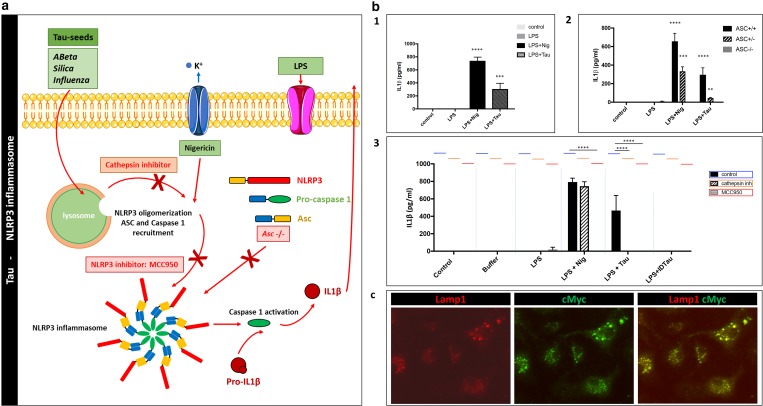
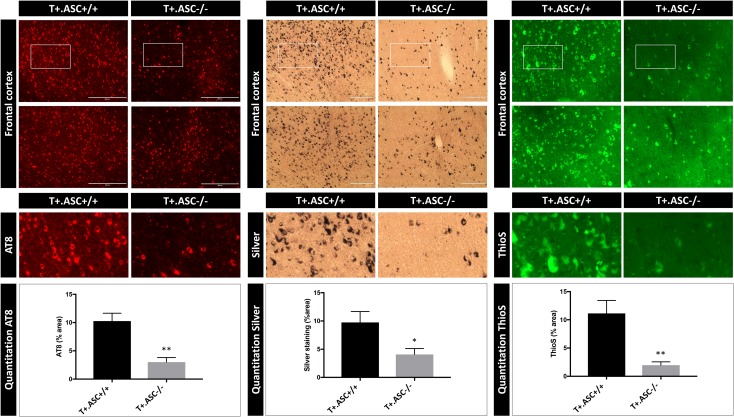
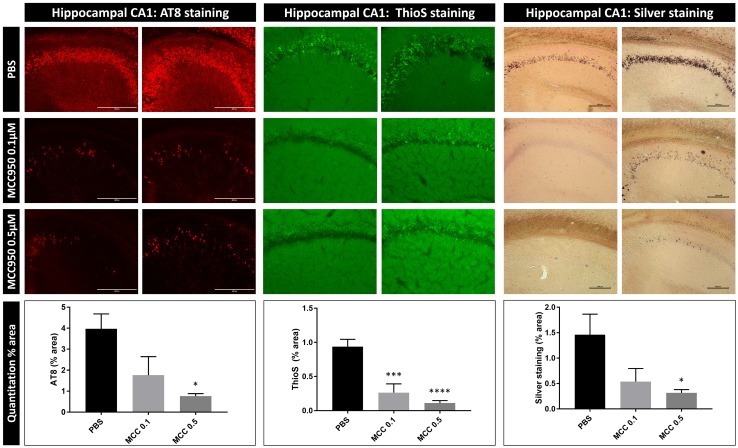
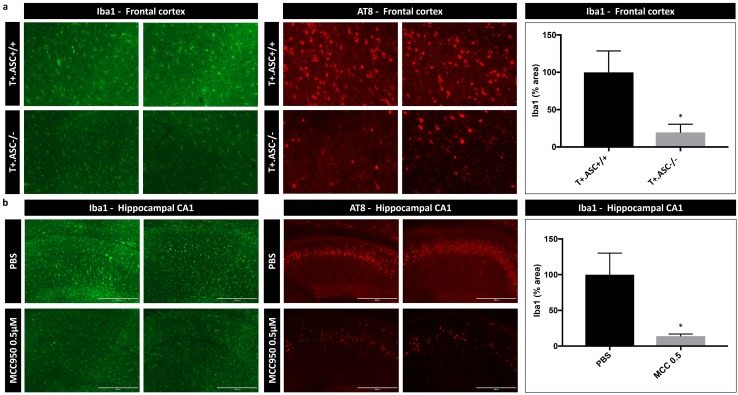
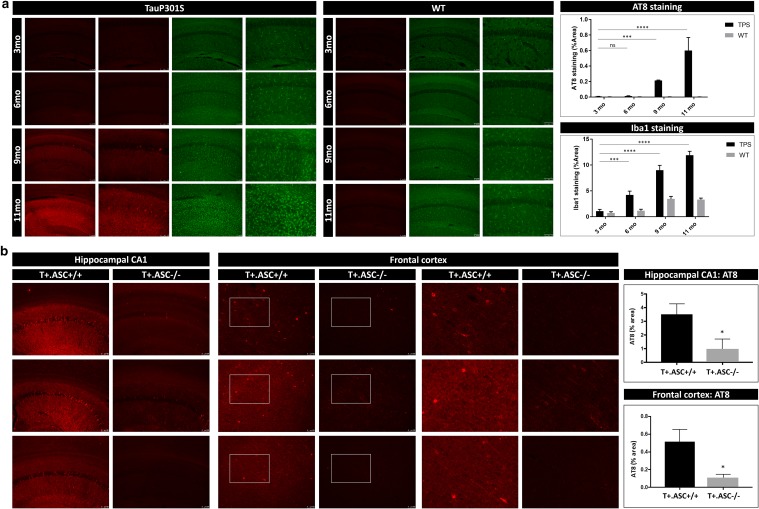
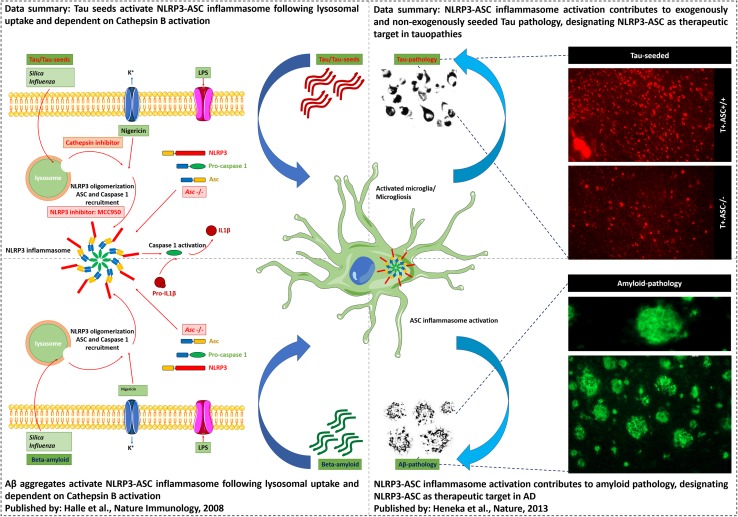
Brains of Alzheimer's disease patients are characterized by the presence of amyloid plaques and neurofibrillary tangles, both invariably associated with neuroinflammation. A crucial role for NLRP3-ASC inflammasome [NACHT, LRR and PYD domains-containing protein 3 (NLRP3)-Apoptosis-associated speck-like protein containing a CARD (ASC)] in amyloid-beta (Aβ)-induced microgliosis and Aβ pathology has been unequivocally identified. Aβ aggregates activate NLRP3-ASC inflammasome (Halle et al. in Nat Immunol 9:857-865, 2008) and conversely NLRP3-ASC inflammasome activation exacerbates amyloid pathology in vivo (Heneka et al. in Nature 493:674-678, 2013), including by prion-like ASC-speck cross-seeding (Venegas et al. in Nature 552:355-361, 2017). However, the link between inflammasome activation, as crucial sensor of innate immunity, and Tau remains unexplored. Here, we analyzed whether Tau aggregates acting as prion-like Tau seeds can activate NLRP3-ASC inflammasome. We demonstrate that Tau seeds activate NLRP3-ASC-dependent inflammasome in primary microglia, following microglial uptake and lysosomal sorting of Tau seeds. Next, we analyzed the role of inflammasome activation in prion-like or templated seeding of Tau pathology and found significant inhibition of exogenously seeded Tau pathology by ASC deficiency in Tau transgenic mice. We furthermore demonstrate that chronic intracerebral administration of the NLRP3 inhibitor, MCC950, inhibits exogenously seeded Tau pathology. Finally, ASC deficiency also decreased non-exogenously seeded Tau pathology in Tau transgenic mice. Overall our findings demonstrate that Tau-seeding competent, aggregated Tau activates the ASC inflammasome through the NLRP3-ASC axis, and we demonstrate an exacerbating role of the NLRP3-ASC axis on exogenously and non-exogenously seeded Tau pathology in Tau mice in vivo. The NLRP3-ASC inflammasome, which is an important sensor of innate immunity and intensively explored for its role in health and disease, hence presents as an interesting therapeutic approach to target three crucial pathogenetic processes in AD, including prion-like seeding of Tau pathology, Aβ pathology and neuroinflammation.
Overview
The claims and statistics of this paper haven’t been checked yet.
Free: it reads the open-access text and checks the first 5 claims that cite a source we can check. Create a free account to check every claim.
Integrity signals
Registry
Cites
Statistics
Figures
Verification
Claims the paper makes
The claims and statistics of this paper haven’t been checked yet.
Free: it reads the open-access text and checks the first 5 claims that cite a source we can check. Create a free account to check every claim.
Claims other papers make about this one
Each is checked against this paper’s own text: does it say what the citing paper says it does?
The source backs part of the claim, not all of it — or backs it for a different population, condition or comparison.
In the citing paper
“Rat research has identified the NLRP3-ASC inflammasome as a major mechanism through which microglia may drive pathological features of AD [92,93,94].”
From The Role of Cortisol in Chronic Stress, Neurodegenerative Diseases, and Psychological Disorders (2023) · cites this paper as [93]
Experimental — accuracy not yet measuredThe source backs part of the claim, not all of it — or backs it for a different population, condition or comparison.
In the citing paper
“Although how tau activates microglia to induce inflammation is poorly understood, recent transcriptomic studies demonstrate a role for NF-κB activation and NLRP3-ASC in this process [424, 425].”
From Molecular and cellular mechanisms underlying the pathogenesis of Alzheimer’s disease (2020) · cites this paper as [425]
Experimental — accuracy not yet measuredThe source backs part of the claim, not all of it — or backs it for a different population, condition or comparison.
In the citing paper
“In the same study, exogenously seeded tau induced tau pathology in Tau P301S transgenic mice, but not in Asc-deficient or NLRP3 inhibitor (MCC950)-treated Tau transgenic mice, demonstrating the ability of the NLRP3 inflammasome to aggravate tau pathology [82].”
From Microglial function, INPP5D/SHIP1 signaling, and NLRP3 inflammasome activation: implications for Alzheimer’s disease (2023) · cites this paper as [82]
Experimental — accuracy not yet measuredThe cited source says what the claim attributes to it.
In the citing paper
“The disruption of the NLRP3-ASC inflammasome in mice resulted in significantly decreased forming of tau aggregates [93].”
From The Role of Cortisol in Chronic Stress, Neurodegenerative Diseases, and Psychological Disorders (2023) · cites this paper as [93]
Experimental — accuracy not yet measured
13 more claims about this paper
Create a free account to see every claim other papers make about this one.
Self-check
Percentages, sums and reported differences re-computed from the paper’s own numbers.
The self-check needs the paper’s full text.
Citations
Cites
Neuropathological stageing of Alzheimer-related changes.
Braak, H., & Braak, E. (1991) · Acta Neuropathologica · doi:10.1007/bf00308809 · Cited by 16,123
The Amyloid Hypothesis of Alzheimer’s Disease: Progress and Problems on the Road to Therapeutics
Hardy, J., & Selkoe, D. J. (2002) · Science · doi:10.1126/science.1072994 · Cited by 13,864
Amyloid oligomers exacerbate tau pathology in a mouse model of tauopathy
Selenica, M.-L. B., Brownlow, M., Jimenez, J. P., Lee, D. C., Pena, G., Dickey, C. A., Gordon, M. N., & Morgan, D. (2013) · Neurodegenerative Diseases · doi:10.1159/000337230 · Cited by 10,359
Antiinflammatory Therapy with Canakinumab for Atherosclerotic Disease
Ridker, P. M., Everett, B. M., Thuren, T., MacFadyen, J. G., Chang, W. H., Ballantyne, C., Fonseca, F., Nicolau, J., Koenig, W., Anker, S. D., et al. (2017) · New England Journal of Medicine · doi:10.1056/nejmoa1707914 · Cited by 9,482
Neuroinflammation in Alzheimer's disease
Heneka, M. T., Carson, M. J., Khoury, J. E., Landreth, G. E., Brosseron, F., Feinstein, D. L., Jacobs, A. H., Wyss-Coray, T., Vitorica, J., Ransohoff, R. M., et al. (2015) · The Lancet Neurology · doi:10.1016/s1474-4422(15)70016-5 · Cited by 6,226
Martinon, F., Burns, K., & Tschopp, J. (2002) · Molecular Cell · doi:10.1016/s1097-2765(02)00599-3 · Cited by 6,066
Gout-associated uric acid crystals activate the NALP3 inflammasome
Martinon, F., Pétrilli, V., Mayor, A., Tardivel, A., & Tschopp, J. (2006) · Nature · doi:10.1038/nature04516 · Cited by 5,326
Hypothetical model of dynamic biomarkers of the Alzheimer's pathological cascade
Jack, C. R., Knopman, D. S., Jagust, W. J., Shaw, L. M., Aisen, P. S., Weiner, M. W., Petersen, R. C., & Trojanowski, J. Q. (2010) · The Lancet Neurology · doi:10.1016/s1474-4422(09)70299-6 · Cited by 4,806
Jack, C. R., Knopman, D. S., Jagust, W. J., Petersen, R. C., Weiner, M. W., Aisen, P. S., Shaw, L. M., Vemuri, P., Wiste, H. J., Weigand, S. D., et al. (2013) · The Lancet Neurology · doi:10.1016/s1474-4422(12)70291-0 · Cited by 4,396
Common structure of soluble amyloid oligomers implies common mechanism of pathogenesis
Kayed, R., Head, E., Thompson, J. L., McIntire, T. M., Milton, S. C., Cotman, C. W., & Glabe, C. G. (2003) · Science · doi:10.1126/science.1079469 · Cited by 4,064
Cited by
Items 101–200 of 481
Zheng, Y., Zhang, X., Wang, Z., Zhang, R., Wei, H., Xu, Y., Jiang, X., & Yang, L. (2024) · Archiv der Pharmazie · doi:10.1002/ardp.202400459 · Cited by 70
Lei, W., Cheng, Y., Liu, X., Gao, J., Zhu, Z., Ding, W., Xu, X., Li, Y., Ling, Z., Jiang, R., et al. (2025) · Frontiers in Immunology · doi:10.3389/fimmu.2025.1582119 · Cited by 68
The evolving landscape of Alzheimer’s disease therapy: From Aβ to tau
Courade, J., Zetterberg, H., Höglinger, G. U., & Dewachter, I. (2025) · Cell · doi:10.1016/j.cell.2025.11.033 · Cited by 68
Self-citationHulse, J. P., & Bhaskar, K. (2022) · Frontiers in Molecular Neuroscience · doi:10.3389/fnmol.2022.805169 · Cited by 66
Microglia Pyroptosis: A Candidate Target for Neurological Diseases Treatment
Wu, X., Wan, T., Gao, X., Fu, M., Duan, Y., Shen, X., & Guo, W. (2022) · Frontiers in Neuroscience · doi:10.3389/fnins.2022.922331 · Cited by 66
Chen, Z., Wang, X., Du, S., Liu, Q., Xu, Z., Guo, Y., & Lin, X. (2024) · Chinese Medicine · doi:10.1186/s13020-024-00900-6 · Cited by 66
Role of pyroptosis in the pathogenesis and treatment of diseases
Jin, X., Ma, Y., Liu, D., & Huang, Y. (2023) · MedComm · doi:10.1002/mco2.249 · Cited by 66
Tang, L., Liu, S., Li, S., Chen, Y., Xie, B., & Zhou, J. F. (2023) · International Journal of Molecular Sciences · doi:10.3390/ijms241210127 · Cited by 66
(ADNI), A. D. N. I., Kleineidam, L., Chouraki, V., Próchnicki, T., van der Lee, S. J., Madrid-Márquez, L., Wagner-Thelen, H., Karaca, I., Weinhold, L., Wolfsgruber, S., et al. (2020) · Acta Neuropathologica · doi:10.1007/s00401-020-02138-6 · Cited by 62
Microglial TLR4/NLRP3 Inflammasome Signaling in Alzheimer’s Disease
Li, Y., Chen, X., Zhou, M., Feng, S., Peng, X., & Wang, Y. (2023) · Journal of Alzheimer s Disease · doi:10.3233/jad-230273 · Cited by 62
HSF1 Protects Sepsis-Induced Acute Lung Injury by Inhibiting NLRP3 Inflammasome Activation
Shi, X., Li, T., Liu, Y., Yin, L., Xiao, L., Fu, L., Zhu, Y., Chen, H., Wang, K., Xiao, X., et al. (2022) · Frontiers in Immunology · doi:10.3389/fimmu.2022.781003 · Cited by 62
Links between COVID-19 and Alzheimer’s Disease—What Do We Already Know?
Rudnicka-Drożak, E., Drożak, P., Mizerski, G., Zaborowski, T., Ślusarska, B. J., Nowicki, G., & Drożak, M. (2023) · International Journal of Environmental Research and Public Health · doi:10.3390/ijerph20032146 · Cited by 61
The involvement of NLRP3 inflammasome in the treatment of neurodegenerative diseases
Feng, Y.-S., Tan, Z., Wu, L., Dong, F., & Zhang, F. (2021) · Biomedicine & Pharmacotherapy · doi:10.1016/j.biopha.2021.111428 · Cited by 61
Sun, Y. M., Zhou, Y.-Q., Liu, Y.-K., Zhang, H., Hou, G., Meng, Q., & Hou, Y. (2020) · Journal of Enzyme Inhibition and Medicinal Chemistry · doi:10.1080/14756366.2020.1804899 · Cited by 61
Microglia: Friend and foe in tauopathy
Odfalk, K. F., Bieniek, K. F., & Hopp, S. C. (2022) · Progress in Neurobiology · doi:10.1016/j.pneurobio.2022.102306 · Cited by 60
Interaction between autophagy and the NLRP3 inflammasome in Alzheimer’s and Parkinson’s disease
Lu, R., Zhang, L., & Yang, X. (2022) · Frontiers in Aging Neuroscience · doi:10.3389/fnagi.2022.1018848 · Cited by 61
Inflammasomes and Cell Death: Common Pathways in Microparticle Diseases
Rashidi, M., Wicks, I. P., & Vince, J. E. (2020) · Trends in Molecular Medicine · doi:10.1016/j.molmed.2020.06.005 · Cited by 60
Rossano, S. M., Johnson, A. S., Smith, A. P., Ziaggi, G., Roetman, A. E., Guzman, D., Okafor, A., Klein, J., Tomljanovic, Z., Stern, Y., et al. (2024) · Alzheimer s & Dementia · doi:10.1002/alz.13699 · Cited by 59
Pharmacological modulation of autophagy for Alzheimer's disease therapy: Opportunities and obstacles
Deng, Z., Dong, Y., Zhou, X., Lu, J.-H., & Yue, Z. (2022) · Acta Pharmaceutica Sinica B · doi:10.1016/j.apsb.2021.12.009 · Cited by 58
Lee, J., Kim, H., Kim, J., Yook, T., Kim, K., Lee, J., & Yang, G. (2021) · International Journal of Molecular Sciences · doi:10.3390/ijms22031324 · Cited by 58
Panda, C., Voelz, C., Habib, P., Mevissen, C., Pufe, T., Beyer, C., Gupta, S. K., & Slowik, A. (2021) · Cells · doi:10.3390/cells10071652 · Cited by 58
The spectrum of lysosomal stress and damage responses: from mechanosensing to inflammation
Scott, O., Saran, E., & Freeman, S. A. (2025) · EMBO Reports · doi:10.1038/s44319-025-00405-9 · Cited by 58
Yang, Y., Li, S., Huang, H. M., Lv, J., Chen, S., Dias, A. C. P., Li, Y., Liu, X., & Wang, Q. (2020) · Frontiers in Pharmacology · doi:10.3389/fphar.2020.00834 · Cited by 58
Vontell, R. T., de Rivero Vaccari, J. P., Sun, X., Gultekin, S. H., Bramlett, H. M., Dietrich, W. D., & Keane, R. W. (2023) · Brain Pathology · doi:10.1111/bpa.13142 · Cited by 57
“Previous studies have shown that NLRP3 inflammasome activation is prevalent in AD mouse models and in human postmortem brains [7, 16, 46, 47] and suggest that inhibition of this sensor protein may be a therapeutic target for AD.”
BackgroundJiang, G., Xie, G., Li, X., & Xiong, J. (2025) · Biomolecules · doi:10.3390/biom15060831 · Cited by 57
Li, Y., Zhang, D., Li, L., Han, Y., Dong, X., Liu, Y., Li, X., Li, W., & Li, W. (2021) · Molecular Medicine Reports · doi:10.3892/mmr.2021.12441 · Cited by 57
The NLRP3 inflammasome: a new player in neurological diseases
Eren, E., & Özören, N. (2019) · TURKISH JOURNAL OF BIOLOGY · doi:10.3906/biy-1909-31 · Cited by 56
Li, Y., Xu, P., Shan, J., Sun, W., Ji, X., Chi, T., Liu, P., & Zou, L. (2019) · Biomedicine & Pharmacotherapy · doi:10.1016/j.biopha.2019.109618 · Cited by 55
Cordaro, M., Salinaro, A. T., Siracusa, R., D’Amico, R., Impellizzeri, D., Scuto, M., Ontario, M. L., Cuzzocrea, S., Di Paola, R., Fusco, R., et al. (2021) · Antioxidants · doi:10.3390/antiox10111664 · Cited by 55
Liang, X., Miao, Y., Tong, X., Chen, J., Liu, H., He, Z., Liu, A., & Hu, Z. (2024) · Journal of Nanobiotechnology · doi:10.1186/s12951-024-02708-w · Cited by 55
Tau induces inflammasome activation and microgliosis through acetylating NLRP3
Zhang, L., Gai, Y., Liu, Y., Meng, D., Zeng, Y., Luo, Y., Zhang, H., Wang, Z., Yang, M., Li, Y., et al. (2024) · Clinical and Translational Medicine · doi:10.1002/ctm2.1623 · Cited by 54
Kulas, J. A., Weigel, T. K., & Ferris, H. A. (2020) · Drug Development Research · doi:10.1002/ddr.21643 · Cited by 54
ASC specks exacerbate α‑synuclein pathology via amplifying NLRP3 inflammasome activities
Zheng, R., Yan, Y., Dai, S., Ruan, Y., Chen, Y., Hu, C., Lin, Z., Xue, N., Song, Z., Liu, Y. F., et al. (2023) · Journal of Neuroinflammation · doi:10.1186/s12974-023-02709-w · Cited by 54
Regulatory Mechanisms and Therapeutic Implications of Lysosomal Dysfunction in Alzheimer's Disease
Kim, Y., Ha, T.-Y., Lee, M. S., & Chang, K.-A. (2025) · International Journal of Biological Sciences · doi:10.7150/ijbs.103028 · Cited by 54
Aβ and Tau Regulate Microglia Metabolism via Exosomes in Alzheimer’s Disease
Zhao, Y., Liu, B., Wang, J., Xu, L., Yu, S., Fu, J., Yan, X., & Su, J. (2022) · Biomedicines · doi:10.3390/biomedicines10081800 · Cited by 53
Liu, X., Ye, M., & Ma, L. (2022) · Frontiers in Aging Neuroscience · doi:10.3389/fnagi.2022.1022821 · Cited by 53
Role of NLRP3 inflammasome in central nervous system diseases
Zhang, L., Tang, Y., Huang, P., Luo, S., She, Z., Peng, H., Chen, Y., Luo, J., Duan, W., Xiong, J., et al. (2024) · Cell & Bioscience · doi:10.1186/s13578-024-01256-y · Cited by 53
Inflammasomes in neurodegenerative diseases
Wang, Q., Yang, S., Zhang, X., Zhang, S., Chen, L., Wang, W., Chen, N., & Yan, J. (2024) · Translational Neurodegeneration · doi:10.1186/s40035-024-00459-0 · Cited by 52
The role of glia in protein aggregation
Li, Q., & Haney, M. S. (2020) · Neurobiology of Disease · doi:10.1016/j.nbd.2020.105015 · Cited by 52
Liu, J., Zhang, X., & Wang, H. (2022) · Biomedicine & Pharmacotherapy · doi:10.1016/j.biopha.2022.113680 · Cited by 49
Acylated Ghrelin as a Multi-Targeted Therapy for Alzheimer's and Parkinson's Disease
Reich, N., & Hölscher, C. (2020) · Frontiers in Neuroscience · doi:10.3389/fnins.2020.614828 · Cited by 48
Neuroinflammation in Age-Related Neurodegenerative Diseases: Role of Mitochondrial Oxidative Stress
Abadin, X., de Dios, C., Zubillaga, M., Ivars, E., Puigròs, M., Marí, M., Morales, A., Vizuete, M., Vitórica, J., Trullás, R., et al. (2024) · Antioxidants · doi:10.3390/antiox13121440 · Cited by 47
Zhang, S., Li, J., Xu, Q., Xia, W., Tao, Y., Shi, C., Li, D., Xiang, S., & Liu, C. (2023) · Journal of the American Chemical Society · doi:10.1021/jacs.2c10854 · Cited by 47
Johnson, N. R., Yuan, P., Castillo, E., Lopez, T. P., Yue, W., Bond, A., Rivera, B. M., Sullivan, M. C., Hirouchi, M., Giles, K., et al. (2023) · Nature Communications · doi:10.1038/s41467-022-35753-w · Cited by 46
Research progress on pyroptosis and its effect on the central nervous system
Hao, W., & Feng, C. (2023) · Neurobiology of Disease · doi:10.1016/j.nbd.2023.106333 · Cited by 46
Pan, R., Kong, X.-X., Cheng, Y., Lu, D., Wang, Z., Yuan, C., Cheng, J., Yuan, Z., Zhang, H., & Liao, Y. (2021) · Acta Pharmacologica Sinica · doi:10.1038/s41401-021-00613-8 · Cited by 46
The microglial lysosomal system in Alzheimer’s disease: Guardian against proteinopathy
Van Acker, Z. P., Perdok, A., Bretou, M., & Annaert, W. (2021) · Ageing Research Reviews · doi:10.1016/j.arr.2021.101444 · Cited by 45
Zhao, K., Liu, J., Sun, T., Zeng, L., Cai, Z., Li, Z., & Liu, R. (2024) · Brain Behavior and Immunity · doi:10.1016/j.bbi.2024.02.016 · Cited by 45
Innate Immunity and Cell Death in Alzheimer’s Disease
Lee, S., Cho, H.-J., & Ryu, J.-H. (2021) · ASN Neuro · doi:10.1177/17590914211051908 · Cited by 45
Porphyromonas gingivalis-Induced Neuroinflammation in Alzheimer’s Disease
Olsen, I. (2021) · Frontiers in Neuroscience · doi:10.3389/fnins.2021.691016 · Cited by 45
Wahl, D., Risen, S. J., Osburn, S. C., Emge, T., Sharma, S., Gilberto, V. S., Chatterjee, A., Nagpal, P., Moreno, J. A., & LaRocca, T. J. (2024) · Journal of Neuroinflammation · doi:10.1186/s12974-024-03182-9 · Cited by 44
Immunity impacts cognitive deficits across neurological disorders
Shaw, B. C., Anders, V., Tinkey, R. A., Habean, M. L., Brock, O. D., Frostino, B. J., & Williams, J. L. (2023) · Journal of Neurochemistry · doi:10.1111/jnc.15999 · Cited by 44
Donison, N. S., Palik, J., Volkening, K., & Strong, M. J. (2025) · Molecular Neurodegeneration · doi:10.1186/s13024-025-00842-z · Cited by 44
Kai-Xin-San Inhibits Tau Pathology and Neuronal Apoptosis in Aged SAMP8 Mice
Jiao, Y.-N., Zhang, J., Wen-jun, Q., Tian, S.-Y., Wang, Y.-B., Wang, C., Zhang, Y., Zhang, Q., Li, W., Min, D., et al. (2022) · Molecular Neurobiology · doi:10.1007/s12035-021-02626-0 · Cited by 44
Wen, M., Ding, L., Zhang, L., Zhang, T., Yanagita, T., Wang, Y., & Xue, C. (2019) · Journal of Agricultural and Food Chemistry · doi:10.1021/acs.jafc.9b05947 · Cited by 44
Emerging roles of O-glycosylation in regulating protein aggregation, phase separation, and functions
Li, X., Lv, P., Du, Y., Chen, X., & Liu, C. (2023) · Current Opinion in Chemical Biology · doi:10.1016/j.cbpa.2023.102314 · Cited by 43
Novel Targets for Alzheimer's Disease: A View Beyond Amyloid
Ray, W. J., & Buggia-Prevot, V. (2021) · Annual Review of Medicine · doi:10.1146/annurev-med-052919-120219 · Cited by 43
Li, D., Fan, H., Yang, R., Li, Y., Zhang, F., & Shi, J. (2022) · Frontiers in Pharmacology · doi:10.3389/fphar.2022.846541 · Cited by 43
Glial cells and adaptive immunity in frontotemporal dementia with tau pathology
Hartnell, I. J., Blum, D., Nicoll, J. A. R., Dorothee, G., & Boche, D. (2021) · Brain · doi:10.1093/brain/awaa457 · Cited by 42
Nagakannan, P., Tabeshmehr, P., & Eftekharpour, E. (2020) · Free Radical Biology and Medicine · doi:10.1016/j.freeradbiomed.2020.04.001 · Cited by 42
Calderón‐Garcidueñas, L., Torres‐Jardón, R., Franco-Lira, M., Kulesza, R. J., González-Maciel, A., Reynoso-Robles, R., Brito-Aguilar, R., García-Arreola, B., Revueltas-Ficachi, P., Barrera-Velázquez, J. A., et al. (2020) · Journal of Alzheimer s Disease · doi:10.3233/jad-200891 · Cited by 42
Li, L., Chen, W., Chen, J., Lee, W., Chang, C., Tzeng, H., Huang, C.-C., Chang, Y., & Yang, J. (2021) · Biomedicines · doi:10.3390/biomedicines9091252 · Cited by 42
The Dichotomous Role of Inflammation in the CNS: A Mitochondrial Point of View
Vezzani, B., Carinci, M., Patergnani, S., Pasquin, M., Guarino, A., Aziz, N., Pinton, P., Simonato, M., & Giorgi, C. (2020) · Biomolecules · doi:10.3390/biom10101437 · Cited by 41
The NLRP3 Inflammasome in Neurodegenerative Disorders: Insights from Epileptic Models
Palumbo, L., Carinci, M., Guarino, A., Asth, L., Zucchini, S., Missiroli, S., Rimessi, A., Pinton, P., & Giorgi, C. (2023) · Biomedicines · doi:10.3390/biomedicines11102825 · Cited by 41
The Potential of NLRP3 Inflammasome as a Therapeutic Target in Neurological Diseases
He, W., Hu, Z., Zhong, Y., Wu, C., & Li, J. (2023) · Molecular Neurobiology · doi:10.1007/s12035-023-03229-7 · Cited by 41
McKee, C., Hoffos, M., Vecchiarelli, H. A., & Tremblay, M. (2023) · Frontiers in Pharmacology · doi:10.3389/fphar.2023.1125982 · Cited by 40
Liao, Y., Wang, X., Huang, L., Qian, H., & Liu, W. (2023) · Frontiers in Pharmacology · doi:10.3389/fphar.2023.1122104 · Cited by 40
Maran, J. J., Adesina, M. M., Green, C. R., Kwakowsky, A., & Mugisho, O. O. (2023) · Ageing Research Reviews · doi:10.1016/j.arr.2023.101954 · Cited by 40
Wu, X., Wang, B., Zhou, Y., Yang, Z., Jiang, L., Kou, Z., Li, J., Ma, X., & Song, J. (2022) · Neuroscience Letters · doi:10.1016/j.neulet.2022.137032 · Cited by 40
Critical Molecular and Cellular Contributors to Tau Pathology
Song, L., Wells, E. A., & Robinson, A. S. (2021) · Biomedicines · doi:10.3390/biomedicines9020190 · Cited by 39
Revisiting the critical roles of reactive microglia in traumatic brain injury
Zhao, J., Zhou, Y., Zhou, C.-W., Zhan, K., Yang, M., Wen, M., & Zhu, L. (2025) · International Journal of Surgery · doi:10.1097/js9.0000000000002420 · Cited by 39
Microglia-driven inflammation induces progressive tauopathies and synucleinopathies
Lee, S. H., Bae, E.-J., Park, S. J., & Lee, S. (2025) · Experimental & Molecular Medicine · doi:10.1038/s12276-025-01450-z · Cited by 39
Sirt1-ROS-TRAF6 Signaling-Induced Pyroptosis Contributes to Early Injury in Ischemic Mice
Yan, W., Sun, W., Fan, J., Wang, H., Han, S., Li, J., & Yin, Y. (2020) · Neuroscience Bulletin · doi:10.1007/s12264-020-00489-4 · Cited by 39
Yan, Z., Qi, Z., Yang, X., Ji, N., Wang, Y., Shi, Q. W., Li, M., Zhang, J., & Zhu, Y. (2021) · Journal of Cellular Physiology · doi:10.1002/jcp.30285 · Cited by 39
Salvo, C. D., D’Antongiovanni, V., Benvenuti, L., d’Amati, A., Ippolito, C., Segnani, C., Pierucci, C., Bellini, G., Annese, T., Virgintino, D., et al. (2024) · Food & Function · doi:10.1039/d4fo02075h · Cited by 38
Traumatic brain injury and the pathways to cerebral tau accumulation
Flavin, W. P., Hosseini, H. C., Ruberti, J. W., Kavehpour, H. P., Giza, C. C., & Prins, M. L. (2023) · Frontiers in Neurology · doi:10.3389/fneur.2023.1239653 · Cited by 38
Nampoothiri, M., Gurram, P. C., Manandhar, S., Satarker, S., Mudgal, J., & Arora, D. S. (2022) · CNS & Neurological Disorders - Drug Targets · doi:10.2174/1871527321666220413090541 · Cited by 38
Inflammasome activation in neurodegenerative diseases
Ravichandran, K. A., & Heneka, M. T. (2021) · Essays in Biochemistry · doi:10.1042/ebc20210021 · Cited by 38
Ketone body metabolism and the NLRP3 inflammasome in Alzheimer's disease
Shippy, D. C., Evered, A. H., & Ulland, T. K. (2024) · Immunological Reviews · doi:10.1111/imr.13365 · Cited by 37
Liu, Y., Tan, Y., Zhang, Z., Li, H., Yi, M., Zhang, Z., Hui, S., & Peng, W. (2022) · Ageing Research Reviews · doi:10.1016/j.arr.2022.101831 · Cited by 37
Zhang, Y., Miao, Y., Xiong, X., Tan, J., Han, Z., Chen, F., Lei, P., & Zhang, Q. (2023) · Biology Direct · doi:10.1186/s13062-023-00387-5 · Cited by 37
Zhou, F., Lian, W., Yuan, X., Wang, Z., Xia, C., Yu, Y., Wang, W., Tong, Z., Cheng, Y., Xu, J., et al. (2025) · Alzheimer s Research & Therapy · doi:10.1186/s13195-025-01695-w · Cited by 37
Hamzeh, O., Rabiei, F., Shakeri, M., Parsian, H., Saadat, P., & Rostami-Mansoor, S. (2023) · Mitochondrion · doi:10.1016/j.mito.2023.10.003 · Cited by 36
Usnic acid derivatives as tau-aggregation and neuroinflammation inhibitors
Shi, C., Peng, W., Zhao, J., Yang, H., Qu, L., Wang, C., Kong, L., & Wang, X. (2019) · European Journal of Medicinal Chemistry · doi:10.1016/j.ejmech.2019.111961 · Cited by 36
Microglial autophagy in Alzheimer’s disease and Parkinson’s disease
Wang, Z., Wang, Q., Li, S., Li, X.-J., Yang, W., & He, D. (2023) · Frontiers in Aging Neuroscience · doi:10.3389/fnagi.2022.1065183 · Cited by 35
Dysfunctional microglia and tau pathology in Alzheimer’s disease
Ayyubova, G. (2023) · Reviews in the Neurosciences · doi:10.1515/revneuro-2022-0087 · Cited by 35
Cannabidiol and neurodegeneration: From molecular mechanisms to clinical benefits
Jha, S. K., Nelson, V. K., Suryadevara, P. R., Panda, S. P., Pullaiah, C. P., Nuli, M. V., Kamal, M., Imran, M., Ausali, S., Abomughaid, M. M., et al. (2024) · Ageing Research Reviews · doi:10.1016/j.arr.2024.102386 · Cited by 35
Španić, E., Langer Horvat, L., Ilić, K., Hof, P. R., & Šimić, G. (2022) · Cells · doi:10.3390/cells11142223 · Cited by 35
Söderbom, G., & Zeng, B. (2020) · International review of neurobiology · doi:10.1016/bs.irn.2020.03.023 · Cited by 35
Hull, C. E., Dekeryte, R., Buchanan, H. M., Kamli-Salino, S., Robertson, A. A. B., Delibegović, M., & Platt, B. (2020) · Neuropharmacology · doi:10.1016/j.neuropharm.2020.108305 · Cited by 35
Quinones as preventive agents in Alzheimer’s diseases: focus on NLRP3 inflammasomes
Chen, D., Gao, H., Peng, C., Pei, S., Dai, A., Yu, X., Zhou, P., Wang, Y., & Cai, B. (2020) · Journal of Pharmacy and Pharmacology · doi:10.1111/jphp.13332 · Cited by 35
Wang, D., Wang, M., Sun, S., Zhang, C., Ya, S., Li, J., Song, B., Lv, H., Wang, S., & Jiang, W. (2024) · BMC Oral Health · doi:10.1186/s12903-024-04936-w · Cited by 35
Pampuščenko, K., Morkūnienė, R., Krasauskas, L., Smirnovas, V., Brown, G. C., & Borutaitė, V. (2023) · Scientific Reports · doi:10.1038/s41598-023-37887-3 · Cited by 34
Gut microbiota, pathogenic proteins and neurodegenerative diseases
Wei, W., Wang, S., Xu, C., Zhou, X., Lian, X., He, L., & Li, K. (2022) · Frontiers in Microbiology · doi:10.3389/fmicb.2022.959856 · Cited by 33
Sok, S. P. M., Ori, D., Wada, A., Okude, H., Kawasaki, T., Momota, M., Nagoor, N. H., & Kawai, T. (2021) · International Immunology · doi:10.1093/intimm/dxab016 · Cited by 33
Yang, Y., Seok, M., Kim, Y. E., Choi, Y., Song, J., Sulistio, Y. A., Kim, S., Chang, M., Oh, S., Nam, M., et al. (2022) · Molecular Psychiatry · doi:10.1038/s41380-022-01693-6 · Cited by 32
Auger, A., Faidi, R., Rickman, A. D., Peña-Martinez, C., Fajfer, A., Carling, J., Hilyard, A., Ali, M., Ono, R., Cleveland, C., et al. (2025) · npj Dementia · doi:10.1038/s44400-025-00011-5 · Cited by 32
Multi-Target-Directed Cinnamic Acid Hybrids Targeting Alzheimer’s Disease
Drakontaeidi, A., & Pontiki, E. A. (2024) · International Journal of Molecular Sciences · doi:10.3390/ijms25010582 · Cited by 32
Discovery and characterization of small-molecule inhibitors of NLRP3 and NLRC4 inflammasomes
Sebastian-Valverde, M., Wu, H. D., Rahim, M. A., Sánchez, R., Kumar, K., Vita, R. J. D., & Pasinetti, G. M. (2021) · Journal of Biological Chemistry · doi:10.1016/j.jbc.2021.100597 · Cited by 32
Takata, K., Kimura, H., Yanagisawa, D., Harada, K., Nishimura, K., Kitamura, Y., Shimohama, S., & Tooyama, I. (2022) · Molecules · doi:10.3390/molecules27092780 · Cited by 31
Metadata
- Authors
- Stancu, I.-C., Cremers, N., Vanrusselt, H., Couturier, J., Vanoosthuyse, A., Kessels, S., Lodder, C., Brône, B., Huaux, F., Octave, J.-N., Terwel, D., & Dewachter, I.
- Affiliations
- Hasselt University (BE)
- UCLouvain (BE)
- Corresponding author
- Dewachter, Ilse
- ORCID
- Venue
- Acta Neuropathologica
- Published
- 2019-02-05
- Volume
- 137
- Issue
- 4
- Pages
- 599-617
- ISSN
- 0001-6322 (ISSN-L)
- 1432-0533
- PMC
- PMC6426830
- OpenAlex
- W2912579052
- Semantic Scholar
- c556a7631e93a55c1b4fa0042a38e4c9961fef9e
- Cited by
- 447
- References
- 103
- Citations by year
- 2026: 42 · 2025: 65 · 2024: 76 · 2023: 77 · 2022: 69 · 2021: 55 · 2020: 45 · 2019: 17
- FWCI
- 31.58
- Type
- journal article
- Language
- en
- Open access
- hybrid
- doi.org
- Licence
- cc-by
- creativecommons.org/licenses/by/4.0 (tdm)
- Locations
- Acta Neuropathologica (publishedVersion, cc-by)
- Europe PMC (PubMed Central) (publishedVersion, cc-by)
- PubMed Central (publishedVersion, cc-by)
- PubMed (publishedVersion)
- Digital Access to Libraries (submittedVersion, other-oa)
- Document Server@UHasselt (UHasselt) (submittedVersion, cc-by)
- Funders
- Fondation pour la Recherche Alzheimer (FRA-SAO Belgium)
- Fonds De La Recherche Scientifique - FNRS
- Agentschap Innoveren en Ondernemen (VLAIO)
- Fonds Wetenschappelijk Onderzoek (G0C6819N)
- Topics
- Life Sciences › Neuroscience › Cellular and Molecular Neuroscience › Alzheimer's disease research and treatments
- Life Sciences › Biochemistry, Genetics and Molecular Biology › Molecular Biology › Inflammasome and immune disorders
- Life Sciences › Neuroscience › Neurology › Neuroinflammation and Neurodegeneration Mechanisms
- Keywords
- tau aggregation, prion-like seeding, neuroinflammation, microglia, lysosomal sorting, MCC950, Alzheimer's disease, innate immunity, tau transgenic mice, neurofibrillary tangles
- MeSH terms
- NLR Family, Pyrin Domain-Containing 3 Protein, Alzheimer Disease, Animals, Brain, Gliosis, Mice, Transgenic, tau Proteins, Microglia, Mice, CARD Signaling Adaptor Proteins, Interleukin-1beta, Inflammasomes, Protein Aggregates
About these checks
Registry, retraction, Cites and statistics results are computed, not judged, with one exception: a printed reference that no index lists is read once by a model before it counts as a citation error. Claims are extracted by a model and kept only when their quote appears verbatim in the text; each cited source is then checked, with a model’s help, for whether it says what the claim relies on. Those verdicts can be wrong — read the claim’s quote and the cited source before relying on one.
Statistics and arithmetic are recomputed, not judged.
Confidence bands are shown only for fields calibrated on our annotated test set. None is calibrated yet, so no band is shown.
What counts as a claim ›How we measure confidence ›How we check this ›
Are you an author, or do you see a problem with this page? Request a review
Data sources
Bibliographic data: Semantic Scholar, OpenAlex, Crossref.
Contains information from the Semantic Scholar Academic Graph Datasets, made available under the ODC Attribution License (ODC-BY 1.0).
Semantic Scholar’s data is described in: Kinney, R., et al. (2023). The Semantic Scholar Open Data Platform. arXiv:2301.10140.
