

Associations between COVID-19 related media consumption and symptoms of anxiety, depression and COVID-19 related fear in the general population in Germany
Open accessThe DOI matches its Crossref record; 17 of the 17 references it cites were found in a registry or an index.
Abstract
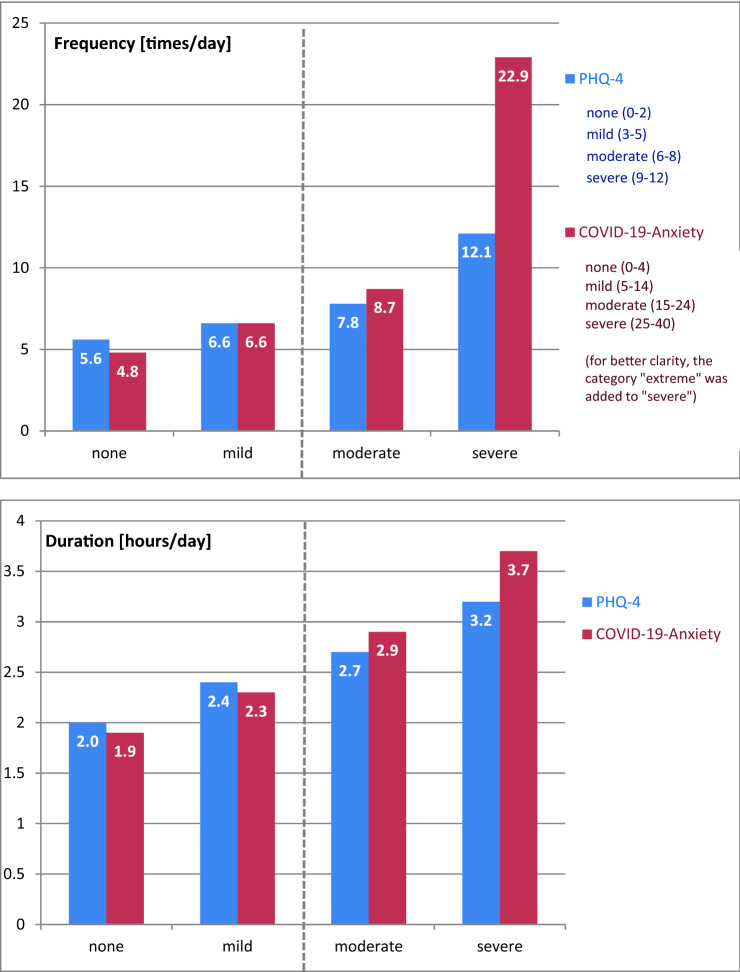
In context of the current COVID-19 pandemic the consumption of pandemic-related media coverage may be an important factor that is associated with anxiety and psychological distress. Aim of the study was to examine those associations in the general population in Germany. 6233 participants took part in an online-survey (March 27th–April 6th, 2020), which included demographic information and media exploitation in terms of duration, frequency and types of media. Symptoms of depression, unspecific anxiety and COVID-19 related anxiety were ascertained with standardized questionnaires. Frequency, duration and diversity of media exposure were positively associated with more symptoms of depression and unspecific and COVID-19 specific anxiety. We obtained the critical threshold of seven times per day and 2.5 h of media exposure to mark the difference between mild and moderate symptoms of (un)specific anxiety and depression. Particularly the usage of social media was associated with more pronounced psychological strain. Participants with pre-existing fears seem to be particularly vulnerable for mental distress related to more immoderate media consumption. Our findings provide some evidence for problematical associations of COVID-19 related media exposure with psychological strain and could serve as an orientation for recommendations—especially with regard to the thresholds of critical media usage.
Overview
The claims and statistics of this paper haven’t been checked yet.
Free: it reads the open-access text and checks the first 5 claims that cite a source we can check. Create a free account to check every claim.
Integrity signals
Registry
Cites
Statistics
Figures
Verification
Claims the paper makes
The claims and statistics of this paper haven’t been checked yet.
Free: it reads the open-access text and checks the first 5 claims that cite a source we can check. Create a free account to check every claim.
Claims other papers make about this one
Each is checked against this paper’s own text: does it say what the citing paper says it does?
The source backs part of the claim, not all of it — or backs it for a different population, condition or comparison.
In the citing paper
“This negative impact on the psychological state has been found to be more pronounced in social media than in traditional media [64,68,71-73].”
From Impact of Media-Induced Uncertainty on Mental Health: Narrative-Based Perspective. (2025) · cites this paper as [64]
Experimental — accuracy not yet measuredThe source backs part of the claim, not all of it — or backs it for a different population, condition or comparison.
In the citing paper
“These effects include heightened levels of anxiety [64], depression [64,65], psychological distress [66,67], posttraumatic stress symptoms [68], schizotypal traits [69], and substance use [70].”
From Impact of Media-Induced Uncertainty on Mental Health: Narrative-Based Perspective. (2025) · cites this paper as [64]
Experimental — accuracy not yet measuredThe source backs part of the claim, not all of it — or backs it for a different population, condition or comparison.
In the citing paper
“As noted earlier, robust evidence has shown a positive association between the frequency and total time spent watching or reading media news and symptoms of mental distress, highlighting the need to limit media exposure [10,64,66,166].”
From Impact of Media-Induced Uncertainty on Mental Health: Narrative-Based Perspective. (2025) · cites this paper as [64]
Experimental — accuracy not yet measuredThe source backs part of the claim, not all of it — or backs it for a different population, condition or comparison.
In the citing paper
“Such media consumption behaviors are linked to increased anxiety, depression, and stress, making interventions that focus on reducing media exposure especially beneficial for this cohort [64,76].”
From Impact of Media-Induced Uncertainty on Mental Health: Narrative-Based Perspective. (2025) · cites this paper as [64]
Experimental — accuracy not yet measuredThe cited source says what the claim attributes to it.
In the citing paper
“Specifically, Bendau et al [64] reported that the critical threshold of 7 times per day and 2.5 hours of media exposure differentiates between mild and moderate symptoms of anxiety and depression.”
From Impact of Media-Induced Uncertainty on Mental Health: Narrative-Based Perspective. (2025) · cites this paper as [64]
Self-check
Percentages, sums and reported differences re-computed from the paper’s own numbers.
The self-check needs the paper’s full text.
Citations
Cites
Wang, C., Pan, R., Wan, X., Tan, Y., Xu, L., Ho, C. S., & Ho, R. C. (2020) · International Journal of Environmental Research and Public Health · doi:10.3390/ijerph17051729 · Cited by 9,923
Qiu, J., Shen, B., Zhao, M., Wang, Z., Xie, B., & Xu, Y. (2020) · General Psychiatry · doi:10.1136/gpsych-2020-100213 · Cited by 4,307
An Ultra-Brief Screening Scale for Anxiety and Depression: The PHQ–4
Kroenke, K., Spitzer, R. L., Williams, J. B. W., & Löwe, B. (2009) · Psychosomatics · doi:10.1016/s0033-3182(09)70864-3 · Cited by 4,261 · cited 1×
“The validated ultra-brief screening scale of the Patient Health Questionnaire-4 PHQ-4; [22, 23] was included to screen for general anxiety and depressive symptoms.”
MethodMental health problems and social media exposure during COVID-19 outbreak
Gao, J., Zheng, P., Jia, Y., Chen, H., Mao, Y., Chen, S., Wang, Y., Fu, H., & Dai, J. (2020) · PLoS ONE · doi:10.1371/journal.pone.0231924 · Cited by 2,830
Mental Health Problems and Social Media Exposure During COVID-19 Outbreak
Gao, J., Zheng, P., Jia, Y., Chen, H., Mao, Y., Chen, S., Wang, Y., Fu, H., & Dai, J. (2020) · SSRN Electronic Journal · doi:10.2139/ssrn.3541120 · Cited by 2,830
Löwe, B., Wahl, I., Rose, M., Spitzer, C., Glaesmer, H., Wingenfeld, K., Schneider, A., & Brähler, E. (2010) · Journal of Affective Disorders · doi:10.1016/j.jad.2009.06.019 · Cited by 2,473
Schlenger, W. E., Caddell, J. M., Ebert, L., Jordan, B. K., Rourke, K. M., Wilson, D., Thalji, L., Dennis, J. M., Fairbank, J. A., & Kulka, R. A. (2002) · JAMA · doi:10.1001/jama.288.5.581 · Cited by 1,133
Media’s role in broadcasting acute stress following the Boston Marathon bombings
Holman, E. A., Garfin, D. R., & Silver, R. C. (2014) · Proceedings of the National Academy of Sciences · doi:10.1073/pnas.1316265110 · Cited by 513
Understanding the mental health effects of indirect exposure to mass trauma through the media
Neria, Y., & Sullivan, G. M. (2011) · JAMA · doi:10.1001/jama.2011.1358 · Cited by 240
Umgang mit psychischer Belastung bei Gesundheitsfachkräften im Rahmen der Covid-19-Pandemie
Petzold, M. B., Plag, J., & Ströhle, A. (2020) · Der Nervenarzt · doi:10.1007/s00115-020-00905-0 · Cited by 212
Self-citation
Research works printed but not linked: 2
- Petzold MB Plag J Ströhle A COVID-19-Pandemie—Psychische Belastungen können reduziert werden Deutsches Ärzteblatt 2020 117 13 648 654
- World Health Organization Mental health and psychosocial considerations during the COVID-19 outbreak, 18 March 2020 2020 Geneva World Health Organization
Cited by
Manchia, M., Gathier, A. W., Yapici-Eser, H., Schmidt, M. V., de Quervain, D., van Amelsvoort, T., Bisson, J. I., Cryan, J. F., Howes, O. D., Pinto, L., et al. (2022) · European Neuropsychopharmacology · doi:10.1016/j.euroneuro.2021.10.864 · Cited by 484
COVID-19 vaccine hesitancy and related fears and anxiety
Bendau, A., Plag, J., Petzold, M. B., & Ströhle, A. (2021) · International Immunopharmacology · doi:10.1016/j.intimp.2021.107724 · Cited by 390
“In the analysis we focused on the both most divergent types of media: social media (as a rather emotionally loaded and unfiltered source of information) and official websites of the government and health authorities (probably providing the comparatively highest amount of reliable information) [17].”
Self-citationMahmud, S., Hossain, S., Muyeed, A., Islam, M. M., & Mohsin, M. (2021) · Heliyon · doi:10.1016/j.heliyon.2021.e07393 · Cited by 208
“HPs ’ care for patients with a contagious disease (COVID-19 patients) resulted in fear, panic, and distress among them [112, 113].”
Fear of COVID 19 Infection Across Different Cohorts: A Scoping Review
Quadros, S., Garg, S., Ranjan, R., Vijayasarathi, G., & Mamun, M. A. (2021) · Frontiers in Psychiatry · doi:10.3389/fpsyt.2021.708430 · Cited by 168
Bendau, A., Kunas, S. L., Wyka, S., Petzold, M. B., Plag, J., Asselmann, E., & Ströhle, A. (2021) · Journal of Anxiety Disorders · doi:10.1016/j.janxdis.2021.102377 · Cited by 163
Self-citationThe Impact of the COVID-19 Pandemic on Mental Disorders. A Critical Review
Clemente-Suárez, V. J., Martínez-González, M. B., Benitez-Agudelo, J. C., Navarro-Jiménez, E., Beltran-Velasco, A. I., Ruisoto, P., Diaz Arroyo, E., Laborde-Cárdenas, C. C., & Tornero-Aguilera, J. F. (2021) · International Journal of Environmental Research and Public Health · doi:10.3390/ijerph181910041 · Cited by 161
Bendau, A., Plag, J., Kunas, S., Wyka, S., Ströhle, A., & Petzold, M. B. (2021) · Brain and Behavior · doi:10.1002/brb3.1964 · Cited by 152
“…use, and suppression of negative emotions) and protective factors (e.g., regular physical activity, higher self-efficacy, maintaining social contacts, and trust in government actions) (Bäuerle et al., 2020; Bendau et al., 2020; Petzold, Bendau, Plag, Pyrkosch, Mascarell Maricic, et al., 2020).”
BackgroundSelf-citationRzymski, P., Borkowski, L., Drąg, M., Flisiak, R., Jemielity, J., Krajewski, J., Mastalerz–Migas, A., Matyja, A., Pyrć, K., Simon, K. A., et al. (2021) · Vaccines · doi:10.3390/vaccines9020109 · Cited by 172
Delpino, F. M., da Silva, C. N., Jerônimo, J. S., Mulling, E. S., da Cunha, L. L., Weymar, M. K., Alt, R., Caputo, E. L., & Feter, N. (2022) · Journal of Affective Disorders · doi:10.1016/j.jad.2022.09.003 · Cited by 156
Sigorski, D., Sobczuk, P., Osmola, M., Kuć, K., Walerzak, A., Wilk, M., Ciszewski, T., Kopeć, S., Hryń, K., Rutkowski, P., et al. (2020) · ESMO Open · doi:10.1136/esmoopen-2020-000970 · Cited by 110
“43 Contrarily, correlations between anxiety and place of residence, level of education or having relatives infected with SARS-CoV-2 were not observed in some studies.”
Lu, C., Chi, X., Liang, K., Chen, S.-T., Huang, L., Guo, T., Jiao, C., Yu, Q., Veronese, N., Soares, F. C., et al. (2020) · Psychology Research and Behavior Management · doi:10.2147/prbm.s284103 · Cited by 99
“The fear and psychological distress related to the pandemic has been found to be associated with the stressors such as frustration, inadequate information, and problematical media exposure.(51) Thus, parents and educators should pay attention to adolescents’ fear to COVID-19 and their consumption of pandemic-related m…”
BackgroundTV News and COVID-19: Media Influence on Healthy Behavior in Public Spaces
Scopelliti, M., Pacilli, M. G., & Aquino, A. (2021) · International Journal of Environmental Research and Public Health · doi:10.3390/ijerph18041879 · Cited by 99
“[39], indicating that time exposure above a relevant threshold can promote negative effects; below this threshold, as in the case of the present study, mechanisms of information overload and negative emotions are less likely to occur, and exposure may turn into positive behaviors.”
BackgroundKaring, C. (2021) · Journal of Affective Disorders Reports · doi:10.1016/j.jadr.2021.100174 · Cited by 107
Lorant, V., Smith, P., den Broeck, K. V., & Nicaise, P. (2021) · BMC Psychiatry · doi:10.1186/s12888-021-03109-1 · Cited by 81
Vujcic, I. S., Safiye, T., Milikić, B., Popović, E., Dubljanin, D., Dubljanin, E., Dubljanin, J., & Čabarkapa, M. (2021) · International Journal of Environmental Research and Public Health · doi:10.3390/ijerph18041957 · Cited by 79
“The study conducted in Germany indicated that frequency, duration, and diversity of media exposure were positively associated with more depressive and anxiety symptoms and participants with pre-existing fears seem to be particularly vulnerable to mental distress [46].”
BackgroundCori, L., Curzio, O., Adorni, F., Prinelli, F., Noale, M., Trevisan, C., Fortunato, L., Giacomelli, A., & Bianchi, F. (2021) · International Journal of Environmental Research and Public Health · doi:10.3390/ijerph18063248 · Cited by 77
COVID-19 infodemic and adult and elderly mental health: a scoping review
Delgado, C. E., Silva, E. A., de Castro, E. A. B., Carbogim, F. D. C., Püschel, V. A. D. A., & Cavalcante, R. B. (2021) · Revista da Escola de Enfermagem da USP · doi:10.1590/1980-220x-reeusp-2021-0170 · Cited by 100
“However, it is not only the exposure that triggers the signs and symptoms, the exposure time and the information sources also play a fundamental role in the development of anxiety, depression, stress, fear, among other symptoms (7,18,25) .”
BackgroundResultInfluentialSkoda, E., Spura, A., Bock, F. D., Schweda, A., Dörrie, N., Fink, M., Musche, V., Weismüller, B., Benecke, A.-V., Dinse, H., et al. (2021) · Bundesgesundheitsblatt - Gesundheitsforschung - Gesundheitsschutz · doi:10.1007/s00103-021-03278-0 · Cited by 81
Reizer, A., Galperin, B. L., Chavan, M., Behl, A., & Pereira, V. (2022) · Journal of Business Research · doi:10.1016/j.jbusres.2022.03.037 · Cited by 68
“, 2021), additional media consumption (Bendau et al., 2021), and cyberchondria (fear and anxiety activated due to a health-related search online) (Wu et al.”
InfluentialUsing Fear and Anxiety Related to COVID-19 to Predict Cyberchondria: Cross-sectional Survey Study
Wu, X., Nazari, N., & Griffiths, M. D. (2021) · Journal of Medical Internet Research · doi:10.2196/26285 · Cited by 84
Gianfredi, V., Provenzano, S., & Santangelo, O. E. (2021) · Public Health · doi:10.1016/j.puhe.2021.06.024 · Cited by 75
Mongkhon, P., Ruengorn, C., Awiphan, R., Thavorn, K., Hutton, B., Wongpakaran, N., Wongpakaran, T., & Nochaiwong, S. (2021) · Journal of Medical Internet Research · doi:10.2196/25363 · Cited by 76
“The results of a survey conducted in Germany indicated a positive correlation between COVID-19-related media exposure and the severity of nonspecific anxiety and depression [18].”
BackgroundResultInfluentialCovid-19 vaccination, fear and anxiety: Evidence from Google search trends
Awijen, H., Zaied, Y. B., & Nguyen, D. K. (2022) · Social Science & Medicine · doi:10.1016/j.socscimed.2022.114820 · Cited by 64
Huang, Q., Lei, S., & Ni, B. (2022) · Frontiers in Psychology · doi:10.3389/fpsyg.2022.837820 · Cited by 88
Jones, R., Mougouei, D., & Evans, S. L. (2021) · Human Behavior and Emerging Technologies · doi:10.1002/hbe2.304 · Cited by 62
“symptoms and time spent seeking out COVID-related information and news (Bendau et al., 2021); thus effects might be at least partially attributable to the personality characteristics/personal circumstances”
BackgroundPaz, C., Mascialino, G., Adana-Díaz, L., Rodríguez-Lorenzana, A., Simbaña-Rivera, K., Gómez-Barreno, L., Troya, M., Paez, M. I., Cárdenas, J., Gerstner, R. M., et al. (2020) · PLOS ONE · doi:10.1371/journal.pone.0240008 · Cited by 60
Kellerman, J. K., Hamilton, J. L., Selby, E. A., & Kleiman, E. M. (2022) · JMIR Mental Health · doi:10.2196/36966 · Cited by 58
Sert, H. P., & Başkale, H. (2022) · Health Information & Libraries Journal · doi:10.1111/hir.12448 · Cited by 96
Oswald, T. K., Rumbold, A. R., Kedzior, S. G. E., Kohler, M. J., & Moore, V. (2021) · International Journal of Environmental Research and Public Health · doi:10.3390/ijerph18115630 · Cited by 71
The Lived Experiences of COVID-19 Patients in South Korea: A Qualitative Study
Son, H., Choi, W., Hwang, Y. H., & Yang, H.-R. (2021) · International Journal of Environmental Research and Public Health · doi:10.3390/ijerph18147419 · Cited by 70
“During the early days of the COVID-19 pandemic, various channels, such as mobile messengers and YouTube, frequently described the virus as being highly dangerous, with a poor prognosis [7], and public media coverage of COVID-19 intensified the public’s fear and anxiety [10].”
BackgroundGénéreux, M., Schlüter, P. J., Landaverde, E., Hung, K. K. C., Wong, C. S., Mok, C. P. Y., Blouin-Genest, G., O’Sullivan, T. L., David, M. D., Carignan, M.-È., et al. (2021) · International Journal of Environmental Research and Public Health · doi:10.3390/ijerph18094845 · Cited by 67
“A German study also suggests that increased frequency, duration and diversity of media exposure increase the risk of psychological distress, with higher levels of anxiety and depression when social media is used as the primary type of information resource [16].”
BackgroundJacob, L., Smith, L., Koyanagi, A., Oh, H. Y., Tanislav, C., Shin, J. I., Konrad, M., & Kostev, K. (2020) · Journal of Psychiatric Research · doi:10.1016/j.jpsychires.2020.11.029 · Cited by 57
Mendoza, N. B., Frondozo, C. E., Dizon, J. I. W. T., & Buenconsejo, J. U. (2022) · Current Psychology · doi:10.1007/s12144-022-02833-5 · Cited by 58
“…by socio-economic changes, and the public health measures implemented have triggered negative mental health outcomes such as anxiety and depression (Bendau et al., 2020; Choi et al., 2020; Lai et al., 2020; Li et al., 2020; Mendoza & Dizon, 2022; Petzold et al., 2020b; Salari et al., 2020;…”
Marobhe, M. I. (2021) · China Finance Review International · doi:10.1108/cfri-09-2021-0187 · Cited by 56
Seitz, K. I., Bertsch, K., & Herpertz, S. C. (2021) · Journal of Traumatic Stress · doi:10.1002/jts.22660 · Cited by 58
“…information (Druss, 2020) while raising awareness about the adverse effects associated with frequent media consumption concerning COVID-19 (Bendau et al., 2020; Gao et al., 2020) may be another useful strategy to reduce distress and improve mental health, particularly in vulnerable groups.”
BackgroundLiu, C., Lee, Y., Lin, Y., & Yang, S. (2021) · Stress and Health · doi:10.1002/smi.3040 · Cited by 49
Rogers, S., & Cruickshank, T. M. (2021) · PeerJ · doi:10.7717/peerj.11767 · Cited by 54
“Or alternatively, high exposure to sensationalist media coverage might have been exacerbating people’s concerns (Bendau et al., 2020; Bu et al., 2021).”
BackgroundThygesen, H., Bonsaksen, T., Schoultz, M., Ruffolo, M. C., Leung, J., Price, D., & Geirdal, A. Ø. (2022) · Frontiers in Public Health · doi:10.3389/fpubh.2021.752004 · Cited by 65
“The same two-sidedness is found in studies on social media use and mental health in the context of the current pandemic (16, 17).”
BackgroundNa, P. J., Tsai, J., Hill, M. L., Nichter, B., Norman, S. B., Southwick, S. M., & Pietrzak, R. H. (2021) · Journal of Psychiatric Research · doi:10.1016/j.jpsychires.2021.03.021 · Cited by 52
Restar, A., Jin, H., Jarrett, B. A., Adamson, T., Baral, S., Howell, S., & Beckham, S. W. (2021) · BMJ Global Health · doi:10.1136/bmjgh-2020-004424 · Cited by 48
Suka, M., Yamauchi, T., & Yanagisawa, H. (2021) · Environmental Health and Preventive Medicine · doi:10.1186/s12199-021-00957-x · Cited by 51
“Some epidemiological studies demonstrated a dose-response relationship between media exposure to information about COVID-19 and psychological symptoms in the general population [21, 22].”
BackgroundSchäfer, S., Aaldering, L., & Lecheler, S. K. (2022) · Mass Communication & Society · doi:10.1080/15205436.2022.2125406 · Cited by 46
“Studies have shown that news exposure has drastically increased, especially at the beginning of the pandemic (Bendau et al., 2020; Fletcher et al., 2020; Groot Kormelink & Klein Gunnewiek, 2022).”
InfluentialHanson, C. L., Crandall, A., Barnes, M., & Novilla, M. L. B. (2021) · Health Education & Behavior · doi:10.1177/10901981211000318 · Cited by 49
You are not alone: Smartphone use, friendship satisfaction, and anxiety during the COVID-19 crisis
Stević, A., Koban, K., Binder, A., & Matthes, J. (2021) · Mobile Media & Communication · doi:10.1177/20501579211051820 · Cited by 52
Stewart, R. J., Madonsela, A., Tshabalala, N., Etale, L., & Theunissen, N. (2022) · Digital Health · doi:10.1177/20552076221085070 · Cited by 51
“Germany, we learnt that those concerned about pre-existing conditions were more likely to experience psychological distress because of COVID-19 related media.(63) Importantly, for those attempting to mitigate the impacts of misinformation, we identified a clear link between those who lean towards conspiracy theories a…”
BackgroundDobrakowski, P. P., Skalski‐Bednarz, S. B., Surżykiewicz, J., Muszyńska, J., & Konaszewski, K. (2021) · Journal of Clinical Medicine · doi:10.3390/jcm10214865 · Cited by 49
Differentiating the stress buffering functions of perceived versus received social support
Rui, J. R., & Guo, J. (2022) · Current Psychology · doi:10.1007/s12144-021-02606-6 · Cited by 73
Winter, R., & Lavis, A. (2021) · International Journal of Environmental Research and Public Health · doi:10.3390/ijerph19010352 · Cited by 46
“Research has explored the link between frequent social media exposure during COVID19 and anxiety, [20], with the risk to mental health posed by negative news about the virus noted [21].”
BackgroundChen, Y., Liu, Y., Zhang, Y., Li, Z., & Zhou, T. (2021) · Frontiers in Psychology · doi:10.3389/fpsyg.2021.750011 · Cited by 45
Chu, T. H., Yeo, T. E. D., & Su, Y. (2022) · Journalism & Mass Communication Quarterly · doi:10.1177/10776990211068857 · Cited by 46
Kim, H. R., & Kim, E. J. (2021) · International Journal of Environmental Research and Public Health · doi:10.3390/ijerph182111381 · Cited by 50
“For example, certain universities in South Korea closed down without regard for the difficulties that international students would face in returning to their home countries due to border closures, reductions of international flights, and the risk of exposure to infection on flights [16].”
BackgroundGüldal, Ş. T., KILIÇOĞLU, N. A., & KASAPOĞLU, F. (2022) · International Journal for the Advancement of Counselling · doi:10.1007/s10447-021-09461-x · Cited by 44
“symptoms of COVID-19 specific anxiety (Bendau et al., 2020).”
The influence of media exposure on anxiety and working memory during lockdown period in Italy.
Fabio, R. A., & Suriano, R. (2021) · International Journal of Environmental Research and Public Health · doi:10.3390/ijerph18179279 · Cited by 33
“The results of these studies suggest that frequent and repeated exposure to mass media is significantly positively correlated with symptoms of stress and anxiety within the general population in China and Germany, respectively [20,21].”
BackgroundSymptoms of Depression and Anxiety During the Early Phase of the COVID-19 Pandemic in Sweden
Rondung, E., Leiler, A., Meurling, J., & Bjärtå, A. (2021) · Frontiers in Public Health · doi:10.3389/fpubh.2021.562437 · Cited by 37
COVID-19 Specific Risk Markers for Intimate Partner Violence Perpetration
Spencer, C. M., Gimarc, C., & Durtschi, J. A. (2021) · Journal of Family Violence · doi:10.1007/s10896-021-00335-9 · Cited by 43
Na, P. J., Straus, E., Tsai, J., Norman, S. B., Southwick, S. M., & Pietrzak, R. H. (2022) · Journal of Psychiatric Research · doi:10.1016/j.jpsychires.2022.05.042 · Cited by 34
“Previous studies have shown that greater pandemic-related stressors have been linked to psychiatric symptoms such as depression and anxiety (Bendau et al., 2020; Kujawa et al., 2020).”
Fear of COVID ‐19, stress and depression: A meta‐analytic test of the mediating role of anxiety
Çıkrıkçı, Ö., Çıkrıkçı, N., & Griffiths, M. D. (2022) · Psychology and Psychotherapy Theory Research and Practice · doi:10.1111/papt.12406 · Cited by 42
“The significant association between fear of COVID- 19 and depression has been reported in different studies conducted during the pandemic period (e.g. Alnazly et al., 2021; Bakioğlu et al., 2021; Bendau et al., 2021).”
BackgroundCancelled routine vaccination appointments due to COVID-19 pandemic in Germany
Schmid-Küpke, N., Matysiak‐Klose, D., Siedler, A., Felgendreff, L., Wieler, L. H., Thaiss, H. M., & Betsch, C. (2021) · Vaccine X · doi:10.1016/j.jvacx.2021.100094 · Cited by 46
“For people who might suffer from increasing anxiety disorders due to the pandemic and therefore avoid crowded places like medical practices, or whose excessive media consumption could have increase COVID-19 specific anxiety disorders, actively communicating confidence could also be a good support [13,14].”
Impacts of COVID-19 on the Education, Life and Mental Health of Students in Bangladesh
Piya, F. L., Amin, S., Das, A., & Kabir, M. A. (2022) · International Journal of Environmental Research and Public Health · doi:10.3390/ijerph19020785 · Cited by 39
“Mental health problems have been found to be positively associated with frequent social media exposure (SME) during the COVID-19 outbreak [14,28].”
BackgroundMahmoud, A. B., Berman, A., Reisel, W. D., Fuxman, L., & Hack‐Polay, D. (2023) · Scandinavian Journal of Psychology · doi:10.1111/sjop.12955 · Cited by 50
The ethics of news media reporting on coronavirus humor
Miczo, N. (2021) · Humor - International Journal of Humor Research · doi:10.1515/humor-2021-0011 · Cited by 31
Schäfer, S., Greber, H., Sülflow, M., & Lecheler, S. K. (2022) · Journalism & Mass Communication Quarterly · doi:10.1177/10776990221095751 · Cited by 41
“Findings have revealed that following hard news reduces the mental well-being of news consumers over time (Bendau et al., 2020; Boukes & Vliegenhart, 2017).”
Li, Y., Bai, W., Cai, H. X., Wu, Y., Zhang, L., Ding, Y.-H., Yang, J., Du, X., Zeng, Z.-T., Lu, C.-M., et al. (2022) · Translational Psychiatry · doi:10.1038/s41398-022-02045-2 · Cited by 36
“Third, the pandemic has both triggered and increased fear of infection, anxiety, and depression in the general population [46] as well as in people with mental disorders [45].”
BackgroundChen, Z., Xiong, J., Ma, H., Hu, Y., Bai, J., Wu, H. L., & Wang, Y. (2023) · SSM - Population Health · doi:10.1016/j.ssmph.2023.101567 · Cited by 35
“…provide a perfect tool for them to acquire such information, which may contribute to their restlessness and nervous-ness, although their broader knowledge of the disease could have alleviated this effect to a certain degree (Bendau, Petzold, Pyrkosch, Maricic, et al., 2021; Saddik et al., 2020).”
BackgroundWang, J., Huang, X., Wang, Y., Mengmeng, W. A. N. G., Xu, J., & Li, X. (2022) · Frontiers in Psychiatry · doi:10.3389/fpsyt.2022.894174 · Cited by 40
“Furthermore, in the context of COVID19 pandemic, the rapid dissemination of the false information, conspiracy theories amplified the negative emotions stem from COVID-19 information overload (17).”
BackgroundPhalswal, U., Pujari, V., Sethi, R., & Verma, R. (2023) · Journal of Education and Health Promotion · doi:10.4103/jehp.jehp_460_22 · Cited by 38
“[32] 1 1 1 1 ‐ 1 1 ‐ 1 ‐ 1 ‐ ‐ 1 9 Bendau et al.[33] 1 1 1 1 1 ‐ 1 1 1 ‐ 1 1 ‐ 1 11 Liu et al.”
BackgroundInfluentialEgan, S. J., McEvoy, P., Wade, T. D., Ure, S., Johnson, A. R., Gill, C., Greene, D., Wilker, L., Anderson, R., Mazzucchelli, T. G., et al. (2021) · Behaviour Research and Therapy · doi:10.1016/j.brat.2021.103902 · Cited by 28
“Suggestions were made to moderate media consumption on the pandemic for both children and adults, as recommended (Bendau et al., 2021) to improve mental health (see Table 1).”
Going to the movies in VR: Virtual reality cinemas as alternatives to in-person co-viewing
Szita, K., Moss-Wellington, W., Sun, X., & Ch’ng, E. (2023) · International Journal of Human-Computer Studies · doi:10.1016/j.ijhcs.2023.103150 · Cited by 36
“…to these engagements during times of isolation, including research that suggests digital media platforms, such as social media, could ease anxiety related to lockdowns at the beginning (Bendau et al., 2021; Wiederhold, 2020) and in the later stages (Thygesen et al., 2022) of the Covid-19 pandemic.”
BackgroundCurtis, A. F., Rodgers, M., Miller, M. B., & McCrae, C. S. (2021) · Journal of Aging and Health · doi:10.1177/08982643211025383 · Cited by 33
“Likewise, a study of primarily younger adults conducted in Germany observed that increased COVID-19 media exposure was associated with greater generalized and COVID-19-specific anxiety (Bendau et al., 2020).”
BackgroundChandler-Jeanville, S., Nohra, R. G., Loizeau, V., Lartigue, C., Zintchem, R., Naudin, D., & Rothan‐Tondeur, M. (2021) · International Journal of Environmental Research and Public Health · doi:10.3390/ijerph18136977 · Cited by 32
“, the Silence Paradox), nurses’ families shared their vulnerability to infodemic [34], an “over-abundance of information—some accurate and some not”, which could lead to their anxiety [34].”
BackgroundEmotional Distress in Cancer Patients During the First Wave of the COVID-19 Pandemic
Toquero, P., Fernández, C. B., Martí, M. P. L., Hernández‐Marín, B., Vera, E., García, A. G., Carrascosa, E. M., Torres, D. B., Candil, O. D., Ballesteros, A. I., et al. (2021) · Frontiers in Psychology · doi:10.3389/fpsyg.2021.755965 · Cited by 30
Ardestani, S. M. S., Khosravani, V., Bastan, F. S., & Балоглу, М. (2021) · International Journal of Mental Health and Addiction · doi:10.1007/s11469-021-00523-0 · Cited by 30
“COVID-19 increases media use, which in turn enhances anxiety symptoms (Bendau et al., 2020).”
BackgroundZou, C., Zhang, W., Sznajder, K. K., Yang, F., Jia, Y., Ma, R., Cui, C., & Yang, X. (2021) · Journal of Medical Internet Research · doi:10.2196/24412 · Cited by 27
“High levels of social media consumption were associated with increased mental distress, especially among individuals with high levels of fear [22].”
Na, P. J., Norman, S. B., Nichter, B., Hill, M. L., Rosen, M. I., Petrakis, I. L., & Pietrzak, R. H. (2021) · Drug and Alcohol Dependence · doi:10.1016/j.drugalcdep.2021.108818 · Cited by 32
Bonsaksen, T., Thygesen, H., Leung, J., Lamph, G., Kabelenga, I., & Geirdal, A. Ø. (2024) · Social Sciences · doi:10.3390/socsci13040194 · Cited by 31
Morganstein, J. C., & Flynn, B. W. (2021) · Journal of Occupational and Environmental Medicine · doi:10.1097/jom.0000000000002184 · Cited by 27
“Limit exposure to disasterrelated and other negative media, which worsens outcomes during disaster events.(43) Self-Monitoring.”
BackgroundSchlüter, P. J., Généreux, M., Hung, K. K. C., Landaverde, E., Law, R. P., Mok, C. P. Y., Murray, V. S. G., O’Sullivan, T. L., Qadar, Z., & Roy, M. (2022) · JMIR Public Health and Surveillance · doi:10.2196/32140 · Cited by 29
Kuhbandner, C., Homburg, S., Walach, H., & Hockertz, S. (2021) · Futures · doi:10.1016/j.futures.2021.102879 · Cited by 33
Peng, X., Liu, L., Liang, S., Chen, J., & Zhao, J. (2022) · Current Psychology · doi:10.1007/s12144-022-03487-z · Cited by 26
Surżykiewicz, J., Konaszewski, K., Skalski‐Bednarz, S. B., Dobrakowski, P. P., & Muszyńska, J. (2021) · Journal of Clinical Medicine · doi:10.3390/jcm10214974 · Cited by 35
“The data also show that people who are isolated and quarantined have higher levels of anger, confusion, and post-traumatic stress [2].”
BackgroundPreparing for the Next Pandemic to Protect Public Mental Health
Morganstein, J. C. (2021) · Psychiatric Clinics of North America · doi:10.1016/j.psc.2021.11.012 · Cited by 39
Patwary, M. M., Bardhan, M., Browning, M. H. E. M., Disha, A. S., Haque, M. Z., Billah, S. M., Kabir, M. P., Hossain, M. R., Alam, M. A., Shuvo, F. K., et al. (2021) · Healthcare · doi:10.3390/healthcare10010024 · Cited by 30
“In nearly every case, anxiety and stress levels were associated with greater media consumption, and often with perceived trust [14,15,61,62].”
BackgroundInfluentialImpact of Media-Induced Uncertainty on Mental Health: Narrative-Based Perspective.
Kesner, L., Juríčková, V., Grygarová, D., & Horáček, J. (2025) · JMIR Mental Health · doi:10.2196/68640 · Cited by 23
“Specifically, Bendau et al [64] reported that the critical threshold of 7 times per day and 2.5 hours of media exposure differentiates between mild and moderate symptoms of anxiety and depression.”
InfluentialSun, H., Feng, Y., & Meng, Q. (2024) · Expert Systems with Applications · doi:10.1016/j.eswa.2024.124110 · Cited by 29
Bok, S., Martin, D. E., & Lee, M. (2021) · Acta Psychologica · doi:10.1016/j.actpsy.2021.103382 · Cited by 26
Bakhtiari, A. B., Mohammadi, B., Moazzam, P., Didehroshan, D., & Razmjou, A. (2021) · Advanced Materials Interfaces · doi:10.1002/admi.202100571 · Cited by 23
Gewirtz‐Meydan, A., & Lassri, D. (2021) · Child Abuse & Neglect · doi:10.1016/j.chiabu.2021.105442 · Cited by 23
Shoss, M. K., Hootegem, A. V., Selenko, E., & Witte, H. D. (2022) · Economic and Industrial Democracy · doi:10.1177/0143831x221076176 · Cited by 27
“Indeed, social isolation and dependence on differing media sources during the pandemic likely create a situation wherein people in a given society may develop varying perceptions of the extent to which job insecurity is widespread (Bendau et al., 2021).”
BackgroundCuriosity for information predicts wellbeing mediated by loneliness during COVID-19 pandemic
Vermeer, A. B. L., Muth, A.-K., Terenzi, D., & Park, S. Q. (2022) · Scientific Reports · doi:10.1038/s41598-022-11924-z · Cited by 32
Covid-19 and the Resurgence of the Hypodermic Needle Theory Applicability in Times of Crises
Ahmad, A. K., Aljalabneh, A. A., Mahmoud, A., & Safori, A. O. (2022) · Lecture notes in networks and systems · doi:10.1007/978-3-031-08954-1_124 · Cited by 34
Daimer, S., Mihatsch, L. L., Neufeld, S. A., Murray, G. K., & Knolle, F. (2022) · eLife · doi:10.7554/elife.75893 · Cited by 21
Internet Use, eHealth Literacy and Fear of COVID-19 among Nursing Students in the Philippines
Oducado, R. M., Tuppal, C. P., Estoque, H., Sadang, J. M., Superio, D. L., Real, D. V. C., Roa, M. N. T., Malaga, X. G., Quiros, J., Fajardo, M. T. M., et al. (2021) · IJERI International Journal of Educational Research and Innovation · doi:10.46661/ijeri.5520 · Cited by 28
Kim, K., Yang, J. S., Jeon, Y. J., Lee, Y. J., Lee, Y., Kim, H. C., Koenen, K. C., Kim, Y., & Jung, S. J. (2021) · Epidemiology and Health · doi:10.4178/epih.e2021085 · Cited by 25
“As a result, seeking health information during a pandemic can result in increased anxiety [14], post-traumatic emotional responses [15], and depressive symptoms [16].”
BackgroundHan, R., Xu, J., & Pan, D. (2022) · International Journal of Environmental Research and Public Health · doi:10.3390/ijerph19073942 · Cited by 32
“There have also been a large number of studies conducted about the impact that media exposure has on public mental health [15,16].”
BackgroundGoto, R., Piedvache, A., Hangai, M., Yamaoka, Y., Sampei, M., Sawada, N., Okubo, Y., Tanaka, K., Morisaki, N., & Hosozawa, M. (2022) · Child and Adolescent Psychiatry and Mental Health · doi:10.1186/s13034-022-00525-3 · Cited by 25
Wrede, S. J. S., Claaßen, K., dos Anjos, D. R., Kettschau, J. P., & Broding, H. C. (2023) · Health Psychology and Behavioral Medicine · doi:10.1080/21642850.2023.2263068 · Cited by 42
“Likewise in other pandemic-related studies, the usage of information technology, i.e. social media, is associated with more pronounced psychological strain (Bendau et al., 2021).”
BackgroundValidation of the International Adjustment Disorder Questionnaire in Israel and Switzerland
Levin, Y., Bachem, R., Hyland, P., Karatzias, T., Shevlin, M. E., Ben‐Ezra, M., & Maercker, A. (2022) · Clinical Psychology & Psychotherapy · doi:10.1002/cpp.2710 · Cited by 29
Betini, G. S., Hirdes, J. P., Adekpedjou, R., Perlman, C. M., Huculak, N., & Hébert, P. C. (2021) · Frontiers in Psychiatry · doi:10.3389/fpsyt.2021.666261 · Cited by 23
Recent Advances in Consumer Behavior Theory: Shocks from the COVID-19 Pandemic
Yin, B., Yu, Y., & Xu, X. (2021) · Behavioral Sciences · doi:10.3390/bs11120171 · Cited by 37
“Bendau (2020) studied related media consumption during COVID-19 and found that ordinary Germans’ anxiety, depression, and COVID-19-related fear symptoms affected the ordinary intention to consume related media [40].”
BackgroundGallagher, M. W., Smith, L. J., Richardson, A. L., & Long, L. J. (2021) · Cognitive Therapy and Research · doi:10.1007/s10608-021-10277-7 · Cited by 20
“, 2021), pandemic-related media coverage (Bendau et al., 2021), and inconsistent pandemic-related policies (Pedrozo-Pupo et al.”
Background
Metadata
- Authors
- Bendau, A., Petzold, M. B., Pyrkosch, L., Mascarell Maricic, L., Betzler, F., Rogoll, J., Große, J., Ströhle, A., & Plag, J.
- Affiliations
- Humboldt-Universität zu Berlin (DE)
- Corresponding author
- Plag, Jens
- ORCID
- Venue
- European Archives of Psychiatry and Clinical Neuroscience
- Published
- 2020-07-20
- Volume
- 271
- Issue
- 2
- Pages
- 283-291
- ISSN
- 0003-9373 (ISSN-L)
- 0940-1334
- 1433-8491
- PMC
- PMC7371788
- OpenAlex
- W3042228059
- Cited by
- 376
- References
- 16
- Citations by year
- 2026: 21 · 2025: 21 · 2024: 35 · 2023: 64 · 2022: 107 · 2021: 118 · 2020: 10
- FWCI
- 29.92
- Type
- journal article
- Language
- en
- Update notices
- correction (2021-07-17)
- Open access
- hybrid
- doi.org
- Licence
- cc-by
- creativecommons.org/licenses/by/4.0 (tdm)
- creativecommons.org/licenses/by/4.0 (vor)
- Locations
- European Archives of Psychiatry and Clinical Neuroscience (publishedVersion, cc-by)
- PubMed Central (publishedVersion, cc-by)
- PubMed (publishedVersion)
- Refubium (Universitätsbibliothek der Freien Universität Berlin) (submittedVersion, cc-by)
- Universitätsbibliothek der FU Berlin Hochschulschriftenstelle u. Dokumentenserver (cc-by)
- Topics
- Social Sciences › Psychology › Clinical Psychology › COVID-19 and Mental Health
- Social Sciences › Communication › Communication and COVID-19 Impact
- Social Sciences › Sociology and Political Science › Impact of Technology on Adolescents
- Keywords
- COVID-19 pandemic, media use, anxiety, depression, psychological distress, social media use, general population
- MeSH terms
- Psychological Distress, COVID-19, Adolescent, Adult, Aged, Aged, 80 and over, Anxiety, Cross-Sectional Studies, Depression, Fear, Female, Germany, Humans, Male, Mass Media, Middle Aged, Surveys and Questionnaires, Young Adult, Pandemics
About these checks
Registry, retraction, Cites and statistics results are computed, not judged, with one exception: a printed reference that no index lists is read once by a model before it counts as a citation error. Claims are extracted by a model and kept only when their quote appears verbatim in the text; each cited source is then checked, with a model’s help, for whether it says what the claim relies on. Those verdicts can be wrong — read the claim’s quote and the cited source before relying on one.
Statistics and arithmetic are recomputed, not judged.
Confidence bands are shown only for fields calibrated on our annotated test set. None is calibrated yet, so no band is shown.
What counts as a claim ›How we measure confidence ›How we check this ›
Are you an author, or do you see a problem with this page? Request a review
Data sources
Bibliographic data: Semantic Scholar, OpenAlex, Crossref.
Contains information from the Semantic Scholar Academic Graph Datasets, made available under the ODC Attribution License (ODC-BY 1.0).
Semantic Scholar’s data is described in: Kinney, R., et al. (2023). The Semantic Scholar Open Data Platform. arXiv:2301.10140.
