

Associations between COVID-19 related media consumption and symptoms of anxiety, depression and COVID-19 related fear in the general population in Germany
Open accessThe DOI matches its Crossref record; 17 of the 17 references it cites were found in a registry or an index.
Abstract
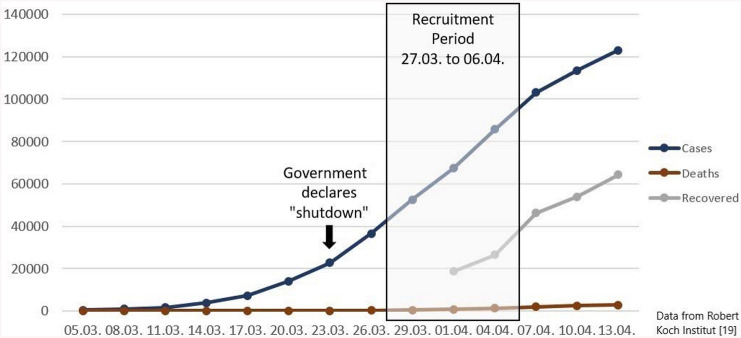
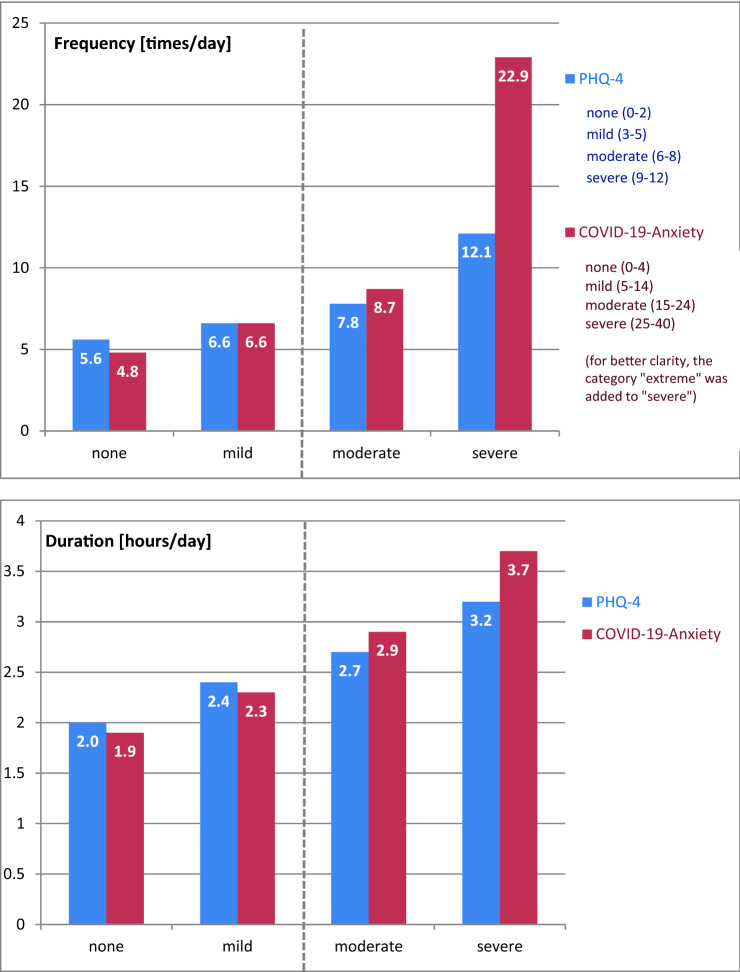
In context of the current COVID-19 pandemic the consumption of pandemic-related media coverage may be an important factor that is associated with anxiety and psychological distress. Aim of the study was to examine those associations in the general population in Germany. 6233 participants took part in an online-survey (March 27th–April 6th, 2020), which included demographic information and media exploitation in terms of duration, frequency and types of media. Symptoms of depression, unspecific anxiety and COVID-19 related anxiety were ascertained with standardized questionnaires. Frequency, duration and diversity of media exposure were positively associated with more symptoms of depression and unspecific and COVID-19 specific anxiety. We obtained the critical threshold of seven times per day and 2.5 h of media exposure to mark the difference between mild and moderate symptoms of (un)specific anxiety and depression. Particularly the usage of social media was associated with more pronounced psychological strain. Participants with pre-existing fears seem to be particularly vulnerable for mental distress related to more immoderate media consumption. Our findings provide some evidence for problematical associations of COVID-19 related media exposure with psychological strain and could serve as an orientation for recommendations—especially with regard to the thresholds of critical media usage.
Overview
The claims and statistics of this paper haven’t been checked yet.
Free: it reads the open-access text and checks the first 5 claims that cite a source we can check. Create a free account to check every claim.
Integrity signals
Registry
Cites
Statistics
Figures
Verification
Claims the paper makes
The claims and statistics of this paper haven’t been checked yet.
Free: it reads the open-access text and checks the first 5 claims that cite a source we can check. Create a free account to check every claim.
Claims other papers make about this one
Each is checked against this paper’s own text: does it say what the citing paper says it does?
The source backs part of the claim, not all of it — or backs it for a different population, condition or comparison.
In the citing paper
“This negative impact on the psychological state has been found to be more pronounced in social media than in traditional media [64,68,71-73].”
From Impact of Media-Induced Uncertainty on Mental Health: Narrative-Based Perspective. (2025) · cites this paper as [64]
Experimental — accuracy not yet measuredThe source backs part of the claim, not all of it — or backs it for a different population, condition or comparison.
In the citing paper
“These effects include heightened levels of anxiety [64], depression [64,65], psychological distress [66,67], posttraumatic stress symptoms [68], schizotypal traits [69], and substance use [70].”
From Impact of Media-Induced Uncertainty on Mental Health: Narrative-Based Perspective. (2025) · cites this paper as [64]
Experimental — accuracy not yet measuredThe source backs part of the claim, not all of it — or backs it for a different population, condition or comparison.
In the citing paper
“As noted earlier, robust evidence has shown a positive association between the frequency and total time spent watching or reading media news and symptoms of mental distress, highlighting the need to limit media exposure [10,64,66,166].”
From Impact of Media-Induced Uncertainty on Mental Health: Narrative-Based Perspective. (2025) · cites this paper as [64]
Experimental — accuracy not yet measuredThe source backs part of the claim, not all of it — or backs it for a different population, condition or comparison.
In the citing paper
“Such media consumption behaviors are linked to increased anxiety, depression, and stress, making interventions that focus on reducing media exposure especially beneficial for this cohort [64,76].”
From Impact of Media-Induced Uncertainty on Mental Health: Narrative-Based Perspective. (2025) · cites this paper as [64]
Experimental — accuracy not yet measuredThe cited source says what the claim attributes to it.
In the citing paper
“Specifically, Bendau et al [64] reported that the critical threshold of 7 times per day and 2.5 hours of media exposure differentiates between mild and moderate symptoms of anxiety and depression.”
From Impact of Media-Induced Uncertainty on Mental Health: Narrative-Based Perspective. (2025) · cites this paper as [64]
Self-check
Percentages, sums and reported differences re-computed from the paper’s own numbers.
The self-check needs the paper’s full text.
Citations
Cites
Wang, C., Pan, R., Wan, X., Tan, Y., Xu, L., Ho, C. S., & Ho, R. C. (2020) · International Journal of Environmental Research and Public Health · doi:10.3390/ijerph17051729 · Cited by 9,923
Qiu, J., Shen, B., Zhao, M., Wang, Z., Xie, B., & Xu, Y. (2020) · General Psychiatry · doi:10.1136/gpsych-2020-100213 · Cited by 4,307
An Ultra-Brief Screening Scale for Anxiety and Depression: The PHQ–4
Kroenke, K., Spitzer, R. L., Williams, J. B. W., & Löwe, B. (2009) · Psychosomatics · doi:10.1016/s0033-3182(09)70864-3 · Cited by 4,261 · cited 1×
“The validated ultra-brief screening scale of the Patient Health Questionnaire-4 PHQ-4; [22, 23] was included to screen for general anxiety and depressive symptoms.”
MethodMental health problems and social media exposure during COVID-19 outbreak
Gao, J., Zheng, P., Jia, Y., Chen, H., Mao, Y., Chen, S., Wang, Y., Fu, H., & Dai, J. (2020) · PLoS ONE · doi:10.1371/journal.pone.0231924 · Cited by 2,830
Mental Health Problems and Social Media Exposure During COVID-19 Outbreak
Gao, J., Zheng, P., Jia, Y., Chen, H., Mao, Y., Chen, S., Wang, Y., Fu, H., & Dai, J. (2020) · SSRN Electronic Journal · doi:10.2139/ssrn.3541120 · Cited by 2,830
Löwe, B., Wahl, I., Rose, M., Spitzer, C., Glaesmer, H., Wingenfeld, K., Schneider, A., & Brähler, E. (2010) · Journal of Affective Disorders · doi:10.1016/j.jad.2009.06.019 · Cited by 2,473
Schlenger, W. E., Caddell, J. M., Ebert, L., Jordan, B. K., Rourke, K. M., Wilson, D., Thalji, L., Dennis, J. M., Fairbank, J. A., & Kulka, R. A. (2002) · JAMA · doi:10.1001/jama.288.5.581 · Cited by 1,133
Media’s role in broadcasting acute stress following the Boston Marathon bombings
Holman, E. A., Garfin, D. R., & Silver, R. C. (2014) · Proceedings of the National Academy of Sciences · doi:10.1073/pnas.1316265110 · Cited by 513
Understanding the mental health effects of indirect exposure to mass trauma through the media
Neria, Y., & Sullivan, G. M. (2011) · JAMA · doi:10.1001/jama.2011.1358 · Cited by 240
Umgang mit psychischer Belastung bei Gesundheitsfachkräften im Rahmen der Covid-19-Pandemie
Petzold, M. B., Plag, J., & Ströhle, A. (2020) · Der Nervenarzt · doi:10.1007/s00115-020-00905-0 · Cited by 212
Self-citation
Research works printed but not linked: 2
- Petzold MB Plag J Ströhle A COVID-19-Pandemie—Psychische Belastungen können reduziert werden Deutsches Ärzteblatt 2020 117 13 648 654
- World Health Organization Mental health and psychosocial considerations during the COVID-19 outbreak, 18 March 2020 2020 Geneva World Health Organization
Cited by
Items 101–200 of 376
Guo, N., Zhao, S. Z., Weng, X., Wu, Y. S., Luk, T. T., Wong, J. Y. H., Lam, T. H., & Wang, M. P. (2021) · Translational Behavioral Medicine · doi:10.1093/tbm/ibab086 · Cited by 23
Fattahi, H., Seproo, F. G., & Fattahi, A. (2022) · BMC Public Health · doi:10.1186/s12889-022-13621-y · Cited by 26
Kantor, J., Kantor, B. N., Fortgang, R. G., & Pace-Schott, E. F. (2022) · Frontiers in Public Health · doi:10.3389/fpubh.2022.819231 · Cited by 18
“Indeed, these findings echo work that has suggested that media consumption regarding the pandemic is associated with more severe symptoms of depression (57).”
BackgroundCaycho‐Rodríguez, T., Ventura‐León, J., Valencia, P. D., Vilca, L. W., Carbajal‐León, C., Reyes-Bossio, M. A., Delgado-Campusano, M., Rojas-Jara, C., Polanco-Carrasco, R., Gallegos, M., et al. (2022) · Current Psychology · doi:10.1007/s12144-022-03622-w · Cited by 21
“Some suggest that restrictions be placed on the duration and frequency of media use and that people be kept informed through official websites of health institutions to distinguish facts from rumors (Bendau et al., 2021).”
The Worthwhileness of Immersive Journalism—Taking on an Audience Perspective
Greber, H., Aaldering, L., & Lecheler, S. K. (2023) · Journalism Practice · doi:10.1080/17512786.2023.2177711 · Cited by 25
“Concerning negative emotions, this makes sense, as the audience assesses news as depressing (Bendau et al. 2020) and states negativity as one of the reasons they actively avoid the news (Newman et al. 2019).”
Siegel, A., Mor, I., & Lahav, Y. (2021) · European Journal of Psychotraumatology · doi:10.1080/20008198.2021.1968597 · Cited by 19
“…much is not yet known about its long-term consequences, and the unending media coverage devoted to it (Su et al., 2021) may intensify these individuals’ distress (Bendau et al., 2020), leading them to experience the pandemic as traumatic and to develop, as a result, peritraumatic symptomatology.”
BackgroundHauck, A., Michael, T., & de Sá, D. S. F. (2022) · Journal of Psychiatric Research · doi:10.1016/j.jpsychires.2022.07.068 · Cited by 19
Lotzin, A., Krause, L., Acquarini, E., Ajduković, D., Anastassiou‐Hadjicharalambous, X., Ardino, V., Bondjers, K., Böttche, M., Dragan, M., Figueiredo‐Braga, M., et al. (2022) · European Journal of Psychotraumatology · doi:10.1080/20008066.2022.2138099 · Cited by 34
“levels of symptoms of depression and anxiety (Bendau et al., 2021).”
Psychological State Researches in the Context of the COVID-19 Pandemic
Kochetova, Y. A., & Klimakova, M. V. (2021) · Journal of Modern Foreign Psychology · doi:10.17759/jmfp.2021100105 · Cited by 60
Bok, S., Martin, D. E., Acosta, E., Lee, M., & Shum, J. (2021) · International Journal of Environmental Research and Public Health · doi:10.3390/ijerph182111319 · Cited by 14
“In some locations, cancer patients received a second level of triage because of limited resources and likelihood to develop severe complications [12].”
BackgroundSasaki, R., Ota, A., Yatsuya, H., & Tabuchi, T. (2022) · International Journal of Environmental Research and Public Health · doi:10.3390/ijerph192316239 · Cited by 20
Mahani, M. A., Ghasemi, M., Arab, M., Baniasadi, Z., Omidi, A., & Irani, P. S. (2023) · BMC Nursing · doi:10.1186/s12912-023-01351-4 · Cited by 16
Gaspar, R., Domingos, S., Brito, D. V., Leiras, G., Filipe, J., Raposo, B., & de Arriaga, M. T. (2020) · Human Behavior and Emerging Technologies · doi:10.1002/hbe2.241 · Cited by 26
Clinical significance of smell and taste dysfunction and other related factors in COVID-19
Kavaz, E., Tahir, E., Bilek, H. C., Kemal, Ö., Deveci, A., & Tanyel, E. (2021) · European Archives of Oto-Rhino-Laryngology · doi:10.1007/s00405-020-06503-9 · Cited by 16
“reported that media exposure was positively correlated with anxiety specific to COVID-19 [34].”
BackgroundLi, M., Xu, Z., He, X., Zhang, J., Song, R., Duan, W., Liu, T., & Yang, H. (2021) · Frontiers in Psychology · doi:10.3389/fpsyg.2021.687928 · Cited by 23
Rudich-Strassler, A., Hertz‐Palmor, N., & Lazarov, A. (2022) · Journal of Affective Disorders · doi:10.1016/j.jad.2022.02.058 · Cited by 19
The value of healthcare worker support strategies to enhance wellbeing and optimise patient care
Diver, S. E., Buccheri, N., & Ohri, C. M. (2021) · Future Healthcare Journal · doi:10.7861/fhj.2020-0176 · Cited by 19
Consumo de psicotrópicos em meio a pandemia do Sars-CoV-2
Oliveira, F. P. D., Santos, F. M. P., & Dallaqua, B. (2021) · Pubsaúde · doi:10.31533/pubsaude7.a187 · Cited by 15
“Rufino et al. (2020), bem como Bendau et al. (2021), evidenciam que um alto consumo de grandes mídias, bem como redes sociais e TV tendem a causar um efeito de “infodemia”, provocando aumento da incidência de depressão e ansiedade, sendo necessário haver um consumo moderado de informações por meio…”
BackgroundDepresión en estudiantes universitarios derivada del Covid-19: un modelo de clasificación
López, C. Q., & Vera, V. D. G. (2021) · Cuadernos Hispanoamericanos de Psicología · doi:10.18270/chps..v21i1.3712 · Cited by 37
Brosch, K., Meller, T., Pfarr, J., Stein, F., Schmitt, S., Ringwald, K. G., Waltemate, L., Lemke, H., Thiel, K., Schrammen, E., et al. (2021) · Journal of Affective Disorders · doi:10.1016/j.jad.2021.10.017 · Cited by 18
“Other current factors, such as media consumption and catastrophic cognitions about Covid-19 might also influence subjective fear, but were not assessed in this study (Bendau et al., 2020; Rosebrock et al., 2021).”
Cunha, O. S., Caridade, S., Rodrigues, A. D. C., Cruz, A. R., & Peixoto, M. M. (2023) · Journal of Family Violence · doi:10.1007/s10896-023-00498-7 · Cited by 18
“, 2021), and increased media exposure to COVID-19 (Bendau et al., 2020) are some of factors that, in addition to the unpredictability, concerns and fears regarding virus contamination, might increase depression, anxiety, and stress symptoms.”
Hoffart, A., Bauer, D. J., Johnson, S. U., & Ebrahimi, O. V. (2022) · Scientific Reports · doi:10.1038/s41598-022-22686-z · Cited by 13
Solomou, I., Nikolaou, F., Michaelides, M. P., & Constantinidou, F. (2024) · PLOS Global Public Health · doi:10.1371/journal.pgph.0002847 · Cited by 17
Ochal, M., Romaszko, M. Z., Glińska‐Lewczuk, K., Gromadziński, L., & Romaszko, J. (2020) · International Journal of Environmental Research and Public Health · doi:10.3390/ijerph17217710 · Cited by 14
Schoultz, M., Leung, J., Bonsaksen, T., Ruffolo, M. C., Thygesen, H., Price, D., & Geirdal, A. Ø. (2021) · Healthcare · doi:10.3390/healthcare9060735 · Cited by 19
“Furthermore, recent literature suggests that the frequency, length and diversity of media use and exposure were positively associated with depressive symptoms and both unspecific and COVID-19-related anxiety [22].”
Factors Associated With Depression and Anxiety in Korean Adolescents During the COVID-19 Pandemic
Kim, H., Jhon, M., Kim, J., Kang, H., Ryu, S., Kim, J., Lee, J. Y., & Kim, S. (2022) · Psychiatry Investigation · doi:10.30773/pi.2021.0365 · Cited by 18
Kasiak, P. S., Adamczyk, N., Jodczyk, A. M., Kaproń, A., Lisowska, A., Mamcarz, A., & Śliż, D. (2022) · International Journal of Environmental Research and Public Health · doi:10.3390/ijerph19148484 · Cited by 19
Jumaa, J. A., Bendau, A., Ströhle, A., Heinz, A., Betzler, F., & Petzold, M. B. (2022) · Transcultural Psychiatry · doi:10.1177/13634615221122536 · Cited by 15
“Although refugees and migrants are among the groups likely to be the hardest hit, research on the psychological consequences of the pandemic on this population is limited, thereby increasing the likelihood that this population will be further neglected (Bhopal, 2020).”
BackgroundSelf-citationWu, R.-Y., Ge, L.-F., & Zhong, B. (2025) · World Journal of Psychiatry · doi:10.5498/wjp.v15.i4.104625 · Cited by 15
Ängste in Zeiten von COVID-19 und anderen Gesundheitskrisen
Bendau, A., Petzold, M. B., Wyka, S., Pyrkosch, L., Plag, J., & Ströhle, A. (2020) · Der Nervenarzt · doi:10.1007/s00115-020-01030-8 · Cited by 24
Self-citationWilkinson, T. J., Lightfoot, C. J., Palmer, J., & Smith, A. C. (2021) · Current Medical Research and Opinion · doi:10.1080/03007995.2021.1984221 · Cited by 15
“4 Social media, n (%) 137 (59) 48 (21) 27 (12) 12 (2) 4 (2) 3 (1) 1 (0) 1.”
InfluentialHoyt, D. L., Hiserodt, M., Gold, A. K., Milligan, M. A., & Otto, M. W. (2021) · The Journal of Nervous and Mental Disease · doi:10.1097/nmd.0000000000001434 · Cited by 15
“Further, frequency and daily cumulative duration of COVID-19–specific news exposure and diversity in the medium through which news is consumed have all been positively associated with psychological symptom severity (Bendau et al., 2020).”
BackgroundAbdulghani, A. H., Ahmad, T., & Abdulghani, H. M. (2022) · BMC Medical Education · doi:10.1186/s12909-022-03785-x · Cited by 16
“Several explanations were offered, including access to a vast amount of information via social media and the stronger effect of lockdown on younger people [29].”
BackgroundStress, Anxiety and Depression Among Dental Students in Times of Covid-19 Lockdown
Kateeb, E. T. (2021) · International Journal of Dentistry and Oral Science · doi:10.19070/2377-8075-21000310 · Cited by 15
Nguyen, A., Glück, A., & Jackson, D. (2022) · Journalism · doi:10.1177/14648849221135137 · Cited by 25
Fu, J., Xu, C. L., Yan, W., & Li, L. (2023) · Applied Research in Quality of Life · doi:10.1007/s11482-023-10165-0 · Cited by 16
“In this vicious circle, the impact of the information epidemic is continuously amplified, which continually aggravates the negative emotions of individuals (Bendau et al., 2021; Yeung et al., 2018).”
BackgroundKenntemich, L., von Hülsen, L., Eggert, L., Kriston, L., Gallinat, J., Schäfer, I., & Lotzin, A. (2024) · Journal of Affective Disorders · doi:10.1016/j.jad.2024.03.131 · Cited by 15
Štulhofer, A., Mehulić, J., Briken, P., Klapilová, K., de Graaf, H., Carvalheira, A. A., Löfgren-Mårtenson, L., Nobre, P. J., Chollier, M., Köse, Ö., et al. (2022) · Archives of Sexual Behavior · doi:10.1007/s10508-021-02279-z · Cited by 13
“Considering that complex crises, such as the current pandemic, have adverse effects on mental health—which are commonly expressed through the increased prevalence of depression and anxiety symptoms (Bendau et al., 2020; Zhang et al., 2020)—the way they affect sexuality might be comparable (see Ibarra et al.”
BackgroundDyar, C., Crosby, S. T., Newcomb, M. E., Mustanski, B. S., & Kaysen, D. L. (2022) · Psychology of Sexual Orientation and Gender Diversity · doi:10.1037/sgd0000585 · Cited by 16
Why do people consent to receiving SARS-CoV-2 vaccinations? A representative survey in Germany
Walach, H., Ofner, M., Ruof, V., Herbig, M., & Klement, R. J. (2022) · BMJ Open · doi:10.1136/bmjopen-2021-060555 · Cited by 14
“Age Years: Median (range) Years: Mean±SD 52 (16-88) 49.”
Caycho‐Rodríguez, T., Valencia, P. D., Vilca, L. W., Carbajal‐León, C., Vivanco-Vidal, A., Saroli-Araníbar, D., Reyes-Bossio, M. A., White, M., Rojas-Jara, C., Polanco-Carrasco, R., et al. (2022) · Trends in Psychology · doi:10.1007/s43076-022-00170-x · Cited by 16
“This is even more important if one takes into consideration that anxiety is an important predictor of intention to be vaccinated (Bendau et al., 2021).”
BackgroundSvestkova, A., Šmahel, D., & Kvardová, N. (2023) · Frontiers in Psychology · doi:10.3389/fpsyg.2023.1079730 · Cited by 15
“Also, the frequency of engaging with media, rather than the source, seems to be an important factor for COVID-19 anxiety (Bendau et al., 2021).”
BackgroundResultInfluentialPoel, F. T., Linn, A. J., Baumgartner, S. E., van Dijk, L., & Smit, E. S. (2021) · European Journal of Health Communication · doi:10.47368/ejhc.2021.302 · Cited by 18
Social media use, uncertainty, and negative affect in times of pandemic crisis
Wu, Y., An, Z., Lin, Y., Zhang, J., Jing, B., & Peng, K. (2023) · Digital Health · doi:10.1177/20552076231181227 · Cited by 15
Jacob, L., Koyanagi, A., Smith, L., Bohlken, J., Haro, J. M., & Kostev, K. (2022) · Journal of Psychiatric Research · doi:10.1016/j.jpsychires.2022.01.013 · Cited by 12
Politte‐Corn, M., Nick, E. A., Dickey, L., Pegg, S. L., Cole, D. A., & Kujawa, A. (2022) · Journal of Social and Clinical Psychology · doi:10.1521/jscp.2021.40.6.30 · Cited by 13
Feng, Y., Gu, W., Dong, F., Dong, D., & Qiao, Z. (2022) · Translational Psychiatry · doi:10.1038/s41398-022-02048-z · Cited by 13
Re-Imaging the Future in Urban Studies and Built Environment Discourse: A Neurourbanism Perspective
Ndaguba, E. A., Cilliers, E. J., Mbanga, S., Brown, K. A., & Ghosh, S. (2022) · Buildings · doi:10.3390/buildings12122056 · Cited by 19
Nortey, R. A., Kretchy, I. A., Koduah, A., & Buabeng, K. O. (2022) · Research in Social and Administrative Pharmacy · doi:10.1016/j.sapharm.2022.11.011 · Cited by 11
Bilgin, A., Kesik, G., & Özdemir, L. (2021) · Pain Management Nursing · doi:10.1016/j.pmn.2021.11.001 · Cited by 15
“Disturbing images and news about COVID-19 through the media before encountering the disease may significantly increase the anxiety in individuals after diagnosis ( Bendau et al., 2021 ).”
Wiedicke, A., Stehr, P., & Rossmann, C. (2024) · Risk Analysis · doi:10.1111/risa.17681 · Cited by 10
“…On the one hand, we asked to what extent German television (TV) news—as one of the most important Covid-19-related information sources in Germany (Bendau et al., 2021; Dreisiebner et al., 2022), the use of which particularly increased within the first weeks of the pandemic (Dan & Brosius, 2021)—…”
The Moderating Role of Caregiving on Fear of COVID-19 and Post-Traumatic Stress Symptoms
Carballo, J. L., Coloma‐Carmona, A., Arteseros-Bañón, S., & Pérez‐Jover, V. (2021) · International Journal of Environmental Research and Public Health · doi:10.3390/ijerph18116125 · Cited by 11
Denche-Zamorano, Á. M., Pastor-Cisneros, R., Carlos‐Vivas, J., Franco-García, J. M., Pereira-Payo, D., Barrios-Fernández, S., Rojo-Ramos, J., & Mendoza-Muñoz, M. (2022) · Healthcare · doi:10.3390/healthcare10091620 · Cited by 12
“Mental health has gained attention during the COVID-19 pandemic, as increased anxiety and psychological distress episodes in the general population have occurred [27].”
BackgroundShevchenko, Y., Huber, N., & Reips, U. (2023) · PLoS ONE · doi:10.1371/journal.pone.0282649 · Cited by 15
“The media consumption about COVID-19 can increase trust in governmental actions [41] and compliance with prevention measures [42], but on the other hand, can induce state anxiety when it is excessive [43, 44].”
BackgroundKamel, A. M. A., & Alnazly, E. K. (2021) · Perspectives In Psychiatric Care · doi:10.1111/ppc.12798 · Cited by 11
Jacob, L., Bohlken, J., & Kostev, K. (2021) · Journal of Psychiatric Research · doi:10.1016/j.jpsychires.2021.05.073 · Cited by 10
“, 2020; Prati and Mancini, 2021) and depressive symptoms (Bendau et al., 2020; Fiorillo et al., 2020).”
BackgroundDaimer, S., Mihatsch, L., Ronan, L., Murray, G. K., & Knolle, F. (2021) · Frontiers in Psychology · doi:10.3389/fpsyg.2021.667848 · Cited by 11
Amundsen, O. M., Hoffart, A., Johnson, S. U., & Ebrahimi, O. V. (2021) · JMIR Formative Research · doi:10.2196/28239 · Cited by 11
Aymerich-Franch, L. (2023) · Journal of Leisure Research · doi:10.1080/00222216.2022.2136987 · Cited by 48
To read or not to read? Motives for reading negative COVID-19 news.
Niehoff, E., Mittenbühler, M., & Oosterwijk, S. (2024) · American Psychologist · doi:10.1037/amp0001178 · Cited by 13
Awao, S., Park, C. L., Russell, B. S., & Fendrich, M. (2022) · Behavioral Medicine · doi:10.1080/08964289.2022.2069667 · Cited by 12
“13 Further, a study of Israeli adults suggested that one’s perception of media may impact mental health differently.”
BackgroundBuller, D. B., Walkosz, B. J., Henry, K. L., Woodall, W. G., Pagoto, S., Berteletti, J., Kinsey, A., DiVito, J., Baker, K., & Hillhouse, J. (2022) · JMIR Infodemiology · doi:10.2196/36210 · Cited by 12
Differences in mental health and alcohol use across profiles of COVID-19 disruptions
Gray, A., Liu, T., Giorgi, S., Fisher, C. B., & Curtis, B. L. (2023) · Alcohol and Alcoholism · doi:10.1093/alcalc/agad028 · Cited by 9
Mayorga, N. A., Manning, K. F., Derrick, J. L., Viana, A. G., Garey, L., Nizio, P., Matoska, C. T., & Zvolensky, M. J. (2022) · Cognitive Therapy and Research · doi:10.1007/s10608-021-10265-x · Cited by 8
Impact of a Long Lockdown on Mental Health and the Role of Media Use: Web-Based Survey Study
Grygarová, D., Adámek, P., Juríčková, V., Horáček, J., Bakštein, E., Fajnerová, I., & Kesner, L. (2022) · JMIR Mental Health · doi:10.2196/36050 · Cited by 8
Out of the dark – Psychological perspectives on people's fascination with true crime
Perchtold‐Stefan, C. M., Rominger, C., Ceh, S. M., Sattler, K., Veit, S., & Fink, A. (2025) · British Journal of Psychology · doi:10.1111/bjop.70038 · Cited by 20
“Studies suggest that (excessive) watching of negative news (e.g., COVID-19, terror, crime) increases stress in consumers (Andersen et al., 2024; Bendau et al., 2021; Nellis & Savage, 2012).”
Liu, Y., & Liu, C. (2023) · International Journal of Environmental Research and Public Health · doi:10.3390/ijerph20021368 · Cited by 9
“Previous studies reported significant psychological strain or distinct mental conditions even outside the directly affected community resulting from the pandemic-related media coverage, especially when it is about collective trauma [63].”
BackgroundPrevalence of depression and anxiety in Colombia: What happened during Covid-19 pandemic?
Martínez, S., Roncancio, M. V. P., Carrasquilla, G., Casas, G., & González-Uribe, C. (2024) · PLoS ONE · doi:10.1371/journal.pone.0282760 · Cited by 13
Large Gatherings? No, Thank You. Devaluation of Crowded Social Scenes During the COVID-19 Pandemic
Massaccesi, C., Chiappini, E., Paracampo, R., & Korb, S. (2021) · Frontiers in Psychology · doi:10.3389/fpsyg.2021.689162 · Cited by 10
“In addition, many media reported daily (sometimes hourly) the continuously rising numbers of coronavirus-related infections and deaths, which made the topic of COVID-19 even more prevalent—shaping the social representation of the pandemic situation (Papapicco, 2020)— and likely contributed to a general feeling of fear…”
BackgroundHerrera, J., Lacomba‐Trejo, L., Valero‐Moreno, S., Montoya‐Castilla, I., & Pérez‐Marín, M. (2022) · Children · doi:10.3390/children9030439 · Cited by 11
Frenn, Y. E., Hallit, S. R., Obeïd, S., & Soufia, M. (2022) · Current Psychology · doi:10.1007/s12144-022-03148-1 · Cited by 14
“This depression is ascribed to the negative emotional impact on individuals consuming stressful, harmful or fake news because of prolonged hours of social media exposure (Nguyen & Chung, 2019) (Bendau et al., 2021; Olagoke et al., 2020).”
BackgroundCaratıquıt, K. (2022) · Journal of Social Humanity and Education · doi:10.35912/jshe.v2i3.972 · Cited by 14
“Besides, high information exposure to COVID-19 was found associated with an increase in COVID-19-specific anxiety (Bendau et al., 2021).”
BackgroundCOVID-19 Worries Predict Aging Preparation: Culture- and Domain-Specific Perspectives
Kim-Knauss, Y., Lang, F. R., Rupprecht, F. S., Martin, K., & Fung, H. H.-L. (2022) · The Journals of Gerontology Series B · doi:10.1093/geronb/gbac078 · Cited by 9
Wratil, P. R., Kotter, K., Bischof, M. L., Hollerbach, S., Apak, E., Kalteis, A.-L., Pflantz, T., Kaderali, L., Adorjan, K., & Keppler, O. T. (2022) · Infection · doi:10.1007/s15010-022-01947-z · Cited by 8
“Our results show that online media as well as state and federal authorities were the most frequently used sources, whereas classical media, including television, radio, and newspapers, as well as social media were less relied on, in line with a study assessing media preferences for general information on COVID-19 amon…”
ResultPiumatti, G., Amati, R., Richard, A., Baysson, H., Purgato, M., Guessous, I., Stringhini, S., Albanese, E., Specchio-COVID19 Study Group, & the Corona Immunitas Ticino Working Group (2022) · International Journal of Environmental Research and Public Health · doi:10.3390/ijerph192416696 · Cited by 25
Tao, J., Yan, J., Su, H., Huang, C., Tong, S., Ho, H. C., Xia, Q., Zhu, C., Zheng, H., Hossain, M. Z., et al. (2023) · Environmental Pollution · doi:10.1016/j.envpol.2023.122175 · Cited by 8
COVID-19-related media consumption and parental mental health.
Golding, M. A., Salisbury, M. R., Reynolds, K., Roos, L. E., & Protudjer, J. L. P. (2021) · Canadian Journal of Behavioural Science/Revue canadienne des sciences du comportement · doi:10.1037/cbs0000280 · Cited by 9
From Black Death to COVID-19: The Mediated Dissemination of Fear in Pandemic Times
Wagner, A., & Reifegerste, D. (2021) · Global transformations in media and communication/Global transformations in media and communication research · doi:10.1007/978-3-030-84989-4_2 · Cited by 12
Positive Mental Health of Migrants in the UK during COVID-19: A Review
Kotera, Y., Adam, H., Kirkman, A., Aledeh, M., Brooks, M., Todowede, O. O., Rennick‐Egglestone, S., & Jackson, J. E. (2023) · International Journal of Environmental Research and Public Health · doi:10.3390/ijerph20227046 · Cited by 7
“Education about how to use media was highlighted in some countries during and/or after the peak of COVID-19 [55].”
BackgroundKoivula, A., & Sivonen, J. (2022) · Lecture notes in computer science · doi:10.1007/978-3-031-05897-4_16 · Cited by 9
Mesch, G. S., & Liu, X. (2023) · New Media & Society · doi:10.1177/14614448231164638 · Cited by 9
“These results corroborate the findings of previous studies that excessive exposure to the out-break information via media can lead to overestimating people’s risk, thus causing more fear (Bendau et al., 2021) and motivating preventive behavior (Ranjit et al., 2021).”
Cho, H., Lee, W., Urban, A. C., Huang, L., & Long, Y. (2021) · Proceedings of the Association for Information Science and Technology · doi:10.1002/pra2.471 · Cited by 11
“Bendau et al. (2020) report that this indirect strain may also be true of COVID-19-related media consumption. As such, it comes as no surprise that Holmes et al. (2020) emphasize the need to “understand and harness positive uses of traditional media, online gaming, and social media platforms” (p.”
BackgroundCan prolonged exposure to information on COVID-19 affect mental health negatively?
Liu, Y., & Yin, Y. (2021) · Asian Population Studies · doi:10.1080/17441730.2021.2010853 · Cited by 6
“However, older respondents have poorer ability to obtain information about the novel coronavirus and underestimate its influence (Bendau et al., 2020).”
BackgroundÇelik, E., Biçener, E., Bayın, Ü., & Uğur, E. (2022) · Anales de Psicología · doi:10.6018/analesps.469511 · Cited by 11
“The relationship between mental health and pandemic is being studied in an increasing number of studies (Bendau et al., 2021; Deniz, 2021).”
BackgroundTao, T. J., Chan, F. H. F., Jin, J., & Barry, T. J. (2022) · Journal of Experimental Psychology General · doi:10.1037/xge0001223 · Cited by 8
Living with COVID-19: emotions and health during the pandemic
Rania, N., Pinna, L., & Coppola, I. (2022) · Health Psychology Report · doi:10.5114/hpr.2022.115795 · Cited by 8
“During the lockdown, anxiety related to COVID-19 increased mental distress and psychological tension (Bendau et al., 2021), which seems to be maintained even in the following months of coexistence with COVID-19.”
BackgroundChanges in COVID-19 vaccine hesitancy at different times among residents in Guangzhou, China
Chen, L., Li, Z., Lu, X., Deng, Y., Lu, K., Li, T., Lü, L., Wang, Z., & Lü, J. (2023) · Frontiers in Public Health · doi:10.3389/fpubh.2023.1164475 · Cited by 7
Pitol, M. N. S., Patwary, M. M., Aurnob, S., Ahmed, S., Islam, M. A., Dash, H. K., Hasan, T., Ruhani, A., Islam, M. A. F., & Saha, C. (2023) · Heliyon · doi:10.1016/j.heliyon.2023.e20371 · Cited by 9
“Unfortunately, the COVID-19 pandemic has been plagued by an ’infodemic’ due to the abundance of inaccurate information available on social media, online news portals, and television [6,19,20].”
BackgroundLee, J. J., Poon, C. Y., O’Connor, S., Wong, J. Y. H., Kwok, J. Y. Y., Choi, E. P. H., Tsang, W. N., & Wang, M. P. (2023) · BMJ Open · doi:10.1136/bmjopen-2022-069514 · Cited by 8
“Finally, there is potential recall and social desirability biases of the respondents due to the self-reported data.”
BackgroundMethodPsychological and physical health behavior deviations in students amidst the COVID-19 pandemic
Okun, M. L., Walden, A., Robertson, A. C., Oltz, K., Ingram, R. E., & Feliciano, L. (2022) · Journal of American College Health · doi:10.1080/07448481.2022.2111216 · Cited by 7
“30 With regards to depression, there is modest to excellent agreement among questionnaires.”
Bok, S., Shum, J., & Lee, M. (2024) · Heliyon · doi:10.1016/j.heliyon.2024.e25889 · Cited by 7
“Researchers found those with pre-existing fears to contracting diseases consumed more COVID-19 media and for longer periods of time [92].”
BackgroundAlimour, S. A., & Alrabeei, M. (2025) · Frontiers in Digital Health · doi:10.3389/fdgth.2025.1693287 · Cited by 9
Malm, E. K., Oti-Boadi, M., Dey, N. E. Y., Adade, A. E., & Ocansey, G. (2022) · BMC Psychology · doi:10.1186/s40359-022-00915-4 · Cited by 10
“Some studies in high-income-countries are showing that social media use has contributed significantly to the fear of contracting COVID-19 [20, 38], however, much examination of this pattern has not been done in low-income countries.”
Giel, K. E., Martus, P., Paul, G., Jürgensen, J. S., Löwe, B., Serna-Higuita, L. M., Dörsam, A. F., Stuber, F., Ehehalt, S., Zipfel, S., et al. (2022) · Frontiers in Psychiatry · doi:10.3389/fpsyt.2022.1000722 · Cited by 7
“Further limitations comprise that the study protocol was not pre-registered, we cannot compare to pre-pandemic data; our sample exclusively stems from an urban background, and the survey lacks information about variables which have previously been identified to influence mental health outcomes, such as ethnicity and i…”
BackgroundNeves, L. F. F., & Massarani, L. (2022) · Journal of Science Communication · doi:10.22323/2.21070204 · Cited by 8
Efectos de la sobrecarga de información en el comportamiento del consumidor de noticias
Fernández, P. C. (2023) · VISUAL REVIEW International Visual Culture Review / Revista Internacional de Cultura Visual · doi:10.37467/revvisual.v10.4592 · Cited by 7
Hutchison, S. M., González, O. D.-J., Watts, A. W., Oberle, E., Gadermann, A., Goldfarb, D. A., Oberlander, T. F., Lavoie, P. M., & Mâsse, L. C. (2023) · Journal of Affective Disorders Reports · doi:10.1016/j.jadr.2023.100662 · Cited by 6
COVID-19 quarantine and depression in patients with congenital heart disease.
Martínez‐Quintana, E., Santana-Herrera, D., Vega-Acedo, L. D. C., Pérez-Acosta, C., Rodríguez‐González, F., & Tugores, A. (2021) · PubMed · Cited by 8
Yamauchi, T., Suka, M., & Yanagisawa, H. (2021) · The Journal of Nervous and Mental Disease · doi:10.1097/nmd.0000000000001437 · Cited by 6
Xu, Y., Chen, H.-F., Yeung, W. K. J., Hsieh, C., Yuan, H., & Chang, L. Y. C. (2021) · Frontiers in Public Health · doi:10.3389/fpubh.2021.688300 · Cited by 8
“However, media exposure to COVID-19-related information also may be related to fear and anxiety (42).”
Background
Metadata
- Authors
- Bendau, A., Petzold, M. B., Pyrkosch, L., Mascarell Maricic, L., Betzler, F., Rogoll, J., Große, J., Ströhle, A., & Plag, J.
- Affiliations
- Humboldt-Universität zu Berlin (DE)
- Corresponding author
- Plag, Jens
- ORCID
- Venue
- European Archives of Psychiatry and Clinical Neuroscience
- Published
- 2020-07-20
- Volume
- 271
- Issue
- 2
- Pages
- 283-291
- ISSN
- 0003-9373 (ISSN-L)
- 0940-1334
- 1433-8491
- PMC
- PMC7371788
- OpenAlex
- W3042228059
- Cited by
- 376
- References
- 16
- Citations by year
- 2026: 21 · 2025: 21 · 2024: 35 · 2023: 64 · 2022: 107 · 2021: 118 · 2020: 10
- FWCI
- 29.92
- Type
- journal article
- Language
- en
- Update notices
- correction (2021-07-17)
- Open access
- hybrid
- doi.org
- Licence
- cc-by
- creativecommons.org/licenses/by/4.0 (tdm)
- creativecommons.org/licenses/by/4.0 (vor)
- Locations
- European Archives of Psychiatry and Clinical Neuroscience (publishedVersion, cc-by)
- PubMed Central (publishedVersion, cc-by)
- PubMed (publishedVersion)
- Refubium (Universitätsbibliothek der Freien Universität Berlin) (submittedVersion, cc-by)
- Universitätsbibliothek der FU Berlin Hochschulschriftenstelle u. Dokumentenserver (cc-by)
- Topics
- Social Sciences › Psychology › Clinical Psychology › COVID-19 and Mental Health
- Social Sciences › Communication › Communication and COVID-19 Impact
- Social Sciences › Sociology and Political Science › Impact of Technology on Adolescents
- Keywords
- COVID-19 pandemic, media use, anxiety, depression, psychological distress, social media use, general population
- MeSH terms
- Psychological Distress, COVID-19, Adolescent, Adult, Aged, Aged, 80 and over, Anxiety, Cross-Sectional Studies, Depression, Fear, Female, Germany, Humans, Male, Mass Media, Middle Aged, Surveys and Questionnaires, Young Adult, Pandemics
About these checks
Registry, retraction, Cites and statistics results are computed, not judged, with one exception: a printed reference that no index lists is read once by a model before it counts as a citation error. Claims are extracted by a model and kept only when their quote appears verbatim in the text; each cited source is then checked, with a model’s help, for whether it says what the claim relies on. Those verdicts can be wrong — read the claim’s quote and the cited source before relying on one.
Statistics and arithmetic are recomputed, not judged.
Confidence bands are shown only for fields calibrated on our annotated test set. None is calibrated yet, so no band is shown.
What counts as a claim ›How we measure confidence ›How we check this ›
Are you an author, or do you see a problem with this page? Request a review
Data sources
Bibliographic data: Semantic Scholar, OpenAlex, Crossref.
Contains information from the Semantic Scholar Academic Graph Datasets, made available under the ODC Attribution License (ODC-BY 1.0).
Semantic Scholar’s data is described in: Kinney, R., et al. (2023). The Semantic Scholar Open Data Platform. arXiv:2301.10140.
