

Analysis of sex-based differences in energy substrate utilization during moderate-intensity aerobic exercise
Open accessThe DOI matches its Crossref record; 79 of the 80 references it cites were found in a registry or an index; 21 of the 109 sources its claims cite were checked for support.
Abstract
Meta-analysis of 35 studies finding men had higher RER than women during moderate aerobic exercise; greater carbohydrate oxidation in men; less fat oxidation in sedentary men than women, with no sex-based fat oxidation difference in athletes.
Overview
CoChat Summary
## TL;DR
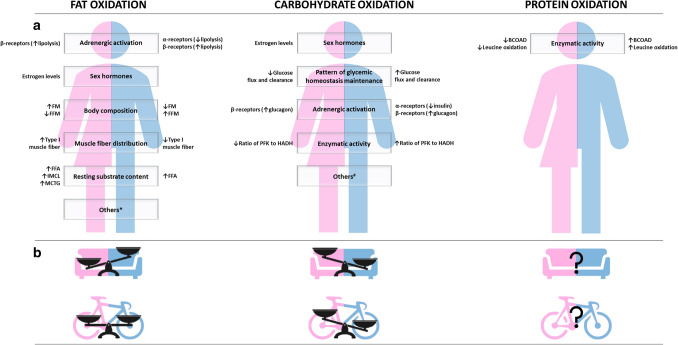
This meta-analysis of 45 studies found that, during moderate-intensity aerobic exercise, men rely more on carbohydrates than women, while sedentary women rely more on fat. The fat-oxidation difference was not seen in athletes, and the authors argue that adrenergic activation and sex hormones are the most cited candidate mechanisms.
## Key findings
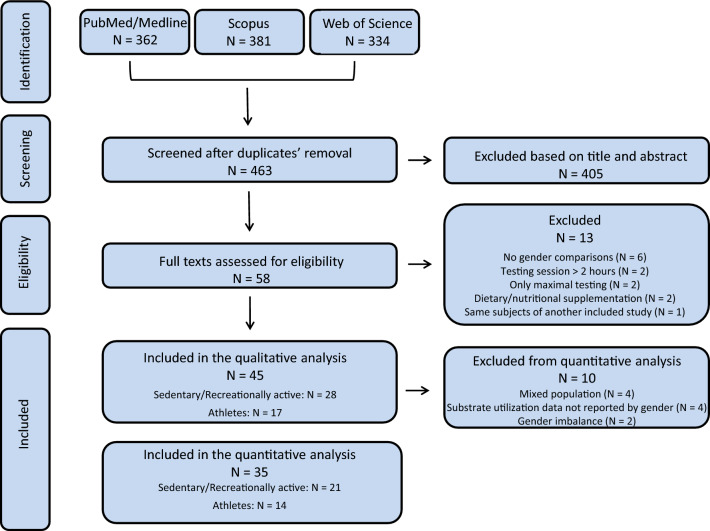
- 45 studies were included in the qualitative analysis; 35 studies entered the meta-analysis (21 sedentary/recreationally active, 14 athletic).
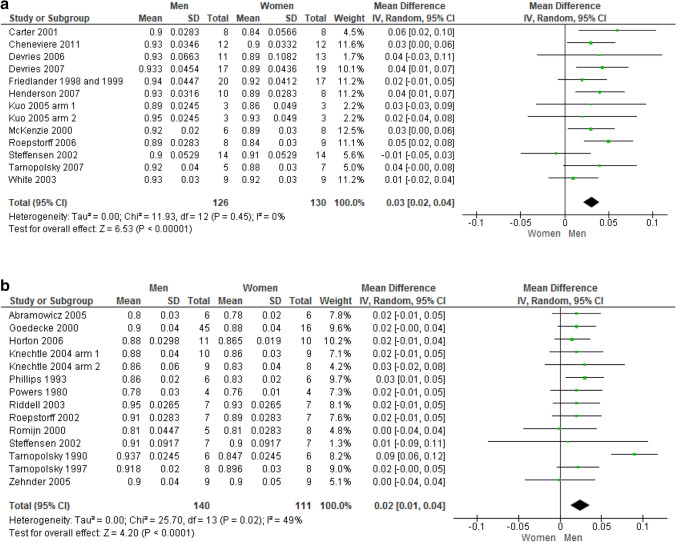
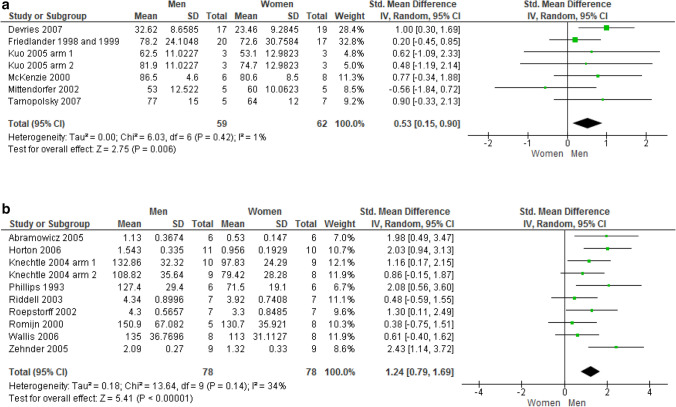
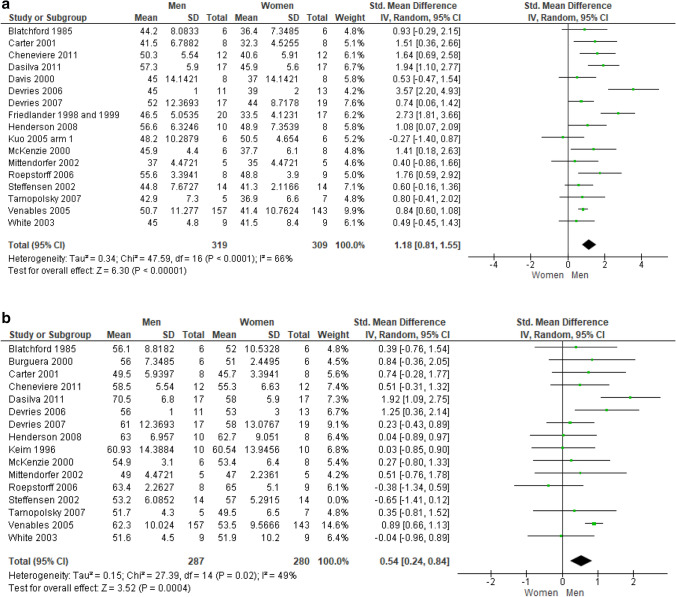
- In sedentary participants, men had higher respiratory exchange ratio (RER) than women (MD +0.03, p < 0.00001) and higher carbohydrate oxidation (SMD 0.53, p = 0.006).
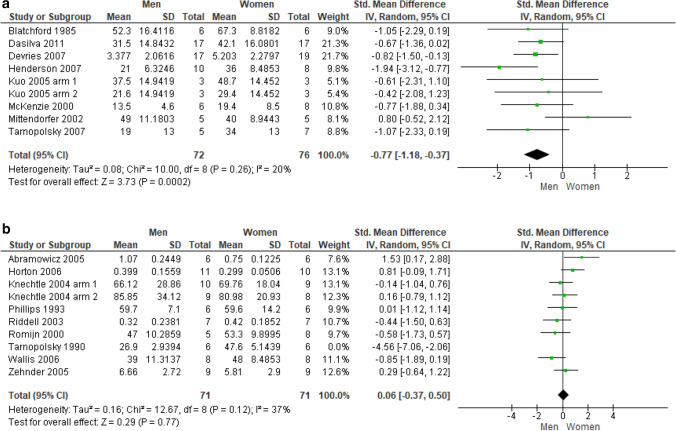
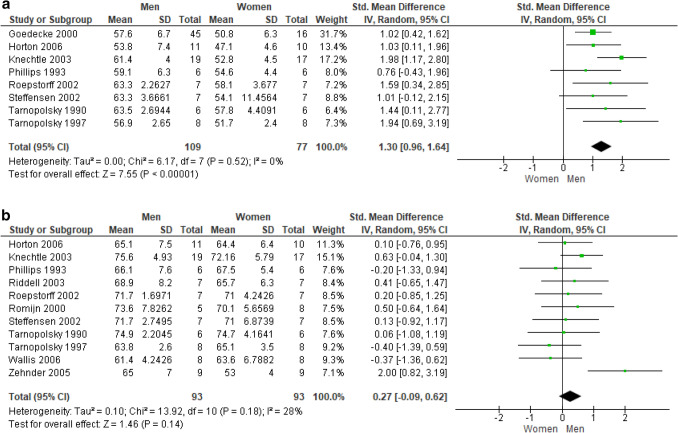
- In athletic participants, men also had higher RER (MD +0.02, p < 0.0001) and higher carbohydrate oxidation (SMD 1.24, p < 0.00001), but no sex difference in fat oxidation (SMD 0.06, p = 0.77).
- In sedentary participants, men oxidized less fat than women (SMD −0.77, p = 0.0002).
- For mechanisms, the most cited themes were adrenergic activation and sex hormones; for sedentary/recreationally active studies, fat-utilization mechanisms most often cited were adrenergic activation (13 studies) and sex hormones (10 studies).
## Methods
- Systematic review and meta-analysis following PRISMA; databases searched were PubMed/Medline, Scopus, and Web of Science from inception to August 31, 2020.
- Included healthy adults (18+ years): men and reproductive-age women; studies had to measure substrate metabolism during 30–120 min of moderate-intensity aerobic exercise (45–65% of peak O2 consumption), and sedentary/recreationally active and athletic samples were analyzed separately.
- Main analyses used random-effects meta-analysis in RevMan 5.4.1, with MD or SMD depending on outcome measurement; heterogeneity was assessed with Chi-square and I², and publication bias by funnel plots when there were at least 10 studies.
## Limitations
- The paper states that protein metabolism data were too sparse for robust meta-analysis, and that some pooled estimates were limited by methodological heterogeneity and paucity of studies.
- The authors state that most non-athlete studies mixed sedentary and recreationally active participants, and all included studies involved only young adults aged 18–35, so results are not generalizable to all age groups.
- They note that 10% of pertinent studies were excluded because they enrolled mainly men, and that diet assessment/control, menstrual cycle phase, ovarian hormonal status, and oral contraceptive use were inconsistently reported, which may limit validity.
- Evident from the text: the review could not meta-analyze several outcomes (e.g., muscle glycogen, FFA/IMCL, much of protein oxidation) because too few studies shared comparable measures or because studies were too heterogeneous.
Model-written summary. Check it against the paper before relying on it.
Integrity signals
Registry
Cites
Statistics
Figures
Verification
Claims the paper makes
18 Valid · 4 Not valid · 43 Not checked · 95 Own results and interpretations
The cited sources support only part of this claim — read each source’s verdict below.
In the paper
“Sex-based differences are well known to exist in endurance performance where, relative to body mass and composition, females would outperform males during exercise at submaximal intensities (Hunter et al. 2014).”
§ Analysis of sex-based differences in energy substrate utilization during moderate-intensity aerobic exercise > Introduction
What the sources say
- Partly supportedcites Hunter et al. 2014 matched to “Sex differences in human fatigability: mechanisms and insight to physiological responses” (2014) sourceExperimental — accuracy not yet measured
The Physiological Mechanisms section (page not available in our copy) reports that, at the same relative endurance-exercise intensity, women oxidise more fat and that sex differences in muscle properties can contribute to less fatigue in women. It does not establish that women outperform men in submaximal endurance performance after accounting for body mass and composition. (LLM, conf=0.84)
hedgedstates an association- Asserted: passes — The authors put it forward as true.
- Checkable: passes — It can be checked against evidence.
- Load-bearing: passes — The paper’s conclusions depend on it.
- Based: passes — The paper gives a reason why it holds.
- Partly supported
The sources with a verdict support this claim; the rest weren’t checked yet, have no full text we could read, or their verdicts aren’t rated yet.
In the paper
“Comparable findings have been obtained also in athletic, endurance-trained populations (Phillips et al. 1993; Knechtle et al. 2004; Riddell et al. 2003; Wallis et al. 2006).”
§ Analysis of sex-based differences in energy substrate utilization during moderate-intensity aerobic exercise > Introduction > Sex-based differences in lipid metabolism
What the sources say
- Not checked — no full text of the sourcecites Phillips et al. 1993 matched to “Gender differences in leucine kinetics and nitrogen balance in endurance athletes” (1993) source
- Not checked — no full text of the sourcecites Knechtle et al. 2004 matched to “Fat Oxidation in Men and Women Endurance Athletes in Running and Cycling” (2004) source
- Supportedcites Riddell et al. 2003 matched to “Substrate Utilization during Exercise Performed with and Without Glucose Ingestion in Female and Male Endurance-Trained Athletes” (2003) source
The Subjects section identifies the participants as female and male endurance-trained athletes. The Discussion reports that women tended to use more fat than men, with a statistically significant difference at 30 minutes in the placebo trial; it also notes that the difference was not significant at other time points. (LLM, conf=0.87)
plainstates an association- Asserted: passes — The authors put it forward as true.
- Checkable: passes — It can be checked against evidence.
- Load-bearing: unclear — It is unclear whether the paper’s conclusions depend on it.
- Based: passes — The paper gives a reason why it holds.
Every source the paper cites for this claim was checked and supports it.
In the paper
“Indeed, while women display significantly larger storages of IMCL than men (Roepstorff et al. 2002; Devries et al. 2007), experimental evidence is inconclusive on whether they also have greater capacity to use this substrate.”
§ Analysis of sex-based differences in energy substrate utilization during moderate-intensity aerobic exercise > Introduction > Sex-based differences in lipid metabolism
What the sources say
- Supportedcites Devries 2016 matched to “Sex‐based differences in endurance exercise muscle metabolism: impact on exercise and nutritional strategies to optimize health and performance in women” (2016) source
In “Sex-based differences in metabolism during exercise” (page not supplied), the review says studies of sex differences in IMCL utilization during endurance exercise have been equivocal, reporting greater, lesser, or equal utilization in women. It also notes indirect findings suggest greater capacity in women, without resolving the question. (LLM, conf=0.90)
hedged- Asserted: passes — The authors put it forward as true.
- Checkable: passes — It can be checked against evidence.
- Load-bearing: unclear — It is unclear whether the paper’s conclusions depend on it.
- Based: passes — The paper gives a reason why it holds.
- Supported
The cited sources support only part of this claim — read each source’s verdict below.
In the paper
“These results are in line with the literature on the topic outlining larger carbohydrate utilization in men by approximately 4–5% (Tarnopolsky 2000; Devries 2016).”
§ Analysis of sex-based differences in energy substrate utilization during moderate-intensity aerobic exercise > Discussion > Sex-based differences in carbohydrate utilization
What the sources say
- Not checked — no full text of the sourcecites Tarnopolsky 2000 matched to “Gender Differences in Substrate Metabolism During Endurance Exercise” (2000) source
- Partly supportedcites Devries 2016 matched to “Sex‐based differences in endurance exercise muscle metabolism: impact on exercise and nutritional strategies to optimize health and performance in women” (2016) sourceExperimental — accuracy not yet measured
The section ‘Sex-based differences in metabolism during exercise’ says that women rely less on whole-body carbohydrate oxidation than men during moderate-intensity endurance exercise, supporting the direction of the comparison. It does not give an approximately 4–5% difference in carbohydrate utilization; the magnitude attributed to this source is unsupported. (LLM, conf=0.87)
plainstates an association- Asserted: passes — The authors put it forward as true.
- Checkable: passes — It can be checked against evidence.
- Load-bearing: unclear — It is unclear whether the paper’s conclusions depend on it.
- Based: passes — The paper gives a reason why it holds.
The cited sources support only part of this claim — read each source’s verdict below.
In the paper
“Indeed, both the systemic and leg FFA lipolytic response to aerobic exercise were not different between recreationally active men and women, as stated by Burguera and colleagues (2000).”
§ Analysis of sex-based differences in energy substrate utilization during moderate-intensity aerobic exercise > Discussion > Sex-based differences in lipid utilization
What the sources say
- Partly supportedcites Burguera et al. 2000 matched to “Leg free fatty acid kinetics during exercise in men and women” (2000) sourceExperimental — accuracy not yet measured
The Abstract and Discussion report that systemic and leg FFA release increased similarly in men and women during moderate-intensity exercise. The Subjects and Subject characteristics sections describe nonobese participants of comparable fitness, but do not establish that they were recreationally active. (LLM, conf=0.83)
plain- Asserted: passes — The authors put it forward as true.
- Checkable: passes — It can be checked against evidence.
- Load-bearing: passes — The paper’s conclusions depend on it.
- Based: passes — The paper gives a reason why it holds.
- Partly supported
78 more claims · 3 with their cited sources checked
Create a free account to see all 160 claims and to verify the 5 references still open.
- It may state two separate claims as one. 45
- Probably not a substantial claim. 40
Claims other papers make about this one
Each is checked against this paper’s own text: does it say what the citing paper says it does?
The source backs part of the claim, not all of it — or backs it for a different population, condition or comparison.
In the citing paper
“These patterns are consistent with the existing literature, which indicates that body composition, particularly FFM, has a strong influcence on energy metabolism (Cano et al., 2022; Pontzer et al., 2021).”
From Acute systemic and energy metabolism responses to velocity-based resistance training following an oral glucose load in individuals with excess body weight (2026) · cites this paper as Cano et al., 2022
Experimental — accuracy not yet measuredThe source backs part of the claim, not all of it — or backs it for a different population, condition or comparison.
In the citing paper
“Possible mechanisms include elevated oestrogen levels, diminished catecholamine responses and inactivation of α‐adrenergic receptors in adipose tissue (Cano et al., 2022).”
From Acute systemic and energy metabolism responses to velocity-based resistance training following an oral glucose load in individuals with excess body weight (2026) · cites this paper as Cano et al., 2022
Experimental — accuracy not yet measured
Citations
Cites
Measuring inconsistency in meta-analyses
Higgins, J. P. T., Thompson, S. G., Deeks, J. J., & Altman, D. G. (2003) · BMJ · doi:10.1136/bmj.327.7414.557 · Cited by 63,139 · cited 1×
“1 3 a value > 50% was considered indicative of significant heterogeneity (Higgins et al. 2003).”
BackgroundLiberati, A., Altman, D. G., Tetzlaff, J., Mulrow, C., Gøtzsche, P. C., Ioannidis, J. P. A., Clarke, M., Devereaux, P. J., Kleijnen, J., & Moher, D. (2009) · PLoS Medicine · doi:10.1371/journal.pmed.1000100 · Cited by 28,164 · cited 1×
“Methods The Preferred Reporting Items for Systematic Reviews and Meta-Analyses (PRISMA) guidelines and flowchart diagram were used as a reporting structure for this meta-analysis (Liberati et al. 2009).”
MethodDermyshi, E., Wang, Y., Yan, C., Hong, W., Qiu, G., Gong, X., & Zhang, T. (2017) · Neonatology · doi:10.1159/000454668 · Cited by 24,451
Liberati, A., Altman, D. G., Tetzlaff, J., Mulrow, C., Gøtzsche, P. C., Ioannidis, J. P. A., Clarke, M., Devereaux, P. J., Kleijnen, J., & Moher, D. (2009) · Journal of Clinical Epidemiology · doi:10.1016/j.jclinepi.2009.06.006 · Cited by 10,578
Sterne, J. A. C., Sutton, A. J., Ioannidis, J. P. A., Terrin, N., Jones, D. R., Lau, J., Carpenter, J., Rucker, G., Harbord, R. M., Schmid, C. H., et al. (2011) · BMJ · doi:10.1136/bmj.d4002 · Cited by 7,709
A basic introduction to fixed-effect and random-effects models for meta-analysis
Borenstein, M., Hedges, L. V., Higgins, J. P. T., & Rothstein, H. R. (2010) · Research Synthesis Methods · doi:10.1002/jrsm.12 · Cited by 6,793 · cited 1×
“A random-effects model was chosen for all meta-analyses to account for potential methodological differences in the assessment and training protocols across studies, as conventionally done in biomedical research (Borenstein et al. 2010).”
MethodFletcher, G. F., Balady, G. J., Amsterdam, E. A., Chaitman, B., Eckel, R., Fleg, J., Froelicher, V. F., Leon, A. S., Piña, I. L., Rodney, R., et al. (2001) · Circulation · doi:10.1161/hc3901.095960 · Cited by 1,923
Bias and causal associations in observational research
Grimes, D. A., & Schulz, K. F. (2002) · The Lancet · doi:10.1016/s0140-6736(02)07451-2 · Cited by 1,553
Elliott-Sale, K. J., Minahan, C. L., de Jonge, X. A. K. J., Ackerman, K. E., Sipilä, S., Constantini, N. W., Lebrun, C. M., & Hackney, A. C. (2021) · Sports Medicine · doi:10.1007/s40279-021-01435-8 · Cited by 731
Fiber Type Composition of the Vastus Lateralis Muscle of Young Men and Women
Staron, R. S., Hagerman, F. C., Hikida, R. S., Murray, T. F., Hostler, D. P., Crill, M. T., Ragg, K. E., & Toma, K. (2000) · Journal of Histochemistry & Cytochemistry · doi:10.1177/002215540004800506 · Cited by 730
Cited by
HUNTER, S. K., S. ANGADI, S., BHARGAVA, A., HARPER, J., HIRSCHBERG, A. L., D. LEVINE, B., L. MOREAU, K., J. NOKOFF, N., STACHENFELD, N. S., & BERMON, S. (2023) · Medicine & Science in Sports & Exercise · doi:10.1249/mss.0000000000003300 · Cited by 241
D’Souza, A. C., Wageh, M., Williams, J. S., Colenso-Semple, L. M., McCarthy, D. G., McKay, A. K. A., Elliott-Sale, K. J., Burke, L. M., Parise, G., MacDonald, M. J., et al. (2023) · Journal of Applied Physiology · doi:10.1152/japplphysiol.00346.2023 · Cited by 144
Sex Differences in Human Performance
Hunter, S. K., & Senefeld, J. W. (2024) · The Journal of Physiology · doi:10.1113/jp284198 · Cited by 153
“During endurance exercise at a similar intensity, females oxidize more fat, less carbohydrate and less amino acids than males (Cano et al., 2022; Horton et al., 1998; Lamont et al., 2001; Tarnopolsky, 2008; Tarnopolsky et al., 1990; Venables et al., 2005).”
Holzer, R., Bloch, W., & Brinkmann, C. K. (2022) · Sensors · doi:10.3390/s22052030 · Cited by 130
Oosthuyse, T., Strauss, J. A., & Hackney, A. C. (2022) · European Journal of Applied Physiology · doi:10.1007/s00421-022-05090-3 · Cited by 70
Hunter, S. K., Angadi, S. S., Bhargava, A., Harper, J., Hirschberg, A. L., Levine, B. D., Moreau, K. L., Nokoff, N. J., Stachenfeld, N. S., & Bermon, S. (2023) · Translational Journal of the American College of Sports Medicine · doi:10.1249/tjx.0000000000000236 · Cited by 43
Sex Differences in Energy Metabolism: A Female-Oriented Discussion
Sanchez, B. N., Volek, J. S., Kraemer, W. J., Sáenz, C., & Maresh, C. M. (2024) · Sports Medicine · doi:10.1007/s40279-024-02063-8 · Cited by 46
“Differences in adrenergic activation between females and males are the most cited reason for the larger reliance on lipid sources and observed differences in carbohydrate utilization for energy in sedentary, recreationally active, and athletic females, according to a recent meta-analysis [20].”
InfluentialChávez-Guevara, I. A., Hernández‐Torres, R. P., González-Rodríguez, E., Ramos‐Jiménez, A., & Amaro‐Gahete, F. J. (2022) · European Journal of Applied Physiology · doi:10.1007/s00421-022-04936-0 · Cited by 31
Does Caffeine Increase Fat Metabolism? A Systematic Review and Meta-Analysis
Conger, S. A., Tuthill, L. M., & Millard-Stafford, M. L. (2023) · International Journal of Sport Nutrition and Exercise Metabolism · doi:10.1123/ijsnem.2022-0131 · Cited by 28
“These include the CAF dose administered and individual variability in the response to CAF, specifically when comparing men to women who may rely on fat metabolism to a greater degree (Cano et al., 2022).”
BackgroundChávez-Guevara, I. A., Amaro‐Gahete, F. J., Ramos‐Jiménez, A., & Brun, J. ‐. (2023) · Sports Medicine · doi:10.1007/s40279-023-01897-y · Cited by 34
“On the other hand, previous studies in young healthy individuals have consistently reported a sexual dimorphism in exercise fat oxidation [16, 103, 104]; nevertheless, our meta-regression analyses revealed that biological sex is not a critical determinant of MFO and FATmax in patients with obesity.”
ResultEnergy and Macronutrients Intake in Indoor Sport Team Athletes: Systematic Review
Castillo, M., Lozano‐Casanova, M., Sospedra, I., Norte, A., Gutiérrez-Hervás, A., & Sanz, J. M. M. (2022) · Nutrients · doi:10.3390/nu14224755 · Cited by 45
“As we have observed, there are few studies showing intakes in line with recommendations for both energy and all macronutrients in female athletes, so perhaps it is worth asking whether the recommendations should be adjusted to their actual/real/specific needs? [93,95,97,98].”
ResultExploring Gender Differences in the Effects of Diet and Physical Activity on Metabolic Parameters
Gorini, S., Camajani, E., Feraco, A., Armani, A., Karav, S., Filardi, T., Aulisa, G., Cava, E., Strollo, R., Padua, E., et al. (2025) · Nutrients · doi:10.3390/nu17020354 · Cited by 29
“Both aerobic and anaerobic activities significantly influenced TC and LDL levels, reducing cardiovascular risk in both sexes, with gender-specific adaptations reflecting hormonal and physiological differences [31].”
Age‐related changes of skeletal muscle metabolic response to contraction are also sex‐dependent
Campbell, M. D., Djukovic, D., Raftery, D., & Marcinek, D. J. (2023) · The Journal of Physiology · doi:10.1113/jp285124 · Cited by 18
“At rest and during exercise, men and women utilize substrates for energetic demand at different rates (Cano et al., 2022).”
Benítez‐Muñoz, J. A., Rojo‐Tirado, M. Á., Benito, P. J., Murias, J. M., González‐Lamuño, D., & Cupeiro, R. (2024) · International Journal of Sports Physiology and Performance · doi:10.1123/ijspp.2024-0079 · Cited by 18
Skinfold Thickness as a Cardiometabolic Risk Predictor in Sedentary and Active Adult Populations
González-Torres, S., Esparza, L. M. A., Valle, G., Rivera-León, E. A., Villagrán, Z., & Sánchez‐Enríquez, S. (2023) · Journal of Personalized Medicine · doi:10.3390/jpm13091326 · Cited by 22
“Also, it has been evidenced that women oxidize more lipids than men during moderate-intensity exercise [34].”
BackgroundFemales have better metabolic flexibility in different metabolically challenging stimuli
Benítez‐Muñoz, J. A., Guisado‐Cuadrado, I., Rojo‐Tirado, M. Á., Alcocer‐Ayuga, M., Romero‐Parra, N., Peinado, A. B., & Cupeiro, R. (2024) · Applied Physiology, Nutrition, and Metabolism · doi:10.1139/apnm-2024-0217 · Cited by 17
Exercise Testing for Metabolic Flexibility: Time for Protocol Standardization
Lovell, D. I., Stuelcken, M., & Eagles, A. N. (2025) · Sports Medicine - Open · doi:10.1186/s40798-025-00825-w · Cited by 15
“Sex Most studies have reported significant differences in fat oxidation between males and females with differences further increased when values are normalised relative to body mass and composition [65].”
Zhang, Y., Zhang, Z., Martínez‐Téllez, B., Di, X., Kindt, A. S. D., Köhler, I., Osuna‐Prieto, F. J., Clark, C., Drouin, N., Harms, A. C., et al. (2025) · EBioMedicine · doi:10.1016/j.ebiom.2025.105849 · Cited by 11
“36,37 This sex-specific difference is influenced by hormonal factors, particularly oestrogen.”
D’Souza, N. C., Kesibi, D., Yeung, C., Shakeri, D., D’Souza, A. I., Macpherson, A., & Riddell, M. C. (2023) · Sensors · doi:10.3390/s23229059 · Cited by 15
“Our findings conflict somewhat with the repeated observations that women tend to rely more on lipids as fuel than carbohydrates during exercise [46], but are possible given that women tend to have lower glucagon levels and reduced hepatic glucose production during exercise as compared with men [47].”
BackgroundSolleiro Pons, M., Bernert, L., Hume, E., Hughes, L., Williams, Z. J., Burnley, M., & Ansdell, P. (2024) · Journal of Applied Physiology · doi:10.1152/japplphysiol.00429.2023 · Cited by 9
Hamilton, R., McCarthy, O. M., Bain, S. C., & Bracken, R. M. (2024) · European Journal of Sport Science · doi:10.1002/ejsc.12201 · Cited by 12
“With this in mind and given the inherent sex differences in physiological and metabolic responses to exercise (Cano et al., 2022; Elliott - Sale et al., 2021; Tarnopolsky et al., 1990; Wismann & Wil-loughby, 2006), more female - focused research in professional cycling is warranted in an attempt to…”
BackgroundChávez-Guevara, I. A. (2023) · Sports Medicine and Health Science · doi:10.1016/j.smhs.2023.02.001 · Cited by 8
Löfberg, I. E., Karppinen, J. E., Laatikainen‐Raussi, I., Ihalainen, J. K., Lehti, M., Hackney, A. C., & Taipale, R. S. (2025) · Medicine & Science in Sports & Exercise · doi:10.1249/mss.0000000000003676 · Cited by 11
“Several studies have shown that women use more fatty acids and less carbohydrates than men at the same relative intensity of aerobic exercise (5 – 7), which is at least partly due to hormonal factors that affect energy production pathways (7).”
Chávez-Guevara, I. A., Amaro‐Gahete, F. J., Osuna‐Prieto, F. J., Labayen, I., Aguilera, C. M., & Ruiz, J. R. (2023) · Biochemical Pharmacology · doi:10.1016/j.bcp.2023.115757 · Cited by 11
Karlsson, Ø., Govus, A. D., McGawley, K., & Hanstock, H. G. (2024) · Sports Medicine - Open · doi:10.1186/s40798-024-00770-0 · Cited by 10
“Higher concentrations of acylcarni-tines in men may be explained by a greater food intake in men compared with women [33] and differences in acylcarnitine concentrations may relate to sex-based variations in fat metabolism [34, 35], but this might not be the case in athletes [36].”
Improving Endurance Exercise Performance at High Altitude: Traditional and Nontraditional Approaches
Salgado, R. M., Ryan, B. J., Seeley, A. D., & Charkoudian, N. (2024) · Exercise and Sport Sciences Reviews · doi:10.1249/jes.0000000000000347 · Cited by 15
Effects of exercise on whole‐blood transcriptome profile in children with overweight/obesity
Altmäe, S., Plaza‐Florido, A., Esteban, F. J., Anguita‐Ruiz, A., Krjutškov, K., Katayama, S., Einarsdóttir, E., Kere, J., Radom‐Aizik, S., & Ortega, F. B. (2023) · American Journal of Human Biology · doi:10.1002/ajhb.23983 · Cited by 7
“Also, some research showed that women have a greater reliance on fat oxidation than men during submaximal exercise (Cano et al., 2022; Chenevière et al., 2011), while a one year long-term endurance training intervention showed a greater decrease in body fat percentage in females compared to males…”
BackgroundSexual Dimorphism in Substrate Metabolism During Exercise
Abo, S. M. C., Casella, E., & Layton, A. T. (2024) · Bulletin of Mathematical Biology · doi:10.1007/s11538-023-01242-4 · Cited by 7
“Importantly, hormonal and enzymatics aspects, in addition to histological factors, contribute to sex differences in performance, fatigability, and substrate handling and may have confounding effects (Cano et al. 2022).”
InfluentialWillems, M. E. T., & Cook, M. D. (2025) · Nutrients · doi:10.3390/nu17060997 · Cited by 5
“The findings of the present study suggest that existing differences in metabolic function during moderate-intensity exercise between females and males (e.g., for a review, see [30]) do not result in a gender-specific metabolic response to the intake of New Zealand blackcurrant extracts.”
López‐Moreno, M., Fresán, U., Coso, J. D., Muñoz, A., Aguilar‐Navarro, M., López, M. T. I., Amaro‐Gahete, F. J., & Gutiérrez‐Hellín, J. (2025) · Nutrients · doi:10.3390/nu17142274 · Cited by 6
“Women are known to rely more on fat as a substrate during submaximal exercise compared to men [46,47], potentially leading to different physiological responses to dietary changes.”
Fernicola, J., Vyavahare, S. S., Gupta, S. K., Kalwaghe, A., Kosmac, K., Davis, A. J., Nicholson, M. S., Isales, C. M., Shinde, R. S., & Fulzele, S. (2024) · International Journal of Molecular Sciences · doi:10.3390/ijms25147601 · Cited by 6
“Previous work also shows that men and women utilize carbohydrates, proteins, and lipids at different rates at rest and during exercise [21]. rhabdomyosarcoma muscle samples [24].”
BackgroundRubio-Valles, M., Amaro‐Gahete, F. J., Creasy, S. A., Ramos‐Jiménez, A., Pérez-León, J. A., & Chávez-Guevara, I. A. (2024) · Sports Medicine · doi:10.1007/s40279-024-02154-6 · Cited by 8
“This has been attributed to elevated adipose tissue lipolysis, increased intramyocellular lipid concentrations, and greater skeletal muscle oxidative capacity [79].”
Muñoz, A., Aguilar‐Navarro, M., Ruíz‐Moreno, C., Varillas‐Delgado, D., Amaro‐Gahete, F. J., Gutiérrez‐Hellín, J., Coso, J. D., & López‐Samanes, Á. (2023) · European Journal of Applied Physiology · doi:10.1007/s00421-023-05312-2 · Cited by 7
“…it is unknown if caffeine increases MFO in the same proportion during morning and evening exercise trials in women according to what has been previously established that women have a greater reliance on fat oxidation than men during submaximal exercise (Cano et al. 2022; Chenevière et al. 2011).”
Liu, D., Zhang, F., Zhang, Y., Wu, Y., Lu, J., Dong, C., Xiao, Y., Xiao, X., Zhang, J., & Feng, Q. (2024) · BMC Pediatrics · doi:10.1186/s12887-024-04910-z · Cited by 8
Leahy, M. G., Benbaruj, J. M., Payne, O. T., Foster, G. E., & Sheel, A. W. (2023) · Applied Physiology, Nutrition, and Metabolism · doi:10.1139/apnm-2023-0387 · Cited by 6
Exercise and Immunity: Beliefs and Facts
López, P., Chamorro-Viña, C., Gómez-García, M., & Fernández-del-Valle, M. (2023) · Springer eBooks · doi:10.1007/978-3-031-15485-0_28 · Cited by 5
Ferri-Marini, C., Garcia Murillo, O. G., Corral-Castillo, D. A., Amaro-Gahete, F. J., Peric, R., & Chavez Guevara, I. A. (2026) · International Journal of Sport Nutrition and Exercise Metabolism · doi:10.1123/ijsnem.2025-0108 · Cited by 4
Dean, E., Osborne, A., Subar, D. A., Hendrickse, P. W., & Gaffney, C. J. (2025) · Experimental Physiology · doi:10.1113/ep093136 · Cited by 6
Estradiol enhances influenza vaccine responses through B cell metabolic reprogramming in female mice
Clair, L. A. S., Watters, E. G., Yin, A., Liu, J. A., Chaulagain, S., Thompson, E. A., & Klein, S. L. (2026) · mBio · doi:10.1128/mbio.03965-25 · Cited by 3
Willems, M. E. T., Bray, P. W., Bassett, H. M., Spurr, T. J., & West, A. T. (2024) · Journal of Functional Morphology and Kinesiology · doi:10.3390/jfmk9020076 · Cited by 3
“Women tend to have lower respiratory exchange ratio values during moderate-intensity aerobic exercise [34] and low-level isometric exercise [35].”
BackgroundRamírez‐Vélez, R., Carrillo, H. A., Atencio‐Osorio, M. A., Albán, C. A. L., Calderón-González, J. C., Morales‐Álamo, D., Izquierdo, M., & Correa‐Rodríguez, M. (2024) · Clinical Nutrition ESPEN · doi:10.1016/j.clnesp.2024.11.005 · Cited by 3
Marzolini, S., Oh, P., Peterman, J. E., Wallace, P. J., Yadollahi, A., Rivera-Theurel, F., Carvalho, C., & Kaminsky, L. A. (2024) · Canadian Journal of Cardiology · doi:10.1016/j.cjca.2024.11.022 · Cited by 6
Sex Hormones and Substrate Metabolism During Endurance Exercise
Isacco, L., & Boisseau, N. (2023) · Springer eBooks · doi:10.1007/978-3-031-21881-1_2 · Cited by 4
Using Metabolic Testing to Personalize Behavioral Obesity Treatment
Epstein, L. H., Apolzan, J. W., Moore, M., Neuwald, N. V., & Faith, M. S. (2025) · Obesity Science & Practice · doi:10.1002/osp4.70065 · Cited by 3
“Women are thought to have lower RQ values suggesting higher fat (vs. carbohydrate) oxidation rates especially during exercise [149, 150].”
Sexual dimorphism in the serum metabolome following acute exhaustive exercise
Wu, B., Tang, C., Ren, Z., Qian, J., Deng, Y., Fan, Z., Zhang, Y., & Shi, L. (2025) · Biology of Sex Differences · doi:10.1186/s13293-025-00780-x · Cited by 7
“Previous studies have established that during submaximal exercise, females demonstrate enhanced fat oxidation while males exhibit greater carbohydrate utilization, with these differences attributed to sex hormone profiles, body composition variations, and enzymatic activities [26–28].”
Nameni, F., & Kasiri, A. (2025) · Scientific Reports · doi:10.1038/s41598-025-31956-5 · Cited by 3
“Women also rely more on lipid substrates and less on carbohydrate oxidation during submaximal exercise 36 .”
Modulation of fatty acid metabolism via lactate-HCA1 signaling: potential therapeutic implications
Chávez-Guevara, I. A., Fernández-Escabías, M., Hernández-Lepe, M. A., & Amaro‐Gahete, F. J. (2025) · American Journal of Physiology-Cell Physiology · doi:10.1152/ajpcell.00969.2024 · Cited by 3
Menopause and Body Composition: A Complex Field
Juppi, H., Karppinen, J. E., & Laakkonen, E. K. (2025) · Seminars in Reproductive Medicine · doi:10.1055/s-0045-1809531 · Cited by 9
“Women typically oxidize more fat than men during submaximal exercise, 154 yet no consistent effect of menstrual cycle phase on substrate use has been identi fi ed.”
Ultra-endurance performance: Are women closing the gap? A systematic review and meta-analysis
Sitko, S., López‐Laval, I., Cirer-Sastre, R., & Valenzuela, P. L. (2025) · International Journal of Sports Science & Coaching · doi:10.1177/17479541251354909 · Cited by 4
“7,8 Moreover, women also present higher levels of subcutaneous body fat, which might be bene fi cial in some speci fi c events such as ultra-distance swimming.”
Physiological sex differences in response to exercise
Nicholas, M., Makubuya, T., Kamwebaze, M., Mwase, M., Ojara, R. R., Opio, P., Linika, L., & Nahwera, L. (2025) · Turkish Journal of Kinesiology · doi:10.31459/turkjkin.1692902 · Cited by 5
Carrillo‐Arango, H. A., Atencio‐Osorio, M. A., Ordoñez‐Mora, L. T., Benitez‐Gómez, B., Ramírez‐Vélez, R., & Izquierdo, M. (2026) · Experimental Physiology · doi:10.1113/ep093162 · Cited by 1
Astorino, T. A., MacDonald, A. J., Anderson, A., Lauritzen, H., Pinter, R., Schepper, H., & Ferguson, D. (2026) · European Journal of Applied Physiology · doi:10.1007/s00421-025-06001-y · Cited by 1
Irvine, C. J., Browning, M., Brustia, S., Carter, V., Beridon, D., Gordon, R. A., & Sokoloski, M. L. (2024) · Journal of Exercise and Nutrition · doi:10.53520/jen2024.103161 · Cited by 1
“3 One important contributing factor that may have influenced the acute effect of caffeine on substrate utilization during exercise is training status.”
BackgroundInfluentialKarelina, K., Corbin, D. R., Gumbo, C. T., Payne, T. L., Reger, E., Barr, J., Oldham, M., Shoemaker, B., Muthu, S., Meadows, E. M., et al. (2025) · Frontiers in Physiology · doi:10.3389/fphys.2025.1700462 · Cited by 1
Chapela, S. P., Cagua-Ordoñez, J. C., Parise-Vasco, J. M., Tettamanti, D., Kecskes, C., Llobera, N. D., Asparch, J., Rella, M., Peroni, M. V., Montalván, M., et al. (2026) · Journal of Clinical Medicine · doi:10.3390/jcm15051677 · Cited by 1
“Supporting this interpretation, a meta-analysis by Cano et al. demonstrated lower respiratory exchange ratios and greater fat oxidation in women [45], potentially driven by higher expression of genes involved in free fatty acid transport.”
McManus, L., Brady, A. J., & Egan, B. (2026) · International Journal of Sport Nutrition and Exercise Metabolism · doi:10.1123/ijsnem.2025-0164 · Cited by 1
Hur, H. J., Yang, H. J., Kim, M. J., Jang, H.-J., Lee, B.-K., Kim, M.-S., & Park, S. (2026) · Nutrition & Metabolism · doi:10.1186/s12986-026-01116-1 · Cited by 2
“The finding that mixed grain intake was the only KHEI component associated with MetS in men aligns with sex differences in substrate utilization: women rely more on lipid oxidation while men preferentially oxidize carbohydrates [30, 31].”
Seasonal variations in vascular endothelial function and physical activity in men
Honda, H., & Igaki, M. (2021) · Journal of Men s Health · doi:10.31083/jomh.2021.136 · Cited by 2
“A recent review showed that carbohydrate oxidation during moderate aerobic exercise was greater in sedentary men compared with women, while lipid oxidation was lower in men [95].”
BackgroundDuration Effects on Wingate and Functional Power Threshold Test Outputs in Female Cyclists
Sendra‐Pérez, C., Oficial‐Casado, F., Martínez, A. E., & Priego‐Quesada, J. I. (2022) · International Journal of Sports Medicine · doi:10.1055/a-1993-2545 · Cited by 1
Sex- and endurance training-mediated cardiovascular protection through lipids during exercise
An, J., Thorson, A. S., Wasserman, D. H., Stafford, J. M., & Zhu, L. (2024) · Trends in Endocrinology and Metabolism · doi:10.1016/j.tem.2024.12.004 · Cited by 1
Mobile Gamers versus Non-gamer students’ endurance levels via Beep and 3-minute step test
Lobo, J., & Bernardo, B. D. M. (2023) · Pedagogy of Physical Culture and Sports · doi:10.15561/26649837.2023.0107 · Cited by 1
PARTEN, A. L., SMITH-RYAN, A. E., SANCHEZ, K. M., HEARD, S. A., O’NEAL, E. K., MCALLISTER, M. J., LYONS, T. S., & WALDMAN, H. S. (2026) · Medicine & Science in Sports & Exercise · doi:10.1249/mss.0000000000004022
Kuo, T.-Y. (2022) · ISU Red - Research and eData (Illinois State University) · doi:10.30707/etd2022.20220705065051960749.999987
Liu, D., Zhang, F., Zhang, Y.-M., et al. (2023) · Research Square · doi:10.21203/rs.3.rs-2889916/v1
Age and sex dependent effects of metabolic response to muscle contractionPreprint
Campbell, M. D., Djukovic, D., Raftery, D., & Marcinek, D. J. (2023) · bioRxiv (Cold Spring Harbor Laboratory) · doi:10.1101/2023.05.30.542769
“At rest and during exercise men and women utilize substrates for energetic demand at different rates [36].”
BackgroundMorrone, M., Boi, A., Meloni, M., Martinez, G., Ventura, L., Pusole, M., Ghiani, G. M., Crisafulli, A., Bandiera, P., Cugusi, L., et al. (2023) · European Journal of Applied Physiology · doi:10.1007/s00421-023-05330-0 · Cited by 1
“However, this result needs careful interpretation as energy substrate patterns of utilization are better estimated through steady-state stints of aerobic exercise performed at moderate-intensity, generally between 40 and 60% of peak O 2 uptake (Cano et al. 2022).”
BackgroundSelf-citation(2023) · CABI eBooks · doi:10.1079/9781789247282.0007
Wong, M. W. H., Davis, D. W., Perez, O. R., Weyers, B., Green, D. M., Garcia, A. V., & Navalta, J. W. (2025) · International journal of exercise science · doi:10.70252/ubix5911
The impact of hormonal contraceptives on skeletal muscle hypertrophy
Markov, N., & Arčon, M. (2025) · Exercise and Quality of Life · doi:10.31382/preprint.000103
Bagot, S., Ramos, I., Miles-Chan, J. L., Dulloo, A. G., Hackney, A. C., Boirie, Y., Duclos, M., Thivel, D., & Isacco, L. (2025) · Applied Physiology, Nutrition, and Metabolism · doi:10.1139/apnm-2024-0376
Sex Differences in the EXerCise Introduction to Enhance Performance in Dialysis Trial
Mallamaci, F., Bratsiakou, A., D’Arrigo, G., Tripepi, G., Lamberti, N., Torino, C., Manfredini, F., & Zoccali, C. (2025) · Clinical Journal of the American Society of Nephrology · doi:10.2215/cjn.0000000759
Padmapriya, N., Sadananthan, S. A., Michael, N., Tint, M., Tan, S. Y. X., Chia, A., Kway, Y. M., Cai, S., Toh, J. Y., Tan, K. H., et al. (2026) · International Journal of Obesity · doi:10.1038/s41366-025-01969-1
Habibpour, H., Nikpour, M., Ledari, F. M., Behmanesh, F., & Pasha, H. (2026) · BMC Pregnancy and Childbirth · doi:10.1186/s12884-026-08984-8
“Cano et al. (2021) indicated that physiological responses to exercise differ between men and women, and that female sex hormones (estrogen and progesterone), which undergo substantial changes during pregnancy, influence energy metabolism and muscle fatigue [34].”
The Positive Effects of Exercise on Adolescent Growth and Development
Shahrbanian, S. (2026) · Advances in experimental medicine and biology · doi:10.1007/978-981-95-7000-3_11
Xiao, X., Moon, S., Kim, Y. C., & Choi, Y. (2026) · Bioengineering · doi:10.3390/bioengineering13040429
“Female athletes exhibit distinct physiological characteristics including differences in substrate utilization [21], hormonal fluctuations [22], and potentially different recovery kinetics [23].”
Adaptations énergétiques aux variations de poids et au statut hormonal ovarien chez les athlètes
Bagot, S. (2024) · theses.fr (ABES) · doi:10.70675/13a08bf4ze417z4cb4z80cfz47892200b6c8
MoTrPAC Study Group, Brandt, A. R., Fleg, J., Goodpaster, B. H., Jaeger, B. C., Jin, C. A., Johannsen, N. M., Katz, D. H., Keshishian, H., Kohrt, W. M., et al. (2026) · bioRxiv (Cold Spring Harbor Laboratory) · doi:10.64898/2026.03.02.705347 · Cited by 3
Dikalova, A., & Dikalov, S. (2026) · Clinical Science · doi:10.1042/cs20250226
“Meanwhile, male metabolism has a higher reliance on carbohydrates and higher rates of glycolysis [33,35].”
Sex-specific marathon-induced metabolome changesPreprint
Venter, L., Mason, S., Terblanche, S. E., Clifford, T., Stevenson, E., Howatson, G., & Loots, D. T. (2026) · Research Square · doi:10.21203/rs.3.rs-9813393/v1
Seffrin, A., Villiger, E., Andrade, M. S., Rosemann, T. J., Weiss, K., & Knechtle, B. (2026) · Scientific Reports · doi:10.1038/s41598-026-56334-7
Similar flight performance but sex-specific mitochondrial responses in free-flying pigeons
Casagrande, S., Gómez‐Laich, A., & Dell’Omo, G. (2026) · Biology Letters · doi:10.1098/rsbl.2026.0225
Mommy issues: how maternal diet shapes offspring mitochondrial physiology
Gomez-Sharma, A., & McCurdy, C. E. (2026) · Journal of Animal Science · doi:10.1093/jas/skag208 · Cited by 1
Vegetarian diets in female athletes: performance, health outcomes, and the implementation gap
López‐Moreno, M., Pérez-Díaz-del-Campo, N., Villa, N., Leszczyńska, P. M., Sánchez-Infante, J., & Marrero‐Fernández, P. (2026) · Frontiers in Nutrition · doi:10.3389/fnut.2026.1901139
Carrillo, H. A., Atencio‐Osorio, M. A., Chávez-Guevara, I. A., Chavez-Guevara, I. A., Izquierdo, M., & Ramírez‐Vélez, R. (2026) · Clinical Nutrition ESPEN · doi:10.1016/j.clnesp.2026.105056
Wanifuchi, M., Miyaguchi, A., Hiramatsu, J., Yamase, H., Kamemoto, K., Matsuda, T., Yamada, M., & Sakamaki‐Sunaga, M. (2026) · International Journal of Sport Nutrition and Exercise Metabolism · doi:10.1123/ijsnem.2026-0081
de Kam, S. S., Reed, T. D., Rutters, F., Campbell, D. N., Raina, P. S., de Mutsert, R., Després, J., Hoeks, J., Blondin, D. P., Carpentier, A. C., et al. (2026) · Diabetologia · doi:10.1007/s00125-026-06871-7
O'Neal, E. K., Knight, S. N., Bowling, L. R., Scudamore, E. M., Scudamore, V., & Waldman, H. S. (2026) · The Journal of Strength and Conditioning Research · doi:10.1519/jsc.0000000000005708
Metadata
- Authors
- Cano, A., Ventura, L., Martinez, G., Cugusi, L., Caria, M., Deriu, F., & Manca, A.
- Affiliations
- University of Sassari (IT)
- Corresponding author
- Deriu, Franca
- Venue
- European Journal of Applied Physiology
- Published
- 2021-09-22
- Volume
- 122
- Issue
- 1
- Pages
- 29-70
- ISSN
- 0020-9376 (ISSN-L)
- 1439-6319
- 1439-6327
- PMC
- PMC8748379
- OpenAlex
- W3201091872
- Cited by
- 92
- References
- 80
- Citations by year
- 2026: 22 · 2025: 21 · 2024: 22 · 2023: 19 · 2022: 7 · 2021: 1
- FWCI
- 1.61
- Type
- journal article
- Language
- en
- Update notices
- correction (2022-05-05)
- Open access
- hybrid
- doi.org
- Licence
- cc-by
- creativecommons.org/licenses/by/4.0 (tdm)
- creativecommons.org/licenses/by/4.0 (vor)
- Locations
- European Journal of Applied Physiology (publishedVersion, cc-by)
- PubMed Central (publishedVersion, cc-by)
- PubMed (publishedVersion)
- UnissResearch (Università degli Studi di Sassari) (submittedVersion, cc-by)
- Funders
- Università degli Studi di Sassari
- Topics
- Health Sciences › Nursing › Nutrition and Dietetics › Muscle metabolism and nutrition
- Health Sciences › Medicine › Physiology (medical) › Cardiovascular and exercise physiology
- Health Sciences › Medicine › Orthopedics and Sports Medicine › Sports Performance and Training
- Keywords
- sex differences, energy substrate utilization, moderate-intensity aerobic exercise, carbohydrate oxidation, fat oxidation, protein oxidation, respiratory exchange ratio, sex hormones, adrenergic stimulation, sedentary women
- MeSH terms
- Energy Metabolism, Female, Humans, Male, Oxidation-Reduction, Sex Factors, Exercise, Carbohydrate Metabolism, Lipid Metabolism
About these checks
Registry, retraction, Cites and statistics results are computed, not judged, with one exception: a printed reference that no index lists is read once by a model before it counts as a citation error. Claims are extracted by a model and kept only when their quote appears verbatim in the text; each cited source is then checked, with a model’s help, for whether it says what the claim relies on. Those verdicts can be wrong — read the claim’s quote and the cited source before relying on one.
The claim verdicts this report counts are experimental: their accuracy is not yet measured.
A language model drew the claims from the paper on 2026-09-28, under version 3 of the claim definition (model deepseek-v4.1-flash, prompt extract-v3).
A second model labelled each claim on 2026-09-28 (model jev-1.13-20260917, definition revision gold-guideline-v0.2).
Cited sources are checked with a language model’s help (gpt-6-sol).
Statistics and arithmetic are recomputed, not judged.
Confidence bands are shown only for fields calibrated on our annotated test set. None is calibrated yet, so no band is shown.
What counts as a claim ›How we measure confidence ›How we check this ›
Are you an author, or do you see a problem with this page? Request a review
Data sources
Bibliographic data: Semantic Scholar, OpenAlex, Crossref.
Contains information from the Semantic Scholar Academic Graph Datasets, made available under the ODC Attribution License (ODC-BY 1.0).
Semantic Scholar’s data is described in: Kinney, R., et al. (2023). The Semantic Scholar Open Data Platform. arXiv:2301.10140.
