

Planning and navigation as active inference
Open accessPublished version of a preprint
The DOI matches its Crossref record; 98 of the 98 references it cites were found in a registry or an index.
Abstract
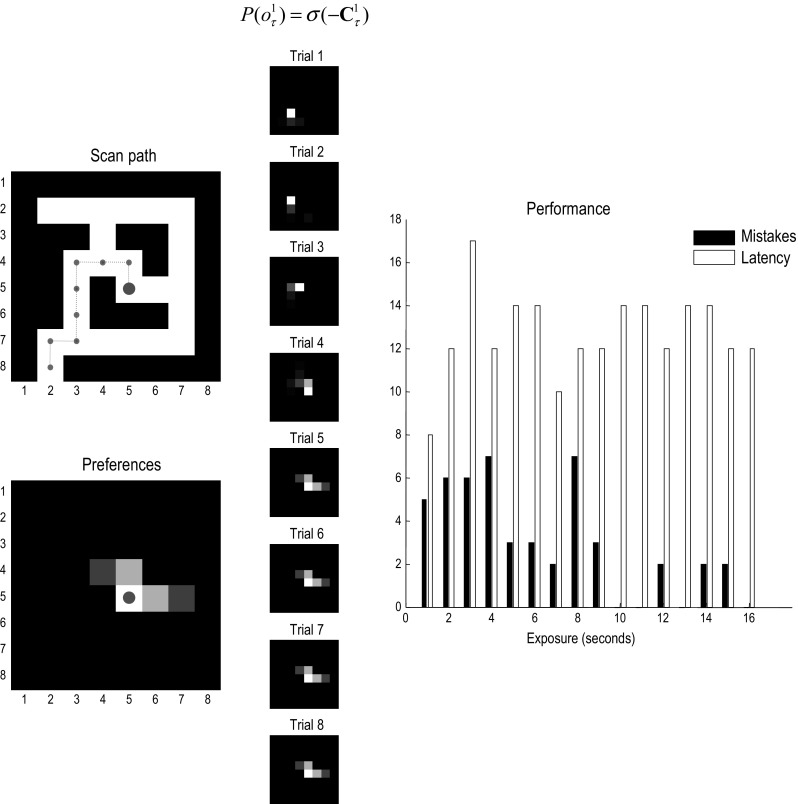
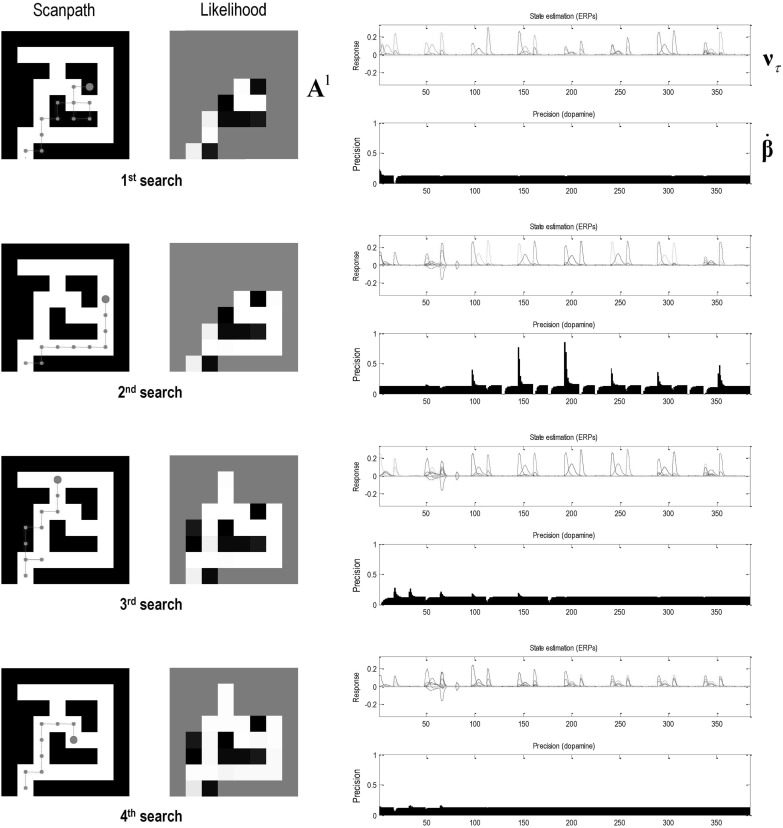
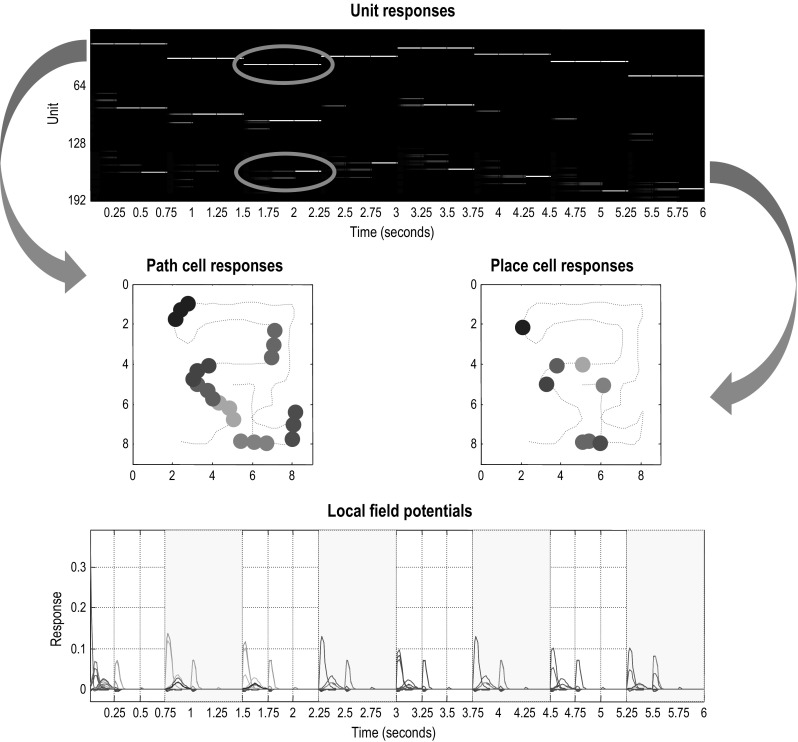
This paper introduces an active inference formulation of planning and navigation. It illustrates how the exploitation-exploration dilemma is dissolved by acting to minimise uncertainty (i.e. expected surprise or free energy). We use simulations of a maze problem to illustrate how agents can solve quite complicated problems using context sensitive prior preferences to form subgoals. Our focus is on how epistemic behaviour-driven by novelty and the imperative to reduce uncertainty about the world-contextualises pragmatic or goal-directed behaviour. Using simulations, we illustrate the underlying process theory with synthetic behavioural and electrophysiological responses during exploration of a maze and subsequent navigation to a target location. An interesting phenomenon that emerged from the simulations was a putative distinction between 'place cells'-that fire when a subgoal is reached-and 'path cells'-that fire until a subgoal is reached.
Overview
The claims and statistics of this paper haven’t been checked yet.
Free: it reads the open-access text and checks the first 5 claims that cite a source we can check. Create a free account to check every claim.
Integrity signals
Registry
Cites
Statistics
Figures
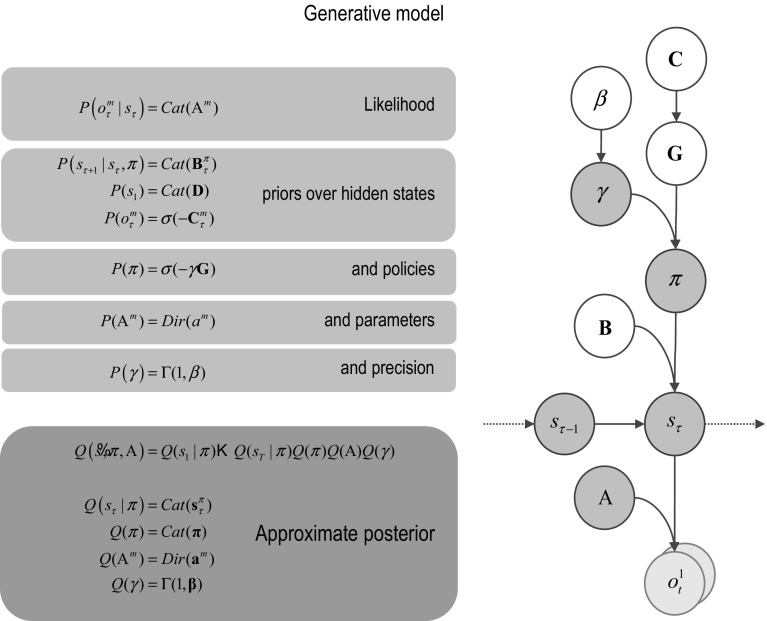
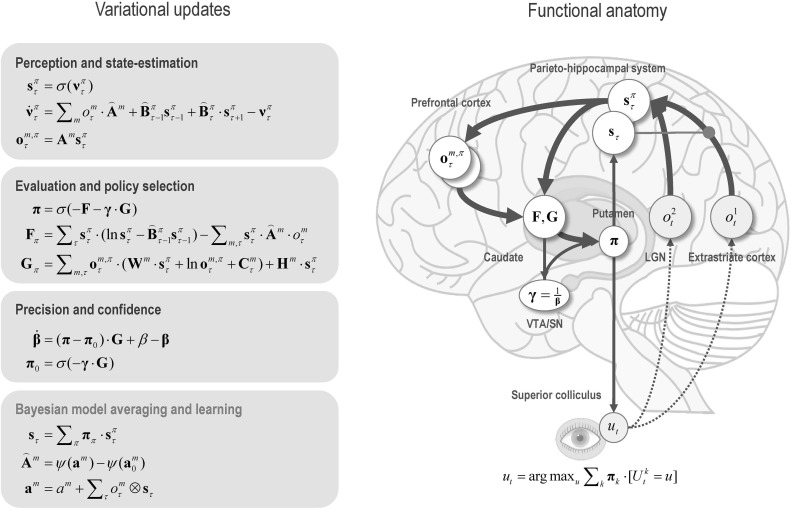
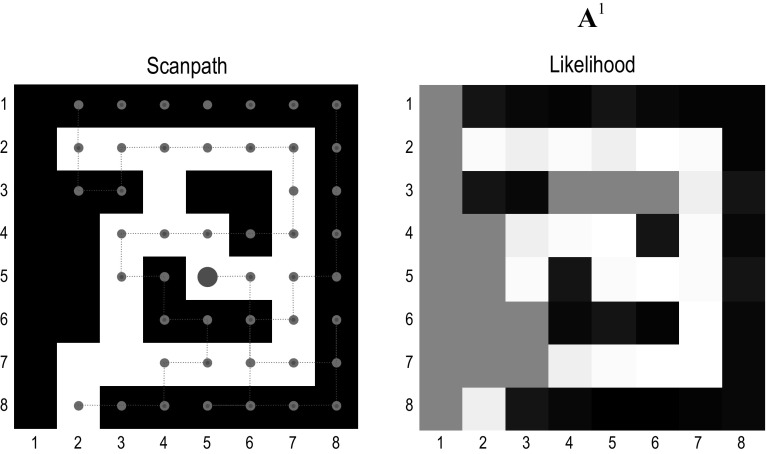
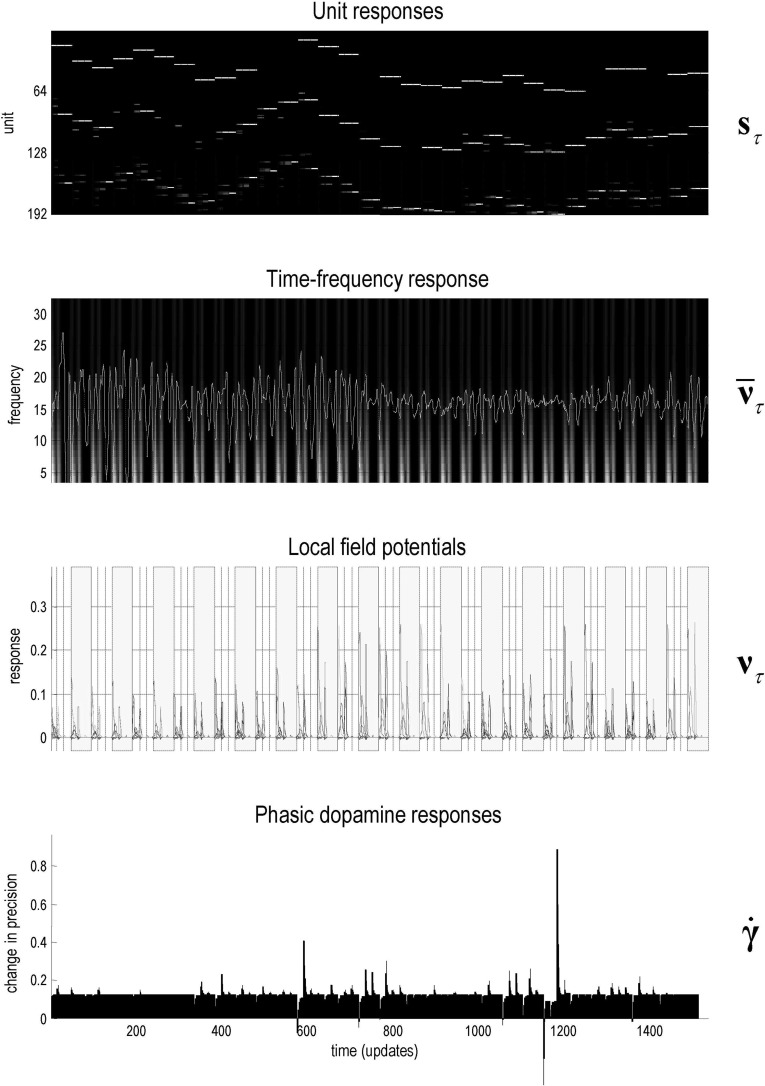
Verification
Claims the paper makes
The claims and statistics of this paper haven’t been checked yet.
Free: it reads the open-access text and checks the first 5 claims that cite a source we can check. Create a free account to check every claim.
Claims other papers make about this one
Each is checked against this paper’s own text: does it say what the citing paper says it does?
The source backs part of the claim, not all of it — or backs it for a different population, condition or comparison.
In the citing paper
“Active inference formalizes allostasis (and action) as an inference problem, ‘planning as inference’ (Kaplan and Friston 2018) under the free energy principle (Friston 2019).”
From Consciousness in active inference: Deep self-models, other minds, and the challenge of psychedelic-induced ego-dissolution (2021) · cites this paper as Kaplan and Friston 2018
Experimental — accuracy not yet measuredThe cited source says what the claim attributes to it.
In the citing paper
“This idea of using subgoals was already used in [23], but in our solution with BTs, we provide a task-independent way to define subgoals which is only based on the set of available skills of the robot, such that we can make sure that it can complete the task.”
From Active Inference and Behavior Trees for Reactive Action Planning and Execution in Robotics (2023) · cites this paper as [23]
The check wasn’t confident either way, so it gives no verdict — never disputed.
In the citing paper
“Past work on active inference, such as [23], was based on the assumption that actions were always executable and nonconflicting, but these do not hold in more realistic scenarios.”
From Active Inference and Behavior Trees for Reactive Action Planning and Execution in Robotics (2023) · cites this paper as [23]
Experimental — accuracy not yet measured
Self-check
Percentages, sums and reported differences re-computed from the paper’s own numbers.
The self-check needs the paper’s full text.
Citations
Cites
A note on two problems in connexion with graphs
Dijkstra, E. W. (1959) · Numerische Mathematik · doi:10.1007/bf01386390 · Cited by 29,065
Reinforcement Learning: An Introduction
Sutton, R. S., & Barto, A. G. (1998) · IEEE Transactions on Neural Networks · doi:10.1109/tnn.1998.712192 · Cited by 27,225
Reinforcement Learning: An Introduction
(2005) · IEEE Transactions on Neural Networks · doi:10.1109/tnn.2004.842673 · Cited by 24,496
Sampling-based algorithms for optimal motion planning
Karaman, S., & Frazzoli, E. (2011) · The International Journal of Robotics Research · doi:10.1177/0278364911406761 · Cited by 5,275
What is the role of dopamine in reward: hedonic impact, reward learning, or incentive salience?
Berridge, K. C., & Robinson, T. E. (1998) · Brain Research Reviews · doi:10.1016/s0165-0173(98)00019-8 · Cited by 4,127
Microstructure of a spatial map in the entorhinal cortex
Hafting, T., Fyhn, M., Molden, S., Moser, M.-B., & Moser, E. I. (2005) · Nature · doi:10.1038/nature03721 · Cited by 4,068 · cited 1×
“In neurobiology, a well-studied modularization of space at the level of single neurons occurs in grid cells located in the dorsomedial entorhinal cortex (Hafting et al., 2005).”
BackgroundBetween MDPs and semi-MDPs: A framework for temporal abstraction in reinforcement learning
Sutton, R. S., Precup, D., & Singh, S. (1999) · Artificial Intelligence · doi:10.1016/s0004-3702(99)00052-1 · Cited by 3,119
(1961) · Information and Control · doi:10.1016/s0019-9958(61)80064-8 · Cited by 2,875
Advances in Neural Information Processing Systems 27 (NIPS 2014)
Zhong, M., Goddard, N., & Sutton, C. A. (2014) · Cited by 2,636
Daw, N. D., Niv, Y., & Dayan, P. (2005) · Nature Neuroscience · doi:10.1038/nn1560 · Cited by 2,533 · cited 1×
“Some key theoretical papers in this setting include (Sutton and Barto, 1998, Daw et al., 2005, Keramati et al., 2011).”
Background
Research works printed but not linked: 3
- 23. Duff M (2002) Optimal learning: computational procedure for bayes- adaptive Markov decision processes. University of Massachusetts, Amherst
- 39. Hartley T, Burgess N, Lever C, Cacucci F, O'Keefe J (2000) Modeling place fields in terms of the cortical inputs to the hippocampus. Hippocampus 10:369-379 · doi:10.1002/1098-1063(2000)10:4<369::aid-hipo3>3.0.co;2-0
- 83. Sun Y, Gomez F, Schmidhuber J (2011a) Planning to be surprised: optimal Bayesian exploration in dynamic environments. In: Pro- ceedings of the 4th international conference on artificial general intelligence, pp 41-51. Springer, Mountain View, CA Sun Y, Gomez F, Schmidhuber J (2011b) Planning to be surprised: opti- mal Bayesian exploration in dynamic environments. In: Schmid- huber J et al (eds) Artificial general intelligence: 4th international conference, AGI 2011, Mountain View, CA, USA, August 3-6, 2011 Proceedings, pp 41-51. Springer, Berlin · DOI · Paper page
Cited by
Items 101–200 of 248
A Bayesian Account of Generalist and Specialist Formation Under the Active Inference Framework
Chen, A. G., Benrimoh, D. A., Parr, T., & Friston, K. J. (2020) · Frontiers in Artificial Intelligence · doi:10.3389/frai.2020.00069 · Cited by 12
Self-citationPiloting the Update: The Use of Therapeutic Relationship for Change – A Free Energy Account
Hauke, G., & Lohr, C. (2022) · Frontiers in Psychology · doi:10.3389/fpsyg.2022.842488 · Cited by 12
Khajehnejad, M. A., Habibollahi, F., Paul, A., Razi, A., & Kagan, B. J. (2024) · arXiv (Cornell University) · doi:10.48550/arxiv.2405.16946 · Cited by 12
Exploration and preference satisfaction trade-off in reward-free learning
Sajid, N., Tigas, P., Zakharov, A., Fountas, Z., & Friston, K. (2021) · arXiv · doi:10.48550/arxiv.2106.04316 · Cited by 11
“First, we formulate intrinsic motivation using the Expected Free Energy [17, 33] and focus on investigating the behaviour of intrinsically motivated agents.”
MethodSelf-citationModelling mood updating: a proof of principle study
Clark, J. E., & Watson, S. (2022) · The British Journal of Psychiatry · doi:10.1192/bjp.2022.175 · Cited by 11
Friston, K. J. (2020) · Neuropsychoanalysis · doi:10.1080/15294145.2021.1878610 · Cited by 11
Self-citationDynamic planning in hierarchical active inference
Priorelli, M., & Stoianov, I. P. (2025) · Neural Networks · doi:10.1016/j.neunet.2024.107075 · Cited by 11
From representations in predictive processing to degrees of representational features
Rutar, D., Wiese, W., & Kwisthout, J. (2022) · Minds and Machines · doi:10.1007/s11023-022-09599-6 · Cited by 11
The sense of agency from active causal inferencePreprint
Chang, A. Y.-C., Oi, H., Maeda, T., & Wen, W. (2024) · bioRxiv (Cold Spring Harbor Laboratory) · doi:10.1101/2024.01.29.577723 · Cited by 11
On Predictive Planning and Counterfactual Learning in Active Inference
Paul, A., Isomura, T., & Razi, A. (2024) · Entropy · doi:10.3390/e26060484 · Cited by 11
Bayesian reinforcement learning for navigation planning in unknown environments
Alali, M., & Imani, M. (2024) · Frontiers in Artificial Intelligence · doi:10.3389/frai.2024.1308031 · Cited by 11
Path Planning Using Probability Tensor Flows
Palmieri, F., Pattipati, K. R., Fioretti, G., Gennaro, G. D., & Buonanno, A. (2021) · IEEE Aerospace and Electronic Systems Magazine · doi:10.1109/maes.2020.3032069 · Cited by 11
Online reinforcement learning with sparse rewards through an active inference capsule
Noel, A. D. (2021) · Research Repository (Delft University of Technology) · Cited by 11
An active inference approach to interpersonal differences in depression
Kirchner, L., Eckert, A.-L., Berg, M., Endres, D., Straube, B., & Rief, W. (2024) · New Ideas in Psychology · doi:10.1016/j.newideapsych.2024.101092 · Cited by 10
Editorial: Bio A.I. - from embodied cognition to enactive robotics
Safron, A., Hipólito, I., & Clark, A. (2023) · Frontiers in Neurorobotics · doi:10.3389/fnbot.2023.1301993 · Cited by 10
Queißer, J. F., Jung, M., Matsumoto, T., & Tani, J. (2021) · Neural Computation · doi:10.1162/neco_a_01412 · Cited by 10
Active Inference for Stochastic Control
Paul, A., Sajid, N., Gopalkrishnan, M., & Razi, A. (2021) · Communications in computer and information science · doi:10.1007/978-3-030-93736-2_47 · Cited by 9
Deane, G. (2022) · Artificial Life · doi:10.1162/artl_a_00368 · Cited by 9
Slow but flexible or fast but rigid? Discrete and continuous processes compared
Priorelli, M., & Stoianov, I. P. (2024) · Heliyon · doi:10.1016/j.heliyon.2024.e39129 · Cited by 9
Retrospective Inference as a Form of Bounded Rationality, and Its Beneficial Influence on Learning
FitzGerald, T. H. B., Penny, W. D., Bonnici, H. M., & Adams, R. A. (2020) · Frontiers in Artificial Intelligence · doi:10.3389/frai.2020.00002 · Cited by 9
Cheron, G. A., Ristori, D., Petieau, M., Simar, C., Zarka, D., & Cebolla, A.-M. (2022) · Frontiers in Psychology · doi:10.3389/fpsyg.2022.792872 · Cited by 9
The meltdown pathway: A multidisciplinary account of autistic meltdowns.
Soden, P. A., Bhat, A., Anderson, A. K., & Friston, K. J. (2025) · Psychological Review · doi:10.1037/rev0000543 · Cited by 9
Self-citationIntegrating Cognitive Map Learning and Active Inference for Planning in Ambiguous Environments
de Maele, T. V., Dhoedt, B., Verbelen, T., & Pezzulo, G. (2023) · Communications in computer and information science · doi:10.1007/978-3-031-47958-8_13 · Cited by 9
Learning dynamic cognitive map with autonomous navigation
de Tinguy, D., Verbelen, T., & Dhoedt, B. (2024) · Frontiers in Computational Neuroscience · doi:10.3389/fncom.2024.1498160 · Cited by 9
Mathematical foundations for a compositional account of the Bayesian brain
Smithe, T. S. C. (2022) · arXiv (Cornell University) · doi:10.5287/ora-kzjqyop2d · Cited by 9
Pathfinding: a neurodynamical account of intuition
Kotler, S., Mannino, M., Friston, K. J., Buzsáki, G., Kelso, J. A. S., & Dumas, G. (2025) · Communications Biology · doi:10.1038/s42003-025-08612-9 · Cited by 8
Self-citationThe Acquisition of Culturally Patterned Attention Styles under Active InferencePreprint
Constant, A., Tschantz, A., Millidge, B., Criado-Boado, F., Martinez, L. M., Müller, J., & Clark, A. (2020) · PsyArXiv (OSF Preprints) · doi:10.31234/osf.io/rchaf · Cited by 8
Dynamic Inference by Model Reduction
Priorelli, M., & Stoianov, I. P. (2025) · IEEE Transactions on Pattern Analysis and Machine Intelligence · doi:10.1109/tpami.2025.3595670 · Cited by 7
Walking on a minefield: planning, remembering, and avoiding obstacles: preliminary findings
Bocchi, A., Palmiero, M., & Piccardi, L. (2022) · Experimental Brain Research · doi:10.1007/s00221-022-06391-x · Cited by 7
Inferential planning in the frontal cortex
Donnarumma, F., Parr, T., Friston, K. J., Whittington, J. C. R., & Pezzulo, G. (2026) · Cell Reports · doi:10.1016/j.celrep.2026.117905 · Cited by 7
Self-citationSelf-motion perception and sequential decision-making: where are we heading?
Jerjian, S. J., Harsch, D. R., & Fetsch, C. R. (2023) · Philosophical Transactions of the Royal Society B Biological Sciences · doi:10.1098/rstb.2022.0333 · Cited by 7
Finding your Way Out: Planning Strategies in Human Maze-Solving BehaviorPreprint
Kadner, F., Willkomm, H., Ibs, I., & Rothkopf, C. A. (2023) · PsyArXiv (OSF Preprints) · doi:10.31234/osf.io/nme9j · Cited by 7
Online reinforcement learning with sparse rewards through an active inference capsulePreprint
Noel, A. D., van Hoof, C., & Millidge, B. (2021) · arXiv (Cornell University) · doi:10.48550/arxiv.2106.02390 · Cited by 7
Exploring and Learning Structure: Active Inference Approach in Navigational Agents
de Tinguy, D., Verbelen, T., & Dhoedt, B. (2024) · Communications in computer and information science · doi:10.1007/978-3-031-77138-5_7 · Cited by 7
Hartl, B., Pio‐Lopez, L., Fields, C., & Levin, M. G. (2026) · Physics of Life Reviews · doi:10.1016/j.plrev.2026.06.009 · Cited by 6
Towards a theory of biological intelligence
Trapp, S., Friston, K. J., Schröger, E., & Parr, T. (2025) · New Ideas in Psychology · doi:10.1016/j.newideapsych.2025.101156 · Cited by 6
Self-citationConstant, A., Albarracin, M., Perin, M., Thiruvengada, H., & Friston, K. J. (2025) · Frontiers in Sustainable Cities · doi:10.3389/frsc.2025.1571613 · Cited by 6
Self-citationServajean, P., & Wiese, W. (2024) · Topics in Cognitive Science · doi:10.1111/tops.12776 · Cited by 6
Physical Intelligence on the Edge: A Vision for the Decade Ahead
Shi, W., Dong, Z., & Zhou, P. (2026) · Journal of Computer Science and Technology · doi:10.1007/s11390-026-6292-8 · Cited by 6
Frank, S. A. (2025) · Entropy · doi:10.3390/e27111129 · Cited by 6
Synthetic Spatial Foraging With Active Inference in a Geocaching Task
Neacsu, V., Convertino, L., & Friston, K. J. (2022) · Frontiers in Neuroscience · doi:10.3389/fnins.2022.802396 · Cited by 6
Self-citationIntrinsic motivation learning for real robot applications
Rayyes, R. (2023) · Frontiers in Robotics and AI · doi:10.3389/frobt.2023.1102438 · Cited by 6
What active inference still can’t do: The (frame) problem that just won’t go away
Parvizi-Wayne, D. (2025) · Philosophy and the Mind Sciences · doi:10.33735/phimisci.2025.12118 · Cited by 6
Integrating cognitive map learning and active inference for planning in ambiguous environments
Van de Maele, T., Dhoedt, B., Verbelen, T., & Pezzulo, G. (2023) · arXiv · doi:10.48550/arxiv.2308.08307 · Cited by 5
Safron, A., & Sheikhbahaee, Z. (2023) · Communications in computer and information science · doi:10.1007/978-3-031-47958-8_6 · Cited by 5
Better Safe than Sorry? - An Active Inference Approach to Biased Social Inference in DepressionPreprint
Kirchner, L., Eckert, A.-L., Berg, M., Endres, D., Straube, B., & Rief, W. (2022) · PsyArXiv (OSF Preprints) · doi:10.31234/osf.io/bp9re · Cited by 5
A neural active inference model of perceptual-motor learning
Yang, Z., Diaz, G. J., Fajen, B. R., Bailey, R., & Ororbia, A. G. (2023) · Frontiers in Computational Neuroscience · doi:10.3389/fncom.2023.1099593 · Cited by 5
Nixon, J. S., & Tomaschek, F. (2023) · Language Cognition and Neuroscience · doi:10.1080/23273798.2023.2197650 · Cited by 5
Exploration–exploitation model of moth-inspired olfactory navigation
Lazebnik, T., Golov, Y., Gurka, R., Harari, A. R., & Liberzon, A. (2024) · Journal of The Royal Society Interface · doi:10.1098/rsif.2023.0746 · Cited by 5
On Solving a Stochastic Shortest-Path Markov Decision Process as Probabilistic Inference
Baioumy, M., Lacerda, B., Duckworth, P., & Hawes, N. (2021) · Communications in Computer and Information Science · doi:10.1007/978-3-030-93736-2_58 · Cited by 4
Confucian Free Energy: The Predictive Mind in Ancient ChinaPreprint
Waade, P. T. (2020) · PsyArXiv (OSF Preprints) · doi:10.31234/osf.io/zm245 · Cited by 4
Batman: Bayesian Target Modelling For Active Inference
Koudahl, M., & de Vries, B. (2020) · IEEE International Conference on Acoustics Speech and Signal Processing · doi:10.1109/icassp40776.2020.9053624 · Cited by 4
Integrated World Modeling Theory (IWMT) RevisitedPreprint
Safron, A. (2019) · PsyArXiv (OSF Preprints) · doi:10.31234/osf.io/kjngh · Cited by 4
Becattini, V., Lifshitz, M., & Miller, M. M. (2026) · Neuroscience of Consciousness · doi:10.1093/nc/niag001 · Cited by 4
Safron, A. (2021) · PsyArXiv (OSF Preprints) · doi:10.31234/osf.io/m2p6g · Cited by 4
Surprise-minimization as a solution to the structural credit assignment problem
Wurm, F., Ernst, B., & Steinhauser, M. (2024) · PLoS Computational Biology · doi:10.1371/journal.pcbi.1012175 · Cited by 4
Naveilhan, C., Zory, R., & Ramanoël, S. (2025) · Journal of Vision · doi:10.1167/jov.25.10.15 · Cited by 4
Tinker, T. J., Doya, K., & Tani, J. (2024) · Neural Computation · doi:10.1162/neco_a_01690 · Cited by 4
Human hippocampal theta oscillations reflect sequential dependencies during spatial planningPreprint
Kaplan, R., Campo, A. T., Bush, D., King, J. A., Príncipe, A., Koster, R., Nácher, M. L., Rocamora, R., & Friston, K. J. (2018) · bioRxiv (Cold Spring Harbor Laboratory) · doi:10.1101/372011 · Cited by 4
Self-citationZhang, Y., Hedley, F. E., Zhang, R., & Jin, J. (2025) · Journal of Psychopathology and Clinical Science · doi:10.1037/abn0000972 · Cited by 4
The Bayesian Brain: An Evolutionary Approach to Cognition
Daunizeau, J. (2021) · Elsevier eBooks · doi:10.1016/b978-0-12-819641-0.00149-3 · Cited by 3
Human-inspired models for tactile computing
Baier, C., Rivera, D. C., Dubslaff, C., & Kiebel, S. J. (2021) · Elsevier eBooks · doi:10.1016/b978-0-12-821343-8.00019-8 · Cited by 3
Online Pareto-Optimal Decision-Making for Complex Tasks Using Active Inference
Amorese, P., Wakayama, S., Ahmed, N. R., & Lahijanian, M. (2025) · IEEE Transactions on Robotics · doi:10.1109/tro.2025.3600155 · Cited by 3
Moghadam, M., Towhidkhah, F., & Gharibzadeh, S. (2022) · Frontiers in Systems Neuroscience · doi:10.3389/fnsys.2022.972985 · Cited by 3
Home Run: Finding Your Way Home by Imagining Trajectories
de Tinguy, D., Mazzaglia, P., Verbelen, T., & Dhoedt, B. (2023) · Communications in computer and information science · doi:10.1007/978-3-031-28719-0_15 · Cited by 3
Anticipation in architectural experience: a computational neurophenomenology for architecture?Preprint
Djebbara, Z., Parr, T., & Friston, K. J. (2020) · arXiv (Cornell University) · doi:10.48550/arxiv.2011.03852 · Cited by 3
Self-citationReshaping computational neuropsychiatry beyond synaptopathy
Bottemanne, H., Mouchabac, S., & Gauld, C. (2025) · Brain · doi:10.1093/brain/awaf031 · Cited by 3
Prior Preferences in Active Inference Agents: Soft, Hard, and Goal Shaping
Torresan, F., Kanai, R., & Baltieri, M. (2026) · Neural Computation · doi:10.48550/arxiv.2512.03293 · Cited by 3
Have we lost our minds? An approach to multiscale dynamics in the cognitive sciences
Ramstead, M. J. D. (2019) · eScholarship@McGill (McGill) · doi:10.82308/47928 · Cited by 3
Probability propagation for path planning in unknown environments
Gennaro, G. D., Buonanno, A., Fioretti, G., Verolla, F., Palmieri, F., & Pattipati, K. R. (2025) · Intelligent Systems with Applications · doi:10.1016/j.iswa.2025.200527 · Cited by 3
Revealing human sensitivity to a latent temporal structure of changes
Marković, D., Reiter, A. M. F., & Kiebel, S. J. (2022) · Frontiers in Behavioral Neuroscience · doi:10.3389/fnbeh.2022.962494 · Cited by 2
Ezzedini, S. (2026) · Frontiers in Psychology · doi:10.3389/fpsyg.2025.1556597 · Cited by 2
Parvizi-Wayne, D. (2024) · PsyArXiv (OSF Preprints) · doi:10.31234/osf.io/b3h2e · Cited by 2
Prediction in action: Toward an empirical science of active inference
Lageman, J., Fahrenfort, J. J., & Slagter, H. A. (2026) · Neuroscience & Biobehavioral Reviews · doi:10.1016/j.neubiorev.2026.106817 · Cited by 2
Extended-Self Recognition for Autonomous Agent Based on Controllability and Predictability
Esaki, K., Matsumura, T., Yoshimura, C., & Mizuno, H. (2022) · IEEE Symposium Series on Computational Intelligence (SSCI) · doi:10.1109/ssci51031.2022.10022161 · Cited by 2
The evolutionary and organizational bases of active affordance
Luu, P., Tucker, D. M., & Friston, K. J. (2026) · Cerebral Cortex · doi:10.1093/cercor/bhag057 · Cited by 2
Self-citationParr, T., Pezzulo, G., Moran, R., Ramstead, M. J. D., Constant, A., & Bhat, A. (2025) · Entropy · doi:10.3390/e27090944 · Cited by 2
The Fast and the Curious: Creative Improvisation as Action-oriented Abduction
Linson, A., Schulkin, J. A., & Clark, A. (2025) · Imagination Cognition and Personality · doi:10.1177/02762366251365906 · Cited by 2
Robotic Active Tactile Sensing Inspired by Serotonergic Modulation Using Active Inference
Novický, F., Offergeld, J., Janssen, S., & Lanillos, P. (2023) · Lecture notes in computer science · doi:10.1007/978-3-031-38857-6_3 · Cited by 2
Gender fluidity as affordance negotiationPreprint
Albarracin, M., & Poirier, P. (2020) · PsyArXiv (OSF Preprints) · doi:10.31234/osf.io/kgrcq · Cited by 2
Power, ritual, and identity - A cognitive study of conversion to the Unification ChurchPreprint
GUÉNIN--CARLUT, A., & Dubourg, I. (2024) · OSF Preprints (OSF Preprints) · doi:10.31219/osf.io/wg36c · Cited by 2
Navigation and Exploration with Active Inference: from Biology to Industry
de Tinguy, D., Verbelen, T., & Dhoedt, B. (2026) · Communications in computer and information science · doi:10.1007/978-3-032-16955-6_19 · Cited by 2
Exploration/Exploitation in Path Planning Using Probability Propagation
Palmieri, F., Pattipati, K. R., Gp, F., Verolla, F., Gennaro, G. D., & E., B. A. (2020) · Archivio Istituzionale della Ricerca - Università degli Studi della Campania "Luigi Vanvitelli" · Cited by 2
Cognitive Science-Inspired Evaluation of Core Capabilities for Object Understanding in AIPreprint
Rutar, D., Markelius, A., Voudouris, K., Hernández‐Orallo, J., & Cheke, L. G. (2025) · arXiv (Cornell University) · doi:10.48550/arxiv.2503.21668 · Cited by 2
Reviewing Structure Learning in and Out of the Active Inference Framework
Neacsu, V., So, W. Y., Rutar, D., Costa, L. D., Adams, R. A., & Friston, K. J. (2026) · Minds and Machines · doi:10.1007/s11023-026-09787-8 · Cited by 1
Self-citationFriston, K. J. (2022) · Physics of Life Reviews · doi:10.1016/j.plrev.2022.07.007 · Cited by 1
Self-citationInformation gathering in POMDPs using active inference
Walraven, E., Sijs, J., & Burghouts, G. J. (2024) · Autonomous Agents and Multi-Agent Systems · doi:10.1007/s10458-024-09683-4 · Cited by 1
Explaining “spatial purport of perception”: a predictive processing approach
Rorot, W. (2020) · Synthese · doi:10.1007/s11229-020-02678-0 · Cited by 1
Meta-learning in active inference
Penacchio, O., & Clemente, A. (2024) · Behavioral and Brain Sciences · doi:10.1017/s0140525x24000074 · Cited by 1
Editorial: Probabilistic Perspectives on Brain (Dys)function
Parr, T., Marković, D., Ramstead, M. J. D., Smith, R. S., Hesp, C., & Friston, K. J. (2021) · Frontiers in Artificial Intelligence · doi:10.3389/frai.2021.710179 · Cited by 1
Self-citationBio-Inspired Topological Autonomous Navigation with Active Inference in Robotics
de Tinguy, D., Verbelen, T., Gamba, E., & Dhoedt, B. (2025) · International Conference on Control, Automation and Systems (ICCAS) · doi:10.23919/iccas66577.2025.11301261 · Cited by 1
Costa, L. D. (2024) · arXiv (Cornell University) · doi:10.48550/arxiv.2410.11735 · Cited by 1
Active inference for action-unaware agents
Torresan, F., Suzuki, K., Kanai, R., & Baltieri, M. (2026) · Neurocomputing · doi:10.1016/j.neucom.2026.134399 · Cited by 1
Becattini, V., Lifshitz, M., & Miller, M. M. (2025) · PsyArXiv (OSF Preprints) · doi:10.31234/osf.io/gcjth_v2 · Cited by 1
Iswandi, W., & Hendry (2025) · CONVERSE Journal Communication Science · doi:10.47134/converse.v2i1.4731 · Cited by 1
Online Structure Learning and Planning for Autonomous Robot Navigation using Active InferencePreprint
de Tinguy, D., Verbelen, T., Gamba, E., & Dhoedt, B. (2026) · Research Square · doi:10.21203/rs.3.rs-9599031/v1 · Cited by 1
Structure Learning and learning structure with Active Inference
Neacsu, V. (2024) · UCL Discovery (University College London) · Cited by 1
Inverted Inference and Recursive Bootstrapping: A Primal-Dual Theory of Structured CognitionPreprint
Li, X. (2024) · arXiv (Cornell University) · doi:10.48550/arxiv.2404.01183 · Cited by 1
A comprehensive study on the cognitive mechanisms and neural substrates of hallucination proneness
Johnson, J. F. (2022) · Research Publications (Maastricht University) · doi:10.26481/dis.20221101jj
Metadata
- Authors
- Kaplan, R., & Friston, K. J.
- Affiliations
- Wellcome Centre for Human Neuroimaging (GB)
- Corresponding author
- Friston, Karl J.
- Venue
- Biological Cybernetics
- Published
- 2018-03-23
- Volume
- 112
- Issue
- 4
- Pages
- 323-343
- ISSN
- 0340-1200 (ISSN-L)
- 1432-0770
- PMC
- PMC6060791
- OpenAlex
- W2781668895
- Cited by
- 203
- References
- 98
- Citations by year
- 2026: 12 · 2025: 22 · 2024: 29 · 2023: 27 · 2022: 34 · 2021: 36 · 2020: 28 · 2019: 10 · 2018: 5
- FWCI
- 11.75
- Type
- journal article
- Language
- en
- Open access
- hybrid
- doi.org
- Licence
- cc-by
- creativecommons.org/licenses/by/4.0 (tdm)
- Locations
- Biological Cybernetics (publishedVersion, cc-by)
- bioRxiv (Cold Spring Harbor Laboratory) (acceptedVersion, cc-by)
- Europe PMC (PubMed Central) (publishedVersion, cc-by)
- PubMed Central (publishedVersion, cc-by)
- PubMed (publishedVersion)
- UCL Discovery (University College London) (submittedVersion)
- MPG.PuRe (Max Planck Society) (submittedVersion)
- Funders
- Wellcome Trust (088130/Z/09/Z)
- Topics
- Life Sciences › Neuroscience › Cognitive Neuroscience › Embodied and Extended Cognition
- Life Sciences › Neuroscience › Cognitive Neuroscience › Memory and Neural Mechanisms
- Physical Sciences › Computer Science › Artificial Intelligence › Reinforcement Learning in Robotics
- Keywords
- active inference, planning, navigation, free energy principle, uncertainty reduction, novelty, place cells, maze navigation, electrophysiological responses, goal-directed behavior
- MeSH terms
- Animals, Bayes Theorem, Brain, Computer Simulation, Goals, Humans, Models, Biological, Motivation, Neurons, Maze Learning, Spatial Navigation
About these checks
Registry, retraction, Cites and statistics results are computed, not judged, with one exception: a printed reference that no index lists is read once by a model before it counts as a citation error. Claims are extracted by a model and kept only when their quote appears verbatim in the text; each cited source is then checked, with a model’s help, for whether it says what the claim relies on. Those verdicts can be wrong — read the claim’s quote and the cited source before relying on one.
Statistics and arithmetic are recomputed, not judged.
Confidence bands are shown only for fields calibrated on our annotated test set. None is calibrated yet, so no band is shown.
What counts as a claim ›How we measure confidence ›How we check this ›
Are you an author, or do you see a problem with this page? Request a review
Data sources
Bibliographic data: Semantic Scholar, OpenAlex, Crossref.
Contains information from the Semantic Scholar Academic Graph Datasets, made available under the ODC Attribution License (ODC-BY 1.0).
Semantic Scholar’s data is described in: Kinney, R., et al. (2023). The Semantic Scholar Open Data Platform. arXiv:2301.10140.
