

Planning and navigation as active inference
Open accessPublished version of a preprint
The DOI matches its Crossref record; 98 of the 98 references it cites were found in a registry or an index.
Abstract
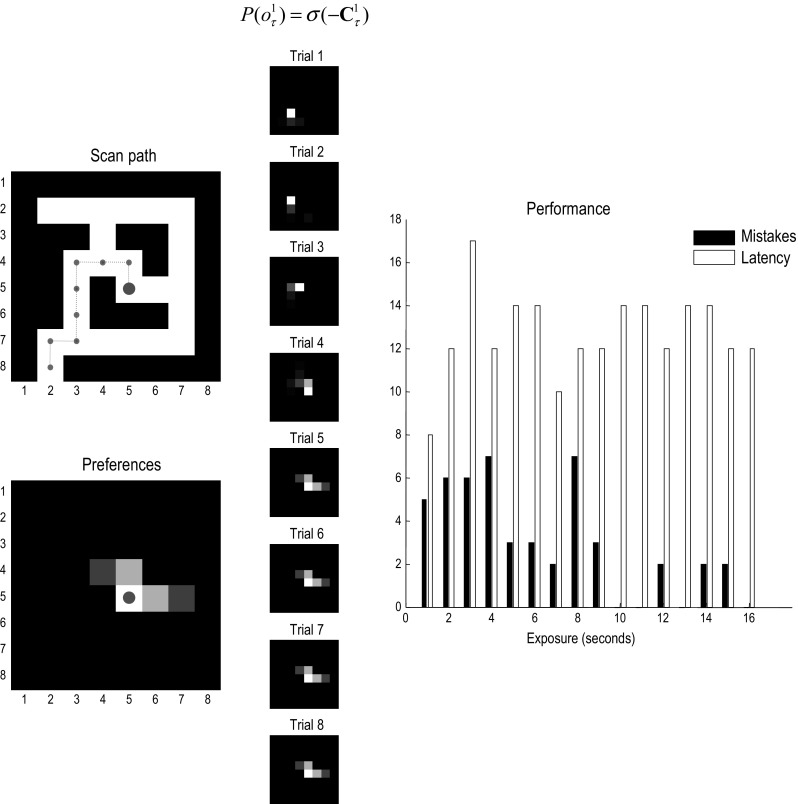
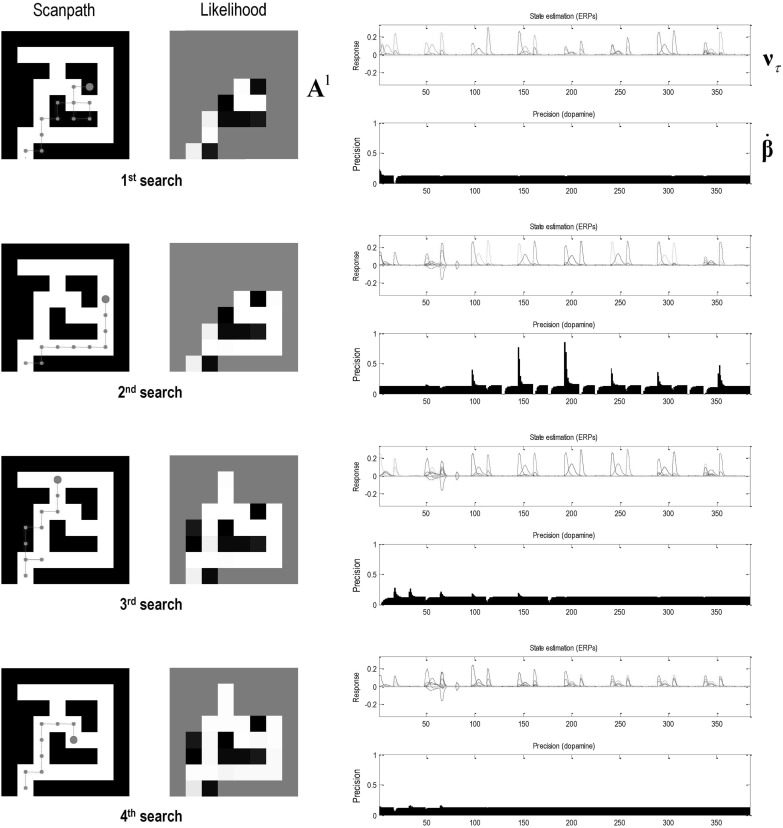
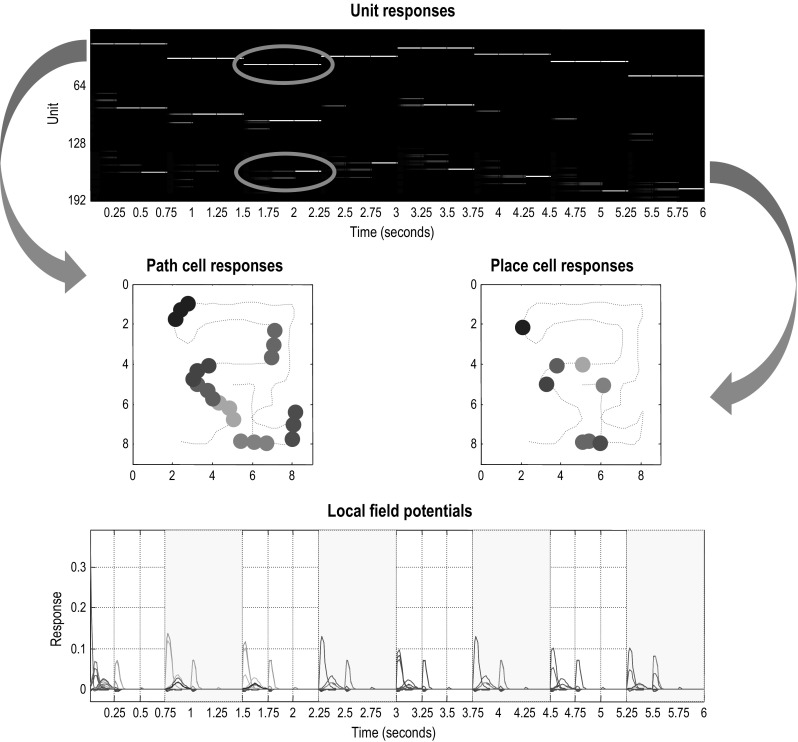
This paper introduces an active inference formulation of planning and navigation. It illustrates how the exploitation-exploration dilemma is dissolved by acting to minimise uncertainty (i.e. expected surprise or free energy). We use simulations of a maze problem to illustrate how agents can solve quite complicated problems using context sensitive prior preferences to form subgoals. Our focus is on how epistemic behaviour-driven by novelty and the imperative to reduce uncertainty about the world-contextualises pragmatic or goal-directed behaviour. Using simulations, we illustrate the underlying process theory with synthetic behavioural and electrophysiological responses during exploration of a maze and subsequent navigation to a target location. An interesting phenomenon that emerged from the simulations was a putative distinction between 'place cells'-that fire when a subgoal is reached-and 'path cells'-that fire until a subgoal is reached.
Overview
The claims and statistics of this paper haven’t been checked yet.
Free: it reads the open-access text and checks the first 5 claims that cite a source we can check. Create a free account to check every claim.
Integrity signals
Registry
Cites
Statistics
Figures
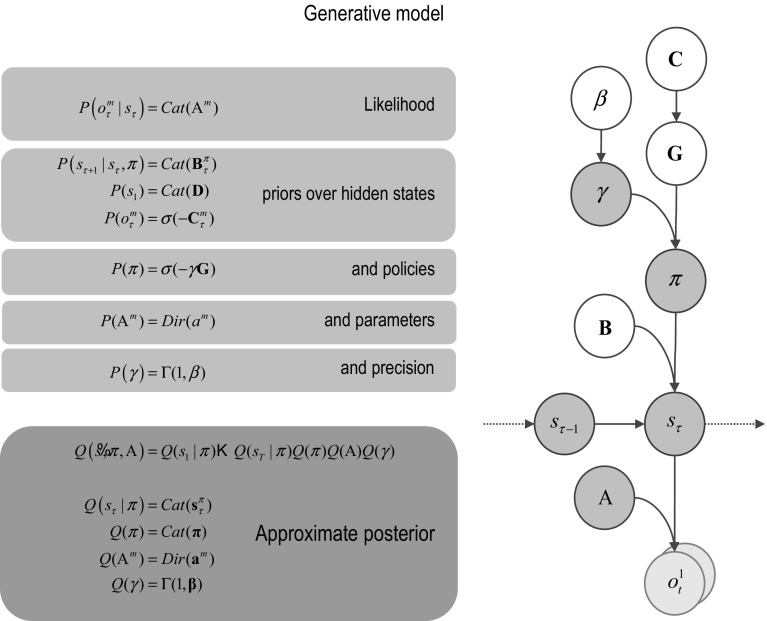
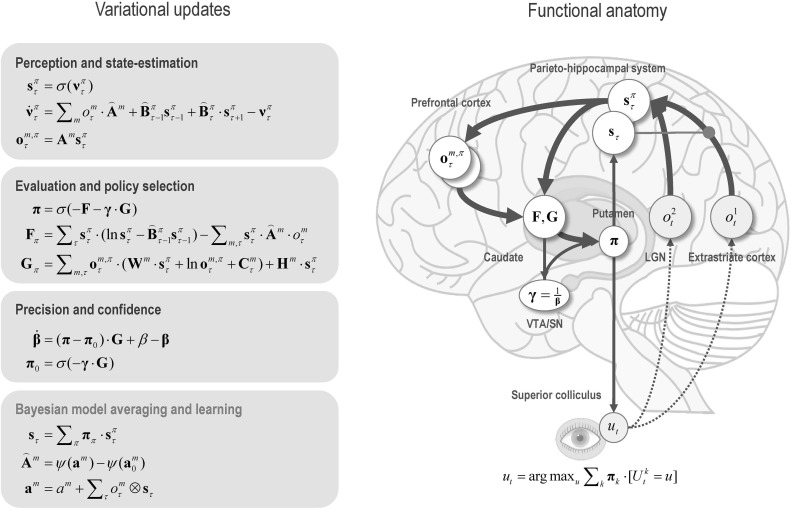
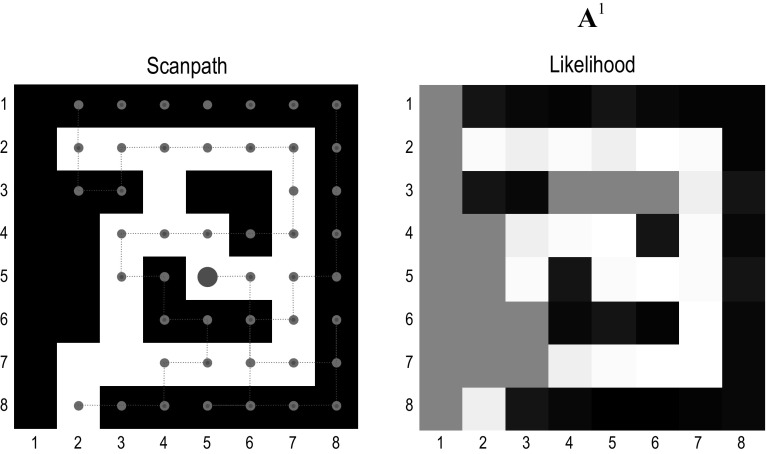
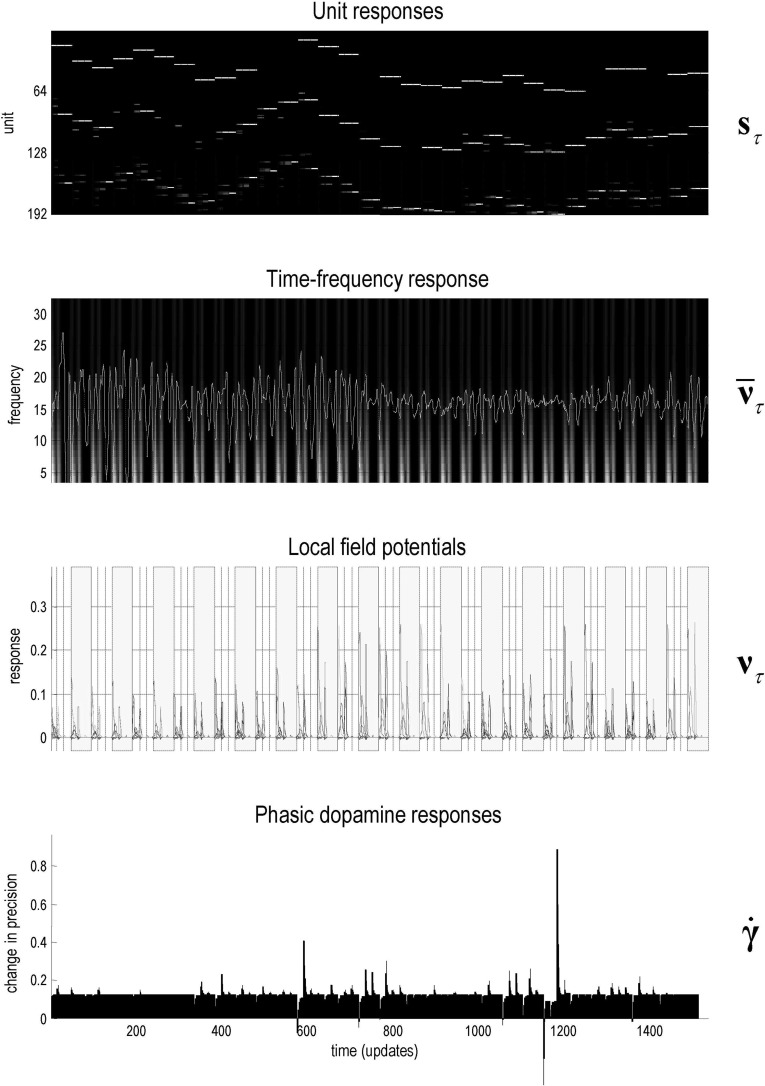
Verification
Claims the paper makes
The claims and statistics of this paper haven’t been checked yet.
Free: it reads the open-access text and checks the first 5 claims that cite a source we can check. Create a free account to check every claim.
Claims other papers make about this one
Each is checked against this paper’s own text: does it say what the citing paper says it does?
The source backs part of the claim, not all of it — or backs it for a different population, condition or comparison.
In the citing paper
“Active inference formalizes allostasis (and action) as an inference problem, ‘planning as inference’ (Kaplan and Friston 2018) under the free energy principle (Friston 2019).”
From Consciousness in active inference: Deep self-models, other minds, and the challenge of psychedelic-induced ego-dissolution (2021) · cites this paper as Kaplan and Friston 2018
Experimental — accuracy not yet measuredThe cited source says what the claim attributes to it.
In the citing paper
“This idea of using subgoals was already used in [23], but in our solution with BTs, we provide a task-independent way to define subgoals which is only based on the set of available skills of the robot, such that we can make sure that it can complete the task.”
From Active Inference and Behavior Trees for Reactive Action Planning and Execution in Robotics (2023) · cites this paper as [23]
The check wasn’t confident either way, so it gives no verdict — never disputed.
In the citing paper
“Past work on active inference, such as [23], was based on the assumption that actions were always executable and nonconflicting, but these do not hold in more realistic scenarios.”
From Active Inference and Behavior Trees for Reactive Action Planning and Execution in Robotics (2023) · cites this paper as [23]
Experimental — accuracy not yet measured
Self-check
Percentages, sums and reported differences re-computed from the paper’s own numbers.
The self-check needs the paper’s full text.
Citations
Cites
A note on two problems in connexion with graphs
Dijkstra, E. W. (1959) · Numerische Mathematik · doi:10.1007/bf01386390 · Cited by 29,065
Reinforcement Learning: An Introduction
Sutton, R. S., & Barto, A. G. (1998) · IEEE Transactions on Neural Networks · doi:10.1109/tnn.1998.712192 · Cited by 27,225
Reinforcement Learning: An Introduction
(2005) · IEEE Transactions on Neural Networks · doi:10.1109/tnn.2004.842673 · Cited by 24,496
Sampling-based algorithms for optimal motion planning
Karaman, S., & Frazzoli, E. (2011) · The International Journal of Robotics Research · doi:10.1177/0278364911406761 · Cited by 5,275
What is the role of dopamine in reward: hedonic impact, reward learning, or incentive salience?
Berridge, K. C., & Robinson, T. E. (1998) · Brain Research Reviews · doi:10.1016/s0165-0173(98)00019-8 · Cited by 4,127
Microstructure of a spatial map in the entorhinal cortex
Hafting, T., Fyhn, M., Molden, S., Moser, M.-B., & Moser, E. I. (2005) · Nature · doi:10.1038/nature03721 · Cited by 4,068 · cited 1×
“In neurobiology, a well-studied modularization of space at the level of single neurons occurs in grid cells located in the dorsomedial entorhinal cortex (Hafting et al., 2005).”
BackgroundBetween MDPs and semi-MDPs: A framework for temporal abstraction in reinforcement learning
Sutton, R. S., Precup, D., & Singh, S. (1999) · Artificial Intelligence · doi:10.1016/s0004-3702(99)00052-1 · Cited by 3,119
(1961) · Information and Control · doi:10.1016/s0019-9958(61)80064-8 · Cited by 2,875
Advances in Neural Information Processing Systems 27 (NIPS 2014)
Zhong, M., Goddard, N., & Sutton, C. A. (2014) · Cited by 2,636
Daw, N. D., Niv, Y., & Dayan, P. (2005) · Nature Neuroscience · doi:10.1038/nn1560 · Cited by 2,533 · cited 1×
“Some key theoretical papers in this setting include (Sutton and Barto, 1998, Daw et al., 2005, Keramati et al., 2011).”
Background
Research works printed but not linked: 3
- 23. Duff M (2002) Optimal learning: computational procedure for bayes- adaptive Markov decision processes. University of Massachusetts, Amherst
- 39. Hartley T, Burgess N, Lever C, Cacucci F, O'Keefe J (2000) Modeling place fields in terms of the cortical inputs to the hippocampus. Hippocampus 10:369-379 · doi:10.1002/1098-1063(2000)10:4<369::aid-hipo3>3.0.co;2-0
- 83. Sun Y, Gomez F, Schmidhuber J (2011a) Planning to be surprised: optimal Bayesian exploration in dynamic environments. In: Pro- ceedings of the 4th international conference on artificial general intelligence, pp 41-51. Springer, Mountain View, CA Sun Y, Gomez F, Schmidhuber J (2011b) Planning to be surprised: opti- mal Bayesian exploration in dynamic environments. In: Schmid- huber J et al (eds) Artificial general intelligence: 4th international conference, AGI 2011, Mountain View, CA, USA, August 3-6, 2011 Proceedings, pp 41-51. Springer, Berlin · DOI · Paper page
Cited by
Thinking through other minds: A variational approach to cognition and culture
Veissière, S. P. L., Constant, A., Ramstead, M. J. D., Friston, K. J., & Kirmayer, L. J. (2020) · Behavioral and Brain Sciences · doi:10.1017/s0140525x19001213 · Cited by 348
Self-citationA step-by-step tutorial on active inference and its application to empirical data
Smith, R., Friston, K. J., & Whyte, C. J. (2022) · Journal of Mathematical Psychology · doi:10.1016/j.jmp.2021.102632 · Cited by 246
Self-citationDeeply Felt Affect: The Emergence of Valence in Deep Active Inference
Hesp, C., Smith, R., Parr, T., Allen, M., Friston, K. J., & Ramstead, M. J. D. (2021) · Neural Computation · doi:10.1162/neco_a_01341 · Cited by 246
“In brief, active inference offers a generic approach to planning as inference (Attias, 2003; Botvinick & Toussaint, 2012; Kaplan & Friston, 2018) under the free energy principle (Friston, 2010).”
MethodSelf-citationGeneralised free energy and active inference
Parr, T., & Friston, K. J. (2019) · Biological Cybernetics · doi:10.1007/s00422-019-00805-w · Cited by 236
Self-citationActive inference on discrete state-spaces: A synthesis
Da Costa, L., Parr, T., Sajid, N., Veselic, S., Neacsu, V., & Friston, K. (2020) · Journal of Mathematical Psychology · doi:10.1016/j.jmp.2020.102447 · Cited by 226
“Crucially, active inference introduces beliefs over policies that enable a formal description of planning as inference [1,158,159].”
BackgroundMethodResultSelf-citationPrediction and memory: A predictive coding account
Barron, H. C., Auksztulewicz, R., & Friston, K. (2020) · Progress in Neurobiology · doi:10.1016/j.pneurobio.2020.101821 · Cited by 220
Self-citationThe Anatomy of Inference: Generative Models and Brain Structure
Parr, T., & Friston, K. J. (2018) · Frontiers in Computational Neuroscience · doi:10.3389/fncom.2018.00090 · Cited by 204
“One way to think about planning is that it represents the selection from several possible behavioral trajectories, or models of future action (Kaplan and Friston, 2018).”
BackgroundSelf-citationSentience and the Origins of Consciousness: From Cartesian Duality to Markovian Monism
Friston, K. J., Wiese, W., & Hobson, J. A. (2020) · Entropy · doi:10.3390/e22050516 · Cited by 186
Self-citationIn the body's eye: the computational anatomy of interoceptive inference
Allen, M., Levy, A., Parr, T., & Friston, K. J. (2022) · PLOS Computational Biology · doi:10.1371/journal.pcbi.1010490 · Cited by 185
Self-citationSmith, R., Badcock, P., & Friston, K. J. (2021) · Psychiatry and Clinical Neurosciences · doi:10.1111/pcn.13138 · Cited by 174
“20 From this perspective, decision-making involves predicting the outcomes one would observe if each of several actions (or action sequences, called ‘ policies ’ ) were chosen, and then selecting the actions expected to produce the observations that are most preferred and/or that will provide the…”
BackgroundSelf-citationRegimes of Expectations: An Active Inference Model of Social Conformity and Human Decision Making
Constant, A., Ramstead, M. J. D., Veissière, S. P. L., & Friston, K. (2019) · Frontiers in Psychology · doi:10.3389/fpsyg.2019.00679 · Cited by 171
“…be in.’ The epistemic value contains the expected information gain (i.e., uncertainty reduction) afforded a policy with respect to contingencies in the world (i.e., novelty), and the expected uncertainty reduction with respect to states of the world (i.e., salience) (Kaplan and Friston, 2018).”
BackgroundMethodSelf-citationThe free energy principle made simpler but not too simple
Friston, K., Da Costa, L., Sajid, N., Heins, C., Ueltzhöffer, K., Pavliotis, G. A., & Parr, T. (2023) · Physics Reports · doi:10.1016/j.physrep.2023.07.001 · Cited by 163
“From (36) and (37), we have (dropping the conditioning on initial states for clarity): that entail a description of planning as inference [120–122].”
Self-citationCorcoran, A. W., Pezzulo, G., & Hohwy, J. (2020) · Biology & Philosophy · doi:10.1007/s10539-020-09746-2 · Cited by 161
Variational ecology and the physics of sentient systems
Ramstead, M. J. D., Constant, A., Badcock, P. B., & Friston, K. J. (2019) · Physics of Life Reviews · doi:10.1016/j.plrev.2018.12.002 · Cited by 141
Self-citationExtended active inference: Constructing predictive cognition beyond skulls
Constant, A., Clark, A., Kirchhoff, M. D., & Friston, K. J. (2020) · Mind & Language · doi:10.1111/mila.12330 · Cited by 130
Self-citationNeuronal message passing using mean-field, bethe, and marginal approximations
Parr, T., Markovic, D., Kiebel, S. J., & Friston, K. J. (2019) · Scientific Reports · doi:10.1038/s41598-018-38246-3 · Cited by 128
Self-citationFriston, K., Da Costa, L., Hafner, D., Hesp, C., & Parr, T. (2021) · Neural Computation · doi:10.1162/neco_a_01351 · Cited by 117
Self-citationNave, K., Deane, G., Miller, M., & Clark, A. (2020) · WIREs Cognitive Science · doi:10.1002/wcs.1542 · Cited by 64
George, D., Rikhye, R. V., Gothoskar, N., Guntupalli, J. S., Dedieu, A., & Lázaro-Gredilla, M. (2021) · Nature Communications · doi:10.1038/s41467-021-22559-5 · Cited by 109
Free-energy minimization in joint agent-environment systems: A niche construction perspective
Bruineberg, J., Rietveld, E., Parr, T., van Maanen, L., & Friston, K. J. (2018) · Journal of Theoretical Biology · doi:10.1016/j.jtbi.2018.07.002 · Cited by 99
Self-citation“Stopping for knowledge”: The sense of beauty in the perception-action cycle
Sarasso, P., Neppi-Mòdona, M., Sacco, K., & Ronga, I. (2020) · Neuroscience & Biobehavioral Reviews · doi:10.1016/j.neubiorev.2020.09.004 · Cited by 99
Robot navigation as hierarchical active inference
Çatal, O., Verbelen, T., de Maele, T. V., Dhoedt, B., & Safron, A. (2021) · Neural Networks · doi:10.1016/j.neunet.2021.05.010 · Cited by 99
Designing ecosystems of intelligence from first principles
Friston, K. J., Ramstead, M. J. D., Kiefer, A. B., Tschantz, A., Buckley, C. L., Albarracin, M., Pitliya, R. J., Heins, C., Klein, B., Millidge, B., et al. (2024) · Collective Intelligence · doi:10.1177/26339137231222481 · Cited by 95
Self-citationRepresentation Wars: Enacting an Armistice Through Active Inference
Constant, A., Clark, A., & Friston, K. J. (2021) · Frontiers in Psychology · doi:10.3389/fpsyg.2020.598733 · Cited by 95
Self-citationWorld model learning and inference
Friston, K., Moran, R. J., Nagai, Y., Taniguchi, T., Gomi, H., & Tenenbaum, J. (2021) · Neural Networks · doi:10.1016/j.neunet.2021.09.011 · Cited by 90
Self-citationLosing Ourselves: Active Inference, Depersonalization, and Meditation
Deane, G., Miller, M., & Wilkinson, S. (2020) · Frontiers in Psychology · doi:10.3389/fpsyg.2020.539726 · Cited by 87
“Active inference formulations of planning and navigation have been used to dissolve the “explore–exploit” dilemma, as the agent simply needs to act so as to minimize uncertainty (i.e., free energy; Kaplan and Friston, 2018).”
BackgroundMethodInfluentialClark, A. (2022) · Australasian Journal of Philosophy · doi:10.1080/00048402.2022.2122523 · Cited by 74
Naturalistic reinforcement learning
Wise, T., Emery, K. J., & Radulescu, A. (2023) · Trends in Cognitive Sciences · doi:10.1016/j.tics.2023.08.016 · Cited by 72
Linson, A., Parr, T., & Friston, K. J. (2020) · Behavioural Brain Research · doi:10.1016/j.bbr.2019.112421 · Cited by 71
Self-citationHarris, D., Arthur, T., Broadbent, D. P., Wilson, M., Vine, S. J., & Runswick, O. R. (2022) · Sports Medicine · doi:10.1007/s40279-022-01689-w · Cited by 69
Computational cross‐species views of the hippocampal formation
Zhu, S. L., Lakshminarasimhan, K. J., & Angelaki, D. E. (2023) · Hippocampus · doi:10.1002/hipo.23535 · Cited by 68
Canonical neural networks perform active inference
Isomura, T., Shimazaki, H., & Friston, K. J. (2022) · Communications Biology · doi:10.1038/s42003-021-02994-2 · Cited by 67
Self-citationOn the varieties of conscious experiences: Altered Beliefs Under Psychedelics (ALBUS)
Safron, A., Juliani, A., Reggente, N., Klimaj, V., & Johnson, M. W. (2025) · Neuroscience of Consciousness · doi:10.1093/nc/niae038 · Cited by 66
Multisensory coding of self-motion and its contribution to navigation
Mao, D., & Gu, Y. (2025) · Nature reviews. Neuroscience · doi:10.1038/s41583-025-00970-x · Cited by 60
Safron, A. (2021) · Entropy · doi:10.3390/e23060783 · Cited by 52
Predictive processing in cognitive robotics: A review
Ciria, A., Schillaci, G., Pezzulo, G., Hafner, V. V., & Lara, B. (2021) · Neural Computation · doi:10.1162/neco_a_01383 · Cited by 51
“In other words, this mechanism permits an agent to monitor how good it is in performing an action, and it has been suggested as the basis for intrinsic motivation and value related learning (Kiverstein et al., 2019; Kaplan and Friston, 2018).”
BackgroundExpecting some action: predictive processing and the construction of conscious experience
Nave, K., Deane, G., Miller, M., & Clark, A. (2022) · Review of Philosophy and Psychology · doi:10.1007/s13164-022-00644-y · Cited by 50
The Thalamus as a Blackboard for Perception and Planning
Worden, R., Bennett, M. S., & Neacsu, V. (2021) · Frontiers in Behavioral Neuroscience · doi:10.3389/fnbeh.2021.633872 · Cited by 50
Hallucinations in posttraumatic stress disorder: insights from predictive coding
Lyndon, S., & Corlett, P. R. (2020) · Journal of Abnormal Psychology · doi:10.1037/abn0000531 · Cited by 48
Prefrontal Computation as Active Inference
Parr, T., Rikhye, R. V., Halassa, M. M., & Friston, K. J. (2020) · Cerebral Cortex · doi:10.1093/cercor/bhz118 · Cited by 48
Self-citationA Variational Synthesis of Evolutionary and Developmental Dynamics
Friston, K. J., Friedman, D., Constant, A., Knight, V. B., Fields, C., Parr, T., & Campbell, J. O. (2023) · Entropy · doi:10.3390/e25070964 · Cited by 48
Self-citationActive Inference and Intentional Behavior
Friston, K. J., Salvatori, T., Isomura, T., Tschantz, A., Kiefer, A. B., Verbelen, T., Koudahl, M., Paul, A., Parr, T., Razi, A., et al. (2025) · Neural Computation · doi:10.1162/neco_a_01738 · Cited by 48
Self-citationCognitive effort and active inference
Parr, T., Holmes, E., Friston, K. J., & Pezzulo, G. (2023) · Neuropsychologia · doi:10.1016/j.neuropsychologia.2023.108562 · Cited by 45
Self-citationAn empirical evaluation of active inference in multi-armed bandits
Marković, D., Stojić, H., Schwöbel, S., & Kiebel, S. J. (2021) · Neural Networks · doi:10.1016/j.neunet.2021.08.018 · Cited by 45
Integrating Evolutionary, Cultural, and Computational Psychiatry: A Multilevel Systemic Approach
Constant, A., Badcock, P. B., Friston, K. J., & Kirmayer, L. J. (2022) · Frontiers in Psychiatry · doi:10.3389/fpsyt.2022.763380 · Cited by 45
Self-citationEye movements reveal spatiotemporal dynamics of visually-informed planning in navigation
Zhu, S. L., Lakshminarasimhan, K. J., Arfaei, N., & Angelaki, D. E. (2022) · eLife · doi:10.7554/elife.73097 · Cited by 45
Active Inference and Behavior Trees for Reactive Action Planning and Execution in Robotics
Pezzato, C., Corbato, C. H., Bonhof, S., & Wisse, M. (2023) · IEEE Transactions on Robotics · doi:10.1109/tro.2022.3226144 · Cited by 44
Active inference leads to Bayesian neurophysiology
Isomura, T. (2021) · Neuroscience Research · doi:10.1016/j.neures.2021.12.003 · Cited by 44
Parvizi-Wayne, D., Sandved-Smith, L., Pitliya, R. J., Limanowski, J., Tufft, M. R. A., & Friston, K. J. (2024) · Frontiers in Psychology · doi:10.3389/fpsyg.2024.1354719 · Cited by 44
Self-citationActive Inference for Integrated State-Estimation, Control, and Learning
Baioumy, M., Duckworth, P., Lacerda, B., & Hawes, N. (2021) · Proceedings - IEEE International Conference on Robotics and Automation/Proceedings · doi:10.1109/icra48506.2021.9562009 · Cited by 44
Safron, A., & DeYoung, C. G. (2021) · Elsevier eBooks · doi:10.1016/b978-0-12-819200-9.00010-7 · Cited by 42
Neural dynamics under active inference: plausibility and efficiency of information processing
Da Costa, L., Parr, T., Sengupta, B., & Friston, K. (2021) · Entropy · doi:10.3390/e23040454 · Cited by 38
Self-citationDeane, G. (2021) · Neuroscience of Consciousness · doi:10.1093/nc/niab024 · Cited by 38
Khajehnejad, M. A., Habibollahi, F., Loeffler, A., Paul, A., Razi, A., & Kagan, B. J. (2025) · Cyborg and Bionic Systems · doi:10.34133/cbsystems.0336 · Cited by 38
Constant, A., Hesp, C., Davey, C. G., Friston, K. J., & Badcock, P. B. (2021) · Computational Psychiatry · doi:10.5334/cpsy.70 · Cited by 38
Self-citationDissolving the self:Active inference, psychedelics, and ego-dissolution
Deane, G. (2020) · Philosophy and the Mind Sciences · doi:10.33735/phimisci.2020.i · Cited by 37
Active Inference, Belief Propagation, and the Bethe Approximation
Schwöbel, S., Kiebel, S., & Marković, D. (2018) · Neural Computation · doi:10.1162/neco_a_01108 · Cited by 36
Reward maximization through discrete active inference
Da Costa, L., Sajid, N., Parr, T., Friston, K., & Smith, R. (2023) · Neural Computation · doi:10.1162/neco_a_01574 · Cited by 35
Self-citationSafron, A., Çatal, O., & Verbelen, T. (2022) · Frontiers in Systems Neuroscience · doi:10.3389/fnsys.2022.787659 · Cited by 35
Integrated world modeling theory expanded: Implications for the future of consciousness
Safron, A. (2022) · Frontiers in Computational Neuroscience · doi:10.3389/fncom.2022.642397 · Cited by 34
Smith, R. S., Varshney, L. R., Nagayama, S., Kazama, M., Kitagawa, T., Shunsuke, M., & Ishikawa, Y. (2022) · International Journal of Wellbeing · doi:10.5502/ijw.v12i4.2659 · Cited by 34
Pezzulo, G., D’Amato, L., Mannella, F., Priorelli, M., de Maele, T. V., Stoianov, I. P., & Friston, K. J. (2024) · Annals of the New York Academy of Sciences · doi:10.1111/nyas.15118 · Cited by 32
Self-citationThe free energy principle induces neuromorphic development
Fields, C., Friston, K. J., Glazebrook, J. F., Levin, M. G., & Marcianò, A. (2022) · Neuromorphic Computing and Engineering · doi:10.1088/2634-4386/aca7de · Cited by 31
Self-citationEarly Electrophysiological Markers of Navigational Affordances in Scenes
Harel, A., Nador, J., Bonner, M., & Epstein, R. A. (2022) · Journal of Cognitive Neuroscience · doi:10.1162/jocn_a_01810 · Cited by 30
Marković, D., Goschke, T., & Kiebel, S. J. (2020) · Cognitive Affective & Behavioral Neuroscience · doi:10.3758/s13415-020-00837-x · Cited by 29
Li, J., Suzuki, R., & Nakagaki, K. (2023) · Designing Interactive Systems Conference · doi:10.1145/3563657.3596037 · Cited by 29
On efficient computation in active inference
Paul, A., Sajid, N., Costa, L. D., & Razi, A. (2024) · Expert Systems with Applications · doi:10.1016/j.eswa.2024.124315 · Cited by 29
Flexible intentions: An Active Inference theory
Priorelli, M., & Stoianov, I. P. (2023) · Frontiers in Computational Neuroscience · doi:10.3389/fncom.2023.1128694 · Cited by 28
Cognitive neurorobotics and self in the shared world, a focused review of ongoing research
Tani, J., & White, J. B. (2020) · Adaptive Behavior · doi:10.1177/1059712320962158 · Cited by 28
Active Inference, Bayesian Optimal Design, and Expected Utility
Sajid, N., Costa, L. D., Parr, T., & Friston, K. J. (2022) · Cambridge University Press eBooks · doi:10.1017/9781009026949.007 · Cited by 27
Self-citationStructure learning enhances concept formation in synthetic Active Inference agents
Neacsu, V., Mirza, M. B., Adams, R. A., & Friston, K. J. (2022) · PLoS ONE · doi:10.1371/journal.pone.0277199 · Cited by 27
Self-citationLuu, P., Tucker, D. M., & Friston, K. J. (2023) · Cerebral Cortex · doi:10.1093/cercor/bhad458 · Cited by 27
Self-citationA Unifying View of Estimation and Control Using Belief Propagation With Application to Path Planning
Palmieri, F., Pattipati, K. R., Gennaro, G. D., Fioretti, G., Verolla, F., & Buonanno, A. (2022) · IEEE Access · doi:10.1109/access.2022.3148127 · Cited by 26
Space is a latent sequence: A theory of the hippocampus
Raju, R. V., Guntupalli, J. S., Zhou, G., Wendelken, C., Lázaro-Gredilla, M., & George, D. (2024) · Science Advances · doi:10.1126/sciadv.adm8470 · Cited by 25
Hierarchical generative modelling for autonomous robots
Yuan, K., Sajid, N., Friston, K., & Li, Z. (2023) · Nature Machine Intelligence · doi:10.1038/s42256-023-00752-z · Cited by 23
“Almost universally, this results in certain conditional independencies that minimize the complexity of model inversion; namely, planning as inference or control as inference 21,23,26 .”
Self-citationThe Therapeutic Alliance as Active Inference: The Role of Trust and Self-Efficacy
Krupnik, V. (2022) · Journal of Contemporary Psychotherapy · doi:10.1007/s10879-022-09576-1 · Cited by 22
Bistable perception, precision and neuromodulation
Novický, F., Parr, T., Friston, K. J., Mirza, M. B., & Sajid, N. (2023) · Cerebral Cortex · doi:10.1093/cercor/bhad401 · Cited by 21
Self-citationKastel, N., Hesp, C., Ridderinkhof, K. R., & Friston, K. J. (2023) · Frontiers in Neurorobotics · doi:10.3389/fnbot.2022.944986 · Cited by 19
Self-citationde Tinguy, D., de Maele, T. V., Verbelen, T., & Dhoedt, B. (2024) · Entropy · doi:10.3390/e26010083 · Cited by 19
Structure Learning in Predictive Processing Needs Revision
Rutar, D., de Wolff, E., van Rooij, I., & Kwisthout, J. (2022) · Computational Brain & Behavior · doi:10.1007/s42113-022-00131-8 · Cited by 19
Krupnik, V. (2024) · Frontiers in Neural Circuits · doi:10.3389/fncir.2024.1283372 · Cited by 19
Generative models for sequential dynamics in active inference
Parr, T., Friston, K. J., & Pezzulo, G. (2023) · Cognitive Neurodynamics · doi:10.1007/s11571-023-09963-x · Cited by 19
Self-citationApplications of the Free Energy Principle to Machine Learning and NeurosciencePreprint
Millidge, B. (2021) · arXiv (Cornell University) · doi:10.7488/era/1501 · Cited by 18
Active Inference for Autonomous Decision-Making with Contextual Multi-Armed Bandits
Wakayama, S., & Ahmed, N. R. (2023) · Proceedings - IEEE International Conference on Robotics and Automation/Proceedings · doi:10.1109/icra48891.2023.10160593 · Cited by 18
Contextual perception under active inference
Mirza, M. B., Cullen, M., Parr, T., Shergill, S. S., & Moran, R. (2021) · Scientific Reports · doi:10.1038/s41598-021-95510-9 · Cited by 18
Parvizi-Wayne, D. (2024) · Phenomenology and the Cognitive Sciences · doi:10.1007/s11097-024-10028-5 · Cited by 17
Impulsivity and Active Inference
Mirza, M. B., Adams, R. A., Parr, T., & Friston, K. (2019) · Journal of Cognitive Neuroscience · doi:10.1162/jocn_a_01352 · Cited by 16
Self-citationRitterband‐Rosenbaum, A., Justiniano, M. D., Nielsen, J. B., & Christensen, M. S. (2019) · Infant Behavior and Development · doi:10.1016/j.infbeh.2019.02.001 · Cited by 16
The Acquisition of Culturally Patterned Attention Styles Under Active Inference
Constant, A., Tschantz, A., Millidge, B., Criado-Boado, F., Martínez, L. M., Müeller, J., & Clark, A. (2021) · Frontiers in Neurorobotics · doi:10.3389/fnbot.2021.729665 · Cited by 16
Castilla, A., Borst, G., Cohen, D., Fradin, J., Lefrançois, C., Houdé, O., Zaoui, M., & Berthoz, A. (2021) · Frontiers in Psychiatry · doi:10.3389/fpsyt.2021.708378 · Cited by 16
Human hippocampal theta oscillations reflect sequential dependencies during spatial planning
Kaplan, R., Campo, A. T., Bush, D., King, J. A., Príncipe, A., Koster, R., Nácher, M. L., Rocamora, R., & Friston, K. J. (2019) · Cognitive Neuroscience · doi:10.1080/17588928.2019.1676711 · Cited by 16
Self-citationTqemaladze, J. (2026) · Longevity Horizon · doi:10.65649/kzj86888 · Cited by 16
Decoding reward–curiosity conflict in decision-making from irrational behaviors
Konaka, Y., & Naoki, H. (2023) · Nature Computational Science · doi:10.1038/s43588-023-00439-w · Cited by 15
The role of intolerance of uncertainty when solving the exploration-exploitation dilemma
Krypotos, A., Alves, M., Crombez, G., & Vlaeyen, J. W. S. (2022) · International Journal of Psychophysiology · doi:10.1016/j.ijpsycho.2022.08.001 · Cited by 15
Ideas Worth Spreading: A Free Energy Proposal for Cumulative Cultural Dynamics
Kastel, N., & Hesp, C. (2021) · Communications in computer and information science · doi:10.1007/978-3-030-93736-2_55 · Cited by 14
Survival in a world of complex dangers
Mobbs, D., Wise, T., Tashjian, S. M., Zhang, J., Friston, K. J., & Headley, D. B. (2024) · Neuroscience & Biobehavioral Reviews · doi:10.1016/j.neubiorev.2024.105924 · Cited by 14
Self-citationSafron, A. (2020) · Communications in computer and information science · doi:10.1007/978-3-030-64919-7_15 · Cited by 14
Sarasso, P., Tschacher, W., Schoeller, F., Francesetti, G., Roubal, J., Gecele, M., Sacco, K., & Ronga, I. (2024) · Physics of Life Reviews · doi:10.1016/j.plrev.2024.09.005 · Cited by 13
Active Inference With Empathy Mechanism for Socially Behaved Artificial Agents in Diverse Situations
Matsumura, T., Esaki, K., Shao, Y., Yoshimura, C., & Mizuno, H. (2024) · Artificial Life · doi:10.1162/artl_a_00416 · Cited by 13
Deane, G., Mago, J., Fotopoulou, A., Sacchet, M. D., Carhart-Harris, R. L., & Sandved-Smith, L. (2024) · PsyArXiv (OSF Preprints) · doi:10.31234/osf.io/x7aew · Cited by 13
Metadata
- Authors
- Kaplan, R., & Friston, K. J.
- Affiliations
- Wellcome Centre for Human Neuroimaging (GB)
- Corresponding author
- Friston, Karl J.
- Venue
- Biological Cybernetics
- Published
- 2018-03-23
- Volume
- 112
- Issue
- 4
- Pages
- 323-343
- ISSN
- 0340-1200 (ISSN-L)
- 1432-0770
- PMC
- PMC6060791
- OpenAlex
- W2781668895
- Cited by
- 203
- References
- 98
- Citations by year
- 2026: 12 · 2025: 22 · 2024: 29 · 2023: 27 · 2022: 34 · 2021: 36 · 2020: 28 · 2019: 10 · 2018: 5
- FWCI
- 11.75
- Type
- journal article
- Language
- en
- Open access
- hybrid
- doi.org
- Licence
- cc-by
- creativecommons.org/licenses/by/4.0 (tdm)
- Locations
- Biological Cybernetics (publishedVersion, cc-by)
- bioRxiv (Cold Spring Harbor Laboratory) (acceptedVersion, cc-by)
- Europe PMC (PubMed Central) (publishedVersion, cc-by)
- PubMed Central (publishedVersion, cc-by)
- PubMed (publishedVersion)
- UCL Discovery (University College London) (submittedVersion)
- MPG.PuRe (Max Planck Society) (submittedVersion)
- Funders
- Wellcome Trust (088130/Z/09/Z)
- Topics
- Life Sciences › Neuroscience › Cognitive Neuroscience › Embodied and Extended Cognition
- Life Sciences › Neuroscience › Cognitive Neuroscience › Memory and Neural Mechanisms
- Physical Sciences › Computer Science › Artificial Intelligence › Reinforcement Learning in Robotics
- Keywords
- active inference, planning, navigation, free energy principle, uncertainty reduction, novelty, place cells, maze navigation, electrophysiological responses, goal-directed behavior
- MeSH terms
- Animals, Bayes Theorem, Brain, Computer Simulation, Goals, Humans, Models, Biological, Motivation, Neurons, Maze Learning, Spatial Navigation
About these checks
Registry, retraction, Cites and statistics results are computed, not judged, with one exception: a printed reference that no index lists is read once by a model before it counts as a citation error. Claims are extracted by a model and kept only when their quote appears verbatim in the text; each cited source is then checked, with a model’s help, for whether it says what the claim relies on. Those verdicts can be wrong — read the claim’s quote and the cited source before relying on one.
Statistics and arithmetic are recomputed, not judged.
Confidence bands are shown only for fields calibrated on our annotated test set. None is calibrated yet, so no band is shown.
What counts as a claim ›How we measure confidence ›How we check this ›
Are you an author, or do you see a problem with this page? Request a review
Data sources
Bibliographic data: Semantic Scholar, OpenAlex, Crossref.
Contains information from the Semantic Scholar Academic Graph Datasets, made available under the ODC Attribution License (ODC-BY 1.0).
Semantic Scholar’s data is described in: Kinney, R., et al. (2023). The Semantic Scholar Open Data Platform. arXiv:2301.10140.
