

EPELI: a novel virtual reality task for the assessment of goal-directed behavior in real-life contexts
Open accessPublished version of a preprint
The DOI matches its Crossref record; 64 of the 67 references it cites were found in a registry or an index.
Abstract
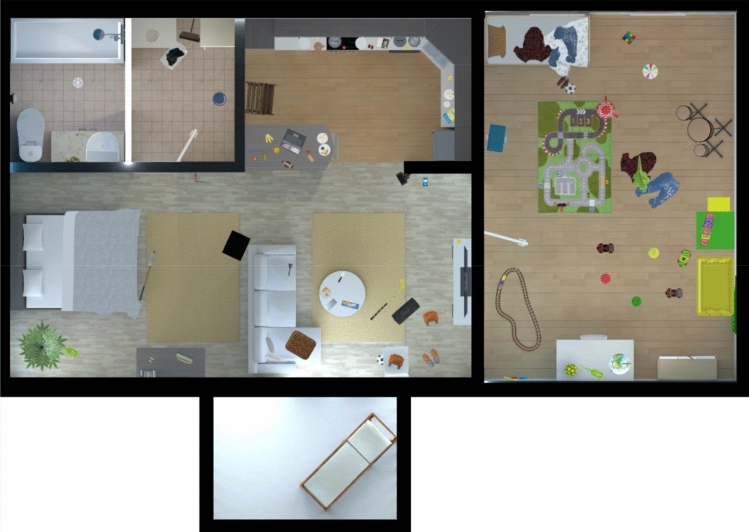
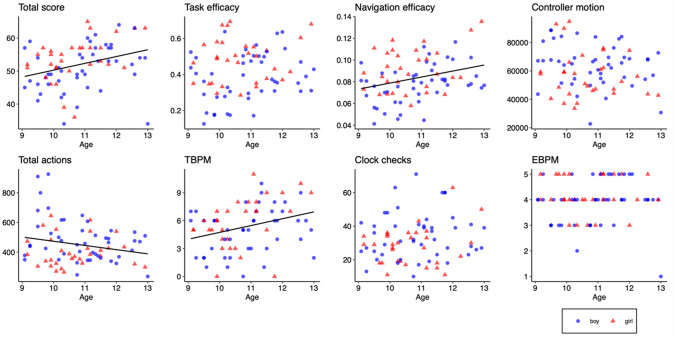
A recently developed virtual reality task, EPELI (Executive Performance in Everyday LIving), quantifies goal-directed behavior in naturalistic conditions. Participants navigate a virtual apartment, performing household chores given by a virtual character. EPELI aims to tap attention, executive function, and prospective memory. To ensure its applicability to further research and clinical work and to study its relationship to relevant background factors, we examined several key properties of EPELI in 77 typically developing 9–13-year-old children. These included EPELI’s internal consistency, age and gender differences, sensitivity to gaming experience, head-mounted display (HMD) type, and verbal recall ability, as well as its relationships with parent-rated everyday executive problems. Of the eight EPELI measures, the following six showed acceptable internal consistency: task and navigation efficacy, number of correctly performed tasks and overall actions, time monitoring, and controller movement. Some measures were associated with age, gender, or verbal encoding ability. Moreover, EPELI performance was associated with parent-rated everyday executive problems. There were no significant associations of gaming background, task familiarity, or HMD type with the EPELI measures. These results attest to the reliability and ecological validity of this new virtual reality tool for the assessment of attention, executive functions, and prospective memory in children.
Overview
The claims and statistics of this paper haven’t been checked yet.
Free: it reads the open-access text and checks the first 5 claims that cite a source we can check. Create a free account to check every claim.
Integrity signals
Registry
Cites
Statistics
Figures
Verification
Claims the paper makes
The claims and statistics of this paper haven’t been checked yet.
Free: it reads the open-access text and checks the first 5 claims that cite a source we can check. Create a free account to check every claim.
Claims other papers make about this one
Each is checked against this paper’s own text: does it say what the citing paper says it does?
The cited source says what the claim attributes to it.
In the citing paper
“They also fail to incorporate natural types of movement (such as navigating through different scenarios and manipulating various materials) and real-life distractors [35], except for a new task developed to assess prospective memory [33,36].”
From Enhancing Ecological Validity: Virtual Reality Assessment of Executive Functioning in Children and Adolescents with ADHD (2024) · cites this paper as [36]
The cited source says what the claim attributes to it.
In the citing paper
“VR tools have the potential to create immersive environments where individuals perform tasks that reflect everyday activities, providing more accurate data on their functional cognition [7,36,37].”
From Enhancing Ecological Validity: Virtual Reality Assessment of Executive Functioning in Children and Adolescents with ADHD (2024) · cites this paper as [36]
Self-check
Percentages, sums and reported differences re-computed from the paper’s own numbers.
The self-check needs the paper’s full text.
Citations
Cites
R: A Language and Environment for Statistical Computing
R Core Team (2025) · doi:10.32614/r.manuals · Cited by 352,181
(2010) · Intellectum (Universidad de La Sabana) · doi:10.1111/j.1467- · Cited by 16,131
Toward an experimental ecology of human development.
Bronfenbrenner, U. (1977) · American Psychologist · doi:10.1037/0003-066x.32.7.513 · Cited by 10,853 · cited 1×
“…some critics have questioned whether this approach alone is sufficient when the subject of the study is something as complex as human goal-directed behavior taking place in complex everyday situations (e.g., Bronfenbrenner, 1977; Brunswik, 1943; Gibson, 1970; Kingstone et al., 2008; Neisser, 1976).”
BackgroundNeisser, U. (1976) · Cited by 6,154
Simulator Sickness Questionnaire: An Enhanced Method for Quantifying Simulator Sickness
Kennedy, R. S., Lane, N. E., Berbaum, K. S., & Lilienthal, M. G. (1993) · The International Journal of Aviation Psychology · doi:10.1207/s15327108ijap0303_3 · Cited by 5,457
Wechsler Intelligence Scale for Children
(2018) · The SAGE Encyclopedia of Intellectual and Developmental Disorders · doi:10.4135/9781483392271.n537 · Cited by 4,109 · cited 1×
“This is the aim with conventional construct-laden neuropsychological tasks, such as Wechsler’s Intelligence Scale for Children, that are designed to tap several core cognitive functions reflecting general abilities (Wechsler & Kodama, 1949).”
A Developmental Perspective on Executive Function
Best, J. R., & Miller, P. H. (2010) · Child Development · doi:10.1111/j.1467-8624.2010.01499.x · Cited by 2,692 · cited 3×
“Given the age effects observed on other types of executive function tasks (Best & Miller, 2010; Klenberg, 2015; Vuontela et al., 2013) and prospective memory (Ballhausen et al., 2019; Mahy et al., 2014), these findings were quite expected.”
BackgroundResultDEFICITS IN STRATEGY APPLICATION FOLLOWING FRONTAL LOBE DAMAGE IN MAN
SHALLICE, T., & BURGESS, P. W. (1991) · Brain · doi:10.1093/brain/114.2.727 · Cited by 2,017 · cited 2×
“In some studies, cognitive functions have been measured “in the wild”, by instructing the participants to perform specific cognitively demanding tasks, for instance, in a shopping street (Garden et al., 2001; Shallice & Burgess, 1991).”
BackgroundMethodImaging the developing brain: what have we learned about cognitive development?
CASEY, B., TOTTENHAM, N., LISTON, C., & DURSTON, S. (2005) · Trends in Cognitive Sciences · doi:10.1016/j.tics.2005.01.011 · Cited by 1,556 · cited 1×
“Age effects: Executive functions continue to develop until at least early adulthood, and the age range of our participants (9–13 years), albeit rather narrow, is an important period in this maturation process (Casey et al., 2005).”
BackgroundToplak, M. E., West, R. F., & Stanovich, K. E. (2013) · Journal of Child Psychology and Psychiatry · doi:10.1111/jcpp.12001 · Cited by 1,381 · cited 1×
“The correlations between performance-based and rating measures of executive function are generally low, and it has therefore been suggested that these measures assess different mental constructs (Toplak et al., 2013).”
BackgroundSexual dimorphism of brain developmental trajectories during childhood and adolescence
Lenroot, R. K., Gogtay, N., Greenstein, D. K., Wells, E. M., Wallace, G. L., Clasen, L. S., Blumenthal, J. D., Lerch, J., Zijdenbos, A. P., Evans, A. C., et al. (2007) · NeuroImage · doi:10.1016/j.neuroimage.2007.03.053 · Cited by 1,309
Chaytor, N., & Schmitter-Edgecombe, M. (2003) · Neuropsychology Review · doi:10.1023/b:nerv.0000009483.91468.fb · Cited by 1,055 · cited 1×
“There are different approaches to assess and improve the verisimilitude and veridicality of a test (Chaytor & Schmitter-Edgecombe, 2003; Chaytor et al., 2006; Parsons, 2015).”
MethodBehavior Rating Inventory of Executive Function
Gioia, G. A., lsquith, P. K., Guy, S. C., & Kenworthy, L. (2022) · PsycTESTS Dataset · doi:10.1037/t73087-000 · Cited by 901
Parsons, T. D. (2015) · Frontiers in Human Neuroscience · doi:10.3389/fnhum.2015.00660 · Cited by 837 · cited 6×
“There are different approaches to assess and improve the verisimilitude and veridicality of a test (Chaytor & Schmitter-Edgecombe, 2003; Chaytor et al., 2006; Parsons, 2015).”
BackgroundMethodInfluentialMeta-analysis of action video game impact on perceptual, attentional, and cognitive skills.
Bediou, B., Adams, D. M., Mayer, R. E., Tipton, E., Green, C. S., & Bavelier, D. (2018) · Psychological Bulletin · doi:10.1037/bul0000130 · Cited by 807 · cited 3×
“First, the gaming background could affect task performance, as experience with action video games is linked to higher performance in several cognitive domains as measured with typical computerized paradigms (Bediou et al., 2018).”
BackgroundResultInfluentialThe Factor Structure of the Presence Questionnaire
Witmer, B. G., Jerome, C. J., & Singer, M. J. (2005) · Presence: Teleoperators and Virtual Environments · doi:10.1162/105474605323384654 · Cited by 770
Prospective Memory: An Overview and Synthesis of an Emerging Field
McDaniel, M., & Einstein, G. (2007) · Sage eBooks · doi:10.4135/9781452225913 · Cited by 717 · cited 1×
“For prospective memory measures, a long inter-item interval is often desired, which limits the number of datapoints and thus the reliability of the measures (McDaniel & Einstein, 2007).”
BackgroundOrganismic achievement and environmental probability.
Brunswik, E. (1943) · Psychological Review · doi:10.1037/h0060889 · Cited by 706 · cited 1×
“…some critics have questioned whether this approach alone is sufficient when the subject of the study is something as complex as human goal-directed behavior taking place in complex everyday situations (e.g., Bronfenbrenner, 1977; Brunswik, 1943; Gibson, 1970; Kingstone et al., 2008; Neisser, 1976).”
BackgroundBURGESS, P. W., ALDERMAN, N., FORBES, C., COSTELLO, A., M-A.COATES, L., DAWSON, D. R., ANDERSON, N. D., GILBERT, S. J., DUMONTHEIL, I., & CHANNON, S. (2006) · Journal of the International Neuropsychological Society · doi:10.1017/s1355617706060310 · Cited by 663 · cited 1×
“There is a call for tasks modeled after real-life functions, as these could provide better predictive validity and clinical applicability than tasks that target single cognitive domains (Burgess et al., 2006; Parsons et al., 2017).”
BackgroundProspective Memory : Cognitive, Neuroscience, Developmental, and Applied Perspectives
Kliegel, M., McDaniel, M. A., & Einstein, G. O. (2007) · Cited by 627
Self-citationImproving the ecological validity of executive functioning assessment
CHAYTOR, N., SCHMITTEREDGECOMBE, M., & BURR, R. (2006) · Archives of Clinical Neuropsychology · doi:10.1016/j.acn.2005.12.002 · Cited by 462 · cited 2×
“There are different approaches to assess and improve the verisimilitude and veridicality of a test (Chaytor & Schmitter-Edgecombe, 2003; Chaytor et al., 2006; Parsons, 2015).”
BackgroundMethodBehavior Rating Inventory of Executive Function (BRIEF)
Gioia, Isquith, Guy, & Kenworthy (2020) · A Compendium of Tests, Scales and Questionnaires · doi:10.4324/9781003076391-76 · Cited by 440
Ecological Validity of Neuropsychological Testing
Long, C. J., & Sbordone, R. J. (1996) · Cited by 425
Virtual week and actual week: Age‐related differences in prospective memory
Rendell, P. G., & Craik, F. I. M. (2000) · Applied Cognitive Psychology · doi:10.1002/acp.770 · Cited by 360 · cited 2×
“For instance, in the Virtual Week task, participants are asked to perform a set of everyday tasks in a board game (Rendell & Craik, 2000).”
MethodBrenhouse, H. C., & Andersen, S. L. (2011) · Neuroscience & Biobehavioral Reviews · doi:10.1016/j.neubiorev.2011.04.013 · Cited by 343 · cited 1×
“This pattern of results concurs with the findings that brain maturation follows different trajectories in girls than and boys in this age group (Brenhouse & Andersen, 2011; Giedd et al., 2012; Lenroot et al., 2007).”
ResultSPOONER, D., & PACHANA, N. (2006) · Archives of Clinical Neuropsychology · doi:10.1016/j.acn.2006.04.004 · Cited by 323 · cited 1×
“As these tasks take place in real-life environments, they have high verisimilitude (Spooner & Pachana, 2006).”
BackgroundReview: magnetic resonance imaging of male/female differences in human adolescent brain anatomy
Giedd, J. N., Raznahan, A., Mills, K. L., & Lenroot, R. K. (2012) · Biology of Sex Differences · doi:10.1186/2042-6410-3-19 · Cited by 318
Cognitive Ethology: A new approach for studying human cognition
Kingstone, A., Smilek, D., & Eastwood, J. D. (2008) · British Journal of Psychology · doi:10.1348/000712607x251243 · Cited by 311
Let’s call the whole thing off: evaluating gender and sex differences in executive function
Grissom, N. M., & Reyes, T. M. (2019) · Neuropsychopharmacology · doi:10.1038/s41386-018-0179-5 · Cited by 306
Bauer, R. M., Iverson, G. L., Cernich, A. N., Binder, L. M., Ruff, R. M., & Naugle, R. I. (2012) · Archives of Clinical Neuropsychology · doi:10.1093/arclin/acs027 · Cited by 267
Horton, A. M., & Wedding, D. (2008) · Cited by 256
Time perception in children: A neurodevelopmental approach
Droit-Volet, S. (2013) · Neuropsychologia · doi:10.1016/j.neuropsychologia.2012.09.023 · Cited by 180 · cited 1×
“1 3 (Droit-Volet, 2013) or related cognitive functions such as working memory updating and performance monitoring (Voigt et al., 2014).”
BackgroundHatfield, G. (2002) · Mind & Language · doi:10.1111/1468-0017.00196 · Cited by 158 · cited 1×
“In cognitive psychology and neuropsychology, there is a long history of using experimental paradigms that contain a relatively narrow set of stimuli and allow for only a limited range of behavioral responses from the experimentee (Hatfield, 2002).”
BackgroundThe Technology Crisis in Neuropsychology
Miller, J. B., & Barr, W. B. (2017) · Archives of Clinical Neuropsychology · doi:10.1093/arclin/acx050 · Cited by 153 · cited 1×
“Simulating everyday situations and contexts has been suggested to overcome the key limitations of simplified laboratory tasks discussed above (e.g., Burgess et al., 2006; Chaytor et al., 2006; Dawson & Marcotte, 2017; Miller & Barr, 2017).”
BackgroundKourtesis, P., Collina, S., Doumas, L. A. A., & MacPherson, S. E. (2019) · Frontiers in Human Neuroscience · doi:10.3389/fnhum.2019.00342 · Cited by 143
Vuontela, V., Carlson, S., Troberg, A.-M., Fontell, T., Simola, P. E., Saarinen, S., & Aronen, E. T. (2012) · Child Psychiatry & Human Development · doi:10.1007/s10578-012-0313-2 · Cited by 141 · cited 1×
“Given the age effects observed on other types of executive function tasks (Best & Miller, 2010; Klenberg, 2015; Vuontela et al., 2013) and prospective memory (Ballhausen et al.”
BackgroundSelf-citationParsons, T. D., Carlew, A. R., Magtoto, J., & Stonecipher, K. (2017) · Neuropsychological Rehabilitation · doi:10.1080/09602011.2015.1109524 · Cited by 137 · cited 2×
“There is a call for tasks modeled after real-life functions, as these could provide better predictive validity and clinical applicability than tasks that target single cognitive domains (Burgess et al., 2006; Parsons et al., 2017).”
BackgroundBarnett, J. H., Heron, J., Ring, S. M., Golding, J., Goldman, D., Xu, K., & Jones, P. B. (2007) · American Journal of Psychiatry · doi:10.1176/ajp.2007.164.1.142 · Cited by 134
Multitasking: multiple, domain-specific cognitive functions in a virtual environment
Logie, R. H., Trawley, S. L., & Law, A. S. (2011) · Memory & Cognition · doi:10.3758/s13421-011-0120-1 · Cited by 129 · cited 1×
“Therefore, this type of conditions may suffer from limited reliability and participants safety might also be compromised (Logie et al., 2011).”
BackgroundThe role of stimulus familiarity in context-dependent recognition
Dalton, P. (1993) · Memory & Cognition · doi:10.3758/bf03202735 · Cited by 127 · cited 1×
“Familiarity of the contents is considered to be a major factor especially in memory studies (e.g., Dalton, 1993; Gagné et al., 1985).”
BackgroundThe development of prospective memory in children: An executive framework
Mahy, C. E. V., Moses, L. J., & Kliegel, M. (2014) · Developmental Review · doi:10.1016/j.dr.2014.08.001 · Cited by 125 · cited 3×
“Also, even though the two relevant phases in prospective memory, encoding and execution, have been widely studied both in children (Ballhausen et al., 2019; Mahy et al., 2014) and across lifespan (Zuber & Kliegel, 2020), it is still unclear how much the ability to encode the given instructions dictates the performance…”
BackgroundSelf-citationKourtesis, P., Korre, D., Collina, S., Doumas, L. A. A., & MacPherson, S. E. (2020) · Frontiers in Computer Science · doi:10.3389/fcomp.2019.00012 · Cited by 125
Parsons, T. D., Duffield, T. C., & Asbee, J. (2019) · Neuropsychology Review · doi:10.1007/s11065-019-09407-6 · Cited by 118
Ouellet, É., Boller, B., Corriveau-Lecavalier, N., Cloutier, S., & Belleville, S. (2018) · Journal of Neuroscience Methods · doi:10.1016/j.jneumeth.2018.03.010 · Cited by 108 · cited 1×
“, grocery shopping or cooking) with immersive HMDs have already been successfully employed (Barnett et al., 2021; Chicchi Giglioli et al., 2021; Ouellet et al., 2018).”
Kourtesis, P., Collina, S., Doumas, L. A. A., & MacPherson, S. E. (2021) · Journal of the International Neuropsychological Society · doi:10.1017/s1355617720000764 · Cited by 107
Prospective Memory Development Across the Lifespan: An Integrative Framework
Zuber, S., & Kliegel, M. (2020) · European Psychologist · doi:10.1027/1016-9040/a000380 · Cited by 90 · cited 3×
“…memory, encoding and execution, have been widely studied both in children (Ballhausen et al., 2019; Mahy et al., 2014) and across lifespan (Zuber & Kliegel, 2020), it is still unclear how much the ability to encode the given instructions dictates the performance in the execution phase…”
BackgroundSelf-citationSpecial issue on ecological validity and cognitive assessment
Dawson, D. R., & Marcotte, T. D. (2017) · Neuropsychological Rehabilitation · doi:10.1080/09602011.2017.1313379 · Cited by 83 · cited 1×
“Simulating everyday situations and contexts has been suggested to overcome the key limitations of simplified laboratory tasks discussed above (e.g., Burgess et al., 2006; Chaytor et al., 2006; Dawson & Marcotte, 2017; Miller & Barr, 2017).”
BackgroundKrohn, S., Tromp, J., Quinque, E. M., Belger, J., Klotzsche, F., Rekers, S., Chojecki, P., de Mooij, J., Akbal, M., McCall, C., et al. (2020) · Journal of Medical Internet Research · doi:10.2196/16724 · Cited by 72 · cited 1×
“, 2021), and it is gradually becoming more popular as research and clinical tool in the field of neuropsychology (Krohn et al., 2020).”
BackgroundMidlife aging, open-ended planning, and laboratory measures of executive function.
Garden, S. E., Phillips, L. H., & MacPherson, S. E. (2001) · Neuropsychology · doi:10.1037/0894-4105.15.4.472 · Cited by 66
Zuber, S., Mahy, C. E. V., & Kliegel, M. (2019) · Cognitive Development · doi:10.1016/j.cogdev.2019.03.001 · Cited by 63 · cited 1×
“As executive functions (Best & Miller, 2010; Klenberg, 2015) and prospective memory (Ballhausen et al., 2019; Mahy et al., 2014; Zuber & Kliegel, 2020; Zuber et al., 2019) continue developing during the early school years and beyond, we expected to see better EPELI performances (higher total scores and efficacies) in…”
BackgroundSelf-citationKourtesis, P., & MacPherson, S. E. (2021) · Computers in Human Behavior Reports · doi:10.1016/j.chbr.2021.100151 · Cited by 57
The development of time-based prospective memory in childhood: The role of working memory updating.
Voigt, B., Mahy, C. E. V., Ellis, J., Schnitzspahn, K., Krause, I., Altgassen, M., & Kliegel, M. (2014) · Developmental Psychology · doi:10.1037/a0037491 · Cited by 53 · cited 1×
“1 3 (Droit-Volet, 2013) or related cognitive functions such as working memory updating and performance monitoring (Voigt et al., 2014).”
BackgroundSelf-citationQuantifying ADHD Symptoms in Open-Ended Everyday Life Contexts with a New Virtual Reality Task
Seesjärvi, E., Puhakka, J., Aronen, E. T., Lipsanen, J., Mannerkoski, M., Hering, A., Zuber, S., Kliegel, M., Laine, M., & Salmi, J. (2022) · Journal of Attention Disorders · doi:10.1177/10870547211044214 · Cited by 51 · cited 10×
“This study replicated the previously reported (Seesjärvi et al., 2022) associations between EPELI efficacy measures and parent-reported executive function problems as evaluated with the BRIEF questionnaire total score (GEC).”
BackgroundMethodResultInfluentialSelf-citationKourtesis, P., & MacPherson, S. E. (2023) · Neuropsychological Rehabilitation · doi:10.1080/09602011.2021.2008983 · Cited by 41 · cited 1×
“In line with this, Kourtesis and MacPherson (2021b) found at in VR-EAL, EBPM performance is best predicted by delayed recognition performance and TBPM by planning ability.”
On the Relation between Hallucination and Perception
Gibson, J. J. (1970) · Leonardo · doi:10.2307/1572259 · Cited by 37 · cited 1×
“…some critics have questioned whether this approach alone is sufficient when the subject of the study is something as complex as human goal-directed behavior taking place in complex everyday situations (e.g., Bronfenbrenner, 1977; Brunswik, 1943; Gibson, 1970; Kingstone et al., 2008; Neisser, 1976).”
BackgroundKim, E., Han, J., Choi, H., Prié, Y., Vigier, T., Bulteau, S., & Kwon, G. H. (2021) · JMIR Serious Games · doi:10.2196/30249 · Cited by 37
Assessment and development of executive functions in school-age children
Klenberg, L. (2015) · Helda - University of Helsinki Institutional Repository · Cited by 36
Test–retest consistency of Virtual Week: A task to investigate prospective memory
Mioni, G., Rendell, P. G., Stablum, F., Gamberini, L., & Bisiacchi, P. S. (2014) · Neuropsychological Rehabilitation · doi:10.1080/09602011.2014.941295 · Cited by 32
Chicchi Giglioli, I. A., Pérez Gálvez, B., Gil Granados, A., & Alcañiz Raya, M. (2021) · Cyberpsychology, Behavior, and Social Networking · doi:10.1089/cyber.2020.0560 · Cited by 26
A Virtual Kitchen Protocol to Measure Everyday Memory Functioning for Meal Preparation
Barnett, M. D., Childers, L. G., & Parsons, T. D. (2021) · Brain Sciences · doi:10.3390/brainsci11050571 · Cited by 26 · cited 1×
“, grocery shopping or cooking) with immersive HMDs have already been successfully employed (Barnett et al., 2021; Chicchi Giglioli et al., 2021; Ouellet et al., 2018).”
BackgroundA Review of Virtual Classroom Environments for Neuropsychological Assessment
Parsons, T. D., & Rizzo, A. (2019) · Virtual reality technologies for health and clinical applications · doi:10.1007/978-1-4939-9482-3_11 · Cited by 24
Zuber, S., Haas, M., Framorando, D., Ballhausen, N., Gillioz, E., Künzi, M., & Kliegel, M. (2021) · Memory · doi:10.1080/09658211.2021.1995435 · Cited by 16
Self-citationProspective memory across the lifespan
Ballhausen, N., Hering, A., Rendell, P. G., & Kliegel, M. (2019) · Routledge eBooks · doi:10.4324/9781351000154-9 · Cited by 14
Self-citationDoes Familiarity Have an Effect on Recall Independent of Its Effect on Original Learning?
Gagné, E. D., Bell, M. S., Yarbrough, D. B., & Weidemann, C. D. (1985) · The Journal of Educational Research · doi:10.1080/00220671.1985.10885645 · Cited by 6
Research works printed but not linked: 3
- Nunnally JC Bernstein IH Psychometric theory 1994 3 McGraw-Hill
- Wechsler D Kodama H Wechsler intelligence scale for children 1949 Psychological Corporation
- Wickham, H. (2016). ggplot2: elegant graphics for data analysis. Springer. https://ggplot2.tidyverse.org. Accessed 17 Jan 2022
Cited by
Oh, S., Joung, Y., Chung, T., Lee, J., Seok, B. J., Kim, N.-U., & Son, H. M. (2024) · Frontiers in Psychiatry · doi:10.3389/fpsyt.2024.1383547 · Cited by 38
“In 2022, Seesjärvi et al. also tried to measure ADHD symptoms and executive functions by analyzing goal-directed behavior in everyday living within a virtual environment with the “ EPELI ” (Executive Performance in Everyday Living) device (22).”
MethodRomero-Ayuso, D., del Pino-González, A., Torres-Jiménez, A., Juan-González, J., Celdrán, F. J., Franchella, M. C., Ortega-López, N., Triviño-Juárez, J. M., Garach-Gómez, A., Arrabal-Fernández, L., et al. (2024) · Children · doi:10.3390/children11080986 · Cited by 20
Gounari, K. A., Giatzoglou, E., Kemm, R., Beratis, I., Nega, C., & Kourtesis, P. (2025) · Psychiatry International · doi:10.3390/psychiatryint6010031 · Cited by 22
Jylkkä, J., Ritakallio, L., Merzon, L., Kangas, S., Kliegel, M., Zuber, S., Hering, A., Salmi, J., & Laine, M. (2023) · PLoS ONE · doi:10.1371/journal.pone.0280717 · Cited by 20
“In a previous VR study involving 38 children with attention deficit hyperactivity disorder (ADHD) and 38 typically developing controls, EPELI showed predictive validity, indicated by a higher rate of irrelevant actions and more controller movement in the ADHD group [14].”
BackgroundMethodResultInfluentialSelf-citationJylkkä, J., Ritakallio, L., Merzon, L., Kangas, S., Kliegel, M., Zuber, S., Hering, A., Laine, M., & Salmi, J. (2023) · Scientific Reports · doi:10.1038/s41598-023-36351-6 · Cited by 20
Self-citation
Metadata
- Authors
- Seesjärvi, E., Puhakka, J., Aronen, E. T., Hering, A., Zuber, S., Merzon, L., Kliegel, M., Laine, M., & Salmi, J.
- Affiliations
- University of Helsinki (FI)
- Tilburg University (NL)
- University of Victoria (CA)
- Aalto University (FI)
- University of Geneva (CH)
- Åbo Akademi University (FI)
- Corresponding author
- Seesjärvi, Erik
- ORCID
- Venue
- Psychological Research
- Published
- 2022-11-23
- Volume
- 87
- Issue
- 6
- Pages
- 1899-1916
- ISSN
- 0033-3026 (ISSN-L)
- 0340-0727
- 1430-2772
- PMC
- PMC10366028
- OpenAlex
- W4309915164
- Cited by
- 19
- References
- 67
- Citations by year
- 2026: 2 · 2025: 5 · 2024: 8 · 2023: 4
- FWCI
- 3.91
- Type
- journal article
- Language
- en
- Open access
- hybrid
- doi.org
- Licence
- cc-by
- creativecommons.org/licenses/by/4.0 (tdm)
- creativecommons.org/licenses/by/4.0 (vor)
- Locations
- Psychological Research (publishedVersion, cc-by)
- PubMed Central (publishedVersion, cc-by)
- PubMed (publishedVersion)
- Åbo Akademi University Research Portal (submittedVersion, other-oa)
- Tilburg University Research Portal (submittedVersion, cc-by)
- Research portal (Tilburg University) (submittedVersion, cc-by)
- Data Archiving and Networked Services (DANS) (submittedVersion, other-oa)
- Aaltodoc (Aalto University) (submittedVersion, cc-by)
- Työväentutkimus Vuosikirja (submittedVersion)
- PsyArXiv (OSF Preprints) (submittedVersion, cc-by)
- PsyArXiv (OSF Preprints) (submittedVersion)
- Funders
- Academy of Finland (325981, 328954, 323251)
- Suomen Kulttuurirahasto (00190963, 00201002, 00210721)
- Arvo ja Lea Ylppö Säätiö (202010005)
- Finnish Foundation for Psychiatric Research (20210019)
- University of Helsinki including Helsinki University Central Hospital
- Topics
- Social Sciences › Psychology › Experimental and Cognitive Psychology › Cognitive Functions and Memory
- Social Sciences › Psychology › Experimental and Cognitive Psychology › Cognitive Abilities and Testing
- Life Sciences › Neuroscience › Cognitive Neuroscience › Neural and Behavioral Psychology Studies
- Keywords
- virtual reality task, goal-directed behavior, executive function, attention, prospective memory, children, internal consistency, ecological validity, parent ratings, player experience, head-mounted displays, verbal encoding, age and gender differences
- MeSH terms
- Virtual Reality, Activities of Daily Living, Adolescent, Child, Goals, Humans, Reproducibility of Results, Executive Function
About these checks
Registry, retraction, Cites and statistics results are computed, not judged, with one exception: a printed reference that no index lists is read once by a model before it counts as a citation error. Claims are extracted by a model and kept only when their quote appears verbatim in the text; each cited source is then checked, with a model’s help, for whether it says what the claim relies on. Those verdicts can be wrong — read the claim’s quote and the cited source before relying on one.
Statistics and arithmetic are recomputed, not judged.
Confidence bands are shown only for fields calibrated on our annotated test set. None is calibrated yet, so no band is shown.
What counts as a claim ›How we measure confidence ›How we check this ›
Are you an author, or do you see a problem with this page? Request a review
Data sources
Bibliographic data: Semantic Scholar, OpenAlex, Crossref.
Contains information from the Semantic Scholar Academic Graph Datasets, made available under the ODC Attribution License (ODC-BY 1.0).
Semantic Scholar’s data is described in: Kinney, R., et al. (2023). The Semantic Scholar Open Data Platform. arXiv:2301.10140.
