

Conjoint activity of anterior insular and anterior cingulate cortex: awareness and response
Open accessThe DOI matches its Crossref record; 141 of the 141 references it cites were found in a registry or an index.
Abstract
There is now a wealth of evidence that anterior insular and anterior cingulate cortices have a close functional relationship, such that they may be considered together as input and output regions of a functional system. This system is typically engaged across cognitive, affective, and behavioural contexts, suggesting that it is of fundamental importance for mental life. Here, we review the literature and reinforce the case that these brain regions are crucial, firstly, for the production of subjective feelings and, secondly, for co-ordinating appropriate responses to internal and external events. This model seeks to integrate higher-order cortical functions with sensory representation and autonomic control: it is argued that feeling states emerge from the raw data of sensory (including interoceptive) inputs and are integrated through representations in conscious awareness. Correspondingly, autonomic nervous system reactivity is particularly important amongst the responses that accompany conscious experiences. Potential clinical implications are also discussed.
Overview
The claims and statistics of this paper haven’t been checked yet.
Free: it reads the open-access text and checks the first 5 claims that cite a source we can check. Create a free account to check every claim.
Integrity signals
Registry
Cites
Statistics
Figures
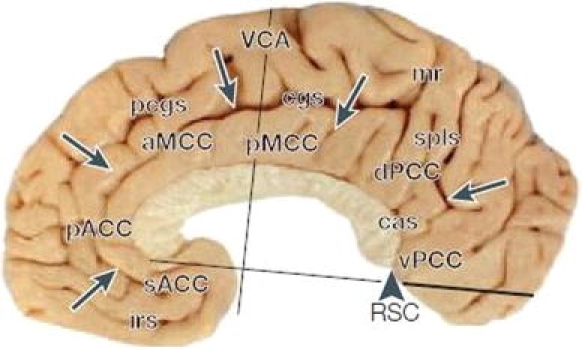
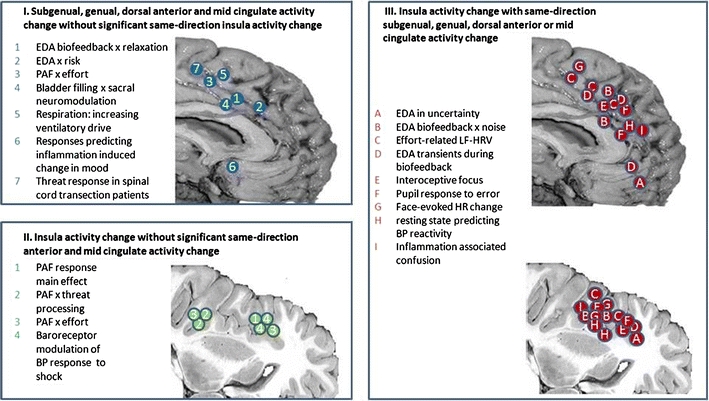
Verification
Claims the paper makes
The claims and statistics of this paper haven’t been checked yet.
Free: it reads the open-access text and checks the first 5 claims that cite a source we can check. Create a free account to check every claim.
Claims other papers make about this one
Each is checked against this paper’s own text: does it say what the citing paper says it does?
The source backs part of the claim, not all of it — or backs it for a different population, condition or comparison.
In the citing paper
“These observations provide further support for considering the salience network as a central neural substrate of our model.”
From An Interoceptive Predictive Coding Model of Conscious Presence (2012) · cites this paper as Medford and Critchley, 2010
Experimental — accuracy not yet measuredThe source backs part of the claim, not all of it — or backs it for a different population, condition or comparison.
In the citing paper
“The AIC and the ACC (see Figure 2) are often coactivated despite being spatially widely separated, forming a “salience network” in conjunction with the amygdala and the inferior frontal gyrus”
From An Interoceptive Predictive Coding Model of Conscious Presence (2012) · cites this paper as Medford and Critchley, 2010
Experimental — accuracy not yet measuredThe source backs part of the claim, not all of it — or backs it for a different population, condition or comparison.
In the citing paper
“This state of defensive posturing may compromise one’s ability to utilize typical sensory processing avenues to interpret external sensory information continuously received from their surroundings (Bryant et al., 2005; Felmingham et al., 2008; Medford and Critchley, 2010; Ionta et al., 2011; Terpou et al., 2018).”
From How Processing of Sensory Information From the Internal and External Worlds Shape the Perception and Engagement With the World in the Aftermath of Trauma: Implications for PTSD (2021) · cites this paper as Medford and Critchley, 2010
Experimental — accuracy not yet measuredThe cited source says what the claim attributes to it.
In the citing paper
“ACC does not seem to be a critical region in generating awareness, yet it might receive input from AIC and convey the “feeling” information to other brain networks that serve voluntary control functions (Posner and Rothbart, 1998; Craig, 2009; Medford and Critchley, 2010; Valentini, 2010).”
From Anterior insular cortex and emotional awareness (2013) · cites this paper as Medford and Critchley, 2010
The cited source says what the claim attributes to it.
In the citing paper
“In other words, we borrow from the classical view that ACC serves as a limbic motor region and the AIC as a limbic sensory structure (Craig, 2009; Medford and Critchley, 2010).”
From Anterior insular cortex and emotional awareness (2013) · cites this paper as Medford and Critchley, 2010
7 more claims about this paper
Create a free account to see every claim other papers make about this one.
Self-check
Percentages, sums and reported differences re-computed from the paper’s own numbers.
The self-check needs the paper’s full text.
Citations
Cites
Dissociable intrinsic connectivity networks for salience processing and executive control
Seeley, W. W., Menon, V., Schatzberg, A. F., Keller, J., Glover, G. H., Kenna, H., Reiss, A. L., & Greicius, M. D. (2007) · The Journal of Neuroscience · doi:10.1523/jneurosci.5587-06.2007 · Cited by 7,426 · cited 4×
“The link with other automatic processes such as attentional direction and salience processing (Seeley et al. 2007) is suspected to be intrinsic to the conjoint functioning of ACC and insular cortex (Craig 2009) and their phylogenetic evolution in primates.”
BackgroundMethodInfluentialHow do you feel — now? The anterior insula and human awareness
(Bud) Craig, A. D. (2009) · Nature Reviews Neuroscience · doi:10.1038/nrn2555 · Cited by 6,657 · cited 14×
“studies reporting increased insula activation in alexithymics in response to emotional material, and some reporting decreases (Craig 2009).”
BackgroundResultInfluentialCognitive and emotional influences in anterior cingulate cortex
Bush, G., Luu, P., & Posner, M. I. (2000) · Trends in Cognitive Sciences · doi:10.1016/s1364-6613(00)01483-2 · Cited by 6,259 · cited 1×
“These ideas were extended by an influential review of neuroimaging studies involving ACC activation, which suggested that the region classically designated as ACC can be further subdivided into dorsal cognitive and rostral-ventral affective divisions (Bush et al. 2000).”
BackgroundHow do you feel? Interoception: The sense of the physiological condition of the body
Craig, A. D. (2002) · Nature Reviews Neuroscience · doi:10.1038/nrn894 · Cited by 6,006 · cited 3×
“A stance taken from observing the close correspondence between autonomic output and cingulate function across a range of tasks provided a view consistent with the notion of cingulate as ‘limbic motor cortex’ (Craig 2002).”
BackgroundResultInfluentialEmpathy for Pain Involves the Affective but not Sensory Components of Pain
Singer, T., Seymour, B., O'Doherty, J., Kaube, H., Dolan, R. J., & Frith, C. D. (2004) · Science · doi:10.1126/science.1093535 · Cited by 3,929 · cited 1×
“A study by Singer et al. (2004) is of particular note: AIC and ACC were amongst a network of regions activated by a task eliciting empathy for the pain of others.”
BackgroundNeural systems supporting interoceptive awareness
Critchley, H. D., Wiens, S., Rotshtein, P., Öhman, A., & Dolan, R. J. (2004) · Nature Neuroscience · doi:10.1038/nn1176 · Cited by 3,406 · cited 2×
“Direct evidence for the idea that the insula is a key area supporting interoception comes from a functional neuroimaging study in which the ability to make accurate judgements about the timing of one’s own heartbeat was used as an index of interoceptive awareness (Critchley et al. 2004).”
BackgroundMethodSelf-citationContributions of anterior cingulate cortex to behaviour
Devinsky, O., Morrell, M. J., & Vogt, B. A. (1995) · Brain · doi:10.1093/brain/118.1.279 · Cited by 3,377 · cited 6×
“Devinsky et al. (1995) observe that ‘‘the functions of the anterior cingulate cortex, a component of several vital networks and subserving a diverse range of functions, are difficult to quantify or even describe, and have eluded the traditional ‘localized lesion-behavioural correlate’ approach’’.”
BackgroundInfluentialSridharan, D., Levitin, D. J., & Menon, V. (2008) · Proceedings of the National Academy of Sciences · doi:10.1073/pnas.0800005105 · Cited by 2,892 · cited 2×
“More specific evidence of functional interaction between ACC and AIC comes from a study by Sridharan et al. (2008), which identified a fronto-insular cingulate system involved in switching between default mode and central executive networks.”
BackgroundA neural system for error detection and compensation
Gehring, W. J., Goss, B., Coles, M. G. H., Meyer, D. E., & Donchin, E. (1993) · Psychological Science · doi:10.1111/j.1467-9280.1993.tb00586.x · Cited by 2,862 · cited 1×
“This idea was based on the discovery of the errorrelated negativity (ERN) potential, an event-related potential consistently observed in experimental trials about 100 ms following response initiation, when the response is in error (Gehring et al. 1993).”
BackgroundPain Affect Encoded in Human Anterior Cingulate But Not Somatosensory Cortex
Rainville, P., Duncan, G. H., Price, D. D., Carrier, B., & Bushnell, M. C. (1997) · Science · doi:10.1126/science.277.5328.968 · Cited by 2,687 · cited 1×
“Also, ACC responses to pain can be modulated by hypnotic suggestions designed to alter the unpleasantness, but not the intensity, of pain (Rainville et al. 1997).”
Background
Cited by
Items 501–600 of 665
Kasahara, K., Hikishima, K., Nakata, M., Tsurugizawa, T., Higo, N., & Doya, K. (2024) · NeuroImage · doi:10.1016/j.neuroimage.2024.120840 · Cited by 3
“Both the anterior cingulate and prelimbic cortices are reported to be involved in cognition and emotion, the former being particularly associated with attention (Medford and Critchley, 2010).”
BackgroundThe Neural Basis of Interoception
Terasawa, Y., & Brewer, R. (2024) · Springer eBooks · doi:10.1007/978-3-031-68521-7_3 · Cited by 3
Delineating In Vivo T1 ‐Weighted Intensity Profiles Within the Human Insula Cortex Using 7‐Tesla MRI
Dalby, C., Dibble, A. J., Carvalheiro, J., Queirazza, F., Sevegnani, M., Harvey, M., Svanera, M., & Fracasso, A. (2026) · Human Brain Mapping · doi:10.1002/hbm.70486 · Cited by 2
Histamine and acetylcholine receptor involvement in sensorimotor gating: an autoradiography study
Skefos, J., Ghulam-Smith, M., Mahendra, A., Patel, G., Larrauri, J., Kholdebarin, E., Levin, E. D., & Bauman, M. L. (2014) · F1000Research · doi:10.12688/f1000research.4287.1 · Cited by 2
“Although the anterior cingulate and insular cortex have been shown to be highly interconnected functionally (Di Martino et al., 2009; Medford & Critchley, 2010; Cauda et al., 2011), there was no correlation between the changes we report in pyrilamine binding in the anterior cingulate and…”
BackgroundMcNaughton, N., & Gray, J. A. (2024) · Oxford University Press eBooks · doi:10.1093/oso/9780198843313.003.0012 · Cited by 2
Impressions of HIV risk online: Brain potentials while viewing online dating profiles
Schmälzle, R., Imhof, M. A., Kenter, A., Renner, B., & Schupp, H. T. (2019) · Cognitive Affective & Behavioral Neuroscience · doi:10.3758/s13415-019-00731-1 · Cited by 2
Bär, K., & Critchley, H. (2015) · Elsevier eBooks · doi:10.1016/b978-0-12-397025-1.00058-0 · Cited by 3
Self-citationCotard Syndrome: The Experience of Inexistence
Gerrans, P. (2024) · Oxford University Press eBooks · doi:10.1093/oso/9780198872221.003.0009 · Cited by 3
Neuronale Substrate im Wechselspiel von Interozeption, Emotionen und Körperbild
Mai‐Lippold, S. A. (2021) · OPen Access Repositorium der Universität Ulm (OPARU) (Ulm University) · doi:10.18725/oparu-37688 · Cited by 2
Palmer, S. J. (2022) · British Journal of Neuroscience Nursing · doi:10.12968/bjnn.2022.18.1.45 · Cited by 2
The Neural Correlates of Autonomic Interoception in a Clinical Sample: Implications for AnxietyPreprint
Grimes, P. Z., Kampoureli, C. N., Rae, C. L., Harrison, N. A., Garfinkel, S. N., Critchley, H., & Eccles, J. (2023) · medRxiv · doi:10.1101/2023.05.25.23290230 · Cited by 2
Self-citationIdentifying Cognitive Resources in a Decision-Making during GamblingPreprint
Mohammad, A., Ebrahimzadeh, E., Narjes, & Soltanian-Zadeh, H. (2025) · Research Square · doi:10.21203/rs.3.rs-5754204/v1 · Cited by 2
Neuropsychologie des instincts et des émotions
Gil, R. (2024) · Elsevier eBooks · doi:10.1016/b978-2-294-78570-2.00018-6 · Cited by 1
The Neuroanatomical Correlates of Dyspnea: An Activation Likelihood Estimation Meta-Analysis
Müller, C. F., Kerl, J., & Dellweg, D. (2025) · NeuroSci · doi:10.3390/neurosci6020036 · Cited by 1
“In addition, a linear activation of both the AIC and the ACC with the (un-) pleasantness of the perception has been demonstrated [33].”
Pultsina, K. I., Karjalainen, S., & Parviainen, T. M. (2026) · Psychophysiology · doi:10.1111/psyp.70301 · Cited by 5
Polyvagal Theory and Interoception-Based Interventions: Approaches to Strengthen Mental Resilience
Demir, M. U. C., & Hasateş, M. C. (2026) · Psikiyatride Guncel Yaklasimlar - Current Approaches in Psychiatry · doi:10.18863/pgy.1609278 · Cited by 1
“The insula works with the anterior cingulate cortex in the regulation of body sensations, and the anterior cingulate cortex is involved in the emotional and cognitive processing of interoceptive information (Medford and Critchley 2010).”
Linking subjective experience of anxiety to brain function using natural language processing
Kirk, P. A., Qamar, P., Lentz, J., Zugman, A., Abend, R., Kircanski, K., & Pine, D. S. (2025) · Social Cognitive and Affective Neuroscience · doi:10.1093/scan/nsaf099 · Cited by 1
EEG power modulation in the sensorimotor regions is critical to motor tic suppression
Miyakoshi, M., Jurgiel, J., Dillon, A., Piacentini, J. C., Makeig, S., & Loo, S. K. (2025) · Frontiers in Psychiatry · doi:10.3389/fpsyt.2025.1580636 · Cited by 1
“ACC is involved in subjective feeling, response coordination, self-monitoring, assessment of motivational valence, and initiation of motor actions (64).”
Li, H.-T., Chen, Y., Chaudhary, S., Ide, J. S., & Li, C. R. (2026) · The International Journal of Neuropsychopharmacology · doi:10.1093/ijnp/pyag005 · Cited by 1
“63 GCA showed positive causal outflow from the right AI to the pgACC in both MDD patients and healthy controls.”
Ren, X., 安莉娟, Jia, N., Lv, K., & Cui, Z. (2026) · Brain Sciences · doi:10.3390/brainsci16060610 · Cited by 1
“This strategy targets the key interface regions between the emotion-generative and cognitive-regulatory systems, including the ACC and aINS, which mediate conflict monitoring and subjective emotional experience [32,48].”
Neuroimaging and Clinical Studies on Brain–Immune Interactions
Hannestad, J. O. (2012) · Springer eBooks · doi:10.1007/978-1-4614-4729-0_4 · Cited by 1
Fundamentals of the septo-hippocampal system
McNaughton, N., & Gray, J. A. (2024) · Oxford University Press eBooks · doi:10.1093/oso/9780198843313.003.0009 · Cited by 1
Insula, a “mysterious” island in our brain – minireview
Palkovits, M. (2010) · Orvosi Hetilap · doi:10.1556/oh.2010.29004 · Cited by 3
“No man is an island:” recent findings on the emotional consequences of insula damage
Salas, C. E. (2015) · Neuropsychoanalysis · doi:10.1080/15294145.2015.1100944 · Cited by 1
“…suggested, for example, that the joint activation of ACC and the right anterior insula not only generates a representation of emotional awareness (the experiential aspect), but also enables motivation to modulate (the regulatory aspect) subjective feelings (Craig, 2008; Medford & Critchley, 2010).”
BackgroundSystematic review of the evidence of interoceptive awareness in performers
Pedraza-Ramirez, I. (2016) · Jyväskylä University Digital Archive (University of Jyväskylä) · Cited by 2
Xu, Z., Wu, Q., Li, Y., Kataoka, Y., Takahashi, S., Wu, J., Li, C., Ohno, S., & Kanazawa, S. (2016) · IEEE International Conference on Mechatronics and Automation (ICMA) · doi:10.1109/icma.2016.7558974 · Cited by 2
Caoyang, J., Li, J., Wei, C. H. E. N., Yang, Y., Hu, Y., & Zheng, X. (2019) · Advances in Psychological Science · doi:10.3724/sp.j.1042.2019.00268 · Cited by 4
Chen, Z., Ti, S. U., Zhang, R., Xu, T., Zhou, F., Yang, Y., & Feng, T. (2019) · Scientia Sinica Vitae · doi:10.1360/ssv-2019-0076 · Cited by 1
CHOLINERGIC STRUCTURES OF THE CINGULATE CORTEX OF THE RAT BRAIN
Korzhevsky, D. E., Grigor’ev, I. P., Новикова, А. Д., Ковальчук, В. А., & Kirik, O. V. (2013) · Medical academic journal · doi:10.17816/maj13449-53 · Cited by 5
Miles, A. E., Kaplan, A. S., Nikolova, Y. S., & Voineskos, A. N. (2020) · Psychiatry Research Neuroimaging · doi:10.1016/j.pscychresns.2020.111228 · Cited by 1
Neurobiology of Mindfulness-Based Interventions
Desormeau, P. A., & Farb, N. A. S. (2021) · Springer eBooks · doi:10.1007/978-3-030-81245-4_10 · Cited by 3
Güldener, L., & Pollmann, S. (2024) · Journal of Cognitive Neuroscience · doi:10.1162/jocn_a_02132 · Cited by 2
“Co-activation together with the dACC we also observed in the left anterior insular cortex, which corresponds with other studies reporting co-activity of these areas, arose such as during conflict or pain processing (e.g., Medford & Critchley, 2010; Craig, 2009).”
ResultMemory and the septo-hippocampal system
McNaughton, N., & Gray, J. A. (2024) · Oxford University Press eBooks · doi:10.1093/oso/9780198843313.003.0008 · Cited by 1
Luukkainen-Markkula, R. (2025) · Psykologia · doi:10.62443/psykologia.v51i3.145009 · Cited by 6
“Aivosaaren etuosien on esitetty tuottavan kehollisen minätietoisuuden ja pihtipoimun etuosien tätä tietoisuutta vastaavat ele-, ilme-ja käyttäytymisvasteet (Medford & Critchley, 2010).”
Sex Differences in Sensitivity to, and Salience of, Fear-Provoking Stimuli
Campbell, A. C., Copping, L. T., & Cross, C. (2021) · SpringerBriefs in anthropology · doi:10.1007/978-3-030-65280-7_6 · Cited by 1
Kurowski, L. A. (2014) · Philosophical Psychology · doi:10.1080/09515089.2014.972354 · Cited by 1
“From a neuroscientific perspective, all of these experiences seem to be involved in a sense of subjectivity and ownership unity (Craig, 2009; Medford & Critchley, 2010), but it is not clear how the sensation of pain, time perception, or any other sensation mentioned above becomes constitutive of a…”
BackgroundSchneider, M. (2018) · Elektronische Hochschulschriften der LMU München (Ludwig-Maximilians-Universität München) · doi:10.5282/edoc.23192 · Cited by 2
Trait impulsivity and response-inhibition in Parkinson Disease. An fMRI study.Preprint
Palermo, S., Morese, R., Stanziano, M., Zibetti, M., Romagnolo, A., Sirgiovanni, S., Faveri, L. D., Valentini, M. C., & Lopiano, L. (2017) · bioRxiv (Cold Spring Harbor Laboratory) · doi:10.1101/204768 · Cited by 1
“This is an integrated awareness of cognitive, affective, and physical state, produced by the integrative functions of the AIC and then re-represented in the ACC as a basis for the selection of, and preparation for, responses to inner/outer events [27].”
BackgroundNeural Mechanisms of Reward Processing in Antisocial Behavior
Murray, L. (2019) · Deep Blue (University of Michigan) · Cited by 1
Chia, Z. (2020) · DR-NTU (Nanyang Technological University) · doi:10.32657/10356/144870 · Cited by 1
“DMN to CEN activity is switched on/off through the SN (Seeley et al., 2007; Sridharan, Levitin, & Menon, 2008; Medford & Critchley, 2010; Menon & Uddin, 2010).”
BackgroundNeural Representations of Extrasystoles: A Predictive Coding PerspectivePreprint
Reinfeld, P., Steinfath, T. P., Ku, P.-H., Nikulin, V. V., Neumann, J., & Villringer, A. (2024) · bioRxiv (Cold Spring Harbor Laboratory) · doi:10.1101/2024.09.06.610728 · Cited by 1
“[36] Specifically in interoception, the ACC is involved in error detection and integrating emotional predictions [33].”
Insula function in anorexia nervosa
Schreuder, M. J. (2011) · Utrecht University Repository (Utrecht University) · Cited by 2
Émotion et espace visuel : approches neuromagnétique, neurosomatique et comportementale
D’Hondt, F. (2011) · theses.fr (ABES) · doi:10.70675/b833180czc00az4b2ezbf1fzc0a9becea9f2 · Cited by 4
社会認知における「社会的思い込み効果」の役割とその脳内メカニズム
英之, 高., & 隆司, 大. (2011) · 認知科学 = Cognitive studies : bulletin of the Japanese Cognitive Science Society · doi:10.11225/jcss.18.138 · Cited by 2
A solution to the problems of pain
Wright, A. (2015) · University of Birmingham Institutional Research Archive (University of Birmingham)
Prumm, K. T. (2014) · Tuwhera (Auckland University of Technology)
Neurotoxicity of major depressive disorder: a neuroimaging and neuropsychological study.
Serra-Blasco, M. (2015) · TDX (Tesis Doctorals en Xarxa)
The role of central catecholamines in performance during prolonged exercise in warm conditions
Cordery, P. (2013) · Loughborough University Institutional Repository (Loughborough University)
Inducing the “Will to Persevere”: Electric Stimulation as a Potential Treatment for Apathy
Banks, G. P., Mikell, C. B., & McKhann, G. M. (2014) · Neurosurgery · doi:10.1227/01.neu.0000452311.68989.00
Liu, L., Li, J., Song, Y., & Liu, J. (2013) · Acta Psychologica Sinica · doi:10.3724/sp.j.1041.2012.00446
“2 microdeletion syndrome)的病人 , 因为基因突变 , 导致该基因位 点缺失一个等位基因, 成为半合子基因型 v 和 m), 但是效应方向相反(m>v) (参见表 1)。因此, 为最大 化的利用已有数据, 本文仅提取 15 篇报告纯合子 效应 (vv>mm)的研究数据进行效应值计算。采用 Cohen’s d 来计算各研究在相应脑区的效应值, 即 计算 vv 与 mm 两种基因型被试在相应脑区激活水 平的标准化的均值差异。效应的元分析计算具体利 用 CMA (Comprehensive Meta-AnalysisVersion 2.0) 软件进行(Borenstein, Hedges, Higgins, &…”
InfluentialYang, G. (2013) · eScholarship (California Digital Library)
A influência do carboidrato na ativação cerebral durante exercício físico
Castanho, G. K. F., Fontes, E. B., de Campos, B. M., Chiminazzo, J. G. C., & Fernandes, P. T. (2016) · Motricidade · doi:10.6063/motricidade.6617
Disconnection, network dysfunction and cognitive impairment after traumatic brain injury
Bonnelle, V. (2012) · Spiral (Imperial College London) · doi:10.25560/9782
Majied, H. (2017) · University of Birmingham Institutional Research Archive (University of Birmingham)
Kucyi, A. (2014) · TSpace (University of Toronto)
Neuronal processing of natural rewards
Becker, C. A. (2017) · KOPS (University of Konstanz)
Clancy, E. M. (2017) · The Atrium (University of Guelph) · Cited by 1
Bakker, N. (2014) · TSpace (University of Toronto)
de Oliveira, I. A. F., Guimarães, T. M., de Souza, R. M., dos Santos, A. C., Sousa, J. P. M., Hallak, J. E. C., & Leoni, R. F. (2017) · Revista Brasileira de Física Médica · doi:10.29384/rbfm.2017.v11.n2.p30-33
The impact of sex and menstrual phase on emotional reactivity and emotion regulation
Lusk, B. (2017) · UTAS Research Repository · doi:10.25959/23240528
Emotion and predictive processing: emotions as perceptions?
Araya, J. M. (2018) · ERA
The Structure and Function of Interoceptive Brain Regions in Adolescent Substance Users
Migliorini, R. (2017) · eScholarship (California Digital Library) · Cited by 1
Emotion regulation in patients with Functional Neurological Disorder
Williams, I. A. (2018) · White Rose eTheses Online (University of Leeds, The University of Sheffield, University of York)
Clanton, R. L. (2018) · University of Birmingham Institutional Research Archive (University of Birmingham)
Thome, J. (2018) · heiDOK (Heidelberg University) · doi:10.11588/heidok.00023773
Hoff, B. F. (2018) · Illinois Digital Environment for Access to Learning and Scholarship (University of Illinois at Urbana-Champaign)
Discrimination Between Neutral and Unsafe Stimuli, Return of Fear, and Anxiety
Staples-Bradley, L. K. (2018) · eScholarship (California Digital Library)
Vom lateralen Rand ins Zentrum des Kortex: Die Entwicklung der menschlichen Inselrinde
Meyer, G. (2018) · e-Neuroforum · doi:10.1515/nf-2018-0008
Why social distancing is difficult: social touch and its effect on neurobehavioural networks
Palmer, S. J. (2020) · Nursing and Residential Care · doi:10.12968/nrec.2020.22.6.8 · Cited by 1
Modulation of neuronal excitability in the cognitive control network by electrical stimulation
Lehr, A. (2020) · eDiss (Georg-August-Universität Göttingen) · doi:10.53846/goediss-7978 · Cited by 1
Functional and Structural Neuroplasticity in Depression
Alders, G. L. (2019) · MacSphere (McMaster University) · doi:10.71548/18202
Health communication and risk perception : A neuroscientific perspective
Imhof, M. A. (2020) · KOPS (University of Konstanz)
Miles, A. E., Kaplan, A. S., Nikolova, Y. S., & Voineskos, A. N. (2018) · bioRxiv (Cold Spring Harbor Laboratory) · doi:10.1101/498097
Traditional Cardiopulmonary Criterion of Death is the Only Valid Criterion of Human Death
Volek, P. (2021) · Scientia et Fides · doi:10.12775/setf.2021.011
The role of the endocannabinoid system in stress- and fear-related processes
Spohrs, J. (2021) · OPen Access Repositorium der Universität Ulm (OPARU) (Ulm University) · doi:10.18725/oparu-36441 · Cited by 1
Best practices in clinical developmental structural neuroimagingPreprint
Backhausen, L. L., Herting, M. M., Tamnes, C. K., & Vetter, N. C. (2020) · PsyArXiv (OSF Preprints) · doi:10.31234/osf.io/br38j
Adams, J. (2021) · eScholarship@McGill (McGill) · doi:10.82308/22873
Berridge, K. C. (2010) · Faculty Opinions – Post-Publication Peer Review of the Biomedical Literature · doi:10.3410/f.3725957.3450055
Neuropsychologie des instincts et des émotions
Gil, R., & Wager, M. (2021) · Elsevier eBooks · doi:10.1016/b978-2-294-76689-3.00022-x
The extended autonomic system: An integrative physiological perspective
Goldstein, D. S., & Benarroch, E. E. (2023) · Elsevier eBooks · doi:10.1016/b978-0-12-820480-1.00023-1
Özkul, B., Candemir, C., Oğuz, K., Eroglu-Koc, S., Kizilates-Evin, G., Uğurlu, O., Erdoğan, Y., Mull, D. D., Eker, M. C., Kitiş, Ö., et al. (2023) · Brain Sciences · doi:10.3390/brainsci13111509 · Cited by 1
“At the same time, based on our finding showing AI activation is negatively associated with the feeling of belonging, we propose that this process creates a new “me and them” by increasing self-awareness or individuality [56,57].”
BackgroundCentral regulation of the heart
Patchitt, J., & Critchley, H. (2024) · Elsevier eBooks · doi:10.1016/b978-0-12-820480-1.00071-1
Self-citationExploring Bodily Sensation Maps of Emotions for Physiological Correlates A Narrative ReviewPreprint
de Carvalho, R. R., de Mello, C. B., Melo, M. C., & Leite, J. R. S. A. (2024) · PsyArXiv (OSF Preprints) · doi:10.31234/osf.io/gc3xj
What do hippocampal cell fields represent?
McNaughton, N., & Gray, J. A. (2024) · Oxford University Press eBooks · doi:10.1093/oso/9780198843313.003.0007
McNaughton, N., & Gray, J. A. (2024) · Oxford University Press eBooks · doi:10.1093/oso/9780198843313.003.0001 · Cited by 1
The neurology of anxiety—planning circuits
McNaughton, N., & Gray, J. A. (2024) · Oxford University Press eBooks · doi:10.1093/oso/9780198843313.003.0011
A theory of the septo-hippocampal system (SHS)
McNaughton, N., & Gray, J. A. (2024) · Oxford University Press eBooks · doi:10.1093/oso/9780198843313.003.0010
Symptoms and syndromes of anxiety
McNaughton, N., & Gray, J. A. (2024) · Oxford University Press eBooks · doi:10.1093/oso/9780198843313.003.0013
The neurology of anxiety—survival circuits
McNaughton, N., & Gray, J. A. (2024) · Oxford University Press eBooks · doi:10.1093/oso/9780198843313.003.0006
McNaughton, N., & Gray, J. A. (2024) · Oxford University Press eBooks · doi:10.1093/oso/9780198843313.003.0002
The treatment of anxiety and fear disorders
McNaughton, N., & Gray, J. A. (2024) · Oxford University Press eBooks · doi:10.1093/oso/9780198843313.003.0014
McNaughton, N., & Gray, J. A. (2024) · Oxford University Press eBooks · doi:10.1093/oso/9780198843313.002.0011
McNaughton, N., & Gray, J. A. (2024) · Oxford University Press eBooks · doi:10.1093/oso/9780198843313.003.0015
McNaughton, N., & Gray, J. A. (2024) · Oxford University Press eBooks · doi:10.1093/oso/9780198843313.002.0009
The anxiolytic drugs—our key tool
McNaughton, N., & Gray, J. A. (2024) · Oxford University Press eBooks · doi:10.1093/oso/9780198843313.003.0004
McNaughton, N., & Gray, J. A. (2024) · Oxford University Press eBooks · doi:10.1093/oso/9780198843313.003.0003
List of online appendices and reviews
McNaughton, N., & Gray, J. A. (2024) · Oxford University Press eBooks · doi:10.1093/oso/9780198843313.002.0010
A conceptual theory of the goal inhibition system
McNaughton, N., & Gray, J. A. (2024) · Oxford University Press eBooks · doi:10.1093/oso/9780198843313.003.0005
Metadata
- Authors
- Medford, N., & Critchley, H. D.
- Affiliations
- Brighton and Sussex Medical School (GB)
- Corresponding author
- Medford, Nick
- Venue
- Brain Structure and Function
- Published
- 2010-05-29
- Volume
- 214
- Issue
- 5-6
- Pages
- 535-549
- ISSN
- 1863-2653 (ISSN-L)
- 1863-2661
- PMC
- PMC2886906
- OpenAlex
- W2006789534
- Cited by
- 627
- References
- 141
- Citations by year
- 2026: 24 · 2025: 22 · 2024: 53 · 2023: 27 · 2022: 31 · 2021: 29 · 2020: 51 · 2019: 32 · 2018: 53 · 2017: 43 · 2016: 47 · 2015: 45 · 2014: 36 · 2013: 53 · 2012: 51
- FWCI
- 5.96
- Type
- journal article
- Language
- en
- Open access
- hybrid
- doi.org
- Licence
- cc-by-nc
- Locations
- Brain Structure and Function (publishedVersion, cc-by-nc)
- PubMed Central (publishedVersion, cc-by-nc)
- PubMed (publishedVersion)
- Figshare (submittedVersion, cc-by)
- Topics
- Health Sciences › Medicine › Psychiatry and Mental health › Psychosomatic Disorders and Their Treatments
- Life Sciences › Neuroscience › Cognitive Neuroscience › Neural and Behavioral Psychology Studies
- Social Sciences › Arts and Humanities › Philosophy › Philosophy and Theoretical Science
- Keywords
- anterior insula, anterior cingulate cortex, interoception, conscious awareness, subjective feelings, autonomic nervous system, emotional responses, sensory integration, autonomic regulation, clinical implications
- MeSH terms
- Autonomic Nervous System, Awareness, Cerebral Cortex, Consciousness, Emotions, Gyrus Cinguli, Humans, Neural Pathways, Reaction Time, Self Concept
About these checks
Registry, retraction, Cites and statistics results are computed, not judged, with one exception: a printed reference that no index lists is read once by a model before it counts as a citation error. Claims are extracted by a model and kept only when their quote appears verbatim in the text; each cited source is then checked, with a model’s help, for whether it says what the claim relies on. Those verdicts can be wrong — read the claim’s quote and the cited source before relying on one.
Statistics and arithmetic are recomputed, not judged.
Confidence bands are shown only for fields calibrated on our annotated test set. None is calibrated yet, so no band is shown.
What counts as a claim ›How we measure confidence ›How we check this ›
Are you an author, or do you see a problem with this page? Request a review
Data sources
Bibliographic data: Semantic Scholar, OpenAlex, Crossref.
Contains information from the Semantic Scholar Academic Graph Datasets, made available under the ODC Attribution License (ODC-BY 1.0).
Semantic Scholar’s data is described in: Kinney, R., et al. (2023). The Semantic Scholar Open Data Platform. arXiv:2301.10140.
