

Conjoint activity of anterior insular and anterior cingulate cortex: awareness and response
Open accessThe DOI matches its Crossref record; 141 of the 141 references it cites were found in a registry or an index.
Abstract
There is now a wealth of evidence that anterior insular and anterior cingulate cortices have a close functional relationship, such that they may be considered together as input and output regions of a functional system. This system is typically engaged across cognitive, affective, and behavioural contexts, suggesting that it is of fundamental importance for mental life. Here, we review the literature and reinforce the case that these brain regions are crucial, firstly, for the production of subjective feelings and, secondly, for co-ordinating appropriate responses to internal and external events. This model seeks to integrate higher-order cortical functions with sensory representation and autonomic control: it is argued that feeling states emerge from the raw data of sensory (including interoceptive) inputs and are integrated through representations in conscious awareness. Correspondingly, autonomic nervous system reactivity is particularly important amongst the responses that accompany conscious experiences. Potential clinical implications are also discussed.
Overview
The claims and statistics of this paper haven’t been checked yet.
Free: it reads the open-access text and checks the first 5 claims that cite a source we can check. Create a free account to check every claim.
Integrity signals
Registry
Cites
Statistics
Figures
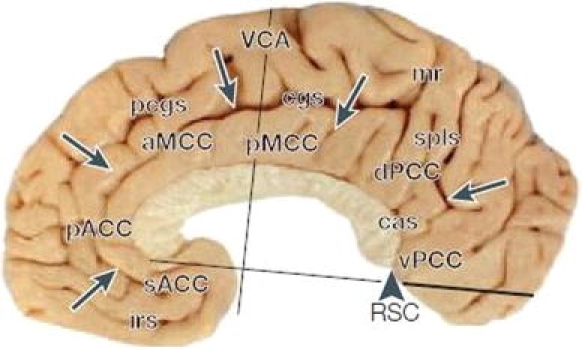
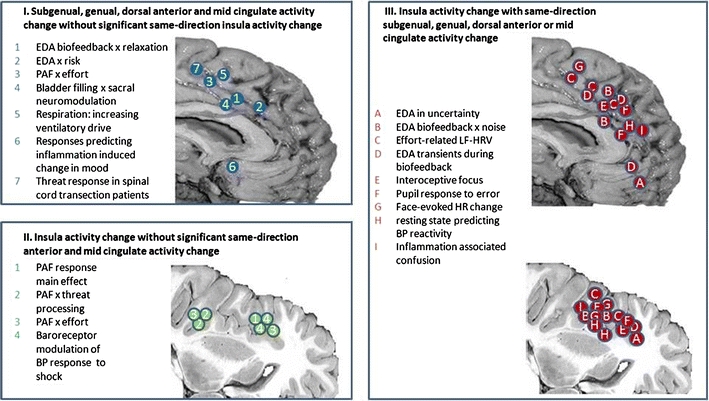
Verification
Claims the paper makes
The claims and statistics of this paper haven’t been checked yet.
Free: it reads the open-access text and checks the first 5 claims that cite a source we can check. Create a free account to check every claim.
Claims other papers make about this one
Each is checked against this paper’s own text: does it say what the citing paper says it does?
The source backs part of the claim, not all of it — or backs it for a different population, condition or comparison.
In the citing paper
“These observations provide further support for considering the salience network as a central neural substrate of our model.”
From An Interoceptive Predictive Coding Model of Conscious Presence (2012) · cites this paper as Medford and Critchley, 2010
Experimental — accuracy not yet measuredThe source backs part of the claim, not all of it — or backs it for a different population, condition or comparison.
In the citing paper
“The AIC and the ACC (see Figure 2) are often coactivated despite being spatially widely separated, forming a “salience network” in conjunction with the amygdala and the inferior frontal gyrus”
From An Interoceptive Predictive Coding Model of Conscious Presence (2012) · cites this paper as Medford and Critchley, 2010
Experimental — accuracy not yet measuredThe source backs part of the claim, not all of it — or backs it for a different population, condition or comparison.
In the citing paper
“This state of defensive posturing may compromise one’s ability to utilize typical sensory processing avenues to interpret external sensory information continuously received from their surroundings (Bryant et al., 2005; Felmingham et al., 2008; Medford and Critchley, 2010; Ionta et al., 2011; Terpou et al., 2018).”
From How Processing of Sensory Information From the Internal and External Worlds Shape the Perception and Engagement With the World in the Aftermath of Trauma: Implications for PTSD (2021) · cites this paper as Medford and Critchley, 2010
Experimental — accuracy not yet measuredThe cited source says what the claim attributes to it.
In the citing paper
“ACC does not seem to be a critical region in generating awareness, yet it might receive input from AIC and convey the “feeling” information to other brain networks that serve voluntary control functions (Posner and Rothbart, 1998; Craig, 2009; Medford and Critchley, 2010; Valentini, 2010).”
From Anterior insular cortex and emotional awareness (2013) · cites this paper as Medford and Critchley, 2010
The cited source says what the claim attributes to it.
In the citing paper
“In other words, we borrow from the classical view that ACC serves as a limbic motor region and the AIC as a limbic sensory structure (Craig, 2009; Medford and Critchley, 2010).”
From Anterior insular cortex and emotional awareness (2013) · cites this paper as Medford and Critchley, 2010
7 more claims about this paper
Create a free account to see every claim other papers make about this one.
Self-check
Percentages, sums and reported differences re-computed from the paper’s own numbers.
The self-check needs the paper’s full text.
Citations
Cites
Dissociable intrinsic connectivity networks for salience processing and executive control
Seeley, W. W., Menon, V., Schatzberg, A. F., Keller, J., Glover, G. H., Kenna, H., Reiss, A. L., & Greicius, M. D. (2007) · The Journal of Neuroscience · doi:10.1523/jneurosci.5587-06.2007 · Cited by 7,426 · cited 4×
“The link with other automatic processes such as attentional direction and salience processing (Seeley et al. 2007) is suspected to be intrinsic to the conjoint functioning of ACC and insular cortex (Craig 2009) and their phylogenetic evolution in primates.”
BackgroundMethodInfluentialHow do you feel — now? The anterior insula and human awareness
(Bud) Craig, A. D. (2009) · Nature Reviews Neuroscience · doi:10.1038/nrn2555 · Cited by 6,657 · cited 14×
“studies reporting increased insula activation in alexithymics in response to emotional material, and some reporting decreases (Craig 2009).”
BackgroundResultInfluentialCognitive and emotional influences in anterior cingulate cortex
Bush, G., Luu, P., & Posner, M. I. (2000) · Trends in Cognitive Sciences · doi:10.1016/s1364-6613(00)01483-2 · Cited by 6,259 · cited 1×
“These ideas were extended by an influential review of neuroimaging studies involving ACC activation, which suggested that the region classically designated as ACC can be further subdivided into dorsal cognitive and rostral-ventral affective divisions (Bush et al. 2000).”
BackgroundHow do you feel? Interoception: The sense of the physiological condition of the body
Craig, A. D. (2002) · Nature Reviews Neuroscience · doi:10.1038/nrn894 · Cited by 6,006 · cited 3×
“A stance taken from observing the close correspondence between autonomic output and cingulate function across a range of tasks provided a view consistent with the notion of cingulate as ‘limbic motor cortex’ (Craig 2002).”
BackgroundResultInfluentialEmpathy for Pain Involves the Affective but not Sensory Components of Pain
Singer, T., Seymour, B., O'Doherty, J., Kaube, H., Dolan, R. J., & Frith, C. D. (2004) · Science · doi:10.1126/science.1093535 · Cited by 3,929 · cited 1×
“A study by Singer et al. (2004) is of particular note: AIC and ACC were amongst a network of regions activated by a task eliciting empathy for the pain of others.”
BackgroundNeural systems supporting interoceptive awareness
Critchley, H. D., Wiens, S., Rotshtein, P., Öhman, A., & Dolan, R. J. (2004) · Nature Neuroscience · doi:10.1038/nn1176 · Cited by 3,406 · cited 2×
“Direct evidence for the idea that the insula is a key area supporting interoception comes from a functional neuroimaging study in which the ability to make accurate judgements about the timing of one’s own heartbeat was used as an index of interoceptive awareness (Critchley et al. 2004).”
BackgroundMethodSelf-citationContributions of anterior cingulate cortex to behaviour
Devinsky, O., Morrell, M. J., & Vogt, B. A. (1995) · Brain · doi:10.1093/brain/118.1.279 · Cited by 3,377 · cited 6×
“Devinsky et al. (1995) observe that ‘‘the functions of the anterior cingulate cortex, a component of several vital networks and subserving a diverse range of functions, are difficult to quantify or even describe, and have eluded the traditional ‘localized lesion-behavioural correlate’ approach’’.”
BackgroundInfluentialSridharan, D., Levitin, D. J., & Menon, V. (2008) · Proceedings of the National Academy of Sciences · doi:10.1073/pnas.0800005105 · Cited by 2,892 · cited 2×
“More specific evidence of functional interaction between ACC and AIC comes from a study by Sridharan et al. (2008), which identified a fronto-insular cingulate system involved in switching between default mode and central executive networks.”
BackgroundA neural system for error detection and compensation
Gehring, W. J., Goss, B., Coles, M. G. H., Meyer, D. E., & Donchin, E. (1993) · Psychological Science · doi:10.1111/j.1467-9280.1993.tb00586.x · Cited by 2,862 · cited 1×
“This idea was based on the discovery of the errorrelated negativity (ERN) potential, an event-related potential consistently observed in experimental trials about 100 ms following response initiation, when the response is in error (Gehring et al. 1993).”
BackgroundPain Affect Encoded in Human Anterior Cingulate But Not Somatosensory Cortex
Rainville, P., Duncan, G. H., Price, D. D., Carrier, B., & Bushnell, M. C. (1997) · Science · doi:10.1126/science.277.5328.968 · Cited by 2,687 · cited 1×
“Also, ACC responses to pain can be modulated by hypnotic suggestions designed to alter the unpleasantness, but not the intensity, of pain (Rainville et al. 1997).”
Background
Cited by
Items 601–665 of 665
McNaughton, N., & Gray, J. A. (2024) · Oxford University Press eBooks · doi:10.1093/oso/9780198843313.002.0006
McNaughton, N., & Gray, J. A. (2024) · Oxford University Press eBooks · doi:10.1093/oso/9780198843313.002.0004
McNaughton, N., & Gray, J. A. (2024) · Oxford University Press eBooks · doi:10.1093/oso/9780198843313.002.0005
Gerrans, P. (2024) · Oxford University Press eBooks · doi:10.1093/9780191994395.003.0008
Alienation and identification in addiction
Gerrans, P. (2024) · Oxford University Press eBooks · doi:10.1093/9780191994395.003.0009
Ego dissolution in psychedelic experience
Gerrans, P. (2024) · Oxford University Press eBooks · doi:10.1093/9780191994395.003.0007
Temporary Global Amnesia With Insular Infarction in a Young Female: A Case Report
Akaishi, T., Suzuki, Y., Kawabata, Y., Ishii, Y., Itoi, S., Sato, H., Sugiyama, Y., & Nishiyama, A. (2024) · Cureus · doi:10.7759/cureus.76534
Unveiling the Performance-Oriented Brains: Striving to Prove Versus Striving to OutperformPreprint
Shin, D. D., Kim, S., Park, S., Jeong, D., Park, Y., Kim, S., & Bong, M. (2025) · Research Square · doi:10.21203/rs.3.rs-6845480/v1
de Oliveira, L. F., & Berlinck, W. D. O. (2025) · COGNITIONIS Scientific Journal · doi:10.38087/2595.8801.664 · Cited by 1
Kochetkova, E. V., & Machinskaya, R. I. (2025) · Neuroscience and Behavioral Physiology · doi:10.1007/s11055-025-01868-y
“…evidence on functional connections between the ACC and AIC suggesting that their synchronous activity supports emotional responses to external and internal stimuli and the formation of subjective experiences as a result of processing representations of sensory stimuli [Medford and Critchley, 2010].”
Learning Patterns and Abstractions from Perceptual SequencesPreprint
Wu, S. (2025) · arXiv (Cornell University) · doi:10.48550/arxiv.2503.10973
Smith, R. S. (2015) · UA Campus Repository (The University of Arizona)
Schober, M. U. (2022) · Gutenberg Open Science · doi:10.25358/openscience-6663
Mathersul, D. C. (2013) · UNSWorks (UNSW Sydney) · doi:10.26190/unsworks/16278
Treatment-like use of discrimination training to reduce generalization of conditioned fear
Hutterer, N. H. (2024) · Online Publication Service of Würzburg University (Würzburg University) · doi:10.25972/opus-31728
The Neuroscience of Justice Sensitivity
Yoder, K. J. (2017) · Knowledge@UChicago (University of Chicago) · doi:10.6082/0bjjw-nhh70 · Cited by 1
Zuo, X. Z. (2021) · TSpace (University of Toronto)
Lenk, S.-L. (2018) · Qucosa (Saxon State and University Library Dresden)
Bylemans, T. (2023) · VUBIR (Vrije Universiteit Brussel)
Williams, K. C. (2023) · Open University of Cape Town (University of Cape Town)
Exploring the Functional Neural Correlates of Perceived Stress: A Machine Learning Approach
Spencer, C. (2023) · D-Scholarship@Pitt (University of Pittsburgh)
Novel insights on panic: emerging role of the subfornical organ (SFO) mechanisms and circuits
Winter, A. (2019) · OhioLink ETD Center (Ohio Library and Information Network)
The neurocognitive features of intentional decision-making in humans
Si, R. (2023) · ORCA Online Research @Cardiff (Cardiff University)
Temporele en taakspecifieke profielen van inspanningsinvestering
Aben, L. (2020) · Lirias (KU Leuven)
Levin, R. (2025) · Open University of Cape Town (University of Cape Town)
Neural correlates of metacognitive monitoring in chronic moderate to severe traumatic brain injury
Chiou, K. S., Walsh, M. J., Feiger, J. A., Dobryakova, E., & Weber, E. (2025) · Brain Injury · doi:10.1080/02699052.2025.2606068
“The difference in posterior cingulate gyrus activation is particularly intriguing, as this structure is recruited during metacognitive monitoring (25,47) and is known to exhibit functional changes after TBI (48).”
Snashall, E. (2025) · UCL Discovery (University College London)
Vento, C., Hatfield-King, J., Gopinath, K., Nishitani, S., Morrier, M. J., Ousley, O., Cubells, J. F., Young, L. J., & Andari, E. (2026) · medRxiv · doi:10.64898/2026.02.10.26346006
Pirone, R., Gorrino, I., Vedani, A., Maiocchi, C., & Mattavelli, G. C. (2026) · Biomedicines · doi:10.3390/biomedicines14030519
“Concerning dACC, our results align with previous studies suggesting its role as a conflict resolution hub continuously integrating internal and external information [33,117,118].”
A Functional Signature of Augmented Nasal Breathing Across the Cortex
Vashista, G. (2023) · Tuwhera (Auckland University of Technology)
Tinney, E. M., Nwakamma, M. C., España‐Irla, G., Perko, M. J., Kong, L. L., Chen, C., Hwang, J. C., O’Brien, A. M., Sodemann, R. L., Caefer, J., et al. (2026) · medRxiv · doi:10.64898/2026.02.27.26347275
How alexithymia shapes functional networks: Insights from a general population study
Krause, E., Klinger-König, J., Goerlich, K. S., Frenzel, S., Bülow, R., Wielpütz, M. O., Völzke, H., & Grabe, H. J. (2026) · European Psychiatry · doi:10.1192/j.eurpsy.2026.10177
“This divergence is noteworthy as the anterior insula and ACC have a close functional relationship [123], yet exhibit different coupling patterns.”
Shi, X., Fan, X., Cai, Y., Luo, Z., Liu, Y., Feng, S., Gan, L., Wang, Q., Chen, L., & Pan, J. (2026) · Progress in Neuro-Psychopharmacology and Biological Psychiatry · doi:10.1016/j.pnpbp.2026.111678
Foley, J., Lyons, S. J., Cook, O., & Depue, B. E. (2026) · Frontiers in Psychology · doi:10.3389/fpsyg.2026.1782939
“Functionally, both the aIns and ACC contribute to the integration of interoceptive and exteroceptive information for supporting affective and motoric responding to dynamic environments (Medford and Critchley, 2010).”
Analyse de profils d'expression génique dans des modèles murins d'anxiété/dépression
Xia, L. (2012) · theses.fr (ABES) · doi:10.70675/287ae503z3613z4b68z8a4fz308199883026
Three essays on the economics of image motivation
Butera, L. (2013) · theses.fr (ABES) · doi:10.70675/ffa9cd5az1c87z46a0z8e32ze9001b5accfa
Insula Structure Is Linked to Autonomic Cardiac Dysregulation in Depression
Fermin, A. S. R., Chan, H.-L., Takamura, M., Ichikawa, N., Yokoyama, S., Yoshino, A., Yoshimoto, J., Sasaoka, T., Kamishikiryo, T., Mitsuyama, Y., et al. (2026) · Biological Psychiatry · doi:10.1016/j.biopsych.2026.03.997 · Cited by 1
Self-citationBabo-Rebelo, M. (2017) · theses.fr (ABES) · doi:10.70675/1811aa63zf6c7z4922zb08dz05dd2cee0e27 · Cited by 1
Modifications émotionnelles dans la sclérose en plaques : étude en neuropsychologie et neuroimagerie
Pfaff, L. (2018) · theses.fr (ABES) · doi:10.70675/bf935117z62f7z461bz8258zdae1d6e2e306 · Cited by 3
Acute stress induces coordinated reorganization across interacting brain networks
Braun, J., Patel, M., Woods, W., Keatch, C., Lambert, É., & Kameneva, T. (2026) · Journal of Applied Physiology · doi:10.1152/japplphysiol.00584.2025 · Cited by 1
Elimari, N. (2023) · theses.fr (ABES) · doi:10.70675/448b3140z62b1z4c0bzaba1zbaad77ae68f4 · Cited by 6
Gestiοn du stress à travers l'οbjectivatiοn de l'infοrmatiοn intérοceptive : le rοle du biοfeedback
Proietti, G. (2025) · theses.fr (ABES) · doi:10.70675/e9afe048zf70cz4c45za736zff9ca3f24fd7
The role of social norms, empathy, and religiosity in assisted dying decisions: an fMRI study
Chen, J., Cohen, M. S., Louis, W. R., Decety, J., Thomas, E. F., Crane, M. F., Amiot, C. E., Wibisono, S., & Molenberghs, P. (2026) · Cognitive Affective & Behavioral Neuroscience · doi:10.3758/s13415-026-01452-y
“Previous literature finds that ACC and bilateral AI are typically both associated with empathy for pain (Lamm et al., 2011), with AI processing salient emotional responses that are subsequently communicated to ACC to initiate behavioral responses (Medford & Critchley, 2010).”
Lin, J., He, Y., Zhang, S., Mo, L., Kuang, C., & Chen, Y. (2026) · Brain Structure and Function · doi:10.1007/s00429-026-03127-3
“…to assess the prevalence of environmental and episodic information, clarify processing goals, and finally facilitate the formation of appropriate ideation in creativity (Howard-Jones et al. 2005; Medford and Critchley 2010b; Shi et al. 2017; Sunavsky and Poppenk 2020; Wertz et al. 2020).”
Life with Tic Disorders: From Childhood to Adulthood
(2026) · Frontiers research topics · doi:10.3389/978-2-8325-8188-9
Brownbill, G., Dekerle, J., Cercignani, M., Ronen, I., & Stone, J. M. (2026) · Multiple Sclerosis and Related Disorders · doi:10.1016/j.msard.2026.107339
McCurry, K. L., Brown, V. M., Bansal, V., Goyal, S., Casas, B. R., & Chiu, P. H. (2026) · Biological Psychiatry · doi:10.1016/j.biopsych.2026.06.027
Souron, R., Sarcher, A., Lacourpaille, L., Boulaouche, I., Richier, C., Mangin, T., Gruet, M., Doron, J., Jubeau, M., & Pageaux, B. (2026) · Peer Community Journal · doi:10.24072/pcjournal.760
Gong, M.-F., Tao, S., Dai, B., Ding, Z.-L., He, Q., Dai, Y., Liu, J.-S., & Tao, D.-D. (2026) · iScience · doi:10.1016/j.isci.2026.116995
Egom, E. E. A., Mfopa, A., Ibrahim, N., Akinsete, O. T., & Gonzalez, A. (2026) · Heart & Lung · doi:10.1016/j.hrtlng.2026.102900
Sigala, N., Cobandag, M., Leppard, L., & Medford, N. (2026) · Frontiers in Neurology · doi:10.3389/fneur.2026.1884495
“The ACC, through its involvement in executive con-trol and attention networks, additionally modulates the precision assigned to those errors and coordinates the appropriate response, whether a revision of the self-model or an action directed at restoring predicted bodily states (36, 37).”
InfluentialSelf-citationLarge-scale neural systems linking bodily self-awareness and valuation in decision-making
Zapparoli, L., Mattavelli, G. C., Gorrino, I., Devoto, F., Rizzi, R., Grecucci, A., & Salvato, G. (2026) · Neuroscience & Biobehavioral Reviews · doi:10.1016/j.neubiorev.2026.106908
Brain activation by autogenic training: A fMRI study
Rivera, L. D., Hernández‐Martín, E., de Rivera-Monterrey, L., & González–Mora, J. L. (2026) · Revista de Psicopatología y Psicología Clínica · doi:10.5944/rppc.49634
Closed-Loop Neuromodulation for Brain Fatigue: From Real-Time Biomarkers to Adaptive Intervention
Lü, H., Zhang, Y., Wu, S., & Miao, D. (2026) · International Journal of Molecular Sciences · doi:10.3390/ijms27177970
“…balance maintained by glutamate and GABA is disrupted in fatigue [75], with evidence pointing to elevated glutamate levels in the anterior cingulate cortex and insula—regions that are central to interoceptive processing [76,77], effort evaluation, and the subjective experience of exhaustion [76].”
Kang, J. C., Park, H.-J., & Yoon, H. (2026) · NeuroImage · doi:10.1016/j.neuroimage.2026.122240
Behavioural expression of ictal embarrassment: a stereo-EEG case report
Scarabello, A., Pelliccia, V., Bisulli, F., Revay, M., Gozzo, F., Mingarelli, A., Peretto, C., Mai, R., Pizzanelli, C., Pizzo, F., et al. (2026) · Frontiers in Human Neuroscience · doi:10.3389/fnhum.2026.1951958
The Neurobiology Behind the Making of the Antisocial Personality Type
Patel, V. (2023) · Illinois Digital Environment for Access to Learning and Scholarship (University of Illinois at Urbana-Champaign)
Fradcourt, B. (2014) · theses.fr (ABES) · doi:10.70675/d01bc72cz45c5z4d9bz861az1ea4d730858b · Cited by 1
Sidlauskaite, J. (2015) · Ghent University Academic Bibliography (Ghent University)
Metadata
- Authors
- Medford, N., & Critchley, H. D.
- Affiliations
- Brighton and Sussex Medical School (GB)
- Corresponding author
- Medford, Nick
- Venue
- Brain Structure and Function
- Published
- 2010-05-29
- Volume
- 214
- Issue
- 5-6
- Pages
- 535-549
- ISSN
- 1863-2653 (ISSN-L)
- 1863-2661
- PMC
- PMC2886906
- OpenAlex
- W2006789534
- Cited by
- 627
- References
- 141
- Citations by year
- 2026: 24 · 2025: 22 · 2024: 53 · 2023: 27 · 2022: 31 · 2021: 29 · 2020: 51 · 2019: 32 · 2018: 53 · 2017: 43 · 2016: 47 · 2015: 45 · 2014: 36 · 2013: 53 · 2012: 51
- FWCI
- 5.96
- Type
- journal article
- Language
- en
- Open access
- hybrid
- doi.org
- Licence
- cc-by-nc
- Locations
- Brain Structure and Function (publishedVersion, cc-by-nc)
- PubMed Central (publishedVersion, cc-by-nc)
- PubMed (publishedVersion)
- Figshare (submittedVersion, cc-by)
- Topics
- Health Sciences › Medicine › Psychiatry and Mental health › Psychosomatic Disorders and Their Treatments
- Life Sciences › Neuroscience › Cognitive Neuroscience › Neural and Behavioral Psychology Studies
- Social Sciences › Arts and Humanities › Philosophy › Philosophy and Theoretical Science
- Keywords
- anterior insula, anterior cingulate cortex, interoception, conscious awareness, subjective feelings, autonomic nervous system, emotional responses, sensory integration, autonomic regulation, clinical implications
- MeSH terms
- Autonomic Nervous System, Awareness, Cerebral Cortex, Consciousness, Emotions, Gyrus Cinguli, Humans, Neural Pathways, Reaction Time, Self Concept
About these checks
Registry, retraction, Cites and statistics results are computed, not judged, with one exception: a printed reference that no index lists is read once by a model before it counts as a citation error. Claims are extracted by a model and kept only when their quote appears verbatim in the text; each cited source is then checked, with a model’s help, for whether it says what the claim relies on. Those verdicts can be wrong — read the claim’s quote and the cited source before relying on one.
Statistics and arithmetic are recomputed, not judged.
Confidence bands are shown only for fields calibrated on our annotated test set. None is calibrated yet, so no band is shown.
What counts as a claim ›How we measure confidence ›How we check this ›
Are you an author, or do you see a problem with this page? Request a review
Data sources
Bibliographic data: Semantic Scholar, OpenAlex, Crossref.
Contains information from the Semantic Scholar Academic Graph Datasets, made available under the ODC Attribution License (ODC-BY 1.0).
Semantic Scholar’s data is described in: Kinney, R., et al. (2023). The Semantic Scholar Open Data Platform. arXiv:2301.10140.
