

A common genetic network underlies substance use disorders and disruptive or externalizing disorders
Open accessThe DOI matches its Crossref record; 62 of the 62 references it cites were found in a registry or an index.
Abstract
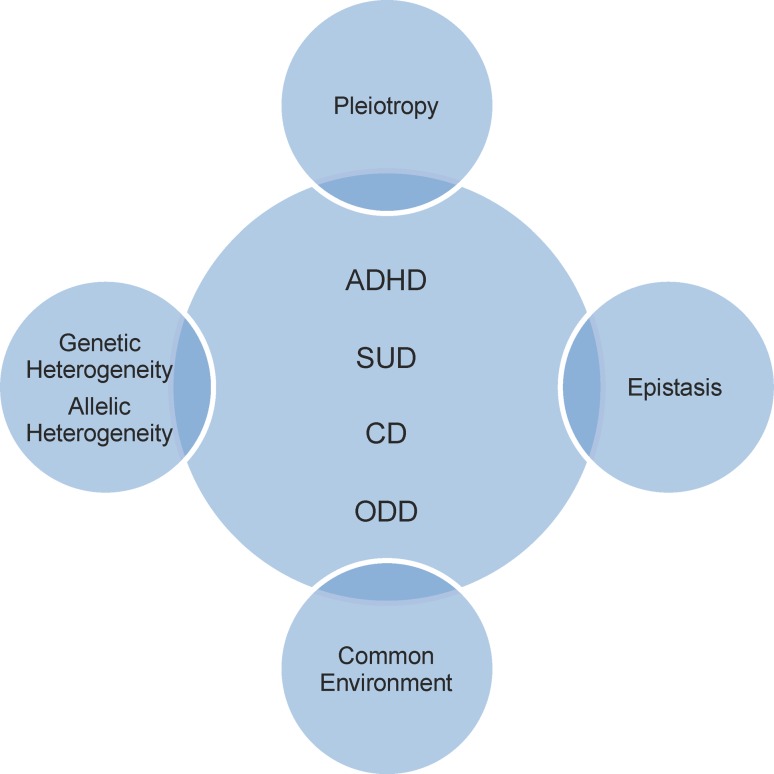
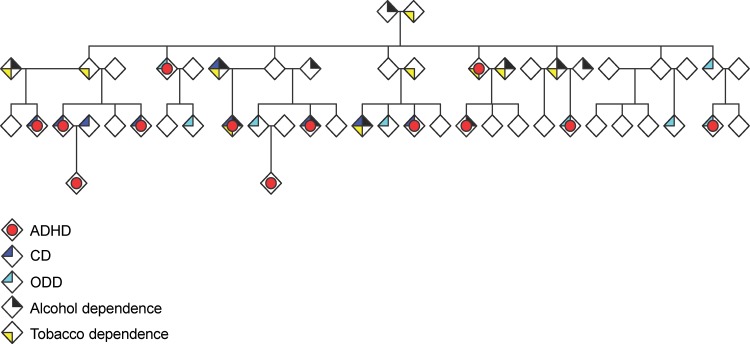
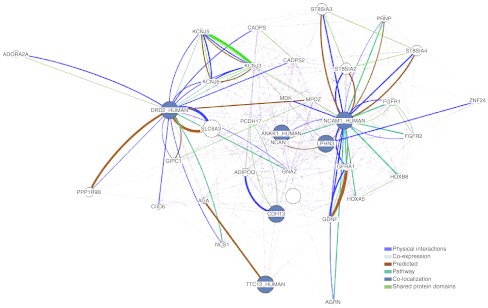
Here we summarize evidence obtained by our group during the last two decades, and contrasted it with a review of related data from the available literature to show that behavioral syndromes involving attention deficit/hyperactivity disorder (ADHD), externalizing disorders, and substance-use disorder (SUD) share similar signs and symptoms (i.e., have a biological basis as common syndromes), physiopathological and psychopathological mechanisms, and genetic factors. Furthermore, we will show that the same genetic variants harbored in different genes are associated with different syndromes and that non-linear interactions between genetic variants (epistasis) best explain phenotype severity, long-term outcome, and response to treatment. These data have been depicted in our studies by extended pedigrees, where ADHD, externalizing symptoms, and SUD segregate and co-segregate. Finally, we applied here a new formal network analysis using the set of significantly replicated genes that have been shown to be either associated and/or linked to ADHD, disruptive behaviors, and SUD in order to detect significantly enriched gene categories for protein and genetic interactions, pathways, co-expression, co-localization, and protein domain similarity. We found that networks related to pathways involved in axon guidance, regulation of synaptic transmission, and regulation of transmission of nerve impulse are overrepresented. In summary, we provide compiled evidence of complex networks of genotypes underlying a wide phenotype that involves SUD and externalizing disorders.
Overview
The claims and statistics of this paper haven’t been checked yet.
Free: it reads the open-access text and checks the first 5 claims that cite a source we can check. Create a free account to check every claim.
Integrity signals
Registry
Cites
Statistics
Figures
Verification
Claims the paper makes
The claims and statistics of this paper haven’t been checked yet.
Free: it reads the open-access text and checks the first 5 claims that cite a source we can check. Create a free account to check every claim.
Claims other papers make about this one
Each is checked against this paper’s own text: does it say what the citing paper says it does?
In the citing paper
“attention-deficit hyperactivity disorder (ADHD), which shares common etiological influences, including similar genetic factors [11] and neural underpinnings [12], with other externalizing disorders”
From ADHD and the externalizing spectrum: direct comparison of categorical, continuous, and hybrid models of liability in a nationally representative sample (2014) · cites this paper as [11]
Self-check
Percentages, sums and reported differences re-computed from the paper’s own numbers.
The self-check needs the paper’s full text.
Citations
Cites
Diagnostic and Statistical Manual of Mental Disorders
Williams, J. B. W., & First, M. (2013) · Encyclopedia of Social Work · doi:10.1093/acrefore/9780199975839.013.104 · Cited by 109,519
Diagnostic and Statistical Manual of Mental Disorders.
Widiger, T. A. (2000) · Encyclopedia of Psychology, Vol. 3. · doi:10.1037/10518-009 · Cited by 19,744
The Self-Medication Hypothesis of Substance Use Disorders: A Reconsideration and Recent Applications
Khantzian, E. J. (1997) · Harvard Review of Psychiatry · doi:10.3109/10673229709030550 · Cited by 3,242 · cited 2×
“It has also been proposed that patients with ADHD use addictive substances in an attempt to self-medicate symptoms of the disorder (Khantzian 1997), and that the poor judgment and impulsivity associated with ADHD contribute to the development of dependence (Wilens and Biederman 2006).”
BackgroundMethodNeuroscience of attention-deficit/hyperactivity disorder: the search for endophenotypes
Castellanos, F. X., & Tannock, R. (2002) · Nature Reviews Neuroscience · doi:10.1038/nrn896 · Cited by 1,827 · cited 1×
“Attention deficit/hyperactivity disorder is the most common neurodevelopmental behavioral disorder of childhood (Castellanos and Tannock 2002), and is characterized by elevated levels of inattention and/or hyperactive or impulsive behaviors that cause significant impairment (American Psychiatric…”
BackgroundChambers, R. A., Taylor, J. R., & Potenza, M. N. (2003) · American Journal of Psychiatry · doi:10.1176/appi.ajp.160.6.1041 · Cited by 1,719 · cited 2×
“Attention deficit/hyperactivity disorder is the most common neurodevelopmental behavioral disorder of childhood (Castellanos and Tannock 2002), and is characterized by elevated levels of inattention and/or hyperactive or impulsive behaviors that cause significant impairment (American Psychiatric…”
BackgroundWilens, T. E., Faraone, S. V., Biederman, J., & Gunawardene, S. (2003) · Pediatrics · doi:10.1542/peds.111.1.179 · Cited by 872
Genome-wide search for genes affecting the risk for alcohol dependence
Reich, T., Edenberg, H. J., Goate, A., Williams, J. T., Rice, J. P., Van Eerdewegh, P., Foroud, T., Hesselbrock, V., Schuckit, M. A., Bucholz, K., et al. (1998) · American Journal of Medical Genetics · doi:10.1002/(sici)1096-8628(19980508)81:3<207::aid-ajmg1>3.0.co;2-t · Cited by 735 · cited 2×
“Another independent study utilized two-point linkage analysis in families with alcohol dependence to identify a nominally significant locus at D4S244 (Reich et al. 1998), which is *5 Mb downstream of LPHN3.”
BackgroundMethodTsuang, M. T., Lyons, M. J., Meyer, J. M., Doyle, T., Eisen, S. A., Goldberg, J., True, W., Lin, N., Toomey, R., & Eaves, L. (1998) · Archives of General Psychiatry · doi:10.1001/archpsyc.55.11.967 · Cited by 710 · cited 2×
“Mutations in one gene might be associated with several AIDs (Jin et al. 2010; Spritz 2011) and variants in two genes might converge in a cooperative interaction (epistasis) to outline a complex AID phenotype, as described in membranous nephropathy (Stanescu et al. 2011).”
BackgroundChildhood predictors of adolescent substance use in a longitudinal study of children with ADHD
Molina, B. S. G., & Pelham, W. E. (2003) · Journal of Abnormal Psychology · doi:10.1037/0021-843x.112.3.497 · Cited by 706 · cited 2×
“Children diagnosed with ADHD monitored during the transition into adolescence exhibited higher rates of alcohol, tobacco, and psychoactive drug use than control groups of children without ADHD (Biederman et al. 1995; Molina and Pelham 2003).”
BackgroundResultAttention‐Deficit‐Hyperactivity Disorder: An Update
Dopheide, J. A., & Pliszka, S. R. (2009) · Pharmacotherapy: The Journal of Human Pharmacology and Drug Therapy · doi:10.1592/phco.29.6.656 · Cited by 645
Research works printed but not linked: 2
- Reich T Edenberg HJ Goate A Williams JT Rice JP Van Eerdewegh P Foroud T Hesselbrock V Schuckit MA Bucholz K Porjesz B Li TK Conneally PM Nurnberger JI Jr Tischfield JA Crowe RR Cloninger CR Wu W Shears S Carr K Crose C Willig C Begleiter H Genome-wide search for genes affecting the risk for alcohol dependence Am J Med Genet 1998 81 207 215 10.1002/(SICI)1096-8628(19980508)81:3<207::AID-AJMG1>3.0.CO;2-T 9603606 · DOI · Paper page
- Ribases M Ramos-Quiroga JA Sanchez-Mora C Bosch R Richarte V Palomar G Gastaminza X Bielsa A Arcos-Burgos M Muenke M Castellanos FX Cormand B Bayes M Casas M Contribution of LPHN3 to the genetic susceptibility to ADHD in adulthood: a replication study Genes Brain Behav 2011 10 149 157 10.1111/j.1601-183X.2010.00649.x 21040458 · DOI · Paper page
Cited by
Kotov, R., Krueger, R. F., Watson, D., Achenbach, T. M., Althoff, R. R., Bagby, R. M., Brown, T. A., Carpenter, W. T., Caspi, A., Clark, L. A., et al. (2017) · Journal of Abnormal Psychology · doi:10.1037/abn0000258 · Cited by 3,335
A hierarchical causal taxonomy of psychopathology across the life span.
Lahey, B. B., Krueger, R. F., Rathouz, P. J., Waldman, I. D., & Zald, D. H. (2017) · Psychological Bulletin · doi:10.1037/bul0000069 · Cited by 443
Molina, B. S. G., & Pelham, W. E. (2014) · Annual Review of Clinical Psychology · doi:10.1146/annurev-clinpsy-032813-153722 · Cited by 186
“Further, genetic and neurobiological models of addiction and ADHD share strikingly similar overlap in targeted regions of interest (e.g., Arcos-Burgos et al. 2012, Goldstein & Volkow, 2002).”
BackgroundPrenatal stress and the developing brain: Risks for neurodevelopmental disorders
Van den Bergh, B. R. H., Dahnke, R., & Mennes, M. (2018) · Development and Psychopathology · doi:10.1017/s0954579418000342 · Cited by 158
Alcohol use disorders and ADHD.
Luderer, M., Ramos Quiroga, J. A., Faraone, S. V., Zhang-James, Y., & Reif, A. (2021) · Neuroscience & Biobehavioral Reviews · doi:10.1016/j.neubiorev.2021.07.010 · Cited by 102
Treur, J. L., Demontis, D., Smith, G. D., Sallis, H., Richardson, T. G., Wiers, R. W., Børglum, A. D., Verweij, K. J. H., & Munafò, M. R. (2021) · Addiction Biology · doi:10.1111/adb.12849 · Cited by 102
“This is consistent with research indicating that cognitive deficits such as impaired response inhibition and working memory are important features of both ADHD and substance abuse(20,21) and that both ADHD and substance abuse can be considered forms of externalizing disorders.(22)”
ResultAttention-deficit/hyperactivity disorder and lifetime cannabis use: genetic overlap and causality
ADHD Group of the Psychiatric Genomics Consortium, I. C. C., Soler Artigas, M., Sánchez-Mora, C., Rovira, P., Richarte, V., Garcia-Martínez, I., Pagerols, M., Demontis, D., Stringer, S., Vink, J. M., et al. (2020) · Molecular Psychiatry · doi:10.1038/s41380-018-0339-3 · Cited by 84
“is consistent with previous genetic studies [48, 49].”
Carragher, N., Krueger, R. F., Eaton, N. R., Markon, K. E., Keyes, K. M., Blanco, C., Saha, T. D., & Hasin, D. S. (2014) · Social Psychiatry and Psychiatric Epidemiology · doi:10.1007/s00127-013-0770-3 · Cited by 77
“This may include attention-deficit hyperactivity disorder (ADHD), which shares common etiological influences, including similar genetic factors [11] and neural underpinnings [12], with other externalizing disorders and an elevated risk of experiencing nicotine dependence, alcohol, and other substance use disorders [13…”
BackgroundKimbrel, N. A., Ashley‐Koch, A. E., Qin, X., Lindquist, J. H., Garrett, M. E., Dennis, M. F., Hair, L. P., Huffman, J. E., Jacobson, D., Madduri, R., et al. (2022) · JAMA Psychiatry · doi:10.1001/jamapsychiatry.2022.3896 · Cited by 63
Martinez, A. F., Abe, Y., Hong, S., Molyneux, K., Yarnell, D., Löhr, H., Driever, W., Acosta, M. T., Arcos-Burgos, M., & Muenke, M. (2016) · Biological Psychiatry · doi:10.1016/j.biopsych.2016.06.026 · Cited by 59
Self-citationOrsini, C. A., Setlow, B., DeJesus, M. A., Galaviz, S., Loesch, K. A., Ioerger, T. R., & WALLIS, D. E. (2016) · Molecular Genetics & Genomic Medicine · doi:10.1002/mgg3.207 · Cited by 70
“…disorder (ADHD) and substance use disorders (SUDs) have strong genetic components (Li and Burmeister 2009; Treutlein and Rietschel 2011; Arcos-Burgos et al. 2012a; Gorwood et al. 2012; Hart et al. 2012), but there is still a paucity of information regarding reliable biomarkers for…”
BackgroundMethodADGRL3 (LPHN3) variants predict substance use disorder
Arcos‐Burgos, M., Velez, J. I., Martinez, A. F., Ribasés, M., Ramos‐Quiroga, J. A., Sánchez‐Mora, C., Richarte, V., Roncero, C., Cormand, B., Fernàndez‐Castillo, N., et al. (2019) · Translational Psychiatry · doi:10.1038/s41398-019-0396-7 · Cited by 55
Self-citationVolkow, N. D., & Muenke, M. (2012) · Human Genetics · doi:10.1007/s00439-012-1173-3 · Cited by 39
“Genes involved with neuroplasticity in SUD have been identified across studies of a wide variety of SUDs (Uhl et al. 2008) and are also likely to contribute to comorbidity (see Arcos-Burgos et al. 2012).”
Self-citationADGRL 3 ( LPHN 3) variants are associated with a refined phenotype of ADHD in the MTA study
Acosta, M. T., Swanson, J. M., Stehli, A., Molina, B. S. G., the MTA Team, Martinez, A. F., Arcos‐Burgos, M., & Muenke, M. (2016) · Molecular Genetics & Genomic Medicine · doi:10.1002/mgg3.230 · Cited by 46
“Family, twin, and case–control-based linkage and association studies indicate that genetics play a crucial role in shaping susceptibility to both ADHD and disruptive behaviors (Arcos-Burgos et al. 2012; Jain et al. 2012).”
BackgroundSelf-citationSmith, T. F., Anastopoulos, A. D., Garrett, M. E., Arias‐Vasquez, A., Franke, B., Oades, R. D., Sonuga‐Barke, E., Asherson, P., Gill, M., Buitelaar, J. K., et al. (2014) · American Journal of Medical Genetics Part B: Neuropsychiatric Genetics · doi:10.1002/ajmg.b.32275 · Cited by 39
“…a central role coordinating neuronal migration and guidance of axons that project from the thalamus to the cortex [Lopez-Bendito et al., 2006], which has been implicated in the development of ADHD [Ivanov et al., 2010; Shaw, 2010] and externalizing behavior problems [Arcos-Burgos et al., 2012].”
BackgroundVecchia, E. D., Mortimer, N., Palladino, V. S., Kittel‐Schneider, S., Lesch, K., Reif, A., Schenck, A., & Norton, W. (2018) · Psychiatric Genetics · doi:10.1097/ypg.0000000000000211 · Cited by 41
“Multiple polymorphisms in ADGRL3 have been linked to an increased risk of ADHD and SUD (Arcos-Burgos et al., 2010; Ribasés et al., 2010).”
BackgroundInfluentialWang, L., Li, S., Lee, M., Chou, M., Chou, W., Lee, S.-Y., Hsu, C., Huang, L., & Kuo, H. (2018) · Frontiers in Psychiatry · doi:10.3389/fpsyt.2018.00227 · Cited by 37
“The dysfunction of axon guidance pathways may be correlated with a wide phenotype that involves externalizing mental disorders, including ADHD (61).”
BackgroundLorenzo, R. D., Galliani, A., Ferri, P., Landi, G., & Guicciardi, A. (2014) · Neuropsychiatric Disease and Treatment · doi:10.2147/ndt.s65896 · Cited by 38
Rabinowitz, J. A., & Drabick, D. A. G. (2017) · Developmental Review · doi:10.1016/j.dr.2017.03.001 · Cited by 32
Gray matter volume and microRNA levels in patients with attention-deficit/hyperactivity disorder
Wang, L., Li, S., Kuo, H., Chou, W., Lee, M., Chou, M., Tseng, H., Hsu, C.-F., Lee, S.-Y., & Lin, W. (2019) · European Archives of Psychiatry and Clinical Neuroscience · doi:10.1007/s00406-019-01032-x · Cited by 32
A novel role for the ADHD risk gene latrophilin-3 in learning and memory in Lphn3 knockout rats
Regan, S. L., Pitzer, E. M., Wendel, J. R. H., Sugimoto, C., Williams, M. T., & Vorhees, C. V. (2021) · Neurobiology of Disease · doi:10.1016/j.nbd.2021.105456 · Cited by 31
“LPHN3 variants are also implicated in substance use disorders [31, 32].”
Diagnosing ADHD during active substance use: Feasible or flawed?
Oortmerssen, K. V. E., Vedel, E., Kramer, F. J., Koeter, M. W. J., Schoevers, R. A., & van den Brink, W. (2017) · Drug and Alcohol Dependence · doi:10.1016/j.drugalcdep.2017.07.039 · Cited by 31
“Since common genetic (Arcos-Burgos et al., 2012) and neurobiological (Frodl, 2010) characteristics may be at the root of both SUD and ADHD, one could argue that treatments of both disorders could be combined.”
BackgroundDysfunctional parental styles perceived during childhood in outpatients with substance use disorders
Icick, R., Lauer, S., Romo, L., Dupuy, G., Lépine, J., & Vorspan, F. (2013) · Psychiatry Research · doi:10.1016/j.psychres.2013.06.041 · Cited by 31
“, 2005), a condition associated with SUDs in early adulthood (Arcos-Burgos et al., 2012).”
What is next after the genes for autoimmunity?
Castiblanco, J., Arcos‐Burgos, M., & Anaya, J. (2013) · BMC Medicine · doi:10.1186/1741-7015-11-197 · Cited by 30
“; licensee BioMed Ce Creative Commons Attribution License (http:/ distribution, and reproduction in any medium consider disease as either an independent entity or a diverse set of traits governed by common physiopathological mechanisms that are prompted by environmental assaults throughout life [4,5].”
BackgroundSelf-citationNogueira, M., Bosch, R., Valero, S., Gómez-Barros, N., Palomar, G., Richarte, V., Corrales, M., Nasillo, V., Vidal, R., Casas, M., et al. (2013) · Comprehensive Psychiatry · doi:10.1016/j.comppsych.2013.12.002 · Cited by 31
Fuller‐Thomson, E., Lewis, D. A., & Agbeyaka, S. (2021) · Alcohol and Alcoholism · doi:10.1093/alcalc/agab048 · Cited by 29
NCAM1‐TTC12‐ANKK1‐DRD2 gene cluster and the clinical and genetic heterogeneity of adults with ADHD
Mota, N. R., Rovaris, D. L., Kappel, D. B., Picon, F. A., Vitola, E. S., Salgado, C. A. I., Karam, R. G., Rohde, L. A., Grevet, E. H., & Bau, C. H. D. (2015) · American Journal of Medical Genetics Part B: Neuropsychiatric Genetics · doi:10.1002/ajmg.b.32317 · Cited by 25
Machine Learning Prediction of ADHD Severity: Association and Linkage to ADGRL3 , DRD4 , and SNAP25
Cervantes-Henríquez, M. L., Acosta-López, J. E., Martinez, A. F., Arcos‐Burgos, M., Rozo, P. J. P., & Velez, J. I. (2021) · Journal of Attention Disorders · doi:10.1177/10870547211015426 · Cited by 27
Self-citationKung, P.-L., Chou, T.-W., Lindman, M., Chang, N. P., Estevez, I., Buckley, B. D., Atkins, C., & Daniels, B. P. (2022) · Journal of Neuroinflammation · doi:10.1186/s12974-022-02460-8 · Cited by 27
Grazioli, V. S., Gmel, G. E., Rougemont-Bücking, A., Baggio, S., Daeppen, J., & Studer, J. (2019) · PLoS ONE · doi:10.1371/journal.pone.0218469 · Cited by 23
van Rooy, D., Haase, B., McGreevy, P. D., Thomson, P. C., & Wade, C. M. (2016) · Journal of Veterinary Behavior · doi:10.1016/j.jveb.2016.03.001 · Cited by 25
Sable, H. J. K., Lester, D. B., Potter, J. L., Nolen, H. G., Cruthird, D. M., Estes, L. M., Johnson, A. D., Regan, S. L., Williams, M. T., & Vorhees, C. V. (2021) · Genes Brain & Behavior · doi:10.1111/gbb.12767 · Cited by 22
“While less is known about whether Lphn3 contributes to the cause of other EDs, there is some evidence suggesting this is the case.(13,25,33,69) Future”
BackgroundYoshimasu, K., Barbaresi, W. J., Colligan, R. C., Voigt, R. G., Weaver, A. L., & Katusic, S. K. (2016) · PLoS ONE · doi:10.1371/journal.pone.0157488 · Cited by 21
“Considering shared genetic factors between ADHD and SUD [33, 34], the association between these two disorders might be explained by the correlated liability Table 2.”
BackgroundMastronardi, C. A., Pillai, E., Pineda, D. A., Martinez, A. F., Lopera, F., Velez, J. I., Palacio, J. D., Patel, H., Easteal, S., Acosta, M. T., et al. (2016) · Molecular Psychiatry · doi:10.1038/mp.2015.172 · Cited by 19
“Though genetic factors have been broadly linked to the susceptibility to develop ADHD and some susceptibility genes have been identified, functional mutations harbored at these loci, such as the precise differences in base pairs, remain undefined 3 .”
Self-citationMcDonough-Caplan, H. M., & Beauchaine, T. P. (2018) · Elsevier eBooks · doi:10.1016/b978-0-12-811323-3.00003-1 · Cited by 20
Rodgers, S., Müller, M., Rössler, W., Castelao, E., Preisig, M., & Ajdacic‐Gross, V. (2014) · Social Psychiatry and Psychiatric Epidemiology · doi:10.1007/s00127-014-0898-9 · Cited by 19
“[42] provided compiled evidence for common genetic networks underlying a phenotype including the externalizing disorders ADHD, CD, ODD , and substance disorder.”
BackgroundEme, R. F. (2012) · ISRN Addiction · doi:10.1155/2013/815096 · Cited by 16
Mattioni, J., Vansteene, C., Poupon, D., Gorwood, P. A. P. M., & Ramoz, N. (2023) · Addiction Biology · doi:10.1111/adb.13269 · Cited by 13
Genetic Approaches to Understanding Psychiatric Disease
Michaelson, J. J. (2017) · Neurotherapeutics · doi:10.1007/s13311-017-0551-x · Cited by 11
Problemas de comportamento internalizantes e externalizantes e uso de substâncias na adolescência
Poton, W. L., Soares, A. L. G., & Gonçalves, H. (2018) · Cadernos de Saúde Pública · doi:10.1590/0102-311x00205917 · Cited by 11
Cervantes-Henríquez, M. L., Acosta-López, J. E., Ahmad, M., Sánchez-Rojas, M., Jiménez‐Figueroa, G., Pineda‐Alhucema, W., Martínez-Banfi, M. L., Noguera-Machacón, L. M., Mejía-Segura, E., Hoz, M. D. L., et al. (2021) · Brain Sciences · doi:10.3390/brainsci11070854 · Cited by 11
Self-citationHulvershorn, L. A., King, J. M., Monahan, P. O., Wilcox, H. C., Mitchell, P. B., Fullerton, J. M., Edenberg, H. J., Roberts, G. M. P., Kamali, M., Glowinski, A. L., et al. (2017) · Comprehensive Psychiatry · doi:10.1016/j.comppsych.2017.07.010 · Cited by 9
“PSU, however, was associated with youth externalizing disorders, consistent with a large, existing literature relating these two clinical presentations [46, 47].”
ResultAloi, J. M., Kwon, E., Hummer, T. A., Crum, K. I., Shah, N. R., Pratt, L. A., Aalsma, M. C., Finn, P., Nürnberger, J. I., & Hulvershorn, L. A. (2023) · Frontiers in Neuroimaging · doi:10.3389/fnimg.2023.1110494 · Cited by 8
“, 2004), similar to substance use behaviors (Arcos-Burgos et al., 2012).”
BackgroundSkutle, A., Bu, E. T. H., Jellestad, F. K., Oortmerssen, K. V. E., Dom, G., Verspreet, S., Carpentier, P. J., Ramos‐Quiroga, J. A., Franck, J., Konstenius, M., et al. (2015) · Addictive Behaviors Reports · doi:10.1016/j.abrep.2015.03.001 · Cited by 11
Ariss, T., Caumiant, E. P., Fairbairn, C. E., Kang, D., Bosch, N., & Morris, J. K. (2025) · Journal of Psychopathology and Clinical Science · doi:10.1037/abn0000977 · Cited by 8
Sable, H. J. K., Paige, N. B., Nalan, P. A., Pace, R. L., Hicks, C. B., Regan, S. L., Williams, M. T., Vorhees, C. V., & Lester, D. B. (2024) · Neuroscience · doi:10.1016/j.neuroscience.2024.12.037 · Cited by 7
Vilor‐Tejedor, N., Alemany, S., Cáceres, A., Bustamante, M., Mortamais, M., Pujol, J., Sunyer, J., & González, J. R. (2018) · International Journal of Methods in Psychiatric Research · doi:10.1002/mpr.1738 · Cited by 6
Physical inactivity during adolescence heightens risk for cannabis use disorder in adulthood.
Tarter, R. E., Reynolds, M., Vanyukov, M. M., & Kirisci, L. (2022) · Experimental and Clinical Psychopharmacology · doi:10.1037/pha0000593 · Cited by 5
Oortmerssen, K. V. E., Konstenius, M., & Schoevers, R. A. (2014) · Springer eBooks · doi:10.1007/978-3-642-45375-5_13 · Cited by 7
Prenatal stress and the developing brain: Risks for neurodevelopmental disorders — ERRATUM
den Bergh, B. R. H. V., Dahnke, R., & Mennes, M. (2018) · Development and Psychopathology · doi:10.1017/s0954579418001402 · Cited by 5
Associations of externalizing polygenic scores with externalizing disorders among Mexican youth
Martínez-Levy, G. A., Maya-Martínez, M., García‐Marín, L. M., Díaz‐Torres, S., Gómez, L., Benjet, C. L., Rentería, M. E., Cruz-Fuentes, C. S., & Rabinowitz, J. A. (2024) · Journal of Psychiatric Research · doi:10.1016/j.jpsychires.2024.01.030 · Cited by 3
Psychological Antecedents and Correlates of Substance Use and Addiction
Tarter, R. E., & Reynolds, M. (2022) · Springer eBooks · doi:10.1007/978-3-030-95350-8_3 · Cited by 3
Elam, K. K., Kutzner, J., Bettinger, S., Qin, W. A., & Summit, A. G. (2022) · Springer eBooks · doi:10.1007/978-3-030-98711-4_85-1 · Cited by 1
Elam, K. K., Kutzner, J., Bettinger, S., Qin, W. A., & Summit, A. G. (2023) · Springer eBooks · doi:10.1007/978-3-031-31547-3_85 · Cited by 1
Dash, G. F., Gizer, I. R., Martin, N. G., & Slutske, W. S. (2024) · Journal of Psychopathology and Clinical Science · doi:10.1037/abn0000921 · Cited by 1
A developmental neurocognitive perspective on conduct disorder: current status and future directions
Glenn, D. E., & Michalska, K. J. (2023) · Elsevier eBooks · doi:10.1016/b978-0-323-91497-0.00233-2 · Cited by 1
Complexo SNARE na susceptibilidade ao transtorno por uso de álcool
Bandeira, C. E. (2016) · Lume (Universidade Federal do Rio Grande do Sul)
Gene DRD4 e o uso de substâncias em adultos com TDAH
Winkler, C. (2016) · Lume (Universidade Federal do Rio Grande do Sul)
(2019) · Elsevier eBooks · doi:10.1016/b978-2-294-76334-2.00013-3
Evaluation of epistasis detection methods for quantitative phenotypes
Listopad, S., Renjith, G., & Peng, Q. (2026) · Bioinformatics · doi:10.1093/bioinformatics/btag344
“Therefore, we confined the analysis to SNPs on chromosome 11, which includes 24699 SNPs. Chromosome 11 contains the DRD4 and DRD2 genes, as well as a few other genes linked to externalizing behavior, such as NCAM1 , BDNF , and TPH1 (Arcos-Burgos et al. 2012, Cecil et al. 2018, Xiang et al. 2019).”
Sosnowski, D. W., Rabinowitz, J. A., Feder, K. A., Strickland, J. C., Hancock, D. B., Uhl, G. R., Ialongo, N. S., & Maher, B. S. (2025) · Journal of Studies on Alcohol and Drugs · doi:10.15288/jsad.23-00397
Dachew, B. A., Ayano, G., & Alati, R. (2025) · Annals of Epidemiology · doi:10.1016/j.annepidem.2025.07.018
Reward abnormalities in the genetics of addictive disorders
Mattioni, J. (2024) · theses.fr (ABES) · doi:10.70675/e375f801z0fd1z4fc6z9d73zc74380dd25f4
ADHD medication and the risk for substance use disorder, where do they meet?
Brunt, T. M., Crunelle, C. L., & van den Brink, W. (2026) · Addiction Research & Theory · doi:10.1080/16066359.2026.2699781
Metadata
- Authors
- Arcos-Burgos, M., Vélez, J. I., Solomon, B. D., & Muenke, M.
- Affiliations
- National Institutes of Health (US)
- Corresponding author
- Muenke, Maximilian
- Venue
- Human Genetics
- Published
- 2012-04-11
- Volume
- 131
- Issue
- 6
- Pages
- 917-929
- ISSN
- 0018-7348 (ISSN-L)
- 0340-6717
- 1432-1203
- PMC
- PMC3351604
- OpenAlex
- W2123368493
- Cited by
- 58
- References
- 62
- Citations by year
- 2026: 2 · 2025: 2 · 2024: 3 · 2023: 4 · 2022: 4 · 2021: 6 · 2019: 6 · 2018: 6 · 2017: 5 · 2016: 6 · 2015: 3 · 2014: 5 · 2013: 4 · 2012: 2
- FWCI
- 0.60
- Type
- journal article
- Language
- en
- Open access
- hybrid
- doi.org
- Licence
- cc-by
- Locations
- Human Genetics (publishedVersion, cc-by)
- PubMed Central (publishedVersion, cc-by)
- PubMed (publishedVersion)
- ANU Open Research (Australian National University) (submittedVersion)
- Funders
- U.S. Department of Health and Human Services
- National Institutes of Health
- NHLBI Division of Intramural Research
- Topics
- Health Sciences › Medicine › Psychiatry and Mental health › Attention Deficit Hyperactivity Disorder
- Life Sciences › Biochemistry, Genetics and Molecular Biology › Genetics › Genetic Associations and Epidemiology
- Life Sciences › Neuroscience › Cellular and Molecular Neuroscience › Neurotransmitter Receptor Influence on Behavior
- Keywords
- substance use disorders, externalizing disorders, attention deficit hyperactivity disorder, disruptive behavior, gene networks, epistasis, gene-gene interaction, co-segregation, extended pedigrees, gene co-expression, genetic colocalization, axon guidance, synaptic transmission, network analysis
- MeSH terms
- Epistasis, Genetic, Humans, Genetic Linkage, Pedigree, Phenotype, Genetic Variation, Attention Deficit and Disruptive Behavior Disorders, Substance-Related Disorders, Gene Regulatory Networks
About these checks
Registry, retraction, Cites and statistics results are computed, not judged, with one exception: a printed reference that no index lists is read once by a model before it counts as a citation error. Claims are extracted by a model and kept only when their quote appears verbatim in the text; each cited source is then checked, with a model’s help, for whether it says what the claim relies on. Those verdicts can be wrong — read the claim’s quote and the cited source before relying on one.
Statistics and arithmetic are recomputed, not judged.
Confidence bands are shown only for fields calibrated on our annotated test set. None is calibrated yet, so no band is shown.
What counts as a claim ›How we measure confidence ›How we check this ›
Are you an author, or do you see a problem with this page? Request a review
Data sources
Bibliographic data: Semantic Scholar, OpenAlex, Crossref.
Contains information from the Semantic Scholar Academic Graph Datasets, made available under the ODC Attribution License (ODC-BY 1.0).
Semantic Scholar’s data is described in: Kinney, R., et al. (2023). The Semantic Scholar Open Data Platform. arXiv:2301.10140.
