

Estimating red fox density using non-invasive genetic sampling and spatial capture–recapture modelling
Open accessThe DOI matches its Crossref record; 75 of the 75 references it cites were found in a registry or an index.
Abstract
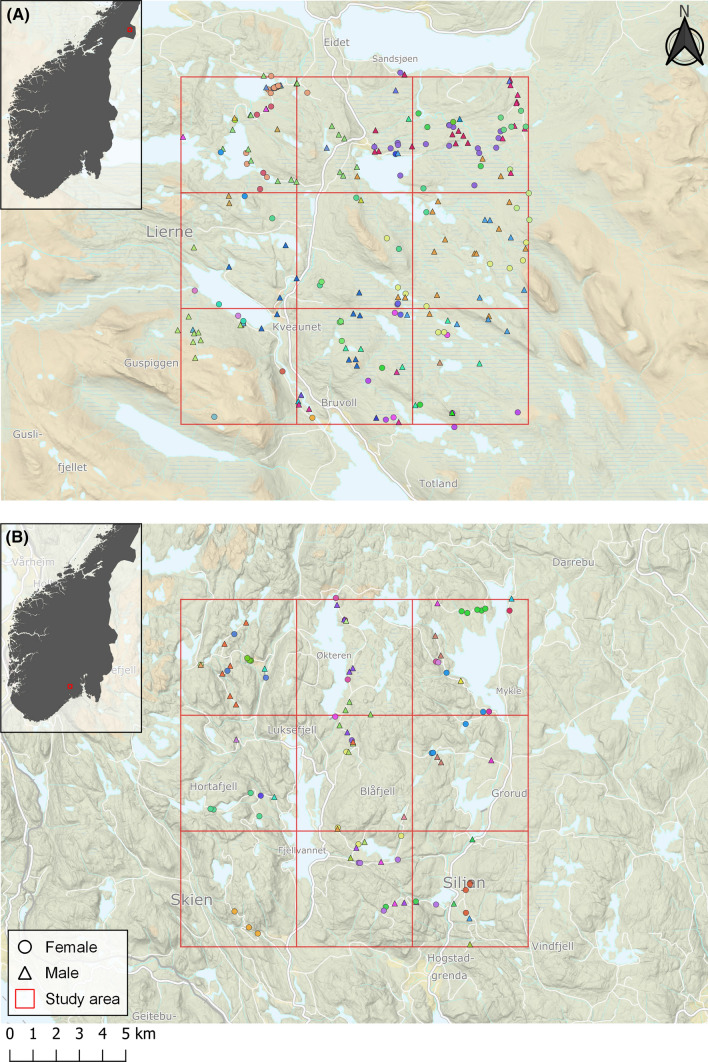
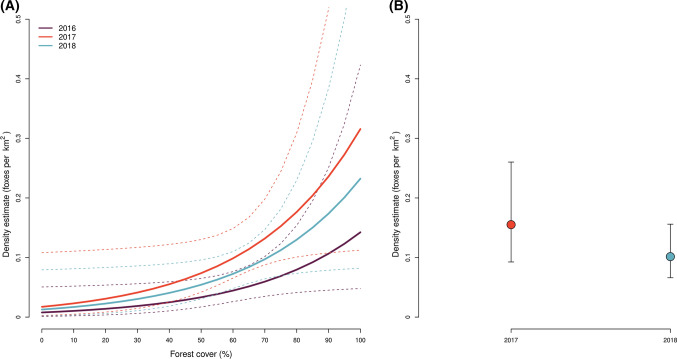
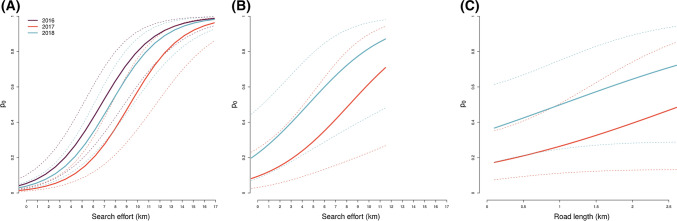
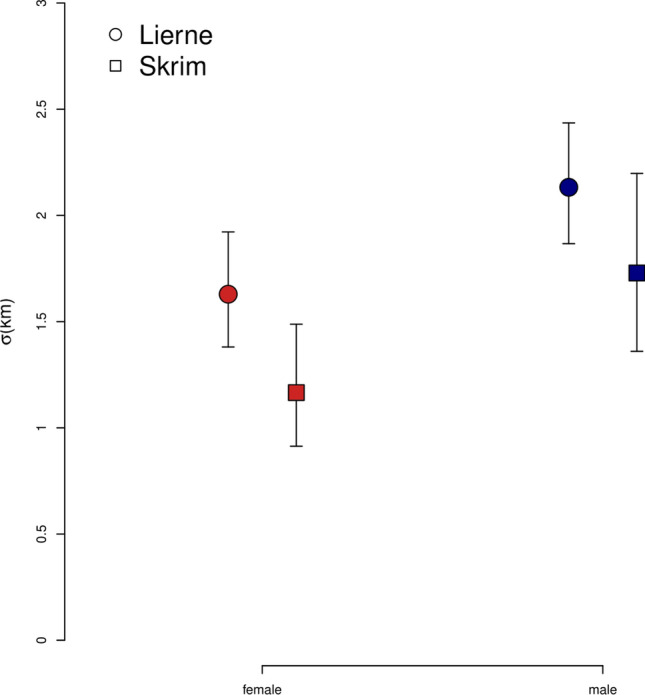
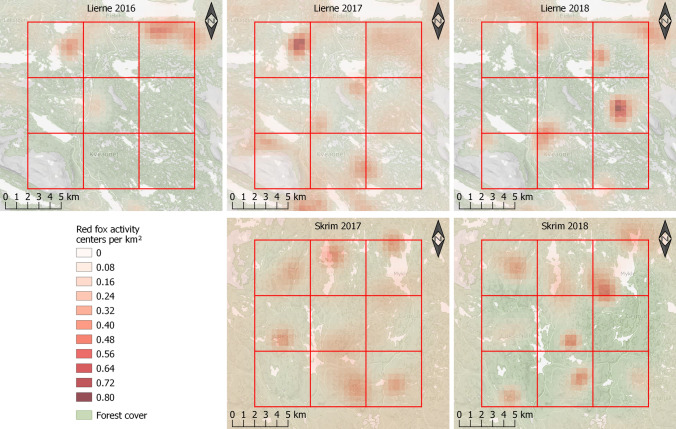
Spatial capture–recapture modelling (SCR) is a powerful tool for estimating density, population size, and space use of elusive animals. Here, we applied SCR modelling to non-invasive genetic sampling (NGS) data to estimate red fox (Vulpes vulpes) densities in two areas of boreal forest in central (2016–2018) and southern Norway (2017–2018). Estimated densities were overall lower in the central study area (mean = 0.04 foxes per km 2 in 2016, 0.10 in 2017, and 0.06 in 2018) compared to the southern study area (0.16 in 2017 and 0.09 in 2018). We found a positive effect of forest cover on density in the central, but not the southern study area. The absence of an effect in the southern area may reflect a paucity of evidence caused by low variation in forest cover. Estimated mean home-range size in the central study area was 45 km 2 [95%CI 34–60] for females and 88 km 2 [69–113] for males. Mean home-range sizes were smaller in the southern study area (26 km 2 [16–42] for females and 56 km 2 [35–91] for males). In both study areas, detection probability was session-dependent and affected by sampling effort. This study highlights how SCR modelling in combination with NGS can be used to efficiently monitor red fox populations, and simultaneously incorporate ecological factors and estimate their effects on population density and space use.
Overview
The claims and statistics of this paper haven’t been checked yet.
Free: it reads the open-access text and checks the first 5 claims that cite a source we can check. Create a free account to check every claim.
Integrity signals
Registry
Cites
Statistics
Figures
Verification
Claims the paper makes
The claims and statistics of this paper haven’t been checked yet.
Free: it reads the open-access text and checks the first 5 claims that cite a source we can check. Create a free account to check every claim.
Claims other papers make about this one
Each is checked against this paper’s own text: does it say what the citing paper says it does?
The source backs part of the claim, not all of it — or backs it for a different population, condition or comparison.
In the citing paper
“Average genotyping success (52.8%) was consistent with previous studies based on faecal DNA (e.g., 48%44, 58%45).”
From Nutritional ecology of a prototypical generalist predator, the red fox (Vulpes vulpes) (2024) · cites this paper as [44]
Experimental — accuracy not yet measuredIn the citing paper
“The red fox ( Vulpes vulpes ) is the most widespread and adaptable wild carnivore in the world (Linds ø et al., 2022; Kobryn et al., 2023), and can be found all over Europe (Delcourt et al., 2022), including Slovenia (Rataj et al., 2010), having adapted its activity level and behaviour to many different habitats (Gil-Fern ´ andez et al., 2020).”
From Exposure assessment of anticoagulant rodenticides in the liver of red foxes (Vulpes vulpes) in Slovenia (2024) · cites this paper as Linds ø et al., 2022
Self-check
Percentages, sums and reported differences re-computed from the paper’s own numbers.
The self-check needs the paper’s full text.
Citations
Cites
R: A Language and Environment for Statistical Computing
R Core Team (2025) · doi:10.32614/r.manuals · Cited by 352,181
Uninformative Parameters and Model Selection Using Akaike's Information Criterion
ARNOLD, T. W. (2010) · The Journal of Wildlife Management · doi:10.1111/j.1937-2817.2010.tb01236.x · Cited by 3,417
Reliable genotyping of samples with very low DNA quantities using PCR
Taberlet, P. (1996) · Nucleic Acids Research · doi:10.1093/nar/24.16.3189 · Cited by 1,491 · cited 1×
“This procedure minimizes the risk of genotyping errors caused by allelic dropout and false alleles (Taberlet et al. 1996).”
Invasive predators and global biodiversity loss
Doherty, T. S., Glen, A. S., Nimmo, D. G., Ritchie, E. G., & Dickman, C. R. (2016) · Proceedings of the National Academy of Sciences · doi:10.1073/pnas.1602480113 · Cited by 1,270 · cited 1×
“2017), and game species like forest birds (Doherty et al. 2016; Jahren 2017; Skrede 2016; Smedshaug et al. 1999).”
BackgroundSpatially Explicit Maximum Likelihood Methods for Capture–Recapture Studies
Borchers, D. L., & Efford, M. G. (2008) · Biometrics · doi:10.1111/j.1541-0420.2007.00927.x · Cited by 881 · cited 1×
“Density may be modelled as a function of spatially explicit covariates (Borchers and Efford 2008).”
BackgroundAbsent or undetected? Effects of non-detection of species occurrence on wildlife–habitat models
Gu, W., & Swihart, R. K. (2004) · Biological Conservation · doi:10.1016/s0006-3207(03)00190-3 · Cited by 788 · cited 1×
“When not accounted for, imperfect detection can lead to erroneous inferences about density and its drivers (Gu and Swihart 2004).”
BackgroundDensity estimation in live‐trapping studies
Efford, M. (2004) · Oikos · doi:10.1111/j.0030-1299.2004.13043.x · Cited by 760 · cited 2×
“The buffer width was calculated by multiplying by 4 the largest estimated σ in a preliminary analysis (Efford 2004).”
MethodCamera traps in animal ecology : methods and analyses
O’Connell, A. F., Nichols, J. D., & Kāranta, K. U. (2011) · Cited by 600
(2014) · Elsevier eBooks · doi:10.1016/c2012-0-01222-7 · Cited by 501
A HIERARCHICAL MODEL FOR SPATIAL CAPTURE–RECAPTURE DATA
Royle, J. A., & Young, K. V. (2008) · Ecology · doi:10.1890/07-0601.1 · Cited by 414 · cited 4×
“2010; Royle and Young 2008).”
BackgroundMethodInfluentialRisky business or simple solution – Relative abundance indices from camera-trapping
Sollmann, R., Mohamed, A., Samejima, H., & Wilting, A. (2013) · Biological Conservation · doi:10.1016/j.biocon.2012.12.025 · Cited by 397
Accounting for Imperfect Detection in Ecology: A Quantitative Review
Kellner, K. F., & Swihart, R. K. (2014) · PLoS ONE · doi:10.1371/journal.pone.0111436 · Cited by 383 · cited 1×
“Though many count-based wildlife surveys assume complete detection of all individuals in a population, this assumption is almost always violated (Kellner and Swihart 2014).”
BackgroundDisease Reveals the Predator: Sarcoptic Mange, Red Fox Predation, and Prey Populations
Lindström, E. R., Andrén, H., Angelstam, P., Cederlund, G., Hörnfeldt, B., Jäderberg, L., Lemnell, P., Martinsson, B., Sköld, K., & Swenson, J. E. (1994) · Ecology · doi:10.2307/1939428 · Cited by 335 · cited 1×
“2004), mapping of active dens (Lindström 1989; Lindström et al. 1994), and camera trap visits (Hamel et al.”
BackgroundHandbook of Capture-Recapture Analysis
(2010) · Princeton University Press eBooks · doi:10.1515/9781400837717 · Cited by 324 · cited 1×
“An important advantage of these methods is their ability to account for imperfect and variable detection probability (Amstrup et al. 2010; Royle and Young 2008).”
Method(2014) · Spatial Capture-recapture · doi:10.1016/b978-0-12-405939-9.00022-0 · Cited by 264
Trap Configuration and Spacing Influences Parameter Estimates in Spatial Capture-Recapture Models
Sun, C. C., Fuller, A. K., & Royle, J. A. (2014) · PLoS ONE · doi:10.1371/journal.pone.0088025 · Cited by 187
Lariviere, S., & Pasitschniak-Arts, M. (1996) · Mammalian Species · doi:10.2307/3504236 · Cited by 186
GALPERN, P., MANSEAU, M., HETTINGA, P., SMITH, K., & WILSON, P. (2012) · Molecular Ecology Resources · doi:10.1111/j.1755-0998.2012.03137.x · Cited by 184
Unifying population and landscape ecology with spatial capture–recapture
Royle, J. A., Fuller, A. K., & Sutherland, C. (2018) · Ecography · doi:10.1111/ecog.03170 · Cited by 184 · cited 2×
“Conventional CR, however, exhibits difficulty associated with estimating population density due to movements of animals into and out of the study area, which often leads to erroneous inferences (Royle and Young 2008; Royle et al. 2018).”
BackgroundPredators and ecosystem management
Estes, J. A. (1996) · Cited by 179
Food limitation and social regulation in a red fox population
Lindström, E. (1989) · Ecography · doi:10.1111/j.1600-0587.1989.tb00824.x · Cited by 176 · cited 2×
“2004), mapping of active dens (Lindström 1989; Lindström et al. 1994), and camera trap visits (Hamel et al.”
BackgroundPiggott, M. P. (2004) · Wildlife Research · doi:10.1071/wr03096 · Cited by 175 · cited 10×
“Many factors, including sample age, temperature, moisture, and UV radiation, contribute to degradation and preservation of DNA (Hausknecht et al. 2007; Panasci et al. 2011; Piggott 2005; Woodruff et al. 2015).”
BackgroundInfluentialUse of Spatial Capture‐Recapture Modeling and DNA Data to Estimate Densities of Elusive Animals
Kéry, M., Gardner, B., STOECKLE, T., Weber, D., & Royle, J. A. (2010) · Conservation Biology · doi:10.1111/j.1523-1739.2010.01616.x · Cited by 171 · cited 1×
“This is especially true for predators, because they often occur at low densities, are elusive, and inhabit areas that may also be difficult to survey due to inaccessibility or rough terrain (Kery et al. 2011).”
BackgroundFaecal density counts for monitoring changes in red fox numbers in rural Britain
WEBBON, C. C., BAKER, P. J., & HARRIS, S. (2004) · Journal of Applied Ecology · doi:10.1111/j.0021-8901.2004.00930.x · Cited by 169 · cited 1×
“1999), snow tracking (Wegge and Rolstad 2011), fecal counts (Cavallini 1994; Webbon et al. 2004), mapping of active dens (Lindström 1989; Lindström et al.”
BackgroundMiquel, C., Bellemain, E., POILLOT, C., Bessière, J., Durand-Terrasson, A., & Taberlet, P. (2006) · Molecular Ecology Notes · doi:10.1111/j.1471-8286.2006.01413.x · Cited by 168
Ergon, T., & Gardner, B. (2013) · Methods in Ecology and Evolution · doi:10.1111/2041-210x.12133 · Cited by 155 · cited 2×
“This would also make better use of the available data, as information on individual states is propagated between years (Ergon and Gardner 2014; Gardner et al. 2018; Milleret et al. 2020).”
BackgroundMolecular Ecology Resources Primer Development Consortium, ABREU, A. G., ALBAINA, A., ALPERMANN, T. J., APKENAS, V. E., BANKHEAD‐DRONNET, S., BERGEK, S., BERUMEN, M. L., CHO, C., CLOBERT, J., et al. (2012) · Molecular Ecology Resources · doi:10.1111/j.1755-0998.2011.03109.x · Cited by 147
Dell'Arte, G. L., Laaksonen, T., Norrdahl, K., & Korpimäki, E. (2007) · Acta Oecologica · doi:10.1016/j.actao.2006.12.007 · Cited by 143 · cited 1×
“The red fox (Vulpes vulpes) is a highly adaptable and opportunistic mesopredator with a broad ecological niche and variable diet, including both wild and domestic vertebrates (Dell'Arte et al. 2007; Killengreen et al. 2011).”
BackgroundoSCR: a spatial capture–recapture R package for inference about spatial ecological processes
Sutherland, C. S., Royle, J. A., & Linden, D. W. (2019) · Ecography · doi:10.1111/ecog.04551 · Cited by 140 · cited 2×
“Predicted values from the retained fitted models, including red fox density, realized density maps, and population size, were produced using functionality provided in the oSCR package (Sutherland et al. 2019).”
BackgroundMethodVine, S. J., Crowther, M. S., Lapidge, S. J., Dickman, C. R., Mooney, N., Piggott, M. P., & English, A. W. (2009) · Wildlife Research · doi:10.1071/wr08069 · Cited by 133
Killengreen, S. T., Lecomte, N., Ehrich, D., Schott, T., Yoccoz, N. G., & Ims, R. A. (2011) · Journal of Animal Ecology · doi:10.1111/j.1365-2656.2011.01840.x · Cited by 131 · cited 1×
“The red fox (Vulpes vulpes) is a highly adaptable and opportunistic mesopredator with a broad ecological niche and variable diet, including both wild and domestic vertebrates (Dell'Arte et al. 2007; Killengreen et al. 2011).”
BackgroundBischof, R., Milleret, C., Dupont, P. P. A., Chipperfield, J. D., Tourani, M., Ordiz, A., de Valpine, P., Turek, D., Royle, J. A., Giménez, O., et al. (2020) · Proceedings of the National Academy of Sciences · doi:10.1073/pnas.2011383117 · Cited by 131 · cited 3×
“Ecologists and wildlife managers have a keen interest in quantifying wildlife abundance across landscapes and identifying the drivers of spatial variation therein (Bischof et al. 2020).”
BackgroundMethodInfluentialSelf-citationPanasci, M., Ballard, W. B., Breck, S. W., Rodríguez, D., Densmore, L. D., Wester, D. B., & Baker, R. J. (2011) · Journal of Wildlife Management · doi:10.1002/jwmg.221 · Cited by 119 · cited 9×
“Many factors, including sample age, temperature, moisture, and UV radiation, contribute to degradation and preservation of DNA (Hausknecht et al. 2007; Panasci et al. 2011; Piggott 2005; Woodruff et al. 2015).”
BackgroundInfluentialEstimating the costs of locomotion in snow for coyotes
Crête, M., & Larivière, S. (2003) · Canadian Journal of Zoology · doi:10.1139/z03-182 · Cited by 116 · cited 2×
“The inclusion of the road covariate was motivated by evidence suggesting that mesopredators often travel along roads in winter to conserve energy (Crête and Larivière 2003), while forest cover was included to test whether detectability was higher in open vs.”
BackgroundCompensatory heterogeneity in spatially explicit capture–recapture data
Efford, M. G., & Mowat, G. (2013) · Ecology · doi:10.1890/13-1497.1 · Cited by 109 · cited 2×
“In addition, in most monitoring set-ups, detection probability differs amongst individuals in the population as a result of different exposure to detectors in relation to individual home-range locations (Efford and Mowat 2014).”
BackgroundWalton, Z., Samelius, G., Odden, M., & Willebrand, T. (2017) · PLOS ONE · doi:10.1371/journal.pone.0175291 · Cited by 107 · cited 2×
“Some studies report home-range size of the red fox to differ between sexes (Drygala and Zoller 2013), while other studies report no significant sex differences (Svendsen 2016; Walton et al. 2017).”
BackgroundWinter severity limits red fox populations in Eurasia
Bartoń, K. A., & Zalewski, A. (2007) · Global Ecology and Biogeography · doi:10.1111/j.1466-8238.2007.00299.x · Cited by 95 · cited 1×
“2017), and winter severity as limiting factors on density (Bartoń and Zalewski 2007).”
BackgroundHamel, S., Killengreen, S. T., Henden, J., Yoccoz, N. G., & Ims, R. A. (2013) · Biological Conservation · doi:10.1016/j.biocon.2013.01.011 · Cited by 93
Interactions between Arctic and Red Foxes in Scandinavia - Predation and Aggression
Frafjord, K., Becker, D., & Angerbjörn, A. (1989) · ARCTIC · doi:10.14430/arctic1677 · Cited by 88 · cited 1×
“This includes intraguild competition with arctic fox (Vulpes lagopus; Frafjord et al. 1989), and predation on threatened species like the lesser white-fronted goose (Anser erythropus; Aarvak et al.”
BackgroundPredators indirectly control vector-borne disease: linking predator–prey and host–pathogen models
Moore, S. M., Borer, E. T., & Hosseini, P. R. (2009) · Journal of The Royal Society Interface · doi:10.1098/rsif.2009.0131 · Cited by 87
The effect of a natural reduction of red fox Vulpes vulpes on small game hunting bags in Norway
Smedshaug, C. A., Selås, V., Lund, S. E., & Sonerud, G. A. (1999) · Wildlife Biology · doi:10.2981/wlb.1999.020 · Cited by 84 · cited 2×
“2017), and game species like forest birds (Doherty et al. 2016; Jahren 2017; Skrede 2016; Smedshaug et al. 1999).”
BackgroundMethodHelsen, K., Acharya, K. P., Brunet, J., Cousins, S. A. O., Decocq, G., Hermy, M., Kolb, A., Lemke, I., Lenoir, J., Plue, J., et al. (2017) · BMC Ecology · doi:10.1186/s12898-017-0151-y · Cited by 78
Needham, R. J., Odden, M., Lundstadsveen, S. K., & Wegge, P. (2014) · ACTA THERIOLOGICA · doi:10.1007/s13364-014-0188-7 · Cited by 69 · cited 1×
“Boreal forests are important habitats for several prey species of red fox, including voles, shrews, and forest birds (Needham et al. 2014).”
BackgroundMonitoring coyote population dynamics with fecal DNA and spatial capture–recapture
Morin, D. J., Kelly, M. J., & Waits, L. P. (2016) · Journal of Wildlife Management · doi:10.1002/jwmg.21080 · Cited by 67 · cited 2×
“Recent developments of SCR methods include open population analyses that allow for studying red fox population dynamics over time, including estimating mortality and recruitment rates, as well as immigration and emigration (Morin et al. 2016).”
MethodFaeces count as an index of fox abundance
Cavallini, P. (1994) · Acta Theriologica · doi:10.4098/at.arch.94-49 · Cited by 66 · cited 2×
“1999), snow tracking (Wegge and Rolstad 2011), fecal counts (Cavallini 1994; Webbon et al.”
BackgroundMolecular Ecology Resources Primer Development Consortium, AN, J., BECHET, A., BERGGREN, Å., BROWN, S. K., BRUFORD, M. W., CAI, Q., CASSEL‐LUNDHAGEN, A., CEZILLY, F., CHEN, S., et al. (2010) · Molecular Ecology Resources · doi:10.1111/j.1755-0998.2009.02827.x · Cited by 66
Wegge, P., & Rolstad, J. (2011) · Forest Ecology and Management · doi:10.1016/j.foreco.2011.01.041 · Cited by 64 · cited 2×
“1999), snow tracking (Wegge and Rolstad 2011), fecal counts (Cavallini 1994; Webbon et al.”
BackgroundUse of spatial capture–recapture to estimate density of Andean bears in northern Ecuador
Molina, S., Fuller, A. K., Morin, D. J., & Royle, J. A. (2017) · Ursus · doi:10.2192/ursu-d-16-00030.1 · Cited by 61
Multiple observation processes in spatial capture–recapture models: How much do we gain?
Tourani, M., Dupont, P. P. A., Nawaz, M. A., & Bischof, R. (2020) · Ecology · doi:10.1002/ecy.3030 · Cited by 58
Self-citationState space and movement specification in open population spatial capture–recapture models
Gardner, B., Sollmann, R., Kumar, N. S., Jathanna, D., & Karanth, K. U. (2018) · Ecology and Evolution · doi:10.1002/ece3.4509 · Cited by 55
Community‐wide mesocarnivore response to partial ungulate migration
Henden, J., Stien, A., Bårdsen, B., Yoccoz, N. G., & Ims, R. A. (2014) · Journal of Applied Ecology · doi:10.1111/1365-2664.12328 · Cited by 54
Hodžić, A., Alić, A., Klebic, I., Kadrić, M., Brianti, E., & Duscher, G. G. (2016) · Veterinary Parasitology · doi:10.1016/j.vetpar.2016.04.016 · Cited by 54
Scavenging on a pulsed resource: quality matters for corvids but density for mammals
Gomo, G., Mattisson, J., Hagen, B. R., Moa, P. F., & Willebrand, T. (2017) · BMC Ecology · doi:10.1186/s12898-017-0132-1 · Cited by 53 · cited 1×
“Human land use and anthropogenic subsidies have also been suggested to be important drivers of red fox density (Gomo et al. 2017; RødEriksen et al. 2020).”
BackgroundHabitat Use of Red Foxes in Yellowstone National Park Based on Snow Tracking and Telemetry
Etten, K. W. V., Wilson, K. R., & Crabtree, R. L. (2007) · Journal of Mammalogy · doi:10.1644/07-mamm-a-076.1 · Cited by 50
Evaluating noninvasive genetic sampling techniques to estimate large carnivore abundance
Mumma, M. A., Zieminski, C., Fuller, T. K., Mahoney, S. P., & Waits, L. P. (2015) · Molecular Ecology Resources · doi:10.1111/1755-0998.12390 · Cited by 48 · cited 1×
“SCR is also well suited for use in combination with non-invasive sampling methods, such as camera trapping and non-invasive genetic sampling (NGS) data (Mumma et al. 2015; Royle et al. 2013).”
BackgroundDNA analysis on fox faeces and competition induced niche shifts
Dalén, L., Elmhagen, B., & Angerbjörn, A. (2004) · Molecular Ecology · doi:10.1111/j.1365-294x.2004.02249.x · Cited by 43
Drygala, F., & Zoller, H. (2013) · European Journal of Wildlife Research · doi:10.1007/s10344-013-0722-y · Cited by 41 · cited 2×
“Some studies report home-range size of the red fox to differ between sexes (Drygala and Zoller 2013), while other studies report no significant sex differences (Svendsen 2016; Walton et al.”
BackgroundWoodruff, S. P., Johnson, T. R., & Waits, L. P. (2014) · Molecular Ecology Resources · doi:10.1111/1755-0998.12362 · Cited by 40 · cited 9×
“Many factors, including sample age, temperature, moisture, and UV radiation, contribute to degradation and preservation of DNA (Hausknecht et al. 2007; Panasci et al. 2011; Piggott 2005; Woodruff et al. 2015).”
BackgroundInfluentialHenry, C., Poulle, M.-L., & Roeder, J.-J. (2005) · Écoscience · doi:10.2980/i1195-6860-12-2-202.1 · Cited by 40 · cited 1×
“This may reflect variation in space use related to breeding status of females, as reproductive females have been reported to have smaller home ranges (Henry et al. 2005).”
BackgroundJimenez, J., Chandler, R. B., Tobajas, J., Descalzo, E., Mateo, R., & Ferreras, P. (2019) · Ecology and Evolution · doi:10.1002/ece3.5077 · Cited by 40
Víchová, B., Bona, M., Miterpáková, M., Kraljik, J., Čabanová, V., Nemčíková, G., Hurníková, Z., & Oravec, M. (2018) · Vector-Borne and Zoonotic Diseases · doi:10.1089/vbz.2018.2314 · Cited by 39
Echinococcus multilocularis and other zoonotic parasites in red foxes in Estonia
LAURIMAA, L., MOKS, E., SOE, E., VALDMANN, H., & SAARMA, U. (2016) · Parasitology · doi:10.1017/s0031182016001013 · Cited by 37
Jahren, T., Odden, M., Linnell, J. D. C., & Panzacchi, M. (2020) · Mammal Research · doi:10.1007/s13364-020-00494-y · Cited by 36 · cited 1×
“Forest landscapes with high human settlement density are associated with higher red fox abundances, potentially driven by increased food availability of anthropogenic origin, and thus increased scavenging opportunities (Jahren et al. 2020; Rød-Eriksen et al. 2020).”
BackgroundSpatial capture–recapture with random thinning for unidentified encounters
Jiménez, J., Augustine, B. C., Linden, D. W., Chandler, R. B., & Royle, J. A. (2020) · Ecology and Evolution · doi:10.1002/ece3.7091 · Cited by 34
Ranging behaviour of red foxes during the mating and breeding seasons
Cavallini, P. (1996) · Ethology Ecology & Evolution · doi:10.1080/08927014.1996.9522935 · Cited by 33 · cited 1×
“Furthermore, DNA sampling was partly done during the mating period (January–March), when male foxes likely roam around to cover several female home ranges (Cavallini 1996), which could contribute to the observed difference between males and females.”
BackgroundUrine — a source for noninvasive genetic monitoring in wildlife
Hausknecht, R., Gula, R., Pirga, B., & Kuehn, R. (2006) · Molecular Ecology Notes · doi:10.1111/j.1471-8286.2006.01622.x · Cited by 32 · cited 9×
“Many factors, including sample age, temperature, moisture, and UV radiation, contribute to degradation and preservation of DNA (Hausknecht et al. 2007; Panasci et al. 2011; Piggott 2005; Woodruff et al. 2015).”
BackgroundInfluentialHabitat selection by the red fox Vulpes vulpes (L. 1758) in an Alpine area
Cagnacci, F., Meriggi, A., & Lovari, S. (2004) · Ethology Ecology & Evolution · doi:10.1080/08927014.2004.9522640 · Cited by 30
Highways associated with expansion of boreal scavengers into the alpine tundra of Fennoscandia
Rød‐Eriksen, L., Skrutvold, J., Herfindal, I., Jensen, H., & Eide, N. E. (2020) · Journal of Applied Ecology · doi:10.1111/1365-2664.13668 · Cited by 30 · cited 1×
“Forest landscapes with high human settlement density are associated with higher red fox abundances, potentially driven by increased food availability of anthropogenic origin, and thus increased scavenging opportunities (Jahren et al. 2020; Rød-Eriksen et al. 2020).”
BackgroundSelf-citationEveratt, K. T., Andresen, L., & Somers, M. J. (2015) · African Journal of Wildlife Research · doi:10.3957/056.045.0187 · Cited by 27 · cited 1×
“, second-order habitat selection (Everatt et al. 2015), proportion of forest cover was defined as the average forest cover in a 1000 m radius around each raster cell.”
BackgroundWegge, P., Bakke, B. B., Odden, M., & Rolstad, J. (2018) · Mammal Research · doi:10.1007/s13364-018-0408-7 · Cited by 22 · cited 3×
“Recent studies also support use of these methods to monitor mesopredators when applied at appropriate spatial scales (Morin et al. 2016; Wegge et al. 2019).”
BackgroundMethodMethods for assessing small-scale variation in the abundance of a generalist mesopredator
Kämmerle, J., Corlatti, L., Harms, L., & Storch, I. (2018) · PLoS ONE · doi:10.1371/journal.pone.0207545 · Cited by 19 · cited 1×
“Reliable information on animal population status, including population size and density, is crucial for wildlife research and management (Kämmerle et al. 2018).”
BackgroundMilleret, C., Dupont, P. P. A., Chipperfield, J. D., Turek, D., Brøseth, H., Giménez, O., de Valpine, P., & Bischof, R. (2020) · Ecosphere · doi:10.1002/ecs2.3172 · Cited by 18 · cited 1×
“This would also make better use of the available data, as information on individual states is propagated between years (Ergon and Gardner 2014; Gardner et al. 2018; Milleret et al. 2020).”
BackgroundSelf-citationGomo, G., Rød‐Eriksen, L., Andreassen, H. P., Mattisson, J., Odden, M., Devineau, O., & Eide, N. E. (2020) · Ecology and Evolution · doi:10.1002/ece3.6834 · Cited by 16
Self-citationDown a hole: missing GPS positions reveal birth dates of an underground denning species, the red fox
Walton, Z., & Mattisson, J. (2021) · Mammalian Biology · doi:10.1007/s42991-020-00089-9 · Cited by 11 · cited 1×
“Some females may have started retreating to natal dens towards the end of the sampling period (Walton and Mattisson 2021), which would affect their home-range sizes.”
BackgroundIntegrating dead recoveries in open‐population spatial capture–recapture models
Dupont, P. P. A., Milleret, C., Tourani, M., Brøseth, H., & Bischof, R. (2021) · Ecosphere · doi:10.1002/ecs2.3571 · Cited by 9 · cited 1×
“Multiple data sources, such as recoveries of dead animals, can also be integrated in the SCR framework to increase the precision of estimates (Dupont et al. 2021).”
MethodSelf-citation
Research works printed but not linked: 6
- Burnham KP, Anderson DR (2002) A practical information-theoretic approach. Model selection and multimodel inference, 2nd edn. Springer, New York, pp 70–71
- Jahren T (2017) The role of nest predation and nest predators in population declines of capercaillie and black grouse. PhD dissertation, Faculty of applied ecology and agricultural sciences, Inland Norway University of Applied Sciences, Evenstad, Norway
- Østbye E, Steen H, Framstad E, Tvete B (1989) Do connections exist between climatic variations and cyclicity in small rodents? Fauna 42:147–153
- Silvy NJ (Eds.) (2012) The Wildlife Techniques Manual: Volume 1: Research. Volume 2: Management 2-vol. Set (Vol. 1). JHU Press, Baltimore.
- Skrede A (2016) Nest-predation in willow ptarmigan – Red fox in the mountains (Original title: Reirpredasjon hjå lirype–Raudrev inntar fjellet). Bachelor's thesis, Faculty of Applied Ecology and Agricultural Sciences, Inland Norway University of Applied Sciences, Evenstad, Norway
- Svendsen K (2016) Movement and habitat use of red foxes in a boreal conifer forest (Original title: Rødrevens bevegelsesmønster og habitatbruk i en boreal barskog). Bachelor's thesis, Faculty of Applied Ecology and Agricultural Sciences, Inland Norway University of Applied Sciences, Evenstad
Cited by
Red fox (Vulpes vulpes) play an important role in the propagation of tick-borne pathogens
Lesiczka, P. M., Rudenko, N., Golovchenko, M., Juránková, J., Daněk, O., Modrý, D., & Hrazdilová, K. (2022) · Ticks and Tick-borne Diseases · doi:10.1016/j.ttbdis.2022.102076 · Cited by 27
Cerkvenik-Flajs, V., Schenke, D., Žele-Vengušt, D., Korenjak-Černe, S., Perpar, A., & Vengušt, G. (2024) · Science of The Total Environment · doi:10.1016/j.scitotenv.2024.170400 · Cited by 10
Lesiczka, P. M., Myśliwy, I., Buńkowska‐Gawlik, K., Modrý, D., Hrazdilová, K., Hildebrand, J., & Perec‐Matysiak, A. (2023) · Parasites & Vectors · doi:10.1186/s13071-023-05996-7 · Cited by 10
“The red fox is the most widespread free-living predator in the world [44], and its role as a host for A. phago-cytophilum is well documented [45, 46].”
BackgroundCelva, R., Crestanello, B., Obber, F., Dellamaria, D., Trevisiol, K., Bregoli, M., Cenni, L., Agreiter, A., Danesi, P., Hauffe, H. C., et al. (2022) · Pathogens · doi:10.3390/pathogens12010060 · Cited by 8
Antimicrobial Resistance in Enterococcus spp. Isolates from Red Foxes (Vulpes vulpes) in Latvia
Terentjeva, M., Ķibilds, J., Avsejenko, J., Cīrulis, A., Labecka, L., & Bērziņš, A. (2024) · Antibiotics · doi:10.3390/antibiotics13020114 · Cited by 10
Metadata
- Authors
- Lindsø, L. K., Dupont, P., Rød-Eriksen, L., Andersskog, I. P. Ø., Ulvund, K. R., Flagstad, Ø., Bischof, R., & Eide, N. E.
- Affiliations
- University of Oslo (NO)
- Norwegian University of Life Sciences (NO)
- Norwegian Institute for Nature Research (NO)
- Corresponding author
- Lindsø, Lars K.
- ORCID
- Venue
- Oecologia
- Published
- 2021-12-02
- Volume
- 198
- Issue
- 1
- Pages
- 139-151
- ISSN
- 0029-8549 (ISSN-L)
- 1432-1939
- PMC
- PMC8803778
- OpenAlex
- W3153442753
- Cited by
- 19
- References
- 75
- Citations by year
- 2026: 5 · 2025: 3 · 2024: 6 · 2023: 3 · 2022: 2
- FWCI
- 1.48
- Type
- journal article
- Language
- en
- Open access
- hybrid
- doi.org
- Licence
- cc-by
- creativecommons.org/licenses/by/4.0 (tdm)
- creativecommons.org/licenses/by/4.0 (vor)
- Locations
- Oecologia (publishedVersion, cc-by)
- PubMed Central (publishedVersion, cc-by)
- PubMed (publishedVersion)
- NORA - Norwegian Open Research Archives (submittedVersion, other-oa)
- Zenodo (CERN European Organization for Nuclear Research) (submittedVersion, cc-by)
- Funders
- Miljødirektoratet (18S247E2)
- Norges Forskningsråd (Project ECOFUNC, grant 244557/E50, Project WildMap, NFR 286886)
- University of Oslo
- Topics
- Physical Sciences › Environmental Science › Ecology › Wildlife Ecology and Conservation
- Physical Sciences › Mathematics › Statistics and Probability › Census and Population Estimation
- Physical Sciences › Environmental Science › Ecology › Animal Ecology and Behavior Studies
- Keywords
- red fox, population density estimation, non-invasive genetic sampling, spatial capture-recapture, home range size, space use, forest cover, detection probability, boreal forest, population monitoring, sex differences in home range
- MeSH terms
- Animals, Female, Foxes, Male, Norway, Population Density, Probability
About these checks
Registry, retraction, Cites and statistics results are computed, not judged, with one exception: a printed reference that no index lists is read once by a model before it counts as a citation error. Claims are extracted by a model and kept only when their quote appears verbatim in the text; each cited source is then checked, with a model’s help, for whether it says what the claim relies on. Those verdicts can be wrong — read the claim’s quote and the cited source before relying on one.
Statistics and arithmetic are recomputed, not judged.
Confidence bands are shown only for fields calibrated on our annotated test set. None is calibrated yet, so no band is shown.
What counts as a claim ›How we measure confidence ›How we check this ›
Are you an author, or do you see a problem with this page? Request a review
Data sources
Bibliographic data: Semantic Scholar, OpenAlex, Crossref.
Contains information from the Semantic Scholar Academic Graph Datasets, made available under the ODC Attribution License (ODC-BY 1.0).
Semantic Scholar’s data is described in: Kinney, R., et al. (2023). The Semantic Scholar Open Data Platform. arXiv:2301.10140.
