

Clinical practice guidelines of the European Association for Endoscopic Surgery (EAES) on bariatric surgery: update 2020 endorsed by IFSO-EC, EASO and ESPCOP
Open accessThe DOI matches its Crossref record; 160 of the 163 references it cites were found in a registry or an index; 40 of the 252 sources its claims cite were checked for support.
Abstract
Background: Surgery for obesity and metabolic diseases has been evolved in the light of new scientific evidence, long-term outcomes and accumulated experience. EAES has sponsored an update of previous guidelines on bariatric surgery. Methods: A multidisciplinary group of bariatric surgeons, obesity physicians, nutritional experts, psychologists, anesthetists and a patient representative comprised the guideline development panel. Development and reporting conformed to GRADE guidelines and AGREE II standards. Results: Systematic review of databases, record selection, data extraction and synthesis, evidence appraisal and evidence-to-decision frameworks were developed for 42 key questions in the domains Indication; Preoperative work-up; Perioperative management; Non-bypass, bypass and one-anastomosis procedures; Revisional surgery; Postoperative care; and Investigational procedures. A total of 36 recommendations and position statements were formed through a modified Delphi procedure. Conclusion: This document summarizes the latest evidence on bariatric surgery through state-of-the art guideline development, aiming to facilitate evidence-based clinical decisions.
Overview
CoChat Summary
TL;DR
The EAES 2020 bariatric surgery guideline update used GRADE and AGREE II methods to address 42 key questions and produce 36 recommendations/position statements. It covers indications, preoperative work-up, perioperative management, operative procedures, revisional surgery, postoperative care, and investigational procedures.
Key findings
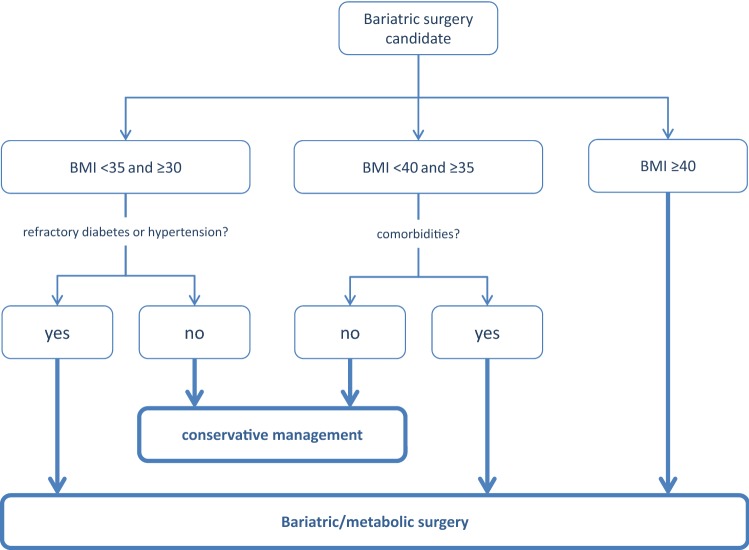
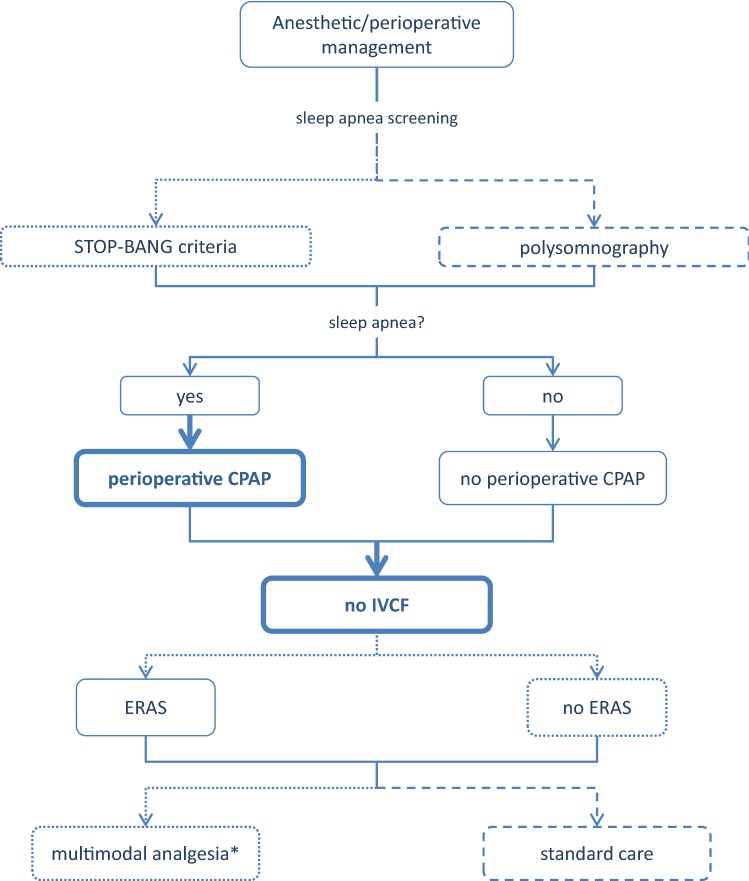
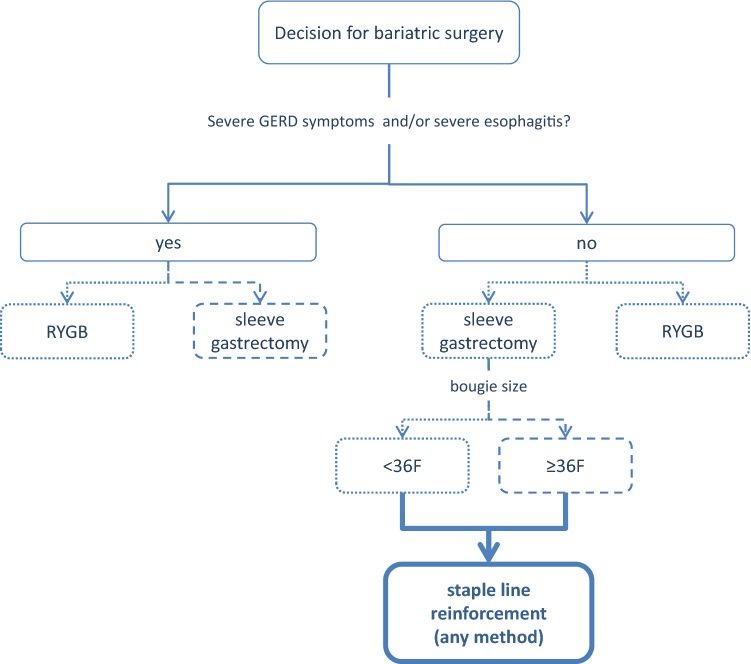
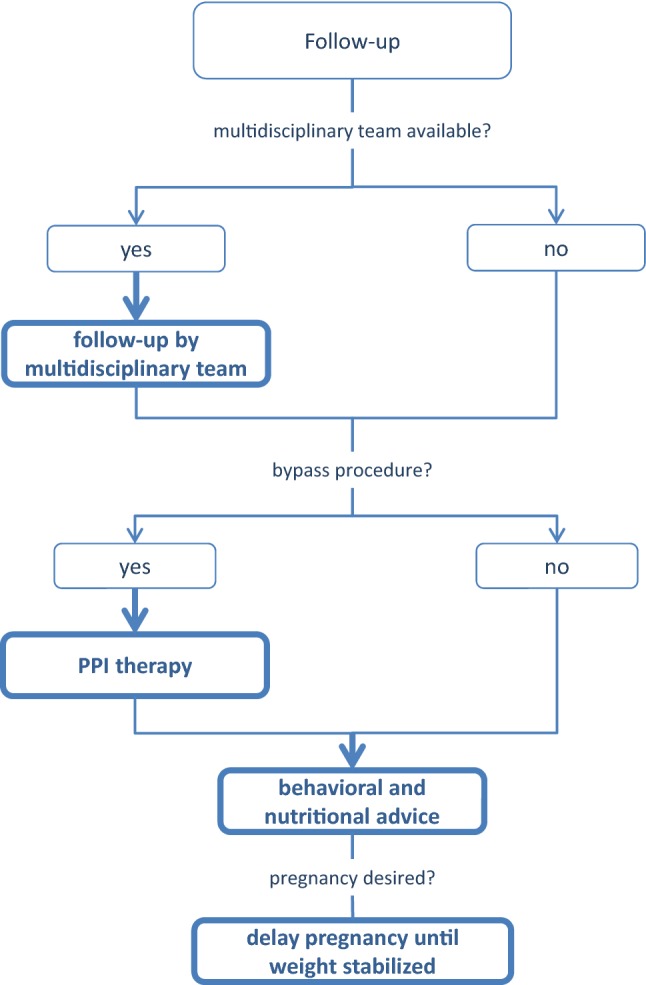
- Strong recommendations included laparoscopic bariatric surgery for BMI ≥40 kg/m2 or BMI ≥35–40 kg/m2 with comorbidities expected to improve with weight loss, and for BMI 30–35 kg/m2 with type 2 diabetes and/or arterial hypertension poorly controlled despite optimal medical therapy; RYGB over adjustable gastric banding; perioperative CPAP for severe obstructive sleep apnea; against inferior vena cava filters; staple line reinforcement in sleeve gastrectomy; scheduled multidisciplinary follow-up; micronutrient supplementation; PPI after bypass; postoperative nutritional/behavioral advice; and delaying pregnancy during the weight loss phase.
- Comparative evidence: sleeve gastrectomy was associated with 25% excess weight loss (WMD, 95% CI 6.4% to 41%) and 57% higher odds of diabetes remission versus adjustable gastric banding (OR 0.43, 95% CI 0.19 to 0.98); RYGB had 22% EWL WMD (95% CI 6.5% to 34%) versus banding; RYGB and sleeve gastrectomy showed no significant EWL difference (WMD −4%, 95% CI −14% to 8%), but RYGB could be preferred for severe GERD/esophagitis.
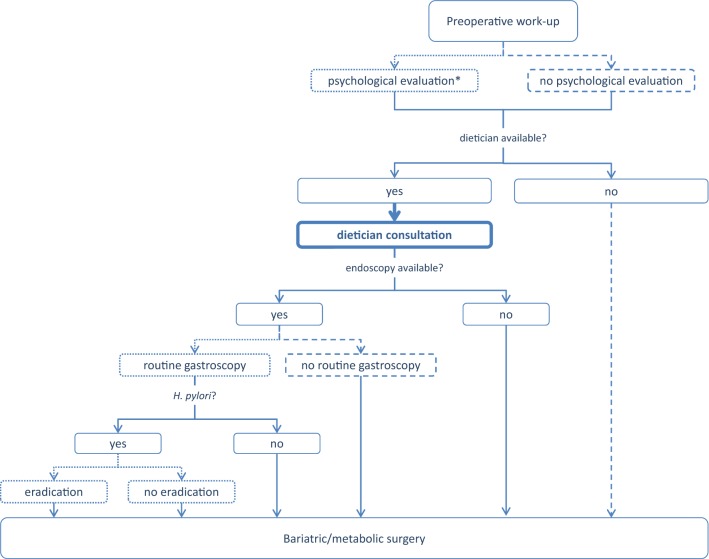
- The panel made no recommendation for routine H. pylori eradication, high- versus standard-dose thromboprophylaxis, ERAS versus standard care, BPD/DS versus sleeve gastrectomy, or SADI-S comparisons; position statements noted high reoperation rates after adjustable gastric banding and insufficient long-term comparative data for OAGB and other emerging procedures.
- Investigational procedures (duodenal-jejunal bypass sleeves, aspiration devices, gastric electrical stimulation, vagal blockade, duodenal mucosal resurfacing) had evidence too low for recommendations; endoluminal suturing may have a role for BMI <40 kg/m2.
Methods
- A multidisciplinary panel (bariatric surgeons, obesity physicians, nutritional experts, psychologists, anesthetists, and a patient representative) developed the guideline per GRADE and AGREE II, with PRISMA/MOOSE reporting.
- Systematic review searched from 2005 to November 2018; 65 systematic reviews informed 42 PICO questions across seven domains. Included adults >18 years with BMI >35 kg/m2 unless otherwise indicated and laparoscopic surgery; procedure recommendations required weight-loss data with ≥5-year follow-up; animal, pediatric, robotic, and open surgery studies were excluded.
- Evidence synthesis used pairwise or proportion meta-analyses, GRADE evidence tables, and evidence-to-decision frameworks; a three-round modified Delphi process produced 36 recommendations/position statements. A survey of 220 professionals and external AGREE II appraisal were also conducted.
Limitations
- The paper states several gaps, particularly long-term outcome reporting; only two network meta-analyses were identified; evidence for emerging procedures was limited; standard definitions for non-responders/revisional surgery are lacking; many judgments relied on low or very low certainty evidence; and position statements are panel opinion, not formal evidence-based recommendations.
- Evident from the text: the guideline applies to adults with BMI >35 kg/m2 fit for laparoscopic surgery, primarily in European healthcare settings, and excludes pediatric patients, modified laparoscopy, intragastric balloons, emerging technologies, and pure metabolic surgery; the literature search ended in November 2018 and validity extends to December 2024.
- Evident from the text: survey applicability data came from 220 professionals, mostly surgeons (61%) and 62% from high-volume centers (>50 bariatric procedures/year), so implementation feedback may not represent all target users.
Model-written summary. Check it against the paper before relying on it.
Integrity signals
Registry
Cites
Statistics
Figures
Verification
Claims the paper makes
18 Valid · 5 Not valid · 90 Not checked · 37 Own results and interpretations
Some cited sources support this claim and some don’t — read each source’s verdict below.
In the paper
“There was a trend towards lower risks of bleeding (RR 0.56, 95% CI 0.25 to 1.27) and leak (0.60, 95% CI 0.27 to 1.50) without reaching significance, however, effect estimates were imprecise and the certainty of evidence for these outcomes downgraded (Supplementary Table S14).”
§ Clinical practice guidelines of the European Association for Endoscopic Surgery (EAES) on bariatric surgery: update 2020 endorsed by IFSO-EC, EASO and ESPCOP > Adjustable gastric banding > Technical considerations on sleeve gastrectomy: Staple line reinforcement
What the sources say
- Partly supportedcites [94] Shikora SA Mahoney CB Clinical benefit of gastric staple line reinforcement (SLR) in gastrointestinal surgery: a meta-analysis Obes Surg 2015 10.1007/s11695-015-1703-x 25968078 PMC4460272 sourceExperimental — accuracy not yet measured
In the Results (Table 5; page not available), bleeding rates after sleeve gastrectomy are lower with each reinforcement method than with no reinforcement, supporting the direction of the claim. The paper does not report RR 0.56 or its 95% CI; the Table 5 significance note instead reports p < 0.001 for each reinforcement method versus none, contrary to the claimed lack of significance. (LLM, conf=0.88)
- Disputedcites [95] Wang Z Dai X Xie H Feng J Li Z Lu Q The efficacy of staple line reinforcement during laparoscopic sleeve gastrectomy: a meta-analysis of randomized controlled trials Int J Surg 2016 10.1016/j.ijsu.2015.12.007 26700201 sourceExperimental — accuracy not yet measured
Section 4.1 (Postoperative staple line hemorrhage) reports a statistically significant reduction in bleeding with reinforcement: RR 0.609, 95% CI 0.439–0.846, P = 0.003. That contradicts the attributed estimate of RR 0.56 (95% CI 0.25–1.27) and the statement that the bleeding result did not reach significance. Section 4.2 reports a nonsignificant result for leakage, not bleeding. (LLM, conf=0.91)
Checked by a reasoning model — may be wrong.
hedged- Asserted: passes — The authors put it forward as true.
- Checkable: passes — It can be checked against evidence.
- Load-bearing: unclear — It is unclear whether the paper’s conclusions depend on it.
- Based: passes — The paper gives a reason why it holds.
- Partly supported
At least one cited source doesn’t support this claim or points to a different paper, and none confirmed it — see the verdicts below.
In the paper
“OAGB was associated with marginally reduced odds for in-hospital morbidity (OR 0.38, 95% CI 0.13 to 1.14) and late complications (0.76, 95% CI 0.33 to 1.77) at the expense of less pronounced EWL (WMD 13%, 95% CI 2% to 29%; very low certainty) (Supplementary Table S22).”
§ Clinical practice guidelines of the European Association for Endoscopic Surgery (EAES) on bariatric surgery: update 2020 endorsed by IFSO-EC, EASO and ESPCOP > One anastomosis procedures > One anastomosis gastric bypass (OAGB)
What the sources say
- Not checked yetcites [91] Kodama S Fujihara K Horikawa C Network meta-analysis of the relative efficacy of bariatric surgeries for diabetes remission Obes Rev 2018 10.1111/obr.12751 30270528 source
- Disputedcites [113] Lee WJ Yu PJ Wang W Chen TC Wei PL Te HM Laparoscopic Roux-en-Y versus mini-gastric bypass for the treatment of morbid obesity: a prospective randomized controlled clinical trial Ann Surg 2005 10.1097/01.sla.0000167762.46568.98 15973097 PMC1357700 sourceExperimental — accuracy not yet measured
The Results (Follow-up; page not provided) report three late complications among 40 patients in each group, or 7.5% in both groups. The Abstract likewise says the late-complication rate was the same, rather than lower with mini-gastric bypass; the paper does not report the quoted OR or confidence interval. (LLM, conf=0.88)
Checked by a reasoning model — may be wrong.
- Not checked yetcites [114] Ruiz-Tovar J Carbajo MA Jimenez JM Long-term follow-up after sleeve gastrectomy versus Roux-en-Y gastric bypass versus one-anastomosis gastric bypass: a prospective randomized comparative study of weight loss and remission of comorbidities Surg Endosc 2019 10.1007/s00464-018-6307-9 29943058 source
plainstates an association- Asserted: passes — The authors put it forward as true.
- Checkable: passes — It can be checked against evidence.
- Load-bearing: passes — The paper’s conclusions depend on it.
- Based: passes — The paper gives a reason why it holds.
At least one cited source doesn’t support this claim or points to a different paper, and none confirmed it — see the verdicts below.
In the paper
“OAGB was associated with marginally reduced odds for in-hospital morbidity (OR 0.38, 95% CI 0.13 to 1.14) and late complications (0.76, 95% CI 0.33 to 1.77) at the expense of less pronounced EWL (WMD 13%, 95% CI 2% to 29%; very low certainty) (Supplementary Table S22).”
§ Clinical practice guidelines of the European Association for Endoscopic Surgery (EAES) on bariatric surgery: update 2020 endorsed by IFSO-EC, EASO and ESPCOP > One anastomosis procedures > One anastomosis gastric bypass (OAGB)
What the sources say
- Not checked yetcites [91] Kodama S Fujihara K Horikawa C Network meta-analysis of the relative efficacy of bariatric surgeries for diabetes remission Obes Rev 2018 10.1111/obr.12751 30270528 source
- Disputedcites [113] Lee WJ Yu PJ Wang W Chen TC Wei PL Te HM Laparoscopic Roux-en-Y versus mini-gastric bypass for the treatment of morbid obesity: a prospective randomized controlled clinical trial Ann Surg 2005 10.1097/01.sla.0000167762.46568.98 15973097 PMC1357700 sourceExperimental — accuracy not yet measured
The Results report the opposite direction of effect: excess weight loss was greater after mini-gastric bypass than after Roux-en-Y bypass at one year (64.9% versus 58.7%) and was not significantly different at two years. The paper does not report the quoted WMD or confidence interval. (LLM, conf=0.90)
Checked by a reasoning model — may be wrong.
- Not checked yetcites [114] Ruiz-Tovar J Carbajo MA Jimenez JM Long-term follow-up after sleeve gastrectomy versus Roux-en-Y gastric bypass versus one-anastomosis gastric bypass: a prospective randomized comparative study of weight loss and remission of comorbidities Surg Endosc 2019 10.1007/s00464-018-6307-9 29943058 source
plainstates an association- Asserted: passes — The authors put it forward as true.
- Checkable: passes — It can be checked against evidence.
- Load-bearing: passes — The paper’s conclusions depend on it.
- Based: passes — The paper gives a reason why it holds.
At least one cited source doesn’t support this claim or points to a different paper, and none confirmed it — see the verdicts below.
In the paper
“The analysis favored sleeve gastrectomy in terms of diabetes and dyslipidemia remission and there was a trend towards lower odds for morbidity for OAGB (OR 0.67, 95% CI 0.28 to 1.61) (Supplementary Table S24).”
§ Clinical practice guidelines of the European Association for Endoscopic Surgery (EAES) on bariatric surgery: update 2020 endorsed by IFSO-EC, EASO and ESPCOP > One anastomosis procedures > One anastomosis gastric bypass (OAGB)
What the sources say
- Not checked yetcites [116] Magouliotis DE Tasiopoulou VS Svokos AA Svokos KA Sioka E Zacharoulis D One-anastomosis gastric bypass versus sleeve gastrectomy for morbid obesity: a systematic review and meta-analysis Obes Surg 2017 10.1007/s11695-017-2807-2 28681256 source
- Disputedcites [117] Wang FG Yu ZP Yan WM Yan M Song MM Comparison of safety and effectiveness between laparoscopic mini-gastric bypass and laparoscopic sleeve gastrectomy: a meta-analysis and systematic review Medicine 2017 10.1097/MD.0000000000008924 29390281 PMC5815693 sourceExperimental — accuracy not yet measured
The Results section (Remission rate of T2DM; page unavailable) finds the opposite of the claimed diabetes result: mini-gastric bypass had a higher remission rate than sleeve gastrectomy (P = .002). The Discussion (Remission rate of comorbidities; page unavailable) likewise reports 86% versus 65%. The passages found do not report a dyslipidemia-remission comparison. (LLM, conf=0.90)
Checked by a reasoning model — may be wrong.
plainstates a cause- Asserted: passes — The authors put it forward as true.
- Checkable: passes — It can be checked against evidence.
- Load-bearing: passes — The paper’s conclusions depend on it.
- Based: passes — The paper gives a reason why it holds.
The sources with a verdict support this claim; the rest weren’t checked yet, have no full text we could read, or their verdicts aren’t rated yet.
In the paper
“Fifteen RCTs were identified comparing weight loss after bariatric surgery or medical therapy (5 reporting on RYGB, 3 on LAGB and the rest on mixed patient populations undergoing sleeve gastrectomy, BPD/DS, sleeve gastrectomy and/or banding) [21–35].”
§ Clinical practice guidelines of the European Association for Endoscopic Surgery (EAES) on bariatric surgery: update 2020 endorsed by IFSO-EC, EASO and ESPCOP > Topic 1: indication for bariatric surgery > Bariatric surgery versus medical management for morbid obesity
What the sources say
- Not checked yetcites [21] O’Brien PE Dixon JB Laurie C Treatment of mild to moderate obesity with laparoscopic adjustable gastric banding or an intensive medical program Ann Intern Med 2006 144 9 625 10.7326/0003-4819-144-9-200605020-00005 16670131 source
- Not checked yetcites [22] Dixon JB O’Brien PE Playfair J Adjustable gastric banding and conventional therapy for type 2 diabetes JAMA 2008 10.1001/jama.299.3.316 18212316 source
- Not checked yetcites [23] Liang Z Wu Q Chen B Yu P Zhao H Ouyang X Effect of laparoscopic Roux-en-Y gastric bypass surgery on type 2 diabetes mellitus with hypertension: a randomized controlled trial Diabetes Res Clin Pract 2013 101 1 50 56 10.1016/j.diabres.2013.04.005 23706413 source
- Not checked yetcites [24] Wentworth JM Playfair J Laurie C Multidisciplinary diabetes care with and without bariatric surgery in overweight people: a randomised controlled trial Lancet Diabetes Endocrinol 2014 2 7 545 552 10.1016/S2213-8587(14)70066-X 24731535 source
- Supportedcites [25] Schauer PR Kashyap SR Wolski K Bariatric surgery versus intensive medical therapy in obese patients with diabetes N Engl J Med 2012 366 17 1567 1576 10.1056/NEJMoa1200225 22449319 PMC3372918 source
The Methods passage identifies this paper as a randomized trial comparing intensive medical therapy with therapy plus Roux-en-Y gastric bypass or sleeve gastrectomy in 150 patients. The Results > Weight Loss passage reports weight-loss outcomes for those groups. In the citation range [21–35], this paper serves as one of the trials identified; the count of fifteen is the citing authors’ tally, not a finding attributed to this individual trial. (LLM, conf=0.90)
- Supportedcites [26] Schauer PR Bhatt DL Kirwan JP Bariatric surgery versus intensive medical therapy for diabetes—5-year outcomes N Engl J Med 2017 376 7 641 651 10.1056/NEJMoa1600869 28199805 PMC5451258 source
The Methods (Trial Design) identify this paper as a randomized controlled trial comparing intensive medical therapy alone with therapy plus gastric bypass or sleeve gastrectomy. The Results (Weight Loss) report weight-loss outcomes for those groups. As one of the trials cited in the [21–35] range, it supports the sentence’s identification of RCTs comparing these treatments; it need not itself establish the total count of 15. (LLM, conf=0.90)
- Not checked yetcites [27] Mingrone G Panunzi S De Gaetano A Bariatric surgery versus conventional medical therapy for type 2 diabetes N Engl J Med 2012 366 17 1577 1585 10.1056/NEJMoa1200111 22449317 source
- Supportedcites [28] Ikramuddin S Billington CJ Lee W-J Roux-en-Y gastric bypass for diabetes (the diabetes surgery study): 2-year outcomes of a 5-year, randomised, controlled trial Lancet Diabetes Endocrinol 2015 3 6 413 422 10.1016/S2213-8587(15)00089-3 25979364 PMC4477840 source
The Results describe a randomised trial comparing gastric bypass with lifestyle and medical management and report weight loss in both groups at 24 months. As one citation in the [21–35] range, this paper supports its identification as a relevant RCT; the count of fifteen is the citing authors’ tally, not a finding attributed to this individual trial. (LLM, conf=0.90)
- Supportedcites [29] Ikramuddin S Korner J Lee W-J Roux-en-Y gastric bypass vs intensive medical management for the control of type 2 diabetes, hypertension, and hyperlipidemia JAMA 2013 309 21 2240 10.1001/jama.2013.5835 23736733 PMC3954742 source
The Results report that 120 participants were randomized between Roux-en-Y gastric bypass and intensive medical management, and give one-year weight loss for both groups. This paper is therefore one of the RCTs identified by the citation cluster; it is not being cited to establish the total of fifteen on its own. (LLM, conf=0.91)
- Not checked yetcites [30] Mingrone G Panunzi S De Gaetano A Bariatric–metabolic surgery versus conventional medical treatment in obese patients with type 2 diabetes: 5 year follow-up of an open-label, single-centre, randomised controlled trial Lancet 2015 386 9997 964 973 10.1016/S0140-6736(15)00075-6 26369473 source
plain- Asserted: passes — The authors put it forward as true.
- Checkable: passes — It can be checked against evidence.
- Load-bearing: passes — The paper’s conclusions depend on it.
- Based: passes — The paper gives a reason why it holds.
116 more claims · 18 with their cited sources checked
Create a free account to see all 150 claims and to verify the 212 references still open.
- It may state two separate claims as one. 14
- Probably not a substantial claim. 17
Claims other papers make about this one
Each is checked against this paper’s own text: does it say what the citing paper says it does?
The check wasn’t confident either way, so it gives no verdict — never disputed.
In the citing paper
“Furthermore, retraction information can be delayed in reaching PubMed for up to several years [28], if any information is sent at all.”
From Retracted randomized controlled trials were cited and not corrected in systematic reviews and clinical practice guidelines (2022) · cites this paper as [28]
Experimental — accuracy not yet measured
Self-check
Percentages, sums and reported differences re-computed from the paper’s own numbers.
Each contradiction between two passages listed here was confirmed by an independent check.
Rated major: it would touch a result — a value a result rests on, reported and recomputed p-values on opposite sides of the significance level, two passages that conflict with no sign which is right, or a cited work retracted before this paper was published.
In the paper
§ Clinical practice guidelines of the European Association for Endoscopic Surgery (EAES) on bariatric surgery: update 2020 endorsed by IFSO-EC, EASO and ESPCOP > Results
“OAGB may offer greater short-term weight loss compared to RYGB, gastric plication, adjustable gastric banding and sleeve gastrectomy.”
§ Clinical practice guidelines of the European Association for Endoscopic Surgery (EAES) on bariatric surgery: update 2020 endorsed by IFSO-EC, EASO and ESPCOP > One anastomosis procedures > One anastomosis gastric bypass (OAGB)
“OAGB was associated with marginally reduced odds for in-hospital morbidity (OR 0.38, 95% CI 0.13 to 1.14) and late complications (0.76, 95% CI 0.33 to 1.77) at the expense of less pronounced EWL (WMD 13%, 95% CI 2% to 29%; very low certainty)”
Rated major: it would touch a result — a value a result rests on, reported and recomputed p-values on opposite sides of the significance level, two passages that conflict with no sign which is right, or a cited work retracted before this paper was published.
In the paper
§ Clinical practice guidelines of the European Association for Endoscopic Surgery (EAES) on bariatric surgery: update 2020 endorsed by IFSO-EC, EASO and ESPCOP > Results
“BPD/DS is superior to RYGB for control/remission of type 2 diabetes.”
§ Clinical practice guidelines of the European Association for Endoscopic Surgery (EAES) on bariatric surgery: update 2020 endorsed by IFSO-EC, EASO and ESPCOP > Bypass procedures > BPD/DS versus RYGB
“diabetes remission (OR 8.06, 95% CI 1.35 to 48.14) were in favor of RYGB”
Rated major: it would touch a result — a value a result rests on, reported and recomputed p-values on opposite sides of the significance level, two passages that conflict with no sign which is right, or a cited work retracted before this paper was published.
In the paper
§ Clinical practice guidelines of the European Association for Endoscopic Surgery (EAES) on bariatric surgery: update 2020 endorsed by IFSO-EC, EASO and ESPCOP > Results
“OAGB may offer greater short-term weight loss compared to RYGB, gastric plication, adjustable gastric banding and sleeve gastrectomy.”
§ Clinical practice guidelines of the European Association for Endoscopic Surgery (EAES) on bariatric surgery: update 2020 endorsed by IFSO-EC, EASO and ESPCOP > One anastomosis procedures > One anastomosis gastric bypass (OAGB)
“EWL was more pronounced with sleeve gastrectomy (WMD 20%, 95% CI 20 to 23) and this finding was supported with high certainty in the evidence.”
Citations
Cites
1 retracted
Ruiz-Tovar, J., Carbajo, M. A., Jimenez, J. M., Castro, M. J., Gonzalez, G., Ortiz-de-Solorzano, J., & Zubiaga, L. (2019) · Surgical Endoscopy · doi:10.1007/s00464-018-6307-9 · Cited by 134
RetractedThe Cochrane Collaboration's tool for assessing risk of bias in randomised trials
Higgins, J. P. T., Altman, D. G., Gotzsche, P. C., Juni, P., Moher, D., Oxman, A. D., Savovic, J., Schulz, K. F., Weeks, L., Sterne, J. A. C., et al. (2011) · BMJ · doi:10.1136/bmj.d5928 · Cited by 33,817
Liberati, A., Altman, D. G., Tetzlaff, J., Mulrow, C., Gøtzsche, P. C., Ioannidis, J. P. A., Clarke, M., Devereaux, P. J., Kleijnen, J., & Moher, D. (2009) · PLoS Medicine · doi:10.1371/journal.pmed.1000100 · Cited by 28,164 · cited 1×
“The systematic review and synthesis of evidence conformed to PRISMA and MOOSE reporting standards, as appropriate [11, 12].”
MethodDermyshi, E., Wang, Y., Yan, C., Hong, W., Qiu, G., Gong, X., & Zhang, T. (2017) · Neonatology · doi:10.1159/000454668 · Cited by 24,451
Meta-analysis of Observational Studies in Epidemiology<SUBTITLE>A Proposal for Reporting</SUBTITLE>
Stroup, D. F. (2000) · JAMA · doi:10.1001/jama.283.15.2008 · Cited by 20,623
ROBINS-I: a tool for assessing risk of bias in non-randomised studies of interventions
Sterne, J. A., Hernán, M. A., Reeves, B. C., Savović, J., Berkman, N. D., Viswanathan, M., Henry, D., Altman, D. G., Ansari, M. T., Boutron, I., et al. (2016) · BMJ · doi:10.1136/bmj.i4919 · Cited by 20,329
Liberati, A., Altman, D. G., Tetzlaff, J., Mulrow, C., Gøtzsche, P. C., Ioannidis, J. P. A., Clarke, M., Devereaux, P. J., Kleijnen, J., & Moher, D. (2009) · Journal of Clinical Epidemiology · doi:10.1016/j.jclinepi.2009.06.006 · Cited by 10,578
AGREE II: advancing guideline development, reporting and evaluation in health care
Brouwers, M. C., Kho, M. E., Browman, G. P., Burgers, J. S., Cluzeau, F., Feder, G., Fervers, B., Graham, I. D., Grimshaw, J., Hanna, S. E., et al. (2010) · Canadian Medical Association Journal · doi:10.1503/cmaj.090449 · Cited by 3,790 · cited 2×
“Analysis of long-term (≥ 5 years) and very long-term (≥ 10 years) evidence suggested an EWL between 42 and 55% with a mean weight regain between 9 and 31% for sleeve gastrectomy [9, 10, 92, 93].”
BackgroundMethodEuropean Guidelines for Obesity Management in Adults
Yumuk, V., Tsigos, C., Fried, M., Schindler, K., Busetto, L., Micic, D., & Toplak, H. (2015) · Obesity Facts · doi:10.1159/000442721 · Cited by 3,432
Self-citationBariatric Surgery versus Intensive Medical Therapy for Diabetes — 5-Year Outcomes
Schauer, P. R., Bhatt, D. L., Kirwan, J. P., Wolski, K., Aminian, A., Brethauer, S. A., Navaneethan, S. D., Singh, R. P., Pothier, C. E., Nissen, S. E., et al. (2017) · New England Journal of Medicine · doi:10.1056/nejmoa1600869 · Cited by 2,934
Research works printed but not linked: 2
- Schünemann H, Brożek J, Guyatt G, Oxman A (2009) GRADE handbook for grading quality of evidence and strength of recommendations. The GRADE Working Group. · DOI · Paper page
- Busetto L Torres AJ Morales S Impact of Abiliti® sensor-based feedback on eating behavior, physical activity and weight-loss in obese patients Obes Surg 2015 28 6 1766 1774
Cited by
Tacke, F., Horn, P., Wai-Sun Wong, V., Ratziu, V., Bugianesi, E., Francque, S., Zelber-Sagi, S., Valenti, L., Roden, M., Schick, F., et al. (2024) · Journal of Hepatology · doi:10.1016/j.jhep.2024.04.031 · Cited by 2,210
Self-citationContemporary medical, device, and surgical therapies for obesity in adults
Perdomo, C. M., Cohen, R. V., Sumithran, P., Clément, K., & Frühbeck, G. (2023) · The Lancet · doi:10.1016/s0140-6736(22)02403-5 · Cited by 738
Stenberg, E., dos Reis Falcão, L. F., O'Kane, M., Liem, R., Pournaras, D. J., Salminen, P., Urman, R. D., Wadhwa, A., Gustafsson, U. O., & Thorell, A. (2022) · World Journal of Surgery · doi:10.1007/s00268-021-06394-9 · Cited by 494
European Association for the Study of the Liver (EASL), European Association for the Study of Diabetes (EASD), & European Association for the Study of Obesity (EASO) (2024) · Obesity Facts · doi:10.1159/000539371 · Cited by 471
A new framework for the diagnosis, staging and management of obesity in adults
Busetto, L., Dicker, D., Frühbeck, G., Halford, J. C. G., Sbraccia, P., Yumuk, V., & Goossens, G. H. (2024) · Nature Medicine · doi:10.1038/s41591-024-03095-3 · Cited by 501
Self-citationHypertension management in patients with cardiovascular comorbidities
Lauder, L., Mahfoud, F., Azizi, M., Bhatt, D. L., Ewen, S., Kario, K., Parati, G., Rossignol, P., Schlaich, M. P., Teo, K. K., et al. (2023) · European Heart Journal · doi:10.1093/eurheartj/ehac395 · Cited by 210
Kim, K.-K., Haam, J.-H., Kim, B. T., Kim, E. M., Park, J. H., Rhee, S. Y., Jeon, E., Kang, E., Nam, G. E., Koo, H. Y., et al. (2023) · Journal of Obesity & Metabolic Syndrome · doi:10.7570/jomes23016 · Cited by 158
The Effect of Artificial Sweeteners Use on Sweet Taste Perception and Weight Loss Efficacy: A Review
Wilk, K., Korytek, W., Pelczyńska, M., Moszak, M., & Bogdański, P. (2022) · Nutrients · doi:10.3390/nu14061261 · Cited by 130
Nutrition Concepts for the Treatment of Obesity in Adults
Wiechert, M., & Holzapfel, C. (2021) · Nutrients · doi:10.3390/nu14010169 · Cited by 135
McGowan, B., Ciudin, A., Baker, J. L., Busetto, L., Dicker, D., Frühbeck, G., Goossens, G. H., Monami, M., Sbraccia, P., Martinez-Tellez, B., et al. (2025) · Nature Medicine · doi:10.1038/s41591-025-03978-z · Cited by 100
Self-citationEfficacy of Bariatric Surgery in the Treatment of Women With Obesity and Polycystic Ovary Syndrome
Hu, L., Ma, L., Xia, X., Ying, T., Zhou, M., Zou, S., Yu, H., & Yin, J. (2022) · The Journal of Clinical Endocrinology & Metabolism · doi:10.1210/clinem/dgac294 · Cited by 103
Luca, M. D., Shikora, S. A., Eisenberg, D., Angrisani, L., Parmar, C. D., Alqahtani, A. R., Aminian, A., Aarts, E. O., Brown, W., COHEN, R. V., et al. (2024) · Obesity Surgery · doi:10.1007/s11695-024-07370-7 · Cited by 91
Self-citationCosentino, C., Marchetti, C., Monami, M., Mannucci, E., & Cresci, B. (2021) · Nutrition Metabolism and Cardiovascular Diseases · doi:10.1016/j.numecd.2021.06.018 · Cited by 84
Maffeis, C., Olivieri, F., Valerio, G., Verduci, E., Licenziati, M. R., Calcaterra, V., Pelizzo, G., Salerno, M., Staiano, A., Bernasconi, S., et al. (2023) · Italian Journal of Pediatrics · doi:10.1186/s13052-023-01458-z · Cited by 65
Bischoff, S. C., Barazzoni, R., Busetto, L., Campmans-Kuijpers, M., Cardinale, V., Chermesh, I., Eshraghian, A., Kani, H. T., Khannoussi, W., Lacaze, L., et al. (2022) · Clinical Nutrition · doi:10.1016/j.clnu.2022.07.003 · Cited by 59
“For these reasons, esophagogastroscopy can be considered a routine diagnostic test before bariatric surgery to rule out Barret esophagus or esophageal and gastric malignancies [528].”
BackgroundSelf-citationTabesh, M. R., Eghtesadi, M., Abolhasani, M., Maleklou, F., Ejtehadi, F., & Alizadeh, Z. (2023) · Obesity Surgery · doi:10.1007/s11695-023-06703-2 · Cited by 78
Martinou, E., Stefanova, I., Iosif, E., & Angelidi, A. M. (2022) · International Journal of Molecular Sciences · doi:10.3390/ijms23063339 · Cited by 69
Bariatric surgery and its impact on fertility, pregnancy and its outcome: A narrative review
Baharuddin, D. M. P., Payus, A. O., Fahmy, E. H. A. M., Sawatan, W., Than, W. W., Abdelhafez, M. M., Leik, N. K. O., Daud, D. M. A., Daud, M. N. M., & Ahmad, Z. N. B. S. (2021) · Annals of Medicine and Surgery · doi:10.1016/j.amsu.2021.103038 · Cited by 73
Bischoff, S. C., Barazzoni, R., Busetto, L., Campmans-Kuijpers, M. J. E., Cardinale, V., Chermesh, I., Eshraghian, A., Kani, H. T., Khannoussi, W., Lacaze, L., et al. (2022) · United European Gastroenterology Journal · doi:10.1002/ueg2.12280 · Cited by 71
“routine diagnostic test before bariatric surgery to rule out Barret esophagus or esophageal and gastric malignancies.(528)”
BackgroundSelf-citationLuca, M. D., Shikora, S. A., Eisenberg, D., Angrisani, L., Parmar, C. D., Alqahtani, A. R., Aminian, A., Aarts, E. O., Brown, W. A., COHEN, R. V., et al. (2024) · Surgery for Obesity and Related Diseases · doi:10.1016/j.soard.2024.05.009 · Cited by 70
Self-citationComorbidity of patients with noncommunicable diseases in general practice. Eurasian guidelines
Drapkina, O. M., Васильевна, К. А., Калинина, А. М., Avdeev, S. N., Викторович, А. М., Алексеева, Л. И., Almazova, I. I., Andreenko, Е. Y., Antipushina, D. N., Balanova, Y. А., et al. (2024) · CARDIOVASCULAR THERAPY AND PREVENTION · doi:10.15829/1728-8800-2024-3996 · Cited by 65
Luca, M. D., Zese, M., Bandini, G., Chiappetta, S., Iossa, A., Merola, G., Piatto, G., Tolone, S., Vitiello, A., Silverii, G. A., et al. (2023) · Diabetes Obesity and Metabolism · doi:10.1111/dom.15117 · Cited by 60
Self-citationNoparatayaporn, P., Thavorncharoensap, M., Chaikledkaew, U., Bagepally, B. S., & Thakkinstian, A. (2021) · Obesity Surgery · doi:10.1007/s11695-021-05415-9 · Cited by 50
“For HICs, our analysis provides economic evidences in support of the current clinical practice guideline [53], which recommends bariatric surgery for patients with BMI ≥40 kg/m(2) and patients with BMI ≥35 kg/ m(2) with co-morbidity.”
MethodNutritional Assessment and Preparation for Adult Bariatric Surgery Candidates: Clinical Practice
Dagan, S. S., Sinai, T., Goldenshluger, A., Globus, I., Kessler, Y., Schweiger, C., & Ben‐Porat, T. (2020) · Advances in Nutrition · doi:10.1093/advances/nmaa121 · Cited by 59
Enhanced recovery after bariatric surgery: an Italian consensus statement
Marinari, G. M., Foletto, M., Nagliati, C., Navarra, G., Borrelli, V., Bruni, V., Fantola, G., Moroni, R., Tritapepe, L., Monzani, R., et al. (2022) · Surgical Endoscopy · doi:10.1007/s00464-022-09498-y · Cited by 54
Felsenreich, D. M., Langer, F. B., Eichelter, J., Jedamzik, J., Gensthaler, L., Nixdorf, L., Gachabayov, M., Rojas, A. E., Vock, N., Zach, M. L., et al. (2021) · Journal of Clinical Medicine · doi:10.3390/jcm10040674 · Cited by 50
Self-citationNutritional Deficiencies Before and After Bariatric Surgery: Prevention and Treatment
Argyrakopoulou, G., Konstantinidou, S. M., Dalamaga, Μ., & Kokkinos, A. D. (2022) · Current Nutrition Reports · doi:10.1007/s13668-022-00400-9 · Cited by 60
“There is a strong recommendation for micro and/or macronutrient supplementation following BS [11].”
BackgroundInfluentialBischoff, S. C., Ockenga, J., Eshraghian, A., Barazzoni, R., Busetto, L., Campmans-Kuijpers, M. J. E., Cardinale, V., Chermesh, I., Kani, H. T., Khannoussi, W., et al. (2023) · Clinical Nutrition · doi:10.1016/j.clnu.2023.03.021 · Cited by 49
“Irrespectively of how it is achieved, weight loss reduces hepatic steatosis in patients with overweight or obesity and NAFLD/NASH [28,223,325,327], while, only substantial weight loss, e.g. > 9 e 10% is accompanied by improvement in fi brosis and even full resolution of NASH in paired biopsies…”
BackgroundSelf-citationRevisional Surgeries of Laparoscopic Sleeve Gastrectomy
Li, S., Jiao, S., Zhang, S., & Zhou, J. (2021) · Diabetes Metabolic Syndrome and Obesity · doi:10.2147/dmso.s295162 · Cited by 53
Kataoka, Y., Banno, M., Tsujimoto, Y., Ariie, T., Taito, S., Suzuki, T., Oide, S., & Furukawa, T. A. (2022) · Journal of Clinical Epidemiology · doi:10.1016/j.jclinepi.2022.06.015 · Cited by 44
RetractedBariatric Surgery in Adolescents: To Do or Not to Do?
Calcaterra, V., Cena, H., Pelizzo, G., Porri, D., Regalbuto, C., Vinci, F., Destro, F., Vestri, E., Verduci, E., Bosetti, A., et al. (2021) · Children · doi:10.3390/children8060453 · Cited by 46
Manometric and pH-monitoring changes after laparoscopic sleeve gastrectomy: a systematic review
Balla, A., Meoli, F., Palmieri, L., Corallino, D., Sacchi, M. C., Ribichini, E., Coletta, D., Pronio, A., Badiali, D., & Paganini, A. M. (2021) · Langenbeck s Archives of Surgery · doi:10.1007/s00423-021-02171-3 · Cited by 42
Iron Deficiency and Anemia 10 Years After Roux-en-Y Gastric Bypass for Severe Obesity
Sandvik, J., Bjerkan, K. K., Græslie, H., Hoff, D. A. L., Johnsen, G., Klöckner, C. A., Mårvik, R., Nymo, S., Hyldmo, Å. A., & Kulseng, B. E. (2021) · Frontiers in Endocrinology · doi:10.3389/fendo.2021.679066 · Cited by 45
Obesity surgery: Which procedure should we choose and why?
Topart, P. A. (2023) · Journal of Visceral Surgery · doi:10.1016/j.jviscsurg.2022.12.010 · Cited by 47
Same-Day Discharge After Laparoscopic Roux-en-Y Gastric Bypass: a Cohort of 500 Consecutive Patients
Kleipool, S. C., Nijland, L. M. G., de Castro, S. M. M., Vogel, M., Bonjer, H. J., Marsman, H. A., van Rutte, P. W. J., & van Veen, R. N. (2023) · Obesity Surgery · doi:10.1007/s11695-023-06464-y · Cited by 44
Bone Response to Weight Loss Following Bariatric Surgery
Mele, C., Caputo, M., Ferrero, A., Daffara, T., Cavigiolo, B., Spadaccini, D., Nardone, A., Prodam, F., Aimaretti, G., & Marzullo, P. (2022) · Frontiers in Endocrinology · doi:10.3389/fendo.2022.921353 · Cited by 42
HFpEF and MASLD: converging mechanisms and clinical implications
Capone, F., Häseli, S. P., Liu, L., Strocchi, S., Langenberg, C., Lusis, A. J., Pietzner, M., Muoio, D. M., Rider, O. J., Raman, B., et al. (2026) · Nature Reviews Cardiology · doi:10.1038/s41569-026-01257-z · Cited by 37
“Bariatric surgery is a weight-lowering intervention recommended in patients with BMI ≥40 kg/m 2 , BMI 35–40 kg/m 2 in the presence of associated comorbidities, or BMI 30–35 kg/m 2 if the individuals have T2DM and/or hypertension that is poorly controlled despite optimal medical therapy 331 .”
Godoroja, D., Constantin, A. L., Moldovan, C., Rusu, E. E., & Sorbello, M. (2022) · Diagnostics · doi:10.3390/diagnostics12071523 · Cited by 33
Self-citationBarrea, L., Verde, L., Schiavo, L., Sarno, G., Camajani, E., Iannelli, A., Caprio, M., Pilone, V., Colao, A., & Muscogiuri, G. (2023) · Nutrients · doi:10.3390/nu15081907 · Cited by 33
A Guideline-Directed Approach to Obesity Treatment
Chao, A. M., Paul, A. M., Hodgkins, J., & Wadden, T. A. (2024) · Diabetes Spectrum · doi:10.2337/dsi24-0001 · Cited by 35
Barchetta, I., Chiappetta, C., Ceccarelli, V., Cimini, F. A., Bertoccini, L., Gaggini, M., Cristofano, C. D., Silecchia, G., Lenzi, A., Leonetti, F., et al. (2020) · International Journal of Molecular Sciences · doi:10.3390/ijms21197197 · Cited by 35
Self-citationEffects of Bariatric Surgery on COVID-19: a Multicentric Study from a High Incidence Area
Marchesi, F., Valente, M., Riccò, M., Rottoli, M., Baldini, E., Mécheri, F., Bonilauri, S., Boschi, S., Bernante, P., Sciannamea, A., et al. (2021) · Obesity Surgery · doi:10.1007/s11695-020-05193-w · Cited by 37
“All patients defined as eligible to undergo bariatric surgery met the 2020 EAES Clinical Practice Guidelines on bariatric surgery [14].”
BackgroundPurnell, J. Q. (2023) · Gastroenterology Clinics of North America · doi:10.1016/j.gtc.2023.03.001 · Cited by 37
Baratte, C., Sebbag, H., Arnalsteen, L., Auguste, T., Blanchet, M., Benchetrit, S., Abou-Mrad, A. K., Reche, F., Genser, L., Caiazzo, R., et al. (2025) · Journal of Visceral Surgery · doi:10.1016/j.jviscsurg.2024.12.003 · Cited by 31
Frías-Toral, E., Chapela, S. P., González, V. C., Martinuzzi, A. L. N., Locatelli, J., Llobera, N. D., Manrique, E., Sarno, G., Mingo, M., Marchese, F., et al. (2025) · Nutrients · doi:10.3390/nu17040688 · Cited by 37
“Preoperative Education Promote nutritional education before surgery to ensure sustainable eating habits and prevent long-term weight gain [132,135] Monitoring Eating Habits Continuously monitor and evaluate eating and psychological habits, such as emotional eating or grazing behaviors, to address…”
Dickhut, C., Hase, C., Gruner‐Labitzke, K., Mall, J. W., Köhler, H., de Zwaan, M., & Müller, A. (2021) · European Eating Disorders Review · doi:10.1002/erv.2857 · Cited by 30
Colbourne, J. R. M., Fisher, O. M., Mo, S., Rigas, G., & Talbot, M. L. (2023) · Langenbeck s Archives of Surgery · doi:10.1007/s00423-023-02805-8 · Cited by 30
“Inadequate weight loss, however, remains a leading indication for revisional bariatric procedures and presents a unique challenge for both clinicians and patients [4, 5].”
BackgroundA Long-Term Comparative Study Between One Anastomosis Gastric Bypass and Sleeve Gastrectomy
Plamper, A., Lingohr, P., Nadal, J., Trebicka, J., Brol, M. J., Woestemeier, A., Schmitz, S. M., Alizai, P. H., Neumann, U. P., Ulmer, T. F., et al. (2022) · Journal of Gastrointestinal Surgery · doi:10.1007/s11605-022-05515-6 · Cited by 32
De Luca, M., Zese, M., Silverii, G. A., Ragghianti, B., Bandini, G., Forestieri, P., Zappa, M. A., Navarra, G., Foschi, D., Musella, M., et al. (2023) · Obesity Surgery · doi:10.1007/s11695-023-06909-4 · Cited by 28
Sibal, R., Balamurugan, G., Langley, J., Graham, Y., & Mahawar, K. K. (2025) · Nutrients · doi:10.3390/nu17233659 · Cited by 30
Luca, M. D., Zappa, M. A., Zese, M., Bardi, U., Carbonelli, M. G., Carrano, F. M., Casella, G., Chianelli, M., Chiappetta, S., Iossa, A., et al. (2022) · Nutrients · doi:10.3390/nu15010189 · Cited by 27
Self-citationGerd symptoms after laparoscopic Roux-en-Y gastric bypass: an emerging scenario
Santonicola, A., Ruggiero, L., Palma, R., Angrisani, L., & Iovino, P. (2022) · International Journal of Obesity · doi:10.1038/s41366-022-01072-9 · Cited by 27
Opioid-Free Anesthesia in Bariatric Surgery: a Propensity Score–Matched Analysis
Torre, A., Marengo, M., Ledingham, N. S., Ajani, C., Volonté, F., Garofalo, F., & Mongelli, F. (2022) · Obesity Surgery · doi:10.1007/s11695-022-06012-0 · Cited by 26
Jordan, K., Fawsitt, C. G., Carty, P. G., Clyne, B., Teljeur, C., Harrington, P., & Ryan, M. (2022) · The European Journal of Health Economics · doi:10.1007/s10198-022-01494-2 · Cited by 26
Pantelis, A. G., Stravodimos, G., & Lapatsanis, D. P. (2021) · Obesity Surgery · doi:10.1007/s11695-021-05548-x · Cited by 28
Jung, J. J., Park, A. K., Witkowski, E. R., & Hutter, M. M. (2021) · Surgery for Obesity and Related Diseases · doi:10.1016/j.soard.2021.11.009 · Cited by 27
Thromboembolic Complications After Bariatric Surgery: Is the High Risk Real?
Carvalho, L., de Almeida, R. F., Nora, M. C., & Guimarães, M. (2023) · Cureus · doi:10.7759/cureus.33444 · Cited by 36
“Clinic Practice Guidelines of the European Association for Endoscopic Surgery on bariatric surgery state that no recommendation can be made regarding dose and duration of pharmacological prophylaxis [27].”
BackgroundEthics of Bariatric Surgery in Adolescence and Its Implications for Clinical Practice
Martinelli, V., Singh, S., Politi, P., Caccialanza, R., Peri, A., Pietrabissa, A., & Chiappedi, M. A. (2023) · International Journal of Environmental Research and Public Health · doi:10.3390/ijerph20021232 · Cited by 29
Memon, M. A., Osland, E., Yunus, R. M., Hoque, Z., Alam, K., & Khan, S. (2024) · Surgical Endoscopy · doi:10.1007/s00464-024-11303-x · Cited by 28
IDRIS, I. R., & Anyiam, O. (2025) · Diabetes Obesity and Metabolism · doi:10.1111/dom.16296 · Cited by 65
“41,42 UK guidance also stipulates that assessment for suitability of bariatric surgery must be performed in a specialist weight management service and reduction of BMI limits by 2.5 kg/m 2 should be applied for individuals from ethnic minority backgrounds.”
InfluentialŚwierz, M. J., Storman, D., Staśkiewicz, W., Górecka, M., Jasińska, K., Swierz, A. M., Tobola, P., Skuza, A. A., & Bała, M. M. (2020) · Surgery for Obesity and Related Diseases · doi:10.1016/j.soard.2020.08.038 · Cited by 27
Allatif, R. E. A., Mannaerts, G. H. H., Afari, H. S. T. A., Hammo, A. N., Blooshi, M. A., Bekdache, O., Alawadhi, O., Isied, S. H., Hamid, S., & Shikora, S. A. (2021) · Obesity Surgery · doi:10.1007/s11695-021-05798-9 · Cited by 24
“The criteria for having bariatric surgery were consistent with the international guidelines: a body mass index (BMI) of 35 kg/m2 or greater with at least one obesity-related comorbidity or a BMI of 40 kg/m2 or greater [10].”
MethodEndoscopic Treatment of Obesity and Nutritional Aspects of Bariatric Endoscopy
Král, J., Machytka, E., Horká, V., Selucká, J., Doleček, F., Špičák, J., Kovarova, V., Haluzík, M., & Bužga, M. (2021) · Nutrients · doi:10.3390/nu13124268 · Cited by 27
Wang, Y., Zheng, Y., Kuang, L., Yang, K., Xie, J., Liu, X., Shen, S., Li, X., Wu, S., Yang, Y., et al. (2023) · International Journal of Obesity · doi:10.1038/s41366-023-01375-5 · Cited by 27
“…with morbid obesity (BMI ≥ 40 or as BMI ≥ 35 with accompanying obesity related co-morbidities such as type 2 diabetes, hypertension, obstructive sleep apnea, and others [15]) who received any kind of bariatric surgery (B)The patients were subjected to probiotics at any dose and for any duration.”
BackgroundRare Complications Following Laparoscopic Sleeve Gastrectomy
Belluzzi, A., Sample, J. W., Marrero, K., Tomey, D., Puvvadi, S., Sharma, I., & Ghanem, O. M. (2024) · Journal of Clinical Medicine · doi:10.3390/jcm13154456 · Cited by 27
“Based on the most updated literature and most recent findings, recommended protocols of PMVT prophylaxis range from intermittent pneumatic compression with early mobilization alone to the addition of chemoprophylaxis [101,104,105].”
Wölnerhanssen, B. K., Meyer‐Gerspach, A. C., Nussbaumer, R., Sauter, M. M., Thumshirn, M., Bueter, M., Vetter, D., Gubler, C., Morell, B. K., Jell, A., et al. (2023) · Surgery for Obesity and Related Diseases · doi:10.1016/j.soard.2023.02.012 · Cited by 26
Özbek, L., Abdel‐Rahman, S. M., Unlu, S., Güldan, M., Çöpür, S., Burlacu, A., Covic, A. C., & Kanbay, M. (2024) · Medicina · doi:10.3390/medicina60101668 · Cited by 25
Vincenzo, O. D., Minnetti, M., Baker, J. L., Barazzoni, R., Boyland, E. J., Busetto, L., Ciudin, A., Dicker, D., Fábryová, Ľ., Helgason, T., et al. (2025) · Obesity Facts · doi:10.1159/000549751 · Cited by 33
Self-citationSangiorgi, G., Cereda, A. F., Porchetta, N., Benedetto, D., Matteucci, A., Bonanni, M., Chiricolo, G., & LORENZO, A. D. (2021) · Nutrients · doi:10.3390/nu13082541 · Cited by 24
The Association Between Bariatric Surgery and Psychiatric Disorders: a National Cohort Study
Becerra, A. Z., Khalid, S. I., Morgenstern, A. S., Rembert, E., Carroll, M. D., Omotosho, P. A., & Torquati, A. (2022) · Obesity Surgery · doi:10.1007/s11695-022-05896-2 · Cited by 22
Bariatric Surgery: Targeting pancreatic β cells to treat type II diabetes
Liu, T., Zou, X., Ruze, R., & Xu, Q. (2023) · Frontiers in Endocrinology · doi:10.3389/fendo.2023.1031610 · Cited by 25
Evaluation of the Impact of ChatGPT on the Selection of Surgical Technique in Bariatric Surgery
Lopez-Gonzalez, R., Sánchez-Cordero, S., Pujol-Gebellí, J., & Castellví, J. (2024) · Obesity Surgery · doi:10.1007/s11695-024-07279-1 · Cited by 22
“Various international MBS societies publish clinical practice guidelines [11, 12] where they establish their recommendations regarding the selection of surgical intervention.”
Effects of bariatric surgery on muscle strength and quality: A systematic review and meta‐analysis
Ibacache-Saavedra, P., Martínez‐Rosales, E., Jerez‐Mayorga, D., Miranda‐Fuentes, C., Artero, E. G., & Cano-Cappellacci, M. A. (2024) · Obesity Reviews · doi:10.1111/obr.13790 · Cited by 25
“88 These results can be explained partly because current clinical guidelines do not consider physical exercise 89 or indicate that resistance exercise should only begin after the 6-week post-BS, 90 promoting muscle unloading in the first weeks, which is known to generate a reduction in muscle mass…”
Shaalan, W., Elemam, A. A., Lotfy, H., & Naga, A. (2021) · Journal of Vascular Surgery Venous and Lymphatic Disorders · doi:10.1016/j.jvsv.2021.01.005 · Cited by 22
Eley, V. A., Thuzar, M., Navarro, S., Dodd, B. R., & van Zundert, A. A. J. (2021) · Anaesthesia Critical Care & Pain Medicine · doi:10.1016/j.accpm.2021.100947 · Cited by 23
Physiological Appetite Regulation and Bariatric Surgery
Ramasamy, I. (2024) · Journal of Clinical Medicine · doi:10.3390/jcm13051347 · Cited by 27
“…alongside the risks associated with surgery and mortality/morbidity, prospective nutritional deficiency, weight Nutrition surveillance includes iron, folate, vitamin B12, vitamin D, calcium, fat-soluble vitamins, and trace elements [190]. regain, and the lifelong support and medical monitoring.”
BackgroundGuo, J., Chen, H.-H., Lee, W., Chen, S., Lee, S., & Chen, C. (2022) · Nutrients · doi:10.3390/nu14030645 · Cited by 23
Hutopilă, I., Ciocoiu, M., Paunescu, L., & Copăescu, C. (2023) · Surgical Endoscopy · doi:10.1007/s00464-022-09829-z · Cited by 22
Obesity Management of Liver Transplant Waitlist Candidates and Recipients
Brandman, D. (2020) · Clinics in Liver Disease · doi:10.1016/j.cld.2020.08.001 · Cited by 21
Bioletto, F., Pellegrini, M., D’Eusebio, C., Boschetti, S., Rahimi, F., Francesco, A. D., Arolfo, S., Toppino, M., Morino, M., Ghigo, E., et al. (2021) · Scientific Reports · doi:10.1038/s41598-021-00475-4 · Cited by 22
Belgian consensus for Helicobacter pylori management 2023
Garcés-Durán, R., Kindt, S., Kotilea, K., François, S., Rasschaert, G., Smet, A., Hauser, B., Driessen, A. L. C., Nkuize, M., Burette, A. C., et al. (2023) · Acta gastro-enterologica belgica · doi:10.51821/86.1.11327 · Cited by 20
Luca, M. D., Zese, M., Bandini, G., Zappa, M. A., Bardi, U., Carbonelli, M. G., Carrano, F. M., Casella, G., Chianelli, M., Chiappetta, S., et al. (2024) · Updates in Surgery · doi:10.1007/s13304-024-01996-z · Cited by 23
Self-citationZino, L., Kingma, J. S., Marzolini, C., Richel, O., Burger, D. M., & Colbers, A. P. H. (2022) · Clinical Pharmacokinetics · doi:10.1007/s40262-022-01120-7 · Cited by 22
Zhao, Y. X., Ye, Z., Lin, J., Zhang, Z., Tian, P., Zhang, P., Zhang, P., & Cui, X. (2022) · Obesity Surgery · doi:10.1007/s11695-021-05825-9 · Cited by 19
Ebrahimian, M., Mirhashemi, S. H., Oshidari, B., Zamani, A., Asil, R. S., Kialashaki, M., & Ghayebi, N. (2023) · Surgical Endoscopy · doi:10.1007/s00464-023-09939-2 · Cited by 22
Świerz, M. J., Storman, D., Jasińska, K., Storman, M., Staśkiewicz, W., Górecka, M., Skuza, A. A., Tobola, P., & Bała, M. M. (2020) · Surgery for Obesity and Related Diseases · doi:10.1016/j.soard.2020.08.008 · Cited by 20
Ceccarelli, V., Barchetta, I., Cimini, F. A., Bertoccini, L., Chiappetta, C., Capoccia, D., Carletti, R., Cristofano, C. D., Silecchia, G., Fontana, M., et al. (2020) · International Journal of Molecular Sciences · doi:10.3390/ijms21239091 · Cited by 19
Self-citationSeventy years of bariatric surgery: A systematic mapping review of randomized controlled trials
Rives‐Lange, C., Rassy, N., Carette, C., Phan, A., Barsamian, C., Thereaux, J., Moszkowicz, D., Poghosyan, T., & Czernichow, S. (2022) · Obesity Reviews · doi:10.1111/obr.13420 · Cited by 24
Abu-Abeid, A., Abeid, S. A., Nizri, E., Kuriansky, J., Lahat, G., & Dayan, D. (2022) · Obesity Surgery · doi:10.1007/s11695-022-05996-z · Cited by 20
Kermansaravi, M., Valizadeh, R., Farazmand, B., Mousavimaleki, A., Taherzadeh, M., Wiggins, T., & Singhal, R. (2022) · Obesity Surgery · doi:10.1007/s11695-022-06226-2 · Cited by 18
Masry, M. A. M. A. E., & Fiky, M. A. M. E. (2023) · Obesity Surgery · doi:10.1007/s11695-023-06781-2 · Cited by 18
Wang, S., Wang, Q., Xu, L., Yu, P., Li, Q., Li, X., Guo, M., Lian, B., & Ji, G. (2020) · Obesity Surgery · doi:10.1007/s11695-020-05029-7 · Cited by 20
“However, the incidences of pathological findings are varied among studies, and current guidelines have no specific provision on this, and it remains unclear whether preoperative endoscopy is mandatory before Roux-en-Y gastric bypass surgery [19, 20].”
BackgroundIron Deficiency Anemia Following Bariatric Surgery: A 10-Year Prospective Observational Study
Kędzierska, K., Dymkowski, M., Niegowska, W., Humięcka, M., Sawicka, A., Walczak, I., Jędral, Z. M., Wąsowski, M., Bogołowska-Stieblich, A., Binda, A., et al. (2025) · Nutrients · doi:10.3390/nu17020339 · Cited by 17
“…and included patients with BMI ≥ 40 kg/m 2 , patients with BMI ≥ 35–40 kg/m 2 with associated comorbidities that are expected to improve with weight loss, and patients with BMI ≥ 30–35 kg/m 2 and type 2 diabetes and/or arterial hypertension with poor control despite optimal medical therapy [11].”
Vides, M. C., Oliveira, M., Lassi, D. L. S., Malbergier, A., Florio, L., Périco, C. D. A.-M., do Amaral, R. A., Torales, J. C., Ventriglio, A., Negrão, A. B., et al. (2023) · International Review of Psychiatry · doi:10.1080/09540261.2023.2223317 · Cited by 19
“Alcohol intake is not mentioned in the EAES (Di Lorenzo et al., 2020) pré-surgical definitions as some-thing to be wary of.”
BackgroundMethodDistinct B cell profiles characterise healthy weight and obesity pre- and post-bariatric surgery
Šlisere, B., Arisova, M., Aizbalte, O., Salmiņa, M., Zolovs, M., Levenšteins, M., Mukāns, M., Troickis, I., Meija, L., Lejnieks, A., et al. (2023) · International Journal of Obesity · doi:10.1038/s41366-023-01344-y · Cited by 18
“To be eligible for RYGB or SG, patients had to meet the guidelines of the European Association for Endoscopic Surgery (EAES) surgery: update 2020 endorsed by IFSO-EC, EASO and ESPCOP; that is, BMI≥ 40 kg/m(2) or BMI≥ 35 kg/m(2) and at least one serious comorbidity, including, hypertension, type 2 diabetes, obstructive…”
Linear or circular: Anastomotic ulcer after gastric bypass surgery
Schäfer, A., Gehwolf, P., Kienzl‐Wagner, K., Cakar-Beck, F., & Wykypiel, H. F. (2021) · Surgical Endoscopy · doi:10.1007/s00464-021-08597-6 · Cited by 17
Nutritional status prior to bariatric surgery for severe obesity: a review
Ciobârcă, D., Cătoi, A. F., Copăescu, C., Miere, D., & Crișan, G. (2021) · Medicine and Pharmacy Reports · doi:10.15386/mpr-2094 · Cited by 19
“and poor-controled T2DM and/or arterial hypertension despite medical therapy [25].”
BackgroundSilecchia, G., & Iossa, A. (2021) · Expert Review of Endocrinology & Metabolism · doi:10.1080/17446651.2021.1967742 · Cited by 17
“ton-pump inhibitors or histamine blockers for gastritis or reflux [24].”
BackgroundSelf-citationKermansaravi, M., Omar, I., Mahawar, K. K., Shahabi, S., Bashir, A. A., Haddad, A. J., Abbass, A., Abbas, S. I., Abbas, M., Abouzeid, T., et al. (2021) · Obesity Surgery · doi:10.1007/s11695-021-05724-z · Cited by 17
Sivakumar, J., Chen, Q., Sutherland, T. R., Read, M., Ward, S., Chong, L., & Hii, M. W. (2022) · Obesity Surgery · doi:10.1007/s11695-022-06128-3 · Cited by 16
Metadata
- Authors
- Di Lorenzo, N., Antoniou, S. A., Batterham, R. L., Busetto, L., Godoroja, D., Iossa, A., Carrano, F. M., Agresta, F., Alarçon, I., Azran, C., Bouvy, N., Balaguè Ponz, C., Buza, M., Copaescu, C., De Luca, M., Dicker, D., Di Vincenzo, A., Felsenreich, D. M., Francis, N. K., Fried, M., Gonzalo Prats, B., Goitein, D., Halford, J. C. G., Herlesova, J., Kalogridaki, M., Ket, H., Morales-Conde, S., Piatto, G., Prager, G., Pruijssers, S., Pucci, A., Rayman, S., Romano, E., Sanchez-Cordero, S., Vilallonga, R., & Silecchia, G.
- Affiliations
- European University Cyprus (CY)
- National Institute for Health and Care Research (GB)
- Azienda Ospedale - Università Padova (IT)
- Sapienza University of Rome (IT)
- University of Insubria (IT)
- Herzliya Medical Center (IL)
- Maastricht University Medical Centre (NL)
- Tel Aviv University (IL)
- Medical University of Vienna (AT)
- Yeovil District Hospital NHS Foundation Trust (GB)
- University of Liverpool (GB)
- KAT General Hospital of Attica (GR)
- ORCID
- Antoniou, Stavros A.
- Batterham, Rachel L.
- Busetto, Luca
- Godoroja, Daniela
- Iossa, Angelo
- Carrano, Francesco M.
- Agresta, Ferdinando
- Bouvy, Nicole
- Dicker, Dror
- Felsenreich, Daniel M.
- Francis, Nader K.
- Fried, Martin
- Goitein, David
- Halford, Jason C. G.
- Piatto, Giacomo
- Prager, Gerhard
- Pucci, Andrea
- Rayman, Shlomi
- Romano, Eugenia
- Venue
- Surgical Endoscopy
- Published
- 2020-04-23
- Volume
- 34
- Issue
- 6
- Pages
- 2332-2358
- ISSN
- 0930-2794 (ISSN-L)
- 1432-2218
- PMC
- PMC7214495
- OpenAlex
- W3019030710
- Semantic Scholar
- aa59b88eb72d68d4bec426043654d1940ea10afe
- Cited by
- 465
- References
- 163
- Citations by year
- 2026: 30 · 2025: 57 · 2024: 81 · 2023: 128 · 2022: 94 · 2021: 63 · 2020: 11
- FWCI
- 67.63
- Type
- journal article
- Language
- en
- Open access
- hybrid
- doi.org
- Licence
- cc-by
- creativecommons.org/licenses/by/4.0 (tdm)
- creativecommons.org/licenses/by/4.0 (vor)
- Locations
- Surgical Endoscopy (publishedVersion, cc-by)
- PubMed Central (publishedVersion, cc-by)
- PubMed (publishedVersion)
- Research Publications (Maastricht University) (publishedVersion, cc-by)
- White Rose Research Online (University of Leeds, The University of Sheffield, University of York) (acceptedVersion)
- Cineca Institutional Research Information System (Tor Vergata University) (submittedVersion, cc-by)
- Dipòsit Digital de Documents de la UAB (Universitat Autònoma de Barcelona) (submittedVersion, cc-by)
- IRIS Research product catalog (Sapienza University of Rome) (submittedVersion, cc-by)
- RISalud Institutional Health Repository of Andalucía (submittedVersion, cc-by)
- LA Referencia (Red Federada de Repositorios Institucionales de Publicaciones Científicas) (submittedVersion, cc-by)
- UCL Discovery (University College London) (submittedVersion)
- Deposito de Investigacion Universidad de Sevilla (University of Seville) (submittedVersion, cc-by)
- Padua Research Archive (University of Padova) (submittedVersion, cc-by)
- Research Publications (Maastricht University) (submittedVersion, other-oa)
- Funders
- European Association for Endoscopic Surgery and other Interventional Techniques
- Topics
- Health Sciences › Medicine › Surgery › Bariatric Surgery and Outcomes
- Health Sciences › Medicine › Surgery › Body Contouring and Surgery
- Health Sciences › Medicine › Surgery › Minimally Invasive Surgical Techniques
- Keywords
- bariatric surgery, surgical indications, preoperative workup, perioperative care, one anastomosis gastric bypass, revisional bariatric surgery, postoperative care, metabolic surgery
- MeSH terms
- Endoscopy, Europe, Humans, Obesity, Morbid, Societies, Medical, Practice Guidelines as Topic, Bariatric Surgery
About these checks
Registry, retraction, Cites and statistics results are computed, not judged, with one exception: a printed reference that no index lists is read once by a model before it counts as a citation error. Claims are extracted by a model and kept only when their quote appears verbatim in the text; each cited source is then checked, with a model’s help, for whether it says what the claim relies on. Those verdicts can be wrong — read the claim’s quote and the cited source before relying on one.
The claim verdicts this report counts are experimental: their accuracy is not yet measured.
A language model drew the claims from the paper on 2026-10-05, under version 3 of the claim definition (model deepseek-v4.1-flash, prompt extract-v3).
A second model labelled each claim on 2026-10-05 (model jev-1.13-20260917, definition revision gold-guideline-v0.2).
Cited sources are checked with a language model’s help (gpt-6-sol).
Statistics and arithmetic are recomputed, not judged.
Confidence bands are shown only for fields calibrated on our annotated test set. None is calibrated yet, so no band is shown.
What counts as a claim ›How we measure confidence ›How we check this ›
Are you an author, or do you see a problem with this page? Request a review
Data sources
Bibliographic data: Semantic Scholar, OpenAlex, Crossref.
Contains information from the Semantic Scholar Academic Graph Datasets, made available under the ODC Attribution License (ODC-BY 1.0).
Semantic Scholar’s data is described in: Kinney, R., et al. (2023). The Semantic Scholar Open Data Platform. arXiv:2301.10140.
