

Clinical practice guidelines of the European Association for Endoscopic Surgery (EAES) on bariatric surgery: update 2020 endorsed by IFSO-EC, EASO and ESPCOP
Open accessThe DOI matches its Crossref record; 160 of the 163 references it cites were found in a registry or an index; 40 of the 252 sources its claims cite were checked for support.
Abstract
Background: Surgery for obesity and metabolic diseases has been evolved in the light of new scientific evidence, long-term outcomes and accumulated experience. EAES has sponsored an update of previous guidelines on bariatric surgery. Methods: A multidisciplinary group of bariatric surgeons, obesity physicians, nutritional experts, psychologists, anesthetists and a patient representative comprised the guideline development panel. Development and reporting conformed to GRADE guidelines and AGREE II standards. Results: Systematic review of databases, record selection, data extraction and synthesis, evidence appraisal and evidence-to-decision frameworks were developed for 42 key questions in the domains Indication; Preoperative work-up; Perioperative management; Non-bypass, bypass and one-anastomosis procedures; Revisional surgery; Postoperative care; and Investigational procedures. A total of 36 recommendations and position statements were formed through a modified Delphi procedure. Conclusion: This document summarizes the latest evidence on bariatric surgery through state-of-the art guideline development, aiming to facilitate evidence-based clinical decisions.
Overview
CoChat Summary
TL;DR
The EAES 2020 bariatric surgery guideline update used GRADE and AGREE II methods to address 42 key questions and produce 36 recommendations/position statements. It covers indications, preoperative work-up, perioperative management, operative procedures, revisional surgery, postoperative care, and investigational procedures.
Key findings
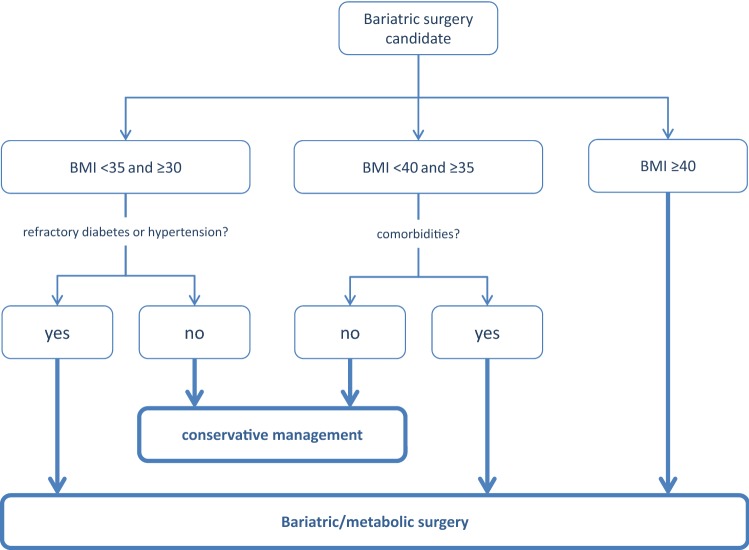
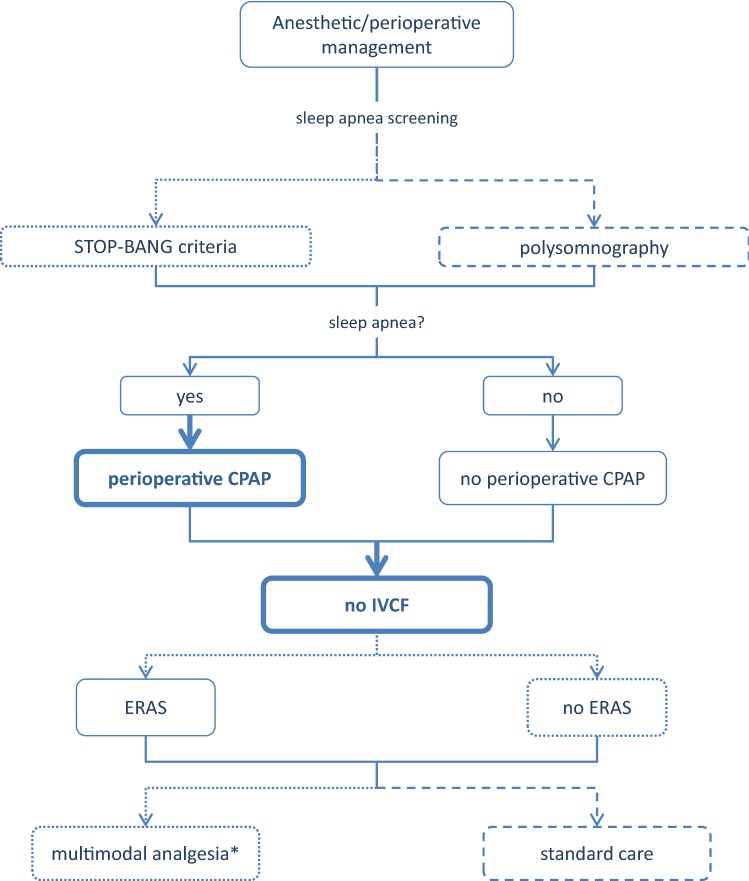
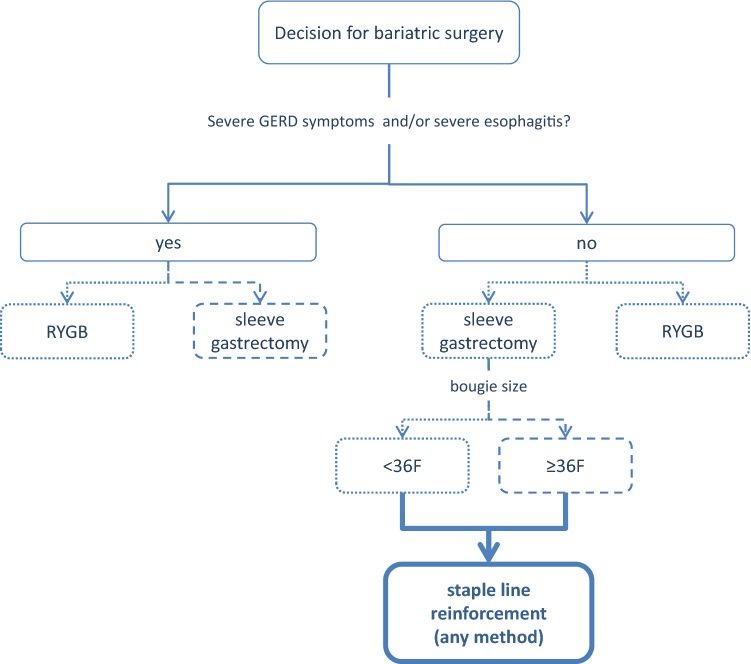
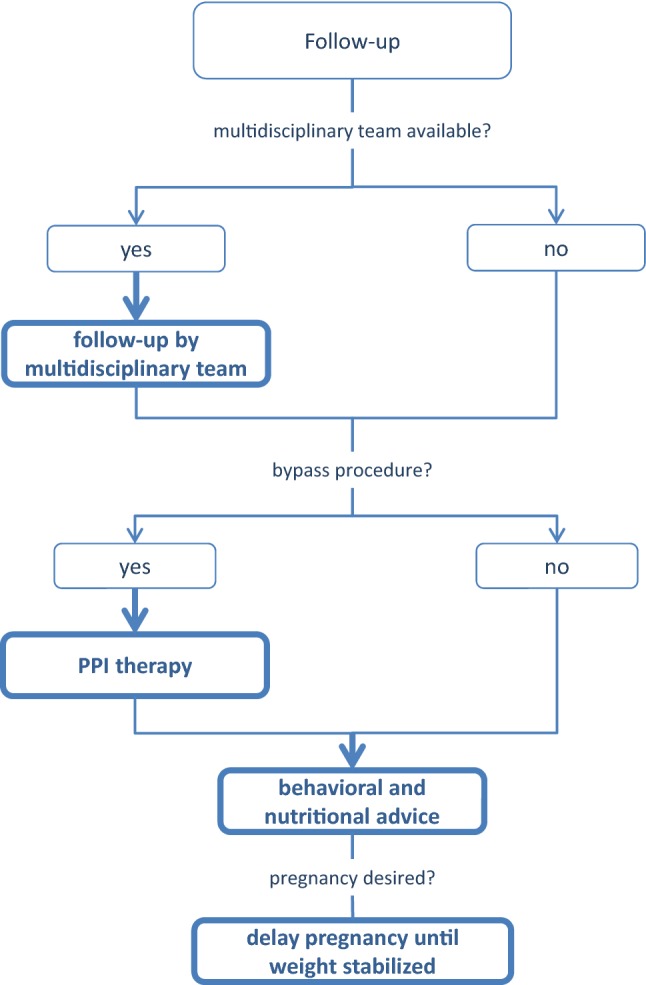
- Strong recommendations included laparoscopic bariatric surgery for BMI ≥40 kg/m2 or BMI ≥35–40 kg/m2 with comorbidities expected to improve with weight loss, and for BMI 30–35 kg/m2 with type 2 diabetes and/or arterial hypertension poorly controlled despite optimal medical therapy; RYGB over adjustable gastric banding; perioperative CPAP for severe obstructive sleep apnea; against inferior vena cava filters; staple line reinforcement in sleeve gastrectomy; scheduled multidisciplinary follow-up; micronutrient supplementation; PPI after bypass; postoperative nutritional/behavioral advice; and delaying pregnancy during the weight loss phase.
- Comparative evidence: sleeve gastrectomy was associated with 25% excess weight loss (WMD, 95% CI 6.4% to 41%) and 57% higher odds of diabetes remission versus adjustable gastric banding (OR 0.43, 95% CI 0.19 to 0.98); RYGB had 22% EWL WMD (95% CI 6.5% to 34%) versus banding; RYGB and sleeve gastrectomy showed no significant EWL difference (WMD −4%, 95% CI −14% to 8%), but RYGB could be preferred for severe GERD/esophagitis.
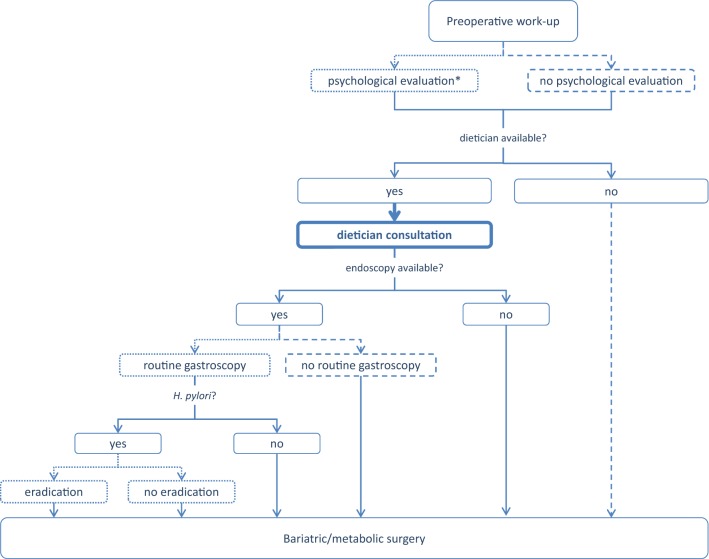
- The panel made no recommendation for routine H. pylori eradication, high- versus standard-dose thromboprophylaxis, ERAS versus standard care, BPD/DS versus sleeve gastrectomy, or SADI-S comparisons; position statements noted high reoperation rates after adjustable gastric banding and insufficient long-term comparative data for OAGB and other emerging procedures.
- Investigational procedures (duodenal-jejunal bypass sleeves, aspiration devices, gastric electrical stimulation, vagal blockade, duodenal mucosal resurfacing) had evidence too low for recommendations; endoluminal suturing may have a role for BMI <40 kg/m2.
Methods
- A multidisciplinary panel (bariatric surgeons, obesity physicians, nutritional experts, psychologists, anesthetists, and a patient representative) developed the guideline per GRADE and AGREE II, with PRISMA/MOOSE reporting.
- Systematic review searched from 2005 to November 2018; 65 systematic reviews informed 42 PICO questions across seven domains. Included adults >18 years with BMI >35 kg/m2 unless otherwise indicated and laparoscopic surgery; procedure recommendations required weight-loss data with ≥5-year follow-up; animal, pediatric, robotic, and open surgery studies were excluded.
- Evidence synthesis used pairwise or proportion meta-analyses, GRADE evidence tables, and evidence-to-decision frameworks; a three-round modified Delphi process produced 36 recommendations/position statements. A survey of 220 professionals and external AGREE II appraisal were also conducted.
Limitations
- The paper states several gaps, particularly long-term outcome reporting; only two network meta-analyses were identified; evidence for emerging procedures was limited; standard definitions for non-responders/revisional surgery are lacking; many judgments relied on low or very low certainty evidence; and position statements are panel opinion, not formal evidence-based recommendations.
- Evident from the text: the guideline applies to adults with BMI >35 kg/m2 fit for laparoscopic surgery, primarily in European healthcare settings, and excludes pediatric patients, modified laparoscopy, intragastric balloons, emerging technologies, and pure metabolic surgery; the literature search ended in November 2018 and validity extends to December 2024.
- Evident from the text: survey applicability data came from 220 professionals, mostly surgeons (61%) and 62% from high-volume centers (>50 bariatric procedures/year), so implementation feedback may not represent all target users.
Model-written summary. Check it against the paper before relying on it.
Integrity signals
Registry
Cites
Statistics
Figures
Verification
Claims the paper makes
18 Valid · 5 Not valid · 90 Not checked · 37 Own results and interpretations
Some cited sources support this claim and some don’t — read each source’s verdict below.
In the paper
“There was a trend towards lower risks of bleeding (RR 0.56, 95% CI 0.25 to 1.27) and leak (0.60, 95% CI 0.27 to 1.50) without reaching significance, however, effect estimates were imprecise and the certainty of evidence for these outcomes downgraded (Supplementary Table S14).”
§ Clinical practice guidelines of the European Association for Endoscopic Surgery (EAES) on bariatric surgery: update 2020 endorsed by IFSO-EC, EASO and ESPCOP > Adjustable gastric banding > Technical considerations on sleeve gastrectomy: Staple line reinforcement
What the sources say
- Partly supportedcites [94] Shikora SA Mahoney CB Clinical benefit of gastric staple line reinforcement (SLR) in gastrointestinal surgery: a meta-analysis Obes Surg 2015 10.1007/s11695-015-1703-x 25968078 PMC4460272 sourceExperimental — accuracy not yet measured
In the Results (Table 5; page not available), bleeding rates after sleeve gastrectomy are lower with each reinforcement method than with no reinforcement, supporting the direction of the claim. The paper does not report RR 0.56 or its 95% CI; the Table 5 significance note instead reports p < 0.001 for each reinforcement method versus none, contrary to the claimed lack of significance. (LLM, conf=0.88)
- Disputedcites [95] Wang Z Dai X Xie H Feng J Li Z Lu Q The efficacy of staple line reinforcement during laparoscopic sleeve gastrectomy: a meta-analysis of randomized controlled trials Int J Surg 2016 10.1016/j.ijsu.2015.12.007 26700201 sourceExperimental — accuracy not yet measured
Section 4.1 (Postoperative staple line hemorrhage) reports a statistically significant reduction in bleeding with reinforcement: RR 0.609, 95% CI 0.439–0.846, P = 0.003. That contradicts the attributed estimate of RR 0.56 (95% CI 0.25–1.27) and the statement that the bleeding result did not reach significance. Section 4.2 reports a nonsignificant result for leakage, not bleeding. (LLM, conf=0.91)
Checked by a reasoning model — may be wrong.
hedged- Asserted: passes — The authors put it forward as true.
- Checkable: passes — It can be checked against evidence.
- Load-bearing: unclear — It is unclear whether the paper’s conclusions depend on it.
- Based: passes — The paper gives a reason why it holds.
- Partly supported
At least one cited source doesn’t support this claim or points to a different paper, and none confirmed it — see the verdicts below.
In the paper
“OAGB was associated with marginally reduced odds for in-hospital morbidity (OR 0.38, 95% CI 0.13 to 1.14) and late complications (0.76, 95% CI 0.33 to 1.77) at the expense of less pronounced EWL (WMD 13%, 95% CI 2% to 29%; very low certainty) (Supplementary Table S22).”
§ Clinical practice guidelines of the European Association for Endoscopic Surgery (EAES) on bariatric surgery: update 2020 endorsed by IFSO-EC, EASO and ESPCOP > One anastomosis procedures > One anastomosis gastric bypass (OAGB)
What the sources say
- Not checked yetcites [91] Kodama S Fujihara K Horikawa C Network meta-analysis of the relative efficacy of bariatric surgeries for diabetes remission Obes Rev 2018 10.1111/obr.12751 30270528 source
- Disputedcites [113] Lee WJ Yu PJ Wang W Chen TC Wei PL Te HM Laparoscopic Roux-en-Y versus mini-gastric bypass for the treatment of morbid obesity: a prospective randomized controlled clinical trial Ann Surg 2005 10.1097/01.sla.0000167762.46568.98 15973097 PMC1357700 sourceExperimental — accuracy not yet measured
The Results (Follow-up; page not provided) report three late complications among 40 patients in each group, or 7.5% in both groups. The Abstract likewise says the late-complication rate was the same, rather than lower with mini-gastric bypass; the paper does not report the quoted OR or confidence interval. (LLM, conf=0.88)
Checked by a reasoning model — may be wrong.
- Not checked yetcites [114] Ruiz-Tovar J Carbajo MA Jimenez JM Long-term follow-up after sleeve gastrectomy versus Roux-en-Y gastric bypass versus one-anastomosis gastric bypass: a prospective randomized comparative study of weight loss and remission of comorbidities Surg Endosc 2019 10.1007/s00464-018-6307-9 29943058 source
plainstates an association- Asserted: passes — The authors put it forward as true.
- Checkable: passes — It can be checked against evidence.
- Load-bearing: passes — The paper’s conclusions depend on it.
- Based: passes — The paper gives a reason why it holds.
At least one cited source doesn’t support this claim or points to a different paper, and none confirmed it — see the verdicts below.
In the paper
“OAGB was associated with marginally reduced odds for in-hospital morbidity (OR 0.38, 95% CI 0.13 to 1.14) and late complications (0.76, 95% CI 0.33 to 1.77) at the expense of less pronounced EWL (WMD 13%, 95% CI 2% to 29%; very low certainty) (Supplementary Table S22).”
§ Clinical practice guidelines of the European Association for Endoscopic Surgery (EAES) on bariatric surgery: update 2020 endorsed by IFSO-EC, EASO and ESPCOP > One anastomosis procedures > One anastomosis gastric bypass (OAGB)
What the sources say
- Not checked yetcites [91] Kodama S Fujihara K Horikawa C Network meta-analysis of the relative efficacy of bariatric surgeries for diabetes remission Obes Rev 2018 10.1111/obr.12751 30270528 source
- Disputedcites [113] Lee WJ Yu PJ Wang W Chen TC Wei PL Te HM Laparoscopic Roux-en-Y versus mini-gastric bypass for the treatment of morbid obesity: a prospective randomized controlled clinical trial Ann Surg 2005 10.1097/01.sla.0000167762.46568.98 15973097 PMC1357700 sourceExperimental — accuracy not yet measured
The Results report the opposite direction of effect: excess weight loss was greater after mini-gastric bypass than after Roux-en-Y bypass at one year (64.9% versus 58.7%) and was not significantly different at two years. The paper does not report the quoted WMD or confidence interval. (LLM, conf=0.90)
Checked by a reasoning model — may be wrong.
- Not checked yetcites [114] Ruiz-Tovar J Carbajo MA Jimenez JM Long-term follow-up after sleeve gastrectomy versus Roux-en-Y gastric bypass versus one-anastomosis gastric bypass: a prospective randomized comparative study of weight loss and remission of comorbidities Surg Endosc 2019 10.1007/s00464-018-6307-9 29943058 source
plainstates an association- Asserted: passes — The authors put it forward as true.
- Checkable: passes — It can be checked against evidence.
- Load-bearing: passes — The paper’s conclusions depend on it.
- Based: passes — The paper gives a reason why it holds.
At least one cited source doesn’t support this claim or points to a different paper, and none confirmed it — see the verdicts below.
In the paper
“The analysis favored sleeve gastrectomy in terms of diabetes and dyslipidemia remission and there was a trend towards lower odds for morbidity for OAGB (OR 0.67, 95% CI 0.28 to 1.61) (Supplementary Table S24).”
§ Clinical practice guidelines of the European Association for Endoscopic Surgery (EAES) on bariatric surgery: update 2020 endorsed by IFSO-EC, EASO and ESPCOP > One anastomosis procedures > One anastomosis gastric bypass (OAGB)
What the sources say
- Not checked yetcites [116] Magouliotis DE Tasiopoulou VS Svokos AA Svokos KA Sioka E Zacharoulis D One-anastomosis gastric bypass versus sleeve gastrectomy for morbid obesity: a systematic review and meta-analysis Obes Surg 2017 10.1007/s11695-017-2807-2 28681256 source
- Disputedcites [117] Wang FG Yu ZP Yan WM Yan M Song MM Comparison of safety and effectiveness between laparoscopic mini-gastric bypass and laparoscopic sleeve gastrectomy: a meta-analysis and systematic review Medicine 2017 10.1097/MD.0000000000008924 29390281 PMC5815693 sourceExperimental — accuracy not yet measured
The Results section (Remission rate of T2DM; page unavailable) finds the opposite of the claimed diabetes result: mini-gastric bypass had a higher remission rate than sleeve gastrectomy (P = .002). The Discussion (Remission rate of comorbidities; page unavailable) likewise reports 86% versus 65%. The passages found do not report a dyslipidemia-remission comparison. (LLM, conf=0.90)
Checked by a reasoning model — may be wrong.
plainstates a cause- Asserted: passes — The authors put it forward as true.
- Checkable: passes — It can be checked against evidence.
- Load-bearing: passes — The paper’s conclusions depend on it.
- Based: passes — The paper gives a reason why it holds.
The sources with a verdict support this claim; the rest weren’t checked yet, have no full text we could read, or their verdicts aren’t rated yet.
In the paper
“Fifteen RCTs were identified comparing weight loss after bariatric surgery or medical therapy (5 reporting on RYGB, 3 on LAGB and the rest on mixed patient populations undergoing sleeve gastrectomy, BPD/DS, sleeve gastrectomy and/or banding) [21–35].”
§ Clinical practice guidelines of the European Association for Endoscopic Surgery (EAES) on bariatric surgery: update 2020 endorsed by IFSO-EC, EASO and ESPCOP > Topic 1: indication for bariatric surgery > Bariatric surgery versus medical management for morbid obesity
What the sources say
- Not checked yetcites [21] O’Brien PE Dixon JB Laurie C Treatment of mild to moderate obesity with laparoscopic adjustable gastric banding or an intensive medical program Ann Intern Med 2006 144 9 625 10.7326/0003-4819-144-9-200605020-00005 16670131 source
- Not checked yetcites [22] Dixon JB O’Brien PE Playfair J Adjustable gastric banding and conventional therapy for type 2 diabetes JAMA 2008 10.1001/jama.299.3.316 18212316 source
- Not checked yetcites [23] Liang Z Wu Q Chen B Yu P Zhao H Ouyang X Effect of laparoscopic Roux-en-Y gastric bypass surgery on type 2 diabetes mellitus with hypertension: a randomized controlled trial Diabetes Res Clin Pract 2013 101 1 50 56 10.1016/j.diabres.2013.04.005 23706413 source
- Not checked yetcites [24] Wentworth JM Playfair J Laurie C Multidisciplinary diabetes care with and without bariatric surgery in overweight people: a randomised controlled trial Lancet Diabetes Endocrinol 2014 2 7 545 552 10.1016/S2213-8587(14)70066-X 24731535 source
- Supportedcites [25] Schauer PR Kashyap SR Wolski K Bariatric surgery versus intensive medical therapy in obese patients with diabetes N Engl J Med 2012 366 17 1567 1576 10.1056/NEJMoa1200225 22449319 PMC3372918 source
The Methods passage identifies this paper as a randomized trial comparing intensive medical therapy with therapy plus Roux-en-Y gastric bypass or sleeve gastrectomy in 150 patients. The Results > Weight Loss passage reports weight-loss outcomes for those groups. In the citation range [21–35], this paper serves as one of the trials identified; the count of fifteen is the citing authors’ tally, not a finding attributed to this individual trial. (LLM, conf=0.90)
- Supportedcites [26] Schauer PR Bhatt DL Kirwan JP Bariatric surgery versus intensive medical therapy for diabetes—5-year outcomes N Engl J Med 2017 376 7 641 651 10.1056/NEJMoa1600869 28199805 PMC5451258 source
The Methods (Trial Design) identify this paper as a randomized controlled trial comparing intensive medical therapy alone with therapy plus gastric bypass or sleeve gastrectomy. The Results (Weight Loss) report weight-loss outcomes for those groups. As one of the trials cited in the [21–35] range, it supports the sentence’s identification of RCTs comparing these treatments; it need not itself establish the total count of 15. (LLM, conf=0.90)
- Not checked yetcites [27] Mingrone G Panunzi S De Gaetano A Bariatric surgery versus conventional medical therapy for type 2 diabetes N Engl J Med 2012 366 17 1577 1585 10.1056/NEJMoa1200111 22449317 source
- Supportedcites [28] Ikramuddin S Billington CJ Lee W-J Roux-en-Y gastric bypass for diabetes (the diabetes surgery study): 2-year outcomes of a 5-year, randomised, controlled trial Lancet Diabetes Endocrinol 2015 3 6 413 422 10.1016/S2213-8587(15)00089-3 25979364 PMC4477840 source
The Results describe a randomised trial comparing gastric bypass with lifestyle and medical management and report weight loss in both groups at 24 months. As one citation in the [21–35] range, this paper supports its identification as a relevant RCT; the count of fifteen is the citing authors’ tally, not a finding attributed to this individual trial. (LLM, conf=0.90)
- Supportedcites [29] Ikramuddin S Korner J Lee W-J Roux-en-Y gastric bypass vs intensive medical management for the control of type 2 diabetes, hypertension, and hyperlipidemia JAMA 2013 309 21 2240 10.1001/jama.2013.5835 23736733 PMC3954742 source
The Results report that 120 participants were randomized between Roux-en-Y gastric bypass and intensive medical management, and give one-year weight loss for both groups. This paper is therefore one of the RCTs identified by the citation cluster; it is not being cited to establish the total of fifteen on its own. (LLM, conf=0.91)
- Not checked yetcites [30] Mingrone G Panunzi S De Gaetano A Bariatric–metabolic surgery versus conventional medical treatment in obese patients with type 2 diabetes: 5 year follow-up of an open-label, single-centre, randomised controlled trial Lancet 2015 386 9997 964 973 10.1016/S0140-6736(15)00075-6 26369473 source
plain- Asserted: passes — The authors put it forward as true.
- Checkable: passes — It can be checked against evidence.
- Load-bearing: passes — The paper’s conclusions depend on it.
- Based: passes — The paper gives a reason why it holds.
116 more claims · 18 with their cited sources checked
Create a free account to see all 150 claims and to verify the 212 references still open.
- It may state two separate claims as one. 14
- Probably not a substantial claim. 17
Claims other papers make about this one
Each is checked against this paper’s own text: does it say what the citing paper says it does?
The check wasn’t confident either way, so it gives no verdict — never disputed.
In the citing paper
“Furthermore, retraction information can be delayed in reaching PubMed for up to several years [28], if any information is sent at all.”
From Retracted randomized controlled trials were cited and not corrected in systematic reviews and clinical practice guidelines (2022) · cites this paper as [28]
Experimental — accuracy not yet measured
Self-check
Percentages, sums and reported differences re-computed from the paper’s own numbers.
Each contradiction between two passages listed here was confirmed by an independent check.
Rated major: it would touch a result — a value a result rests on, reported and recomputed p-values on opposite sides of the significance level, two passages that conflict with no sign which is right, or a cited work retracted before this paper was published.
In the paper
§ Clinical practice guidelines of the European Association for Endoscopic Surgery (EAES) on bariatric surgery: update 2020 endorsed by IFSO-EC, EASO and ESPCOP > Results
“OAGB may offer greater short-term weight loss compared to RYGB, gastric plication, adjustable gastric banding and sleeve gastrectomy.”
§ Clinical practice guidelines of the European Association for Endoscopic Surgery (EAES) on bariatric surgery: update 2020 endorsed by IFSO-EC, EASO and ESPCOP > One anastomosis procedures > One anastomosis gastric bypass (OAGB)
“OAGB was associated with marginally reduced odds for in-hospital morbidity (OR 0.38, 95% CI 0.13 to 1.14) and late complications (0.76, 95% CI 0.33 to 1.77) at the expense of less pronounced EWL (WMD 13%, 95% CI 2% to 29%; very low certainty)”
Rated major: it would touch a result — a value a result rests on, reported and recomputed p-values on opposite sides of the significance level, two passages that conflict with no sign which is right, or a cited work retracted before this paper was published.
In the paper
§ Clinical practice guidelines of the European Association for Endoscopic Surgery (EAES) on bariatric surgery: update 2020 endorsed by IFSO-EC, EASO and ESPCOP > Results
“BPD/DS is superior to RYGB for control/remission of type 2 diabetes.”
§ Clinical practice guidelines of the European Association for Endoscopic Surgery (EAES) on bariatric surgery: update 2020 endorsed by IFSO-EC, EASO and ESPCOP > Bypass procedures > BPD/DS versus RYGB
“diabetes remission (OR 8.06, 95% CI 1.35 to 48.14) were in favor of RYGB”
Rated major: it would touch a result — a value a result rests on, reported and recomputed p-values on opposite sides of the significance level, two passages that conflict with no sign which is right, or a cited work retracted before this paper was published.
In the paper
§ Clinical practice guidelines of the European Association for Endoscopic Surgery (EAES) on bariatric surgery: update 2020 endorsed by IFSO-EC, EASO and ESPCOP > Results
“OAGB may offer greater short-term weight loss compared to RYGB, gastric plication, adjustable gastric banding and sleeve gastrectomy.”
§ Clinical practice guidelines of the European Association for Endoscopic Surgery (EAES) on bariatric surgery: update 2020 endorsed by IFSO-EC, EASO and ESPCOP > One anastomosis procedures > One anastomosis gastric bypass (OAGB)
“EWL was more pronounced with sleeve gastrectomy (WMD 20%, 95% CI 20 to 23) and this finding was supported with high certainty in the evidence.”
Citations
Cites
1 retracted
Ruiz-Tovar, J., Carbajo, M. A., Jimenez, J. M., Castro, M. J., Gonzalez, G., Ortiz-de-Solorzano, J., & Zubiaga, L. (2019) · Surgical Endoscopy · doi:10.1007/s00464-018-6307-9 · Cited by 134
RetractedThe Cochrane Collaboration's tool for assessing risk of bias in randomised trials
Higgins, J. P. T., Altman, D. G., Gotzsche, P. C., Juni, P., Moher, D., Oxman, A. D., Savovic, J., Schulz, K. F., Weeks, L., Sterne, J. A. C., et al. (2011) · BMJ · doi:10.1136/bmj.d5928 · Cited by 33,817
Liberati, A., Altman, D. G., Tetzlaff, J., Mulrow, C., Gøtzsche, P. C., Ioannidis, J. P. A., Clarke, M., Devereaux, P. J., Kleijnen, J., & Moher, D. (2009) · PLoS Medicine · doi:10.1371/journal.pmed.1000100 · Cited by 28,164 · cited 1×
“The systematic review and synthesis of evidence conformed to PRISMA and MOOSE reporting standards, as appropriate [11, 12].”
MethodDermyshi, E., Wang, Y., Yan, C., Hong, W., Qiu, G., Gong, X., & Zhang, T. (2017) · Neonatology · doi:10.1159/000454668 · Cited by 24,451
Meta-analysis of Observational Studies in Epidemiology<SUBTITLE>A Proposal for Reporting</SUBTITLE>
Stroup, D. F. (2000) · JAMA · doi:10.1001/jama.283.15.2008 · Cited by 20,623
ROBINS-I: a tool for assessing risk of bias in non-randomised studies of interventions
Sterne, J. A., Hernán, M. A., Reeves, B. C., Savović, J., Berkman, N. D., Viswanathan, M., Henry, D., Altman, D. G., Ansari, M. T., Boutron, I., et al. (2016) · BMJ · doi:10.1136/bmj.i4919 · Cited by 20,329
Liberati, A., Altman, D. G., Tetzlaff, J., Mulrow, C., Gøtzsche, P. C., Ioannidis, J. P. A., Clarke, M., Devereaux, P. J., Kleijnen, J., & Moher, D. (2009) · Journal of Clinical Epidemiology · doi:10.1016/j.jclinepi.2009.06.006 · Cited by 10,578
AGREE II: advancing guideline development, reporting and evaluation in health care
Brouwers, M. C., Kho, M. E., Browman, G. P., Burgers, J. S., Cluzeau, F., Feder, G., Fervers, B., Graham, I. D., Grimshaw, J., Hanna, S. E., et al. (2010) · Canadian Medical Association Journal · doi:10.1503/cmaj.090449 · Cited by 3,790 · cited 2×
“Analysis of long-term (≥ 5 years) and very long-term (≥ 10 years) evidence suggested an EWL between 42 and 55% with a mean weight regain between 9 and 31% for sleeve gastrectomy [9, 10, 92, 93].”
BackgroundMethodEuropean Guidelines for Obesity Management in Adults
Yumuk, V., Tsigos, C., Fried, M., Schindler, K., Busetto, L., Micic, D., & Toplak, H. (2015) · Obesity Facts · doi:10.1159/000442721 · Cited by 3,432
Self-citationBariatric Surgery versus Intensive Medical Therapy for Diabetes — 5-Year Outcomes
Schauer, P. R., Bhatt, D. L., Kirwan, J. P., Wolski, K., Aminian, A., Brethauer, S. A., Navaneethan, S. D., Singh, R. P., Pothier, C. E., Nissen, S. E., et al. (2017) · New England Journal of Medicine · doi:10.1056/nejmoa1600869 · Cited by 2,934
Research works printed but not linked: 2
- Schünemann H, Brożek J, Guyatt G, Oxman A (2009) GRADE handbook for grading quality of evidence and strength of recommendations. The GRADE Working Group. · DOI · Paper page
- Busetto L Torres AJ Morales S Impact of Abiliti® sensor-based feedback on eating behavior, physical activity and weight-loss in obese patients Obes Surg 2015 28 6 1766 1774
Cited by
Items 301–400 of 497
Vieira, B., Santos, Z., Ribeiro, R. J. D. S., Viveiros, O., Rossoni, C., Carolino, E., & Novais, F. (2025) · Eating and Weight Disorders - Studies on Anorexia Bulimia and Obesity · doi:10.1007/s40519-025-01778-5 · Cited by 2
Impact of Preoperative Muscle and Fat Indices on Post-Sleeve Gastrectomy Weight Loss
Xu, J., Liu, D., Chen, Y.-T., Pu, Y., Fumpa, M., Du, Q., Wan, Q., Zhao, R., Zhang, G., Du, X., et al. (2025) · Obesity Surgery · doi:10.1007/s11695-025-08089-9 · Cited by 3
Updates in bariatric surgery guidelines: what's new?
Iossa, A., Carrano, F. M., ANGELIS, F. D., Cristian, B. O. R. U., Lorenzo, N. D., & SILECCHIA, G. (2021) · Minerva Surgery · doi:10.23736/s2724-5691.20.08447-3 · Cited by 2
Self-citationCirugía postbariátrica: el último eslabón en el protocolo de cirugía metabólica
Telich-Vidal, J., Ramírez-Sosa, L. E., Gaspar, D. A., & Telich-Tarriba, J. E. (2020) · Cirugía Plástica · doi:10.35366/98343 · Cited by 2
Bariatry - surgical therapy of the severe obesity
Kasalicky, M. (2020) · Vnitřní lékařství · doi:10.36290/vnl.2020.142 · Cited by 2
Efecto selectivo de bypass gástrico laparoscópico en Y de Roux sobre el metabolismo lipídico
Ackerman, M., Serra, E. E., Flecha, P., & Nogueira, J. P. (2021) · Clínica e Investigación en Arteriosclerosis · doi:10.1016/j.arteri.2021.09.005 · Cited by 2
Almalki, D. M., Kotb, M. A., Saqyan, T. M. B., Alkahtani, S. M., Alshaikhi, A. M., & Alanazi, L. (2023) · World Family Medicine Journal/Middle East Journal of Family Medicine · doi:10.5742/mewfm.2023.95256027 · Cited by 2
Awareness of the Indications and Complications of Sleeve Gastrectomy in Riyadh, Saudi Arabia
Abdulrahman, K. A. B., Suayb, A. S. B., Albarrak, M. S., Almedemegh, N. I., & Alkublan, R. M. K. (2023) · World Family Medicine Journal/Middle East Journal of Family Medicine · doi:10.5742/mewfm.2023.95256014 · Cited by 2
Biancucci, A., Fassari, A., Lucchese, S., Santoro, E., & Lirici, M. M. (2023) · Minimally Invasive Therapy & Allied Technologies · doi:10.1080/13645706.2023.2197049 · Cited by 2
“All patients were candidates for bariatric surgery according to the Italian Society for Obesity and Metabolic Surgery (SICOB) and the European Association for Endoscopic Surgery (EAES) guidelines [10].”
MethodManagement of Bariatric Surgery Early and Delayed Complications
Kaplan, U. (2023) · Hot topics in acute care surgery and trauma · doi:10.1007/978-3-031-39001-2_21 · Cited by 2
Palma, R., Ruggiero, L., Santonicola, A., Iovino, P., & Angrisani, L. (2022) · Obesity Surgery · doi:10.1007/s11695-021-05830-y · Cited by 2
PALOMARES-PALOMARES, C. B., ÁLVAREZ-RAYÓN, G., MARTINS DA CONCEIÇAO, E., MANCILLA-DÍAZ, J. M., & ORTEGA-LUYANDO, M. (2021) · Nutrición Clínica y Dietética Hospitalaria · doi:10.12873/414palomares · Cited by 1
Perforated pyloric ulcer 13 years after Roux-en-Y gastric bypass
Gnägi, C. R., Durband, M., & Kinsbergen, T. (2021) · International Journal of Surgery Case Reports · doi:10.1016/j.ijscr.2021.105661 · Cited by 1
Викторович, Т. С., Anisimova, K. A., Dekkanova, V. D., Papin, K. V., Rodionova, N. V., Korzhilova, T. M., Баландов, С. Г., Vasilevsky, D. I., Бакулина, Н. В., & Simanenkov, V. I. (2021) · Medical alphabet · doi:10.33667/2078-5631-2021-20-44-52 · Cited by 1
Obesity and impact on gastroesophageal reflux disease
Sawada, A., Sergeev, I., & Sifrim, D. A. (2022) · Elsevier eBooks · doi:10.1016/b978-0-323-98365-5.00005-x · Cited by 2
Alsharif, Z. M., Jawhari, A. M., Al-halab, S. K., Alsharif, S. K., Koursan, S. M., Alotaibi, M. T., & Khalik, E. S. A. (2023) · World Family Medicine Journal/Middle East Journal of Family Medicine · doi:10.5742/mewfm.2023.95256015 · Cited by 2
Abdulrahman, K. A. B., Alhamlan, H. N., Alqraini, Y. M., Alhoshan, Y. I., Shuraym, A. H., & Alkanhal, F. A. (2023) · World Family Medicine Journal/Middle East Journal of Family Medicine · doi:10.5742/mewfm.2023.95256040 · Cited by 1
Silva, C. M., & Filho, I. J. Z. (2023) · International Journal of Nutrology · doi:10.54448/ijn23305 · Cited by 1
“A multidisciplinary group of bariatric surgeons, obesity doctors, nutrition specialists, psychologists, and anesthetists is needed [17].”
BackgroundKhattab, M. A., Nashed, G. A. E. F., Abdelfatah, M. M., Mahmoud, M. M. M., & Mostafa, M. S. (2024) · The Egyptian Journal of Surgery · doi:10.4103/ejs.ejs_262_23 · Cited by 1
Ion, R. M., Sibianu, M., Neagoe, R. M., Sala, D. T., Beresescu, G. F., Daniealopol, V., Daniealopol, R., & Muresan, M. G. (2024) · Revista română de medicină de laborator · doi:10.2478/rrlm-2024-0012 · Cited by 1
Key messages on obesity care from the 2023 ASPEN Physician Preconference Course: A narrative review
Basishvili, G., Newberry, C. A., Mechanick, J. I., Barazzoni, R., & Hennessy, S. A. (2024) · Journal of Parenteral and Enteral Nutrition · doi:10.1002/jpen.2632 · Cited by 1
Wityk, M., Dowgiałło‐Gornowicz, N., & Bobowicz, M. (2024) · Medicina · doi:10.3390/medicina60091450 · Cited by 1
Tian, P., Tao, B., Li, M., Liu, Y., Liu, J., Liu, J., Zhang, P., & Zhang, Z. (2024) · Asian Journal of Surgery · doi:10.1016/j.asjsur.2024.11.211 · Cited by 1
Gamlestøl, R. S., Andersen, J. R., & Våge, V. (2025) · Scandinavian Journal of Surgery · doi:10.1177/14574969251321965 · Cited by 1
Karadas, Y. A., & Şahin, S. (2025) · Bariatric Surgical Practice and Patient Care · doi:10.1089/bari.2024.0040 · Cited by 1
Reducing complications of metabolic dysfunction–associated steatotic liver disease
Wada, N., Iwaki, M., Kobayashi, T., Nakajima, A., & Yoneda, M. (2025) · Expert Review of Gastroenterology & Hepatology · doi:10.1080/17474124.2025.2502549 · Cited by 1
“The indications for bariatric surgery are BMI >40 kg/m 2 , BMI > 35–40 kg/m 2 in the presence of associated comorbidities, or BMI > 30–35 kg/m 2 in cases of poorly controlled T2D and/or hypertension despite optimal pharmacotherapy [99].”
Demirpolat, M. T., İslam, M. M., Bacaksız, M. E., Şişik, A., & Kermansaravi, M. (2025) · Obesity Surgery · doi:10.1007/s11695-025-08354-x · Cited by 1
Saadeddine, D., Foglia, M., Berri, E., Raggi, S., Itani, L., & Ghoch, M. E. (2026) · International Journal of Environmental Research and Public Health · doi:10.3390/ijerph23040522 · Cited by 1
“…[8] and clinical guidelines [9] to improve the management of overweight and obesity with a wide range of recommended interventions from nutritional therapy [10,11] to anti-obesity drugs [12] and bariatric surgery [13], as well as their use in combination to improve clinical outcomes [14,15].”
Postoperative complications: indications and access routes for enteral and parenteral nutrition
García-Almenta, E. M., Antona, E. M., Cano-Valderrama, Ó., & García, A. J. T. (2021) · Elsevier eBooks · doi:10.1016/b978-0-12-822922-4.00016-8 · Cited by 1
Preoperative diets: LCD, VLCD, and commercial supplements
Medina, S. G., Aragón, C., Sánchez, Á., & Vázquez, C. (2021) · Elsevier eBooks · doi:10.1016/b978-0-12-822922-4.00017-x · Cited by 1
Preoperative Medical Evaluation of the Bariatric Surgery Patient
Rupasinghe, S. N., Grocock, C., Natchimuthi, S., & Magee, C. J. (2021) · Springer eBooks · doi:10.1007/978-3-030-54064-7_10-1 · Cited by 1
Nachsorgeintervalle und Schwerpunkte
Stier, C. K. (2022) · Springer eBooks · doi:10.1007/978-3-662-63705-0_5 · Cited by 1
Stier, C. K. (2022) · Springer eBooks · doi:10.1007/978-3-662-63705-0_6 · Cited by 1
Is eradication required after laparoscopic sleeve gastrectomy?
Akbulut, S., Seyit, H., Peker, K. D., Karabulut, M., & Alış, H. (2022) · Videosurgery and Other Miniinvasive Techniques · doi:10.5114/wiitm.2022.116418 · Cited by 2
“Bariatric surgery was found to be highly effective in the treatment of obesity over time [2].”
BackgroundWilson, W., & Zaré, B. (2022) · BMJ Case Reports · doi:10.1136/bcr-2022-252952 · Cited by 1
Brunault, P., Bourbao-Tournois, C., Ballon, N., & Luca, A. D. (2023) · Journal de Chirurgie Viscérale · doi:10.1016/j.jchirv.2022.12.005 · Cited by 1
Laparoscopic Greater Curvature Plication (LGCP)
Fried, M., Šrámková, P., & Kormanova, K. D. (2023) · Springer eBooks · doi:10.1007/978-3-030-60596-4_48 · Cited by 1
Self-citationRespiratory Considerations and Effect of Bariatric Surgery in the Obese Patient
Menon, M. K., & Bhowmik, A. (2023) · Springer eBooks · doi:10.1007/978-3-030-60596-4_67 · Cited by 1
Self-management behaviours and glycemic control in diabetic patients. A cross sectional study
Moussa, R., Mahmud, S. S., Okar, L., Aldeeb, M. A., Rezek, M., Shawesh, A., Kalash, T., & Aseel, M. T. (2023) · World Family Medicine Journal/Middle East Journal of Family Medicine · doi:10.5742/mewfm.2023.95256025 · Cited by 1
Hariri, N. H. (2023) · World Family Medicine Journal/Middle East Journal of Family Medicine · doi:10.5742/mewfm.2023.95256020 · Cited by 4
Diabetic Care Challenges during COVID-19 Pandemic: Primary Healthcare Physicians’ Perspective
Alshahrani, A. (2023) · World Family Medicine Journal/Middle East Journal of Family Medicine · doi:10.5742/mewfm.2023.95256032 · Cited by 1
Kolyadko, P. V., Degovtsov, E. N., Kolyadko, V. P., Nikitina, Y. P., & Satinov, A. V. (2023) · Бюллетень Восточно-Сибирского научного центра Сибирского отделения Российской академии медицинских наук · doi:10.29413/abs.2023-8.1.21 · Cited by 1
Abdurakhmanov, A., & Nimeri, A. A. (2023) · Springer eBooks · doi:10.1007/978-3-031-21044-0_34 · Cited by 1
Endoscopic Assessment Prior to Bariatric Surgery in Saudi Arabia
Aljaroudi, M. E., Makki, M., Almulaify, M. S., Alshabib, A., Alfaddagh, H., Alzahrani, H. A., Alghamdi, S., Alsualiman, W., Alsalman, J., & Alhaddad, M. J. (2023) · Cureus · doi:10.7759/cureus.36157 · Cited by 1
Farias, G. F., & Silva, L. B. (2023) · Springer eBooks · doi:10.1007/978-3-031-25828-2_12 · Cited by 1
Un modelo de determinantes de complicaciones intraoperatorias en gastrectomía en manga
Ilić, M., Milisavljevic, S. S., Stefanović, S., & Putnik, S. S. (2023) · Cirugía y Cirujanos · doi:10.24875/ciru.22000640 · Cited by 2
Obesity with Eating Disorders and Bariatric Surgery
Müller, A., & Williams‐Kerver, G. A. (2023) · Springer eBooks · doi:10.1007/978-3-030-97416-9_37-1 · Cited by 1
Nakeeb, A. E., Salem, A. M., Sorogy, M. E., Elrefai, M., Rashad, A. E., Sewefy, A. M., Kayed, T., Mohammed, M. M., Zaid, A., Aldossary, H. M., et al. (2023) · Obesity Surgery · doi:10.1007/s11695-023-06961-0 · Cited by 1
EVALUATION OF EATING QUALITY AFTER LAPAROSCOPIC SLEEVE GASTRECTOMY
Kaner, G., Çağla, A. Y. E. R., & Yalçın, T. (2023) · Karya Journal of Health Science · doi:10.52831/kjhs.1342510 · Cited by 1
Boru, C. E., Petrucciani, N., Iossa, A., Angelis, F. D., Manella, S., & Silecchia, G. (2024) · Minerva Surgery · doi:10.23736/s2724-5691.24.10042-1 · Cited by 1
Self-citationLiu, S. Y., Lai, C. T., Ng, E. K., Chan, F. S., Leung, S., Mui, W. L., Tong, D. K., Wong, D. C., Yam, P. P. C., & Wong, S. K. (2024) · Hong Kong Medical Journal · doi:10.12809/hkmj2210656 · Cited by 2
Evolution of micronutrient status in morbidly obese adults undergoing bariatric surgery
Néspola, M. L., & Sero, M. O. A. (2024) · SCT Proceedings in Interdisciplinary Insights and Innovations. · doi:10.56294/piii2024354 · Cited by 1
Ebrahimi, S. A., Karazhian, E., Mesbah, N., Mostafavian, Z., Ghamari, M. J., Dalili, A., Mohammadzadeh, H. G., Mokhtari, E., Mashoufi, R., & Zandbaf, T. (2024) · Obesity Surgery · doi:10.1007/s11695-024-07385-0 · Cited by 1
“The European Association for Endoscopic Surgery and the American Society for Gastrointestinal Endoscopy suggest that the decision should be based on individual patient circumstances [16, 17].”
CIRURGIA BARIÁTRICA: RESULTADOS PÓS-OPERATÓRIOS, COMPLICAÇÕES E IMPACTO NA QUALIDADE DE VIDA
Calzada, J. V. D., Valiatti, R. M., MARIANO, D. G., Silva, G. A. S., & dos Santos, V. F. (2024) · Revista Ibero-Americana de Humanidades, Ciências e Educação · doi:10.51891/rease.v10i8.15309 · Cited by 4
Pérdida de peso corporal y control metabólico en obesos diabéticos sometidos a bypass gástrico
Marcillo, W. E. P., Vásquez, H. A., & Jarrim, K. (2022) · RECIMUNDO · doi:10.26820/recimundo/6.(3).junio.2022.308-322 · Cited by 1
Wu, B., Wang, J., Chen, Q., Yang, W., Qu, H., Wang, Y., Sun, G., & Niu, B. (2024) · International Journal of Diabetes in Developing Countries · doi:10.1007/s13410-024-01414-5 · Cited by 1
“Surgery can be recommended for these patients who have unsuccessful weight loss with lifestyle modification approach attempts [9, 10].”
Boosting Dietary Compliance After Bariatric Surgery: Winning Tactics for Patients
Deng, L., Tao, Y., & Li, N. (2025) · Journal of Evaluation in Clinical Practice · doi:10.1111/jep.14317 · Cited by 2
Obesity surgery and eating and weight disorders: a new topical collection of EWD
Silecchia, G. (2020) · Eating and Weight Disorders - Studies on Anorexia Bulimia and Obesity · doi:10.1007/s40519-020-00937-0 · Cited by 1
Self-citation[Cutaneous zoonoses transmitted by dogs and cats].
Piérard, G. E., Piérard-Franchimont, C., Arrese, J. E., Nikkels, A., Paquet, P., & Hermanns‐Lê, T. (1998) · PubMed · Cited by 3
Guimarães, L. C. (2022) · Digital Library of Theses and Dissertations (Universidade de São Paulo) · doi:10.11606/t.5.2022.tde-29112022-122456 · Cited by 2
Aslan, A., Mert, T., Uçaner, B., Hançerlioğulları, O., Karaman, Ç., Çiftçi, M. S., Acar, S., Göktaş, S. S., Anadolulu, Z., Özkara, M., et al. (2023) · Akademisyen Kitabevi eBooks · doi:10.37609/akya.2641 · Cited by 1
Wichmann, D., Stüker, D., Schweizer, U., Königsrainer, A., & Archid, R. (2021) · IntechOpen eBooks · doi:10.5772/intechopen.95259
Ali, A., Ishak, P., Ugochukwu, C., Bakhshi, A., Mohamed, R., & Rankin, J. (2022) · Libyan Journal of Medical Sciences · doi:10.4103/ljms.ljms_26_22
What does not kill you makes you stronger. A message from EAMS President
Sorbello, M. (2021) · Trends in Anaesthesia and Critical Care · doi:10.1016/j.tacc.2021.09.003
Galloro, G., Musella, M., Siciliano, S., Berardi, G., Vitiello, A., Velotti, N., Rizzello, F., Gionchetti, P., & Calabrese, C. (2022) · Endoscopy International Open · doi:10.1055/a-1723-3109
Effects of Weight Loss After Bariatric Surgery On Atrial Electromechanical Delay in Obese Subjects
Şimşek, M. A., Cabbar, A. T., Özveren, O., Taşçılar, Ö., & Deǧertekin, M. (2022) · Future Cardiology · doi:10.2217/fca-2021-0093
Association of Cytokines in Preeclampsia: Review Article
Rezk, G. A. E.-G., Rahman, A. E. A., Mahmoud, H. A., Ismail, M. S., & Ahmed, A. S. M. (2022) · The Egyptian Journal of Hospital Medicine · doi:10.21608/ejhm.2022.226182
“Increased levels of such proinflammatory cytokines are associated with pregnancy complications such as preterm delivery and intrauterine growth retardation ((2)).”
BackgroundBlackham, R., & Hamdorf, J. M. (2022) · Journal of Surgical Simulation · doi:10.1102/2051-7726.2022.0004
Nutritional Management After Bariatric Surgery
Pinnock, G. L., & O’Kane, M. P. M. (2021) · Springer eBooks · doi:10.1007/978-3-030-54064-7_65-1 · Cited by 1
Frattini, F., Carrano, F. M., Bertoli, S., & Dionigi, G. (2022) · Obesity Surgery · doi:10.1007/s11695-022-06138-1
Self-citationBariatric surgery and non-alcoholic fatty liver disease
Julià, H., Benaiges, D., & Pedro‐Botet, J. (2022) · Medicina Clínica (English Edition) · doi:10.1016/j.medcle.2022.05.009 · Cited by 2
Laparoscopic Greater Curvature Plication (LGCP)
Fried, M., Šrámková, P., & Kormanova, K. D. (2022) · Springer eBooks · doi:10.1007/978-3-030-54064-7_48-1
Self-citationPérdida de peso corporal y control metabólico en obesos diabéticos sometidos a bypass gástrico
Marcillo, W. E. P., Vásquez, H. A., & Jarrim, K. (2022) · RECIMUNDO · doi:10.26820/recimundo/6.(3).junio.2022.300-314
Impact of Metabolic and Bariatric Surgery on Liver Diseases: Current Evidence
Agarwal, L., Chekuri, R., Singla, V., Kumar, A., Shalimar, S., & Aggarwal, S. (2022) · Journal of Bariatric Surgery · doi:10.4103/jbs.jbs_9_22 · Cited by 1
Postbariatric surgery gastroesophageal reflux disease
Blankush, J. M., & Broucek, J. R. (2022) · Elsevier eBooks · doi:10.1016/b978-0-323-98365-5.00007-3
Is an Early Resumption of a Regular Diet After Laparoscopic Roux-en-Y Gastric Bypass Safe?
Chevallay, M., Gialamas, E., Giudicelli, G., Vuagniaux, A., Guarino, L., Worreth, M. D., Saillant, S., Diana, M., & Saadi, A. (2022) · Obesity Surgery · doi:10.1007/s11695-022-06224-4
Laparoscopic Sleeve Gastrectomy: Weight Loss Outcomes
Copăescu, C. (2021) · Springer eBooks · doi:10.1007/978-3-030-54064-7_85-1
Respiratory Considerations and Effect of Bariatric Surgery in the Obese Patient
Menon, M. K., & Bhowmik, A. (2021) · Springer eBooks · doi:10.1007/978-3-030-54064-7_67-1
Weight regain: il recupero del peso dopo chirurgia bariatrica. Quali strategie?
Busetto, L., Bettini, S., & Pontesilli, G. M. (2022) · L Endocrinologo · doi:10.1007/s40619-022-01150-0
Self-citationEnhanced Recovery After Bariatric Surgery
Markakis, H. C., Mon, W. Y., Chazapis, M., & Mok, J. (2022) · Springer eBooks · doi:10.1007/978-3-030-54064-7_18-1
Lapolla, A. (2022) · The Journal of AMD · doi:10.36171/jamd22.25.3.6
Bariatric surgery: state of the art
DEZZANI, E. O. (2022) · Chirurgia · doi:10.23736/s0394-9508.22.05493-6
Kermansaravi, M., Valizadeh, R., & Farazmand, B. (2022) · 4open · doi:10.1051/fopen/2022019
eHealth and Trends in Bariatric Surgery
Versteegden, D. P. A. (2023) · Research Publications (Maastricht University) · doi:10.26481/dis.20230214dv
Parcours de soins dans la prise en charge du patient obèse : aspect pré- et postopératoire
Guillerme, S., Delarue, J., & Thereaux, J. (2023) · Journal de Chirurgie Viscérale · doi:10.1016/j.jchirv.2022.12.007
Chirurgie de l’obésité : quelle technique choisir et pourquoi ?
Topart, P. A. (2023) · Journal de Chirurgie Viscérale · doi:10.1016/j.jchirv.2022.12.008
Laparoscopic Sleeve Gastrectomy: Weight Loss Outcomes
Copăescu, C. (2023) · Springer eBooks · doi:10.1007/978-3-030-60596-4_85
Enhanced Recovery After Bariatric Surgery
Markakis, H. C., Mon, W. Y., Chazapis, M., & Mok, J. (2023) · Springer eBooks · doi:10.1007/978-3-030-60596-4_18
Awan, F. A., & Ahmed, A. A. (2023) · World Family Medicine Journal/Middle East Journal of Family Medicine · doi:10.5742/mewfm.2023.95256021
Cockroach Allergy: Is It Common in Jeddah City? A retrospective study
Tayeb, M. M. S. (2023) · World Family Medicine Journal/Middle East Journal of Family Medicine · doi:10.5742/mewfm.2023.95256028 · Cited by 1
Irritable gastrointestinal syndrome
Helvacı, M. R., Kayabasi, Y., Ceylan, A., Dede, G., Abyad, A., & Pocock, L. (2023) · World Family Medicine Journal/Middle East Journal of Family Medicine · doi:10.5742/mewfm.2023.95256024
Symmetrical Posterior Lower Limb Bruising in A Qatar 2022 FIFA World Cup Fan – A Case Report
Awan, F. A., & Bhatti, S. T. (2023) · World Family Medicine Journal/Middle East Journal of Family Medicine · doi:10.5742/mewfm.2023.95256034
http://www.mejfm.com/February%202023/Seasonal%20influenza.htm
Alfalogy, E. H., Hariri, N. H., Alqashqri, H. S., Alturki, Y., Alzhrani, R. M., & Alaboud, S. A. (2023) · World Family Medicine Journal/Middle East Journal of Family Medicine · doi:10.5742/mewfm.2023.95256016
Preoperative Medical Evaluation of the Bariatric Surgery Patient
Rupasinghe, S. N., Grocock, C., Natchimuthi, S., & Magee, C. J. (2023) · Springer eBooks · doi:10.1007/978-3-030-60596-4_10
Nijland, L. M. G., van den Brule, K. E. J., van Veen, R. N., van Rutte, P. W. J., Kuiken, S. D., & de Castro, S. M. M. (2023) · Techniques and Innovations in Gastrointestinal Endoscopy · doi:10.1016/j.tige.2023.02.002
El-Reshaid, K., Al-Bader, S., & Ghanem, S. (2023) · Food and Nutrition Sciences · doi:10.4236/fns.2023.145030
Ku, G. D. L. C., Zevallos, A., Rázuri-Bustamante, C. R., Kalipatnapu, S., Príncipe-Meneses, F. S., Dongo, P., Chambergo‐Michilot, D., Salinas-Sedo, G., & Valcarcel-Valdivia, B. (2023) · Bariatric Surgical Practice and Patient Care · doi:10.1089/bari.2022.0043
THE PROBLEM OF HIGH INTRA-ABDOMINAL PRESSURE IN SURGERY OF INCISIONAL HERNIAS (REVIEW
Parshikov, V. V., & Konovalova, E. A. (2023) · Современные проблемы науки и образования · doi:10.17513/spno.32892
Girón, F., Hernández, J. D., Villamizar, C. M. C., Bechara, R. M. N., & Majerowich, N. Z. (2023) · Medicina · doi:10.56050/01205498.2245
Metadata
- Authors
- Di Lorenzo, N., Antoniou, S. A., Batterham, R. L., Busetto, L., Godoroja, D., Iossa, A., Carrano, F. M., Agresta, F., Alarçon, I., Azran, C., Bouvy, N., Balaguè Ponz, C., Buza, M., Copaescu, C., De Luca, M., Dicker, D., Di Vincenzo, A., Felsenreich, D. M., Francis, N. K., Fried, M., Gonzalo Prats, B., Goitein, D., Halford, J. C. G., Herlesova, J., Kalogridaki, M., Ket, H., Morales-Conde, S., Piatto, G., Prager, G., Pruijssers, S., Pucci, A., Rayman, S., Romano, E., Sanchez-Cordero, S., Vilallonga, R., & Silecchia, G.
- Affiliations
- European University Cyprus (CY)
- National Institute for Health and Care Research (GB)
- Azienda Ospedale - Università Padova (IT)
- Sapienza University of Rome (IT)
- University of Insubria (IT)
- Herzliya Medical Center (IL)
- Maastricht University Medical Centre (NL)
- Tel Aviv University (IL)
- Medical University of Vienna (AT)
- Yeovil District Hospital NHS Foundation Trust (GB)
- University of Liverpool (GB)
- KAT General Hospital of Attica (GR)
- ORCID
- Antoniou, Stavros A.
- Batterham, Rachel L.
- Busetto, Luca
- Godoroja, Daniela
- Iossa, Angelo
- Carrano, Francesco M.
- Agresta, Ferdinando
- Bouvy, Nicole
- Dicker, Dror
- Felsenreich, Daniel M.
- Francis, Nader K.
- Fried, Martin
- Goitein, David
- Halford, Jason C. G.
- Piatto, Giacomo
- Prager, Gerhard
- Pucci, Andrea
- Rayman, Shlomi
- Romano, Eugenia
- Venue
- Surgical Endoscopy
- Published
- 2020-04-23
- Volume
- 34
- Issue
- 6
- Pages
- 2332-2358
- ISSN
- 0930-2794 (ISSN-L)
- 1432-2218
- PMC
- PMC7214495
- OpenAlex
- W3019030710
- Semantic Scholar
- aa59b88eb72d68d4bec426043654d1940ea10afe
- Cited by
- 465
- References
- 163
- Citations by year
- 2026: 30 · 2025: 57 · 2024: 81 · 2023: 128 · 2022: 94 · 2021: 63 · 2020: 11
- FWCI
- 67.63
- Type
- journal article
- Language
- en
- Open access
- hybrid
- doi.org
- Licence
- cc-by
- creativecommons.org/licenses/by/4.0 (tdm)
- creativecommons.org/licenses/by/4.0 (vor)
- Locations
- Surgical Endoscopy (publishedVersion, cc-by)
- PubMed Central (publishedVersion, cc-by)
- PubMed (publishedVersion)
- Research Publications (Maastricht University) (publishedVersion, cc-by)
- White Rose Research Online (University of Leeds, The University of Sheffield, University of York) (acceptedVersion)
- Cineca Institutional Research Information System (Tor Vergata University) (submittedVersion, cc-by)
- Dipòsit Digital de Documents de la UAB (Universitat Autònoma de Barcelona) (submittedVersion, cc-by)
- IRIS Research product catalog (Sapienza University of Rome) (submittedVersion, cc-by)
- RISalud Institutional Health Repository of Andalucía (submittedVersion, cc-by)
- LA Referencia (Red Federada de Repositorios Institucionales de Publicaciones Científicas) (submittedVersion, cc-by)
- UCL Discovery (University College London) (submittedVersion)
- Deposito de Investigacion Universidad de Sevilla (University of Seville) (submittedVersion, cc-by)
- Padua Research Archive (University of Padova) (submittedVersion, cc-by)
- Research Publications (Maastricht University) (submittedVersion, other-oa)
- Funders
- European Association for Endoscopic Surgery and other Interventional Techniques
- Topics
- Health Sciences › Medicine › Surgery › Bariatric Surgery and Outcomes
- Health Sciences › Medicine › Surgery › Body Contouring and Surgery
- Health Sciences › Medicine › Surgery › Minimally Invasive Surgical Techniques
- Keywords
- bariatric surgery, surgical indications, preoperative workup, perioperative care, one anastomosis gastric bypass, revisional bariatric surgery, postoperative care, metabolic surgery
- MeSH terms
- Endoscopy, Europe, Humans, Obesity, Morbid, Societies, Medical, Practice Guidelines as Topic, Bariatric Surgery
About these checks
Registry, retraction, Cites and statistics results are computed, not judged, with one exception: a printed reference that no index lists is read once by a model before it counts as a citation error. Claims are extracted by a model and kept only when their quote appears verbatim in the text; each cited source is then checked, with a model’s help, for whether it says what the claim relies on. Those verdicts can be wrong — read the claim’s quote and the cited source before relying on one.
The claim verdicts this report counts are experimental: their accuracy is not yet measured.
A language model drew the claims from the paper on 2026-10-05, under version 3 of the claim definition (model deepseek-v4.1-flash, prompt extract-v3).
A second model labelled each claim on 2026-10-05 (model jev-1.13-20260917, definition revision gold-guideline-v0.2).
Cited sources are checked with a language model’s help (gpt-6-sol).
Statistics and arithmetic are recomputed, not judged.
Confidence bands are shown only for fields calibrated on our annotated test set. None is calibrated yet, so no band is shown.
What counts as a claim ›How we measure confidence ›How we check this ›
Are you an author, or do you see a problem with this page? Request a review
Data sources
Bibliographic data: Semantic Scholar, OpenAlex, Crossref.
Contains information from the Semantic Scholar Academic Graph Datasets, made available under the ODC Attribution License (ODC-BY 1.0).
Semantic Scholar’s data is described in: Kinney, R., et al. (2023). The Semantic Scholar Open Data Platform. arXiv:2301.10140.
