

The creatine kinase system and pleiotropic effects of creatine
Open accessThe DOI matches its Crossref record; 253 of the 254 references it cites were found in a registry or an index.
Abstract
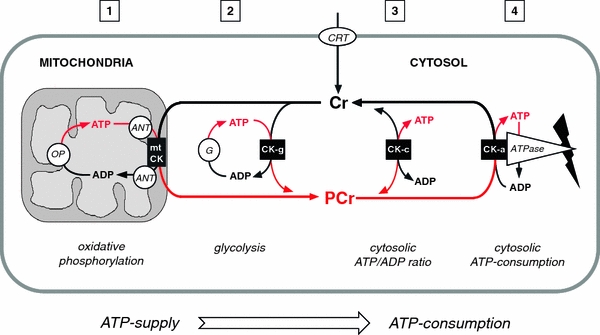
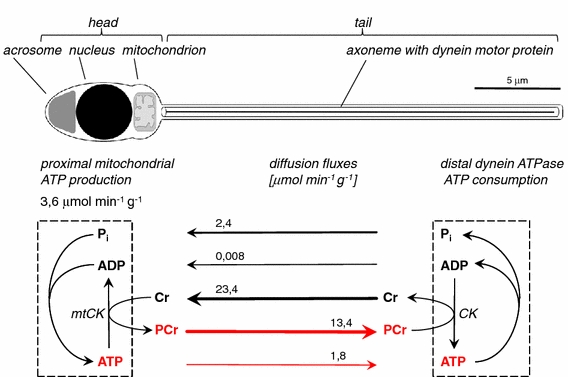
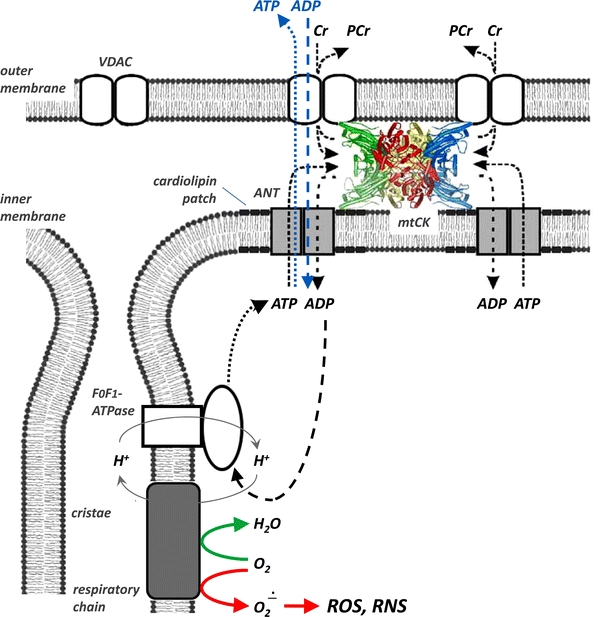
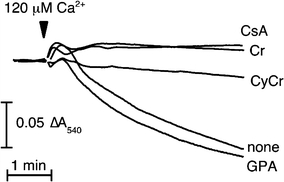
The pleiotropic effects of creatine (Cr) are based mostly on the functions of the enzyme creatine kinase (CK) and its high-energy product phosphocreatine (PCr). Multidisciplinary studies have established molecular, cellular, organ and somatic functions of the CK/PCr system, in particular for cells and tissues with high and intermittent energy fluctuations. These studies include tissue-specific expression and subcellular localization of CK isoforms, high-resolution molecular structures and structure-function relationships, transgenic CK abrogation and reverse genetic approaches. Three energy-related physiological principles emerge, namely that the CK/PCr systems functions as (a) an immediately available temporal energy buffer, (b) a spatial energy buffer or intracellular energy transport system (the CK/PCr energy shuttle or circuit) and (c) a metabolic regulator. The CK/PCr energy shuttle connects sites of ATP production (glycolysis and mitochondrial oxidative phosphorylation) with subcellular sites of ATP utilization (ATPases). Thus, diffusion limitations of ADP and ATP are overcome by PCr/Cr shuttling, as most clearly seen in polar cells such as spermatozoa, retina photoreceptor cells and sensory hair bundles of the inner ear. The CK/PCr system relies on the close exchange of substrates and products between CK isoforms and ATP-generating or -consuming processes. Mitochondrial CK in the mitochondrial outer compartment, for example, is tightly coupled to ATP export via adenine nucleotide transporter or carrier (ANT) and thus ATP-synthesis and respiratory chain activity, releasing PCr into the cytosol. This coupling also reduces formation of reactive oxygen species (ROS) and inhibits mitochondrial permeability transition, an early event in apoptosis. Cr itself may also act as a direct and/or indirect anti-oxidant, while PCr can interact with and protect cellular membranes. Collectively, these factors may well explain the beneficial effects of Cr supplementation. The stimulating effects of Cr for muscle and bone growth and maintenance, and especially in neuroprotection, are now recognized and the first clinical studies are underway. Novel socio-economically relevant applications of Cr supplementation are emerging, e.g. for senior people, intensive care units and dialysis patients, who are notoriously Cr-depleted. Also, Cr will likely be beneficial for the healthy development of premature infants, who after separation from the placenta depend on external Cr. Cr supplementation of pregnant and lactating women, as well as of babies and infants are likely to be of benefit for child development. Last but not least, Cr harbours a global ecological potential as an additive for animal feed, replacing meat- and fish meal for animal (poultry and swine) and fish aqua farming. This may help to alleviate human starvation and at the same time prevent over-fishing of oceans.
Overview
The claims and statistics of this paper haven’t been checked yet.
Free: it reads the open-access text and checks the first 5 claims that cite a source we can check. Create a free account to check every claim.
Integrity signals
Registry
Cites
Statistics
Figures
Verification
Claims the paper makes
The claims and statistics of this paper haven’t been checked yet.
Free: it reads the open-access text and checks the first 5 claims that cite a source we can check. Create a free account to check every claim.
Claims other papers make about this one
Each is checked against this paper’s own text: does it say what the citing paper says it does?
The source backs part of the claim, not all of it — or backs it for a different population, condition or comparison.
In the citing paper
“These findings support contentions that it is prudent for individuals to consume at least 3 g/day of creatine to support general health as one ages [1,50].”
From Creatine in health and disease (2021) · cites this paper as [50]
Experimental — accuracy not yet measuredThe source backs part of the claim, not all of it — or backs it for a different population, condition or comparison.
In the citing paper
“As noted above, creatine and phosphagens play an important role in maintaining energy availability [38,39,56,57], particularly related to the role of the CK/PRr system and shuttling of ATP, ADP, and Pi in and out of the mitochondria for cellular metabolism [50,54,55].”
From Creatine in health and disease (2021) · cites this paper as [50]
Experimental — accuracy not yet measuredThe source backs part of the claim, not all of it — or backs it for a different population, condition or comparison.
In the citing paper
“Since sperm motility is dependent on ATP availability and CK activity has been associated with greater sperm quality and function [50,327,328,329], there has been some interest in whether creatine supplementation and/or administration might improve fertility.”
From Creatine in health and disease (2021) · cites this paper as [50]
Experimental — accuracy not yet measuredThe source backs part of the claim, not all of it — or backs it for a different population, condition or comparison.
In the citing paper
“Creatine [166,167], citrulline [168,169], and leucine-rich feedings [111,162] are best interpreted as compounds that help maintain a permissive metabolic and signalling environment in which mechanical loading can drive nucleolar expansion.”
From Ribosome Biogenesis as a Putative Bottleneck to Skeletal Muscle Hypertrophy: Mechanisms, Human Evidence, and Practical Modulators (2026) · cites this paper as [167]
Experimental — accuracy not yet measuredThe source backs part of the claim, not all of it — or backs it for a different population, condition or comparison.
In the citing paper
“creatine is best interpreted as a plausible indirect supporter of ribosome biogenesis, not as a proven direct activator of nucleolar output [166,167]”
From Ribosome Biogenesis as a Putative Bottleneck to Skeletal Muscle Hypertrophy: Mechanisms, Human Evidence, and Practical Modulators (2026) · cites this paper as [167]
Experimental — accuracy not yet measured
10 more claims about this paper
Create a free account to see every claim other papers make about this one.
Self-check
Percentages, sums and reported differences re-computed from the paper’s own numbers.
The self-check needs the paper’s full text.
Citations
Cites
Items 201–253 of 253
Mice lacking brain-type creatine kinase activity show defective thermoregulation
Streijger, F., Pluk, H., Oerlemans, F., Beckers, G., Bianco, A. C., Ribeiro, M. O., Wieringa, B., & Van der Zee, C. E. E. M. (2009) · Physiology & Behavior · doi:10.1016/j.physbeh.2009.02.003 · Cited by 42
van DORSTEN, F. A., WYSS, M., WALLIMANN, T., & NICOLAY, K. (1997) · Biochemical Journal · doi:10.1042/bj3250411 · Cited by 42
Self-citationCreatine monohydrate treatment alleviates muscle cramps associated with haemodialysis
Chang, C.-T. (2002) · Nephrology Dialysis Transplantation · doi:10.1093/ndt/17.11.1978 · Cited by 41 · cited 1×
“In the only study so with dialysis patients, involving the very limited number of five patients, oral Cr supplementation reduced spastic muscle cramps, a problem often observed in these patients (Chang et al. 2002).”
BackgroundProperties of Arginine Kinase from Drosophila melanogaster
Wallimann, T., & Eppenberger, H. M. (1973) · European Journal of Biochemistry · doi:10.1111/j.1432-1033.1973.tb03048.x · Cited by 40
Self-citationSide Effects of Creatine Supplementation in Athletes
Francaux, M., & Poortmans, J. R. (2006) · International Journal of Sports Physiology and Performance · doi:10.1123/ijspp.1.4.311 · Cited by 40 · cited 2×
“…side effects of Cr supplementation that are reported, e.g. via internet can be dismissed on the basis of solid scientific evidence, even if Cr is taken for extended periods of time (i.e. years), (Kreider et al. 2003; Francaux and Poortmans 2006; Persky and Rawson 2007; Bender et al. 2008a).”
BackgroundBranca, F., & Rossi, L. (2002) · European Journal of Clinical Nutrition · doi:10.1038/sj.ejcn.1601676 · Cited by 37
The creatine phosphate energy shuttle—The molecular asymmetry of a “pool”
Bessman, S. P. (1987) · Analytical Biochemistry · doi:10.1016/0003-2697(87)90483-0 · Cited by 37
Mekhfi, H., Hoerter, J. A., Lauer, C., Wisnewsky, C., Schwartz, K., & Ventura‐Clapier, R. (1990) · American Journal of Physiology-Heart and Circulatory Physiology · doi:10.1152/ajpheart.1990.258.4.h1151 · Cited by 36
Amino acids and the regulation of methyl balance in humans
Brosnan, J. T., da Silva, R., & Brosnan, M. E. (2007) · Current Opinion in Clinical Nutrition and Metabolic Care · doi:10.1097/mco.0b013e3280110171 · Cited by 35
Hatano, E., Tanaka, A., Kanazawa, A., Tsuyuki, S., Tsunekawa, S., Iwata, S., Takahashi, R., Chance, B., & Yamaoka, Y. (2004) · Liver International · doi:10.1111/j.1478-3231.2004.0939.x · Cited by 35
Comparative energetics of primate fetal growth
Ulijaszek, S. J. (2002) · American Journal of Human Biology · doi:10.1002/ajhb.10088 · Cited by 35
Metabolite Channeling: Creatine Kinase Microcompartments
Schlattner, U., Tokarska-Schlattner, M., & Wallimann, T. (2013) · Elsevier eBooks · doi:10.1016/b978-0-12-378630-2.00283-8 · Cited by 34
Self-citationInduction of Endotoxin Tolerance in Transgenic Mouse Liver Expressing Creatine Kinase
Hatano, E., Tanaka, A., Iwata, S., Satoh, S., Kitai, T., Tsunekawa, S., Inomoto, T., Shinohara, H., Chance, B., & Yamaoka, Y. (1996) · Hepatology · doi:10.1002/hep.510240332 · Cited by 34
Origin of the genes for the isoforms of creatine kinase
Bertin, M., Pomponi, S. M., Kokuhuta, C., Iwasaki, N., Suzuki, T., & Ellington, W. R. (2007) · Gene · doi:10.1016/j.gene.2007.01.007 · Cited by 34 · cited 1×
“One of them, PCr, together with its corresponding kinase, CK, first appeared at the dawn of eukaryotic evolution some one billion years ago (Bertin et al. 2007).”
BackgroundCrystallization of Mitochondrial Creatine Kinase on Negatively Charged Lipid Layers
Schnyder, T., Cyrklaff, M., Fuchs, K., & Wallimann, T. (1994) · Journal of Structural Biology · doi:10.1006/jsbi.1994.1015 · Cited by 34
Self-citationCreatine kinase in epithelium of the inner ear.
Spicer, S. S., & Schulte, B. A. (1992) · Journal of Histochemistry & Cytochemistry · doi:10.1177/40.2.1313059 · Cited by 32
de Groof, A. J. C., Smeets, B., Koerkamp, M. J. A. G., Mul, A. N. P. M., Janssen, E., Tabak, H. F., & Wieringa, B. (2001) · FEBS Letters · doi:10.1016/s0014-5793(01)02879-4 · Cited by 32
Creatine and Creatine Phosphate: Scientific and Clinical Perspectives
Conway, M. A., & Clark, J. F. (1996) · Cited by 31
Deminice, R., Vannucchi, H., Simões-Ambrósio, L. M. C., & Jordão, A. A. (2011) · European Journal of Applied Physiology · doi:10.1007/s00421-011-1891-6 · Cited by 31
Creatine improves health and survival in mice
Haack, T., Bender, A., Beckers, J., Hölter, S., Ruthsatz, T., Vogt-Weisenhorn, D., Becker, L., Genius, J., Rujescu, D., Irmler, M., et al. (2007) · Aktuelle Neurologie · doi:10.1055/s-2007-987803 · Cited by 31
Functional expression of arginine kinase improves recovery from pH stress of Escherichia coli
Canonaco, F., Schlattner, U., Wallimann, T., & Sauer, U. (2003) · Biotechnology Letters · doi:10.1023/a:1024172518062 · Cited by 30
Self-citationDie Zufuhr von Kreatin und Kreatinin mit Frauenmilch und Säuglingsmilchpräparaten*
Hülsemann, J., Manz, F., Wember, T., & Schöch, G. (1987) · Klinische Pädiatrie · doi:10.1055/s-2008-1026805 · Cited by 29
Bohnhorst, B., Geuting, T., Peter, C. S., Dördelmann, M., Wilken, B., & Poets, C. F. (2004) · PEDIATRICS · doi:10.1542/peds.113.4.e303 · Cited by 29
Valastro, B., Dekundy, A., Danysz, W., & Quack, G. (2008) · Behavioural Brain Research · doi:10.1016/j.bbr.2008.08.004 · Cited by 29
Ultrastructural remodeling of fast skeletal muscle fibers induced by invalidation of creatine kinase
Novotová, M., Pavlovičová, M., Veksler, V., Ventura‐Clapier, R., & Zahradník, I. (2006) · American Journal of Physiology-Cell Physiology · doi:10.1152/ajpcell.00114.2006 · Cited by 28
Grehl, T., Müller, K., Vorgerd, M., Tegenthoff, M., Malin, J.-P., & Zange, J. (1998) · Neuromuscular Disorders · doi:10.1016/s0960-8966(98)00066-2 · Cited by 27
Altered Muscle Energy Metabolism in Post-absorptive Patients with Chronic Renal Failure
Pastoris, O., Aquilani, R., Foppa, P., Bovio, G., Segagni, S., Baiardi, P., Catapano, M., Maccario, M., Salvadeo, A., & Dossena, M. (1997) · Scandinavian Journal of Urology and Nephrology · doi:10.3109/00365599709070349 · Cited by 27
O’Gorman, E., Piendl, T., Müller, M., Brdiczka, D. G., & Wallimann, T. (1997) · Molecular and Cellular Biochemistry · doi:10.1023/a:1006881113149 · Cited by 27
Self-citationvan Dorsten, F. A., Furter, R., Bijkerk, M. H. G., Wallimann, T., & Nicolay, K. (1996) · Biochimica et Biophysica Acta (BBA) - Bioenergetics · doi:10.1016/0005-2728(96)00010-2 · Cited by 26
Self-citationDevelopmental decrease in rat small intestinal creatine uptake
Rubio, M. J. P., Gálvez, M., Soria, M. L., & Ilundáin, A. A. (2004) · Mechanisms of Ageing and Development · doi:10.1016/j.mad.2004.11.005 · Cited by 26
Creatine – its Chemical Synthesis, Chemistry, and Legal Status
Pischel, I., & Gastner, T. (2007) · Subcellular Biochemistry · doi:10.1007/978-1-4020-6486-9_15 · Cited by 25 · cited 1×
“However, the most relevant issue with respect to potential side effects of Cr, namely the chemical purity of the Cr used, is definitely an issue (Pischel and Gastner 2007).”
BackgroundStudies in human myometrium during pregnancy
Barnes, A. C., Kumar, D., & Schweid, D. E. (1961) · American Journal of Obstetrics and Gynecology · doi:10.1016/s0002-9378(15)33675-9 · Cited by 25
Suckling Rat Pups Accumulate Creatine Primarily via de Novo Synthesis Rather Than from Dam Milk ,
Lamarre, S. G., Edison, E. E., Wijekoon, E. P., Brosnan, M. E., & Brosnan, J. T. (2010) · Journal of Nutrition · doi:10.3945/jn.110.125476 · Cited by 25
Sanchez‐Gonzalez, M. A., Wieder, R., Kim, J., Vicil, F., & Figueroa, A. (2011) · European Journal of Applied Physiology · doi:10.1007/s00421-011-1832-4 · Cited by 25
Sistermans, E. A., Klaassen, C. H. W., Peters, W., Swarts, H. G. P., Jap, P. H. K., De Pont, J. J. H. H. M., & Wieringa, B. (1995) · Biochemical Journal · doi:10.1042/bj3110445 · Cited by 24
Watchko, J. F., Daood, M. J., Wieringa, B., & Koretsky, A. P. (2000) · Journal of Applied Physiology · doi:10.1152/jappl.2000.88.3.973 · Cited by 21
Quest, A. F. G., Harvey, D. J., & McIlhinney, R. A. J. (1997) · Biochemistry · doi:10.1021/bi9629337 · Cited by 20
Nitrogen Constituents of Sow’s Milk as Affected by Ration and Stage of Lactation
Sheffy, B. E., SHAHANI, K. M., Grummer, R. H., Phillips, P. H., & Sommer, H. H. (1952) · Journal of Nutrition · doi:10.1093/jn/48.1.103 · Cited by 19
Supplémentation en créatine: effet ergogénique
Bigard, A. X. (2000) · Science & Sports · doi:10.1016/s0765-1597(00)80023-4 · Cited by 19
Studies in human myometrium during pregnancy
Kumar, D., Russell, J. J., & Barnes, A. C. (1962) · American Journal of Obstetrics and Gynecology · doi:10.1016/0002-9378(62)90148-5 · Cited by 18
Zemtsov, A. (2007) · Skin Research and Technology · doi:10.1111/j.1600-0846.2007.00228.x · Cited by 18
Hadjicharalambous, M., Kilduff, L. P., & Pitsiladis, Y. P. (2008) · Journal of the International Society of Sports Nutrition · doi:10.1186/1550-2783-5-14 · Cited by 17
The metabolism of lactating women
Mellanby, E. (1913) · Proceedings of the Royal Society of London. Series B, Containing Papers of a Biological Character · doi:10.1098/rspb.1913.0003 · Cited by 16
Creatine Supplementation Prevents Statin-Induced Muscle Toxicity
Shewmon, D. A., & Craig, J. M. (2010) · Annals of Internal Medicine · doi:10.7326/0003-4819-153-10-201011160-00024 · Cited by 13
Kennaugh, L. M., Arthur, P. G., & Hartmann, P. E. (1997) · Australian Journal of Agricultural Research · doi:10.1071/a96077 · Cited by 13
Streijger, F., Scheenen, W. J. J. M., van Luijtelaar, G., Oerlemans, F. T. J. J., Wieringa, B., & der Zee, C. E. E. M. V. (2009) · Epilepsia · doi:10.1111/j.1528-1167.2009.02182.x · Cited by 12
Tagami, T., Sakuma, H., Matsumura, K., Takeda, K., Mori, S., TAKEUCHI, T., & Nakano, T. (1998) · Investigative Radiology · doi:10.1097/00004424-199803000-00007 · Cited by 11
Saks, V. A., Stepanov, V. A. S., Jaliashvili, I., Konorev, E. A., Kryzkanovsky, S. A., & Strumia, E. (1996) · Elsevier eBooks · doi:10.1016/b978-012186340-1/50010-2 · Cited by 10
Maniti, O., Lecompte, M. F., Marcillat, O., Vial, C., & Granjon, T. (2010) · European Biophysics Journal · doi:10.1007/s00249-010-0600-4 · Cited by 10
The Physiological Significance of the Creatine Phosphate Shuttle
Bessman, S. P. (1986) · Advances in experimental medicine and biology · doi:10.1007/978-1-4684-5107-8_1 · Cited by 9
Alteration of energy production by the heart in CRF patients undergoing peritoneal dialysis
Ogimoto, G., Sakurada, T., Imamura, K., Kuboshima, S., Maeba, T., Kimura, K., & Owada, S. (2003) · Springer eBooks · doi:10.1007/978-1-4615-0247-0_20 · Cited by 7
Alteration of energy production by the heart in CRF patients undergoing peritoneal dialysis
Ogimoto, G., Sakurada, T., Imamura, K., Kuboshima, S., Maeba, T., Kimura, K., & Owada, S. (2003) · Molecular and Cellular Biochemistry · doi:10.1023/a:1022470815270 · Cited by 6
Gerber, I., Gerber, H., Dora, C. F., Uebelhart, D., & Wallimann, T. (2008) · Bone · doi:10.1016/j.bone.2007.12.021 · Cited by 3
Self-citation
Research works printed but not linked: 5
- Saks VA (ed) (2007) Molecular systems bioenergetics: energy for life. Wiley, Weinheim
- Tokarska-Schlattner M, Meiler F, Zandomeneghi G, Meier BH, Saks V, Neumann D, Wallimann T, Schlattner U (2003) Do creatine and other guanidino compounds bind to phospholipid membranes? Studies with SPR and P-31-NMR-spectroscopy. Biophys J 84:49A
- Tokarska-Schlattner M, Wallimann T, Schlattner U (2005a) Membrane protective effects of phosphocreatine. Biophys J 88:418A
- Wallimann T (1975) Creatine kinase isoenzymes and myofibrillar structure. PhD Thesis Nr 5437, ETH Zurich
- Ziegenfuss TN, Lowery LM, Lemon PWR (1998) Acute fluid volume changes in men during three days of creatine supplementation. J Exerc Physiol 1:1–9
Cited by
Kreider, R. B., Kalman, D. S., Antonio, J., Ziegenfuss, T. N., Wildman, R., Collins, R., Candow, D. G., Kleiner, S. M., Almada, A. L., & Lopez, H. L. (2017) · Journal of the International Society of Sports Nutrition · doi:10.1186/s12970-017-0173-z · Cited by 1,057
“creatine in their diet particularly as one ages [27].”
BackgroundInfluentialReactive Oxygen Species in Skeletal Muscle Signaling
Barbieri, E., & Sestili, P. (2012) · Journal of Signal Transduction · doi:10.1155/2012/982794 · Cited by 411
Muscle glycogen stores and fatigue
Ørtenblad, N., Westerblad, H., & Nielsen, J. (2013) · The Journal of Physiology · doi:10.1113/jphysiol.2013.251629 · Cited by 353
“CK (creatine kinase) is localized at the mitochondrial membrane, on the M- and I-band, and on the SR membrane (Rossi et al. 1990; Wegmann et al. 1992; Wallimann et al. 2011).”
BackgroundMinisola, S., Peacock, M., Fukumoto, S., Cipriani, C., Pepe, J., Tella, S. H., & Collins, M. T. (2017) · Nature Reviews Disease Primers · doi:10.1038/nrdp.2017.44 · Cited by 290
Overview of the Muscle Cytoskeleton
Henderson, C. A., Gomez, C. G., Novak, S. M., Mi‐Mi, L., & Gregorio, C. C. (2017) · Comprehensive Physiology · doi:10.1002/cphy.c160033 · Cited by 278
Metadata
- Authors
- Wallimann, T., Tokarska-Schlattner, M., & Schlattner, U.
- Affiliations
- ETH Zurich (CH)
- Inserm (FR)
- Corresponding author
- Wallimann, Theo
- Schlattner, Uwe
- Venue
- Amino Acids
- Published
- 2011-03-30
- Volume
- 40
- Issue
- 5
- Pages
- 1271-1296
- ISSN
- 0939-4451 (ISSN-L)
- 1438-2199
- PMC
- PMC3080659
- OpenAlex
- W2041686985
- Cited by
- 797
- References
- 254
- Citations by year
- 2026: 79 · 2025: 84 · 2024: 59 · 2023: 68 · 2022: 60 · 2021: 61 · 2020: 41 · 2019: 43 · 2018: 42 · 2017: 44 · 2016: 58 · 2015: 46 · 2014: 43 · 2013: 35 · 2012: 26
- FWCI
- 3.15
- Type
- journal article
- Language
- en
- Open access
- hybrid
- doi.org
- Licence
- cc-by-nc
- Locations
- Amino Acids (publishedVersion, cc-by-nc)
- PubMed Central (publishedVersion, cc-by-nc)
- PubMed (publishedVersion)
- reroDoc Digital Library (submittedVersion)
- HAL (submittedVersion, other-oa)
- Repository for Publications and Research Data (ETH Zurich) (submittedVersion, other-oa)
- ETH Zürich Research Collection
- Funders
- National Science Foundation
- European Commission (249202)
- Schweizerischer Nationalfonds zur Förderung der Wissenschaftlichen Forschung
- Topics
- Life Sciences › Biochemistry, Genetics and Molecular Biology › Molecular Biology › Mitochondrial Function and Pathology
- Health Sciences › Nursing › Nutrition and Dietetics › Muscle metabolism and nutrition
- Life Sciences › Biochemistry, Genetics and Molecular Biology › Molecular Biology › Metabolism, Diabetes, and Cancer
- Keywords
- creatine kinase, phosphocreatine, creatine, creatine supplementation, ATP transport, adenine nucleotide transporter, mitochondrial permeability transition, reactive oxygen species, antioxidant activity, creatine kinase isoforms, neuroprotection, muscle growth, bone preservation, preterm infants, dialysis patients, feed additives, structure-function relationship, spermatozoa
- MeSH terms
- Animals, Creatine, Creatine Kinase, Humans, Phosphocreatine
About these checks
Registry, retraction, Cites and statistics results are computed, not judged, with one exception: a printed reference that no index lists is read once by a model before it counts as a citation error. Claims are extracted by a model and kept only when their quote appears verbatim in the text; each cited source is then checked, with a model’s help, for whether it says what the claim relies on. Those verdicts can be wrong — read the claim’s quote and the cited source before relying on one.
Statistics and arithmetic are recomputed, not judged.
Confidence bands are shown only for fields calibrated on our annotated test set. None is calibrated yet, so no band is shown.
What counts as a claim ›How we measure confidence ›How we check this ›
Are you an author, or do you see a problem with this page? Request a review
Data sources
Bibliographic data: Semantic Scholar, OpenAlex, Crossref.
Contains information from the Semantic Scholar Academic Graph Datasets, made available under the ODC Attribution License (ODC-BY 1.0).
Semantic Scholar’s data is described in: Kinney, R., et al. (2023). The Semantic Scholar Open Data Platform. arXiv:2301.10140.
