

The creatine kinase system and pleiotropic effects of creatine
Open accessThe DOI matches its Crossref record; 253 of the 254 references it cites were found in a registry or an index.
Abstract
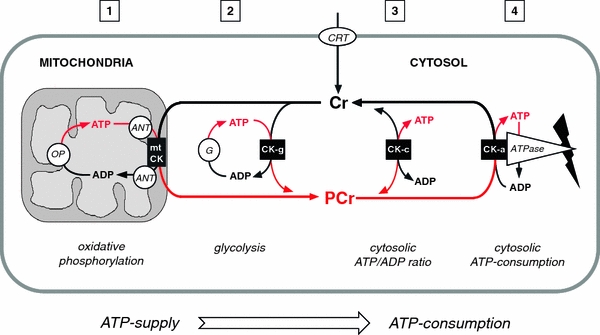
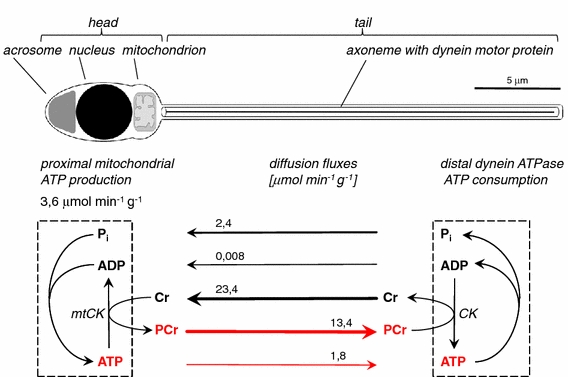
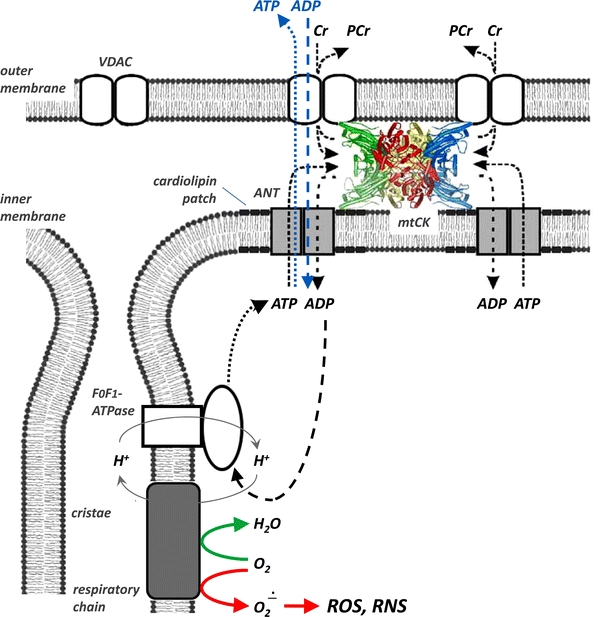
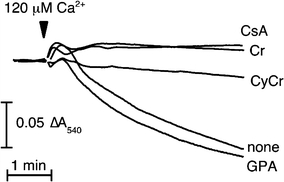
The pleiotropic effects of creatine (Cr) are based mostly on the functions of the enzyme creatine kinase (CK) and its high-energy product phosphocreatine (PCr). Multidisciplinary studies have established molecular, cellular, organ and somatic functions of the CK/PCr system, in particular for cells and tissues with high and intermittent energy fluctuations. These studies include tissue-specific expression and subcellular localization of CK isoforms, high-resolution molecular structures and structure-function relationships, transgenic CK abrogation and reverse genetic approaches. Three energy-related physiological principles emerge, namely that the CK/PCr systems functions as (a) an immediately available temporal energy buffer, (b) a spatial energy buffer or intracellular energy transport system (the CK/PCr energy shuttle or circuit) and (c) a metabolic regulator. The CK/PCr energy shuttle connects sites of ATP production (glycolysis and mitochondrial oxidative phosphorylation) with subcellular sites of ATP utilization (ATPases). Thus, diffusion limitations of ADP and ATP are overcome by PCr/Cr shuttling, as most clearly seen in polar cells such as spermatozoa, retina photoreceptor cells and sensory hair bundles of the inner ear. The CK/PCr system relies on the close exchange of substrates and products between CK isoforms and ATP-generating or -consuming processes. Mitochondrial CK in the mitochondrial outer compartment, for example, is tightly coupled to ATP export via adenine nucleotide transporter or carrier (ANT) and thus ATP-synthesis and respiratory chain activity, releasing PCr into the cytosol. This coupling also reduces formation of reactive oxygen species (ROS) and inhibits mitochondrial permeability transition, an early event in apoptosis. Cr itself may also act as a direct and/or indirect anti-oxidant, while PCr can interact with and protect cellular membranes. Collectively, these factors may well explain the beneficial effects of Cr supplementation. The stimulating effects of Cr for muscle and bone growth and maintenance, and especially in neuroprotection, are now recognized and the first clinical studies are underway. Novel socio-economically relevant applications of Cr supplementation are emerging, e.g. for senior people, intensive care units and dialysis patients, who are notoriously Cr-depleted. Also, Cr will likely be beneficial for the healthy development of premature infants, who after separation from the placenta depend on external Cr. Cr supplementation of pregnant and lactating women, as well as of babies and infants are likely to be of benefit for child development. Last but not least, Cr harbours a global ecological potential as an additive for animal feed, replacing meat- and fish meal for animal (poultry and swine) and fish aqua farming. This may help to alleviate human starvation and at the same time prevent over-fishing of oceans.
Overview
The claims and statistics of this paper haven’t been checked yet.
Free: it reads the open-access text and checks the first 5 claims that cite a source we can check. Create a free account to check every claim.
Integrity signals
Registry
Cites
Statistics
Figures
Verification
Claims the paper makes
The claims and statistics of this paper haven’t been checked yet.
Free: it reads the open-access text and checks the first 5 claims that cite a source we can check. Create a free account to check every claim.
Claims other papers make about this one
Each is checked against this paper’s own text: does it say what the citing paper says it does?
The source backs part of the claim, not all of it — or backs it for a different population, condition or comparison.
In the citing paper
“These findings support contentions that it is prudent for individuals to consume at least 3 g/day of creatine to support general health as one ages [1,50].”
From Creatine in health and disease (2021) · cites this paper as [50]
Experimental — accuracy not yet measuredThe source backs part of the claim, not all of it — or backs it for a different population, condition or comparison.
In the citing paper
“As noted above, creatine and phosphagens play an important role in maintaining energy availability [38,39,56,57], particularly related to the role of the CK/PRr system and shuttling of ATP, ADP, and Pi in and out of the mitochondria for cellular metabolism [50,54,55].”
From Creatine in health and disease (2021) · cites this paper as [50]
Experimental — accuracy not yet measuredThe source backs part of the claim, not all of it — or backs it for a different population, condition or comparison.
In the citing paper
“Since sperm motility is dependent on ATP availability and CK activity has been associated with greater sperm quality and function [50,327,328,329], there has been some interest in whether creatine supplementation and/or administration might improve fertility.”
From Creatine in health and disease (2021) · cites this paper as [50]
Experimental — accuracy not yet measuredThe source backs part of the claim, not all of it — or backs it for a different population, condition or comparison.
In the citing paper
“Creatine [166,167], citrulline [168,169], and leucine-rich feedings [111,162] are best interpreted as compounds that help maintain a permissive metabolic and signalling environment in which mechanical loading can drive nucleolar expansion.”
From Ribosome Biogenesis as a Putative Bottleneck to Skeletal Muscle Hypertrophy: Mechanisms, Human Evidence, and Practical Modulators (2026) · cites this paper as [167]
Experimental — accuracy not yet measuredThe source backs part of the claim, not all of it — or backs it for a different population, condition or comparison.
In the citing paper
“creatine is best interpreted as a plausible indirect supporter of ribosome biogenesis, not as a proven direct activator of nucleolar output [166,167]”
From Ribosome Biogenesis as a Putative Bottleneck to Skeletal Muscle Hypertrophy: Mechanisms, Human Evidence, and Practical Modulators (2026) · cites this paper as [167]
Experimental — accuracy not yet measured
10 more claims about this paper
Create a free account to see every claim other papers make about this one.
Self-check
Percentages, sums and reported differences re-computed from the paper’s own numbers.
The self-check needs the paper’s full text.
Citations
Cites
Mitochondrial membrane permeabilization in cell death
Kroemer, G., Galluzzi, L., & Brenner, C. (2007) · Physiological Reviews · doi:10.1152/physrev.00013.2006 · Cited by 3,598 · cited 2×
“Although the molecular composition of the pore remains an open question, it seems to involve the adenine nucleotide transporter ANT-1 isoform and the voltage-dependent anion carrier VDAC (Zhivotovsky et al. 2009) together with mtCK (Kroemer et al. 2007).”
BackgroundCreatine and Creatinine Metabolism
Wyss, M., & Kaddurah-Daouk, R. (2000) · Physiological Reviews · doi:10.1152/physrev.2000.80.3.1107 · Cited by 2,950 · cited 2×
“In particular, the neuroprotective role of Cr that is relevant to a number of neuromuscular and neuro-degenerative diseases is well documented (Matthews et al. 1998; Klivenyi et al. 1999; Brewer and Wallimann 2000; Wyss and Kaddurah-Daouk 2000; Baker and Tarnopolsky 2003; Andres et al. 2005a, b; Brosnan and Brosnan 20…”
BackgroundWallimann, T., Wyss, M., Brdiczka, D., Nicolay, K., & Eppenberger, H. M. (1992) · Biochemical Journal · doi:10.1042/bj2810021 · Cited by 2,011
Self-citationElevation of creatine in resting and exercised muscle of normal subjects by creatine supplementation
Harris, R. C., Söderlund, K., & Hultman, E. (1992) · Clinical Science · doi:10.1042/cs0830367 · Cited by 1,168 · cited 2×
“Cr improves cellular energy state (PCr/ATP ratio) and muscle performance (Harris et al. 1992; Greenhaff et al. 1993) Cr facilitates intracellular energy transport (PCr circuit or shuttle) (Wallimann 1975; Saks et al. 1978, 2006b; Bessman and Geiger 1981; Wallimann and Eppenberger 1985; Bessman…”
BackgroundMcPherron, S. P., Alemseged, Z., Marean, C. W., Wynn, J. G., Reed, D., Geraads, D., Bobe, R., & Béarat, H. A. (2010) · Nature · doi:10.1038/nature09248 · Cited by 832
Transport of Energy in Muscle: The Phosphorylcreatine Shuttle
Bessman, S. P., & Geiger, P. J. (1981) · Science · doi:10.1126/science.6450446 · Cited by 758
Neuroprotective effects of creatine in a transgenic animal model of amyotrophic lateral sclerosis
Klivenyi, P., Ferrante, R. J., Matthews, R. T., Bogdanov, M. B., Klein, A. M., Andreassen, O. A., Mueller, G., Wermer, M., Kaddurah-Daouk, R., & Beal, M. F. (1999) · Nature Medicine · doi:10.1038/6568 · Cited by 682
Nutritional recommendations for the management of sarcopenia
Morley, J. E., Argiles, J. M., Evans, W. J., Bhasin, S., Cella, D., Deutz, N. E. P., Doehner, W., Fearon, K. C. H., Ferrucci, L., Hellerstein, M. K., et al. (2010) · Journal of the American Medical Directors Association · doi:10.1016/j.jamda.2010.04.014 · Cited by 664 · cited 2×
“Recent nutritional recommendations by the US Society for Sarcopenia, Cachexia and Wasting Disease proposed Cr supplementation together with other measures for the management of sarcopenia (age-dependent progressive muscle loss) which is prevalent among the elderly (Morley et al. 2010).”
BackgroundMitochondrial creatine kinase in human health and disease
Schlattner, U., Tokarska-Schlattner, M., & Wallimann, T. (2006) · Biochimica et Biophysica Acta (BBA) - Molecular Basis of Disease · doi:10.1016/j.bbadis.2005.09.004 · Cited by 622
Self-citationGreenhaff, P. L., Casey, A., Short, A. H., Harris, R., Soderlund, K., & Hultman, E. (1993) · Clinical Science · doi:10.1042/cs0840565 · Cited by 460 · cited 4×
“Cr improves cellular energy state (PCr/ATP ratio) and muscle performance (Harris et al. 1992; Greenhaff et al. 1993)”
BackgroundInfluential
Research works printed but not linked: 5
- Saks VA Molecular systems bioenergetics: energy for life 2007 Weinheim Wiley
- Tokarska-Schlattner M Meiler F Zandomeneghi G Meier BH Saks V Neumann D Wallimann T Schlattner U Do creatine and other guanidino compounds bind to phospholipid membranes? Studies with SPR and P-31-NMR-spectroscopy Biophys J 2003 84 49A
- Tokarska-Schlattner M Wallimann T Schlattner U Membrane protective effects of phosphocreatine Biophys J 2005 88 418A
- Wallimann T (1975) Creatine kinase isoenzymes and myofibrillar structure. PhD Thesis Nr 5437, ETH Zurich
- Ziegenfuss TN Lowery LM Lemon PWR Acute fluid volume changes in men during three days of creatine supplementation J Exerc Physiol 1998 1 1 9
Cited by
Kreider, R. B., Kalman, D. S., Antonio, J., Ziegenfuss, T. N., Wildman, R., Collins, R., Candow, D. G., Kleiner, S. M., Almada, A. L., & Lopez, H. L. (2017) · Journal of the International Society of Sports Nutrition · doi:10.1186/s12970-017-0173-z · Cited by 1,057
“creatine in their diet particularly as one ages [27].”
BackgroundInfluentialReactive Oxygen Species in Skeletal Muscle Signaling
Barbieri, E., & Sestili, P. (2012) · Journal of Signal Transduction · doi:10.1155/2012/982794 · Cited by 411
Muscle glycogen stores and fatigue
Ørtenblad, N., Westerblad, H., & Nielsen, J. (2013) · The Journal of Physiology · doi:10.1113/jphysiol.2013.251629 · Cited by 353
“CK (creatine kinase) is localized at the mitochondrial membrane, on the M- and I-band, and on the SR membrane (Rossi et al. 1990; Wegmann et al. 1992; Wallimann et al. 2011).”
BackgroundMinisola, S., Peacock, M., Fukumoto, S., Cipriani, C., Pepe, J., Tella, S. H., & Collins, M. T. (2017) · Nature Reviews Disease Primers · doi:10.1038/nrdp.2017.44 · Cited by 290
Overview of the Muscle Cytoskeleton
Henderson, C. A., Gomez, C. G., Novak, S. M., Mi‐Mi, L., & Gregorio, C. C. (2017) · Comprehensive Physiology · doi:10.1002/cphy.c160033 · Cited by 278
The solute carrier 6 family of transporters
Bröer, S., & Gether, U. (2012) · British Journal of Pharmacology · doi:10.1111/j.1476-5381.2012.01975.x · Cited by 269
Creatine biosynthesis and transport in health and disease
Joncquel-Chevalier Curt, M., Voicu, P.-M., Fontaine, M., Dessein, A.-F., Porchet, N., Mention-Mulliez, K., Dobbelaere, D., Soto-Ares, G., Cheillan, D., & Vamecq, J. (2015) · Biochimie · doi:10.1016/j.biochi.2015.10.022 · Cited by 238
“CK in health and disease actually encompass a series of topics developed elsewhere in general reviews [6, 45, 46] and including energetic aspects of neurodegenerative disorders [47].”
BackgroundShi, Y., Pu, D., Zhou, X., & Zhang, Y. (2022) · Foods · doi:10.3390/foods11213408 · Cited by 229
“Creatine and phosphate provide energy through the creatine kinase (CK) and PCr systems [140].”
BackgroundCreatine in health and disease
Kreider, R. B., & Stout, J. R. (2021) · Nutrients · doi:10.3390/nu13020447 · Cited by 227
Metabolic Basis of Creatine in Health and Disease: A Bioinformatics-Assisted Review
Bonilla, D. A., Kreider, R. B., Stout, J. R., Forero, D. A., Kerksick, C. M., Roberts, M. D., & Rawson, E. S. (2021) · Nutrients · doi:10.3390/nu13041238 · Cited by 223
“Cr and its phosphorylated form, phosphocreatine (PCr), have a critical and centralized role in maintaining adenosine triphosphate (ATP) concentrations in tissues with high-energy demands, such as skeletal muscle, heart, and brain [28].”
BackgroundPost, A., Tsikas, D., & Bakker, S. J. L. (2019) · Nutrients · doi:10.3390/nu11051044 · Cited by 223
Phosphate Metabolism in Health and Disease
Peacock, M. (2021) · Calcified Tissue International · doi:10.1007/s00223-020-00686-3 · Cited by 200
Composition of amino acids and related nitrogenous nutrients in feedstuffs for animal diets
Li, P., & Wu, G. (2020) · Amino Acids · doi:10.1007/s00726-020-02833-4 · Cited by 193
Brosnan, M. E., & Brosnan, J. T. (2016) · Amino Acids · doi:10.1007/s00726-016-2188-1 · Cited by 185
Citrobacter rodentium–host–microbiota interactions: immunity, bioenergetics and metabolism
Mullineaux-Sanders, C., Sanchez-Garrido, J., Hopkins, E. G. D., Shenoy, A. R., Barry, R., & Frankel, G. (2019) · Nature Reviews Microbiology · doi:10.1038/s41579-019-0252-z · Cited by 173
In sickness and in health: the widespread application of creatine supplementation
Gualano, B., Roschel, H., Lancha, A. H., Brightbill, C. E., & Rawson, E. S. (2012) · Amino Acids · doi:10.1007/s00726-011-1132-7 · Cited by 172
New treatments for mitochondrial disease—no time to drop our standards
Pfeffer, G., Horvath, R., Klopstock, T., Mootha, V. K., Suomalainen, A., Koene, S., Hirano, M., Zeviani, M., Bindoff, L. A., Yu-Wai-Man, P., et al. (2013) · Nature Reviews Neurology · doi:10.1038/nrneurol.2013.129 · Cited by 167
Effects of beetroot juice supplementation on intermittent high-intensity exercise efforts
Domínguez, R., Maté-Muñoz, J. L., Cuenca, E., García-Fernández, P., Mata-Ordoñez, F., Lozano-Estevan, M. C., Veiga-Herreros, P., da Silva, S. F., & Garnacho-Castaño, M. V. (2018) · Journal of the International Society of Sports Nutrition · doi:10.1186/s12970-017-0204-9 · Cited by 164
“An increase in glycolysis leads to increased H production, lowering pH [82].”
BackgroundCreatine homeostasis and protein energy wasting in hemodialysis patients
Post, A., Schutten, J. C., Kremer, D., van der Veen, Y., Groothof, D., Sotomayor, C. G., Koops, C. A., de Blaauw, P., Kema, I. P., Westerhuis, R., et al. (2021) · Journal of Translational Medicine · doi:10.1186/s12967-021-02780-y · Cited by 158
Self-citationControl of creatine metabolism by HIF is an endogenous mechanism of barrier regulation in colitis
Glover, L. E., Bowers, B. E., Saeedi, B., Ehrentraut, S. F., Campbell, E. L., Bayless, A. J., Dobrinskikh, E., Kendrick, A. A., Kelly, C. J., Burgess, A., et al. (2013) · Proceedings of the National Academy of Sciences · doi:10.1073/pnas.1302840110 · Cited by 155
“In addition to PCr generation via oxidative phosphorylation coupling, a subset of cytosolic CK has been shown to associate with glycolytic enzymes to facilitate PCr repletion, wherein HIF-1–mediated induction of the glycolytic pathway for ATP generation represents a central adaptation for cell survival (10).”
BackgroundInfluentialMuRF1/TRIM63, Master Regulator of Muscle Mass
Peris-Moreno, D., Taillandier, D., & Polge, C. (2020) · International Journal of Molecular Sciences · doi:10.3390/ijms21186663 · Cited by 155
Hughes, M. C., Ramos, S. V., Turnbull, P. C., Rebalka, I. A., Cao, A. W., Monaco, C. M. F., Varah, N. E., Edgett, B. A., Huber, J. S., Tadi, P., et al. (2019) · Journal of Cachexia Sarcopenia and Muscle · doi:10.1002/jcsm.12405 · Cited by 149
Self-citationRačkayová, V., Cudalbu, C., Pouwels, P. J. W., & Braissant, O. (2016) · Analytical Biochemistry · doi:10.1016/j.ab.2016.11.007 · Cited by 144
Phenylketonuria Pathophysiology: on the Role of Metabolic Alterations
Schuck, P. F., Malgarin, F., Cararo, J. H., Diniz, F., STRECK, E. L., & Ferreira, G. C. (2015) · Aging and Disease · doi:10.14336/ad.2015.0827 · Cited by 141
Arginine: at the crossroads of nitrogen metabolism
Fung, T. S., Ryu, K. W., & Thompson, C. B. (2025) · The EMBO Journal · doi:10.1038/s44318-025-00379-3 · Cited by 134
Creatine supplementation in the aging population: effects on skeletal muscle, bone and brain
Gualano, B., Rawson, E. S., Candow, D. G., & Chilibeck, P. D. (2016) · Amino Acids · doi:10.1007/s00726-016-2239-7 · Cited by 133
Defective Homocysteine Metabolism: Potential Implications for Skeletal Muscle Malfunction
Veeranki, S., & Tyagi, S. C. (2013) · International Journal of Molecular Sciences · doi:10.3390/ijms140715074 · Cited by 130
Additive effects of beta-alanine and sodium bicarbonate on upper-body intermittent performance
Tobias, G., Benatti, F. B., de Salles Painelli, V., Roschel, H., Gualano, B., Sale, C., Harris, R. C., Lancha, A. H., & Artioli, G. G. (2013) · Amino Acids · doi:10.1007/s00726-013-1495-z · Cited by 129
“During the exercise performed at intensities exceeding the capacity of aerobic metabolism to resynthesize ATP (Wallimann et al. 2011), hydrogen cations (H?) are produced with most buffered by physicochemical means or exported into the circulation.”
BackgroundKarisa, B., Thomson, J. M., Wang, Z., Li, C., Montanholi, Y. R., Miller, S. P., Moore, S. S., & Plastow, G. S. (2014) · Livestock Science · doi:10.1016/j.livsci.2014.03.002 · Cited by 129
Mistimed food intake and sleep alters 24-hour time-of-day patterns of the human plasma proteome
Depner, C. M., Melanson, E. L., McHill, A. W., & Wright, K. P. (2018) · Proceedings of the National Academy of Sciences · doi:10.1073/pnas.1714813115 · Cited by 122
“CK is a critical enzymatic component of the CK/phosphocreatine system responsible for connecting subcellular sites of ATP production (mitochondria and glycolysis) with sites of ATP utilization (ATPases) (57).”
BackgroundX‐linked creatine transporter deficiency: clinical aspects and pathophysiology
van de Kamp, J. M., Mancini, G. M., & Salomons, G. S. (2014) · Journal of Inherited Metabolic Disease · doi:10.1007/s10545-014-9713-8 · Cited by 118
Biomarkers for major depressive and bipolar disorders using metabolomics: A systematic review
MacDonald, K., Krishnan, A., Cervenka, E., Hu, G., Guadagno, E., & Trakadis, Y. J. (2018) · American Journal of Medical Genetics Part B Neuropsychiatric Genetics · doi:10.1002/ajmg.b.32680 · Cited by 114
Nutritional Interventions in Cancer Cachexia: Evidence and Perspectives From Experimental Models
van de Worp, W. R. P. H., Schols, A. M. W. J., Theys, J., van Helvoort, A., & LANGEN, R. C. J. (2020) · Frontiers in Nutrition · doi:10.3389/fnut.2020.601329 · Cited by 113
Guzun, R., Gonzalez-Granillo, M. A., Karu-Varikmaa, M., Grichine, A., Usson, Y., Käämbre, T., Guerrero-Roesch, K., Kuznetsov, A. V., Schlattner, U., & Saks, V. A. (2012) · Biochimica et Biophysica Acta (BBA) - Biomembranes · doi:10.1016/j.bbamem.2011.12.034 · Cited by 111
Self-citationHaller, N., Behringer, M., Reichel, T., Wahl, P., Simon, P. D., Krüger, K., Zimmer, P., & STÖGGL, T. L. (2023) · Sports Medicine · doi:10.1007/s40279-023-01836-x · Cited by 111
Creatine supplementation and aging musculoskeletal health
Candow, D. G., Chilibeck, P. D., & Forbes, S. C. (2014) · Endocrine · doi:10.1007/s12020-013-0070-4 · Cited by 107
Excitotoxicity as a Target Against Neurodegenerative Processes
Binvignat, O., & Olloquequi, J. (2020) · Current Pharmaceutical Design · doi:10.2174/1381612826666200113162641 · Cited by 108
Kreider, R. B., Jäger, R., & Purpura, M. (2022) · Nutrients · doi:10.3390/nu14051035 · Cited by 103
“Creatine also plays a critical role in translocating energy-related intermediates from the electron transport system in the mitochondria to the cytosol [6,7].”
BackgroundInfluentialBoudoures, A. L., Saben, J., Drury, A., Scheaffer, S., Modi, Z., Zhang, W., & Moley, K. H. (2017) · Developmental Biology · doi:10.1016/j.ydbio.2017.04.005 · Cited by 103
Hall, C. H. T., Lee, J. S., Murphy, E. M., Gerich, M. E., Dran, R. J., Glover, L. E., Abdulla, Z. I., Skelton, M. R., & Colgan, S. P. (2020) · Gastroenterology · doi:10.1053/j.gastro.2020.05.033 · Cited by 103
Schlattner, U., Tokarska-Schlattner, M., Rousseau, D. L., Boissan, M., Mannella, C. A., Epand, R. M., & Lacombe, M. (2014) · Chemistry and Physics of Lipids · doi:10.1016/j.chemphyslip.2013.12.008 · Cited by 102
Self-citationDeterminants of muscle carnosine content
Harris, R. C., Wise, J. A., Price, K. A., Kim, H. J., Kim, C. K., & Sale, C. (2012) · Amino Acids · doi:10.1007/s00726-012-1233-y · Cited by 101
Schlattner, U., Klaus, A., Ramirez Rios, S., Guzun, R., Kay, L., & Tokarska-Schlattner, M. (2016) · Amino Acids · doi:10.1007/s00726-016-2267-3 · Cited by 96
Self-citationCreatine for neuroprotection in neurodegenerative disease: end of story?
Bender, A., & Klopstock, T. (2016) · Amino Acids · doi:10.1007/s00726-015-2165-0 · Cited by 96
“In combination with phosphocreatine (PCr) and the creatine kinases (CK), it serves as an efficient energy buffering and energy transportation system (Hemmer and Wallimann 1993; Wallimann et al. 2011).”
BackgroundBenefits of a plant-based diet and considerations for the athlete
Shaw, K. A., Zello, G. A., Rodgers, C. D., Warkentin, T. D., Baerwald, A., & Chilibeck, P. D. (2022) · European Journal of Applied Physiology · doi:10.1007/s00421-022-04902-w · Cited by 96
Depuydt, G., Xie, F., Petyuk, V. A., Shanmugam, N., Smolders, A., Dhondt, I., Brewer, H. M., Camp, D. G., Smith, R. D., & Braeckman, B. P. (2013) · Molecular & Cellular Proteomics · doi:10.1074/mcp.m113.027383 · Cited by 93
Kaviani, M., Shaw, K., & Chilibeck, P. D. (2020) · International Journal of Environmental Research and Public Health · doi:10.3390/ijerph17093041 · Cited by 92
“Approximately 90% of the body’s creatine is stored in muscle as free creatine and phosphocreatine [22].”
BackgroundMethodInfluentialBalestrino, M., & Adriano, E. (2019) · Medicinal Research Reviews · doi:10.1002/med.21590 · Cited by 90
Fukumitsu, K., Fujishima, K., Yoshimura, A., Wu, Y. K., Heuser, J., & Kengaku, M. (2015) · Journal of Neuroscience · doi:10.1523/jneurosci.4115-14.2015 · Cited by 89
Meller, S., Meyer, H., Bethan, B., Dietrich, D., Maldonado, S. G., Lein, M., Montani, M., Reszka, R. C., Schatz, P., Peter, E., et al. (2015) · Oncotarget · doi:10.18632/oncotarget.6370 · Cited by 89
Expanding and validating the biomarkers for mitochondrial diseases
Maresca, A., Dotto, V. D., Romagnoli, M., Morgia, C. L., Vito, L. D., Capristo, M., Valentino, M. L., Carelli, V., & the ER-MITO Study Group (2020) · Journal of Molecular Medicine · doi:10.1007/s00109-020-01967-y · Cited by 89
Berger, C. N., Crepin, V. F., Roumeliotis, T. I., Wright, J. C., Carson, D., Pevsner‐Fischer, M., Furniss, R. C. D., Dougan, G., Dori-Bachash, M., Yu, L., et al. (2017) · Cell Metabolism · doi:10.1016/j.cmet.2017.09.003 · Cited by 88
Wallimann, T., Riek, U., & Möddel, M. (2017) · Medical Hypotheses · doi:10.1016/j.mehy.2016.12.002 · Cited by 87
“In addition, because Cr manifests pleiotropic effects on a variety of cells and organs [4], it might indirectly provide benefits to kidney cells, aside from improving cellular energetics (see below).”
BackgroundInfluentialSelf-citationThe Effects of Early-Life Iron Deficiency on Brain Energy Metabolism
Bastian, T. W., Rao, R., Tran, P. V., & Georgieff, M. (2020) · Neuroscience Insights · doi:10.1177/2633105520935104 · Cited by 86
Serum creatinine is a biomarker of progressive denervation in spinal muscular atrophy
Alves, C. R. R., Zhang, R., Johnstone, A. J., Garner, R., Nwe, P. H., Siranosian, J. J., & Swoboda, K. J. (2019) · Neurology · doi:10.1212/wnl.0000000000008762 · Cited by 86
CD47 Receptor Globally Regulates Metabolic Pathways That Control Resistance to Ionizing Radiation
Miller, T. W., Soto‐Pantoja, D. R., Schwartz, A. L., Sipes, J. M., DeGraff, W., Ridnour, L. A., Wink, D. A., & Roberts, D. D. (2015) · Journal of Biological Chemistry · doi:10.1074/jbc.m115.665752 · Cited by 84
Delfinis, L. J., Bellissimo, C. A., Gandhi, S., DiBenedetto, S. N., Garibotti, M. C., Thuhan, A. K., Tsitkanou, S., Rosa‐Caldwell, M. E., Rahman, F. A., Cheng, A. J., et al. (2022) · JCI Insight · doi:10.1172/jci.insight.155147 · Cited by 82
Self-citationAcute caffeine supplementation in combat sports: a systematic review
López-González, L. M., Sánchez-Oliver, A. J., Mata, F., Jodra, P., Antonio, J., & Domínguez, R. (2018) · Journal of the International Society of Sports Nutrition · doi:10.1186/s12970-018-0267-2 · Cited by 82
Wu, M., Zhang, H., Sun, W., Li, Y., Hu, Q., Zhou, H., & Han, D. (2019) · Algal Research · doi:10.1016/j.algal.2019.101587 · Cited by 82
Perry, C. G. R., Kane, D. A., Herbst, E. A. F., Mukai, K., Lark, D. S., Wright, D. C., Heigenhauser, G. J. F., Neufer, P. D., Spriet, L. L., & Holloway, G. P. (2012) · The Journal of Physiology · doi:10.1113/jphysiol.2012.234682 · Cited by 81
Tokarska-Schlattner, M., Epand, R. F., Meiler, F., Zandomeneghi, G., Neumann, D., Widmer, H. R., Meier, B. H., Epand, R. M., Saks, V., Wallimann, T., et al. (2012) · PLoS ONE · doi:10.1371/journal.pone.0043178 · Cited by 81
Self-citationEfficacy and safety of ingredients found in preworkout supplements
Eudy, A. E., Gordon, L. L., Hockaday, B. C., Lee, D. A., Lee, V., Luu, D., Martinez, C. A., & Ambrose, P. J. (2013) · American Journal of Health-System Pharmacy · doi:10.2146/ajhp120118 · Cited by 81
Role of Creatine in the Heart: Health and Disease
Balestrino, M. (2021) · Nutrients · doi:10.3390/nu13041215 · Cited by 81
Serum markers in small cell lung cancer: Opportunities for improvement
Harmsma, M., Schütte, B., & Ramaekers, F. C. S. (2013) · Biochimica et Biophysica Acta (BBA) - Reviews on Cancer · doi:10.1016/j.bbcan.2013.06.002 · Cited by 81
Kondo, D. G., Forrest, L. N., Shi, X., Sung, Y.-H., Hellem, T. L., Huber, R. S., & Renshaw, P. F. (2016) · Amino Acids · doi:10.1007/s00726-016-2194-3 · Cited by 79
The advantage of channeling nucleotides for very processive functions
Zala, D., Schlattner, U., Desvignes, T., Bobe, J., Roux, A., Chavrier, P., & Boissan, M. (2017) · F1000Research · doi:10.12688/f1000research.11561.2 · Cited by 79
Self-citation“Heads up” for creatine supplementation and its potential applications for brain health and function
Candow, D. G., Forbes, S. C., Ostojic, S. M., Prokopidis, K., Stock, M. S., Harmon, K. K., & Faulkner, P. (2023) · Sports Medicine · doi:10.1007/s40279-023-01870-9 · Cited by 78
STAUNTON, L., ZWEYER, M., SWANDULLA, D., & OHLENDIECK, K. (2012) · International Journal of Molecular Medicine · doi:10.3892/ijmm.2012.1056 · Cited by 78
Cardiac protection with phosphocreatine: a meta-analysis
Landoni, G., Zangrillo, A., Ломиворотов, В. В., Likhvantsev, V. V., Ma, J., Simone, F. D., & Fominskiy, E. V. (2016) · Interactive Cardiovascular and Thoracic Surgery · doi:10.1093/icvts/ivw171 · Cited by 78
Skeletal Muscle in ALS: An Unappreciated Therapeutic Opportunity?
Scaricamazza, S., Salvatori, I., Ferri, A., & Valle, C. (2021) · Cells · doi:10.3390/cells10030525 · Cited by 77
Understanding the Full Spectrum of Organ Injury Following Intrapartum Asphyxia
LaRosa, D. A., Ellery, S. J., Walker, D. W., & Dickinson, H. (2017) · Frontiers in Pediatrics · doi:10.3389/fped.2017.00016 · Cited by 78
Exercise intolerance and rapid skeletal muscle energetic decline in human age-associated frailty
Lewsey, S. C., Weiss, K., Schär, M., Zhang, Y., Bottomley, P. A., Samuel, T. J., Xue, Q.-L., Steinberg, A., Walston, J. D., Gerstenblith, G., et al. (2020) · JCI Insight · doi:10.1172/jci.insight.141246 · Cited by 76
Rijpma, A., van der Graaf, M., Meulenbroek, O., Olde Rikkert, M. G. M., & Heerschap, A. (2018) · NeuroImage: Clinical · doi:10.1016/j.nicl.2018.01.031 · Cited by 76
Mitochondrial Proteolipid Complexes of Creatine Kinase
Schlattner, U., Kay, L., & Tokarska-Schlattner, M. (2018) · Sub-cellular biochemistry/Subcellular biochemistry · doi:10.1007/978-981-10-7757-9_13 · Cited by 77
Self-citationAdvances in nutritional supplementation for sarcopenia management
Liu, S., Zhang, L., & Li, S. (2023) · Frontiers in Nutrition · doi:10.3389/fnut.2023.1189522 · Cited by 75
Dickinson, H., Ellery, S., Ireland, Z., LaRosa, D., Snow, R., & Walker, D. W. (2014) · BMC Pregnancy and Childbirth · doi:10.1186/1471-2393-14-150 · Cited by 74
“The ‘pleiotrophic’ properties of creatine [62] arise from the fact that in addition to acting as the essential spatiotemporal metabolite by maintaining ATP via transfer of the phosphoryl group to ADP, the creatine/phosphocreatine (PCr) system has a number of other physiologically important roles:”
BackgroundFleiss, B., Wong, F., Brownfoot, F., Shearer, I. K., Baud, O., Walker, D. W., Gressens, P., & Tolcos, M. (2019) · Frontiers in Endocrinology · doi:10.3389/fendo.2019.00188 · Cited by 74
Li, G., Li, Z., & Liu, J. (2024) · Nutrition & Metabolism · doi:10.1186/s12986-024-00820-0 · Cited by 73
Creatine kinase in ischemic and inflammatory disorders
Kitzenberg, D., Colgan, S. P., & Glover, L. E. (2016) · Clinical and Translational Medicine · doi:10.1186/s40169-016-0114-5 · Cited by 73
Creatine supplementation and endurance performance: surges and sprints to win the race
Forbes, S. C., Candow, D. G., Neto, J. H. F., Kennedy, M. D., Forbes, J. L., Machado, M., Bustillo, E., Gomez-Lopez, J., Zapata, A., & Antonio, J. (2023) · Journal of the International Society of Sports Nutrition · doi:10.1080/15502783.2023.2204071 · Cited by 72
Creatine for women in pregnancy for neuroprotection of the fetus
Dickinson, H., Bain, E., Wilkinson, D., Middleton, P., Crowther, C. A., & Walker, D. W. (2014) · Cochrane Database of Systematic Reviews · doi:10.1002/14651858.cd010846.pub2 · Cited by 72
Current and potential new treatment strategies for creatine deficiency syndromes
Fernandes-Pires, G., & Braissant, O. (2022) · Molecular Genetics and Metabolism · doi:10.1016/j.ymgme.2021.12.005 · Cited by 72
Update on Biomarkers in Spinal Muscular Atrophy
Pino, M. G., Rich, K. A., & Kolb, S. J. (2021) · Biomarker Insights · doi:10.1177/11772719211035643 · Cited by 72
Guanidinoacetic acid as a performance-enhancing agent
Ostojic, S. M. (2016) · Amino Acids · doi:10.1007/s00726-015-2106-y · Cited by 71
“Besides other candidate agents, guanidinoacetic acid (GAA) could be of interest since it occurs naturally in the human body and acts as an immediate precursor of creatine and its phosphorylated derivative, phosphocreatine, the latter a high-energy molecule able to fuel cellular activities as well as moderate the accum…”
BackgroundEffects of Dietary Supplements on Adaptations to Endurance Training
Rothschild, J. A., & Bishop, D. J. (2019) · Sports Medicine · doi:10.1007/s40279-019-01185-8 · Cited by 71
Kurmi, K., Hitosugi, S., Yu, J., Boakye‐Agyeman, F., Wiese, E. K., Larson, T. R., Dai, Q., Machida, Y., Lou, Z., Wang, L., et al. (2018) · Cell Metabolism · doi:10.1016/j.cmet.2018.08.008 · Cited by 71
Wang, S., Song, Y., Wang, Z., Chang, X., Wu, H., Yan, Z., Wu, J., He, Z., Kang, L., Hu, W., et al. (2024) · Cellular and Molecular Immunology · doi:10.1038/s41423-024-01158-6 · Cited by 70
Li, J., Zhang, L., Fu, Y., Li, Y., Jiang, Y., Zhou, G., & Gao, F. (2018) · Journal of Agricultural and Food Chemistry · doi:10.1021/acs.jafc.8b02534 · Cited by 70
Baroncelli, L., Molinaro, A., Cacciante, F., Alessandrì, M. G., Napoli, D., Putignano, E., Tola, J., Leuzzi, V., Cioni, G., & Pizzorusso, T. (2016) · Human Molecular Genetics · doi:10.1093/hmg/ddw252 · Cited by 50
Creatine as a Neuroprotector: an Actor that Can Play Many Parts
Marques, E. P., & Wyse, Â. T. D. S. (2019) · Neurotoxicity Research · doi:10.1007/s12640-019-00053-7 · Cited by 70
Creatine kinase in cell cycle regulation and cancer
Yan, Y. (2016) · Amino Acids · doi:10.1007/s00726-016-2217-0 · Cited by 68
Stovell, M. G., Mada, M., Helmy, A. E., Carpenter, T. A., Thelin, E. P., Yan, J., Guilfoyle, M. R., Jalloh, I., Howe, D. J., Grice, P., et al. (2018) · Scientific Reports · doi:10.1038/s41598-018-29255-3 · Cited by 68
Mitochondrial Creatine Kinase Attenuates Pathologic Remodeling in Heart Failure
Keceli, G., Gupta, A., Sourdon, J., Gabr, R. E., Schär, M., Dey, S., Tocchetti, C. G., Stuber, A., Agrimi, J., Zhang, Y., et al. (2022) · Circulation Research · doi:10.1161/circresaha.121.319648 · Cited by 68
Potential for use of creatine supplementation following mild traumatic brain injury
Ainsley Dean, P. J., Arikan, G., Opitz, B., & Sterr, A. (2017) · Concussion · doi:10.2217/cnc-2016-0016 · Cited by 67
Effect of age, diet, and tissue type on PCr response to creatine supplementation
Solis, M. Y., Artioli, G. G., Otaduy, M. C. G., Leite, C. D. C., Arruda, W., Veiga, R. R., & Gualano, B. (2017) · Journal of Applied Physiology · doi:10.1152/japplphysiol.00248.2017 · Cited by 66
Ahmed, S. A. A., Mahmood, Z., Javed, A., Hashmi, S. N., Zerr, I., Zafar, S., & Zahid, S. (2017) · Journal of Molecular Neuroscience · doi:10.1007/s12031-017-0915-z · Cited by 66
Hanna-El-Daher, L., & Braissant, O. (2016) · Amino Acids · doi:10.1007/s00726-016-2189-0 · Cited by 65
Patra, S., Ghosh, A., Roy, S. S., Bera, S., Das, M., Talukdar, D., Ray, S., Wallimann, T., & Ray, M. (2012) · Amino Acids · doi:10.1007/s00726-011-0974-3 · Cited by 64
Self-citationAmino Acid Secondary Transporters
Schweikhard, E. S., & Ziegler, C. M. (2012) · Current topics in membranes · doi:10.1016/b978-0-12-394316-3.00001-6 · Cited by 63
Guo, J., Bakshi, V., & Lin, A.-L. (2015) · Frontiers in Aging Neuroscience · doi:10.3389/fnagi.2015.00213 · Cited by 63
Metadata
- Authors
- Wallimann, T., Tokarska-Schlattner, M., & Schlattner, U.
- Affiliations
- ETH Zurich (CH)
- Inserm (FR)
- Corresponding author
- Wallimann, Theo
- Schlattner, Uwe
- Venue
- Amino Acids
- Published
- 2011-03-30
- Volume
- 40
- Issue
- 5
- Pages
- 1271-1296
- ISSN
- 0939-4451 (ISSN-L)
- 1438-2199
- PMC
- PMC3080659
- OpenAlex
- W2041686985
- Cited by
- 797
- References
- 254
- Citations by year
- 2026: 79 · 2025: 84 · 2024: 59 · 2023: 68 · 2022: 60 · 2021: 61 · 2020: 41 · 2019: 43 · 2018: 42 · 2017: 44 · 2016: 58 · 2015: 46 · 2014: 43 · 2013: 35 · 2012: 26
- FWCI
- 3.15
- Type
- journal article
- Language
- en
- Open access
- hybrid
- doi.org
- Licence
- cc-by-nc
- Locations
- Amino Acids (publishedVersion, cc-by-nc)
- PubMed Central (publishedVersion, cc-by-nc)
- PubMed (publishedVersion)
- reroDoc Digital Library (submittedVersion)
- HAL (submittedVersion, other-oa)
- Repository for Publications and Research Data (ETH Zurich) (submittedVersion, other-oa)
- ETH Zürich Research Collection
- Funders
- National Science Foundation
- European Commission (249202)
- Schweizerischer Nationalfonds zur Förderung der Wissenschaftlichen Forschung
- Topics
- Life Sciences › Biochemistry, Genetics and Molecular Biology › Molecular Biology › Mitochondrial Function and Pathology
- Health Sciences › Nursing › Nutrition and Dietetics › Muscle metabolism and nutrition
- Life Sciences › Biochemistry, Genetics and Molecular Biology › Molecular Biology › Metabolism, Diabetes, and Cancer
- Keywords
- creatine kinase, phosphocreatine, creatine, creatine supplementation, ATP transport, adenine nucleotide transporter, mitochondrial permeability transition, reactive oxygen species, antioxidant activity, creatine kinase isoforms, neuroprotection, muscle growth, bone preservation, preterm infants, dialysis patients, feed additives, structure-function relationship, spermatozoa
- MeSH terms
- Animals, Creatine, Creatine Kinase, Humans, Phosphocreatine
About these checks
Registry, retraction, Cites and statistics results are computed, not judged, with one exception: a printed reference that no index lists is read once by a model before it counts as a citation error. Claims are extracted by a model and kept only when their quote appears verbatim in the text; each cited source is then checked, with a model’s help, for whether it says what the claim relies on. Those verdicts can be wrong — read the claim’s quote and the cited source before relying on one.
Statistics and arithmetic are recomputed, not judged.
Confidence bands are shown only for fields calibrated on our annotated test set. None is calibrated yet, so no band is shown.
What counts as a claim ›How we measure confidence ›How we check this ›
Are you an author, or do you see a problem with this page? Request a review
Data sources
Bibliographic data: Semantic Scholar, OpenAlex, Crossref.
Contains information from the Semantic Scholar Academic Graph Datasets, made available under the ODC Attribution License (ODC-BY 1.0).
Semantic Scholar’s data is described in: Kinney, R., et al. (2023). The Semantic Scholar Open Data Platform. arXiv:2301.10140.
