

Anaerobic digestion of agricultural waste for biogas production and sustainable bioenergy recovery: a review
Open accessThe DOI matches its Crossref record; 140 of the 140 references it cites were found in a registry or an index; 19 of the 127 sources its claims cite were checked for support.
Abstract
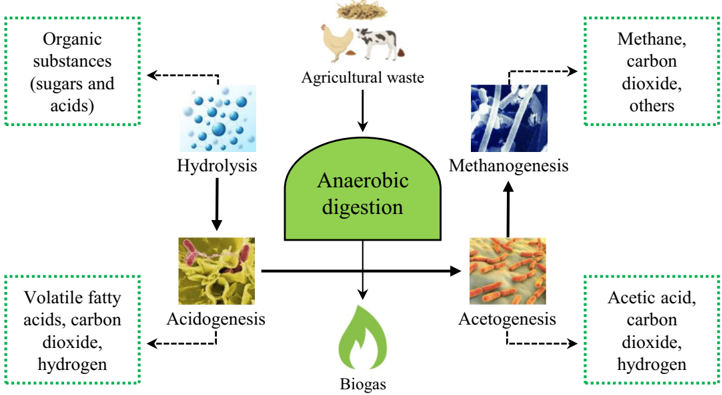
Abstract Anaerobic digestion constitutes a sustainable method for waste management and renewable energy generation, addressing significant environmental and societal challenges. The growing global waste crisis and the increasing momentum toward sustainable energy solutions emphasize the critical need to enhance anaerobic digestion technology for improved efficiency and environmental advantages. This process mitigates waste accumulation, enhances energy security, and reduces greenhouse gas emissions, providing a feasible solution within the framework of a circular bioeconomy. Here, we review the principles of anaerobic digestion and biogas production, focusing on agricultural waste and the utilization of biogas for energy within a sustainable framework. We specifically explore biogas applications in rural and industrial settings, assess the environmental impacts, and discuss the regulatory landscape with insights from China and Europe. This study reveals that the strategic implementation of anaerobic digestion can markedly improve energy yield and sustainability, demonstrating how focused policies and advanced technological practices can optimize biogas utilization. The review enhances comprehension of environmental impacts, emphasizing insights from China and Europe as key examples.
Overview
CoChat Summary
TL;DR
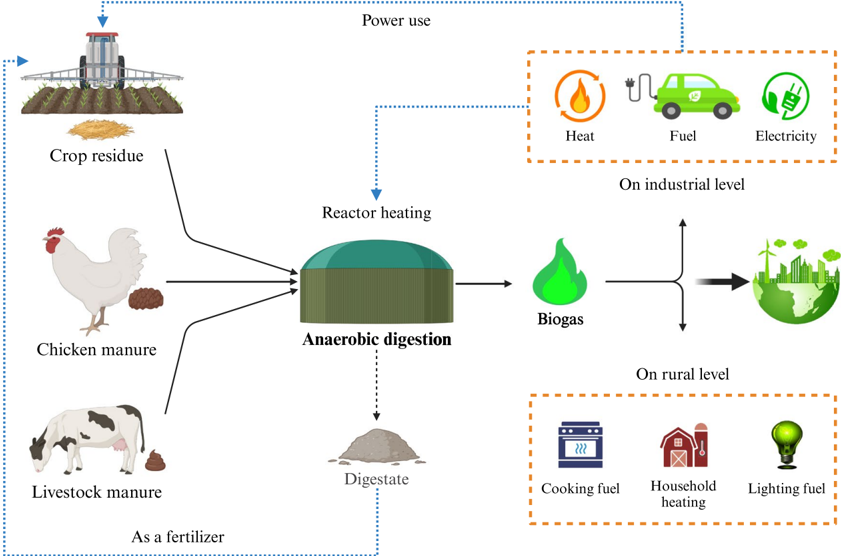
This review examines anaerobic digestion (AD) of agricultural waste for biogas production and sustainable bioenergy recovery, with emphasis on rural and industrial biogas use, environmental impacts, and policy lessons from China and Europe. It argues that strategic AD deployment can improve energy yield and sustainability through circular bioeconomy approaches, digestate valorization, and supportive regulation.
Key findings
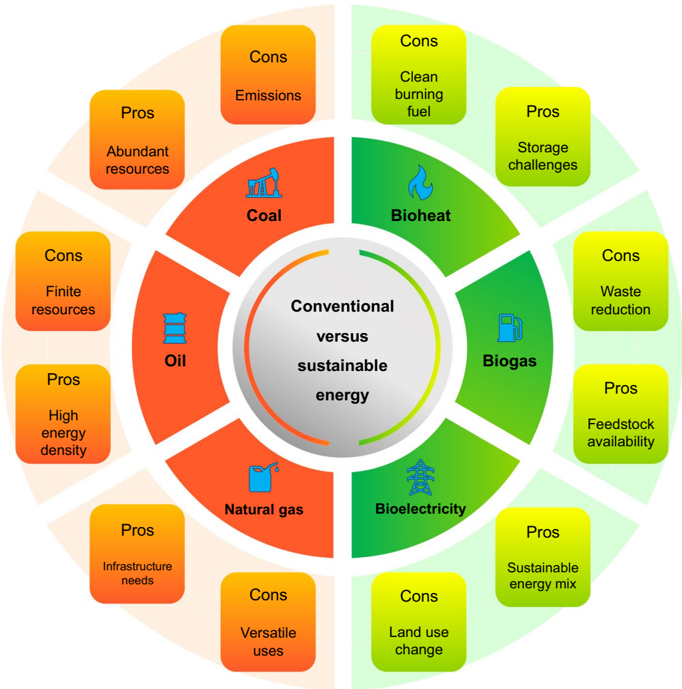
- Global and regional energy statistics show China’s 2022 total energy consumption at 159.4 exajoules and Europe’s at 79.8 exajoules, versus 604 exajoules worldwide; renewable shares were 13.3 exajoules in China and 11.6 exajoules in Europe out of 45.2 exajoules globally. Greenhouse gas emissions in 2021 were 54.6 billion tons worldwide, 13.7 billion tons in China, and 6.8 billion tons in Europe; 2022 CO₂ emissions were 37 billion tons globally, 11.4 billion tons in China, and 5 billion tons in Europe (Table 1).
- China’s biogas sector in 2019 included about 40 million household biogas plants, 118,000 small- and medium-sized plants, and about 8,720 large-scale plants, with annual biogas output of about 19 billion cubic meters (16 billion from household/small-scale and 3 billion from medium/large-scale) and 1.05 million tons of biofertilizer. Europe had 18,843 operational biogas plants in 2021 versus 6,507 in 2009; EU cumulative biogas production reached 654 petajoules in 2015, and biomethane grew by 6 terawatt-hours (0.6 billion cubic meters) in 2021, with Denmark (24%) and Sweden (15%) showing high potential to substitute natural gas with biomethane.
- Table 2 reports 2022 biogas plants at 100,000 in China and 19,910 in Europe; 2021 energy from biogas at 83.3 terawatt-hours in China and 159 terawatt-hours in Europe; and 2022 biogas market values of US$58.2 billion worldwide, US$10.7 billion in China, and US$24.6 billion in Europe.
- LCA examples in Table 3 include a China corn stover/animal manure biogas project with net energy efficiency of 763.9 megawatt-hours per functional unit and a dairy manure biogas project with greenhouse gas reduction of 5,541.4 kg CO₂-eq per functional unit; solid-liquid separation of swine manure reduced global warming, eutrophication, acidification, and human toxicity by 56%, 273%, 83%, and 81%, respectively. Biogas use in combined heat and power was associated with emission reductions of 67%–74% and 13%–30%.
- Raw biogas combustion in a boiler can produce heat at around 75–85% efficiency or higher; combined heat and power units can reach up to 90% efficiency versus 20–45% for stand-alone systems, with electricity accounting for 60% of total output. Biogas upgrading to biomethane can achieve purity above 95–97%, and methane has a global warming potential 25 times that of CO₂ over 100 years.
Methods
- Narrative review of AD principles, biogas production from agricultural waste, biogas utilization in rural and industrial settings, environmental impact assessment, emissions trading, circular bioeconomy, and regulatory frameworks, with specific insights from China and Europe.
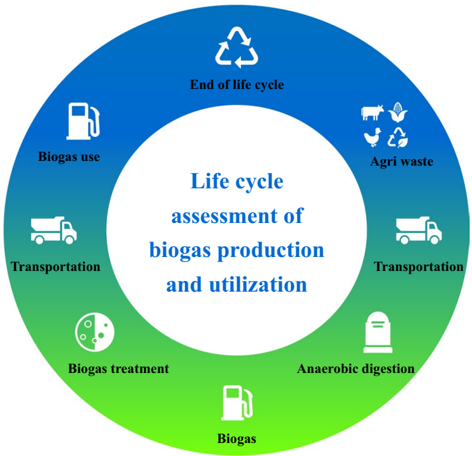
- Uses life cycle assessment (LCA) as a framework, following ISO 14040/14044 stages: goal and scope definition, system boundaries, life cycle inventory, life cycle impact assessment, and interpretation; Table 3 summarizes recent LCA studies on biogas systems.
- Data are drawn from secondary sources and reports, including IEA, EBA, National Bureau of Statistics of China, IRENA, Our World in Data, and peer-reviewed literature; no primary experimental data are reported.
Limitations
- The paper states that lack of readily available inventory data remains a major obstacle to LCA deployment; digestate management faces challenges in nutrient regulation, storage, transportation, and regulatory compliance; high production and utilization costs and competition with other renewables for power generation are critical issues; and improved technical capabilities, stakeholder coordination, and public awareness/acceptance are needed.
- The paper notes that commercializing digestate as a product is challenging under Chinese standards, and that most Chinese digesters are household units with production expanding slower than planned.
- Evident from the text: this is a narrative review without a stated systematic search strategy, inclusion criteria, or quality appraisal; several section headings in the provided text are empty or only fragmentary, and no new experimental validation is presented.
Model-written summary. Check it against the paper before relying on it.
Integrity signals
Registry
Cites
Statistics
Figures

Verification
Claims the paper makes
16 Valid · 7 Not valid · 99 Not checked · 41 Own results and interpretations
The sources with a verdict support this claim; the rest weren’t checked yet, have no full text we could read, or their verdicts aren’t rated yet.
In the paper
“Bioenergy can efficiently mitigate greenhouse gas emissions [108,172].”
§ Anaerobic digestion of agricultural waste for biogas production and sustainable bioenergy recovery: a review > Bioenergy
What the sources say
- Not checked — no full text of the sourcecites [108] 106. Manikandan S, Subbaiya R, Biruntha M, Krishnan RY, Muth- usamy G, Karmegam N (2022) Recent development patterns, utilization and prospective of biofuel production: emerging nano- technological intervention for environmental sustainability -a review. Fuel 314:122757. https:// doi. org/ 10. 1016/j. fuel. 2021. 122757 109. MEE of China (2019) The 13 th five-year plan for national inte- grated rural environment management. https:// engli sh. mee. gov. cn/ Resou rces/ Plans/ Speci al_ Fivey ear_ Plan/ 201902/ t2019 0222_ 693384. shtml. Accessed 31 Dec 2023 110. source
- Supportedcites [172] 155. Yang M, Chen L, Wang J et al (2023) Circular economy strat- egies for combating climate change and other environmental issues. Environ Chem Lett 21:55-80. https:// doi. org/ 10. 1007/ s10311-022-01499-6 173. source
The Land use and land cover section says energy crops grown on marginal land can significantly reduce greenhouse gases. The Food waste management section also says electricity generated from organic-waste methane displaces coal and reduces carbon dioxide emissions. These examples support the claim that bioenergy can mitigate emissions. (LLM, conf=0.88)
states a cause- Asserted: passes — The authors put it forward as true.
- Checkable: passes — It can be checked against evidence.
- Load-bearing: passes — The paper’s conclusions depend on it.
- Based: passes — The paper gives a reason why it holds.
The cited sources support only part of this claim — read each source’s verdict below.
In the paper
“Biogas provides a decentralized and environmentally beneficial option in rural communities with limited access to traditional energy sources [54].”
§ Anaerobic digestion of agricultural waste for biogas production and sustainable bioenergy recovery: a review > Biogas utilization in rural areas
What the sources say
- Partly supportedcites [54] 54. Giwa AS, Ali N, Ahmad I et al (2020) Prospects of China's biogas: fundamentals, challenges and considerations. Energy Rep 6:2973-2987. https:// doi. org/ 10. 1016/j. egyr. 2020. 10. 027 sourceExperimental — accuracy not yet measured
The Introduction describes small, inexpensive household biogas plants used in rural areas and identifies environmental benefits. That supports the decentralized rural option, but the passages do not establish that the communities using it have limited access to traditional energy sources. (LLM, conf=0.84)
plain- Asserted: passes — The authors put it forward as true.
- Checkable: passes — It can be checked against evidence.
- Load-bearing: unclear — It is unclear whether the paper’s conclusions depend on it.
- Based: passes — The paper gives a reason why it holds.
- Partly supported
The cited sources that could be checked couldn’t confirm or dispute this claim.
In the paper
“Rural regions sometimes have difficulties obtaining conventional energy sources [126].”
§ Anaerobic digestion of agricultural waste for biogas production and sustainable bioenergy recovery: a review > Biogas as cooking fuel
What the sources say
- Could not verifycites [126] 120. Osman AI, Chen L, Yang M et al (2023) Cost, environmental impact, and resilience of renewable energy under a changing climate: a review. Environ Chem Lett 21:741-764. https:// doi. org/ 10. 1007/ s10311-022-01532-8 127. sourceExperimental — accuracy not yet measured
The ‘Cost of biomass energy’ section says residential biomass use in rural areas is cost-sensitive, but does not discuss access to conventional energy sources. ‘The need for renewable energy’ discusses countries’ dependence on imported fossil fuels, without identifying rural regions as having difficulty obtaining them. Searches for rural energy access and conventional supply found no passage making the attributed point; page numbers were unavailable in our copy. (LLM, conf=0.74)
hedged- Asserted: passes — The authors put it forward as true.
- Checkable: passes — It can be checked against evidence.
- Load-bearing: passes — The paper’s conclusions depend on it.
- Based: passes — The paper gives a reason why it holds.
- Could not verify
The cited sources support only part of this claim — read each source’s verdict below.
In the paper
“In contrast with synthetic fertilizers, which can potentially induce nutrient leaching and pollution, the utilization of digestate, when employed responsibly, poses a reduced risk of environmental detriment [61].”
§ Anaerobic digestion of agricultural waste for biogas production and sustainable bioenergy recovery: a review > Digestate as a nutrient-rich substance
What the sources say
- Partly supportedcites [61] 61. Herrera A, D'Imporzano G, Zilio M et al (2022) Environmental performance in the production and use of recovered fertilizers from organic wastes treated by anaerobic digestion vs synthetic mineral fertilizers. ACS Sustain Chem Eng 10:986-997. https:// doi. org/ 10. 1021/ acssu schem eng. 1c070 28 sourceExperimental — accuracy not yet measured
In Results and Discussion (page not provided), the paper reports lower overall impacts when the studied recovered fertilizers replaced synthetic fertilizers and credits careful digestate injection and biological stability. But measured nitrate leaching was not significantly different between the digestate and synthetic-fertilizer scenarios, and some toxicity impacts were higher with digestate. The claim therefore overgeneralizes the reduction in environmental risk, particularly if it implies less nutrient leaching. (LLM, conf=0.87)
plainstates a cause- Asserted: passes — The authors put it forward as true.
- Checkable: passes — It can be checked against evidence.
- Load-bearing: unclear — It is unclear whether the paper’s conclusions depend on it.
- Based: passes — The paper gives a reason why it holds.
- Partly supported
The cited sources support only part of this claim — read each source’s verdict below.
In the paper
“Biogas production is crucial in this context, especially for efficiently mitigating methane emissions, a potent greenhouse gas with far greater global warming potential than carbon dioxide [101,167].”
§ Anaerobic digestion of agricultural waste for biogas production and sustainable bioenergy recovery: a review > Emissions trading of biogas production
What the sources say
- Not checked — no full text of the sourcecites [101] 99. Liu Y, Li G, Chen Z et al (2020) Comprehensive analysis of environmental impacts and energy consumption of biomass-to- methanol and coal-to-methanol via life cycle assessment. Energy 204:117961. https:// doi. org/ 10. 1016/j. energy. 2020. 117961 100. Liu Y, Mabee W, Zhang H (2019) Upgrading the development of Hubei biogas with ETS in China. J Clean Prod 213:745-752. https:// doi. org/ 10. 1016/j. jclep ro. 2018. 12. 165 101. Liu Z, Deng Z, He G et al (2021) Challenges and opportunities for carbon neutrality in China. Nat Rev Earth Environ 3:141-155. https:// doi. org/ 10. 1038/ s43017-021 source
- Partly supportedcites [167] 152. van Soest HL, den Elzen MGJ, van Vuuren DP (2021) Net-zero emission targets for major emitting countries consistent with the Paris Agreement. Nat Commun 12:2140. https:// doi. org/ 10. 1038/ s41467-021-22294-x 168. sourceExperimental — accuracy not yet measured
The Results section (‘Breakdown of emissions in the phase-out year’; page unavailable) identifies methane (CH4) as a greenhouse gas, and ‘The influence of definitions’ discusses applying global warming potentials to CH4 and CO2. Neither passage states that methane’s global warming potential is far greater than CO2’s. (LLM, conf=0.83)
plain- Asserted: passes — The authors put it forward as true.
- Checkable: passes — It can be checked against evidence.
- Load-bearing: passes — The paper’s conclusions depend on it.
- Based: passes — The paper gives a reason why it holds.
29 more claims · 1 with their cited sources checked
Create a free account to see all 163 claims and to verify the 29 references still open.
- Probably not a substantial claim. 87
- It may state two separate claims as one. 77
Self-check
Percentages, sums and reported differences re-computed from the paper’s own numbers.
Each contradiction between two passages listed here was confirmed by an independent check.
Rated minor: it would not touch a result — a value no result rests on, a p-value that stays on the same side of the significance level, or a conflict that is clerical, resolved elsewhere in the paper, or outside its own findings.
In the paper
§ Anaerobic digestion of agricultural waste for biogas production and sustainable bioenergy recovery: a review > Environmental impact assessment
“(i) definition of the goal and scope of the study, (ii) defining the system boundaries, (ii) collection and adaptation of life cycle inventory, (iv) conducting the life cycle impact assessment, and (v) results interpretation [141].”
§ Anaerobic digestion of agricultural waste for biogas production and sustainable bioenergy recovery: a review > Environmental impact assessment
“These four phases are explained in the following subsections.”
Rated minor: it would not touch a result — a value no result rests on, a p-value that stays on the same side of the significance level, or a conflict that is clerical, resolved elsewhere in the paper, or outside its own findings.
In the paper
“| Share of non-renewables 2022 (exajoules) | 558.9 | 146 | 69.8 | [43] | | Share of renewables 2022 (exajoules) | 45.2 | 13.3 | 11.6 | [43] |”
§ Anaerobic digestion of agricultural waste for biogas production and sustainable bioenergy recovery: a review > Conclusion
Reported 79.8 · recomputed 81.4
Rated minor: it would not touch a result — a value no result rests on, a p-value that stays on the same side of the significance level, or a conflict that is clerical, resolved elsewhere in the paper, or outside its own findings.
In the paper
§ Anaerobic digestion of agricultural waste for biogas production and sustainable bioenergy recovery: a review > Statistics on conventional and sustainable energy in China and Europe
“Non-renewable energy sources accounted for about 146 exajoules in China, compared to 68.8 exajoules in Europe”
§ Anaerobic digestion of agricultural waste for biogas production and sustainable bioenergy recovery: a review > Conclusion
“| Share of non-renewables 2022 (exajoules) | 558.9 | 146 | 69.8 | [43] |”
Rated minor: it would not touch a result — a value no result rests on, a p-value that stays on the same side of the significance level, or a conflict that is clerical, resolved elsewhere in the paper, or outside its own findings.
In the paper
§ Anaerobic digestion of agricultural waste for biogas production and sustainable bioenergy recovery: a review > Introduction
“Moreover, the global electrical sector primarily depends on natural gas;”
§ Anaerobic digestion of agricultural waste for biogas production and sustainable bioenergy recovery: a review > Conventional energy
“Coal is the primary source of electricity”
Citations
Cites
Recent developments in life cycle assessment
Finnveden, G., Hauschild, M. Z., Ekvall, T., Guinée, J., Heijungs, R., Hellweg, S., Koehler, A., Pennington, D., & Suh, S. (2009) · Journal of Environmental Management · doi:10.1016/j.jenvman.2009.06.018 · Cited by 3,444 · cited 1×
“The scope often delineates the parameters of the evaluation, including the particular categories of agricultural waste, biogas production systems, and biogas utilization processes to be considered [51].”
Rebitzer, G., Ekvall, T., Frischknecht, R., Hunkeler, D., Norris, G., Rydberg, T., Schmidt, W.-P., Suh, S., Weidema, B. P., & Pennington, D. W. (2004) · Environment International · doi:10.1016/j.envint.2003.11.005 · Cited by 2,753
Challenges and opportunities for carbon neutrality in China
Liu, Z., Deng, Z., He, G., Wang, H., Zhang, X., Lin, J., Qi, Y., & Liang, X. (2021) · Nature Reviews Earth & Environment · doi:10.1038/s43017-021-00244-x · Cited by 1,748 · cited 2×
“Biogas production is crucial in this context, especially for efficiently mitigating methane emissions, a potent green-house gas with far greater global warming potential than carbon dioxide [101, 167].”
Biogas: Developments and perspectives in Europe
Scarlat, N., Dallemand, J.-F., & Fahl, F. (2018) · Renewable Energy · doi:10.1016/j.renene.2018.03.006 · Cited by 1,343 · cited 4×
“In Europe, biogas is included in the broader renewable energy framework, aiding in the achievement of sustainable energy objectives [149].”
InfluentialEffects of anaerobic digestion on digestate nutrient availability and crop growth: A review
Möller, K., & Müller, T. (2012) · Engineering in Life Sciences · doi:10.1002/elsc.201100085 · Cited by 1,339 · cited 1×
“The nutrient composition of digestate exhibits variability, which is contingent upon factors, such as the feedstock employed, the specific anaerobic digestion technique employed, and the extent to which solid and liquid components are separated [113].”
Strategies to achieve a carbon neutral society: a review
Chen, L., Msigwa, G., Yang, M., Osman, A. I., Fawzy, S., Rooney, D. W., & Yap, P.-S. (2022) · Environmental Chemistry Letters · doi:10.1007/s10311-022-01435-8 · Cited by 1,326 · cited 2×
“Emis-sions trading is crucial in promoting environmental sustainability and facilitating the shift to a low-carbon economy in the conversion of agricultural waste to biogas [28].”
Self-citationCost, environmental impact, and resilience of renewable energy under a changing climate: a review
Osman, A. I., Chen, L., Yang, M., Msigwa, G., Farghali, M., Fawzy, S., Rooney, D. W., & Yap, P.-S. (2023) · Environmental Chemistry Letters · doi:10.1007/s10311-022-01532-8 · Cited by 1,048 · cited 6×
“Also, the dependability of renewable energy is being improved by advancements in energy storage technology [101, 126].”
InfluentialSelf-citationSystem Boundary Selection in Life-Cycle Inventories Using Hybrid Approaches
Suh, S., Lenzen, M., Treloar, G. J., Hondo, H., Horvath, A., Huppes, G., Jolliet, O., Klann, U., Krewitt, W., Moriguchi, Y., et al. (2004) · Environmental Science & Technology · doi:10.1021/es0263745 · Cited by 1,025 · cited 1×
“In order to conduct a comprehensive life cycle assessment, clear system boundaries should include all pertinent stages and processes associated with the production of biogas from agricultural waste and the energy generation from crude biogas [159].”
Nkoa, R. (2014) · Agronomy for Sustainable Development · doi:10.1007/s13593-013-0196-z · Cited by 940 · cited 1×
“In addition to the nutritional composition, digestate also encompasses organic matter, which has the potential to enhance soil structure and augment water retention capabilities [123].”
Sun, Q., Li, H., Yan, J., Liu, L., Yu, Z., & Yu, X. (2015) · Renewable and Sustainable Energy Reviews · doi:10.1016/j.rser.2015.06.029 · Cited by 924 · cited 1×
“Biogas can be used in industries, such as food processing, manufacturing, and chemical production, to fulfill their own thermal needs [160].”
Research works printed but not linked: 4
- 43. Energy Institute (2023) 2023 statistical review of world energy. In: Energy Inst. https:// www. energ yinst. org/ stati stical-review. Accessed 19 Dec 2023
- 45. European Commission (2021a) Sustainable finance and EU tax- onomy. In: Press release. https:// ec. europa. eu/ commi ssion/ press corner/ detail/ en/ ip_ 21_ 1804. Accessed 10 Jan 2024
- 65. IEA (2021a) Global energy review 2021: Assessing the effects of economic recoveries on global energy demand and CO 2 emis- sions in 2021. In: Int. Energy Agency. https:// www. iea. org/ repor ts/ global-energy-review-2021. Accessed 22 Apr 2023
- 66. IEA (2021b) Global energy review: CO 2 emissions in 2021. In: Int. Energy Agency. https:// www. iea. org/ repor ts/ global-energy- review-co2-emiss ions-in-2021-2. Accessed 3 Apr 2022
Cited by
Biodegradable Waste in Compost Production: A Review of Its Economic Potential
Ansar, A., Du, J., Javed, Q., Adnan, M., & Javaid, I. (2025) · Nitrogen · doi:10.3390/nitrogen6020024 · Cited by 77
Biodigesters for Sustainable Food Waste Management
Meegoda, J. N., Chande, C., & Bakshi, I. (2025) · International Journal of Environmental Research and Public Health · doi:10.3390/ijerph22030382 · Cited by 45
“Policymaking is necessary to outline the general process and expectations for taking the current waste to landfill mentality and promoting the waste to re-use method to reduce greenhouse gas emissions [109].”
DelaVega-Quintero, J. C., Núñez-Pérez, J., Fiallos, M. V. L., Barba, P., Burbano-García, J. L., & Espín-Valladares, R. C. (2025) · Processes · doi:10.3390/pr13113648 · Cited by 65
“This framework is underpinned by national laws such as the Renewable Energy Law, Agri-culture Law, Energy Conservation Law, Livestock Law, and Circular Economy Law, which explicitly support the biogas sector and AD technology [138].”
Adnane, I., Taoumi, H., Lahrech, K., Fertahi, S. E.-D., & Ghodbane, M. (2025) · Biomass and Bioenergy · doi:10.1016/j.biombioe.2025.108006 · Cited by 42
Sustainable agricultural waste management in India: Innovations, challenges, and future perspectives
REDDY, A. R. Y., Kasa, V. P., Samal, B., Dubey, B., Yadav, V. K., & Pandey, D. S. (2025) · Biomass and Bioenergy · doi:10.1016/j.biombioe.2025.108261 · Cited by 58
Effective Valorization of Anaerobic Digestate—A Sustainable Approach to Circular Economy
Dincă, M., Ferdeș, M., Zăbavă, B.-Ș., IONESCU, M., Moiceanu, G., & Paraschiv, G. (2025) · Applied Sciences · doi:10.3390/app15168939 · Cited by 36
Biogas Production in Agriculture: Technological, Environmental, and Socio-Economic Aspects
Pilarski, K., Pilarska, A. A., & Pietrzak, M. B. (2025) · Energies · doi:10.3390/en18215844 · Cited by 38
“Furthermore, they make a notable contribution to the local gross domestic product [9].”
InfluentialHussein, J. B., Workneh, T. S., Kassim, A., Mugodo, K., Melesse, S. F., El‐Mesery, H. S., & Zicheng, H. (2025) · Renewable and Sustainable Energy Reviews · doi:10.1016/j.rser.2025.116076 · Cited by 27
Agricultural biomass wastes and their resource utilization technologies: A review
Yan, F. (2025) · Biomass and Bioenergy · doi:10.1016/j.biombioe.2025.108291 · Cited by 28
Ali, M. M., Dutta, V., Guy, H., Durécu, S., Abi‐Aad, E., Ciotonea, C., & Gennequin, C. (2025) · Sustainable Energy & Fuels · doi:10.1039/d5se00099h · Cited by 21
Cao, Y., Chen, Y., Ren, P., Wang, D., Zhuang, Z., & Zhou, W. (2025) · Applied Thermal Engineering · doi:10.1016/j.applthermaleng.2025.126283 · Cited by 15
Bioenergy production from wastewater using cost-effective ceramic membranes: a review
Ahmad, S. T., Ahmad, R., Shaukat, H., et al. (2025) · Environmental Chemistry Letters · doi:10.1007/s10311-025-01822-x · Cited by 14
Sugarcane Bagasse as a Renewable Energy Resource: A Bibliometric Analysis of Global Research Trends
Aires, F. I. D. S., Freitas, I. S., dos Santos, K. M., Vieira, R. D. S., Dari, D. N., de Sousa, P. G., Serafim, L. F., Ferreira, A. Á. M., da Silva, C. G., Silva, É. D. L. D., et al. (2025) · ACS Sustainable Resource Management · doi:10.1021/acssusresmgt.5c00253 · Cited by 14
Jin, X., Wang, H., Wu, Q., Zhang, J., & Li, S. (2025) · Desalination and Water Treatment · doi:10.1016/j.dwt.2025.101100 · Cited by 12
Niu, Y., Starrett, N., Ahmad, M. I., Wang, S., Li, Y., & Han, T. (2026) · Sustainability · doi:10.3390/su18031478 · Cited by 14
Agriculture as Energy Prosumer: Review of Problems, Challenges, and Opportunities
Sulewski, P., & Wąs, A. (2024) · Energies · doi:10.3390/en17246447 · Cited by 20
Saravanakumar, A., Sudha, M. R., Chen, W., & Vijayakumar, P. (2025) · International Journal of Hydrogen Energy · doi:10.1016/j.ijhydene.2025.01.047 · Cited by 10
Praveen, P., Chatterjee, B., & Mazumder, D. (2025) · Water Air & Soil Pollution · doi:10.1007/s11270-025-07799-1 · Cited by 12
“Biogas is a renewable energy source that is produced from the biodegradation of organic waste materials (such as, food waste, animal manure, and agricultural residues) applying AD (Alengebawy et al., 2024; Gyadi et al., 2024; Jana et al., 2025; Z. Xu et al., 2025).”
InfluentialSekhar, S. J., Narasimman, K., Winsly, B. W., Varghese, A. F., & Mathimani, T. (2025) · Renewable Energy · doi:10.1016/j.renene.2025.123469 · Cited by 12
Zeynali, R., Asadi, M., Ankley, P. J., Mahoney, H., Brinkmann, M., Acharya, B., McPhedran, K. N., & Soltan, J. (2025) · The Science of The Total Environment · doi:10.1016/j.scitotenv.2025.179860 · Cited by 13
Ge, Y., Li, Z., Yuan, Z., Wang, Z., Yan, B., Tao, J., Zhou, S., & Chen, G. (2025) · Bioresource Technology · doi:10.1016/j.biortech.2025.133071 · Cited by 10
Edo, G. I., Mafe, A. N., Ali, A. B. M., Iwanegbe, I., Yousif, E., Oghroro, E. E. A., Igbuku, U. A., Zainulabdeen, K., Owheruo, J. O., Essaghah, A. E. A., et al. (2025) · Sustainable Chemistry One World · doi:10.1016/j.scowo.2025.100145 · Cited by 12
Three-year impacts of composted sewage sludge on CH4 and N2O emissions from rice paddies
Alface, A. B., Phung, L. D., Matsuyama, H., Urakawa, S., & Watanabe, T. (2025) · Process Safety and Environmental Protection · doi:10.1016/j.psep.2025.107502 · Cited by 9
Zgambo, C. P., Zhang, J., & Munthali, R. M. (2025) · Water-Energy Nexus · doi:10.1016/j.wen.2025.07.006 · Cited by 11
Kacaribu, A. A., Aisyah, Y., Febriani, & Darwin (2025) · Resources Chemicals and Materials · doi:10.1016/j.recm.2025.100130 · Cited by 45
Balakrishnan, P., & Arya, R. K. (2026) · Biomass Conversion and Biorefinery · doi:10.1007/s13399-026-07079-w · Cited by 9
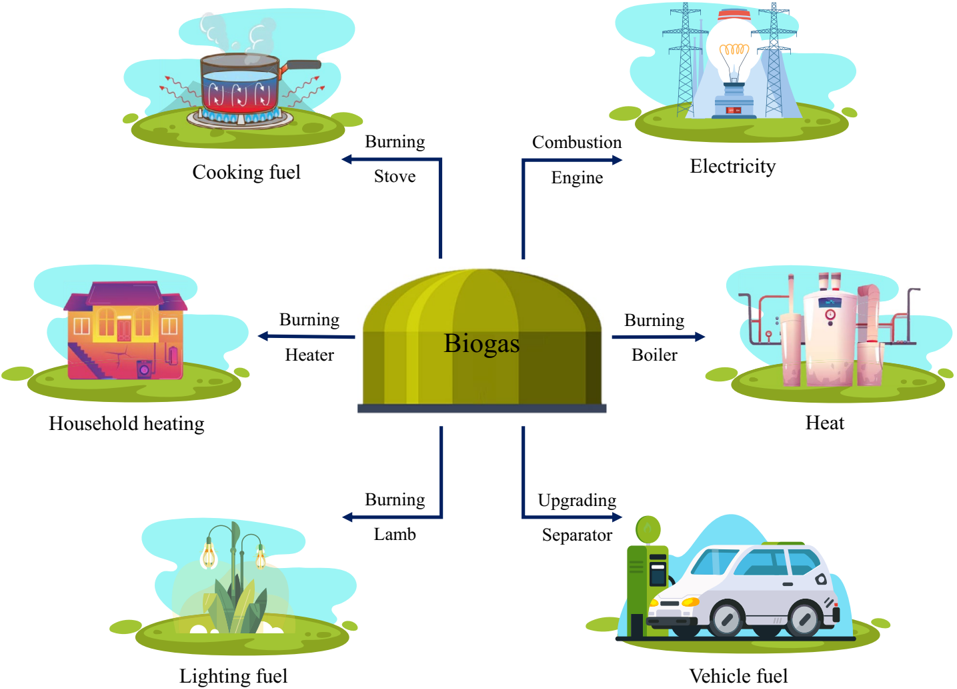
“Figure 9 illustrates biogas applications as a renew - able energy source from agro-waste, including cooking fuel, household heating, and lighting in rural areas, and electricity production, heat generation, and vehicle fuel at industrial scale [ 134].”
Mitigation of nitrogen losses during pig manure management: Impact of manure cleaning technique
Zhang, J., Li, P., Wan, J., Guo, X., Wang, Y., & Wang, J. (2024) · Water-Energy Nexus · doi:10.1016/j.wen.2024.12.001 · Cited by 5
Valorization of Maize Stover into Biogas for Heat and Power Generation: A South African Perspective
Kamusoko, R., & Mukumba, P. (2025) · Fermentation · doi:10.3390/fermentation11060338 · Cited by 7
Pérez, N. P., Cabral, E. A., Bimestre, T. A., et al. (2025) · BioEnergy Research · doi:10.1007/s12155-025-10863-7 · Cited by 6
Spizzirri, E., Maraldi, M., & Valenti, F. (2026) · Energy Reports · doi:10.1016/j.egyr.2025.109000 · Cited by 8
Harnessing energy from food waste via anaerobic digestion: A comprehensive review
Zamel, D., Etman, A. E., Ammar, M. M., Elsabagh, N. M., & Elmasry, D. M. (2026) · Applied Food Research · doi:10.1016/j.afres.2026.101914 · Cited by 7
Ni, Y., Zhang, M., Qian, X., Shen, G., & Mwabonje, O. N. (2025) · Sustainability · doi:10.3390/su17062439 · Cited by 10
Exploring waste activation and mineralization for environmental and economic sustainability in Ghana
Anokye, K., Darko, A. O., Portia, A. W., Amuah, E. E. Y., Sodoke, S., Agya, B. A., Douti, N. B., Kazapoe, R. W., & Bentil, J. (2025) · Cleaner Waste Systems · doi:10.1016/j.clwas.2025.100315 · Cited by 10
Grau, J. M. G., Franceschi, F. F., Ojeda, K. A., & Sánchez-Tuirán, E. L. (2025) · Frontiers in Sustainable Food Systems · doi:10.3389/fsufs.2025.1569522 · Cited by 6
Organic fertilizers synthesized from domestic food waste: A green sustainable approach – A review
Kolawole, F. O., Kolawole, I. D., Sanni-manuel, B. A., Kolawole, G. O., Bello, S. A., Kolade, O. S., Oni, K. O., Kolawole, S. K., & Kolawole, V. A. (2025) · Bioresource Technology Reports · doi:10.1016/j.biteb.2025.102231 · Cited by 10
Abdulnaim, A. M., Elkholy, A. H., Elmously, M. A., et al. (2025) · Energy · doi:10.1016/j.energy.2025.138312 · Cited by 5
Tongco, J. V., Park, S. H., Kim, S. I., & Hwang, S. (2025) · Energies · doi:10.3390/en18195064 · Cited by 5
“AD is a biological process wherein microorganisms break down the biodegradable organic material in an oxygen-free environment, converting it into valuable byproducts: a methane-rich biogas and a nutrient-rich digestate that can be used as biofertilizer [5,6].”
Mahadevan, V., Raja, S., Rusho, M. A., Selvaraj, V. K., Subramanian, J., Sharma, S. K., Arunachalam, K. P., & Ramaswamy, K. (2026) · Energy Exploration & Exploitation · doi:10.1177/01445987261427122 · Cited by 8
Mawthoh, A. B. T., Seram, D., Haobijam, J. W., Ayrılmış, N., Subramani, T., Naveen Kumar, P., Patil, H., & Aruljothi, J. (2026) · Environment Development and Sustainability · doi:10.1007/s10668-026-07853-w · Cited by 8
Li, Y., Campos, L. C., & Hu, Y. (2025) · Environment Development and Sustainability · doi:10.1007/s10668-025-06702-6 · Cited by 16
Advances in synthetic methanotrophy for sustainable C1 bioconversion
Tahiraj, C., Hille, L., Brunsbach, K., et al. (2025) · Trends in biotechnology · doi:10.1016/j.tibtech.2025.10.016 · Cited by 4
Gautam, S., Asirvatham, L. G., Rakshith, B. L., et al. (2026) · Scientific Reports · doi:10.1038/s41598-026-37608-6 · Cited by 4
“Salifu et al. 22 produced shea kernel/groundnut shell briquettes with exceptional energy density (26.15 MJ kg − 1 ).”
InfluentialValorization of Food Processing By-Products: A Sustainable Approach for a Circular Bioeconomy
Gonal, B. N., Ravikumar, S. K., Pattanad, V. B., Patil, R. L., & Arakera, S. B. (2026) · Food Ethics · doi:10.1007/s41055-026-00208-1 · Cited by 4
“This gives a sizable organic waste stream a useful purpose in addition to lowering dependency on fossil fuels (Alengebawy et al. 2024 ).”
Zhang, G., Li, J., Li, J., Liu, S., Lv, L., Liang, J., Tao, X., & Zou, W. (2026) · Biomass and Bioenergy · doi:10.1016/j.biombioe.2026.109320 · Cited by 5
Kashem, S. B. A., Firoz, M., Ali, M. W., & Bhuiyan, A. A. (2026) · Biofuels · doi:10.1080/17597269.2026.2697538 · Cited by 6
Evaluation of pig farming residue as substrate for biomethane production via anaerobic digestion
Häner, J., Neradko, A., Weinrich, S., Gausling, M., Krüp, B., Wetter, C., & Nelles, M. (2025) · Biomass Conversion and Biorefinery · doi:10.1007/s13399-024-06425-0 · Cited by 9
“The conversion of agricultural waste like pig slurry to biomethane facilitates circular economy principles by providing energy from waste and recycling nutrients back into agricultural systems, thus minimizing environmental impacts while enhancing resource efficiency [86].”
Cultivated meat meets upcycling: Unlocking the potential of agricultural side-streams
Charteris, C., & le Coutre, J. (2025) · Future Foods · doi:10.1016/j.fufo.2025.100726 · Cited by 6
Circularity Between Aquaponics and Anaerobic Digestion for Energy Generation
Paes, J. L., Guimarães, C. G., Gomes, A. D. S., et al. (2025) · AgriEngineering · doi:10.3390/agriengineering7050129 · Cited by 4
“This process aims to produce clean and renewable energy in the form of biogas along with organic fertilizers [13–16].”
Zhang, K., Guo, H., Klitzsch, N., Xia, D., Hu, Z., Liu, X., Zhang, B., & Chen, H. (2025) · International Biodeterioration & Biodegradation · doi:10.1016/j.ibiod.2025.106122 · Cited by 4
Stepanov, N., Senko, O. V., Aslanli, A., Maslova, O. V., & Efremenko, E. N. (2025) · Fermentation · doi:10.3390/fermentation11060352 · Cited by 7
Alfa, K. A., Saleh, N. A., Ghimbeu, C. M., Réty, B., Platel, V., & Hort, C. (2025) · Chemical Engineering Journal Advances · doi:10.1016/j.ceja.2025.100797 · Cited by 5
N’guessan, A. R., Bi, Y. C. T., Yapo, E. G.-A. S., Koffi, A. R. H., Yebouet, F. O., Campitelli, A., Aka, B., & Djéni, T. N. (2025) · Clean Technologies · doi:10.3390/cleantechnol7040089 · Cited by 5
“The process offers multiple benefits: pathogen reduction through thermophilic conditions and pH changes, greenhouse gas mitigation through methane capture, and production of high-quality organic fertilizer with improved nutrient availability [13,14].”
Popich, M. R., Nogueira, M., & Fragoso, R. D. A. (2026) · Energies · doi:10.3390/en19020289 · Cited by 5
Nwanegbo, E., Mollashahi, S., Ferchau, E., Krause, H., & Eckart, S. (2026) · Bioresource Technology · doi:10.1016/j.biortech.2026.134102 · Cited by 6
Goswami, P. K., Salahuddin, M., Abdel‐Wareth, A. A. A., & Lohakare, J. (2026) · Poultry Science · doi:10.1016/j.psj.2026.106646 · Cited by 11
Ayua, T. J., Ambrose, I. S., & Omaku, D. S. (2026) · BMC Environmental Science · doi:10.1186/s44329-026-00048-8 · Cited by 5
“This result agrees with the report of [6] that the survival and activity of methanogenic bacteria, which are extremely sensitive to pH variations, depend on the pH and alkalinity acids in a digester being stabilized prior to biogas generation.”
Gunawan, T., Gaol, I. N. L., Nurherdiana, S. D., & Othman, M. H. D. (2026) · Journal of Porous Materials · doi:10.1007/s10934-025-01913-8 · Cited by 5
Zhu, Y. X., Wu, J. K., Huang, Y., Zou, Q. F., Fang, M. X., & Jiang, L. (2026) · Separation and Purification Technology · doi:10.1016/j.seppur.2026.137871 · Cited by 3
Adeoba, M. I., Ngwangwa, H., Masebe, T. M., & Pandelani, T. (2026) · Sustainability · doi:10.3390/su18104833 · Cited by 3
The Role of Livestock in Circular Agriculture and Waste Valorisation
Mata, F., Jesus, M. S., & Santos, J. (2026) · Sustainability · doi:10.3390/su18115780 · Cited by 5
Kowalski, Z., & Makara, A. (2025) · Energies · doi:10.3390/en18102579 · Cited by 4
State-of-the-Art in algal biofuel research: Waste- algae as a sustainable energy solution
Karmakar, R., Behera, N. R., Mandal, A., Sharma, P. K., Toomey, J. B., Kundu, K., Rajor, A., Dhir, A., Bhattacharya, S., Sharma, M., et al. (2025) · The Journal of Solid Waste Technology and Management · doi:10.5276/jswtm/iswmaw/513/2025.385 · Cited by 3
Rolewicz-Kalińska, A., Lelicińska-Serafin, K., & Manczarski, P. (2025) · Energies · doi:10.3390/en18020385 · Cited by 3
The Synergy Potential of Energy and Agriculture—The Main Directions of Development
Švažas, M., & Navickas, V. (2025) · Energies · doi:10.3390/en18051031 · Cited by 5
Mesthrige, T. G., Yu, B., Herat, S., & Kaparaju, P. (2025) · Biomass and Bioenergy · doi:10.1016/j.biombioe.2025.107987 · Cited by 2
Ampese, L. C., Ziero, H. D. D., Piñas, J. A. V., Martins, G., & Forster‐Carneiro, T. (2025) · ACS Sustainable Chemistry & Engineering · doi:10.1021/acssuschemeng.5c02430 · Cited by 4
Life cycle assessment of large-scale integrated organic crop-egg production in Brazil
Savian, M., & Holden, N. M. (2025) · The Science of The Total Environment · doi:10.1016/j.scitotenv.2025.180393 · Cited by 2
Seruga, P., Wilk, M., Cibis, E., Urbanowska, A., & Niedźwiecki, Ł. (2025) · Biomass and Bioenergy · doi:10.1016/j.biombioe.2025.108713 · Cited by 2
Terrones, V. B. (2026) · Journal of Environmental Science and Health Part B · doi:10.1080/03601234.2026.2655061 · Cited by 6
“[32,59,74,75] Epidemiological and monitoring studies in South and Southeast Asia link seasonal burning peaks to higher respiratory hospital admissions, premature mortality and contributions of up to roughly a quarter of seasonal PM 2 .”
Pimenowa, O., Rembisz, W., Udova, L., Moldavan, L., Капранов, Я. В., Iwanowska, B., & Sitnicka, S. (2026) · Energies · doi:10.3390/en19081891 · Cited by 3
Masudin, I., Restuputri, D. P., & Handayani, D. I. (2026) · Circular Economy and Sustainability · doi:10.1007/s43615-026-00950-y · Cited by 4
Biomass-Derived Biogas, Biochar and Bio-oil: Modification & Upgrading for Industrial Applications
Gaqa, S., & Linganiso, L. Z. (2026) · BioEnergy Research · doi:10.1007/s12155-026-11011-5 · Cited by 2
Brou, A. P. E., Gbiete, D., Nougbléga, Y., & Narra, S. (2026) · Frontiers in Bioengineering and Biotechnology · doi:10.3389/fbioe.2026.1845247 · Cited by 2
“This limitation is scientifically important because AD performance is highly sensitive to substrate physicochemical variability, and optimization data generated from one geographical context may not be reliably transferable to another (Alengebawy et al., 2024; Trujillo-Reyes et al., 2024).”
Dong, J., Wang, R., Tan, S., et al. (2026) · Chemical Engineering Journal · doi:10.1016/j.cej.2026.178744 · Cited by 2
Oliveira, L., & Lucas, M. R. (2026) · Food and Humanity · doi:10.1016/j.foohum.2026.101337 · Cited by 4
Perspectives for using sweet potatoes as raw material for bioethanol production in Brazil
Cabral, M. J. D. S., do Nascimento, S. A., Souza, R. F. A., Soares, M. A., Evaristo, A. B., & Silva, E. D. B. (2025) · Brazilian Journal of Biology · doi:10.1590/1519-6984.293624 · Cited by 4
Negahban, V., Ebrahimi‐Nik, M., & Rohani, A. (2025) · PLoS ONE · doi:10.1371/journal.pone.0332972 · Cited by 5
Idoko, I. P., Akindele, J. S., Imarenakhue, W. U., et al. (2024) · International Journal of Scientific Research in Science and Technology · doi:10.32628/ijsrst241161112 · Cited by 2
The emerging role of biomass in complementing a renewable energy portfolio: A Review
Hubbe, M. A., Cho, S.-M., Giraldo, J. A. P., Garcia-Vallejo, M. C., Yao, Y., Li, F., & Park, S. (2025) · BioResources · doi:10.15376/biores.20.3.hubbe · Cited by 4
Salim, A. A., Ahmed, A., Hassan, A. W., Racheal, H. M., Abiram, D. D., Salisu, U. K., Albert, R. K., & Babangida, B. A. (2025) · UMYU Scientifica · doi:10.56919/usci.2542.020 · Cited by 2
Solarte‐Toro, J. C., Ortiz‐Sanchez, M., Alzate, C. A. C., et al. (2025) · Food and Bioproducts Processing · doi:10.1016/j.fbp.2025.08.006 · Cited by 1
Circular Economy Transitions for Advanced Biofuel Supply Chains
Bedru, T. K., Degaga, Y. A., Pachiyappan, J., Periyasamy, S., & Jayakumar, M. (2025) · Palgrave advances in bioeconomy: economics and policies · doi:10.1007/978-3-031-86934-1_2 · Cited by 2
Energy Transition in Industry as a Viable Path to Sustainable Decarbonization
Murillo-Jiménez, H., Centeno-Alarcón, M., & Buele, J. (2025) · IOP Conference Series Earth and Environmental Science · doi:10.1088/1755-1315/1544/1/012003 · Cited by 4
Mngadi, S. Z., Tetteh, E. K., Khumalo, S. M., & Rathilal, S. (2025) · Energies · doi:10.3390/en18205396 · Cited by 3
Mishamandani, A. S., Asfand, F., & Fadlallah, S. O. (2025) · Energy · doi:10.1016/j.energy.2025.139069 · Cited by 1
The future of microbes as alternative sources: advancements, challenges, and opportunities
Karami, H., Asgari, S., Faraji, H., Ghassami, F., Mohamed, S. E. R., Agah, S., & Nejad, A. S. M. (2025) · Elsevier eBooks · doi:10.1016/b978-0-443-33345-3.00033-x · Cited by 1
Nsubuga, D., & Mtavangu, S. G. (2026) · Waste as a resource · doi:10.1007/978-3-031-96805-1_19 · Cited by 3
Biogas as a Tool for Climate Change Mitigation: Greenhouse Gas Reduction Pathways
Akingba, O. O., Soyoye, B. O., & Agbetoye, L. A. S. (2025) · Greener Journal of Environment Management and Public Safety · doi:10.15580/gjemps.2026.1.121525192 · Cited by 2
“At this stage, there is breakdown of complex organic macromolecules such as proteins, lipids and carbohydrates into smaller and compounds that are more soluble (Alengebawy et al., 2024).”
Decision-Support Analysis of Biomethane Infrastructure Options Using the TOPSIS Method
Ansone, A., Rozentāle, L., Rochas, C., & Blumberga, D. (2026) · Sustainability · doi:10.3390/su18021086 · Cited by 3
Macheli, L., Mukeru, B. M., Duma, Z. G., Patel, B., & Jewell, L. L. (2026) · Renewable and Sustainable Energy Reviews · doi:10.1016/j.rser.2026.116808 · Cited by 2
Wang, X., Wang, X., Huang, J., & Zuo, X. (2026) · Industrial Crops and Products · doi:10.1016/j.indcrop.2026.122948 · Cited by 2
Liquid digestate treatment potential of five green microalgae in non-axenic cultures
Sobolewska, E., Borowski, S., & Nowicka-Krawczyk, P. B. (2026) · Scientific Reports · doi:10.1038/s41598-026-45636-5 · Cited by 2
Degboe, T., Edouard, N. N., Djiyergou, L., Hulu, J. P. M. T., Djibo, M. I., Wekpon, D. M. H., Bulonza, J.-C., & NZAWELE, B. D. (2026) · Journal of Geoscience and Environment Protection · doi:10.4236/gep.2026.144005 · Cited by 1
Chaoui, A., Farsad, S., Hamou, A. B., Amjlef, A., Nouj, N., Saghir, Y., Benafqir, M., Ez-zahery, M., & Alem, N. E. (2026) · International Journal of Environmental Research · doi:10.1007/s41742-026-01074-9 · Cited by 1
Evaluation of Methane Yield Prediction Models for Anaerobic Digestion of Agro-Industrial Biomass
Ziero, H. D. D., Romeiro, D. C., Ampese, L. C., et al. (2026) · Industrial & Engineering Chemistry Research · doi:10.1021/acs.iecr.5c05263 · Cited by 1
Synthesis and applications of graphene oxide from agricultural wastes: a review
Ikudayisi-Ugbe, A. V., Abdus-Salam, N., & Adegoke, H. I. (2026) · Discover Chemistry. · doi:10.1007/s44371-026-00653-1 · Cited by 1
Optimization of Biogas Generation from an Anaerobic Digester: A Review
Ogunniyi, O. J., Mbohwa, C., Onu, P., et al. (2026) · doi:10.3390/materproc2026031005 · Cited by 1
Sadik, H. H., Mohammed, J. H., Tankou, C. M., Beyegue-Djonko, H., Chotangui, A. H., & Shuker, F. M. (2026) · Discover Sustainability · doi:10.1007/s43621-026-03408-1 · Cited by 4
“Biogas systems similarly depend on local energy prices and alternative fuel options [54].”
Evaluating the Performance of Biogas Plants Operating on Organic Waste: A Practical Approach
Pochwatka, P. (2026) · Energies · doi:10.3390/en19102337 · Cited by 1
Implications of biogas adoption on Africa's SDGs: A systematic review
Tariku, G. D., Kebede, S. A., Melak, D., & Awoke, W. (2026) · Energy Exploration & Exploitation · doi:10.1177/01445987261451888 · Cited by 1
“Biogas is climate-smart renewable energy produced when microorganisms break down organic materials like food waste or manure without oxygen, through anaerobic digestion (Alengebawy et al., 2024; Mertins and Wawer, 2022).”
Metadata
- Authors
- Alengebawy, A., Ran, Y., Osman, A. I., Jin, K., Samer, M., & Ai, P.
- Affiliations
- Huazhong Agricultural University (CN)
- Queen's University Belfast (GB)
- Cairo University (EG)
- Corresponding author
- Osman, Ahmed I.
- Ai, Ping
- Venue
- Environmental Chemistry Letters
- Published
- 2024-10-26
- Volume
- 22
- Issue
- 6
- Pages
- 2641-2668
- ISSN
- 1610-3653 (ISSN-L)
- 1610-3661
- OpenAlex
- W4403754421
- Cited by
- 247
- References
- 138
- Citations by year
- 2026: 153 · 2025: 90 · 2024: 4
- FWCI
- 45.66
- Type
- journal article
- Language
- en
- Open access
- hybrid
- doi.org
- Licence
- cc-by
- creativecommons.org/licenses/by/4.0 (tdm)
- creativecommons.org/licenses/by/4.0 (vor)
- Locations
- Environmental Chemistry Letters (publishedVersion, cc-by)
- Research Portal (Queen's University Belfast) (submittedVersion, cc-by)
- Funders
- SEUPB (Bryden Centre project (Project ID VA5048))
- Topics
- Physical Sciences › Energy › Renewable Energy, Sustainability and the Environment › Anaerobic Digestion and Biogas Production
- Physical Sciences › Engineering › Biomedical Engineering › Biofuel production and bioconversion
- Physical Sciences › Environmental Science › Environmental Engineering › Microbial Fuel Cells and Bioremediation
- Keywords
- anaerobic digestion, agricultural waste, biogas production, bioenergy recovery, waste management, circular bioeconomy, greenhouse gas emissions reduction, biogas utilization, energy policy, rural energy, industrial energy
About these checks
Registry, retraction, Cites and statistics results are computed, not judged, with one exception: a printed reference that no index lists is read once by a model before it counts as a citation error. Claims are extracted by a model and kept only when their quote appears verbatim in the text; each cited source is then checked, with a model’s help, for whether it says what the claim relies on. Those verdicts can be wrong — read the claim’s quote and the cited source before relying on one.
The claim verdicts this report counts are experimental: their accuracy is not yet measured.
A language model drew the claims from the paper on 2026-10-10, under version 3 of the claim definition (model deepseek-v4.1-flash, prompt extract-v3).
A second model labelled each claim on 2026-10-10 (model jev-1.13-20260917, definition revision gold-guideline-v0.2).
Cited sources are checked with a language model’s help (gpt-6-sol).
Statistics and arithmetic are recomputed, not judged.
Confidence bands are shown only for fields calibrated on our annotated test set. None is calibrated yet, so no band is shown.
What counts as a claim ›How we measure confidence ›How we check this ›
Are you an author, or do you see a problem with this page? Request a review
Data sources
Bibliographic data: Semantic Scholar, OpenAlex, Crossref.
Contains information from the Semantic Scholar Academic Graph Datasets, made available under the ODC Attribution License (ODC-BY 1.0).
Semantic Scholar’s data is described in: Kinney, R., et al. (2023). The Semantic Scholar Open Data Platform. arXiv:2301.10140.
