

A practical guide to multi-objective reinforcement learning and planning
Open accessThe DOI matches its Crossref record; 218 of the 223 references it cites were found in a registry or an index.
Abstract
Real-world sequential decision-making tasks are generally complex, requiring trade-offs between multiple, often conflicting, objectives. Despite this, the majority of research in reinforcement learning and decision-theoretic planning either assumes only a single objective, or that multiple objectives can be adequately handled via a simple linear combination. Such approaches may oversimplify the underlying problem and hence produce suboptimal results. This paper serves as a guide to the application of multi-objective methods to difficult problems, and is aimed at researchers who are already familiar with single-objective reinforcement learning and planning methods who wish to adopt a multi-objective perspective on their research, as well as practitioners who encounter multi-objective decision problems in practice. It identifies the factors that may influence the nature of the desired solution, and illustrates by example how these influence the design of multi-objective decision-making systems for complex problems.
Overview
The claims and statistics of this paper haven’t been checked yet.
Free: it reads the open-access text and checks the first 5 claims that cite a source we can check. Create a free account to check every claim.
Integrity signals
Registry
Cites
Statistics
Figures
Verification
Claims the paper makes
The claims and statistics of this paper haven’t been checked yet.
Free: it reads the open-access text and checks the first 5 claims that cite a source we can check. Create a free account to check every claim.
Claims other papers make about this one
Each is checked against this paper’s own text: does it say what the citing paper says it does?
The source backs part of the claim, not all of it — or backs it for a different population, condition or comparison.
In the citing paper
“nl-MOMDPs are widely recognized in the reinforcement literature as particularly difficult to solve [26,27], and may admit of no computationally tractable exact solutions.”
From Phenomenal interface theory: a model for basal consciousness (2025) · cites this paper as [27]
Experimental — accuracy not yet measuredThe cited source says what the claim attributes to it.
In the citing paper
“The task faced by the bee is thus best modelled as a nonlinear multi-objective Markov Decision Process (nl-MOMDP) [26,27].”
From Phenomenal interface theory: a model for basal consciousness (2025) · cites this paper as [27]
Self-check
Percentages, sums and reported differences re-computed from the paper’s own numbers.
The self-check needs the paper’s full text.
Citations
Cites
A fast and elitist multiobjective genetic algorithm: NSGA-II
Deb, K., Pratap, A., Agarwal, S., & Meyarivan, T. (2002) · IEEE Transactions on Evolutionary Computation · doi:10.1109/4235.996017 · Cited by 50,053 · cited 1×
“…best vector from a solution set S according to: π∗ = arg max π∈S u(Vπ), (17) so it helps if the user has a larger variety of value vectors to select from.2 In multi-objective optimisation, this idea has been used to create algorithms that explicitly look for diverse solutions [Deb et al., 2002].”
MethodProximal Policy Optimization Algorithms
Schulman, J., Wolski, F., Dhariwal, P., Radford, A., & Klimov, O. (2017) · arXiv · doi:10.48550/arxiv.1707.06347 · Cited by 40,403
Human-level control through deep reinforcement learning
Mnih, V., Kavukcuoglu, K., Silver, D., Rusu, A. A., Veness, J., Bellemare, M. G., Graves, A., Riedmiller, M., Fidjeland, A. K., Ostrovski, G., et al. (2015) · Nature · doi:10.1038/nature14236 · Cited by 30,357 · cited 2×
“Deep reinforcement learning methods [Mnih et al., 2015, Lillicrap et al., 2015] have shown to scale beyond finite and discrete spaces to problem domains with high-dimensional, continuous state and action spaces.”
MethodReinforcement Learning: An Introduction
(2005) · IEEE Transactions on Neural Networks · doi:10.1109/tnn.2004.842673 · Cited by 24,496
Continuous control with deep reinforcement learning
Lillicrap, T. P., Hunt, J. J., Pritzel, A., Heess, N., Erez, T., Tassa, Y., Silver, D., & Wierstra, D. (2015) · arXiv · doi:10.48550/arxiv.1509.02971 · Cited by 10,782 · cited 2×
“In the second stage, the learned skills are used in a hierarchical version of DDPG [85] to produce a policy coverage set for the MOMDP.”
BackgroundMethodMultiobjective evolutionary algorithms: a comparative case study and the strength Pareto approach
Zitzler, E., & Thiele, L. (1999) · IEEE Transactions on Evolutionary Computation · doi:10.1109/4235.797969 · Cited by 8,798
Model-Agnostic Meta-Learning for Fast Adaptation of Deep Networks
Finn, C., Abbeel, P., & Levine, S. (2017) · arXiv · doi:10.48550/arxiv.1703.03400 · Cited by 8,512
Santos, A. G., da Rocha, G. O., & de Andrade, J. B. (2019) · Scientific Reports · doi:10.1038/s41598-018-37186-2 · Cited by 8,495
Nash, J. (1951) · The Annals of Mathematics · doi:10.2307/1969529 · Cited by 7,002
Nash, J. (1989) · Cournot Oligopoly · doi:10.1017/cbo9780511528231.007 · Cited by 5,595
Jupyter Notebooks – a publishing format for reproducible computational workflows
Thomas, K., Benjamin, R.-K., Fernando, P., Brian, G., Matthias, B., Jonathan, F., Kyle, K., Jessica, H., Jason, G., Sylvain, C., et al. (2016) · Positioning and Power in Academic Publishing: Players, Agents and Agendas · doi:10.3233/978-1-61499-649-1-87 · Cited by 3,063
Multiobjective evolutionary algorithms: A survey of the state of the art
Zhou, A., Qu, B.-Y., Li, H., Zhao, S.-Z., Suganthan, P. N., & Zhang, Q. (2011) · Swarm and Evolutionary Computation · doi:10.1016/j.swevo.2011.03.001 · Cited by 2,255
Correlated Equilibrium as an Expression of Bayesian Rationality
Aumann, R. J. (1987) · Econometrica · doi:10.2307/1911154 · Cited by 1,613 · cited 2×
“Suitable solution concepts for dealing with decision making between self-interested agents are game theoretic equilibria (e.g., Nash equilibria [Nash, 1951], correlated equilibria [Aumann, 1987]).”
BackgroundTree-Based Batch Mode Reinforcement Learning
Ernst, D., Geurts, P., & Wehenkel, L. A. (2005) · Journal of Machine Learning Research · doi:10.5555/1046920.1088690 · Cited by 1,351
Ortúzar, J. D. D., & Willumsen, L. G. (2011) · doi:10.1002/9781119993308 · Cited by 1,220 · cited 1×
“Deciding on the modes of transportation typically involves a number of objectives, such as minimising travel time and cost whereas maximising comfort and reliability [Ortúzar and Willumsen, 2011, Ramos et al., 2020, Mannion et al., 2016].”
Background(2015) · Journal of Machine Learning Research · Cited by 1,119
Multi-objective Optimisation Using Evolutionary Algorithms: An Introduction
Deb, K. (2011) · Multi-objective Evolutionary Optimisation for Product Design and Manufacturing · doi:10.1007/978-0-85729-652-8_1 · Cited by 995
van Hasselt, H. P. (2010) · Centrum Wiskunde & Informatica (CWI), the national research institute for mathematics and computer science in the Netherlands · Cited by 839
Many-Objective Evolutionary Algorithms: A Survey
Li, B., Li, J., Tang, K., & Yao, X. (2015) · ACM Computing Surveys · doi:10.1145/2792984 · Cited by 815 · cited 1×
“…the task of handling problems with many objectives (usually defined as four or more objectives) has emerged as a distinct sub-field, in recognition that algorithms which work well for a small number of objectives may scale poorly to many objectives [Von Lücken et al., 2014, Li et al., 2015].”
BackgroundA Survey on Policy Search for Robotics
Deisenroth, M. P. (2011) · Foundations and Trends in Robotics · doi:10.1561/2300000021 · Cited by 798 · cited 1×
“In order to learn in domains with continuous state-action spaces and where the state is not fully observable, policy search or actor-critic algorithms are usually considered [Deisenroth et al., 2013].”
MethodA review of maximum power point tracking algorithms for wind energy systems
Abdullah, M. A., Yatim, A. H. M., Tan, C. W., & Saidur, R. (2012) · Renewable and Sustainable Energy Reviews · doi:10.1016/j.rser.2012.02.016 · Cited by 770 · cited 2×
“Single-turbine control and design has been well-explored in the literature [3, 99].”
BackgroundMethodWallach, W., & Allen, C. (2009) · Oxford University Press · doi:10.1093/acprof:oso/9780195374049.001.0001 · Cited by 711 · cited 1×
“However, in important domains where ethical or moral issues become apparent, single-objective approaches require explicitly combining these factors together with other objectives (such as economic outcomes) in a way that may be unacceptable to many people [Wallach and Allen, 2008].”
BackgroundUniversal Value Function Approximators
Schaul, T., Horgan, D., Gregor, K., & Silver, D. (2015) · Cited by 701
A Survey of Multiobjective Evolutionary Algorithms based on Decomposition
Trivedi, A., Srinivasan, D., Sanyal, K., & Ghosh, A. (2016) · IEEE Transactions on Evolutionary Computation · doi:10.1109/tevc.2016.2608507 · Cited by 549
A Survey of Multi-Objective Sequential Decision-Making
Roijers, D. M., Vamplew, P., Whiteson, S., & Dazeley, R. (2013) · Journal of Artificial Intelligence Research · doi:10.1613/jair.3987 · Cited by 461 · cited 17×
“A linear utility function cannot accurately represent non-linear preferences [Roijers et al., 2013].”
BackgroundMethodInfluentialSelf-citationSilver, D., Singh, S., Precup, D., & Sutton, R. S. (2021) · Artificial Intelligence · doi:10.1016/j.artint.2021.103535 · Cited by 445
Deep Reinforcement Learning for Multiobjective Optimization
Li, K., Zhang, T., & Wang, R. (2021) · IEEE Transactions on Cybernetics · doi:10.1109/tcyb.2020.2977661 · Cited by 424 · cited 1×
“Using deep networks as non-linear function approximators for handling multiobjective optimisation problems has been on the rise the past few years [4, 82, 103, 109, 164].”
BackgroundOptimization of Molecules via Deep Reinforcement Learning
Zhou, Z., Kearnes, S., Li, L., Zare, R. N., & Riley, P. (2019) · Scientific Reports · doi:10.1038/s41598-019-47148-x · Cited by 401
Learning to Adapt in Dynamic, Real-World Environments through Meta-Reinforcement Learning
Nagabandi, A., Clavera, I., Liu, S., Fearing, R. S., Abbeel, P., Levine, S., & Finn, C. (2018) · arXiv · doi:10.48550/arxiv.1803.11347 · Cited by 370
Zhang, Z., Chong, A., Pan, Y., Zhang, C., & Lam, K. P. (2019) · Energy and Buildings · doi:10.1016/j.enbuild.2019.07.029 · Cited by 339 · cited 2×
“…systems [Lacerda, 2017], power systems [Deng and Liu, 2018, Deng et al., 2020, Wang et al., 2019, Mello et al., 2020], building management [Zhang et al., 2019], traffic management [Jin and Ma, 2019], manufacturing [Govindaiah and Petty, 2019, Lepenioti et al., 2020, Dornheim and Link,…”
BackgroundA review on wind turbine control and its associated methods
Novaes Menezes, E. J., Araújo, A. M., & Bouchonneau da Silva, N. S. (2018) · Journal of Cleaner Production · doi:10.1016/j.jclepro.2017.10.297 · Cited by 319
Quality Assessment of Pareto Set Approximations
Zitzler, E., Knowles, J., & Thiele, L. (2008) · Lecture Notes in Computer Science · doi:10.1007/978-3-540-88908-3_14 · Cited by 313 · cited 2×
“It has been widely used in multi-objective evolutionary optimisation [Zitzler et al., 2008] and reinforcement learning [Vamplew et al.”
BackgroundMethodSuccessor Features for Transfer in Reinforcement Learning
Barreto, A. D. M. S., Dabney, W., Munos, R., Hunt, J. J., Schaul, T., Silver, D., & van Hasselt, H. P. (2016) · arXiv (Cornell University) · doi:10.13140/rg.2.2.35439.18085 · Cited by 305
Multi-Objective Decision Making
Roijers, D. M., & Whiteson, S. (2017) · Synthesis lectures on artificial intelligence and machine learning · doi:10.2200/s00765ed1v01y201704aim034 · Cited by 299
Self-citationA survey on multi-objective evolutionary algorithms for many-objective problems
von Lücken, C., Barán, B., & Brizuela, C. (2014) · Computational Optimization and Applications · doi:10.1007/s10589-014-9644-1 · Cited by 297
Empirical evaluation methods for multiobjective reinforcement learning algorithms
Vamplew, P., Dazeley, R., Berry, A., Issabekov, R., & Dekker, E. (2011) · Machine Learning · doi:10.1007/s10994-010-5232-5 · Cited by 275 · cited 4×
“, 2011] Resource Gathering 3 Discrete Discrete Known [Vamplew et al., 2011] Linked Rings 2 Discrete Discrete Known [Vamplew et al.”
BackgroundInfluentialSelf-citationA tutorial of wind turbine control for supporting grid frequency through active power control
Aho, J., Buckspan, A., Laks, J., Fleming, P., Jeong, Y., Dunne, F., Churchfield, M., Pao, L., & Johnson, K. (2012) · 2012 American Control Conference (ACC) · doi:10.1109/acc.2012.6315180 · Cited by 274 · cited 1×
“One method to tackle this issue is through active power control, in which the power production of the turbines is regulated and potentially reduced in order to meet the power demand [5, 188].”
MethodAn Experimental Review of Reinforcement Learning Algorithms for Adaptive Traffic Signal Control
Mannion, P., Duggan, J., & Howley, E. (2016) · Autonomic Road Transport Support Systems · doi:10.1007/978-3-319-25808-9_4 · Cited by 267
Self-citationGiuliani, M., Castelletti, A., Pianosi, F., Mason, E., & Reed, P. M. (2016) · Journal of Water Resources Planning and Management · doi:10.1061/(asce)wr.1943-5452.0000570 · Cited by 257 · cited 1×
“In the literature, both outer loop [114] and inner loop [52, 115, 116] approaches have been proposed to extend policy search methods to multi-objective problems.”
BackgroundScalarized multi-objective reinforcement learning: Novel design techniques
Van Moffaert, K., Drugan, M. M., & Nowe, A. (2013) · 2013 IEEE Symposium on Adaptive Dynamic Programming and Reinforcement Learning (ADPRL) · doi:10.1109/adprl.2013.6615007 · Cited by 253
Multi-Objective Deep Reinforcement LearningPreprint
Mossalam, H., Assael, Y., Roijers, D. M., & Whiteson, S. (2016) · arXiv (Cornell University) · doi:10.48550/arxiv.1610.02707 · Cited by 252
Self-citationSurvey on Applications of Multi-Armed and Contextual Bandits
Bouneffouf, D., Rish, I., & Aggarwal, C. (2020) · 2020 IEEE Congress on Evolutionary Computation (CEC) · doi:10.1109/cec48606.2020.9185782 · Cited by 251 · cited 1×
“Their Pareto Contextual Zooming (PCZ) algorithm aims to minimise the Pareto regret while also maintaining a fair distribution over the Pareto-optimal arms [15].”
BackgroundOptimal Reservoir Operation Using Multi-Objective Evolutionary Algorithm
Reddy, M. J., & Kumar, D. N. (2006) · Water Resources Management · doi:10.1007/s11269-005-9011-1 · Cited by 247 · cited 3×
“The regulation problem is complicated by the presence of other objectives that interact with the two above: hydropower production, flood mitigation for downstream users, lake navigability, and many others [19, 122, 133].”
BackgroundMulti-objective reinforcement learning using sets of pareto dominating policies
Moffaert, K. V., & Nowé, A. (2014) · doi:10.5555/2627435.2750356 · Cited by 230
Self-citationCoevolutionary Multiobjective Evolutionary Algorithms: Survey of the State-of-the-Art
Miguel Antonio, L., & Coello Coello, C. A. (2018) · IEEE Transactions on Evolutionary Computation · doi:10.1109/tevc.2017.2767023 · Cited by 218
Hu, X., Zhang, Y., Liao, X., Liu, Z., Wang, W., & Ghannouchi, F. M. (2020) · IEEE Transactions on Broadcasting · doi:10.1109/tbc.2019.2960940 · Cited by 208 · cited 2×
“In addition to the motivating examples discussed above, recent years have seen multiobjective learning and planning methods applied across a wide range of problem domains including: distributed computing [27, 124], drug and molecule design [62, 214], cybersecurity [162], simulation [132], job shop scheduling [98], cog…”
BackgroundMulti-criteria Reinforcement Learning
Gábor, Z., Kalmár, Z., & Szepesvári, C. (1998) · Cited by 205
Risk-Sensitive Reinforcement Learning Applied to Control under Constraints
Geibel, P., & Wysotzki, F. (2005) · Journal of Artificial Intelligence Research · doi:10.1613/jair.1666 · Cited by 200 · cited 2×
“In [Geibel and Wysotzki, 2005], [Geibel, 2006] and [Horie et al.”
MethodRisk-sensitive reinforcement learning applied to control under constraints
Geibel, P., & Wysotzki, F. (2005) · Cited by 199
Water reservoir control under economic, social and environmental constraints
Castelletti, A., Pianosi, F., & Soncini-Sessa, R. (2008) · Automatica · doi:10.1016/j.automatica.2008.03.003 · Cited by 197 · cited 1×
“Water reservoir operations need to handle multiple competing objectives related to significant socio-economic impacts [Castelletti et al., 2008].”
BackgroundDynamic potential-based reward shaping
Devlin, S., & Kudenko⋆, D. (2012) · Adaptive Agents and Multi-Agents Systems · doi:10.65109/jjtt8551 · Cited by 195 · cited 1×
“, 2019], dynamic rewards [Devlin and Kudenko, 2012], or introducing new actions [Mandel et al.”
BackgroundHuman-aligned artificial intelligence is a multiobjective problem
Vamplew, P. W., Dazeley, R., Foale, C., Firmin, S., & Mummery, J. (2017) · Ethics and Information Technology · doi:10.1007/s10676-017-9440-6 · Cited by 187 · cited 2×
“An example is the Q-steering algorithm [Vamplew et al., 2015, 2017b].”
MethodSelf-citationIndicator-based Multi-objective Evolutionary Algorithms: A Comprehensive Survey
Falcón-Cardona, J. G., & Coello, C. A. C. (2021) · ACM Computing Surveys · doi:10.1145/3376916 · Cited by 181
Successor Features for Transfer in Reinforcement LearningPreprint
Barreto, A., Dabney, W., Munos, R., et al. (2016) · arXiv (Cornell University) · doi:10.48550/arxiv.1606.05312 · Cited by 175 · cited 1×
“[11] decompose a scalar reward into a product of state features and task weights to enable transfer learning between tasks.”
BackgroundLearning all optimal policies with multiple criteria
Barrett, L., & Narayanan, S. (2008) · Proceedings of the 25th international conference on Machine learning - ICML '08 · doi:10.1145/1390156.1390162 · Cited by 168 · cited 1×
“The Convex Hull Value Iteration (CHVI) algorithm [Barrett and Narayanan, 2008] is amongst the most widely-cited works on MOMDP planning.”
MethodA multi-objective deep reinforcement learning framework
Nguyen, T. T., Nguyen, N. D., Vamplew, P., Nahavandi, S., Dazeley, R., & Lim, C. P. (2020) · Engineering Applications of Artificial Intelligence · doi:10.1016/j.engappai.2020.103915 · Cited by 152 · cited 2×
“Using deep networks as non-linear function approximators for handling multi-objective optimization problems has been on the rise the past few years [Mossalam et al., 2016, Li et al., 2020, Abels et al., 2019, Tajmajer, 2018, Nguyen et al., 2020].”
BackgroundMethodSelf-citationAlgorithms for partially observable Markov decision processes
Cheng, H.-T. (2010) · cIRcle (University of British Columbia) · doi:10.14288/1.0098252 · Cited by 145
Multi-objective multi-agent decision making: a utility-based analysis and survey
Rădulescu, R., Mannion, P., Roijers, D. M., & Nowé, A. (2020) · Autonomous Agents and Multi-Agent Systems · doi:10.1007/s10458-019-09433-x · Cited by 134 · cited 10×
“We note that more complex models exist, such as a multi-objective partially observable Markov decision process [110, 160, 161, 202] and multi-objective multi-agent systems [126].”
BackgroundInfluentialSelf-citationDynamic preferences in multi-criteria reinforcement learning
Natarajan, S., & Tadepalli, P. (2005) · Proceedings of the 22nd international conference on Machine learning - ICML '05 · doi:10.1145/1102351.1102427 · Cited by 132 · cited 3×
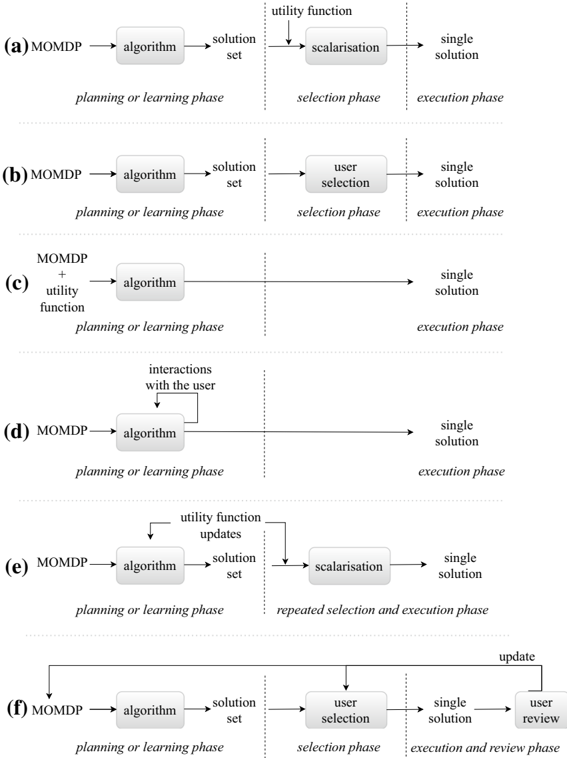
“In the dynamic utility function scenario (e), the user’s preferences for certain objectives change over time [Natarajan and Tadepalli, 2005].”
BackgroundMethodInfluentialDesigning multi-objective multi-armed bandits algorithms: A study
Drugan, M. M., & Nowé, A. (2013) · International Joint Conference on Neural Networks (IJCNN) · doi:10.1109/ijcnn.2013.6707036 · Cited by 132 · cited 1×
“Several multi-objective variations to the well-known UCB1 algorithm are compared in [37], including linear and Chebyshev scalarisations, as well as a version based on Pareto dominance.”
MethodSelf-citationDynamic potential-based reward shaping
Devlin, S., & Kudenko⋆, D. (2012) · White Rose Research Online (University of Leeds, The University of Sheffield, University of York) · doi:10.5555/2343576.2343638 · Cited by 131
Reinforcement Learning for MDPs with Constraints
Geibel, P. (2006) · Lecture notes in computer science · doi:10.1007/11871842_63 · Cited by 123
Li, X., Gao, L., & Li, W. (2011) · Expert Systems with Applications · doi:10.1016/j.eswa.2011.07.019 · Cited by 123 · cited 2×
“Then, either through voting rules [168] or (Nash) equilibria [38, 79, 83, 104], a policy is selected.”
MethodLevels of explainable artificial intelligence for human-aligned conversational explanations
Dazeley, R., Vamplew, P., Foale, C., Young, C., Aryal, S., & Cruz, F. (2021) · Artificial Intelligence · doi:10.1016/j.artint.2021.103525 · Cited by 122 · cited 1×
“It has been argued that a reward which has been decomposed from a scalar into its component terms provides benefits from the perspective of explaining decisions [72], and so several recent papers have explored multi-objective approaches to explainable and interpretable RL agents [26, 28, 29, 111, 211].”
BackgroundSelf-citationMulti-Objective Game Theoretic Schedulingof Bag-of-Tasks Workflows on Hybrid Clouds
Duan, R., Prodan, R., & Li, X. (2014) · IEEE Transactions on Cloud Computing · doi:10.1109/tcc.2014.2303077 · Cited by 120
Molecular Design in Synthetically Accessible Chemical Space via Deep Reinforcement Learning
Horwood, J., & Noutahi, E. (2020) · ACS Omega · doi:10.1021/acsomega.0c04153 · Cited by 119 · cited 2×
“In addition to the motivating examples discussed above, recent years have seen multiobjective learning and planning methods applied across a wide range of problem domains including: distributed computing [27, 124], drug and molecule design [62, 214], cybersecurity [162], simulation [132], job shop scheduling [98], cog…”
BackgroundManaging Power Consumption and Performance of Computing Systems Using Reinforcement Learning
Tesauro, G. J., Das, R., Chan, H., Kephart, J. O., Levine, D., Rawson, F. L., & Lefurgy, C. R. (2007) · Cited by 118
Castelletti, A., Pianosi, F., & Restelli, M. (2013) · Water Resources Research · doi:10.1002/wrcr.20295 · Cited by 113 · cited 3×
“The regulation problem is complicated by the presence of other objectives that interact with the two above: hydropower production, flood mitigation for downstream users, lake navigability, and many others [19, 122, 133].”
BackgroundSelf-citationMulti-objective game-theory models for conflict analysis in reservoir watershed management
Lee, C.-S. (2012) · Chemosphere · doi:10.1016/j.chemosphere.2012.01.014 · Cited by 113 · cited 2×
“Then, either through voting rules [168] or (Nash) equilibria [38, 79, 83, 104], a policy is selected.”
MethodMulti-objective infinite-horizon discounted Markov decision processes
White, D. J. (1982) · Journal of Mathematical Analysis and Applications · doi:10.1016/0022-247x(82)90122-6 · Cited by 110 · cited 3×
“In this scenario, non-stationary policies can Pareto dominate stationary policies [White, 1982], therefore the Pareto coverage set must include non-stationary policies [Roijers et al.”
BackgroundInfluentialUniversal Successor Features ApproximatorsPreprint
Borsa, D., Barreto, A. D. M. S., Quan, J., Mankowitz, D. J., Munos, R., van Hasselt, H. P., Silver, D., & Schaul, T. (2018) · arXiv (Cornell University) · doi:10.48550/arxiv.1812.07626 · Cited by 110 · cited 1×
“Universal Successor Features Approximators [14] and Universal Successor Representations [87] combine the benefits of SF and UVFA to further generalise across goals.”
BackgroundSiddique, U., Weng, P., & Zimmer, M. (2020) · arXiv (Cornell University) · doi:10.48550/arxiv.2008.07773 · Cited by 109 · cited 4×
“[157] develop multi-objective forms of the PPO and A2C policy search methods for the task of finding a single-policy which is fair with regards to all objectives, as measured by the Generalized Gini social welfare function.”
BackgroundMethodInfluentialUrban Driving with Multi-Objective Deep Reinforcement Learning
Li, C., & Czarnecki, K. (2019) · Adaptive Agents and Multi-Agents Systems · doi:10.65109/loxq3741 · Cited by 106
A Multi-Objective Agent-Based Control Approach With Application in Intelligent Traffic Signal System
Jin, J., & Ma, X. (2019) · IEEE Transactions on Intelligent Transportation Systems · doi:10.1109/tits.2019.2906260 · Cited by 106
On the Limitations of Scalarisation for Multi-objective Reinforcement Learning of Pareto Fronts
Vamplew, P. W., Yearwood, J. L., Dazeley, R., & Berry, A. (2008) · Lecture notes in computer science · doi:10.1007/978-3-540-89378-3_37 · Cited by 104 · cited 1×
“However, in many cases this linear function will be inadequate to represent the user’s true utility [Vamplew et al., 2008].”
BackgroundSelf-citationHypervolume-Based Multi-Objective Reinforcement Learning
Moffaert, K. V., Drugan, M. M., & Nowé, A. (2013) · Lecture notes in computer science · doi:10.1007/978-3-642-37140-0_28 · Cited by 100
Self-citationSet‐valued dynamic treatment regimes for competing outcomes
Laber, E. B., Lizotte, D. J., & Ferguson, B. T. (2014) · Biometrics · doi:10.1111/biom.12132 · Cited by 99 · cited 2×
“In medical treatment, we may want to maximise the effectiveness of the treatment, while minimising a variety of side effects [Jalalimanesh et al., 2017, Laber et al., 2014, Lizotte et al., 2010].”
BackgroundA survey of preference-based reinforcement learning methods
Wirth, C., Akrour, R., Neumann, G. M., & Fürnkranz, J. (2017) · Repository KITopen (Karlsruhe Institute of Technology) · doi:10.5445/ir/1000118270 · Cited by 97
Policy gradient approaches for multi-objective sequential decision making
Parisi, S., Pirotta, M., Smacchia, N., Bascetta, L., & Restelli, M. (2014) · International Joint Conference on Neural Networks (IJCNN) · doi:10.1109/ijcnn.2014.6889738 · Cited by 92 · cited 3×
“The simplest outer loop methods iterate through a series of different parameter settings for a utility function2, and re-run a single-policy MORL method for each setting (for example, [114]).”
BackgroundMethodSelf-citationQin, Y., Wang, H., Yi, S., Li, X., & Zhai, L. (2019) · The Journal of Supercomputing · doi:10.1007/s11227-019-03033-y · Cited by 92 · cited 1×
“In addition to the motivating examples discussed above, recent years have seen multiobjective learning and planning methods applied across a wide range of problem domains including: distributed computing [27, 124], drug and molecule design [62, 214], cybersecurity [162], simulation [132], job shop scheduling [98], cog…”
BackgroundReward shaping for knowledge-based multi-objective multi-agent reinforcement learning
Mannion, P., Devlin, S., Duggan, J., & Howley, E. (2018) · The Knowledge Engineering Review · doi:10.1017/s0269888918000292 · Cited by 90 · cited 1×
“, 2017a] MO Beach Problem * 2 Discrete Discrete Known [Mannion et al., 2018] Mine Cart ≥2 Continuous Discrete Known d [Abels et al.”
BackgroundSelf-citationMeta-Learning for Multi-objective Reinforcement Learning
Chen, X., Ghadirzadeh, A., Björkman, M., & Jensfelt, P. (2019) · IEEE/RSJ International Conference on Intelligent Robots and Systems (IROS) · doi:10.1109/iros40897.2019.8968092 · Cited by 86 · cited 1×
“[22] combined a multi-objective extension of PPO [155] with model-agnostic meta-learning (MAML) [46].”
BackgroundLepenioti, K., Pertselakis, M., Bousdekis, A., Louca, A., Lampathaki, F., Apostolou, D., Mentzas, G. N., & Anastasiou, S. (2020) · Lecture notes in business information processing · doi:10.1007/978-3-030-49165-9_1 · Cited by 83 · cited 1×
“In addition to the motivating examples discussed above, recent years have seen multiobjective learning and planning methods applied across a wide range of problem domains including: distributed computing [27, 124], drug and molecule design [62, 214], cybersecurity [162], simulation [132], job shop scheduling [98], cog…”
BackgroundReinforcement Learning for Satellite Communications: From LEO to Deep Space Operations
Ferreira, P. V. R., Paffenroth, R., Wyglinski, A. M., Hackett, T. M., Bilen, S. G., Reinhart, R. C., & Mortensen, D. J. (2019) · IEEE Communications Magazine · doi:10.1109/mcom.2019.1800796 · Cited by 82 · cited 1×
“In addition to the motivating examples discussed above, recent years have seen multiobjective learning and planning methods applied across a wide range of problem domains including: distributed computing [27, 124], drug and molecule design [62, 214], cybersecurity [162], simulation [132], job shop scheduling [98], cog…”
BackgroundReinforcement learning for pricing strategy optimization in the insurance industry
Krasheninnikova, E., García, J., Maestre, R., & Fernández, F. (2019) · Engineering Applications of Artificial Intelligence · doi:10.1016/j.engappai.2019.01.010 · Cited by 76 · cited 2×
“In addition to the motivating examples discussed above, recent years have seen multiobjective learning and planning methods applied across a wide range of problem domains including: distributed computing [27, 124], drug and molecule design [62, 214], cybersecurity [162], simulation [132], job shop scheduling [98], cog…”
BackgroundLearning Gentle Object Manipulation with Curiosity-Driven Deep Reinforcement LearningPreprint
Huang, S. H., Zambelli, M., Kay, J., Martins, M. F., Tassa, Y., Pilarski, P. M., & Hadsell, R. T. (2019) · arXiv (Cornell University) · doi:10.48550/arxiv.1903.08542 · Cited by 75 · cited 1×
“In addition to the motivating examples discussed above, recent years have seen multiobjective learning and planning methods applied across a wide range of problem domains including: distributed computing [27, 124], drug and molecule design [62, 214], cybersecurity [162], simulation [132], job shop scheduling [98], cog…”
BackgroundMulti-objective Reinforcement Learning for the Expected Utility of the Return
Roijers, D. M., Steckelmacher, D., & Nowé, A. (2018) · VU Research Portal · Cited by 70
Self-citationPareto Monte Carlo Tree Search for Multi-Objective Informative Planning
Chen, W., & Liu, L. (2019) · Robotics: Science and Systems · doi:10.15607/rss.2019.xv.072 · Cited by 69 · cited 1×
“The decision about which branch of the tree to expand at any point is determined based on either the hypervolume metric [192, 194]3, or on a measure based on Pareto-dominance [21, 118, 196].”
BackgroundMulti-objective Reinforcement Learning through Continuous Pareto Manifold Approximation
Parisi, S., Pirotta, M., & Restelli, M. (2016) · Journal of Artificial Intelligence Research · doi:10.1613/jair.4961 · Cited by 68 · cited 2×
“In the literature, both outer loop [114] and inner loop [52, 115, 116] approaches have been proposed to extend policy search methods to multi-objective problems.”
BackgroundSelf-citationSoftmax exploration strategies for multiobjective reinforcement learning
Vamplew, P. W., Dazeley, R., & Foale, C. (2017) · Neurocomputing · doi:10.1016/j.neucom.2016.09.141 · Cited by 68 · cited 2×
“An example is the Q-steering algorithm [Vamplew et al., 2015, 2017b].”
MethodSelf-citationMulti-Objective MDPs with Conditional Lexicographic Reward Preferences
Wray, K. H., Zilberstein, S., & Mouaddib, A. (2015) · Proceedings of the AAAI Conference on Artificial Intelligence · doi:10.1609/aaai.v29i1.9647 · Cited by 66
Policy invariance under reward transformations for multi-objective reinforcement learning
Mannion, P., Devlin, S., Mason, K., Duggan, J., & Howley, E. (2017) · Neurocomputing · doi:10.1016/j.neucom.2017.05.090 · Cited by 65 · cited 1×
“Another frequently used model is the cooperative multi-objective stochastic game (MOSGs), where reinforcement learning or evolutionary algorithms were used to derive coverage sets (e.g., [Mannion et al., 2018, 2017, Yliniemi and Tumer, 2016]).”
MethodSelf-citationActor-critic multi-objective reinforcement learning for non-linear utility functions
Reymond, M., Hayes, C. F., Steckelmacher, D., Roijers, D. M., & Nowé, A. (2023) · Autonomous Agents and Multi-Agent Systems · doi:10.1007/s10458-023-09604-x · Cited by 61
Self-citationCooperation and self-interest: Pareto-inefficiency of Nash equilibria in finite random games
Cohen, J. E. (1998) · Proceedings of the National Academy of Sciences · doi:10.1073/pnas.95.17.9724 · Cited by 60 · cited 4×
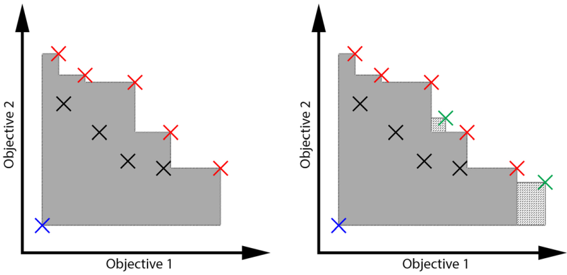
“The hypervolume metric measures the (hyper-)volume in value-space Pareto-dominated by the set of policies in an approximate coverage set.”
BackgroundInfluentialAutomated Negotiating Agents Competition (ANAC)
Jonker, C. M., Aydoğan, R., Baarslag, T., Fujita, K., Itō, T., & Hindriks, K. V. (2017) · Proceedings of the AAAI Conference on Artificial Intelligence · doi:10.1609/aaai.v31i1.10637 · Cited by 60 · cited 1×
“, through negotiation [71]) upon which alternative joint policy from the coverage set to execute.”
BackgroundManifold-based multi-objective policy search with sample reuse
Parisi, S., Pirotta, M., & Peters, J. (2017) · Neurocomputing · doi:10.1016/j.neucom.2016.11.094 · Cited by 59 · cited 5×
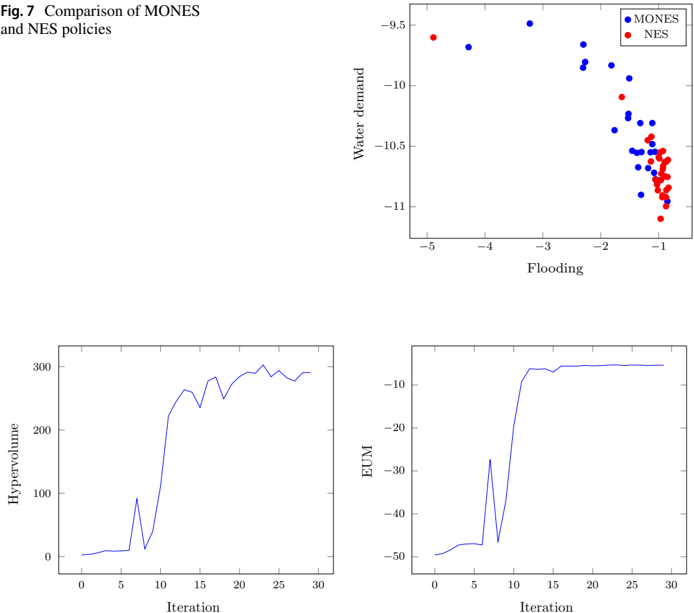
“The algorithm that is used to approximate the coverage set is Multi-Objective Natural Evolution Strategies (MONES) [Parisi et al., 2017].”
BackgroundMethodInfluentialOrdered Preference Elicitation Strategies for Supporting Multi-Objective Decision Making
Zintgraf, L., Roijers, D. M., Linders, S., Jonker, C. M., & Nowé, A. (2018) · Adaptive Agents and Multi-Agents Systems · doi:10.65109/chrg6153 · Cited by 59
Self-citationLizotte, D. J., Bowling, M., & Murphy, S. A. (2010) · Cited by 58
Model-based multi-objective reinforcement learning
Wiering, M., Withagen, M., & Drugan, M. M. (2014) · IEEE Symposium on Adaptive Dynamic Programming and Reinforcement Learning · doi:10.1109/adprl.2014.7010622 · Cited by 58
Dynamic Weights in Multi-Objective Deep Reinforcement Learning
Abels, A., Roijers, D. M., Lenaerts, T., Nowé, A., & Steckelmacher, D. (2018) · arXiv (Cornell University) · doi:10.48550/arxiv.1809.07803 · Cited by 58 · cited 10×
“This is especially so, as multi-objective algorithms can exploit the fact that multiple policies need to be produced in order to reduce computation time [140] and sample-complexity [4] explicitly.”
BackgroundMethodInfluentialSelf-citationTree-based Fitted Q-iteration for Multi-Objective Markov Decision problems
Castelletti, A. F., Pianosi, F., & Restelli, M. (2012) · International Joint Conference on Neural Networks (IJCNN) · doi:10.1109/ijcnn.2012.6252759 · Cited by 57
Self-citationWhere to Add Actions in Human-in-the-Loop Reinforcement Learning
Mandel, T., Liu, Y.-E., Brunskill, E., & Popović, Z. (2017) · Proceedings of the AAAI Conference on Artificial Intelligence · doi:10.1609/aaai.v31i1.10945 · Cited by 56 · cited 1×
“, 2019], dynamic rewards [Devlin and Kudenko, 2012], or introducing new actions [Mandel et al., 2017], obviously the addition of new objectives is unique to multi-objective methods.”
BackgroundMulti-objective routing in integrated services networks: A game theory approach
Economides, A. A., & Silvester, J. A. (1991) · doi:10.1109/infcom.1991.147643 · Cited by 55
Computing Optimal Stationary Policies for Multi-Objective Markov Decision Processes
Wiering, M. A., & de Jong, E. D. (2007) · 2007 IEEE International Symposium on Approximate Dynamic Programming and Reinforcement Learning · doi:10.1109/adprl.2007.368183 · Cited by 55
Computing Convex Coverage Sets for Faster Multi-objective Coordination
Roijers, D. M., Whiteson, S., & Oliehoek, F. A. (2015) · Journal of Artificial Intelligence Research · doi:10.1613/jair.4550 · Cited by 55 · cited 9×
“A good example of this is Optimistic Linear Support (OLS) [Mossalam et al., 2016, Roijers, 2016, Roijers et al., 2015a], which was based on Cheng’s linear support for POMDPs [Cheng, 1988].”
BackgroundMethodInfluentialSelf-citationYaw-Misalignment and its Impact on Wind Turbine Loads and Wind Farm Power Output
van Dijk, M. T., van Wingerden, J., Ashuri, T., Li, Y., & Rotea, M. A. (2016) · Journal of Physics Conference Series · doi:10.1088/1742-6596/753/6/062013 · Cited by 55 · cited 1×
“Therefore, although the relationship between control actions and maintenance costs is expected to be complex, a linear scalarisation of power production and loads is often employed (e.g., [van Dijk et al., 2016]), where the parameters are decided based on the expertise of operators.”
BackgroundMulti-Objective Ranked Bandits for Recommender Systems
Lacerda, A. M. (2017) · Neurocomputing · doi:10.1016/j.neucom.2016.12.076 · Cited by 55 · cited 2×
“…radio networks [Messikh and Zarour, 2018, Raj et al., 2020], satellite communications [Hu et al., 2020, Ferreira et al., 2019], recommender systems [Lacerda, 2017], power systems [Deng and Liu, 2018, Deng et al., 2020, Wang et al., 2019, Mello et al., 2020], building management [Zhang et al.,…”
BackgroundGiuliani, M., Galelli, S., & Soncini‐Sessa, R. (2014) · Environmental Modelling & Software · doi:10.1016/j.envsoft.2014.02.011 · Cited by 53 · cited 1×
“[53] demonstrate a dimensionality-reduction approach in which the original objectives are mapped to a lower dimension using Non-negative Principal Component Analysis, while Yahyaa et al.”
MethodMulti-objective optimization of radiotherapy: distributed Q-learning and agent-based simulation
Jalalimanesh, A., Haghighi, S. S., Ahmadi, A., Hejazian, H., & Soltani, M. (2017) · Journal of Experimental & Theoretical Artificial Intelligence · doi:10.1080/0952813x.2017.1292319 · Cited by 51
Bucket elimination for multiobjective optimization problems
Rollón, E., & Larrosa, J. (2006) · Journal of Heuristics · doi:10.1007/s10732-006-6726-y · Cited by 50 · cited 3×
“2) like for example multi-objective bucket elimination (MOBE) [147, 150], multi-objective Russian doll search [148], multi-objective (AND/OR) branch-and-bound tree search [94, 95, 149], Pareto local search [67], and multi-objective max-sum [33].”
BackgroundInfluentialAccelerating Learning in multi-objective systems through Transfer Learning
Taylor, A., Dusparic, I., Galvan-Lopez, E., Clarke, S., & Cahill, V. (2014) · 2014 International Joint Conference on Neural Networks (IJCNN) · doi:10.1109/ijcnn.2014.6889438 · Cited by 48 · cited 1×
“Furthermore, knowledge transfer [Taylor et al., 2014] and opponent modelling [Zhang et al.”
BackgroundMany-objective stochastic path finding using reinforcement learning
Tozer, B., Mazzuchi, T. A., & Sarkani, S. (2016) · Expert Systems with Applications · doi:10.1016/j.eswa.2016.10.045 · Cited by 47 · cited 2×
“Then, either through voting rules [Tozer et al., 2017] or (Nash) equilibria [Duan et al.”
MethodModular Multi-Objective Deep Reinforcement Learning with Decision Values
Tajmajer, T. (2018) · Annals of Computer Science and Information Systems · doi:10.15439/2018f231 · Cited by 47
Elfwing, S., & Seymour, B. (2017) · IEEE International Conference on Development and Learning (ICDL) · doi:10.1109/devlrn.2017.8329799 · Cited by 47 · cited 1×
“Meanwhile, Elfwing and Seymour [42] argue, based on biological evidence, that computational agents may behave more safely if they learn separate values for rewards and punishments.”
BackgroundMulti-objective Monte-Carlo Tree Search
Wang, W., Hoi, C. H., & Buntine, W. (2012) · Cited by 47
Point-Based Planning for Multi-Objective POMDPs
Roijers, D. M., Whiteson, S., Oliehoek, F. A., Yang, Q., & Wooldridge, M. (2015) · UvA-DARE (University of Amsterdam) · Cited by 46
Self-citationConstructing Stochastic Mixture Policies for Episodic Multiobjective Reinforcement Learning Tasks
Vamplew, P. W., Dazeley, R., Barker, E., & Kelarev, A. V. (2009) · Lecture notes in computer science · doi:10.1007/978-3-642-10439-8_35 · Cited by 45
Self-citationHypervolume indicator and dominance reward based multi-objective Monte-Carlo Tree Search
Wang, W., & Sébag, M. (2013) · Machine Learning · doi:10.1007/s10994-013-5369-0 · Cited by 45 · cited 2×
“The hypervolume metric has been widely used to evaluate the performance of multi-objective decision making algorithms (e.g., [Mannion et al., 2018, Vamplew et al., 2011, Van Moffaert et al., 2014, 2013a, Wang and Sebag, 2013, Yliniemi and Tumer, 2016]).”
MethodChen, D., Wang, Y., & Gao, W. (2020) · Applied Intelligence · doi:10.1007/s10489-020-01702-7 · Cited by 45 · cited 2×
“This can either be done in isolation [24, 115], or combined in a hybrid algorithm where the evolutionary method performs global search with local hill-climbing [160], policy-gradient [204] or actor-critic methods [23] used to provided localised search or fine-tuning.”
MethodA temporal difference method for multi-objective reinforcement learning
Ruiz-Montiel, M., Mandow, L., & Pérez-de-la-Cruz, J.-L. (2017) · Neurocomputing · doi:10.1016/j.neucom.2016.10.100 · Cited by 44 · cited 2×
“Both Pareto-Q-Learning (PQL) [182] and PQ-learning [152] modify Q-learning to store multiple Pareto-optimal values for each state-action pair.”
BackgroundOn Finding Compromise Solutions in Multiobjective Markov Decision Processes
Patrice, P., & Paul, W. (2010) · Frontiers in Artificial Intelligence and Applications · doi:10.3233/978-1-60750-606-5-969 · Cited by 43 · cited 1×
“Perny and Wang [120] address the task of finding the single optimal policy given the goal of minimising the distance between the reward vector received and a target reference point in objective space.”
BackgroundMemory-Based Explainable Reinforcement Learning
Cruz, F., Dazeley, R., & Vamplew, P. W. (2019) · Lecture notes in computer science · doi:10.1007/978-3-030-35288-2_6 · Cited by 43 · cited 1×
“It has been argued that a reward which has been decomposed from a scalar into its component terms provides benefits from the perspective of explaining decisions [72], and so several recent papers have explored multi-objective approaches to explainable and interpretable RL agents [26, 28, 29, 111, 211].”
BackgroundSelf-citationMulti-objective POMDPs with lexicographic reward preferences
Wray, K. H., & Zilberstein, S. (2015) · International Conference on Artificial Intelligence · Cited by 42
Fleetwide data-enabled reliability improvement of wind turbines
Verstraeten, T., Nowé, A., Keller, J. A., Guo, Y., Sheng, S., & Helsen, J. (2019) · Renewable and Sustainable Energy Reviews · doi:10.1016/j.rser.2019.03.019 · Cited by 41 · cited 1×
“The link between control actions, the highdimensional load spectrum and future costs is still an open problem [Verstraeten et al., 2019].”
BackgroundSelf-citationHasan, M. M., Lwin, K. T., Imani, M., Shabut, A. M., Bittencourt, L. F., & Hossain, M. A. (2019) · Engineering Applications of Artificial Intelligence · doi:10.1016/j.engappai.2019.08.014 · Cited by 41 · cited 1×
“, 2020] Deep Sea Treasure c 2-3 Continuous Discrete Known [Hasan et al., 2019] MO-Puddleworld 2 Discrete Discrete Known [Vamplew et al.”
BackgroundBounded decentralised coordination over multiple objectives
Fave, F. M. D., Stranders, R., Rogers, A., et al. (2011) · ePrints Soton (University of Southampton) · doi:10.5555/2030470.2030525 · Cited by 40
Distributed W-Learning: Multi-Policy Optimization in Self-Organizing Systems
Dusparic, I., & Cahill, V. (2009) · 2009 Third IEEE International Conference on Self-Adaptive and Self-Organizing Systems · doi:10.1109/saso.2009.23 · Cited by 40
Bounded decentralised coordination over multiple objectives
Fave, F. M. D., Stranders, R., Rogers, A., & Jennings, N. R. (2011) · Adaptive Agents and Multi-Agents Systems · doi:10.65109/cbmf7777 · Cited by 39 · cited 1×
“2) like for example multi-objective bucket elimination (MOBE) [147, 150], multi-objective Russian doll search [148], multi-objective (AND/OR) branch-and-bound tree search [94, 95, 149], Pareto local search [67], and multi-objective max-sum [33].”
BackgroundEvolving policies for multi-reward partially observable markov decision processes (MR-POMDPs)
Soh, H., & Demiris, Y. (2011) · Genetic and Evolutionary Computation Conference (GECCO) · doi:10.1145/2001576.2001674 · Cited by 38 · cited 2×
“Evolutionary methods can either be applied directly [Cheng, 1988, Parisi et al., 2017], or combined in a hybrid algorithm with local hill-climbing [Soh and Demiris, 2011a], policy-gradient [Xu et al., 2020] or actor-critic methods [Chen et al., 2020].”
MethodPareto-Optimal Transit Route Planning With Multi-Objective Monte-Carlo Tree Search
Weng, D., Chen, R., Zhang, J., Bao, J., Zheng, Y., & Wu, Y. (2020) · IEEE Transactions on Intelligent Transportation Systems · doi:10.1109/tits.2020.2964012 · Cited by 38
Interactive Thompson Sampling for Multi-objective Multi-armed Bandits
Roijers, D. M., Zintgraf, L., & Nowé, A. (2017) · Lecture notes in computer science · doi:10.1007/978-3-319-67504-6_2 · Cited by 37 · cited 2×
“Specifically, the interactive Thompson sampling (ITS) algorithm [141] uses queries to solicit preferences resulting from linear utility functions while interacting with the environment.”
MethodSelf-citationA Multi-Objective Approach to Mitigate Negative Side Effects
Saisubramanian, S., Kamar, E. S., & Zilberstein, S. (2020) · International Joint Conference on Artificial Intelligence · doi:10.24963/ijcai.2020/50 · Cited by 37 · cited 2×
“[153] use human feedback through random queries, approval, corrections, and demonstrations to learn policies that avoid negative side effects.”
BackgroundPotential-based multiobjective reinforcement learning approaches to low-impact agents for AI safety
Vamplew, P. W., Foale, C., Dazeley, R., & Bignold, A. (2021) · Engineering Applications of Artificial Intelligence · doi:10.1016/j.engappai.2021.104186 · Cited by 37 · cited 1×
“Additionally these approaches may fail to converge to the optimal policy in environments with stochastic state transitions [Vamplew et al., 2021a].”
BackgroundSelf-citationA novel adaptive weight selection algorithm for multi-objective multi-agent reinforcement learning
Moffaert, K. V., Brys, T., Chandra, A., Esterle, L., Lewis, P. R., & Nowé, A. (2014) · International Joint Conference on Neural Networks (IJCNN) · doi:10.1109/ijcnn.2014.6889637 · Cited by 36 · cited 1×
“However, even if the objectives are linearly weighted in the reward function, simply doubling the reward associated with power output may not be sufficient to achieve the desired behaviour, given the relationship between the reward weights and the objective outcomes may be nonlinear [11].”
BackgroundSelf-citationExploiting Problem Decomposition in Multi-objective Constraint Optimization
Marinescu, R. (2009) · Lecture notes in computer science · doi:10.1007/978-3-642-04244-7_47 · Cited by 34
Universal Successor Representations for Transfer Reinforcement LearningPreprint
Ma, C., Wen, J., & Bengio, Y. (2018) · arXiv (Cornell University) · doi:10.48550/arxiv.1804.03758 · Cited by 33
Robust Multiple Objective Game Theory
Yu, H., & Liu, H. M. (2012) · Journal of Optimization Theory and Applications · doi:10.1007/s10957-012-0234-z · Cited by 32
Wang, H., Lei, Z., Zhang, X., Peng, J., & Jiang, H. Q. (2019) · IEEE Access · doi:10.1109/access.2019.2894756 · Cited by 32
Queued Pareto Local Search for Multi-Objective Optimization
Inja, M., Kooijman, C., Waard, M. P. D., Roijers, D. M., & Whiteson, S. (2014) · Lecture notes in computer science · doi:10.1007/978-3-319-10762-2_58 · Cited by 31
Self-citationMulti-objective decision-theoretic planning
Roijers, D. M. (2016) · AI Matters · doi:10.1145/3008665.3008670 · Cited by 31 · cited 2×
“Secondly, it means that methods that have been invented originally for POMDPs, can often be adapted for usage in MOMDPs [Roijers, 2016].”
Self-citationA utility-based analysis of equilibria in multi-objective normal-form games
Rădulescu, R., Mannion, P., Zhang, Y., Roijers, D. M., & Nowé, A. (2020) · The Knowledge Engineering Review · doi:10.1017/s0269888920000351 · Cited by 31
Self-citationA Distributional View on Multi-Objective Policy Optimization
Abdolmaleki, A., Huang, S. H., Hasenclever, L., Neunert, M., Song, H. F., Zambelli, M., Martins, M. F., Heess, N., Hadsell, R. T., & Riedmiller, M. (2020) · arXiv (Cornell University) · doi:10.48550/arxiv.2005.07513 · Cited by 31 · cited 2×
“[2] have addressed tasks with high-dimensional continuous action spaces using a multi-objective extension of the MPO actor-critic RL algorithm.”
MethodSteering approaches to Pareto-optimal multiobjective reinforcement learning
Vamplew, P. W., Issabekov, R., Dazeley, R., Foale, C., Berry, A., Moore, T., & Creighton, D. (2017) · Neurocomputing · doi:10.1016/j.neucom.2016.08.152 · Cited by 30 · cited 2×
“An example is the Q-steering algorithm [Vamplew et al., 2015, 2017b].”
MethodSelf-citationInterpretable Multi-Objective Reinforcement Learning through Policy OrchestrationPreprint
Noothigattu, R., Bouneffouf, D., Mattei, N., Chandra, R., Madan, P., Varshney, K. R., Campbell, M. S., Singh, M., & Rossi, F. (2018) · arXiv (Cornell University) · doi:10.48550/arxiv.1809.08343 · Cited by 30 · cited 1×
“It has been argued that a reward which has been decomposed from a scalar into its component terms provides benefits from the perspective of explaining decisions [72], and so several recent papers have explored multi-objective approaches to explainable and interpretable RL agents [26, 28, 29, 111, 211].”
BackgroundPianosi, F., Castelletti, A. F., & Restelli, M. (2013) · Journal of Hydroinformatics · doi:10.2166/hydro.2013.169 · Cited by 29 · cited 3×
“The regulation problem is complicated by the presence of other objectives that interact with the two above: hydropower production, flood mitigation for downstream users, lake navigability, and many others [19, 122, 133].”
BackgroundSelf-citationThe impact of environmental stochasticity on value-based multiobjective reinforcement learning
Vamplew, P. W., Foale, C., & Dazeley, R. (2021) · Neural Computing and Applications · doi:10.1007/s00521-021-05859-1 · Cited by 27 · cited 1×
“Additionally these approaches may fail to converge to the optimal policy in environments with stochastic state transitions [Vamplew et al., 2021a].”
BackgroundSelf-citationPérez, J., Germain‐Renaud, C., Kégl, B., & Loomis, C. (2009) · doi:10.1145/1555301.1555311 · Cited by 26 · cited 2×
“Many applications of this approach have used a linear scalarisation function, either weighted or unweighted [6, 56, 117, 156].”
MethodInefficiency of smooth market mechanisms
Dubey, P. K., & Rogawski, J. D. (1990) · Journal of Mathematical Economics · doi:10.1016/0304-4068(90)90004-s · Cited by 24
Improving wet clutch engagement with reinforcement learning
Vaerenbergh, K. V., Rodríguez, A., Gagliolo, M., Vrancx, P., Nowé, A., Stoev, J., Goossens, S., Pinte, G., & Symens, W. (2012) · International Joint Conference on Neural Networks (IJCNN) · doi:10.1109/ijcnn.2012.6252825 · Cited by 24 · cited 1×
“However, such an approach may produce suboptimal results in practical settings [10,2,13].”
BackgroundSelf-citationRaj, R. N., Nayak, A., & Kumar, M. S. (2019) · International Journal of Wireless Information Networks · doi:10.1007/s10776-019-00463-6 · Cited by 24
Distributional Monte Carlo Tree Search for Risk-Aware and Multi-Objective Reinforcement Learning
Hayes, C. F., Reymond, M., Roijers, D. M., Howley, E., & Mannion, P. (2021) · Adaptive Agents and Multi-Agents Systems · doi:10.65109/wyeg7666 · Cited by 24
Self-citationAn Empirical Comparison of Two Common Multiobjective Reinforcement Learning Algorithms
Issabekov, R., & Vamplew, P. W. (2012) · Lecture notes in computer science · doi:10.1007/978-3-642-35101-3_53 · Cited by 23 · cited 1×
“Therefore it will often be preferable to use a non-linear function instead [47, 68, 185, 186].”
BackgroundSelf-citationA Multi-objective Reinforcement Learning Algorithm for JSSP
Méndez-Hernández, B. M., Rodríguez-Bazán, E. D., Jiménez, Y. M., Libin, P., & Nowé, A. (2019) · Lecture notes in computer science · doi:10.1007/978-3-030-30487-4_44 · Cited by 23 · cited 2×
“In addition to the motivating examples discussed above, recent years have seen multiobjective learning and planning methods applied across a wide range of problem domains including: distributed computing [27, 124], drug and molecule design [62, 214], cybersecurity [162], simulation [132], job shop scheduling [98], cog…”
BackgroundSelf-citationOpponent learning awareness and modelling in multi-objective normal form games
Rădulescu, R., Verstraeten, T., Zhang, Y., Mannion, P., Roijers, D. M., & Nowé, A. (2021) · Neural Computing and Applications · doi:10.1007/s00521-021-06184-3 · Cited by 23 · cited 1×
“Furthermore, knowledge transfer [165] and opponent modelling [128, 212] also become more important in this context.”
BackgroundSelf-citationMulti-objective Russian Doll search
Rollón, E., & Larrosa, J. (2007) · Cited by 22
A Reinforcement Learning Approach to Setting Multi-Objective Goals for Energy Demand Management
Guo, Y., Zeman, A. A., & Li, R. (2009) · International Journal of Agent Technologies and Systems · doi:10.4018/jats.2009040104 · Cited by 22 · cited 2×
“Many applications of this approach have used a linear scalarisation function, either weighted or unweighted [6, 56, 117, 156].”
MethodMulti-objective Reinforcement Learning for Responsive Grids
Pérez, J., Germain‐Renaud, C., Kégl, B., & Loomis, C. (2010) · Journal of Grid Computing · doi:10.1007/s10723-010-9161-0 · Cited by 22 · cited 2×
“Multi-objective approaches to fairness have been explored at an abstract level [Siddique et al., 2020], and also within specific applications [Hu et al., 2020, Perez et al., 2010].”
BackgroundProbabilistic Planning is Multi-objective!
Bryce, D., Cushing, W., & Subbarao Kambhampati, B. (2007) · Cited by 21
Additional planning with multiple objectives for reinforcement learning
Pan, A., Xu, W., Wang, L., & Ren, H. (2019) · Knowledge-Based Systems · doi:10.1016/j.knosys.2019.105392 · Cited by 21 · cited 2×
“Single policy Single objective RL [113, 157] [59, 60, 135, 138]”
BackgroundScalable Optimization for Wind Farm Control using Coordination Graphs
Verstraeten, T., Daems, P.-J., Bargiacchi, E., Roijers, D. M., Libin, P., & Helsen, J. (2021) · Adaptive Agents and Multi-Agents Systems · doi:10.65109/fytl4581 · Cited by 21
Self-citationMulti-objective multiagent credit assignment in reinforcement learning and NSGA-II
Yliniemi, L., & Tumer, K. (2016) · Soft Computing · doi:10.1007/s00500-016-2124-z · Cited by 20 · cited 2×
“Another frequently used model is the cooperative multi-objective stochastic game (MOSGs), where reinforcement learning or evolutionary algorithms were used to derive coverage sets (e.g., [Mannion et al., 2018, 2017, Yliniemi and Tumer, 2016]).”
MethodKnowledge Gradient for Multi-objective Multi-armed Bandit Algorithms
Yahyaa, S. Q., Drugan, M. M., & Manderick, B. (2014) · International Conference on Agents and Artificial Intelligence (ICAART) · doi:10.5220/0004796600740083 · Cited by 18
Quality Assessment of MORL Algorithms: A Utility-Based Approach
Zintgraf, L., Kanters, T., Roijers, D. M., Oliehoek, F. A., & Beau, P. D. U. (2015) · Cited by 18
Self-citationMulti-Agent Thompson Sampling for Bandit Applications with Sparse Neighbourhood Structures
Verstraeten, T., Bargiacchi, E., Libin, P., Helsen, J., Roijers, D. M., & Nowé, A. (2020) · Scientific Reports · doi:10.1038/s41598-020-62939-3 · Cited by 18
Self-citationA Utility-Based Analysis of Equilibria in Multi-Objective Normal Form Games
Rădulescu, R. (2020) · VUBIR (Vrije Universiteit Brussel) · Cited by 17
Self-citationAnnealing-pareto multi-objective multi-armed bandit algorithm
Yahyaa, S. Q., Drugan, M. M., & Manderick, B. (2014) · IEEE Symposium on Adaptive Dynamic Programming and Reinforcement Learning · doi:10.1109/adprl.2014.7010619 · Cited by 16
Ikenaga, A., & Arai, S. (2018) · IEEE International Conference on Agents (ICA) · doi:10.1109/agents.2018.8460075 · Cited by 16
Model-Based Multi-objective Reinforcement Learning with Unknown Weights
Yamaguchi, T., Nagahama, S., Ichikawa, Y., & Takadama, K. (2019) · Lecture notes in computer science · doi:10.1007/978-3-030-22649-7_25 · Cited by 16
Multi Criteria Operators for Multi-attribute Auctions
Plà, A., López, B., & Murillo, J. D. (2012) · Lecture notes in computer science · doi:10.1007/978-3-642-34620-0_29 · Cited by 15
Multi-objective optimization in graphical models
Rollón, E. (2008) · UPCommons institutional repository (Universitat Politècnica de Catalunya) · doi:10.5821/dissertation-2117-94749 · Cited by 15 · cited 1×
“2) like for example multi-objective bucket elimination (MOBE) [147, 150], multi-objective Russian doll search [148], multi-objective (AND/OR) branch-and-bound tree search [94, 95, 149], Pareto local search [67], and multi-objective max-sum [33].”
BackgroundCo-evolution of strategies for multi-objective games under postponed objective preferences
Eisenstadt, E., Moshaiov, A., & Avigad, G. (2015) · IEEE Conference on Computational Intelligence and Games (CIG) · doi:10.1109/cig.2015.7317915 · Cited by 15
Identification and off-policy learning of multiple objectives using adaptive clustering
Karimpanal, T. G., & Wilhelm, E. (2017) · Neurocomputing · doi:10.1016/j.neucom.2017.04.074 · Cited by 15 · cited 2×
“…new objectives (for example, states which are highly different in feature space from other states), and create its own rewards associated with these states such that its policy can be rapidly updated should the user define a new objective associated with these states [Karimpanal and Wilhelm, 2017].”
BackgroundSun, Y., Li, Y., Xiong, W., Yao, Z., Moniz, K., & Zahir, A. (2018) · Applied Sciences · doi:10.3390/app8010136 · Cited by 15 · cited 2×
“…computing [Qin et al., 2020, da Silva Veith et al., 2019], drug and molecule design [Zhou et al., 2019, Horwood and Noutahi, 2020], cybersecurity [Sun et al., 2018], simulation [Ravichandran et al., 2018], job shop scheduling [Méndez-Hernández et al., 2019], cognitive radio networks [Messikh and…”
BackgroundMulti-Objective Reinforcement Learning for Reconfiguring Data Stream Analytics on Edge Computing
Veith, A. D. S., de Souza, F. R., de Assunção, M. D., Lefèvre, L., & dos Anjos, J. C. S. (2019) · Proceedings of the International Conference on Parallel Processing · doi:10.1145/3337821.3337894 · Cited by 15 · cited 1×
“…multi-objective learning and planning methods applied across a wide range of problem domains including: distributed computing [Qin et al., 2020, da Silva Veith et al., 2019], drug and molecule design [Zhou et al., 2019, Horwood and Noutahi, 2020], cybersecurity [Sun et al., 2018], simulation…”
Pareto-DQN: Approximating the Pareto front in complex multi-objective decision problems
Reymond, M. (2019) · VUBIR (Vrije Universiteit Brussel) · Cited by 15
Self-citationAvigad, G., Eisenstadt, E., & Cohen, M. W. (2011) · IEEE Conference on Computational Intelligence and Games (CIG) · doi:10.1109/cig.2011.6032003 · Cited by 14
Lorenz versus Pareto Dominance in a Single Machine Scheduling Problem with Rejection
Moghaddam, A., Yalaoui, F., & Amodeo, L. (2011) · Lecture notes in computer science · doi:10.1007/978-3-642-19893-9_36 · Cited by 13 · cited 1×
“Lorenz optimal sets have been studied in the context of different problem domains [48, 102, 121].”
BackgroundApproximation of Lorenz-Optimal Solutions in Multiobjective Markov Decision ProcessesPreprint
Perny, P., Weng, P., Goldsmith, J., & Hanna, J. P. (2013) · arXiv (Cornell University) · doi:10.48550/arxiv.1309.6856 · Cited by 13
Shabani, N. (2010) · cIRcle (University of British Columbia) · doi:10.14288/1.0063141 · Cited by 13
Opponent Modelling for Reinforcement Learning in Multi-Objective Normal Form Games
Zhang, Y., Rădulescu, R., Mannion, P., Roijers, D. M., & Nowé, A. (2020) · Adaptive Agents and Multi-Agents Systems · doi:10.65109/zqdu6566 · Cited by 13 · cited 1×
“, 2014] and opponent modelling [Zhang et al., 2020] also becomes more important in this context.”
BackgroundSelf-citationRoijers, D. M., Zintgraf, L., Libin, P., Reymond, M., Bargiacchi, E., & Nowé, A. (2021) · Lecture notes in computer science · doi:10.1007/978-3-030-67664-3_28 · Cited by 13 · cited 1×
“The Gaussian-process Utility Thompson Sampling (GUTS) algorithm [Roijers et al., 2020] does the same for any continuous utility function by using Gaussian processes to model the utility function, and estimate the uncertainty about this function.”
MethodSelf-citationOn the Behaviour of Scalarization Methods for the Engagement of a Wet Clutch
Brys, T., Moffaert, K. V., Vaerenbergh, K. V., & Nowé, A. (2013) · International Conference on Machine Learning and Applications · doi:10.1109/icmla.2013.52 · Cited by 12 · cited 2×
“An insight into the difference between single-objective and multi-objective approaches to an application can be gained by comparing two different studies applying RL to wet clutch engagement [17, 187].”
BackgroundResultSelf-citationToll-based reinforcement learning for efficient equilibria in route choice
Ramos, G. D. O., Silva, B. C. D., Rădulescu, R., Bazzan, A. L. C., & Nowé, A. (2020) · The Knowledge Engineering Review · doi:10.1017/s0269888920000119 · Cited by 12 · cited 1×
“Deciding on the modes of transportation along your trip typically involves a number of objectives, such as minimising travel time and cost whereas maximising comfort and reliability [92, 112, 130, 131].”
BackgroundSelf-citationEfficient Approximation Algorithms for Multi-objective Constraint Optimization
Marinescu, R. (2011) · Lecture notes in computer science · doi:10.1007/978-3-642-24873-3_12 · Cited by 11
Multi-criteria Coalition Formation Games
Igarashi, A., & Roijers, D. M. (2017) · Lecture notes in computer science · doi:10.1007/978-3-319-67504-6_14 · Cited by 11 · cited 1×
“, finding (sub)groups of agents that are willing to make such a binding agreement with each other [Igarashi and Roijers, 2017].”
BackgroundSelf-citationZhan, H., & Cao, Y. (2019) · arXiv (Cornell University) · doi:10.48550/arxiv.1909.12268 · Cited by 11
Deng, Z., Lu, Z., Guo, Z., Yao, W., Zhao, W., Zhou, B., & Hong, C. (2020) · IEEE Access · doi:10.1109/access.2020.2974503 · Cited by 11 · cited 1×
“In addition to the motivating examples discussed above, recent years have seen multiobjective learning and planning methods applied across a wide range of problem domains including: distributed computing [27, 124], drug and molecule design [62, 214], cybersecurity [162], simulation [132], job shop scheduling [98], cog…”
BackgroundThe Robust Weighted Multi-Objective Game
Qu, S., Ji, Y., & Goh, M. (2015) · PLoS ONE · doi:10.1371/journal.pone.0138970 · Cited by 10 · cited 2×
“We find here works that study the idea of robust equilibria in multi-objective games [125, 210] or how equilibria are affected by the use of the different optimisation criteria [127].”
BackgroundDornheim, J., & Link, N. (2018) · International Symposium on Electronics and Telecommunications (ISETC) · doi:10.1109/isetc.2018.8583854 · Cited by 10
Horie, N., Matsui, T., Moriyama, K., Mutoh, A., & Inuzuka, N. (2019) · Artificial Life and Robotics · doi:10.1007/s10015-019-00523-3 · Cited by 10 · cited 1×
“In [Geibel and Wysotzki, 2005], [Geibel, 2006] and [Horie et al., 2019], MORL was applied to develop risk-aware agents, where the risk-related reward is based on the probability of the agent visiting an error state.”
MethodApplying Reinforcement Learning to Plan Manufacturing Material Handling Part 1
Govindaiah, S., & Petty, M. D. (2019) · ACM Southeast Conference (ACMSE) · doi:10.1145/3299815.3314451 · Cited by 10 · cited 1×
“…al., 2020, Wang et al., 2019, Mello et al., 2020], building management [Zhang et al., 2019], traffic management [Jin and Ma, 2019], manufacturing [Govindaiah and Petty, 2019, Lepenioti et al., 2020, Dornheim and Link, 2018], bidding and pricing [Yang et al., 2020, Krasheninnikova et al., 2019],…”
BackgroundToll-Based Learning for Minimising Congestion under Heterogeneous Preferences
Ramos, G. D. O., Rădulescu, R., Nowé, A., & Tavares, A. R. (2020) · Adaptive Agents and Multi-Agents Systems · doi:10.65109/dzcu8586 · Cited by 10
Self-citationMulti-reward policies for medical applications
Soh, H., & Demiris, Y. (2011) · Genetic and Evolutionary Computation Conference Companion (GECCO Companion) · doi:10.1145/2001858.2002036 · Cited by 9 · cited 2×
“Evolutionary methods can either be applied directly [Cheng, 1988, Parisi et al., 2017], or combined in a hybrid algorithm with local hill-climbing [Soh and Demiris, 2011a], policy-gradient [Xu et al., 2020] or actor-critic methods [Chen et al., 2020].”
MethodOnline and offline learning in multi-objective Monte Carlo Tree Search
Pérez-Liébana, D., Samothrakis, S., & Lucas, S. M. (2013) · doi:10.1109/cig.2013.6633621 · Cited by 9 · cited 1×
“The decision about which branch of the tree to expand at any point is determined based on either the hypervolume metric [192, 194]3, or on a measure based on Pareto-dominance [21, 118, 196].”
BackgroundReinforcement Learning of Pareto-Optimal Multiobjective Policies Using Steering
Vamplew, P. W., Issabekov, R., Dazeley, R., & Foale, C. (2015) · Lecture notes in computer science · doi:10.1007/978-3-319-26350-2_53 · Cited by 8
Self-citationMulti-objective Contextual Bandit Problem with Similarity InformationPreprint
Turğay, E., Öner, D., & Tekin, C. (2018) · arXiv (Cornell University) · doi:10.48550/arxiv.1803.04015 · Cited by 8
Pedestrian simulation as multi-objective reinforcement learning
Ravichandran, N. B., Yang, F., Peters, C., Lansner, A., & Herman, P. A. (2018) · ACM International Conference on Intelligent Virtual Agents (IVA) · doi:10.1145/3267851.3267914 · Cited by 8 · cited 2×
“…da Silva Veith et al., 2019], drug and molecule design [Zhou et al., 2019, Horwood and Noutahi, 2020], cybersecurity [Sun et al., 2018], simulation [Ravichandran et al., 2018], job shop scheduling [Méndez-Hernández et al., 2019], cognitive radio networks [Messikh and Zarour, 2018, Raj et al.,…”
BackgroundCost Efficient Distributed Load Frequency Control in Power Systems
Mello, F. R. D. A. F., Apostolopoulou, D., & Alonso, E. (2020) · IFAC-PapersOnLine · doi:10.1016/j.ifacol.2020.12.2236 · Cited by 8 · cited 1×
“In addition to the motivating examples discussed above, recent years have seen multiobjective learning and planning methods applied across a wide range of problem domains including: distributed computing [27, 124], drug and molecule design [62, 214], cybersecurity [162], simulation [132], job shop scheduling [98], cog…”
BackgroundInteractive multi-objective reinforcement learning in multi-armed bandits for any utility function
Roijers, D. M., Zintgraf, L., Libin, P., & Nowé, A. (2020) · VU Research Portal · Cited by 8
Self-citationA hybrid decision making model for evaluating land combat vehicle system
(2017) · MODSIM · doi:10.36334/modsim.2017.j6.nguyen · Cited by 8
Research works printed but not linked: 11
- 6. Aissani, N., Beldjilali, B., & Trentesaux, D. (2008). Efficient and effective reactive scheduling of manufacturing system using sarsa-multi-objective agents. In: MOSIM'08: 7th Conference Interna- tionale de Modelisation et Simulation, pp. 698-707.
- 28. Dazeley, R., Vamplew, P., & Cruz, F. (2021). Explainable reinforcement learning for broad-xai: A conceptual framework and survey. arXiv preprint arXiv: 2108. 09003.
- 72. Juozapaitis, Z., Koul, A., Fern, A., Erwig, M., & Doshi-Velez, F. (2019). Explainable reinforce- ment learning via reward decomposition. In: IJCAI/ECAI Workshop on Explainable Artificial Intelligence.
- 74. Kluyver, T., Ragan-Kelley, B., Pérez, F., Granger, B., Bussonnier, M., Frederic, J., Kelley, K., Hamrick, J., Grout, J., Corlay, S., Ivanov, P., Avila, D., Abdalla, S., Willing, C., & development team, J. (2016). Jupyter notebooks -a publishing format for reproducible computational work- flows. In: F. Loizides, B. Scmidt (eds.) Positioning and Power in Academic Publishing: Players, Agents and Agendas, pp. 87-90. IOS Press, Netherlands. URL https:// eprin ts. soton. ac. uk/ 403913/
- 93. Mannion, P., Heintz, F., Karimpanal, T.G., & Vamplew, P. (2021). Multi-objective decision making for trustworthy ai. In: Proceedings of the Multi-Objective Decision Making (MODeM) Workshop.
- 140. Rollon, E., & Larrosa, J. (2008). Constraint optimization techniques for multiobjective branch and bound search. In: International conference on logic programming, ICLP. 150.
- Rowe, J., Smith, A., Pokorny, B., Mott, B., & Lester, J. (2018). Toward automated scenario generation with deep reinforcement learning in gift. In: Proceedings of the Sixth Annual GIFT User Symposium, pp. 65–74.
- 146. Smith, B. J., Klassert, R., & Pihlakas, R. (2021). Soft maximin approaches to multi-objective deci- sion-making for encoding human intuitive values. In: Multi-Objective Decision Making Workshop. 160.
- 163. Van Dijk, M.T., van Wingerden, J.W., Ashuri, T., Li, Y., & Rotea, M.A. (2016). Yaw-misalignment and its impact on wind turbine loads and wind farm power output. Journal of Physics: Conference Series, 753(6). 182. · DOI
- White, C. C., & Kim, K. W. (1980). Solution procedures for vector criterion Markov decision processes. Large Scale Systems, 1, 129–140.
- 179. Xu, J., Tian, Y., Ma, P., Rus, D., Sueda, S., & Matusik, W. (2020). Prediction-guided multi-objec- tive reinforcement learning for continuous robot control. In: Proceedings of the 37th International Conference on Machine Learning. 205.
Cited by
Explainable AI Over the Internet of Things (IoT): Overview, State-of-the-Art and Future Directions
Jagatheesaperumal, S. K., Pham, Q.-V., Ruby, R., Yang, Z., Xu, C., & Zhang, Z. (2022) · IEEE Open Journal of the Communications Society · doi:10.1109/ojcoms.2022.3215676 · Cited by 171
“Moreover, in [163], the real-world decision from a multi-objective perspective was studied using RL and planning strategies.”
Giuliani, M., Lamontagne, J. R., Reed, P. M., & Castelletti, A. (2021) · Water Resources Research · doi:10.1029/2021wr029927 · Cited by 167
Secret Collusion among AI Agents: Multi-Agent Deception via Steganography
Motwani, S., Baranchuk, M., Strohmeier, M., Bolina, V., Torr, P., Hammond, L., & Witt, C. D. (2024) · Advances in Neural Information Processing Systems 37 · doi:10.52202/079017-2336 · Cited by 106
“Unfortunately, specifying objectives for complex tasks can be highly challenging, especially in multi-objective contexts (48).”
del Real, A. J., Andreiana, D. S., Roldán, Á. O., Bustos, A. H., & Acevedo, L. (2022) · Applied Sciences · doi:10.3390/app122312377 · Cited by 129
“An extensive analysis concerning the exploratory techniques and”
BackgroundMethodA Systematic Review of Machine-Learning Solutions in Anaerobic Digestion
Rutland, H., You, J., Liu, H., Bull, L., & Reynolds, D. M. (2023) · Bioengineering · doi:10.3390/bioengineering10121410 · Cited by 79
“Multi-objective reinforcement learning is a method for balancing control of multiple parameters and optimizing these concurrent objectives within an AD system [39].”
Method
Metadata
- Authors
- Hayes, C. F., Rădulescu, R., Bargiacchi, E., Källström, J., Macfarlane, M., Reymond, M., Verstraeten, T., Zintgraf, L. M., Dazeley, R., Heintz, F., Howley, E., Irissappane, A. A., Mannion, P., Nowé, A., Ramos, G., Restelli, M., Vamplew, P., & Roijers, D. M.
- Affiliations
- Ollscoil na Gaillimhe – University of Galway (IE)
- Vrije Universiteit Brussel (BE)
- Linköping University (SE)
- University of Amsterdam (NL)
- University of Oxford (GB)
- Deakin University (AU)
- University of Washington Tacoma (US)
- Universidade do Vale do Rio dos Sinos (BR)
- Politecnico di Milano (IT)
- Federation University (AU)
- Corresponding author
- Hayes, Conor F.
- Rădulescu, Roxana
- Bargiacchi, Eugenio
- Källström, Johan
- Macfarlane, Matthew
- Reymond, Mathieu
- Verstraeten, Timothy
- Zintgraf, Luisa M.
- Dazeley, Richard
- Heintz, Fredrik
- Howley, Enda
- Irissappane, Athirai A.
- Mannion, Patrick
- Nowé, Ann
- Ramos, Gabriel
- Restelli, Marcello
- Vamplew, Peter
- Roijers, Diederik M.
- ORCID
- Venue
- Autonomous Agents and Multi-Agent Systems
- Published
- 2022-04
- Volume
- 36
- Issue
- 1
- ISSN
- 1387-2532 (ISSN-L)
- 1573-7454
- OpenAlex
- W3139398491
- Cited by
- 400
- References
- 223
- Citations by year
- 2026: 119 · 2025: 125 · 2024: 80 · 2023: 52 · 2022: 22
- FWCI
- 22.98
- Type
- journal article
- Language
- en
- Open access
- hybrid
- doi.org
- Licence
- cc-by
- creativecommons.org/licenses/by/4.0 (tdm)
- creativecommons.org/licenses/by/4.0 (vor, 12 d)
- Locations
- Autonomous Agents and Multi-Agent Systems (publishedVersion, cc-by)
- arXiv (Cornell University) (submittedVersion)
- Virtual Community of Pathological Anatomy (University of Castilla La Mancha) (submittedVersion, cc-by)
- FedUni ResearchOnline (Federation University Australia) (submittedVersion, cc-by)
- DiVA (Linkoping University) (submittedVersion, other-oa)
- Figshare (submittedVersion, cc-by)
- VUBIR (Vrije Universiteit Brussel) (submittedVersion)
- arXiv (Cornell University)
- Funders
- Vlaamse regering (Onderzoeksprogramma Artificiële Intelligentie (AI) Vlaanderen)
- National University Ireland, Galway
- Topics
- Physical Sciences › Computer Science › Artificial Intelligence › Reinforcement Learning in Robotics
- Physical Sciences › Computer Science › Computational Theory and Mathematics › Advanced Multi-Objective Optimization Algorithms
- Physical Sciences › Computer Science › Artificial Intelligence › AI-based Problem Solving and Planning
- Keywords
- multi-objective reinforcement learning, sequential decision making, conflicting objectives, trade-offs between objectives, solution design, complex decision problems
About these checks
Registry, retraction, Cites and statistics results are computed, not judged, with one exception: a printed reference that no index lists is read once by a model before it counts as a citation error. Claims are extracted by a model and kept only when their quote appears verbatim in the text; each cited source is then checked, with a model’s help, for whether it says what the claim relies on. Those verdicts can be wrong — read the claim’s quote and the cited source before relying on one.
Statistics and arithmetic are recomputed, not judged.
Confidence bands are shown only for fields calibrated on our annotated test set. None is calibrated yet, so no band is shown.
What counts as a claim ›How we measure confidence ›How we check this ›
Are you an author, or do you see a problem with this page? Request a review
Data sources
Bibliographic data: Semantic Scholar, OpenAlex, Crossref.
Contains information from the Semantic Scholar Academic Graph Datasets, made available under the ODC Attribution License (ODC-BY 1.0).
Semantic Scholar’s data is described in: Kinney, R., et al. (2023). The Semantic Scholar Open Data Platform. arXiv:2301.10140.
