

A practical guide to multi-objective reinforcement learning and planning
Open accessThe DOI matches its Crossref record; 218 of the 223 references it cites were found in a registry or an index.
Abstract
Real-world sequential decision-making tasks are generally complex, requiring trade-offs between multiple, often conflicting, objectives. Despite this, the majority of research in reinforcement learning and decision-theoretic planning either assumes only a single objective, or that multiple objectives can be adequately handled via a simple linear combination. Such approaches may oversimplify the underlying problem and hence produce suboptimal results. This paper serves as a guide to the application of multi-objective methods to difficult problems, and is aimed at researchers who are already familiar with single-objective reinforcement learning and planning methods who wish to adopt a multi-objective perspective on their research, as well as practitioners who encounter multi-objective decision problems in practice. It identifies the factors that may influence the nature of the desired solution, and illustrates by example how these influence the design of multi-objective decision-making systems for complex problems.
Overview
The claims and statistics of this paper haven’t been checked yet.
Free: it reads the open-access text and checks the first 5 claims that cite a source we can check. Create a free account to check every claim.
Integrity signals
Registry
Cites
Statistics
Figures
Verification
Claims the paper makes
The claims and statistics of this paper haven’t been checked yet.
Free: it reads the open-access text and checks the first 5 claims that cite a source we can check. Create a free account to check every claim.
Claims other papers make about this one
Each is checked against this paper’s own text: does it say what the citing paper says it does?
The source backs part of the claim, not all of it — or backs it for a different population, condition or comparison.
In the citing paper
“nl-MOMDPs are widely recognized in the reinforcement literature as particularly difficult to solve [26,27], and may admit of no computationally tractable exact solutions.”
From Phenomenal interface theory: a model for basal consciousness (2025) · cites this paper as [27]
Experimental — accuracy not yet measuredThe cited source says what the claim attributes to it.
In the citing paper
“The task faced by the bee is thus best modelled as a nonlinear multi-objective Markov Decision Process (nl-MOMDP) [26,27].”
From Phenomenal interface theory: a model for basal consciousness (2025) · cites this paper as [27]
Self-check
Percentages, sums and reported differences re-computed from the paper’s own numbers.
The self-check needs the paper’s full text.
Citations
Cites
A fast and elitist multiobjective genetic algorithm: NSGA-II
Deb, K., Pratap, A., Agarwal, S., & Meyarivan, T. (2002) · IEEE Transactions on Evolutionary Computation · doi:10.1109/4235.996017 · Cited by 50,053 · cited 1×
“…best vector from a solution set S according to: π∗ = arg max π∈S u(Vπ), (17) so it helps if the user has a larger variety of value vectors to select from.2 In multi-objective optimisation, this idea has been used to create algorithms that explicitly look for diverse solutions [Deb et al., 2002].”
MethodProximal Policy Optimization Algorithms
Schulman, J., Wolski, F., Dhariwal, P., Radford, A., & Klimov, O. (2017) · arXiv · doi:10.48550/arxiv.1707.06347 · Cited by 40,403
Human-level control through deep reinforcement learning
Mnih, V., Kavukcuoglu, K., Silver, D., Rusu, A. A., Veness, J., Bellemare, M. G., Graves, A., Riedmiller, M., Fidjeland, A. K., Ostrovski, G., et al. (2015) · Nature · doi:10.1038/nature14236 · Cited by 30,357 · cited 2×
“Deep reinforcement learning methods [Mnih et al., 2015, Lillicrap et al., 2015] have shown to scale beyond finite and discrete spaces to problem domains with high-dimensional, continuous state and action spaces.”
MethodReinforcement Learning: An Introduction
(2005) · IEEE Transactions on Neural Networks · doi:10.1109/tnn.2004.842673 · Cited by 24,496
Continuous control with deep reinforcement learning
Lillicrap, T. P., Hunt, J. J., Pritzel, A., Heess, N., Erez, T., Tassa, Y., Silver, D., & Wierstra, D. (2015) · arXiv · doi:10.48550/arxiv.1509.02971 · Cited by 10,782 · cited 2×
“In the second stage, the learned skills are used in a hierarchical version of DDPG [85] to produce a policy coverage set for the MOMDP.”
BackgroundMethodMultiobjective evolutionary algorithms: a comparative case study and the strength Pareto approach
Zitzler, E., & Thiele, L. (1999) · IEEE Transactions on Evolutionary Computation · doi:10.1109/4235.797969 · Cited by 8,798
Model-Agnostic Meta-Learning for Fast Adaptation of Deep Networks
Finn, C., Abbeel, P., & Levine, S. (2017) · arXiv · doi:10.48550/arxiv.1703.03400 · Cited by 8,512
Santos, A. G., da Rocha, G. O., & de Andrade, J. B. (2019) · Scientific Reports · doi:10.1038/s41598-018-37186-2 · Cited by 8,495
Nash, J. (1951) · The Annals of Mathematics · doi:10.2307/1969529 · Cited by 7,002
Nash, J. (1989) · Cournot Oligopoly · doi:10.1017/cbo9780511528231.007 · Cited by 5,595
Research works printed but not linked: 10
- 6. Aissani, N., Beldjilali, B., & Trentesaux, D. (2008). Efficient and effective reactive scheduling of manufacturing system using sarsa-multi-objective agents. In: MOSIM'08: 7th Conference Interna- tionale de Modelisation et Simulation, pp. 698-707.
- 28. Dazeley, R., Vamplew, P., & Cruz, F. (2021). Explainable reinforcement learning for broad-xai: A conceptual framework and survey. arXiv preprint arXiv: 2108. 09003.
- 72. Juozapaitis, Z., Koul, A., Fern, A., Erwig, M., & Doshi-Velez, F. (2019). Explainable reinforce- ment learning via reward decomposition. In: IJCAI/ECAI Workshop on Explainable Artificial Intelligence.
- 74. Kluyver, T., Ragan-Kelley, B., Pérez, F., Granger, B., Bussonnier, M., Frederic, J., Kelley, K., Hamrick, J., Grout, J., Corlay, S., Ivanov, P., Avila, D., Abdalla, S., Willing, C., & development team, J. (2016). Jupyter notebooks -a publishing format for reproducible computational work- flows. In: F. Loizides, B. Scmidt (eds.) Positioning and Power in Academic Publishing: Players, Agents and Agendas, pp. 87-90. IOS Press, Netherlands. URL https:// eprin ts. soton. ac. uk/ 403913/
- 140. Rollon, E., & Larrosa, J. (2008). Constraint optimization techniques for multiobjective branch and bound search. In: International conference on logic programming, ICLP. 150.
- Rowe, J., Smith, A., Pokorny, B., Mott, B., & Lester, J. (2018). Toward automated scenario generation with deep reinforcement learning in gift. In: Proceedings of the Sixth Annual GIFT User Symposium, pp. 65–74.
- 146. Smith, B. J., Klassert, R., & Pihlakas, R. (2021). Soft maximin approaches to multi-objective deci- sion-making for encoding human intuitive values. In: Multi-Objective Decision Making Workshop. 160.
- 163. Van Dijk, M.T., van Wingerden, J.W., Ashuri, T., Li, Y., & Rotea, M.A. (2016). Yaw-misalignment and its impact on wind turbine loads and wind farm power output. Journal of Physics: Conference Series, 753(6). 182. · DOI
- White, C. C., & Kim, K. W. (1980). Solution procedures for vector criterion Markov decision processes. Large Scale Systems, 1, 129–140.
- 179. Xu, J., Tian, Y., Ma, P., Rus, D., Sueda, S., & Matusik, W. (2020). Prediction-guided multi-objec- tive reinforcement learning for continuous robot control. In: Proceedings of the 37th International Conference on Machine Learning. 205.
Cited by
Explainable AI Over the Internet of Things (IoT): Overview, State-of-the-Art and Future Directions
Jagatheesaperumal, S. K., Pham, Q.-V., Ruby, R., Yang, Z., Xu, C., & Zhang, Z. (2022) · IEEE Open Journal of the Communications Society · doi:10.1109/ojcoms.2022.3215676 · Cited by 171
“Moreover, in [163], the real-world decision from a multi-objective perspective was studied using RL and planning strategies.”
Giuliani, M., Lamontagne, J. R., Reed, P. M., & Castelletti, A. (2021) · Water Resources Research · doi:10.1029/2021wr029927 · Cited by 167
Secret Collusion among AI Agents: Multi-Agent Deception via Steganography
Motwani, S., Baranchuk, M., Strohmeier, M., Bolina, V., Torr, P., Hammond, L., & Witt, C. D. (2024) · Advances in Neural Information Processing Systems 37 · doi:10.52202/079017-2336 · Cited by 106
“Unfortunately, specifying objectives for complex tasks can be highly challenging, especially in multi-objective contexts (48).”
del Real, A. J., Andreiana, D. S., Roldán, Á. O., Bustos, A. H., & Acevedo, L. (2022) · Applied Sciences · doi:10.3390/app122312377 · Cited by 129
“An extensive analysis concerning the exploratory techniques and”
BackgroundMethodA Systematic Review of Machine-Learning Solutions in Anaerobic Digestion
Rutland, H., You, J., Liu, H., Bull, L., & Reynolds, D. M. (2023) · Bioengineering · doi:10.3390/bioengineering10121410 · Cited by 79
“Multi-objective reinforcement learning is a method for balancing control of multiple parameters and optimizing these concurrent objectives within an AD system [39].”
MethodExplainable reinforcement learning for broad-XAI: a conceptual framework and survey
Dazeley, R., Vamplew, P. W., & Cruz, F. (2023) · Neural Computing and Applications · doi:10.1007/s00521-023-08423-1 · Cited by 108
“A goal may be aligned to a single objective or to multiple objective that must be balanced [101].”
BackgroundSelf-citationScalar reward is not enough: a response to Silver, Singh, Precup and Sutton (2021)
Vamplew, P., Smith, B. J., Källström, J., Ramos, G., Rădulescu, R., Roijers, D. M., Hayes, C. F., Heintz, F., Mannion, P., Libin, P. J. K., et al. (2022) · Autonomous Agents and Multi-Agent Systems · doi:10.1007/s10458-022-09575-5 · Cited by 41
“In contrast, intelligence based on vector rewards and approaches that are explicitly multi-objective can directly optimise any desired measure of utility [39].”
BackgroundInfluentialSelf-citationMulti-Objective Reinforcement Learning Based on Decomposition: A Taxonomy and Framework
Felten, F., Talbi, E., & Danoy, G. (2024) · Journal of Artificial Intelligence Research · doi:10.1613/jair.1.15702 · Cited by 97
AI Alignment: A Contemporary Survey
Ji, J., Qiu, T., Chen, B., Zhou, J., Zhang, B., Hong, D., Lou, H., Wang, K., Duan, Y., He, Z., et al. (2025) · ACM Computing Surveys · doi:10.1145/3770749 · Cited by 816
“CIRL framework approaches the scalable oversight problem not by strengthening oversight but by trying to eliminate the incentives for AI systems to game oversight, putting humans giving feedback and the AI system in cooperative rather than adversarial positions [174].”
Goals, usefulness and abstraction in value-based choice
Martino, B. D., & Cortese, A. (2022) · Trends in Cognitive Sciences · doi:10.1016/j.tics.2022.11.001 · Cited by 55
“Incontrast,multiobjective(ormultigoal)reinforcementlearning(MORL)[116,117]confrontsclassesofproblemswherethe agent explicitly trades multiple (often con fl icting) objectives.”
InfluentialDeep reinforcement learning for adaptive mesh refinement
Foucart, C., Charous, A., & Lermusiaux, P. F. J. (2023) · Journal of Computational Physics · doi:10.1016/j.jcp.2023.112381 · Cited by 71
Achamrah, F. E., & Attajer, A. (2023) · International Journal of Production Research · doi:10.1080/00207543.2023.2240433 · Cited by 36
“Two approaches are to be distinguished (Hayes et al. 2022; Tajmajer 2018; Van Moffaert and Nowé 2014).”
BackgroundTang, F., Feng, Z., Li, Y., Yang, C., & Sun, B. (2023) · Advanced Engineering Informatics · doi:10.1016/j.aei.2023.102197 · Cited by 36
Klar, M., Schworm, P., Wu, X., Simon, P., Glatt, M. F., Ravani, B., & Aurich, J. C. (2024) · Journal of Manufacturing Systems · doi:10.1016/j.jmsy.2024.04.007 · Cited by 40
Bridging the gap: Towards an expanded toolkit for AI-driven decision-making in the public sector
Fischer-Abaigar, U., Kern, C. A., Barda, N., & Kreuter, F. (2024) · Government Information Quarterly · doi:10.1016/j.giq.2024.101976 · Cited by 83
Reinforcement learning applications in water resource management: a systematic literature review
Kåge, L., Milić, V., Andersson, M., & Wallén, M. (2025) · Frontiers in Water · doi:10.3389/frwa.2025.1537868 · Cited by 31
“An example of a utility function is a linear utility function where the weighted sum of all objectives equals one (Hayes et al., 2022).”
Reinforcement Learning for Joint Detection and Mapping Using Dynamic UAV Networks
Guerra, A., Guidi, F., Dardari, D., & Djurić, P. M. (2023) · IEEE Transactions on Aerospace and Electronic Systems · doi:10.1109/taes.2023.3300813 · Cited by 37
Huo, L., & Tang, Y. (2022) · Applied Sciences · doi:10.3390/app13010325 · Cited by 42
Implementation of Islamic Religious Education Learning and Character in the New Normal Era
Abidin, Z., Destari, D., Syafruddin, S., Arifin, S., & Agustiani, M. (2022) · AL-HAYAT Journal of Islamic Education · doi:10.35723/ajie.v6i1.239 · Cited by 65
“Learning planning is a systematic approach that includes analysing learning needs, formulating learning objectives, developing teaching materials, and evaluating tools to achieve the expected learning objectives (Arora, Fiorino, Pellier, Métivier, & Pesty, 2018);(Hayes et al., 2022).”
Azizah, M., Jariah, S., & Aprilianto, A. (2023) · Ngaos Jurnal Pendidikan dan Pembelajaran · doi:10.59373/ngaos.v1i1.2 · Cited by 26
Actor-critic multi-objective reinforcement learning for non-linear utility functions
Reymond, M., Hayes, C. F., Steckelmacher, D., Roijers, D. M., & Nowé, A. (2023) · Autonomous Agents and Multi-Agent Systems · doi:10.1007/s10458-023-09604-x · Cited by 61
“to find a subset of the possible optimal policies [6].”
Self-citationNallaperuma, S., Gan, Z., Nevin, J. W., Shevchenko, N. A., & Savory, S. J. (2023) · Journal of Optical Communications and Networking · doi:10.1364/jocn.483733 · Cited by 28
“Multi-policy meth-ods have multiple policies representing different preference functions and have shown potential in various applications in recent years [18–20].”
BackgroundLeite, G. M. C., Jiménez-Fernández, S., Salcedo‐Sanz, S., Marcelino, C. G., & Pedreira, C. E. (2023) · Knowledge-Based Systems · doi:10.1016/j.knosys.2023.111027 · Cited by 26
Development of AI-assisted microscopy frameworks through realistic simulation with pySTED
Bilodeau, A., Michaud-Gagnon, A., Chabbert, J., Turcotte, B., Heine, J., Durand, A., & Lavoie‐Cardinal, F. (2024) · Nature Machine Intelligence · doi:10.1038/s42256-024-00903-w · Cited by 31
“79 provides a comprehensive review).”
Reinforcement learning for decision-making under deep uncertainty
Pei, Z., Arevalo, A. M. R., de Haan, F. J., Lipovetzky, N., & Moallemi, E. A. (2024) · Journal of Environmental Management · doi:10.1016/j.jenvman.2024.120968 · Cited by 30
Santos, J., Zaccarini, M., Poltronieri, F., Tortonesi, M., Stefanelli, C., Cicco, N. D., & Turck, F. D. (2025) · Future Generation Computer Systems · doi:10.1016/j.future.2024.107680 · Cited by 30
Design of simulation-based pilot training systems using machine learning agents
Källström, J., Granlund, R., & Heintz, F. (2022) · The Aeronautical Journal · doi:10.1017/aer.2022.8 · Cited by 28
“Multi-objective reinforcement learning (MORL) provides systematic methods for learning sets of policies that are Pareto optimal, meaning that for at least one objective there is no policy that gives higher return [36, 46, 47].”
MethodSelf-citationBussieweke, F., Mula, J., & Bolarín, F. C. (2024) · International Journal of Production Research · doi:10.1080/00207543.2024.2383293 · Cited by 31
“Approaches from multi-objective RL (e.g. Hayes et al. 2022) can be suitable to design a reward function that addresses all level variables independently and thus avoids the dependency on the estimated demand.”
Deep reinforcement learning for optimal firebreak placement in forest fire prevention
Murray, L., Castillo, T., de Diego, I. M., Weber, R. W., González‐Olabarria, J. R., García-Gonzalo, J., Weintraub, A., & Carrasco, J. (2025) · Applied Soft Computing · doi:10.1016/j.asoc.2025.113043 · Cited by 28
Ai, T., Huang, L., Song, R. J., Huang, H. F., Jiao, F., & Ma, W. (2023) · Advances in Production Engineering & Management · doi:10.14743/apem2023.3.474 · Cited by 20
Having multiple selves helps learning agents explore and adapt in complex changing worlds
Dulberg, Z., Dubey, R., Berwian, I. M., & Cohen, J. D. (2023) · Proceedings of the National Academy of Sciences · doi:10.1073/pnas.2221180120 · Cited by 37
Wang, Z., Xiao, S., Wang, J., Parab, A., & Patel, S. (2025) · AgriEngineering · doi:10.3390/agriengineering7080252 · Cited by 32
Multi-Objective Optimization Using Adaptive Distributed Reinforcement Learning
Tan, J., Khalili, R., & Karl, H. (2024) · IEEE Transactions on Intelligent Transportation Systems · doi:10.1109/tits.2024.3378007 · Cited by 21
“Even if an MOP can be simplified into an SOP, reference [9] points out that such simplification requires much theoretical knowledge for reward engineering and manual tuning when Authorized licensed use limited to the terms of the applicable license agreement with IEEE.”
BackgroundHuang, Z., Wu, X., & Dong, S. (2024) · Computer Communications · doi:10.1016/j.comcom.2024.06.018 · Cited by 20
Machine Learning for Precision Agriculture and Crop Yield Optimization: Techniques and Applications
Roy, P., Padhiary, M., Hoque, A., Sahu, B., Roy, D., & Kumar, K. (2025) · Advances in computational intelligence and robotics book series · doi:10.4018/979-8-3693-9208-9.ch007 · Cited by 27
Deep Reinforcement Learning With Multiple Unrelated Rewards for AGV Mapless Navigation
Cai, B., Wei, C., & Ji, Z. (2024) · IEEE Transactions on Automation Science and Engineering · doi:10.1109/tase.2024.3410162 · Cited by 27
“Another direction from the proposed algorithm is to examine if the approach can be applied to the multi-objective and multi-task problems, while incorporating more performance indicators, such as trajectory smoothness etc [52].”
Cornalba, F., Disselkamp, C., Scassola, D., & Helf, C. (2023) · Neural Computing and Applications · doi:10.1007/s00521-023-09033-7 · Cited by 27
Zhou, Y. F., Cheng, X., Huaguang, S., Jin, Z., Ning, N., & Fu-qiang, L. (2023) · Chinese Journal of Electronics · doi:10.23919/cje.2022.00.334 · Cited by 18
Exploring explainable AI: a bibliometric analysis
Sharma, C. B., Sharma, S., Sharma, K., Sethi, G. K., & Chen, Y.-H. (2024) · Discover Applied Sciences · doi:10.1007/s42452-024-06324-z · Cited by 27
“The amalgamation of Reinforcement Learning (RL) and Explainable Artificial Intelligence (XAI) is an expanding field of study that enhances RL agent’s comprehensibility, reliability, and ethical application [61].”
Quadt, T., Lindelauf, R. H. A., Voskuijl, M., Monsuur, H., & Čule, B. (2024) · Drones · doi:10.3390/drones8120769 · Cited by 27
Xing, S., & Wang, Y. (2025) · IEEE Access · doi:10.1109/access.2025.3586378 · Cited by 69
“Multi-objective RL has gained attention as a principled approach to handle competing objectives in dynamic systems [42], [43].”
Rapetswa, K., & Cheng, L. (2023) · Intelligent and Converged Networks · doi:10.23919/icn.2023.0005 · Cited by 23
Salzman, O., Felner, A., Hernández, C., Zhang, H., Chan, S.-H., & Koenig, S. (2023) · International Joint Conference on Artificial Intelligence · doi:10.24963/ijcai.2023/757 · Cited by 43
“These include evolutionary algorithms (see, e.g., [Pangilinan and Janssens, 2007; Li et al. , 2015]), integer programing (see, e.g., [Halffmann et al. , 2022]), as well as reinforcement-learning algorithms (see, e.g., [Tozer et al. , 2017; Hayes and others, 2022]).”
MethodPereira, T., Abbasi, M., Oliveira, R. I., Guedes, R. A., Salvador, J. A. R., & Arrais, J. P. (2022) · Briefings in Bioinformatics · doi:10.1093/bib/bbac270 · Cited by 18
Aguzzi, G., Casadei, R., & Mirko Viroli, D. (2022) · IEEE International Conference on Autonomic Computing and Self-Organizing Systems (ACSOS) · doi:10.1109/acsos55765.2022.00019 · Cited by 18
“For this reason, in future work, we aim to consider multi-objective reinforcement learning [17] as a technique to manage multiple goals, even if they conflict with each other, and find solutions that can concurrently optimise both consumption and responsiveness.”
BackgroundKemper, N., Heider, M., Pietruschka, D., & Hahner, J. (2025) · Applied Energy · doi:10.1016/j.apenergy.2025.125890 · Cited by 14
“…(or scalarization function) 𝑢 ∶ R 𝑑 → R simplifies the MOMDP to a single-objective MDP by mapping multi-objective value of a policy to a scalar value: However, applying such a utility function may not always be feasible and multiple policies have to be learned, known as multi-policy MORL [18].”
Huynh, T. N. Y., Nguyen, A. T., Ahn, Y., Oo, B. L., & Lim, B. T. (2025) · Energy and Buildings · doi:10.1016/j.enbuild.2025.116045 · Cited by 25
Social robot navigation: a review and benchmarking of learning-based methods
Alyassi, R., Cadena, C., Riener, R., & Paez-Granados, D. (2025) · Frontiers Robotics AI · doi:10.3389/frobt.2025.1658643 · Cited by 15
From threat to trust: assessing security risks of agentic AI systems
Leo, M., Tan, F., Miao, T., & Anand, G. (2026) · International Journal of Information Security · doi:10.1007/s10207-025-01185-y · Cited by 37
Aligning Human Preferences with Baseline Objectives in Reinforcement Learning
Marta, D., Holk, S., Pek, C., Tůmová, J., & Leite, I. (2023) · Proceedings - IEEE International Conference on Robotics and Automation/Proceedings · doi:10.1109/icra48891.2023.10161261 · Cited by 24
“We consider our work to be a step towards including human preferences with baseline objectives to obtain human-aligned agents [11].”
BackgroundBaşaklar, T., Goksoy, A. A., Krishnakumar, A., Gümüşsoy, S., & Ogras, U. Y. (2023) · ACM Transactions on Embedded Computing Systems · doi:10.1145/3609108 · Cited by 17
“This vectorized reward can be represented by a vectorized state value function MV π (s ) [24], as illustrated”
BackgroundMethodJia, R., Gao, K., Cui, S., Chen, J., & Andrić, J. M. (2024) · Transportation Research Part E Logistics and Transportation Review · doi:10.1016/j.tre.2024.103885 · Cited by 14
Multi-objective deep learning: Taxonomy and survey of the state of the art
Peitz, S., & Hotegni, S. S. (2025) · Machine Learning with Applications · doi:10.1016/j.mlwa.2025.100700 · Cited by 30
gym-DSSAT: a crop model turned into a Reinforcement Learning environmentPreprint
Gautron, R., Padrón, E. J., Preux, P., Bigot, J., Maillard, O.-A., & Emukpere, D. (2022) · arXiv (Cornell University) · doi:10.48550/arxiv.2207.03270 · Cited by 40
“In this case, the return has two components, one for each sub-problem: this is a multi-objective problem (e.g. Hayes et al., 2021).”
BackgroundLi, Z., & Wang, L. (2025) · Scientific Reports · doi:10.1038/s41598-025-09236-z · Cited by 26
“The multi-objective reward function R ( s t , a t , s t +1 ) quantifies the clinical value of transitioning from state s t to s t +1 after executing action a t 40 .”
Su, J., & Dong, S. (2025) · Scientific Reports · doi:10.1038/s41598-025-18309-y · Cited by 21
“Effective multi-objective optimization in dynamic logistics scheduling requires a reward function design that captures the complex trade-offs between competing objectives while facilitating efficient learning in hierarchical reinforcement learning frameworks 72 .”
Cooperative Multi-Agent Reinforcement Learning for Large Scale Variable Speed Limit Control
Zhang, Y., Quiñones-Grueiro, M., Barbour, W., Zhang, Z., Scherer, J., Biswas, G., & Work, D. B. (2023) · IEEE International Conference on Smart Computing · doi:10.1109/smartcomp58114.2023.00036 · Cited by 16
“While multi-objective reinforcement learning (MORL) [25] approaches, which leverage 151 Authorized licensed use limited to the terms of the applicable license agreement with IEEE.”
BackgroundConnectivity conservation planning through deep reinforcement learning
Equihua, J., Beckmann, M., & Seppelt, R. (2024) · Methods in Ecology and Evolution · doi:10.1111/2041-210x.14300 · Cited by 24
“Multi-objective DRL is an active research area (Hayes et al., 2022) that may enable even more realistic applications to SCP. 3.”
BackgroundBektur, G. (2024) · Applied Soft Computing · doi:10.1016/j.asoc.2024.112290 · Cited by 13
Zhang, Y., Quiñones-Grueiro, M., Zhang, Z., Wang, Y., Barbour, W., Biswas, G., & Work, D. B. (2024) · IEEE Access · doi:10.1109/access.2024.3489474 · Cited by 14
“While multi-objective reinforcement learning (MORL) [62] approaches, which leverage a reward vector in place of a scalar, are primarily designed to tackle such complex problems, the overall performance of these methods remains inconclusive due to the scarcity of successful real-world applications…”
BackgroundCheng, G., Wang, Y., Dong, L., Cai, W., & Sun, C. (2023) · Neural Computing and Applications · doi:10.1007/s00521-023-08385-4 · Cited by 13
“The aim of MODRL is to find an optimal solution called a convex coverage set (CCS), which contains at least one undominated optimal policy for each possible preference [31–33].”
MethodPreference Adaptation: user satisfaction is all you need!
Li, N., Zhang, M., Li, J., Kang, E., & Tei, K. (2023) · International Symposium on Software Engineering for Adaptive and Self-Managing Systems (SEAMS) · doi:10.1109/seams59076.2023.00027 · Cited by 14
“, state, action, reward sequence) [35].”
Robust Multiobjective Reinforcement Learning Considering Environmental Uncertainties
He, X., Hao, J., Chen, X., Wang, Y.-X., Ji, X., & Lv, C. (2024) · IEEE Transactions on Neural Networks and Learning Systems · doi:10.1109/tnnls.2024.3397393 · Cited by 13
“In traditional RL, the agent is optimized by maximizing a single scalar reward [4], [5], [6], [7].”
Multi-objective molecular generation via clustered Pareto-based reinforcement learning
Wang, J., & Zhu, F. (2024) · Neural Networks · doi:10.1016/j.neunet.2024.106596 · Cited by 18
Moving Target Defense (MTD) for 6G Edge-to-Cloud Continuum: A Cognitive Perspective
Soussi, W., Gür, G., & Stiller, B. (2024) · IEEE Network · doi:10.1109/mnet.2024.3483302 · Cited by 12
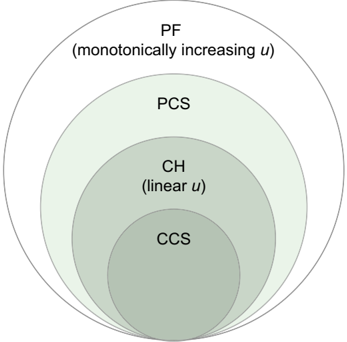
“This solution set is defined as the coverage set (CS), which for mono-tonically increasing reward functions is reduced to the Pareto Front (PF) [6].”
Knoke, T., Biber, P., Schula, T., Fibich, J., & Gang, B. (2025) · Forest Policy and Economics · doi:10.1016/j.forpol.2024.103410 · Cited by 12
Preference-Based Multi-Objective Reinforcement Learning
Mu, N., Luan, Y., & Jia, Q. (2025) · IEEE Transactions on Automation Science and Engineering · doi:10.1109/tase.2025.3589271 · Cited by 15
“2) Multi-Objective Reinforcement Learning With Explicit Reward Functions: Multi-objective reinforcement learning (MORL) is a pivotal subfield of reinforcement learning [30], [31], [32], focusing on decision-making problems under multiple objectives.”
van Remmerden, J., Kenter, M., Roijers, D. M., Andriotis, C. P., Zhang, Y., & Bukhsh, Z. A. (2025) · Neural Computing and Applications · doi:10.1007/s00521-024-10954-0 · Cited by 19
“Equation 8 shows how the Bell-man equation becomes invalidated because any non-linear utility function under the ESR criterion does not distribute across the accrued reward and the future returns [18].”
InfluentialSelf-citationAjani, O. S., Ivan, D. F., Darlan, D., Suganthan, P. N., Gao, K., & Mallipeddi, R. (2024) · Swarm and Evolutionary Computation · doi:10.1016/j.swevo.2024.101692 · Cited by 13
Challenges for Reinforcement Learning in Quantum Circuit Design
Altmann, P. J., Stein, J., Kölle, M., Bärligea, A., Zorn, M., Gabor, T., Phan, T., Feld, S., & Linnhoff–Popien, C. (2024) · IEEE International Conference on Quantum Computing and Engineering (QCE) · doi:10.1109/qce60285.2024.00187 · Cited by 27
“While RL research has proposed various approaches to tackle these challenges [60]–[63], we believe addressing those quantum-control-specific demands would advance both fields.”
Towards Fairness in Personalized Ads Using Impression Variance Aware Reinforcement Learning
Timmaraju, A. S., Mashayekhi, M., Chen, M., Zeng, Q., Fettes, Q., Cheung, W., Xiao, Y., Kannadasan, M. R., Tripathi, P., Gahagan, S., et al. (2023) · ACM SIGKDD Conference on Knowledge Discovery and Data Mining (KDD) · doi:10.1145/3580305.3599916 · Cited by 24
“This iterative method would be repeated until the behavior is satisfactory to the designer [20].”
MethodLiu, S. B., Li, W., Li, H., & Li, S. (2025) · Engineering Applications of Artificial Intelligence · doi:10.1016/j.engappai.2025.110392 · Cited by 10
Mahmud, S., Sayed, A. N., Himeur, Y., Nhlabatsi, A., & Bensaali, F. (2025) · Renewable and Sustainable Energy Reviews · doi:10.1016/j.rser.2025.116481 · Cited by 12
Altimania, M. R., Basem, A., Saydullaev, B., Atamuratova, Z. A., Madaminov, B., Umarov, A. V., Benti, N. E., & Chaka, M. D. (2026) · Scientific Reports · doi:10.1038/s41598-026-44179-z · Cited by 10
AI apology: interactive multi-objective reinforcement learning for human-aligned AI
Harland, H., Dazeley, R., Nakisa, B., Cruz, F., & Vamplew, P. W. (2023) · Neural Computing and Applications · doi:10.1007/s00521-023-08586-x · Cited by 19
“Human alignment in AI is best represented as a multi-objective (MO) problem [11, 12].”
BackgroundMethodSelf-citationLi, D., Gu, W., & Song, T. (2023) · Journal of Process Control · doi:10.1016/j.jprocont.2023.103063 · Cited by 13
Arefin, A. M. E., Khatri, N. R., Habib, A., Lu, Q., Idesman, A. V., & Egan, P. (2024) · Engineering With Computers · doi:10.1007/s00366-024-02081-0 · Cited by 12
“Additionally, there is evidence that machine learning models may struggle with multi-objective optimization [48].”
Cicco, N. D., Pittalà, G. F., Davoli, G., Borsatti, D., Cerroni, W., Raffaelli, C., & Tornatore, M. (2025) · IEEE Transactions on Network and Service Management · doi:10.1109/tnsm.2025.3574131 · Cited by 16
“For this reason, MORL algorithms under a priori unknown utilities seek to construct an approximation of the smallest-possible CCS, from which the PCS can be then derived [25].”
Baja, H., Kallenberg, M., Berghuijs, H. N. C., & Athanasiadis, I. N. (2025) · Computers and Electronics in Agriculture · doi:10.1016/j.compag.2025.110554 · Cited by 11
Li, F., Ma, R., Du, J., & Han, H. (2025) · Swarm and Evolutionary Computation · doi:10.1016/j.swevo.2025.102040 · Cited by 10
Efficient Elitist Cooperative Evolutionary Algorithm for Multi-Objective Reinforcement Learning
Zhou, D., Du, J., & Arai, S. (2023) · IEEE Access · doi:10.1109/access.2023.3272115 · Cited by 14
“These MOEAs are the most powerful techniques for solving MORL problems [24], [25], [26].”
MethodOh, Y., Ullah, A., & Choi, W. (2023) · IEEE Access · doi:10.1109/access.2023.3347788 · Cited by 19
“Furthermore, we employ preference weights { ω o | ∀ o ∈ { 1 , 2 . . . , O }} indicate the relative priority of each objective [42], [43].”
MethodArtificial intelligence -driven insights into bisphenol A removal using synthesized carbon nanotubes
Mijwel, A.-A. S., Pauzi, N. I. M., Alayan, H. M., Afan, H. A., Ahmed, A. N., Aljumaily, M. M., Alsaadi, M. A., & El‐Shafie, A. (2024) · Microporous and Mesoporous Materials · doi:10.1016/j.micromeso.2024.113411 · Cited by 9
Deep Reinforcement Learning for irrigation optimization: Advantages, opportunities, and challenges
Liu, J., Chang, F., Yang, J., Jie, X., Lu, C., Wang, C., Xie, L., Ma, L., & Su, H. (2025) · Agricultural Water Management · doi:10.1016/j.agwat.2025.110030 · Cited by 12
Automated market maker inventory management with deep reinforcement learning
Vicente, Ó. F., Fernández, F., & García, J. (2023) · Applied Intelligence · doi:10.1007/s10489-023-04647-9 · Cited by 15
“The definition of this reward function usually requires the domain’s understanding and prior knowledge of the utility function [8].”
BackgroundXu, X., Huang, X., & Wang, L. (2024) · Maritime Policy & Management · doi:10.1080/03088839.2024.2326635 · Cited by 14
“However, these approaches typically consider only single objectives, which may not fully capture the complexities of real-world scenarios (Hayes et al. 2022).”
Deep Reinforcement Learning for a Multi-Objective Online Order Batching Problem
Beeks, M., Afshar, R. R., Zhang, Y., Dijkman, R., van Dorst, C., & Looijer, S. D. (2022) · Proceedings of the International Conference on Automated Planning and Scheduling · doi:10.1609/icaps.v32i1.19829 · Cited by 23
“However, to the best of our knowledge, the (Bayesian) optimization approach has not yet been applied to learn the reward function that contains parametrized objectives for enhancing learning behavior of optimization problems in multi-objective reinforcement learning (Hayes et al. 2021).”
MethodPhenomenal interface theory: a model for basal consciousness
Klein, C., & Barron, A. B. (2025) · Philosophical Transactions of the Royal Society B: Biological Sciences · doi:10.1098/rstb.2024.0301 · Cited by 8
Monte Carlo tree search algorithms for risk-aware and multi-objective reinforcement learning
Hayes, C. F., Reymond, M., Roijers, D. M., Howley, E., & Mannion, P. (2023) · Autonomous Agents and Multi-Agent Systems · doi:10.1007/s10458-022-09596-0 · Cited by 43
“In different MORL scenarios, the utility function can be unknown at the time of learning or planning [31, 59, 62].”
InfluentialSelf-citationWang, S., Guo, B., Ding, Y. C., Wang, G., He, S., Zhang, D., & He, T. (2023) · IEEE Transactions on Mobile Computing · doi:10.1109/tmc.2023.3342815 · Cited by 9
“Therearealsosomeworks thatstudythemulti-objectivereinforcementlearning[40],[41] andthecorrespondingapplications.”
HPRS: hierarchical potential-based reward shaping from task specifications
Berducci, L., Aguilar, E. A., Ničković, D., & Grosu, R. (2025) · Frontiers in Robotics and AI · doi:10.3389/frobt.2024.1444188 · Cited by 18
“Multi-objective RL (MORL) studies reinforce learning algorithms to optimize multiple and often conflicting objectives (Roijers et al., 2013; Hayes et al., 2022).”
Chen, Y., Dong, J., Wang, Z., & Zhang, C. (2025) · Management Science · doi:10.1287/mnsc.2022.03736 · Cited by 84
Using hybrid multiobjective machine learning to optimise sonobuoy placement patterns
Taylor, C. M., Maskell, S. R., & Ralph, J. F. (2022) · IET Radar Sonar & Navigation · doi:10.1049/rsn2.12347 · Cited by 8
Promptable Behaviors: Personalizing Multi-Objective Rewards from Human Preferences
Hwang, M., Weihs, L., Park, C., Lee, K., Kembhavi, A., & Ehsani, K. (2024) · IEEE Computer Society Conference on Computer Vision and Pattern Recognition/Proceedings - IEEE Computer Society Conference on Computer Vision and Pattern Recognition/Proceedings · doi:10.1109/cvpr52733.2024.01535 · Cited by 44
“Following the general context in MORL [24], we assume that human preferences remain constant over time and each human preference is captured through a linear combination of multiple objectives in the environment.”
BackgroundCicco, N. D., Poltronieri, F., Santos, J., Zaccarini, M., Tortonesi, M., Stefanelli, C., & Turck, F. D. (2024) · International Conference on Network and Service Management (CNSM) · doi:10.23919/cnsm62983.2024.10814307 · Cited by 8
“In practice, when dealing with multiple competing objectives, it is desirable to present to the decision-maker a set of multiple “optimal” trade-offs, such that well-informed decisions can be made a posteriori [12], [13].”
Emergence in Multi-agent Systems: A Safety Perspective
Altmann, P. J., Schönberger, J., Illium, S., Zorn, M., Ritz, F., Haider, T., Burton, S., & Gabor, T. (2024) · Lecture notes in computer science · doi:10.1007/978-3-031-75107-3_7 · Cited by 21
Albers, N., Melo, F. S., Neerincx, M. A., Kudina, O., & Brinkman, W. (2025) · npj Digital Medicine · doi:10.1038/s41746-025-01701-3 · Cited by 9
“…these teams are unsure of their preferences over different allocation principles, an explicitly multi-objective approach can be taken where teams are presented with and guided in choosing from the set of allocations that are optimal under different weights given to allocation principles 63,64 .”
Generalizable Pareto-Optimal Offloading With Reinforcement Learning in Mobile Edge Computing
Yang, N., Wen, J., Zhang, M., & Tang, M. (2025) · IEEE Transactions on Services Computing · doi:10.1109/tsc.2025.3604371 · Cited by 21
“Two widely used technologies to improve the generalization of DRL meth-ods are domain randomization [15] and adapting online [16].”
Multi-Objective Reinforcement Learning for Adaptable Personalized Autonomous Driving
Surmann, H., de Heuvel, J., & Bennewitz, M. (2025) · European Conference on Mobile Robots · doi:10.1109/ecmr65884.2025.11163190 · Cited by 14
“Multi-objective reinforcement learning (MORL) extends traditional reinforcement learning by optimizing multiple, often conflicting objectives [30].”
Metadata
- Authors
- Hayes, C. F., Rădulescu, R., Bargiacchi, E., Källström, J., Macfarlane, M., Reymond, M., Verstraeten, T., Zintgraf, L. M., Dazeley, R., Heintz, F., Howley, E., Irissappane, A. A., Mannion, P., Nowé, A., Ramos, G., Restelli, M., Vamplew, P., & Roijers, D. M.
- Affiliations
- Ollscoil na Gaillimhe – University of Galway (IE)
- Vrije Universiteit Brussel (BE)
- Linköping University (SE)
- University of Amsterdam (NL)
- University of Oxford (GB)
- Deakin University (AU)
- University of Washington Tacoma (US)
- Universidade do Vale do Rio dos Sinos (BR)
- Politecnico di Milano (IT)
- Federation University (AU)
- Corresponding author
- Hayes, Conor F.
- Rădulescu, Roxana
- Bargiacchi, Eugenio
- Källström, Johan
- Macfarlane, Matthew
- Reymond, Mathieu
- Verstraeten, Timothy
- Zintgraf, Luisa M.
- Dazeley, Richard
- Heintz, Fredrik
- Howley, Enda
- Irissappane, Athirai A.
- Mannion, Patrick
- Nowé, Ann
- Ramos, Gabriel
- Restelli, Marcello
- Vamplew, Peter
- Roijers, Diederik M.
- ORCID
- Venue
- Autonomous Agents and Multi-Agent Systems
- Published
- 2022-04
- Volume
- 36
- Issue
- 1
- ISSN
- 1387-2532 (ISSN-L)
- 1573-7454
- OpenAlex
- W3139398491
- Cited by
- 400
- References
- 223
- Citations by year
- 2026: 119 · 2025: 125 · 2024: 80 · 2023: 52 · 2022: 22
- FWCI
- 22.98
- Type
- journal article
- Language
- en
- Open access
- hybrid
- doi.org
- Licence
- cc-by
- creativecommons.org/licenses/by/4.0 (tdm)
- creativecommons.org/licenses/by/4.0 (vor, 12 d)
- Locations
- Autonomous Agents and Multi-Agent Systems (publishedVersion, cc-by)
- arXiv (Cornell University) (submittedVersion)
- Virtual Community of Pathological Anatomy (University of Castilla La Mancha) (submittedVersion, cc-by)
- FedUni ResearchOnline (Federation University Australia) (submittedVersion, cc-by)
- DiVA (Linkoping University) (submittedVersion, other-oa)
- Figshare (submittedVersion, cc-by)
- VUBIR (Vrije Universiteit Brussel) (submittedVersion)
- arXiv (Cornell University)
- Funders
- Vlaamse regering (Onderzoeksprogramma Artificiële Intelligentie (AI) Vlaanderen)
- National University Ireland, Galway
- Topics
- Physical Sciences › Computer Science › Artificial Intelligence › Reinforcement Learning in Robotics
- Physical Sciences › Computer Science › Computational Theory and Mathematics › Advanced Multi-Objective Optimization Algorithms
- Physical Sciences › Computer Science › Artificial Intelligence › AI-based Problem Solving and Planning
- Keywords
- multi-objective reinforcement learning, sequential decision making, conflicting objectives, trade-offs between objectives, solution design, complex decision problems
About these checks
Registry, retraction, Cites and statistics results are computed, not judged, with one exception: a printed reference that no index lists is read once by a model before it counts as a citation error. Claims are extracted by a model and kept only when their quote appears verbatim in the text; each cited source is then checked, with a model’s help, for whether it says what the claim relies on. Those verdicts can be wrong — read the claim’s quote and the cited source before relying on one.
Statistics and arithmetic are recomputed, not judged.
Confidence bands are shown only for fields calibrated on our annotated test set. None is calibrated yet, so no band is shown.
What counts as a claim ›How we measure confidence ›How we check this ›
Are you an author, or do you see a problem with this page? Request a review
Data sources
Bibliographic data: Semantic Scholar, OpenAlex, Crossref.
Contains information from the Semantic Scholar Academic Graph Datasets, made available under the ODC Attribution License (ODC-BY 1.0).
Semantic Scholar’s data is described in: Kinney, R., et al. (2023). The Semantic Scholar Open Data Platform. arXiv:2301.10140.
