

Worth the Risk? Greater Acceptance of Instrumental Harm Befalling Men than Women
Open accessThe DOI matches its Crossref record; 50 of the 50 references it cites were found in a registry or an index.
Abstract
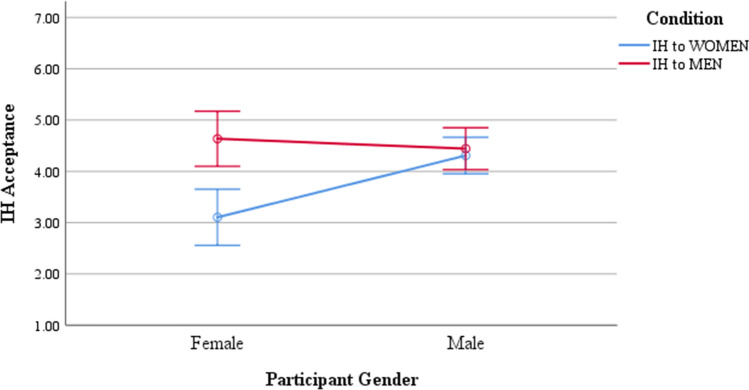
Scientific and organizational interventions often involve trade-offs whereby they benefit some but entail costs to others (i.e., instrumental harm; IH). We hypothesized that the gender of the persons incurring those costs would influence intervention endorsement, such that people would more readily support interventions inflicting IH onto men than onto women. We also hypothesized that women would exhibit greater asymmetries in their acceptance of IH to men versus women. Three experimental studies (two pre-registered) tested these hypotheses. Studies 1 and 2 granted support for these predictions using a variety of interventions and contexts. Study 3 tested a possible boundary condition of these asymmetries using contexts in which women have traditionally been expected to sacrifice more than men: caring for infants, children, the elderly, and the ill. Even in these traditionally female contexts, participants still more readily accepted IH to men than women. Findings indicate people (especially women) are less willing to accept instrumental harm befalling women (vs. men). We discuss the theoretical and practical implications and limitations of our findings.
Overview
The claims and statistics of this paper haven’t been checked yet.
Free: it reads the open-access text and checks the first 5 claims that cite a source we can check. Create a free account to check every claim.
Integrity signals
Registry
Cites
Statistics
Figures
Verification
Claims the paper makes
The claims and statistics of this paper haven’t been checked yet.
Free: it reads the open-access text and checks the first 5 claims that cite a source we can check. Create a free account to check every claim.
Claims other papers make about this one
Each is checked against this paper’s own text: does it say what the citing paper says it does?
The source backs part of the claim, not all of it — or backs it for a different population, condition or comparison.
In the citing paper
“progressives tend to view crimes involving violence against women as more serious”
From Rape or Homicide: Which Is Worse? (2024) · cites this paper as Graso et al., 2023
Experimental — accuracy not yet measuredThe cited source says what the claim attributes to it.
In the citing paper
“they are less tolerant of instrumental harm when it is directed at women than when it is directed at men”
From Rape or Homicide: Which Is Worse? (2024) · cites this paper as Graso et al., 2023
Self-check
Percentages, sums and reported differences re-computed from the paper’s own numbers.
The self-check needs the paper’s full text.
Citations
Cites
The measurement of psychological androgyny
Bem, S. L. (1974) · Journal of Consulting and Clinical Psychology · doi:10.1037/h0036215 · Cited by 8,522 · cited 2×
“Throughout history (Bem, 1974; Hoffman & Borders, 2001) and still today, gender stereotypes conceptualize men as aggressive, self-sufficient, and risk-accepting, and women as gentle, tender, and yielding (Bhatia & Bhatia, 2021; Donnelly & Twenge, 2017; Eagly et al.”
BackgroundUniversal dimensions of social cognition: warmth and competence
Fiske, S. T., Cuddy, A. J. C., & Glick, P. (2007) · Trends in Cognitive Sciences · doi:10.1016/j.tics.2006.11.005 · Cited by 4,567
TurkPrime.com: A versatile crowdsourcing data acquisition platform for the behavioral sciences
Litman, L., Robinson, J., & Abberbock, T. (2017) · Behavior Research Methods · doi:10.3758/s13428-016-0727-z · Cited by 1,982 · cited 2×
“We aimed to retain at least 75 responses in each condition to achieve 80% power to detect an effect size of r = .21.2 Accordingly, we recruited 200 American individuals from Amazon’s CloudResearch (formerly TurkPrime; Litman et al., 2017) in exchange for $1.25 USD.”
BackgroundInfluentialOne Hundred Years of Social Psychology Quantitatively Described
Richard, F. D., Bond, C. F., & Stokes-Zoota, J. J. (2003) · Review of General Psychology · doi:10.1037/1089-2680.7.4.331 · Cited by 1,558 · cited 1×
“21 is the average effect size of social psychology research (Richard et al., 2003).”
BackgroundThe origins of sex differences in human behavior: Evolved dispositions versus social roles.
Eagly, A. H., & Wood, W. (1999) · American Psychologist · doi:10.1037/0003-066x.54.6.408 · Cited by 1,499
Ellemers, N. (2018) · Annual Review of Psychology · doi:10.1146/annurev-psych-122216-011719 · Cited by 1,148 · cited 1×
“…(Bem, 1974; Hoffman & Borders, 2001) and still today, gender stereotypes conceptualize men as aggressive, self-sufficient, and risk-accepting, and women as gentle, tender, and yielding (Bhatia & Bhatia, 2021; Donnelly & Twenge, 2017; Eagly et al., 2020; Ellemers, 2018; Lewis & Lupyan, 2020).”
BackgroundThe Origins of Sex Differences in Human Behavior: Evolved Dispositions versus Social Roles
(2003) · Evolution, Gender, and Rape · doi:10.7551/mitpress/2874.003.0015 · Cited by 1,081 · cited 4×
“If throughout history, women’s communal roles enhanced the well-being of vulnerable individuals (e.g., children and the elderly; Eagly & Wood, 1999; Geary, 2010), interventions benefitting those vulnerable individuals, but inflicting costs onto women, might be equally or more strongly tolerated…”
BackgroundResultInfluentialFiske, S. T., Xu, J., Cuddy, A. C., & Glick, P. (1999) · Journal of Social Issues · doi:10.1111/0022-4537.00128 · Cited by 908
Virtues and Vices and Other Essays in Moral Philosophy
Donnelly, J., & Philosophy Documentation Center (1979) · International Philosophical Quarterly · doi:10.5840/ipq197919434 · Cited by 851 · cited 2×
“Perhaps the most compelling test of utilitarianism’s impartial beneficence tenet is the trolley problem (Foot, 1978).”
BackgroundGender Stereotypes and Attitudes Toward Women and Men
Eagly, A. H., & Mladinic, A. (1989) · Personality and Social Psychology Bulletin · doi:10.1177/0146167289154008 · Cited by 785 · cited 2×
“The stereotypes making women appear “wonderful” (Eagly & Mladinic, 1989; Glick et al., 2004) and communal have also been linked to people’s stronger inclination to perceive women as victims (Reynolds et al., 2020).”
BackgroundThe Theory of Dyadic Morality: Reinventing Moral Judgment by Redefining Harm
Schein, C., & Gray, K. (2018) · Personality and Social Psychology Review · doi:10.1177/1088868317698288 · Cited by 659
Eagly, A. H., & Mladinic, A. (1994) · European Review of Social Psychology · doi:10.1080/14792779543000002 · Cited by 611 · cited 1×
“Eagly and Mladinic (1989, 1994) termed this divergence the “women are wonderful” effect, whereby women are regarded more positively due to their presumed communality, but men more negatively due to their boldness and relative lack of warmth.”
BackgroundBurnstein, E., Crandall, C., & Kitayama, S. (1994) · Journal of Personality and Social Psychology · doi:10.1037//0022-3514.67.5.773 · Cited by 557 · cited 1×
“Extant evidence provides some indirect support to this possibility: people perceive men as less physically vulnerable and report lower desires to help them than women (Burnstein et al., 1994; Dijker, 2001, 2010).”
BackgroundBad but Bold: Ambivalent Attitudes Toward Men Predict Gender Inequality in 16 Nations.
Glick, P., Lameiras, M., Fiske, S. T., Eckes, T., Masser, B., Volpato, C., Manganelli, A. M., Pek, J. C. X., Huang, L.-L., Sakalli-Uğurlu, N., et al. (2004) · Journal of Personality and Social Psychology · doi:10.1037/0022-3514.86.5.713 · Cited by 547 · cited 2×
“Across countries, women express stronger hostility toward men and lower hostility toward women (Glick et al., 2004), suggesting if anyone should exhibit the hypothesized gender bias in instrumental harm acceptance, it should be women.”
BackgroundConcept Creep: Psychology's Expanding Concepts of Harm and Pathology
Haslam, N. (2016) · Psychological Inquiry · doi:10.1080/1047840x.2016.1082418 · Cited by 538 · cited 2×
“1 3 are highly subjective (Schein & Gray, 2018) and even malleable (Haslam, 2016; Rozin, 1999).”
Diversity Initiative Effectiveness: A Typological Theory of Unintended Consequences
Leslie, L. M. (2019) · Academy of Management Review · doi:10.5465/amr.2017.0087 · Cited by 455 · cited 2×
“Many programs designed to improve the workplace have marked benefits, but some may entail negative and unintended consequences (Chang et al., 2019; Leslie, 2019; Singal, 2019).”
BackgroundBeyond sacrificial harm: a two-dimensional model of utilitarian psychology
Kahane, G., Everett, J. A. C., Earp, B. D., Caviola, L., Faber, N. S., Crockett, M. J., & Savulescu, J. (2018) · Psychological Review · doi:10.1037/rev0000093 · Cited by 434 · cited 2×
“We crafted six items based on the IH subscale of The Oxford Utilitarianism Scale (Kahane et al., 2018): (1) The program is worth pursuing, despite the fact that more [wo]men found it insensitive and offensive; (2) despite these drawbacks, I would support this program in my own organization; (3) despite its drawbacks,…”
MethodDobbin, F. R., & Kalev, A. (2016) · Harvard business review · Cited by 434
Gender Differences in Automatic In-Group Bias: Why Do Women Like Women More Than Men Like Men?
Rudman, L. A., & Goodwin, S. A. (2004) · Journal of Personality and Social Psychology · doi:10.1037/0022-3514.87.4.494 · Cited by 412
Rozin, P. (1999) · Psychological Science · doi:10.1111/1467-9280.00139 · Cited by 411 · cited 2×
“1 3 are highly subjective (Schein & Gray, 2018) and even malleable (Haslam, 2016; Rozin, 1999).”
Donnelly, K., & Twenge, J. M. (2017) · Sex Roles · doi:10.1007/s11199-016-0625-y · Cited by 405
Male, female: The evolution of human sex differences (2nd ed.).
Geary, D. C. (2010) · American Psychological Association eBooks · doi:10.1037/12072-000 · Cited by 387 · cited 1×
“If throughout history, women’s communal roles enhanced the well-being of vulnerable individuals (e.g., children and the elderly; Eagly & Wood, 1999; Geary, 2010), interventions benefitting those vulnerable individuals, but inflicting costs onto women, might be equally or more strongly tolerated…”
BackgroundFoot, P. (2002) · Digital Access to Libraries (Université catholique de Louvain (UCL), l'Université de Namur (UNamur) and the Université Saint-Louis (USL-B)) · doi:10.1093/0199252866.001.0001 · Cited by 381
Rudman, L. A., Greenwald, A. G., & McGhee, D. E. (2001) · Personality and Social Psychology Bulletin · doi:10.1177/0146167201279009 · Cited by 357
“What about me?” Perceptions of exclusion and Whites' reactions to multiculturalism.
Plaut, V. C., Garnett, F. G., Buffardi, L. E., & Sanchez-Burks, J. (2011) · Journal of Personality and Social Psychology · doi:10.1037/a0022832 · Cited by 331
The mixed effects of online diversity training
Chang, E. H., Milkman, K. L., Gromet, D. M., Rebele, R. W., Massey, C., Duckworth, A. L., & Grant, A. M. (2019) · Proceedings of the National Academy of Sciences · doi:10.1073/pnas.1816076116 · Cited by 304 · cited 1×
“Many programs designed to improve the workplace have marked benefits, but some may entail negative and unintended consequences (Chang et al., 2019; Leslie, 2019; Singal, 2019).”
BackgroundGender bias in research: how does it affect evidence based medicine?
Holdcroft, A. (2007) · Journal of the Royal Society of Medicine · doi:10.1177/014107680710000102 · Cited by 298 · cited 2×
“This ultimately proved costly to women, as men’s overrepresentation in medical research yielded treatments more effective among men than women (Holdcroft, 2007).”
BackgroundThe Expanding Circle: Ethics, Evolution, and Moral Progress
Warner, J. (2014) · The European Legacy · doi:10.1080/10848770.2014.898963 · Cited by 284
Hoffman, R. M., & Borders, L. D. (2001) · Measurement and Evaluation in Counseling and Development · doi:10.1080/07481756.2001.12069021 · Cited by 282 · cited 1×
“Throughout history (Bem, 1974; Hoffman & Borders, 2001) and still today, gender stereotypes conceptualize men as aggressive, self-sufficient, and risk-accepting, and women as gentle, tender, and yielding (Bhatia & Bhatia, 2021; Donnelly & Twenge, 2017; Eagly et al., 2020; Ellemers, 2018; Lewis &…”
BackgroundBounded Ethicality: The Perils of Loss Framing
Kern, M. C., & Chugh, D. (2009) · Psychological Science · doi:10.1111/j.1467-9280.2009.02296.x · Cited by 250 · cited 2×
“Yet, in line with the bounded nature of moral judgment (Kern & Chugh, 2009), the sacrificial individual’s gender sways observers’ judgments.”
BackgroundGender stereotypes are reflected in the distributional structure of 25 languages
Lewis, M. L., & Lupyan, G. (2020) · Nature Human Behaviour · doi:10.1038/s41562-020-0918-6 · Cited by 213 · cited 1×
“…(Bem, 1974; Hoffman & Borders, 2001) and still today, gender stereotypes conceptualize men as aggressive, self-sufficient, and risk-accepting, and women as gentle, tender, and yielding (Bhatia & Bhatia, 2021; Donnelly & Twenge, 2017; Eagly et al., 2020; Ellemers, 2018; Lewis & Lupyan, 2020).”
BackgroundConway, P., Goldstein-Greenwood, J., Polacek, D., & Greene, J. D. (2018) · Cognition · doi:10.1016/j.cognition.2018.04.018 · Cited by 186 · cited 1×
“However, some work finds that acceptance of sacrificial harm reflects a mixture of both utilitarian reasoning and antisocial inclinations (Conway et al., 2018).”
BackgroundFurther understanding incivility in the workplace: The effects of gender, agency, and communion.
Gabriel, A. S., Butts, M. M., Yuan, Z., Rosen, R. L., & Sliter, M. T. (2018) · Journal of Applied Psychology · doi:10.1037/apl0000289 · Cited by 171 · cited 1×
“We selected toxic behaviors that tend to be perpetrated by both men and women (Gabriel et al., 2017).”
BackgroundSkulmowski, A., Bunge, A., Kaspar, K., & Pipa, G. (2014) · Frontiers in Behavioral Neuroscience · doi:10.3389/fnbeh.2014.00426 · Cited by 157
Patterns of Implicit and Explicit Stereotypes III: Long-Term Change in Gender Stereotypes
Charlesworth, T. E. S., & Banaji, M. R. (2022) · Social Psychological and Personality Science · doi:10.1177/1948550620988425 · Cited by 150
A Practice-Based Theory of Diversity: Respecifying (In)Equality in Organizations
Janssens, M., & Steyaert, C. (2018) · Academy of Management Review · doi:10.5465/amr.2017.0062 · Cited by 140 · cited 2×
“The reasons for failures are frequently traced to poorly designed or implemented initiatives (Janssens & Steyaert, 2019).”
BackgroundChanges in Gender Stereotypes Over Time: A Computational Analysis
Bhatia, N. M., & Bhatia, S. (2020) · Psychology of Women Quarterly · doi:10.1177/0361684320977178 · Cited by 125
Arechar, A. A., & Rand, D. G. (2021) · Behavior Research Methods · doi:10.3758/s13428-021-01588-4 · Cited by 105 · cited 1×
“Moreover, our data were collected during the earlier days of COVID-19, which could have influenced the composition or motivations of our samples (Arechar & Rand, 2021).”
MethodMan up and take it: Gender bias in moral typecasting
Reynolds, T. A., Howard, C., Sjåstad, H., Zhu, L. L., Okimoto, T. G., Baumeister, R. F., Aquino, K. F., & Kim, J. (2020) · Organizational Behavior and Human Decision Processes · doi:10.1016/j.obhdp.2020.05.002 · Cited by 96
Self-citationThe influence of perceived suffering and vulnerability on the experience of pity
Dijker, A. J. (2001) · European Journal of Social Psychology · doi:10.1002/ejsp.54 · Cited by 93 · cited 1×
“Extant evidence provides some indirect support to this possibility: people perceive men as less physically vulnerable and report lower desires to help them than women (Burnstein et al., 1994; Dijker, 2001, 2010).”
BackgroundPerceived vulnerability as a common basis of moral emotions
Dijker, A. J. M. (2010) · British Journal of Social Psychology · doi:10.1348/014466609x482668 · Cited by 74 · cited 1×
“Extant evidence provides some indirect support to this possibility: people perceive men as less physically vulnerable and report lower desires to help them than women (Burnstein et al., 1994; Dijker, 2001, 2010).”
BackgroundMoral Chivalry: Gender and Harm Sensitivity Predict Costly Altruism
FeldmanHall, O., Dalgleish, T., Evans, D., Navrady, L. B., Tedeschi, E., & Mobbs, D. (2016) · Social Psychological and Personality Science · doi:10.1177/1948550616647448 · Cited by 68
Knepper, M. (2017) · Journal of Labor Economics · doi:10.1086/696150 · Cited by 63 · cited 1×
“In the courtroom, women filing workplace discrimination claims were more likely to win compensation when their case was adjudicated by a female judge (Knepper, 2018).”
BackgroundThe Expanding Circle: Ethics, Evolution, and Moral Progress
Singer, P. 1. (2011) · Project Muse (Johns Hopkins University) · Cited by 48
Hughes, J. S. (2017) · British Journal of Social Psychology · doi:10.1111/bjso.12199 · Cited by 47 · cited 2×
“In its purest form, this element demands people ignore personal ties, family loyalties, group memberships, special preferences, and emotional impulses that compromise impartiality and achieving this greater good (e.g., Hughes, 2017).”
BackgroundBostyn, D. H., Roets, A., & Hiel, A. V. (2016) · Personality and Individual Differences · doi:10.1016/j.paid.2016.03.006 · Cited by 37
Scalar consequentialism the right way
Sinhababu, N. (2017) · Philosophical Studies · doi:10.1007/s11098-017-0998-y · Cited by 27
The Boy Crisis: Experimental Evidence on the Acceptance of Males Falling BehindPreprint
Cappelen, A. W., Falch, R., & Tungodden, B. (2019) · SSRN Electronic Journal · doi:10.2139/ssrn.3348981 · Cited by 14 · cited 1×
“Supporting this prediction, laboratory experiments find women redistribute payments to favor low-earning female (but not male) workers, whereas men showed no such gender bias (Cappelen et al., 2019).”
Barry, J. A. (2020) · UCL Discovery (University College London) · doi:10.5281/zenodo.4301350 · Cited by 1 · cited 1×
“Indeed, people perceive women as more responsible than men for protecting their children from harm (Barry et al., 2020), suggesting that traditional gender roles contribute to perceptions of sacrificial obligations.”
BackgroundBarry, J. A. (2020) · UCL Discovery (University College London) · doi:10.5281/zenodo.4296865 · Cited by 1
Research works printed but not linked: 2
- Baumeister RF Is there anything good about men? 2010 Oxford University Press
- Mill, J. S. (1861/2010). Utilitarianism (2nd ed.). Hackett Publishing Co, 2nd Edition.
Cited by
Seeing through the black-pill: Incels are wrong about what people think of them
Costello, W., & Thomas, A. G. (2025) · Personality and Individual Differences · doi:10.1016/j.paid.2025.113041 · Cited by 14
A feminine advantage in the domain of harm: a review and path forward
Graso, M., & Reynolds, T. A. (2024) · Biology Letters · doi:10.1098/rsbl.2024.0381 · Cited by 8
Self-citationHimpathy and status: Attitudes to social hierarchy predict reactions to sexual harassment
Weaving, M., Haslam, N., & Fine, C. (2023) · PLoS ONE · doi:10.1371/journal.pone.0292953 · Cited by 8
“It is possible that egalitarians might provide equal or more lenient punishment recommendations for female harassment against men, when compared to those high in SDO, as recent work finds egalitarianism predicts greater sympathy for females [69].”
ResultRape or Homicide: Which Is Worse?
Felson, R. B., & Silver, E. (2024) · Archives of Sexual Behavior · doi:10.1007/s10508-023-02799-w · Cited by 5
“They lobbied for mandatory arrests of men who engaged in mis-demeanor assaults on their intimate partners (e.g., Buzawa et al., 2022), and they are less tolerant of instrumental harm when it is directed at women than when it is directed at men (Graso et al., 2023).”
Kaczuba, A., & Koszałkowska, K. (2023) · Psychological Reports · doi:10.1177/00332941231213934 · Cited by 4
“For instance, instrumental harm is more readily accepted when it affects men than women (Graso et al., 2023), and ambivalent sexism toward both men and women predicts greater tolerance of sexual harrasment of men (Russell & Oswald, 2016).”
Metadata
- Authors
- Graso, M., Reynolds, T., & Aquino, K.
- Affiliations
- University of Groningen (NL)
- University of New Mexico (US)
- University of British Columbia (CA)
- Corresponding author
- Graso, Maja
- Venue
- Archives of Sexual Behavior
- Published
- 2023-03-17
- Volume
- 52
- Issue
- 6
- Pages
- 2433-2445
- ISSN
- 0004-0002 (ISSN-L)
- 1573-2800
- PMC
- PMC10022566
- OpenAlex
- W4327682232
- Semantic Scholar
- 952a69b0d51dc86499cc7b3f25fd7eb2d27d37d6
- Cited by
- 10
- References
- 50
- Citations by year
- 2026: 4 · 2025: 1 · 2024: 3 · 2023: 2
- FWCI
- 1.50
- Type
- journal article
- Language
- en
- Open access
- hybrid
- doi.org
- Licence
- cc-by
- creativecommons.org/licenses/by/4.0 (tdm)
- creativecommons.org/licenses/by/4.0 (vor)
- Locations
- Archives of Sexual Behavior (publishedVersion, cc-by)
- PubMed Central (publishedVersion, cc-by)
- PubMed (publishedVersion)
- University of Groningen research database (University of Groningen / Centre for Information Technology) (submittedVersion, cc-by)
- Topics
- Life Sciences › Neuroscience › Cognitive Neuroscience › Psychology of Moral and Emotional Judgment
- Social Sciences › Sociology and Political Science › Social and Intergroup Psychology
- Social Sciences › Gender Studies › Gender and Feminist Studies
- Keywords
- instrumental harm, gender asymmetry, intervention acceptance, trade-offs, gender roles, caregiving, ethical trade-offs
- MeSH terms
- Female, Humans, Male, Sex Factors, Risk Assessment, Harm Reduction
About these checks
Registry, retraction, Cites and statistics results are computed, not judged, with one exception: a printed reference that no index lists is read once by a model before it counts as a citation error. Claims are extracted by a model and kept only when their quote appears verbatim in the text; each cited source is then checked, with a model’s help, for whether it says what the claim relies on. Those verdicts can be wrong — read the claim’s quote and the cited source before relying on one.
Statistics and arithmetic are recomputed, not judged.
Confidence bands are shown only for fields calibrated on our annotated test set. None is calibrated yet, so no band is shown.
What counts as a claim ›How we measure confidence ›How we check this ›
Are you an author, or do you see a problem with this page? Request a review
Data sources
Bibliographic data: Semantic Scholar, OpenAlex, Crossref.
Contains information from the Semantic Scholar Academic Graph Datasets, made available under the ODC Attribution License (ODC-BY 1.0).
Semantic Scholar’s data is described in: Kinney, R., et al. (2023). The Semantic Scholar Open Data Platform. arXiv:2301.10140.
