

Spermidine toxicity in Saccharomyces cerevisiae due to mitochondrial complex III deficiency
Open accessThe DOI matches its Crossref record; 48 of the 48 references it cites were found in a registry or an index.
Abstract
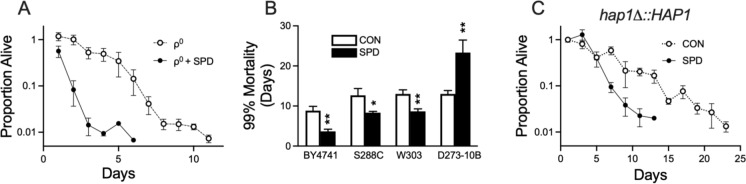
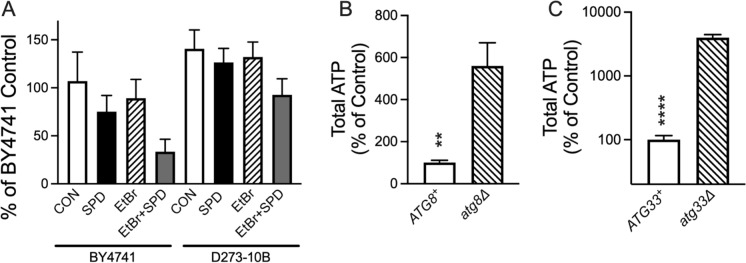
Spermidine is a naturally occurring polyamine present in all cells and is necessary for viability in eukaryotic cells. The cellular levels of spermidine decline as an organism ages, and its supplementation has been found to extend lifespan in yeast, worms, flies, mice, and human cultured cells. The lifespan extending effect of spermidine is thought to be due to its ability to induce autophagy, a turnover of cellular components. Mitochondrial dysfunction is believed to be a major driver of the aging process. We asked whether spermidine could rescue mitochondrial dysfunction using the yeast Saccharomyces cerevisiae lacking mtDNA (ρ 0 cells) as a model. Not only was spermidine unable to rescue survival in ρ 0 cells, but it appeared to exhibit toxicity resulting in a shortened lifespan. This toxicity appears to not be due to the loss of mitochondrial respiration, elevated oxidative stress, or depleted ATP. Spermidine toxicity could be recapitulated by the genetic or pharmacological inactivation of mitochondrial complex III. It can also be prevented by the impairment of autophagy, through the inactivation of ATG8, or by impairment of mitochondrial complex II through the inactivation of SDH2. Spermidine toxicity in ρ 0 cells was present in yeast strains BY4741 and W303, but not D273-10B, demonstrating genetic variance in the phenotype. Thus, caution may be suggested regarding the use of spermidine to alleviate aging in humans. Depending on the genotype of the individual, spermidine could potentially harm the very individuals it is intended to help. Graphical abstract
Overview
The claims and statistics of this paper haven’t been checked yet.
Free: it reads the open-access text and checks the first 5 claims that cite a source we can check. Create a free account to check every claim.
Integrity signals
Registry
Cites
Statistics
Figures
Verification
Claims the paper makes
The claims and statistics of this paper haven’t been checked yet.
Free: it reads the open-access text and checks the first 5 claims that cite a source we can check. Create a free account to check every claim.
Claims other papers make about this one
Each is checked against this paper’s own text: does it say what the citing paper says it does?
The cited source doesn’t support the claim as written.
In the citing paper
“For example, a lack of complex III in Saccharomyces cerevisiae leads to spermine toxicity (20).”
From Mitochondrial complex III subunit Qcr8 regulates the virulence and adhesion of Candida albicans by modulating mitochondrial function (2026) · cites this paper as [20]
Checked by a reasoning model — may be wrong.
Experimental — accuracy not yet measured
Self-check
Percentages, sums and reported differences re-computed from the paper’s own numbers.
The self-check needs the paper’s full text.
Citations
Cites
Small molecule activators of sirtuins extend Saccharomyces cerevisiae lifespan
Howitz, K. T., Bitterman, K. J., Cohen, H. Y., Lamming, D. W., Lavu, S., Wood, J. G., Zipkin, R. E., Chung, P., Kisielewski, A., Zhang, L.-L., et al. (2003) · Nature · doi:10.1038/nature01960 · Cited by 3,796 · cited 1×
“This includes dinitrophenol, metformin, resveratrol, rapamycin, and spermidine (Barros et al. 2004; Caldeira da Silva et al. 2008; Kazi et al. 2017 Martin-Montalvo et al. 2013; Choi et al. 2013; Bjedov et al. 2010; Harrison et al. 2009; Howitz et al. 2003; Eisenberg et al. 2016).”
Rapamycin fed late in life extends lifespan in genetically heterogeneous mice
Harrison, D. E., Strong, R., Sharp, Z. D., Nelson, J. F., Astle, C. M., Flurkey, K., Nadon, N. L., Wilkinson, J. E., Frenkel, K., Carter, C. S., et al. (2009) · Nature · doi:10.1038/nature08221 · Cited by 3,766 · cited 1×
“This includes dinitrophenol, metformin, resveratrol, rapamycin, and spermidine (Barros et al. 2004; Caldeira da Silva et al. 2008; Kazi et al. 2017 Martin-Montalvo et al. 2013; Choi et al. 2013; Bjedov et al. 2010; Harrison et al. 2009; Howitz et al. 2003; Eisenberg et al. 2016).”
Extension of murine life span by overexpression of catalase targeted to mitochondria
Schriner, S. E., Linford, N. J., Martin, G. M., Treuting, P., Ogburn, C. E., Emond, M., Coskun, P. E., Ladiges, W., Wolf, N., Van Remmen, H., et al. (2005) · Science · doi:10.1126/science.1106653 · Cited by 1,724 · cited 1×
“…an increased mean and maximum lifespan, but also improved parameters of cataract formation, insulin sensitivity, exercise performance, cardiac pathology, and invasive breast cancer (Schriner et al. 2005; Wolf et al. 2005; Lee et al. 2010) (Li et al. 2009) (Chiao et al. 2020; Goh et al. 2011).”
Self-citationInduction of autophagy by spermidine promotes longevity
Eisenberg, T., Knauer, H., Schauer, A., Büttner, S., Ruckenstuhl, C., Carmona-Gutierrez, D., Ring, J., Schroeder, S., Magnes, C., Antonacci, L., et al. (2009) · Nature Cell Biology · doi:10.1038/ncb1975 · Cited by 1,680 · cited 5×
“Spermidine shortens lifespan in ρ 0 BY4741 yeast and closely related strains Mitochondrial dysfunction is thought to play a significant role in aging (Bratic and Larsson 2013), and the polyamine SPD has been shown to extend lifespan in model systems (Eisenberg et al. 2009).”
InfluentialMetformin improves healthspan and lifespan in mice
Martin-Montalvo, A., Mercken, E. M., Mitchell, S. J., Palacios, H. H., Mote, P. L., Scheibye-Knudsen, M., Gomes, A. P., Ward, T. M., Minor, R. K., Blouin, M.-J., et al. (2013) · Nature Communications · doi:10.1038/ncomms3192 · Cited by 1,445 · cited 1×
“This includes dinitrophenol, metformin, resveratrol, rapamycin, and spermidine (Barros et al. 2004; Caldeira da Silva et al. 2008; Kazi et al. 2017 Martin-Montalvo et al. 2013; Choi et al. 2013; Bjedov et al. 2010; Harrison et al. 2009; Howitz et al. 2003; Eisenberg et al. 2016).”
Autophagy in healthy aging and disease
Aman, Y., Schmauck-Medina, T., Hansen, M., Morimoto, R. I., Simon, A. K., Bjedov, I., Palikaras, K., Simonsen, A., Johansen, T., Tavernarakis, N., et al. (2021) · Nature Aging · doi:10.1038/s43587-021-00098-4 · Cited by 1,313 · cited 1×
“Autophagy is the turnover of cellular components and is thought to be an important factor in lifespan extension due to dietary restriction (Aman et al. 2021).”
Cardioprotection and lifespan extension by the natural polyamine spermidine
Eisenberg, T., Abdellatif, M., Schroeder, S., Primessnig, U., Stekovic, S., Pendl, T., Harger, A., Schipke, J., Zimmermann, A., Schmidt, A., et al. (2016) · Nature Medicine · doi:10.1038/nm.4222 · Cited by 1,168 · cited 3×
“The levels of SPD decline naturally as an organism ages, and its supplementation has been found to extend lifespan in yeast, worms, flies, mice, and human cultured cells (Eisenberg et al. 2009, 2016).”
Spermidine in health and disease
Madeo, F., Eisenberg, T., Pietrocola, F., & Kroemer, G. (2018) · Science · doi:10.1126/science.aan2788 · Cited by 1,154 · cited 1×
“Spermidine (SPD) is one such compound and is thought to act through the induction of autophagy, which is a process leading to the turnover of cellular components (Madeo et al. 2018; Eisenberg et al. 2009).”
The role of mitochondria in aging
Bratic, A., & Larsson, N.-G. (2013) · Journal of Clinical Investigation · doi:10.1172/jci64125 · Cited by 1,087
Mitochondrial dysfunction in cell senescence and aging
Miwa, S., Kashyap, S., Chini, E., & von Zglinicki, T. (2022) · Journal of Clinical Investigation · doi:10.1172/jci158447 · Cited by 1,061 · cited 1×
“Depending on the genotype of the individual, spermidine could potentially harm the very individuals it is intended to help.”
Mechanisms of Life Span Extension by Rapamycin in the Fruit Fly Drosophila Melanogaster
Bjedov, I., Toivonen, J. M., Kerr, F., Slack, C., Jacobson, J., Foley, A., & Partridge, L. (2010) · Cell Metabolism · doi:10.1016/j.cmet.2009.11.010 · Cited by 1,057 · cited 1×
“This includes dinitrophenol, metformin, resveratrol, rapamycin, and spermidine (Barros et al. 2004; Caldeira da Silva et al. 2008; Kazi et al. 2017 Martin-Montalvo et al. 2013; Choi et al. 2013; Bjedov et al. 2010; Harrison et al. 2009; Howitz et al. 2003; Eisenberg et al. 2016).”
Hirst, J. (2013) · Annual Review of Biochemistry · doi:10.1146/annurev-biochem-070511-103700 · Cited by 744 · cited 1×
“In most eukaryotes, electrons predominantly enter the respiratory chain via NADH through the mitochondrial complex I, which is quite large and composed by up to 45 subunits (Hirst 2013).”
Mitochondria in health, disease, and aging
Harrington, J. S., Ryter, S. W., Plataki, M., Price, D. R., & Choi, A. M. K. (2023) · Physiological Reviews · doi:10.1152/physrev.00058.2021 · Cited by 602 · cited 1×
“Mitochondria are essential components of eukaryotic cells where they produce ATP, shuttle low-energy electrons to oxygen, generate reactive oxygen species, store calcium ions, metabolize fatty acids, and regulate cellular growth, differentiation, and death (Harrington et al. 2023).”
Replicative and chronological aging in Saccharomyces cerevisiae
Longo, V. D., Shadel, G. S., Kaeberlein, M., & Kennedy, B. (2012) · Cell Metabolism · doi:10.1016/j.cmet.2012.06.002 · Cited by 595 · cited 2×
“Replicative lifespan is generally interpreted to represent replicating cells in the animal, such as intestinal epithelium (Longo et al. 2012).”
Atg8: an autophagy-related ubiquitin-like protein family.
Shpilka, T., Weidberg, H., Pietrokovski, S., & Elazar, Z. (2011) · Genome biology · doi:10.1186/gb-2011-12-7-226 · Cited by 543 · cited 1×
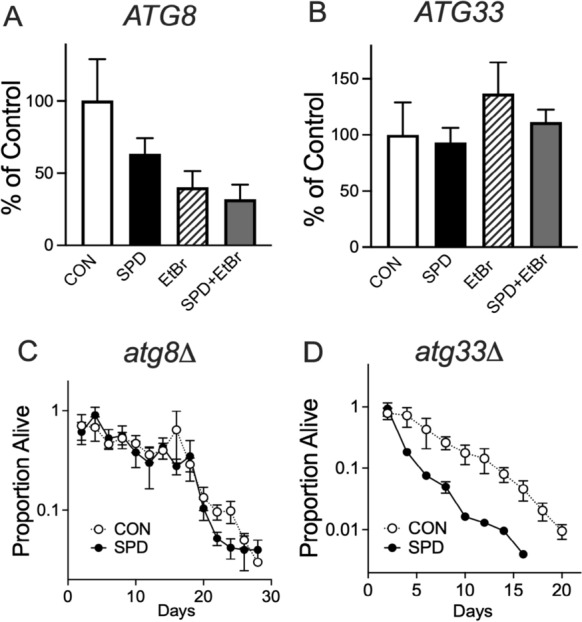
“It appeared to down-regulate ATG8 , which encodes a protein required for autophagy (Shpilka et al. 2011), and had no effect on ATG33 , which is necessary for mitochondrial specific autophagy (Kanki et al. 2009).”
Slonimski, P. P., Perrodin, G., & Croft, J. H. (1968) · Biochemical and Biophysical Research Communications · doi:10.1016/0006-291x(68)90440-3 · Cited by 498 · cited 1×
“Generation of ρ 0 cells was accomplished by the selective elimination of mtDNA by treatment with ethidium bromide (Slonimski et al. 1968).”
The Search for Antiaging Interventions: From Elixirs to Fasting Regimens
de Cabo, R., Carmona-Gutierrez, D., Bernier, M., Hall, M. N., & Madeo, F. (2014) · Cell · doi:10.1016/j.cell.2014.05.031 · Cited by 345
Barros, M. H., Bandy, B., Tahara, E. B., & Kowaltowski, A. J. (2004) · Journal of Biological Chemistry · doi:10.1074/jbc.m408918200 · Cited by 322
Lee, H.-Y., Choi, C. S., Birkenfeld, A. L., Alves, T. C., Jornayvaz, F. R., Jurczak, M. J., Zhang, D., Woo, D. K., Shadel, G. S., Ladiges, W., et al. (2010) · Cell Metabolism · doi:10.1016/j.cmet.2010.11.004 · Cited by 319 · cited 1×
“…an increased mean and maximum lifespan, but also improved parameters of cataract formation, insulin sensitivity, exercise performance, cardiac pathology, and invasive breast cancer (Schriner et al. 2005; Wolf et al. 2005; Lee et al. 2010) (Li et al. 2009) (Chiao et al. 2020; Goh et al. 2011).”
Self-citationLuttik, M. A. H., Overkamp, K. M., Kötter, P., de Vries, S., van Dijken, J. P., & Pronk, J. T. (1998) · Journal of Biological Chemistry · doi:10.1074/jbc.273.38.24529 · Cited by 311 · cited 1×
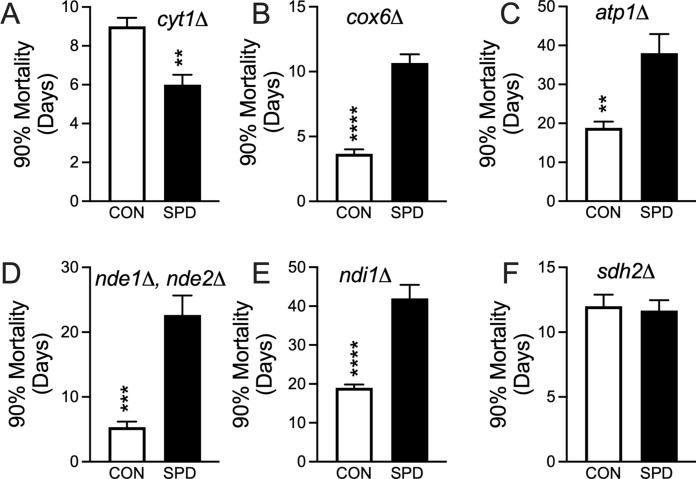
“Nde1p and Nde2p are known to be paralogs, (Luttik et al. 1998) so we assayed yeast with both of their genes deleted.”
Functional dissection and sequence of yeast HAP1 activator
Pfeifer, K., Kim, K.-S., Kogan, S., & Guarente, L. (1989) · Cell · doi:10.1016/0092-8674(89)90903-3 · Cited by 308 · cited 1×
“BY4741 contains an insertion of a TY transposon in the carboxy end of the protein (Pfeifer et al. 1989).”
Mild mitochondrial uncoupling in mice affects energy metabolism, redox balance and longevity
Caldeira da Silva, C. C., Cerqueira, F. M., Barbosa, L. F., Medeiros, M. H. G., & Kowaltowski, A. J. (2008) · Aging Cell · doi:10.1111/j.1474-9726.2008.00407.x · Cited by 306 · cited 1×
“This includes dinitrophenol, metformin, resveratrol, rapamycin, and spermidine (Barros et al. 2004; Caldeira da Silva et al. 2008; Kazi et al. 2017 Martin-Montalvo et al. 2013; Choi et al. 2013; Bjedov et al. 2010; Harrison et al. 2009; Howitz et al. 2003; Eisenberg et al. 2016).”
Toxicity of Polyamines and Their Metabolic Products
Pegg, A. E. (2013) · Chemical Research in Toxicology · doi:10.1021/tx400316s · Cited by 300 · cited 1×
“Aldehydes resulting from the oxidation of the amino group(s) may be a contributing factor (Pegg 2013).”
A Genomic Screen for Yeast Mutants Defective in Selective Mitochondria Autophagy
Kanki, T., Wang, K., Baba, M., Bartholomew, C. R., Lynch-Day, M. A., Du, Z., Geng, J., Mao, K., Yang, Z., Yen, W.-L., et al. (2009) · Molecular Biology of the Cell · doi:10.1091/mbc.e09-03-0225 · Cited by 266 · cited 10×
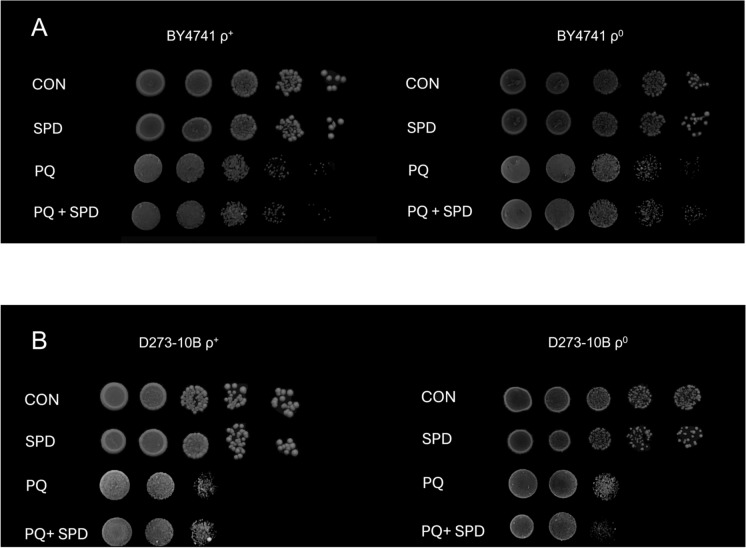
“2A) but had no effect on the mitophagy-specific ATG33 (Kanki et al. 2009) (Fig.”
InfluentialGASPing for Life in Stationary Phase
Zambrano, M. M., & Kolter, R. (1996) · Cell · doi:10.1016/s0092-8674(00)80089-6 · Cited by 201 · cited 2×
“To minimize any potential confounding effect due to the growth advantage in stationary phase (GASP) phenomenon (Zambrano and Kolter 1996), we further elected to end our lifespan assays at 90% mortality.”
Dimitrov, L. N., Brem, R. B., Kruglyak, L., & Gottschling, D. E. (2009) · Genetics · doi:10.1534/genetics.109.104497 · Cited by 182 · cited 6×
“However, some consider BY4741, and its parental strain S288C, to be a poor choice for mitochondrial research as there are high frequencies of petite formation due to spontaneous occurrence of cells deficient in respiration (Dimitrov et al. 2009).”
InfluentialYeast as a system for modeling mitochondrial disease mechanisms and discovering therapies
Lasserre, J.-P., Dautant, A., Aiyar, R. S., Kucharczyk, R., Glatigny, A., Tribouillard-Tanvier, D., Rytka, J., Blondel, M., Skoczen, N., Reynier, P., et al. (2015) · Disease Models & Mechanisms · doi:10.1242/dmm.020438 · Cited by 154 · cited 1×
“BY4741 is known to have a high petite frequency, which is a result of the loss of functional mitochondrial respiration leading to slow growth and small colony formation (Whittaker 1979; Lasserre et al. 2015).”
The functional role of polyamines in eukaryotic cells
Igarashi, K., & Kashiwagi, K. (2019) · The International Journal of Biochemistry & Cell Biology · doi:10.1016/j.biocel.2018.12.012 · Cited by 149 · cited 3×
“The complete role of SPD in the cell is not exactly clear, though in addition to autophagy, it is thought to be able to stabilize RNA, particularly tRNAs, by exchanging positions with Mg 2+ ions, and may have important functions in DNA metabolism (Igarashi and Kashiwagi 2019).”
InfluentialMitochondrial targeted catalase suppresses invasive breast cancer in mice
Goh, J., Enns, L., Fatemie, S., Hopkins, H., Morton, J., Pettan-Brewer, C., & Ladiges, W. (2011) · BMC Cancer · doi:10.1186/1471-2407-11-191 · Cited by 148 · cited 1×
“…an increased mean and maximum lifespan, but also improved parameters of cataract formation, insulin sensitivity, exercise performance, cardiac pathology, and invasive breast cancer (Schriner et al. 2005; Wolf et al. 2005; Lee et al. 2010) (Li et al. 2009) (Chiao et al. 2020; Goh et al. 2011).”
Late-life restoration of mitochondrial function reverses cardiac dysfunction in old mice
Chiao, Y. A., Zhang, H., Sweetwyne, M., Whitson, J., Ting, Y. S., Basisty, N., Pino, L. K., Quarles, E., Nguyen, N.-H., Campbell, M. D., et al. (2020) · eLife · doi:10.7554/elife.55513 · Cited by 136
Young, M. L., & Franklin, J. L. (2019) · Molecular and Cellular Neuroscience · doi:10.1016/j.mcn.2019.103409 · Cited by 120 · cited 1×
“For example, the small molecule MitoQ has been shown to inhibit memory loss and (2025) 26:91 Page 3 of 14 91 Vol.: (0123456789) neuropathy, and improve survival in Alzheimer’s disease model mice (Young and Franklin 2019).”
The Effects of Calorie Restriction on Autophagy: Role on Aging Intervention
Chung, K. W., & Chung, H. Y. (2019) · Nutrients · doi:10.3390/nu11122923 · Cited by 119 · cited 1×
“Autophagy has also been proposed to be one of the mechanistic explanations for the positive effects of dietary restriction (Chung and Chung 2019).”
Ralser, M., Kuhl, H., Ralser, M., Werber, M., Lehrach, H., Breitenbach, M., & Timmermann, B. (2012) · Open Biology · doi:10.1098/rsob.120093 · Cited by 116
PHARMACOLOGY OF SPERMINE AND SPERMIDINE. SOME EFFECTS ON ANIMALS AND BACTERIA
Tabor, C. W., & Rosenthal, S. M. (1956) · Journal of Pharmacology and Experimental Therapeutics · doi:10.1016/s0022-3565(25)11733-3 · Cited by 116
Mitochondrial DNA damage as driver of cellular outcomes
Nadalutti, C. A., Ayala‐Peña, S., & Santos, J. H. (2021) · American Journal of Physiology-Cell Physiology · doi:10.1152/ajpcell.00389.2021 · Cited by 99 · cited 1×
“The DNA present in the mitochondria lacks many of the protective proteins and repair systems present in nuclear DNA, making them especially vulnerable to damage and mutation (Nadalutti et al. 2022).”
Murakami, C. J., Wall, V., Basisty, N., & Kaeberlein, M. (2011) · PLoS ONE · doi:10.1371/journal.pone.0024530 · Cited by 71 · cited 1×
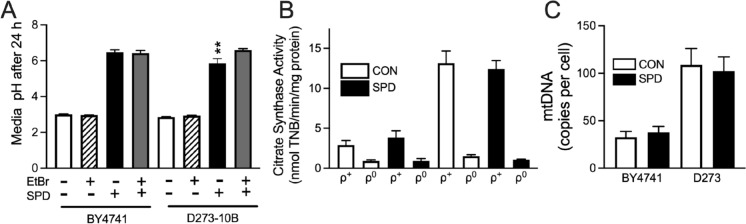
“The acidification of the media due to the generation of acetic acid can be used as a crude marker of cellular metabolism (Murakami et al. 2011).”
Wolf, N. S., Penn, P., Pendergrass, W. R., Remmen, H. V., Bartke, A., Rabinovitch, P. S., & Martin, G. M. (2005) · Experimental Eye Research · doi:10.1016/j.exer.2005.01.024 · Cited by 67 · cited 1×
“…an increased mean and maximum lifespan, but also improved parameters of cataract formation, insulin sensitivity, exercise performance, cardiac pathology, and invasive breast cancer (Schriner et al. 2005; Wolf et al. 2005; Lee et al. 2010) (Li et al. 2009) (Chiao et al. 2020; Goh et al. 2011).”
The power of yeast to model diseases of the powerhouse of the cell
Claypool, S. M. (2012) · Frontiers in bioscience · doi:10.2741/4098 · Cited by 52 · cited 1×
“Elec-trons also enter the respiratory chain though complex II (succinate dehydrogenase) via FADH 2 and the tri-carboxylic acid cycle (Baile and Claypool 2013).”
Free spermidine evokes superoxide radicals that manifest toxicity
Kumar, V., Mishra, R. K., Ghose, D., Kalita, A., Dhiman, P., Prakash, A., Thakur, N., Mitra, G., Chaudhari, V. D., Arora, A., et al. (2022) · eLife · doi:10.7554/elife.77704 · Cited by 45
Choi, K.-M., Lee, H.-L., Kwon, Y.-Y., Kang, M.-S., Lee, S.-K., & Lee, C. (2013) · Biochemical and Biophysical Research Communications · doi:10.1016/j.bbrc.2013.10.049 · Cited by 40 · cited 1×
“This includes dinitrophenol, metformin, resveratrol, rapamycin, and spermidine (Barros et al. 2004; Caldeira da Silva et al. 2008; Kazi et al. 2017 Martin-Montalvo et al. 2013; Choi et al. 2013; Bjedov et al. 2010; Harrison et al. 2009; Howitz et al. 2003; Eisenberg et al. 2016).”
Mitochondrial genetics revisited
Dujon, B. (2020) · Yeast · doi:10.1002/yea.3445 · Cited by 40 · cited 2×
“The S. cerevisiae mitochondrial genome encodes sub-units of the respiratory chain complexes III, IV, and V (Dujon 2020).”
Acetic acid and acidification accelerate chronological and replicative aging in yeast
Mirisola, M. G., & Longo, V. D. (2012) · Cell Cycle · doi:10.4161/cc.22042 · Cited by 36 · cited 1×
“As acidification of the media may limit yeast chronological lifespan (Mirisola and Longo 2012), it could be possible that SPD extends lifespan through the trivial mechanism of buffering pH.”
Li, D., Lai, Y., Yue, Y., Rabinovitch, P. S., Hakim, C. H., & Duan, D. (2009) · PLoS ONE · doi:10.1371/journal.pone.0006673 · Cited by 31 · cited 1×
“…an increased mean and maximum lifespan, but also improved parameters of cataract formation, insulin sensitivity, exercise performance, cardiac pathology, and invasive breast cancer (Schriner et al. 2005; Wolf et al. 2005; Lee et al. 2010) (Li et al. 2009) (Chiao et al. 2020; Goh et al. 2011).”
Kazi, R. S., Banarjee, R., Deshmukh, A. B., Patil, G. V., Jagadeeshaprasad, M. G., & Kulkarni, M. J. (2017) · Journal of Proteomics · doi:10.1016/j.jprot.2017.01.015 · Cited by 31 · cited 1×
“This includes dinitrophenol, metformin, resveratrol, rapamycin, and spermidine (Barros et al. 2004; Caldeira da Silva et al. 2008; Kazi et al. 2017 Martin-Montalvo et al. 2013; Choi et al. 2013; Bjedov et al. 2010; Harrison et al. 2009; Howitz et al. 2003; Eisenberg et al. 2016).”
Effects of hap mutations on heme and cytochrome formation in yeast
Mattoon, J. R., Caravajal, E., & Guthrie, D. (1990) · Current Genetics · doi:10.1007/bf00312865 · Cited by 19
Kaur, J., Goldsmith, J., Tankka, A. T., Eguiguren, S. B., Gimenez, A. A., Vick, L., Debnath, J., & Vlahakis, A. (2021) · Journal of Cell Science · doi:10.1242/jcs.253781 · Cited by 18 · cited 1×
“Interestingly, it has been reported that SPD can protect yeast against heat stress through the induction of nitric oxide in a mitophagy-dependent manner (Kaur et al. 2021).”
Whittaker, P. A. (1979) · Springer eBooks · doi:10.1007/978-1-4615-7945-8_4 · Cited by 16 · cited 2×
“BY4741 is known to have a high petite frequency, which is a result of the loss of functional mitochondrial respiration leading to slow growth and small colony formation (Whittaker 1979; Lasserre et al. 2015).”
Priya, S., Kaur, E., Kulshrestha, S., Pandit, A., Groß, I., Kumar, N., Agarwal, H., Khan, A., Shyam, R., Bhagat, P., et al. (2021) · Journal of Cell Science · doi:10.1242/jcs.258601 · Cited by 7
Cited by
The functional roles and mechanisms of polyamines in age-related bone diseases
Zhang, J., Cai, C., Zhang, Y., Luo, C., Huo, S., Wang, K., Shi, C., Liu, J., & Xu, G. (2025) · Cellular and Molecular Life Sciences · doi:10.1007/s00018-025-06001-3 · Cited by 8
“Moreover, as demonstrated in Saccharomyces cerevisiae , SPD toxicity can be linked to deficiencies in mitochondrial complex III, suggesting that individual genetic or metabolic variations may predispose certain populations to adverse, rather than beneficial, outcomes [129].”
Ding, Y., Li, J., Li, J., Chen, D., Yu, F., Liu, Z., Zhang, Y., Dai, Y., Huang, Y., & Dang, J. (2025) · Biochemical and Biophysical Research Communications · doi:10.1016/j.bbrc.2025.153128 · Cited by 1
Zhao, Q., Huang, X., Liu, Q., Cao, Y., Yu, X., Liu, Y., Hu, N., Han, Z., Tan, J., Li, X., et al. (2026) · Microbiology Spectrum · doi:10.1128/spectrum.01672-25
Numaguchi, T., Nakamura, M., Koshizawa, T., Ishak, N. S. M., & 橋本, 勝. (2026) · Frontiers in Aging · doi:10.3389/fragi.2026.1791853 · Cited by 1
Metadata
- Authors
- Su, W.-H., Smith, J. J., Cheng, E., Nishitani, M. S., Choi, C. Y., Lee, K. R., Salzano, A. P., & Schriner, S. E.
- Affiliations
- University of California, Irvine (US)
- Corresponding author
- Schriner, Samuel E.
- Venue
- Biogerontology
- Published
- 2025-04
- Volume
- 26
- Issue
- 2
- Pages
- 91-91
- ISSN
- 1389-5729 (ISSN-L)
- 1573-6768
- PMC
- PMC11985560
- OpenAlex
- W4409329575
- Cited by
- 4
- References
- 48
- Citations by year
- 2026: 1 · 2025: 3
- FWCI
- 1.26
- Type
- journal article
- Language
- en
- Open access
- hybrid
- doi.org
- Licence
- cc-by
- creativecommons.org/licenses/by/4.0 (tdm)
- creativecommons.org/licenses/by/4.0 (vor, 9 d)
- Locations
- Biogerontology (publishedVersion, cc-by)
- PubMed Central (publishedVersion, cc-by)
- PubMed (publishedVersion)
- eScholarship (California Digital Library) (submittedVersion, cc-by)
- Funders
- UCI Pharmaceutical Sciences
- Topics
- Life Sciences › Biochemistry, Genetics and Molecular Biology › Aging › Genetics, Aging, and Longevity in Model Organisms
- Life Sciences › Biochemistry, Genetics and Molecular Biology › Molecular Biology › Polyamine Metabolism and Applications
- Life Sciences › Biochemistry, Genetics and Molecular Biology › Molecular Biology › Mitochondrial Function and Pathology
- Keywords
- spermidine, polyamines, mitochondrial complex III, mitochondrial dysfunction, aging, lifespan extension, autophagy, ATG8, succinate dehydrogenase, Saccharomyces cerevisiae
- MeSH terms
- Autophagy, DNA, Mitochondrial, Mitochondria, Saccharomyces cerevisiae, Spermidine, Electron Transport Complex III, Oxidative Stress, Saccharomyces cerevisiae Proteins
About these checks
Registry, retraction, Cites and statistics results are computed, not judged, with one exception: a printed reference that no index lists is read once by a model before it counts as a citation error. Claims are extracted by a model and kept only when their quote appears verbatim in the text; each cited source is then checked, with a model’s help, for whether it says what the claim relies on. Those verdicts can be wrong — read the claim’s quote and the cited source before relying on one.
Statistics and arithmetic are recomputed, not judged.
Confidence bands are shown only for fields calibrated on our annotated test set. None is calibrated yet, so no band is shown.
What counts as a claim ›How we measure confidence ›How we check this ›
Are you an author, or do you see a problem with this page? Request a review
Data sources
Bibliographic data: Semantic Scholar, OpenAlex, Crossref.
Contains information from the Semantic Scholar Academic Graph Datasets, made available under the ODC Attribution License (ODC-BY 1.0).
Semantic Scholar’s data is described in: Kinney, R., et al. (2023). The Semantic Scholar Open Data Platform. arXiv:2301.10140.
