

“They Did Not Walk the Green Talk!:” How Information Specificity Influences Consumer Evaluations of Disconfirmed Environmental Claims
Open accessThe DOI matches its Crossref record; 50 of the 50 references it cites were found in a registry or an index.
Abstract
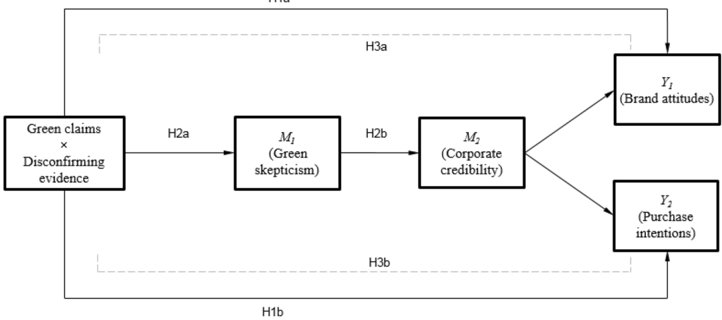
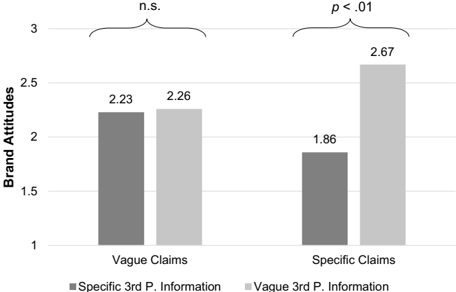
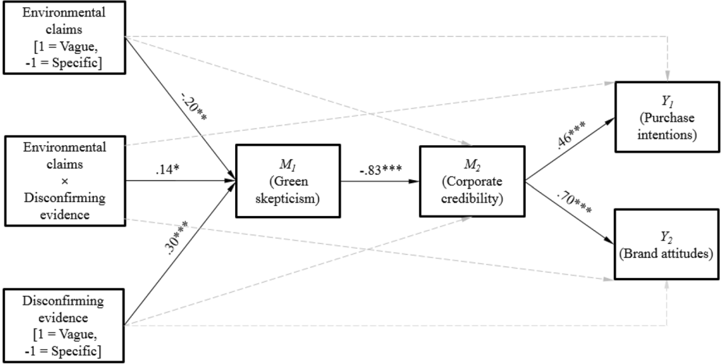
While environmental claims are increasingly used by companies to appeal consumers, they also attract greater scrutiny from independent parties interested in consumer protection. Consumers are now able to compare corporate environmental claims against external, often disconfirming, information to form their brand attitudes and purchase intentions. What remains unclear is how the level of information specificity of both the environmental claims and external disconfirming information interact to influence consumer reactions. Two experiments address this gap in the CSR communication literature. When specific (vs. vague) claims are countered by specific (vs. vague) external information, consumers report more negative brand attitudes and lower purchase intentions (Experiment 1). The effect is serially mediated by (1) skepticism toward the claims and (2) lack of corporate credibility (Experiment 2). We conclude by discussing strategies that firms can utilize to avoid information dilution and ensure that external disconfirming information percolates to consumers as specific.
Overview
The claims and statistics of this paper haven’t been checked yet.
Free: it reads the open-access text and checks the first 5 claims that cite a source we can check. Create a free account to check every claim.
Integrity signals
Registry
Cites
Statistics
Figures
Verification
Claims the paper makes
The claims and statistics of this paper haven’t been checked yet.
Free: it reads the open-access text and checks the first 5 claims that cite a source we can check. Create a free account to check every claim.
Claims other papers make about this one
Each is checked against this paper’s own text: does it say what the citing paper says it does?
The cited source says what the claim attributes to it.
In the citing paper
“brand attitudes and purchase intentions decreased sequentially through increased skepticism and diminished corporate credibility when specific (as opposed to vague) environmental claims were refuted by specific (compared to vague) external disconfirming information [39].”
From Substantiated vs. Vague Circular Economy Claims in Fashion Brands: Claim Support Credibility, Authenticity, and Trust in Greece vs. the UK (2026) · cites this paper as [39]
Self-check
Percentages, sums and reported differences re-computed from the paper’s own numbers.
The self-check needs the paper’s full text.
Citations
Cites
The theory of planned behavior
Ajzen, I. (1991) · Organizational Behavior and Human Decision Processes · doi:10.1016/0749-5978(91)90020-t · Cited by 134,657 · cited 2×
“A second limitation is that we considered brand attitudes and purchase intentions as highly correlated, in the sense that our predicted effect would arise and the process would be the same for both dependent variables (Ajzen 1991).”
Evaluating Structural Equation Models with Unobservable Variables and Measurement Error
Fornell, C., & Larcker, D. F. (1981) · Journal of Marketing Research · doi:10.2307/3151312 · Cited by 109,314
Evaluating structural equation models with unobservable variables and measurement error
Fornell, C., & Larcker, D. F. (1981) · Journal of Marketing Research · doi:10.1177/002224378101800104 · Cited by 109,190 · cited 2×
“Table 3 provides evidence of discriminant validity, as the AVE of each construct was greater than the shared variance between each pair of constructs (Fornell and Larcker 1981).”
Background(2013) · Cited by 44,563
The Elaboration Likelihood Model of Persuasion
Petty, R. E., & Cacioppo, J. T. (1986) · Advances in Experimental Social Psychology · doi:10.1016/s0065-2601(08)60214-2 · Cited by 8,822 · cited 2×
“Our findings indeed align with and extend prior research showing how direct countering evidence is most useful in persuasion (Fabrigar and Petty 1999; Petty and Cacioppo 1986).”
ResultIntroduction to mediation, moderation, and conditional process analysis :
Hayes, A. F., & names (2015) · Cited by 7,004
Assessing construct validity in organizational research
Bagozzi, R. P., Yi, Y., & Phillips, L. W. (1991) · Administrative Science Quarterly · doi:10.2307/2393203 · Cited by 6,621
Ohanian, R. (1990) · Journal of Advertising · doi:10.1080/00913367.1990.10673191 · Cited by 4,043 · cited 2×
“They also completed 3-item, 7-point Likert scales measuring credibility toward the company (α = 0.97; Ohanian 1990) and skepticism toward the environmental claims (α = 0.92; Matthes and Wonneberger 2014).”
BackgroundInfluentialGigerenzer, G., & Gaissmaier, W. (2011) · Annual Review of Psychology · doi:10.1146/annurev-psych-120709-145346 · Cited by 4,037 · cited 4×
“Extant literature provides strong support for the contention that, for brands about which consumers do not hold pre-existing attitudes, consumers rely on available cues to inform their judgment (Gigerenzer and Gaissmaier 2011; Payne et al.”
BackgroundInfluentialThe Predictive Validity of Multiple-Item versus Single-Item Measures of the Same Constructs
Bergkvist, L., & Rossiter, J. R. (2007) · Journal of Marketing Research · doi:10.1509/jmkr.44.2.175 · Cited by 3,107 · cited 1×
“After exposure to the experimental stimuli, participants reported their purchase intentions on a 7-point item adapted from Mitchell and Olson (1981) and widely used in marketing research (Bergkvist and Rossiter 2007).”
Method
Cited by
Drivers to green consumption: a systematic review
Testa, F., Pretner, G., Iovino, R., Bianchi, G., Tessitore, S., & Iraldo, F. (2021) · Environment, Development and Sustainability · doi:10.1007/s10668-020-00844-5 · Cited by 333
“2018) that have, in turn, reduced the consumers’ trustworthy toward green claims (Orazi and Chan 2018).”
BackgroundAcuti, D., Pizzetti, M., & Dolničar, S. (2022) · Psychology and Marketing · doi:10.1002/mar.21709 · Cited by 216
Sustainability, responsibility and ethics: different concepts for a single path
Torelli, R. (2020) · Social Responsibility Journal · doi:10.1108/srj-03-2020-0081 · Cited by 182
Companies, Meet Ethical Consumers: Strategic CSR Management to Impact Consumer Choice
Kuokkanen, H., & Sun, W. (2020) · Journal of Business Ethics · doi:10.1007/s10551-019-04145-4 · Cited by 172
“Consumers may regard unsubstantiated or contested CSR claims as greenwashing or mere public relations, and this creates a threat to credible CSR and reduces potential business benefits (Orazi and Chan, 2018; Nyilasy et al., 2013; Parguel et al., 2011).”
BackgroundThe influence of blockchain-based food traceability on retailer choice: The mediating role of trust
Garaus, M., & Treiblmaier, H. (2021) · Food Control · doi:10.1016/j.foodcont.2021.108082 · Cited by 169
Sun, Y., & Shi, B. (2022) · Sustainability · doi:10.3390/su141912119 · Cited by 92
“However, due to the asymmetry of information, consumers are not fully aware of the green behaviour of companies, so when companies fail to announce their specific environmental goals and details of their environmental actions promptly, this can lead to suspicion and mistrust [48].”
BackgroundTalpur, S., Nadeem, M., & Roberts, H. (2023) · Journal of Applied Accounting Research · doi:10.1108/jaar-08-2022-0223 · Cited by 157
CSR-related consumer scepticism: A review of the literature and future research directions
Nguyen, N., Priporas, C., McPherson, M., & Manyiwa, S. (2023) · Journal of Business Research · doi:10.1016/j.jbusres.2023.114294 · Cited by 109
Shifting consumer behavior to address climate change
Habib, R., White, K., Hardisty, D. J., & Zhao, J. (2021) · Current Opinion in Psychology · doi:10.1016/j.copsyc.2021.04.007 · Cited by 110
Corporate Sustainability Communication as ‘Fake News’: Firms’ Greenwashing on Twitter
Oppong-Tawiah, D., & Webster, J. (2023) · Sustainability · doi:10.3390/su15086683 · Cited by 103
Doing more with less: An integrative literature review on responsible consumption behaviour
Nangia, P., Bansal, S., & Thaichon, P. (2023) · Journal of Consumer Behaviour · doi:10.1002/cb.2163 · Cited by 100
Ginder, W., & Byun, S. (2021) · Journal of Retailing and Consumer Services · doi:10.1016/j.jretconser.2021.102875 · Cited by 89
Elgammal, I., Ghanem, M., & Al-Modaf, O. (2024) · Sustainability · doi:10.3390/su16114478 · Cited by 82
Does greenwashing affect Company's stock Price? Evidence from Europe
Teti, E., Etro, L. L., & Pausini, L. (2024) · International Review of Financial Analysis · doi:10.1016/j.irfa.2024.103195 · Cited by 70
Fostering Urban Inclusive Green Growth: Does Corporate Social Responsibility (CSR) Matter?
Wu, H., Luo, S., Li, S., Xue, Y., & Hao, Y. (2023) · Journal of Business Ethics · doi:10.1007/s10551-023-05561-3 · Cited by 66
“These five dimensions cover the majority of stakeholder benefits that should be considered when measuring CSR (e.g., Orazi & Chan, 2020; Brunton et al., 2017; Kuokkanen & Sun, 2020; Pedersen, 2006).”
Gamification and sustainable development: Role of gamified learning in sustainable purchasing
Zafar, A. U., Shahzad, M., Shahzad, K., Appolloni, A., & Elgammal, I. (2023) · Technological Forecasting and Social Change · doi:10.1016/j.techfore.2023.122968 · Cited by 55
Green Innovation and Export Performance in Emerging Market Firms: A Legitimacy-based View
Shu, C., Zhao, J., Yao, Q., & Zhou, K. Z. (2024) · Management and Organization Review · doi:10.1017/mor.2023.40 · Cited by 50
“This international standard classification for green patents means that green patents obtained in China have to undergo strict scrutiny by patent offices (Orazi & Chan, 2020) and can attain international recognition.”
BackgroundEffects of Mandatory Carbon Reporting on Greenwashing
Richardson, G. D., Wang, J., & Grewal, J. (2026) · The Accounting Review · doi:10.2308/tar-2023-0247 · Cited by 46
“Do they mean what they say?” Measuring greenwash in the sustainable property development sector
Quoquab, F., Sivadasan, R., & Mohammad, J. (2021) · Asia Pacific Journal of Marketing and Logistics · doi:10.1108/apjml-12-2020-0919 · Cited by 46
Louis, D., & Lombart, C. (2023) · Corporate Social Responsibility and Environmental Management · doi:10.1002/csr.2587 · Cited by 46
Janssen, C., Swaen, V., & Du, S. (2022) · Journal of Business Research · doi:10.1016/j.jbusres.2022.07.005 · Cited by 42
Keeping Promises? Carbon Risk Disclosure and Mutual Fund Portfolios
Nofsinger, J. R., & Varma, A. (2021) · Journal of Business Ethics · doi:10.1007/s10551-022-05264-1 · Cited by 43
“Orazi and Chan (2020) run experiments on information specificity, specific versus vague, in such cases.”
BackgroundInfluentialTo Erect Temples to Virtue: Effects of State Mindfulness on Other-Focused Ethical Behaviors
Orazi, D. C., Chen, J., & Chan, E. Y. (2019) · Journal of Business Ethics · doi:10.1007/s10551-019-04296-4 · Cited by 40
Self-citationMedina, C. A. G., Martínez‐Fiestas, M., Casado‐Aranda, L., & Sánchez‐Fernández, J. (2021) · Journal of Business Research · doi:10.1016/j.jbusres.2020.12.044 · Cited by 36
Garaus, M., & Garaus, C. (2021) · Frontiers in Psychology · doi:10.3389/fpsyg.2021.646593 · Cited by 36
“In the context of environmental claims, vague statements might irritate consumers (Orazi and Chan, 2018).”
BackgroundGreen Skepticism: Review and Research Agenda
Sivapalan, A., Jebarajakirthy, C., Saha, R., Mehta, P., Balaji, M. S., & Maseeh, H. I. (2024) · Marketing Intelligence & Planning · doi:10.1108/mip-04-2023-0179 · Cited by 35
Janz, F., Jordanow, S., Heidenreich, S., & Schäfer, J. (2024) · Creativity and Innovation Management · doi:10.1111/caim.12639 · Cited by 33
Liu, Y., Jiang, Q., & Gleasure, R. (2021) · Journal of Travel Research · doi:10.1177/00472875211057607 · Cited by 30
Toti, J.-F., & Romero, A. M. S. (2023) · European Journal of Marketing · doi:10.1108/ejm-11-2020-0831 · Cited by 27
Corporate financing constraints and environmental information disclosure hype
Yuan, Z., & Bao, X. (2025) · International Review of Economics & Finance · doi:10.1016/j.iref.2025.104284 · Cited by 26
Zhang, R., Zhou, X., Liu, Q., & Wang, C. (2025) · Frontiers in Psychology · doi:10.3389/fpsyg.2025.1599472 · Cited by 27
Wang, C., Zhang, R., Feng, T., & Tao, J. (2023) · Management Decision · doi:10.1108/md-08-2022-1146 · Cited by 26
Gong, S., & Wang, L. (2022) · Current Psychology · doi:10.1007/s12144-022-03981-4 · Cited by 26
Caruelle, D. (2024) · International Journal of Advertising · doi:10.1080/02650487.2024.2427517 · Cited by 25
Consumers’ attributions in performance- and values-related brand crises
Wang, L., Chan, E. Y., & Gohary, A. (2023) · European Journal of Marketing · doi:10.1108/ejm-04-2022-0254 · Cited by 24
Self-citationEffects of Two Face Regulatory Foci About Ethical Fashion Consumption in a Confucian Context
Wei, X., & Shen, B. (2024) · Journal of Business Ethics · doi:10.1007/s10551-024-05870-1 · Cited by 24
“The experimental procedure was similar to the procedures used in previous studies on ethical decision-making (Orazi & Chan, 2020; Zhou et al., 2022).”
Greenwashing and the purchase behavior toward electric motorbikes: The role of eco-literacy
Le, N., Quy, D., Nguyen, X. T., & Nguyen, T. L. H. (2024) · Journal of Marketing Communications · doi:10.1080/13527266.2024.2413401 · Cited by 20
“The lack of information about sustainable actions that the company will take can make consumers confused and distrust the business (Orazi and Chan 2020).”
The role of health-related claims and situational skepticism on consumers’ food choices
Chaudhary, V., Sharma, D., Nagpal, A., & Kalro, A. D. (2024) · European Journal of Marketing · doi:10.1108/ejm-08-2022-0621 · Cited by 19
The Cost of ESG Decoupling: How Misaligned Disclosures Undermine Corporate Sustainability?
Zhan, X., Zhan, Y., & Guang-jin, L. (2025) · SAGE Open · doi:10.1177/21582440251369170 · Cited by 17
“The increasing number of corporate social responsibility (CSR) decoupling scandals has raised skepticism about CSR practices (Arli et al., 2019; Ferro´n-Vı´lchez et al., 2021), potentially leading to a loss of competitive advantage (Orazi & Chan, 2020).”
Green Marketing and Consumer Behavior: An Analytical Literature Review and Marketing Implications
Chea, A. C. (2024) · Business and Economic Research · doi:10.5296/ber.v14i2.21821 · Cited by 17
Zafar, A. U., Sajjad, A., Agarwal, R., Lamprinakos, G., & Yaqub, M. Z. (2025) · International Marketing Review · doi:10.1108/imr-04-2024-0110 · Cited by 19
Shin, H. H., Lee, M., Lee, S. A., & Jeong, M. (2025) · International Journal of Hospitality Management · doi:10.1016/j.ijhm.2025.104184 · Cited by 15
Huang, L., Nor, K. M., Ma, X., & Khatib, S. F. A. (2025) · Cogent Business & Management · doi:10.1080/23311975.2025.2534528 · Cited by 12
Ravazzani, S., & Maier, C. D. (2022) · Corporate Communications An International Journal · doi:10.1108/ccij-11-2021-0121 · Cited by 10
Mume, A. H., & Sun, X. (2026) · Journal of theoretical and applied electronic commerce research · doi:10.3390/jtaer21010025 · Cited by 10
“Their effectiveness depends on specificity and credibility; tangible, quantifiable claims backed by transparent practices are significantly more compelling than vague assertions [33].”
Consumer protection and sustainable development: key green research areas
Paduszyńska, M., & Kozar, Ł. J. (2024) · Ekonomia i Prawo · doi:10.12775/eip.2024.021 · Cited by 9
Hamby, A. M., Orazi, D. C., & Moreau, P. (2023) · Journal of Business Research · doi:10.1016/j.jbusres.2023.114309 · Cited by 9
Self-citationPilot policies for climate-adaptive urban development and corporate greenwashing behavior
Zhu, Y. P., Li, S., Niu, J., & Wang, Y. (2025) · International Review of Economics & Finance · doi:10.1016/j.iref.2025.104741 · Cited by 8
Three Decades of Consumer Protection Literature: Systematic Review and Future Research Agenda
Goel, A., Khandelwal, U., & Ramachandran, J. (2025) · Journal of Creative Communications · doi:10.1177/09732586251336493 · Cited by 7
Consumer perceptions of brand authenticity: a review of purpose-washing phenomena in branding
Aisy, R., Iqbal, M., & Rahimah, A. (2025) · BISMA (Bisnis dan Manajemen) · doi:10.26740/bisma.v18n1.p35-65 · Cited by 7
“…where reputation captures the overall evaluation stakeholders hold about an organisation, while credibility refers to the belief that an organisation can deliver on its claims; both are enhanced when communications are perceived as ethically consistent (Keilmann & Koch, 2024; Orazi & Chan, 2020).”
InfluentialMüller, S., Hoffmann, N. C., Heidbrink, L., & Hoffmann, S. (2023) · Business & Society · doi:10.1177/00076503231157696 · Cited by 6
“This line of argumentation concludes that even if consumers are able to cognitively or intuitively understand moral arguments in favor of CC, it remains unclear if and how these arguments can influence their decision-making process (Carrington et al., 2010; Orazi & Chan, 2020).”
Green Specificity: Igniting curiosity and arousing emotional ambivalence
Tan, S. Z., Lin, Y., & Loo, W. H. (2025) · Journal of Retailing and Consumer Services · doi:10.1016/j.jretconser.2025.104414 · Cited by 6
Israfilzade, K. (2026) · Sustainability · doi:10.3390/su18147270 · Cited by 7
Torelli, R. (2023) · Ethical economy · doi:10.1007/978-3-031-26959-2_4 · Cited by 7
The effect of prosocial orientation on CSR scope: the moderating role of the CSR department
Youm, Y. N., Lee, J., & Lee, C. K. (2023) · Social Responsibility Journal · doi:10.1108/srj-01-2023-0024 · Cited by 6
Bradbury, D. R., & Cronin, J. J. (2025) · AMS Review · doi:10.1007/s13162-025-00312-1 · Cited by 6
“For instance, gender (Dangelico et al., 2021; Shapoval et al., 2018), green claim specificity (Orazi & Chan, 2020), and empathy (Xie et al., 2015) have each been examined as a moderator of responses to green initiatives, yet nowhere has it been suggested that the effects of such moderators are…”
Exploring consumers’ emotional and cognitive engagement with digital CSR communication
Pitardi, V., & Acuti, D. (2026) · European Journal of Marketing · doi:10.1108/ejm-08-2022-0620 · Cited by 6
Follow the genuine leader: The “green imitation”
Calderón, R., Urbina, M. O. D., & Expósito, L. (2022) · Business Ethics the Environment & Responsibility · doi:10.1111/beer.12499 · Cited by 5
Can green innovation improve export performance in emerging market firms? Evidence from China
Yu, X., & Ma, X. (2025) · Review of International Business and Strategy · doi:10.1108/ribs-12-2024-0154 · Cited by 4
Building trust, reducing skepticism: Green branding and sustainable purchase behavior in Indonesia
Baharuddin, S. M., Badaruddin, B., Fatmasari, F., & Hafipah, H. (2026) · Asian Management and Business Review · doi:10.20885/ambr.vol6.iss1.art16 · Cited by 5
“Both cues are powerful because they reduce uncertainty and provide consumers with heuristics for decision-making in domains where environmental claims are otherwise unverifiable (Orazi & Chan, 2020).”
How Consumers Contest Legitimacy: Skepticism Toward Corporate Social Responsibility
Bagatini, F. Z., Perin, M. G., & de Medeiros, J. F. (2026) · Corporate Social Responsibility and Environmental Management · doi:10.1002/csr.70532 · Cited by 4
Balaskas, S., & Komis, K. (2026) · Sustainability · doi:10.3390/su18073185 · Cited by 4
Seo, J. Y., & Cordeiro, J. J. (2025) · Management Research Review · doi:10.1108/mrr-03-2025-0169 · Cited by 4
The Relationship Between Customer Perceptions of Green Marketing Influence on Buying Behavior
Nemar, S. E., El-Chaarani, H., El-Abiad, Z., Fawal, A. E., & Badawy, H. A. E. S. (2022) · Advances in finance, accounting, and economics book series · doi:10.4018/978-1-6684-5849-5.ch022 · Cited by 5
Li, J., Geng, L.-X., & Chang, Y.-P. (2026) · Information Manager (The) · doi:10.1016/j.im.2026.104388 · Cited by 3
Impact of Skepticism on Reactions to Preventive Health Ads: Gender Difference Effect
BelhadjYoussef, M. H., & Sahli, A. B. (2025) · Journal of Nonprofit & Public Sector Marketing · doi:10.1080/10495142.2025.2488780 · Cited by 2
“…can be grouped into three main categories: business-related factors (Chung, 2018; Pandey et al., 2020), communication-related factors (Bae, 2018; Orazi & Chan, 2020), and personal factors (S. Kim & Lee, 2012; Yu, 2020), including consumer characteristics, particularly their gender (Amawate &…”
Judijanto, L. (2025) · Asian Business Research Journal · doi:10.55220/2576-6759.532 · Cited by 2
“Empirical studies reveal that consumers are more responsive to specific, evidence-backed claims than vague or symbolic environmental rhetoric (Orazi & Chan, 2020).”
Shin, J., Shin, J., & Shin, J. (2025) · Journal of Cleaner Production · doi:10.1016/j.jclepro.2025.147288 · Cited by 2
Derenthal, J., & Toporowski, W. (2026) · Corporate Social Responsibility and Environmental Management · doi:10.1002/csr.70443 · Cited by 2
Akın, M. S., & Eti, S. (2026) · Journal of Applied and Theoretical Social Sciences · doi:10.37241/jatss.2026.145 · Cited by 2
Landini, S. (2021) · Springer eBooks · doi:10.1007/978-3-030-83140-0_10 · Cited by 2
Weldemariam, E. T., & Okbagaber, T. B. (2023) · International Journal of Science and Business · doi:10.58970/ijsb.2057 · Cited by 2
Kencana, U., Isa, M. L., & Romli, S. A. (2025) · Humanities and Social Sciences Letters · doi:10.18488/73.v13i3.4314 · Cited by 2
Szymkowiak, A., Szaban, M., & Plotkina, D. (2026) · Journal of Business Research · doi:10.1016/j.jbusres.2026.116275 · Cited by 1
Greenwashing in green mutual funds: Symbolic ESG vs. substantive carbon emissions
Ge, X., & Luo, Q. (2026) · Global Finance Journal · doi:10.1016/j.gfj.2026.101305 · Cited by 1
Hofland, M. N. (2021) · Utrecht University Repository (Utrecht University) · Cited by 1
Balaskas, S., Yfantidou, I., & Skandali, D. (2026) · Sustainability · doi:10.3390/su18062869
Torelli, R. (2020) · DSpaceUnipr (University of Parma) · Cited by 1
Wang, J., Zhou, Y., Zhang, J., & Wang, X. (2024) · Current Psychology · doi:10.1007/s12144-024-07117-8 · Cited by 1
“…often describe the distinction between specific and vague information in terms of general cognition, such as whether it is supported by objective information and includes specific, tangible environmental features and product benefits, or the information’s degrees of detail (Orazi & Chan, 2020).”
Wang, X., Sun, W., & Sun, S. L. (2025) · SSRN Electronic Journal · doi:10.2139/ssrn.5174381
Why brands are embracing fantasy: The psychology behind escapist marketing in anxious times
Chan, E. Y., & Gohary, A. (2025) · The Conversation · doi:10.64628/aam.mupwdh9hn
Self-citationExamining Greenwashing Through the Lens of the Theory of Planned Behavior
Su, J., & Fu, W. (2025) · International Conference on Industrial Engineering and Operations Management (IEOM) · doi:10.46254/eu08.20250167
Ewur, G. D. (2025) · DUT Open Scholar (Durban University of Technology) · doi:10.51415/10321/6263
Mapping New Risks in Impact Investing. A Bibliometric Analysis of Emerging Challenges and Threats.
Zambelli, S., & Pascale, F. (2025) · Venture Capital · doi:10.1080/13691066.2025.2577208
Why Gen Z and millennial consumers feel disillusioned — and how they can drive real change
Chan, E. Y. (2025) · The Conversation · doi:10.64628/aam.uynpuf3jf
Self-citationLentoyhtiöiden vastuullisuusviestinnän tarjoamat mahdollisuudet kestävälle kuluttamiselle
Byckling, E. (2021) · LUTPub (LUT University)
Tenente, S. A. C. (2023) · Portuguese National Funding Agency for Science, Research and Technology (RCAAP Project by FCT) · Cited by 1
Kimpimäki, J.-P. (2023) · LUTPub (LUT University)
Schiebahn, L. (2023) · Portuguese National Funding Agency for Science, Research and Technology (RCAAP Project by FCT)
Keski-Kasari, M. (2023) · Osuva (University of Vaasa)
Cottner Jr., L. C. (2024) · ScholarWorks (Walden University)
Beyond Greenwashing: Authenticity and Strategic Legitimacy in ESG Branding
Calado, S. (2025) · IGI Global eBooks · doi:10.4018/979-8-3373-4596-3.ch003
Chan, E. Y. (2026) · The Conversation · doi:10.64628/aap.5neytwugm
Self-citationMendonca, F. J. (2023) · LA Referencia (Red Federada de Repositorios Institucionales de Publicaciones Científicas)
Lopes, A. I., & Keyzer, F. D. (2026) · Palgrave studies in marketing, organizations and society · doi:10.1007/978-3-032-08423-1_14
Tran, M., & Vu, T. L. (2026) · Journal of Digital Scholarship in Archives and Information · doi:10.58723/jdsai.v2i1.171
“This indirect relationship aligns with prior research demonstrating that skepticism operates through attitudinal means rather than directly influencing behavioral intentions ( (Orazi & Chan 2018; Goh & Balaji, 2016).”
Environmental Claims in Fashion Marketing under the UCPD
Kotevski, K. (2026) · Lund University Publications Student Papers (Lund University)
Gwon, H., Kim, J., Kam, Y., & Chae, Y. (2026) · IGEE proceedings (Online) · doi:10.69841/igee.2026.016
“According to Orazi and Chan (2020), ambiguous environmental claims activate consumer skepticism and reduce corporate trust, whereas providing concrete and sufficient information significantly enhances positive consumer responses.”
Barriers to sustainability on the company and the consumer levels and inconsistencies between them
Milić, P. (2026) · Repository of the University of Ljubljana (University of Ljubljana)
From Sustainability Storytelling to Verified Impact: A Case Study of Tentree
Toplu, E. K., & Toplu, C. (2026) · International Journal of Business and Management · doi:10.5539/ijbm.v21n5p32
“Claims should explain what action is being taken, where it occurs, who implements it, and what benefit is expected (Orazi & Chan, 2018).”
Metadata
- Authors
- Orazi, D. C., & Chan, E. Y.
- Affiliations
- Monash University (AU)
- Corresponding author
- Orazi, Davide C.
- Venue
- Journal of Business Ethics
- Published
- 2018-10-04
- Volume
- 163
- Issue
- 1
- Pages
- 107-123
- ISSN
- 0167-4544 (ISSN-L)
- 1573-0697
- OpenAlex
- W2894605789
- Cited by
- 84
- References
- 49
- Citations by year
- 2026: 17 · 2025: 19 · 2024: 11 · 2023: 15 · 2022: 9 · 2021: 9 · 2020: 2 · 2019: 2
- FWCI
- 5.84
- Type
- journal article
- Language
- en
- Open access
- hybrid
- doi.org
- Licence
- cc-by
- creativecommons.org/licenses/by/4.0 (tdm)
- Locations
- Journal of Business Ethics (publishedVersion, cc-by)
- PhilPapers (PhilPapers Foundation) (submittedVersion, cc-by)
- Monash University Research Portal (Monash University) (submittedVersion, other-oa)
- RePEc: Research Papers in Economics (submittedVersion)
- PhilPapers (PhilPapers Foundation) (submittedVersion)
- Funders
- McGill University
- Topics
- Social Sciences › Business, Management and Accounting › Marketing › Environmental Sustainability in Business
- Social Sciences › Business, Management and Accounting › Strategy and Management › Corporate Social Responsibility Reporting
- Social Sciences › Business, Management and Accounting › Marketing › Consumer Behavior in Brand Consumption and Identification
- Keywords
- environmental claims, information specificity, consumer skepticism, institutional credibility, brand attitude, purchase intention, CSR communication, consumer protection
About these checks
Registry, retraction, Cites and statistics results are computed, not judged, with one exception: a printed reference that no index lists is read once by a model before it counts as a citation error. Claims are extracted by a model and kept only when their quote appears verbatim in the text; each cited source is then checked, with a model’s help, for whether it says what the claim relies on. Those verdicts can be wrong — read the claim’s quote and the cited source before relying on one.
Statistics and arithmetic are recomputed, not judged.
Confidence bands are shown only for fields calibrated on our annotated test set. None is calibrated yet, so no band is shown.
What counts as a claim ›How we measure confidence ›How we check this ›
Are you an author, or do you see a problem with this page? Request a review
Data sources
Bibliographic data: Semantic Scholar, OpenAlex, Crossref.
Contains information from the Semantic Scholar Academic Graph Datasets, made available under the ODC Attribution License (ODC-BY 1.0).
Semantic Scholar’s data is described in: Kinney, R., et al. (2023). The Semantic Scholar Open Data Platform. arXiv:2301.10140.
