

Pericytes from Brain Microvessels Strengthen the Barrier Integrity in Primary Cultures of Rat Brain Endothelial Cells
Open accessThe DOI matches its Crossref record; 18 of the 18 references it cites were found in a registry or an index.
Abstract
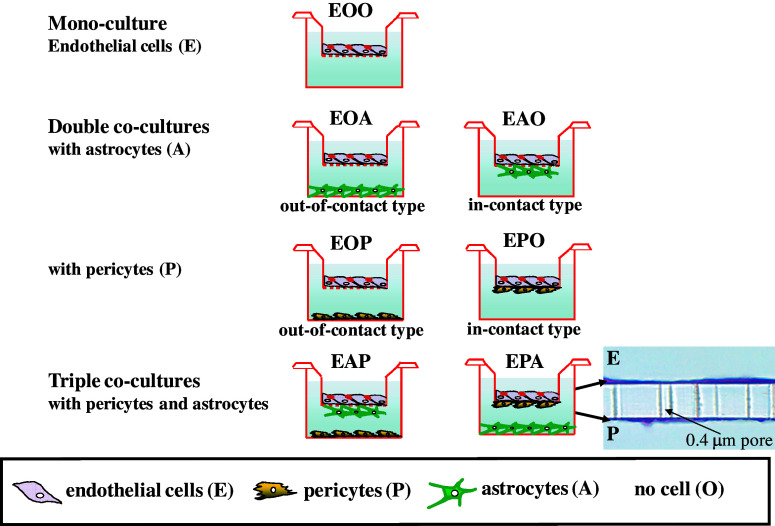
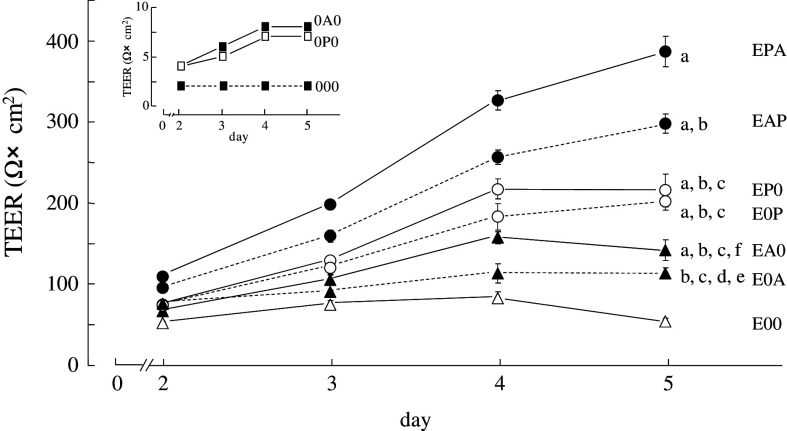
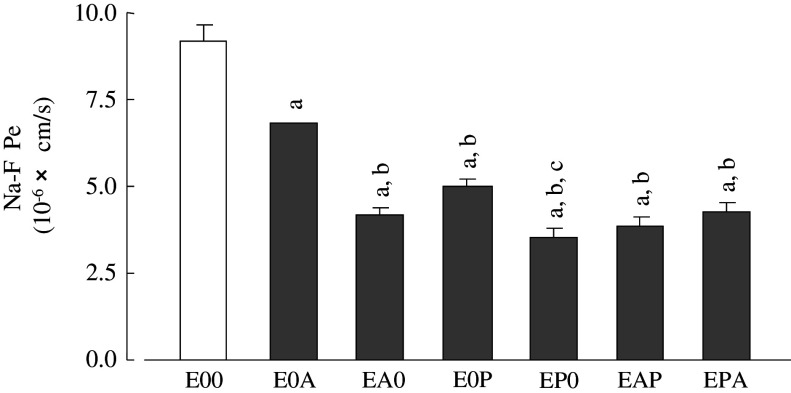
(1) The blood-brain barrier (BBB) characteristics of cerebral endothelial cells are induced by organ-specific local signals. Brain endothelial cells lose their phenotype in cultures without cross-talk with neighboring cells. (2) In contrast to astrocytes, pericytes, another neighboring cell of endothelial cells in brain capillaries, are rarely used in BBB co-culture systems. (3) Seven different types of BBB models, mono-culture, double and triple co-cultures, were constructed from primary rat brain endothelial cells, astrocytes and pericytes on culture inserts. The barrier integrity of the models were compared by measurement of transendothelial electrical resistance and permeability for the small molecular weight marker fluorescein. (4) We could confirm that brain endothelial monolayers in mono-culture do not form tight barrier. Pericytes induced higher electrical resistance and lower permeability for fluorescein than type I astrocytes in co-culture conditions. In triple co-culture models the tightest barrier was observed when endothelial cells and pericytes were positioned on the two sides of the porous filter membrane of the inserts and astrocytes at the bottom of the culture dish. (5) For the first time a rat primary culture based syngeneic triple co-culture BBB model has been constructed using brain pericytes beside brain endothelial cells and astrocytes. This model, mimicking closely the anatomical position of the cells at the BBB in vivo, was superior to the other BBB models tested. (6) The influence of pericytes on the BBB properties of brain endothelial cells may be as important as that of astrocytes and could be exploited in the construction of better BBB models.
Overview
The claims and statistics of this paper haven’t been checked yet.
Free: it reads the open-access text and checks the first 5 claims that cite a source we can check. Create a free account to check every claim.
Integrity signals
Registry
Cites
Statistics
Figures
Verification
Claims the paper makes
The claims and statistics of this paper haven’t been checked yet.
Free: it reads the open-access text and checks the first 5 claims that cite a source we can check. Create a free account to check every claim.
Claims other papers make about this one
Each is checked against this paper’s own text: does it say what the citing paper says it does?
The cited source says what the claim attributes to it.
In the citing paper
“Other evidence for the role of pericytes in BBB function comes from in vitro transwell experiments where the presence of pericytes in the basolateral chamber increases transendothelial electrical resistance (TEER) [16, 18–20].”
From Role of iPSC-derived pericytes on barrier function of iPSC-derived brain microvascular endothelial cells in 2D and 3D (2019) · cites this paper as [19]
In the citing paper
“The in vitro BBB models were established within 4 days of seeding the cells according to the manufacturer’s instructions46.”
From Vascular RAGE transports oxytocin into the brain to elicit its maternal bonding behaviour in mice (2019) · cites this paper as [46]
Self-check
Percentages, sums and reported differences re-computed from the paper’s own numbers.
The self-check needs the paper’s full text.
Citations
Cites
Astrocyte-endothelial interactions at the blood-brain barrier
Abbott, N. J., Rönnbäck, L., & Hansson, E. (2006) · Nature Reviews Neuroscience · doi:10.1038/nrn1824 · Cited by 5,595 · cited 2×
“…cells, astrocytes were the first to be recognized as regulators of brain endothelial characteristics and functions (for reviews see Abbott 2005; Abbott et al. 2006; Haseloff et al. 2005) including the induction of tight junctions (TJs) (Tao-Cheng et al. 1987), a fundamental characteristic of…”
BackgroundLack of Pericytes Leads to Endothelial Hyperplasia and Abnormal Vascular Morphogenesis
Hellström, M., Gerhardt, H., Kalén, M., Li, X., Eriksson, U., Wolburg, H., & Betsholtz, C. (2001) · The Journal of Cell Biology · doi:10.1083/jcb.153.3.543 · Cited by 1,100 · cited 2×
“Despite their localization as the nearest neighbors of endothelial cells with a fundamental role in stabilizing brain capillary structure in vivo (Hellström et al. 2001), few data are available on the functional significance of pericytes on BBB properties.”
BackgroundPermeability Studies on In Vitro Blood–Brain Barrier Models: Physiology, Pathology, and Pharmacology
Deli, M. A., Ábrahám, C. S., Kataoka, Y., & Niwa, M. (2005) · Cellular and Molecular Neurobiology · doi:10.1007/s10571-004-1377-8 · Cited by 643 · cited 5×
“Transendothelial permeability coefficient (Pe in 10 –6 cm/s) was calculated as previously described (Deli et al. 2005).”
BackgroundMethodInfluentialSelf-citationDynamics of CNS Barriers: Evolution, Differentiation, and Modulation
Abbott, N. J. (2005) · Cellular and Molecular Neurobiology · doi:10.1007/s10571-004-1374-y · Cited by 469 · cited 1×
“Among these cells, astrocytes were the first to be recognized as regulators of brain endothelial characteristics and functions (for reviews see Abbott 2005; Abbott et al. 2006; Haseloff et al. 2005) including the induction of tight junctions (TJs) (Tao-Cheng et al. 1987), a fundamental…”
BackgroundTight junctions of brain endothelium in vitro are enhanced by astroglia
Tao-Cheng, J., Nagy, Z., & Brightman, M. (1987) · The Journal of Neuroscience · doi:10.1523/jneurosci.07-10-03293.1987 · Cited by 399 · cited 2×
“…and functions (for reviews see Abbott 2005; Abbott et al. 2006; Haseloff et al. 2005) including the induction of tight junctions (TJs) (Tao-Cheng et al. 1987), a fundamental characteristic of the BBB. Brain pericytes, the cells sharing the basal membrane with capillary endothelial…”
BackgroundDohgu, S., Takata, F., Yamauchi, A., Nakagawa, S., Egawa, T., Naito, M., Tsuruo, T., Sawada, Y., Niwa, M., & Kataoka, Y. (2005) · Brain Research · doi:10.1016/j.brainres.2005.01.027 · Cited by 350 · cited 4×
“Brain pericytes, the cells sharing the basal membrane with capillary endothelial cells, were recently found to be also able to induce BBB functions in cultured brain endothelial cells (Hayashi et al. 2004; Dohgu et al. 2005).”
BackgroundInfluentialSelf-citationHori, S., Ohtsuki, S., Hosoya, K., Nakashima, E., & Terasaki, T. (2004) · Journal of Neurochemistry · doi:10.1111/j.1471-4159.2004.02343.x · Cited by 341 · cited 1×
“Pericyte-derived angiopoietin-1 enhanced occludin gene expression in a brain endothelial cell line (Hori et al. 2004).”
BackgroundPerrière, N., Demeuse, P., Garcia, E., Regina, A., Debray, M., Andreux, J. ‐., Couvreur, P., Scherrmann, J. ‐., Temsamani, J., Couraud, P. ‐., et al. (2005) · Journal of Neurochemistry · doi:10.1111/j.1471-4159.2004.03020.x · Cited by 330 · cited 2×
“5 ng/ml), heparin (100 lg/ml), insulin (5 lg/ml), transferrin (5 lg/ml), sodium selenite (5 ng/ml) (insulin-transferrin-sodium selenite media supplement), gentamicin (50 lg/ml), and puromycin (4 lg/ml) (Perrière et al. 2005) (RBEC medium I) at 37 C with a humidified atmosphere of 5% CO2/95% air, for 2 days.”
MethodSelf-citationHaseloff, R. F., Blasig, I. E., Bauer, H. C., & Bauer, H. (2005) · Cellular and Molecular Neurobiology · doi:10.1007/s10571-004-1375-x · Cited by 301 · cited 2×
“Among these cells, astrocytes were the first to be recognized as regulators of brain endothelial characteristics and functions (for reviews see Abbott 2005; Abbott et al. 2006; Haseloff et al. 2005) including the induction of tight junctions (TJs) (Tao-Cheng et al.”
BackgroundHydrocortisone Reinforces the Blood–Brain Barrier Properties in a Serum Free Cell Culture System
Hoheisel, D., Nitz, T., Franke, H., Wegener, J., Hakvoort, A., Tilling, T., & Galla, H.-J. (1998) · Biochemical and Biophysical Research Communications · doi:10.1006/bbrc.1997.8051 · Cited by 260 · cited 1×
“From Day 1, the culture medium was supplemented with 500 nM hydrocortisone (Hoheisel et al. 1998).”
Method
Research works printed but not linked: 1
- Deli MA, Szabó CA, Dung NTK, Joó F (1997) Immunohistochemical and electron microscopy detections on primary cultures of rat cerebral endothelial cells. In: Boer AG, Sutanto W (eds) Drug transport across the blood–brain barrier: in vivo and in vitro techniques. Harwood Academic Publishers, Amsterdam, pp 23–28
Cited by
Items 201–300 of 384
Perivascular cell αv integrins as a target to treat skeletal muscle fibrosis
Prazeres, P. H. D. M., Turquetti, A. D. O. M., de Azevedo, P. O., Barreto, R. D. S. N., Miglino, M. A., Mintz, A., Delbono, O., & Birbrair, A. (2018) · The International Journal of Biochemistry & Cell Biology · doi:10.1016/j.biocel.2018.04.002 · Cited by 31
“In the central nervous system, they collaborate with astrocytes to regulate the functional integrity of the blood–brain barrier (Al Ahmad et al., 2011; Armulik et al., 2010; Bell et al., 2010; Cuevas et al., 1984; Daneman et al., 2010; Dohgu et al., 2005; Kamouchi et al., 2011; Krueger and Bechmann, 2010; Nakagawa et…”
BackgroundIn vitro and in vivo models of BBB to evaluate brain targeting drug delivery
Sharma, B., Luhach, K., & Kulkarni, G. T. (2018) · Elsevier eBooks · doi:10.1016/b978-0-12-814001-7.00004-4 · Cited by 35
The pericyte: A critical cell in the pathogenesis of CADASIL
Ruchoux, M., Kalaria, R. N., & Román, G. C. (2021) · Cerebral Circulation - Cognition and Behavior · doi:10.1016/j.cccb.2021.100031 · Cited by 40
Salvador, E., Koeppl, T., Hörmann, J., Schönhärl, S., Bugaeva, P., Kessler, A. F., Burek, M., Ernestus, R., Löhr, M., & Hagemann, C. (2023) · Pharmaceutics · doi:10.3390/pharmaceutics15010185 · Cited by 29
Pitavastatin Strengthens the Barrier Integrity in Primary Cultures of Rat Brain Endothelial Cells
Morofuji, Y., Nakagawa, S., So, G., Hiu, T., Horai, S., Hayashi, K., Tanaka, K., Suyama, K., Deli, M. A., Nagata, I., et al. (2010) · Cellular and Molecular Neurobiology · doi:10.1007/s10571-010-9497-9 · Cited by 28
“123 et al. 2004: Nakagawa et al. 2007 ). Therefore, the pharmacological significance of statins in barrier functions can be better elucidated when more is known of the molecular mechanisms underlying our BBB model consisting of a triple co-culture of primary REBC, astrocytes, and pericytes (Nakagawa et al. 2007, 2009).”
BackgroundMethodInfluentialSelf-citationWatanabe, D., Nakagawa, S., Morofuji, Y., Tóth, A. E., Vastag, M., Aruga, J., Niwa, M., & Deli, M. A. (2021) · Pharmaceutics · doi:10.3390/pharmaceutics13091484 · Cited by 29
Self-citationStroke and Drug Delivery— In Vitro Models of the Ischemic Blood-Brain Barrier
Tornabene, E., & Brodin, B. (2016) · Journal of Pharmaceutical Sciences · doi:10.1016/j.xphs.2015.11.041 · Cited by 29
Fang, X., Border, J. J., Rivers, P. L., Zhang, H., Williams, J. M., Fan, F., & Roman, R. J. (2023) · GeroScience · doi:10.1007/s11357-023-00841-2 · Cited by 28
“Rat brain microvascular ECs were isolated from 3-week-old WT animals as previously reported [28, 29].”
MethodChen, L., Xue, Y., Zheng, J., Liu, X., Liu, J., Chen, J., Li, Z., Xi, Z., Teng, H. W., Wang, P., et al. (2018) · Frontiers in Molecular Neuroscience · doi:10.3389/fnmol.2018.00035 · Cited by 26
“in Vitro In vitro BTB models were established following the procedure as above (Nakagawa et al., 2007; Cai et al., 2015a).”
MethodIn Vitro Models of the Blood–Brain Barrier
Shah, K. K., Yang, L., & Abbruscato, T. J. (2011) · Methods in molecular biology · doi:10.1007/978-1-61779-452-0_29 · Cited by 27
Salcedo-Gómez, P. M., Amano, M., Yashchuk, S., Mizuno, A., Das, D., Ghosh, A. K., & Mitsuya, H. (2013) · Antimicrobial Agents and Chemotherapy · doi:10.1128/aac.01420-13 · Cited by 25
“Cell culture-based models have greatly contributed to the understanding of the physiology, pathology, and pharmacology of the blood-brain barrier (41).”
BackgroundMiyazaki, W., Fujiwara, Y., & Katoh, T. (2015) · NeuroToxicology · doi:10.1016/j.neuro.2015.11.003 · Cited by 25
Pericytes Suppress Brain Metastasis from Lung Cancer In Vitro
Fujimoto, T., Nakagawa, S., Morofuji, Y., Watanabe, D., Ujifuku, K., Horie, N., Izumo, T., Niwa, M., Banks, W. A., Deli, M. A., et al. (2019) · Cellular and Molecular Neurobiology · doi:10.1007/s10571-019-00725-0 · Cited by 25
Self-citationKong, L., Liang, M., Liu, J., Lai, P., Ye, J., Zhang, Z., Du, Z., Yu, J., Gu, L., Xie, F.-C., et al. (2020) · Current Neurovascular Research · doi:10.2174/1567202617666200214103950 · Cited by 27
Mochizuki, T., Mizuno, T., Kurosawa, T., Yamaguchi, T., Higuchi, K., Tega, Y., Nozaki, Y., Kawabata, K., Deguchi, Y., & Kusuhara, H. (2020) · Drug Metabolism and Disposition · doi:10.1124/dmd.120.000115 · Cited by 25
[11C]K-2 image with positron emission tomography represents cell surface AMPA receptors
Arisawa, T., Miyazaki, T., Ota, W., Sano, A., Suyama, K., Takada, Y., & Takahashi, T. (2021) · Neuroscience Research · doi:10.1016/j.neures.2021.05.009 · Cited by 25
Kim, J., Yoon, T., Kim, P., Bekhbat, M., Kang, S. M., Rho, H. S., Ahn, S. I., & Kim, Y. (2023) · Lab on a Chip · doi:10.1039/d3lc00124e · Cited by 25
Amadio, M., Osera, C., Lupo, G., Motta, C., Drago, F., Govoni, S. M., & Pascale, A. (2012) · PubMed Central · Cited by 23
Yamada, N., Nakagawa, S., Horai, S., Tanaka, K., Deli, M. A., Yatsuhashi, H., & Niwa, M. (2013) · Microvascular Research · doi:10.1016/j.mvr.2013.12.004 · Cited by 24
“The permeabilities of Na-F and EBA were used as indexes of paracellular and transcellular transport, respectively (Deli et al. 2005; Nakagawa et al. 2007).”
MethodSelf-citationGhosh, A. K., Yashchuk, S., Mizuno, A., Chakraborty, N., Agniswamy, J., Wang, Y., Aoki, M., Salcedo-Gómez, P. M., Amano, M., Weber, I. T., et al. (2014) · ChemMedChem · doi:10.1002/cmdc.201402358 · Cited by 23
Ghosh, A. K., Sarkar, A., & Mitsuya, H. (2017) · PubMed · Cited by 23
Methods to Assess Pericyte-Endothelial Cell Interactions in a Coculture Model
Thanabalasundaram, G., El‐Gindi, J., Lischper, M., & Galla, H. (2010) · Methods in molecular biology · doi:10.1007/978-1-60761-938-3_19 · Cited by 23
“, rat primary cocultures display TEER values of 380 W•cm2 at IVD 5, (21)).”
BackgroundPericytes in the Placenta: Role in Placental Development and Homeostasis
Barreto, R. D. S. N., Romagnolli, P., Cereta, A. D., Coimbra-Campos, L. M. C., Birbrair, A., & Miglino, M. A. (2019) · Advances in experimental medicine and biology · doi:10.1007/978-3-030-11093-2_8 · Cited by 23
Smad4 deletion in blood vessel endothelial cells promotes ovarian cancer metastasis
Yang, J., Wang, Y., Zeng, Z., Qiao, L., Zhuang, L., Gao, Q., Ma, D., & Huang, X. (2017) · International Journal of Oncology · doi:10.3892/ijo.2017.3957 · Cited by 22
“To explore EC-pericyte interaction in vitro , we used an in vitro BBB model (13) by coculturing HUVECs with the primary pericytes.”
Contributions of Drug Transporters to Blood-Brain Barriers
Liu, L., & Liu, X. (2019) · Advances in experimental medicine and biology · doi:10.1007/978-981-13-7647-4_9 · Cited by 22
Wang, J., Zhao, Y., Zhang, J., & Lei, H. (2019) · Medical Science Monitor · doi:10.12659/msm.912389 · Cited by 21
“The BBB protects the CNS from the xenobiotics and modulates neuro-active mediator levels [11,12].”
BackgroundDing, H., Liu, X., Li, X., Wen, M., Li, Y., Han, Y., Huang, L., Liu, M., & Zeng, H. (2020) · International Journal of Molecular Medicine · doi:10.3892/ijmm.2020.4604 · Cited by 21
Differentiation of Brain Pericyte‐Like Cells from Human Pluripotent Stem Cell−Derived Neural Crest
Gastfriend, B. D., Stebbins, M. J., Du, F., Shusta, E. V., & Palecek, S. P. (2021) · Current Protocols · doi:10.1002/cpz1.21 · Cited by 22
“…et al., 2014; Dohgu et al., 2005; Jamieson, Linville, Ding, Gerecht, & Searson, 2019; Lippmann, Al-Ahmad, Azarin, Palecek, & Shusta, 2014a; Nakagawa et al., 2007, 2009; Stebbins et al., 2019; Thomsen, Burkhart, & Moos, 2015), improve endothelial cell tight junction protein expression or…”
Candesartan Improves Ischemia-Induced Impairment of the Blood–Brain Barrier In Vitro
So, G., Nakagawa, S., Morofuji, Y., Hiu, T., Hayashi, K., Tanaka, K., Suyama, K., Deli, M. A., Nagata, I., Matsuo, T., et al. (2014) · Cellular and Molecular Neurobiology · doi:10.1007/s10571-014-0152-8 · Cited by 22
“Primary cultures of rat brain capillary endothelial cells (RBECs) were prepared from 3-week-old rats, as previously described (Nakagawa et al. 2007, 2009).”
MethodSelf-citationKuo, Y., & Lu, C.-H. (2011) · Colloids and Surfaces B Biointerfaces · doi:10.1016/j.colsurfb.2011.05.014 · Cited by 20
Microdevice Platform for In Vitro Nervous System and Its Disease Model
Choi, J., Cho, H., & Choi, J.-W. (2017) · Bioengineering · doi:10.3390/bioengineering4030077 · Cited by 23
Advancing Blood–Brain Barrier-on-a-Chip Models Through Numerical Simulations
Carvalho, V. M., Rodrigues, R. O., Shin, S. R., Lima, R. A., & Teixeira, S. (2024) · BioChip Journal · doi:10.1007/s13206-024-00168-w · Cited by 20
“Many authors have focused their research using static models, which lack the presence of SS [100–102, 104, 116–121].”
In Vitro Assays for Assessing BBB Permeability
Avdeef, A., Deli, M. A., & Neuhaus, W. (2015) · Wiley eBooks · doi:10.1002/9781118788523.ch10 · Cited by 25
Self-citationNees, S., Juchem, G., Eberhorn, N., Thallmair, M., Förch, S., Knott, M., Senftl, A., Fischlein, T. J. M., Reichart, B., & Weiss, D. (2011) · American Journal of Physiology-Heart and Circulatory Physiology · doi:10.1152/ajpheart.00358.2011 · Cited by 19
Transport of Drugs Across the blood–brain Barrier in Alzheimer‘s Disease
Nicolazzo, J. A., & Mehta, D. C. (2010) · Therapeutic Delivery · doi:10.4155/tde.10.41 · Cited by 22
Pericyte Coculture Models to Study Astrocyte, Pericyte, and Endothelial Cell Interactions
Katyshev, V., & Dore‐Duffy, P. (2011) · Methods in molecular biology · doi:10.1007/978-1-61779-452-0_31 · Cited by 18
From Single Cells to Engineered and Explanted Tissues
Bergmann, S., & Steinert, M. (2015) · International review of cytology · doi:10.1016/bs.ircmb.2015.06.003 · Cited by 22
Yuan, X., Wu, Q., Liu, X., Zhang, H., & Xiu, R. (2018) · Europe PMC (PubMed Central) · Cited by 22
Oikawa, S., Kai, Y., Mano, A., Sugama, S., Mizoguchi, N., Tsuda, M., Muramoto, K., & Kakinuma, Y. (2019) · Brain Behavior and Immunity · doi:10.1016/j.bbi.2019.06.005 · Cited by 21
Wu, Q., Yuan, X., Li, B., Han, R., Zhang, H., & Xiu, R. (2020) · Drug Design Development and Therapy · doi:10.2147/dddt.s245959 · Cited by 19
Wnuk, A., Rzemieniec, J., Przepiórska, K., Pietrzak, B. A., Maćkowiak, M., & Kajta, M. (2021) · International Journal of Molecular Sciences · doi:10.3390/ijms222313121 · Cited by 18
“, Nagasaki, Japan) consisting of primary cultures of brain capillary endothelial cells, pericytes, and astrocytes obtained from Wistar rats was used [34,43,44].”
MethodBrain Microvascular Pericytes—More than Bystanders in Breast Cancer Brain Metastasis
Ippolitov, D., Arreza, L., Munir, M. N., & Hombach‐Klonisch, S. (2022) · Cells · doi:10.3390/cells11081263 · Cited by 19
“A rat BBB model with a co-culture of primary brain EC, pericytes, and astrocytes [98,99] demonstrated that these co-culture conditions improved the tightness of the EC barrier, indicating that cellular signals from pericytes and astrocytes may modulate BBB properties [98,99].”
BackgroundMethodInfluentialJuchem, G., Weiss, D., Knott, M., Senftl, A., Förch, S., Fischlein, T. J. M., Kreuzer, E., Reichart, B., Laufer, S., & Nees, S. (2011) · American Journal of Physiology-Heart and Circulatory Physiology · doi:10.1152/ajpheart.00360.2011 · Cited by 19
Salmina, A. B., Alexandrova, O. P., Сергеевич, А. А., Korsakova, S. A., Saridis, M. R., Illarioshkin, S. N., & Yurchenko, S. O. (2024) · Journal of Tissue Engineering · doi:10.1177/20417314241235527 · Cited by 18
Zeng, W., Lei, Q., Ma, J., Gao, S., & Ju, R. (2021) · Frontiers in Cellular Neuroscience · doi:10.3389/fncel.2021.638351 · Cited by 18
“BMECs interact with astrocytes and pericytes to form the BBB (Nakagawa et al., 2007), which protects neurons from factors present in the systemic circulation and regulates the”
BackgroundSortilin regulates blood–brain barrier integrity
Tóth, A. E., Helms, H. C. C., Harazin, A., Johnsen, K. B., Goldeman, C., Burkhart, A., Thomsen, M. S., Kempen, P. J., Klepe, A., Lipka, D. V., et al. (2021) · FEBS Journal · doi:10.1111/febs.16225 · Cited by 19
Hashimoto, Y., Michiba, K., Maeda, K., & Kusuhara, H. (2021) · Journal of Pharmacological Sciences · doi:10.1016/j.jphs.2021.10.010 · Cited by 17
Wu, Q., Jing, Y., Yuan, X., Li, B., Wang, B., Liu, M., Li, H., & Xiu, R. (2015) · Clinical Hemorheology and Microcirculation · doi:10.3233/ch-141856 · Cited by 17
Untucht, C., Rasch, J., Fuchs, E., Rohde, M., Bergmann, S., & Steinert, M. (2011) · Microbiology · doi:10.1099/mic.0.049106-0 · Cited by 20
“, 1997) to transwell-based models with one or more cell types (astrocytes, pericytes and endothelial cells) (Nakagawa et al., 2007).”
BackgroundNeuro-Glio-Vascular Complexes of the Brain After Acute Ischemia
Степанов, А. С., Akulinin, V. A., Mysik, A. V., Степанов, С. С., & Авдеев, Д. Б. (2017) · General Reanimatology · doi:10.15360/1813-9779-2017-6-6-17 · Cited by 16
Rochfort, K. D., & Cummins, P. M. (2018) · Neuromethods · doi:10.1007/978-1-4939-8946-1_5 · Cited by 18
Chebotarev, O., Ugodnikov, A., & Simmons, C. A. (2024) · ACS Applied Bio Materials · doi:10.1021/acsabm.4c00114 · Cited by 15
Ascorbic acid transport in brain microvascular pericytes
Parker, W. H., Qu, Z., & May, J. M. (2015) · Biochemical and Biophysical Research Communications · doi:10.1016/j.bbrc.2015.01.096 · Cited by 15
Pericytes in Muscular Dystrophies
Moyle, L. A., Tedesco, F. S., & Benedetti, S. (2019) · Advances in experimental medicine and biology · doi:10.1007/978-3-030-16908-4_15 · Cited by 20
“For example, brain pericytes support the blood-brain barrier integrity (Al Ahmad et al., 2011; Armulik et al., 2010; Daneman et al., 2010; Dohgu et al., 2005; Nakagawa et al., 2007) while in the immune system they contribute to the regulation of lymphocyte activation (Balabanov et al.”
BackgroundFord, R. K., Juillard, P., Hawke, S. H., Grau, G. E., & Marsh‐Wakefield, F. (2022) · Journal of Clinical Medicine · doi:10.3390/jcm11206006 · Cited by 14
“has been described with brain endothelial cells, pericytes and astrocytes [39,40], and may more fairly reflect the complex in situ environment.”
BackgroundLi, H., Jin, J., Yang, C., Wang, P., Huang, F., Wu, H., Zhang, B., Shi, H., & Wu, X. (2018) · RSC Advances · doi:10.1039/c7ra10246a · Cited by 15
Amano, M., Yedidi, R. S., Salcedo-Gómez, P. M., Hayashi, H., Hasegawa, K., Martyr, C. D., Ghosh, A. K., & Mitsuya, H. (2022) · Antimicrobial Agents and Chemotherapy · doi:10.1128/aac.01715-21 · Cited by 13
“This model, termed BBB Kit, is thought to serve as an in vitro BBB model for a transporting assay of certain compounds/drugs, allowing a sufficient cross talk of the cells involved and providing a system to estimate the passage of compounds/drugs through the BBB (48).”
BackgroundMethodInfluentialMolecular Heterogeneity of the Brain Endothelium
Alnaqbi, N., Mohammad, M. G., Hamoudi, R., Mabondzo, A. M., & Harati, R. (2023) · Current Issues in Molecular Biology · doi:10.3390/cimb45040227 · Cited by 13
“Pericytes, another component of the BBB, have also been shown to increase the BBB integrity [81,82] and the proportion of TJ proteins (occludin and claudin-5) [83].”
BackgroundVaccinia virus-induced smallpox postvaccinal encephalitis in case of blood–brain barrier damage
Garcel, A., Fauquette, W., Dehouck, M., Crance, J., & Favier, A. (2012) · Vaccine · doi:10.1016/j.vaccine.2011.08.116 · Cited by 13
Baburamani, A. A., Lo, C. Y.-W., Castillo-Meléndez, M., & Walker, D. W. (2012) · Microvascular Research · doi:10.1016/j.mvr.2012.09.007 · Cited by 13
Kuzmanov, I., Herrmann, A. M., Galla, H., Meuth, S. G., Wiendl, H., & Klotz, L. (2016) · Journal of Visualized Experiments · doi:10.3791/54592 · Cited by 15
Amano, M., Tojo, Y., Salcedo-Gómez, P. M., Parham, G. L., Nyalapatla, P. R., Das, D., Ghosh, A. K., & Mitsuya, H. (2015) · Antimicrobial Agents and Chemotherapy · doi:10.1128/aac.04757-14 · Cited by 12
“Cell culture-based models have greatly contributed to the understanding of the physiology, pathology, and pharmacology of the blood-brain barrier (33).”
BackgroundHelms, H. C. C., Aldana, B. I., Groth, S., Jensen, M. M., Waagepetersen, H. S., Nielsen, C. U., & Brodin, B. (2017) · Journal of Cerebral Blood Flow & Metabolism · doi:10.1177/0271678x17690760 · Cited by 13
Nanoparticles for Diagnosis and/or Treatment of Alzheimer's Disease
Antimisiaris, S. G., Mourtas, S., Markoutsa, E., Σκούρας, Α., & Παπαδιά, Κ. (2014) · Wiley eBooks · doi:10.1002/9781118774205.ch4 · Cited by 12
Amano, M., Salcedo-Gómez, P. M., Yedidi, R. S., Zhao, R., Hayashi, H., Hasegawa, K., Nakamura, T., Martyr, C. D., Ghosh, A. K., & Mitsuya, H. (2019) · Antimicrobial Agents and Chemotherapy · doi:10.1128/aac.00466-19 · Cited by 11
“, Nagasaki, Japan), incorporating a triple culture of rat-derived astrocytes, pericytes, and monkey-derived endothelial cells (36), was used to determine the apparent permeability BBB coefficient (Papp) of GRL-083-13, GRL-084-13, GRL-087-13, SQV, APV, LPV, ATV, DRV, AZT, 3TC, TDF, FTC, NVP, EFV, RAL, EVG, MVC, or caff…”
MethodKakinuma, Y. (2021) · International Journal of Molecular Sciences · doi:10.3390/ijms22020545 · Cited by 24
“The in vitro experiments also followed the in vivo features of BBB [62,64,65].”
BackgroundPark, Y. S., Cho, J. H., Kim, I. H., Cho, G., Cho, J.-H., Park, J. H., Ahn, J. H., Chen, B. H., Shin, B. N., Shin, M. C., et al. (2014) · Journal of the Neurological Sciences · doi:10.1016/j.jns.2014.09.044 · Cited by 11
“These pericytes are located at the periphery of microvessel wall and wrap around endothelial cells with their processes, and they provide structural support, stability, and integrity to the vessel wall [77,78].”
In vitro analysis of drugs that improve hyperglycemia-induced blood-brain barrier dysfunction
Kayano, R., Morofuji, Y., Nakagawa, S., Fukuda, S., Watanabe, D., Ozawa, H., Niwa, M., & Matsuo, T. (2018) · Biochemical and Biophysical Research Communications · doi:10.1016/j.bbrc.2018.07.131 · Cited by 11
“Primary cultures of RBECs were prepared from 3-week-old rats, as described previously [11,12].”
MethodSelf-citationJähne, E. A., Eigenmann, D. E., Culot, M., Cecchelli, R., Walter, F. R., Deli, M. A., Tremmel, R., Fricker, G., Smieško, M., Hamburger, M. O., et al. (2014) · Journal of Pharmaceutical and Biomedical Analysis · doi:10.1016/j.jpba.2014.05.026 · Cited by 14
Self-citationAscorbic acid efflux from human brain microvascular pericytes: Role of re‐uptake
May, J. M., & Qu, Z. (2015) · BioFactors · doi:10.1002/biof.1227 · Cited by 10
Burek, M., & Förster, C. Y. (2018) · Neuromethods · doi:10.1007/978-1-4939-8946-1_3 · Cited by 10
Puech, C., Delavenne, X., & Perek, N. (2018) · Journal of Drug Delivery Science and Technology · doi:10.1016/j.jddst.2018.03.002 · Cited by 9
Matsunaga, Y., Nakagawa, S., Morofuji, Y., Dohgu, S., Watanabe, D., Horie, N., Izumo, T., Niwa, M., Walter, F. R., Santa-Maria, A. R., et al. (2021) · Pharmaceutics · doi:10.3390/pharmaceutics13081272 · Cited by 12
“The flux of Na-F through the BBB models was used as an index of paracellular transport [16,26].”
MethodSelf-citationLee, S., Chung, M., & Jeon, N. L. (2022) · Methods in molecular biology · doi:10.1007/978-1-0716-2289-6_14 · Cited by 13
Suzuki, Y., Nakagawa, S., Endo, T., Sotome, A., Yuan, R., Asano, T., Otsuguro, S., Maenaka, K., Iwasaki, N., & Kadoya, K. (2022) · Neurotherapeutics · doi:10.1007/s13311-022-01310-y · Cited by 10
“Sodium fluorescein (Na-F) permeability, an index of paracellular transport across the endothelial monolayer, was also measured as previously described [14, 15, 18].”
Self-citationEffects of PDE4 Pathway Inhibition in Rat Experimental Stroke
Yang, F., Sumbria, R. K., Xue, D., Yu, C., He, D., Liu, S., Paganini‐Hill, A., & Fisher, M. (2014) · Journal of Pharmacy & Pharmaceutical Sciences · doi:10.18433/j3s02v · Cited by 9
“strainer to isolate brain endothelial cells (21,22).”
Fast investigations from biological matrices using CE – Test of a blood–brain barrier model
Kühne, S., Untucht, C., Steinert, M., & Wätzig, H. (2012) · Electrophoresis · doi:10.1002/elps.201100282 · Cited by 9
Yamamoto, Y., Zhang, A., Yuhi, T., Harashima, A., Shabalova, A. A., Nishizawa, E., Moriya, M., Munesue, S., Oshima, Y., Gerasimenko, M., et al. (2025) · Biochemical and Biophysical Research Communications · doi:10.1016/j.bbrc.2025.152004 · Cited by 8
Li, M., Zhou, S., Wang, G., Qiao, L., Yi, S., Li, T., Pan, X., Liu, X., & Tang, Z. (2022) · Neurotoxicity Research · doi:10.1007/s12640-022-00561-z · Cited by 8
Ujifuku, K., Fujimoto, T., Sato, K. A., Morofuji, Y., Muto, H., Masumoto, H., Nakagawa, S., Niwa, M., & Matsuo, T. (2020) · Cellular and Molecular Neurobiology · doi:10.1007/s10571-020-00988-y · Cited by 11
Self-citationTumor-on-a-Chip: Microfluidic Models of Hypoxic Tumor Microenvironment
Parihar, A., Choudhary, N. K., Parihar, D. S., & Khan, R. (2023) · Springer eBooks · doi:10.1007/978-981-99-0313-9_14 · Cited by 9
Human Blood-Brain-Barrier In Vitro Models: Overview and Applications
Cader, M. Z. (2021) · Handbook of experimental pharmacology · doi:10.1007/164_2021_562 · Cited by 7
Application of In vitro transcytosis models to brain targeted biologics
Deng, K., Lu, Y., Finnema, S. J., Vangjeli, K., Huang, J., Huang, L., & Goodearl, A. D. J. (2023) · PLoS ONE · doi:10.1371/journal.pone.0289970 · Cited by 7
“An in vitro model of the BBB made of primary cultures of monkey (Macaca irus) brain capillary endothelial cells, brain pericytes and astrocytes called MBT BBB kit from PharmaCo-Cell [30, 40] was used.”
MethodYamauchi, H., Hitomi, T., & Takata, A. (2023) · PLoS ONE · doi:10.1371/journal.pone.0295154 · Cited by 7
SorLA in astrocytes regulates blood-brain barrier integrity
Tóth, A. E., Klepe, A., Lipka, D. V., Goldeman, C., Brodin, B., & Nielsen, M. S. (2023) · Frontiers in Drug Delivery · doi:10.3389/fddev.2022.1082689 · Cited by 8
Wu, Q., Yuan, X., Li, B., Han, R., Zhang, H., & Xiu, R. (2019) · Hypertension Research · doi:10.1038/s41440-019-0345-0 · Cited by 7
Schofield, C. L., Rodrigo‐Navarro, A., Dalby, M. J., Agtmael, T. V., & Salmerón‐Sánchez, M. (2021) · Advanced NanoBiomed Research · doi:10.1002/anbr.202000068 · Cited by 6
Maeda, H., Hashimoto, K., Go, H., Miyazaki, K., Sato, M., Kawasaki, Y., Momoi, N., & Hosoya, M. (2020) · Experimental Brain Research · doi:10.1007/s00221-020-05985-7 · Cited by 6
Costa, A. D., Prehaud, C. J. N., Bakoa, F., Afonso, P. V., Ceccaldi, P., Lafaye, P. J., & Lafon, M. (2019) · Journal of Visualized Experiments · doi:10.3791/59220 · Cited by 6
Monsour, M., Garbuzova-Davis, S. N., & Borlongan, C. V. (2022) · Stem Cells Translational Medicine · doi:10.1093/stcltm/szac072 · Cited by 6
Garcel, A., Martel, S., Carrupt, P., Doelker, É., & Delié, F. (2010) · International Journal of Biomedical Nanoscience and Nanotechnology · doi:10.1504/ijbnn.2010.034650 · Cited by 8
“In order to develop in vitro models that are more and more similar to the in vivo BBB, models have also been developed with a third cellular type, such as neurons (Schiera et al., 2005) or pericytes (Nakagawa et al., 2007).”
BackgroundTorii, Y., Kawano, Y., Sato, H., Fujimori, T., Sasaki, K., Kawada, J., Takikawa, O., Lim, C. K., Guillemin, G. J., Ohashi, Y., et al. (2017) · Metabolomics · doi:10.1007/s11306-017-1268-x · Cited by 8
“This in vitro BBB model was created for drug transport assays and research on BBB pathophysiology (Nakagawa et al. 2007).”
Kindlin‐2 Deletion in Mural Cells Leads to Vascular Instability
Białkowska, K., Szpak, D., Verbovetskiy, D., Qin, J., Cherepanova, O. A., Plow, E. F., & Pluskota, E. (2025) · The FASEB Journal · doi:10.1096/fj.202402977r · Cited by 5
“The assay was performed as previously described [37, 38].”
Crilly, S., & Lomora, M. (2025) · Bioactive Materials · doi:10.1016/j.bioactmat.2025.10.018 · Cited by 7
“This tri-culture model has the highest TEER values [44,45] and requires a cell ratio of 1:3 neurons to astrocytes [46].”
Zhang, H., Lyv, H., Feng, Y., & Peng, Y. (2024) · Current Neurovascular Research · doi:10.2174/0115672026361204241115112340 · Cited by 5
Brain targeting with lipidic nanocarriers
Antimisiaris, S. G., Mourtas, S., & Παπαδιά, Κ. (2018) · Elsevier eBooks · doi:10.1016/b978-0-12-813667-6.00007-3 · Cited by 6
Zhang, H., Kang, D., Piantino, M., Tominaga, D., Fujimura, T., Nakatani, N., Taylor, J., Furihata, T., Matsusaki, M., & Fujita, S. (2023) · Biosensors · doi:10.3390/bios13080818 · Cited by 5
Wei, W., Yu, Z., Xie, M., Wang, W., & Luo, X. (2016) · Journal of Molecular Neuroscience · doi:10.1007/s12031-016-0844-2 · Cited by 5
“Notably, they contribute to the formation, maturation, and stability of the blood–brain barrier through intimate interactions with endothelial cells (Balabanov and Dore-Duffy 1998; Daneman et al. 2010; Nakagawa et al. 2007).”
BackgroundMethodIn Vitro Models of Central Nervous System Barriers for Blood-Brain Barrier Permeation Studies
Bagchi, S., Lahooti, B., Chhibber, T., Varahachalam, S. P., Mittal, R., Joshi, A., & Jayant, R. D. (2020) · Neuromethods · doi:10.1007/978-1-0716-0838-8_9 · Cited by 5
Sonobe, T., Kai, Y., Oikawa, S., Akagi, T., Mano, A., Morita, R., Tsuda, M., & Kakinuma, Y. (2025) · Clinical Science · doi:10.1042/cs20257026 · Cited by 4
Metadata
- Authors
- Nakagawa, S., Deli, M. A., Nakao, S., Honda, M., Hayashi, K., Nakaoke, R., Kataoka, Y., & Niwa, M.
- Affiliations
- Nagasaki University (JP)
- Institute of Biophysics (HU)
- Fukuoka University (JP)
- Corresponding author
- Deli, Mária A.
- Venue
- Cellular and Molecular Neurobiology
- Published
- 2007-09-06
- Volume
- 27
- Issue
- 6
- Pages
- 687-694
- ISSN
- 0272-4340 (ISSN-L)
- 1573-6830
- PMC
- PMC11517186
- OpenAlex
- W2097760799
- Cited by
- 364
- References
- 18
- Citations by year
- 2026: 7 · 2025: 12 · 2024: 12 · 2023: 13 · 2022: 22 · 2021: 28 · 2020: 19 · 2019: 25 · 2018: 27 · 2017: 27 · 2016: 18 · 2015: 27 · 2014: 29 · 2013: 19 · 2012: 13
- FWCI
- 8.26
- Type
- journal article
- Language
- en
- Open access
- hybrid
- doi.org
- Licence
- cc-by-nc
- Locations
- Cellular and Molecular Neurobiology (publishedVersion, cc-by-nc)
- PubMed Central (publishedVersion, cc-by-nc)
- PubMed (publishedVersion)
- Funders
- Ministry of Economy, Trade and Industry
- Hungarian Scientific Research Fund
- Nemzeti Kutatási és Technológiai Hivatal (RET 08/2004)
- Topics
- Life Sciences › Neuroscience › Neurology › Barrier Structure and Function Studies
- Health Sciences › Medicine › Oncology › Drug Transport and Resistance Mechanisms
- Life Sciences › Biochemistry, Genetics and Molecular Biology › Molecular Biology › Ion Transport and Channel Regulation
- Keywords
- pericytes, blood-brain barrier, brain endothelial cells, astrocytes, barrier integrity, transendothelial electrical resistance, fluorescein permeability, primary cell culture, cell-cell interactions
- MeSH terms
- Animals, Animals, Newborn, Blood-Brain Barrier, Brain, Capillary Permeability, Cell Membrane Permeability, Cells, Cultured, Microcirculation, Models, Biological, Rats, Wistar, Coculture Techniques, Fluorescein, Pericytes, Endothelial Cells, Rats
About these checks
Registry, retraction, Cites and statistics results are computed, not judged, with one exception: a printed reference that no index lists is read once by a model before it counts as a citation error. Claims are extracted by a model and kept only when their quote appears verbatim in the text; each cited source is then checked, with a model’s help, for whether it says what the claim relies on. Those verdicts can be wrong — read the claim’s quote and the cited source before relying on one.
Statistics and arithmetic are recomputed, not judged.
Confidence bands are shown only for fields calibrated on our annotated test set. None is calibrated yet, so no band is shown.
What counts as a claim ›How we measure confidence ›How we check this ›
Are you an author, or do you see a problem with this page? Request a review
Data sources
Bibliographic data: Semantic Scholar, OpenAlex, Crossref.
Contains information from the Semantic Scholar Academic Graph Datasets, made available under the ODC Attribution License (ODC-BY 1.0).
Semantic Scholar’s data is described in: Kinney, R., et al. (2023). The Semantic Scholar Open Data Platform. arXiv:2301.10140.
