

Pericytes from Brain Microvessels Strengthen the Barrier Integrity in Primary Cultures of Rat Brain Endothelial Cells
Open accessThe DOI matches its Crossref record; 18 of the 18 references it cites were found in a registry or an index.
Abstract
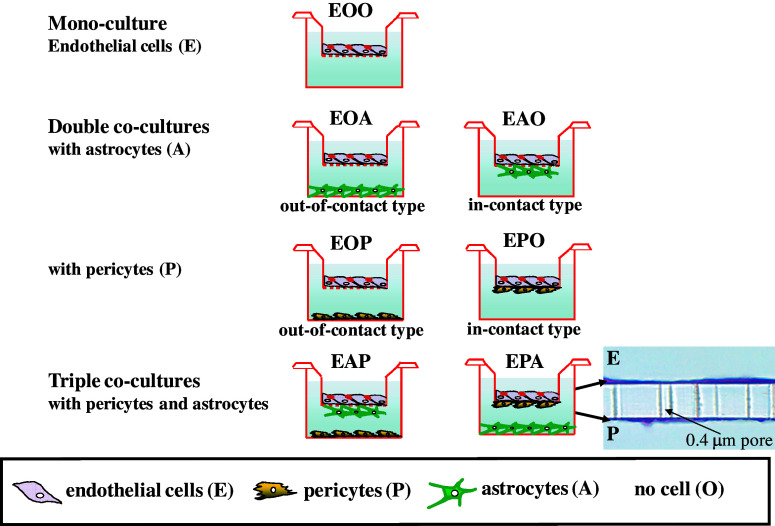
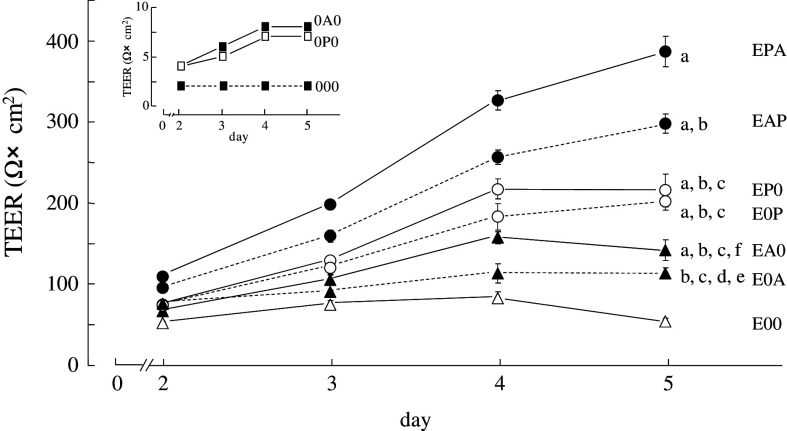
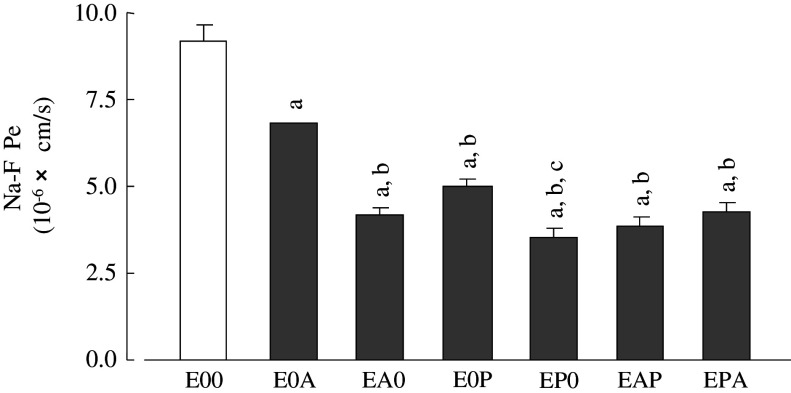
(1) The blood-brain barrier (BBB) characteristics of cerebral endothelial cells are induced by organ-specific local signals. Brain endothelial cells lose their phenotype in cultures without cross-talk with neighboring cells. (2) In contrast to astrocytes, pericytes, another neighboring cell of endothelial cells in brain capillaries, are rarely used in BBB co-culture systems. (3) Seven different types of BBB models, mono-culture, double and triple co-cultures, were constructed from primary rat brain endothelial cells, astrocytes and pericytes on culture inserts. The barrier integrity of the models were compared by measurement of transendothelial electrical resistance and permeability for the small molecular weight marker fluorescein. (4) We could confirm that brain endothelial monolayers in mono-culture do not form tight barrier. Pericytes induced higher electrical resistance and lower permeability for fluorescein than type I astrocytes in co-culture conditions. In triple co-culture models the tightest barrier was observed when endothelial cells and pericytes were positioned on the two sides of the porous filter membrane of the inserts and astrocytes at the bottom of the culture dish. (5) For the first time a rat primary culture based syngeneic triple co-culture BBB model has been constructed using brain pericytes beside brain endothelial cells and astrocytes. This model, mimicking closely the anatomical position of the cells at the BBB in vivo, was superior to the other BBB models tested. (6) The influence of pericytes on the BBB properties of brain endothelial cells may be as important as that of astrocytes and could be exploited in the construction of better BBB models.
Overview
The claims and statistics of this paper haven’t been checked yet.
Free: it reads the open-access text and checks the first 5 claims that cite a source we can check. Create a free account to check every claim.
Integrity signals
Registry
Cites
Statistics
Figures
Verification
Claims the paper makes
The claims and statistics of this paper haven’t been checked yet.
Free: it reads the open-access text and checks the first 5 claims that cite a source we can check. Create a free account to check every claim.
Claims other papers make about this one
Each is checked against this paper’s own text: does it say what the citing paper says it does?
The cited source says what the claim attributes to it.
In the citing paper
“Other evidence for the role of pericytes in BBB function comes from in vitro transwell experiments where the presence of pericytes in the basolateral chamber increases transendothelial electrical resistance (TEER) [16, 18–20].”
From Role of iPSC-derived pericytes on barrier function of iPSC-derived brain microvascular endothelial cells in 2D and 3D (2019) · cites this paper as [19]
In the citing paper
“The in vitro BBB models were established within 4 days of seeding the cells according to the manufacturer’s instructions46.”
From Vascular RAGE transports oxytocin into the brain to elicit its maternal bonding behaviour in mice (2019) · cites this paper as [46]
Self-check
Percentages, sums and reported differences re-computed from the paper’s own numbers.
The self-check needs the paper’s full text.
Citations
Cites
Astrocyte-endothelial interactions at the blood-brain barrier
Abbott, N. J., Rönnbäck, L., & Hansson, E. (2006) · Nature Reviews Neuroscience · doi:10.1038/nrn1824 · Cited by 5,595 · cited 2×
“…cells, astrocytes were the first to be recognized as regulators of brain endothelial characteristics and functions (for reviews see Abbott 2005; Abbott et al. 2006; Haseloff et al. 2005) including the induction of tight junctions (TJs) (Tao-Cheng et al. 1987), a fundamental characteristic of…”
BackgroundLack of Pericytes Leads to Endothelial Hyperplasia and Abnormal Vascular Morphogenesis
Hellström, M., Gerhardt, H., Kalén, M., Li, X., Eriksson, U., Wolburg, H., & Betsholtz, C. (2001) · The Journal of Cell Biology · doi:10.1083/jcb.153.3.543 · Cited by 1,100 · cited 2×
“Despite their localization as the nearest neighbors of endothelial cells with a fundamental role in stabilizing brain capillary structure in vivo (Hellström et al. 2001), few data are available on the functional significance of pericytes on BBB properties.”
BackgroundPermeability Studies on In Vitro Blood–Brain Barrier Models: Physiology, Pathology, and Pharmacology
Deli, M. A., Ábrahám, C. S., Kataoka, Y., & Niwa, M. (2005) · Cellular and Molecular Neurobiology · doi:10.1007/s10571-004-1377-8 · Cited by 643 · cited 5×
“Transendothelial permeability coefficient (Pe in 10 –6 cm/s) was calculated as previously described (Deli et al. 2005).”
BackgroundMethodInfluentialSelf-citationDynamics of CNS Barriers: Evolution, Differentiation, and Modulation
Abbott, N. J. (2005) · Cellular and Molecular Neurobiology · doi:10.1007/s10571-004-1374-y · Cited by 469 · cited 1×
“Among these cells, astrocytes were the first to be recognized as regulators of brain endothelial characteristics and functions (for reviews see Abbott 2005; Abbott et al. 2006; Haseloff et al. 2005) including the induction of tight junctions (TJs) (Tao-Cheng et al. 1987), a fundamental…”
BackgroundTight junctions of brain endothelium in vitro are enhanced by astroglia
Tao-Cheng, J., Nagy, Z., & Brightman, M. (1987) · The Journal of Neuroscience · doi:10.1523/jneurosci.07-10-03293.1987 · Cited by 399 · cited 2×
“…and functions (for reviews see Abbott 2005; Abbott et al. 2006; Haseloff et al. 2005) including the induction of tight junctions (TJs) (Tao-Cheng et al. 1987), a fundamental characteristic of the BBB. Brain pericytes, the cells sharing the basal membrane with capillary endothelial…”
BackgroundDohgu, S., Takata, F., Yamauchi, A., Nakagawa, S., Egawa, T., Naito, M., Tsuruo, T., Sawada, Y., Niwa, M., & Kataoka, Y. (2005) · Brain Research · doi:10.1016/j.brainres.2005.01.027 · Cited by 350 · cited 4×
“Brain pericytes, the cells sharing the basal membrane with capillary endothelial cells, were recently found to be also able to induce BBB functions in cultured brain endothelial cells (Hayashi et al. 2004; Dohgu et al. 2005).”
BackgroundInfluentialSelf-citationHori, S., Ohtsuki, S., Hosoya, K., Nakashima, E., & Terasaki, T. (2004) · Journal of Neurochemistry · doi:10.1111/j.1471-4159.2004.02343.x · Cited by 341 · cited 1×
“Pericyte-derived angiopoietin-1 enhanced occludin gene expression in a brain endothelial cell line (Hori et al. 2004).”
BackgroundPerrière, N., Demeuse, P., Garcia, E., Regina, A., Debray, M., Andreux, J. ‐., Couvreur, P., Scherrmann, J. ‐., Temsamani, J., Couraud, P. ‐., et al. (2005) · Journal of Neurochemistry · doi:10.1111/j.1471-4159.2004.03020.x · Cited by 330 · cited 2×
“5 ng/ml), heparin (100 lg/ml), insulin (5 lg/ml), transferrin (5 lg/ml), sodium selenite (5 ng/ml) (insulin-transferrin-sodium selenite media supplement), gentamicin (50 lg/ml), and puromycin (4 lg/ml) (Perrière et al. 2005) (RBEC medium I) at 37 C with a humidified atmosphere of 5% CO2/95% air, for 2 days.”
MethodSelf-citationHaseloff, R. F., Blasig, I. E., Bauer, H. C., & Bauer, H. (2005) · Cellular and Molecular Neurobiology · doi:10.1007/s10571-004-1375-x · Cited by 301 · cited 2×
“Among these cells, astrocytes were the first to be recognized as regulators of brain endothelial characteristics and functions (for reviews see Abbott 2005; Abbott et al. 2006; Haseloff et al. 2005) including the induction of tight junctions (TJs) (Tao-Cheng et al.”
BackgroundHydrocortisone Reinforces the Blood–Brain Barrier Properties in a Serum Free Cell Culture System
Hoheisel, D., Nitz, T., Franke, H., Wegener, J., Hakvoort, A., Tilling, T., & Galla, H.-J. (1998) · Biochemical and Biophysical Research Communications · doi:10.1006/bbrc.1997.8051 · Cited by 260 · cited 1×
“From Day 1, the culture medium was supplemented with 500 nM hydrocortisone (Hoheisel et al. 1998).”
Method
Research works printed but not linked: 1
- Deli MA, Szabó CA, Dung NTK, Joó F (1997) Immunohistochemical and electron microscopy detections on primary cultures of rat cerebral endothelial cells. In: Boer AG, Sutanto W (eds) Drug transport across the blood–brain barrier: in vivo and in vitro techniques. Harwood Academic Publishers, Amsterdam, pp 23–28
Cited by
Items 301–384 of 384
In vitro models of microbiota-gut-brain axis communication at the blood-brain-barrier interface
Davies, M. R., Cross, C., Aburto, M. R., Cryan, J. F., & Wardill, H. R. (2026) · Journal of Cerebral Blood Flow & Metabolism · doi:10.1177/0271678x261419964 · Cited by 7
“108 This was likely via upregulating tight junction proteins as pericyte conditioned medium increased occludin mRNA and protein levels in brain endothelial cells, predominantly via angi-opoietin-1 signalling.”
Novel flow cytometric analysis of the blood–brain barrier
Williams, D. W., Tesfa, L., & Berman, J. W. (2015) · Cytometry Part A · doi:10.1002/cyto.a.22683 · Cited by 4
4.13 Use and Manipulation of Microporous Membranes in Mammalian Cell Cultures
George, J. H., Waller, S., & Ye, H. (2017) · Elsevier eBooks · doi:10.1016/b978-0-12-409547-2.12267-x · Cited by 6
Gloaguen, C., Raimundo, A. F., Elie, C., Schmitt, A., Floriani, M., Favard, S., Monneret, D., Imbert‐Bismut, F., Weiss, N., Deli, M. A., et al. (2020) · International Journal of Radiation Biology · doi:10.1080/09553002.2020.1828655 · Cited by 4
Self-citationNakagawa, S., Ohara, H., Niwa, M., Yamagata, K., & Nabika, T. (2020) · Cellular and Molecular Neurobiology · doi:10.1007/s10571-020-00917-z · Cited by 4
Self-citationImmune Aspects of the Blood–Brain Barrier
Liggett, T., & Balabanov, R. (2010) · Neuroimmune biology · doi:10.1016/s1567-7443(10)70021-1 · Cited by 4
Isolation methods and characterization of primary rat neurovascular cells
Floryanzia, S., Lee, S., & Nance, E. A. (2024) · Journal of Biological Engineering · doi:10.1186/s13036-024-00434-3 · Cited by 3
“Over-tritu-ration can be avoided by pipetting around 20 times up and down first with a serological pipette then around 10 times with a micropipette [4, 38].”
BackgroundImpact of direct oral anticoagulants on blood-brain barrier integrity
Sato, K. A., Morofuji, Y., Dohgu, S., Nakagawa, S., & Matsuo, T. (2025) · IBRO Neuroscience Reports · doi:10.1016/j.ibneur.2025.11.007 · Cited by 3
“These models are recognized as reliable platforms for evaluating endothelial barrier function under controlled conditions, allowing the investigation of both direct and paracrine-mediated effects on BBB integrity (Carvey et al., 2009; Nakagawa et al., 2007; Keep et al., 2017).”
Self-citationVogelgesang, S., & Jedlitschky, G. (2014) · Frontiers in Psychiatry · doi:10.3389/fpsyt.2014.00128 · Cited by 3
“These monoculture systems, however, are a rather simplified in vitro model in that the interactions of endothelial cells with neighboring cells of the neurovascular unit, namely, astrocytes and pericytes, are important for the development and maintenance of BBB properties (1, 6).”
BackgroundRochfort, K. D., & Cummins, P. M. (2025) · Neuromethods · doi:10.1007/978-1-0716-4474-4_3 · Cited by 3
Cell-based in vitro models for ocular permeability studies
Vasconcelos, T., Baptista-Silva, S., Ferreira, D., Pintado, M., & Marques, S. (2015) · Elsevier eBooks · doi:10.1016/b978-0-08-100094-6.00009-2 · Cited by 4
Ledwig, V., & Reichl, S. (2023) · Pharmaceutics · doi:10.3390/pharmaceutics15061688 · Cited by 3
“More organotypic triple coculture models have been previously shown to have higher barrier integrity because of the interaction of pericytes and astrocytes with endothelial cells [11,12].”
BackgroundDisease Influence on BBB Transport in Neurodegenerative Disorders
de Lange, E. C. M. (2013) · AAPS advances in the pharmaceutical sciences series · doi:10.1007/978-1-4614-9105-7_22 · Cited by 3
Sato, K. (2018) · Folia Pharmacologica Japonica · doi:10.1254/fpj.152.287 · Cited by 4
Delivery and Developmental Strategies for Enhanced Blood–Brain Barrier Permeation—A Review
Selvaraj, P., Ravindran, C. C., Balasubramaniam, A. K., Shankar, P. R., Thirunavukkarasu, M. B., & Pushpanathan, M. S. (2025) · ChemistrySelect · doi:10.1002/slct.202505570 · Cited by 2
Jeong, S., & Kim, K.-M. (2026) · BioChip Journal · doi:10.1007/s13206-025-00252-9 · Cited by 2
“However, transwell BBB models didn’t include all the neurovascular primary cell components (i.e., BMECs, pericytes, astrocytes) till 2007 [24 ].”
Ammar, M. A. N., Dobiasová, S., Salaroglio, I. C., Hmissa, S., Missaoui, N., & Riganti, C. (2026) · Fluids and Barriers of the CNS · doi:10.1186/s12987-026-00816-3 · Cited by 2
“These models range from simple endothelial cell monolayers to more complex co-culture and tri-culture systems that incorporate various cell types found in the neurovascular unit [186–188].”
Kara, A., Öztürk, N., & Vural, İ. (2017) · Elsevier eBooks · doi:10.1016/b978-0-12-803796-6.00008-3 · Cited by 2
Ueda, Y., Shinmyouzu, Y., Nakayama, H., Tanino, T., Sakurai, E., & Sakurai, E. (2016) · Pharmacology & Pharmacy · doi:10.4236/pp.2016.73017 · Cited by 2
“This value was similar to that of cultured wild-type rat lung endothelial cells [10], but was approximately 20% lower than that of cultured rat brain endothelial cells in the confluent condition [11] [12].”
ResultStem Cell–Based Therapies: What Interventional Radiologists Need to Know
Yu, H., Commander, C. W., & Stavas, J. (2021) · Seminars in Interventional Radiology · doi:10.1055/s-0041-1736657 · Cited by 1
Hitomi, T., Okuda, H., Takata, A., & Yamauchi, H. (2025) · PLoS ONE · doi:10.1371/journal.pone.0330287 · Cited by 1
“A rat in vitro BBB model comprising three cell types (RBT-24H) was purchased from PharmaCo-Cell Company Ltd. [49,50].”
Dexamethasone restores blood–brain barrier integrity in an in vitro heatstroke model
Okamura, K., Pichlerová, K., Matsuo, T., Watanabe, D., Cutts, W. D., Kim, B. J., & Morofuji, Y. (2026) · PLoS ONE · doi:10.1371/journal.pone.0352334 · Cited by 1
“Following the experiments, permeability of Evans’ blue-albumin (EBA, MW: 67 kDa) and sodium fluorescein (Na-F, MW: 376 Da) across the endothelial monolayer was determined and used as an index of transcellular and paracellular transport [14,15].”
Eisenblaetter, T., Hagos, Y., Flörl, S., & Kühne, A. (2013) · Springer eBooks · doi:10.1007/978-3-642-25240-2_38 · Cited by 1
The Systemic Treatment of Glioma
Camargo, J. (2019) · IntechOpen eBooks · doi:10.5772/intechopen.80047 · Cited by 1
Elucidation of New Function in Endothelial Cells for Efficient Delivery Strategy of Drug to Tissues
Sakurai, E. (2019) · YAKUGAKU ZASSHI · doi:10.1248/yakushi.19-00179 · Cited by 1
In Vivo Optical Imaging and Manipulation of Brain Pericytes
Berthiaume, A., Coelho‐Santos, V., Hartmann, D. A., & Shih, A. Y. (2021) · Stem cell biology and regenerative medicine · doi:10.1007/978-3-030-62129-2_1 · Cited by 1
Use of Cocultures to Measure the Blood–Brain Barrier Permeability of Oxytocin
Yamamoto, Y., Harashima, A., Munesue, S., & Higashida, H. (2021) · Methods in molecular biology · doi:10.1007/978-1-0716-1759-5_15 · Cited by 1
Consequences of blood-brain barrier disruption
Ivens, W. S. (2008) · Universitätsbibliothek der FU Berlin Hochschulschriftenstelle u. Dokumentenserver · doi:10.17169/refubium-4997
Hembury, A. (2008) · OpenGrey (Institut de l'Information Scientifique et Technique)
In-vitro- und in-vivo-Untersuchungen zur Neuroinvasion durch Toxoplasma gondii
Lachenmaier, S. (2010) · Universitätsbibliothek der FU Berlin Hochschulschriftenstelle u. Dokumentenserver · doi:10.17169/refubium-10222 · Cited by 1
“In-vitro-Modelle, die neben Endothelzellen und Astrozyten auch Perizyten miteinbeziehen, erreichen dabei den größten transendothelialen Widerstand [62].”
BackgroundInfluentialCharacterization of blood-brain barrier disruption in a focal model of neuromyelitis optica
Winkler, A. (2015) · eDiss (Georg-August-Universität Göttingen) · doi:10.53846/goediss-5374
Inflammation at the Blood–Brain Barrier in Multiple Sclerosis
Mizee, M. R., van Doorn, R., Prat, A., & de Vries, H. E. (2013) · Topics in medicinal chemistry · doi:10.1007/7355_2013_21
Sanjuan, V. M. (2014) · Repository of Digital Objects for Teaching Research and Culture (University of Valencia) · Cited by 1
Tracking effects of oxytocin crossing the blood brain barrier in vivo and in vitro
Chakraborty, T. (2017) · Library, Museums and Press - UDSpace (University of Delaware) · doi:10.58088/6tnt-6n23 · Cited by 1
Development of conducting polymer devices for the monitoring of in vitro barrier tissue models
Ferro, M. (2018) · theses.fr (ABES) · doi:10.70675/3df5df41z9454z449bz970az6db9ac90dc45
Structure and Regulation of the Blood–Brain Barrier
Kuo, Y., Lee, C., & Hsu, J. (2016) · Wiley eBooks · doi:10.1002/9781119075691.ch18
Blood–brain barrier and drug delivery
Sanjuan, V. M., González‐Álvarez, M., González‐Álvarez, I., & Bermejo, M. (2015) · doi:10.4155/fseb2013.13.60
Dohgu, S., Takata, F., & Kataoka, Y. (2021) · Stem cell biology and regenerative medicine · doi:10.1007/978-3-030-62129-2_6
Self-citationHall, T. T. (2016) · The Research Repository @ WVU (West Virginia University) · doi:10.33915/etd.5739
Hiperlipidémia okozta neurodegeneratív és vér-agy gát-elváltozások ApoB-100 transzgenikus egerekben
Lénárt, N. (2015) · SZTE Repository of Dissertations (University of Szeged) · doi:10.14232/phd.2465
Walter, F. R. (2015) · SZTE Repository of Dissertations (University of Szeged) · doi:10.14232/phd.2703
Mózes, E. (2021) · SZTE Repository of Dissertations (University of Szeged) · doi:10.14232/phd.10783
Study of the antiepileptic drugs transport through the immature blood-brain barrier
Soares, R. V. (2015) · theses.fr (ABES) · doi:10.70675/81cb7f7fz0235z435cz87d2z90d8cd571f7a
Eisenblaetter, T., Hagos, Y., Flörl, S., & Kühne, A. (2022) · Springer eBooks · doi:10.1007/978-3-030-73317-9_38-1
Eisenblaetter, T., Hagos, Y., Flörl, S., & Kühne, A. (2024) · Springer eBooks · doi:10.1007/978-3-031-35529-5_38
GENE THERAPY AT THE BLOOD-BRAIN BARRIER
Hede, E. (2024) · VBN Forskningsportal (Aalborg Universitet) · doi:10.54337/aau770636156
In Vitro Models of the Blood–Brain Barrier to Study Multiple Sclerosis Pathogenesis
Fujisawa, M., Nishihara, H., & Engelhardt, B. (2025) · Current human cell research and applications · doi:10.1007/978-981-97-9495-9_13
Gastfriend, B. D., Palecek, S. P., & Shusta, E. V. (2025) · Neuromethods · doi:10.1007/978-1-0716-4474-4_2
BBB-on-a-Chip: Microfluidic Tools as an Alternative to In Vivo Experiments for Nanosafety Studies
Lefevre, M. C., Ceccarelli, M. C., Bernardeschi, M., & Ciofani, G. (2025) · Springer eBooks · doi:10.1007/978-3-031-93871-9_9 · Cited by 1
Soni, S., Soni, V., & Kashaw, S. K. (2025) · BENTHAM SCIENCE PUBLISHERS eBooks · doi:10.2174/9798898811716125010006
Girolamo, F., de Trizio, I., Errede, M., Longo, G., d’Amati, A., & Virgintino, D. (2021) · Figshare · doi:10.6084/m9.figshare.14431841
Giniunaite, A. (2023) · Online Publication Service of Würzburg University (Würzburg University) · doi:10.25972/opus-31064
Shammout, B. (2023) · Aston Publications Explorer (Aston University) · doi:10.48780/publications.aston.ac.uk.00047171
Additional file 1 of Effects of fasudil on blood–brain barrier integrity
Sato, K., Nakagawa, S., Morofuji, Y., Matsunaga, Y., Fujimoto, T., Watanabe, D., Izumo, T., Niwa, M., Walter, F. R., Vigh, J. P., et al. (2022) · Figshare · doi:10.6084/m9.figshare.20003341
Self-citationAdditional file 1 of Isolation methods and characterization of primary rat neurovascular cells
Floryanzia, S., Lee, S., & Nance, E. A. (2024) · Figshare · doi:10.6084/m9.figshare.26264959
biomarcatori delle malattie neurodegenerative
BENVENUTI, M. (2016) · Electronic Theses and Dissertations Repository (University of Pisa)
Phytocannabinoids, neuroprotection and the blood-brain barrier
Stone, N. (2021) · Nottingham ePrints (University of Nottingham) · Cited by 1
Richardson, I. M. (2024) · CU Scholar (University of Colorado Boulder)
Vandenhaute, E. (2011) · theses.fr (ABES) · doi:10.70675/fc4ed0aazbe21z4462zaf3cz403a50314e96 · Cited by 5
“69 25 Schémas représentant les différentes configurations de culture testées par Na- kagawa et al. (2007). . . . . . . . . . . . . . . . . . . . . . . . . . . . . . .”
Boidin‐Wichlacz, C. (2011) · theses.fr (ABES) · doi:10.70675/6dd45392z0203z4b34za38az63e13eddb5f3
Implication de la VE-cadhérine dans la plasticité endothéliale des tumeurs
Guelte, A. L. (2012) · theses.fr (ABES) · doi:10.70675/345c928ezf370z4f42zb815z120b51d185e3
Molino, Y. (2015) · theses.fr (ABES) · doi:10.70675/f175f606z0859z4408za980z63d112229176 · Cited by 1
Chatard, M. (2017) · theses.fr (ABES) · doi:10.70675/6844582ez78dcz47d3zaef2za0a5cad4bbd8 · Cited by 2
Delehedde, C. (2019) · theses.fr (ABES) · doi:10.70675/79b9d873z2997z43e0z95a3zddde248acdee
Chikamatsu, G., Nakagawa, S., Morofuji, Y., Shiozaki, E., Ogawa, Y., Okamura, K., Matsunaga, Y., Watanabe, D., Walter, F. R., Izumo, T., et al. (2026) · Pharmaceutics · doi:10.3390/pharmaceutics18080980
“Notably, as established in previous studies [16,17], baseline TEER values were consistently higher in EPO than in EOO, reflecting the contribution of pericytes to barrier function.”
Self-citationVigh, J. P., Kocsis, A. E., Santa-Maria, A. R., Kucsápszky, N., Bató, E., Bolognin, S., Schwamborn, J. C., Kincses, A., Valkai, S., Szecskó, A., et al. (2026) · bioRxiv (Cold Spring Harbor Laboratory) · doi:10.64898/2026.09.15.750866
Self-citationBay, C., Kästing, M., Chu, J., Mühlberg, E., Scherkl, C., Uhl, P., Stingl, J., Burhenne, J., Bajraktari‐Sylejmani, G., Sauter, M., et al. (2026) · Research Square · doi:10.21203/rs.3.rs-11433171/v1
Recreating the blood–brain barrier in vitro
El-Taibany, A. A., Seeds, M. C., & Atala, A. (2026) · Elsevier eBooks · doi:10.1016/b978-0-443-16110-0.00011-x
Ledwig, V., May, T., Dietzel, A. H., & Reichl, S. (2026) · Biomedicines · doi:10.3390/biomedicines14112512
Acute Regulation of P-glycoprotein at the Blood-Brain Barrier by Peripheral Inflammatory Pain
Seelbach, M. J. (2007) · UA Campus Repository (The University of Arizona)
Metadata
- Authors
- Nakagawa, S., Deli, M. A., Nakao, S., Honda, M., Hayashi, K., Nakaoke, R., Kataoka, Y., & Niwa, M.
- Affiliations
- Nagasaki University (JP)
- Institute of Biophysics (HU)
- Fukuoka University (JP)
- Corresponding author
- Deli, Mária A.
- Venue
- Cellular and Molecular Neurobiology
- Published
- 2007-09-06
- Volume
- 27
- Issue
- 6
- Pages
- 687-694
- ISSN
- 0272-4340 (ISSN-L)
- 1573-6830
- PMC
- PMC11517186
- OpenAlex
- W2097760799
- Cited by
- 364
- References
- 18
- Citations by year
- 2026: 7 · 2025: 12 · 2024: 12 · 2023: 13 · 2022: 22 · 2021: 28 · 2020: 19 · 2019: 25 · 2018: 27 · 2017: 27 · 2016: 18 · 2015: 27 · 2014: 29 · 2013: 19 · 2012: 13
- FWCI
- 8.26
- Type
- journal article
- Language
- en
- Open access
- hybrid
- doi.org
- Licence
- cc-by-nc
- Locations
- Cellular and Molecular Neurobiology (publishedVersion, cc-by-nc)
- PubMed Central (publishedVersion, cc-by-nc)
- PubMed (publishedVersion)
- Funders
- Ministry of Economy, Trade and Industry
- Hungarian Scientific Research Fund
- Nemzeti Kutatási és Technológiai Hivatal (RET 08/2004)
- Topics
- Life Sciences › Neuroscience › Neurology › Barrier Structure and Function Studies
- Health Sciences › Medicine › Oncology › Drug Transport and Resistance Mechanisms
- Life Sciences › Biochemistry, Genetics and Molecular Biology › Molecular Biology › Ion Transport and Channel Regulation
- Keywords
- pericytes, blood-brain barrier, brain endothelial cells, astrocytes, barrier integrity, transendothelial electrical resistance, fluorescein permeability, primary cell culture, cell-cell interactions
- MeSH terms
- Animals, Animals, Newborn, Blood-Brain Barrier, Brain, Capillary Permeability, Cell Membrane Permeability, Cells, Cultured, Microcirculation, Models, Biological, Rats, Wistar, Coculture Techniques, Fluorescein, Pericytes, Endothelial Cells, Rats
About these checks
Registry, retraction, Cites and statistics results are computed, not judged, with one exception: a printed reference that no index lists is read once by a model before it counts as a citation error. Claims are extracted by a model and kept only when their quote appears verbatim in the text; each cited source is then checked, with a model’s help, for whether it says what the claim relies on. Those verdicts can be wrong — read the claim’s quote and the cited source before relying on one.
Statistics and arithmetic are recomputed, not judged.
Confidence bands are shown only for fields calibrated on our annotated test set. None is calibrated yet, so no band is shown.
What counts as a claim ›How we measure confidence ›How we check this ›
Are you an author, or do you see a problem with this page? Request a review
Data sources
Bibliographic data: Semantic Scholar, OpenAlex, Crossref.
Contains information from the Semantic Scholar Academic Graph Datasets, made available under the ODC Attribution License (ODC-BY 1.0).
Semantic Scholar’s data is described in: Kinney, R., et al. (2023). The Semantic Scholar Open Data Platform. arXiv:2301.10140.
