

RCP 8.5—A scenario of comparatively high greenhouse gas emissions
Open accessThe DOI matches its Crossref record; 36 of the 37 references it cites were found in a registry or an index.
Abstract
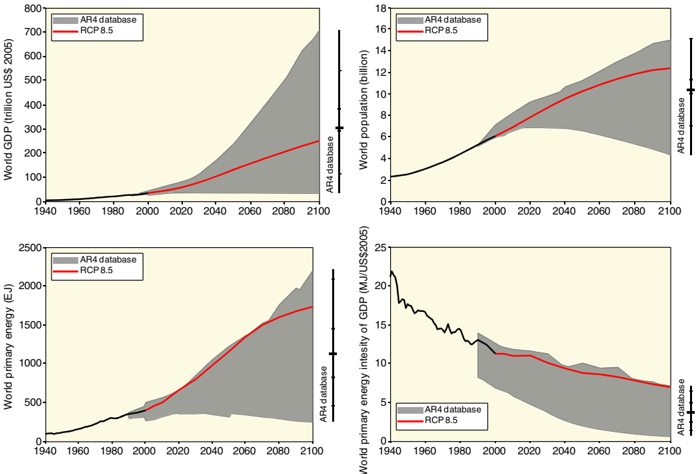
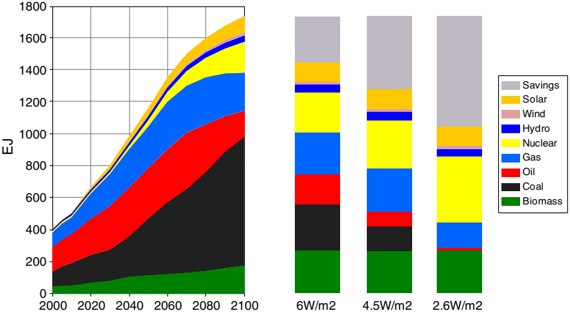
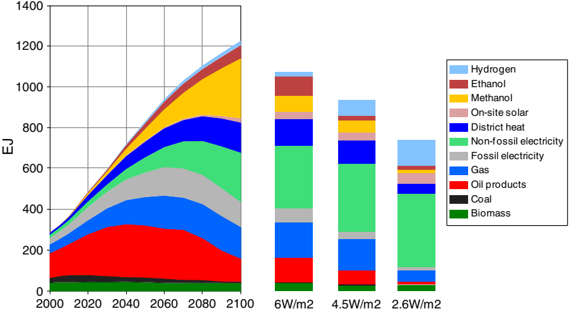
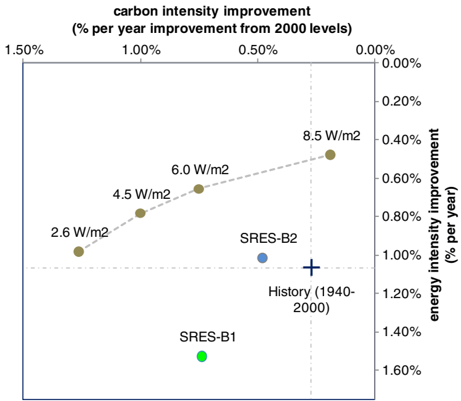
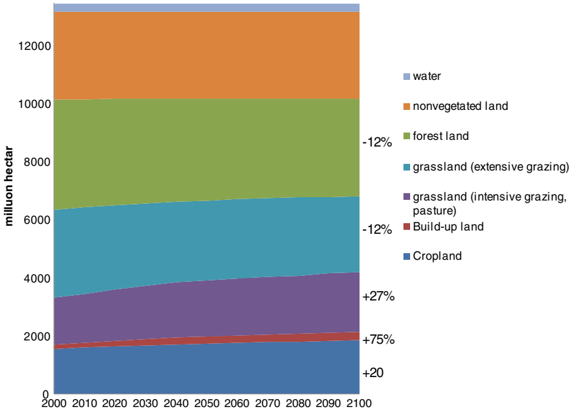
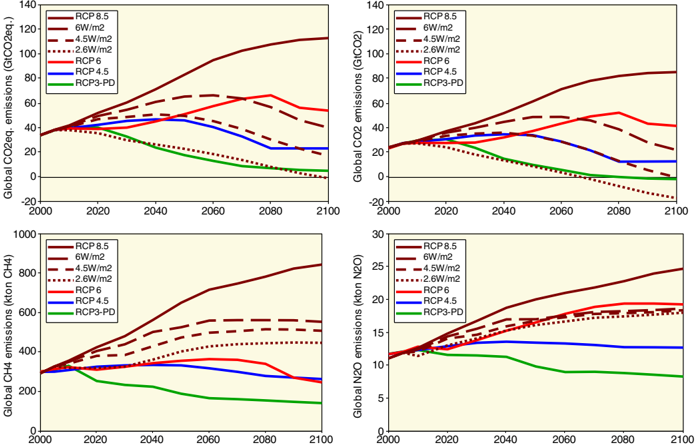
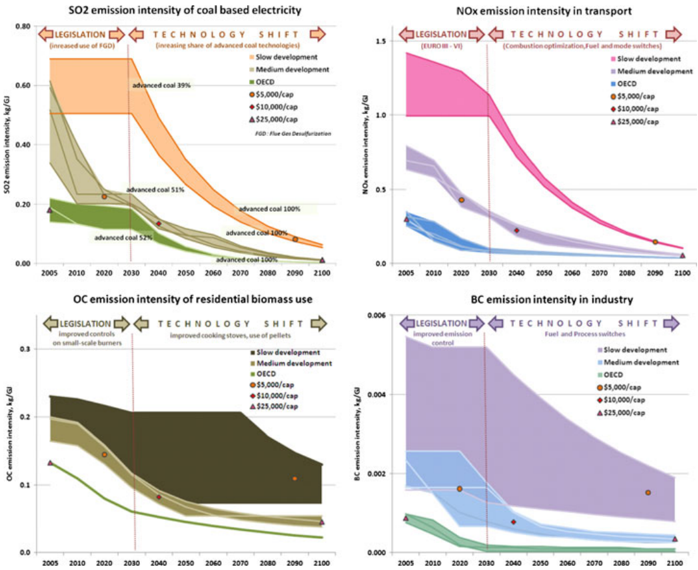
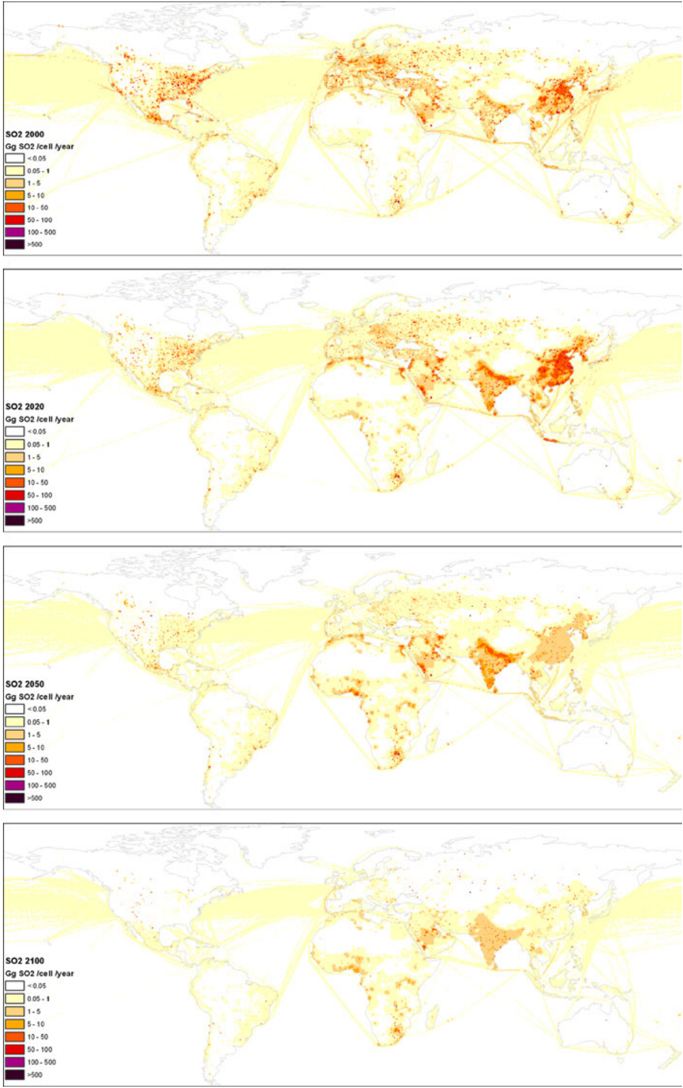
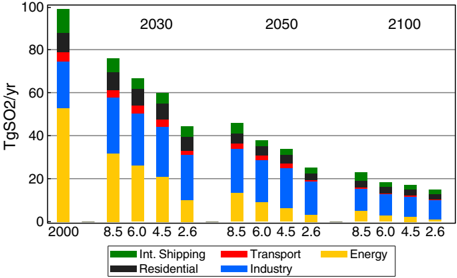
This paper summarizes the main characteristics of the RCP8.5 scenario. The RCP8.5 combines assumptions about high population and relatively slow income growth with modest rates of technological change and energy intensity improvements, leading in the long term to high energy demand and GHG emissions in absence of climate change policies. Compared to the total set of Representative Concentration Pathways (RCPs), RCP8.5 thus corresponds to the pathway with the highest greenhouse gas emissions. Using the IIASA Integrated Assessment Framework and the MESSAGE model for the development of the RCP8.5, we focus in this paper on two important extensions compared to earlier scenarios: 1) the development of spatially explicit air pollution projections, and 2) enhancements in the land-use and land-cover change projections. In addition, we explore scenario variants that use RCP8.5 as a baseline, and assume different degrees of greenhouse gas mitigation policies to reduce radiative forcing. Based on our modeling framework, we find it technically possible to limit forcing from RCP8.5 to lower levels comparable to the other RCPs (2.6 to 6 W/m 2 ). Our scenario analysis further indicates that climate policy-induced changes of global energy supply and demand may lead to significant co-benefits for other policy priorities, such as local air pollution.
Overview
The claims and statistics of this paper haven’t been checked yet.
Free: it reads the open-access text and checks the first 5 claims that cite a source we can check. Create a free account to check every claim.
Integrity signals
Registry
Cites
Statistics
Figures
Verification
Claims the paper makes
The claims and statistics of this paper haven’t been checked yet.
Free: it reads the open-access text and checks the first 5 claims that cite a source we can check. Create a free account to check every claim.
Claims other papers make about this one
Each is checked against this paper’s own text: does it say what the citing paper says it does?
The cited source says what the claim attributes to it.
In the citing paper
“The RCP 8.5 is a high greenhouse gas emissions scenario that projects a significant increase in GHG emissions and concentrations over time, resulting in a radiative forcing of 8.5 W/m 2 at the end of the century [54].”
From Climate Change Impacts on Streamflow in the Krishna River Basin, India: Uncertainty and Multi-Site Analysis (2022) · cites this paper as [54]
The cited source says what the claim attributes to it.
In the citing paper
“RCP8.5 assumes a continued rise in greenhouse gas emissions without mitigation, leading to a radiative forcing of 8.5 W m -2 by 2100.”
From Amazon dieback beyond the 21st century under high-emission scenarios by Earth System models (2025) · cites this paper as [62]
Self-check
Percentages, sums and reported differences re-computed from the paper’s own numbers.
The self-check needs the paper’s full text.
Citations
Cites
The representative concentration pathways: an overview
van Vuuren, D. P., Edmonds, J., Kainuma, M., Riahi, K., Thomson, A., Hibbard, K., Hurtt, G. C., Kram, T., Krey, V., Lamarque, J.-F., et al. (2011) · Climatic Change · doi:10.1007/s10584-011-0148-z · Cited by 7,741 · cited 3×
“As targets for the mitigation scenarios we adopt forcing levels of 2.6, 4.5 and 6 W/m2 by the end of the century, which corresponds to the same radiative forcing levels as assumed by the other RCPs in this SI (see van Vuuren et al. 2011b; Thomson et al. 2011; Masui et al. 2011).”
BackgroundMethodInfluentialSelf-citationThe next generation of scenarios for climate change research and assessment
Moss, R. H., Edmonds, J. A., Hibbard, K. A., Manning, M. R., Rose, S. K., van Vuuren, D. P., Carter, T. R., Emori, S., Kainuma, M., Kram, T., et al. (2010) · Nature · doi:10.1038/nature08823 · Cited by 6,467 · cited 3×
“(2011a), and for the RCP process and selection see Moss et al. (2010), and IPCC (2008)).”
BackgroundSelf-citationSpecial report on emissions scenarios
Nakićenović, N., Alcamo, J. M., Davis, G. F., de Vries, B. J. M., Fenhann, J. V., Gaffin, S. R., Gregory, K., Griibler, A., Jung, T. Y., Kram, T., et al. (2000) · eScholarship (California Digital Library) · Cited by 3,423
Self-citationRCP4.5: a pathway for stabilization of radiative forcing by 2100
Thomson, A. M., Calvin, K. V., Smith, S. J., Kyle, G. P., Volke, A., Patel, P., Delgado-Arias, S., Bond-Lamberty, B., Wise, M. A., Clarke, L. E., et al. (2011) · Climatic Change · doi:10.1007/s10584-011-0151-4 · Cited by 1,631 · cited 2×
“As targets for the mitigation scenarios we adopt forcing levels of 2.6, 4.5 and 6 W/m2 by the end of the century, which corresponds to the same radiative forcing levels as assumed by the other RCPs in this SI (see van Vuuren et al. 2011b; Thomson et al. 2011; Masui et al. 2011).”
BackgroundMethodInfluentialHurtt, G. C., Chini, L. P., Frolking, S., Betts, R. A., Feddema, J., Fischer, G., Fisk, J. P., Hibbard, K., Houghton, R. A., Janetos, A., et al. (2011) · Climatic Change · doi:10.1007/s10584-011-0153-2 · Cited by 1,284 · cited 2×
“Hurtt et al. (2011) for example estimate about a factor of six higher land requirements for the same amount of wood harvest for the year 2000.”
BackgroundSelf-citationScenarios of long-term socio-economic and environmental development under climate stabilization
Riahi, K., Grübler, A., & Nakicenovic, N. (2007) · Technological Forecasting and Social Change · doi:10.1016/j.techfore.2006.05.026 · Cited by 1,152 · cited 15×
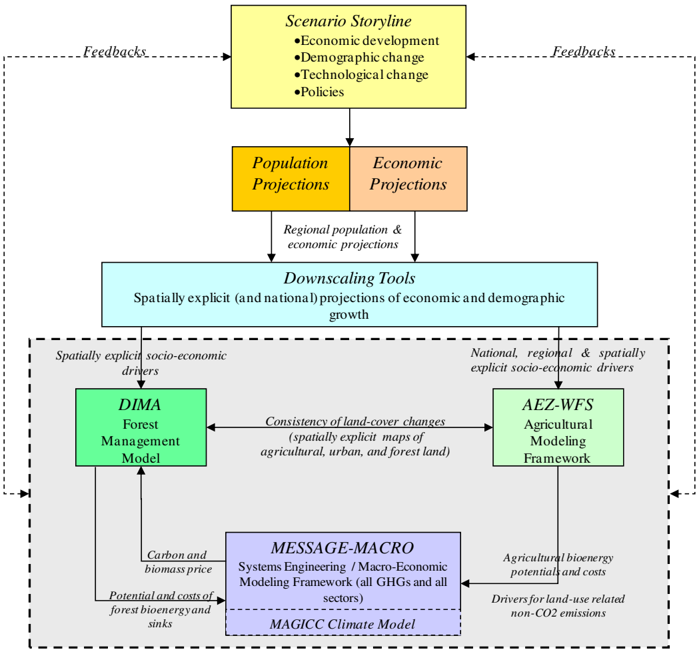
“1 IIASA modeling framework (adapted from Riahi et al. 2007) Climatic Change (2011) 109:33–57 35”
BackgroundMethodInfluentialSelf-citationSocio-economic and climate change impacts on agriculture: an integrated assessment, 1990–2080
Fischer, G., Shah, M., N. Tubiello, F., & van Velhuizen, H. (2005) · Philosophical Transactions of the Royal Society B: Biological Sciences · doi:10.1098/rstb.2005.1744 · Cited by 1,040 · cited 2×
“WFS is an agro-economic model ( Fischer et al. 2005, 2009 ) that estimates regional agricultural consumption, production, trade and land use.”
BackgroundSelf-citationRCP2.6: exploring the possibility to keep global mean temperature increase below 2°C
van Vuuren, D. P., Stehfest, E., den Elzen, M. G. J., Kram, T., van Vliet, J., Deetman, S., Isaac, M., Klein Goldewijk, K., Hof, A., Mendoza Beltran, A., et al. (2011) · Climatic Change · doi:10.1007/s10584-011-0152-3 · Cited by 924
Granier, C., Bessagnet, B., Bond, T., D’Angiola, A., Denier van der Gon, H., Frost, G. J., Heil, A., Kaiser, J. W., Kinne, S., Klimont, Z., et al. (2011) · Climatic Change · doi:10.1007/s10584-011-0154-1 · Cited by 847 · cited 2×
“A simple harmonization algorithm was assumed, where emissions growth of the native MESSAGE results were combined with the base-year values from Granier et al. (2011).”
MethodSelf-citationSurvey of energy resources, 1974
Goeller, H. E., Carlsmith, R. S., Carter, W. L., & Nelson, E. L. (1974) · OSTI OAI (U.S. Department of Energy Office of Scientific and Technical Information) · Cited by 788
Research works printed but not linked: 5
- Amann M, Bertok I, Borken J, Chambers A, Cofala J, Dentener F, Heyes C, Kejun J, Klimont K, Makowski M, Matur R, Purohit P, Rafaj P, Sandler R, Schöpp W, Wagner F, Winiwarter W (2008a) GAINS-Asia. A tool to combat air pollution and climate change simultaneously. International Institute for Applied Systems Analysis (IIASA), Laxenburg
- BP (2010) BP Statistical Review of World Energy, www.bp.com/statisticalreview. Accessed in May 2011
- Fisher B, Nakicenovic N, Alfsen K, Corfee Morlot J, De la Chesnaye F, Hourcade J.-C, Jiang K, Kainuma M, La Rovere E, Matysek A, Rana A, Riahi K, Richels R, Rose S, van Vuuren DP, Warren R, (2007) Chapter 3: Issues related to mitigation in the long-term context. In: Climate change 2007: Mitigation. Contribution of Working Group III to the Fourth Assessment Report of the Intergovernmental Panel on Climate Change. Cambridge University Press, Cambridge, United Kingdom and New York, NY, USA
- Lee DS, Owen B, Graham A, Fichter C, Lim LL, Dimitriu D (2005) Allocation of international aviation emissions from scheduled air traffic-present day and historical. Report to UK Department for Environment, Food and Rural Affairs, London
- Tubiello FN, Fischer G (2007) Reducing climate change impacts on agriculture: global and regional effects of mitigation, 2000-2080. Technol Forecast Soc Chang 74(7):1030-1056, Special Issue: Greenhouse Gases -Integrated Assessment UNEP and WHO (1996) City air quality trends (GEMS/Air Data). Nairobi United Nations Environment Programme, World Health Organization 1:52
Cited by
Items 301–400 of 1,012
Cook, L. M., McGinnis, S., & Samaras, C. (2020) · Climatic Change · doi:10.1007/s10584-019-02649-6 · Cited by 113
Görgüner, M., & Kavvas, M. L. (2020) · The Science of The Total Environment · doi:10.1016/j.scitotenv.2020.141246 · Cited by 120
Palacios‐Abrantes, J., Frölicher, T. L., Reygondeau, G., Sumaila, U. R., Tagliabue, A., Wabnitz, C. C. C., & Cheung, W. W. L. (2022) · Global Change Biology · doi:10.1111/gcb.16058 · Cited by 124
“…(ToE), commonly applied to multiple oceanic physical and biogeochemical variables (Frölicher et al., 2016; Henson et al., 2017; Keller et al., 2014; Rodgers et al., 2015; Schlunegger et al., 2019, 2020; Trisos et al., 2020) and defined as the moment in time when a signal (e.g., future…”
BackgroundMethodFuture projection of seasonal drought characteristics using CMIP6 in the Lancang-Mekong River Basin
Dong, Z., Liu, H., Baiyinbaoligao, Hu, H., Khan, M. Y. A., Wen, J., Chen, L., & Tian, F. (2022) · Journal of Hydrology · doi:10.1016/j.jhydrol.2022.127815 · Cited by 116
Olin, S., Lindeskog, M., Pugh, T. A. M., Schurgers, G., Wårlind, D., Mishurov, M., Zaehle, S., Stocker, B. D., Smith, B., & Arneth, A. (2015) · Earth System Dynamics · doi:10.5194/esd-6-745-2015 · Cited by 118
“5 – Riahi et al., 2011).”
Santillán, D., Iglesias, A., Jeunesse, I. L., Garrote, L., & Sotés, V. (2018) · The Science of The Total Environment · doi:10.1016/j.scitotenv.2018.12.079 · Cited by 123
Distorting the view of our climate future: The misuse and abuse of climate pathways and scenarios
Pielke, R. A., & Ritchie, J. (2020) · Energy Research & Social Science · doi:10.1016/j.erss.2020.101890 · Cited by 123
The atmospheric general circulation model ECHAM6 - Model description
Giorgetta, M. A., Roeckner, E., Mauritsen, T., Bader, J., Crueger, T., Esch, M., Rast, S., Kornblueh, L., Schmidt, H., Kinne, S., et al. (2013) · MPG.PuRe (Max Planck Society) · doi:10.17617/2.1810480 · Cited by 151
“A semi-implicit time scheme is used for equations of divergence, temperature and surface pressure, based on the work of Robert et al. (1972). The growth of spurious computational modes is inhibited by a time filter (Asselin, 1972).”
MethodCan climate‐effective land management reduce regional warming?
Hirsch, A. L., Wilhelm, M., Davin, E. L., Thiery, W., & Seneviratne, S. I. (2017) · Journal of Geophysical Research: Atmospheres · doi:10.1002/2016jd026125 · Cited by 104
Furlan, E., Pozza, P. D., Michetti, M., Torresan, S., Critto, A., & Marcomini, A. (2021) · The Science of The Total Environment · doi:10.1016/j.scitotenv.2020.144650 · Cited by 117
Projected changes of rainfall seasonality and dry spells in a high greenhouse gas emissions scenario
Pascale, S., Lucarini, V., Feng, X., Porporato, A., & ul Hasson, S. (2016) · Climate Dynamics · doi:10.1007/s00382-015-2648-4 · Cited by 104
“We analyze the representative concentration pathway RCP 8.5 (Riahi et al, 2011), in which an anthropogenic radiative forcing of 8 .”
MethodInfluentialWilkenskjeld, S., Kloster, S., Pongratz, J., Raddatz, T., & Reick, C. H. (2014) · Biogeosciences · doi:10.5194/bg-11-4817-2014 · Cited by 102
“5 (Riahi et al., 2011).”
Lin, L., Gettelman, A., Fu, Q., & Xu, Y. (2016) · Climatic Change · doi:10.1007/s10584-016-1615-3 · Cited by 110
“…et al., 2012), Feng and Fu (2013), Dai (2013), Cook et al. (2014), Scheff and Frierson (2015), Lin et al. (2015) and Huang et al. (2015) projected drying over land in the 21st century with high greenhouse gas (GHG) emissions (Representative Concentration Pathway (RCP) 8.5) (Riahi et al., 2011).”
BackgroundInfluentialImpacts of compound extreme weather events on ozone in the present and future
Zhang, J., Gao, Y., Luo, K., Leung, L.-Y. R., Zhang, Y., Wang, K., & Fan, J. (2018) · Atmospheric chemistry and physics · doi:10.5194/acp-18-9861-2018 · Cited by 115
“5 scenario (Riahi et al., 2011), extreme weather events are still important considerations for air quality and health in the future.”
BackgroundCurrent and Future Variations of the Monsoons of the Americas in a Warming Climate
Pascale, S., Carvalho, L. M. V., Adams, D. K., Castro, C. L., & Cavalcanti, I. F. A. (2019) · Current Climate Change Reports · doi:10.1007/s40641-019-00135-w · Cited by 112
“5 [127]), project a June–July reduction and a September–”
BackgroundSkeie, R. B., Hodnebrog, Ø., & Myhre, G. (2023) · Communications Earth & Environment · doi:10.1038/s43247-023-00969-1 · Cited by 117
Basic performance of a new earth system model of the Meteorological Research Institute (MRI-ESM1)
Adachi, Y., Yukimoto, S., Deushi, M., 小畑, 淳., Nakano, H., Tanaka, T. Y., Hosaka, M., Sakami, T., Yoshimura, H., Hirabara, M., et al. (2013) · Papers in Meteorology and Geophysics · doi:10.2467/mripapers.64.1 · Cited by 116
“The ozone increases in the middle and upper stratosphere are primarily due to strong cooling of the middle and upper stratosphere by increasing levels of GHGs (e.g., Rosenfield et al. 2002; Chipperfield and Feng 2003).”
BackgroundProjected changes of Antarctic krill habitat by the end of the 21st century
Piñones, A., & Fedorov, A. V. (2016) · Geophysical Research Letters · doi:10.1002/2016gl069656 · Cited by 109
“We use a scenario with high emissions, the Representative Concentration Pathway 8.5 (RCP 8.5), which considers nomitigation over time [Riahi et al., 2011].”
MethodInfluentialFourcade, Y. (2016) · Ecological Informatics · doi:10.1016/j.ecoinf.2016.09.002 · Cited by 117
Campbell, A. L., Mangan, S., Ellis, R. P., & Lewis, C. N. (2014) · Environmental Science & Technology · doi:10.1021/es502739m · Cited by 127
Assis, J. F., Berecibar, E., Claro, B., Alberto, F., Reed, D. C., RAIMONDI, P. T., & Serrão, E. Á. (2017) · Scientific Reports · doi:10.1038/srep44348 · Cited by 131
Brown, S. J. (2020) · Weather and Climate Extremes · doi:10.1016/j.wace.2020.100278 · Cited by 108
Boysen, L. R., Brovkin, V. A., Arora, V. K., Cadule, P., de Noblet‐Ducoudré, N., Kato, E., Pongratz, J., & Gayler, V. (2014) · Earth System Dynamics · doi:10.5194/esd-5-309-2014 · Cited by 117
“vided by the integrated assessment model (IAM) MESSAGE (Riahi et al., 2011), includes spatially explicit LULCC patterns which reflect the expansion of crop and pasture land required to meet the increasing food demand of a growing world population.”
BackgroundMethodInfluentialPenteriani, V., Zarzo‐Arias, A., Novo‐Fernández, A., Bombieri, G., & López-Sánchez, C. A. (2019) · Global Change Biology · doi:10.1111/gcb.14564 · Cited by 109
Reddington, C. L. S., Conibear, L., Knote, C., Silver, B. J., Li, Y., Chan, C. K., Arnold, S. R., & Spracklen, D. V. (2019) · Atmospheric chemistry and physics · doi:10.5194/acp-19-11887-2019 · Cited by 113
Climate change-induced aridity is affecting agriculture in Northeast Italy
Straffelini, E., & Tarolli, P. (2023) · Agricultural Systems · doi:10.1016/j.agsy.2023.103647 · Cited by 118
Fujimori, S., Kainuma, M., Masui, T., Hasegawa, T., & Dai, H. (2014) · Energy Policy · doi:10.1016/j.enpol.2014.09.015 · Cited by 108
Romero, R., & Emanuel, K. (2016) · Journal of Climate · doi:10.1175/jcli-d-16-0255.1 · Cited by 107
Teotónio, C., Fortes, P., Roebeling, P. C., Méndez, M. R., & Robaina, M. (2017) · Renewable and Sustainable Energy Reviews · doi:10.1016/j.rser.2017.03.002 · Cited by 112
The Role of Hadley Circulation and Lapse-Rate Changes for the Future European Summer Climate
Brogli, R., Kröner, N., Sørland, S. L., Lüthi, D., & Schär, C. (2018) · Journal of Climate · doi:10.1175/jcli-d-18-0431.1 · Cited by 111
Ohashi, H., Hasegawa, T., Hirata, A., Fujimori, S., Takahashi, K., Tsuyama, I., Nakao, K., Kominami, Y., Tanaka, N., Hijioka, Y., et al. (2019) · Nature Communications · doi:10.1038/s41467-019-13241-y · Cited by 117
A novel framework for selecting general circulation models based on the spatial patterns of climate
Nashwan, M. S., & Shahid, S. (2020) · International Journal of Climatology · doi:10.1002/joc.6465 · Cited by 109
Economic implications of climate change impacts on human health through undernourishment
Hasegawa, T., Fujimori, S., Takahashi, K., Yokohata, T., & Masui, T. (2016) · Climatic Change · doi:10.1007/s10584-016-1606-4 · Cited by 96
“5 (Riahi et al. 2011), were used as the climate conditions.”
MethodFlood hazard assessment under climate change scenarios in the Yang River Basin, Thailand
Shrestha, S., & Lohpaisankrit, W. (2016) · International Journal of Sustainable Built Environment · doi:10.1016/j.ijsbe.2016.09.006 · Cited by 113
Southern Ocean anthropogenic carbon sink constrained by sea surface salinity
Terhaar, J., Frölicher, T. L., & Joos, F. (2021) · Science Advances · doi:10.1126/sciadv.abd5964 · Cited by 112
Proestos, Y., Christophides, G. K., Ergüler, K., Tanarhte, M., Waldock, J., & Lelieveld, J. (2015) · Philosophical Transactions of the Royal Society B: Biological Sciences · doi:10.1098/rstb.2013.0554 · Cited by 97
Past and future carbon fluxes from land use change, shifting cultivation and wood harvest
Stocker, B. D., Feissli, F., Strassmann, K. M., Spahni, R., & Joos, F. (2014) · Tellus B: Chemical and Physical Meteorology · doi:10.3402/tellusb.v66.23188 · Cited by 101
“…LUC-related CO 2 emissions to total CO 2 emissions in 2100, including emissions from fossil fuels, is expected to decrease to (cid:2) 10% in the high-CO 2 scenario RCP 8.5 (Riahi et al., 2011), but makes up as much as (cid:2) 30% in the strong mitigation scenario RCP 2.6 (van Vuuren et al., 2011b).”
InfluentialLiu, L., Hejazi, M. I., Li, H., Forman, B. A., & Zhang, X. (2017) · Nature Energy · doi:10.1038/nenergy.2017.109 · Cited by 111
Gbadeyan, O. J., Muthivhi, J., Linganiso, L. Z., & Deenadayalu, N. (2024) · Clean Technologies · doi:10.3390/cleantechnol6030054 · Cited by 118
“It is often considered promising to link the power and heat sectors to sector coupling strategies and other flexibility options because the costs of generating heat from electricity and storing heat are relatively low [137].”
BackgroundModelling the sensitivity of agricultural systems to climate change and extreme climatic events
Harrison, M. T., Cullen, B. R., & Rawnsley, R. (2016) · Agricultural Systems · doi:10.1016/j.agsy.2016.07.006 · Cited by 111
Campylobacter infections expected to increase due to climate change in Northern Europe
Kuhn, K. G., Nygård, K. M., Guzmán-Herrador, B., Sunde, L. S., Rimhanen‐Finne, R., Trönnberg, L., Jepsen, M. R., Ruuhela, R., Wong, W. K., & Ethelberg, S. (2020) · Scientific Reports · doi:10.1038/s41598-020-70593-y · Cited by 104
Fahad, M. G. R., Islam, A. K. M. S., Nazari, R., Hasan, M. A., Islam, G. M. T., & Bala, S. K. (2017) · International Journal of Climatology · doi:10.1002/joc.5284 · Cited by 103
“5 represents a future with higher emissions and is distinguished by the highest amount of greenhouse gas concentrations up to 21st century (Riahi et al., 2011).”
BackgroundStewart‐Sinclair, P. J., Last, K. S., Payne, B., & Wilding, T. A. (2020) · Ecology and Evolution · doi:10.1002/ece3.6149 · Cited by 112
“5 assumes the highest greenhouse gas emissions and, consequently, the greatest degree of CC-OA (Riahi et al., 2011; van Vuuren et al., 2011).”
BackgroundThe potential impact of climate change on European renewable energy droughts
Kapica, J., Jurasz, J., Canales, F. A., Bloomfield, H., Guezgouz, M., Felice, M. D., & Kobus, Z. (2023) · Renewable and Sustainable Energy Reviews · doi:10.1016/j.rser.2023.114011 · Cited by 114
Climate change may restrict dryland forest regeneration in the 21st century
Petrie, M. D., Bradford, J. B., Hubbard, R. M., Lauenroth, W. K., Andrews, C. M., & Schlaepfer, D. R. (2017) · Ecology · doi:10.1002/ecy.1791 · Cited by 98
“We focused on RCP 8.5, which is the high future emissions scenario and projects a radiative forcing of 8.5 W/m2 at the end of the 21st century (Riahi et al. 2011; Appendix S1: Table S2), and also include results from RCP 4.5, a more moderate scenario (Appendix S1: Table S3).”
BackgroundInfluentialHasegawa, T., Fujimori, S., Shin, Y., Takahashi, K., Masui, T., & Tanaka, A. (2013) · Environmental Science & Technology · doi:10.1021/es4034149 · Cited by 111
Santos, J. A., Belo‐Pereira, M., Fraga, H., & Pinto, J. G. (2016) · Journal of Geophysical Research Atmospheres · doi:10.1002/2015jd024399 · Cited by 107
Sorte, F. A. L., Fink, D., Blancher, P. J., Rodewald, A. D., Ruiz‐Gutiérrez, V., Rosenberg, K. V., Hochachka, W. M., Verburg, P. H., & Kelling, S. (2017) · Global Change Biology · doi:10.1111/gcb.13794 · Cited by 112
Pleistocene Arctic megafaunal ecological engineering as a natural climate solution?
Macias‐Fauria, M., Jepson, P. R., Zimov, N., & Malhi, Y. S. (2020) · Philosophical Transactions of the Royal Society B Biological Sciences · doi:10.1098/rstb.2019.0122 · Cited by 110
Calheiros, T., Pereira, M., & Nunes, J. P. (2020) · The Science of The Total Environment · doi:10.1016/j.scitotenv.2020.142233 · Cited by 103
Climate change favours large seasonal loss of Arctic ozone
von der Gathen, P., Kivi, R., Wohltmann, I., Salawitch, R. J., & Rex, M. (2021) · Nature Communications · doi:10.1038/s41467-021-24089-6 · Cited by 100
Gaetani, M., Flamant, C. N., Bastin, S., Janicot, S., Lavaysse, C., Hourdin, F., Braconnot, P., & Bony, S. (2016) · Climate Dynamics · doi:10.1007/s00382-016-3146-z · Cited by 104
Future changes over the Himalayas: Mean temperature
Dimri, A. P., Kumar, D., Choudhary, A., & Maharana, P. (2018) · Global and Planetary Change · doi:10.1016/j.gloplacha.2018.01.014 · Cited by 101
Economic shifts in agricultural production and trade due to climate change
Porfirio, L. L., Newth, D., Finnigan, J., & Cai, Y. (2018) · Humanities and Social Sciences Communications · doi:10.1057/s41599-018-0164-y · Cited by 109
Contributions of World Regions to the Global Tropospheric Ozone Burden Change From 1980 to 2010
Zhang, Y., West, J. J., Emmons, L. K., Flemming, J., Jonson, J. E., Lund, M. T., Sekiya, T., Sudo, K., Gaudel, A., Chang, K., et al. (2021) · Geophysical Research Letters · doi:10.1029/2020gl089184 · Cited by 104
“5 for 2010 (Riahi et al., 2011), which are compatible with one another.”
BackgroundAdvances in CMIP6 INM-CM5 over CMIP5 INM-CM4 for precipitation simulation in South Korea
Song, Y. H., Nashwan, M. S., Chung, ., & Shahid, S. (2020) · Atmospheric Research · doi:10.1016/j.atmosres.2020.105261 · Cited by 100
Which industry is greener? An empirical study of nine industries in OECD countries
Fujii, H., & Managi, S. (2013) · Energy Policy · doi:10.1016/j.enpol.2013.02.011 · Cited by 109
Li, C., Zhang, X., Zwiers, F. W., Fang, Y., & Michalak, A. M. (2017) · Earth s Future · doi:10.1002/2017ef000639 · Cited by 102
“5 are anthropogenic (Riahi et al., 2011).”
US wildfire potential: a historical view and future projection using high-resolution climate data
Brown, E. K., Wang, J., & Feng, Y. W. (2021) · Environmental Research Letters · doi:10.1088/1748-9326/aba868 · Cited by 105
Using Artificial Intelligence to Visualize the Impacts of Climate Change
Luccioni, A. S., Schmidt, V. M., Vardanyan, V., Bengio, Y., & Rhyne, T.-M. (2021) · IEEE Computer Graphics and Applications · doi:10.1109/mcg.2020.3025425 · Cited by 109
Hao, H., Wang, Y., & Chen, J. (2024) · Engineering · doi:10.1016/j.eng.2024.06.012 · Cited by 114
Downscaled projections of Caribbean coral bleaching that can inform conservation planning
van Hooidonk, R. J., Maynard, J. A., Liu, Y., & Lee, S. (2015) · Global Change Biology · doi:10.1111/gcb.12901 · Cited by 99
“5 experiment (Moss et al. , 2010; Riahi et al. , 2011).”
Ouhamdouch, S., & Bahir, M. (2017) · Environmental Processes · doi:10.1007/s40710-017-0265-4 · Cited by 103
“The important assumptions in this pathway are continuous increase in global population reaching 12 billion by 2100, slow income growth with modest rates of technological progress, long-term high energy demand, moving towards coal intensive technologies, and high emission in the absence of climate change policies (Riah…”
BackgroundInfluentialPuerta, P., Johnson, C., Carreiro‐Silva, M., Henry, L., Kenchington, E., Morato, T., Kazanidis, G., Rueda, J. L., Urra, J., Ross, S., et al. (2020) · Frontiers in Marine Science · doi:10.3389/fmars.2020.00239 · Cited by 114
An empirical model of global climate – Part 1: A critical evaluation of volcanic cooling
Canty, T., Mascioli, N. R., Smarte, M. D., & Salawitch, R. J. (2013) · Atmospheric Chemistry and Physics · doi:10.5194/acp-13-3997-2013 · Cited by 86
Toward a consistent modeling framework to assess multi-sectoral climate impacts
Monier, E., Paltsev, S., Sokolov, A., Chen, Y.-H. H., Gao, X., Ejaz, Q., Couzo, E., Schlosser, C. A., Dutkiewicz, S., Fant, C., et al. (2018) · Nature Communications · doi:10.1038/s41467-018-02984-9 · Cited by 105
Pokam, W. M., Longandjo, G.-N. T., Moufouma‐Okia, W., Bell, J.-P., James, R., Vondou, D. A., Haensler, A., Fotso‐Nguemo, T. C., Guenang, G. M., Tchotchou, L. A. D., et al. (2018) · Environmental Research Letters · doi:10.1088/1748-9326/aab048 · Cited by 97
“5 combines assumptions about high population and relatively slow income growth with modest rates of technological change and energy intensity improvements, leading in the long term to high energy demand and GHG emissions in absence of climate change policies (Riahi et al 2011).”
BackgroundAnthropogenic Warming Impacts on Today's Sierra Nevada Snowpack and Flood Risk
Huang, X., Hall, A. D., & Berg, N. H. (2018) · Geophysical Research Letters · doi:10.1029/2018gl077432 · Cited by 104
“5 (Riahi et al., 2011; Thomson et al., 2011).”
Methods for assessing future scenarios from a sustainability perspective
Fauré, E., Arushanyan, Y., Ekener, E., Miliutenko, S., & Finnveden, G. (2017) · European Journal of Futures Research · doi:10.1007/s40309-017-0121-9 · Cited by 107
Climate change and variability: a review of what is known and ought to be known for Uganda
Nsubuga, F. W., & Rautenbach, H. (2018) · International Journal of Climate Change Strategies and Management · doi:10.1108/ijccsm-04-2017-0090 · Cited by 105
“5 far less mitigation takes place, resulting in much stronger changes in climate globally (Riahi et al., 2011).”
BackgroundFuture air quality in Europe: a multi-model assessment of projected exposure to ozone
Colette, A., Granier, C., Hodnebrog, Ø., Jakobs, H. J., Maurizi, A., Nyiri, A., Rao, S., Amann, M. C., Bessagnet, B., d'Angiola, A., et al. (2012) · Atmospheric chemistry and physics · doi:10.5194/acp-12-10613-2012 · Cited by 95
“…of the IPCC AR5 report – the RCPs (Representative Concentration Pathways) (van Vuuren et al., 2011) include a representation of a number of air pollutants with a level of detail (see for example, Riahi et al., 2011) in terms of underlying technologies and legislations that varies across models.”
BackgroundMethodInfluentialSelf-citationMcPherson, M., García‐García, A., Cuesta‐Valero, F. J., Beltrami, H., Hansen-Ketchum, P., MacDougall, D., & Ogden, N. H. (2017) · Environmental Health Perspectives · doi:10.1289/ehp57 · Cited by 105
“The radiative forcing levels for the four RCPs range from 2.6W/m2 to 8.5W/m2 (Masui et al. 2011; Riahi et al. 2011; Thomson et al. 2011; Van Vuuren et al. 2011).”
BackgroundAhmed, M. (2020) · The Science of The Total Environment · doi:10.1016/j.scitotenv.2020.139397 · Cited by 99
Ruosch, M., Spahni, R., Joos, F., Henne, P. D., van der Knaap, W. O., & Tinner, W. (2016) · Global Change Biology · doi:10.1111/gcb.13075 · Cited by 107
“5 (Riahi et al., 2011; van Vuuren et al., 2011).”
Leach, J. A., & Moore, R. D. (2019) · Water Resources Research · doi:10.1029/2018wr024236 · Cited by 100
“…Representative Concentration Pathway (Meinshausen et al., 2011) because that scenario does not account for any climate mitigation targets and assumes that anthropogenic greenhouse gas emissions will continue to rise until 2100 (Riahi et al., 2011), thus providing a clear climate warming scenario.”
BackgroundHungry cities: how local food self-sufficiency relates to climate change, diets, and urbanisation
Kriewald, S., Pradhan, P., Costa, L., Ros, A. G. C., & Kropp, J. P. (2019) · Environmental Research Letters · doi:10.1088/1748-9326/ab2d56 · Cited by 82
Ravankhah, M., de Wit, R., Argyriou, A. V., Chliaoutakis, A., Revez, M. J., Birkmann, J., Žuvela‐Aloise, M., Sarris, A., Tzigounaki, A., & Giapitsoglou, K. (2019) · International Journal of Disaster Risk Science · doi:10.1007/s13753-019-00235-z · Cited by 94
“5 (Representative Concentration Pathway) was selected, which describes a future in which greenhouse gas emissions continue to increase (Riahi et al. 2011).”
BackgroundIncreasing Risk of Ecological Change to Major Rivers of the World With Global Warming
Thompson, J. R., Gosling, S. N., Zaherpour, J., & Laizé, C. (2021) · Earth s Future · doi:10.1029/2021ef002048 · Cited by 107
“…by each GHM were extracted from five global climate model (GCM) simulations (HadGEM2-ES, IPSL-CM5A-LR, MIROC-ESMCHEM, GFDL-ESM2 and NorESM1-M) that were forced with greenhouse gas emissions for the Representative Concentration Pathway (RCP) 8.5 (Riahi et al., 2011) for the period 1971–2099.”
MethodInfluentialDavis, R. J., Yang, Z., Yost, A. C., Belongie, C., & Cohen, W. B. (2017) · Forest Ecology and Management · doi:10.1016/j.foreco.2017.01.027 · Cited by 101
“5 assumed no mitigations and a decrease in global forested areas resulting in increasing greenhouse gas concentrations throughout the 21st century (Riahi et al., 2011).”
BackgroundInfluentialShirk, A. J., Cushman, S. A., Waring, K. M., Wehenkel, C., Leal‐Sàenz, A., Toney, C., & López-Sánchez, C. A. (2018) · Forest Ecology and Management · doi:10.1016/j.foreco.2018.01.025 · Cited by 100
“The second, RCP 8.5, assumes continued increases in greenhouse gases following recent trends, reaching a total radiative forcing of 8.5Wm−2 in the year 2100 (Riahi et al., 2011).”
BackgroundInfluentialArango‐Aramburo, S., Turner, S. W. D., Daenzer, K., Ríos‐Ocampo, J. P., Hejazi, M. I., Kober, T., Álvarez-Espinosa, A. C., Romero, G., & van der Zwaan, B. (2019) · Energy Policy · doi:10.1016/j.enpol.2018.12.057 · Cited by 97
Forecast of urban water consumption under the impact of climate change
Rasifaghihi, N., Li, S. S., & Haghighat, F. (2019) · Sustainable Cities and Society · doi:10.1016/j.scs.2019.101848 · Cited by 99
Kipling, Z., Stier, P., Schwarz, J. P., Perring, A. E., Spackman, J. R., Mann, G. W., Johnson, C. E., & Telford, P. J. (2013) · Atmospheric chemistry and physics · doi:10.5194/acp-13-5969-2013 · Cited by 99
Abrahão, G. M., & Costa, M. H. (2018) · Agricultural and Forest Meteorology · doi:10.1016/j.agrformet.2018.02.031 · Cited by 105
Chen, K., Fiore, A. M., Chen, R., Jiang, L., Jones, B., Schneider, A. E., Peters, A., Bi, J., Kan, H., & Kinney, P. L. (2018) · PLoS Medicine · doi:10.1371/journal.pmed.1002598 · Cited by 93
Parameterization‐based uncertainty in future lightning flash density
Clark, S. K., Ward, D. S., & Mahowald, N. M. (2017) · Geophysical Research Letters · doi:10.1002/2017gl073017 · Cited by 100
“In the RCP experiments we simulate the response in model LFD to two projections of historical and future climate forcing, RCPs 4.5 and 8.5 [Thomson et al., 2011; Riahi et al., 2011].”
MethodInfluentialThe importance of soils in predicting the future of plant habitat suitability in a tropical forest
Zuquim, G., Costa, F. R. C., Tuomisto, H., MOULATLET, G. M., & Figueiredo, F. O. G. (2019) · Plant and Soil · doi:10.1007/s11104-018-03915-9 · Cited by 103
Forecasting the impacts of climate change on inland waterways
Christodoulou, A., Christidis, P., & Bisselink, B. (2019) · Transportation Research Part D Transport and Environment · doi:10.1016/j.trd.2019.10.012 · Cited by 104
Cerasoli, F., D’Alessandro, P., & Biondi, M. (2022) · Ecology and Evolution · doi:10.1002/ece3.8430 · Cited by 105
Coupled Surface and Groundwater Hydrological Modeling in a Changing Climate
Sridhar, V., Billah, M. M., & Hildreth, J. W. (2017) · Ground Water · doi:10.1111/gwat.12610 · Cited by 101
The future of coastal upwelling in the Humboldt current from model projections
Oyarzún, D., & Brierley, C. (2018) · Climate Dynamics · doi:10.1007/s00382-018-4158-7 · Cited by 96
Marine CO2 Patterns in the Northern Salish Sea
Evans, W., Pocock, K., Hare, A., Weekes, C., Hales, B., Jackson, J. M., Gurney‐Smith, H., Mathis, J. T., Alin, S. R., & Feely, R. A. (2019) · Frontiers in Marine Science · doi:10.3389/fmars.2018.00536 · Cited by 98
The climate and health effects of a USA switch from coal to gas electricity generation
Lueken, R., Klima, K., Griffin, W. M., & Apt, J. (2016) · Energy · doi:10.1016/j.energy.2016.03.078 · Cited by 99
Delayed response of spring phenology to global warming in subtropics and tropics
Chen, X., Wang, L., & Inouye, D. W. (2017) · Agricultural and Forest Meteorology · doi:10.1016/j.agrformet.2017.01.002 · Cited by 94
Morán‐Ordóñez, A., Duane, A., Gil‐Tena, A., Cáceres, M. D., Aquilué, N., Guerra, C. A., Geijzendorffer, I. R., Fortin, M., & Brotons, L. (2020) · Land Degradation and Development · doi:10.1002/ldr.3694 · Cited by 99
“…global model, regionalized to Europe at 11-km resolution using the CCLM4-8-17 model, and under two different CO2 emission scenarios: (a) RCP 4.5 (stabilization of radiative forcing by 2,100; Wise et al., 2009) and (b) RCP 8.5 (high-end business-as-usual emissions scenario; Riahi et al., 2011).”
MethodInfluentialIntegrated assessment models for ecologists: the present and the future
Harfoot, M., Tittensor, D. P., Newbold, T., McInerny, G., Smith, M. J., & Scharlemann, J. P. W. (2014) · Global Ecology and Biogeography · doi:10.1111/geb.12100 · Cited by 86
Schucht, S., Colette, A., Rao, S., Holland, M., Schöpp, W., Kolp, P., Klimont, Z., Bessagnet, B., Szopa, S., Vautard, R., et al. (2015) · Environmental Science & Policy · doi:10.1016/j.envsci.2015.03.001 · Cited by 104
Self-citationEffects of Soil Moisture on the Responses of Soil Temperatures to Climate Change in Cold Regions*
Subin, Z. M., Koven, C. D., Riley, W. J., Torn, M. S., Lawrence, D. M., & Swenson, S. C. (2012) · Journal of Climate · doi:10.1175/jcli-d-12-00305.1 · Cited by 94
Solar geoengineering reduces atmospheric carbon burden
Keith, D. W., Wagner, G., & Zabel, C. L. (2017) · Nature Climate Change · doi:10.1038/nclimate3376 · Cited by 95
Urban warming and future air-conditioning use in an Asian megacity: importance of positive feedback
Takane, Y., Kikegawa, Y., 原, 政., & Grimmond, S. (2019) · npj Climate and Atmospheric Science · doi:10.1038/s41612-019-0096-2 · Cited by 99
Metadata
- Authors
- Riahi, K., Rao, S., Krey, V., Cho, C., Chirkov, V., Fischer, G., Kindermann, G., Nakicenovic, N., & Rafaj, P.
- Affiliations
- International Institute for Applied Systems Analysis (AT)
- Corresponding author
- Riahi, Keywan
- Venue
- Climatic Change
- Published
- 2011-08-13
- Volume
- 109
- Issue
- 1-2
- Pages
- 33-57
- ISSN
- 0165-0009 (ISSN-L)
- 1573-1480
- OpenAlex
- W1997065014
- Semantic Scholar
- 11454e2d12ad3dbdea9d0e639d211d23f21dc3bd
- Cited by
- 2,791
- References
- 37
- Citations by year
- 2026: 82 · 2025: 155 · 2024: 168 · 2023: 216 · 2022: 308 · 2021: 308 · 2020: 322 · 2019: 270 · 2018: 250 · 2017: 223 · 2016: 189 · 2015: 115 · 2014: 79 · 2013: 71 · 2012: 26
- FWCI
- 148.44
- Type
- journal article
- Language
- en
- Open access
- hybrid
- doi.org
- Licence
- cc-by-nc
- Locations
- Climatic Change (publishedVersion, cc-by-nc)
- RePEc: Research Papers in Economics (submittedVersion)
- IIASA PURE (International Institute of Applied Systems Analysis) (submittedVersion)
- Topics
- Social Sciences › Economics, Econometrics and Finance › Economics and Econometrics › Climate Change Policy and Economics
- Physical Sciences › Environmental Science › Global and Planetary Change › Climate variability and models
- Physical Sciences › Environmental Science › Global and Planetary Change › Climate Change and Geoengineering
- Keywords
- RCP8.5, RCP scenarios, greenhouse gas emissions, energy demand, population growth, technological change, energy intensity, land use and land cover change, greenhouse gas emissions reduction, radiative forcing, MESSAGE model
About these checks
Registry, retraction, Cites and statistics results are computed, not judged, with one exception: a printed reference that no index lists is read once by a model before it counts as a citation error. Claims are extracted by a model and kept only when their quote appears verbatim in the text; each cited source is then checked, with a model’s help, for whether it says what the claim relies on. Those verdicts can be wrong — read the claim’s quote and the cited source before relying on one.
Statistics and arithmetic are recomputed, not judged.
Confidence bands are shown only for fields calibrated on our annotated test set. None is calibrated yet, so no band is shown.
What counts as a claim ›How we measure confidence ›How we check this ›
Are you an author, or do you see a problem with this page? Request a review
Data sources
Bibliographic data: Semantic Scholar, OpenAlex, Crossref.
Contains information from the Semantic Scholar Academic Graph Datasets, made available under the ODC Attribution License (ODC-BY 1.0).
Semantic Scholar’s data is described in: Kinney, R., et al. (2023). The Semantic Scholar Open Data Platform. arXiv:2301.10140.
