

RCP 8.5—A scenario of comparatively high greenhouse gas emissions
Open accessThe DOI matches its Crossref record; 36 of the 37 references it cites were found in a registry or an index.
Abstract
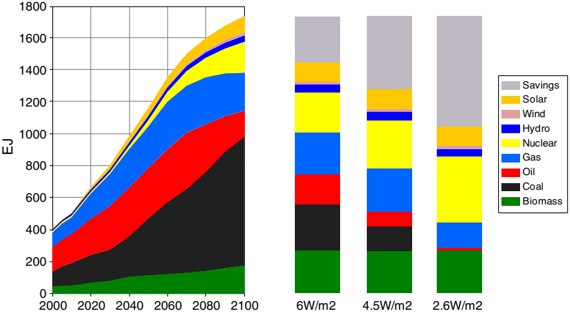
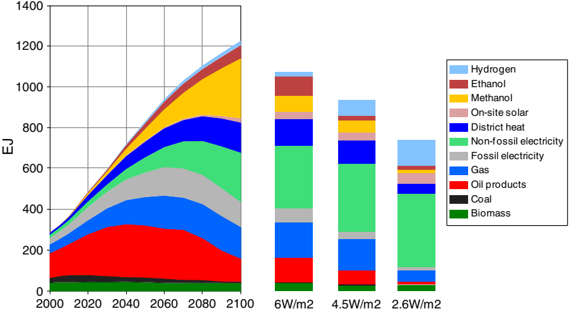
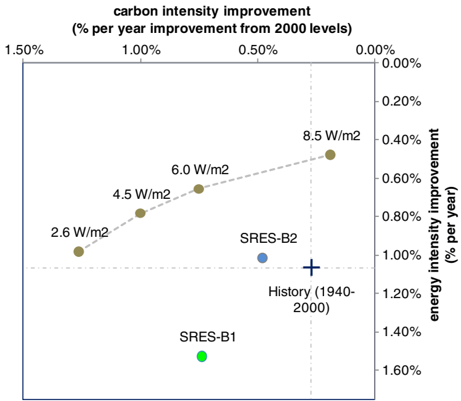
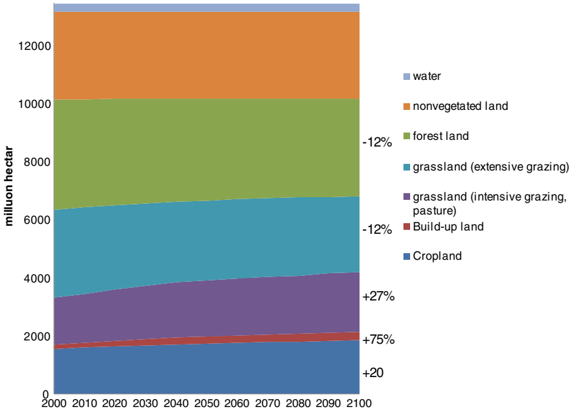
This paper summarizes the main characteristics of the RCP8.5 scenario. The RCP8.5 combines assumptions about high population and relatively slow income growth with modest rates of technological change and energy intensity improvements, leading in the long term to high energy demand and GHG emissions in absence of climate change policies. Compared to the total set of Representative Concentration Pathways (RCPs), RCP8.5 thus corresponds to the pathway with the highest greenhouse gas emissions. Using the IIASA Integrated Assessment Framework and the MESSAGE model for the development of the RCP8.5, we focus in this paper on two important extensions compared to earlier scenarios: 1) the development of spatially explicit air pollution projections, and 2) enhancements in the land-use and land-cover change projections. In addition, we explore scenario variants that use RCP8.5 as a baseline, and assume different degrees of greenhouse gas mitigation policies to reduce radiative forcing. Based on our modeling framework, we find it technically possible to limit forcing from RCP8.5 to lower levels comparable to the other RCPs (2.6 to 6 W/m 2 ). Our scenario analysis further indicates that climate policy-induced changes of global energy supply and demand may lead to significant co-benefits for other policy priorities, such as local air pollution.
Overview
The claims and statistics of this paper haven’t been checked yet.
Free: it reads the open-access text and checks the first 5 claims that cite a source we can check. Create a free account to check every claim.
Integrity signals
Registry
Cites
Statistics
Figures
Verification
Claims the paper makes
The claims and statistics of this paper haven’t been checked yet.
Free: it reads the open-access text and checks the first 5 claims that cite a source we can check. Create a free account to check every claim.
Claims other papers make about this one
Each is checked against this paper’s own text: does it say what the citing paper says it does?
The cited source says what the claim attributes to it.
In the citing paper
“The RCP 8.5 is a high greenhouse gas emissions scenario that projects a significant increase in GHG emissions and concentrations over time, resulting in a radiative forcing of 8.5 W/m 2 at the end of the century [54].”
From Climate Change Impacts on Streamflow in the Krishna River Basin, India: Uncertainty and Multi-Site Analysis (2022) · cites this paper as [54]
The cited source says what the claim attributes to it.
In the citing paper
“RCP8.5 assumes a continued rise in greenhouse gas emissions without mitigation, leading to a radiative forcing of 8.5 W m -2 by 2100.”
From Amazon dieback beyond the 21st century under high-emission scenarios by Earth System models (2025) · cites this paper as [62]
Self-check
Percentages, sums and reported differences re-computed from the paper’s own numbers.
The self-check needs the paper’s full text.
Citations
Cites
The representative concentration pathways: an overview
van Vuuren, D. P., Edmonds, J., Kainuma, M., Riahi, K., Thomson, A., Hibbard, K., Hurtt, G. C., Kram, T., Krey, V., Lamarque, J.-F., et al. (2011) · Climatic Change · doi:10.1007/s10584-011-0148-z · Cited by 7,741 · cited 3×
“As targets for the mitigation scenarios we adopt forcing levels of 2.6, 4.5 and 6 W/m2 by the end of the century, which corresponds to the same radiative forcing levels as assumed by the other RCPs in this SI (see van Vuuren et al. 2011b; Thomson et al. 2011; Masui et al. 2011).”
BackgroundMethodInfluentialSelf-citationThe next generation of scenarios for climate change research and assessment
Moss, R. H., Edmonds, J. A., Hibbard, K. A., Manning, M. R., Rose, S. K., van Vuuren, D. P., Carter, T. R., Emori, S., Kainuma, M., Kram, T., et al. (2010) · Nature · doi:10.1038/nature08823 · Cited by 6,467 · cited 3×
“(2011a), and for the RCP process and selection see Moss et al. (2010), and IPCC (2008)).”
BackgroundSelf-citationSpecial report on emissions scenarios
Nakićenović, N., Alcamo, J. M., Davis, G. F., de Vries, B. J. M., Fenhann, J. V., Gaffin, S. R., Gregory, K., Griibler, A., Jung, T. Y., Kram, T., et al. (2000) · eScholarship (California Digital Library) · Cited by 3,423
Self-citationRCP4.5: a pathway for stabilization of radiative forcing by 2100
Thomson, A. M., Calvin, K. V., Smith, S. J., Kyle, G. P., Volke, A., Patel, P., Delgado-Arias, S., Bond-Lamberty, B., Wise, M. A., Clarke, L. E., et al. (2011) · Climatic Change · doi:10.1007/s10584-011-0151-4 · Cited by 1,631 · cited 2×
“As targets for the mitigation scenarios we adopt forcing levels of 2.6, 4.5 and 6 W/m2 by the end of the century, which corresponds to the same radiative forcing levels as assumed by the other RCPs in this SI (see van Vuuren et al. 2011b; Thomson et al. 2011; Masui et al. 2011).”
BackgroundMethodInfluentialHurtt, G. C., Chini, L. P., Frolking, S., Betts, R. A., Feddema, J., Fischer, G., Fisk, J. P., Hibbard, K., Houghton, R. A., Janetos, A., et al. (2011) · Climatic Change · doi:10.1007/s10584-011-0153-2 · Cited by 1,284 · cited 2×
“Hurtt et al. (2011) for example estimate about a factor of six higher land requirements for the same amount of wood harvest for the year 2000.”
BackgroundSelf-citationScenarios of long-term socio-economic and environmental development under climate stabilization
Riahi, K., Grübler, A., & Nakicenovic, N. (2007) · Technological Forecasting and Social Change · doi:10.1016/j.techfore.2006.05.026 · Cited by 1,152 · cited 15×
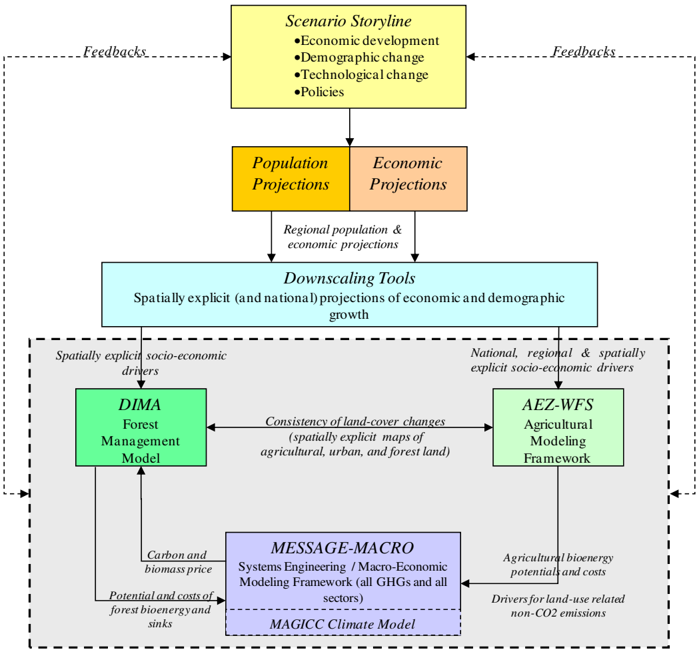
“1 IIASA modeling framework (adapted from Riahi et al. 2007) Climatic Change (2011) 109:33–57 35”
BackgroundMethodInfluentialSelf-citationSocio-economic and climate change impacts on agriculture: an integrated assessment, 1990–2080
Fischer, G., Shah, M., N. Tubiello, F., & van Velhuizen, H. (2005) · Philosophical Transactions of the Royal Society B: Biological Sciences · doi:10.1098/rstb.2005.1744 · Cited by 1,040 · cited 2×
“WFS is an agro-economic model ( Fischer et al. 2005, 2009 ) that estimates regional agricultural consumption, production, trade and land use.”
BackgroundSelf-citationRCP2.6: exploring the possibility to keep global mean temperature increase below 2°C
van Vuuren, D. P., Stehfest, E., den Elzen, M. G. J., Kram, T., van Vliet, J., Deetman, S., Isaac, M., Klein Goldewijk, K., Hof, A., Mendoza Beltran, A., et al. (2011) · Climatic Change · doi:10.1007/s10584-011-0152-3 · Cited by 924
Granier, C., Bessagnet, B., Bond, T., D’Angiola, A., Denier van der Gon, H., Frost, G. J., Heil, A., Kaiser, J. W., Kinne, S., Klimont, Z., et al. (2011) · Climatic Change · doi:10.1007/s10584-011-0154-1 · Cited by 847 · cited 2×
“A simple harmonization algorithm was assumed, where emissions growth of the native MESSAGE results were combined with the base-year values from Granier et al. (2011).”
MethodSelf-citationSurvey of energy resources, 1974
Goeller, H. E., Carlsmith, R. S., Carter, W. L., & Nelson, E. L. (1974) · OSTI OAI (U.S. Department of Energy Office of Scientific and Technical Information) · Cited by 788
AN ASSESSMENT OF WORLD HYDROCARBON RESOURCES
Rogner, H.-H. (1997) · Annual Review of Energy and the Environment · doi:10.1146/annurev.energy.22.1.217 · Cited by 709 · cited 1×
“The cumulative extraction of unconventional fossil resources lies, however, within the upper bounds of theoretically extractable occurrences from the literature ( Rogner 1997; BGR 2009; WEC 2007).”
BackgroundClimate change impacts on irrigation water requirements: Effects of mitigation, 1990–2080
Fischer, G., Tubiello, F. N., van Velthuizen, H., & Wiberg, D. A. (2007) · Technological Forecasting and Social Change · doi:10.1016/j.techfore.2006.05.021 · Cited by 697 · cited 4×
“5 builds upon the dynamic land-use projections available from the original A2r scenario as published in Fischer et al. 2007; Tubiello and Fischer 2007, and Riahi et al. 2007.”
InfluentialSelf-citationEmissions from international shipping: 1. The last 50 years
Eyring, V., Köhler, H. W., van Aardenne, J., & Lauer, A. (2005) · Journal of Geophysical Research: Atmospheres · doi:10.1029/2004jd005619 · Cited by 696
Towards New Scenarios for Analysis of Emissions, Climate Change, Impacts, and Response Strategies
de Strihou, J.-P. V. Y., Moss, R. H., & Babiker, M. H. (2008) · Digital Access to Libraries · Cited by 621
Global Agro-ecological Assessment for Agriculture in the 21st Century: Methodology and Results
Fischer, G., van Velthuizen, H. T., Shah, M. M., & Nachtergaele, F. (2002) · IIASA PURE (International Institute of Applied Systems Analysis) · Cited by 558
Self-citationPollution and Capital Markets in Developing Countries
Dasgupta, S., Laplante, B., & Mamingi, N. (2001) · Journal of Environmental Economics and Management · doi:10.1006/jeem.2000.1161 · Cited by 542 · cited 4×
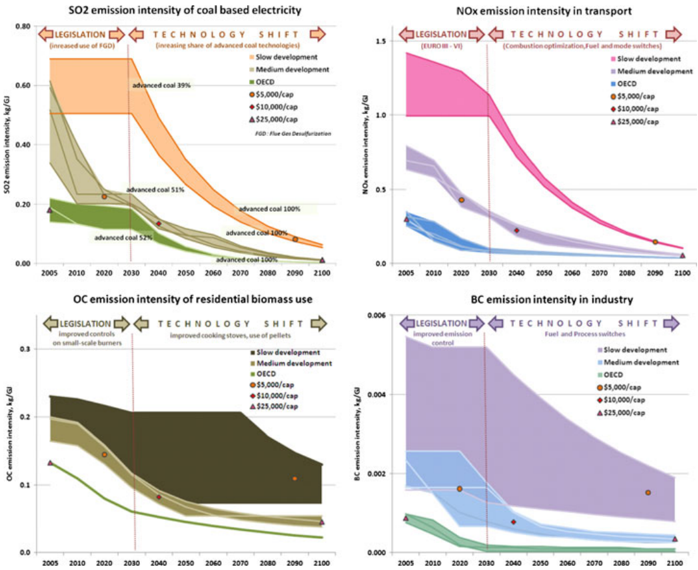
“Recent evidence, however, suggests that in many developing countries controls of air quality are introduced at faster rates than suggested by the experience of industrialized countries in the past (see Dasgupta et al. 2001; Smith et al. 2005).”
BackgroundMethodInfluentialLamarque, J.-F., Kyle, G. P., Meinshausen, M., Riahi, K., Smith, S. J., van Vuuren, D. P., Conley, A. J., & Vitt, F. (2011) · Climatic Change · doi:10.1007/s10584-011-0155-0 · Cited by 466
Self-citationEmissions from international shipping: 2. Impact of future technologies on scenarios until 2050
Eyring, V., Köhler, H. W., Lauer, A., & Lemper, B. (2005) · Journal of Geophysical Research: Atmospheres · doi:10.1029/2004jd005620 · Cited by 320
An emission pathway for stabilization at 6 Wm−2 radiative forcing
Masui, T., Matsumoto, K., Hijioka, Y., Kinoshita, T., Nozawa, T., Ishiwatari, S., Kato, E., Shukla, P. R., Yamagata, Y., & Kainuma, M. (2011) · Climatic Change · doi:10.1007/s10584-011-0150-5 · Cited by 298 · cited 2×
“radiative forcing levels as assumed by the other RCPs in this SI (see van Vuuren et al. 2011b; Thomson et al. 2011; Masui et al. 2011 ).”
BackgroundMethodInfluentialReducing climate change impacts on agriculture: Global and regional effects of mitigation, 2000–2080
Tubiello, F. N., & Fischer, G. (2007) · Technological Forecasting and Social Change · doi:10.1016/j.techfore.2006.05.027 · Cited by 243 · cited 4×
“1 The A2r scenario included some details of land use categories such as cultivated land, built-up land and forests and grassland area (for further details see Tubiello and Fischer 2007). 34 Climatic Change (2011) 109:33–57”
BackgroundMethodInfluentialSelf-citationScenarios of global anthropogenic emissions of air pollutants and methane until 2030
Cofala, J., Amann, M., Klimont, Z., Kupiainen, K., & Höglund-Isaksson, L. (2007) · Atmospheric Environment · doi:10.1016/j.atmosenv.2007.07.010 · Cited by 207 · cited 2×
“2008a, b) and the recent assessment of environmental legislation until 2030 (Cofala et al. 2007).”
BackgroundMethodFischer, G., Hizsnyik, E., Prieler, S., Shah, M., & van Velthuizen, H. T. (2009) · IIASA PURE (International Institute of Applied Systems Analysis) · Cited by 206
Self-citationGrübler, A., O'Neill, B., Riahi, K., Chirkov, V., Goujon, A., Kolp, P., Prommer, I., Scherbov, S., & Slentoe, E. (2007) · Technological Forecasting and Social Change · doi:10.1016/j.techfore.2006.05.023 · Cited by 184 · cited 3×
“provides spatially explicit patterns of population and economic activities (Grubler et al. 2007).”
BackgroundMethodInfluentialSelf-citationRao, S., & Riahi, K. (2006) · The Energy Journal · doi:10.5547/issn0195-6574-ej-volsi2006-nosi3-9 · Cited by 183 · cited 4×
“For the mitigation potentials from livestock and agricultural sectors we rely on estimates from Rao and Riahi (2006), which assumes no major technological breakthroughs in these sectors.”
BackgroundMethodInfluentialSelf-citationMessner, S., & Strubegger, M. (1995) · IIASA PURE (International Institute of Applied Systems Analysis) · Cited by 177
Geographically explicit global modeling of land-use change, carbon sequestration, and biomass supply
Rokityanskiy, D., Benítez, P. C., Kraxner, F., McCallum, I., Obersteiner, M. H., Rametsteiner, E., & Yamagata, Y. (2006) · Technological Forecasting and Social Change · doi:10.1016/j.techfore.2006.05.022 · Cited by 125 · cited 7×
“1) are MESSAGE–MACRO (Messner and Strubegger 1995; Rao and Riahi 2006), DIMA (Rokityanskiy et al. 2007) and AEZ–WFS (Fischer et al.”
BackgroundMethodInfluentialThe relationship between short-term emissions and long-term concentration targets: A letter
van Vuuren, D. P., & Riahi, K. (2010) · Climatic Change · doi:10.1007/s10584-010-0004-6 · Cited by 124 · cited 1×
“This finding is also consistent with other assessments in the literature (e.g., van Vuuren and Riahi 2011).”
ResultSelf-citationDownscaling socioeconomic and emissions scenarios for global environmental change research: a review
van Vuuren, D. P., Smith, S. J., & Riahi, K. (2010) · WIREs Climate Change · doi:10.1002/wcc.50 · Cited by 100 · cited 1×
“The vast majority of downscaling approaches have traditionally employed proportional downscaling (van Vuuren et al. 2010), where emissions of individual grid-cells are scaled following aggregate changes at the regional level.”
BackgroundSelf-citationGAINS ASIA: Scenarios for cost-effective control of air pollution and greenhouse gases in India
Purohit, P., Amann, M. C., Mathur, R., Gupta, I., Marwah, S., Verma, V., Bertok, I., Borken, J., Chambers, A. F., Cofała, J., et al. (2010) · IIASA PURE (International Institute of Applied Systems Analysis) · Cited by 78
Self-citationFuture Sulfur Dioxide Emissions
Smith, S. J., Pitcher, H., & Wigley, T. M. L. (2005) · Climatic Change · doi:10.1007/s10584-005-6887-y · Cited by 72
Climate Change Impacts on Irrigation Water Requirements: Effects of Mitigation
Fischer, G., Tubiello, F. N., van Velthuizen, H. T., & Wiberg, D. A. (2007) · Cited by 61
Self-citationUnasylva—An International Journal of Forestry and Forest Industries 1947–2000
Fisher, R. F. (2002) · Forest Ecology and Management · doi:10.1016/s0378-1127(02)00525-x · Cited by 59
Assessment of emissions scenarios revisited
Nakićenović, N., Kolp, P., Riahi, K., Kainuma, M., & Hanaoka, T. (2006) · Environmental Economics and Policy Studies · doi:10.1007/bf03353998 · Cited by 56 · cited 1×
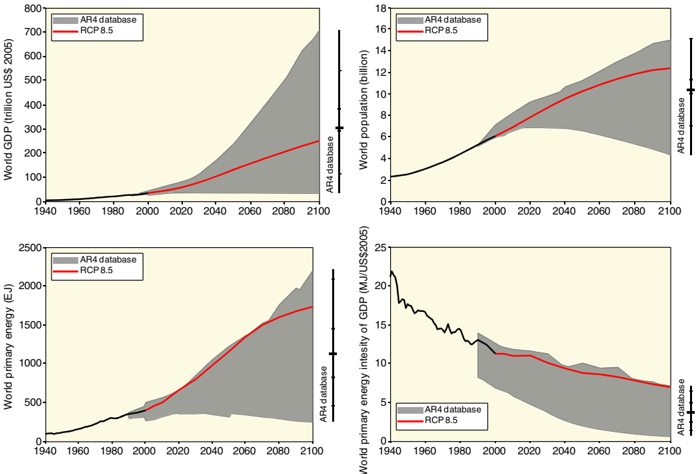
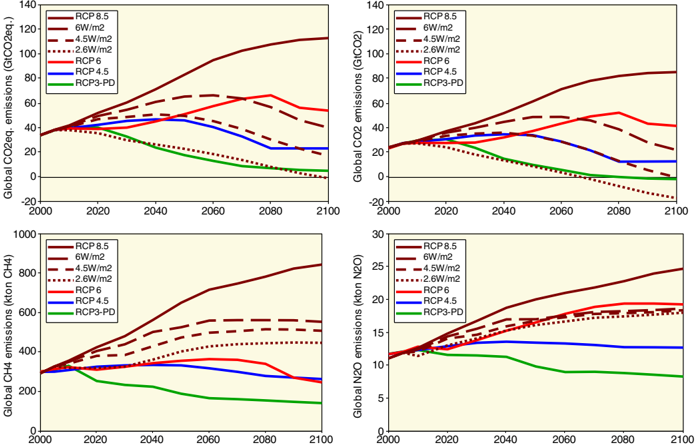
“5 (red lines) compared to the range of scenarios from the literature (grey areas: IPCC AR4 scenario database; Fisher et al. 2007; Nakicenovic et al. 2006).”
BackgroundSelf-citationIMAGE and MESSAGE Scenarios Limiting GHG Concentration to Low Levels
Rao, S., Riahi, K., Stehfest, E., van Vuuren, D. P., Cho, C., den Elzen, M. G. J., Isaac, M., & van Vliet, J. (2008) · IIASA PURE (International Institute of Applied Systems Analysis) · Cited by 34
Self-citationThe Digital Global Map of Irrigation Areas - Development and Validation of Map Version 4
Hoogeveen, J., Döll, P., & Feick, S. (2006) · Cited by 18
Emissions of air pollutants implied by global long-term energy scenarios
Rafaj, P., Rao, S. R., Klimont, Z., Kolp, P., & Schöpp, W. (2010) · IIASA PURE (International Institute of Applied Systems Analysis) · Cited by 15
Self-citation
Research works printed but not linked: 5
- Amann M, Bertok I, Borken J, Chambers A, Cofala J, Dentener F, Heyes C, Kejun J, Klimont K, Makowski M, Matur R, Purohit P, Rafaj P, Sandler R, Schöpp W, Wagner F, Winiwarter W (2008a) GAINS-Asia. A tool to combat air pollution and climate change simultaneously. International Institute for Applied Systems Analysis (IIASA), Laxenburg
- BP (2010) BP Statistical Review of World Energy, www.bp.com/statisticalreview. Accessed in May 2011
- Fisher B, Nakicenovic N, Alfsen K, Corfee Morlot J, De la Chesnaye F, Hourcade J.-C, Jiang K, Kainuma M, La Rovere E, Matysek A, Rana A, Riahi K, Richels R, Rose S, van Vuuren DP, Warren R, (2007) Chapter 3: Issues related to mitigation in the long-term context. In: Climate change 2007: Mitigation. Contribution of Working Group III to the Fourth Assessment Report of the Intergovernmental Panel on Climate Change. Cambridge University Press, Cambridge, United Kingdom and New York, NY, USA
- Lee DS, Owen B, Graham A, Fichter C, Lim LL, Dimitriu D (2005) Allocation of international aviation emissions from scheduled air traffic-present day and historical. Report to UK Department for Environment, Food and Rural Affairs, London
- Tubiello FN, Fischer G (2007) Reducing climate change impacts on agriculture: global and regional effects of mitigation, 2000-2080. Technol Forecast Soc Chang 74(7):1030-1056, Special Issue: Greenhouse Gases -Integrated Assessment UNEP and WHO (1996) City air quality trends (GEMS/Air Data). Nairobi United Nations Environment Programme, World Health Organization 1:52
Cited by
The representative concentration pathways: an overview
van Vuuren, D. P., Edmonds, J., Kainuma, M., Riahi, K., Thomson, A., Hibbard, K., Hurtt, G. C., Kram, T., Krey, V., Lamarque, J.-F., et al. (2011) · Climatic Change · doi:10.1007/s10584-011-0148-z · Cited by 7,741
“More specific information can be found in the related papers in this special issue, such as those by the four IAM teams describing the scenarios underlying each of the RCPs (Masui et al. 2011; Riahi et al. 2011; Thomson et al. 2011; Van Vuuren et al. 2011a).”
InfluentialSelf-citationPresent and future Köppen-Geiger climate classification maps at 1-km resolution
Beck, H. E., Zimmermann, N. E., McVicar, T. R., Vergopolan, N., Berg, A., & Wood, E. F. (2018) · Scientific Data · doi:10.1038/sdata.2018.214 · Cited by 6,777
Global effects of land use on local terrestrial biodiversity
Newbold, T., Hudson, L. N., Hill, S. L. L., Contu, S., Lysenko, I., Senior, R. A., Börger, L., Bennett, D. J., Choimes, A., Collen, B., et al. (2015) · Nature · doi:10.1038/nature14324 · Cited by 4,352
The RCP greenhouse gas concentrations and their extensions from 1765 to 2300
Meinshausen, M., Smith, S. J., Calvin, K., Daniel, J. S., Kainuma, M. L. T., Lamarque, J.-F., Matsumoto, K., Montzka, S. A., Raper, S. C. B., Riahi, K., et al. (2011) · Climatic Change · doi:10.1007/s10584-011-0156-z · Cited by 3,584
“…from the published literature (Fujino et al. 2006; Smith and Wigley 2006; Clarke et al. 2007; Riahi et al. 2007; van Vuuren et al. 2007; Hijioka et al. 2008; Wise et al. 2009) and updated for release as RCPs (Masui et al. 2011; Riahi et al. 2011; Thomson et al. 2011; van Vuuren et al. 2011b).”
BackgroundMethodSelf-citationThe Community Earth System Model: A Framework for Collaborative Research
Hurrell, J. W., Holland, M. M., Gent, P. R., Ghan, S., Kay, J. E., Kushner, P. J., Lamarque, J.-F., Large, W. G., Lawrence, D., Lindsay, K., et al. (2013) · Bulletin of the American Meteorological Society · doi:10.1175/bams-d-12-00121.1 · Cited by 2,686
Metadata
- Authors
- Riahi, K., Rao, S., Krey, V., Cho, C., Chirkov, V., Fischer, G., Kindermann, G., Nakicenovic, N., & Rafaj, P.
- Affiliations
- International Institute for Applied Systems Analysis (AT)
- Corresponding author
- Riahi, Keywan
- Venue
- Climatic Change
- Published
- 2011-08-13
- Volume
- 109
- Issue
- 1-2
- Pages
- 33-57
- ISSN
- 0165-0009 (ISSN-L)
- 1573-1480
- OpenAlex
- W1997065014
- Cited by
- 2,791
- References
- 37
- Citations by year
- 2026: 82 · 2025: 155 · 2024: 168 · 2023: 216 · 2022: 308 · 2021: 308 · 2020: 322 · 2019: 270 · 2018: 250 · 2017: 223 · 2016: 189 · 2015: 115 · 2014: 79 · 2013: 71 · 2012: 26
- FWCI
- 148.44
- Type
- journal article
- Language
- en
- Open access
- hybrid
- doi.org
- Licence
- cc-by-nc
- Locations
- Climatic Change (publishedVersion, cc-by-nc)
- RePEc: Research Papers in Economics (submittedVersion)
- IIASA PURE (International Institute of Applied Systems Analysis) (submittedVersion)
- Topics
- Social Sciences › Economics, Econometrics and Finance › Economics and Econometrics › Climate Change Policy and Economics
- Physical Sciences › Environmental Science › Global and Planetary Change › Climate variability and models
- Physical Sciences › Environmental Science › Global and Planetary Change › Climate Change and Geoengineering
- Keywords
- RCP8.5, RCP scenarios, greenhouse gas emissions, energy demand, population growth, technological change, energy intensity, land use and land cover change, greenhouse gas emissions reduction, radiative forcing, MESSAGE model
About these checks
Registry, retraction, Cites and statistics results are computed, not judged, with one exception: a printed reference that no index lists is read once by a model before it counts as a citation error. Claims are extracted by a model and kept only when their quote appears verbatim in the text; each cited source is then checked, with a model’s help, for whether it says what the claim relies on. Those verdicts can be wrong — read the claim’s quote and the cited source before relying on one.
Statistics and arithmetic are recomputed, not judged.
Confidence bands are shown only for fields calibrated on our annotated test set. None is calibrated yet, so no band is shown.
What counts as a claim ›How we measure confidence ›How we check this ›
Are you an author, or do you see a problem with this page? Request a review
Data sources
Bibliographic data: Semantic Scholar, OpenAlex, Crossref.
Contains information from the Semantic Scholar Academic Graph Datasets, made available under the ODC Attribution License (ODC-BY 1.0).
Semantic Scholar’s data is described in: Kinney, R., et al. (2023). The Semantic Scholar Open Data Platform. arXiv:2301.10140.
